FOR IMMEDIATE RELEASE: Steve Hackett Announces release of Surrender of Silence Out September 10th Legendary guitarist Steve Hackett, releases his new studio rock album Surrender of Silence on 10th September 2021, via Inside Out Music. The album features 11 new songs as Steve Hackett has been working hard through Lockdown and, the first time, has completed two studio albums for release within the same year!
Hot on the heels of his classical-acoustic travelogue Under A Mediterranean Sky, which was released in January and hit Number 2 in the UK Classical Album Chart, Surrender of Silence is a further exploration of Hackett’s love of world music, discovering different sounds, moods and textures to deliver a rock album of extraordinary variety, power and beauty.
As with Under A Mediterranean Sky, Surrender of Silence was also recorded during Lockdown and, again, Hackett has called upon some of his musical friends from across the world to contribute. Hackett’s regular touring band of Roger King (keyboards, programming and orchestral arrangements), Rob Townsend (sax, clarinet), Jonas Reingold (bass), Nad Sylvan (vocals) and Craig Blundell (drums) are supplemented by Phil Ehart and Nick D’Virgilio (drums), the vocal talents of Amanda Lehmann, Durga and Lorelei McBroom, Christine Townsend (violin, viola), Malik Mansurov (tar) and Sodirkhon Ubaidulloev (dutar).
This new album is full-on electric…
“Lockdown cobwebs are blown away in one fell-swoop here!” says Steve Hackett. “With the monster rhythm section of Jonas, Craig, Nick and Phil along with Rob’s soaring sax and bass clarinet, Nad, Amanda and myself on vocals, Roger’s darkly powerful organ and my guitar, we plunge full-pelt into that wild release of energy.”
Our journey takes us from the classical orchestrations of Russia (Natalia) to the plains of Africa (Wingbeats) to mysterious Eastern shores (Shanghai To Samarkand), all via the ocean’s depths (Relaxation Music for Sharks (featuring feeding frenzy)). The Devil’s Cathedral pools the talents of Hackett’s entire touring band and features King’s atmospheric Gothic organ and a powerhouse rhythm display from Blundell and Reingold. Hackett’s vocals have never been bettered and his duet with Amanda Lehmann adds emotion to Scorched Earth a lament for the environmental horrors facing our planet. Throughout Hackett’s guitars add a rich tapestry of color with soaring solos and intricate weaving melodies.
“It’s a ‘no holds barred’ album,” adds Hackett, “riding that wave, unleashing those demons, dreams and nightmares, all crashing together over the shore.”
“I enjoyed the power of this album allowing my guitar to scream in joy and rage… and once again flying across those oceans to distant lands. It’s terrific to connect creatively with musicians from far flung places, particularly when we’ve all been unable to meet. We all have a voice in our cacophony of sound and we cry out together in the Surrender of Silence!”
Steve Hackett “Surrender of Silence” track listing: 1. The Obliterati (02:17) 2. Natalia (06:17) 3. Relaxation Music For Sharks (Featuring Feeding Frenzy) (04:36) 4. Wingbeats (05:20) 5. The Devil’s Cathedral (06:31) 6. Held In The Shadows (06:20) 7. Shanghai To Samarkand (08:27) 8. Fox’s Tango (04:21) 9. Day Of The Dead (06:25) 10. Scorched Earth (06:03) 11. Esperanza (01:04)
Steve Hackett shares writing credits with both Jo Hackett and Roger King on several tracks. All tracks were recorded by Roger King and produced by Steve Hackett with Roger King at Siren.
About Steve Hackett
Steve Hackett joined Genesis at the beginning of 1971 and gained an international reputation as the guitarist in the band’s classic line-up alongside Peter Gabriel, Tony Banks, Mike Rutherford and Phil Collins. Hackett’s intricate guitar work was a key element of Genesis’ albums from Nursery Cryme (1971) to Wind And Wuthering (1977) including the classic Selling England By The Pound.
After leaving Genesis at the end of 1977, Hackett’s solo career, which now spans more than 30 albums, has demonstrated his extraordinary versatility with both electric and acoustic guitar. Hackett is renowned as both an immensely talented and innovative rock musician and a virtuoso classical guitarist and composer and this was recognized in 2010 when he was inducted into the Rock Hall Of Fame. He has also worked alongside Steve Howe of YES in the supergroup GTR. Hackett’s compositions take influences from many genres, including jazz, classical and blues. For his later studio works The Night Siren (2017) and At The Edge Of Light (2019) Hackett has explored the influences of world music. Recent tours have seen Hackett celebrate his time with Genesis – including a spectacular 2018 tour in which he realized a long-held ambition to perform the works of Genesis live with his band and an orchestra.
The lockdown enforced by the 2020 global pandemic has proven to be a particularly creative period for Hackett. He began by releasing Selling England by the Pound & Spectral Mornings: Live at Hammersmith, a live recording of 2019’s hugely successful tour celebrating that Genesis classic together with the 40th anniversary of one of his most-loved solo albums. Lockdown also gave Hackett the opportunity to write and record two new studio albums, the UK Classical Chart hit Under A Mediterranean Sky and the forthcoming Surrender of Silence.
Surrender of Silence – Release Date – 10th September
Formats: Limited Edition CD+Blu-ray Mediabook in hardcover slipcase, Standard CD Jewel case, Gatefold 2LP+CD & LP-Booklet and Digital Album.
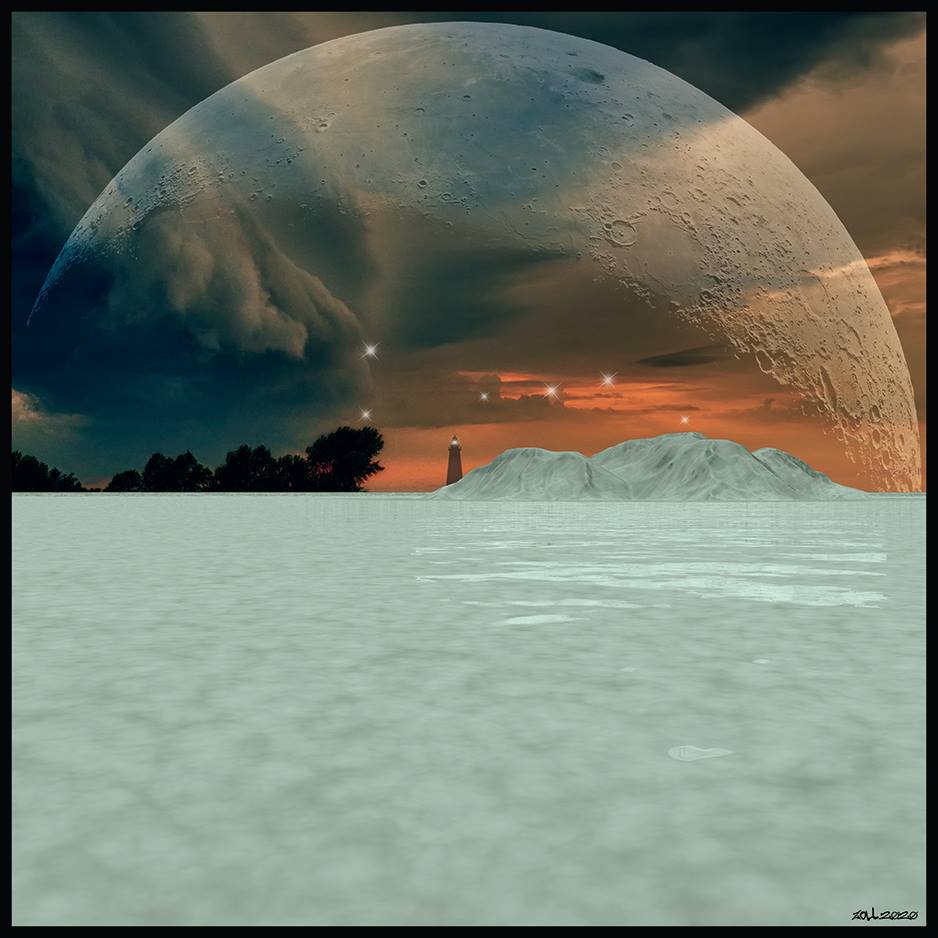
Blue Oyster Cult fan & artist Richard Zoll is fairly new to creating album covers, but in the past few years he’s created superb covers for albums by Blue Coupe [the trio featuring Albert & Joe Bouchard, along with Dennis Dunaway], and last year he created the artwork for the highly anticipated album from Albert Bouchard – Re Imaginos.
Here Richard Zoll gives the background and the details on the artwork that he created for Albert Bouchard’s ‘must have’ album for any BOC fan. Richard’s artwork covers a beautiful gatefold package with the 2 LPs, and lyrics on the inside. *Check out the links at the end of this article.
Connection to Albert Bouchard… Back in the advent of the internet getting into full swing I think the first time I really met Albert was at Brain Surgeons shows. I would bring home made stickers of my own design and hand them out to people at shows. After gigs they would ask Albert and the band to sign them. I guess that is when he first took notice. I was on the BÖC related boards in the early internet days as “Astro” and that was it. Albert is one of the few that still occasionally call me that lol. I followed every iteration Albert and Joe got involved in and tried to see live stuff whenever miles and time permitted.
Then I got into making unofficial posters, stickers and went on my own private promo campaigns online for artists I followed and enjoyed. The Bouchard brothers, I felt, were constantly forging onward and creating new songs and it was an easy way to feel involved while letting off my creative steam. Once they teamed up with Dennis of the original Cooper group to for Blue Coupe, it seemed like a combination of two of my favorite bands ever and gave me an endless idea well to draw from. They needed artwork for a CD called ‘Eleven Even’ and asked me to come up with something, so I did. They used it.
Suggestions, ideas, art concept… I was given pretty much free reign so in that respect the concept was mine. I was asked by Albert for artwork on the Re-Imaginos Vol. 1 and immediately wanted to do it. I was provided unfinished rough drafts of the play list for inspiration. that is the way to do it unless you are going to use art that already exists for a cover (just my opinion). The design was accepted by Albert as is. Chosen is more like it. Out of several I submitted to him. It may be more accurate to say the artwork was mine, but the concept was Pearlman / Bouchard to be fair.
Creating the cover… The back is a 3D model I made of an ice plane with small eroded mountains. The sky was a photo I took of a storm rolling into the Oswego Harbor in NY. I superimposed a shot of the Super moon I took, and topped it off with a lighthouse on the horizon getting its beacon light from the “Phecda” star of Ursa Major in the sky.
The front is also a composite. I wanted something spacey but underwater. I made a telescope in 3D and buried it in the sand, and only used that part as if to be windowed under the tide. I saw other works with the cut away effect and thought it would work perfectly for this. There is a silhouette of a sailing ship with sea birds numbering 7 times 4 on the horizon. Those were actually 4 flocks of 7 in other unused versions and I think appear in that flocked form in some posters. Again with the sky and a moon emitting more as a light source than a reflection of the sun light. Also another instance of Ursa Major to the moon’s right, and last but not least, a ghostly, semi-transparent vulture, soaring out of a photo I took and into the realm of Re Imaginos. Buzzardo if you will, the shape shifter
Photos / Images … With the possible exception of the silhouette of the ship, a photoshop paint brush I made of the birds, and Possibly the clouds part of the front sky, I created the 3D models, took the photos, and made the effects myself. I thought the sea foam green was right, and the turquoise.
The lettering… Yes, the lettering was a warped and modified version of a font I bought that couldn’t have been more perfect for this album cover. Interesting question because I spent a lot of time trying to form the correct ebb and flow by use of each letter being lower case or capital, each sized and placed, converted to shapes and then warped.
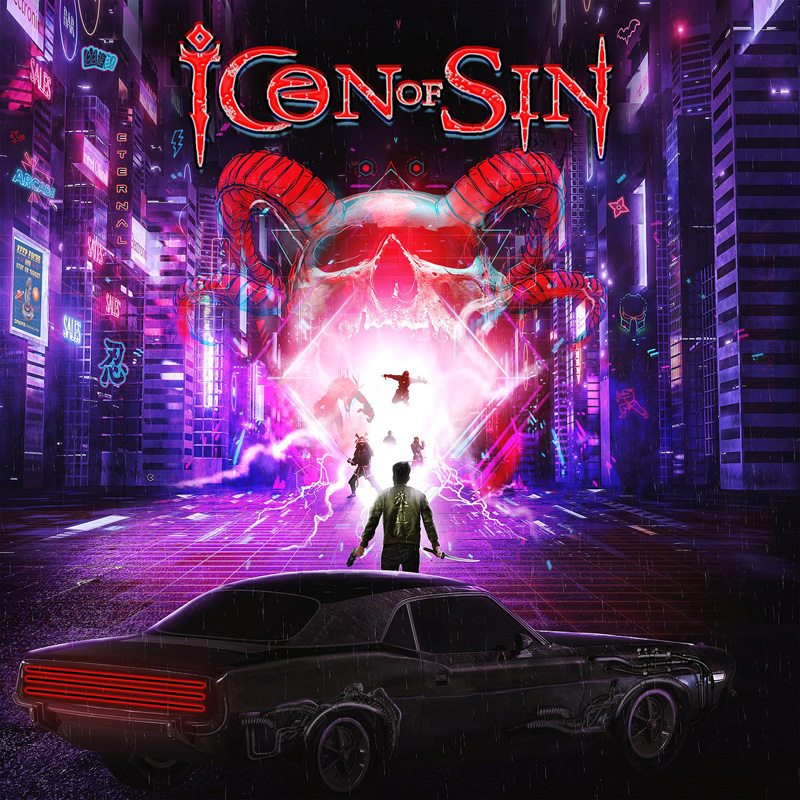
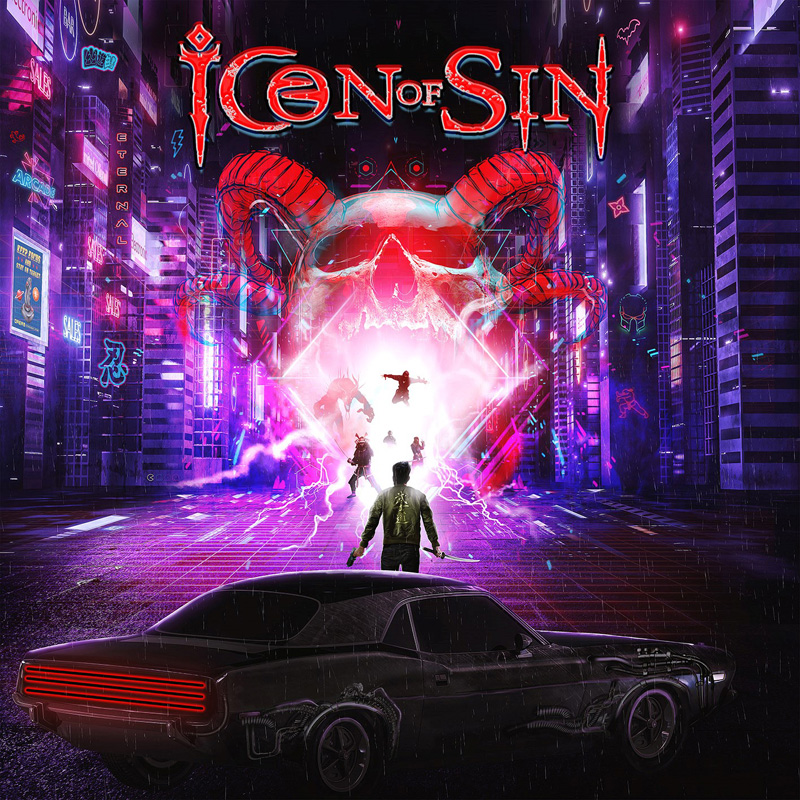
Icon Of Sin is based around the vocals of Brazilian metal singer Raphael Mendes, who has made a name for himself for his remarkable vocal similarities to Iron Maiden’s Bruce Dickenson. In fact listening to this album, it may be easy to forget the title for a moment and think you’re listening to something new from Maiden. If you’re waiting patiently for a new Maiden album and need something to fill the time, this would be well worth checking out. Musically, it even sounds like Maiden in places, as well as influences of WASP [post ’90s], Sabbath [w/ Dio], Rainbow….. Check out tracks like tracks like “Road Rage”, “Shadow Dance”, and “Clouds Over Gotham” to see what I mean. But, really – great playing, a solid metal album – even if much of it sounds familiar, plenty of really good songs. Favorite tracks being “Arcade Generation” and “Night Breed”. Will be interesting to hear more from Raphael Mendes.
Frontiers Music Srl is excited to announce the signing of ICON OF SIN, a new project centered around the vocal talents of the popular Brazilian YouTube sensation Raphael Mendes. He is joined in the band by two other stellar Brazilian musicians, Sergio Mazul (SEMBLANT) and Marcelo Gelbcke (LANDFALL).
Raphael Mendes has become a very popular figure in the Youtube world due to his jaw dropping vocal covers. His recognition as one of the hottest new talents in metal started in 2016 when he was invited by guitarist Fabio Lima to record a YouTube video that wound up going viral. Encouraged by the reaction, Mendes launched his own YouTube channel to create more videos for fans to enjoy. As more and more fans around the world started to discover him, he was invited to join other musical projects, including Marius Danielsen’s “Legend Of Valley Doom Part 2”, which also featured Michael Kiske, Vinny Appice, Mark Boals, Michele Luppi, and Diego Valdez, among others.
One of the things that made Mendes’ reputation grow considerably happened earlier in 2020, when a video series called “What if Bruce Dickinson sang in other bands” was launched. With Mendes Dickinson-esque singing style being used to cover songs by Megadeth and more, these versions impressed fans worldwide and word quickly spread in the metal community. Collaborative versions are now being made with some emerging rock artists and also musicians from the global metal scene, such as drummer Aquiles Priester (ex-Angra, Primal Fear, W.A.S.P.).
Raphael’s videos ended up reaching the eyes and ears of Frontiers, a label known for signing and nurturing the most promising new names of the next generation of rock and metal. Frontiers has recently started to work more and more with South American based talent and had the thought to pair Raphael with two outstanding musicians of the Curitiba metal scene, both of whom have already unveiled their musical talents through the label: Sergio Mazul, singer of Semblant and Marcelo Gelbcke, guitarist of Landfall. While the music of their respective bands are quite dissimilar, both have a passion for traditional heavy metal and knew they could craft amazing music for Mendes to put his vocals to. They have already set to work with Raphael in the creation of a no-nonsense, straight ahead classic pure heavy metal album.
“Music is my passion, a way of life!” says Raphael Mendes. “It’s really been and continues to be a fantastic experience, working on the Icon Of Sin album. The songs are so powerful and it has awakened something in me that I haven’t felt for a long time from a heavy metal album!”
Tracklist: Icon Of Sin Road Rage Shadow Dancer Unholy Battleground Nightbreed Virtual Empire Pandemic Euphoria Clouds Over Gotham Arcade Generation Hagakure (Intro) The Last Samurai The Howling Survival Instinct
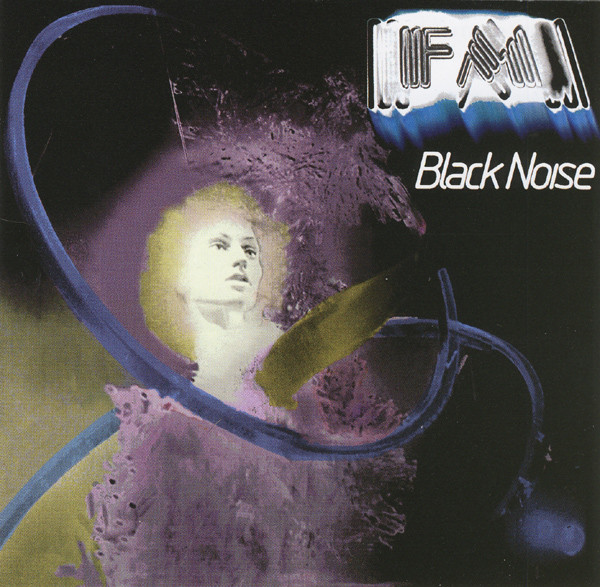
FM was a progressive / space-rock trio from Toronto, who’s classic debut album – Black Noise, featured their best known song “Phasors On Stun”. The album was reissued on CD in Canada in 1994, with the band taking a short reunion tour for it. ( I have a signed poster of it from this tour as well.) For this installment telling the story behind the album covers former Passport Records Art Director Murray Brenman, and artist Paul Till tell the story behind creating FM’s Black Noise album cover, which turned in to including a bit more – as both also worked on the Canadian band’s next couple of album covers. Paul Till would later work on the band’s last few releases as well.
It’s interesting to note that Black Noise originally came out through the Canadian Broadcasting Corporation in 1978, with a totally different cover. That edition was limited to 500 copies, sold via mail-order with cover art being a photo of a manhole cover, designed by Bob Krol and James Cook, Krol worked on a number of covers for the CBC in the ’70s. The band’s 2nd LP was technically Direct To Disc [aka Head Room], but signing to bigger labels meant Black Noise would be reissued with the cover featured above, followed by Surveillance and City Of Fear. Nash The Slash left FM before Direct To Disc (replaced by Ben Mink), and Paul Till would also work on Nash’s solo LP covers.
Artists’ Backgrounds
Paul Till – “I knew Cam Hawkins a little from high school. I did some photos for a band of his (Clear) a few years after that. When he started working with Nash as a duo he called me about doing some photos. I did the effects on the first FM poster although I didn’t make the original photo. I made some photos for the FM appearance on TVO’s Night Music. Some of them made for FM and some of photo work I was doing on my own. I did a lot of darkroom photo techniques making in Science fiction/surrealist imagery..”
Murray Brenman – “I worked at JEM Records, who owned Passport, run-in their art department full-time from May 1977 until sometime in 1989. I was the Art Director at Passport from 1978.”
Creating BlackNoise cover art…
Paul Till – “I did make the logo. It’s letraset that I then fooled with in the darkroom and probably with color xerox as well. The FM cover is from an Eaton’s window display that I manipulated in the darkroom. I used to do quite a few manipulated photos of store windows. I probably just showed them photos and they picked one. It wasn’t really made with FM in mind though I probably had heard their music when I made it. (At this distance of time the sequence of unrelated events is very hazy.)”
Murray Brenman – “As far as Black Noise – We heard most of the music ahead of time. I’ll have to check to see if I have a sample copy at home, from what I remember, they supplied us with the pieces and then I put things together and assembled the final artwork. The front cover of Black Noise was put together from pieces they supplied. I actually created the back cover art.”
Other FM covers…
Paul Till – “The Direct To Disc cover was also a manipulated store window photo… The Surveillance cover was a shot I happened to take during the photo session for the image that ended up on the back cover. (That was made my another photographer.) the image I made in as overexposed and off color, so they stripped in the colors as you see them. I was never one of those guys who’d say “You’re not using that shot! It’s no good.” Probably should have been.”
Murray Brenman – “On Surveillance, I created the title treatment on the front cover and if I remember correctly I took their photo and stripped it into the TV screen.”
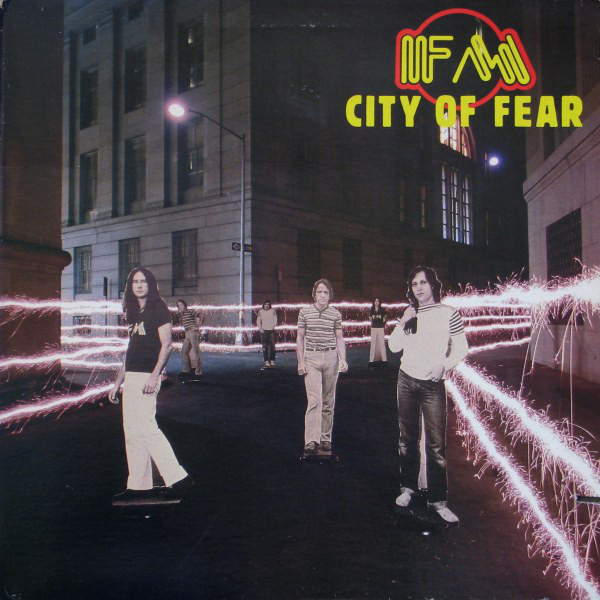
Murray Brenman – “I do remember the third LP (City Of Fear), it was done with the photographer Eric Staller, we developed it together. It was shot around Wall St. in NYC, very late at night. We used life-size standups for the group. He developed this technique using a long exposure at a very low setting and ran around the scene with sparklers. We had used a similar technique for the Synergy ‘Games’ album cover…. I also modified the logo for that LP.”
Paul Till – “The City of Fear cover I did go out and make a lot of different images. None were picked for the cover, but one was used in the gatefold. I didn’t have anything to do with the actual cover photo. I thought it was pretty good, though I think that photographer did other photos using that technique that were better. Album covers are sort of a group effort. Ideas and intentions sometimes make for weaker imagery. A couple of years ago I made another FM cover where Cam remembered an image from back in the day, that I was able to find and do a little tweaking on.”
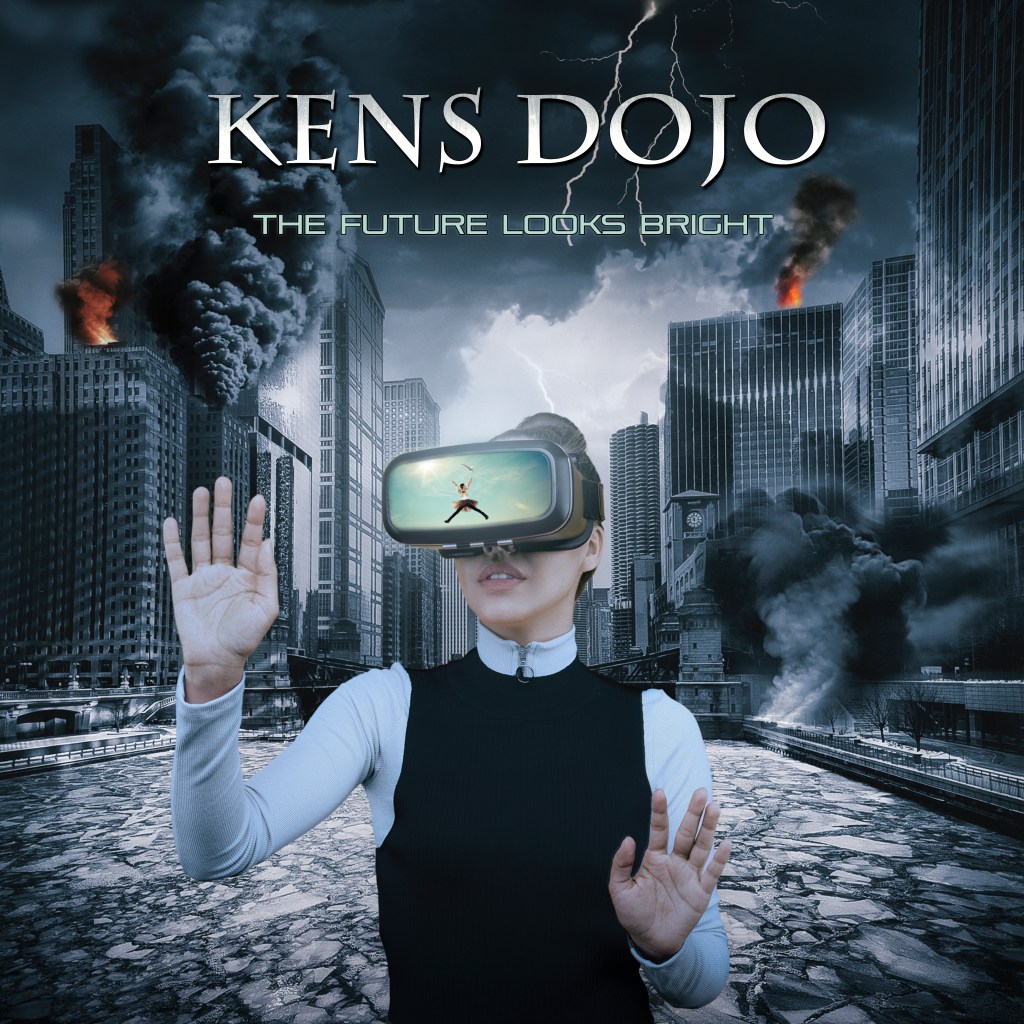
Guitarist Ken Ingwersen, from Norway has been writing, playing, producing, and even doing his own album art for years. He has a long and excellent list of credits including albums by the late Ken Hensley [as part of Live Fire], Wonderworld [Live Fire on their own], Street Legal, and a number of other Norwegian hard-rock acts. The Future Looks Bright is a great follow up to his first Ken’s Dojo project – Reincarnation, from 2010. In this interview Ken details the new album – which includes an awesome list of guest singers. As well he updates us on his other projects and forthcoming albums he’s involved in.
*Check out all the links at the end for info on ordering The Future Looks Bright , as well as various pages.
Can you talk a bit about when & what got this project going – when you started putting songs together [were these all new for this project, or any ideas you had laying around]?
I started working on some of these tracks right after I released Reincarnation. The idea back then, was to keep ‘em comin’ every 2nd year or so. But in 2013, Roberto Tiranti joined Ken Hensley & Live Fire and during the first day in the studio recording Trouble, the energy between Rob, Tom and myself was great. We had an instant chemistry, so I suggested we form a power trio. We released the first album in 2014 already, and it’s now been 3 albums, with one more in the works. So I decided to put Kens Dojo on hold for a while and focus on Wonderworld. But yeah, a few ideas are from back then, but for the most part I wrote it all in 2020.
The album art you did [again]. What can you tell me about it – as far as any inspiration or story behind it?
Well, I was spending a day thinking what the album artwork could be like. I came up with a few not so great ideas. So I turned it around and decided to find an album title instead. During the pandemic I met a lot of pessimistic musicians, but also positive. So I came up with the title The Future Looks Bright without having a song for it yet. After having the title, I soon came up with the idea of this girl coming out of a war zone, looking into her VR glasses and just seeing sunshine and happiness. From there I decided to also write a song to the title and ended up with the title track.
How was the album made – was it all through file sharing, zoom chats, email… or was there any times where you were able to get together with any of the singers or drummers in the studio?
Yeah, most of it was through chats and file sharing. Many of the singers were living in another country than me, and on top of this we had the pandemic, that made meeting people in general quite hard. But most of the songs were quite thoroughly demoed, meaning my drum programming and guide vocals were pretty close to the end product. There were a few exceptions though. Like the drum recordings I did with Lauvdal I engineered, ’cause we were able to meet up. Also the song I did with Chesney Hawkes was written a few years back, so I already had his vocal files when I produced the song.
You enlisted an impressive list of singers for this album. How did you go about choosing who you wanted and then coordinating them with the song? Did you have contact or know most of these guys already?
I’m fortunate enough to be surrounded by great singers that I know very well. So I could easily have used totally different singers on the songs. But I felt like searching a bit more outside my “circle of friends” this time around. Also some of the singers that I originally wanted to work with, couldn’t make it for various reasons. So, obviously I know Truls, Åge and Chesney well from years back, but the other guys I chose out of skills and what I was looking for in each song. Some of these songs are quite hard to sing, demanding a big range and powerful vocals. So I made contact with the singers as the song writing process went on and it became more clear to me what I wanted. I have to say, it’s been an absolute breeze to work with all of them. Highly professional and at the same time giving it all artistically. So I’m pretty sure I’ll contact many of them for my next album too. Although I do like to mix it up and move forward and try new voices and people.
Reincarnation was a good album, but I think this one is better. Was there anything you learned from making the first album that you liked or disliked and made sure to repeat or not this time around?
Thank you. I guess!😆 Well, it’s been 11 years since my first album. So obviously I am a slightly different person now. More mature one could wish. (Hehe). But I faced the same potential dilemma this time as the last time, and that is the fact that I have such an eclectic taste in music, so there is a lot of different stuff I wanna do. I decided to follow the path from the first album and keep it within the frame sort of, but still do a variety of songs – meaning a John Mayer inspired song or a brutal metal song wouldn’t fit in. So I guess that was somewhat of a learning lesson. Not to go completely off the tracks, even though it’s been 11 years and taste, skills, age and what not, have changed quite a bit. This time around I also ended up writing a lot more of the songs by myself, whereas Reincarnation is very much a collaboration on the songwriting side, not necessarily something I wanted to do, but the pandemic forced me to work more alone, and also now I had the time to dig more into the words and melodies. I ended up enjoying that process more than I expected it too.
The first track “I Wait For Nothing” is the one you’re not credited with. Where did this song come from?
That’s a song written by two friends of mine from a few years back. It was a pure pop song with female vocals on the demo. And very different from my version. But I always found the song really great, so that’s one of the first songs I recorded. I felt I found a cool riff to it and added a signature melody to it and made it my own. It was a good way to start the process, having an already written song in the box, so to say. Like, okay one down 9 to go. Easier to move on from there.
Can you touch on lyrical ideas for a few songs? The title track was obviously inspired by what’s going on in the world lately. Did current worldly events inspire much else or are many ideas take from personal experiences?
I’ve never seen myself as a lyricist, I’ve always been a part of the creative side of it, bouncing ideas with other songwriters etc. But I don’t feel it’s my strong side. I feel more drawn to melodies and chords. So when I write lyrics I tend to follow some intuition and write down the first things that come to mind, then I tweak it from there. I like it to be fairly abstract and not so personal.
There are 2 songs that you co-wrote with the singers, and both stand out – “Gone” with Chesney Hawkes and “Never Forget” with Andrew Freeman. Can you tell me about their involvement in these songs – be it lyrical ideas, etc..?
Chesney wrote all the lyrics on “Gone” by himself, so that was a good old top-liner working on a track kinda thing. “Never Forget” was a different story. I did some blabber’ish guide vocals for Andrew to show him the melody I had in mind. The idea was for Andrew to write completely new words to it, and he sort of did, but he kept a lot of the words from my silly guide ’cause he felt it suited the song very well. I think he did a good job at making nonsense into something that made sense. It’s a quirky song with some quirky lyrics and it all makes sense some how. Andrew basically had the same approach to it, as I do when I write lyrics. Tweak the first ideas into something more proper.
Can you give me a few antidotes on songs you are particularly happy with, songs that came together easily, favorite riffs or solos?
That’s a tough task. I find it hard to pin point some of the songs. I think it’s too early. When I’ve lived with the album for some years, it’s easier for me to point out the stuff I’m happy with and what I think I should’ve improved. I do think “Longhaired Blues” came out very well, as I had already recorded a lead solo on it some years back, but re-did it all, and felt that I did a much better job at it this time around.
There are 2 instrumentals here. I really love “Longhaired Blues”. Can you tell me a bit abut your guitar influences and inspirations for such pieces? [I am reminded of how Gary Moore and David Gilmour can get so much feeling in their playing]
Those are 2 of my favourite guitar players, so I’m glad you mention them. The songs have a different story behind them. “Longhaired Blues” was written years ago, and I “released” it as a track on MySpace, back when that was the shit. It was a song I dedicated to an old friend who sadly committed suicide. There was no Spotify or anything back then, so it was my way of paying respect to him and put out a song. When I started working on this album, I had some files lying around that I started to look into. And this one I still had the recordings in the system. At first I figured I’d release it exactly like the first version, but then I started listening to it more closely, there were parts I wanted improve. Then I startet to re-record some parts, but the guitar sound was quite different…different guitar, different amp, different year and so on. So I did it all from scratch and it turned out way better. I’ve always been drawn to the more melodic guitar player like Moore, Gilmour, Beck, Knopfler and those guys, when it comes to instrumentals. There is a big world of Guthrie Govans and Joe Petruccis out there, and they can do some amazing stuff, but it’s not for me. I like songs and melodies….also when it comes to instrumentals. “Cuarenta Dias” on the other hand, was the first song I finished and sort of kicked off the idea of completing this album. It was the beginning of the pandemic, I had time on my hands. I was calm and wanted to record an instrumental that was in the vein of Gary Moore, but still me. The title comes from the origin of the word quarantine, which was the 40 days the ships had to wait in the harbour before they were allowed to enter land. I programmed the drums as usual on these instrumentals, but those two songs are the only ones I decided to keep the programmed drums and not replace them with a drummer, I felt it worked fine.
Would you ever foresee yourself doing a full album of such instrumental tracks?
Not really. I just find it very boring to listen to albums like that as a listener, so why would I give the world another album I wouldn’t even listen to myself? 🙂 I like proper songs and I like great singers, so that will probably be what I’ll do in the future as well. But I do like to throw in a few instrumentals, if I have any good ideas lying around.
Any plans to make any videos for promotion?
Honestly I haven’t had the time to sort it out. It would make sense to do it, but due to the fact that most of the singers are at the other end of the world, creates a practical problem. We could of course send each other video files. It is something I consider for sure, but no solid plans at the moment.
When the pandemic settles down do you would you maybe put a band together to play songs from your solo albums or have a few shows with a few of the singers?
It would be fun(!), but it’s not very likely to happen. I do consider this project to be a studio project and because of all the various singers I think it would be hard to put a band together that could reflect the album(s) in a proper way. But never say never. It really depends on demand. Booking (paid) gigs is a tough job. I do play live with a couple of other bands, where the booking situation is a bit more streamlined. But with this project it would be starting from scratch. But of course, if someone wants me play anywhere, I’ll put together a band for sure!
Can you explain a bit about how this album is being put out, it’s not through a label [Frontiers, AOR Heaven , etc..] . So I’m curious how it’s being marketed as opposed to taking it to one of the labels [mentioned, or other]?
Well, honestly I didn’t bother playing it to any labels this time around. It’s such a tedious process. Few labels to choose from. If any of them show any interest, then you get a shitty offer. Then if you sign, you get a release date next year. It’s just too slow for me. Having a label that actually does some work for you is great. Doing it myselfobviously doesn’t create any big buzz, but I do like to be in control and own my own master recordings. So it’s just a bonus to me, if anyone listens to it and buys. To me, the most important thing is being creative and leaving some sort of legacy.
There is so much great rock music – Metal, AOR, etc.. coming from Norway and Sweden, and you’ve been part of that scene for so long. What is it over there that this type of music and all these great newer bands thrive there? It’s like that region has become the center for great new metal & AOR.
I don’t know for sure. There’s probably a complex answer to it. I think it’s a mix of good economy, meaning that we are forefront when it comes to technology and making use of it to create music. We can also actually finish something without external help, whereas a great band from let’s say, Brazil will have a harder time executing it. We also have a long tradition of solid melodies. I think our love for good melodies is the key musically. Most people here also speak and write fluent English, which is a bonus. We also embraced MTV and Sky channel in the ’80’s and got very inspired by great pop music. This can be some of the reasons I believe.
What is the current status with Wonderworld – is their plans for a 4th album?
Indeed! As a matter of fact, we are pretty close to finishing it already! It will be a very different album than the previous three. We have decided to pay our respect to Ken Hensley on this album, so we have recorded 10 songs chosen from the live set we used to play with him. Obviously we need some help in the organ department, but it will be more guitar oriented and in the veins of our previous work. I’m super happy with the recordings and the plan is to release the album this year. I can’t say more, but we should have some more news soon 🙂
You are also part of an upcoming project on Frontiers called ‘Zelbo’. Can you tell me any details [aside from what’s in the press release at Frontiers] on your involvement, what to expect, and/or when ?
True! Dag Selboskar (Da Vinci) is an old friend of mine. He had a lot of songs that he wanted me to listen to. I really liked it, so I suggested a drummer and a singer. I play guitar and bass on the album, and I’ve also produced and mixed it. It was great fun to do, because it’s very different from anything I’ve done before. This is more AOR…sort of. But also a bit of West Coast. But all in all very positive, upbeat songs. We finished the album a year ago, but I think Frontiers wants to release it at the end of this year.
You worked with Ken Hensley [RIP] for a number of years, and played on a few studio and live albums. Can you talk a bit about that period – anything you learned from Ken as a performer and/or songwriter? And any highlights on record or on the road?
Yes, I ended up playing with Ken for the last 15 years of his life. It was a big shock to me and the other guys in the band when it happened. When you play with someone for that many years, you become more than bandmates. He was a band leader, but even more so, a band member. That was very important to Ken – to be one of the guys in the band. I learned so many things from him, I don’t know where to start. What comes to mind now is his way of treating people with respect, not taking yourself too seriously, stay playful and add a bunch of humor!
Can you explain the whole Live In Russia release – as it lobbed off all but 1 post Heep era song. Who’s idea was that? And can you recall the show and what else was played? This album seemed to come and go pretty quick.
To be honest, I didn’t know it was being recorded. I just thought the cameras were there for the big screens. Also, I had no idea that we were gonna play 40 000 people! I figured it was a regular 3 000’ish gig, so I didn’t even bother to bring a backup guitar. I don’t remember the set list exactly, but we definitely played a lot more songs, non-Heep songs that is. But they decided to release the most obvious songs I guess. The album was to be released in Russia only and I guess that is true. I still haven’t listened to it…I’m not so good at listening to my own performances…(hehe), but I think it turned out pretty good from what I understand. The mix and everything was done really fast and I had no part of it. But a great memory now in retrospect.
Any other projects on the go? and how are you keeping sane / busy during the pandemic?
I’ve been keeping sane through this pandemic by being busy in the studio! I basically recorded 3 full albums during this year with Ken’s Dojo, Wonderworld and Zelbo. So when I’m done mixing Wonderworld I will try to enjoy a couple of books this summer and work on that studio tan. Haha. Now, finally things seem to be slowly going back to ‘normal’, so I guess there will be some gigs later this year. Then I will slowly start working on new songs for Dojo and also Wonderworld… as soon as we can meet again:-)
Well, here’s my list for 1984. There was actually a lot more great albums than I initially thought, and I enjoyed going back to dig up a few things I never listened to much back then. I suspect tho, that as the ’80s went on, there’ll be less and less great albums to choose from [a few of these bands packing it in after their ’84 releases, and a few that didn’t follow these up with anything as good]. *Drop a note in the comments on yours favoes of ’84, [and Subscribe to my page!]
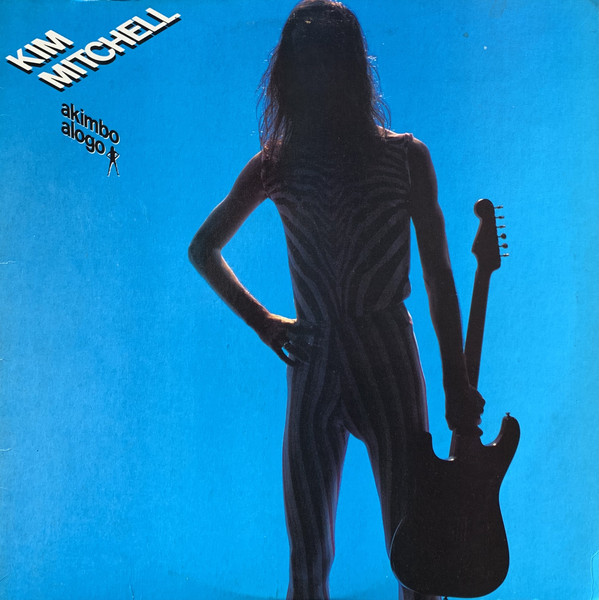
Kim Mitchell – Akimbo Alogo
The first full album from former Max Webster singer/guitarist, released in June. You could not avoid this album on the radio here – “Go For Soda”, “Lager And Ale”, “All We Are”, “Feel It Burn”… just an awesome album, still sounds great! Saw Kim play in Niagara Falls when this came out and again a few years ago, these songs are still highlights of his show.
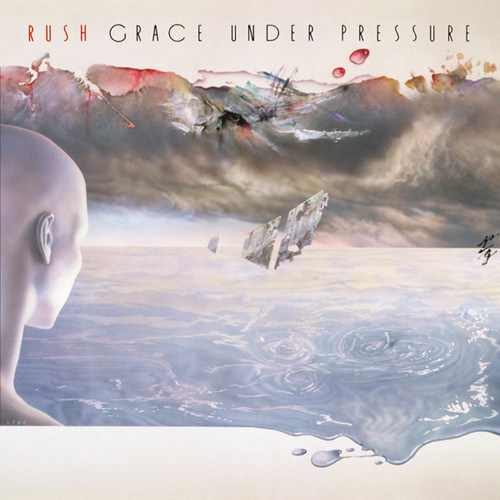
Rush – Grace Under Pressure
The first time I saw Rush was on this tour, at Maple Leaf Gardens. Released in April, it boasted 3 hits – “Distant Early Warning”, “Red Sector A”, and “The Body Electric”, as well as favorites “The Enemy Within” and “Between The Wheels”. I loved Signals, and and nearly as good. The underrated gem in Rush’s catalogue.
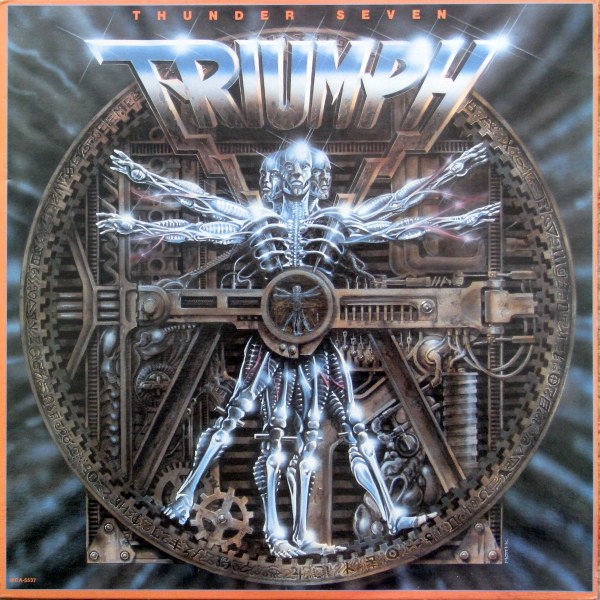
Triumph – Thunder Seven
Released in November, this is the last great Triumph album [IMO]! Featured hits “Spellbound” and “Follow Your Heart”, along with classics “Rock Out Roll On” and “Killing Time”. Loved this album then, still enjoy it.
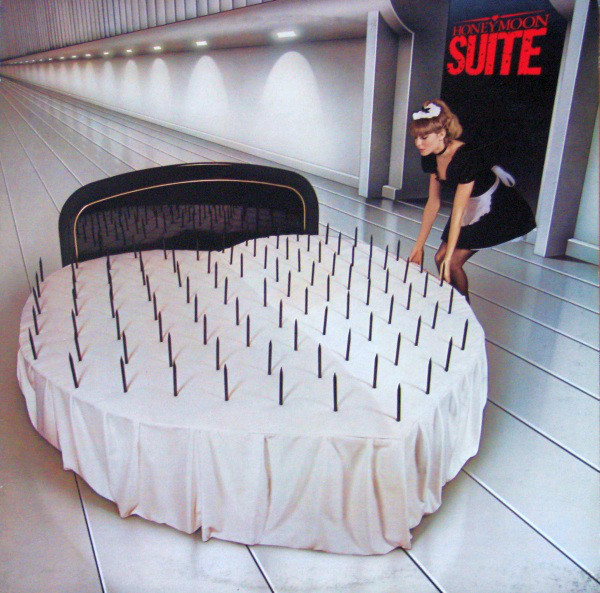
Honeymoon Suite – Honeymoon Suite
Growing up near Niagara Falls this band was huge, being local, and drew instant comparisons to Loverboy from some. But, a great debut album – “New Girl Now”, “Stay In The Light”, “Burning In Love”, “Wave Babies” – all hit singles in Canada. Released in July, I saw them shortly after as they opened for April Wine at the Kingswood Music Theater, north of Toronto.
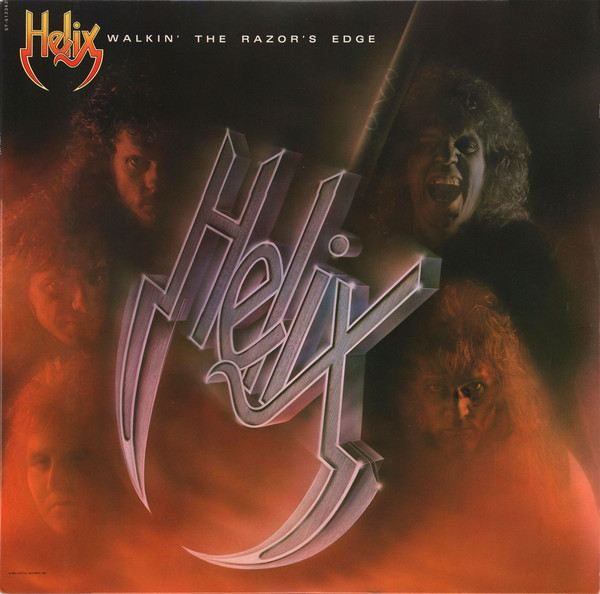
Helix – Walking The Razor’s Edge
The band’s 2nd album on Capitol, in a string of 4 really good albums. This one featuring the massive hit “Rock You” [by Bob Halligan Jr], as well as hits/covers of Gimme Gimme Good Lovin’ [Crazy Elephant] and (Make Me Do) Anything You Want” [A Foot In Coldwater]. Also included a few memorable band written rockers in “Animal House” and “You Keep Me Rockin”.
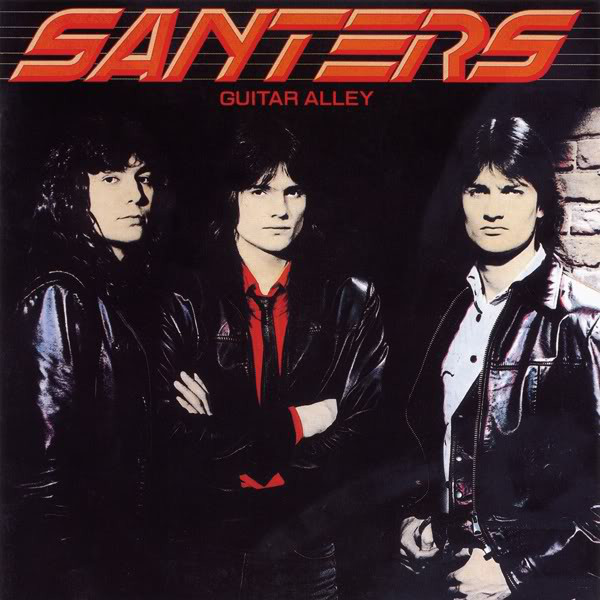
Santers – Guitar Alley
Toronto trio’s 3rd [and final] album released in the ’80s [a 4th was recorded but not released til the late ’90s]. Produced by Rik Emmett [Triumph]. A bit softer production, but some great stuff with the hit “Can’t Shake You”, “Black Magic”, “Baby Blue”, and the ballad “Dreaming”. Santers also scored a hit [and lots of radio play] with their version of Free’s “All Right Now” [not my favorite here].
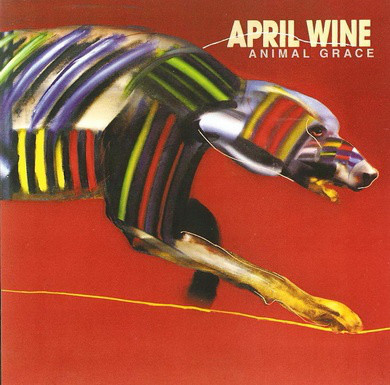
April Wine – Animal Grace
Sadly the last from the band before splitting up [returning in the early ’90s]. This one a bit heavier than Powerplay, but it didn’t do as well. Released early in the year, it featured the hit “This Could Be The Right One” [the only track featured in the live set], as well as favorites “Sons Of The Pioneers”, “Without Your Love”, and “Hard Rock Kid.” The classic logo missing on the cover.
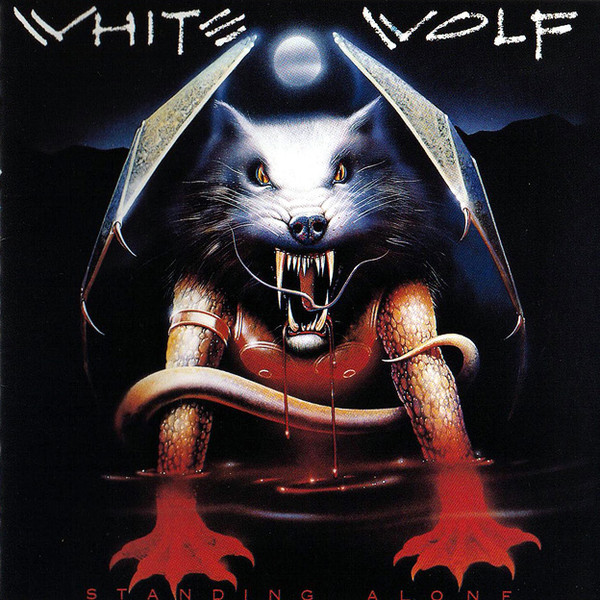
White Wolf – Standing Alone
Heavy ‘melodic metal’ [as it was called] from this Edmonton-based band’s debut album, released late in the year. Great hard rockers on this album with the minor hit “Shadows In The Night”, as well as cuts “Headlines”, the title track, and [anthem] “Metal Thunder”. It did crack the Billboard US Top 200 albums, and [for some reason] saw 2 different covers.
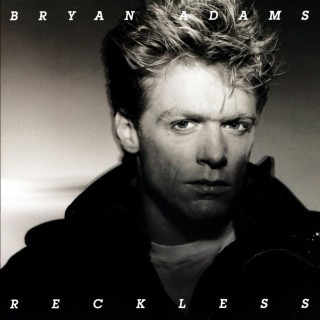
Bryan Adams – Reckless
I was never a huge Bryan Adams fan, but you couldn’t ignore the guy in the ’80s, especially Reckless, released in November, it was a #1 album everywhere, sold 12 million copies worldwide, featuring a pile of hits, most notably “Run To You” [originally penned with BOC in mind], “Somebody”, “Kids Wanna Rock”, It’s Only Love” [feat Tina Turner], and a few more.
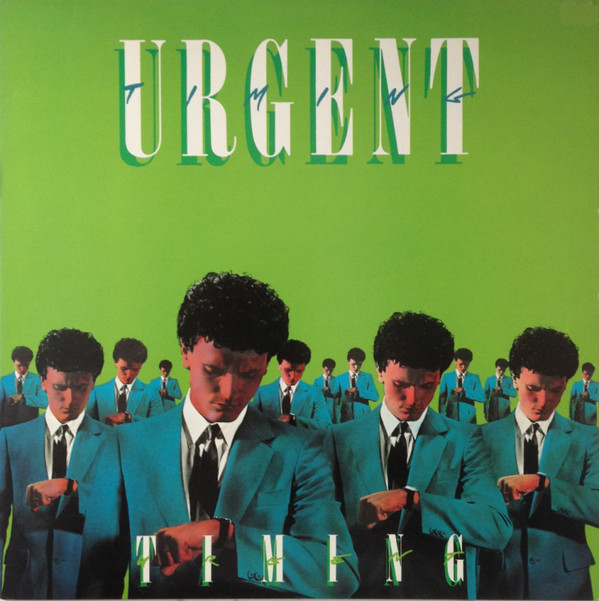
Urgent – Timing
The lone album from Toronto based trio, released early in the year. Keyboards added by guest players [a keyboard player was added after the album was recorded]. The band featured drummer Kim Hunt [ex Zon, later of Moxy]. “You’re Not The One” [a ballad] was a hit single, also included the single “Degan (Love You, Leave)”, and excellent melodic rock cuts like “Cat On The Prowl”, “Killer Love”, and “I’ll Find A Way”. Great vocals, with guitar sound & solos. *A US band took up the name a year later.
Others: Everest Everest , Lee Aaron Metal Queen, Red Rider Breaking Curfew, Kick Axe Vices , Gowan Strange Animal, Qwest Dreamzone, Harlequin Harlequin, Nash The Slash American Band-ages, Champion Champion, Thor Only The Strong .
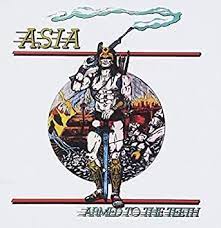
In this 2nd installment of The Story Behind The Album Cover, guitarist Mike Coates tells about his own creation for the US band Asia’s 1980 LP [the band’s 2nd] – Armed To The Teeth. This cover instantly reminded me of the Conan comic books, my dad was an avid comic collector and had a huge collection of Conan comics. My dad didn’t like any of the music I listened to, but he would’ve loved the artwork on this cover.
Concept of the cover and tie-in with the songs …
The cover was meant to portray the total concept nature of the entire album. I call the him the “Time Warrior.” The concept was the survival of the human spirit through history. The songs are about very different times so I used weapons from various eras. I tried to use real props to draw from, e.g. the sword, the bow and arrow, the six gun, and the rifle.
How it was drawn…
The guy’s body was drawn from several body builders, my own shinguards, a New York Giants football helmet, and those were my legs at the time. The tank was a Joe Kubert creation. That’s London burning in the background. Most of the body parts were mine. I am an Eckist so the concept was very spiritual. Kind of a western culture version of Arjuna and the Gita. The original drawing was quite large and done with a mechanical pencil. An ad agency did the color overlays. The drawing took many weeks. The colors about two hours. They kept pulling up the graphite and so I wind up correcting the cover’s extensive detail at least four times. It will be fun seeing the enlarged picture again when the LP box set comes out shortly.
Comic and Conan influence…
Yes, I was really into comics. Joe Kubert was an early influence. But I was really a Marvel fan and John Buscema was my hero. Frank Frazetta was also a major influence. In fact, I did a huge painting of Conan (on two house doors) that we used on a large easel behind the band for years. I had hoped to do one for each person on stage, but that one painting took three months so that was never realized. Those doors are still in my bedroom. There are good images of it in the CD booklet. I had hoped to do a drawing for the first cover (Conan breaking a bull’s neck) but again ran out of time putting the band together. I wrote all of our original material, so time was always an issue. Our engineer on “Armed to the Teeth” had just worked on the Bad Company “Run With the Pack” album, so that finished the front cover concept.
Through the use of Youtube and Discogs over the last few years I’ve stumbled upon different bands that existed before a much bigger band of the same name – best examples being the Asia from the US and the 2 other British bands that played under the name Iron Maiden in the ’60s and 1970. Back before the internet it was likely much more difficult for bands to realize that the band name they had chosen had already been used or was in use, and many bands probably didn’t think about the importance of registering a band name at the time. I think this sorta came to light more so in the late ’70s to early ’80s when bogus versions of Steppenwolf and Deep Purple existed, the latter being sued out of business – these bands though were related to a previous line up of the band, which in these cases was now being used by 1 former member who didn’t have the right to the name, until someone took legal action. In this series I want to point out successful bands [or in a few cases, had well known players and should’ve done better] that had names that had been previously [or still were] used by an unrelated band that also recorded.
I’ve put down 12 cases of names being re-used or taken. I’ve put the emphasis on the lesser known band, in most cases the first one(s). I’ve also provided a few links to check out. I had a list well over 20 to start, so there may be a Part 2 down the road. Check out some of these bands on youtube, and leave me some feedback in the comments.
Asia
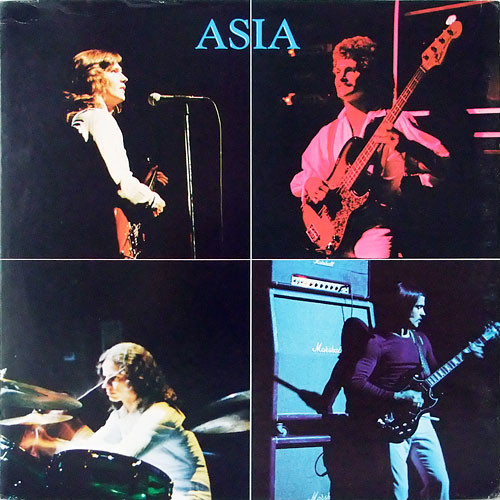
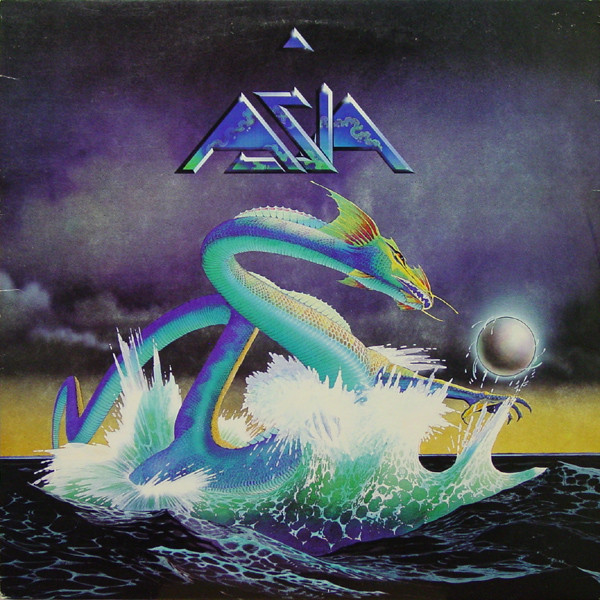
The ‘supergroup’ named ‘Asia’ debuted in 1982, and there self-titled album was one [or the] biggest of that year. They would follow it up with another highly successful album in’83 before the band’s fortunes started to drop and non-stop personnel changes would occur with the band over the next few decades before the original band reunited for 3 albums in the 2000s. But, that Asia -featuring John Wetton [RIP], Carl Palmer, Steve Howe, and Geoff Downes had used a name that was already in use by an American band from South Dakota, another prog / hard rock 4-piece who had recorded 2 albums – 1979’s self titled, and 1980’s Armed To The Teeth, which featured a pretty cool cover drawn by the band’s guitar player . The band consisted of – Michael English – vocals, bass, percussion, Larry Galbraith – vocals, guitars, mandolin, Mike Coates – guitars, mandolin, piano, harpsichord, mellotron, background vocals, and Doug Johnson – drums, percussion [replaced John Haynes]. This Asia’s sound was based more around the twin guitar approach, great vocals and harmonies, mellotron, and lengthier prog pieces with fantasy and history based songs like “The Road Of The Kings”, “Xanadu”, “Kamikaze”, and “Genghis Khan”. Not much in the way of ‘commercial’ rock of the time here, aside from the ballad “Paladin” [issued as a single], on the 2nd album. Both worth checking out, but may as well get the CD [see link below], as original copies of the first LP are over $300 and the second – over $100, on Discogs. Anyway, also check out the link below for Mike Coates detailed account of how they were duped out of the name by the supergroup’s management, and which ultimately lead to the band’s demise.
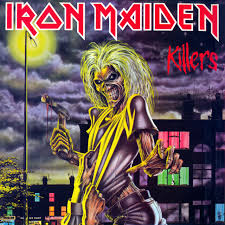
One of the biggest bands in heavy metal history got their start in the mid ’70s, founded by bass player Steve Harris. The name was taken from the 16 century torture device [or 18th, depending on source] . However, the British metal legends were certainly not the first to the use the name for the their band. There were 3 previous bands that used the name, 2 of which, also from the UK recorded original material under, and another being a 5-piece all-female band from the mid-west USA, though I can’t say they recorded anything – but check out the link below on a brief history of the band with photos and show adverts.
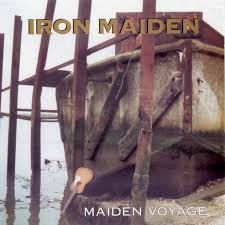
The first Iron Maiden was from Basildon, Essex. This band started as a folk duo and eventually became more of a blues outfit. The band seemed to have a number of connections and brushes with opportunity. They eventually signed to the Gemini label and recorded demos in 1969 for a proposed debut album. A single was also released on Gemini in 1970. with the line-up – Steve Drewett [vocals, harmonica], Trevor Thoms [guitar, vocals], Barry Skeels [bass, vocals], and Steve Chapman [drums, who had replaced Paul Reynolds].
But when a tour of Australia was cancelled, things started to fall apart with Chapman leaving. Their recordings were eventually released under the Iron Maiden name, titled Maiden Voyage in 1998. Interesting stuff, kinda psychedelic, bluesy, a bit folky, even a bit doomy. The CD includes the band’s single, as well as 2 tracks recorded under their previous name ‘Bum’, one of which is titled “God Of Darkness”. Bass player Barry Skeels would go on to record with Zior.
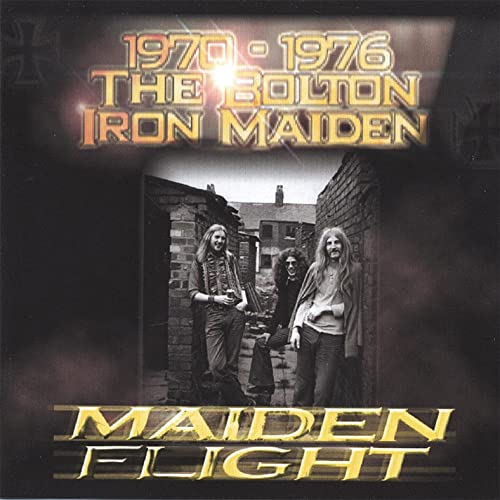
Another Iron Maiden hailed from Bolton, a trio formed in 1967 and consisted of Ian Boulton Smith [aka Beak, lead & rhythm guitar], Paul T.J. O’Neill [drums, keyboards, lead vocals, producer], and Derek Austin [bass, vocals]. This band was a heavier rock band [ala Zeppelin, Free]. I recall reading in a Steve Harris interview [or book?] how he’d got a call regarding another band named Iron Maiden and asking [or demanding?] that he cease using it, to which Harris [I think] ignored it and went out to register the name. Maiden from Bolton disbanded in 1976 anyway. Guitarist Ian Boulton Smith left the band in ’75, and the band carried on with a replacement [Noel Pemberton-Billing], but after more changes they split. Smith passed away from cancer in ’76, and nearly 30 years later O’Neill put together the band’s recordings to release on CD,. He would contact Rod Smallwood [Iron Maiden manager], who would give the band’s OK [with an adjustment to the name], and would also advertise the album’s release on Maiden’s website. Under the name ‘The Bolton Iron Maiden’, they made 1000 copies of the CD Maiden Flight [1970-1976] . A 2nd CD was released years later, as well O’Neill would carry on and record a 3rd CD under the band name, released at the end of 2020. *All profits from Maiden Flight and Boulton Flies Again are given to two cancer charities in Beak’s honor. Cancer Research UK and Macmillian Cancer Care.
Although it’s interesting to note that Steve Harris’ band went on with a name that was in use [and was made aware of], the other 2 British bands that had used the name prior would benefit [or living members would] by having a starting point [name recognition] to release the music they made decades ago. Perhaps without the one Iron Maiden that’s known world wide, recordings from the other 2 bands might’ve never seen the light of day[!?] … Check out the links below for more info on the other Iron Maidens.
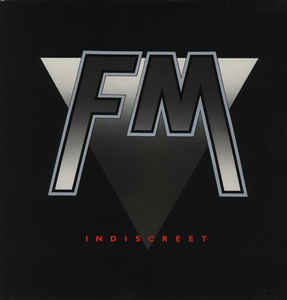
This one is one that puzzles me, as Canada’s FM had started as a progressive 3 piece in the mid ’70s, and were still active when the British aor band formed and took up the same name. Hmm, but oh well. Very different sounding bands. I don’t know how much activity or success Canada’s FM ever had in the UK, but I am pretty sure the British FM would be hard to find in any record shop or heard of here. Just a guess. I have most of the Canadian band’s albums, but nothing of the UK band. I’ve checked out plenty of FM [UK], but not too crazy to get anything anytime soon. Canada’s FM, from Toronto originally featured just Cameron Hawkins [bass, keyboards, vocals], and Jeff Plewman [aka -Nash The Slash electric violin, mandolin, vocals], and would soon add [drummer] Martin Deller. Nash left after recording of the legendary debut [rereleased after Nash left, as Black Noise] , as he also had a successful and pioneering solo career. Black Noise featured the band’s best known song “Phasors On Stun”. His replacement was Ben Minks for the next 3 albums [Minks also known for his work with KD Lang, as well as Rush’s Geddy Lee]. Nash would return to the band in the ’80s, as the band became a 4 piece and took on a slightly more commercial approach [I saw them open for Rush at one point]. The original trio reunited in the ’90s for a brief tour of Ontario to promote the CD release of Black Noise, and record a live album. I saw 2 of these shows. Plewman [Nash] passed away in 2014, and though he hadn’t been in the band for years, it continued with Hawkins and numerous changing line-ups. [Well, that was longer than I planned]. FM were never really a commercial band, being very ground breaking in their sound, and I would say the closest thing to them would’ve been John Wetton’s short lived UK .
FM [UK – as they would add to their name in the US] formed in 1984 Merv Goldsworthy [bass], Pete Jupp [drums], Steve Overland [guitar/vocals], Chris Overland [lead guitar] . and Philip Manchester [keyboards]. Chris Overland would be replaced by Andy Barnatt. The band created a strong following in the UK, releasing a number of albums before breaking up in ’95. FM [UK] plays hard-rock / AOR, and features a great singer in Steve Overland. They returned a decade later, and have released a number of albums consistently, including 2020’s Synchronized [Frontiers].
“We did find out, that’s when we had to change the name to FM UK in America, in the States we had to change the name, which was really crap.”, recalled Pete Jupp in a 2011 interview for Metal-Rules.com
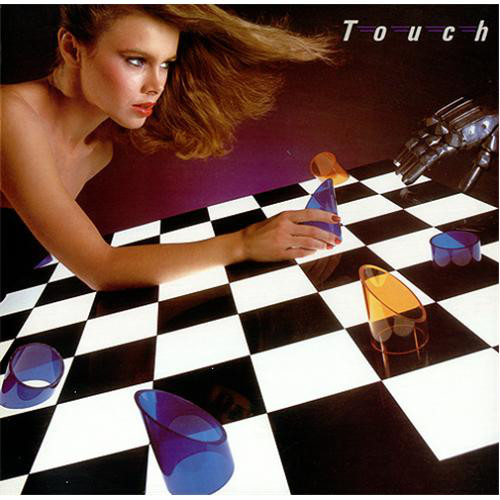
Touch
Many may be familiar with the US AOR band Touch, who were formed in the late 70s in New York, and released 2 albums, as well as had a few hits – “Don’t You Know What Love Is” & “When The Spirit Moves You”. The band was /is lead by keyboard player / songwriter / producer Mark Mangold [who’d recorded with 60s band Valhalla]. This ‘Touch’ reformed in recent years and just released a new album – Tomorrow Never Comes.
However, in the late ’60s there was a band using the name Touch, from Portland, Oregon. The band featured the vocal talents of Jeff Hawks, and recorded one album in 1969, as well as a few singles. The album was recorded at Sunset Sound in Hollywood, and was known for drawing the likes of Mick Jagger and Jimi Hendrix, who hung around at the time. The band split soon after it’s release, with a few of the members going on to form Stepson. The album would have an impact on a number of bands, including Uriah Heep.
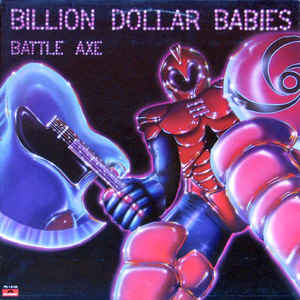
Billion Dollar Babies is the name of a Swedish metal band, who’ve released 3 albums from 2010 to 2017. Not too bad actually, well worth checking out. But the name has been used so often, and it all comes back to the Top selling album by the original Alice Cooper, released in 1973. More so, ex members of Alice Cooper recorded the album Battle Axe under the name in 1977, and I’m sure there’s been a number of AC tribute bands that have used [or are using] the name as well.
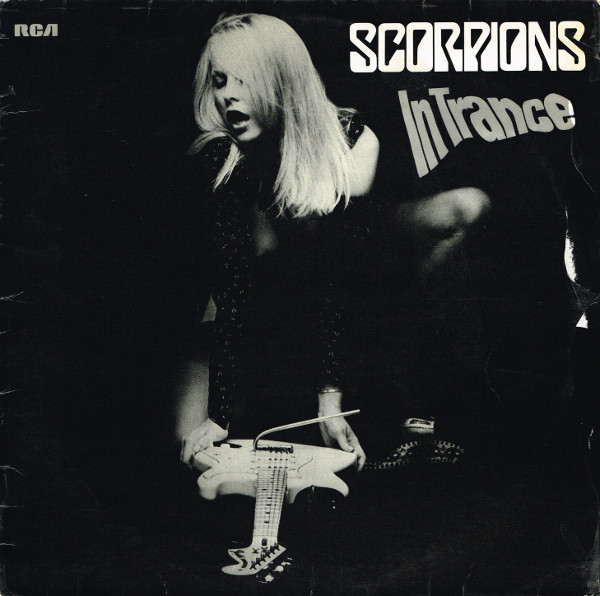
The German heavy metal band founded by Rudolf Schenker released their first album in 1972, though Schenker likes to date the band to 1965 [when he was in High School, whatever]. So if that was the case, the German Scorpions were the 3rd rock/pop band to use the name.
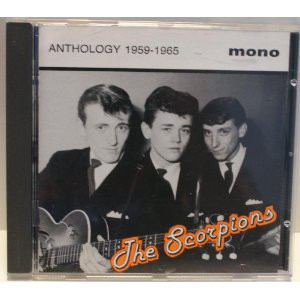
The Scorpions, from South London started in 1959, It featured brothers John & Ted Barber, along with drummer Ivor Knight [having replaced Mick LeDieu]. The band released 2 instrumental singles in 1961, – “Rockin’ At The Phil” [a Chuck Berry cover, and “Ghost Riders In The Sky” [originally by Western artist Stanley Davis Jones, and later covered by Johnny Cash, as well as US band The Outlaws]. The band recorded more [and tho’ I’m not sure of dates]; at some point also went by the name The Ferridays. A 32 track “Anthology” of their recordings was released in 1996, which included some tracks done with legendary British producer Joe Meek [see next entry]. The band were still playing up until 2010, at least [on youtube].
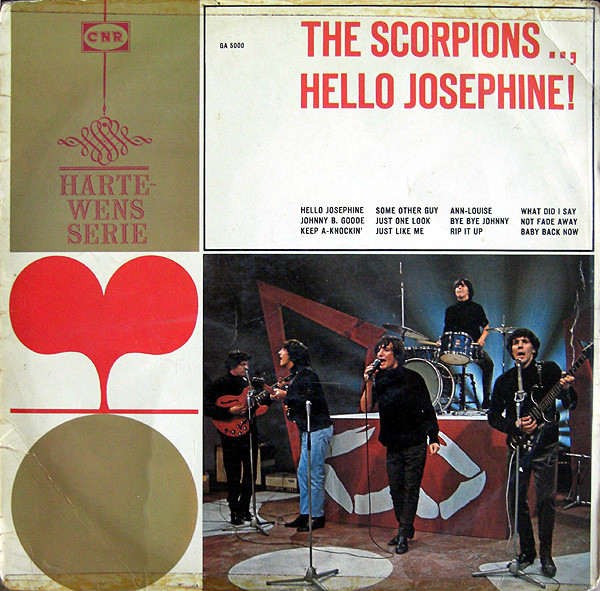
There was also a 5 piece band going by The Scorpions from Manchester. Originally including Tony Postill [guitar], Rodney Posthill [guitar], Tony Brierley [bass], Mike Delaney [drums]. and Pete Lewis [vocals]. The band’s records would only get released in The Netherlands, where they would go play, and they had a hit with a cover of Fats Domino’s “Hey Josephine”. Within a few years though Lewis was the only original member left. The band continued to release singles, and even a few LPs in the mid ’60s – but only in The Netherlands. “Hey Josephine” became a hit again in ’77, and Lewis with a new version of the band recorded an album, consisting of new and re-recorded songs. The band played in The Netherlands up until 1979. Lewis passed away in ’85. Interestingly, Graham Lee and a few other non-original members released a CD in 2011 as The Scorpions.
The Outlaws
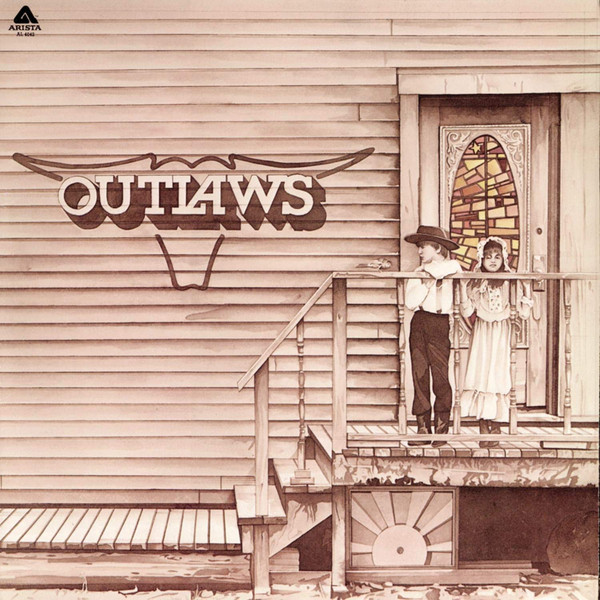
The name The Outlaws has been used a few times, probably most notably by the Southern rock band from Florida, formed in the late ’60s by guitarist / vocalist Hughie Thomasson, and by teh time of the first album in ’75 consisted of Billy Jones [guitar], Frank O’Keefe [bass], Henry Paul [guitar, vocals], and Monte Yoho [drums] . The band would release numerous albums over the decades, and scored hits with “Green Grass And High Tides”, “There Goes Another Love Song”, and a cover of “Ghost Riders In The Sky”. The band was non active for some time when Thomasson joined Lynyrd Skynyrd, but returned a decade later. Thomasson passed away in 2007, and Henry Paul & Monte Yoho kept the band going, following legal issues over the name. They released a new studio album last year.
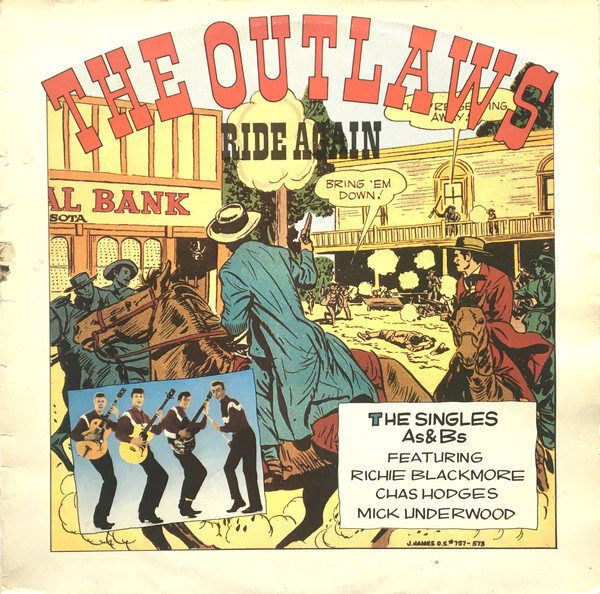
Now, the other Outlaws was a British band that was put together by producer Joe Meek, and existed from ’60-’65. An instrumental group, originally put together to back singer Mike Berry, who had a string of hit singles. They would also back other singers, as well as record their own material. The band was known for it being a starting point for such rock notables as Mick Underwood [Quatermass, Gillan], Chas Hodges [Chas & Dave], and largely – Ritchie Blackmore [Deep Purple, Rainbow]. A few CD compilations of the bands singles would be released as recent as last year.
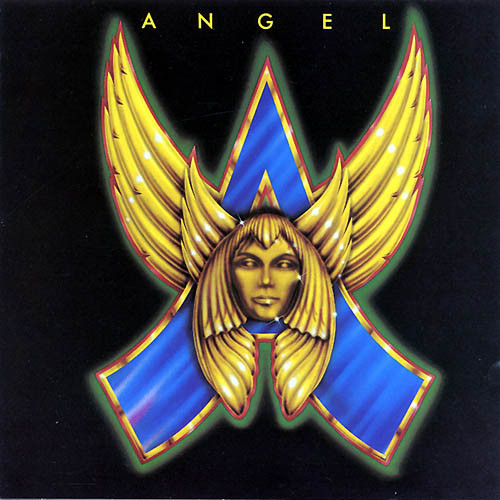
Angel
Not that either rock band that used the name Angel were huge successes, but the US band formed in ’75 featuring Frank Dimino [vocals], Punky Meadows [guitar], Gregg Giuffria [keyboards], Mickey Jones [bass] and Barry Brandt [drums] are best known. The band was signed to Casablanca Records, the same label as Kiss – who they be forever linked to. The band released 5 studio albums and 1 live set from 1975 til 1980 before breaking up. The first 2 albums were the bands most popular amongst longtime fans, being more progressive and harder rocking, but then looking for singles the next 3 albums consisted of more pop oriented rock tunes. More recently Dimino and Meadows reformed a new version of the band and released the excellent Risen album in 2019.
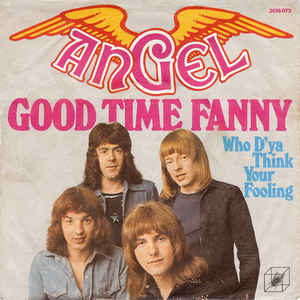
In the UK though the name Angel existed briefly from 1974-’75 as a glam band. The band was managed & produced by Andy Scott and Mick Tucker of Sweet, who knew bandmembers from their previous band – Pebbles. As Angel, they released just 2 singles in their short existence, sounding very much like Sweet. The band consisted of Brian Johnson [vocals], Martin Kemp [bass], Steve Rickard [drums], Joe Ryan [lead guitar], who was replaced by Bob Banasiak for the 2nd single. Both A-sides -“Good Time Fanny” and “Little Boy Blue” were penned by Scott, while the B-sides were the band’s own. Hmm, sounds familiar. The first single [“Good Time Fanny”] became a hit in Germany, and the band would go tour there. Bravo Magazine [Germany] would also vote the band 2nd place in best newcomers [behind Queen]. After a change in line up, the 2nd single was recorded and released, but failed to chart. The band recorded more tracks in 1975, following a few line-up changes, but nothing came of these, due to record company & management issues, and they broke up. Singer Brian Johnson [not the guy from AC/DC] joined Belgian band Octopus, and had a pile of hit singles with the, In 2005 Angel did a reunion show, and subsequently released a 15 track CD of all their studio recordings from 74 & 75, plus live tracks from the 2005 concert. In 2010 a reformed version of the band released the CD The Butterfly Song.
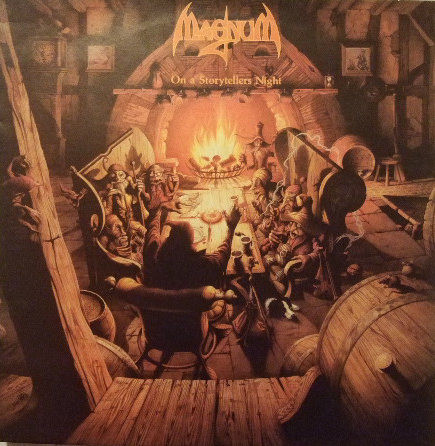
Best known band using the name Magnum is British hard-rock / pomp band who were founded by guitarist / songwriter Tony Clarkin and singer Bob Catley in the early ’70s. By 1978 they signed to Jet Records and released their first album. The band scored hits in the UK, and released a pile of great albums before splitting in 1995. The band had 0 success in North America and rarely played over here. The band reformed in 2001 and have continued to release excellent albums every few years, despite a number of personnel changes. Clarkin and Catley remain the face of the band.
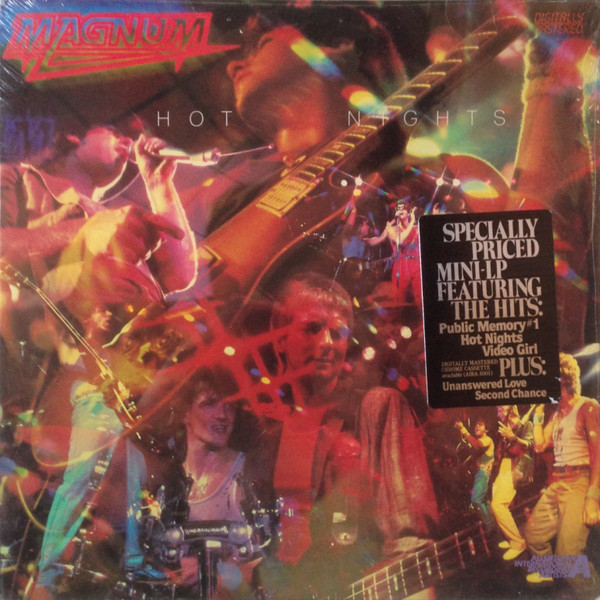
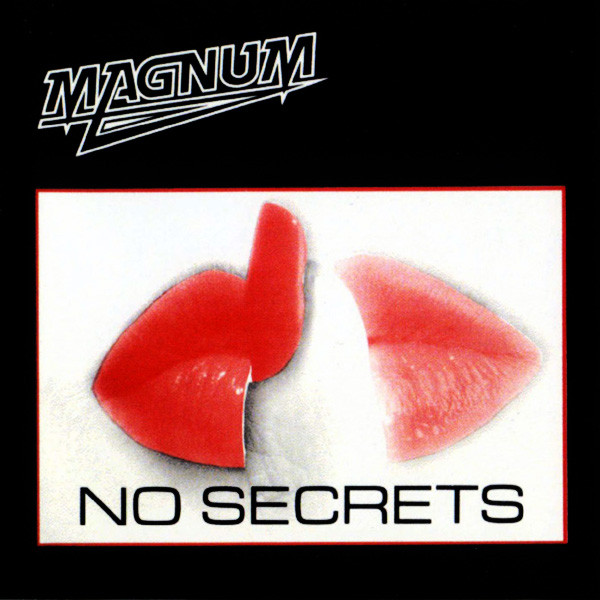
The name Magnum though would be used by a few other bands in the US. There was the California based funk/latin/jazz band that released their lone LP Fully Loaded in 1974, as well as a few singles. There was also a band from Pennsylvania who would release a trio of singles from 1980 to 84, and a full album in 1989. Again, not sure why these guys wouldn’t have know the name was already in use by the time they recorded, but oh well. The band was largely a covers bands, performing hard-rock / AOR hits, and were founded by keyboard player Lonnie Warner and guitarist Steve Weiss in ’78, and included drummer Dave Werkhiser, lead vocalist [and keyboardist] Tommy Zito, and bass player Butch Samolewicz. In ’83 the band released a 10 song cassette of originals titled Hot Nights. And by the time the band released their only CD, of 8 songs titled No Secrets in 1989, the band had gone through more changes, and then featured singer Robert Mason [later of Lynch Mob, Cry Of Love, and Warrant] and were produced by Benjy King [who’s various credits up until that point included Rick Derringer, Scandal, and (the late) Alan Merrill]. Original singer/keyboardist Tommy Zito joined AOR rockers Aviator for a few years. The band split in the mid ’90s, but apparently do the occasional local reunion show, and has added ‘USA’ to their name [online]
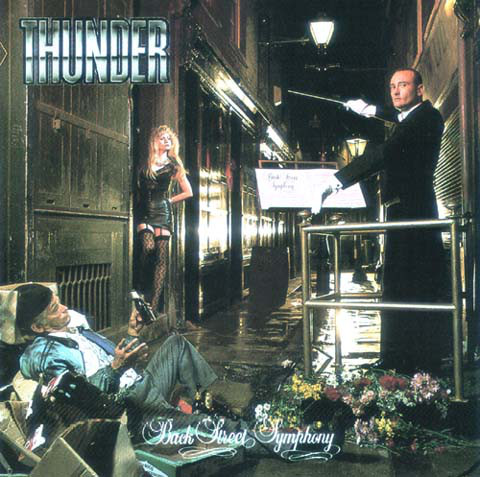
UK band Thunder formed in the late ’80s, and were hailed as the next huge classic rock band to follow the likes of Zeppelin, Bad Company,… with their 1990 debut Back Street Symphony. The band remained highly successful in the UK and elsewhere, but had no such fortune in North America [see Magnum]. Lead by the talents of singer Danny Bowes – Lead Vocals and guitarist Luke Morley, and originally including keyboardist Ben Matthews, bass player Mark Luckhurst, and drummer Gary [Harry] James [who would later join Magnum for a number of albums]. The band split a few times over the years, but are back making great music in recent years, including the recently released All The Right Moves, with 4 of the original members.
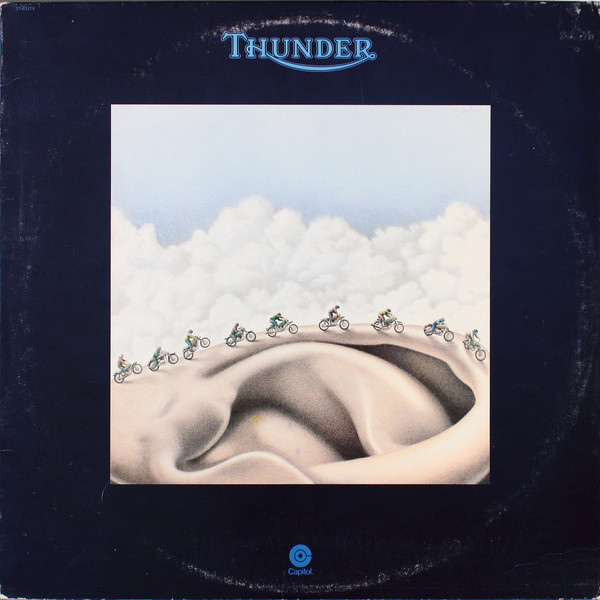
The name Thunder had been used before, notably by 2 separate bands in the US. The first being the short-lived band featuring guitarist / songwriter John Nitzinger [Nitzinger, Bloodrock] and bassist David Hungate [Toto], as well as singer David Alley, drummer Randy Reeder [Bloodrock], keyboardist Whitey Thomas [Nitzinger],… Not really sure who Was the band, as there’s only 2 guys featured on the back cover, tho Nitzinger, Hungate, and Alley all contribute to the songwriting, and Thomas serves as co-producer, and there’s also a number of guitar players credits, and a pile of female backing singers. Hmm.. Anyway, not a bad album. I have the Nitzinger albums, and this is comparable with songs like “King’s X”, and the fast rocker “Power Glide”. Not consistently heavy tho, plenty of slower funky tunes and a few ballads. Nitzinger would go on to record a number of his own albums, as well as recording with PM [w/ Carl Palmer], Alice Cooper, and Dave Evans [original AC/DC frontman]. Hungate would join Toto til 1982 and do tons of session recordings in Nashville, and Randy Reeder would go on to record on the lone LP by hard-rock / prog band Alexis [1977]- which was produced by Ron Nevison [great sounding album, cool cover!]
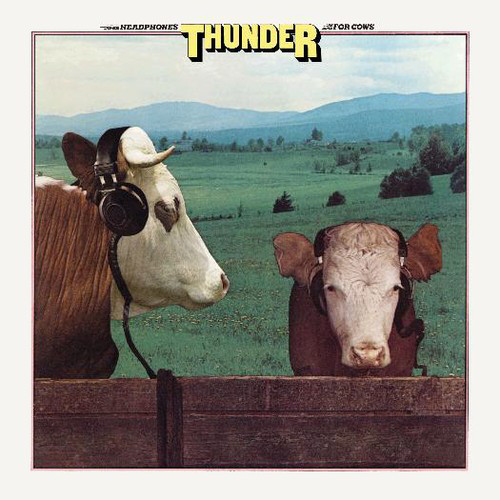
A Southern rock band, from Tennessee used the Thunder name, consisting of bassist Chopper Anderson, drummer Tris Imboden [Honk, Kenny Loggins], and guitarist / vocalist John Porter McMeans, and guitarist / keyboard player Mo West. The band released 2 albums – 1980’s self-titled, and 1982’s Headphones For Cows [great title and album cover!], adding keyboardist Denny Henson [Fools Gold] for the 2nd album. The albums, usually listed as Southern rock, are kinda that late 70s AOR rock, but occasionally touch on funk, blues and country. Good tunes include “Easy Street”, “Service With A Smile”, “Can’t Let Go / Can’t Hold On” and “Midnight Heartache”. I prefer the 2nd album, being a bit more upbeat.
Chopper Anderson would join the reunited line up of Whitford- St Holmes [on their 2015 album], McMeans would go on to write and record with Dan Seals, as well as release a solo CD in 1991 with West as producer. West passed away in 2010.
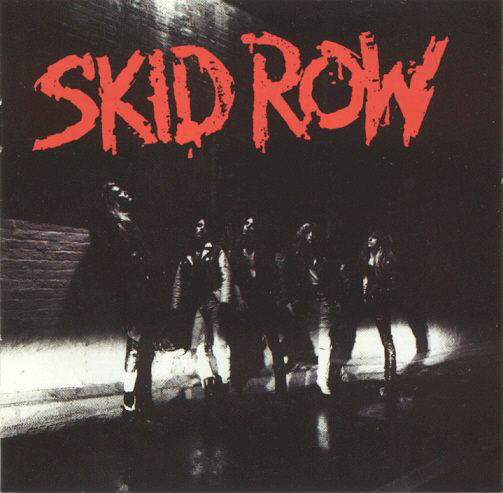
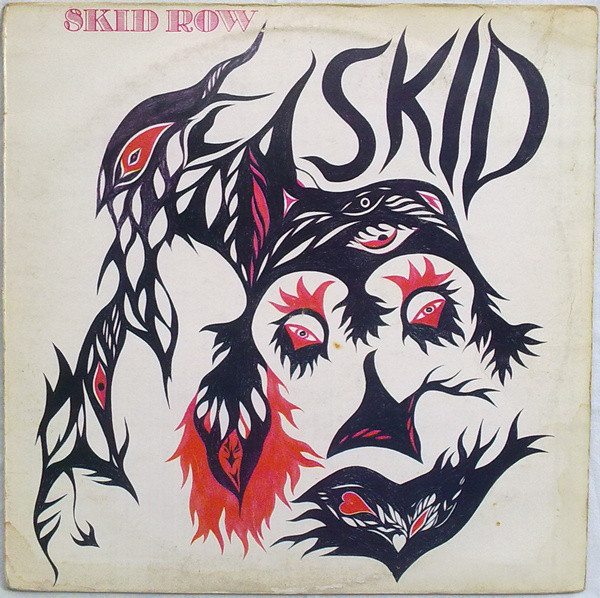
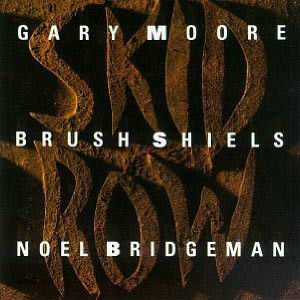
American heavy metal band Skid Row arrived in 1989 with their excellent debut album, featuring the hits “18 And Life” and “Youth Gone Wild”. The band was originally fronted by Canadian singer Sebastien Bach, who later went on to acting and a solo career. The band split after 3 albums, but reformed with a different singer 6 years later. Although a cool name for a metal band, the New Jersey based band was not the first to use it – that would be the legendary Irish blues rock band originally consisting of bassist Brendan ‘Brush’ Shiels , drummer Noel ‘Nollaig’ Bridgeman, guitarist Bernard “Ben” Cheevers on guitar, and singer Phil Lynott! Gary Moore would soon join, and Cheevers would leave, and Lynott was fired by Shiels, having appeared on just 1 single, making this Skid Row a trio. In return for letting him go Shiels would give Lynott a bass guitar and taught him how to play it. The band’s debut album in early ’70 was pulled quickly so that the band could re-record some tracks and add newer ones. It was re-released in the fall of ’70, titled Skid. It was followed by 34 Hours [titled after the amount of time taken to record it] A 3rd album was recorded but not released until 1990 under the title Gary Moore/Brush Shiels/Noel Bridgeman. The band under Shiels’ went through numerous changes and would feature guitarists Eric Bell [for a few shows], then Paul Chapman. Shiels would return with a new 4 piece line-up in the mid-70s, and release the double live set [mainly covers] Alive And Kickin’. Noel Bridgeman would go on to record a number of albums with Irish folk singer Mary Black, among others, and passed away March 23 of this year. Chapman went on to record and tour with Lone Star and UFO, before passing in 2020. Moore had a lengthy solo career, as well as a period in Thin Lizzy, he passed in 2011. Shiels latest solo album was in 2012. In later years he also challenged and protested the use of the band name by the American band [see link below].
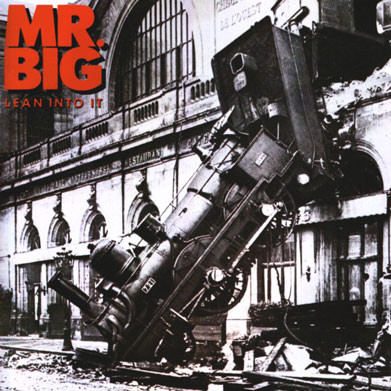
Well, long before the massively successful US band had their top hit “To Be With You” in 1991, the name Mr Big had been used for years by a British band. The US band formed in the late ’80s, featured the vocals of Eric Martin, and bass player Billy Sheehan, guitarist Paul Gilbert, and drummer Pat Torpey [RIP, 2018]. The band released 9 studio albums, as well as had a number of smaller hits, and live albums – particularly in Japan where they were huge.
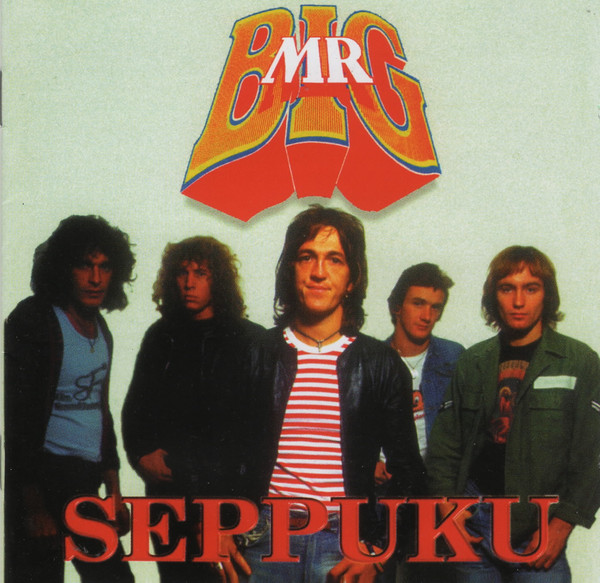
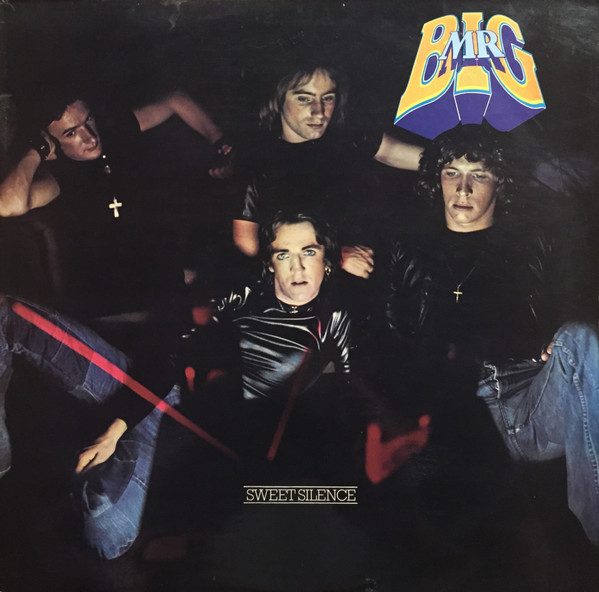
The band name had previously been used by a British band formed in 1967 under the name Burnt Oak, before changing it to Mr Big in 1972. Original members were – Jeff (Dicken) Pain [guitar, vocals], Pete Crowther [bass], John Burnip and Vince Chaulk [drums]. The band was managed by Bob Hirschman, who also managed Mott The Hoople. They signed to Epic in ’74 and released their first album Sweet Silence in ’75, and would land the opening slot for Queen’s Night At The Opera UK tour. The 2nd album Photographic Smile was recorded in Los Angeles and featured the pop song “Romeo”, which would become a top 10 UK hit. And this is where things get confusing – Photographic Smile came out in late ’76 in North America , where the band was signed to Arista [EMI also issued it then in Japan], EMI would release the self-titled album [w/ a different cover] as the band’s 2nd album in the UK, and everywhere else. The Arista version would feature a mix of songs from both albums [EMI], so there was only 2 albums. Later they’d be openers for Sweet in Europe, but by ’76 they were big enough to headline their own UK. They also toured the US in ’77 with shows alongside Tom Petty & The Heartbreakers, Journey, and Kansas. Mr Big had also seen a few personnel changes. The band’s 3rd album – Seppuku would be produced by Ian Hunter in 1978, but due to record company & management issues would not be released until 2001 when Angel Air Records put it out. A single “Senora” [co-written by Hunter] was issued and the band promoted it on UK’s Top Of The Pops, but the band split up soon after.
A few members [Dicken and Crowther] went on to form Broken Home, who released 2 albums, and scored a few minor hits in Norway. Dicken would later revamp the band with former member Edward Carter, releasing albums in 1996 and 2011. Drummer Vince Chaulk would go on to record with Streetband [which featured Paul Young]. replacement drummer John Martyr went on to record with Voyager and Alaska.
A shame this Mr Big didn’t last longer, their first few albums are full of pop and hard-rock, as well as unique instrumentations and arrangements, and great harmonies,. Not unlike Queen in some ways, but a bit more experimental at times, Favorite tracks – “Time Base”, “Sweet Silence”, “Enjoy It”, “Easy” and “Can We Live (Angel Of My Life)”, In one of the links below, the name dispute is also discussed, as the band felt they’d registered the name in 1973.
Pyromide is the 3rd album from Finnish metal band Temple Balls. If you just want to hear some all-out 2 guitar, heavy, pounding hard rock & metal, with cool lead vocals, melodies, and big vocal choruses – then check this out. There’s a number of kick-ass rockers here in “T.O.T.C.” [Thrill of the chase] , “Fallen Youth” [shades of Dio as this one starts] , and “You Better Run”.
Fave cuts here would be “Bad Bad Bad” [an easily likeable tune, a bit less metal, and a bit of pop, the anthem “Heart Of A Warrior” , and the power ballad “If Only I Could”, which starts on piano and becomes pretty heavy, no mushy stuff here; killer guitar solo. I really like the production and sound of this whole thing. This just gets better after a few listens. Now I am curious about the rest of this band’s stuff. Pretty cool album cover as well from Jan “Orkki” Yrlund.
About:
Temple Balls are an energetic hard rock band from Finland. “Pyromide”, their Frontiers debut and third album overall, is a tour de force of melodic hard rock that sees the band pushing themselves onto the world stage. Produced by none other than Jona Tee (H.E.A.T.), “Pyromide” is a tour-de-force of hooks, powerful rhythms, and anthemic rock ‘n roll like it was meant to be played.
For the past couple of years, Temple Balls has kept busy both in the studio and on the stage. Opening for such bands as Sonata Arctica, Queen, Deep Purple, and Uriah Heep, the band has proven to be more than capable to handle stages of any size, whether it be a big festival or your local club’s stage. Live, this band will set your friggin’ pants on fire and turn you into a believer.
The band’s first official single, ’Hell And Feelin’ Fine’ was released in September 2016 and got loads of airtime on Finnish Radio Rock. The band’s debut album was recorded at Karma Sound Studios (Thailand) in May 2016, and saw the daylight on February 24, 2017. The album was produced by Tobias Lindell, who is known for his collaborations with Europe, Mustasch, and H.E.A.T. Fall of 2017 started with a sold out tour across Finland with Battle Beast. The band also played in Japan for the first time and did a five day tour of Ukraine in late 2017. After their swing through Japan, the readers of the biggest Japanese rock magazine Burrn! voted Temple Balls as ‘the second brightest hope’ and additionally were chosen as ‘The Newcomer of the Year’ on Masa Ito’s Rock TV.
The second album, “Untamed” dropped on March 8, 2019 and immediately got fantastic reviews from music media such as Soundi and Burrn! magazines. The band also toured Europe as support fro Sonata Arctica, cementing their reputation as a stellar live act.
Temple Balls third album, “Pyromide” is now ready to be unleashed. Produced by none other than Jona Tee (H.E.A.T), it is a stunning punch in the face for all lovers of anthemic and melodic hard rock.
Tracklist: Thunder From The North Long Ways, Long Lies T.O.T.C. Fallen Youth Bad Bad Bad What Is Dead Never Dies Unholy Night Heart Of A Warrior You Better Run If Only I Could Something To Die For
Line-up: Arde Teronen – Vocals Jimi Välikangas – Bass Jiri Paavonaho – Guitar Niko Vuorela – Guitar Antti Hissa – Drums
In what is to be Dennis DeYoung’s final album – 26 East Vol 2 will not disappoint DeYoung or so those old Styx fans who still miss him as part of the band. Assuming Dennis is at peace with this being his last, one can’t help but feel a bit sad for him, having created such a fantastic repertoire of music for fans, and here it is – the Grand Finale! And a bit sad [regardless of what you think of his departure from Styx], that he ends his career not as part of the legendary band he helped create and lead for many years. Although I have not picked up everything Dennis did outside of Styx, the guy’s music holds a place for me as one of my first favorite bands whom I collected right til they split in the ’80s, and who’s lyrics usually meant something . I hope the guy has a book in his retirement plans! Having said all that, I enjoyed 26 East Vol 1 last year, but I think I just may enjoy this one a good bit more. At first I thought the cover was a bit odd, a throw back to the ’60s, but really it’s a nod to Meet The Beatles! There is plenty of reflecting in this diverse batch of tunes, and a few nods to his past with Styx, and plenty of those old Styx harmonies. The album opens with “Hello Goodbye”, and it’s a Beatles’ inspired upbeat pop number, complete with horns, and plenty of Beatles references. Sure there’s a few ballads, most notably “Your Saving Grace” and “Always Time”, which would have fit well on a classic Styx album.
Actually there are a few tracks here that wouldn’t be out of place on a Styx album, and thus will appeal greatly to those fans, like “Proof Of Heaven” which – with those harmonies and chorus remind me of the track “Pieces Of Eight”, and of course “The Isle Of Misanthrope” sees DeYoung return to those progressive Styx cuts. “There’s No Turning Back Time” is an early favorite here, starting as a ballad and going through a few changes and picking up the pace when the band kicks in, and lyrically one of a number of songs here that just may bring out an emotional reaction to those fans of DeYoung’s writing.
Aside from the opening track there is some catchy upbeat stuff, such as “Land Of The Living” [this would’ve made a fine single at one point], and the rock track “The Last Guitar Hero” [with Tom Morello of Rage Against The Machine], a song citing rock being dead due to technology, a great tune. The album ends with a revisit of “The Grand Finale”, so wonderfully put on here, as it caps off more than just another album.
Such a great set of songs, varied, touching on everything DeYoung was best known for in Styx. Fans will appreciate it, as he kinda returns home [minus the band] on this album. Very much looking forward to getting the gatefold vinyl LP, opening it up. putting it on the record player, and enjoying it as I did with those old Styx albums decades ago.
RELEASE DATE: June 11, 2021
Former Styx frontman Dennis DeYoung is back with the second volume of his fond farewell to recorded music, “26 East, Vol. 2.” As with the preceding volume, “26 East, Vol. 2” once again hints strongly at DeYoung’s rock roots with Styx. The production and musicianship are EPIC, and those timeless vocal arrangements get delivered in spades. A fitting goodbye and a final signature on an outstanding body of work which will stand the test of time!
DeYoung has previously stated that “26 East” will mark his retirement from the world of recorded music. It was thanks to Frontiers CEO, Serafino Perugino, that given the abundance of material, Dennis agreed to split the album in two parts. This second half starts where the previous one left off and sees DeYoung collaborate again with the awesome Jim Peterik, a fellow Chicagoan and nearby neighbor, for the songwriting on select tracks.
“The last album was supposed to be my final album, but there were so many songs written that Serafino Perugino, CEO of Frontiers, suggested dividing it into two albums rather than one,” DeYoung states.
“26 East” was the address where DeYoung grew up in Roseland, IL on the far south side of Chicago. This is where the band was formed in his basement in 1962. Across the street lived the Panozzo twins, John and Chuck, who along with DeYoung would go on to form the nucleus of Styx.
The process that brought forth the album beginning in the first place started when Jim Peterik, a fellow Chicagoan and nearby neighbor, sent a song to Dennis.
“If not for Jim Peterik’s encouragement, talent and prodding I would not have recorded this music,” says DeYoung. “He once told me the world needed my music; to which I replied ‘have the world text me for verification.’ We collaborated from the get go, happily and seamlessly and at this time we have written 9 songs together of which five will be on Volume 1. Just two Chicago guys doing what they do best, making music and having a laugh.”
Tracklist: Hello Goodbye Land Of The Living The Last Guitar Hero (Featuring Tom Morello) Your Saving Grace Proof Of Heaven Made For Each Other There’s No Turning Back Time St. Quarantine Little Did We Know Always Time The Isle Of Misanthrope Grand Finale
Line-up: Vocals: Dennis DeYoung Drums: Mike Morales, Ed Breckenfeld, Matthew DeYoung & The Late Khari Parker Guitar: Jim Peterik, Mike Aquino, August Zadra, Jim Leahey Solo on Last Guitar Hero: Tom Morello “The Great Houdini” Bass: Jim Peterik, Jim Majors, Me on Synth Bass. Keyboards: Me & Why Not? Horns on Hello Goodbye, The Ides Of March: Tim Bales, Steve Eisen & Henry Delgado Accordion: Mr.Tacit Background Vocals: Jim Peterik, August Zadra, Kevin Chalfant, Suzanne Deyoung, Tito Gobi, Craig Carter, Mike Morales & Me. Mostly Me, I Work Cheap And Was Always Available. Besides My Voice Always Reminds People Of A Very Popular ’70s And ’80s Group. No, Not The Pointer Sisters. Michael Manson Gospel Group on Your Saving Grace Matthew DeYoung would like to dedicate his performance on the Grand Finale to his mentor John Panozzo. The ride cymbal Matthew used was given to him by John.



:format(jpeg):mode_rgb():quality(90)/discogs-images/R-1903086-1315268598.jpeg.jpg)







 Outsider Rock