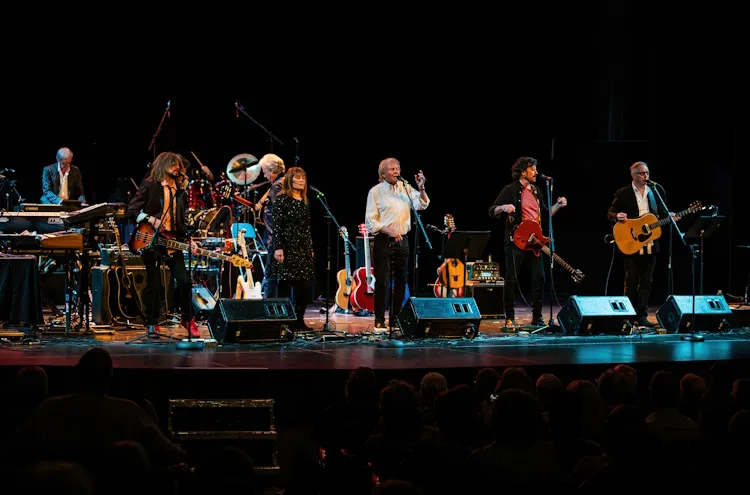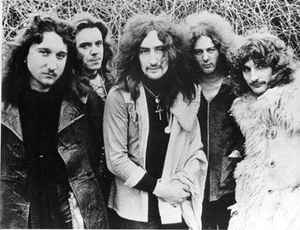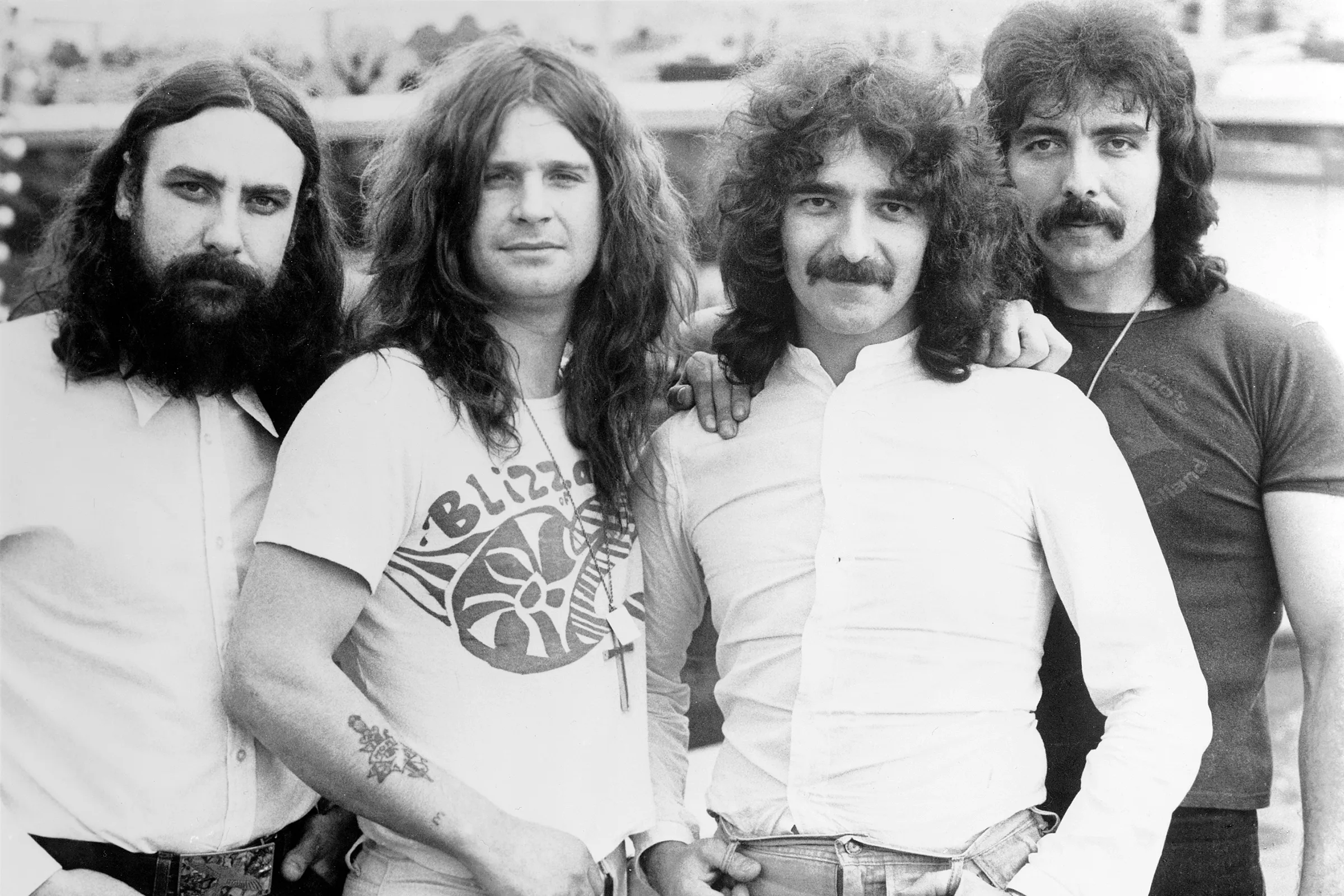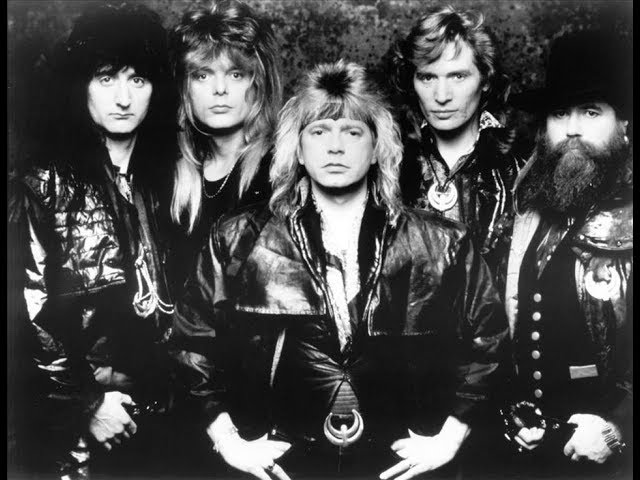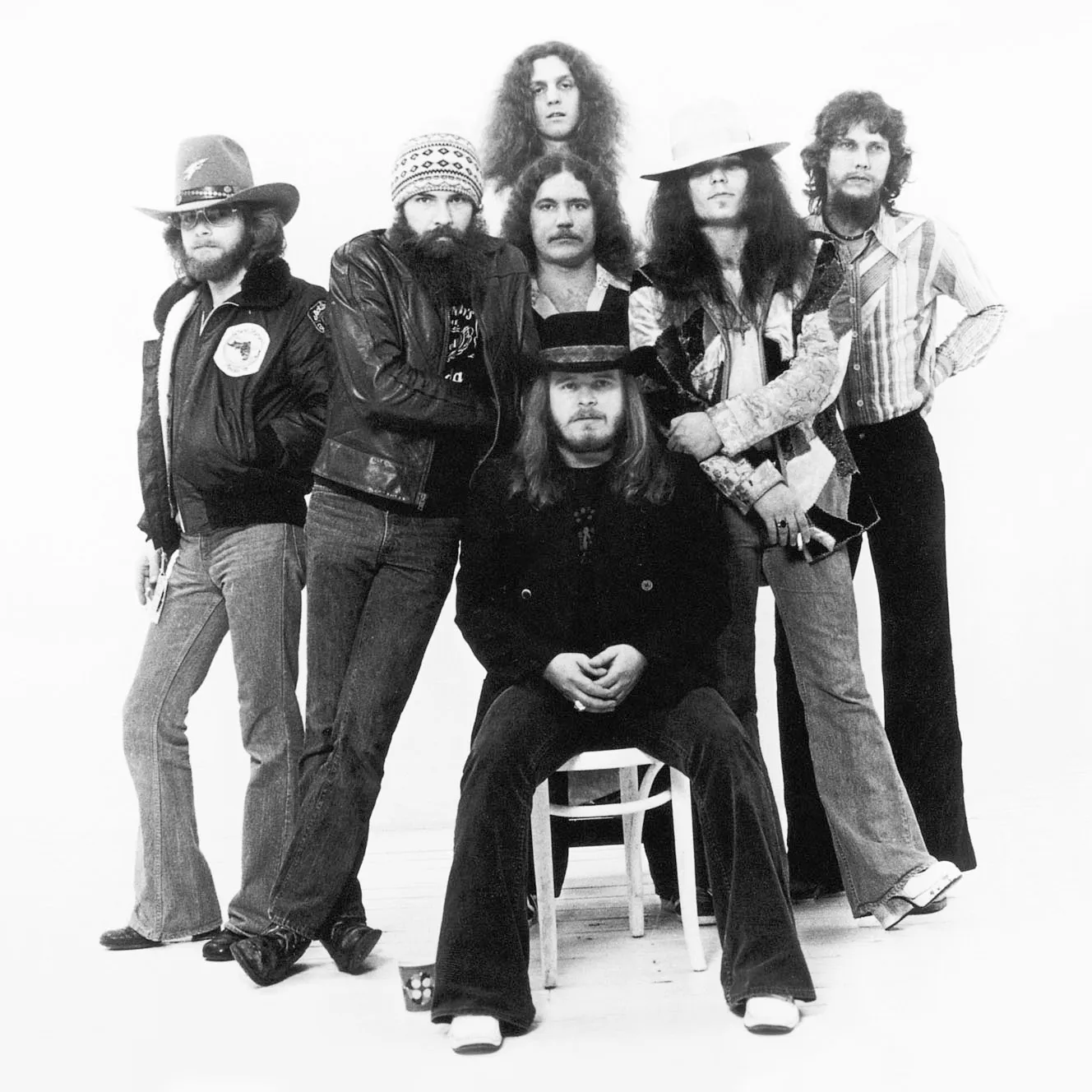
MARK FARNER – Closer To My Home, an interview

A little while back I had the privelage to talk with former GRAND FUNK RAILROAD singer, guitarist, songwriter, and American rock legend Mark Farner. I had got onto Mark’s latest album Closer To My Home when I’d featured a ‘story behind the album cover’ with album cover artist John O’Brien, in which John mentioned doing the cover for Closer To My Home. I got the album the next day, and it is exactly as I would’ve expected – a good mix of different great songs. And it is highlighted by a new version of the classic “I’m Your Captain (Closer To Home)”, re-done almost 55 years after it’s initial release in June of 1970, when it soon became a Top 30 hit in Canada and the US . If you were a Grand Funk fan, you’d want to check this album out. Mark still has a lot to say, and the man can still play and sing. But more on that another time….Enjoy the read, and check out the links at the end.

How important is it for you as a veteran rocker to produce new material as opposed to just living off of touring the hits?  

Well, it’s important, but I think more importantly, to know that that part of me – the writing ability that I have, which is a God-given ability, God invested that talent in me, Kevin. I want to give him a return on his investment. I want to give more than he gave me. And it’s all about, because God is love.  In my eyes, I don’t care about all this religious horse crap that’s out there. The modern day church makes me sick, to tell you the truth. So I want to give love the investment that he made in me.  I want to give him that increase. And the only way I’m going to do that is by keeping in touch with the audience through the songs that I write from my heart. And people know who I am because I am who my songs say I am, brother.

I see a lot of bands from that era that are still going, but they have nothing new for 20 years. I saw your former bandmates about 15 years ago, and they just tour the hits. And there’s a lot of bands that do that, and they don’t offer anything new.  If I’m going to see an old band, I want to see something new as well.

I knew there was something I liked about you right off.

Can you tell me a bit about the new album?  It’s not like the ’70s where everybody’s doing two or three albums a year, you’ve got a little more time in between. How did all the new songs develop into an album, and what kind of got the ball rolling?

The new songs, the current new single, I’ve got a video for it on YouTube, “Same Game”, Mark Farner “Same Game”, and you can see the video there.

I’m curious, when you started the album to where it ended up getting released, what was the time-frame and what it started with and who you started with?

I got started on it,  I had songs that I had already written. I’ve got a plethora of songs that are either just little fragments of a song, they’re ideas that I put down as I get that idea. Sometimes I don’t get the whole song, sometimes I’ll go back 15 years, 20 years and grab something that moved me back then. Now today, I’m seeing it in a new light. I’m hearing it with new ears; so I’ll finish that song. I’m compelled to do it that way. It’s inspirational for me that way. A lot of the songs that are on Closer To My Home, which is my latest, it is my baby because it’s got songs on there that are about my babies. “Tiny Fingers” is about my first son. A lot of people that have heard that song can relate because they’re parents and they have gone through some things as the evolution through television, and through movies, through the entertainment world that affects the way we live, the way we perceive life even.

It’s that evolvement and people are waking up to, wow, it wasn’t their fault. Maybe it was my fault. I let them go play that thing for hours.  I let that thing be the babysitter. They’re kicking their self in the ass. But you can’t do that because that is not fruitful.  You have to look at the lesson, keep it in front of you, and don’t do it again. That’s all.  You don’t do that again. You let the love that you have for that child shine through. That’s what they need right now.  I don’t care how old they are. They’re still our babies. I don’t care if they get as big as the side of the barn – they’re still our babies. That love connection is there in “Tiny Fingers”.

In my kids, I’ve got five sons, four are living. My youngest son died in 2018. He broke his neck in 2010, and he lived eight years and then he died. He was quadriplegic. He was on life support. We learned a lot because he had some revelations, spiritual revelations that he shared with us, and especially because his mother was in there so many hours a day, every day, that she told me things that he got in conversation with her. Just revelations, man, for a young kid, for a young guy like that. That’s helping us form new songs.  That’s helping me. Whatever we’re going through, if we don’t get a hold of some forgiveness, initially forgiving ourselves for what we thought we screwed up, we can’t hold that against ourselves. We can’t hold anything against anybody because then we’re not going to get set free.

If we truly want to do what we’re here to do, what we were put in these bone suits to do, then we got to set ourselves free and set others free. That’s of this debt consciousness. But you see the whole thing, the money, and that’s what “Same Game” is talking about, the ownership of mainstream. Mainstream is sickening! The news is all lies. It’s complete lies.  It’s manufactured. It’s Hollywood, man. It’s a big theater scene, and they keep writing the new lines every day.  You got new lines coming in there. But it’s the same powers and principalities that rule the darkness of this world. They issue the various currencies to over 200 countries.  There’s only five countries that don’t have central bank influence in this world. I think because of the sanctions that are put on those countries, they’re still under the control.

They’ve got but the songs that I assembled for this album, I was assisted by Mark Slaughter, and you know who Mark Slaughter is.

I’m curious how you got connected with him because obviously he’s remembered or known as more of a heavy metal guy from the ’80s.

Him and I were doing a Rock and Roll Fantasy Camp. David Fischoff has this rock and roll fantasy camp that people come to. They pay to stay with the artist for three days in a teaching session, in a mentoring session, where if I was a counselor, I would counsel these people. I would assemble, I would pick the songs that we’re going to do because there’s going to be a battle of the bands kind of thing at the end of it. It’s really a showcase at either a house of blues or something on that level, a theater where there is a stage and you can put a dozen guitar players up there because sometimes there’s 10 people in the band. But then we were in New York City and David Fischoff came to me and he said, Howard Stern wants you to come over and do your song. “I’m Your Captain” on his show today. And it was like a spur of the moment thing. I said, well, how does he want it? Does he want me to just sing it with an acoustic guitar? He says, no, man, take the fantasy band. There was Kip Winger on bass, Sandy Gennaro from Joan Jett’s band on drums, Teddy Zigzag from Guns N’ Roses on keyboard, Mark Slaughter on second guitar. There was Bruce Kulick, who did play with the Faux Funk for a number of years, but he no longer plays with them.  Anyway, we were all there in that little studio where Howard is sitting and he says, ‘Okay, take it boys’. And so we played “I’m Your Captain”. And that’s the first time I had been playing music with Mark.  I had known Mark for years, number of years. I loved his conversation. I loved his character, his nature.  He’s part Native American as well. So, we hit it off really good. He’s tribal.  So, we’re playing and when it comes to the harmony parts, he was hitting them on and he’s two feet away from me, Kevin; he’s singing it right in my face and I’m going, ‘Damn, this is pretty good’. This guy can sing. And Kip Winger over there, man, that boy can sing and plays the parts, and it was rocking. In the green room at that session where we did Howard Stern, I was playing a little something that we ended up putting on this album. Now I’m talking about, that was probably 10 years ago, that rock fantasy camp.

But, I was playing the chords to “Darlin”’ and Slaughter came up to me and he says, ‘What is that you’re playing?’ I said, Oh, it’s a song I’m writing. it’s called “Darlin’”. He says, ‘I want to work on that with you’.  And so here, years later, we end up doing that song and it was just, it’s almost like, man, it was stretched out and it was supposed to be. And because of his encouraging words, and that’s just his nature – he wants to help people. He’s a giver and I’m a giver. So, we felt like even if no one ever actually physically purchased a copy of this, if they heard, then we’re giving them something that’s truth. We’re not giving them make-believe bubblegum bullshit.  We are going to give them something that’s coming from our heart. And with his help, he helped me write a couple of songs. He’s got writing credit on a couple of songs in there.  But his production skills and his, kind of coaching me to, ‘Hey, cuddle up to that; and can you breathe into, take a deep breath and make it yours, own this.  And I followed his instructions and working with him was great. It was good for my future because everything I learn, of course, I carry forward with me.  I’ve had a lot of good comments on my album. It’s not going to be embraced by mainstream, so it’s not going to be in anybody’s church. It’s going to be in people’s hearts, and that’s the better place.

I imagine you write from a different angle than you did 50 years ago. What do you normally draw from? Is it all personal experiences or any kind of news or outside influences?

I draw on what’s happening in our rock community. I always keep in mind that we have a community. Rockers have a community. And even outside of the ‘lamestream’, I call it, influence on it, they can’t break us. They’ve displaced us some, they’ve broken off parts of our body, but they cannot take our heart.  And look at the people who attend rock concerts, man, avid fans, because we still believe. And love is driving us. It’s the need to be together.  It’s peace and love. It’s without the beads, without the peace sign, without all of the hippie stuff, we’re still the hippie mindset. We still have that in our minds, and that’s what we want, leading our world, man. We want to be in a world where love shines forth. And this love for money, the money is created out thin air. There’s nothing to back the money.  And I don’t care what country you’re in; the currencies are issued by the same banksters. And it’s the Federal Reserve, the European Central Banks, and the Bank of England for the majority, and then there’s the Superbank.  But those people, they run the governments of the world, because money has control. It has taken control. And everything’s for this money, man.

I think that being free, the rockers that still hold the love for rock and roll and are still part of this community, it’s not about the money. It’s about the love, and it’s about our solid community that’s still held together by solid songs. So that’s what drives me to write the next song, is, man, I have a community that’s waiting to hear my next song, Brother Kevin. So I’m excited about still being alive.

When you go out and play, do you include a number of the new songs, or just a couple? I ask because there’s a lot of bands I go see, they have a new album out, and they play one song from it, or they don’t play anything.  I like seeing bands, if they got a new album out, play a lot from it.

Yeah. Two or three.  Because I’m a new band, but I got old fans. I’ve got fans that are from back in 69, I have to play that music along with my new music. And I found a comfortable spot with it, because we polled the audience, we asked people to send in the top 10 songs they want to see in a live set.  So, out of 2700 people, we put together a good set list, picking the top 10 and then adding to that. And I think we got a good set.

People have, they’ve really embraced, we put “I Can Feel Him in the Morning” in the set, which is from the Phoenix album that we recorded in Nashville, when we broke away from Terry Knight. Our first album is the Phoenix album, and “I Can Feel Him in the Morning” was written by myself and the drummer, Don Brewer from Grand Funk.  And I have it in my set. I wrote the music; he wrote the words. That’s what every composition where it was a Farner Brewer song, it was always that arrangement. I never once coached him on any words, or had him change any words or suggested even, I just let what he wanted to say be what it was. So,  it’s receiving a lot of adoration. People never expected to hear that song in a live set.  And I think where we’re at today in the world, people really, they want to be encouraged spiritually, and not the bullshit of the modern day church. That’s just lethargic; I mean, what’s going on, in my humble opinion. But they want the real stuff. And we give them the real stuff. It’s real love. We don’t expect anything in return. We just give, man.  And it’s such a great feeling to have guys in my band that are all, we’re cussing Christians, Kevin. But we love God, we love Jesus Christ. And we play our music, even from the days when I was not in line with Christ I still wrote music because when I was nine years old, and my dad died, I prayed with Billy Graham on the television set that my dad bought five days before he died. And that television set, that black and white TV, when I walked out of the dining room where my mother and all the relatives were crying and moaning and mourning, and I walked into the living room, Billy Graham was on that television set because he was doing a revival in Flint, Michigan, at Atwood Stadium, downtown Flint. And that was being televised.  So, when I walked in there, I hear Billy Graham say, ‘Are you hurting?’ Because I’m crying. I just came out of a room full of my relatives that are crying. I’m crying.  I had to get the hell out of there. I mean, it was just tearing me up to watch my mother. And when I walked in and Billy Graham says, ‘Are you hurting?’ I look over. He says, ‘Do you need a touch from God?’ I’m going, can he see me?  This is my first experience with a television set. We didn’t, I mean, we never had one. We always listened to a big radio, wooden radio.

And the TV was going on in our imaginations, all of, from Flash Gordon and Lone Ranger and, you know, all of this stuff that we listened to back in the radio shows. But now here’s a TV and this guy is saying, are you hurting? Do you need a touch from God? And I said, I just looked at him. I said, Yes.  He said, ‘Come over here and put your hand on a TV’. And I walked over, I put my hand on that TV and I prayed with him and I received Jesus Christ as my Lord and Savior. Verbally, I didn’t know what I was doing, mentally nine years old, but that was my commitment and my first taste outside of going to church with my great-grandmother who went to Free Methodist Church.  And it was a church that functioned under a 501c3 tax exemption and they passed the plate and they took up a collection. I’m not into that. I am so against somebody passing a plate in front of me.  It’s against what the Bible says about it. If somebody is compelling you to give, don’t give, period. If they’re compelling you, don’t give.  You got to give from a cheerful heart because God loves a cheerful giver. And the only way that’s going to happen is when you do it for your own satisfaction to give somebody something, like I gave Don Brewer when he asked me if he could take 100% writing credit on “We’re an American Band”, the song. He asked after we were done recording at Criteria in Miami, Florida, we were recording. Rundgren wanted to record at sea level. He wanted to record our vocals at sea level. So, we took the tracks that we did in Michigan to Florida. He ran the tracks and we sang. And then when we did “American Band”, Brewer came to me and he says, ‘Farner, I’ve never had 100% right credit on any song. Do you mind if I take it on this song?’ I said, ‘No, go ahead’. It made me happy, to give him that song. And I won’t let any other scenario enter in.  People have said to me over the years, ‘Man, you really screwed up’. But it doesn’t matter.  The thing is, when I gave, it made me happy. And my happiness at that point came from God. And God is love.  And that love that touches your heart when you do something for the right reason, when you give something out of the right heart, you don’t trace it. You don’t put a trail on it. You don’t follow them to see what they do with the gift you gave.  You gave it. There is your satisfaction. Stay with that.  So that’s what I have avoided all of the hateful stuff that people have said to me over the years. It gives me an opportunity to share, like I just did with you, how I gave it and how I am able to abstain from trying to retaliate against anything that has been done to me. I have to forgive with the same measure that I expect to be forgiven with.

It’s interesting because if I listen to the early Grand Funk stuff, there’s not, before you moved into specifically writing about that stuff when you went solo, there’s still a lot of spiritual messages and, things like that amongst the songs, like “I’m Your Captain”, for example, obviously, it’s not just about somebody sailing a ship. There’s more to it, right?

Right on, brother. Yes, sir.

So, how much connected were you with things aside from just the rock and roll lifestyle and…

Well, I was farming.  I always wanted a farm, since I worked on my Uncle Jack’s farm in Marlette, Michigan. He was a dairy farmer, and every summer I’d go out and spend a few weeks on the farm with Uncle Jack and Marlene and Darlene, who were his twin daughters. Marlene was six, three, I think, and Darlene was six, one. They were strapping farm girls, and they could whip any man’s ass in the county. I’m telling you. But they made me feel very welcome to be there with them, and eating Aunt Verna’s homemade bread, and that homemade butter, home churned butter, and eating all this good food, and having the life… I’d drive the cattle down the road to the next pasture, to move them around. It was something that…It made me blossom, in my mind, as a young man. So the first thing I wanted to do when I started making money was to buy a farm. And I did! I bought 110 acres on one side of the road, and eventually 80 acres across the road from me, so I was hemmed in there pretty good. I had a place that I could call my own. And we farmed it. The guys that worked on the road with me, actually. The head roadie, John White, and we called him Ralph, I have no idea why we called him Ralph (lol). But Ralph, his dad was a dairy farmer, and Bobby Talbot, another worker from the road – another farmhand. And we loved being around each other, loved taking care of the animals. I had international grand champion horses; I had a few head of cattle. We were selling grain. And I would lease ground down there, where I was living, and sell grain. So, that was my lifestyle, and it really bled in to my songs, Kevin. Even on my solo stuff, when I did my Atlantic Records albums in 77, 78, there’s a song called “Easy Breezes” (sings) “Oh I recall a while back when I was younger …”, I’m talking about Uncle Jack’s farm. So, that helped influence all my music, being able to be relaxed enough. And I would be driving around the fields, like if I was running the mower, the engine is at either G-sharp or B-flat, or whatever, but it’s running at a tone, and I would start humming to that tone, start singing to that tone, harmonizing to that tone, and I would write songs going around in circles, on that tractor. So, I think that really helped me the most, being in a place where I could still think about everything I love, keep my mind on love, and even despite of my first divorce I went through I’ve kept my mind on love. And thankfully so, because I’ve seen so many people that have been married and divorced. And younger people that get married and they don’t even make a year – and they’re divorced. It’s like ‘are you kidding?’ What happened to love!? I’ve been married 48 years to my wife, so I know what love is, and it’s defined with one word – Forgiveness.

When we talk about the album covers and that, how much input did you guys have into that sort of stuff?

I didn’t have any input. All I did was okay them and say ‘Yeah that’ll look good’.  Lynn Goldsmith did all of the 70s from beyond Terry Knight – from Phoenix on up to the last one, Born To Die. Yeah Glenn Goldsmith did all of them.

Now in that height of the early 70s What were some of the, other than obviously the Shea Stadium show, but some of the major shows you guys did and some of the bands you shared bills

Yeah, as it worked out the band was headlining. I mean we headlined, so we had opening acts – like Jethro Tull was an opening act for us. Bloodrock was the opening act for us; Freddie King was an opening act for us. Only until we would play like a festival where there was a bunch of different acts would there be an opportunity to hang with somebody or to meet somebody. I think Janice and I, our relationship, we were friends we were not boyfriend-girlfriend friends, but we had a very tight relationship; we loved each other as friends. We hung out together as friends, and we shared the same mindset about the business. She was definitely what you’ see is what you get’.  And what I loved about her –  there was nothing ‘put on’ about he. We both felt the same about when they termed they came up with this thing called the ‘British Invasion’ ; we would laugh about it. She would say to me ‘Mark when you went and played Hyde Park when you when you guys played 65,000 people at Hyde Park. Did you sing in the King’s English?’ I said ‘No, I didn’t sing in the King’s English’.  I said, ‘And none of those English bands sing in the King’s English’. They sing in the free people’s English, which is American English, you know all the rock and roll. I don’t care where – if they come from Australia, if they come from England or wherever they come from if they’re singing rock and roll they’re singing in American rock and roll English.  It has to be American English in order to express because there’s no other people that are free, at least in our minds. Now we are realizing the captures took the place back over two days before Christmas in 1913 with the Federal Reserve Act. We gave ourself right back to the same powers. We declared ourself independent in 1776. But people want to be free; people need, we need to be free. We don’t want these people who are elevated high-minded people in their own They want to rule the world. In itself, just that thought is complete insanity, that would be defined as insanity. The Ruling class!? Well, how are they ruling? ‘Well, they’ve got more money than we do!’. So what! I didn’t vote for them.  Are they smarter than you? Can they farm better than you? Can they raise better food? Do you know what’s good? Here we are living in the… I liken it to that movie where the ship goes down – The Titanic, and they’re playing cello and violins on the upper deck, but below the deck they’re playing music, they’re dancing. They’re having a good time; they’ve got the guitars, banjos, they’re dancing, they’re having a great time… That’s kinda how I view the world.  Those people that are pulling this wool over everybody’s eyes, they are that phony upper-deck class! As phony as phony can possibly be. And then there’s the rest of us, the rockers in the lower deck music That’s our music that belongs to us So that’s our truth and the people that we love, that have been singing to us for years have been talking to us have been giving us good messages for years. I’, talking about the 60s and 70s Rock and Roll has stayed in there and It’s the desire of the will of the people to keep it alive because we don’t want love to die. If we gave ourselves to this notion of a one-world government then where’s the love in that? There will be no chance for love. So, we got a kick against it with all we’re worth um In that time.

In that early period when you guys were so big in America, Three Dog Night was big, Steppenwolf, a few other bands, and for a lot of you guys that success didn’t really transpire so much to the UK in that you had bands that were huge over here, but so much over there and then you had vice versa… know what I mean?

I think because of the ownership of the media in this country. It started it was wide open in ‘96 when Clinton deregulated the FCC, but they had their foot in the door long before 1996 They were taken over bit by bit by bit and that’s why there’s so much pedophilia in Hollywood. That’s the nature of those folks and why there’s so much, scuttlebutt on the release of the Epstein files and what all has been redacted in the files and all.  It’s just the game. And the reason that the you know they are not released Is because there’s a lot of damning evidence on a lot of world leaders. So here we are today. I look back and we had 65,000 people, it was a free concert in the first place, but there was 65,000 people, enough people in 1971 Interested in Grand Funk Railroad to come and see us. And Humble Pie opened that show for us They opened a show for us at Shea Stadium. We brought them to the United States because when I told Terry Knight, who was my former manager, I said ‘Dude, these guys are rockers We need to have these guys. We need to bring them to the United States Open for us there. They’re really good’. He said ‘I’ll talk to their managers’. So, they ended up coming, to be our opening act. And look at what happened to Humble Pie – I mean, Frampton, that whole thing. If I went to Europe, I am absolutely sure people would come out of the woodwork to come see me. The thing is I’m with agencies that are mainstream and I think that influence that we’re talking about -that controls what we look at on the television; they control what we see in live music They control the music business. They don’t want me rising up in the music business because what I am saying, what I’m what I’m exposing in my songs. I believe that the rock community is alive and part of it is untouched by the Bullshit that these guys who are running the show, the Financial – the funny money show. Because you know, it seems like money makes people funny. They got enough money. That they go crazy with this want to rule everything, want to control us And we just want to be left alone so we can rock and we can encourage one another to live life joyfully and friendly. That’s how it was back in the 60s and 70s, that whole Hippie culture and the love. And that’s still alive in the music, in my music it is. Some of the newer people that have the younger bands, they don’t know what that is  They know what they liked when they listen to the 70s music. I’ve talked to some younger bands, they go ‘Man you guys great.  You were tearing it up!’ They don’t realize what’s happening, and I think when they do get a grip on it there’s some bands that are getting it. My son sent me some songs, and I don’t even know the name of the bands, but he sent me some songs and what they’re talking about with what’s going on in the world now. And I’m going ‘Alright man! Come on kids, pull up them straps, pull up them boots. Let’s wade through this shit and get on with life!’

I want to ask up when you guys added Craig Frost on keyboards What was kind of the catalytic for that as far as adding him and then kind of going further away from that kind of, more earthy sound of those first few albums with The three-piece?  

I think the reason, and it was two against one. Don and Mel wanted to add a keyboard player, and I said ‘What is wrong with the 3-piece? We’re doing good out here; look at how many shows we’ve sold out!?  It’s because, in my humble opinion Don Brewer wanted to write more songs and I only gave him just a few songs that I had written the music to And in every case where it was a co-write between Brewer and myself. I wrote the music, and he wrote the lyrics Well, he was wanting to get more songs, because the more songs on an album the more money you get as a writer That was his motivation. And I believe that’s why Inevitably, that’s why Craig was added. Even though I love Craig, even to this day we’re brothers man. I love the guy, he loves me. We’re seriously serious true friends. And when he came on, he was a great keyboard player. He started as a drummer He stood up and played the drums he I said, ‘Why do you stand up and play the drums? He said ‘Because I want people to see me; how they going to see me sitting back behind that kit!? I said, ‘That’s a good idea man, that’s a that’s a really good answer So that’s part of his, and every musician that’s a professional musician out there, it is their dream and their fulfillment of all their childhood dreams to stand up and be on a stage where people recognize them; be up in front of people where they are adored by people and they’re loved by people. There’s a lot of envy too, but I think you know when I was a football player I loved to hear my name called on the loudspeaker ‘That was Farner number 66 in on the tackle’. I’d be prancing across that field brother Kevin. And that’s part of what being on stage is about, it’s that attention and what that does for you as a person. I looked at the Beatles. I looked up to the Beatles, watch the Beatles as they climbed in popularity, and then I heard the music and I heard, you know, “Sgt. Pepper’s Lonely Heart Club”. It was a change in the lyrics and the topics that they were singing about I said to myself at that time, before I was a professional musician I said ‘Boy, with these songs that I’m writing now I have to be careful with it. I don’t want to lead people astray. Because I’m looking at the Beatles. I’m seeing the influence the Beatles had on the world and although I love the Beatles music, some of the stuff that they got into and I think it was Lennon who said that they were ‘bigger than God’ or ‘more popular than God’. And I said ‘Woah, what kind of ego bullshit is that?’ That comes from the pits, that don’t come from the heart. Anyways, the people that opened for Grand Funk went on to have their own stardom, have their own fame, have their own albums and what have you. It was great to get to know those people, but that was the only ones that we really got to know… outside of  Jimi Hendrix. I had a relationship with Jimi, we were friends. We talked, we didn’t talk music when we got together, we talked about country stuff, you know fishing, and just life. We were we were good friends He wanted me to sing on his next album. He told so.  And the same with Zappa. Frank Zappa said ‘Man, I want you to sing on my next album’. I said ‘I’d be happy to sing with you Frank. You’re a good person and I would love to sing on your stuff’. He sent me a demo of a song – “Bamboozled By Love”, that he wanted me to sing.(haha). But as far as some of the other bands that we toured with It was kind of people were kind of to themselves. I remember we played in upstate New York, Capitol Theater up there. We were on just before The Kinks. I really enjoyed the song “You Really Got Me”.  And I think there wasn’t any rocker alive that didn’t like that song man, that was a great song.  It’s like Algo Nova “Fantasy”.

Oh, he’s great!

That song rocks! So anyways, we get offstage, I’m sweating  like a pig,  and The Kinks are going on next. So,  as we are passing on the stairway from the dressing rooms, the lead singer from The Kinks – Ray Davies, he reached out grabbed a hold of my sweaty body, and I’m going ‘What the Hell are you doing man!?’ He grabbed a hold of me, and I don’t know what that was about, but that didn’t feel very good at all! I’m seating my balls off and this guy leaps over and on to me, and he’s wanting…

The energy?

Whatever! He’s wanting that on him. When we played the Fillmore East we got off the stage to the dressing room, and our manager Terry Knight is leading the way and he never led the way any place, he always was bringing up the ass-end; bringing up the tail end of things But this time he was leading.  He comes to my dressing room and he pushes the door open for me to go in and I look in – and there’s Hendrix standing there.  I go Oh my God!’. I was so starstruck Kevin. And the only thing I could come up with to say was ‘You’re a great guitar player man!’ (lol) But we became friends and he knew that I was real. I knew that he was real. He was doing things, you know with the drugs, I could not do any of that. I played Randall’s Island with him one time where he we played, we had already did our set, I’m in the dressing room, I’m getting changed out, getting into some dry clothes, and Rabbit came over to our dressing room. Rabbit was Jimi’s right-hand man, and he says ‘Hey Jimi wants to see y’all over in his dressing room’. So, ‘Alright man, as soon as I get some dry clothes on I’ll come over’. I got dressed and walked over there, Jimi gives me a hug. ‘How you doing, brother?’ ‘It’s great, man you know a good audience man, you’re gonna tear him a new one’.  I look over and Rabbit has got a hundred dollar bill rolled up and he’s handing me this hundred dollar bill, and I’m like ‘What’s that for?’ And I look down and they got these white lines and I said ‘No’. I handed him the thing back.  I said ‘I can’t do that man’. I Don’t do that. I said ‘You guys knock yourself out, but I can’t do that’. But Jimi looks at me, he says ‘Brother Mark you know, I wouldn’t give you anything that would hurt you And I’m like oh my God, here’s my guitar here, and I’m 22 years old, maybe 21 (in there). I said ‘You know something, I’ve never done it before, I’m not going to do a lot, just give me a little taste, a pinhead or something. So Rabbit takes his knife out – hits the button and sticks the switchblade, the tip of it, in to one of those lines, and he says ‘Plug one nostril, I’ll hold the other, and you sniff it.’ And that’s what I did. And that was the first and last time! It felt like that stuff went through the top of my head, dude!  And at that particular gig, I had already put packing blankets up on the cab of the equipment truck; it was a box truck with all of our equipment in the back. It was facing the stage and I put the packing blankets up there so I could go up there and sit and watch Jimi play. And it was stage level; I was right even with the stage at that height But those guys whipped that stuff up because the stage manager hollered ‘Hey Jimi you’re on!’ And he said ‘Okay’., …And Jimi walked out, but by the time he got to the stage and I was up on the cab of that truck Jimi was reaching for the neck of his guitar and he was missing it by a foot! Well, I’m telling you he was so messed up. He could not find that. He was looking at it. And then this kid – No shirt, No shoes and socks, just a pair of bell-bottom Jeans that he’d walked the excess length off of they were all freed out everything, long blonde hair… He gets up on the stage walks up behind Jimi, he grabs Jimi’s hand and the axe, and he makes the union and Jimi looks around at this long hair kid, a skinny kid, man I don’t know how the Hell he got up there, but he did and he put it together. Jimi looked at him like ‘Wow. Thanks, man!’ And Jimi tried to play, and I’m going to tell you – I was so embarrassed for him. He was playing something, but the guitar was out of tune, he was in the wrong key, the band was playing one tune and Jimi was playing another. He couldn’t find his ass with both hands. I’m telling you he was so messed up! And what happened was he went over and he stomped on his echo box button and tried to cover up for the fact that he was messed up, and he’s going to put everything into the echo box and it started going (Mark makes a dying engine sound). And while he’s doing that, this stuff that I snorted is getting to my mind. I got real sick to my stomach, and I fell of the truck, I passed out. And when I came to  I saw all these faces looking at me going ‘Mark, are you all right?. Can you get up?’ And I was so sick, and I puked right there. Get me to the hotel! They threw me in the car, and away I went to the hotel. Like I said that was the first and last time. And I found out that what that stuff was, was cocaine and heroin – mixed.  I have never done anything like that since. I guess I needed that lesson. It was the peer pressure of my guitar hero putting it on me , ‘Brother Mark, you know I wouldn’t give you anything that will hurt you…’ Well shit…. Lol

Tough lesson!

Yeah. I’m here talking to you about it today, thank you Lord!

I picked up a book, actually I contributed a bit to it – An American Band,  by Billy James, many years ago Have you put down your own memoirs that you might release one day?

 I’ve got people right now that are courting me on doing my own book. And I’m talking to them, because I need to put another book out before I pass. Some of the stories that I have within me would make a believer out of people. Not just in in the Lord Jesus Christ or not in the everlasting love of God, but in in miracles, in people, you know, who wondered about UFOs and such. I’ve had personal experience, so I want to – someday, do that do that book Richard Surratt, do you know who that is from Coast To Coast(?)

No, I don’t.

It’s the paranormal. Richard is a Canadian host for Coast To Coast. He’s just put out a great book I got to talk to him about some of the paranormal and he really brought it out of me and he’s had people on his program, on Coast To Coast, that people stay up all night to listen to this guy. He’s got a lot of listeners in the United States. Anyway, hopefully I’m going to get that book done.

LINKS:

https://www.facebook.com/MarkFarnerAmericanBand

https://www.instagram.com/markfarners_americanband

*Check out my friend Peter Kerr’s interviews and features on Mark Farner – https://www.youtube.com/watch?v=wS7uu5RAIgA

YES – new album ‘Aurora’, and single

Well, not really new news, but YES have announced a new album and released the first single with animated video.Check out the press info below, the album art by Roger Dean, and the video.

YES, who is Steve Howe, Geoff Downes, Jon Davison, Billy Sherwood & Jay Schellen, are proud to announce their 24th studio album ‘Aurora’ will be released on the 12th June 2026 via InsideOutMusic/Sony Music.  As Howe explains: “Making this record was joyful, a chance to play, explore and give everything to the music. It’s always been about collaboration, somebody can write a song, but until everybody puts their contribution in it isn’t really a Yes song. We’re not trying to echo the past; we’re carrying the spirit of Yes forward and turning it into something new”. The band are also launching the first single from the album, and you can watch the beautiful animated video for the title track, created by Matt Hutchings (Greg Lake, Oasis, Iron Maiden),

‘Aurora’ will be available as a Limited Deluxe 180g Light Green 2LP+2CD+Blu-ray Artbook & Poster, as well as a Ltd Deluxe 2CD+Blu-ray Artbook, both featuring the stunning artwork of Roger Dean and Freya Dean, as well as a bonus disc of instrumentals, and a blu-ray featuring Dolby Atmos, 5.1 Surround Sound & 24bit stereo mixes (by Curtis Schwartz). The album is also available as a Gatefold 180g 2LP + LP-booklet, Special Edition CD Digipak & as Digital Album.

Pre-order now here: https://yes-band.lnk.to/Aurora

Track listing:

1. Aurora 07:27

2. Turnaround Situation 05:50

3. Love Lies Dreaming 06:24

4. Countermovement 13:48

5. Ariadne 06:18

6. All Hands on Deck 03:04

7. Outside the Box 04:20

8. Emotional Intelligence 03:30

9. Jambustin’ (Bonus Track) 04:24

10. Watching the River Roll (Bonus Track) 04:42

When Yes first began sketching out ideas for what would become ‘Aurora’, the process was loose and exploratory. There was no preconceived concept at the start, just a collection of musical fragments that gradually began to find one another and take form. Among these early sketches was a piece titled “Aurora,” and it quickly became clear that the name carried certain gravity. It suggested light, emergence, and a sense of vastness, qualities that resonated deeply with the band. Jon Davison remembers how “the title immediately resonated with Steve Howe and sparked visual inspiration for artist Roger Dean, setting a conceptual tone that would guide the project.”

Work on ‘Aurora’ began almost as soon as the ‘Classic Tales of Yes’ tour ended in 2024. The idea of a new album surfaced quickly and with the label’s encouragement, the band had the time to develop material organically. Rather than gathering in a single studio for months, they embraced a modern workflow; ideas were born in home studios, shaped independently, and then woven together through constant collaboration. Downes and Howe often acted as the central creative axis, with Howe, as producer, serving as the point through which all ideas eventually flowed. Across ‘Aurora’, each track carries its own character. Some echo the classic Yes approach, others push into new territory, but together they form a cohesive whole that honours the band’s heritage while embracing forward motion. With their 24th studio album, Yes demonstrate not just longevity, but a sustained curiosity, a desire to keep exploring, keep refining and keep discovering their capacity to create.

TRIUMPH – Triumph (1976)

What started out as me compiling a list of my TRIUMPH ‘top 10’ (or something like that) I quickley got off track, as I went back to revisit the band’s entire catalogue. The band really started taking off with 1979’s Just A Game album, which featured the US breakthrough hits “Hold On” and “Lay It On The Line”. Prior to that, Triumph, who formed in the mid 70s, and signed to Canadian label Attic Records released a single in ’75 with guitarist Fred Keeler, doubt this got much attention at the time, but the band soon changed guitarists, bringing in Rik Emmett. Their debut album was released in ’76, and this is what I’ve been listening to the last few days. Those first 2 Triumph albums may be very overlooked, by myself included, but here I am wondering why I never gave this one much more time, and why I never hear anything from it on radio (we still occasionally hear the band’s cover of “Rocky Mountain Way” from the 2nd album).

From the opening acoustics of “24 Hours A Day”, which kicks in to a rocker, til the closing near 9 minute epic “Blinding Light Show/ Moonchild”, this album is classic Canadian hard rock. Triumph mixes Emmett’s acoustic guitar, along with borderline metal like “Be My Lover” (w/ talk box solo), “Don’t Take My Life” (reminscent of Hendrix’ version of “All Along The Watchtower”), “Streetfighter”, and it’s mellower Reprise. The second half picks back up the ‘metal’ with “What’s Another Day Of Rock n Roll”, “Easy Life”, and “Let Me Get Next To You”.

Triumph, later reissued as In The Beginning, may be the band’s hardest rocking album. I loved this early direction, and the energy of this album. They’d fine tune it over the years to feature those epics that mixed softer acoustic parts with hard rock from album to album. If you’re not familiar with this debut, I highly recommend checking it out.

DOKKEN Interview from the archives – Erase The Slate w/ Jeff Pilson (2000)

DOKKEN’s 1999 album Erase The Slate was originally released on CD (only). Deko Entertainment is releasing the album on vinyl for the first time in the US, limited numbers and 2 variants. I liked this album back then, so it’s great that it’s finally get a vinyl issue. In early 2000 I did an email interview with bass player Jeff Pilson for Erase The Slate. I also included a few questions on Jeff’s work with Dio, MSG, and other projects and plans. You find out more info and pre-order Erase The Slate in vinyl at the link here – https://www.dekoentertainment.com/post/dokken-s-erase-the-slate-is-now-available-for-the-first-time-on-180g-vinyl-in-the-united-states-thro

Jeff Pilson is the bass player from DOKKEN. He has also worked with DIO, and is presently working on a number of new projects such as a movie and a solo album! In swapping notes with Jeff, he agreed to do an interview and here it is. If you’re not familiar with what Dokken has been up to these days check out the band’s latest excellent studio disc “Erase The Slate” (on CMC) — which saw a return to the old Dokken rocking sound and featured the debut of new guitarist Reb Beach [who used to play for Alice Cooper!]. Or watch for the forthcoming Live album. For more info on Jeff Pilson check out www.jeffpilson.com 

How did you get involved in music professionally?
JP: I started playing clubs at about 15 years old, and just continued on in bands through high school and college- then dropped out and had to make my living with it. A lot of starvation and good times!

Who were your earliest influences? fave bands and musicians growing up?
JP: Beatles, Zeppelin, Yes, and ELPQ: you play a lot of different instruments [reference to new album]

Is bass your first ‘love’ and or your best talent?
JP: Bass was my first, but now I really love to play everything. There aren’t a lot of preferences, but I really love to sing.

What bands [of note] were you involved with prior to Dokken? any recordings? anyone of notoriety that you played with then?
JP: No real notoriety, but I did play with an amazing guitarist named Randy Hansen, we had a band – no real recordings – but what a live show! Did a record called “Rock Justice” in 1980, was a rock opera on EMI. Good songs, but not a very good record – oh well we all learn!

You joined the band after the first album, replacing the guy who was in Ratt [i believe]. How did you land the gig?
JP: Through Mike Varney, of Shrapnel records. He’s a good friend and we played in bands together before that.

As I recall it was the success of “Alone Again” that opened a lot of doors for Dokken commercially in the ’80s, being one of the first great power ballads by a Hard Rock / Metal band. Would you agree?
JP: Yes, that’s quite accurate, it did open a lot of doors. We went from selling a couple hundred thousand records to a gold act almost overnite. People take you more seriously after that.

Throughout the ’80s Dokken turned out a steady set of strong Hard Rock albums, with decent guitar riff-rock, melodies, and harmonies. What would you put down to the band’s success in being consistent for a whole decade before the split?
JP: Good songs, a lot of internal talent, great business team behind us, and there was a strong core camaraderie between George, Mick and myself. I also had a strong working relationship with Don that I think helped bridge certain gaps.

How would you sum up the previous years [Dysfunctional , Shadowlife] prior to the change in guitar players and return to old Dokken rock direction?
JP: Rather scattered and not very focused. We weren’t all going in one direction, and not the one Don and I had intended for sure. But there were a few valuable experimental moments that I think produced some good music.

“Erase The Slate” is a real return to solid guitar rock in the best Dokken ways, yet [IMO] with a bit less of the big production feel some of the 80s stuff. Would you agree?
JP: That’s exactly what we set out to accomplish- very nicely put!

How was the transition from George to Reb? How has Reb Beach fitted in to Dokken musically and personally?
JP: Welcome transition and a new spark of life for the band. Reb is a great team player as well as being so talented – so for us all to go pretty much in one direction is amazing and wonderful.

The band shares writing and production credits on Erase The Slate. What can you tell me about how closely the band worked ‘hands on’ on this album, and what the basic songwriting process would be??
JP: We worked very much like a band. A lot of the music came from jamming, maybe Reb had a riff, then I’d throw in a verse riff, we’d all then take it to the next part, etc. But with us it’s so hard to formulate, anyone is capable of coming up with anything. And when someone does bring in a whole song, it generally gets pretty chopped up, but in a good way. We just threw a lot of ideas back and forth til it felt right – how’s that for a description!?

Why the cover of the Three Dog Night classic “One”? [Who’s idea?]
JP: Originally Reb’s idea for a jam during the live set, I thought it’d make a good cover for the record. It just seemed to fit Don perfectly and with all the harmonies and the rhythm we put underneath it, it just seemed right.

What are your faves from the album, and what is being pushed in the live set and to radio? [“Change The World” and “Who Believes” standout as having strong commercial appeal to me].
JP: I like “Maddest Hatter” and “Erase The Slate” best, also “In Your Honor”, but we released “Maddest…” and “Erase…” to radio. I wish there would have been more singles, and I think “Change…” would have been an outstanding choice.

“In Your Honor” stands out as a very different sounding song to the rest of the album [which is quite heavy], with the keys, acoustics, mellotron, harmonies…. What can you tell me about this song – lyrically, and how it came together musically? Inspiration?
JP: It came from a song I had a few years ago for my progressive band. Don accidently heard it when an old dat tape ran til the end and he said, ‘what’s that?’. He started writing the first verse lyrics right away and we finished the song in about 20 minutes. It really talks about missed opportunities and mistakes in love. Don had just been in a relationship that he was afraid he had ruined, and may never live down.

How has the reaction been from your perspective to Erase The Slate from fans and press?
JP: Excellent, best fan reaction in years. The traditional rock press has also been quite flattering.

How and when do you guys plan to follow it up? Any plans at present?
JP: Live cd at the end of April, tour in the summer with Poison, try to finish up my solo cd in any time I can find, finish work on my movie, then start writing and recording a Dokken cd in the fall. So yes, there are lots of plans!

How did you land the gig with RJ Dio?
JP: Ronnie and I have been friends since we toured together in ’84 – he’s also my neighbor! And Vinny Appice is one of my favorite people on the planet! They just came over one day and asked if I knew a bass player, I said “yea, ME!’.

How was Ronnie to work with?
JP: Absolutely the best, professionally and personally! Or as he would say in an imitation of me, “GREAT!”.

What did you think of the albums you were on?
JP: I thought we made some amazing music, and took several chances. It didn’t sound alot like traditional Dio, but that’s what we wanted to do and I thought we did a great job. It probably should have been called something other than Dio to get a more pure reaction, but that was what we needed on a business level to get through some doors. Kind of too bad cuz we were a great modern band, with trad elements.

How much did/could you contribute to the writing and ideas on those albums?
JP: We were extremely collaborative, and the sky was the limit with everyone. It felt very much like a band, but a well-oiled machine, something I wasn’t much used to!

Best memories of the Dio band and/or any stories?
JP: Just the intensity of the live gigs, and singing harmonies with Ronnie, what a powerful sound and what an honor!

What was your association with MSG? [Recordings, tours, etc..?]
JP: I played on the ’91 MSG album, then did an acoustic tour with them [playing acoustic guitar alongside Michael Schenker- what a trip!!]. Great fun – Robin is such a great singer and guy!

How was Schenker to work with? [Who else was in the band?]
JP: Great, he’s very precise and it was such an education to have him work with me on the acoustic guitar stuff, it was like being payed to have guitar lessons with Michael Schenker! But then in working out the electric stuff he was very open. It was just James Kottack [drummer – Scorpions], Michael and I working out the music, and Robin would belt it out. They were very band-like in their approach to making the record. And it was a good band at that!

What was your association with Craig Goldy? [see # 23]
JP: Craig and I had a project together for much of ’94 called the ’13th Floor’. It was very heavy and progressive music and something I’d love to release one day. We had to give that up when Dokken signed with Sony at the end of ’94. I still talk to Craig, and I know he’s really excited about the new Dio record.

What else have you been involved in recording-wise in more recent years?
JP: Oh God, a million tribute records, this ‘Metal God’ movie thing [I got to be musical director for much of it], and now I’m working on my solo cd. Someday I’ll release all the best parts of all the projects I did in the nineties, but I have a lot of new music to do til then.

What would you like to do in the future? any plans for a solo album or work with anyone in particular? [are you currently working on anything outside of Dokken?]
JP: I think I just answered that one by getting a little carried away on the last answer! But yes, I’d like to get my solo cd out around the time of the movie, and in the future put out my pet project “A Better Mousetrap” – which is very pop. I need more time in the day! But yes I’d like to put ‘Mousetrap’ out when I can, even if it’s through my website [here’s a plug- www.jeffpilson.com !!!]

What do you think of the return of many ’80s HR/Metal bands in recent years? Do you think the music biz has changed for better or worse since the ’80s when bands like Dokken, Ratt, Motley Crue … were huge on MTV, radio, etc… ?
JP: I think it’s worse in that record companies aren’t near as supportive of young bands as they once were. No hit and you’re done – that’s not good for music. There never would have been a Dokken if that were the attitude in the ’80’s. We took three albums to break! I think HR bands are at a bit of a nostalgia state at the moment, but I think young bands need a model for quality melodic rock, and I’m sure eventually there will be a call for that. That’s where us “old” guys fit in. The new school is very rap-oriented, which is to be expected, but there will be a need for melodic hard rock soon.

Can you give me a few of the following > favorite bass players, singers, songwriters, guitarists, etc.. [new and old] ??
JP: Chris Squire, John Paul Jones, Paul McCartney // Coverdale, Chris Cornell, RJ Dio // Lennon, McCartney, Sting, Paul Simon, Tommy Henriksen // Zakk Wylde, Reb Beach, Beck.

Q: Favorite ‘classic’ albums [70s / 80s….] and newer faves?
JP: Fragile, Close to the Edge, Bridge of Sighs, and anything by Radiohead.

I see you use Ampeg equipment, have you met Ken Hensley [Uriah Heep] through this? 🙂
JP: Ken is great. I was actually in the first batch of “new” Ampeg endorsees in 1986, and Ken and I have been friends ever since. What a great guy!

Hobbies, interests outside of recording and touring?
JP: Writing! And I love museums, art, yoga and all metaphysics.

Copyright KJ, 2000

GUS G – Steel Burner (new album)

Guitarist GUS G, of Greek power-metal band FIREWIND. has his 5th solo album coming out. Gus G is also known for his association with OZZY from 2009-2017, plating on the ‘Scream’ album, as well as being Ozzy’s touring guitarist in this period.

I’ll confess, I am not very familiar with Gus G’s past, nor is Scream high on my list of Ozzy album;s, but his soon to be released Steel Burner is something I can get in to. There’s a short list of guest vocalists and players here (see below). There are a few instrumentals here, such as the title track that kicks things off, which is excellent, as is the more moving piece “Confession” and final cut “Closure”, which features acoustic guitar before it changes, picks up pace and metal, before settling back down in the end.

Of the vocal tracks, favorites include “No One Has To Know” w/ Dino Jelusic (Jelusick, Animal Drive, Stone Leaders), “My Premonition” w/ Ronnie Romero (Lords Of Black, Elegant Weapons), and “Frenemy” (also w/ Romero). Love the big guitar sound, the production, and plenty of solid rock and metal, with enough changes to keep the listener interested throughout the 10 cuts here. Check it out!

Press info:

Internationally acclaimed guitarist, composer, and FIREWIND mastermind Gus G. will release his fifth solo album, ‘Steel Burner‘, on April 24, 2026 via Metal Department Records. The album marks his first solo release in five years and blends modern instrumental metal with select vocal collaborations.

Following an extended period of post-pandemic touring, ‘Steel Burner’ reflects a renewed focus on Gus G.’s solo vision. The album highlights his signature guitar style — combining technical precision, melody, and power — while expanding its scope through collaborations with some of metal’s most respected voices.

The album’s title track, “Steel Burner,” served as the starting point for the project. Originally commissioned by a company that manufactures industrial machines used to shape metal, Gus G. drew inspiration from a machine bearing the same name. The track’s driving energy ultimately set the tone for the album and inspired its title.

While the instrumental pieces showcase Gus G.’s evolution as both a guitarist and composer, ‘Steel Burner’ also features several standout vocal performances. Metal icon Doro Pesch appears on “Nothing Can Break Me,” a powerful anthem centered on perseverance and resilience. “No One Has to Know,” featuring Dino Jelusick, takes a modern hard rock approach while exploring the artificial lives and personas often projected through social media.

Matt Barlow (Iced Earth, Ashes of Ares) brings his unmistakable intensity to “Dancing With Death,” an epic metal track with a contemporary edge that tackles the darker theme of addiction. Ronnie Romero (Rainbow) also appears on two tracks, a collaboration that grew out of his recent world tour with Gus G.

Reflecting on the release, Gus G. comments: “This is my first solo album in five years. I’ve been busy touring in the post-pandemic world, but I always knew I wanted to make another solo record. This time I wanted the best of both worlds — exploring instrumental guitar music while also collaborating with singers I admire and am a fan of.”

Steel Burner’ was mixed and mastered by Dennis Ward (Helloween, Pink Cream 69, Magnum), delivering a clear and powerful modern production that complements both the album’s instrumental depth and vocal performances.

With ‘Steel Burner’, Gus G. delivers a confident and forward-looking record that honors metal’s roots while embracing modern production, themes, and collaboration.

LINKS:

https://www.gusgofficial.com/

https://www.facebook.com/officialgusg

NEW TRACKS – Crown Lands, High Fade, Mean Silver Machine, Spirit Adrift, Frontline, Spell, Von Groove, Iron Savior, Corabi, Suzi Quatro

Newly compiled list of new (newer) tracks from soon to be released albums. Some good Canadian content included as well 🙂 Check out the tracks, click on the links for more info….

HIGH FADE – from Edinburgh, Scotland. This heavy 3-piece will release their 3rd album May 8 on RPN Records. These guys have a pretty unique sound, based on big riffs. Harry Valentino (guitar, vocals), Oliver Sentence (bass, mustache), and Heath Campbell (drums), Check it out. https://highfademusic.live/

SPIRIT ADRIFT – the band’s first single since their previous album in 2023, . Lead by frontman / songwriter Nate Garrett. Spirit Adrift blends classic heavy metal with doom and a bit of thrash. Check them out. https://spiritadrift.bandcamp.com/

MEAN SILVER MACHINE – 70s classic rock influenced band from Helsinki, Finland. Mean Silver Machine’s debut album ‘No Way Out‘ was released in 2025. These guys released a new single, a ballad “The Time Of My Life”, earlier this year. Another single is scheduled for later this month, with an album planned for next year. MSM are: Ville “Willie Silver” Silvennoinen: vocals, bass Perdez Lunkka: vocals, guitar Jari Aaltonen: vocals, keyboards Juha Rastas: drums

*Check out more – https://www.instagram.com/Officialmeansilvermachine https://www.facebook.com/profile.php?id=100090517322315

VON GROOVE – Canadian rockershave a new single, “Fearless,” taken from their upcoming new album ‘Born To Rock,’ set for release on May 15, via Frontiers Music Srl.  It is the 2nd single from the upcoming album. Guitarist Mladen comments on the new single: “‘Fearless’ is a battle cry. It’s about refusing to back down, trusting your instincts, and stepping into your power. This song is classic VON GROOVE, big riffs, big hooks, and a message that hits you straight in the chest.” https://ffm.bio/borntorock

CROWN LANDS – Canadian prog rock duo CROWN LANDS have emerged as one of the genre’s most ambitious modern voices. Now, the band deliver their new studio album Apocalypse, their most demanding and fully realized work to date, set for release on May 15th,. Album Cover Art by Quinn Henderson https://crownlandsmusic.lnk.to/Apocalypse-Album https://www.crownlandsmusic.com/

IRON SAVIOR – German power-metal band’s upcoming album includes covers of 80s pop hits. The new single adds some metal to Michael Sembello’s 1983 hit “Maniac”. https://ironsavior.rpm.link/awesomeanthemsPR

SPELL – long awaited new material from this Canadian band’s upcoming album Wretched Heart, the follow up to the band’s excellent Tragic Magic, from 2022. https://spellofficial.bandcamp.com/album/wretched-heart ; https://www.facebook.com/spellspell

FRONTLINE – German melodic-rockers have reformed, and are putting out their first album in 20 years, titled ‘Rebirth’, due out in May. *Check out the 2 clips below. https://frontiers-us.shop/collections/frontline ; https://www.frontiers.it/news/11735

JOHN CORABI – the latest single from John’s excellent new album ‘New Day’. Check out my recent interview with John, as well as my review of New Day, elsewhere here…. https://ffm.bio/johncorabi_newday

SUZI QUATRO w/ ALICE COOPER – 2 legendary 70s artists have recorded a cover of “Kick Out The Jams” . This rocks, Alice even slips in a line from “Schools Out”. The track will be on Suzi’s’new album ‘Freedom

JOHN CORABI – ‘New Day’ Interview

pic- Enzo Mazzeo

JOHN CORABI has a brand new solo album coming out, titled ‘New Day‘, on Frontiers. New Day is produced by Marti Frederiksen (credits include Brother Kane, Aerosmith, Foreigner, Def Leppard, Dead Daisies….). This album is Corabi’s first full album of new rock material, and is the best new album I’ve heard so far this year, with the title track, and tunes like “Your Own Worst Enemy”, “When I Was Young”, and a cool version of Sly & The Family Stone’s “Everyday People”. In our converxation John talks in detail about the new album, the songs, the artwork, as well an update on The Dead Daisies, and a look back at Union. It was a pleasure talking to the guy; one of the coolest rockers out there. Check out ‘New Day‘, it is highly recommended listening for any rock fan. *Please also check out the links below.

I want to talk about your new album. I love it. I didn’t dawn on me that this is actually your first solo album of new material because you’ve been around for so long that there’s been other releases under your name.

Well, it’s kind of a misconception a little bit because I did do an acoustic record a few years back. And probably 60, 65% of that record was new material that I’d never released before, but I just did like an acoustic thing. There wasn’t even drums on it, it was more just percussion.

(I hold up the Live in Nashville CD).

That one was in 2014. I was doing the Motley record live in it’s entirety. And I loved being in Motley and it was a great record, but I sang this stuff like 30 years ago! So I don’t want to do this anymore, and so I recorded one show in Nashville for prosperity, put it out on a record. So, I mean, technically this is my third solo record, but this is my first one with all new material, full band, drums, keyboards, the whole bit. So, it is what it is. It’s all good.

I loved it. I think I got about eight songs through and I went on Amazon and ordered it. It’s a very upbeat album, uplifting. And I don’t think, for those people that have heard your name and the association with Motley Crue or whoever else would be misjudged or misguided to think that it’s going to be a metal album, right? It’s not, obviously it’s a very diverse, wide open album.

Yeah. in all honesty when I signed the record deal with Frontiers, I told them right up front, I said, if you’re looking for Motley Crue Part Two, it’s not going to happen. I’m not interested. And I told them what I wanted. And one of the things that I don’t want to say irritates me, but irritates me to a degree about the music business now, is that once, once you’re like, once you’re, and I say, ‘an established artist’, but once you’ve done a few things, you’re kind of locked into that box, it’s like people don’t really want you to step outside of that box.

And all the bands that I grew up listening to, you, the great bands like the Beatles, the Stones, Zeppelin, Queen was huge. Those bands weren’t afraid to experiment from track to track. I mean, if you look at the Stones considered the greatest rock and roll band in the history of music, they weren’t afraid to do songs like “Dead Flowers”, or “Waiting On A Friend” or “Wild Horses”, which technically now could be considered country songs. Even Led Zeppelin did “Hot Dog” on their last record, which is basically nothing more than an old country rockabilly song.

So what I wanted to get back to was just that time or that era where bands had the freedom to just be as creative as they wanted to be. There was no categories, no boxes, and just do what you want, man; if it’s a cool tune – have at it! If you’ve heard the record, you know, there’s a song on my record called “Good To Be Back Here Again”. And I’ve had a few people, not many, but if you go, “Oh obviously Nashville is rubbing off on you. ..You’re kind of doing a little bit of country stuff”. And I’m like, Nashville is nothing to do with it. I literally just sat down, I was playing the guitar. I came up with the first line of the song and I thought it was cool, so I just stopped. I wrote the rest of the song and then I brought it into Marty the next day and he thought it was awesome. But again, if you listen to “Dead Flowers” or “Waiting On A Friend” by the Rolling Stones, kind of the same thing. So again, I just wanted to do something that was category free, and just creative without being full of myself.

The album is very, like when you say creative, it’s very creative in that there’s so much going on. The opening track was the first track I heard. That’s a great song, very uplifting, very, it rocks, but it’s obviously it’s not a metal song. It’s not really just a simple rock song. it’s a good feel good song. So where did that sort of stuff come from lyrically?

Marti and I, when we were mapping everything out; we usually map the song out and then have like a loose or rough idea of what the song is going to be called. And we came up with the title “New Day”. And honestly, one of the things about being human is you can have the shittiest day ever, but the blessing that we all have is that we can go to sleep at night and reset and then get up the next day with a new attitude, new, fresh – “It’s a new day”. Just keep moving forward. And personally, I’m not a big fan of people that sit and whine and complain about how life’s unfair. I’m just like – well, if you want to change it, do something about it!

So it was just basically putting a lot of those cliched things down in lyrics and yeah, it’s positive, but it’s just like, man you’re kind of writing your own story. So if you work hard and you just keep not taking no for an answer and just keep plugging away, something positive is going to happen for you. Do you know what I mean?

Yeah. And there’s, there’s a few songs on here that you you’ve had around for a little while, obviously,

Yeah, “Cosi’ Bella” and “Your Own Worst Enemy”.

I love that song. That’s another one that kind of jumped out at me. It’s got a bit of a bit of funk to it,

It’s probably the heaviest song on the record, but it was, um, again, it’s just about, you know, I have some friends and stuff that have had issues in the past, whether it was drinking or drugs or whatever. And it’s just like, (again) you’re sitting here complaining about things, but you’re not doing anything about it. You’re your own worst enemy. So, I just put pen to paper and it just kind of happened. …But those two songs, I initially wanted to do this record. and then during COVID and all that stuff, I started to talk to Marti, and Marti was like “people are doing things different now, they’re putting a song out, let it sit while you’re working on the record. And then you put another single out and you do this like three, four times, and then you release the record”. And at the time I wasn’t even going to do a record label, I was just going to self-print the records and sell them at my shows. But I wound up getting the call to come back to the Dead Daisies, which I did and got in that span of,…well, I came back in ’23. So in three years, we’ve done three records there. And then I got offered (last year) to do this thing with Frontiers. I was like, “Okay, cool!” I need to make sure I tell my manager, I need to make sure that everything’s coordinated perfectly with the Daisies so that I don’t interfere with them – they don’t interfere with me. And then as it turned out, the Daisies said, “Hey, we’re going to take a year off.” Well, so I was “All right, this is perfect!”

At that point, we had those three songs and Marti and I just got in and started writing. There’s still a bunch of other songs that Marti and I worked on that we haven’t even looked at yet; that we started working on and we never got around the finishing. So, I’m already starting to think about record number two.

There’s a lot of different things like “Faith, Hope and Love”. Maybe it’s the backing vocals but it’s got a bit of a gospel feel at times. You got a bit of Southern rock, and blues and everything. What can tell me a bit about what you listened to or what kind of influences, when you go to do stuff.

Honestly, again, I, I hate the category thing. To me, there’s two categories of music – There’s good music and bad music. It’s really weird because I love everything. I mean, it’s not unusual for me to get on my motorcycle and listen to Zeppelin or Sabbath, or some of the heavier stuff. And then you might see me the next day and I might be listening to the greatest hits of Glenn Campbell or Bob Seger. So, when I sit down and I write, I just kind of allow things to just happen organically. I’ll show it to Marti. And then even when I’m showing it to Marti, I kind of have an idea of what I want it to sound like, but as we’re in the studio, it’s gone through this metamorphosis and it just winds up becoming what it is. I just personally, there’s so much good music out there.

And when I was doing this record, I told Marti “No categories”. And I just really want to be musical. I want to incorporate as much different influences as I can on this record.

And, without blowing smoke up my own arse, I think we kind of accomplished that.

I think it’s a very widely appealing album. I think anybody that knows you will like it. And I think a lot of people don’t know you’re going to love it, just because there’s so much in there.

From your mouth to God’s ears, buddy.

Do you write usually with a title first or… (?)

No, not really. It usually comes with like a riff or a chord progression and I’ll start working on it. Then I’ll bring it to Marti, and then we kind of map it out. And between Marti or myself, one of us will just be scatting a melody and one of us will come up with what eventually becomes the title. I came up with the title for “1969”. Marti was just scatting something over a chord progression I had. And then he was like “when I was young”, so I’m like, ‘Oh, that’s kind of cool’; write it down. Then we map the kind of idea out and then I’ll come home with that title. I wrote down…”when I was young”, and then I start working on the lyrics, I immersed myself in the title. How could I, how could I tie this in and make it work? So usually it’s the music first getting mapped out, and then again, between Marti and I, one of us will just be scatting just a melody idea. And then somehow the title winds up coming out. Even back with the Dead Daisies, like I was struggling for lyrics on an idea we had, and it was just something David Lowy said. We passed each other in the hallways. I was in one room, he was in another, and I just said to him, “Hey dude, how the guitar tracks going?”, and he goes, “long way to go. No time to get there”. And I immediately went back into the room and I started working on lyrics to a song, which eventually became “Long Way To Go”. So it’s usually the music first.

I find it interesting because there’s some very memorable titles here. Like you said, “1969” was the first one I thought of, and “When I Was Young”, and “New Day”, they’re all very memorable titles as opposed to 12 songs with love in the title. Who else played on this album with you?

On the record, it was mainly me on guitar, Marti on bass and his son, Evan on drums. And then whoever was better at a keyboard part or…we just kind of layered things on top. I was very fortunate to have Charlie Starr from Blackberry Smoke, he played all the lead guitars on the song, “Faith, Hope, and Love”. And then Charlie actually sent me a little phone recording while we were recording, we were doing the actual record and he sent me an idea, which eventually became “That Memory”. So Charlie’s on the record; he’s got his fingerprints on the record. But also Richard Fortus has just called me out of the clear blue. Richard and I had played together on the first Dead Daisies record that I did. He just said, “Hey dude, I saw you’re doing a solo record. If you need any help with the guitars, I’m here for you”. So I sent him a couple tracks thinking he’d pick maybe one song, and he wound up doing all three and he sent them back and it worked. Then I had Paul Taylor, from Winger play some keyboards for me on the record. And it was just, honestly, this is probably the most organic effortless record that I’ve ever done in my life. This is weird. Everything just kind of fell into place.

I’m curious to see what you do next, because obviously following this up would be interesting.

I’m curious as well. I have no idea where I’m going with this.

Obviously it’s been a long time that, like I said, in the beginning, a long time for you, you been around for so long that you finally have a full album, a rock album that’s under your name and that, do you have any plans for playing it live ?

Well, we did three and a half weeks in Europe and the UK and it went over great. I’m going back in April to do maybe five more shows. I’m ending with, Frontiers Records does a music festival every year in Milan, Italy, so I’m going to do that. And then I’m coming back over. Let me see… I play the 3rd there, the 4th I’m on an airplane, and the 5th I start with Tom Kiefer in New Jersey, Tom Kiefer and BuckCherry. We’re doing a bunch of dates together. So, I’m going to have a busy summer it looks like

How much )of the new stuff) do you actually put into the set?

Maybe somewhere between a quarter and half, because we’re doing some Scream stuff. Now it depends because there’s three different versions of this set that I need to put together because I’m doing some headline shows on my own. And then when it’s just me and Tom, I think I’m playing about 40 to 45 minutes. And then when BuckCherry’s on the bill, I’m only doing like 35 minutes. So, depending on where you see me, the set’s going to be a little shorter, longer, whatever. But, when I do a full set, when I do like a 90 minute set there’s a little bit of Scream, some Union, some Motley, some Dead Daisies. And then I focus on about four or five tracks from the new record.

You did do one cover on this album, “Everyday. People”, the Sly And The Family Stone song.

Yes. Love that!

A very interesting choice.

My wife thought so too. She goes, “I have no idea how you’re going to pull this off”. And she couldn’t figure out, she’s like, “I don’t get how you’re going to do this”. But, Marti and I came up with a version and we recorded it and I brought it home and played it forward. She was like, “Holy shit, this is awesome!” So I’m really pleased with it.

You strike me as a guy that. while growing up, you would have had a very diverse record collection.

Absolutely. I still do. Obviously now our records are on our phones and in the cloud, but I’ve got everything from Sabbath to, (like I said earlier) Glenn Campbell, Frank Sinatra… I got some Tony Bennett,. So I run the gamut of music. I just love music and a good song is a good song, a bad song is a bad song. That’s the only categories you need to know about.

The other thing I want to ask you about is the album artwork. I like asking those guys that actually do the album artwork and get their stories. That’s a very interesting, very colorful cover and kind of jumps out.

If you do artwork, you’ll understand this, but I feel like this is a very ’60s, ’70s type record. Originally, I just wanted to find like something like a strong word, or something poetic that I could call the album. Finally I was just sitting here; I’ve got this little area in my back patio and I was sitting here having a whiskey and I’m listening to the record, and the more I listened to the song “New Day”, I liked the message. So I called my manager and I said, “I think I want to call the record ‘New Day'”, and he goes “Awesome!” It’s got a kind of a positive meaning and there’s a line” in the song that says “It’s a new day, just let the sun shine down on you. So I decided on the title and then I went on Google and I just wanted, like, I was looking for, I don’t know if you remember or not, but when I was a kid, I’m older than you, but I just remember seeing like those Hait-Ashbury Concert posters that they used to put on telephone poles. They were really colorful, like bright orange, or the old velvet paintings that they used to do back in the sixties and seventies. So I wanted something colorful, and I wanted to include like a sun image because of the lyrics. So I typed up sun image and the first thing that came up was the sun tarot card. And I’m like, “Oh, that’s kind of cool” Showed it to my wife, “Yeah, that’s kind of cool. It’ll look cool on a t-shirt”. So what I did is I looked up the meaning and the meaning was about rebirth, growth, positivity, just all these things. Okay, I like the meaning. I sent it to a friend of mine and I asked him to manipulate it. So everybody that knows me, knows my lot of people nicknamed me ‘Crabby’, so there’s a couple hidden crabs in the artwork and we squared it off and just made it more for like a CD or vinyl record. But then the other thing that was weird is there’s a Roman numeral on the card and it’s the number 19. I looked it up and the sun card is the 19th card in a deck of tarot cards. And I was like, “Well, that’s kind of weird because this is my 19th record”. So I just kind of manipulated a tarot card. I just loved the meaning of it. It was colorful and we made like some black t-shirts for when we were in Europe and that’s just on the front and it just looks awesome. So it’s colorful. It was very ’60s retro looking and it’s got a great meaning.

I want to ask a bit about the Dead Daisies and update, because obviously I saw that announcement yesterday with Glenn Hughes doing a show. When you left the band, was it on your own, like you had things to do? I look at the Dead Daisies, I’ve got those albums and I think, That’s kind of where you belong; that’s kind of like your home. So I was kind of glad to see when you rejoined. So what is the status right now with you guys?

Well, to be honest with you, like I was told last year that they were taking a year off. So to be quite honest with you, I was just as surprised when I saw the ads for the show as well. So I have no idea what, why they’re doing a show with Glenn. Couldn’t tell you.

I have no idea. I just been kind of focused on my solo career. Like, and, and it, and it, like I said, as far as I was told, they were taking a year off, and then we were going to get back on at things. They had already posted some dates for like March of 2027. So if you’re asking why they’re doing this show, I have no idea. That would be a question for them. I didn’t know about it yesterday. I got up and my phone just started blowing up my, the guys that handle my social media and friends are like, did you leave the Daisies again? And I’m like, “not that I know of”, I couldn’t tell you. So this was a kind of a left field curve ball from everybody.

So it appears to be a one-off show… I was curious. But when you actually left the band, how much of that was merely on your own…

It was my doing, you know, at the end of the day. When I first joined the band in 2015, Marco called me to ask me if I’d be interested in singing with this band that he was working with. And honestly, I was out doing those live ’94 shows. My son was playing drums with me, and we were doing ok, it was fine. So when Marco called and said “hey, do you want to come check this band put?”, I was “No, I’m good.” And he was “well, hear me out, and come and check this thing out.” So, I flew out to LA, and I had a meeting with David Lowy, Richard Fortis, and the manager. Initially it was “we’re going to tour half the year, and then you’ve got the other half of the year to do what you want. Your thing will help our thing, and our thing will help your thing.” And I’m, “yeah, Ok, I could probably do both.” So we went to Cuba, did those shows, and then we did the first record I did with them, which was called Revolucion, and mind you, when I got asked to do The Dead Daisies I didn’t even know who they were. My guitar tech told me “Oh yeah, it’s this band I saw last year. They opened for Kiss or whatever.” So, I just assumed that they’d use me in June and July, in the summer, and then I could go tour with my band in the winter, but when Revolucion came out…I don’t want to say it blew up, but it kind of blew up and started getting gigs. And for the next 3-4 years it became Do a record, go tour for 6,7, 8 months, then come back – do a record, tour for 6, 7, 8 months…. So, I’ve got my son in one ear “Oh great dad, I moved out to Nashville to be in your band, and now I never see you!” And I had a new wife; I’d just gotten married in August of 2014, and in February of 2015 I was in the Daisies. It was like I had to call her and let her know I was coming in so she wouldn’t shoot when I walked in the door.

So I just said to the guys “Look, I really appreciate the offer. I want to take a break; I want to hang out with my family, just kind of do my own thing at my own pace.” And they were like “Ok, cool”. And I was good with them. Even when they were with Glenn, there was a few times Glenn was sick, and with rehearsals I flew up to New York, and I sang whatever set they were doing with Glenn, and helped them run their paces. And then they went on tour with Glenn. So everything was good; I talked to everybody throughout the whole thing, and then Glenn decided to go back and do Black Country Communion or his Deep Purple shows, and David Lowy called and said “Hey, are you rested, are you ready to come back? Because if you’d want to come back, I’d love to have you back.” So I went back. I did the ‘Best of‘ tour with them, and then we did the blues record, and Light Em Up. I was just told we were having a year off this year. I was like “Ok, Awesome! I just got offered my solo deal. I can put out my record and go tour on it. And it won’t interfere with anything the Daisies are doing…. That’s my story and I’m sticking to it! (Lol)

I interviewed you years ago, around the time the 2nd Union album came out. I’m curious if you still keep in touch with Bruce (Kulick)?

It’s like we don’t really get to see each other that often because he’s out doing his thing, guitar clinics, and conventions, and I’m doing the Daisies or whatever I’m doing at the time. We still communicate; I mean I’ll text him on his birthday and vice versa. It’s weird, I’m going to do a Kiss convention in April, in Indianapolis, and I know Brent’s going to be there, and Chuck Garric, Eric Singer, a few friends, Paul Stanley…and I was hoping Bruce was going to be there, but I’ve been told Bruce has other comittments. Everybody’s Good in Union. It wasn’t like we fought and broke up. If you followed Union, you know what I’m talking about – we couldn’t get any support from radio, MTV, nobody. So Bruce got offered a better gig with Grand Funk Railroad , and I got offered a better (paying) gig with Ratt. And it just kind of fizzled. But we’re all still good. Like i said, on occasion I’ll talk to Bruce; Jamie still reaches out, he’s been on tour with Roger Daltrey, and Brent’s been out with his band Toque, and Slash & The Conspirators. We’re all still pals; it’s all good.

I saw you guys (Union) just after the second album, you played some bar in Buffalo or Niagara Falls, NY…

If it’s the one I’m thinking of, I will never forget it. It was a small bar, and it was hotter than balls in that place!

Yeah, I think we went out the side door because it was so hot.

Yeah, it was f**king ridiculously hot in that bar. I totally remember that place.

I don’t want to ask about Motley Crue, I’m sure you’re sick of talking about that…

(Thank You)

I do want to ask if there’s any prospect of you doing anything with Mick (Mars) ?

I haven’t talked to Mick because he’s going through a bunch of bullshit with lawsuits and stuff. But Mick and I were texting a month or so ago. I would love to sit down and write with Mick – something. i had an idea of what I thught Mick should do , and he didn’t necessarily agree… I was trying to get Mick to go in more of. almost like Mountain, just a heavy guitar tone, almost like a blues base to it. But Mick wants to do a certain thing, and that’s fine. I’d love to help him out. I love the guy to death. He is truly one of the nicest people in music, period! So, anything he needs from me, I’d be more than happy to help him with.

LINKS:

https://ffm.bio/johncorabi_newday

https://www.frontiers.it/album/6095

https://www.facebook.com/JohnCorabiMusic

https://www.instagram.com/johncorabiofficial/

VINNY BURNS – interview from the archives, January 2001

This is an interview I posted in early 2001. At that time I’d been sent British band TEN’s latest album ‘Babylon’. It was a story based or concept album, with some spoken words between songs to tie things together. I really liked the songs on Babylon, and could’ve done without the between songs speaking, as there is a lot of very good songs here. I also ended up with the previous album ‘Spellbound’ and ‘Far Beyond The World’, released later in 2001, which would be the last album to feature founding guitarist/writer Vinny Burns. Vinny had previously been with ULTRAVOX, DARE, and ASIA. He also played with Bob Catley (MAGNUM), Gary Hughes (solo), as well as his own solo album (‘The Journey’, 1999), and later returned to DARE in 2015. Dare’s latest album was 2022’s ‘Road To Eden’.

Anyway, back to this interview. In it I did via email, and covered much of Vinny’s career up to that point – Dare, Ten, Gary Hughes solo…. He left TEN later in 2001.

(01/01) UK band TEN’s latest release is the excellent “Babylon” disc. The band remains somewhat of a mystery in North America, but in parts of Europe and especially Japan – Ten are a big band!
TEN has a string of albums released overseas, and a growing fan-base that will [Hopefully!] eventually see them get some credit in North America someday soon. The band’s catalogue is available through Frontiers Music. Ten is fronted by singer/songwriter Gary Hughes, and here I had the opportunity to swap some questions and answers with guitarist Vinny Burns. Burns is co-founder of Ten, and also worked with Dare, Ultravox, and Asia.
[Thanks to Vinny for answering my Qs, and to Mark Ashton for arranging it.]

Can you give me some of your biggest influences growing up? and perhaps a ‘top 5 list of favorite guitar players that have been influential to you as well ?
VB: UFO, Nazareth, Thin Lizzy, Rush, ELP, Foreigner, Journey, Y+T etc… As far as guitarist’s go, my main influences are Michael Schenker, Kee Marcello, David Meniketti [Y&T], Steve Lukather.

What bands / music did you grow up on ? Can you give me a ‘Top 10’ list of all-time fave albums ?
VB: I have an older brother Russell. He is five years older than me so I got into rock music that little bit earlier because of hearing his records. He was really into Nazareth, Lynyrd Skynyrd, Ted Nugent and UFO. That was a big influence on me. He also played guitar so as you can guess I wanted to play as well. He showed me chords and helped me out. By the time I was getting better though he got married and moved out of the house so I was on my own from there on.
My top ten albums would be (in no particular order).
1) Pink Floyd ‘Wish you were here’
2) Nazareth ‘Rampant’
3) Lynyrd Skynyrd ‘Street Survivors’
4) UFO Obsession
5) Foreigner ‘Four’
6) Toto ‘Isolation’
7) Journey ‘Frontiers’
8) Neal Schon ‘ Late Nite’
9) Y&T ‘Black Tiger’
10) Thin Lizzy ‘ Black Rose’

Prior to TEN, you were with ‘DARE’. Could you give me the Dare story in a nutshell’ ? Highlights? Biggest hits?
VB: Dare was formed by Darren Wharton and myself in 1985. We spent a couple of years getting a record deal. Signed to A&M in 87. Did the first album in 88 with Mike Shipley and Larry Klein producing. It was recorded in the UK and US. The album was called ‘Out of the Silence’ and was very well received by press and public. A tour with Jimmy Page in the UK in 88 got us used to playing to bigger crowds than we were used to and in 89 we did a four month tour with Europe. We played to about 12,000 people a night and had a great time. After that a few UK headline tours followed and also a tour with Gary Moore. We did the second album in 90/91. Darren and myself got an apartment in Los Angeles and stayed there until the album was finished. It was produced by Keith Olsen and mixed/ engineered by Shay Baby. I still like the
album now. A lot of people thought the album was to heavy but it was a good album. It was also the album that we wanted to make at the time so I have to stand by it. We went to tour the album in the UK and Germany but I got a little fed up with the band. Me and Darren had a big fight in Berlin and I left the band. We were under a lot of pressure to sell a lot of albums and we were both still quite young. Darren was fronting a band and it was a lot of pressure to handle for someone who was used to just playing keyboards. We made him stop using the remote keyboard he used to use and become the frontman of the band. Looking back it must have been a really tough thing to do for him. I cannot imagine someone taking my guitar off me and then having to go on stage. Not surprisingly Darren started to drink before the gigs and
that lead to friction between us. No big deal really but when the press get hold of stories, they want to make more out of it. Dare was 99% of the time a great band to be in. I think if we had all been a bit older we may have held it together. There are no hard feelings anymore. We were very good friends for years before we started to fight. I saw him (Darren) just before Christmas and we had a lot to drink and it was a good laugh. Just like it used to be. I grew up in Dare and have nothing but fond memories of my time in Dare. There is nothing better than starting a band from Scratch and taking it that far. It was quite an achievement. I cannot remember chart positions or anything like that but make no mistake, Dare was a very successful band. We created a massive amount of press and interest. We had all the top producers wanting to work with us and all the top labels wanting to sign us up.

What other recording acts, big gigs have you been involved in ? [Did you have an association with Asia?]
VB: The biggest gig I ever did was 55,000 people at the Joe Robbie Stadium in Miami for Hurricane Relief in 92. It was with Asia and we opened the event. The next day we played on the back of a truck on Virginia Beach to about 250 people. Talk about one extreme to the other. I played guitar for Asia on the ‘Aqua’ world tour. We started in Japan in ’92 and took in Russia, Europe, Canada and two tours of the US bringing
proceedings into 93. It was a great time for me. I had been to the US a lot to record and do video’s with Dare but never played a gig there so to play to 55,000 people for the first gig was unbelievable. {ED: the following is from manager Mark Ashton : “He didnt record any albums with them but he did do a World Tour. I know that he did all over Europe, the U.S. and even Japan with them. It was when John Payne, Geoff Downes and Trevor Thornton were in the band, and Steve Howe toured as Special Guest, playing an acoustic set before they came on and then joining them on stage for most of ASIAs set”.}
After we finished the world tour nothing seemed to be happening. I sat around for a few months then my old manager rang to say that Ultravox needed a guitarist for a festival in Germany the next week. I was doing nothing so I went to London, rehearsed, got the new singer fired on the first day because he could not sing, auditioned Sam Blue for the gig and we (Sam and myself) stayed in the band for a couple of years.

When / How did TEN come about ? What can you tell me about the other guys?
VB: Ten came about from a phone call from Mark Ashton in 1985. Mark had started a new label called Now And Then Records in the UK. His first signing was a singer song writer called Gary Hughes. Gary was doing a solo album and wanted a session guitarist to play on it. I had known Gary since about 87/88. we both used to go to the same rock club in Manchester. It was called The Banshee. He had just signed to
Polygram and Dare had just signed to A&M. There were a lot of bands who went in the club but we were the only two people who had got a deal. I knew he had a great voice. we kept in touch. I tried getting something going with Gary when I left Dare but he was busy. We wanted to get something going after that but I was in Asia and then Ultravox. Finally it was Mark Ashton who got us working together. When we started work on what was supposed to be Gary’s solo stuff, we had such a good time that talk again turned to getting something together. We thought that it would be best to just start the band there and then and
that’s what we did. We spent a long time working on the songs in the studio and we knew they were good.
We went after Mike Stone to mix it. Back then it was just the two of us in the band. The first mix had programmed drums so we decided to remix the album and use real drums. That is when we brought Greg Morgan in (second Dare drummer). After that we asked Shelly (our old Dare bass player to join. We went to do a video for ‘After The Love Is Gone’ and need two more members and through various suggestions we brought John Halliwell (2nd Guitar) and Ged Ryland (keyboards). Thus Ten was formed.

Gary Hughes is writer / singer / producer. Is Ten ‘his’ band ? What can you tell me about Gary as far as his role in Ten, his reputation as a singer in the UK [comparisons, possible influences…] ?
VB: The amount of work put into this band by myself, Gary and the other guys is unbelievable. Yes, Gary writes the songs, but he does not tell me how to play guitar and I do not tell him how to sing. The songs
just evolve into what they are. Everyone’s comments are taken in as to how an album is taking shape from record company to studio engineer. As far as reputation as a singer goes. He is the best singer in this
band :-). That is a hard question to ask anyone on the ‘inside’ of a band. Gary is well rated and respected round the world as a singer. He was good enough for me to want to work with him for a long time. What else can I say. As far as influences go (you would be better asking Gary this one), I would say John Waite, David Coverdale etc are the biggest influences.

Prior to the latest album what have been some of the biggest highlights, chartings, and tours you guys have had ?
VB: We charted higher than Metallica in Japan on ‘Spellbound’. Higher than the Spice Girls on the first album:-). We have sold over 250,000 records in Japan alone with Ten. All of them Chart round about the top ten in The Japanese National and International charts on the first week of sales. Our tours out there have always been very successful. We are just trying to get Europe to the same stage.

Ten’s market is mainly in Europe and Japan !? Have you guys been to the USA at all, or plan to ever tour over here [North America], and perhaps break it here? Do you see a growth in the North American fan-base ?
VB: To be quite honest, until we get decent distribution out there in the US we have no plans of coming over. We have a lot of US fans if going off messages left on the Ten web-sites are anything to go by but it’s hard to tell what we are selling as a lot of them can’t find the records in the shops and are buying them on the net.

What happened to keyboardist Ged Rylands ? And how did you guys get Don Airey involved ? [Is he a permanent member?]
VB: Ged left. Don’t really know why and I don’t really care. I met Don at a gig in Manchester. He was playing with The Company Of Snakes. My friend Robert Hart was singing for them so I went down mainly
to see Robert. I had met Don at a festival we did with Dare in Northern Ireland years before. We were talking and he asked what I was up to. I mentioned Ten and he said that if ever we need any keyboards doing to get in touch with him. A week later Ged left so we got in touch with Don. He is a guest member and that suits both parties. Don can work on whatever he wants and we just give him enough notice for him to keep things free for when we tour.

Was the new story based idea of ‘Babylon’ mainly Gary’s ? How did the whole ‘concept’ thing come about?
VB: Yes it was Gary’s idea. You would be better asking him about that. The concept was designed not to get in the way of the songs on the album. By that, I mean that each song can also stand independently from the album. There is no big message being forced on the listener. You can just listen to it as an album if you don’t want to be involved with the concept.

You guys must draw some comparisons to the likes of Whitesnake, Deep Purple, Foreigner … [!?] Are these fair comparisons? What sort of ‘class’ of bands do you see yourselves in ? 😉
VB: We think of ourselves only as a British rock band. Nothing else. As far as ‘class’ is concerned, this band can hold it’s own against any band. We are a very powerful and proud band live. On our day we fear no one:-)

How has critical and fan reaction been to Babylon? What track[s] are getting air-play? What markets is it having biggest success in, so far ? Err, any plans to undertake promotion [tour] in North America ?
VB: Both have been superb. The album was our first chart entry in the German National charts, has been our biggest selling album in pretty much every country in Europe and the letters / e-mails we`ve had from the fans suggest that they like it a lot. At the moment there are no plans to visit the US. There has been
plenty of talk in the past about coming over to do promotion and a gig but nothing ever happened.

Can you give me a few lines about a few tracks from Babylon , such as The Stranger, Barricade, Love became The Law, Timeless, Valentine ..? What are your personal faves from Babylon ? As far as your own playing, what riffs or solos are you happiest [proudest] with ??
VB: I think that my favorite is ‘Love Became The Law’. I love the way that I split the solo into two and the build that happens when the second part comes in is great. I used a similar thing on the main solo in ‘The Name Of The Rose’.

What are the band’s current plans as far as touring and promoting Babylon? How much of it will feature into the band’s live set ? Any plans for the next album ?
VB: We are currently planning how we are going to structure the Babylon tour. We hope to do all of Babylon on any headline tours. We are about to start the next Ten album in the first quarter of this year.

[For someone like myself in North America who has never seen the band live] What can you tell me about Ten as a live act ?
VB: Ten is a very powerful act. I love the gigs when they happen. If this band had been around in the 80’s we would have cleaned up. That sounds really arrogant but I really believe that it is true. Right band, wrong decade.

What other projects are you and Gary involved in these days? Do you have any side projects / other recordings happening ?
VB: Yes, we are just putting finishing touches to the new Bob Catley album. After that I will be starting my next solo album. There is a Gary solo album and also the next Ten album.

What are you listening to these days? What’s your thoughts on the music scene over there ?
VB: I seldom get time to sit down and listen to music anymore. If I have spare time I try and do something with it. I have just discovered Tom Petty though and have been buying lots of his stuff. I play it all the time in the car. I love the songs, lyrics and the guitar playing (Mike Campbell). great stuff.

LINKS:

https://www.facebook.com/TenOfficial

https://www.facebook.com/darebandofficial

Rock, reviews, news, interviews, & more.