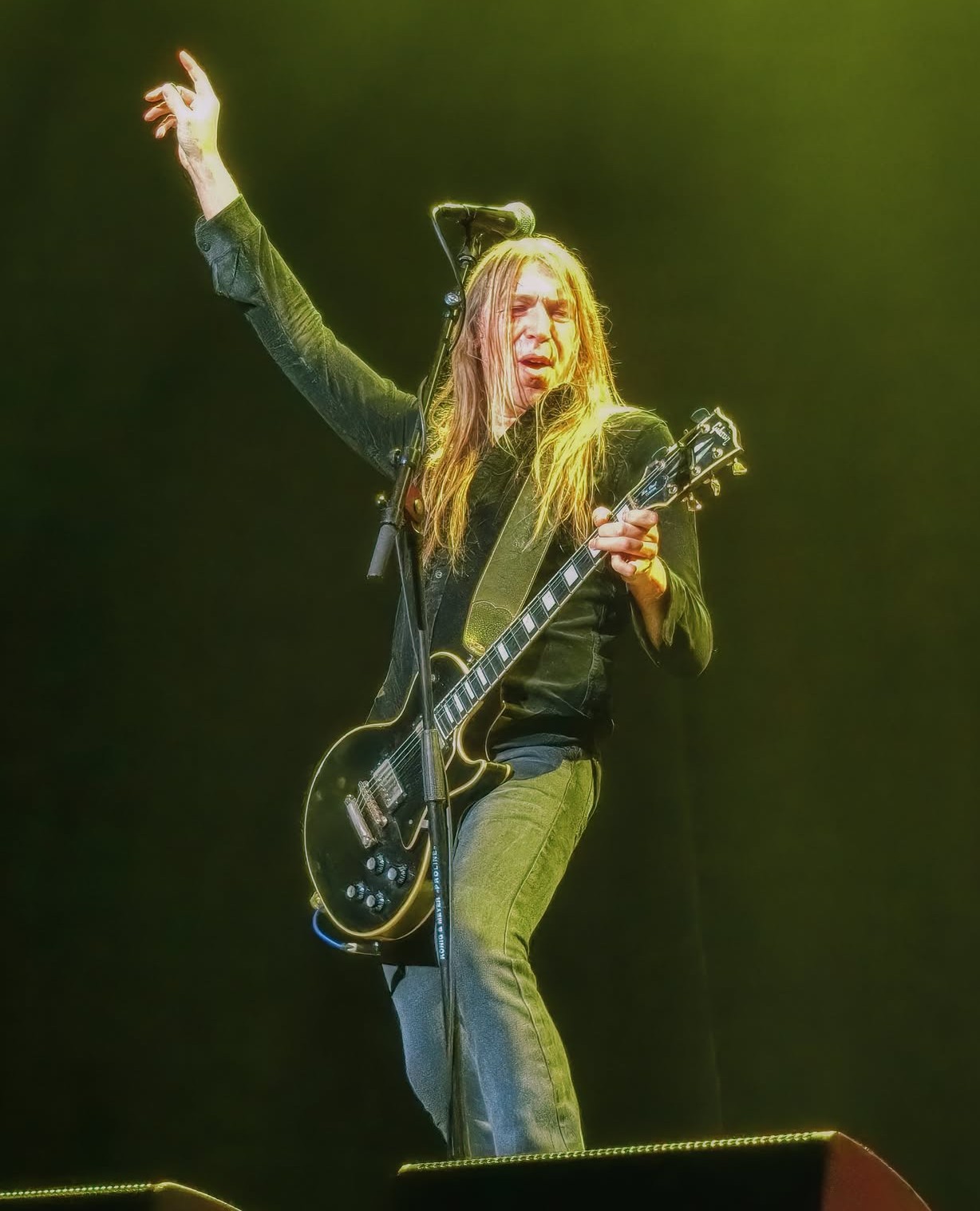
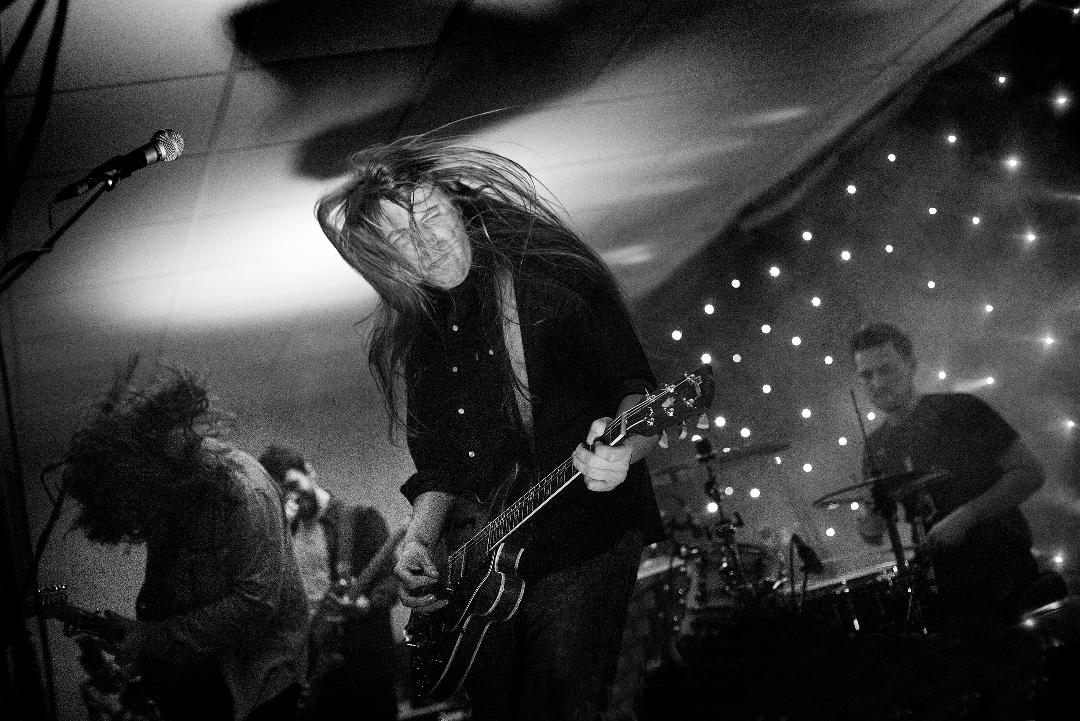
British guitar player Sam Wood has had a busy career so far, and in the last few years his name has rose amongst us classic rock fans, having joined Thin Lizzy spin-off band BLACK STAR RIDERS a few years ago, guesting once with SAXON, and more recently substituting in for Mick Box of URIAH HEEP, for the band’s Scandinavian tour in January & February.
This was a very enjoyable interview as we discussed the bands Sam has played with, such as WAYWARD SONS, and including the details of his recent shows with Uriah Heep. As I go to post this Sam has a few dates left on a UK tour with one of his other bands THE DEAD COLLECTIVE, who have just announced their self-titled 4-song Ep is available for Pre-order (on limited red vinyl, no less!). We also chatted about Sam’s favorite bands and record collecting. Enjoy! *Check out the links below.
I want to go back and you can give me talk about some of your early stuff and how you got into recording and, playing in general as a professional musician. And what kind of got you to where you are?
Well, I suppose since I probably, like a lot of other people who are in this game when you start, you never really think about, when you’re a kid and first sat down with a guitar, you don’t really think about what I’m going to be doing when I’m older. You just find something that you love doing and you do it because you love doing it. You’re not doing it because you think there’s going to be a future there. But before long, you start to realize, ‘Oh actually, I really love this’. Yeah. And wouldn’t it be great if one day I might be in a band that might be playing in front of people or whatever. And so, quite quickly, I suppose it became apparent that it was going to be something that I wanted to dedicate my life to really or pursue at least.
So, when I was playing in a few bits and bobs here and there, but it wasn’t until I went to Uni when I when I moved up north. I went to the music college in Leeds, which is only about 15 miles away from where I am now. And that was when it really started.
And all of a sudden you go from being just a guitarist or a drummer or a singer or whatever you are – all of a sudden you’re put into this mixing pot of really talented people, and that just brings your game up.
That was that was a wonderful experience having all of that. And then I suppose I’ve just been playing in bands ever since, really. And it depends how in depth you want to get with it. But there’s a there’s a nice sort of lineage from being there all the way through to Blackstar Riders and everything. We just as with everything, it’s meeting the one right person. And they’ll say, ‘Oh, you might be good for such and such’. And before you know it, that link has been made and you go from there really.
If you sit down and think about it for too long, it gets quite scary – thinking, well, if one link in that chain hadn’t happened, you don’t know what you might be doing instead.
I find it interesting, because I gather you’re in your late 30s, so you kind of kind of came after that whole ‘classic rock’ tag had already started. So, a lot of the guys you play with are probably a lot older than you, so…
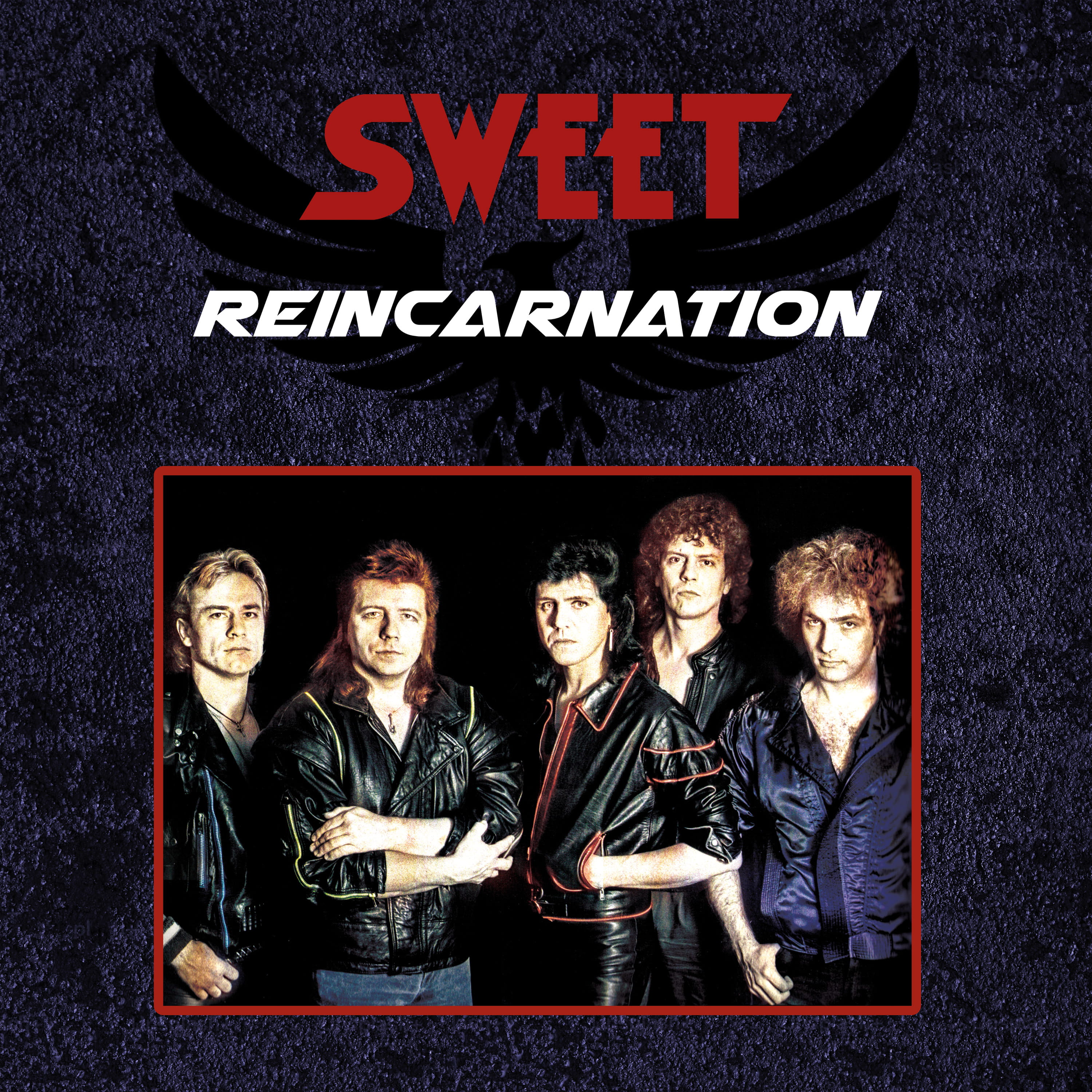
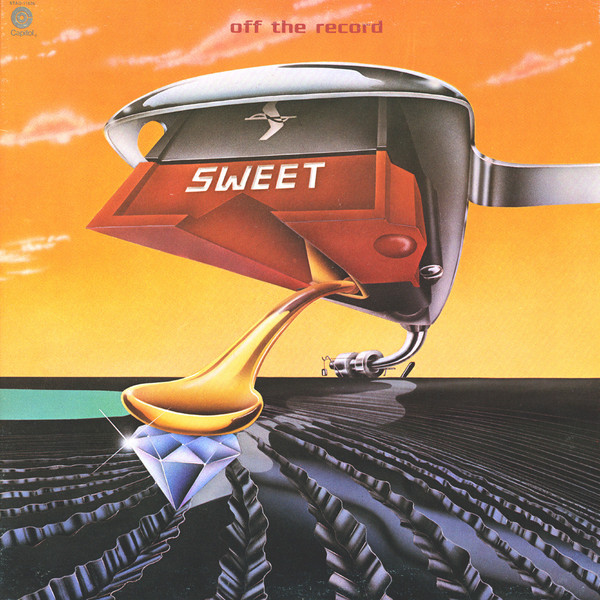
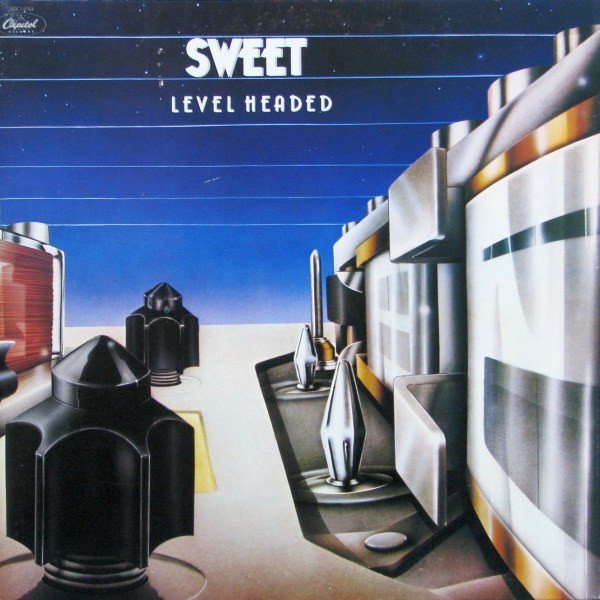
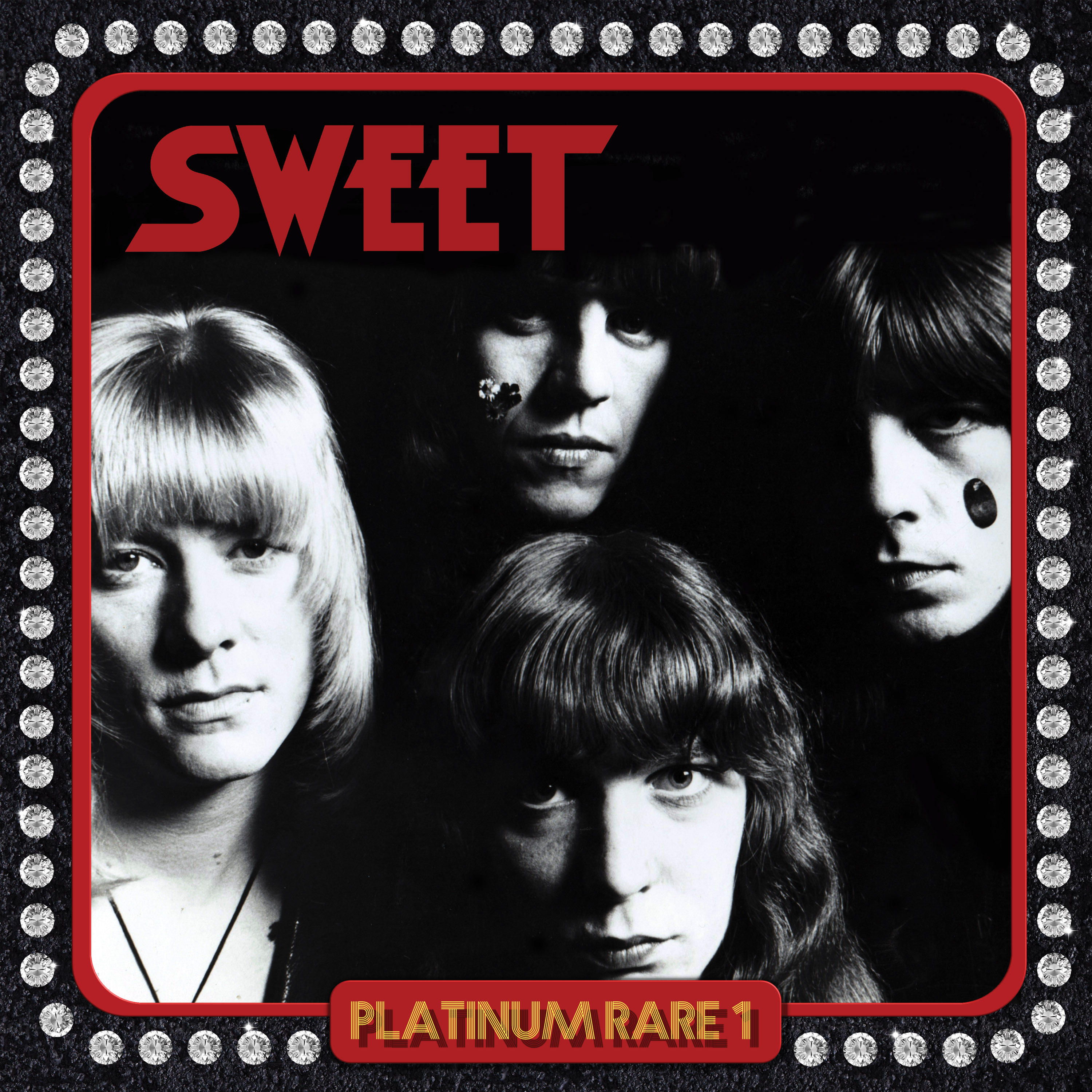
Yeah, as I like to remind them.(lol) But, I was very much brought up on my dad’s record collection. He was he was big into his 70s rock, glam-rock – T-Rex, Slade, Sweet, Thin Lizzy, all those guys. And so that was very much my musical education. That’s sort of informed, I suppose, how I play and the kind of where I’m I feel myself headed as a player. All the things that come more naturally to you because that’s what you’ve been listening to your whole life. And so and so it does mean, as you say, now you find yourself often in or around members of bands or playing with members of bands that you grew up loving, which is such a such a treat, but it’s an honour more than anything else. What an incredible situation to find yourself in.
It’s funny because I grew up in the ’80s mainly and I get the whole, ‘well, you’re listening to bands that are from the 60s and 70s’. But here you are playing with bands that your dad kind of grew up with.
Absolutely!
Can you give me your shortlist of some of your favourite players and albums and stuff?
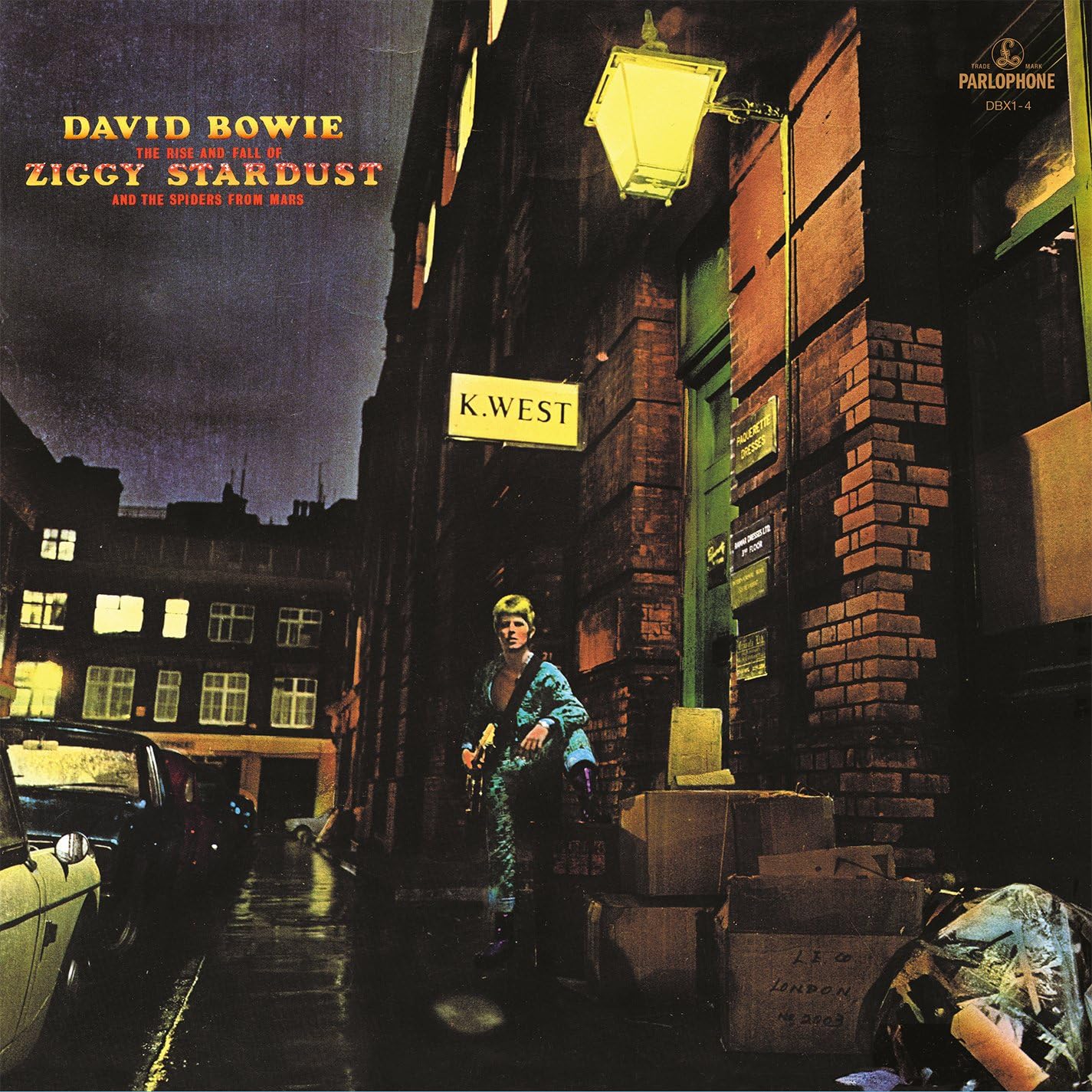
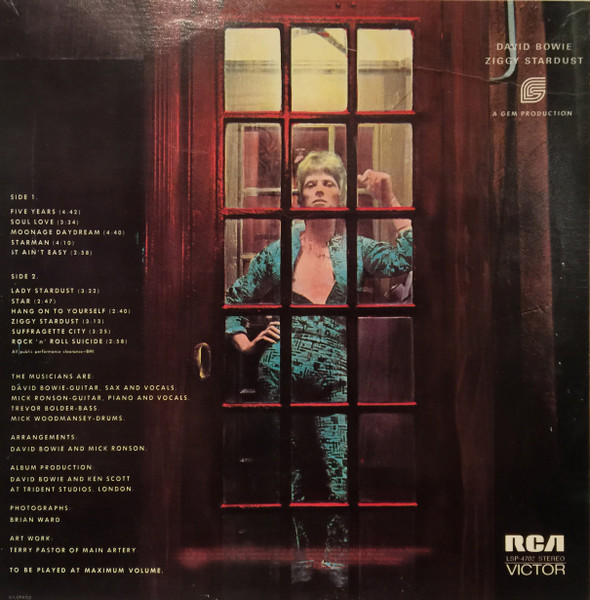
Oh, great. I mean, probably the obvious ones….Mick Ronson, obviously. All the Thin Lizzy guys, particularly the Scott and Brian Robertson era. But all of them, all the way through from Eric Bell, all the way through to John Sykes; we’ve got Gary Moore, Snowy White in there as well. And Randy Rhoads and Michael Schenker.
I’m not really allowed to class all the Thin Lizzy as a guitarist as one, but I am for the purpose of this, so.. I’d say those four really are, the kind of foundation of probably what my style, or my interests really is as a guitarist. There’s a lot of other stuff in there. I was always a huge fan of Ritchie Blackmore. He’s playing Deep Purple and Rainbow. Hendrix as well, I always, always loved. But it was mostly those guys.
And a lot of the earlier I’d say the glam-rock guys, Andy Scott out of Sweet – What a fantastic player he was… and still is, of course. It’s one of those things whereas time goes on, you realize there’s a lot of a lot of other players who have made their way into your playing, the Saxon guys, for instance, Paul Quinn and Graham Oliver. I listened to a lot of Saxon when I was a when I was a kid. And I got the incredible opportunity a few years ago to step in with them, take the place of Paul’s side of the stage. So, learning the parts, I didn’t realize how much it kind of already seeped into my subconscious, and is there in my that I’ve picked up as part of my own playing style, which is lovely. It’s lovely when you when you find those parts that you didn’t realize were in there.
Yeah. Saxon was a band I got in later on in life. I’ve kind of seen them a few times because they’re not over here too often, but they came over with UFO a couple of times. So that was good. I love the Randy Rhoads stuff with Ozzy and that run of the Sweet albums in the 70s. People always put them down as a glam band, but if you are kind of a pop band, if you listen to four or five albums in a row, there’s pretty hard rock stuff.
Oh, absolutely. listen to all the B-sides. That’s the thing. They had the hits on the A-side that were written for them, but they were allowed to do their own B-sides. It always sounded to me like they just wanted to be Deep Purple. You know, they’ve got big riffs, big solos. What a band! And they had these huge harmony vocals as well. They could do it, as could most of the bands from that time, to be fair.
What was kind of your first professional recording type gig?
First, well ‘professional’ is a tricky word. Coming out of Uni, I was in a couple of bands that were getting out there as much as we could. You know, young kids, 20, 21, bought a van, just driving around the country, playing as many gigs as we could. Without a clue, really what we were doing, we just saw if we’re playing, playing more gigs, that’s what we need to do. We did some really cool stuff. Actually, we ended up supporting Wishbone Ash, a few other reasonably good sized gigs for where – for a band on our level we got quite fortunate with that. That was a band called ‘Treason Kings‘. And it was through Treason Kings that I ended up meeting Toby Jepsen from a band called Little Angels. And he ended up producing two EPs for us. And the whole time we were in the studio I was hounding him and saying, you know, ‘If you need a guitarist for anything, if I can be of any help. Please let me know. I’d always like to do it.’
Then one day out of the blue, I got a call from Toby saying he was he was putting something together. Now, originally, this was meant to be, he had a record contract for a solo album and he wanted to put a solo record together. So, he got he asked me if I’d play guitar on it. And we had Dave Kemp, who was one of the horn players in Little Angels, but he was on keys, and Nic Wastall from a band called Chrome Molly. I don’t know if you’re familiar with them (?), another new wave British heavy metal band from the UK. Fantastic band. And Phil Martini on drums, who I knew from The Choir Boys and Joe Elliot’s Down and Outs. None of us had played together before, but we all sort of came down and met in the middle, came from our various locations in the UK and just had a couple of days of rehearsal. Not even rehearsal, just room and time in a rehearsal space to have a play about with some ideas that Toby had.
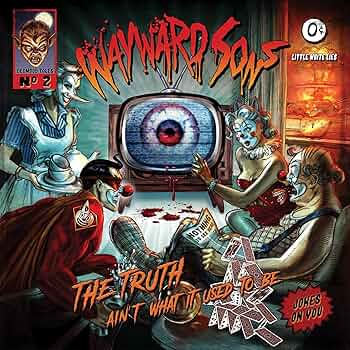
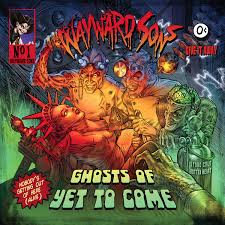
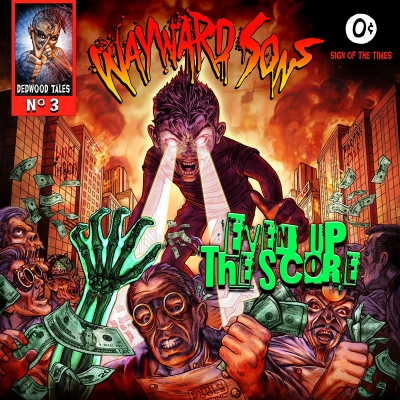
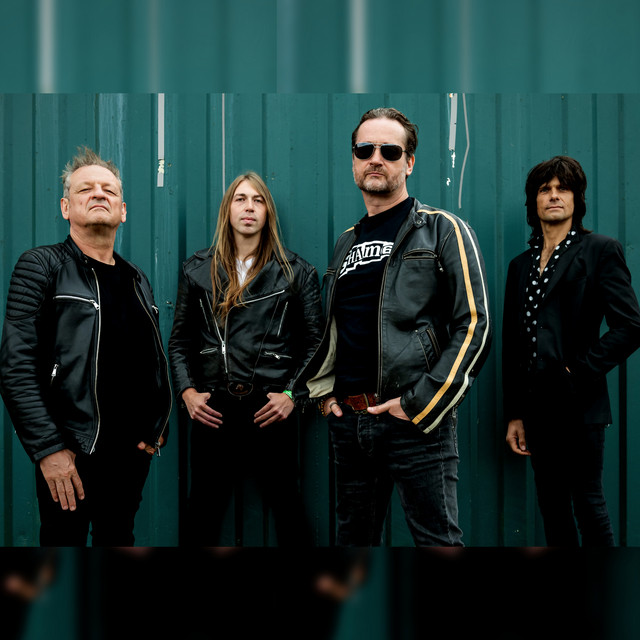
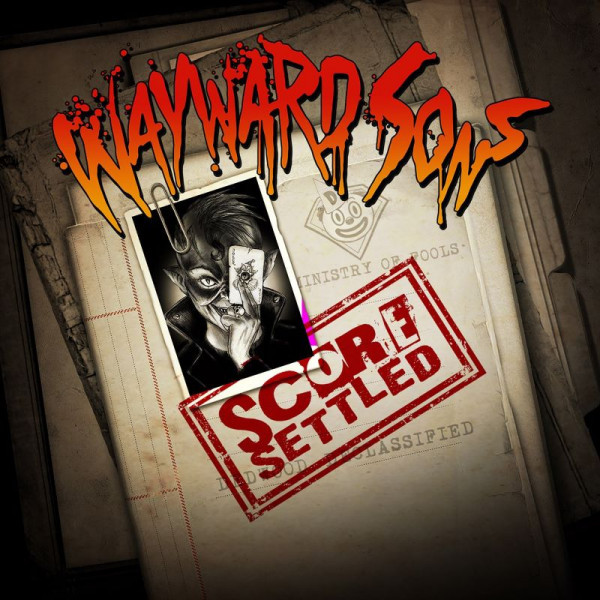
And very, very quickly it became apparent that something really gelled. And that doesn’t always happen. You can put huge bunches of musicians together, really good musicians together, and sometimes it clicks and sometimes it doesn’t. And that’s not a slight on anyone; it’s just sometimes the chemistry with, not even as people, but with your playing doesn’t fit or whatever. But this really did. It really slotted together really nicely. And before long, we’d sort of turned it into a band instead. Instead of it being this solo album for Toby, it became a band. And that was where Wayward Sons came from. So that, in terms of being the ‘first’, that was the first band where it felt like I’d moved up. Because where it was with Toby’s past, we got a running start and we could start off with, his fans. He’s had a good solo career in the meantime, The Little Angels fans. So you can start off on quite a good footing. It felt like a real gift to be to be brought into that world, for somebody in my position where we’d just been in a transit van driving around the country trying to do what we could. That was the first real thing, and that was 10 years ago now, 10 years since we first got in a room together. And it just feels like it’s been just a very exciting journey from then, really.
What’s the current status of the band? It’s been a few years since you guys have had anything, right?
Yeah, well, it’s still very much ongoing. We were playing last year. There were plans for us to be doing something this year. But that has ended up, as often happens just through one reason or another, I think that’s looking like it might not happen now, but it’s still very much an ongoing concern. And we will be back at some point with some new music and some new dates. But no real concrete plans for that as yet. We all we all want to, and we will do it. That’s just been like so many, you know, COVID was terrible for lots and lots of bands and lots of artists and everything – we all know that. The biggest trouble that we had during COVID was not only that we were we in different parts of the UK, some of us were in different countries as well. We lost so much momentum through COVID that it that it has been a struggle. We’ve still been working since then, obviously, we’ve had had an album since then. But just felt like it’s taken a while to kind of get the wheels turning again on everything. But what it what it also has meant is that because we haven’t been on the kind of treadmill of it all, we now can afford to take the time and do things properly and just come back when we’re ready, and when the time is right. And I know we will. I’m looking forward to that.
What have kind of been the highlights as far as festivals and stuff you guys did over there?
The whole trip of that of that band so far was such a big part of my learning curve, as I suppose, a professional musician, on that level. So there’s been a lot of stuff that has that has been an amazing first time doing this or that. Download Festival really was a particular highlight. We were actually offered the main stage in 2020, but obviously, Covid came along and scuppered that, and so we were bumped onto 2021. Then that got cancelled again. Covid. But they stuck to their word and they gave us a slot in 2022 to open the main stages. I’ve been to Download, Download Festival was the Donington Festival, the Monsters of Rock in the UK. This is the legendary rock festival in the UK. And I’ve been there as a teenager and in my early 20s and camped for the week and seen all my favourite bands coming through. So, to get the opportunity to play on that stage was incredible. Absolutely incredible! And the fact that we opened the main stage on the Friday. the first day of the festival. And it was the first day back after Covid, after all that long period of nothing happening. It just felt like this this triumphant kind of return to everything. It was wonderful; It was absolutely wonderful. What an honour to be up there. I loved that. That is a real highlight, it’s got to be there for me.
That must have been crazy because you guys have those festivals over there. We don’t have a consistent festival, I don’t think, over here. Like, that one central one that everybody looks forward to every year.
I suppose we have the added benefit of being such a small island. And Donington is pretty much slap bang in the middle of it. So, everyone is able to congregate in one place where I suppose for you guys over there, it’s a much bigger place, it’s much harder for it to be a kind of central point, I suppose.
What led to the Black Star Riders gig? I’ve seen the band a few times over here with I think Judas Priest. I saw them as Thin Lizzy with a few other bands as well. But so they’ve been over here quite a bit. There’s obviously had a number of guitarists before you, so you’ve kind of followed Scott Gorham and Damon Johnson in that.
Yeah. BSR I know obviously, that it’s a modern band and a current band, but still very much a band that I grew up with. The first album came out in 2013, I was 24 at that point and a massive Thin Lizzy fan. So all of a sudden there’s new music coming out with the Thin Lizzy guys. Scott’s on guitar, Ricky singing. What’s not to love!? And it sounds like Black Rose era of Lizzy. Fantastic! Wayward Sons did a UK and a German tour with BSR in 2019, and I had been out on an acoustic tour with Ricky and Damon the year before that, which was both of those were a lot of fun. I just stayed in touch, I suppose. And I had heard through the rumor mill that Scott had been thinking of stepping down from BSR, keeping the idea of doing something with Thin Lizzy alive, but wanted to step down from BSR and nothing had been announced or anything like that. I just thought I’m just going to message Ricky and just, basically said to him ‘I’ve heard this might be the case.’ I couldn’t live with myself if I didn’t at least make contact just to say Hello, just as I had done with Toby in the studio with Treason Kings years before that – ‘If ever I can be of any service or any help, please do let me know.’ …No one ever feels completely qualified for a job, you know, it would be arrogant or it would sound arrogant to say so. But I mean, for me, being such a huge Thin Lizzy fan, I sort of felt like I know that I can approach this band from the right point of view, playing wise. Does that make sense?
Yeah.
I’d hope I would be able to give it a good shot. So I got a nice reply from Ricky, saying they weren’t looking for anyone or anything. Then probably about a year or so later I got a call from Ricky about stepping in with his solo band, the Fighting Hearts. If you haven’t seen or heard Ricky’s solo stuff, you’ve got to check it out because it’s absolutely fantastic. Some fantastic albums, great tunes. And so, I was I stepped in for a few gigs with them. And not long after that, I got the got asked about the BSR thing. Again, this was after covid. After Damon Johnson they got in Christian Martucci from Stone Sour, Corey Taylor’s band, who’s a fantastic player. But they it was working because (obviously) Corey Taylor was busy with Slipknot, and when he wasn’t busy with Slipknot, he’d be doing Stone Sour, so that would be the time that Christian was with him. And then in the time that Corey was with Slipknot, Christian would be on a cycle with BSR. And that was how I understand it, that was how that was planned to work. But then obviously Covid came along, levelled the playing field. Blackstar Riders was ready to go with a new album and a new campaign at exactly the same time that Stone Sour was. And so all of a sudden that threw all that out of balance and they needed a guitarist. So I, again, very fortunately, found myself in the position of getting that phone call. And obviously you say Yes to that when that comes along.
So, you were obviously familiar with all the albums, the catalogue?
Oh, absolutely! As I said, I’d been a fan since day one of the band. So learning the stuff, so much of it I already had and already knew, at least to listen to. That was such a such a ‘pinch me’ moment, on two levels. Firstly, sitting down to learn those songs to actually be a part of that. But then actually getting in a room, and you turn up and there’s all the flight cases, Black Star Riders flight cases, and Lizzy stuff’s all there. And you get in the room, and it’s the band – it was Ricky, Scott, Jimmy DeGrasso and Robbie on the bass. And it’s like, ‘What dreamland have I entered into here?’ And then counting in and away you go. And you’re there, stood stage right and Scott Gorham’s on stage left. Yeah. Mad. Absolutely mad!
Well, it’s excellent because there’s such a history already with the band and they’re still current. So, what is currently up with you guys, Is there any plans as far as recording or touring?
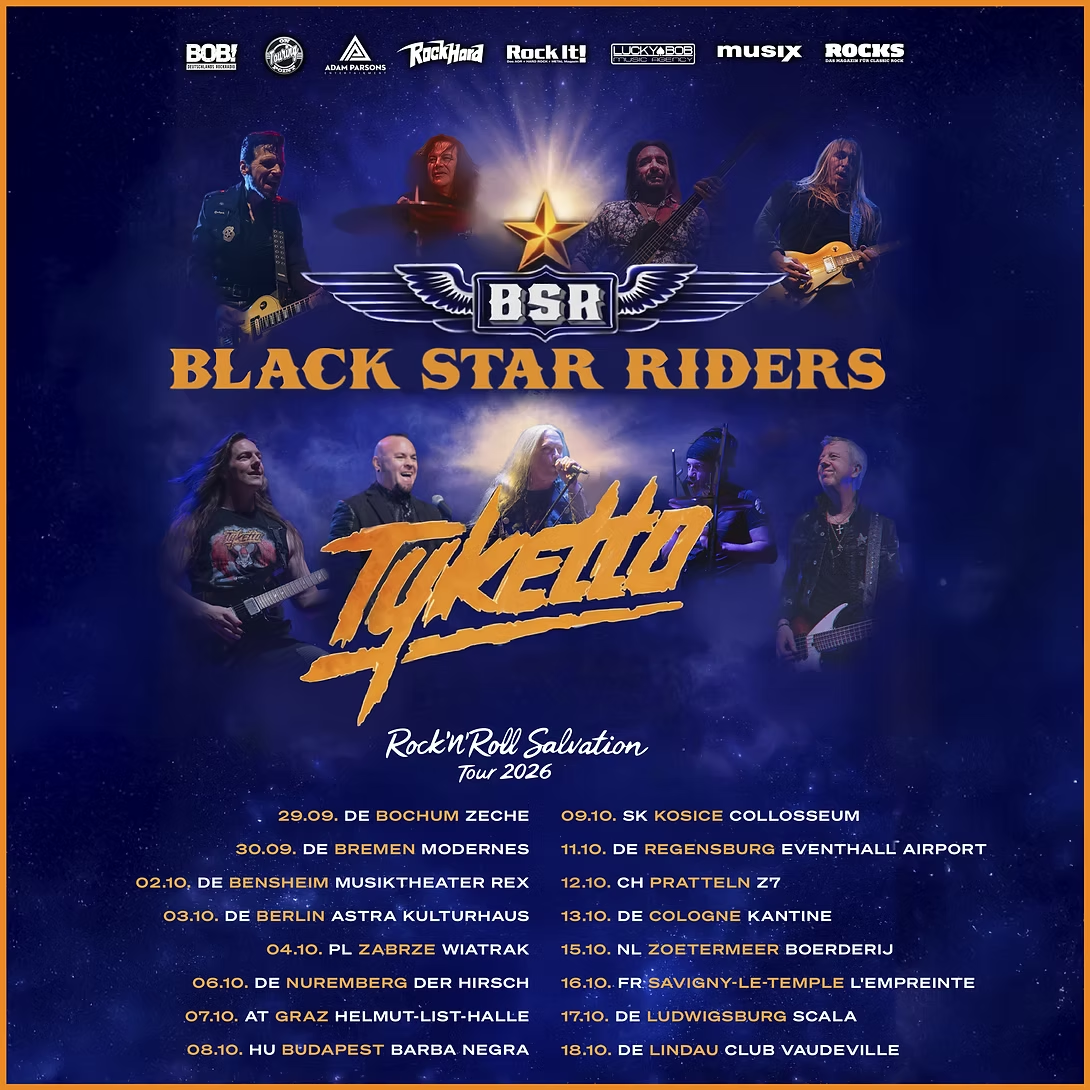
Well, we’ve got a got a European tour coming up, which would be nice because we had one show about 18 months ago in the UK, and that was the last that we had done. So, we’re off to off to Europe in September and October. The band, the band is still very much alive and still very much going. Ricky obviously is very, very busy with The Almighty and with the solo stuff. For this tour we’ve got Marco back on bass.
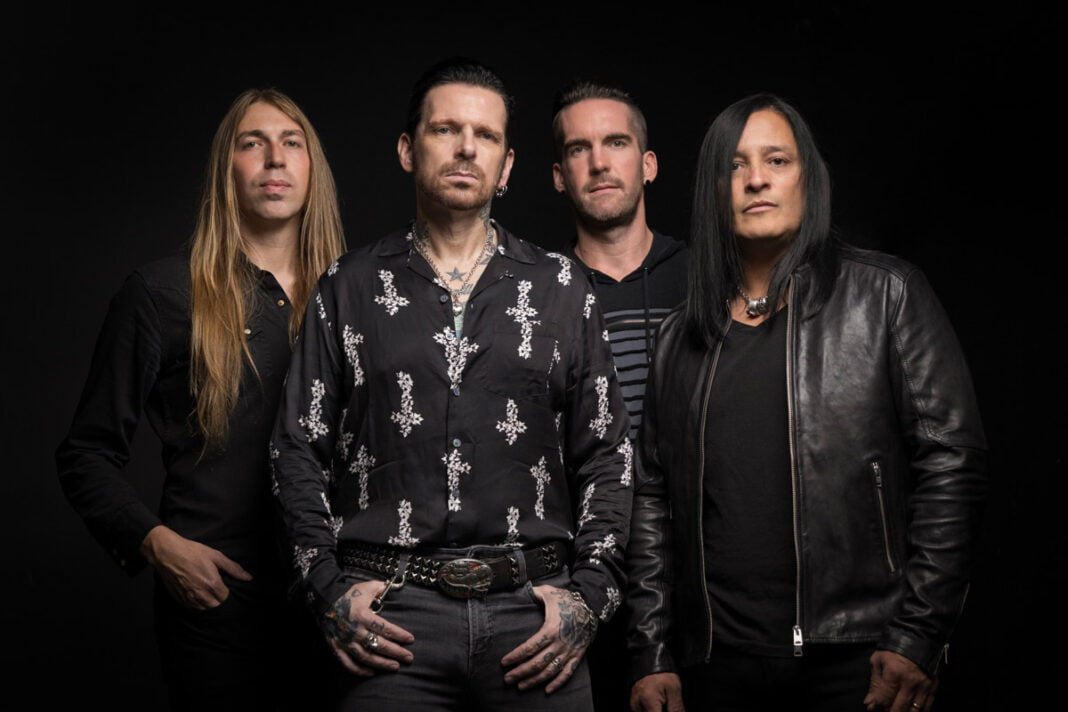
Will it be a 5-piece?
No, it’s a 4-piece. Scott isn’t there anymore. We did a tour in 2023. We did half the set as a 4-piece, and then Scott would come out and we’d do the last half of the set. And that was great, because I think that’s all he really wanted to do. I think he’s happily retired from Black Star Riders now.
That’s understood.
Yeah, you can’t say he hasn’t paid his dues. He’s still very much working away; he’s got his artwork he’s doing. He’s still very active, which is great.
So, we’ll be going out as a 4-piece. What I think a lot of people don’t understand about Black Star Riders, because it’s always been a 2-guitar band from day one, but Rickey has also played guitar as well. But because he’s the frontman, he’s never really had the chance to be the lead guitarist. He’s a fantastic guitar player. He’s a really good guitarist, and can absolutely hold his own with the twin leads, and the riffing, and everything. Not to mention that he’s responsible for a lot of the riffs and the guitar parts that are in the songs anyway. I think he surprised a lot of people on that tour, and on subsequent gigs to see Rickey playing those lead parts and having such an active role as a guitarist in what has always been a 2-guitar band. He can do it, and he does it. It’s really great to play with him; it really sounds fab!
Have you guys talked about doing any writing or anything new?
I really hope that will be on the cards. That always very much been the plan. No real concrete plan at the moment, but I’m sure there will be, at some point. We’ve all got to get back in the same country, at the same time, before any of that can happen. All in good time.
Do you collect much? (showing my BSR LPs)
Yeah. To be honest, modern albums, I don’t have so many, but I love record fairs, record shops, and just being able to flick through and finding odd things you just fall in love with because of the sleeve. You just go ‘Oh I wonder what that’s like?’, which is getting harder to do because, obviously they are getting more expensive, whereas it was nice just to be able to spend less than a dollar, just flicking through and you could see something that you liked and try it out. And if you liked it, great – If you didn’t, you spent less than a dollar on it. So, yeah, I love it… But great, you’ve got the BSR, all on vinyl.
I’ve got the five of them. It’s funny because back in the ‘90s when vinyl went out of style, you could buy tons of it for two bucks a piece, and now that stuff is all suddenly worth 10, 20 bucks, 30 bucks each, right!?
Absolutely, yeah… And up sometimes, all of a sudden things can be very, very valuable.
The thing about it as well, and I feel that like the younger generation, like sort of kids in their teenage years now who have only they’ve grown up in a digital world, they are now the ones that are buying vinyl, cassettes, CDs, because actually they want to hold something. They want to have something that is theirs. You know, when I was a kid, when you were a kid, I’m sure you’d save up your pocket money or your allowance or whatever, and you would save up when you go down, you buy an album that you really loved and you’d be on the bus on the way home kind of looking at the cover, reading all the sleeve notes and everything. And that was yours. And it was a was a sacred text to us because, ‘this is mine’.
‘I’ve saved up for this, and I bought it and it belongs to me’, this physical thing. And so, you took it home and you listened to it over and over and over again because, you’d spent all that money on it. And so, you really knew it.
Whereas these kids today have grown up with everything with Spotify, with Apple Music and everything, just being there. So, it doesn’t have any value to us anymore in the way that it used to. And it does feel like they are coming around to that as well, which is wonderful, wonderful to see that.
Yeah, when I get stuff to download for review or whatever the case is, I really don’t have anything but the opportunity to listen to it. But most of the things I’ll buy if it’s something I really like that I’m reviewing or whatever, I’ll go look for it eventually.
Yeah, absolutely. The thing is, we we’re all guilty of it. We’re all guilty of streaming and whatever. And you know what I’ll do – if there’s a band that I really like and I want to own something of theirs, if I can, I’ll buy it at a gig, because then that is the sort of purest way of getting it from, showing your appreciation for it. If you can just pay them for it at a gig. That feels like the to me, that feels like the right thing to do. It might be a bit more expensive than getting it off Amazon or getting it delivered or whatever. But, that’s sort of not the point at that stage.
Are you a completist when it comes to collecting bands?
No, not at all. (Ha!) There are there is there are so many bands. If you if you get a really good ‘greatest hits’, you can learn a lot about so many bands, that with the best of intentions, you always mean to go back and revisit properly. But no, I mean, with certain with Lizzy, The Sweet, they’re probably the only the only two bands that I know I definitely have everything they’ve ever done. And if more stuff were to become unearthed, I would go and seek it out. But no, they’re probably the only two that I know I’ve got everything of. I do love that, I love being so into a band that you really have every corner covered. And you really feel like you understand them. But it’s also nice finding a band and finding an album that you haven’t heard before or there is a different side of them that you haven’t expected. And then when you come across that, that’s still a nice little happy accident, isn’t it!?
I’m almost afraid to discover new ‘70s bands now, because if I go back, I’m thinking I got 20 more albums to go find.
But the flip side of that is that if you discover a new band, and it becomes your favorite band, you haven’t got to wait for them to bring out the new album to go and listen to it. You can just go back and get them all in bulk. And you’ve got their entire discography at your fingertips. So brilliant.
Do you have any favorites from Black Star Riders catalog?
I really love pretty much all of the first album, because when I was 24, 25, I, I bought that and had it on CD player in my car. The Another State of Grace album as well. I think that was the first one with Christian on it. That’s got some fantastic songs.
“Tonight the Moonlight”, I’ve always loved. It was the first single. But “Bound For Glory”, when that came out, it was just such a such a big…it felt to me – as a massive Thin Lizzy fan, but as a young fan… Phil Lynott died three years before I was born so, I’ve seen Thin Lizzy, Ricky with Lizzy and I’ve seen the John Sykes fronted version of Lizzy. But, I’ve never heard new music from it. I’ve never been able to get excited about new music from Lizzy before. And hearing that first BSR album, and “Bound For Glory” got quite a lot of radio play over here, it was just felt so special. It felt like I was able to take part in enjoying this, you know, the legacy of Thin Lizzy. I was able to actually enjoy being part of that as a fan.
Like a new chapter!?
Yeah. And it being a new chapter that was there for me. Do you know what I mean? As a listener, I wasn’t just listening to my dad’s records, records that came out 15 years before I was born. This is new music, it’s current and is for me. And that just felt so exciting. And yeah, “Bound For Glory” is always a favorite to play.
Well, I’m looking forward to more. The last one was good. The one song that stands out for me sounds strange is the version of “Crazy Horses”.
Oh, It’s great, isn’t it!?
I just heard that song a few years before and I thought what an odd song for that band (The Osmonds). That was a great cover. The Dictators did a cover the same year. There’s a few others.
It’s an absolutely fantastic song. I mean, even the Osmond’s version rocks! It really rocks. It sounds great. It’s an energetic record. Big overdriven guitars all over it. And the mad sound effects all over it. That’s great. t’s such a such a fun song. We do that live. That’s been in the set ever since I joined. I love it. The room when it when it first starts is normally split. Half the room is like ‘Oh, cool Crazy Horses. That’s great. I love that song.’ And the other half of the room is like ‘Crazy Horses? The Osmond’s? I thought I was here to see a rock and roll band!?’ And then hopefully, they have been converted by the time we get through this. Because yeah, absolutely love it, love playing that. I would love if, as and when time allows for new material, I would love to be able to ‘officially’ be a part of the BSR journey.
I don’t think there’s a Blackstar Riders live album yet.
No. I need to get my elbows in a few ribs about that maybe.
Now, when you talked about album covers, kind of picking up albums. That’s kind of the way I got into Uriah Heep, I was just looking at those album covers, and one day I thought ‘I’m just gonna take this! And that was what got me started.
Which one; Which album was the first one for you?
Demons and Wizards.
Oh, great.
I think I picked up like a two or $3 version of it at flea market and went back a couple weeks later about a better version of it.
Fantastic. And that was it. You were hooked.
Yeah. If you know the history of the band, it’s confusing, because you go to that album, then you buy something from the late 70s, and it’s a different singer, different sound.
Yeah, they have three completely separate periods. There’s 70s Heep, 80s Heep, and then modern day Heep. It all sounds, you know learning some of the newer stuff that I was playing with them on the tour, I just did, listening to the newer stuff, and this this sounds like a stupid thing to say, but it sounds exactly how you would want Uriah Heep to sound in the modern day. It does. It’s got it’s got Phil’s magnificent Hammond playing, obviously Mick, Mick’s guitar work is brilliant, Davey and Russ. Bernie’s a fantastic singer. Yeah, what a band. What a fantastic band.
And still a bit progressive, right!?
Absolutely. Still progressive. And what’s great, you know a lot of bands that are still going end up kind of going down, or it feels like they’re going down like a heavier, almost more ‘metal-y’ route, whereas Heep have just remained a very melodic hard rock band, which is great. They’re still doing that thing. It still sounds like it exists in the modern world. It doesn’t sound old. And I don’t mean that in a bad way. It sounds modern, but it just still sounds like them, it doesn’t sound like a betrayal of everything that’s come before.
And I think for them, the one thing about them now is that they’ve stayed current, putting out albums every few years, Deep Purple does the same. But there’s that old group of bands that just are content to put out the ‘greatest hits’ and be done with it.
Yeah. There’s a real feeling like they’re always pushing onwards, doesn’t it!?
So, I want to ask how that whole thing (tour) came about; I assume it’s through the management that you guys share(?)
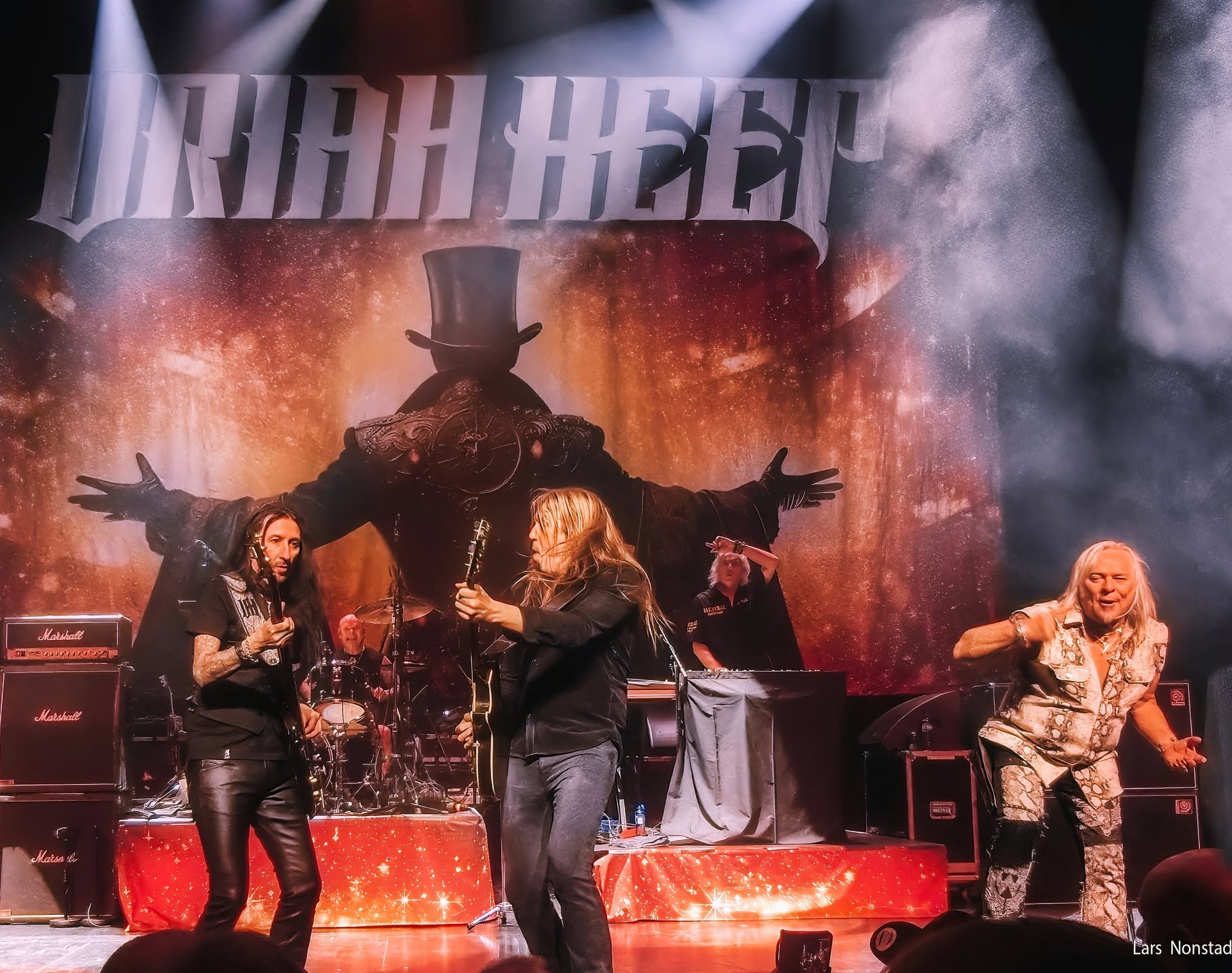
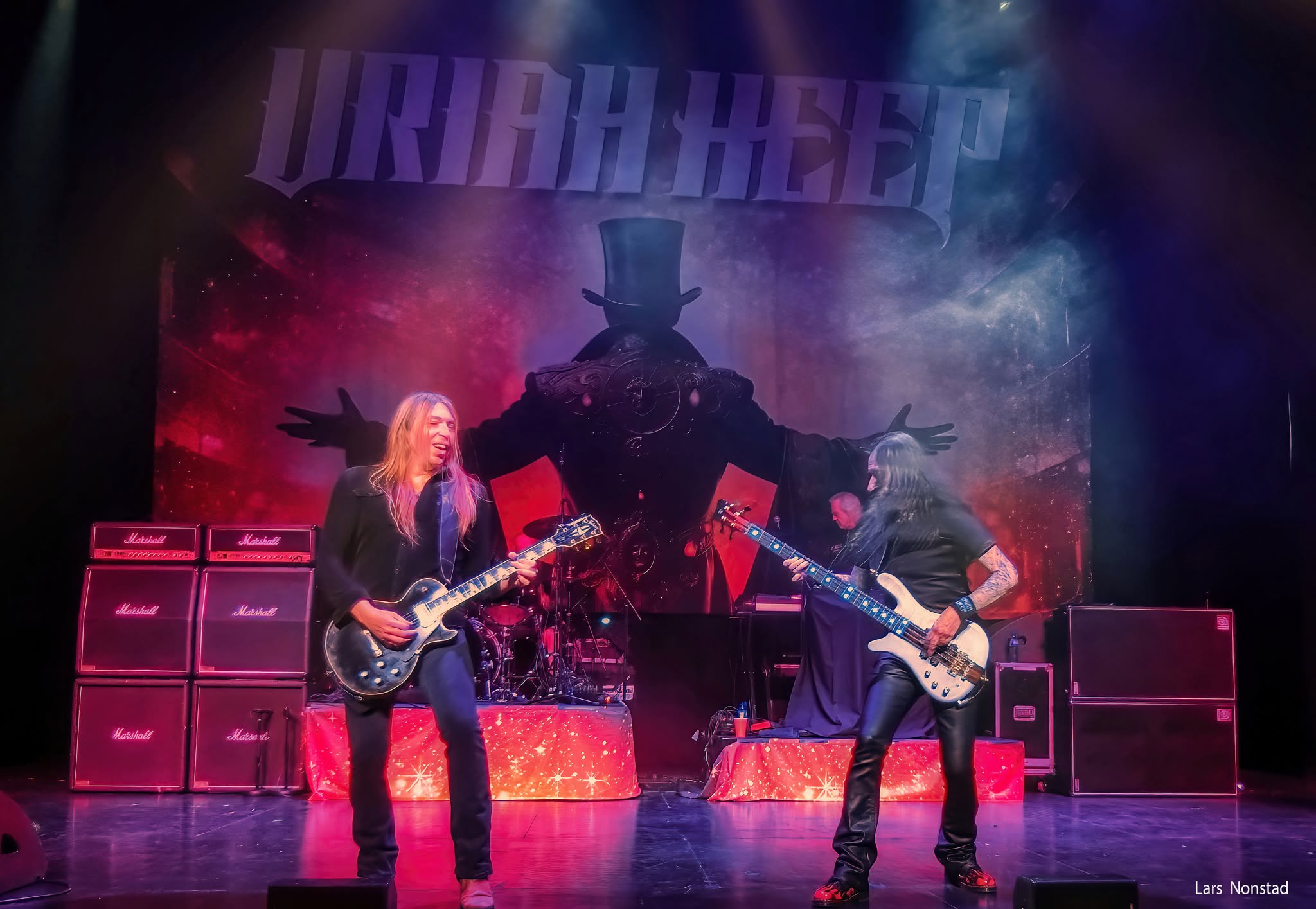
Well, yeah. So, Uriah Heep’s manager, Adam Parsons, he’s also Black Star Riders manager. He’s a wonderful friend. Anyway, a few years ago, he was also managing Saxon, and he got me a gig filling in for Brian Tatler, who had replaced Paul Quinn. Brian Tatler had Diamond Head, and because Diamond Head had another gig that same day, but Saxon had a festival in Denmark. And so, I had to I had to fly in. I had plenty of time to learn the set. But he asked me if I could do that. So it was flying in, meet the band, no rehearsal and just go and do it, which was nail biting anyway. But it went really well. As long as you’re prepared enough and if you make sure that you know the songs inside out, you can do it. And that was a lot of fun. And Heep had the situation where they had the Scandinavian tour booked. This was in January, February this year. And a few days before the tour, Mick Box got very, very ill and was in hospital. He was in hospital and couldn’t stand up, let alone play guitar, let alone go to Scandinavia in January to play the guitar. So, I think this was maybe the Thursday night or the Friday night(?) I got a call from Adam, the manager, explaining this, saying ‘We’re in a real we’re in a real pickle here. Is there any chance you could do it? You fly out on Wednesday, first gigs on Thursday or fly out on Tuesday’. It was such a small amount of time. But I think, you know, the show must go on. And I’m so obviously… I was a mixture of completely honored and completely terrified to be asked. But I’ve got to say fair play to Adam and for the rest of the guys for still wanting to go ahead with that, because that’s a lot of trust that they’re putting on someone… I’ve played with Russ, the drummer before, but only a couple of songs at the Cozy Powell Memorial bash that we do every year. They didn’t they didn’t know me as a player. They didn’t know me as a person. I don’t know(!?) I feel that that is a lot of trust to put on someone. I’m very, very grateful that they did.
So, yes, a long story short – I had a few days to learn an hour and a half’s worth of the Heep back catalog and go out. I thing the first gig was the middle of the next week. I flew to Finland, met up with the guys. We didn’t have a rehearsal; we did have a sound check so we could run two or three songs. And I went through everything on the tour bus with Davey, the bass player. We just sat there with our guitars to kind of make sure I’d got the stops and starts and everything in the right places. But yeah, it was really flying by the seat of your pants.
Were you familiar with any of the catalog or much of the catalog at all or…?
To my to my shame, no. I knew as songs, but I’d never played them, but as songs I knew “Easy Livin” and “Gypsy”. But that really was the extent of it.
Heep had always been one of those bands that I’ve known that I liked them, and I’ve always enjoyed what I have heard of them, but for whatever reason, they were never a band that I had gone in and done a deep dive on. I really don’t know why, because it’s absolutely up my street – it’s heavy ‘70s, great guitar work, there’s the Hammond organ where I love anything with a Hammond organ on it. I’ve got no idea why their back catalogue hadn’t been on my radar like it should have been. So, “Gypsy” and “Easy Livin”, I knew. And that was it. And I don’t think I’ve played as much guitar as that – per day, probably since I was about 15. (LOL) I don’t think I’ve sat down with a guitar in my hand for that long.
So, they just gave you a set list and that that’s what you went with?
Yeah. Just ‘here’s the set list’. And I had a chat with Phil Lanzon, the keyboard player. I had a zoom call with him. It was the same set list that they’d done on the previous tour, when they toured Germany at the end of last year. He said, ‘I think there’s a full show that someone’s put on YouTube. Go and find that.’ Which was great for me, because not only does it kind of show what’s going on, but you’ve got all the guitar parts that Mick’s playing right there, and all the beginnings and all the endings, because they’re the things that can throw you off or can be different live to in the studio or whatever. So, it’s just like, ‘Right, here’s a definitive… This is how the set is. This is how it’s going to be.’ There you go, just learn it. I spent three days just glued to that screen. It sounds.
It was I suppose, more of like a ‘fight or flight’ thing when you get offered something like that. It’s just like, I know the end goal. There’s no margin for error, really. The end goal is on Wednesday, I’m going to be on stage with Uriah Heep for an hour and a half in front of a sold out gig in Finland. I have to know this set. I need to know every stop, every push, every solo. I just have to know it. And so, when you’ve got that as the end goal, it’s amazing what you can be capable of when you have to be.
I almost don’t want to ask but was it more terrifying knowing that Mick is the founding member and people look at him as, you know… ‘Well, he’s not there, so what are you guys doing.’ That type of thing…
Absolutely!
Because obviously there’s online commentary…
Yeah, yeah.
But if you want to see the band this is what you’re seeing, right!?
I know. But I mean, the fact that, I think I’m right in saying it’s the first time that Mick had not played a Heep gig, or they might have been.
I think there’s one in Germany in the early ‘70s where he got sick.
Yeah, but I think I think that was it. And obviously, Phil and Bernie have been in the band for 40 years. And Russ and Davey as well; everyone there has been in the band a long time. Mick, obviously founding member, and such an integral part. His guitar playing and his guitar sound is such an integral part of that band and how that band is. Weirdly, I think I think for me, because I was coming to it, when I when I started with BSR and because I was such a huge Lizzy fan, I was so aware of the weight of what these songs meant to me that that in itself was terrifying, because the notion of what you’re doing. Whereas with Heep, because they weren’t a band that had been on my radar in the same way, it was easier to kind of get on with it because I didn’t have that feeling of… I don’t know!? I suppose because I was coming to it fresh, I didn’t have time to get bogged down in worrying about that side of things. I was just like, ‘Right, I just have to learn the songs. I need to get up there and I need to do it. I need to do it as best as I can.’
When the announcement was made, I think I was as much scared about how it would be reacted to by the fans as I was about actually playing the songs as well. Because even though Heep, what Thin Lizzy represents to me, I know that the people that are going to see Heep on tour, that band means that to them. And you know that Mick is a figure in that band is as important as Scott is to me as in his role in Thin Lizzy. So that weighed on my mind quite a lot. And, you know, as usual, there’s a lot of people online before the gigs are even starting, going ‘This shouldn’t be going ahead. Mick’s a founding member. We should wait till he’s better.’ And the simple fact is that a band can’t afford to do that, really. As an absolute worst case scenario, if a tour like that has to be cancelled, then so be it. But it’s the sort of thing that could literally bankrupt a band. The amount of expense and logistics that are involved. I mean, when I got the call I think the truck with all the equipment was already on the way. It was already on it’s way, and already left the place in the UK where all the gear is held. It was already traveling to the gigs. And there’s three weeks worth of logistics and people who are relying on this tour happening, not just as fans, but like the bands, the crew, the support bands, the promoters. These people are relying on these gigs going ahead as their livelihood. You know, I totally get it. I totally get where people are coming from, where they say ‘Oh it should be postponed.’ And in an ideal world, maybe that would be something that would be nice if that could happen. But the reality, sadly, especially at the moment, the cost of touring being what it is, it simply can’t happen. Unless it’s completely unavoidable. But what amazed me was the reception, once we were there, was just fantastic, all across the board. I think people were so pleased that we’d shown up and the gig was still going ahead. And even though it wasn’t Mick, they’re still getting the songs, and they’re still getting the rest of the guys. And still, hopefully, getting a show that has the same energy, because Heep on stage have always been fantastic. When I’ve seen them over the years, even if I haven’t known the material as well, I’ve always enjoyed seeing them. So, if you can give a performance that is in keeping with what the fans are wanting or what the fans would expect. And I hope that we were still able to do that. Everyone seemed to come away having had a great time, which is such a relief.
I gathered from the clips I’ve seen that the fans were really receptive. Did you keep any souvenirs from the tour?
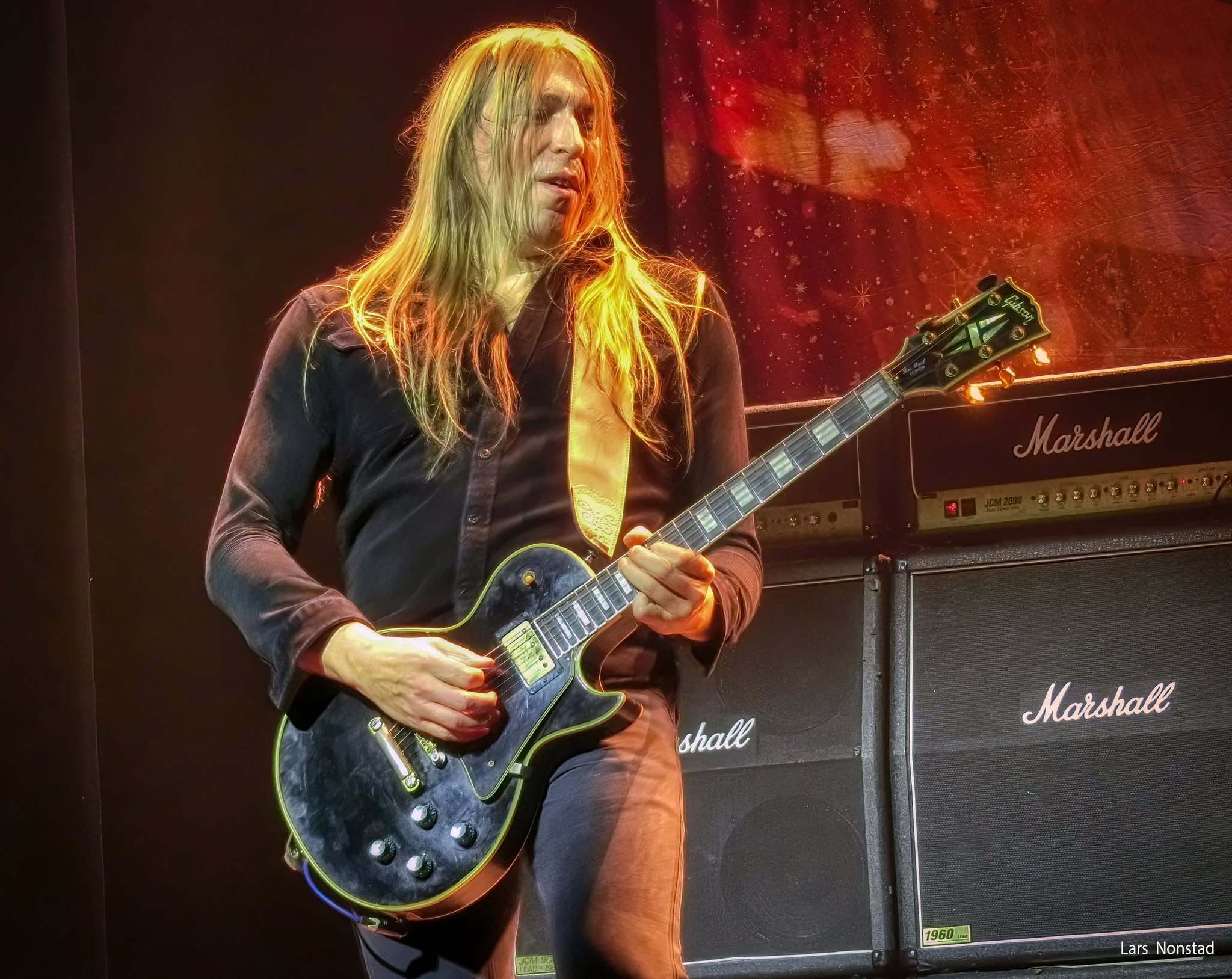
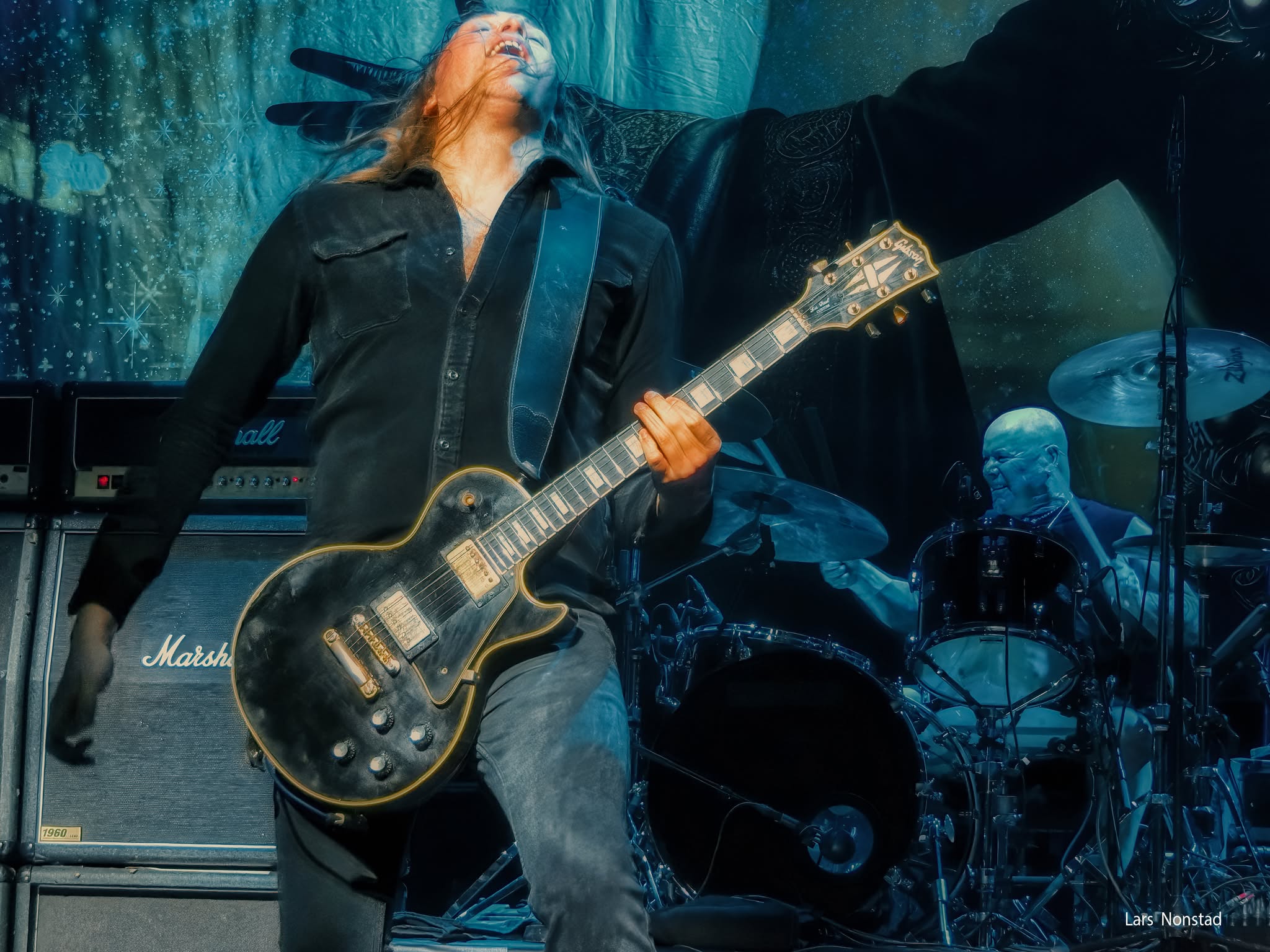
Souvenirs!? Not that I can tell you about. (Lol). I always keep a setlist that has come from the stage. I’ve the Saxon one, and I’ve got the Wayward Sons’ one from the Download Festival. I’ve got those framed, just as little artifacts. So, I always keep one of those. And there’s some lovely gifts that we got along the way, which is fantastic. Someone had sent me over the tour poster for the whole thing, Someone made some jewellery for the band and included me in that. Everyone was so lovely, and so receptive to it. I think it’s such a fine line when you’re dep’ing with something like that. I was trying to be very careful, because I didn’t want to copy Mick. I didn’t want to play his stuff note for note because that’s his. In the same way, Mick’s thing is all the stuff he does visually is fantastic to watch, but that is him, and it would’ve wrong for me to try and do any of that. So, you had to tread a line of ‘I need to be respectful to his guitar parts’, and there are some solos and bits that need to be exact, like the guitar solos in “July Morning”. Those solos are iconic. There’s room for you to put your own spin on it, but there are certain parts that do need to be exact. So, it’s finding that space where you’re being respectful of the original but not copying it. You’ve got to enter into it with the right spirit. I think as long as the spirit is right, people can enjoy that and hopefully see what you’re trying to do.
Was there anything that, as the tour went on, that you liked playing more or stuck with you more?
Yeah! There were loads of lovely guitar moments, “July Morning” being one, that awesome solo at the end that I was lucky enough to play every night. The other one, we had “The Magician’s Birthday” in the set. When I was first listening through the set, because I just went through it song by song when I was learning the songs…there’s no point in half learning everything, so I just need to learn each song one by one. And I got about two-thirds of the way through the set, and I’m ‘OK, we’re getting there.’ This was maybe Sunday evening, flights on Tuesday, OK “Magician’s Birthday” – what’s this? Ten Minutes long, ‘Oh, OK, let’s have a listen!’ And half of it is a guitar solo (Lol), this guitar solo that’s only accompanied by drums! That was the closest thing I came to picking up the phone and calling Adam, saying ‘I can’t do this!’ (Lol), or ‘Can we find another song?’ But, I stuck with it, obviously. And the first few gigs, I was enjoying myself on stage a lot, even from Day 1, I was enjoying it. But you see “The Magician’s Birthday” on the setlist coming closer and closer, and there’s this feeling of – not dread by any means, but worry, real worry seeing this coming up. But after a few gigs, once that sort of starts bedding in you go ‘OK, I can enjoy this now. Have fun with this.’ Because it’s basically just five or 6 minutes of just you in the middle of the stage, with a spotlight on you, with Russ playing the drums, just playing the guitar. And you’ve got 1500 people who’ve got no choice but to listen to you. (Lol) This captive audience, trapped. In many ways, it’s everything I’ve ever dreamed of. (Lol)
Have you had a chance to go back and check out more of the (Heep) catalogue?
I have. I’ve been starting at the beginning. I did have a copy of Very Eavy, Very Umble, so I’ve been going through. I have to be honest, when I got off the tour I did need some time away from Heep, because it felt like it had been quite an intense awakening to a band. But now, Ok, I really want to get in to this, because it’s so great.’ So, that’s where I’m at, I’m starting at the beginning and working my way through.
Well, it’s a long way to go!
I know.
What else do you have on the go?
Well, I’m on tour this coming month with The Dead Collective, which is Ollie Brown, who is a fantastic guitar player, and Wayne Proctor. So, the 3 of us have this band. We’re out over the UK, and we’ve got some new music coming out, which is lots of fun, very different, a lot darker, maybe a bit heavier. I really love that. And then more Black Star Riders stuff coming up at the end of the year. Keeping nice and busy; I just love being out and playing. It’s wonderful.
Do you get out to a lot of shows yourself?
I do. Where I am in Huddersfield, we don’t have a large venue, but we’ve got a very good venue, maybe 400 capacity, but a lot of bands come through; a lot of bands you see warming up or doing intimate gigs there. So, I’m lucky. And I do have Leeds and Manchester either side of me, which are big cities. So yes, I am still able to get out to a lot. The tricky part can be if I’m out gigging that does take up a lot of your time that I could be out seeing gigs.
LINKS:
https://www.blackstarriders.com/
https://www.facebook.com/TheDeadCollectiveOfficial
https://www.facebook.com/TreasonKings/
*Live photos of Sam with Uriah Heep courtesy of Lars Nonstad. from Trondheim, Norway, February 4, 2026