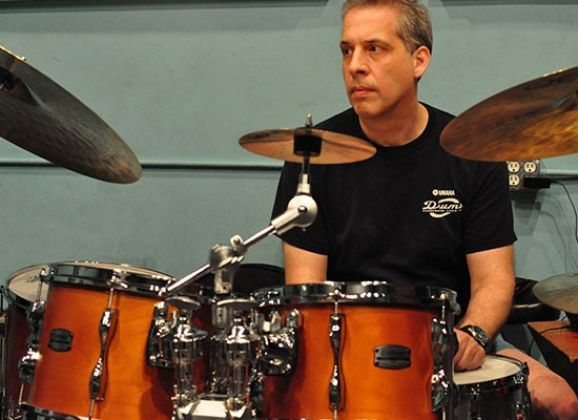
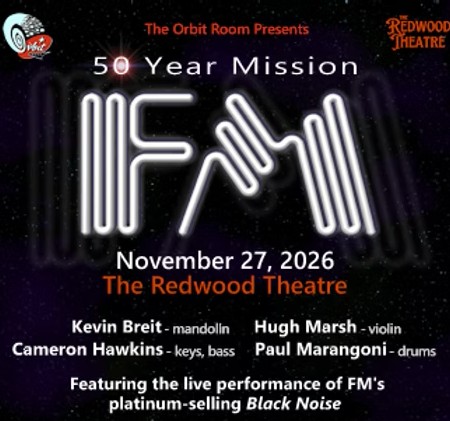
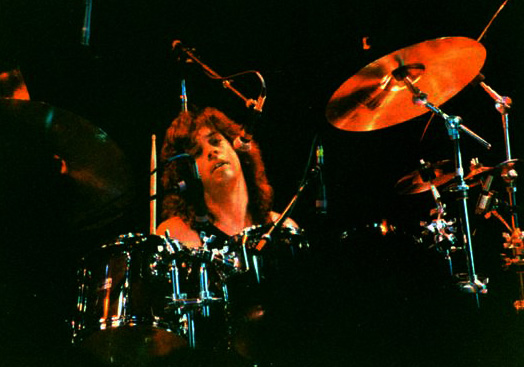
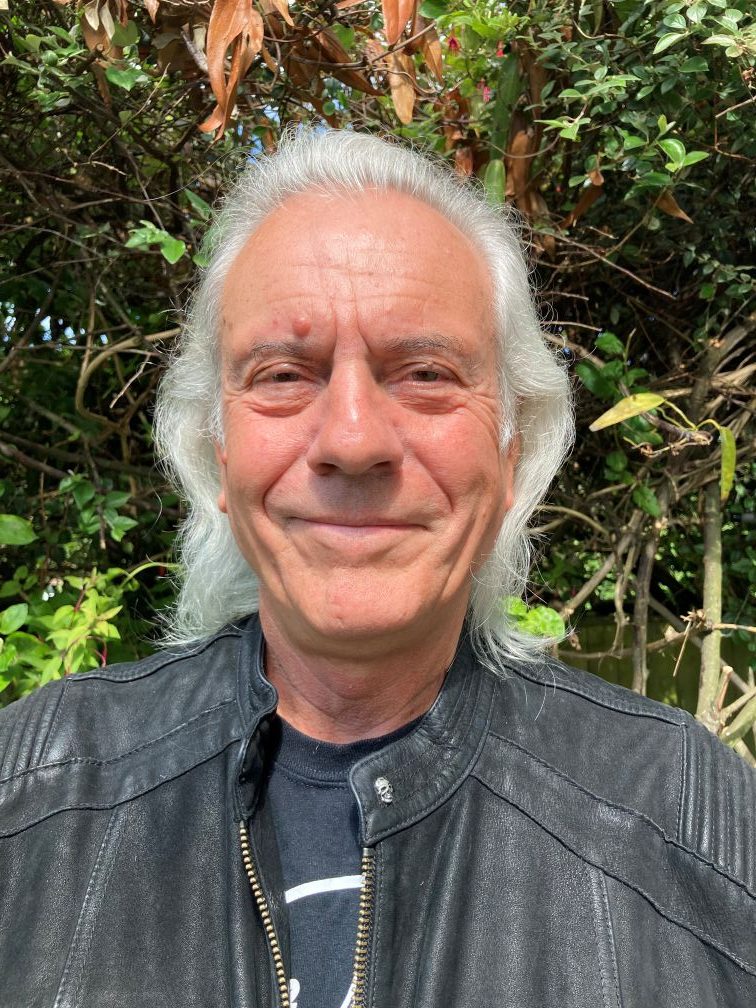
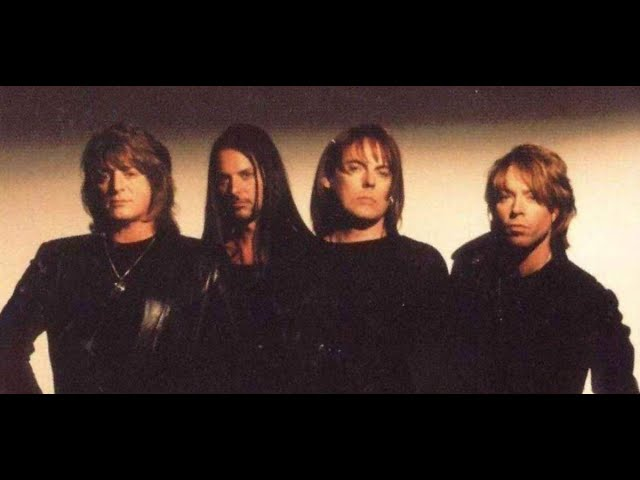
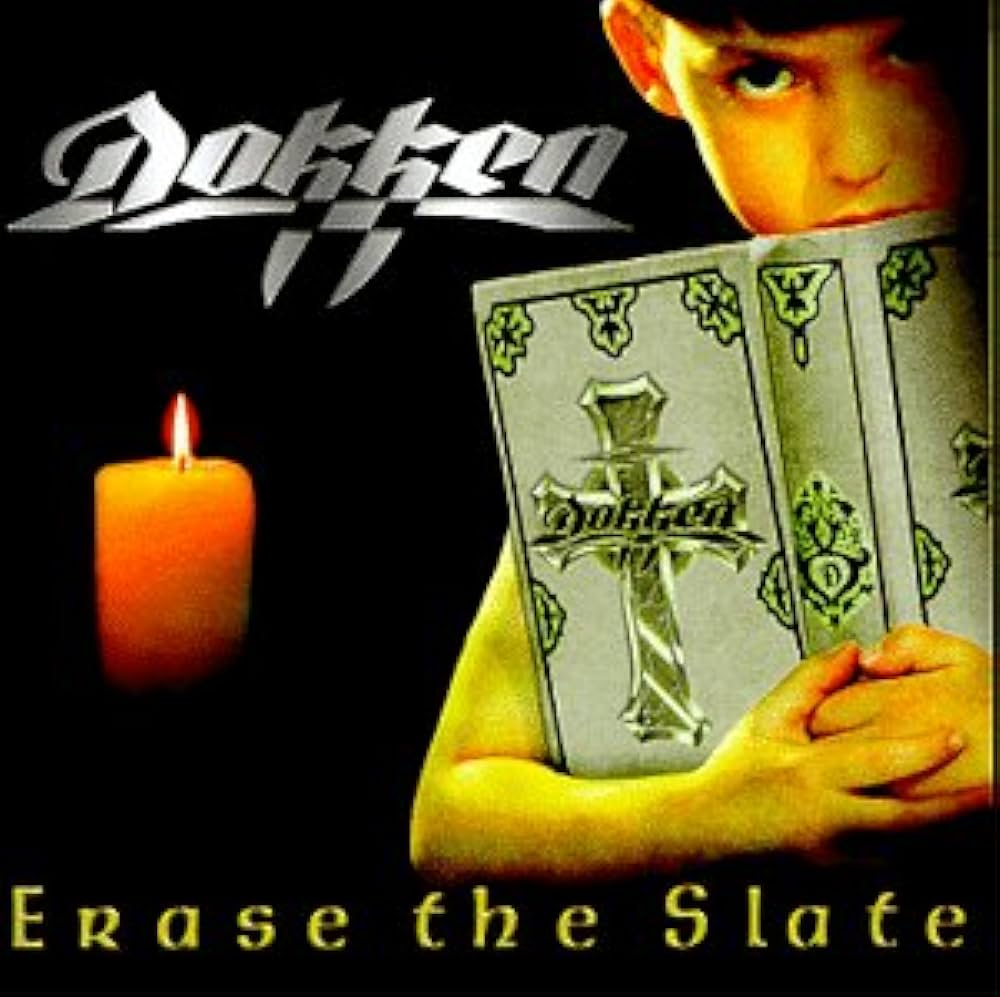
Canadian drummer Paul Marangoni played with a number of acts in the 80s and 90s, notable Canuck acts like Coney Hatch, The Works, Kim Mitchell, and FM. The latter is currently preparing for a 50th anniversary show in November, with Marangoni behind the drums. Hopefully this 50th anniversary show will lead to more. Paul relocated to California decades ago, and played on a number of albums with guitarist Alex Masi, such as the 2001 Masi album, Eternal Struggle, and 2 albums of fusion instrumentals / covers under the name ‘The Trio Of Stridence’ (more on these in another post), and worked with former Alias frontman Freddy Curci (Zion).
This was a pretty casual disussion with Paul, and a lot of fun; we talked about the upcoming FM reunion show, a few other things he’s done since being in California, and what he’s listening to these days. Enjoy the read, and please check out all the links at the end.
I was going through those CDs you gave me (The Trio Of Stridence, Jazz Martyrs), and you did a lot of writing on them and a lot of producing them, so it’s kind of a…
Well, I think I wrote two songs on all those CDs. I arranged everything though, definitely.
Yeah, they’re very different. The Trio Of Stridence. I like that; I love the cover of “Red”. The other stuff is kind of straight up jazz. I put it on at one point, there is a Chuck Mangione song, and I was like, Wow, what is this?
Yeah, it’s too bad Chuck died. I was hoping he would hear my version, because my version is in seven as opposed to four.
Going back to when you were in the band FM (late 80s-early 90s), how long did that whole period last?
Not long, like two or three years. I can’t even remember. I really should have kept a diary. That was like 35 years ago or something. It’s scary to even say that number.
And you guys did recordings?
We were working on new music, but it was never recorded.
So, at what point did you relocate to LA?
January of 2000.
So you were still around then, in Toronto and that for much of the 90s then?
Yeah, definitely.
What else were you doing then? I have this on cassette (hold up The Works cassette).
Wow. Not much. I was just playing in a bunch of cover bands and I was doing the Genesis Tribute. Actually, at one point, we had a Yes Tribute, which Cameron Hawkins was playing bass and singing in. But we only did a few shows. And Phil Naro was singing in that band. I had a recording of a live gig we did at the Tralf in Buffalo. It was really good, but for some reason, that ended too. I don’t know what happened there. That was a good band. I love playing that stuff.
I saw Phil about 20 years ago, 15 years ago. He was playing in a club in Toronto, like an upstairs somewhere. It was him, Don Mancuso. I think his son. And so they’re doing a lot of Yes stuff.
I can’t believe he’s gone. Everyone’s dying, man. Holy cow.
Last time I saw him, he was doing an acoustic guitar duo, at a small place somewhere in Toronto. They were just doing acoustic tunes, the two of them. Would have been around 2007, 2006, (something like that).
There’s been other versions of FM. I saw them in ‘94 when they did the reunion tour, and there’s a few other things since then, live albums and the studio album from 2015… You weren’t involved in any of those. So how did this new line-up kind of come together?
Well, I kept in touch with Cam over the years because I was going up to Toronto like three or four times a year while my parents were still alive. And we’d get together now and then. And a couple of years ago, I was up there. And before I went up, I contacted him. I said, Hey, let’s get together for lunch. And he told me he was thinking of doing some shows to coincide with the release of this new documentary about Nash the Slash. And he said, It’s been 50 years. And I said, Well, if you need a drummer. I’m totally down. So that was when it started. So, the two of us were sending files back and forth on the tunes to work on. So he would have my drumming to along with. And then he set about to find someone to play mandolin and violin. It took a while.
I assume Ben Mink is not around anymore (locally)
Ben Mink is out in British Columbia. So, if for some reason this turns into doing a lot of shows, and if we ever end up on the West Coast, I’m sure we’ll get Ben Mink to sit on a bunch of tunes because I love Ben Mink’s playing.
Is the show going to focus mainly on the Black Noise stuff? Or is it going to be…
Yeah, it’s just going to be Black Noise and maybe a couple of other tunes. Some of the hits or other tunes.
When I saw them in 94, they put out that from it, but I always wonder, they called the FM Archives Volume One, there was no volume two.
(lol) Yeah, I don’t know what happened there. I got that too somewhere. They were kind of screwed over by labels all the time.
Other than Black Noise, what might you play or what do you like out of that catalog?
I really like Surveillance a lot. That was my favorite record. And then off of City of Fear, there’s one tune off there we’re probably going to play, “Surface to Air”. We’ll probably play that. We’ll probably do “Shapes of Things”; that got a lot of airplay. And that’s it. We’ll be extending solo sections and stuff like that, so it’ll be a lot of fun.
I don’t see much of Cameron Hawkins online, so I don’t… I never know what he’s up to.
Right. He said he’s going to probably put up an Instagram account one of these days. That was the plan, to do that and start promoting, but without any promotion, the show sold out in like three days.
Wow. So…
And there’s talk about, hopefully a show at the El Mocambo in January. And then if these shows go well, we’ll see where it goes next. We’ll probably stick to Canada for the time being, especially now that this arrangement in the US and Canada has kind of gotten pretty messy.
I wonder if the band ever actually played outside of Canada in that whole period of the late 70s, early 80s.
I’m not sure. I know they did a lot of shows with Rush.
And there’s some people that have posted some of those shows online pretty wild. It’s funny how fast they played a lot of those tunes.
I think it was Con-test that must have been the album that was current when I saw them. And then they did Tonight, which is funny because I watched an interview with Nash where he did not like that album. He mentions that they brought in a “hair guitar guy”.
Simon! (lol) Apparently Simon is now doing pyrotechnics for Katy Perry or something.
Really?
Yeah. That’s what Barry Connors was telling me.
He’s not playing?
I’m not sure. He was a good guitarist.
I know he did those albums with Andy Curran, post- Coney Hatch.
Yeah. He was the one that got me the FM gig. Because I was hanging out with him and Andy, and Simon said, We need a drummer for these shows coming up. And I said, Dude, I know all that shit. I grew up listening to FM. So, I jammed with them and got the gig.
What else are you doing? Are you playing a lot live?
No, I moved to Indio three years ago, and I can’t find players around here to do anything. I was working on doing more Trio Of Stridence stuff or some jazz stuff; working on my own and then sending files to people either in Europe or in LA. I love doing stuff with Alex (Masi), and before I left LA, me and Alex, we were thinking of doing a Jeff Beck Tribute thing after Jeff Beck died. We rehearsed a bit. I put together a little promo video. I sent it to a bunch of booking agents. No one was interested. It was too bad. It would have been cool.
I saw him over at Artpark (Lewiston, NY). the last time through here.
Yeah, I love Jeff Beck. And, like I said, I was working on writing some stuff, working on my own thing, and then the FM thing happened. So, I’ve just been focused on that since then. Rehearsing all the old FM stuff and working on making sure it’s going to sound good.
Do you know these other guys that are playing with you guys?
No, I’ve never met them, Kevin (Breit) and Hugh (Marsh). Actually, I did a recording with someone in the ‘80s that Hugh Marsh played violin on, but we weren’t in the room at the same time.
I imagine Cameron found them somehow(?)
We were trying to reach him through social media. Couldn’t do it. And then I was having lunch with Andy, and he said, Well, let me talk to Alex Lifeson, he’s a good friend of Hugh. So, he got Hugh’s email from Alex Lifeson. And that’s how we got in touch with Hugh.
Wow. So that was like more recent?
Yeah, that was like last December.
That’s interesting, all the connections with all the Toronto bands. I like picking up some of the late 70s Canadian stuff. I picked up the first Hunt album.
Wow. I remember seeing them at the Gasworks….
And you posted something recently about a band called Teaze.
Yeah, I saw them last week.
I remember them being big at some point, and I remember the logo. The logo looked cool, and the name was cool, but I didn’t know much about the band. And when you posted that stuff, I was reading something, and I said, Holy shit, these guys are Canadian! I didn’t know that.
(Talk ensues about Teaze, their comeback, and Canadian rock festivals)
It seems like most of these Canadian bands, especially from the last few decades, they tend to play a bunch of festivals. Three or four times a year, there’ll be a festival in Alberta or Newfoundland or Quebec, and then they all get together.
I hear about these things from Barry. Do you remember the band Alias with Freddy Curci?
Yeah, I’ve got that somewhere.
I recorded with Freddy a few years ago, and I was actually… I got together with him about a year ago, and I told him, I think it’s time you should go out on the road again, get the band going. He considered it. I haven’t talked to him in a while, but I think that would be good, too.
I find the connections with the Canadian band interesting. There’s so many… It’s kind of like the British bands where you have some of those connections between Whitesnake and Deep Purple and Rainbow, all those bands.
That’s right.
But, I mean you look at Helix and Honeymoon Suite and a few others. It’s almost like they (occasionally) share members.
Actually, I remember I auditioned for Helix when I was 17. I drove out to….they were playing a gig somewhere in London, I think. I played some tunes with them. And it went well, but they said, You’re just too young. We can’t take the chance. Yeah, I was a fan of Helix.
And their drummer and the guitarist were twins. Brian Doerner was the drummer, and he recommended me for a gig. I didn’t even know he knew me. And then me and a guitarist named Lawrence Falcomer flew down to LA to try putting a band together with Brad Gillis and Mark Free. So, for a week, we rehearsed and wrote some music. And the guy that was paying for it all was the producer from Night Ranger. And at the end of the week, he told us what the deal would be where he was going to take 50 or 60% of all proceeds from the songwriting. And we just couldn’t come to terms with it. Nothing ever happened of it.
(Talk about Brad Gillis being on Rick Hughes album).
What are you listening to these days? Is it mostly jazz type stuff?
Let me see what’s on my phone here (lol)
You know what I got recently, Genesis The Lamb Lies Down box set. And it has a live concert that they did in L.A., and the live concert is amazing! I don’t know if they touched up a bunch of stuff, but it sounds better than the studio record. It’s amazing.
I haven’t got that.
It’s actually all on YouTube, too. Simon Phillips’ latest record, I got that. That’s more of a fusion thing. Pat Metheny’s latest; I’m on the fence with that. A guitarist named Nir Felder. I really like his stuff. It’s kind of a fusion-y kind of thing. I probably listen to mostly jazz lately. I got the Jethro Tull Bursting Out re-release. That’s pretty good. Yeah, mostly jazz stuff.
You mentioned Genesis. Have you picked up any of the Steve Hackett live albums where he recreates each of the albums?
No, I haven’t. I saw Steve Hackett in Toronto. It was probably 1978 or 79 at the O’Keefe Center. That was amazing. love Steve Hackett. Speaking of Steve Hackett, You’ve heard of this Cruise to the Edge thing!? (No) It’s a cruise out of Miami, and it’s a bunch of progressive rock bands for like a week, and Steve Hackett is the headliner. I think Kevin Labrie is playing with the keyboard player from Dream Theater. Check it out, CruiseToTheEdge.com. Anyway, I figure it’s all progressive rock, and they leave port in April, so I sent an email to them, see if maybe I can get FM on the gig. But I never heard back from anyone as far as who to contact about booking, so maybe we’ll try to get the next year. They do it every year, apparently.
That’d be quite the slot to get on.
(Talk ensues a bit about Genesis, Phil Collins, Paul – “He was my favorite.”)
Any other Canadian bands you were really into?
Kim Mitchell, Saga, FM. I was a huge Rush fan from the beginning. I can’t really think and differentiate which ones were Canadian. I mean, going downtown and seeing stuff at the Gasworks. Dave Bendeth, he was kind of doing like a Jeff Beck thing, that was cool.
Well, did you keep your vinyl over the years or did you get rid of it?
I sold a bunch of it. Since I moved to California, it’s been like 26 years now. I’ve moved 11 times. So, you just keep throwing stuff away every time.
At one point, when we sold my parents’ house in Toronto, I had all my albums there, so we had to get rid of stuff. So, I took them all downtown to some vinyl place and sold them all and whatever they didn’t want to buy, I gave to friends of mine who were collecting vinyl. So, I don’t have any more vinyl.
(Further chat about records, Unidisc, Wireless – “I remember seeing them open for Rush, they were really good too.”)
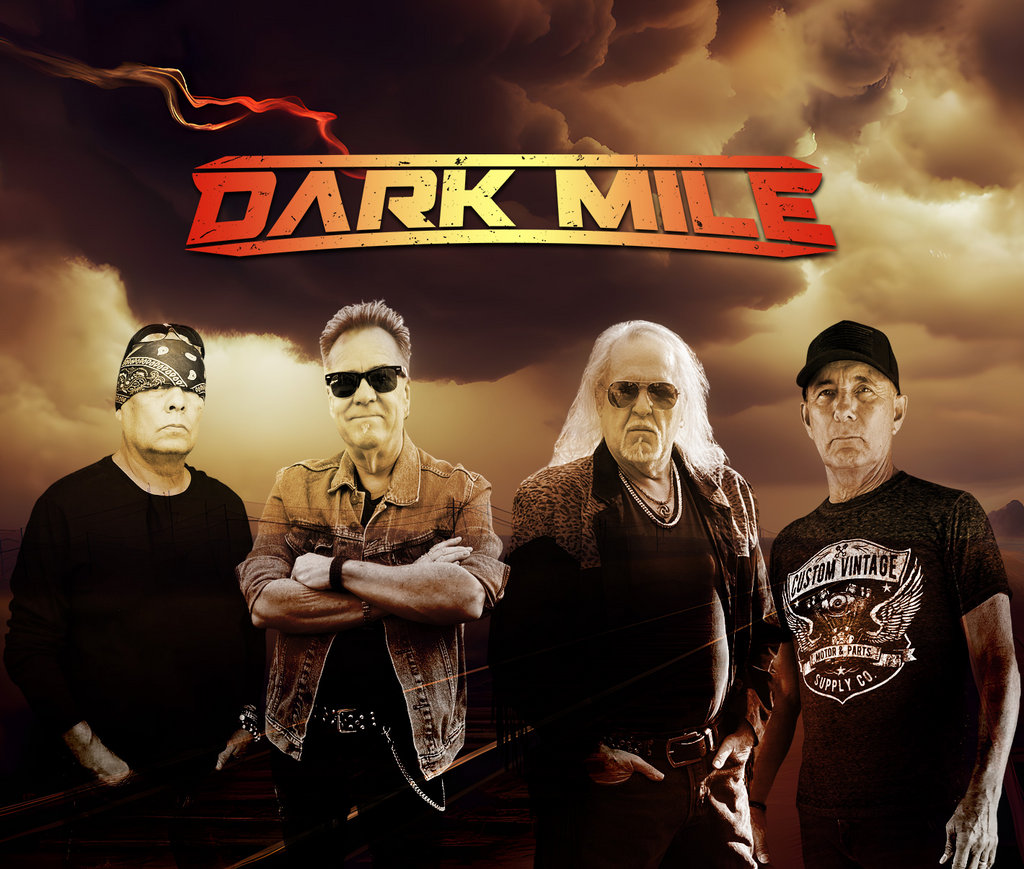
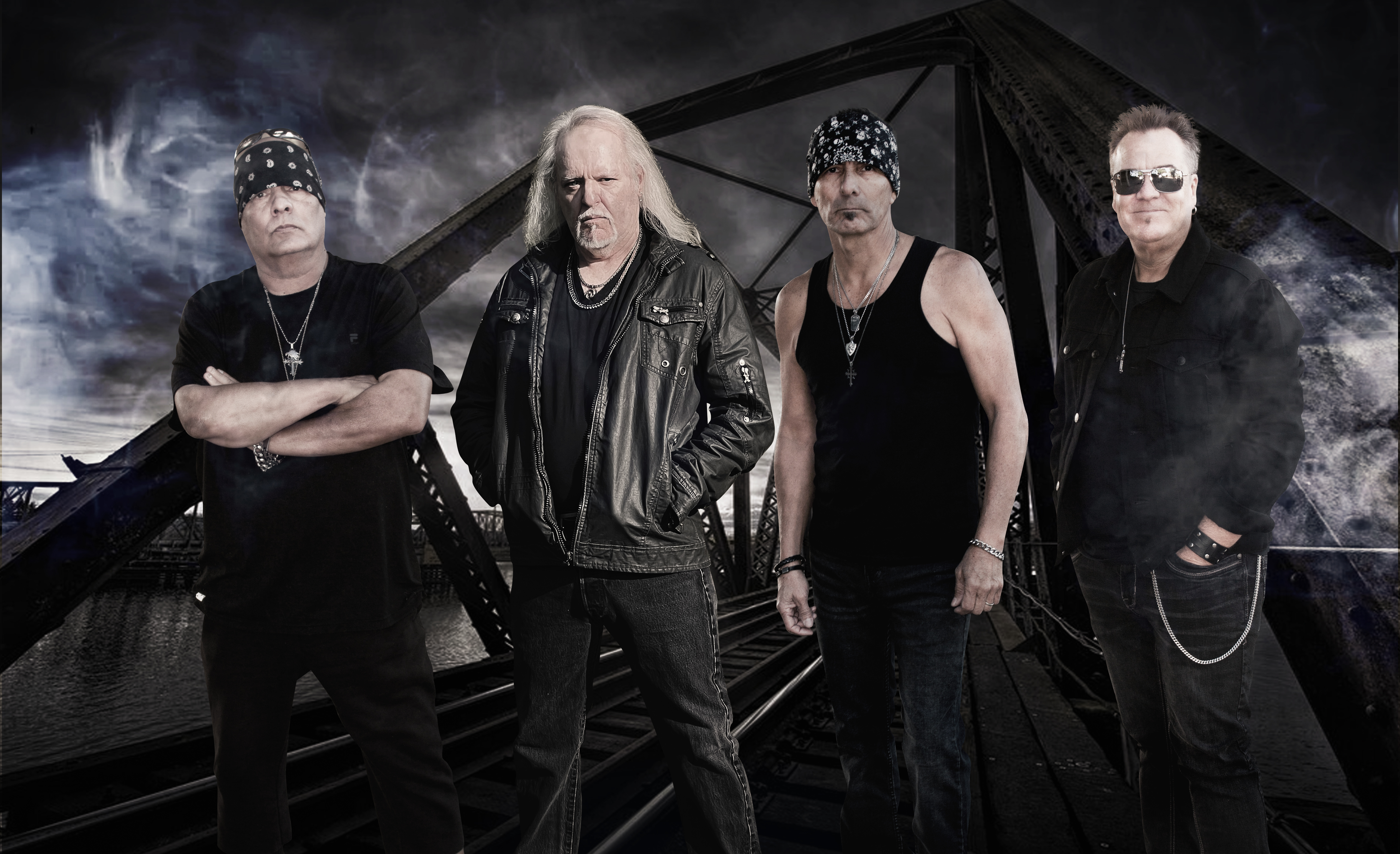
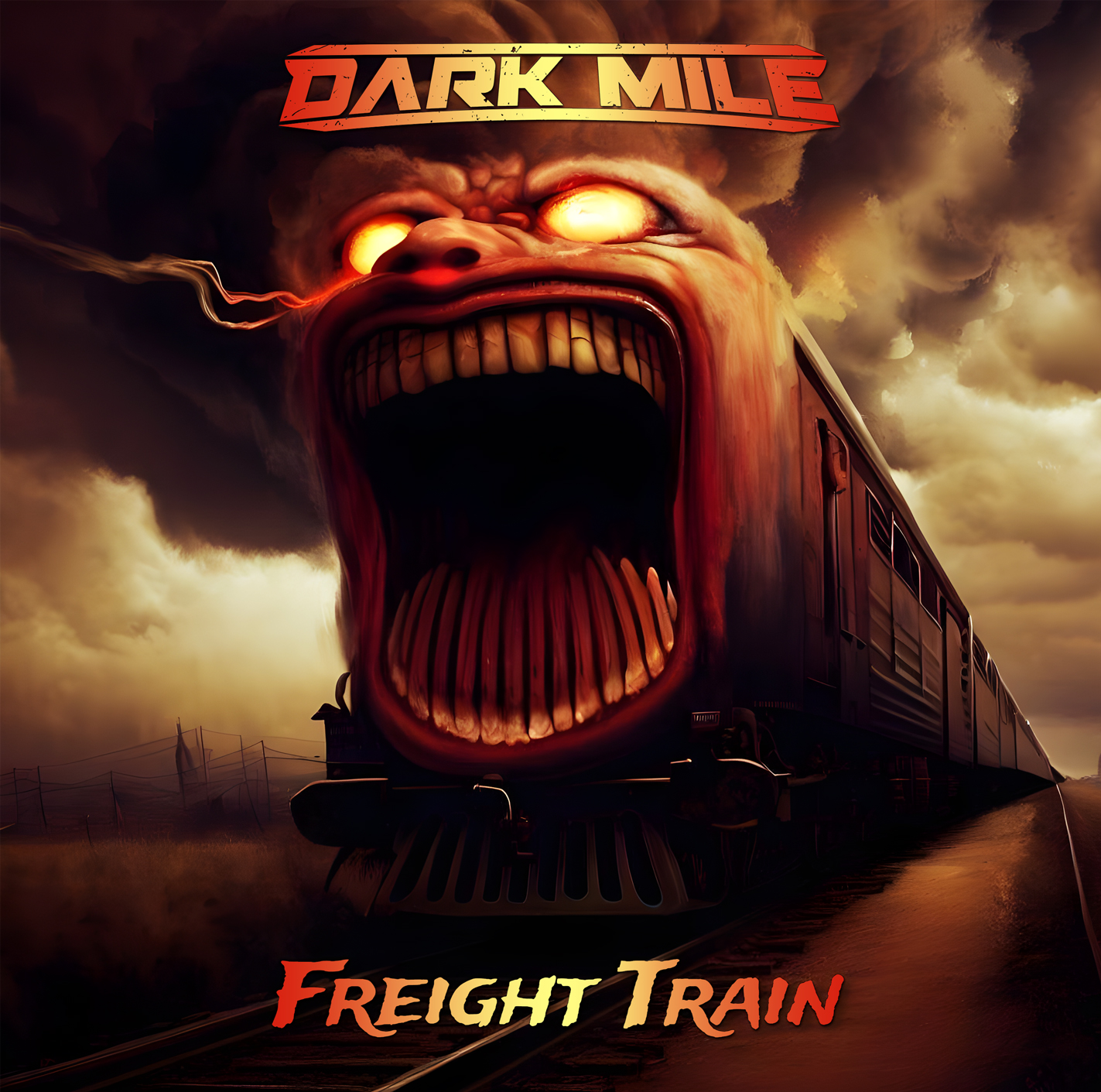
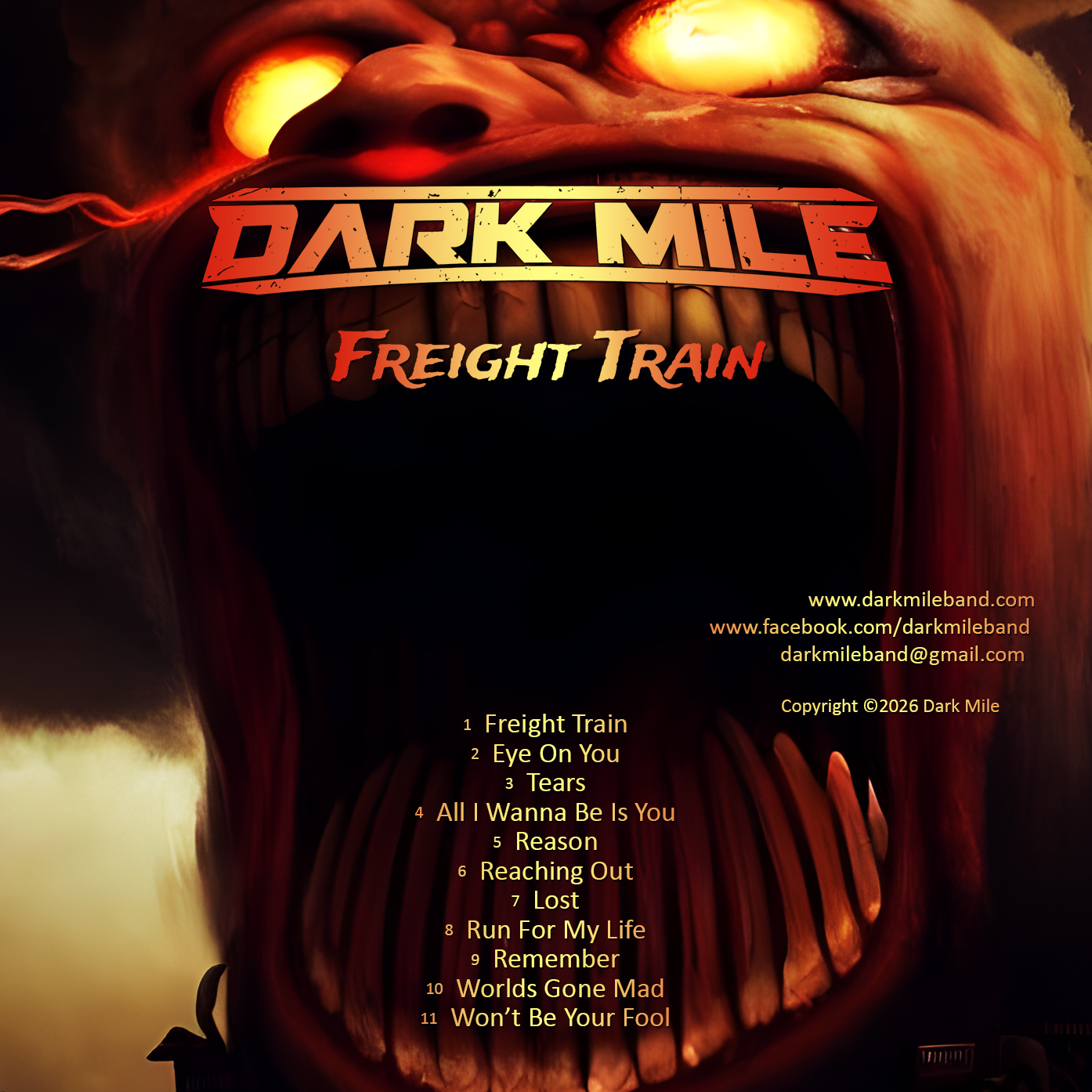
American Hard-rock band DARK MILE released their 2nd album earlier this year titled Freight Train. The band consists of guitarists Tracy G (ex Dio) and Paul Alfery, along with bass player Randy Oviedo, and singer Mark Huff (ex Quiet Riot). Freight Train is a solid follow up to the band’s excellent debut, with plenty of heavy riffs and guitar rockers & anthems, and a ballad, for a change of pace.
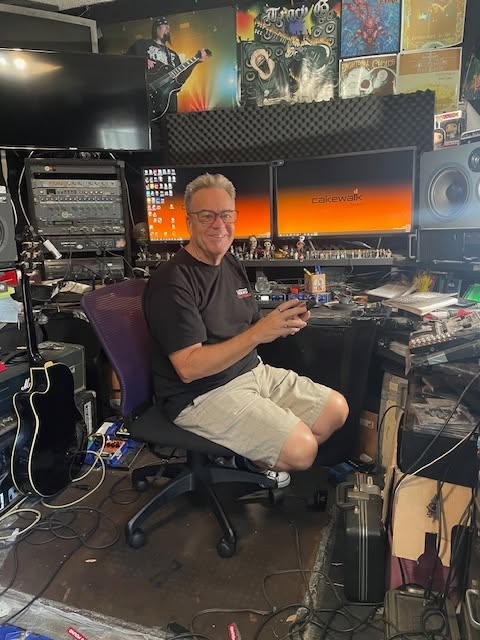
When the first Dark Mile album came out in 2024 I’d interviewed Tracy G and Mark Huff (both elsewhere at this site), and with this album I recently spoke with guitarist,songwriter, engineer, Paul Alfery. I’d not recognized Paul before Dark Mile, but in digging up a bit of his past, Paul was a part of the LA scene in the ’80s, and has been recorded a number of albums with various bands over the years, a few of which are discussed here. He also discusses Freight Train, picks a few favorite albums, and shares a few stories from the old days.
*Check out Freight Train either on Youtube or Bandcamp. And check out the links at the end!.
The CD is just the cover art and the card, so I’m assuming you guys have done this all independently.
Yeah, we did it independently this time, Kevin, only because the last one …because obviously the label does what the label does. But these days it seems like labels give you kind of a 30-day window where they do a little bit of social media promotion, and then it’s kind of on to the next thing.
So, it’s hard to commit to a two, three year kind of tying up that record when you’re going to get 30 days or so of promotion. And, beyond that, it doesn’t seem like a whole lot’s happening. And truthfully, as much as I hate to say it, we didn’t sell as many CDs this time, but we made more money this time doing it on our own. And we’re not really doing this for the money. One of the interesting things, lately is a few people have called me about, Eddie Trunk talking about how, if you’re a band doing 80s hard rock and you didn’t have a hit in the 80s, you are wasting your time and spinning your wheels. Here’s my thing with that, so if guys like us just stop doing it completely and a bunch of other people join in, well, then this type of music just dies. And we still love this kind of music. We still like making this kind of music. I think you have to do it out of passion, rather than because – let’s face it, at this point in our lives, do we think there’s a chance that a major label deal and a giant tour and all that kind of stuff? Yeah. Pretty unlikely, obviously. But, still, there’s a core audience that loves this kind of music. We go on the Monsters of Rock Cruise every year, and that’s a great example of a really dedicated fan base that still loves this kind of music, and they turn out for that.
As a rock fan, I like it because I like the older bands that are still doing something new as opposed to those that haven’t done an album in 20 years and they’re still just kind of milking it. So, for me, I’m going to be honest, I initially picked up on this because I stumbled across you guys and the mentions of Tracy, because I know my Dio stuff and that.
Sure.
…And Mark from Quiet Riot. So, I thought the name association alone would have been a little more, I would have seen a little more out there.
Yeah, we thought the label would kind of run with that. To be honest with you. And for whatever reason, they didn’t.
I don’t think that we’ve ruled out the possibility of doing another label thing, I mean maybe for us it’s just not a good fit and that’s not necessarily the labels fault. The other thing is the label’s in Germany, we’re obviously over here. The other thing I guess would be, we’re not a touring band at the moment, and that’s obviously that’s a part of it – bands that are out there and slugging it out and trying to tour. What’s interesting to me is, I see people talking about how, well, the music business has changed, Spotify doesn’t pay, and people stream music these days, but then I also find people talking about how tours are extremely difficult because it’s so expensive to tour. So, what do you do to try to find the sweet-spot where you can still do this.
But we’re working on another record right now, because we all still love doing this and it’s a great bunch of guys. That’s the other side of this thing is, Tracy and I have been friends for many many years, Randy the bass player, I’ve known him for a long long time as well. Mark obviously for just the length of the time we’ve done the Dark Mile thing, but he’s also a great guy. So, it really makes this an easy project to work on because it’s doing what you like to do with a bunch of friends.
Have you guys done any shows? I know Mark kind of lives far from you guys correct!?
He does, and this may be my hang up more than anybody else’s because we’ve talked about it, but you know obviously with Tracy having done the DIO years and toured on that level, and Mark too to a certain extent, it’s hard to start from scratch again, and, go out and do little clubs and try to draw people. And I guess I look at it like “man those guys paid their dues and they played big shows”, and so I’ve tried to look for opportunities. I mentioned that Monsters of Rock for example, that’s a cool situation because it’s a built-in crowd. People go on that cruise because there are a bunch of bands on there. And the truth is, there’s a band called ‘Midnight City’, that is also a Pride and Joy band. So, actually, they were on the cruise last year; they’re on the cruise again this year. So, there is that side of it, and that would be a great opportunity to play a show like that because there’s a built-in crowd for it.
I talked to those guys previously, after the first album came out they had said you guys were already writing for the second album. So how fast do the albums come about for you guys?
We usually finish something within a year, and sometimes a little sooner. It was funny, the first record we finished Tracy said, “Well do we have to stop?” And I said “No, we can keep going Tracy”. So, we started working on stuff right away, and in that instance Tracy still had a fair amount of material from a project that he had worked on a few years back, and I heard some of that material thought it was really cool, so we started working on that.
This third one, at least so far – I probably have written a few more tunes, and so I guess the one thing about that is the way Tracy writes and the way I write are kind of two different things, so we’re not making the same record over and over again. Bands sometimes, I think have a difficult time, obviously you don’t want to strike too far away because you don’t want to alienate fans of your music; at the same time, nobody wants to hear the same record, two or three times in a row.
Yeah, I get a bit of a bit of differences in this one. The first one to me seemed to more 80s, almost a little more radio friendly in places. This (2nd) one, I get a little more heavier, but you have the ballad on here, which was something you didn’t have on the first album.
Which is interesting because one of the things we got a knock on the first record was “Well there’s no ballad”. So, we did it on this one, and then of course somebody came out and said, “I don’t really like the ballad”. You know what you can’t make all the people happy all the time.
It’s funny because in the ‘80s bands did ballads because that was their way to get on the radio.
There’s the other side of it is getting on the radio. What a tough deal that is! I’m trying to think…so, on the cruise last year, one of the XM Hair Nation DJs was on there, and my brother got stuck with him at the airport, and they got delayed. So, Dangerous Darren, I think is the guy who he goes by. Anyways, so my brother spent a couple of hours talking to this guy, so when they saw each other on the cruise my brother said, “Hey, let me introduce you to Dangerous Darren”. And I said, “I don’t have XM radio anymore because Hair Nation plays the same songs that are 35 years old, over and over and over again”. And he said, “Yeah, I know what you’re saying .”..I said “Is there any opportunity for new music?” I mean bands like Whitesnake have made good new records since ”Here I Go Again, which they play, on repeat forever. And he said, “We’re pretty much tied to a pretty strict playlist, and it’s the hits.” And of course that’s the truth with classic rock across the country here – pretty much it’s, Zeppelin, Skynyrd, 38 Special. Great bands, obviously, but all bands that have been around for 40 years. You’ll never hear, Eclipse, if you’re familiar, is a band from Sweden.
Yeah, I’ve got a few of their CDs.
Great band. Eric is a strong songwriter and I’ve talked to him a bunch on the cruise because they’re on there every other year. They’re doing great as a band, but obviously don’t get played over here. So, the reason they do the cruise is it gives them some sort of exposure in the United States that they really don’t get through radio, because radio just doesn’t play their stuff.
There’s a lot of good bands over there. All the post-reunion Europe albums have been heavier and rockier. I saw them when they played over here in Niagara Falls, New York at the casino and in 2016 when War of Kings came out. It was a 450-seat theater and it was like just over half full.
Yeah, it’s just tougher these days. Music competes with a lot of stuff these days too. I mean, that’s the other side of it, is that there’s so much stuff to do these days and music competes with all of it.
Can you tell me a bit about some of the songs, kind of how you guys develop them. and was Mark in on the writing on the first album or was it was all kind of done before he joined?
Most of it was done and for the most part, lyrics and all that stuff are usually either Tracy or I. Mark’s a great singer; he’s got super great character to his voice. But he’s still exploring the whole lyric writing and vocal melody thing on his end, so we’ve tried our best to try to kind of give him some guidance there, and we just absolutely love the tone of his voice. I mean that’s just one thing, it doesn’t matter how well you sing – if you don’t have that cool character to your voice, and he’s got that.
On this one, on the title track “Freight Train”, I kind of had more (I guess) to do with that particular one. I just was reading a book at that point, and it’s basically about a loner guy who shows up in these cities and runs into trouble and, takes care of things. So, it seemed like a good subject to write about. We’re always trying to write songs that are, a little deeper than kegger parties and Camaros, which, as you know, the 80s is so full of…or hot women or… It’s tough and it’s not like we want to get too deep and philosophical but we’re certainly trying to write a little more mature in that sense.
Some of the other songs on Tracy had, prior to the DIO gig, Don Arden was his manager. So, they had worked for a while and basically Don wanted to try to put Tracy with somebody and put something together that they could then basically shop a deal. So, Tracy worked with a few different singers at that point and so there are some songs left over from that period of time. And we kind of freshened some of those up and used those for the second one as well. So, some of those songs, they go back a ways, but we did try to freshen up a little bit.
There’s a lot of good riffs and a lot of heavy guitar, obviously throughout it with two you guys.
That’s another interesting side about Tracy is, obviously, he is kind of a heavier player. And, when we talked about doing the Dark Mile project, but he was doing much heavier sounding stuff. I was really the one that approached him and said, “Hey, what if we did something that was maybe a little more like the Dio days!?” I probably go back earlier Dio days than Angry Machines and that kind of stuff.
Tracy’s guitar playing brings a uniqueness to this because he’s just got a very unique style and a certain sound. And I think it works well because I probably represent a more, (I don’t know what’s the right word for it) I guess the more pop-metal – melodic side of things. I’ve certainly written things that probably aren’t that far away from Bon Jovi. Tracy tends to write heavier than that.
You guys only did one video. Did you guys do that all yourselves?
No, I think that one we had a company do it for us. We’ve since found somebody who, because AI these days is all the rage and Tracy has a buddy that contacted him and did a video for Tracy. For The Tracy G group. It’s an instrumental tune, and it’s on YouTube… But anyways, really cool AI video. We’re looking into doing something in the near future on that. So, I think there’ll be something else that comes along here pretty quick.
Can you talk a bit about a couple of the songs that kind of stand out for you? I like things like “Eye On You”, “Lost”, and “World’s Gone Mad”, which is a single, and “Reason” – the Ballad. So, kind of stands out for you as far as ‘if you guys were to do a set list’. What do you think you would have to pull from this?
It would be a combination. We would certainly pull a few songs from the second one. The first one, obviously, we probably got more traction because it was attached to a label. And some of those songs… I obviously look at Spotify and look at streaming numbers and all that kind of stuff, and certainly songs like “The Boy” has a ton of streams, comparatively speaking. But, I think you just have to go through and pull out what you think are your strongest songs and put together a set list based on that.
We would like to get it together and play live. It would be really a cool thing. We’ve certainly talked about it, and I’m certainly not ruling that out.
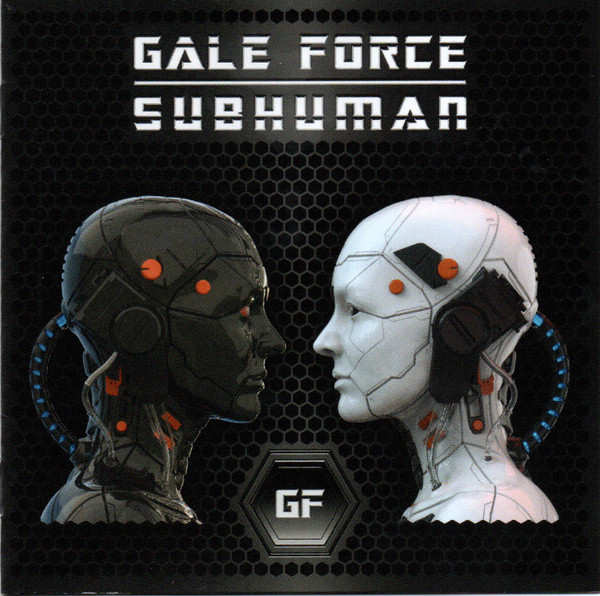
I want to ask a bit about your before Dark Mile. You were in Gale Force with Tracy. I’ve looked that up a few times on Discogs and I don’t see a copy of it for like under 60 bucks or something.
Which is ridiculous. So…That was a project with Michael Drive, who was the singer for Barron Cross. If you remember Barron Cross, they were like a Christian metal band, kind of at the same time Stryper was doing what Stryper was doing. And then they broke up for whatever reason. But I think they have recently gotten back together and they’re doing some shows; that kind of thing. So, it was a cool project. At the same time Michael had very definitive ideas of what he wanted to do, and I guess I had fairly definitive ideas of what I wanted to do, and they just didn’t quite line up. We’ve talked about that too. I will say one thing; Michael is incredible about the accounting aspect of it – we all get a little bit of money every quarter and, the spreadsheet he sends us, I think, man, this guy is on it. He’s really good at it. So, it’s a wonderful thing that that is a project that continues to generate a little bit of money. It’s not, (again) not the real reason we’re doing this, but he has a pretty good fan base, and that really helped with promoting that project. And of course, Tracy’s also got a pretty good fan base and Mark has some too. So, we certainly count on that.
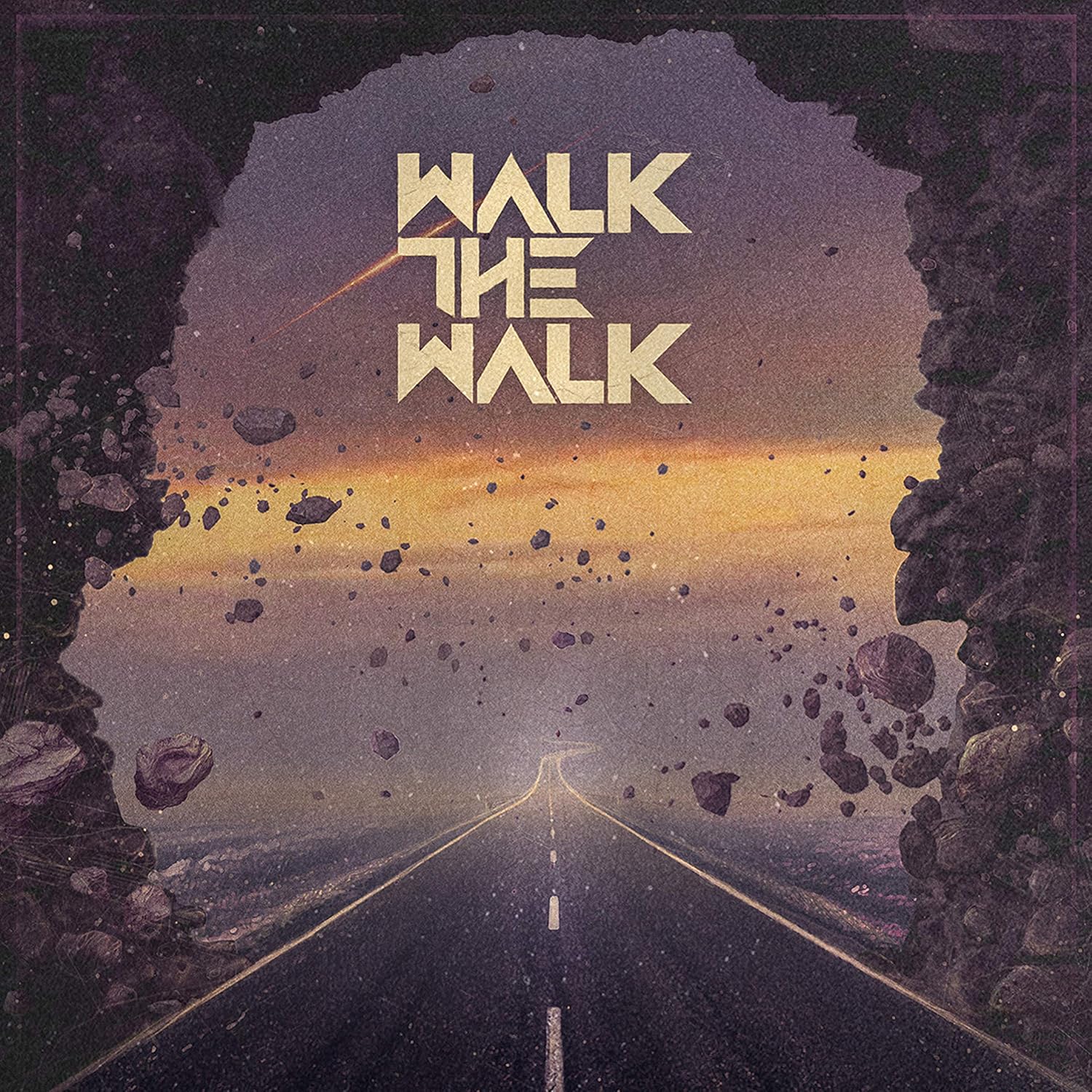
I did a project, I guess 2021 is when it came out, called ‘Walk the Walk’. So that was on AOR Heaven. And that record actually, as far as sheer numbers sold more than anything else. So that’s five years ago. And AOR Heaven was a really cool label. They did a really good job. I thought the promotion that they did for that record was incredible. I mean, I was really busy. It was right in the middle of COVID, so it was a very strange time, obviously. But I did a ton of interviews and there were a ton of reviews online, and it really kind of propelled that record to do some numbers because the word got out. That’s really the key these days, when you put a record out, it’s finding the way to promote it so that it really gets noticed, and obviously, it just gets harder and harder these days. There’s obviously Facebook, there’s TikTok, there’s Instagram; there’s lots of different things. And, we’ve all talked about it would be wonderful to find somebody who had like the magic path to really getting the word out.
What else you did you play in prior to this; what other bands were you in, and what did you grow upon?
Tracy and I were playing around in the Southern California area, at about the same time. Ironically, and this is just a goofy story but we’ve talked about this, and I think it was when we were initially starting to talk about doing the Dark Mile thing and talking about what influenced us and all that and I told him Well, I saw Van Halen when I was 15 years old.
And he said, Yeah, I would have been some of those shows. And we started talking about the specific show because I mean the first time I saw Van Halen, it just changed my life. I was like ‘Wow!’ Such an inspirational thing, and I just thought well I got to learn how to play guitar. So, we ended up talking about it. It was in a bowling alley; cost a dollar to get in. They were doing covers for the most part. This was really early, this would have been 1975, maybe 1976, right around that time. So they’re still not signed yet, they’re just a local band. But Tracy and I are at that very first same Van Halen show – we don’t know each other yet, we haven’t met each other, but we’re at that same show, which is a kind of an interesting thing. So we’ve talked about the fact that while neither one of us plays anything like Ed, he was absolutely an influence.
And just watching those guys, do what they did and follow the path that they did. I mean it was really a cool thing to witness. Great band.
So, Tracy was playing around in a band called ‘Riff Raff’, I think, at the time, and I was in a band called Inside Out, and we were both doing the Sunset strip. And there was lots of other areas, the clubs that were off the strip but still part of that whole kind of scene. We did all that for a number of years, and of course, there was that period of time where a lot of bands are getting picked up. In some cases bands that I don’t think really deserved to get picked up but they had the look and they kind of sounded like what the whole ’80s hair metal thing was at the time. And of course you just hope that you got caught up in all that, but that didn’t happen. But Tracy, on the other hand, I did watch him. I heard through the grapevine that he had got the DIO gig. And that came about, I think, because of a band called World War Three.
That was what the guys from Dio’s band.
Yeah, Jeff Pillson was in that at one point. And I think that what happened is, Dio was looking for a guitar player and Vinnie (Appice) said, I know somebody. So Tracy got the call for that, obviously. I think at that point, I’m still in California, but I got a call from Tracy at one point, and we didn’t know each other well yet, and he said, I don’t know if you remember me, my name is Tracy Grijalva, and I said, You’re the guitar player for Dio. I know who you are. And he said, I’ve got this Roland product that I can use some help with. So we connected on that he was starting to record demos. I knew how to use the digital recorder that he had. So, he came over to the house and that is kind of the start of the friendship, all through that.
Other than Van Halen, what sort of stuff did you kind of do? Were you a regular show goer?
Oh, yeah! I mean, pretty much on the Sunset Strip as many weekends as possible. And obviously, there was just a lot of great bands out here doing that whole thing. There were bands that I thought Why didn’t these guys make it? It’s always such a right place, right time, stars aligned a certain way. You never know why.
There was a band out here called ‘Smile’. They did shows with Van Halen all the time. And they were certainly a different band than Van Halen; they were not like them. I would call them more of a straight-ahead rock band and not kind of the party-rock thing that Van Halen was known for at the time. But incredible band! Great front man, great guitar player, really good songs. They signed to Curve Records, put out a record, apparently went out and did a little bit of a tour, and it just didn’t go anywhere. I just thought, These guys, I felt like they had everything going for them that, in many ways Van Halen did, and it just didn’t happen.
But yeah, a lot of really, really good bands I saw. Obviously early things. I remember going to a club and seeing a band called ‘Sister’ and thinking, Well, this is certainly interesting. And of course, that ended up being Wasp eventually. So, it was kind of interesting to see certain things develop. There was kind of the musical chairs thing – you watch guys go from this band to that band and all that kind of stuff. Nikki Sixx was knocking around back then doing that band London. We were playing at a place in Pasadena, California. It was a sandwich shop in the daytime, but a club at night, and it was certainly a long ways from the Sunset Strip, but many of the bands that played the Strip would also play this place. So, I went by to pick up a check from playing the weekend before, and the booker tells me, You should stick around tonight. And I said, Why? And he said, Because there’s this band playing, I think you might find that they’re interesting. And I said, OK, who is it? And he said, well, They look a little bit like the New York Dolls. They’re called Motley Crue. And those guys walked out and… it was among their earliest, earliest shows, because I still have the single that Vince was handing out that night, which I think is “Toast Of The Town”, and some other goofy song on there. So, it’s pretty rare single these days.
So, obviously I saw that and thought, Well, these guys look like they’ve got some money behind them. And they certainly had the image, and the songs were pretty catchy then too.
Did you see Y&T out there a lot?
Lots. Yeah!
Another band that didn’t become so big…
Yeah, there’s a great example, right!? Why didn’t they get bigger? They play the Monsters Rock Cruise, that I keep talking about. They’re on it a lot. And people love them and know the songs and all that. But, again, that’s a very dedicated crowd to that kind of music. Other than “Summertime Girls”, Y & T didn’t get a lot of radio play.
Yeah, that’s too bad. I have a friend up here in Canada who put out a review book on them last year.
And Dave Meniketti is the nicest guy. And sounds great. He’s a great example a guy who’s been in this business for a long, long time…And obviously, lots of us are not young guys anymore, but when Dave sings; he can belt it out and he plays guitar great.
What else do you guys got on the go, musically
So Tracy, he has another project that he’s doing, I think it’s just going out as the Tracy G Group. And there’s a new singer and they’re working on that. Mark, I think, he does some painting and so he’s busy doing that kind of stuff. I tried to kind of get out of the musical manufacturing industry, but it’s like once you’re in it, it is hard to get out of it. So, I work for an independent rep firm now, really just part-time, which is really cool. My boss is incredibly nice about it; he knows that I don’t want to do this eight hours a day, so I do it for a part of the day and then it frees up my afternoons to do the recording thing. And of course, I’ve got multiple projects going too.
Actually, there will be a new Walk The Walk record, which is about to come out. Really, really good singer, originally from Iran of all places. His name is Hadi Kiani, great vocalist, really, really good. I did all the instruments and he did the vocals. And, we kicked that one around for a while. We approached Frontiers. Frontiers, it seems like they’re looking for little supergroups now.
Yeah, they’ve got a lot of bands that they seem to put together and they put on an album and you never hear from them again, until they do a volume two or something.
Yeah, ever since Alessandro Del Vecchio left that label, it’s not quite the same. I mean, obviously, he was a very important part of things And, that first Dark Mile, Alessandro was still the guy at Frontiers at the time, and he got back to us and said, I like this. We might take a chance on this. It didn’t happen because somebody on the team apparently just didn’t have complete faith in it. But Alessandro was always very kind and said, I like this record. I think it should be out there.
Can you give me five albums (roughly), from your youth?
The first Van Halen record, Absolutely! I’ll go with the first Montrose record. That’s even further back. Rainbow Rising. I’m going to say Deep Purple Stormbringer And, this is an odd one but Accept Balls to the Wall – I Love that record! I’ve always thought the guitar tone on that song. I mean it’s just a loud Marshall, but they just somehow captured a guitar tone that I think a lot of people go, How do I get that sound?, because it’s just great.
There’s a lot of good European bands are still going; Helloween I listen to them once in a while.
Sure. And Wigwam is a band, they’ve been around a while. Absolutely love that band! And they’re still out there. They’re still slugging it out. And then, of course, the new guys, I would put, Eclipse and Heat. There’s quite a few, you know the guys are probably in their 30s, 40s, and they discovered this music and decided to give it a go.
There’s that band called Nestor…
Great band. Love that band It’s funny you say that, the year before on the Monsters of Rock Cruise, they did not announce Nestor as being part of it. And because we’ve been on some of these cruises, we go to this meeting where they ask questions and all that, and we said, What are the chances Nestor is on the boat next year? And Larry, who runs the cruise, said, You might just want to keep an eye on things. So we knew that they were booked. They were on the cruise last year. Just great guys.
It’s really funny, too, my wife wanted to get a picture with those guys, so we were walking, down a hallway in the ship and those guys were all standing outside the bathroom. They yanked the lead singer out of the bathroom to take a picture with my wife. And I just thought, Just let the guy use the restroom, please (lol)
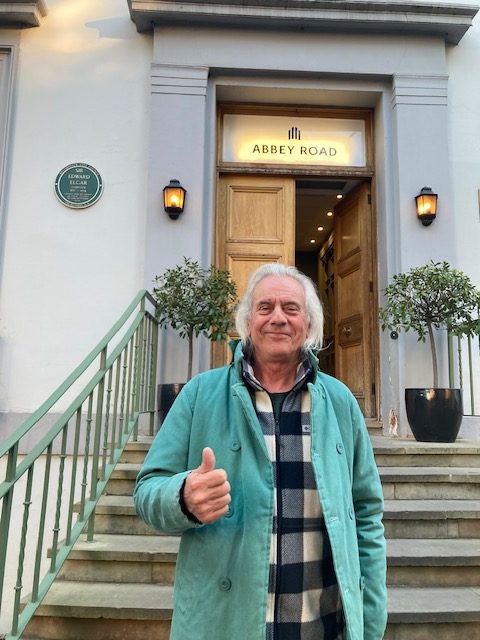
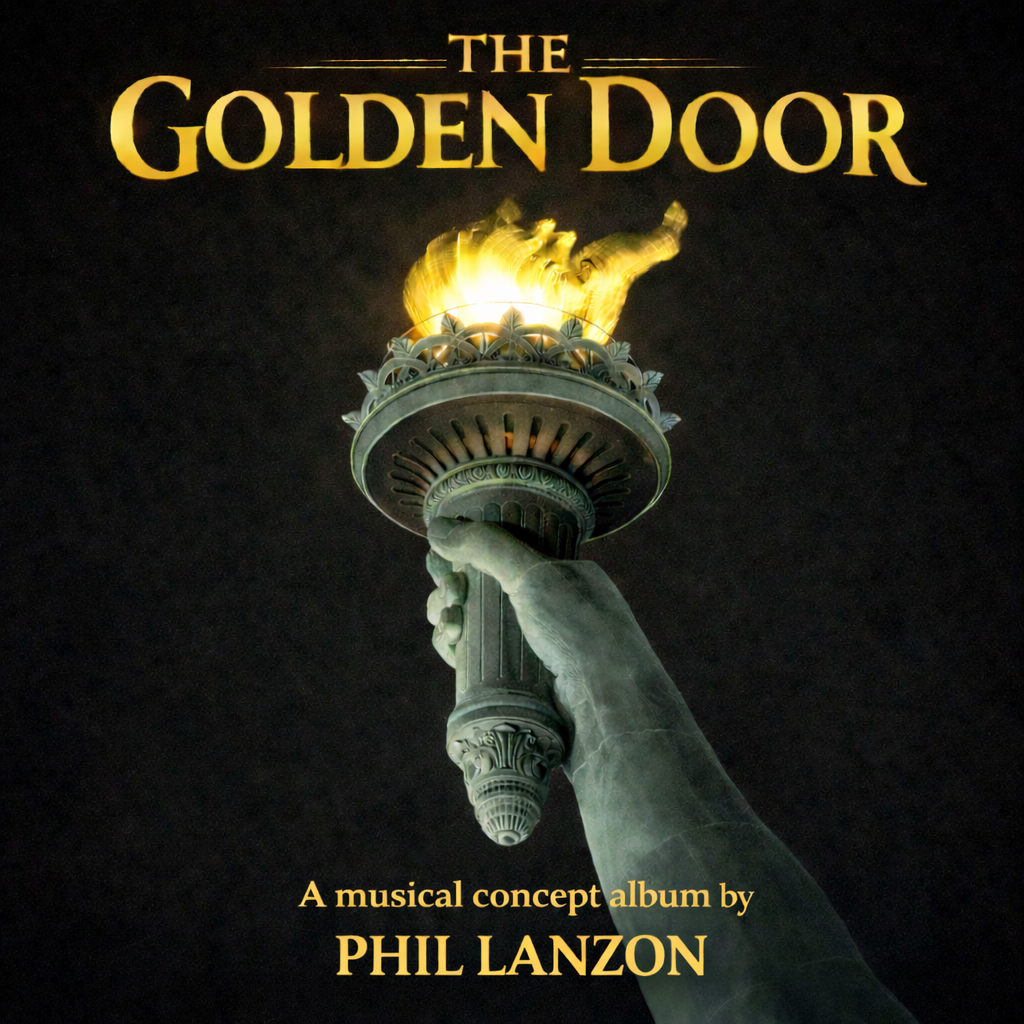
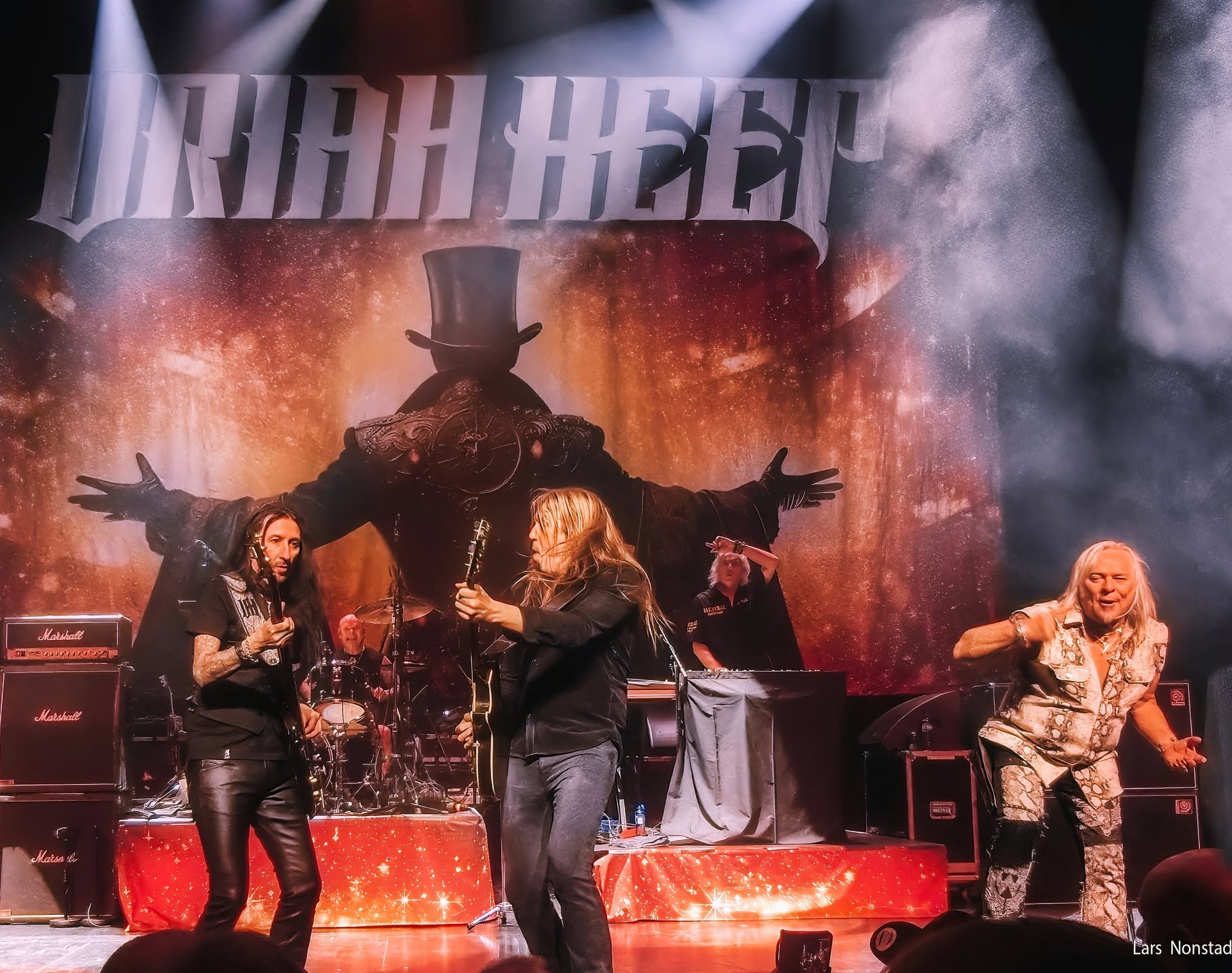
British keyboard player & songwriter Phil Lanzon is best known to us Uriah Heep fans, as he’s been a big part of the band for 40 years now. He’s also previously released 2 albums, and his third album has just been issued on CD and digitally, and it is nothing like the band he is apart of or his other 2 solo albums. The Golden Door is a concept album, featuring songs written by Phil. The story is that of Ellis Island, where European immigrants came to America first, escaping the war in 1917. *There are a couple of links at the bottom of the page where you can read more details on the story, as well as the whole plan and concept behind The Golden Door.
I spoke to Phil about The Golden Door, how it all came about, was recorded, and plans to one day get it in theatres. You can order the CD via Phil’s website (store): https://www.phillanzonwordsandmusic.com/shop , as well as check it out online, Youtube, Spotify...
You’ve talked about working with an orchestra before and doing something long term. So where did this all come from? What kind of got it rolling as far as the whole story and getting it to where it’s finished?
Well, I was given the script by my late partner who passed away just at the beginning of COVID. Many years ago, 15, 16 years ago, he gave me the script and said, I’ve got an idea. There’s a story here, read it and see if you want to make it into a musical. And I said, I don’t like musicals, not my thing. So, so he said, Well, just take it out and read it and pick out one of the characters, maybe, do something like that. Have a go, see what happens. I reluctantly took the script home and read it, and I liked it straight away. The story substance was interesting to me. And I thought, well, I’ll give it a go. So, I started messing about on the piano. I came up with two or three ideas, which he liked very much and said, keep going, keep going. This is like 15 years ago. And over time, rather than go into the details, to put it simply, we spend a lot of time on the script, perfecting the script and the songs for the characters. As years went by, we got more and more songs happening, or a lot more then. And we had a going concern after about five years of slogging away at it. We sent it out to theatres in America but everyone was busy with their own projects and we couldn’t get a bite. And we thought, well, maybe it’s not an American debut idea. It should debut in England, in the UK, and then it could spread from there. So that’s been the idea ever since.
I’ve read most of what’s on the website.
That’s great. So, what happened during that time, I’ve been obviously touring with Heep and going all over the world. And I put I did shelf the project about five, six years ago, thinking, Well, I’m too busy with the band, and we’re writing stuff; the next album was coming, etc, etc. So I left it for about a year on the shelf.
And then it just occurred to me that that was a mistake, the wrong thing to do. I said, I’ve got to pull those songs out and get them re-recorded with session people properly. And because of that, my producer, Joan Lane – when I sent her the finished demos – she was blown away so much. She said, Oh, we’ve got to go all the way with this…boots and braces! So, that’s what I want to hear.
So, we just pushed on from there. What we needed was an album, of course, so I finished off a whole lot more songs as time went by, and selected them and put them together. And the album is out there now being listened to on YouTube/Spotify, everyone can now hear the entire album with the spoken word sections put in….So you can get a kind of flow for the whole story.
It’s obviously not a rock album. Did you do the demos differently, or the same as you would approach to do a solo album or a Heep album?
Yeah, probably more because the songs are character based, and my other albums are not character based, they’re just rock songs. And because they’re character based, they pull in a different flavour. Obviously it’s a different genre. It’s got some rock elements in it, but it’s not a rock album. I call it a rock and ballads album. But because you’re in musical theatre world, and because of that, you write accordingly. I’m not trying not to be derivative or typical, how do I say typical…? musical songs that you hear in musicals that can be a little bit twee, a little bit, not really my cup of tea. But I found the genre interesting and more rewarding than anything I’ve ever done.
And because they’re character based, it brings on it’s own life because you know, the story, the script, I’ve helped change the script a little bit over time and worked on that an awful lot. So,it’s really been a work in progress. And I think we’ve reached a stage where now we need a top producer and an investor. And that’s the aim.
I imagine this was probably a little more costly than doing a rock album. Were you there for everything – all the orchestration sessions, all the choir sessions…?
Yeah, absolutely. I’m present on everything; anything going down I’m there. Singers, players, orchestra, conductor, arranging… I’m there all the time. You have to be, you have to be right on it.
How new were you to the whole, working with the orchestra and finding the choirs and the right players?
Yeah, well I have got contacts through my producer – Simon Hanhart, and the orchestrator – John Cameron. These are contacts I’ve been able to acquire. And singers wise, Annie Skates is an agent for an awful lot, if not all of the West End singers. She brought in a lot of people. And my producer, Joan, she knows a lot of people as well. So, between all those contacts, that’s where everyone came from. I don’t personally know them myself, apart from three of the singers on the album, which I have used on my previous albums. But that’s how it’s all come about, is knowing those people, and the combination of people I’ve used, some of which I’ve done before, has proved to work out so well.
I’m really happy with the way it’s turned out. I’ve worked with the string orchestra on my other albums as well. I’ve had great help from Richard Cottle from my previous solo albums.
Is there a firm plan to do like a live performance of this and get it into the theatres?
Oh, no. Well, we need a producer to create a stage production. That’s what we’re aiming for, right!? We need a stage production. But when that comes along, I shall press up vinyl, obviously. We’re now beginning to look at theatres in America as well as the UK.
As far as the story goes, do you have like a, are you a bit of a history buff as far as reading? Because I know like with the last album, 48 Seconds, you had the story about the fire and that.
I’ve always been a reader and, I pick up on certain historic things. I think that’s why I like the story, The Golden Door. The thing for me really is it’s, it’s important. It’s a very optimistic piece. It’s an optimistic piece, which kind of points, if you like, to what the immigrants at the time thought they would get in America. So, it’s optimism all the way through, you know, Wecan’t wait to get there.I’ll get a job… The dream was there. And I think it presents that side of it. And there’s so many American people, Canadian and American people who will have a relative or at least know somebody who was connected with that period in time. And it touches an emotional point, really.
The album is out there on YouTube and that, but is there a plan to kind of release any video or single, kind of something that will market it to your own fans?
I’m pretty sure that that that will come. It’s just very early days as we speak. But certainly, there’ll be movements in that area. I think we’ve farmed the album out to a lot of important people. And we’re sitting on that for a while to see what way we’re going to go.
But yes, is the answer to all those. They will all come.
Do you think when you get to the stage production, anything would change as far as adding more to it or the arrangements?
Yeah, for sure. Stage production in a musical changes every minute, almost. It’s just constant change. And even up until first night, things will change. And even after first night, there’ll be the comments – Well, we need to cut this out, we need to add this bit in. We need to put that in. There’s no end.
Is there something you’ve been looking forward to a long time as far as even like way back to, I guess, in the 70s, you didn’t, you weren’t in really rock bands for a while there, but?
No, I would never, ever think I would be involved in musical theatre at all. That was never in my mind, ever. But then as they go, you can never say never. And it grew out of something small and became this.
I think it’s kind of similar, as a rock fan, as you get older, you discover more things you thought you would never like or things you thought you would never listen to.
Do you foresee yourself doing more of this sort of thing? Or would you rather go back to doing another regular type of solo album?
I have no idea. I’m actually treating it like my third solo album, because that’s what it is.
Yeah, it’s got your name on it.
But it’s slightly different, maybe slightly different to the other two. But hey, you know, change is as good as the rest! And it’s exciting work, working on a script with characters and making the music that suits that character. And that’s very rewarding.
It’s really an important point to make. Very rewarding work, because it’s so different to a rock band, which in it’s own way is also rewarding, but in a different way. Whereas this is new, and very enjoyable. I’d like to do it again. It would be hard to find the right subject matter.
Did you did you find yourself doing a lot of research and then going back and correcting things factually as far as it goes?
Yeah, many, many, many times. I’ve done a lot of reading on it. Now, no doubt, when we make it to the stage production, and it starts getting noticed, and people are turning up to see that, there’s bound to be the odd comment, it’s going to happen – Oh, that bit was wrong. What you said there, that didn’t happen. Or, You missed the bit where so and so happened. That’s exactly what will happen. It’s got to be; It’s inevitable.
What else do you got on the go other than just touring?
Well, this has taken up all my time. I’m at home…I still do my artwork. I put stuff out on my Instagram. That’s really all my time. I haven’t got a lot of time for much else.
Dare I ask if there’s anything on the Heep front? Any kind of recording ?
Oh, recording. No, not yet, we’re talking about that. I don’t think there’s anything planned at the moment. That’s all I can say.
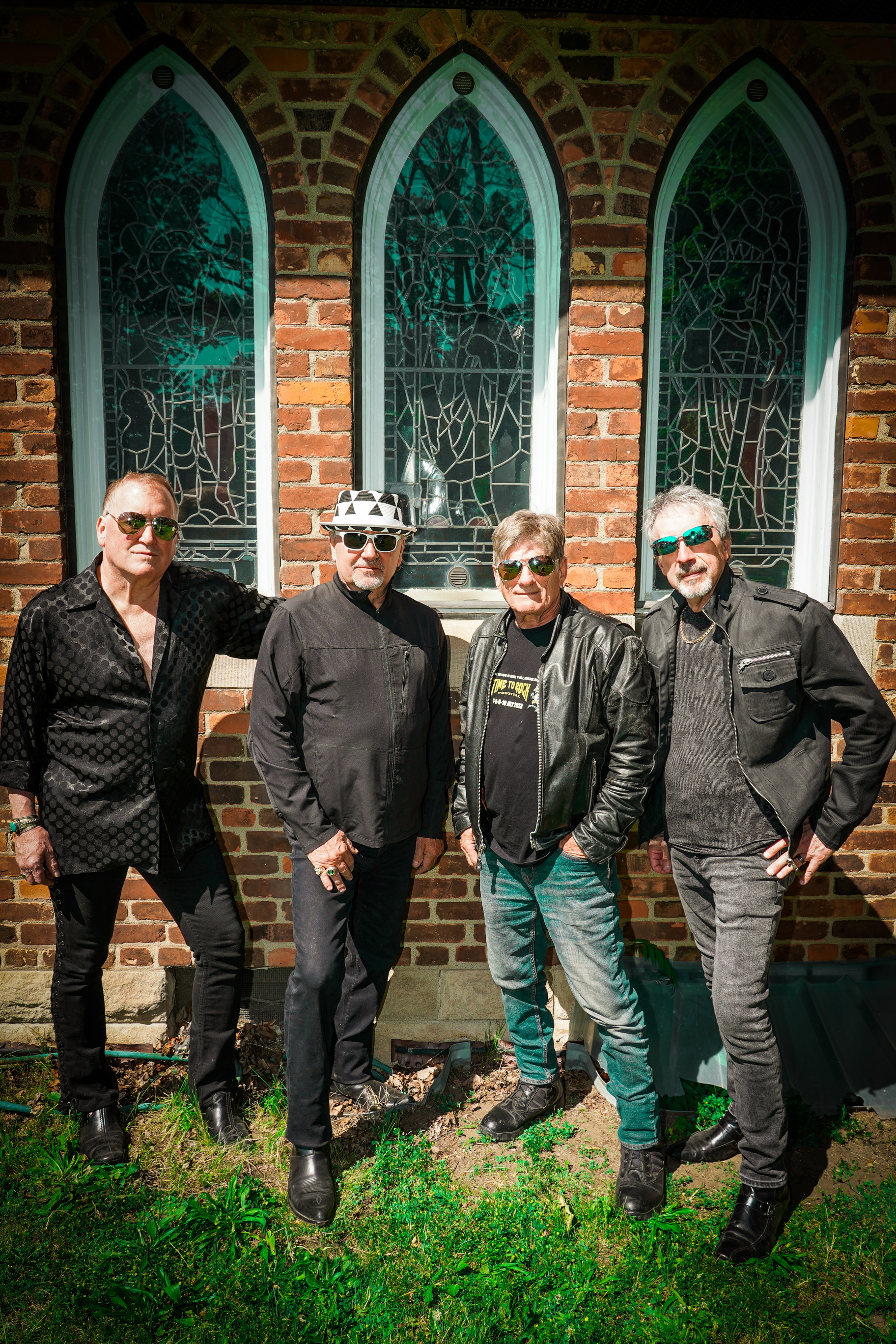
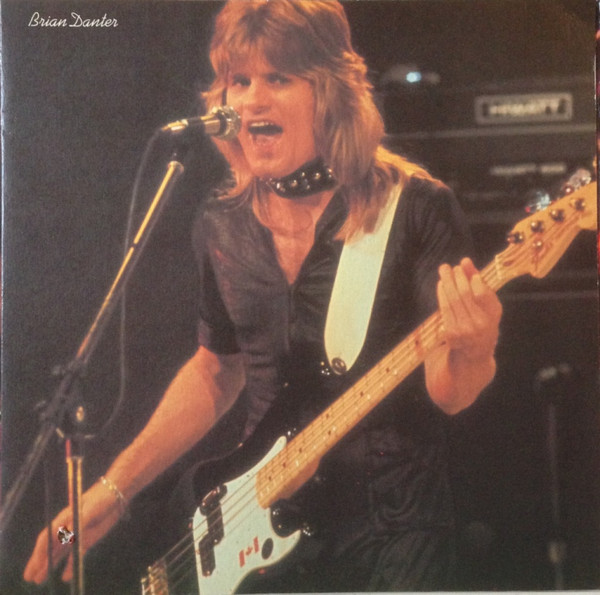
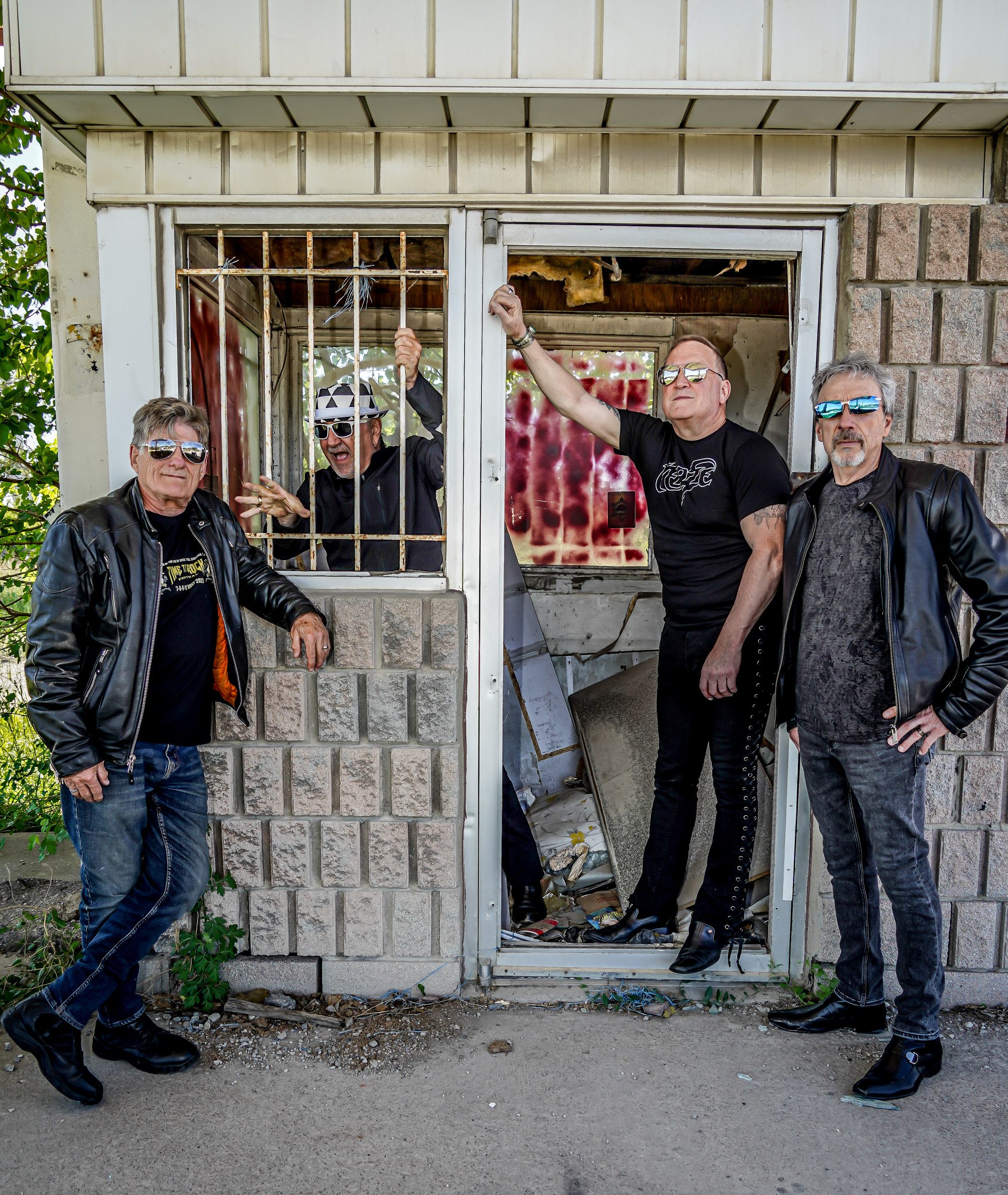
Canadian band TEAZE returned after nearly 40 years in 2019. Since that first show in Windsor, Ontario (which I was at), the band played many more shows, both here and in Europe. Last year they released the live album Live At Leige, underwent a change in drummers, and this year, they’ve more recently released the outstanding Rev Your Engines album! The band’s first release of new songs since 1980! And you haven’t heard it – get it! The band sounds energetic, rockin, and ready to go. I posted an interview with guitarist Mark Bradac a while back, and a few weeks back I had the privelage to speak with singer & bass player Brian Danter. Having recently turned 75, one would not know it from hearing this album! Brian and I talked about the band’s comeback, the new album, as well as some of Teaze’ past with getting signed, their early popularity in Japan and his reasons for leaving the band following the Body Shots album. Check it out. Check out the links below, and check out the new album!
Photo: Maximus Reid
The band’s third album was the live In Japan album (Tour Of Japan). What lead you guys to that popularity over there, and being able to go over there and get a live album out of it, so early on?
That’s something that the record company had planned. At that point we only had 2 albums out, our first album and On The Loose. It was probably all, kind of over-flowing to kind of keep the ball really rolling fast. So, it was a great idea. So, we practically did most of everything that we had in the two albums with, I think, a few new songs. I’m not sure off the top of my head, but yeah, it was a great experience.
Did you guys ever go back there or was that it?
That’s been our plan since we got back together. So now we’re hoping Kevin with signing with Deco and with Escape, we have some promotion. It looks like it’s really doing well in Europe right now. And Canada’s kind of a slow go. I don’t know if Mark shared, like, it’s just, you know, being kind of out of action and back in action for 45 years, trying to get the momentum going. I mean, the momentum is good with the audience, It’s just, it’s a whole new gamut, now you’re facing the internet, and everybody can do an album or a recording, on their computer and that. And I’m not against AI, I know has some benefits, but we were really proud in the fact that all the songs on the new album, Kevin, are all generated and created by us. There’s work put into it, which I’m grateful for.
Of those early albums, did you have any kind of favorites as far as…I often think that One Night Stands should have been the album that did it for you guys, but it wasn’t. So, what were some of the ups and downs for you?
You know what it was, It was like, this was one of our biggest budgets that we had gone in at the time. We were recording at Le Studio, which, the Bee Gees, Nazareth, Rush, so many groups had gone there. And when we did it, we knew that this is a first-class studio. So, we really got an opportunity to really shine. Now, we had been spending months at a recording studio in a basement that our sound guy had, a really nice one, writing and recording stuff as a demo for it. So, when we went in, we were really well prepared and we like to be prepared, you know!? So, some favorites. Oh, geez, when I go back, the first album, I’m trying to think right now…It’s so far gone, so far back there. But I think on the first one, the slow one (“Open My Eyes”)
We’ve written so many songs now over the years and we’re kind of so focused on the new album and we’re already getting ideas for another album. And I don’t know if Marco explained to you that, in his words, we kind of knew that our only step forward from what we’ve done in the last few years was to do new material because we found, I don’t know if it’s political, we can feel like it, but I understand all of a sudden coming back on the scene, we’ve been out West two or three times. We’ve been to Europe twice.
We did the live album and at least was a good step forward for us. That night went off phenomenal. I think in the whole album, I corrected one line in “Reach Out” because I got a loss for words, so the camera went away and we were able to put it in. But it was like four or five words. That’s about the only thing.
Yeah, I like “Sure Thing”. “Back In Action”, off of One Night Stands. There’s just so many good songs, like one after another.
And I really liked, because we had released “Sweet Misery”, which was a great song, but at the time, I know Marco probably told you, it didn’t really help us because we were a Windsor-Detroit band. We grew up on the Amboy Dukes, Ted Nugent, Grand Funk, SRC, a lot of Detroit bands. Alice Cooper. So, our sound really kind of mimicked those raw guitars with not a lot of processing and everything. And we’ve tried to get back to that. I think Charlie kind of (with Marco), marries the two sounds together, which is nice. Charlie has a little more spread on his pedal to do those kinds of things, which is nice. But we try to keep everything to that, Windsor Detroit rock area, because when we moved out, we moved to Toronto first, we weren’t really even aware of how big the Canadian music scene, we were just really isolated from it, because all the music we listened to were concerts. We went to Detroit; we had that privilege. So, with the new album, that’s what we’ve really tried to go back to.
Everybody’s had a hand in it except the new drummer because we lost Mike a little over a year ago. He just felt it was time. And then we got a phenomenal drummer, Jimmy Bonventre who just fit in like a glove.
In that era of the late seventies, early eighties, there was a lot of Canadian bands that had three or four albums out and they kind of fizzled out because they didn’t kind of cut it in the States. Is that kind of a fair statement for you guys and part of the reason you left?
Yeah. Actually, when I left, they were working out a deal. We were supposed to go and do some dates. We had done three dates with Blue Oyster Cult and there was talk of that, but the big one was we were supposed to go down to Texas and do some dates with Peter Frampton; that’s the thing I remember.
And then I know Marco shared, I just got really tired of, in the industry, the promises and a lot of stuff that came along in the industry in that time. A lot of drugs were around free, and I can just be upfront with you. The girls throw themselves at you and it’s just a lot of people just hanging around the band because of who you are. And I got really disillusioned. I love the guys in the band. I love playing, I love writing, and I love recording, all that. But unfortunately, all the other stuff came with it back then. And I think you have more control over it now than it was back then, because when you’re thrust into that level, within a year or two, we’re playing over in Japan, we’re a Windsor band! So, a lot of that high-life and everything, like when we landed at Narita Airport, there was hundreds and hundreds of Japanese girls and kids already with dolls, mimicking us and flowers and everything. We weren’t used to that over here. We more or less experienced stuff after the shows when we would go back and sign albums and greet people, but nothing like Japan, because we broke on, there was a wave, I think we were on the second wave that went over to Japan. We went over at the same time Cheap Trick went over, Kate Bush, a band from England called UFO. There’s so many other bands. We kind of went over on that. At the time, we were the only Canadian band that were part of a package deal. So, we got our foot in the door, Kevin, really, really quick. And we were grateful to that. So, then we came back, we shot a movie of the whole thing. And then we were using it and splicing it for advertisements for tours that we were going on. And so apparently there was a flood at Donald K. Donald and where our record company’s office was, and we were told that all that got destroyed completely. I mean, Marco believes that one day it might surface, but I don’t know, it’s like 40, 50 years.
Did you guys do a lot of extra stuff in the studio? Were you kind of like a studio band where you record like 15 songs and leave four or five off?
We had songs, like I’ve been writing for years, and I don’t know if Mark told you the story on our first album when we got the opportunity to go to record. I’d already been a local musician. I’d done recording in the States, recording in Windsor a few times. I was writing music. I was in other local bands. So, at the time when the band, when we launched our career, the record company saw that was about a six- or seven-years gap between the other guys and me. So, they put me more in that and, a few years older than them, but I had like, if you go back to, this is probably beyond you, but I remember when they lowered the drinking age to 18, everybody went into the bars. And if you make money, a lot of the high school concerts and everything just dried up; the ones at colleges and everything, everybody was in pubs and bars. So, I had to go in there, for two or three years to make money and keep playing. But then I got really fed up with it, because I would look out in the audience and you have the diehard people there to hear the band, but just everybody talking at the tables, the guys were there to pick up girls, the girls were there to pick up guys. And I said, ‘You know what? I’ve had enough of this life’. So, I pulled out of the band at the time that I was in. I was working part-time at a music store, and people didn’t know, guitar players and drummers and all that, because I was bass player back then when they were coming in and trying out instruments, I was auditioning them. I was listening to how they played, talked to them, but they didn’t know anything. So, when I finally got the guys together and had a meeting, we went and rented an abandoned warehouse in a factory, the whole floor. We had a freight elevator. We got it for a really good deal. I had a manager that I’d worked with in some bands before that, he’s passed now. We went in there…and think of this – back then we bought double stack high watts. I bought high watt, and both Marco and Chuck, they had two double stack of Marshals, or High watt. Think of what they would be worth today. So, we just rehearsed for about nine months. And then we played, and we invited a whole bunch of the student body presidents. We invited them one night. We had lights set up. We were in this big room. We had drum riser, everything! And we played like a 30 minute set for them. Well, that night, we booked a whole bunch of high schools, because high schools had kind of dried up. And then we invited all these student presidents out; we had about six or seven of them. We played around Windsor. The last one we got was actually the biggest show. We went back then when nobody was hardly using lights, because I’m an admirer of Pink Floyd way back, when nobody was using lights. And we got our light guy to go rent scaffolding. We got two follow spots behind, on stage, coming down on us. We had a follow spot out in the audience. We had flash pots. I mean, back then, that’s like 1974, 75. And just so happens that the Stampeders were in town and played a concert. Well, the guy who was the road manager for them, he came out, he heard about it. For some reason, he just ended up at Sandwich High School. It was a fairly new high school, big auditorium, big gym.
And he talked to us after, and he went back and talked to Mel Shaw, he was the owner of the Stampeders, or the main manager. So, he said, he’d bring us to Toronto and record a demo. So, we went down there, and at the time we had zip! We had no songs ready in this band. We were just rehearsing a lot of Deep Purple. We were doing “Man On The Silver Mountain”, which we brought back after all. We were doing some, because Kiss was just…I’d opened up – before this band, I opened up in another band with Kiss’ first Canadian tour that went to London. And I got the pictures to prove it.
Can I ask, was that a band that included Joe Konas?
Yes! The band ‘Joe’, you remember that!?
No, but I know Joe because I’m a Uriah Heep fan. So, I know his connection with them through The Gods.
So yeah, we played that gig.
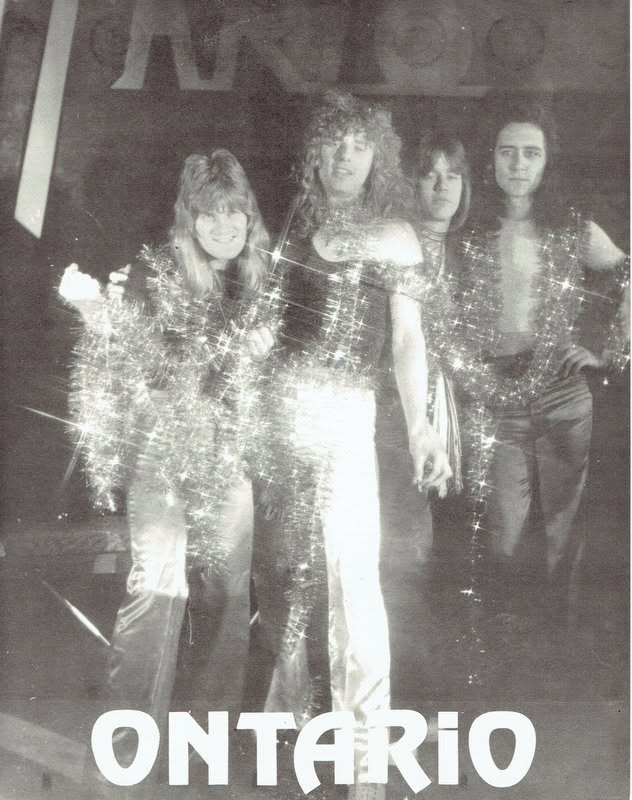
I’d been doing stuff before I put Teaze together. And originally, we weren’t called Teaze, we were called ‘Ontario’, because I had been in a three-piece band with a girl drummer, and we kept the name, but then when we signed a record deal, we found out that we couldn’t get a legal right to that. I don’t know how Chicago did it, maybe it’s different because it’s a city, So, anyways, that’s when we came up with the name. We changed the name when we moved to Toronto.
I know you went into the ministry and did other stuff, obviously. What was kind of the catalyst or the deciding thing for you in getting the band back together?
Like I always tell Mark, he had 45 years to put another Teaze together, but he was running his own shop, he was playing with his wife for quite a while, in the band ‘Lynn and The Rebels’. He was doing country stuff, which he’s very good at, but I can’t get him to do any country now. I’m trying to get him, ‘Let’s do like a country rock song’. He said, ‘No those days are gone’. But then for years, he had a gig in Windsor at the Yacht Club, him and his wife just played and played.
So, my wife, when I finally retired, I was in ministry 33 years. At 25, I was the worship leader at a big church in Windsor. I had the double-stacked Fender, I played flying V’s every week. I mean, it was a thriving church. I was kind of bringing, and I’m not trying to brag at those, but I was kind of bringing a new edge to Christian music and that. And I was really blessed in that. I did that for 25 years. Then I passed the baton to another guy I’d kind of trained up through youth. And then my wife and I did youth ministry for five years, and I enjoyed that. We had as high as 140 teenagers out on a Friday night.
We did summer camps, youth camps. I had all that experience. So, I’m leading up to what it’s saying…. So, then the last two years, I did a lot of hospital and home visitation. When I finally retired, my wife said, ‘You know, the guys have been wanting together to do a concert’. So, I was going to rent, at the time my brother-in-law, Lynn’s brother, he has a street church down in a real rough area of Windsor. And it used to be a bar called ‘Mongo Murphs’. He turned it into ‘New Song’. And he’d get all kinds of street people coming in and everything. So I asked if I could use the place; it holds about 200-250. Anyways, then we thought, we were just going (to) send it out for, because none of my kids had ever seen Teaze, obviously. A lot of other friends never got to see Teaze, because we never came down to Windsor. The closest we ever got several times was coming to London, when we did a tour, Canadian tour with Aerosmith, then we did a tour with Blue Oyster Cult, then we did a tour with Cheap Trick. We just never realized what would happen… All of a sudden, we’ve got local press involved that we were doing this show. So, we thought, ‘Maybe we better go to rent a bigger place’. So, we went to the theater downtown, it holds about, I think about 600-something. And we thought, ‘We won’t fill that! But it’ll be a nice stage and we’ll have nice lighting’. So, Kevin, we sold it out two weeks before, the venue. And that night, we found out people had flown in from Vancouver, out West. They’d come from Montreal. Some had come from the East Coast, Upper Ontario and just filled the place!
My buddy and I came up from the Falls.
Oh, you were there!?
Yeah.
Oh, wow! And I heard that night, there was about 70 people at the door, didn’t have tickets. So, they brought them in and they have an area where they have stand up tables.
That happened, and then all of a sudden we started getting invites. We had all this press, we were in the newspaper, we were in local magazines…Even the CTV came down and at the theater, they had interviewed us. We went down there and did it during the week before we set up.
Then we went out to the East Coast, and we played with Honeymoon Suite, and we were getting these invites. And the problem that happened is that COVID hit. We thought that was the end, you know!? We went about a year and a half and we just thought, we had our little stint and everything. So, we started talking, let’s get together and we can put the mics at four areas. So, we started rehearsing again all through COVID. We were meeting twice a month and we didn’t tell anybody. And the band was getting tighter and tighter, and we started to get ideas. Mike never wanted to do new music, he felt it was like kind of ‘Let’s focus on the old stuff’. Well, we only really had one AM hit. We had a lot of FM songs. So, when Mike left, it just really opened up the door for the new album.
I got it.
Oh, good. So, what do you think of it?
Like a lot of people, I didn’t know what to expect, but it surpassed whatever I expected. I think every song on it is good. And the lead off track is just a great, obviously a great opener.
That’s our new opener! Now for that album, really there’s songs that I automatically liked, but now that the album’s done and there’s four songs that we’ve already added to our 90-minute set. We’re playing August 22nd at a big venue in Leamington. It’s down by the water. It’s like an amphitheater. They got a great stage and everything, and we’re headlining. We’ve got two other bands opening. I don’t know if Mark told you that.
Actually, Rick Labonte told me.
Oh, what a great guy. I got to meet him.
And I love the sound of the album because I think those older albums, they were kind of between hard rock and AOR. I think they could have been heavier, guitar-wise, but this one sounds really up to date and heavier.
We really saw, a lot of the bands – great music, but a lot of the rock bands are very heavily processed. So, you get a lot of like foot pedal and stuff. We wanted to bring a little bit of that in, which Charlie does, but we wanted to keep everything kind of raw. I think if we go too out in right field, we’ll sound like a lot of other bands. And I think the people that know aren’t disappointed. I think that we really hit it. And I think Charlie, his skills just…what we would do is we would go into a studio, record basic tracks, then we had all the time in the world over the last 10 to 12 months to hash stuff out, change stuff. We’d record at Charlie’s because he’s got Pro-Tools, which is the standard in the industry, which the guy we went to, he’s done two or three songs for Metallica. So, he really knows his stuff. I think the song that’s really standing out to me now, live and it’s going to be in the set is “Gotta Rock”.
Yeah, I like that one. Obviously, I like “Man Of Vision”; I think that’s a classic type of….
That’s exactly what reminded me of, and your vocal, I thought, Wow! That’s like kind of like not a ‘part two’, but in that same ballpark.
Yeah, and on the opening and in the middle, that’s my daughter, Bethany, who sang when we played in Windsor. Like I had my wife, I had Mark’s wife and my daughter, Bethany, who’s younger. When we played all three concerts at the Walkerville Theater, we all brought the girls up, we added, but now we’re trying to just be the four-piece because now Jimmy sings, Charlie sings, and Marco does a little bit.
What are some of the songs you had a hand in as far as songwriting?
I wrote “Wonder” and I wrote “Can’t Stop Loving You”. That’s actually a song I wrote about 15 years ago. I used to do it when I did outreach and I did prisons. I used to do that. And so Charlie came along, we added a bridge to it.
And then “Wonder”, I kind of co-wrote with another friend of mine, but the lyrics, Charlie ended up changing the lyrics on it a bit, from my friend I used to write with. I’ve written about 70 to 80 songs over the years, and I’ve got them in the can. Obviously, a lot of my stuff is very faith-based without being super religious, but that’s just coming from, like Kevin, I on Sunday, I just turned 75 and I’m very grateful, I have seven children, I have six grandkids, I have two on the way. And Marco probably would tell you, I’m very much a family man, and I just love it. I love being back with the band, playing music again. And I have to be very, very grateful. I just did a funeral for an old friend that used to play bass with me at the church. Phenomenal bass player, played a fretless. He got cancer and died. I’m a former pastor; I was licensed and everything. So, I was privileged. I just went there to go to the funeral. I just heard about it last night. And so, I showed up and then the father or the brother just said, hey, would you say a few words?…Marco always jokes with me. He said, “If I get sick, I don’t want you showing up in the hospital!” He said, “It seems like people die when you show up”. I said, “Marco, they don’t all die. I go there when the friends and that, when they’re approaching death”.
I have a big heart for people. That’s what, I try to reflect that even on stage. Teaze is very, very much a relational band. And I’d like to keep it that way. We realize in the business, you have to be business. But if we don’t have that core, we love playing together. We love being together. It’s great. The bands we played with seem to really chum up with us. And of course, we’ve gotten a lot of promises that never materialize.
I think, because of the size of our country, there’s almost like a certain fraternity amongst the bands from that era, the late 70s and 80s, that you guys all meet up and play a lot of these festivals together. Some guys interchange bands and that.
Here’s the thing, and I don’t know if Marco shared this, and this is just speculation, Kevin. We’ve gone out there and done that. And Marco always says to these bands, ‘Throw us a bone, we’ll open up for you’. And they do make promises, but I realize someone’s working for them, getting gigs. But it seems like in Canada right now, like a lot of the bands, you’ve got Honeymoon Suite, you’ve got Streetheart, you’ve got April Wine, you got all these Canadian bands that have stayed around, and they’re old material, they’ve got a lot of material that was popular. But to get into that, it can almost seem political. You know what I mean? So, Bernie Aubin from the Headpins was really instrumental in getting us out West and putting gigs on us. And now I really think that next year, I think we’re going to be doing a lot of dates in Europe because Europe – they’re taking off with the new album.
And we have places in Canada. ‘Please come to Montreal’. ‘Please come to the East Coast’. ‘Please come back out West’. But it’s all up to the promoters. A lot of them, they’re younger, they’re new. They don’t really know us, and that we still got the energy on stage, Kevin. We do.
I guess they maybe say to themselves ‘Why do I want to invest in a bunch of old guys who just came back!?’ And when they’ve seen us…. But a lot of times, they have these group meetings among the people that are putting on the festivals, and they just seem to keep going with the bands that have been steady. And that’s understandable. I’m not resentful. So, I think that we’re going to be plowing ground in Europe and England, and maybe Japan; there’s a chance because the music has a connection there. I think then, when we come back to Canada on our own, it’ll open up more doors.
That’d be great! For me, as a fan, I like listening to bands that still have something new to offer, not just doing the same 12 hits for the last 40 years. And there’s a few out there that do that. It’s good to keep it moving, right!? You got to move forward, or you’re just a nostalgic act.
Kevin, have you seen the AI video that was done for “Rev Your Engines”?
Yeah.
We were like, kind of, ‘Oh, I don’t know’. And even my kids, I’ve got three of my kids are very musical. And they said, ‘Oh, Da!’, But when they saw what we did with it, we purposely made it kind of cartoonish and AI. But it really sends the message. There’s nothing lewd in it or anything like that. It’s just, it kind of explains where we grew up; all the drag racing and the stock cars and everything. We had them here too in Windsor, but It kind of just really sets us out there, what we are.
As far as the stuff you grew up on, as a singer, bass player that, what were some of your influences?
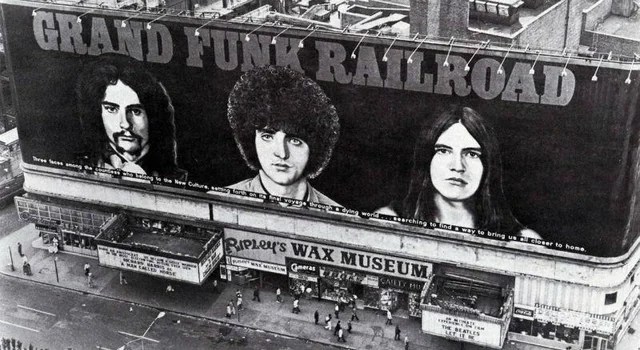
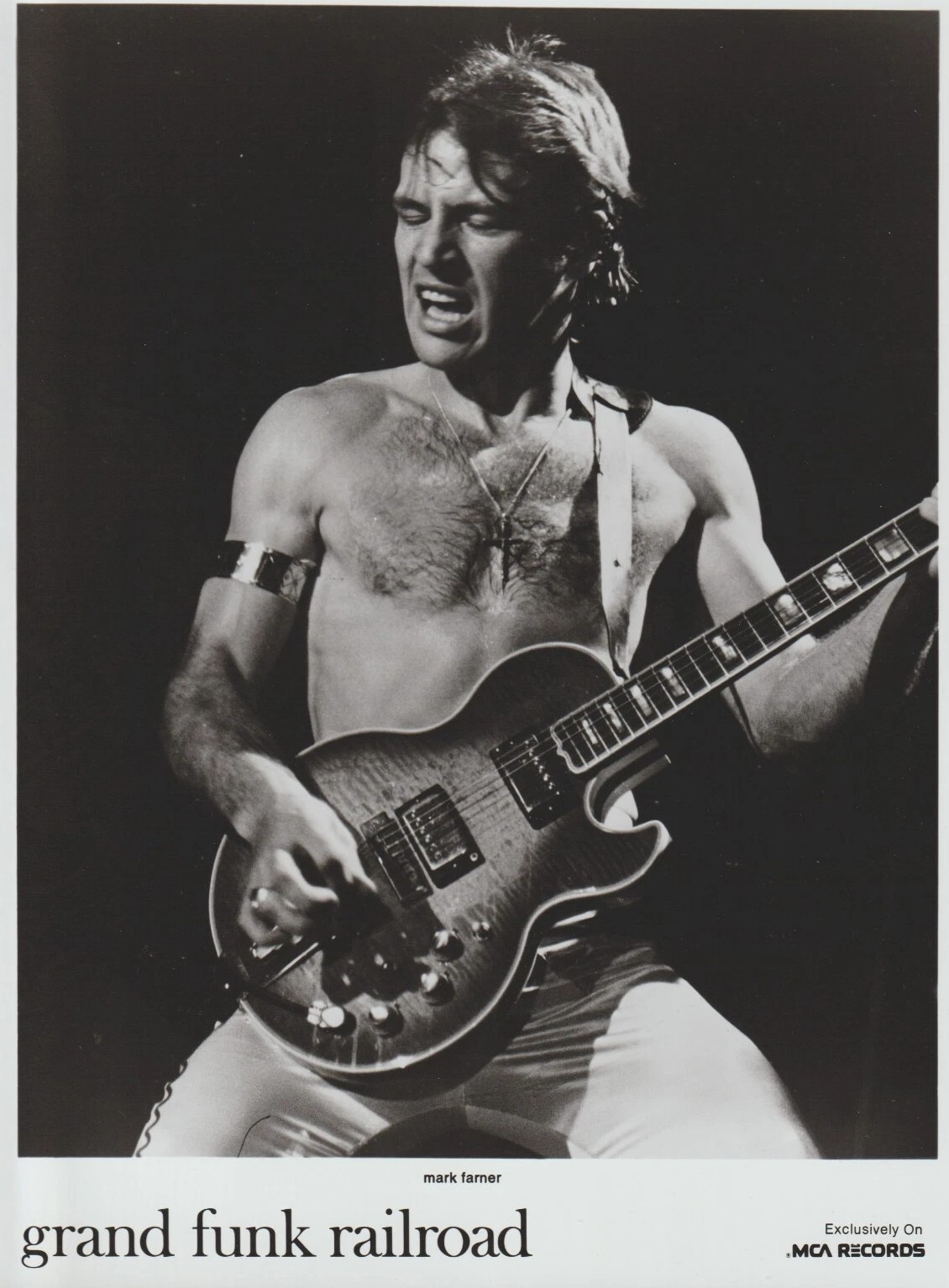
I grew up loving the Beatles’ music. I liked the harmonies and everything. I loved Hendrix when he came along. I loved Cream. I didn’t dislike them, but I didn’t really follow the Stones in the early years. Pink Floyd in the very early, early years, won my heart. I loved the creativity. Nobody was doing theatrical stuff like that, with the heartbeat and surround sound PA. But I think the one person I’ve given a lot of credit to this, when Grand Funk came along, and they were under a lot of criticism from the music industry, but they were drawn huge crowds! I liked Mark Farner, because he was not only a good writer, but he was a polished, great singer. I used I used to compare, you’d have guys like the guy in Aerosmith and Mick Jagger – to me, they’re “stylists”, they have a great style, but Mark Farner had a voice. His range was unbelievable, the clarity. I remember I used to put on Mark Farner albums, the first two, and I would sing along with him. And actually my own range opened up Kevin just to mimic his playing, learning his songs, learning his vibrato and his technique. I just said, “That’s how I want to sing like!” And of course, Ronnie James Dio, when he came along.
Some of the interviews we’ve done, and the writers, they’ve said, “Boy, you were stepping on dangerous territory to do something like that”. There’s two places you either do it like Dio, and a lot of times, he can’t be duplicated. Or you change the song completely, which would be murder to do that. So, I just said to the guys, “I just want to sing it like Dio would have sang it, but with my voice.” And actually, it was a piece of cake. It was the one song on the album. Honestly, Kevin, I think I did three takes.
It’s a classic song.
Now, that’s actually a song that we used to do when the band first got together. And Marco’s the one that came forward and said, “Brian, you think you still got it!?” We were looking at covers and that, and so one day at practice, Marco just out of the blue started doing the chords in it. I thought, ‘Boy, is that tough sounding Mark’, he just opened up his amp. So then we just decided to do it. And because we wanted a cover on it, we thought that would be good and healthy for us to show that we could kind of dip into something, someone else that kind of fit us.
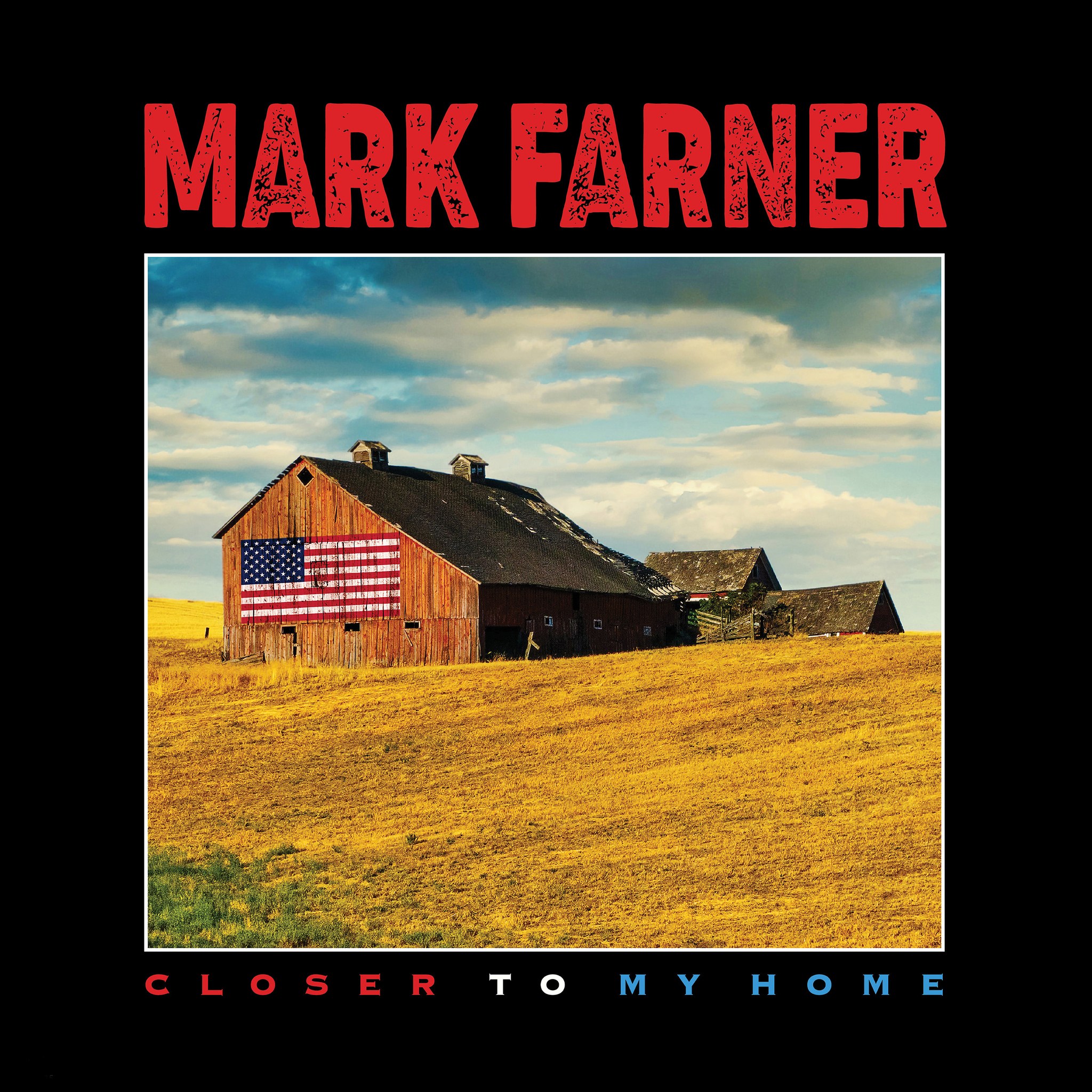
I did interview Mark Farner a couple of months ago for his latest album.
Did you!?
He’s a very interesting. Very talkative guy. I could just listen to him all day because he must have 1001 stories.
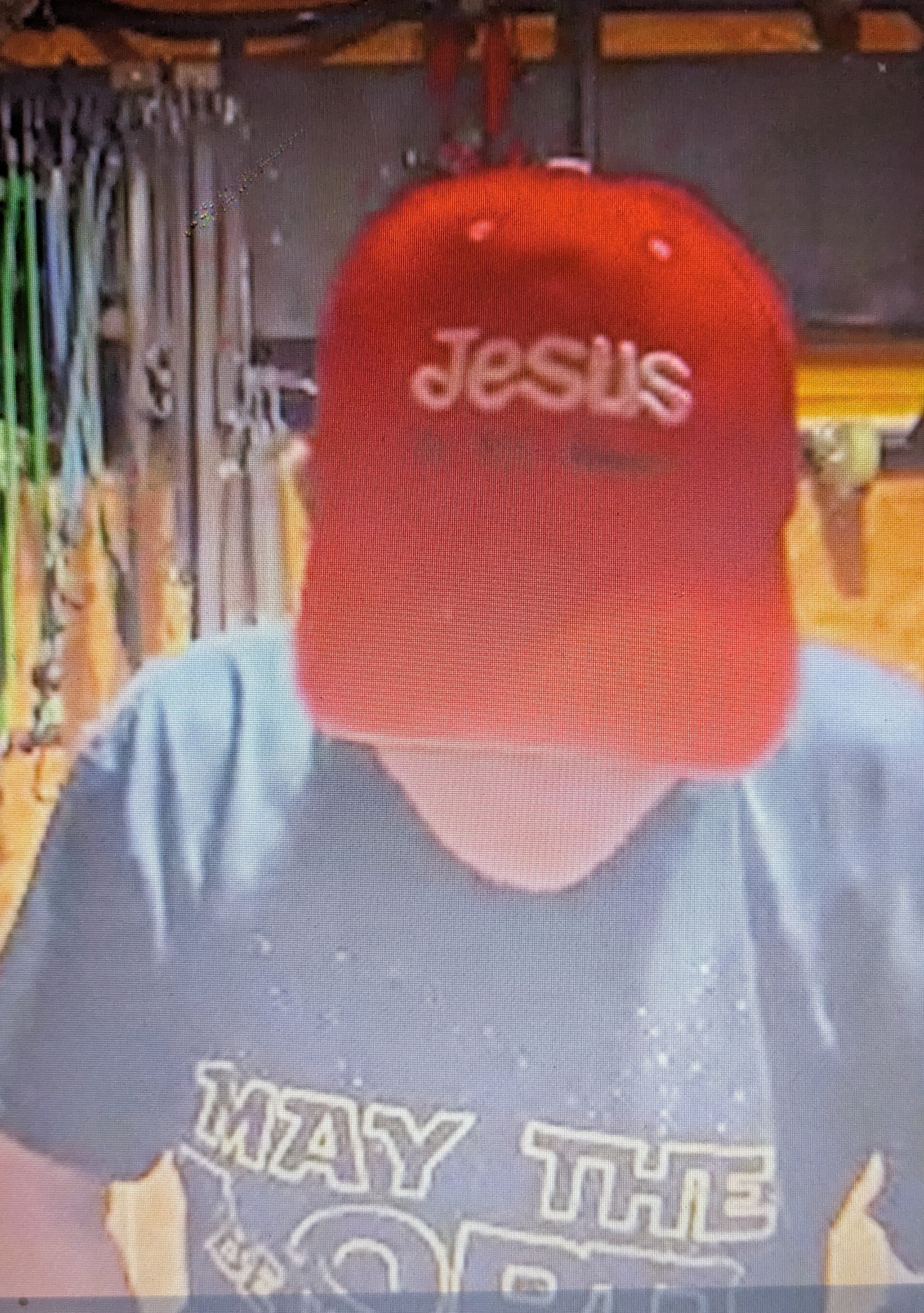
Like me, Farner ended up really giving his heart to the Lord and serving. That’s kind of like when I came on, I didn’t know. I wear this hat (Puts on red ‘Jesus’ cap), and I get a lot of comments, a lot of – “What are you doing? “ When I’m at the signing table, I’ll put it on. I’m not ashamed of the gospel and who I’m serving. And that’s kind of what drives me. I don’t push it on anybody, but I like them to know that I’m real and who I am. I’m a Christian and I can play rock music and have fun with the guys. A lot of the other stuff that was in the past, is gone for me. The stuff is around you, but you don’t have to be part of it. Wherever I go, Marco jokes I’m still a tourist. I mean, not with the camera or cell phone, but they’ll often go off and sometimes party a bit, and I’m off and I’m in the street meeting people. And I just love meeting people. I love hearing their stories. It’s just me. I’m the same guy at 75!
Tim Durling’s latest book is On Record: The April Wine Album Review. It is the first book dedicated to the legendary Canadian band’s catalogue, with each studio album being discussed by panels of fans, as asked by Tim. So, I am honored to be included among in it. I recently spoke with Tim about On Record, April Wine, and putting this book together. As well we touched on Tim’s future plans.
You can order On Record: The April Wine Album Review on Amazon. It’s 222 pages of perspectives, recollections, and information on each of the band’s 16 studio albums. Tim’s doing a lot of promo to reach April Wine fans, and you can catch him on his channel Tim’s Vinyl Confessions, as he features deep-dives on each album over the next few months, as wll as appearing on various other Youtube channels, and in online publications.
Tim:I’ve done Grant’s Rock Warehouse so far, and I’ve done John Clauser’s channel, My Music Corner, and I’ve got a bunch of other things booked. So, the usual channels I go on, like The Contrarians and things like that and reaching out to other people and saying, see if you’re interested. So yeah, any exposure, I appreciate any chance to talk about it. I appreciate it. And for people to share on social media, it seems like a simple thing, but none of us have the exact same friends base or reach. So, all it takes is somebody to see a post that would have never normally seen a post and go, Oh, there’s a book about April Wine. It’s a simple thing, but it can mean a lot.
*Click on the banner below to order.
You’ve always done books, like you mentioned before, books on bands that don’t normally have anything written about them. Is that a large part of where this went, because there’s not a lot of books on April Wine other than Myles’ book or Ritchie Henman’s.
Yeah, there really hasn’t been any books that have been sort of studies into the band’s music, and I like being able to fill in that void. So, you’re right. Most of the books I’ve done have been bands that have hardly any books written on them or almost no books written on them. I mean, Myles’ memoir, Just Between You And Me, that he put out in 2016 is kind of the story from April Wine from his perspective, but I wanted something to go into each one of the studio albums, talk about all the songs, just like a lot of my previous books have been, and I think every classic rock band deserves to have something commemorating their career in this way.
Do you learn much from talking to everybody because you’re not doing interviews with band members and people that were actually there. It’s kind of just a fan analysis type thing.
Yeah, absolutely. The books that I’ve done like this have totally been based on Martin Popoff’s Album-By-Album series that he did. I just thought that What a great format to use; just like having a bunch of people sitting around a table and somebody poses a question, Hey, I think this is their best album, what do you guys think? And then everybody gives you their opinions. And so, I kind of adopted that concept. That’s certainly what I did for Y&T, for Kansas, and for Night Ranger, and for this April Wine one. And I find I learn a lot from talking to fans, especially fans that were either fans longer than I have been and have been there, can remember when albums came out and going to see them on that tour, or even younger fans that just discovered the band a few years ago. Sometimes they’ll hear stuff that I’ve heard for years but never picked up on. So, yeah, I’ve learned something each time around I’ve done one of these books, I’ve come out of it knowing more about the music or having a deeper appreciation for the music than I had before.
You have a wide variety of people, obviously, there’s, (I don’t know), how many people ended up in the book!? (Tim counts 29). I imagine, because I have probably a favorite five or six albums. Is it easier to find people that say, “Yeah, I’ll talk about Nature of the Beast, and I’ll talk about Harder…Faster”, and then when you get to certain albums, you’re kind of struggling to find people that have a good recall?
Yeah, absolutely. It’s like when I did my Night Ranger book, everybody wanted to talk about the first three albums, and I had a little bit of a harder time getting people to talk about the more recent ones. When I did the Y&T book a lot of people wanted to talk about Black Tiger and Mean Streak. So, with this book, it was no different. It was no problem getting people to talk about Stand Back or Harder…Faster or Nature of the Beast.
I did have a hard time finding people that wanted to talk about, say, Walking Through Fire or Roughly Speaking or Forever for Now, but I was able to fill it up to get a sufficient amount of people per chapter.
I could have talked about a few of those, but I think those three probably sit at the bottom of my April Wine list. I imagine you want to find people that have something positive to say as well!?
Not necessarily all the way through. It is great to have some differing opinions; we all hear these things differently. But, hen you’re really into something, I think that’s when the best content comes up, because if you’re really passionate about an album and passionate about a song, it’ll come out because you’ve listened to it so many times and you’ve analyzed it and you you’re like, Oh, I love this mid-section right here. I love the harmony vocals there. I love this verse right here, the way Myles sings it – or whatever. So, there are some dissenting opinions in some of the chapters.
Certainly, I would say in the in the first album chapter, you know, there’s a overwhelmingly, I don’t want to say negative, but it’s not that high on many people’s list, that first album. But there are some people that like that early stuff and that’s great.
Yeah, it’s a hard, I wouldn’t say a hard one to get into, but it’s definitely for particular tastes, right!?
I find that if I want to listen to the first April Wine album, it’s more of an intellectual exercise, like I shall now listen to the first April Wine album as opposed to I got to hear that debut album. It’s like that.
Obviously you’re doing a lot of promotion and that for this. Have you gotten any feedback from anybody connected to the band?
No, I really haven’t. At this point, the book’s been out for a couple of weeks or so. So, it’s still quite new. I have posted on, not the official band’s Facebook, but the fan page is there. And a lot of people have seen that. I know Dave Cameron liked one of my posts, so Dave Cameron’s pretty well connected in the April Wine world. People know that name. I don’t think that there’s anything particularly… it’s not about dirt – it’s just a bunch of fans and our opinions on these albums.
As far as beyond the reviews and the comments and stuff about the albums, you did a list of songs the band covered with the originals in that.
Yeah.
Was there anything you could have put in the book? One thing I really liked was your (and it’s a whole other topic), was your review of the live show, recently.
That was a really happy accident, because obviously I started this book quite some time ago, long before the Triumph reunion was announced and long before it was announced that April Wine would be opening for it.
I was so glad that it happened the way it did, and I got to see that show, because being completely honest, I was sort of in the background thinking, Boy, the idea of April Wine playing without Myles. It just seemed so strange to me because, he was the main voice, the main songwriter, one of the main guitar players. In a lot of ways, Myles was the sound of April Wine. So, the idea of somebody else doing that, I don’t know!? I’ve seen plenty of shows with replacement singers, but it just so happened that I really wanted to go see this Triumph reunion and April Wine were opening. And I came out of it, I was convinced that this music is in good hands now. Marc does a great job with the vocals. He doesn’t try to sound like Myles. I like the fact that they didn’t do what, say, Journey and Foreigner did and tried to find somebody that could sing like Myles because he’s got such a unique voice.
They just got somebody that could sing very well, deliver the songs. I will say that he’s really, I get the feeling that Marc has really taken time to study Myles’ guitar parts because when it came time for the lead parts, he had them down. And that that I would go see them on their own now. I would go see a full headline show from this lineup.
I saw him last year as part of the BTO thing and I was kind of the same thing. I kind of thought there’s one guy that’s played on albums here. I was, not skeptical, but I just…. But Marc brings a lot of energy to it.
Yeah, very much. And they talk about Myles a lot. He just sings those songs very well. That that opening set went over very well for the Triumph crowd.
As a matter of fact, I think that the crowd sang along louder to April Wine. But I think that also has a lot to do with the fact that, Triumph – I love Triumph; they’re one of my favorites. In Canada, they’ve got like maybe three or four songs that get a lot of radio airplay, whereas April Wine have maybe a dozen. So, like people just know those songs, right!? And they’re marginally not as heavy as Triumph. So, it kind of makes sense that it’s got more radio friendly appeal.
Triumph were great. But I just noticed that people were into that April Wine show from the get go, and you could hear them all singing along from the moment they started with “Oowatanite” til they finished with “Roller”.
So, was there anything you wanted in the book, you just didn’t get around to or anything kind of like a list of stuff or anything?
Not really, I tried to make sure I covered every officially released song. So if we got to, for instance, B-Sides, I put them in context of the album that they would have been affiliated with if they were a B-Side from On Record or Electric Jewels or whatever. Songs that are on live albums that weren’t on any studio albums. I think I just about got everything covered.
So far, I haven’t looked at and gone, Oh, I wish I had mentioned this or that. No, I’m kind of happy with the way it turned out.
I know all these things get brought up in the discussions from album to album, but there was no list of like related albums or just band personnel in general.
No. I think I try and cover the changing lineups as they occurred. I know one thing that, maybe some people thought I should have covered but I didn’t, was solo albums. I did talk briefly about the two blues albums that Myles did post-April Wine, because I find that those are probably the closest people were going to get to another April Wine album. It is kind of sad that Roughly Speaking, will probably go on to be their last album. And it was I mean, first of all, it was really short and I didn’t mind some of the songs. I just wish they’d made more music.
Yeah, it’s unfortunate they went from 2007 until now, not recording. I think Styx went for the same period of time until they finally put something out.
Yeah, Kansas did the same. They were16 years before they started putting out albums again. I suppose now, I don’t know. I can’t imagine there being a new studio album of newly written material, but you never know. It’s a good band. I will say that with Brian at the lead. And this music people still want to hear these songs.
Regarding your own favorite albums. Did you have any chapters you were looking forward to?
Sometimes it’s the albums that aren’t my favorites that I most look forward to because I really want to hear, because I always think that This is a good band. I just don’t happen to care for this particular album here. But somebody must like it. So, it’s always good to hear back when someone says, “I kind of like the late 60s vibe here…I kind of like….” I guess the two main ones would be the debut and Forever For Now. When it comes to, say, Harder…Faster, Nature Of The Beast, those are well-loved albums…Stand Back. So, I know it was no problem to come up with people that wanted to talk about those and were really passionate about them. But I kind of almost look forward to those lesser albums. And I’m interested to what people, think of them, especially if they’re albums that in some cases, I know that people have discovered them in recent years because of YouTube and being on different shows. One that I find has really risen amongst people that I communicate with is Back To The Mansion. I think that’s a really good latter day April Wine album.
I think once you get over the fact that it’s not a hard rock album.
Yeah, it’s not it’s not. Attitude was a pretty pedal to the floor, borderline heavy album. Frigate not quite so much, but there are a few songs on there.
But yeah, Back To The Mansion is nothing like that. Back To The Mansion really has more of the spirit of something like even lighter than say Powerplay. There are great songs to be found on there. I love that Brian sings two songs. It’s just it’s a really strong album. And I had no problem with them doing that blues sort of thing with Roughly Speaking, I just wish it was a longer album. The whole thing’s about 25 minutes long; so it’s barely an album.
I like the guitars on the album, but yeah, it’s too short. And it took me a long time to get into it. Same with Back To The Mansion, when it first came out, I was kind of like, It’s good, but, there’s no like, Frigate had “Look Into The Sun”.
Yeah, there’s nothing really driving on there. And that’s another thing I remember, because I got into the band when Attitude was a new album. I mean, I’d certainly heard of them for years before, but when I first started buying the albums and listening to them, it was when Attitude was out. And then Frigate came out just a year later, which was pretty rare in the 90s. So I remember thinking, Okay, we’re going to start to get some, a bunch of albums from them in pretty short order. Obviously, that didn’t happen. And I just think that’s a shame. I think there was a lot of talk about albums coming out, but it just it didn’t seem to happen. And I think I understand why, because obviously, there’s more money to be made on the road.
Have you read the other April Wine related books, Myles or Ritchie’s?
I’ve got to get Ritchie’s book. I don’t have it. I have Myles book, and I enjoyed it. When Myles talks about growing up, you know Myles was born in Woodstock, New Brunswick, which is my hometown. I was born there. Myles did not live there, and that’s the important difference, but still the Maritime provinces. So, I can picture a lot of things he was talking about when he was growing up. It’s pretty amazing, considering that band started in Waverly, Nova Scotia, made their way to Montreal, and then they had albums all over the world. They toured all over the world, and they did quite well for themselves.
Are you getting feedback on this outside of Canada?
Yeah, I’ve sold a lot of books to to folks in the States that I’ve talked to, and in the UK. I think it’s really important, and one of the goals of this book is to let people know that they didn’t just have those six albums on Capitol Records, from First Glance to Walking Through Fire; there’s a quite a career here, quite a distinguished career. The fact that First Glance comes out, lot of people might have thought that was their first album, but then in Canada, the next thing that comes out is their first Greatest Hits because they’d been doing it for almost a decade at that point. So, it’s a rich catalog to go back and discover. And I think people would be really surprised if they only know, say, those Capitol years, the big songs, how eclectic those earlier albums are.
Do you plan on doing anything further as far as the band goes down the road? Do you see any kind of follow up as far as April Wine goes? I’m just saying this because I know there’s not a lot out there on them.
I’m thinking that I don’t know what else there would be, unless somebody approached me and said, We’d like you to do their biography, and then I’d have to do some serious research. I’d have to borrow a lot from existing material, like Myles’ book. And, it’s my understanding, like some of those guys, like Gary Moffet, they just don’t want to talk about it. But somebody should; there really should be because it’s an unlikely story. The whole idea of them traveling from Halifax to Montreal, and they really didn’t have an invitation. It was sort of a nicely worded Don’t call us, We’ll call you, that they got from the guys that ended up starting Aquarius. It could have been a totally different story. So it’s unlikely, but they just they kept at it. They kept putting out records. And sooner or later, they made their mark. It’s interesting because, yes, in Canada, April Wine are kind of an institution as far as classic rock, and they’re mentioned up there with the biggest of names. Around the world it’s not like that, they’re sort of almost a mid-tier band if people remember them at all. And I think more people need to know about the band and know just how many albums they did, how much music they made.
What else do you have in the works?
I’ve got another book that at this point is proofread. It’s pretty much written and it’s proof-read. And I’ve been kind of on this schedule where I put a book out in early summer and then I put one out in the fall.
So, this next one will be coming out in the fall. I’m not saying who it’s about just yet, but it does follow along with a lot of the books that I’ve been already doing. I will say that it’s the next book that I’ve got it’s like my Sammy Hagar and my Fleetwood Mac books in that it’s all me. It’s an album by album, but it’s all me. And then I’ve got a couple other bands in mind. I don’t see any reason to stop.
I’m always looking around like, OK, so who do I really like!? I got to really like whoever it is before I commit to doing a book. And who also isn’t well represented in having something to pick up and read about them. I’m a huge Rush fan, but I don’t have a Rush book in me and there’s so many great books already written about them. So, it has to be something that really gets my interest when I’d really like digging into writing about these bands. And all right, Finally, I get to write about this band or I get to say what I think about this band and how great this album is. And more people need to hear it rather than saying, I think Moving Pictures is a great album. Well, so does most of the world. So, yeah, I’m going to keep on going, I think.
Is it getting easier to do? You started writing books, what, five years ago now or less?
Surprisingly enough – Yeah, it’s been about four years. It’s crazy in that time, I’ve got seven. And my good buddy, Matt Phillips, that works for his company’s Go North Design. He’s worked on all of my books. I’ve kind of got a system down, not a science, but we’ve both gotten better at, now that we’ve got a system, it’s working very well.
And I also want to thank my good friend Andy Campbell for doing the proof-reading, because that’s very important to me. I do not want to have grammar errors or spelling errors or factual errors. A good proofreader will find things that not just things that, it could be grammatically correct, and it could be something that if you’re a huge fan of the band, you’ll understand, but I’m trying to write my books for everybody.
So, I don’t want someone to write something that’s like an inside joke. And it’s like, Well, I don’t even understand what that means. So it’s like, Can you explain that a little more? That’s why there’s some editorial notes in there and stuff like that.
Do you have anything planned other than this just for a bookstore or anything like that?
Well, I do. As far as my channel, Tim’s Vinyl Confessions, every time I put out a book, as you know, I do a ‘deep dive’ series where I go through every one of the books. You’re in an upcoming one. And actually, what I’ve done this time that’s different than before, I’ve got two co-hosts per episode. So, I’ve got two people that are in the chapter for the albums. And so that’s going to take me into September because that’s 16 weeks.
And yeah, I’ve got actually in Woodstock, which I only live about a half an hour away from there now. I am doing an in-store for first Saturday in July at a local bookstore. So that’s coming up.
I’ve been doing, I’ve done Grant’s Rock Warehouse so far, and I’ve done John Clauser’s channel, My Music Corner, and I’ve got a bunch of other things booked. So, you know, the usual channels I go on, like The Contrarians and things like that and reaching out to other people and saying, see if you’re interested. So yeah, any exposure, I appreciate any chance to talk about it. I appreciate it. And sharing on social, for people to share on social media, it seems like a simple thing, but none of us have the exact same friends base or reach. So, all it takes is somebody to see a post that would have never normally seen a post and go, Oh, there’s a book about April Wine. It’s a simple thing, but it can mean a lot.
Canadian rockers LOCKART are set to release their debut album! The band consisting of Devon Kerr, Jason Junop, and Fabio Alasandrini, play a classic 80s style high energy AOR/Metal, but with the synths up front. If you like that 80s AOR sound, you’ll want to check out City Pulse, which comes out in various formats through High Roller Records. I spoke with frontman Devon Kerr a few weeks back, where we discussed the band and the new album, as well as talked music in general, record collecting, favorite bands, etc… Check it out. *Also check out the videos (included), and the links below…..
You guys had an EP out in 2022…
Yes.
What led up to getting a full album out in that time?
So up until that point, 2022, we only had those three songs written. I had no idea how the reception was going to be at the time. The songs were 10 years old, even in 2022 or ‘23.
We started writing those in like 2014. They came out and just kind of feeling it out. And people seem to really take to it, considering we don’t have any marketing. We don’t have any. We got nothing at that time. We just put songs out to the world and saw what happened.
And the support and the number of people that actually enjoyed was overly positive. So it made sense to hit back into the studio and start writing some new songs and making an album. And so that’s basically how it happened.
It was done by us, but because of the reception from the EP from fans.
There seems to be a lot of a bit of an uptake or whatever in 80s AOR and hard rock influenced and inspired bands. Some of them are a little more satirical in that. I don’t know how you got on to that direction and how deliberate and serious it is as opposed to, like, say, Steel Panther.
I’ve always loved this music.
Same with Jay, same with Fabio. It’s definitely not a joke. I mean, this music from the 70s all the way through into the 90s is just top quality music, in my opinion.
The songwriting that goes into bands from the 70s, like Journey and Boston into the 90s, like what Mark Free was doing at that time. It speaks to me. It always has.
So we wanted to do that for real. I know that there’s a resurgence of this type of music or maybe even just a continuation, in Europe. But it seems like, Canadian listeners might understand this and, it seems to be like out on the other continents that a lot of AOR music is like their Nickelback, you know, they’re just kind of generic rock music.
It’s they just fall on to it falls into AOR, where here we got that kind of like country, infused, you know – butt rock stuff. I’m talking about like, it’s kind of like whatever grunge turned into. So we’re trying to stay away from that ‘music by numbers’, generic AOR that’s all digital, nothing’s recorded with amps, none of the artwork’s done by artists – It’s just computers.
We want to stay away from that. But we also want to stay away from any sort of idea that we’re joking around. I know that we’re crazy looking and we do everything to an extent that, some people might think “Are these guys for real?” But we’re just trying to be authentic. We’re trying to do it exactly the way that it’s always been done. It’s just people started getting self-conscious maybe in the ‘90s about the way they looked in bands. We’re trying to get rid of that. Let’s be crazy again, right!? More is more.
I’ve had criticism from family members, they’re like – “What the hell are you doing?” And “Dial it back maybe a little bit!?” And I go, “No, no, no. Turn it up!”
That’s the whole point of this. Let’s go nuts.
The rock star image seemed to have taken a beating over the years. But there’s obviously like watching the video. I mean, you guys get it with the dress and that. There’s a band in Sweden, are you familiar with called Nestor?
Yeah. I listen to them a lot.
And there’s a band from Brazil called Creatures.
Yeah. They’re also on High Roller.
I wonder if we can talk a bit about some of the songs. Do you guys all write or is it mainly you?
I don’t want to sound…I don’t know the word. But yes, it’s primarily my writing. Ninety nine percent.
Jason did write the song “Together As None.” That’s his work. And I just “LockHart-ized” it with keyboards and big vocal choirs and all that. But this project kind of emerged because of I’m feeling sort of in a corner with my other band Axxion. Vocally, I wanted to do something that really showcased what I could do as a singer. So I just went off on my own for this stuff, and this is this is what came of it. I’m still loving playing an Axxion, I’m still doing that. I just wanted to showcase my other abilities as an artist and bring in guys like Fabio and Jay to who are pros. And to leave their signature on it as well. I don’t control any of Jason’s writing or playing. And Fabio’s drum work is entirely him.
I just gave him the music and he, in studio recorded all the drum parts for whatever was in his head. And then we went from there. I never sent him back into the studio to change anything. We used exactly what he heard.
What sort of what sort of things do you influences or inspires your writing lyrically, musically, whatever, like songs like “City Pulse” or “Can’t Shake It”?
They all come from different either experiences or “Can’t Shake It” is just a story about young love. I’m sure almost everyone’s got something similar when they’re in their teens and they’re infatuated with somebody and that experience of either just meeting up, and the second verse, you end up, you’re actually driving around town in the car together, going to the beach. It’s kind of like seeing things come together.
And then we’ve got songs like “City Pulse”, which is finally going to make sense. I can’t tell you how many interviews I’ve done with international interviewers, but you’ll probably remember City Pulse – the news program in Toronto. That’s what we named the album after.
But the song was written about Robert Pickton, the guy out in Vancouver that was the serial killer. I didn’t write about Pickton, it’s about – there was a detective, Kim Rossmo, at the time, who kept being like, “It’s Pickton” to the Vancouver Police Department. And they kept being like, “It’s not Pickton, leave him alone.” And he just kept killing and killing, and it drove this detective, Kim, crazy to the point where he had to leave the police department. And that’s what “City Pulse” is about – Detective Kim Rossmo, my perceived frustration that he must have felt like trying to catch this guy. And in turn, City Pulse, a news program and a true crime story, they kind of come together. I wrote the music for that before the lyrics, I had no idea and I was listening to a podcast about Canadian true crime, and I thought, “This is an interesting story…. And it’s Canadian.”
So, finally, I get to talk about City Pulse – the news program, and someone knows what I’m talking about!
I’ve spent a lot of time on those YouTube channels watching true crime and cold cases.
I actually reached out to Detective Kim Rossmo. I found him on Facebook. He’s just a guy, he’s not famous or anything. And I sent him the song. I said, “I wrote a song that was kind of inspired by a podcast. I’m not a police enthusiast by any means; I just thought it was an interesting story…and maybe you’d be interested in hearing this and letting me know like, do the lyrics speak to you at all?” And he said that it made sense. He actually ended up buying the single – digitally, and I sent him the record. So somewhere out there in the world, this guy, I got a chance to speak with the detective behind the Picton case, which was interesting.
Another song that caught my attention was “You Wouldn’t Know Love”. It kind of reminds me of Heart in places.
Well, that’s a cover song. That’s the one cover we have on the album. You have to read into the liner notes. We didn’t make it obvious because, this record is here; it’s on High Roller Records. It’s not like we’re trying to sell and push the record on people, but this record is being presented to a crowd of metal fans. All three of us are metal guys that are playing AOR – ‘80s pop rock style music. I’m really trying not to use that word because it discourages people from listening, but that’s what it is. But it’s a Michael Bolton song. He wrote it; he did record it. It’s also featured on Cher’s Heart Of Stone album. We wanted to get a song that we thought was kind of groovy and heavy in there, that was by someone like Michael Bolton or Cher, which metalheads would never give a chance to.
Not only that, but we got Nick from Municipal Waste and Vulture to play the guitar solo on it. We found the heaviest guitar player we knew; I asked him on his tour bus if he was interested in doing the solo on this particularly interesting song on the record. And he was all over it. So, that’s the story behind that one.
It’s interesting when you say like ‘metal’ because the songs are pretty synth keyboard led songs. And then you get the big solos. I don’t think there’s any big guitar riffs on the album as far as opening.
No, it’s like a ‘lead synth’ band, right!? The synth sits forward in the mix. The guitars are primarily rhythm guitars. I do dual guitar solos throughout the record there. And I mean, that’s something that you find in traditional heavy metal bands everywhere. There’s some guitar parts that I’m playing lightning fast, like the end of the solo in “Under Fire”, it’s some of the fastest playing that I was able to even pull off.
So, my solos are from metal, and the chord progressions that we use, a lot of them are classic metal chord progressions, but they’re flooded with analog and old FM synthesizers, and big vocal parts that take four singers to pull off.
It’s interesting when I think of like a keyboard led band that it has the more of the metal image and the guitar. The one band that comes to mind is Guffria with Greg Guffria.
Yeah, exactly. That’s a good comparison. We don’t sound like them, but I definitely appreciate what they did and how the keyboardist was actually at the forefront of that band.
In all the bands you’ve been in, aside from being a singer, are you usually on guitar or usually on keyboards?
I’m always just been a lead singer. Now, I play guitar as my first instrument; that’s what I learned how to play music on. But I almost exclusively write music on a piano and then bring guitars into it. I’m sure people hear that in Lockhart, because you listen to the beginning of “Just Can’t Wait”, and it’s a keyboard melody, and then the guitars come in and they’re just chugging along, supporting that keyboard riff. All the vocal parts are written on a keyboard or on a piano.
I’m not an amazing keyboardist, I’m not like Jens Johansson from Yngwie Malmsteen or anything like that, shredding the keyboards the way I do guitar, but I write on the keyboard and I create all the vocal parts. It’s definitely my most expressive instrument. I would say, though I’m a more proficient guitar player, playing keyboard is more like having two guitars in your hands because you’ve got 10 notes you can play.
I assume you guys are going to play live at some point!?
That’s the goal. We’re currently assembling a live band because at our core here we’re a rhythm section, a bass and a drum kit and a lead singer. So, we are currently working with a guitar player, Johnny Nesta, and we’re working with a keyboardist. There’s actually been a few guys who have reached out about getting involved with keyboards, which is good because those are hard to find. But really, everyone needs to be proficient singers. They all need to be able to be lead singers, essentially, in this band. That’s kind of the determining factor of who we’re going to end up going with. We’re going to need a five man band and three, at least, are going to have to be strong singers.
Is it harder in Ontario finding those live shows or are you looking at going elsewhere?
You’ve got to go to like Detroit or you got to go to Toronto, at least for me. I’m similar to you, I’m living in a city that’s kind of in the middle of nowhere. You’d think that London would have an independent (from the rest of the province) kind of music scene because there’s nothing around here. We’re not like attached to another city or anything like Oakville would be. But yeah, it seems that here it’s cover bands, tribute bands all the time. And it seems like anytime I want to see an original act, they’re always touring through Toronto or the Toronto bands that are able to hold enough people to justify a show with original music they have to play in a big city like that. So, me being right square between Toronto and Detroit, I just fluctuate between the two cities.
About the album cover. Who did that? And is there a little bit of a story behind it or anything?
It was a guy, I believe his name’s Julian Elias. (Sorry, Julian, if I screwed your name up,) but he was an artist I found, funny enough I was just looking for a screen saver on my phone, (something that was better than whatever comes with the phone) and I found this Vinnie Vincent Invasion fan artwork on Google. And I was like, man, whoever did that’s awesome. I clicked the image to save it, and it was actually an Instagram page. It took me to his artwork, and he’s an airbrush artist. So I reached out to him – “We’re recording an album. I’m looking for an artist, and I really like what you’re doing.” I sent him a few of his pieces that he’d already done, and said, “If you could do something like this, we’d be all over that.”
He worked with us for months, back and forth, putting different pictures of us together in the sky, finding the right set, finding where to put our logo and the city-scape and everything. And the most difficult part is he was from Argentina, so he spoke Spanish as his first language. And a lot of the things that I would say, I had to make sure I wasn’t using slang, or things that you and I would take for granted because he would take it literally. And then we’d get something that said ‘The City’, the album would be called ‘Night Pulse’. You know, the album is literally called ‘City Pulse’, if you’re supposed to draw a city. So, there was a few times where we would get kind of lost in translation. But yeah – awesome dude! We’re going to give him a shout out once the album is released, and people have actually seen the album cover, because the guy deserves some recognition.
Is the album coming out on vinyl as well?
Yeah, it comes out on black vinyl. And tt comes out on a splatter vinyl through High Roller Records and us. It comes out on a night sky sparkle version. So, it kind of looks like the night sky vinyl we’re currently sold out of that one already in the pre sale. And but that’s available through High Roller. And then it comes out on CD through High Roller and us directly. But we are the only ones who are selling the cassette tape.
The City Pulse cassette is available through our Bandcamp page.
Do you still buy a lot of vinyl?
I do. I buy records. I buy cassettes. I’ve got a whole hi-fi system set up inside. Well, yeah.
I’ve got a big collection, but I’m kind of a little more careful, cautious with what I buy nowadays, with the prices.
Well, now it’s a lot more expensive. Like, I started collecting records in 2008 or something like that. I could buy Malmsteen’s Odyssey for $1.75, and now I see the same record for $35. If I knew that I could invest in these records back then, I’d be a billionaire.
(I relay my story of picking up the entire Kansas catalogue at a flea market 30 years ago for $2 a piece).
What sort of stuff did you grow up on? As far as what do you listen to the most favorite albums and artists and stuff?
My favorite artist, my favorite band of all time is Survivor. Jim Peterik and Frankie Sullivan, I think they’re amazing songwriters. Jamison was an incredible singer…and Dave Bickler, I mean, the passion in his voice when he sings almost makes me emotional. But those guys from top to bottom, from their first record to their last is nothing but top quality stuff. So I’ve been listening to those guys for years and years to the point where I know everything inside and out. Kansas was a band I was really into growing up (that’s one you just mentioned). I got into Iron Maiden and Judas Priest and all exactly what you’d expect a young metal head to be into. And it kind of grew into like more of a Macauley-Schenker Group, where you’ve got the UFO guitar player, but playing in a hard rock/AOR style of band, where you still get that metal in there as well. It’s completely different than Survivor where it’s all AOR.
That’s kind of what I’ve grown up listening to. It started with your, like I said, Iron Maidens and Kansas and developed into stuff like Survivor within the last 15 years. And then I’ve just stayed there. So maybe it’s a slow change now than it used to be between the first 15 years of my life. But if someone can find me a band that can top Survivor, I’m waiting.
Have you heard the Cobra album Jimi Jameson did?
Yes, I have.
I’ve got that, and I’ve got the Target albums he did.
Oh, okay. I haven’t even heard those. I’ll have to check that out.
Any other newer Canadian bands that you listen to, or would recommend?
I would say, you should check out Cauldron, (I want to say check out Axxion, my other band); Manacle, from Toronto – they’re a new band. Amo, from Toronto – another metal band; Spell from out on the Westcoast. I haven’t heard of anything coming out of the Metalian side of things, but back when we were playing all the time, Metalian was a huge one. Right now there’s not as much going on as there used to be. Funny, when people ask me what my favorite Canadian guitar players are, I start by saying Bobby Orr, and then just start(lol) naming off random hockey players. But they can’t be Canadian, it’s got to be from some guy halfway across the world. Gordie Howe is my favorite keyboardist, I told someone once, because I couldn’t think of one. And they just go “Oh yeah…” But, for Canadian bands, I’m still waiting on some more AOR bands. But I would say, If you haven’t heard Cauldron – give them a listen. They’re one of my favorites. Goat Horn is the predecessor band to Cauldron, an amazing band; a little darker than Cauldron, doomy, more like growly vocals. Those are like our sister bands, Jay plays in Cauldron, and Ian – who did the guitar solo on “Can’t Shake It”, plays in Cauldron.
I’ve got the new Spell and new Crown Lands on order.
That new Spell video and single, “Lilac” is pretty sweet; I love it. The video is totally “Time Stand Still” – Rush, but the sound is very unique; kind of gothic, awesome keyboards…
ASHLEY HOWE began his career in 1970, and more recently retired. I had the pleasure of interviewing him this time about his career, where he began as tape operator, and becoming an recording engineer and producer, before relocating to the US to work in television & film sound (where he’s picked up a few EMMY Awards!). Although many Uriah Heep albums will recognize Ashley’s name for the many Heep albums he’s credited on (including producing Abominog & Head First), we discussed a number of other bands Ashley worked with in the 70s and 80s, as well as what he got up to when he left the UK. Ashley has a lot of great stories, and I’m sure (and yes, I did ask!) they could make for an entertaining book someday!. Although Ashley might play it down, but I would say the man’s had a legendary career in the recording business, having been connected to many classic bands and big albums.
We started off this conversation bringing up his recent appearance on Rock DayDream Nation‘s Youtube show, which was a ‘reunion’ show….
Enjoy the read. All photos were kindly sent by Ashley. I have also included images of albums he worked on over the years (click on the images too!).
You had a reunion recently!?
I had a little reunion with the wonderful Uriah Heep. I do want to just say one thing, a mutual friend of ours, Peter Goalby, that gentleman deserves so much respect, and so much acknowledgement, and the stuff he’s putting out now is just as good as it was 40 years ago.
Yeah, there’s a lot of what-ifs there with that stuff, right? There’s a lot of Wow – if this had come out, what it should have.
Yeah, should have. But just a wonderful gentleman, and one of the best singers I ever worked with, and I was lucky enough to work with some great singers, Freddie Mercury and people like that. Peter’s just, he’s just way up there….
To kick off, I started when I was 16 and three quarters, or 17, in late 1969, with Uriah Heep, and the first project I worked on, and that has a history to it, 15 albums later, and et cetera, et cetera, …but there’s a few stories along the line that people might find interesting.
How did you get into all the, to the technical end of the music stuff?
Well, actually, it’s a good situation. I was in a school group with a guy called Peter Coleman and Richard Dodd. Richard Dodd is a very famous engineer, very accredited, Peter went in first of all, and he became famous very quickly, and he was working at CBS, and I went to CBS to record our little band and snuck in after the Hollies, and decided that this is something I’d like to do.
I actually applied to the BBC, because they were advertising for school leavers in the south, so I went there, and I got my interview, and the guy said, “Oh, absolutely fantastic. How many years experience have you had in television and recording?” I said, “Well, I’m still at school”. He said, “Well, we can put you in the accounting department, and when you’re 32, we’ll re-review you”.
Well, straight from that interview, I went to a studio, and I was greeted by the studio manager, who turned up about 20 minutes late. The receptionist had told me to sit down and have a cup of tea, so eventually he came down, and as he came off the elevator, he saidHi don’t get up , and he said, “What’s your name?” I said, Ashley Howe, and he said, “Don’t F……g talk to me while you’re sitting down. Let me just tell you that I fire people in 30 seconds.” And this is the first interview at a real studio.
I then went from that interview to Lansdowne, and at that point, I was feeling a little uncomfortable, and I walked in, and the gentleman that I met Adrian Kerridge, very famous, and he’s sitting behind his desk with his suit on and everything, and I just, he said to me, “What exams do you have? And I said, well, actually, I’m pretty ignorant, really. I don’t really have A-levels or O-levels, but I’m really willing to start at the bottom, be a tea-boy, and put everything into it.” and then I said, “but I think I need to leave, because I feel so intimidated with you behind that big desk.”
And so I’ll never forget this, he took his tie off, took his jacket off, came down, pulled the chair up next to me, and he said, “What are your interests?”, I said, “Everything”, He said, “What are your hobbies?” I said, “I don’t have hobbies. I’m just interested in music.” And that was it, then I started at Lansdowne. Just to cap this story off, years later, I was chief engineer. The guy that was nasty to me turned up to get a job at the place. I turned around to him, I said, “Don’t F….g talk to me while you’re sitting down
That’s quite the beginning. There was an interview posted with Alan Parsons, and he had a similar where he just showed up and took anything type of job.
So, what was the first album you worked on, the first Uriah Heep album!?
That was the first one I worked on. In those days, you worked on a lot of different clients that were coming in through the door, left, right, and center. You’d be doing four or five sessions a day. Yes, that was the first one I worked on. And I have some interesting stories about Lansdowne, some funny stories, but if you want band stories.
Ashley on the right, w/ Bob Buttersworth, taken1970, while working on the first Uriah Heep record
Yeah, a bit of both. Lansdowne, is that where you were primarily?
That’s where I started off, and then I eventually moved over to the Roundhouse Studios, which Gerry Bron bought, and then took myself and Peter Gallen, the two engineers that pretty much worked on all of his projects, over to there.
When I went over to the Roundhouse, I became an in-house producer as well. I worked with bands like Hawkwind and Motorhead. I did Overkill with Motorhead, Overkill, and there’s some fun stories from those sessions
When we started to do the album, we were using a drum riser, because the studio was a little dead. We brought in a wooden platform, but Phil was hitting the drums so hard, they kept moving off of it. We tried bricks and everything else. In the end, Phil got two nine-inch nails, and hammered them through his bass drums and into the platform. Another story happened during the first playback. They came upstairs, and Lemmy said “Stop the tape! stop the tape!” So, I stopped it. Lemmy said “There’s something wrong.” And I’m thinking, well, I’m not that bad an engineer. There’s only bass drums, guitar, and vocals. He said, “No, no, I can hear my bass.” And I said, “Well, of course you can, you’re playing it.” He said, “I don’t want to hear it.” I said, “Well, I really don’t want to hear it either.”
The last thing was that I used to have to wake up Fast Eddie with a broom because he’d fall asleep on the couch. He’d wake up very violently, throwing punches, so I’d poke him in the stomach with a broom, and he’d wake up swinging.
One day I made the mistake of cleaning Lemmy’s bass guitar, because it was so sweaty. When he came in, he couldn’t play it anymore, so he had to go out and get some axle grease.
What music did you grow up on? Before you got involved, what were you listening to, and what bands were you going to see and such?
I was listening to everything on radio. In that era, there was so much great music, but more importantly, great songs. I always thought of myself as a song person.
I didn’t really stick to one genre. There was a lot of American music, a lot of Quincy Jones, a lot of jazz, and of course Led Zeppelin. But really, all the commercial stuff.
Are you familiar with Discogs, the website?
I’ve seen it.
I went into that because it’ll have a listing of everything you’re credited on. It’s quite a thorough listing. A lot of the bands you worked with, I wasn’t familiar with. I had to go back and listen to a few things that were kind of interesting, like Capability Brown, Rare Bird. You did a lot of different bands over there.
What were some of your favorite lesser known artists, that you worked with?
I loved working with Rare Bird. I actually did a little bit of percussion on one of their records. I thought they were very good.
One of my favorite projects was one of the first things I engineered – a band called Spiteri. I think they’re still getting recognition for it today. They very Santana-esque.
I also enjoyed working on Spencer Davis. That was an interesting experience because I was actually told not to bother recording him. I recorded him anyway.
I had a very diverse engineering background. One day I’d be working on the Pink Panther movie, another day with Colosseum. Colosseum was another great band that I worked with.
Ashley in the studio with Venezuelan band Spiteri, 1973
That was the one with Mike Starrs on it, right?
Right. It was a lovely album to record because they all wanted to make an album that genuinely reflected what they sounded like. They told me that most engineers would start EQ’ing things before even listening properly to the drums. Nowadays, some people don’t even record drums—they fabricate them.
John Hiseman and Gary Moore both said it was the first album where they felt it truly sounded like them. In fact, I don’t think I used any EQ on John’s drums. It was a great collaboration between very talented people who wanted to make a record and connect with one another. That was a lot of fun.
Hawkwind was fun too, especially with Ginger Baker. There was plenty of drama. We recorded an entire album and then Hawkwind – who had a habit of firing people – fired the drummer! We had to replace the drum tracks. I think we were working on 16 tracks or 24 tracks, and I didn’t have a way of preserving the original drums. So, we brought the new drummer in and he played the entire album in one go. One take. I had to wake him up between takes.(haha) But it was that was a good experience.
Babe Ruth were an interesting band. Very good. They never really got their due. I know they had some following in parts of Canada and UK and that.
Yes, good band.
A little story from those sessions: the producer would often want the guitar tracked six or eight times. We knew after two or three takes it was already huge and wasn’t getting any bigger, so we’d just pretend to keep recording.
It’s interesting because the last one is where they had a lot of change in the band and new singer. I imagine that one probably gets forgotten the most. But you had a lot of name guys in that band that went on to other things.
Well, a lot of these groups—including Heep—went through many different people, eras, and styles. It was a learning experience for everyone at the time.
Thank God for Led Zeppelin not conforming and not following the norm. If you wanted “Whole Lotta Love,” you had to buy the album.
I’ve often wondered, like Zeppelin obviously is the biggest band of the 70s, but all these other bands that, like Deep Purple, even Black Sabbath, they end up going through so many changes. You kind of think that the whole thing about Zeppelin being so popular still is the fact that they just left it where it was.
And that’s the key.
I hate to make the comparison, but it’s a bit like the mafia. You’ve got everybody together, things are working great, and then everyone wants to be the boss. They can’t stay in their own lane, and eventually they all get whacked.
There are very few people who can leave a successful entity and make it on their own. Rod Stewart is one example. He had Faces and then branched off successfully. People can branch out, but in the end, many should stay as they are.
You’ve got to admire bands like The Rolling Stones. They simply are what they are. They do what they do, they’ve got their own clique and there’s a reason those things work.
You should never try to change something that works, because most of the time it won’t.
You did the first Angel Witch album, a little more metal there.
I think I was kind of branded, not branded, but nicely mentioned as the “man of metal” at one point. I could tell you a few stories about the Nugent album.
Yeah, you did Ted Nugent, Penetrator. You had Brian Howe on that album. Is it true you asked Peter (Goalby) about doing that album?
At one point, I’d asked Peter when I was doing it, and I think Peter was not free. And in actual fact, when I was trying to come up with a different person to do that, I was walking in the Atlantic and I used to go to Atlantic Studios a lot to get demos and that sort of stuff, and I heard a demo going on with Brian’s voice. And I said, “That’s it. That’s the guy!”
It was difficult to convince Ted to use someone. In fact, one of the reasons I did the album is I said, “Ted, if I’m doing this, I’m not even using anybody you know as musicians. I’m going to bring in outside guys, get an outside singer, and use some outside songs.
The reason we arrived at that point was that John Kalodner had heard the Heep albums and stuff. I believe he was a very good friend of Ted’s—whatever the situation was—and he told him that he should give it a shot because of the way I did things at that time.
So I went in with Ted, and we sat down. I went to meet him, and he said, “I’ve got to tell you, I was just with a very big-name producer, and he told me all my songs were fantastic.”
He played them all to me, and I said, “Well, then you should use them because you’re going to be paying a lot of money, and you’ll have an album. But it’s not going to be what I think you should do. But that’s OK.”
I thought I’d blown it. As a matter of fact, I came back straight into the Uriah Heep album that I was doing in the middle of, got a call, and he said, “When do we start?”
He was the most wonderful man to work with. Huge—biggest ego ever. (Laughs)
On the first day, I had Billy Squier’s band in New York for a week rehearsing, and I brought in six outside songs that we were working on.
Funnily enough, Ozzy was next door. I went to Ozzy and said, “I’m going to be doing Ted next door. Do you want to meet him?” He’s like, “I don’t want to meet him—he’s crazy!”
But Ted was nothing like you’d imagine. I mean, he’s got a big ego, there’s no doubt about it. Long story short, he comes into the rehearsals after a week off. Everybody’s a little intimidated because he comes in with a big presence—no doubt about it.
I needed to know that I was controlling the band because I knew he’d be difficult to control. So he comes in, and I tell him to start the first song. He starts playing, and I stop everybody, but he carries on playing. I said, “Ted—stop, stop, stop, stop.” In the end, I went over and pulled the guitar out of his hands. “We need to have communication. That was me trying you out.”
So he said, “Well, I’m deaf in one ear.” I said, “Which ear?” He said, “Well, I always put my good ear to the amp.” It was a 200-watt Marshall.
So, I got the roadies to put the amp on the other side. And I said, “OK, put your bad ear to the amp and your good ear to me.” And that’s how we started off.
I think there was a lot of respect between the two of us. He spent four days on the album. But on the first day that he went down to do the overdubs, he comes in and he didn’t talk to me at all. I recorded his guitar in the control room . He started playing a song and I stopped him because it was a little out of tune.
So I said, “Could you tune the guitar, please?” He took his pistol out of his bag, dropped the bullets out, put them back in one by one. The assistant was now ducked under the desk. He flicked it around, rolled it in his hand, and held it up.
I said, “OK, asshole, you can load a gun. Can you tune a guitar?” He said, “Nobody speaks to the Nuge like this.” And I said, “I’m getting divorced—I don’t care.”
We got on great after that. It was really good. He did everything.At the end of it, he went away and came back three months later to hear the finished album.
He said, “I’ve got to tell you, it doesn’t sound like me. Nobody wanted me anymore.” It was a calculated album, and it did him good. He was very impressed with that.
“Draw the Line” was a big hit. And that was, I interviewed Jim Vallance there last year or earlier this year, and that was one of his. That song got done by quite a few people.
Yeah, well, it was an interesting era at that time. And I was starting to get a bit of a reputation for taking outside songs into the situations, which I’d like to point out was not done because of the inadequacy of the people I was working with.
It was done because I think there are very few artists nowadays who can come up with ten or twelve songs that are all great. Adele can pull it off, but most people are always going to have four or five brilliant songs.
I kind of wanted to give everybody their best shot. And I think because of that album, his career took off again. It wasn’t a massive album—it might have gone gold, I’m not sure—but it was designed that way.
What I also found was that using outside songs increased the playing level and improved their own material because you’re trying to prove something. I actually prefer a couple of Ted’s songs to anything else because I think it made him try harder. It certainly didn’t do him any harm.
“Draw The Line” certainly suits him, it doesn’t come off as a cover.
It shows his brilliance as a guitar player, which is another thing.
I’d never really heard Ted before. I’d heard “Cat Scratch Fever.” It’s like when I worked with Yes—I hadn’t really heard Yes before.
But I didn’t think that made any difference because it’s about what you’re doing at the time. It may even have helped in a way to change the model a little bit or give him a different direction.
My opinion of a producer is that he shouldn’t be telling everybody what to do. He should be capturing the performances.
That’s what’s difficult about being both an engineer and a producer. If you’re a self-critical engineer, you shouldn’t be worried about every little pop. There are pops everywhere and all that sort of stuff. But if you clean those up, you can lose performance.
Anyway, that’s my idea. Production should be about encouragement and then telling people when to stop.
I think Freddie Mercury, who was a perfectionist, would still be doing “Bohemian Rhapsody” over and over again if someone had let him. But he nailed it. You won’t get it better than what’s on the record. I don’t care how many melodic changes you make—that’s the best it will ever be.
To me, a producer needs to tell someone when to stop. At least in my career.
What about Brian Howe?
Well, I discovered him and insisted that we put him on the Penetrator album. And the way I work is always kind of one-on-one.
The way I work is always kind of one-on-one. I don’t have other people in there because I find it’s difficult to put someone in a situation where they have to perform. And it’s even more difficult if you’ve got a bunch of people standing around waiting for them to perform. So I like to work one-on-one.
Anyway, on the first day of recording, we were at the Record Plant. I took Brian in, gave him the song, and we started going through it.
He absolutely would not cooperate with any of the ideas I had.
So I said, “Brian, you’re only here because of me. We can fire you and bring someone else in, but I really think we can make this work.”
And he said, “Well, I don’t want to sing it that way.” I said, “In that case, this is the way I want you to do it. If you don’t do it, then it’s not going to work.”
I got a little belligerent, and I actually locked him in the studio. I turned all the lights out and left.
I came back two hours later and said, “Are we ready now?”
He said, “No.”
So I turned the lights out again.
I think I came back about ten hours later. I turned the lights on and said, “Now are we going to do it?”
So we did it. He was a little reluctant, but I think he started to get into it.
To cut a long story short, we played it to Nugent the next day, and he went absolutely bananas.
He said, “Oh my God, this is fantastic!”
From that point on, Brian and I got on. Well, we didn’t really get on, but we got on well enough to make it through.
Years later, I saw on his website that he complimented me for doing it, and we became really good friends.
Unfortunately, I didn’t get to see him before he died. Over the years, we became friends.
I kind of kept that story back because I had a call from his sister and she wanted to know what had happened. To be honest, I didn’t tell her about that because I didn’t see any need to. But it was the truth.
And from that album, he got into Bad Company, which was not a bad move at all.
Now, the other album I thought was interesting was the Wishbone Ash Twin Barrels Burning. But there’s two versions of it. The remix, I don’t know why.
Oh, I didn’t know there was another version. I didn’t know there was a remix.
Yeah, there was a different mix for the U.S., I guess.
Yeah, the U.S. tends to do that. I really didn’t agree with Abominog being rearranged in the U.S. because it was a concept album. It had a meaning, and I really put it together for a reason.
It started off with the old “Too Scared to Run,” which was like, “Yeah, this is the ’70s Heep,” and then it went into “Chasing Shadows” and stuff like that—“Now we’re going to be the new Heep.”
Then the end of it was “Think It Over,” which was really kind of a message to the fans saying, “Okay, I’m not sure if I like this because I love what they used to be.” And to the new people: “Hey, you haven’t heard the old stuff, but this is a mixture.”
But they mucked it up, in my opinion, when they reformatted it.
There’s a few albums like that in the 70s and 80s, where they just, you know, between the US. and the UK, they changed the running order on that.
Yeah, A&R people. In my opinion, there was only one great A&R person, and that was John Kalodner.
I’ll tell you a little story. I was at Atlantic, and they commissioned me to do an album with Lita Ford. We went in, and she didn’t want to be produced by anybody. So I was about three weeks into rehearsals, and she wasn’t cooperating at all.
I got paid by the record company and everything, and I said to them, “Well, now I’ve got time on my hands.”
They said, “Okay, we’ve got this other band called Malice.”
I said, “Okay, great!”
So I went into Pasha Studios and started recording Malice. To make a long story short, I kept sending them rough mixes—“Take a look at this…”—and they kept saying, “No, don’t worry about it. Carry on.”
So I carried on and finished the album.
Quiet Riot was next door doing the remake of “Cum On Feel the Noize” and that sort of stuff.
I went to play back the album for the A&R guy, and he said, “Oh, crap, I didn’t realize this was heavy metal!”
I said, “What are you talking about? It’s called Malice! I mean, it’s not going to be called Mary, you know.”
And he said, “Well, we didn’t sign this, did we?”
I said, “Apparently you did, because you gave it to me.” (Laughs)
That was a classic example of an A&R guy. And he was actually at my wedding.
I wanted to ask you, last time you had mentioned that Twin Barrels Burning had started out as a different title.
Yes.
Well, what happened there was that it was originally called The Nature of the Beast—“It’s Just the Nature of the Beast.”
I’m trying to remember what it was… There was the April Wine album The Nature of the Beast.
So at the last minute, they changed the lyrics and everything to “You Make My Engine Overheat,” which, to me, kind of ruined the whole point of it. It changed the whole thing.
But yeah, that was the decision they made because they thought it would be too comparable to the April Wine album.
I know they still have the line in the song, “Nature of the Beast”, but obviously they took, they changed the title.
And that was another interesting little situation.
We were recording at The Sol, which was Jimmy Page’s studio. We were working away one night, and all of a sudden the roadies or security guards came over and said, “We’ve got this guy trying to get into the studio.”
I thought, “Who is it?”
So we looked at the camera, and it was Jimmy Page—the guy who owned the place.
I said, “I think you should let him in.”
He came in, and I was trying to get him to do a little cameo, but he just spent a few hours talking and hanging out.
I learned something from that. I learned that you can have the same guitar with a different player and it’s totally different. Clapton could play a note on his guitar, and I could play the same note, and it just wouldn’t be the same.
So it was very interesting.
It was a fun album to work on. The studio was so dead-sounding that Trevor Bolder and I went to another studio in the middle of the night, and I recorded all the bass parts in one night because I just couldn’t get a bass sound there. Not to say someone else couldn’t have, but I couldn’t.
It ended up fine.
I didn’t end up mixing that album. I think I had to move on to another project because we’d overrun at some point.
I grew up on that band, so I loved it. Having the opportunity to work on a Wishbone Ash album was a lot of fun.
Yeah, it’s a good album. It’s kind of more of a straight forward rock album for them. The song Trevor wrote, “Hold On”, was probably the standout track for me.
I thought it was a good rock album, I think it stands up. I don’t remember, but as you know, with these recordings there’s always some drama going on somewhere. I don’t believe there was any drama on that album at all. It was kind of fun, and we did it as quick as we could because it was a limited budget.
Speaking of ‘Drama‘, you were credited on that album as well! Was that a strange atmosphere with that line-up of Yes?
Very strange.
Again, I wasn’t that familiar with Yes beyond Fragile and that sort of stuff. Steve Howe is an amazing guitarist.
I did all the guitars on the album. They had four studios running at the same time. One person was doing keyboards, and they had six slave rooms.
It was obviously going to be the end of the band because it should have been five solo albums.
Funnily enough, the first time I met Chris Squire, I’d just been working on, I think, a Pink Panther movie or something. Peter Sellers was an absolutely wonderful person.
I said to him, “Would you like a cup of tea?”
And he said, “Actually, I’ll go make you a cup of tea.”
The next day, Chris Squire comes in and says, “I want a cup of tea.”
I said, “Okay, well, the kitchen’s that way,” because I was busy mixing.
And he said, “Well, I’m Chris Squire.”
I said, “Okay, I’m Ashley Howe. The kitchen’s that way.”
The drummer turned around to me and said, “Wow!”
But Steve was just a wonderful person.
I’ll never forget: he was in the control room working out a part, so I put the tape at half speed. He was doing this part with a lot of finger work.
They said, “Okay, let’s record it.”
So he goes downstairs, and I leave the tape at half speed, thinking we’re going to record it at half speed and then speed it up afterward.
He said, “Oh no, put it back to full speed.”
Now we’re twice as fast.
He transposed the entire thing and then said, “Now let’s do a harmony.”
I thought, okay, you might not like the guitar tone, but you can’t fail to admire the technique.
He was wonderful.
He brought in thirteen amps, and we tried about a hundred different guitars for every overdub. In the end, we wound up using the same guitar and the same AC30 combination we’d started with.
But he always said, “I need to try this.”
Unfortunately, it should have been a Steve Howe album because a lot of the guitar work was taken away. When everybody came together, they all played over each other. They literally let the keyboard player play over the guitar parts.
You had to take a lot of stuff out just to make room.
So it was obviously an attempt to solve a difficult situation.
I don’t know if it was one of their worst albums. It was certainly a pleasure to work on.
It’s different, obviously. I kind of like it for being a little more modern…
“Machine Messiah”…There’s a couple of great tracks on there.
But yeah, you got a lot of great things out of it. I mean, in time, you got the next Yes album and it’s a different lineup, and you got Asia and all that.
One other thing I’ve got to show you, I picked this up a couple years ago, a very strange album, Mike Maran.
I recognize this, Mike Maran. He was a fantastic session keyboard player. In fact, he was very instrumental in a stage-show called Time, for Dave Clark. We had Freddie Mercury on it, Laurence Olivier, Ashford and Simpson, and a lot of other people involved. Mike was very much an instigator of most of the arrangements, and we recorded a lot of stuff in his studio.
At what point did you kind of get out of the kind of the rock producing in the UK and then coming over to moving over to America in that?
Well, between 1980 and ’85 or ’86, I was still doing a few bands. I worked with a band in Australia called The Angels, and I did a few other albums during that period.
But around 1986, I basically stopped doing as much.
To be honest, I was getting a little disenchanted with the way the music business was going. People weren’t using big studios anymore.
A little example of that is that I did an album with John Sinclair and a band called Estrella in 2010.
All done on Pro Tools. In fact, he would send me the files and the overdubs, and in the end I mixed the album on my MacBook—128 tracks.
The big studios weren’t being used anymore. It was becoming too easy for people to do this stuff. Then the age of plug-ins came in. We used to spend all that time trying to work out sounds and tape phasing with our hands, and suddenly it just became too easy.
I didn’t want to get into the disco era and that sort of stuff. I did a few disco records, but to me the music business was changing.
So, what actually happened was that I got married.
I did Time, got married, then came back and worked on the Time project, which involved doing all the films and mixing the double album with all the different artists for Dave Clark back at Lansdowne. That was a lot of fun.
Then I actually went into television on the post-production side. I was fairly successful. I won eight Emmys for post-production work—various long-form shows and things like that.
I also did a lot of live television. By moving into post-production, we ended up working on the Massenburg console, so I still got to do some good audio work. It was just a different genre and a different approach.
I went from 128 faders to five.
What exactly will you be doing as far as the sound goes?
Well, it depended. I actually ended up doing a lot of soap operas, where I’d be editing dialogue, adding sound effects and music, and balancing the entire show.
I also did a lot of live post-production for Monday Night Football, for example, where we’d do the opening segments.
I worked on a lot of 20/20 broadcasts and Primetime Live, along with various news broadcasts. Those were live post-production situations where material was constantly being brought in, and I was putting it all together and either airing it immediately or balancing it while it aired.
It was challenging. It was a smaller use of the skills I had, but it still incorporated many of the same processes. I think I managed to change things a little bit, and it eventually made me the highest-paid audio engineer in television, which was great.
I had a separate contract above the union contract. I won eight Emmys doing it, and it was a lot of fun.
With some of the long-form shows, I developed a reputation where producers would simply bring me the tapes, leave me alone, and I’d mix everything overnight by myself and hand back the finished program.
I developed a reputation where, if a project came to me—and I’m not trying to be big-headed; that’s just how it was—there were five other engineers, but they kept booking me. So I was highly paid, working constantly, and enjoying it.
Then, when Disney decided to shut down a lot of its operations, I moved out of post-production and into the live production area.
That wasn’t nearly as much fun. It’s like air-traffic control, but without the rewards.
At that point, they were trying to get rid of people through pure attrition. They even employed people whose job was essentially to watch for your mistakes.
There’s nothing quite like doing a live broadcast to 60 million people with someone standing over your shoulder waiting for you to open the wrong fader so they can write a report about it.
It wasn’t a very pleasant atmosphere, but I wasn’t going to let them use that as an excuse to deny me a full pension. I ended up with lifetime entrance privileges to Disney and things like that. So, I stayed with it.
I’d lost a little bit of enthusiasm—not interest, because I still loved what was going on—but I didn’t totally agree with the methods being used nowadays.
Maybe that’s because I’m old-fashioned. As engineers, we grew up with no second chances. Now you’ve got three million tries. Back then, if you screwed up, you screwed up.
The early Heep stuff was done on eight tracks. We’d be dropping in a bass solo on the backing vocal tracks, and if you didn’t come out of the punch-in at exactly the right moment, there were no more backing vocals.
There was no margin for error. I think that forced everybody to work differently.
You didn’t have computer mixing. You’d mark the tape with a Chinagraph wax pencil, and that would be your base level—not bass as in bass guitar, but your starting point.
You’d move the mix around manually. If you pushed the drums up, you’d probably have to push the guitar up a little too because the balance had changed.
You played the mix like an instrument. Once everything became computerized, it just became too easy.
And speaking of engineers, in those days we cut tape and spliced tape. I was taught by a guy called John Mackswith, an incredible engineer. He made me edit using bent scissors that looked like this.
Once you learned to edit like that, it wasn’t anything like using a splicing block. I kept saying, “Can I buy a pair of straight scissors? I don’t want to make a mistake.” And he said, “Just don’t make a mistake.”
That was the way I was trained. And I didn’t make a mistake. But it’s all changed now. To be honest, it’s become too easy.
And you moved into movies as well?
Yeah, I did soundtracks to a couple of the Pink Panther movies. And I did the recording to Time. Are you familiar with Time?
No.
Okay, well, it was a theatrical production—a musical theatre project—with Cliff Richard and, as I mentioned before, Burt Bacharach, Ashford & Simpson, Freddie Mercury, and a lot of other major artists who appeared on the album.
The production itself was staged at the Dominion Theatre in England, which seated about 5,000 people. We had a live recording studio underneath the theatre, which was fantastic.
Richard Dodd, who is my best friend—we’ve been friends since we were five years old—worked on it with me. Richard and I later got to do Raging Silence together for Uriah Heep, which was great.
So Time was a concept project that Dave Clark put together. It ran in the theatre for years and featured Laurence Olivier.
We had to record Laurence Olivier, who was suffering from Parkinson’s disease at the time, so we literally had to help him into a chair.
I’ve got a lovely story about him. His image was being projected onto a 15-foot holographic head that flew around the theatre.
A guy named Simon Napier-Bell was heavily involved with the theatrical side of things. At that point in time, the biggest productions had maybe fifteen hydraulic systems. His show had something like sixty.
The stage would actually tilt up vertically with performers standing on it. The amount of technology involved was incredible.
I also went to Laurence Olivier’s house to record him personally for some overdubs. Later, we needed him in the studio for filming.
Because of the Parkinson’s, we had to physically secure him in position. Even the slightest movement would become exaggerated on the giant holographic projection. A small shake could move his nose halfway across his face on the screen.
One day, a mailroom boy came in with a message for him. He looked downstairs and realized, “That’s Laurence Olivier.” He was completely starstruck.
Laurence noticed him standing there and said, “Please excuse me. I’m working at the moment, but I need to come upstairs.” He walked up to the kid and said, “Hello, I’m Sir Laurence Olivier.” The poor kid was practically shaking. Then Olivier said, “I’m very sorry to have kept you waiting.” What a wonderful man. What a great human being.
That was the technology we were working with at the time, and it was a lot of fun.
I started out doing the first few performances live. We recorded the raw performances, and once the production got going, I think it ran for four or five years.
That was another collaboration with Richard Dodd because he’d already done half of the double album. Richard and I were fortunate enough to work together several times over the years, and it was always a lot of fun.
Were you on like set for a lot of any of the movies and stuff that you’d meet a lot of people over the years?
The movie work was mostly recording the music—a couple of songs here and there for each production. Even that has a nice story attached to it.
You had to be heavily unionized to work on those sessions, and I wasn’t part of the union. Dave Clark pulled a few strings because he wanted me to do the work. I said, “Great, I’d love to do it.”
But there were all kinds of restrictions. I wasn’t allowed to speak directly to the person operating the recording machine. I had to tell another guy what I wanted, and he would relay the message.
At one point I went out to mic up the musicians and tripped over a microphone cable, pulling the connector out of the wall. I went to plug it back in and they immediately said, “Oh no, don’t touch that!”
So we had to wait fifteen minutes for an electrician to come and plug it back in. Meanwhile, we only had about thirty-five seconds available to record a thirty-second piece of music.
I said to the guy, “Put it into record.” He replied, “You can’t talk to him. You have to talk to me.” I said, “Okay. Don’t put it into record.” He then turned to the operator and said, “The engineer in charge of the session would like you to place the machine into record status.” We just barely got the take recorded.
Afterward I asked, “What would have happened if we hadn’t gotten that?” And the answer was, “You’d have to book another twelve-hour minimum session.”
Then the same person proceeded to tell me, “I don’t understand why we’re losing all our recording business in England.” Dave Clark turned around and said, “Next time I’ll just record in Germany. It would be cheaper to fly all the musicians there. Why the hell do you think you’re losing business?”
It was a very strange atmosphere. But despite all the bureaucracy and obstacles, we got it done.
Photos by Marc Bryan-Brown/WireImagefrom 32nd Emmy Awards
Are you still active?
Not really, to be honest. Retired…Well, I say retired. I was let go—or they tried to fire me—from ABC, but I was a little smarter than they were. So I ended up with a pension.
I went back and did something with John Sinclair. I’m always open to doing things; I just don’t really need to do it anymore. And I don’t want to spend too many more days in studios. I mean, I spent most of my life in studios.
Have you considered putting some of your stories down in a book?
Well, it’s funny you should say that. I have a lady who contacted me. I believe she’s interviewed a lot of engineers—Richard has been one of them. I think she’s interviewing a bunch of engineers and putting them into some sort of “top” category or collection. So she’s going to come and talk to me.
I would love to do it. I don’t know. I mean, I tell people these stories, and they’re mostly nostalgic, but they also take me back to those moments. A lot of people have said, “You should share them because…”
There’s some interesting stories, not even just with the Heep stuff, but obviously like Motorhead and Yes.
Well, I think I’ve got enough stories to make at least a couple of pages interesting. So, in answer to your question, and ironically enough, she sent me a text yesterday saying, “I’m coming back up your way. Let’s get together.” I know she’s interviewed a lot of very, very accomplished people. I don’t consider myself a big name, but I think I’ve contributed something.
I’ve probably got my name on a couple of million records, but that’s not really the point. I think I actually helped some people, and I think that’s important. So yes, hopefully I’ll have something worthwhile to say and eventually make it into a book somewhere.
And then I’ve got the Uriah Heep stories. I used to be a bit of an idiot. (Laughs) Well, I’d always try to make everybody laugh.
There’s a story from when we were recording “The Wizard.” I’d set Ken up at Lansdowne under a spotlight with a chair in the middle of the room while he was doing his acoustic part. I’d also found a great big cardboard box and written “10 Tons” on it. I positioned it above him where nobody could see it.
As he started playing the intro, I dropped it onto him and covered him with a ten-pound weight, which was very Monty Python. Gerry Bron got pissed off at me and fired me—then rehired me.
I used to do silly stuff like that.
Gerry was one person I never got to interview.
He was an interesting man. I have to say, he looked after the people who looked after him. At the ripe old age of nineteen, he bought me a BMW, gave me a separate contract, and did things like that.
I was doing a lot of engineering work for him, and later Peter Gallen and I worked on the solo albums by David Byron and Ken Hensley. Then Gerry gave me projects with Hawkwind, Sally Oldfield, Motörhead, and various other artists.
So he was very supportive, and I certainly owe him a lot.
British guitar player Sam Wood has had a busy career so far, and in the last few years his name has rose amongst us classic rock fans, having joined Thin Lizzy spin-off band BLACK STAR RIDERS a few years ago, guesting once with SAXON, and more recently substituting in for Mick Box of URIAH HEEP, for the band’s Scandinavian tour in January & February.
This was a very enjoyable interview as we discussed the bands Sam has played with, such as WAYWARD SONS, and including the details of his recent shows with Uriah Heep. As I go to post this Sam has a few dates left on a UK tour with one of his other bands THE DEAD COLLECTIVE, who have just announced their self-titled 4-song Ep is available for Pre-order (on limited red vinyl, no less!). We also chatted about Sam’s favorite bands and record collecting. Enjoy! *Check out the links below.
I want to go back and you can give me talk about some of your early stuff and how you got into recording and, playing in general as a professional musician. And what kind of got you to where you are?
Well, I suppose since I probably, like a lot of other people who are in this game when you start, you never really think about, when you’re a kid and first sat down with a guitar, you don’t really think about what I’m going to be doing when I’m older. You just find something that you love doing and you do it because you love doing it. You’re not doing it because you think there’s going to be a future there. But before long, you start to realize, ‘Oh actually, I really love this’. Yeah. And wouldn’t it be great if one day I might be in a band that might be playing in front of people or whatever. And so, quite quickly, I suppose it became apparent that it was going to be something that I wanted to dedicate my life to really or pursue at least.
So, when I was playing in a few bits and bobs here and there, but it wasn’t until I went to Uni when I when I moved up north. I went to the music college in Leeds, which is only about 15 miles away from where I am now. And that was when it really started.
And all of a sudden you go from being just a guitarist or a drummer or a singer or whatever you are – all of a sudden you’re put into this mixing pot of really talented people, and that just brings your game up.
That was that was a wonderful experience having all of that. And then I suppose I’ve just been playing in bands ever since, really. And it depends how in depth you want to get with it. But there’s a there’s a nice sort of lineage from being there all the way through to Blackstar Riders and everything. We just as with everything, it’s meeting the one right person. And they’ll say, ‘Oh, you might be good for such and such’. And before you know it, that link has been made and you go from there really.
If you sit down and think about it for too long, it gets quite scary – thinking, well, if one link in that chain hadn’t happened, you don’t know what you might be doing instead.
I find it interesting, because I gather you’re in your late 30s, so you kind of kind of came after that whole ‘classic rock’ tag had already started. So, a lot of the guys you play with are probably a lot older than you, so…
Yeah, as I like to remind them.(lol) But, I was very much brought up on my dad’s record collection. He was he was big into his 70s rock, glam-rock – T-Rex, Slade, Sweet, Thin Lizzy, all those guys. And so that was very much my musical education. That’s sort of informed, I suppose, how I play and the kind of where I’m I feel myself headed as a player. All the things that come more naturally to you because that’s what you’ve been listening to your whole life. And so and so it does mean, as you say, now you find yourself often in or around members of bands or playing with members of bands that you grew up loving, which is such a such a treat, but it’s an honour more than anything else. What an incredible situation to find yourself in.
It’s funny because I grew up in the ’80s mainly and I get the whole, ‘well, you’re listening to bands that are from the 60s and 70s’. But here you are playing with bands that your dad kind of grew up with.
Absolutely!
Can you give me your shortlist of some of your favourite players and albums and stuff?
Oh, great. I mean, probably the obvious ones….Mick Ronson, obviously. All the Thin Lizzy guys, particularly the Scott and Brian Robertson era. But all of them, all the way through from Eric Bell, all the way through to John Sykes; we’ve got Gary Moore, Snowy White in there as well. And Randy Rhoads and Michael Schenker.
I’m not really allowed to class all the Thin Lizzy as a guitarist as one, but I am for the purpose of this, so.. I’d say those four really are, the kind of foundation of probably what my style, or my interests really is as a guitarist. There’s a lot of other stuff in there. I was always a huge fan of Ritchie Blackmore. He’s playing Deep Purple and Rainbow. Hendrix as well, I always, always loved. But it was mostly those guys.
And a lot of the earlier I’d say the glam-rock guys, Andy Scott out of Sweet – What a fantastic player he was… and still is, of course. It’s one of those things whereas time goes on, you realize there’s a lot of a lot of other players who have made their way into your playing, the Saxon guys, for instance, Paul Quinn and Graham Oliver. I listened to a lot of Saxon when I was a when I was a kid. And I got the incredible opportunity a few years ago to step in with them, take the place of Paul’s side of the stage. So, learning the parts, I didn’t realize how much it kind of already seeped into my subconscious, and is there in my that I’ve picked up as part of my own playing style, which is lovely. It’s lovely when you when you find those parts that you didn’t realize were in there.
Yeah. Saxon was a band I got in later on in life. I’ve kind of seen them a few times because they’re not over here too often, but they came over with UFO a couple of times. So that was good. I love the Randy Rhoads stuff with Ozzy and that run of the Sweet albums in the 70s. People always put them down as a glam band, but if you are kind of a pop band, if you listen to four or five albums in a row, there’s pretty hard rock stuff.
Oh, absolutely. listen to all the B-sides. That’s the thing. They had the hits on the A-side that were written for them, but they were allowed to do their own B-sides. It always sounded to me like they just wanted to be Deep Purple. You know, they’ve got big riffs, big solos. What a band! And they had these huge harmony vocals as well. They could do it, as could most of the bands from that time, to be fair.
What was kind of your first professional recording type gig?
First, well ‘professional’ is a tricky word. Coming out of Uni, I was in a couple of bands that were getting out there as much as we could. You know, young kids, 20, 21, bought a van, just driving around the country, playing as many gigs as we could. Without a clue, really what we were doing, we just saw if we’re playing, playing more gigs, that’s what we need to do. We did some really cool stuff. Actually, we ended up supporting Wishbone Ash, a few other reasonably good sized gigs for where – for a band on our level we got quite fortunate with that. That was a band called ‘Treason Kings‘. And it was through Treason Kings that I ended up meeting Toby Jepsen from a band called Little Angels. And he ended up producing two EPs for us. And the whole time we were in the studio I was hounding him and saying, you know, ‘If you need a guitarist for anything, if I can be of any help. Please let me know. I’d always like to do it.’
Then one day out of the blue, I got a call from Toby saying he was he was putting something together. Now, originally, this was meant to be, he had a record contract for a solo album and he wanted to put a solo record together. So, he got he asked me if I’d play guitar on it. And we had Dave Kemp, who was one of the horn players in Little Angels, but he was on keys, and Nic Wastall from a band called Chrome Molly. I don’t know if you’re familiar with them (?), another new wave British heavy metal band from the UK. Fantastic band. And Phil Martini on drums, who I knew from The Choir Boys and Joe Elliot’s Down and Outs. None of us had played together before, but we all sort of came down and met in the middle, came from our various locations in the UK and just had a couple of days of rehearsal. Not even rehearsal, just room and time in a rehearsal space to have a play about with some ideas that Toby had.
And very, very quickly it became apparent that something really gelled. And that doesn’t always happen. You can put huge bunches of musicians together, really good musicians together, and sometimes it clicks and sometimes it doesn’t. And that’s not a slight on anyone; it’s just sometimes the chemistry with, not even as people, but with your playing doesn’t fit or whatever. But this really did. It really slotted together really nicely. And before long, we’d sort of turned it into a band instead. Instead of it being this solo album for Toby, it became a band. And that was where Wayward Sons came from. So that, in terms of being the ‘first’, that was the first band where it felt like I’d moved up. Because where it was with Toby’s past, we got a running start and we could start off with, his fans. He’s had a good solo career in the meantime, The Little Angels fans. So you can start off on quite a good footing. It felt like a real gift to be to be brought into that world, for somebody in my position where we’d just been in a transit van driving around the country trying to do what we could. That was the first real thing, and that was 10 years ago now, 10 years since we first got in a room together. And it just feels like it’s been just a very exciting journey from then, really.
What’s the current status of the band? It’s been a few years since you guys have had anything, right?
Yeah, well, it’s still very much ongoing. We were playing last year. There were plans for us to be doing something this year. But that has ended up, as often happens just through one reason or another, I think that’s looking like it might not happen now, but it’s still very much an ongoing concern. And we will be back at some point with some new music and some new dates. But no real concrete plans for that as yet. We all we all want to, and we will do it. That’s just been like so many, you know, COVID was terrible for lots and lots of bands and lots of artists and everything – we all know that. The biggest trouble that we had during COVID was not only that we were we in different parts of the UK, some of us were in different countries as well. We lost so much momentum through COVID that it that it has been a struggle. We’ve still been working since then, obviously, we’ve had had an album since then. But just felt like it’s taken a while to kind of get the wheels turning again on everything. But what it what it also has meant is that because we haven’t been on the kind of treadmill of it all, we now can afford to take the time and do things properly and just come back when we’re ready, and when the time is right. And I know we will. I’m looking forward to that.
What have kind of been the highlights as far as festivals and stuff you guys did over there?
The whole trip of that of that band so far was such a big part of my learning curve, as I suppose, a professional musician, on that level. So there’s been a lot of stuff that has that has been an amazing first time doing this or that. Download Festival really was a particular highlight. We were actually offered the main stage in 2020, but obviously, Covid came along and scuppered that, and so we were bumped onto 2021. Then that got cancelled again. Covid. But they stuck to their word and they gave us a slot in 2022 to open the main stages. I’ve been to Download, Download Festival was the Donington Festival, the Monsters of Rock in the UK. This is the legendary rock festival in the UK. And I’ve been there as a teenager and in my early 20s and camped for the week and seen all my favourite bands coming through. So, to get the opportunity to play on that stage was incredible. Absolutely incredible! And the fact that we opened the main stage on the Friday. the first day of the festival. And it was the first day back after Covid, after all that long period of nothing happening. It just felt like this this triumphant kind of return to everything. It was wonderful; It was absolutely wonderful. What an honour to be up there. I loved that. That is a real highlight, it’s got to be there for me.
That must have been crazy because you guys have those festivals over there. We don’t have a consistent festival, I don’t think, over here. Like, that one central one that everybody looks forward to every year.
I suppose we have the added benefit of being such a small island. And Donington is pretty much slap bang in the middle of it. So, everyone is able to congregate in one place where I suppose for you guys over there, it’s a much bigger place, it’s much harder for it to be a kind of central point, I suppose.
What led to the Black Star Riders gig? I’ve seen the band a few times over here with I think Judas Priest.I saw them as Thin Lizzy with a few other bands as well. But so they’ve been over here quite a bit. There’s obviously had a number of guitarists before you, so you’ve kind of followed Scott Gorham and Damon Johnson in that.
Yeah. BSR I know obviously, that it’s a modern band and a current band, but still very much a band that I grew up with. The first album came out in 2013, I was 24 at that point and a massive Thin Lizzy fan. So all of a sudden there’s new music coming out with the Thin Lizzy guys. Scott’s on guitar, Ricky singing. What’s not to love!? And it sounds like Black Rose era of Lizzy. Fantastic! Wayward Sons did a UK and a German tour with BSR in 2019, and I had been out on an acoustic tour with Ricky and Damon the year before that, which was both of those were a lot of fun. I just stayed in touch, I suppose. And I had heard through the rumor mill that Scott had been thinking of stepping down from BSR, keeping the idea of doing something with Thin Lizzy alive, but wanted to step down from BSR and nothing had been announced or anything like that. I just thought I’m just going to message Ricky and just, basically said to him ‘I’ve heard this might be the case.’ I couldn’t live with myself if I didn’t at least make contact just to say Hello, just as I had done with Toby in the studio with Treason Kings years before that – ‘If ever I can be of any service or any help, please do let me know.’ …No one ever feels completely qualified for a job, you know, it would be arrogant or it would sound arrogant to say so. But I mean, for me, being such a huge Thin Lizzy fan, I sort of felt like I know that I can approach this band from the right point of view, playing wise. Does that make sense?
Yeah.
I’d hope I would be able to give it a good shot. So I got a nice reply from Ricky, saying they weren’t looking for anyone or anything. Then probably about a year or so later I got a call from Ricky about stepping in with his solo band, the Fighting Hearts. If you haven’t seen or heard Ricky’s solo stuff, you’ve got to check it out because it’s absolutely fantastic. Some fantastic albums, great tunes. And so, I was I stepped in for a few gigs with them. And not long after that, I got the got asked about the BSR thing. Again, this was after covid. After Damon Johnson they got in Christian Martucci from Stone Sour, Corey Taylor’s band, who’s a fantastic player. But they it was working because (obviously) Corey Taylor was busy with Slipknot, and when he wasn’t busy with Slipknot, he’d be doing Stone Sour, so that would be the time that Christian was with him. And then in the time that Corey was with Slipknot, Christian would be on a cycle with BSR. And that was how I understand it, that was how that was planned to work. But then obviously Covid came along, levelled the playing field. Blackstar Riders was ready to go with a new album and a new campaign at exactly the same time that Stone Sour was. And so all of a sudden that threw all that out of balance and they needed a guitarist. So I, again, very fortunately, found myself in the position of getting that phone call. And obviously you say Yes to that when that comes along.
So, you were obviously familiar with all the albums, the catalogue?
Oh, absolutely! As I said, I’d been a fan since day one of the band. So learning the stuff, so much of it I already had and already knew, at least to listen to. That was such a such a ‘pinch me’ moment, on two levels. Firstly, sitting down to learn those songs to actually be a part of that. But then actually getting in a room, and you turn up and there’s all the flight cases, Black Star Riders flight cases, and Lizzy stuff’s all there. And you get in the room, and it’s the band – it was Ricky, Scott, Jimmy DeGrasso and Robbie on the bass. And it’s like, ‘What dreamland have I entered into here?’ And then counting in and away you go. And you’re there, stood stage right and Scott Gorham’s on stage left. Yeah. Mad. Absolutely mad!
Well, it’s excellent because there’s such a history already with the band and they’re still current. So, what is currently up with you guys, Is there any plans as far as recording or touring?
Well, we’ve got a got a European tour coming up, which would be nice because we had one show about 18 months ago in the UK, and that was the last that we had done. So, we’re off to off to Europe in September and October. The band, the band is still very much alive and still very much going. Ricky obviously is very, very busy with The Almighty and with the solo stuff. For this tour we’ve got Marco back on bass.
Will it be a 5-piece?
No, it’s a 4-piece. Scott isn’t there anymore. We did a tour in 2023. We did half the set as a 4-piece, and then Scott would come out and we’d do the last half of the set. And that was great, because I think that’s all he really wanted to do. I think he’s happily retired from Black Star Riders now.
That’s understood.
Yeah, you can’t say he hasn’t paid his dues. He’s still very much working away; he’s got his artwork he’s doing. He’s still very active, which is great.
So, we’ll be going out as a 4-piece. What I think a lot of people don’t understand about Black Star Riders, because it’s always been a 2-guitar band from day one, but Rickey has also played guitar as well. But because he’s the frontman, he’s never really had the chance to be the lead guitarist. He’s a fantastic guitar player. He’s a really good guitarist, and can absolutely hold his own with the twin leads, and the riffing, and everything. Not to mention that he’s responsible for a lot of the riffs and the guitar parts that are in the songs anyway. I think he surprised a lot of people on that tour, and on subsequent gigs to see Rickey playing those lead parts and having such an active role as a guitarist in what has always been a 2-guitar band. He can do it, and he does it. It’s really great to play with him; it really sounds fab!
Have you guys talked about doing any writing or anything new?
I really hope that will be on the cards. That always very much been the plan. No real concrete plan at the moment, but I’m sure there will be, at some point. We’ve all got to get back in the same country, at the same time, before any of that can happen. All in good time.
Do you collect much? (showing my BSR LPs)
Yeah. To be honest, modern albums, I don’t have so many, but I love record fairs, record shops, and just being able to flick through and finding odd things you just fall in love with because of the sleeve. You just go ‘Oh I wonder what that’s like?’, which is getting harder to do because, obviously they are getting more expensive, whereas it was nice just to be able to spend less than a dollar, just flicking through and you could see something that you liked and try it out. And if you liked it, great – If you didn’t, you spent less than a dollar on it. So, yeah, I love it… But great, you’ve got the BSR, all on vinyl.
I’ve got the five of them. It’s funny because back in the ‘90s when vinyl went out of style, you could buy tons of it for two bucks a piece, and now that stuff is all suddenly worth 10, 20 bucks, 30 bucks each, right!?
Absolutely, yeah… And up sometimes, all of a sudden things can be very, very valuable.
The thing about it as well, and I feel that like the younger generation, like sort of kids in their teenage years now who have only they’ve grown up in a digital world, they are now the ones that are buying vinyl, cassettes, CDs, because actually they want to hold something. They want to have something that is theirs. You know, when I was a kid, when you were a kid, I’m sure you’d save up your pocket money or your allowance or whatever, and you would save up when you go down, you buy an album that you really loved and you’d be on the bus on the way home kind of looking at the cover, reading all the sleeve notes and everything. And that was yours. And it was a was a sacred text to us because, ‘this is mine’.
‘I’ve saved up for this, and I bought it and it belongs to me’, this physical thing. And so, you took it home and you listened to it over and over and over again because, you’d spent all that money on it. And so, you really knew it.
Whereas these kids today have grown up with everything with Spotify, with Apple Music and everything, just being there. So, it doesn’t have any value to us anymore in the way that it used to. And it does feel like they are coming around to that as well, which is wonderful, wonderful to see that.
Yeah, when I get stuff to download for review or whatever the case is, I really don’t have anything but the opportunity to listen to it. But most of the things I’ll buy if it’s something I really like that I’m reviewing or whatever, I’ll go look for it eventually.
Yeah, absolutely. The thing is, we we’re all guilty of it. We’re all guilty of streaming and whatever. And you know what I’ll do – if there’s a band that I really like and I want to own something of theirs, if I can, I’ll buy it at a gig, because then that is the sort of purest way of getting it from, showing your appreciation for it. If you can just pay them for it at a gig. That feels like the to me, that feels like the right thing to do. It might be a bit more expensive than getting it off Amazon or getting it delivered or whatever. But, that’s sort of not the point at that stage.
Are you a completist when it comes to collecting bands?
No, not at all. (Ha!) There are there is there are so many bands. If you if you get a really good ‘greatest hits’, you can learn a lot about so many bands, that with the best of intentions, you always mean to go back and revisit properly. But no, I mean, with certain with Lizzy, The Sweet, they’re probably the only the only two bands that I know I definitely have everything they’ve ever done. And if more stuff were to become unearthed, I would go and seek it out. But no, they’re probably the only two that I know I’ve got everything of. I do love that, I love being so into a band that you really have every corner covered. And you really feel like you understand them. But it’s also nice finding a band and finding an album that you haven’t heard before or there is a different side of them that you haven’t expected. And then when you come across that, that’s still a nice little happy accident, isn’t it!?
I’m almost afraid to discover new ‘70s bands now, because if I go back, I’m thinking I got 20 more albums to go find.
But the flip side of that is that if you discover a new band, and it becomes your favorite band, you haven’t got to wait for them to bring out the new album to go and listen to it. You can just go back and get them all in bulk. And you’ve got their entire discography at your fingertips. So brilliant.
Do you have any favorites from Black Star Riders catalog?
I really love pretty much all of the first album, because when I was 24, 25, I, I bought that and had it on CD player in my car. The Another State of Grace album as well. I think that was the first one with Christian on it. That’s got some fantastic songs.
“Tonight the Moonlight”, I’ve always loved. It was the first single. But “Bound For Glory”, when that came out, it was just such a such a big…it felt to me – as a massive Thin Lizzy fan, but as a young fan… Phil Lynott died three years before I was born so, I’ve seen Thin Lizzy, Ricky with Lizzy and I’ve seen the John Sykes fronted version of Lizzy. But, I’ve never heard new music from it. I’ve never been able to get excited about new music from Lizzy before. And hearing that first BSR album, and “Bound For Glory” got quite a lot of radio play over here, it was just felt so special. It felt like I was able to take part in enjoying this, you know, the legacy of Thin Lizzy. I was able to actually enjoy being part of that as a fan.
Like a new chapter!?
Yeah. And it being a new chapter that was there for me. Do you know what I mean? As a listener, I wasn’t just listening to my dad’s records, records that came out 15 years before I was born. This is new music, it’s current and is for me. And that just felt so exciting. And yeah, “Bound For Glory” is always a favorite to play.
Well, I’m looking forward to more. The last one was good. The one song that stands out for me sounds strange is the version of “Crazy Horses”.
Oh, It’s great, isn’t it!?
I just heard that song a few years before and I thought what an odd song for that band (The Osmonds). That was a great cover. The Dictators did a cover the same year. There’s a few others.
It’s an absolutely fantastic song. I mean, even the Osmond’s version rocks! It really rocks. It sounds great. It’s an energetic record. Big overdriven guitars all over it. And the mad sound effects all over it. That’s great. t’s such a such a fun song. We do that live. That’s been in the set ever since I joined. I love it. The room when it when it first starts is normally split. Half the room is like ‘Oh, cool Crazy Horses. That’s great. I love that song.’ And the other half of the room is like ‘Crazy Horses? The Osmond’s? I thought I was here to see a rock and roll band!?’ And then hopefully, they have been converted by the time we get through this. Because yeah, absolutely love it, love playing that. I would love if, as and when time allows for new material, I would love to be able to ‘officially’ be a part of the BSR journey.
I don’t think there’s a Blackstar Riders live album yet.
No. I need to get my elbows in a few ribs about that maybe.
Now, when you talked about album covers, kind of picking up albums. That’s kind of the way I got into Uriah Heep, I was just looking at those album covers, and one day I thought ‘I’m just gonna take this! And that was what got me started.
Which one; Which album was the first one for you?
Demons and Wizards.
Oh, great.
I think I picked up like a two or $3 version of it at flea market and went back a couple weeks later about a better version of it.
Fantastic. And that was it. You were hooked.
Yeah.If you know the history of the band, it’s confusing, because you go to that album, then you buy something from the late 70s, and it’s a different singer, different sound.
Yeah, they have three completely separate periods. There’s 70s Heep, 80s Heep, and then modern day Heep. It all sounds, you know learning some of the newer stuff that I was playing with them on the tour, I just did, listening to the newer stuff, and this this sounds like a stupid thing to say, but it sounds exactly how you would want Uriah Heep to sound in the modern day. It does. It’s got it’s got Phil’s magnificent Hammond playing, obviously Mick, Mick’s guitar work is brilliant, Davey and Russ. Bernie’s a fantastic singer. Yeah, what a band. What a fantastic band.
And still a bit progressive, right!?
Absolutely. Still progressive. And what’s great, you know a lot of bands that are still going end up kind of going down, or it feels like they’re going down like a heavier, almost more ‘metal-y’ route, whereas Heep have just remained a very melodic hard rock band, which is great. They’re still doing that thing. It still sounds like it exists in the modern world. It doesn’t sound old. And I don’t mean that in a bad way. It sounds modern, but it just still sounds like them, it doesn’t sound like a betrayal of everything that’s come before.
And I think for them, the one thing about them now is that they’ve stayed current, putting out albums every few years, Deep Purple does the same. But there’s that old group of bands that just are content to put out the ‘greatest hits’ and be done with it.
Yeah. There’s a real feeling like they’re always pushing onwards, doesn’t it!?
So, I want to ask how that whole thing (tour) came about; I assume it’s through the management that you guys share(?)
Well, yeah. So, Uriah Heep’s manager, Adam Parsons, he’s also Black Star Riders manager. He’s a wonderful friend. Anyway, a few years ago, he was also managing Saxon, and he got me a gig filling in for Brian Tatler, who had replaced Paul Quinn. Brian Tatler had Diamond Head, and because Diamond Head had another gig that same day, but Saxon had a festival in Denmark. And so, I had to I had to fly in. I had plenty of time to learn the set. But he asked me if I could do that. So it was flying in, meet the band, no rehearsal and just go and do it, which was nail biting anyway. But it went really well. As long as you’re prepared enough and if you make sure that you know the songs inside out, you can do it. And that was a lot of fun. And Heep had the situation where they had the Scandinavian tour booked. This was in January, February this year. And a few days before the tour, Mick Box got very, very ill and was in hospital. He was in hospital and couldn’t stand up, let alone play guitar, let alone go to Scandinavia in January to play the guitar. So, I think this was maybe the Thursday night or the Friday night(?) I got a call from Adam, the manager, explaining this, saying ‘We’re in a real we’re in a real pickle here. Is there any chance you could do it? You fly out on Wednesday, first gigs on Thursday or fly out on Tuesday’. It was such a small amount of time. But I think, you know, the show must go on. And I’m so obviously… I was a mixture of completely honored and completely terrified to be asked. But I’ve got to say fair play to Adam and for the rest of the guys for still wanting to go ahead with that, because that’s a lot of trust that they’re putting on someone… I’ve played with Russ, the drummer before, but only a couple of songs at the Cozy Powell Memorial bash that we do every year. They didn’t they didn’t know me as a player. They didn’t know me as a person. I don’t know(!?) I feel that that is a lot of trust to put on someone. I’m very, very grateful that they did.
So, yes, a long story short – I had a few days to learn an hour and a half’s worth of the Heep back catalog and go out. I thing the first gig was the middle of the next week. I flew to Finland, met up with the guys. We didn’t have a rehearsal; we did have a sound check so we could run two or three songs. And I went through everything on the tour bus with Davey, the bass player. We just sat there with our guitars to kind of make sure I’d got the stops and starts and everything in the right places. But yeah, it was really flying by the seat of your pants.
Were you familiar with any of the catalog or much of the catalog at all or…?
To my to my shame, no. I knew as songs, but I’d never played them, but as songs I knew “Easy Livin” and “Gypsy”. But that really was the extent of it.
Heep had always been one of those bands that I’ve known that I liked them, and I’ve always enjoyed what I have heard of them, but for whatever reason, they were never a band that I had gone in and done a deep dive on. I really don’t know why, because it’s absolutely up my street – it’s heavy ‘70s, great guitar work, there’s the Hammond organ where I love anything with a Hammond organ on it. I’ve got no idea why their back catalogue hadn’t been on my radar like it should have been. So, “Gypsy” and “Easy Livin”, I knew. And that was it. And I don’t think I’ve played as much guitar as that – per day, probably since I was about 15. (LOL) I don’t think I’ve sat down with a guitar in my hand for that long.
So, they just gave you a set list and that that’s what you went with?
Yeah. Just ‘here’s the set list’. And I had a chat with Phil Lanzon, the keyboard player. I had a zoom call with him. It was the same set list that they’d done on the previous tour, when they toured Germany at the end of last year. He said, ‘I think there’s a full show that someone’s put on YouTube. Go and find that.’ Which was great for me, because not only does it kind of show what’s going on, but you’ve got all the guitar parts that Mick’s playing right there, and all the beginnings and all the endings, because they’re the things that can throw you off or can be different live to in the studio or whatever. So, it’s just like, ‘Right, here’s a definitive… This is how the set is. This is how it’s going to be.’ There you go, just learn it. I spent three days just glued to that screen. It sounds.
It was I suppose, more of like a ‘fight or flight’ thing when you get offered something like that. It’s just like, I know the end goal. There’s no margin for error, really. The end goal is on Wednesday, I’m going to be on stage with Uriah Heep for an hour and a half in front of a sold out gig in Finland. I have to know this set. I need to know every stop, every push, every solo. I just have to know it. And so, when you’ve got that as the end goal, it’s amazing what you can be capable of when you have to be.
I almost don’t want to ask but was it more terrifying knowing that Mick is the founding member and people look at him as, you know… ‘Well, he’s not there, so what are you guys doing.’ That type of thing…
Absolutely!
Because obviously there’s online commentary…
Yeah, yeah.
But if you want to see the band this is what you’re seeing, right!?
I know. But I mean, the fact that, I think I’m right in saying it’s the first time that Mick had not played a Heep gig, or they might have been.
I think there’s one in Germany in the early ‘70s where he got sick.
Yeah, but I think I think that was it. And obviously, Phil and Bernie have been in the band for 40 years. And Russ and Davey as well; everyone there has been in the band a long time. Mick, obviously founding member, and such an integral part. His guitar playing and his guitar sound is such an integral part of that band and how that band is. Weirdly, I think I think for me, because I was coming to it, when I when I started with BSR and because I was such a huge Lizzy fan, I was so aware of the weight of what these songs meant to me that that in itself was terrifying, because the notion of what you’re doing. Whereas with Heep, because they weren’t a band that had been on my radar in the same way, it was easier to kind of get on with it because I didn’t have that feeling of… I don’t know!? I suppose because I was coming to it fresh, I didn’t have time to get bogged down in worrying about that side of things. I was just like, ‘Right, I just have to learn the songs. I need to get up there and I need to do it. I need to do it as best as I can.’
When the announcement was made, I think I was as much scared about how it would be reacted to by the fans as I was about actually playing the songs as well. Because even though Heep, what Thin Lizzy represents to me, I know that the people that are going to see Heep on tour, that band means that to them. And you know that Mick is a figure in that band is as important as Scott is to me as in his role in Thin Lizzy. So that weighed on my mind quite a lot. And, you know, as usual, there’s a lot of people online before the gigs are even starting, going ‘This shouldn’t be going ahead. Mick’s a founding member. We should wait till he’s better.’ And the simple fact is that a band can’t afford to do that, really. As an absolute worst case scenario, if a tour like that has to be cancelled, then so be it. But it’s the sort of thing that could literally bankrupt a band. The amount of expense and logistics that are involved. I mean, when I got the call I think the truck with all the equipment was already on the way. It was already on it’s way, and already left the place in the UK where all the gear is held. It was already traveling to the gigs. And there’s three weeks worth of logistics and people who are relying on this tour happening, not just as fans, but like the bands, the crew, the support bands, the promoters. These people are relying on these gigs going ahead as their livelihood. You know, I totally get it. I totally get where people are coming from, where they say ‘Oh it should be postponed.’ And in an ideal world, maybe that would be something that would be nice if that could happen. But the reality, sadly, especially at the moment, the cost of touring being what it is, it simply can’t happen. Unless it’s completely unavoidable. But what amazed me was the reception, once we were there, was just fantastic, all across the board. I think people were so pleased that we’d shown up and the gig was still going ahead. And even though it wasn’t Mick, they’re still getting the songs, and they’re still getting the rest of the guys. And still, hopefully, getting a show that has the same energy, because Heep on stage have always been fantastic. When I’ve seen them over the years, even if I haven’t known the material as well, I’ve always enjoyed seeing them. So, if you can give a performance that is in keeping with what the fans are wanting or what the fans would expect. And I hope that we were still able to do that. Everyone seemed to come away having had a great time, which is such a relief.
I gathered from the clips I’ve seen that the fans were really receptive. Did you keep any souvenirs from the tour?
Souvenirs!? Not that I can tell you about. (Lol). I always keep a setlist that has come from the stage. I’ve the Saxon one, and I’ve got the Wayward Sons’ one from the Download Festival. I’ve got those framed, just as little artifacts. So, I always keep one of those. And there’s some lovely gifts that we got along the way, which is fantastic. Someone had sent me over the tour poster for the whole thing, Someone made some jewellery for the band and included me in that. Everyone was so lovely, and so receptive to it. I think it’s such a fine line when you’re dep’ing with something like that. I was trying to be very careful, because I didn’t want to copy Mick. I didn’t want to play his stuff note for note because that’s his. In the same way, Mick’s thing is all the stuff he does visually is fantastic to watch, but that is him, and it would’ve wrong for me to try and do any of that. So, you had to tread a line of ‘I need to be respectful to his guitar parts’, and there are some solos and bits that need to be exact, like the guitar solos in “July Morning”. Those solos are iconic. There’s room for you to put your own spin on it, but there are certain parts that do need to be exact. So, it’s finding that space where you’re being respectful of the original but not copying it. You’ve got to enter into it with the right spirit. I think as long as the spirit is right, people can enjoy that and hopefully see what you’re trying to do.
Was there anything that, as the tour went on, that you liked playing more or stuck with you more?
Yeah! There were loads of lovely guitar moments, “July Morning” being one, that awesome solo at the end that I was lucky enough to play every night. The other one, we had “The Magician’s Birthday” in the set. When I was first listening through the set, because I just went through it song by song when I was learning the songs…there’s no point in half learning everything, so I just need to learn each song one by one. And I got about two-thirds of the way through the set, and I’m ‘OK, we’re getting there.’ This was maybe Sunday evening, flights on Tuesday, OK “Magician’s Birthday” – what’s this? Ten Minutes long, ‘Oh, OK, let’s have a listen!’ And half of it is a guitar solo (Lol), this guitar solo that’s only accompanied by drums! That was the closest thing I came to picking up the phone and calling Adam, saying ‘I can’t do this!’ (Lol), or ‘Can we find another song?’ But, I stuck with it, obviously. And the first few gigs, I was enjoying myself on stage a lot, even from Day 1, I was enjoying it. But you see “The Magician’s Birthday” on the setlist coming closer and closer, and there’s this feeling of – not dread by any means, but worry, real worry seeing this coming up. But after a few gigs, once that sort of starts bedding in you go ‘OK, I can enjoy this now. Have fun with this.’ Because it’s basically just five or 6 minutes of just you in the middle of the stage, with a spotlight on you, with Russ playing the drums, just playing the guitar. And you’ve got 1500 people who’ve got no choice but to listen to you. (Lol) This captive audience, trapped. In many ways, it’s everything I’ve ever dreamed of. (Lol)
Have you had a chance to go back and check out more of the (Heep) catalogue?
I have. I’ve been starting at the beginning. I did have a copy of Very Eavy, Very Umble, so I’ve been going through. I have to be honest, when I got off the tour I did need some time away from Heep, because it felt like it had been quite an intense awakening to a band. But now, Ok, I really want to get in to this, because it’s so great.’ So, that’s where I’m at, I’m starting at the beginning and working my way through.
Well, it’s a long way to go!
I know.
What else do you have on the go?
Well, I’m on tour this coming month with The Dead Collective, which is Ollie Brown, who is a fantastic guitar player, and Wayne Proctor. So, the 3 of us have this band. We’re out over the UK, and we’ve got some new music coming out, which is lots of fun, very different, a lot darker, maybe a bit heavier. I really love that. And then more Black Star Riders stuff coming up at the end of the year. Keeping nice and busy; I just love being out and playing. It’s wonderful.
Do you get out to a lot of shows yourself?
I do. Where I am in Huddersfield, we don’t have a large venue, but we’ve got a very good venue, maybe 400 capacity, but a lot of bands come through; a lot of bands you see warming up or doing intimate gigs there. So, I’m lucky. And I do have Leeds and Manchester either side of me, which are big cities. So yes, I am still able to get out to a lot. The tricky part can be if I’m out gigging that does take up a lot of your time that I could be out seeing gigs.
A little while back I had the privelage to talk with former GRAND FUNK RAILROAD singer, guitarist, songwriter, and American rock legend Mark Farner. I had got onto Mark’s latest album Closer To My Home when I’d featured a ‘story behind the album cover’ with album cover artist John O’Brien, in which John mentioned doing the cover for Closer To My Home. I got the album the next day, and it is exactly as I would’ve expected – a good mix of different great songs. And it is highlighted by a new version of the classic “I’m Your Captain (Closer To Home)”, re-done almost 55 years after it’s initial release in June of 1970, when it soon became a Top 30 hit in Canada and the US . If you were a Grand Funk fan, you’d want to check this album out. Mark still has a lot to say, and the man can still play and sing. But more on that another time….Enjoy the read, and check out the links at the end.
How important is it for you as a veteran rocker to produce new material as opposed to just living off of touring the hits?
Well, it’s important, but I think more importantly, to know that that part of me – the writing ability that I have, which is a God-given ability, God invested that talent in me, Kevin. I want to give him a return on his investment. I want to give more than he gave me. And it’s all about, because God is love. In my eyes, I don’t care about all this religious horse crap that’s out there. The modern day church makes me sick, to tell you the truth. So I want to give love the investment that he made in me. I want to give him that increase. And the only way I’m going to do that is by keeping in touch with the audience through the songs that I write from my heart. And people know who I am because I am who my songs say I am, brother.
I see a lot of bands from that era that are still going, but they have nothing new for 20 years. I saw your former bandmates about 15 years ago, and they just tour the hits. And there’s a lot of bands that do that, and they don’t offer anything new. If I’m going to see an old band, I want to see something new as well.
I knew there was something I liked about you right off.
Can you tell me a bit about the new album? It’s not like the ’70s where everybody’s doing two or three albums a year, you’ve got a little more time in between. How did all the new songs develop into an album, and what kind of got the ball rolling?
The new songs, the current new single, I’ve got a video for it on YouTube, “Same Game”, Mark Farner “Same Game”, and you can see the video there.
I’m curious, when you started the album to where it ended up getting released, what was the time-frame and what it started with and who you started with?
I got started on it, I had songs that I had already written. I’ve got a plethora of songs that are either just little fragments of a song, they’re ideas that I put down as I get that idea. Sometimes I don’t get the whole song, sometimes I’ll go back 15 years, 20 years and grab something that moved me back then. Now today, I’m seeing it in a new light. I’m hearing it with new ears; so I’ll finish that song. I’m compelled to do it that way. It’s inspirational for me that way. A lot of the songs that are on Closer To My Home, which is my latest, it is my baby because it’s got songs on there that are about my babies. “Tiny Fingers” is about my first son. A lot of people that have heard that song can relate because they’re parents and they have gone through some things as the evolution through television, and through movies, through the entertainment world that affects the way we live, the way we perceive life even.
It’s that evolvement and people are waking up to, wow, it wasn’t their fault. Maybe it was my fault. I let them go play that thing for hours. I let that thing be the babysitter. They’re kicking their self in the ass. But you can’t do that because that is not fruitful. You have to look at the lesson, keep it in front of you, and don’t do it again. That’s all. You don’t do that again. You let the love that you have for that child shine through. That’s what they need right now. I don’t care how old they are. They’re still our babies. I don’t care if they get as big as the side of the barn – they’re still our babies. That love connection is there in “Tiny Fingers”.
In my kids, I’ve got five sons, four are living. My youngest son died in 2018. He broke his neck in 2010, and he lived eight years and then he died. He was quadriplegic. He was on life support. We learned a lot because he had some revelations, spiritual revelations that he shared with us, and especially because his mother was in there so many hours a day, every day, that she told me things that he got in conversation with her. Just revelations, man, for a young kid, for a young guy like that. That’s helping us form new songs. That’s helping me. Whatever we’re going through, if we don’t get a hold of some forgiveness, initially forgiving ourselves for what we thought we screwed up, we can’t hold that against ourselves. We can’t hold anything against anybody because then we’re not going to get set free.
If we truly want to do what we’re here to do, what we were put in these bone suits to do, then we got to set ourselves free and set others free. That’s of this debt consciousness. But you see the whole thing, the money, and that’s what “Same Game” is talking about, the ownership of mainstream. Mainstream is sickening! The news is all lies. It’s complete lies. It’s manufactured. It’s Hollywood, man. It’s a big theater scene, and they keep writing the new lines every day. You got new lines coming in there. But it’s the same powers and principalities that rule the darkness of this world. They issue the various currencies to over 200 countries. There’s only five countries that don’t have central bank influence in this world. I think because of the sanctions that are put on those countries, they’re still under the control.
They’ve got but the songs that I assembled for this album, I was assisted by Mark Slaughter, and you know who Mark Slaughter is.
I’m curious how you got connected with him because obviously he’s remembered or known as more of a heavy metal guy from the ’80s.
Him and I were doing a Rock and Roll Fantasy Camp. David Fischoff has this rock and roll fantasy camp that people come to. They pay to stay with the artist for three days in a teaching session, in a mentoring session, where if I was a counselor, I would counsel these people. I would assemble, I would pick the songs that we’re going to do because there’s going to be a battle of the bands kind of thing at the end of it. It’s really a showcase at either a house of blues or something on that level, a theater where there is a stage and you can put a dozen guitar players up there because sometimes there’s 10 people in the band. But then we were in New York City and David Fischoff came to me and he said, Howard Stern wants you to come over and do your song. “I’m Your Captain” on his show today. And it was like a spur of the moment thing. I said, well, how does he want it? Does he want me to just sing it with an acoustic guitar? He says, no, man, take the fantasy band. There was Kip Winger on bass, Sandy Gennaro from Joan Jett’s band on drums, Teddy Zigzag from Guns N’ Roses on keyboard, Mark Slaughter on second guitar. There was Bruce Kulick, who did play with the Faux Funk for a number of years, but he no longer plays with them. Anyway, we were all there in that little studio where Howard is sitting and he says, ‘Okay, take it boys’. And so we played “I’m Your Captain”. And that’s the first time I had been playing music with Mark. I had known Mark for years, number of years. I loved his conversation. I loved his character, his nature. He’s part Native American as well. So, we hit it off really good. He’s tribal. So, we’re playing and when it comes to the harmony parts, he was hitting them on and he’s two feet away from me, Kevin; he’s singing it right in my face and I’m going, ‘Damn, this is pretty good’. This guy can sing. And Kip Winger over there, man, that boy can sing and plays the parts, and it was rocking. In the green room at that session where we did Howard Stern, I was playing a little something that we ended up putting on this album. Now I’m talking about, that was probably 10 years ago, that rock fantasy camp.
But, I was playing the chords to “Darlin”’ and Slaughter came up to me and he says, ‘What is that you’re playing?’ I said, Oh, it’s a song I’m writing. it’s called “Darlin’”. He says, ‘I want to work on that with you’. And so here, years later, we end up doing that song and it was just, it’s almost like, man, it was stretched out and it was supposed to be. And because of his encouraging words, and that’s just his nature – he wants to help people. He’s a giver and I’m a giver. So, we felt like even if no one ever actually physically purchased a copy of this, if they heard, then we’re giving them something that’s truth. We’re not giving them make-believe bubblegum bullshit. We are going to give them something that’s coming from our heart. And with his help, he helped me write a couple of songs. He’s got writing credit on a couple of songs in there. But his production skills and his, kind of coaching me to, ‘Hey, cuddle up to that; and can you breathe into, take a deep breath and make it yours, own this. And I followed his instructions and working with him was great. It was good for my future because everything I learn, of course, I carry forward with me. I’ve had a lot of good comments on my album. It’s not going to be embraced by mainstream, so it’s not going to be in anybody’s church. It’s going to be in people’s hearts, and that’s the better place.
I imagine you write from a different angle than you did 50 years ago. What do you normally draw from? Is it all personal experiences or any kind of news or outside influences?
I draw on what’s happening in our rock community. I always keep in mind that we have a community. Rockers have a community. And even outside of the ‘lamestream’, I call it, influence on it, they can’t break us. They’ve displaced us some, they’ve broken off parts of our body, but they cannot take our heart. And look at the people who attend rock concerts, man, avid fans, because we still believe. And love is driving us. It’s the need to be together. It’s peace and love. It’s without the beads, without the peace sign, without all of the hippie stuff, we’re still the hippie mindset. We still have that in our minds, and that’s what we want, leading our world, man. We want to be in a world where love shines forth. And this love for money, the money is created out thin air. There’s nothing to back the money. And I don’t care what country you’re in; the currencies are issued by the same banksters. And it’s the Federal Reserve, the European Central Banks, and the Bank of England for the majority, and then there’s the Superbank. But those people, they run the governments of the world, because money has control. It has taken control. And everything’s for this money, man.
I think that being free, the rockers that still hold the love for rock and roll and are still part of this community, it’s not about the money. It’s about the love, and it’s about our solid community that’s still held together by solid songs. So that’s what drives me to write the next song, is, man, I have a community that’s waiting to hear my next song, Brother Kevin. So I’m excited about still being alive.
When you go out and play, do you include a number of the new songs, or just a couple? I ask because there’s a lot of bands I go see, they have a new album out, and they play one song from it, or they don’t play anything. I like seeing bands, if they got a new album out, play a lot from it.
Yeah. Two or three. Because I’m a new band, but I got old fans. I’ve got fans that are from back in 69, I have to play that music along with my new music. And I found a comfortable spot with it, because we polled the audience, we asked people to send in the top 10 songs they want to see in a live set. So, out of 2700 people, we put together a good set list, picking the top 10 and then adding to that. And I think we got a good set.
People have, they’ve really embraced, we put “I Can Feel Him in the Morning” in the set, which is from the Phoenix album that we recorded in Nashville, when we broke away from Terry Knight. Our first album is the Phoenix album, and “I Can Feel Him in the Morning” was written by myself and the drummer, Don Brewer from Grand Funk. And I have it in my set. I wrote the music; he wrote the words. That’s what every composition where it was a Farner Brewer song, it was always that arrangement. I never once coached him on any words, or had him change any words or suggested even, I just let what he wanted to say be what it was. So, it’s receiving a lot of adoration. People never expected to hear that song in a live set. And I think where we’re at today in the world, people really, they want to be encouraged spiritually, and not the bullshit of the modern day church. That’s just lethargic; I mean, what’s going on, in my humble opinion. But they want the real stuff. And we give them the real stuff. It’s real love. We don’t expect anything in return. We just give, man. And it’s such a great feeling to have guys in my band that are all, we’re cussing Christians, Kevin. But we love God, we love Jesus Christ. And we play our music, even from the days when I was not in line with Christ I still wrote music because when I was nine years old, and my dad died, I prayed with Billy Graham on the television set that my dad bought five days before he died. And that television set, that black and white TV, when I walked out of the dining room where my mother and all the relatives were crying and moaning and mourning, and I walked into the living room, Billy Graham was on that television set because he was doing a revival in Flint, Michigan, at Atwood Stadium, downtown Flint. And that was being televised. So, when I walked in there, I hear Billy Graham say, ‘Are you hurting?’ Because I’m crying. I just came out of a room full of my relatives that are crying. I’m crying. I had to get the hell out of there. I mean, it was just tearing me up to watch my mother. And when I walked in and Billy Graham says, ‘Are you hurting?’ I look over. He says, ‘Do you need a touch from God?’ I’m going, can he see me? This is my first experience with a television set. We didn’t, I mean, we never had one. We always listened to a big radio, wooden radio.
And the TV was going on in our imaginations, all of, from Flash Gordon and Lone Ranger and, you know, all of this stuff that we listened to back in the radio shows. But now here’s a TV and this guy is saying, are you hurting? Do you need a touch from God? And I said, I just looked at him. I said, Yes. He said, ‘Come over here and put your hand on a TV’. And I walked over, I put my hand on that TV and I prayed with him and I received Jesus Christ as my Lord and Savior. Verbally, I didn’t know what I was doing, mentally nine years old, but that was my commitment and my first taste outside of going to church with my great-grandmother who went to Free Methodist Church. And it was a church that functioned under a 501c3 tax exemption and they passed the plate and they took up a collection. I’m not into that. I am so against somebody passing a plate in front of me. It’s against what the Bible says about it. If somebody is compelling you to give, don’t give, period. If they’re compelling you, don’t give. You got to give from a cheerful heart because God loves a cheerful giver. And the only way that’s going to happen is when you do it for your own satisfaction to give somebody something, like I gave Don Brewer when he asked me if he could take 100% writing credit on “We’re an American Band”, the song. He asked after we were done recording at Criteria in Miami, Florida, we were recording. Rundgren wanted to record at sea level. He wanted to record our vocals at sea level. So, we took the tracks that we did in Michigan to Florida. He ran the tracks and we sang. And then when we did “American Band”, Brewer came to me and he says, ‘Farner, I’ve never had 100% right credit on any song. Do you mind if I take it on this song?’ I said, ‘No, go ahead’. It made me happy, to give him that song. And I won’t let any other scenario enter in. People have said to me over the years, ‘Man, you really screwed up’. But it doesn’t matter. The thing is, when I gave, it made me happy. And my happiness at that point came from God. And God is love. And that love that touches your heart when you do something for the right reason, when you give something out of the right heart, you don’t trace it. You don’t put a trail on it. You don’t follow them to see what they do with the gift you gave. You gave it. There is your satisfaction. Stay with that. So that’s what I have avoided all of the hateful stuff that people have said to me over the years. It gives me an opportunity to share, like I just did with you, how I gave it and how I am able to abstain from trying to retaliate against anything that has been done to me. I have to forgive with the same measure that I expect to be forgiven with.
It’s interesting because if I listen to the early Grand Funk stuff, there’s not, before you moved into specifically writing about that stuff when you went solo, there’s still a lot of spiritual messages and, things like that amongst the songs, like “I’m Your Captain”, for example, obviously, it’s not just about somebody sailing a ship. There’s more to it, right?
Right on, brother. Yes, sir.
So, how much connected were you with things aside from just the rock and roll lifestyle and…
Well, I was farming. I always wanted a farm, since I worked on my Uncle Jack’s farm in Marlette, Michigan. He was a dairy farmer, and every summer I’d go out and spend a few weeks on the farm with Uncle Jack and Marlene and Darlene, who were his twin daughters. Marlene was six, three, I think, and Darlene was six, one. They were strapping farm girls, and they could whip any man’s ass in the county. I’m telling you. But they made me feel very welcome to be there with them, and eating Aunt Verna’s homemade bread, and that homemade butter, home churned butter, and eating all this good food, and having the life… I’d drive the cattle down the road to the next pasture, to move them around. It was something that…It made me blossom, in my mind, as a young man. So the first thing I wanted to do when I started making money was to buy a farm. And I did! I bought 110 acres on one side of the road, and eventually 80 acres across the road from me, so I was hemmed in there pretty good. I had a place that I could call my own. And we farmed it. The guys that worked on the road with me, actually. The head roadie, John White, and we called him Ralph, I have no idea why we called him Ralph (lol). But Ralph, his dad was a dairy farmer, and Bobby Talbot, another worker from the road – another farmhand. And we loved being around each other, loved taking care of the animals. I had international grand champion horses; I had a few head of cattle. We were selling grain. And I would lease ground down there, where I was living, and sell grain. So, that was my lifestyle, and it really bled in to my songs, Kevin. Even on my solo stuff, when I did my Atlantic Records albums in 77, 78, there’s a song called “Easy Breezes” (sings) “Oh I recall a while back when I was younger …”, I’m talking about Uncle Jack’s farm. So, that helped influence all my music, being able to be relaxed enough. And I would be driving around the fields, like if I was running the mower, the engine is at either G-sharp or B-flat, or whatever, but it’s running at a tone, and I would start humming to that tone, start singing to that tone, harmonizing to that tone, and I would write songs going around in circles, on that tractor. So, I think that really helped me the most, being in a place where I could still think about everything I love, keep my mind on love, and even despite of my first divorce I went through I’ve kept my mind on love. And thankfully so, because I’ve seen so many people that have been married and divorced. And younger people that get married and they don’t even make a year – and they’re divorced. It’s like ‘are you kidding?’ What happened to love!? I’ve been married 48 years to my wife, so I know what love is, and it’s defined with one word – Forgiveness.
When we talk about the album covers and that, how much input did you guys have into that sort of stuff?
I didn’t have any input. All I did was okay them and say ‘Yeah that’ll look good’. Lynn Goldsmith did all of the 70s from beyond Terry Knight – from Phoenix on up to the last one, Born To Die. Yeah Glenn Goldsmith did all of them.
Now in that height of the early 70s What were some of the, other than obviously the Shea Stadium show, but some of the major shows you guys did and some of the bands you shared bills…
Yeah, as it worked out the band was headlining. I mean we headlined, so we had opening acts – like Jethro Tull was an opening act for us. Bloodrock was the opening act for us; Freddie King was an opening act for us. Only until we would play like a festival where there was a bunch of different acts would there be an opportunity to hang with somebody or to meet somebody. I think Janice and I, our relationship, we were friends we were not boyfriend-girlfriend friends, but we had a very tight relationship; we loved each other as friends. We hung out together as friends, and we shared the same mindset about the business. She was definitely what you’ see is what you get’. And what I loved about her – there was nothing ‘put on’ about he. We both felt the same about when they termed they came up with this thing called the ‘British Invasion’ ; we would laugh about it. She would say to me ‘Mark when you went and played Hyde Park when you when you guys played 65,000 people at Hyde Park. Did you sing in the King’s English?’ I said ‘No, I didn’t sing in the King’s English’. I said, ‘And none of those English bands sing in the King’s English’. They sing in the free people’s English, which is American English, you know all the rock and roll. I don’t care where – if they come from Australia, if they come from England or wherever they come from if they’re singing rock and roll they’re singing in American rock and roll English. It has to be American English in order to express because there’s no other people that are free, at least in our minds. Now we are realizing the captures took the place back over two days before Christmas in 1913 with the Federal Reserve Act. We gave ourself right back to the same powers. We declared ourself independent in 1776. But people want to be free; people need, we need to be free. We don’t want these people who are elevated high-minded people in their own They want to rule the world. In itself, just that thought is complete insanity, that would be defined as insanity. The Ruling class!? Well, how are they ruling? ‘Well, they’ve got more money than we do!’. So what! I didn’t vote for them. Are they smarter than you? Can they farm better than you? Can they raise better food? Do you know what’s good? Here we are living in the… I liken it to that movie where the ship goes down – The Titanic, and they’re playing cello and violins on the upper deck, but below the deck they’re playing music, they’re dancing. They’re having a good time; they’ve got the guitars, banjos, they’re dancing, they’re having a great time… That’s kinda how I view the world. Those people that are pulling this wool over everybody’s eyes, they are that phony upper-deck class! As phony as phony can possibly be. And then there’s the rest of us, the rockers in the lower deck music That’s our music that belongs to us So that’s our truth and the people that we love, that have been singing to us for years have been talking to us have been giving us good messages for years. I’, talking about the 60s and 70s Rock and Roll has stayed in there and It’s the desire of the will of the people to keep it alive because we don’t want love to die. If we gave ourselves to this notion of a one-world government then where’s the love in that? There will be no chance for love. So, we got a kick against it with all we’re worth um In that time.
In that early period when you guys were so big in America, Three Dog Night was big, Steppenwolf, a few other bands, and for a lot of you guys that success didn’t really transpire so much to the UK in that you had bands that were huge over here, but so much over there and then you had vice versa… know what I mean?
I think because of the ownership of the media in this country. It started it was wide open in ‘96 when Clinton deregulated the FCC, but they had their foot in the door long before 1996 They were taken over bit by bit by bit and that’s why there’s so much pedophilia in Hollywood. That’s the nature of those folks and why there’s so much, scuttlebutt on the release of the Epstein files and what all has been redacted in the files and all. It’s just the game. And the reason that the you know they are not released Is because there’s a lot of damning evidence on a lot of world leaders. So here we are today. I look back and we had 65,000 people, it was a free concert in the first place, but there was 65,000 people, enough people in 1971 Interested in Grand Funk Railroad to come and see us. And Humble Pie opened that show for us They opened a show for us at Shea Stadium. We brought them to the United States because when I told Terry Knight, who was my former manager, I said ‘Dude, these guys are rockers We need to have these guys. We need to bring them to the United States Open for us there. They’re really good’. He said ‘I’ll talk to their managers’. So, they ended up coming, to be our opening act. And look at what happened to Humble Pie – I mean, Frampton, that whole thing. If I went to Europe, I am absolutely sure people would come out of the woodwork to come see me. The thing is I’m with agencies that are mainstream and I think that influence that we’re talking about -that controls what we look at on the television; they control what we see in live music They control the music business. They don’t want me rising up in the music business because what I am saying, what I’m what I’m exposing in my songs. I believe that the rock community is alive and part of it is untouched by the Bullshit that these guys who are running the show, the Financial – the funny money show. Because you know, it seems like money makes people funny. They got enough money. That they go crazy with this want to rule everything, want to control us And we just want to be left alone so we can rock and we can encourage one another to live life joyfully and friendly. That’s how it was back in the 60s and 70s, that whole Hippie culture and the love. And that’s still alive in the music, in my music it is. Some of the newer people that have the younger bands, they don’t know what that is They know what they liked when they listen to the 70s music. I’ve talked to some younger bands, they go ‘Man you guys great. You were tearing it up!’ They don’t realize what’s happening, and I think when they do get a grip on it there’s some bands that are getting it. My son sent me some songs, and I don’t even know the name of the bands, but he sent me some songs and what they’re talking about with what’s going on in the world now. And I’m going ‘Alright man! Come on kids, pull up them straps, pull up them boots. Let’s wade through this shit and get on with life!’
I want to ask up when you guys added Craig Frost on keyboards What was kind of the catalytic for that as far as adding him and then kind of going further away from that kind of, more earthy sound of those first few albums with The three-piece?
I think the reason, and it was two against one. Don and Mel wanted to add a keyboard player, and I said ‘What is wrong with the 3-piece? We’re doing good out here; look at how many shows we’ve sold out!? It’s because, in my humble opinion Don Brewer wanted to write more songs and I only gave him just a few songs that I had written the music to And in every case where it was a co-write between Brewer and myself. I wrote the music, and he wrote the lyrics Well, he was wanting to get more songs, because the more songs on an album the more money you get as a writer That was his motivation. And I believe that’s why Inevitably, that’s why Craig was added. Even though I love Craig, even to this day we’re brothers man. I love the guy, he loves me. We’re seriously serious true friends. And when he came on, he was a great keyboard player. He started as a drummer He stood up and played the drums he I said, ‘Why do you stand up and play the drums? He said ‘Because I want people to see me; how they going to see me sitting back behind that kit!? I said, ‘That’s a good idea man, that’s a that’s a really good answer So that’s part of his, and every musician that’s a professional musician out there, it is their dream and their fulfillment of all their childhood dreams to stand up and be on a stage where people recognize them; be up in front of people where they are adored by people and they’re loved by people. There’s a lot of envy too, but I think you know when I was a football player I loved to hear my name called on the loudspeaker ‘That was Farner number 66 in on the tackle’. I’d be prancing across that field brother Kevin. And that’s part of what being on stage is about, it’s that attention and what that does for you as a person. I looked at the Beatles. I looked up to the Beatles, watch the Beatles as they climbed in popularity, and then I heard the music and I heard, you know, “Sgt. Pepper’s Lonely Heart Club”. It was a change in the lyrics and the topics that they were singing about I said to myself at that time, before I was a professional musician I said ‘Boy, with these songs that I’m writing now I have to be careful with it. I don’t want to lead people astray. Because I’m looking at the Beatles. I’m seeing the influence the Beatles had on the world and although I love the Beatles music, some of the stuff that they got into and I think it was Lennon who said that they were ‘bigger than God’ or ‘more popular than God’. And I said ‘Woah, what kind of ego bullshit is that?’ That comes from the pits, that don’t come from the heart. Anyways, the people that opened for Grand Funk went on to have their own stardom, have their own fame, have their own albums and what have you. It was great to get to know those people, but that was the only ones that we really got to know… outside of Jimi Hendrix. I had a relationship with Jimi, we were friends. We talked, we didn’t talk music when we got together, we talked about country stuff, you know fishing, and just life. We were we were good friends He wanted me to sing on his next album. He told so. And the same with Zappa. Frank Zappa said ‘Man, I want you to sing on my next album’. I said ‘I’d be happy to sing with you Frank. You’re a good person and I would love to sing on your stuff’. He sent me a demo of a song – “Bamboozled By Love”, that he wanted me to sing.(haha). But as far as some of the other bands that we toured with It was kind of people were kind of to themselves. I remember we played in upstate New York, Capitol Theater up there. We were on just before The Kinks. I really enjoyed the song “You Really Got Me”. And I think there wasn’t any rocker alive that didn’t like that song man, that was a great song. It’s like Algo Nova “Fantasy”.
Oh, he’s great!
That song rocks! So anyways, we get offstage, I’m sweating like a pig, and The Kinks are going on next. So, as we are passing on the stairway from the dressing rooms, the lead singer from The Kinks – Ray Davies, he reached out grabbed a hold of my sweaty body, and I’m going ‘What the Hell are you doing man!?’ He grabbed a hold of me, and I don’t know what that was about, but that didn’t feel very good at all! I’m seating my balls off and this guy leaps over and on to me, and he’s wanting…
The energy?
Whatever! He’s wanting that on him. When we played the Fillmore East we got off the stage to the dressing room, and our manager Terry Knight is leading the way and he never led the way any place, he always was bringing up the ass-end; bringing up the tail end of things But this time he was leading. He comes to my dressing room and he pushes the door open for me to go in and I look in – and there’s Hendrix standing there. I go Oh my God!’. I was so starstruck Kevin. And the only thing I could come up with to say was ‘You’re a great guitar player man!’ (lol) But we became friends and he knew that I was real. I knew that he was real. He was doing things, you know with the drugs, I could not do any of that. I played Randall’s Island with him one time where he we played, we had already did our set, I’m in the dressing room, I’m getting changed out, getting into some dry clothes, and Rabbit came over to our dressing room. Rabbit was Jimi’s right-hand man, and he says ‘Hey Jimi wants to see y’all over in his dressing room’. So, ‘Alright man, as soon as I get some dry clothes on I’ll come over’. I got dressed and walked over there, Jimi gives me a hug. ‘How you doing, brother?’ ‘It’s great, man you know a good audience man, you’re gonna tear him a new one’. I look over and Rabbit has got a hundred dollar bill rolled up and he’s handing me this hundred dollar bill, and I’m like ‘What’s that for?’ And I look down and they got these white lines and I said ‘No’. I handed him the thing back. I said ‘I can’t do that man’. I Don’t do that. I said ‘You guys knock yourself out, but I can’t do that’. But Jimi looks at me, he says ‘Brother Mark you know, I wouldn’t give you anything that would hurt you And I’m like oh my God, here’s my guitar here, and I’m 22 years old, maybe 21 (in there). I said ‘You know something, I’ve never done it before, I’m not going to do a lot, just give me a little taste, a pinhead or something. So Rabbit takes his knife out – hits the button and sticks the switchblade, the tip of it, in to one of those lines, and he says ‘Plug one nostril, I’ll hold the other, and you sniff it.’ And that’s what I did. And that was the first and last time! It felt like that stuff went through the top of my head, dude! And at that particular gig, I had already put packing blankets up on the cab of the equipment truck; it was a box truck with all of our equipment in the back. It was facing the stage and I put the packing blankets up there so I could go up there and sit and watch Jimi play. And it was stage level; I was right even with the stage at that height But those guys whipped that stuff up because the stage manager hollered ‘Hey Jimi you’re on!’ And he said ‘Okay’., …And Jimi walked out, but by the time he got to the stage and I was up on the cab of that truck Jimi was reaching for the neck of his guitar and he was missing it by a foot! Well, I’m telling you he was so messed up. He could not find that. He was looking at it. And then this kid – No shirt, No shoes and socks, just a pair of bell-bottom Jeans that he’d walked the excess length off of they were all freed out everything, long blonde hair… He gets up on the stage walks up behind Jimi, he grabs Jimi’s hand and the axe, and he makes the union and Jimi looks around at this long hair kid, a skinny kid, man I don’t know how the Hell he got up there, but he did and he put it together. Jimi looked at him like ‘Wow. Thanks, man!’ And Jimi tried to play, and I’m going to tell you – I was so embarrassed for him. He was playing something, but the guitar was out of tune, he was in the wrong key, the band was playing one tune and Jimi was playing another. He couldn’t find his ass with both hands. I’m telling you he was so messed up! And what happened was he went over and he stomped on his echo box button and tried to cover up for the fact that he was messed up, and he’s going to put everything into the echo box and it started going (Mark makes a dying engine sound). And while he’s doing that, this stuff that I snorted is getting to my mind. I got real sick to my stomach, and I fell of the truck, I passed out. And when I came to I saw all these faces looking at me going ‘Mark, are you all right?. Can you get up?’ And I was so sick, and I puked right there. Get me to the hotel! They threw me in the car, and away I went to the hotel. Like I said that was the first and last time. And I found out that what that stuff was, was cocaine and heroin – mixed. I have never done anything like that since. I guess I needed that lesson. It was the peer pressure of my guitar hero putting it on me , ‘Brother Mark, you know I wouldn’t give you anything that will hurt you…’ Well shit…. Lol
Tough lesson!
Yeah. I’m here talking to you about it today, thank you Lord!
I picked up a book, actually I contributed a bit to it – An American Band, by Billy James, many years ago Have you put down your own memoirs that you might release one day?
I’ve got people right now that are courting me on doing my own book. And I’m talking to them, because I need to put another book out before I pass. Some of the stories that I have within me would make a believer out of people. Not just in in the Lord Jesus Christ or not in the everlasting love of God, but in in miracles, in people, you know, who wondered about UFOs and such. I’ve had personal experience, so I want to – someday, do that do that book Richard Surratt, do you know who that is from Coast To Coast(?)
No, I don’t.
It’s the paranormal. Richard is a Canadian host for Coast To Coast. He’s just put out a great book I got to talk to him about some of the paranormal and he really brought it out of me and he’s had people on his program, on Coast To Coast, that people stay up all night to listen to this guy. He’s got a lot of listeners in the United States. Anyway, hopefully I’m going to get that book done.
DOKKEN’s 1999 album Erase The Slate was originally released on CD (only). Deko Entertainment is releasing the album on vinyl for the first time in the US, limited numbers and 2 variants. I liked this album back then, so it’s great that it’s finally get a vinyl issue. In early 2000 I did an email interview with bass player Jeff Pilson for Erase The Slate. I also included a few questions on Jeff’s work with Dio, MSG, and other projects and plans. You find out more info and pre-order Erase The Slate in vinyl at the link here – https://www.dekoentertainment.com/post/dokken-s-erase-the-slate-is-now-available-for-the-first-time-on-180g-vinyl-in-the-united-states-thro
Jeff Pilson is the bass player from DOKKEN. He has also worked with DIO, and is presently working on a number of new projects such as a movie and a solo album! In swapping notes with Jeff, he agreed to do an interview and here it is. If you’re not familiar with what Dokken has been up to these days check out the band’s latest excellent studio disc “Erase The Slate” (on CMC) — which saw a return to the old Dokken rocking sound and featured the debut of new guitarist Reb Beach [who used to play for Alice Cooper!]. Or watch for the forthcoming Live album. For more info on Jeff Pilson check out www.jeffpilson.com
How did you get involved in music professionally? JP: I started playing clubs at about 15 years old, and just continued on in bands through high school and college- then dropped out and had to make my living with it. A lot of starvation and good times!
Who were your earliest influences? fave bands and musicians growing up? JP: Beatles, Zeppelin, Yes, and ELPQ: you play a lot of different instruments [reference to new album]
Is bass your first ‘love’ and or your best talent? JP: Bass was my first, but now I really love to play everything. There aren’t a lot of preferences, but I really love to sing.
What bands [of note] were you involved with prior to Dokken? any recordings? anyone of notoriety that you played with then? JP: No real notoriety, but I did play with an amazing guitarist named Randy Hansen, we had a band – no real recordings – but what a live show! Did a record called “Rock Justice” in 1980, was a rock opera on EMI. Good songs, but not a very good record – oh well we all learn!
You joined the band after the first album, replacing the guy who was in Ratt [i believe]. How did you land the gig? JP: Through Mike Varney, of Shrapnel records. He’s a good friend and we played in bands together before that.
As I recall it was the success of “Alone Again” that opened a lot of doors for Dokken commercially in the ’80s, being one of the first great power ballads by a Hard Rock / Metal band. Would you agree? JP: Yes, that’s quite accurate, it did open a lot of doors. We went from selling a couple hundred thousand records to a gold act almost overnite. People take you more seriously after that.
Throughout the ’80s Dokken turned out a steady set of strong Hard Rock albums, with decent guitar riff-rock, melodies, and harmonies. What would you put down to the band’s success in being consistent for a whole decade before the split? JP: Good songs, a lot of internal talent, great business team behind us, and there was a strong core camaraderie between George, Mick and myself. I also had a strong working relationship with Don that I think helped bridge certain gaps.
How would you sum up the previous years [Dysfunctional , Shadowlife] prior to the change in guitar players and return to old Dokken rock direction? JP: Rather scattered and not very focused. We weren’t all going in one direction, and not the one Don and I had intended for sure. But there were a few valuable experimental moments that I think produced some good music.
“Erase The Slate” is a real return to solid guitar rock in the best Dokken ways, yet [IMO] with a bit less of the big production feel some of the 80s stuff. Would you agree? JP: That’s exactly what we set out to accomplish- very nicely put!
How was the transition from George to Reb? How has Reb Beach fitted in to Dokken musically and personally? JP: Welcome transition and a new spark of life for the band. Reb is a great team player as well as being so talented – so for us all to go pretty much in one direction is amazing and wonderful.
The band shares writing and production credits on Erase The Slate. What can you tell me about how closely the band worked ‘hands on’ on this album, and what the basic songwriting process would be?? JP: We worked very much like a band. A lot of the music came from jamming, maybe Reb had a riff, then I’d throw in a verse riff, we’d all then take it to the next part, etc. But with us it’s so hard to formulate, anyone is capable of coming up with anything. And when someone does bring in a whole song, it generally gets pretty chopped up, but in a good way. We just threw a lot of ideas back and forth til it felt right – how’s that for a description!?
Why the cover of the Three Dog Night classic “One”? [Who’s idea?] JP: Originally Reb’s idea for a jam during the live set, I thought it’d make a good cover for the record. It just seemed to fit Don perfectly and with all the harmonies and the rhythm we put underneath it, it just seemed right.
What are your faves from the album, and what is being pushed in the live set and to radio? [“Change The World” and “Who Believes” standout as having strong commercial appeal to me]. JP: I like “Maddest Hatter” and “Erase The Slate” best, also “In Your Honor”, but we released “Maddest…” and “Erase…” to radio. I wish there would have been more singles, and I think “Change…” would have been an outstanding choice.
“In Your Honor” stands out as a very different sounding song to the rest of the album [which is quite heavy], with the keys, acoustics, mellotron, harmonies…. What can you tell me about this song – lyrically, and how it came together musically? Inspiration? JP: It came from a song I had a few years ago for my progressive band. Don accidently heard it when an old dat tape ran til the end and he said, ‘what’s that?’. He started writing the first verse lyrics right away and we finished the song in about 20 minutes. It really talks about missed opportunities and mistakes in love. Don had just been in a relationship that he was afraid he had ruined, and may never live down.
How has the reaction been from your perspective to Erase The Slate from fans and press? JP: Excellent, best fan reaction in years. The traditional rock press has also been quite flattering.
How and when do you guys plan to follow it up? Any plans at present? JP: Live cd at the end of April, tour in the summer with Poison, try to finish up my solo cd in any time I can find, finish work on my movie, then start writing and recording a Dokken cd in the fall. So yes, there are lots of plans!
How did you land the gig with RJ Dio? JP: Ronnie and I have been friends since we toured together in ’84 – he’s also my neighbor! And Vinny Appice is one of my favorite people on the planet! They just came over one day and asked if I knew a bass player, I said “yea, ME!’.
How was Ronnie to work with? JP: Absolutely the best, professionally and personally! Or as he would say in an imitation of me, “GREAT!”.
What did you think of the albums you were on? JP: I thought we made some amazing music, and took several chances. It didn’t sound alot like traditional Dio, but that’s what we wanted to do and I thought we did a great job. It probably should have been called something other than Dio to get a more pure reaction, but that was what we needed on a business level to get through some doors. Kind of too bad cuz we were a great modern band, with trad elements.
How much did/could you contribute to the writing and ideas on those albums? JP: We were extremely collaborative, and the sky was the limit with everyone. It felt very much like a band, but a well-oiled machine, something I wasn’t much used to!
Best memories of the Dio band and/or any stories? JP: Just the intensity of the live gigs, and singing harmonies with Ronnie, what a powerful sound and what an honor!
What was your association with MSG? [Recordings, tours, etc..?] JP: I played on the ’91 MSG album, then did an acoustic tour with them [playing acoustic guitar alongside Michael Schenker- what a trip!!]. Great fun – Robin is such a great singer and guy!
How was Schenker to work with? [Who else was in the band?] JP: Great, he’s very precise and it was such an education to have him work with me on the acoustic guitar stuff, it was like being payed to have guitar lessons with Michael Schenker! But then in working out the electric stuff he was very open. It was just James Kottack [drummer – Scorpions], Michael and I working out the music, and Robin would belt it out. They were very band-like in their approach to making the record. And it was a good band at that!
What was your association with Craig Goldy? [see # 23] JP: Craig and I had a project together for much of ’94 called the ’13th Floor’. It was very heavy and progressive music and something I’d love to release one day. We had to give that up when Dokken signed with Sony at the end of ’94. I still talk to Craig, and I know he’s really excited about the new Dio record.
What else have you been involved in recording-wise in more recent years? JP: Oh God, a million tribute records, this ‘Metal God’ movie thing [I got to be musical director for much of it], and now I’m working on my solo cd. Someday I’ll release all the best parts of all the projects I did in the nineties, but I have a lot of new music to do til then.
What would you like to do in the future? any plans for a solo album or work with anyone in particular? [are you currently working on anything outside of Dokken?] JP: I think I just answered that one by getting a little carried away on the last answer! But yes, I’d like to get my solo cd out around the time of the movie, and in the future put out my pet project “A Better Mousetrap” – which is very pop. I need more time in the day! But yes I’d like to put ‘Mousetrap’ out when I can, even if it’s through my website [here’s a plug- www.jeffpilson.com !!!]
What do you think of the return of many ’80s HR/Metal bands in recent years? Do you think the music biz has changed for better or worse since the ’80s when bands like Dokken, Ratt, Motley Crue … were huge on MTV, radio, etc… ? JP: I think it’s worse in that record companies aren’t near as supportive of young bands as they once were. No hit and you’re done – that’s not good for music. There never would have been a Dokken if that were the attitude in the ’80’s. We took three albums to break! I think HR bands are at a bit of a nostalgia state at the moment, but I think young bands need a model for quality melodic rock, and I’m sure eventually there will be a call for that. That’s where us “old” guys fit in. The new school is very rap-oriented, which is to be expected, but there will be a need for melodic hard rock soon.
Can you give me a few of the following > favorite bass players, singers, songwriters, guitarists, etc.. [new and old] ?? JP: Chris Squire, John Paul Jones, Paul McCartney // Coverdale, Chris Cornell, RJ Dio // Lennon, McCartney, Sting, Paul Simon, Tommy Henriksen // Zakk Wylde, Reb Beach, Beck.
Q: Favorite ‘classic’ albums [70s / 80s….] and newer faves? JP: Fragile, Close to the Edge, Bridge of Sighs, and anything by Radiohead.
I see you use Ampeg equipment, have you met Ken Hensley [Uriah Heep] through this? 🙂 JP: Ken is great. I was actually in the first batch of “new” Ampeg endorsees in 1986, and Ken and I have been friends ever since. What a great guy!
Hobbies, interests outside of recording and touring? JP: Writing! And I love museums, art, yoga and all metaphysics.