Tag Archives: Tim Durling

Tim Durling – ‘On Record: The April Wine Album Review’, interview

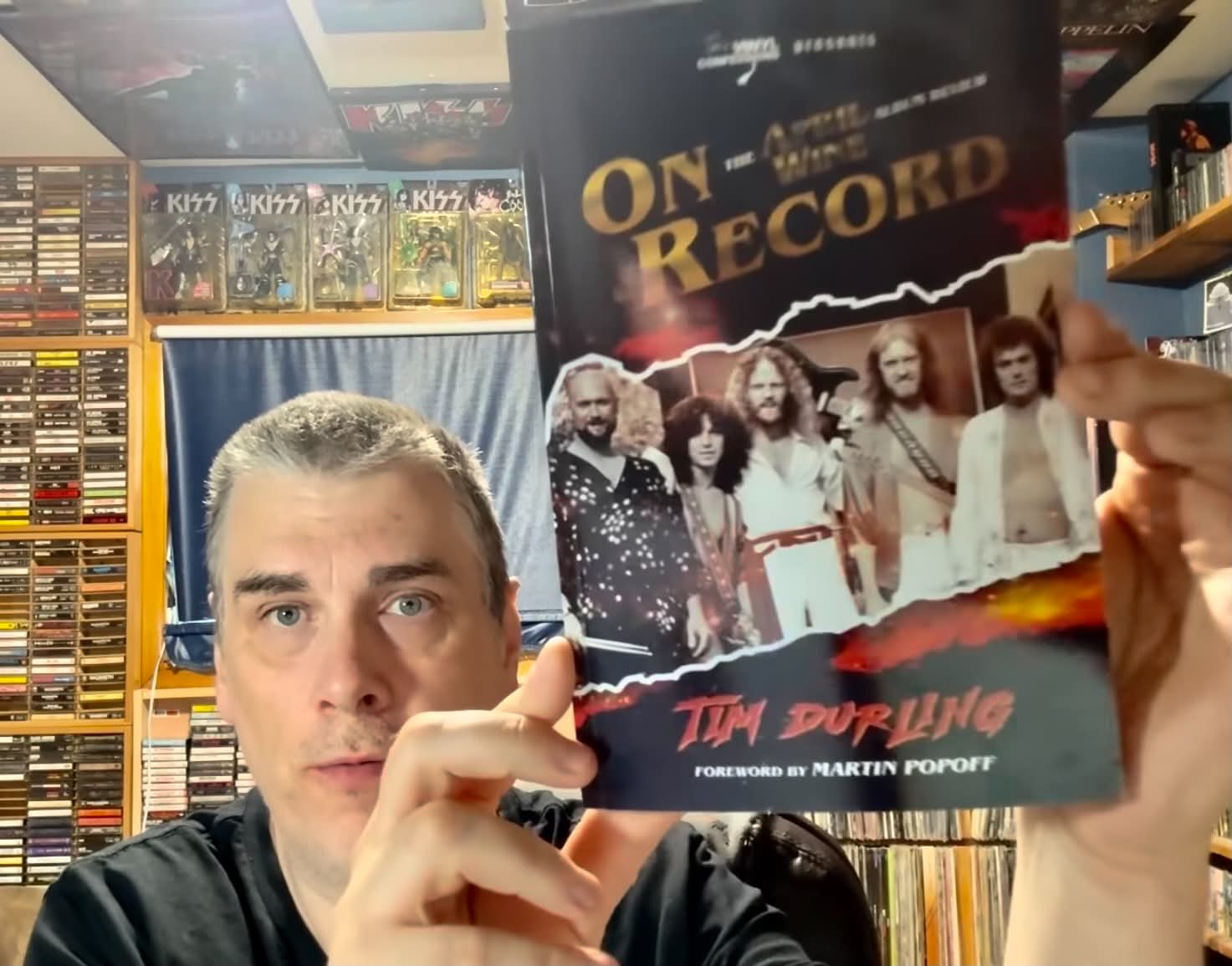
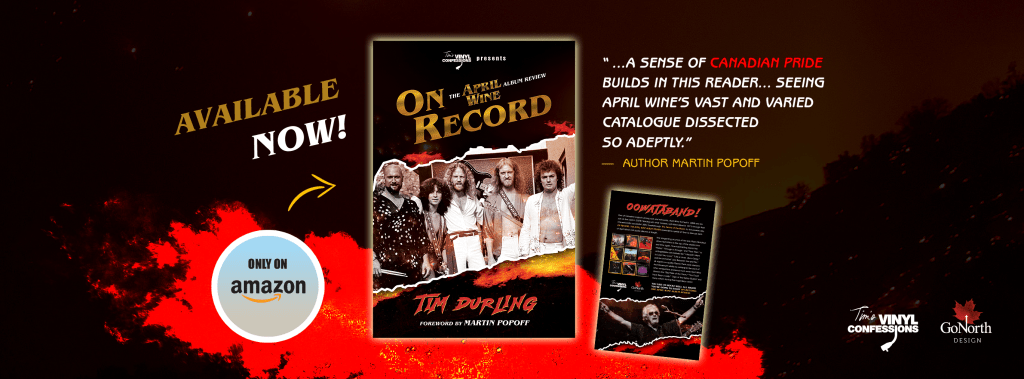
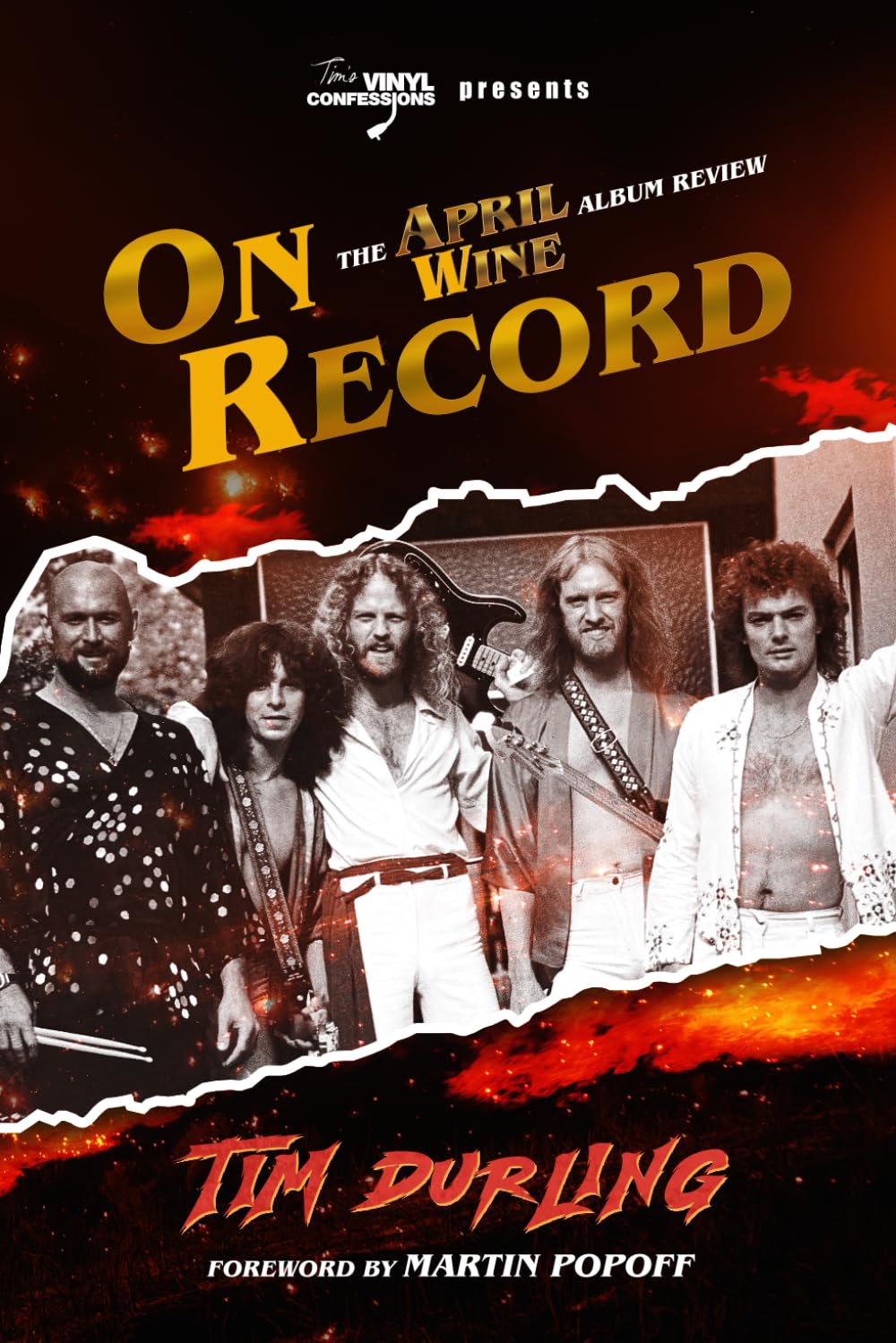
Tim Durling’s latest book is On Record: The April Wine Album Review. It is the first book dedicated to the legendary Canadian band’s catalogue, with each studio album being discussed by panels of fans, as asked by Tim. So, I am honored to be included among in it. I recently spoke with Tim about On Record, April Wine, and putting this book together. As well we touched on Tim’s future plans.

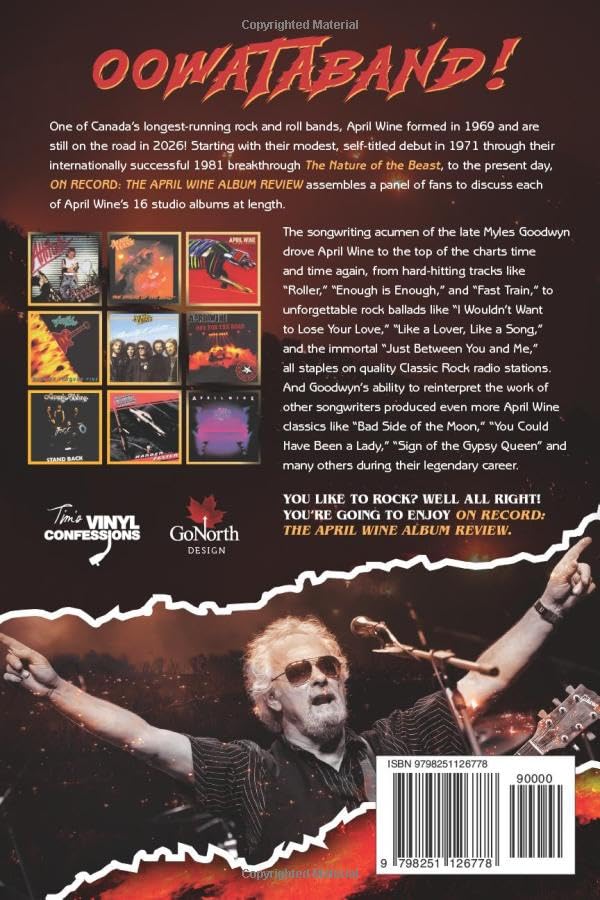
You can order On Record: The April Wine Album Review on Amazon. It’s 222 pages of perspectives, recollections, and information on each of the band’s 16 studio albums. Tim’s doing a lot of promo to reach April Wine fans, and you can catch him on his channel Tim’s Vinyl Confessions, as he features deep-dives on each album over the next few months, as wll as appearing on various other Youtube channels, and in online publications.

Tim: I’ve done Grant’s Rock Warehouse so far, and I’ve done John Clauser’s channel, My Music Corner, and I’ve got a bunch of other things booked. So, the usual channels I go on, like The Contrarians and things like that and reaching out to other people and saying, see if you’re interested. So yeah, any exposure, I appreciate any chance to talk about it.  I appreciate it. And for people to share on social media, it seems like a simple thing, but none of us have the exact same friends base or reach. So, all it takes is somebody to see a post that would have never normally seen a post and go, Oh, there’s a book about April Wine.  It’s a simple thing, but it can mean a lot.  

*Click on the banner below to order.
You’ve always done books, like you mentioned before, books on bands that don’t normally have anything written about them. Is that a large part of where this went, because there’s not a lot of books on April Wine other than Myles’ book or Ritchie Henman’s.

Yeah, there really hasn’t been any books that have been sort of studies into the band’s music, and I like being able to fill in that void. So, you’re right. Most of the books I’ve done have been bands that have hardly any books written on them or almost no books written on them. I mean, Myles’ memoir, Just Between You And Me, that he put out in 2016 is kind of the story from April Wine from his perspective, but I wanted something to go into each one of the studio albums, talk about all the songs, just like a lot of my previous books have been, and I think every classic rock band deserves to have something commemorating their career in this way.

Do you learn much from talking to everybody because you’re not doing interviews with band members and people that were actually there. It’s kind of just a fan analysis type thing.

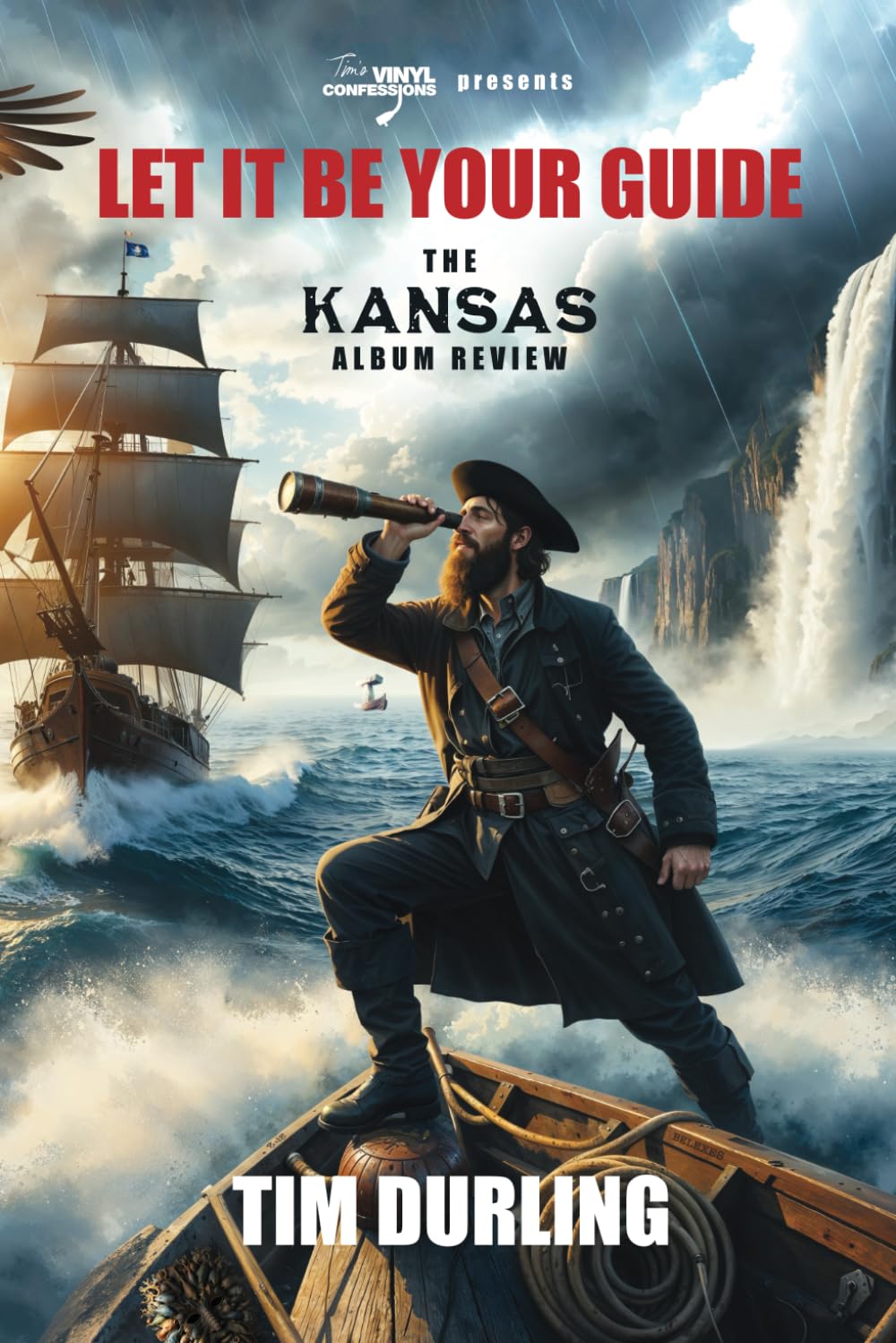
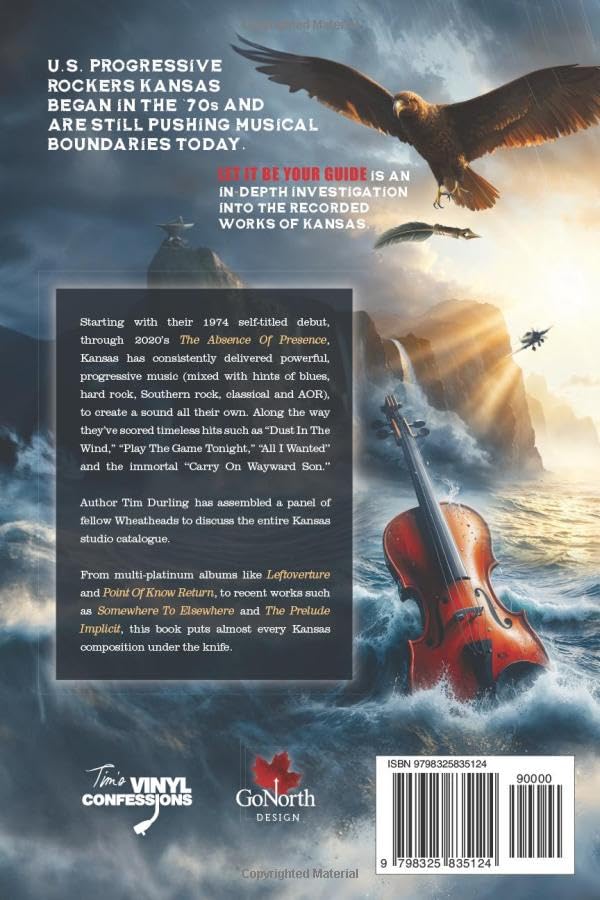
Yeah, absolutely. The books that I’ve done like this have totally been based on Martin Popoff’s Album-By-Album series that he did. I just thought that What a great format to use; just like having a bunch of people sitting around a table and somebody poses a question, Hey, I think this is their best album, what do you guys think? And then everybody gives you their opinions. And so, I kind of adopted that concept. That’s certainly what I did for Y&T, for Kansas, and for Night Ranger, and for this April Wine one. And I find I learn a lot from talking to fans, especially fans that were either fans longer than I have been and have been there, can remember when albums came out and going to see them on that tour, or even younger fans that just discovered the band a few years ago.  Sometimes they’ll hear stuff that I’ve heard for years but never picked up on. So, yeah, I’ve learned something each time around I’ve done one of these books, I’ve come out of it knowing more about the music or having a deeper appreciation for the music than I had before.

You have a wide variety of people, obviously, there’s, (I don’t know), how many people ended up in the book!? (Tim counts 29). I imagine, because I have probably a favorite five or six albums. Is it easier to find people that say, “Yeah, I’ll talk about Nature of the Beast, and I’ll talk about Harder…Faster”, and then when you get to certain albums, you’re kind of struggling to find people that have a good recall?

Yeah, absolutely. It’s like when I did my Night Ranger book, everybody wanted to talk about the first three albums, and I had a little bit of a harder time getting people to talk about the more recent ones. When I did the Y&T book a lot of people wanted to talk about Black Tiger and Mean Streak. So, with this book, it was no different. It was no problem getting people to talk about Stand Back or Harder…Faster or Nature of the Beast.

I did have a hard time finding people that wanted to talk about, say, Walking Through Fire or Roughly Speaking or Forever for Now, but I was able to fill it up to get a sufficient amount of people per chapter.

I could have talked about a few of those, but I think those three probably sit at the bottom of my April Wine list. I imagine you want to find people that have something positive to say as well!?

Not necessarily all the way through. It is great to have some differing opinions; we all hear these things differently. But, hen you’re really into something, I think that’s when the best content comes up, because if you’re really passionate about an album and passionate about a song, it’ll come out because you’ve listened to it so many times and you’ve analyzed it and you you’re like, Oh, I love this mid-section right here. I love the harmony vocals there. I love this verse right here, the way Myles sings it – or whatever. So, there are some dissenting opinions in some of the chapters.

Certainly, I would say in the in the first album chapter, you know, there’s a overwhelmingly, I don’t want to say negative, but it’s not that high on many people’s list, that first album. But there are some people that like that early stuff and that’s great.

Yeah, it’s a hard, I wouldn’t say a hard one to get into, but it’s definitely for particular tastes, right!?  

I find that if I want to listen to the first April Wine album, it’s more of an intellectual exercise, like I shall now listen to the first April Wine album as opposed to I got to hear that debut album. It’s like that.
Obviously you’re doing a lot of promotion and that for this. Have you gotten any feedback from anybody connected to the band?

No, I really haven’t. At this point, the book’s been out for a couple of weeks or so. So, it’s still quite new. I have posted on, not the official band’s Facebook, but the fan page is there. And a lot of people have seen that. I know Dave Cameron liked one of my posts, so Dave Cameron’s pretty well connected in the April Wine world. People know that name. I don’t think that there’s anything particularly… it’s not about dirt – it’s just a bunch of fans and our opinions on these albums. 

As far as beyond the reviews and the comments and stuff about the albums, you did a list of songs the band covered with the originals in that.

Yeah.

Was there anything you could have put in the book? One thing I really liked was your (and it’s a whole other topic), was your review of the live show, recently.

That was a really happy accident, because obviously I started this book quite some time ago, long before the Triumph reunion was announced and long before it was announced that April Wine would be opening for it.

I was so glad that it happened the way it did, and I got to see that show, because being completely honest, I was sort of in the background thinking, Boy, the idea of April Wine playing without Myles. It just seemed so strange to me because, he was the main voice, the main songwriter, one of the main guitar players. In a lot of ways, Myles was the sound of April Wine. So, the idea of somebody else doing that, I don’t know!? I’ve seen plenty of shows with replacement singers, but it just so happened that I really wanted to go see this Triumph reunion and April Wine were opening. And I came out of it, I was convinced that this music is in good hands now. Marc does a great job with the vocals. He doesn’t try to sound like Myles. I like the fact that they didn’t do what, say, Journey and Foreigner did and tried to find somebody that could sing like Myles because he’s got such a unique voice.

They just got somebody that could sing very well, deliver the songs. I will say that he’s really, I get the feeling that Marc has really taken time to study Myles’ guitar parts because when it came time for the lead parts, he had them down. And that that I would go see them on their own now. I would go see a full headline show from this lineup.

I saw him last year as part of the BTO thing and I was kind of the same thing. I kind of thought there’s one guy that’s played on albums here. I was, not skeptical, but I just…. But Marc brings a lot of energy to it.

Yeah, very much. And they talk about Myles a lot. He just sings those songs very well. That that opening set went over very well for the Triumph crowd.

As a matter of fact, I think that the crowd sang along louder to April Wine. But I think that also has a lot to do with the fact that, Triumph – I love Triumph; they’re one of my favorites. In Canada, they’ve got like maybe three or four songs that get a lot of radio airplay, whereas April Wine have maybe a dozen. So, like people just know those songs, right!? And they’re marginally not as heavy as Triumph. So, it kind of makes sense that it’s got more radio friendly appeal.

Triumph were great. But I just noticed that people were into that April Wine show from the get go, and you could hear them all singing along from the moment they started with “Oowatanite” til they finished with “Roller”.

So, was there anything you wanted in the book, you just didn’t get around to or anything kind of like a list of stuff or anything?

Not really, I tried to make sure I covered every officially released song. So if we got to, for instance, B-Sides, I put them in context of the album that they would have been affiliated with if they were a B-Side from On Record or Electric Jewels or whatever. Songs that are on live albums that weren’t on any studio albums. I think I just about got everything covered.

So far, I haven’t looked at and gone, Oh, I wish I had mentioned this or that. No, I’m kind of happy with the way it turned out.
I know all these things get brought up in the discussions from album to album, but there was no list of like related albums or just band personnel in general.

No. I think I try and cover the changing lineups as they occurred. I know one thing that, maybe some people thought I should have covered but I didn’t, was solo albums. I did talk briefly about the two blues albums that Myles did post-April Wine, because I find that those are probably the closest people were going to get to another April Wine album. It is kind of sad that Roughly Speaking, will probably go on to be their last album. And it was I mean, first of all, it was really short and I didn’t mind some of the songs. I just wish they’d made more music.

Yeah, it’s unfortunate they went from 2007 until now, not recording. I think Styx went for the same period of time until they finally put something out.

Yeah, Kansas did the same. They were16 years before they started putting out albums again. I suppose now, I don’t know. I can’t imagine there being a new studio album of newly written material, but you never know. It’s a good band. I will say that with Brian at the lead. And this music people still want to hear these songs. 

Regarding your own favorite albums. Did you have any chapters you were looking forward to?

Sometimes it’s the albums that aren’t my favorites that I most look forward to because I really want to hear, because I always think that This is a good band. I just don’t happen to care for this particular album here. But somebody must like it. So, it’s always good to hear back when someone says,  “I kind of like the late 60s vibe here…I kind of like….”  I guess the two main ones would be the debut and Forever For Now. When it comes to, say, Harder…Faster, Nature Of The Beast, those are well-loved albums…Stand Back. So, I know it was no problem to come up with people that wanted to talk about those and were really passionate about them. But I kind of almost look forward to those lesser albums. And I’m interested to what people, think of them, especially if they’re albums that in some cases, I know that people have discovered them in recent years because of YouTube and being on different shows.  One that I find has really risen amongst people that I communicate with is Back To The Mansion. I think that’s a really good latter day April Wine album.

I think once you get over the fact that it’s not a hard rock album.

Yeah, it’s not it’s not. Attitude was a pretty pedal to the floor, borderline heavy album. Frigate not quite so much, but there are a few songs on there.

But yeah, Back To The Mansion is nothing like that. Back To The Mansion really has more of the spirit of something like even lighter than say Powerplay. There are great songs to be found on there. I love that Brian sings two songs. It’s just it’s a really strong album. And I had no problem with them doing that blues sort of thing with Roughly Speaking, I just wish it was a longer album. The whole thing’s about 25 minutes long; so it’s barely an album.

I like the guitars on the album, but yeah, it’s too short. And it took me a long time to get into it. Same with Back To The Mansion, when it first came out, I was kind of like, It’s good, but, there’s no like, Frigate had “Look Into The Sun”.

Yeah, there’s nothing really driving on there. And that’s another thing I remember, because I got into the band when Attitude was a new album. I mean, I’d certainly heard of them for years before, but when I first started buying the albums and listening to them, it was when Attitude was out. And then Frigate came out just a year later, which was pretty rare in the 90s. So I remember thinking, Okay, we’re going to start to get some, a bunch of albums from them in pretty short order.  Obviously, that didn’t happen. And I just think that’s a shame. I think there was a lot of talk about albums coming out, but it just it didn’t seem to happen. And I think I understand why, because obviously, there’s more money to be made on the road.

Have you read the other April Wine related books, Myles or Ritchie’s?

I’ve got to get Ritchie’s book. I don’t have it. I have Myles book, and I enjoyed it. When Myles talks about growing up, you know Myles was born in Woodstock, New Brunswick, which is my hometown. I was born there. Myles did not live there, and that’s the important difference, but still the Maritime provinces. So, I can picture a lot of things he was talking about when he was growing up. It’s pretty amazing, considering that band started in Waverly, Nova Scotia, made their way to Montreal, and then they had albums all over the world. They toured all over the world, and they did quite well for themselves.

Are you getting feedback on this outside of Canada?  

Yeah, I’ve sold a lot of books to to folks in the States that I’ve talked to, and in the UK.  I think it’s really important, and one of the goals of this book is to let people know that they didn’t just have those six albums on Capitol Records, from First Glance to Walking Through Fire; there’s a quite a career here, quite a distinguished career. The fact that First Glance comes out, lot of people might have thought that was their first album, but then in Canada, the next thing that comes out is their first Greatest Hits because they’d been doing it for almost a decade at that point.  So, it’s a rich catalog to go back and discover. And I think people would be really surprised if they only know, say, those Capitol years, the big songs, how eclectic those earlier albums are.

Do you plan on doing anything further as far as the band goes down the road? Do you see any kind of follow up as far as April Wine goes?  I’m just saying this because I know there’s not a lot out there on them.  

I’m thinking that I don’t know what else there would be, unless somebody approached me and said, We’d like you to do their biography, and then I’d have to do some serious research. I’d have to borrow a lot from existing material, like Myles’ book.  And, it’s my understanding, like some of those guys, like Gary Moffet, they just don’t want to talk about it. But somebody should; there really should be because it’s an unlikely story. The whole idea of them traveling from Halifax to Montreal, and they really didn’t have an invitation. It was sort of a nicely worded Don’t call us, We’ll call you, that they got from the guys that ended up starting Aquarius. It could have been a totally different story. So it’s unlikely, but they just they kept at it. They kept putting out records. And sooner or later, they made their mark. It’s interesting because, yes, in Canada, April Wine are kind of an institution as far as classic rock, and they’re mentioned up there with the biggest of names. Around the world it’s not like that, they’re sort of almost a mid-tier band if people remember them at all. And I think more people need to know about the band and know just how many albums they did, how much music they made.

What else do you have in the works?

I’ve got another book that at this point is proofread. It’s pretty much written and it’s proof-read. And I’ve been kind of on this schedule where I put a book out in early summer and then I put one out in the fall.

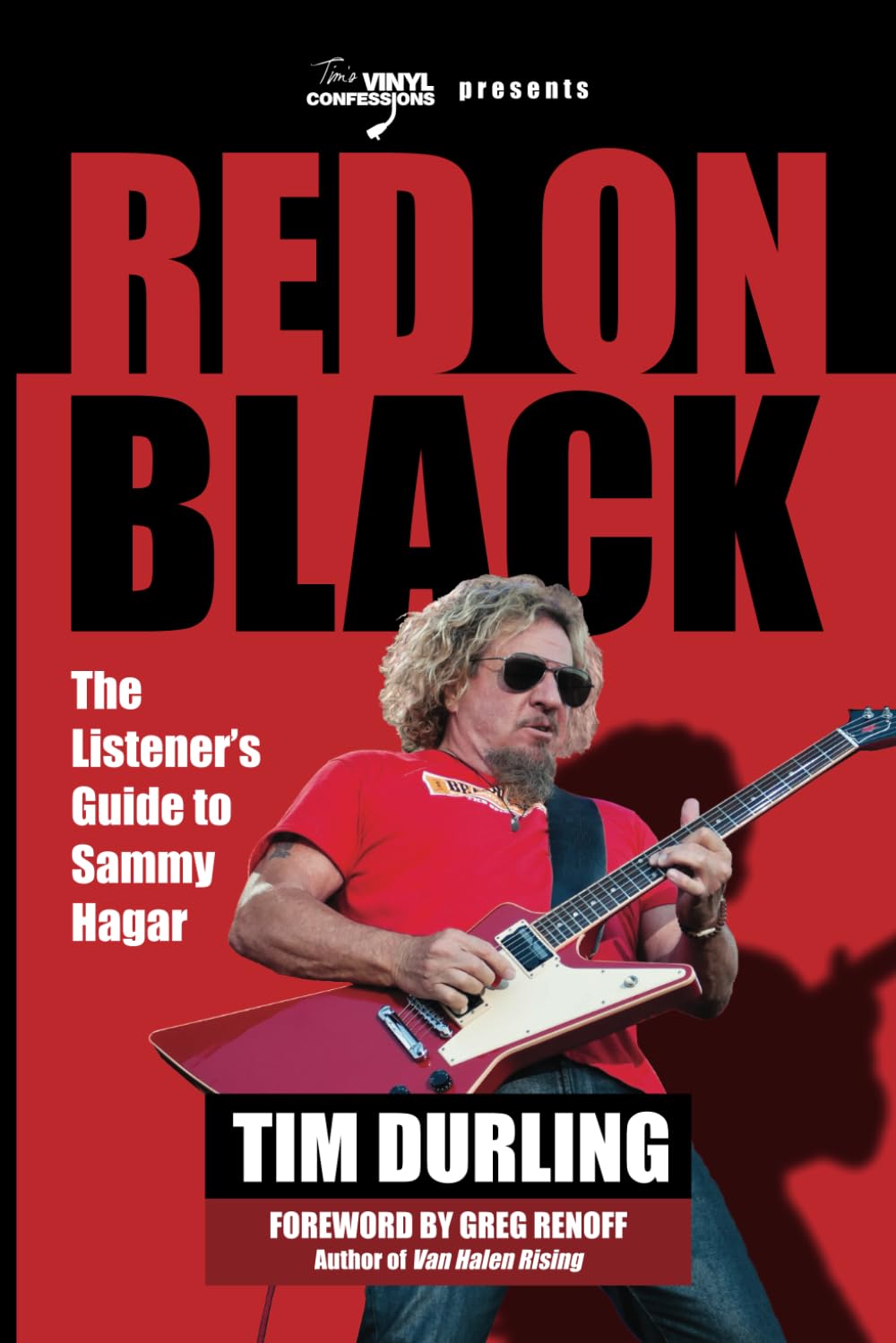
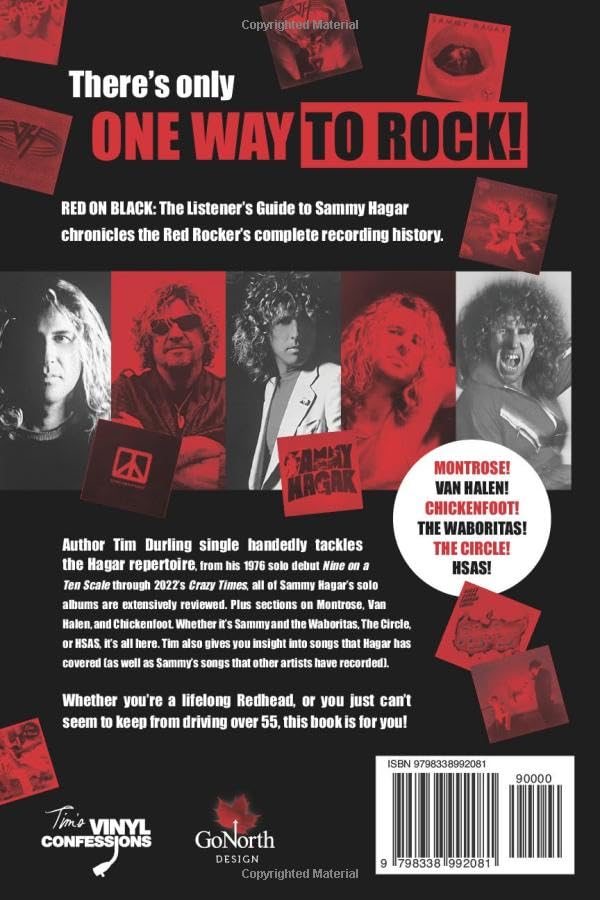
So, this next one will be coming out in the fall. I’m not saying who it’s about just yet, but it does follow along with a lot of the books that I’ve been already doing. I will say that it’s the next book that I’ve got it’s like my Sammy Hagar and my Fleetwood Mac books in that it’s all me. It’s an album by album, but it’s all me. And then I’ve got a couple other bands in mind. I don’t see any reason to stop.

I’m always looking around like, OK, so who do I really like!? I got to really like whoever it is before I commit to doing a book. And who also isn’t well represented in having something to pick up and read about them. I’m a huge Rush fan, but I don’t have a Rush book in me and there’s so many great books already written about them.  So, it has to be something that really gets my interest when I’d really like digging into writing about these bands. And all right, Finally, I get to write about this band or I get to say what I think about this band and how great this album is. And more people need to hear it rather than saying, I think Moving Pictures is a great album.  Well, so does most of the world. So, yeah, I’m going to keep on going, I think.

Is it getting easier to do? You started writing books, what, five years ago now or less?

Surprisingly enough – Yeah, it’s been about four years. It’s crazy in that time, I’ve got seven. And my good buddy, Matt Phillips, that works for his company’s Go North Design. He’s worked on all of my books. I’ve kind of got a system down, not a science, but we’ve both gotten better at, now that we’ve got a system, it’s working very well.

And I also want to thank my good friend Andy Campbell for doing the proof-reading, because that’s very important to me. I do not want to have grammar errors or spelling errors or factual errors. A good proofreader will find things that not just things that, it could be grammatically correct, and it could be something that if you’re a huge fan of the band, you’ll understand, but I’m trying to write my books for everybody.

So, I don’t want someone to write something that’s like an inside joke. And it’s like, Well, I don’t even understand what that means. So it’s like, Can you explain that a little more? That’s why there’s some editorial notes in there and stuff like that.

Do you have anything planned other than this just for a bookstore or anything like that?

Well, I do. As far as my channel, Tim’s Vinyl Confessions, every time I put out a book, as you know, I do a ‘deep dive’ series where I go through every one of the books. You’re in an upcoming one. And actually, what I’ve done this time that’s different than before, I’ve got two co-hosts per episode. So, I’ve got two people that are in the chapter for the albums. And so that’s going to take me into September because that’s 16 weeks.

And yeah, I’ve got actually in Woodstock, which I only live about a half an hour away from there now. I am doing an in-store for first Saturday in July at a local bookstore. So that’s coming up.

I’ve been doing, I’ve done Grant’s Rock Warehouse so far, and I’ve done John Clauser’s channel, My Music Corner, and I’ve got a bunch of other things booked. So, you know, the usual channels I go on, like The Contrarians and things like that and reaching out to other people and saying, see if you’re interested. So yeah, any exposure, I appreciate any chance to talk about it.  I appreciate it. And sharing on social, for people to share on social media, it seems like a simple thing, but none of us have the exact same friends base or reach. So, all it takes is somebody to see a post that would have never normally seen a post and go, Oh, there’s a book about April Wine.  It’s a simple thing, but it can mean a lot.  
APRIL WINE – ‘On Record: The April Wine Album Review’, a new book from Tim Durling

Canadian rock writer, music podcaster, and on-air radio host from New Brunswick has penned a new book on legendary Canadian band APRIL WINE. On Record: The April Wine Album Review follows in similar style to Tim’s books on Night Ranger, Y & T, and Kansas, with input from fellow fans discussing the band and each of their albums.

There are not a lot of books on April Wine (see Myles Goodwyn’s Just Between You And Me, and Ritchie Henman’s High Adventure), so as a fan (and honored to be a contributor), I am really looking forward to this.

You can order On Record: The April Wine Album Review HERE.

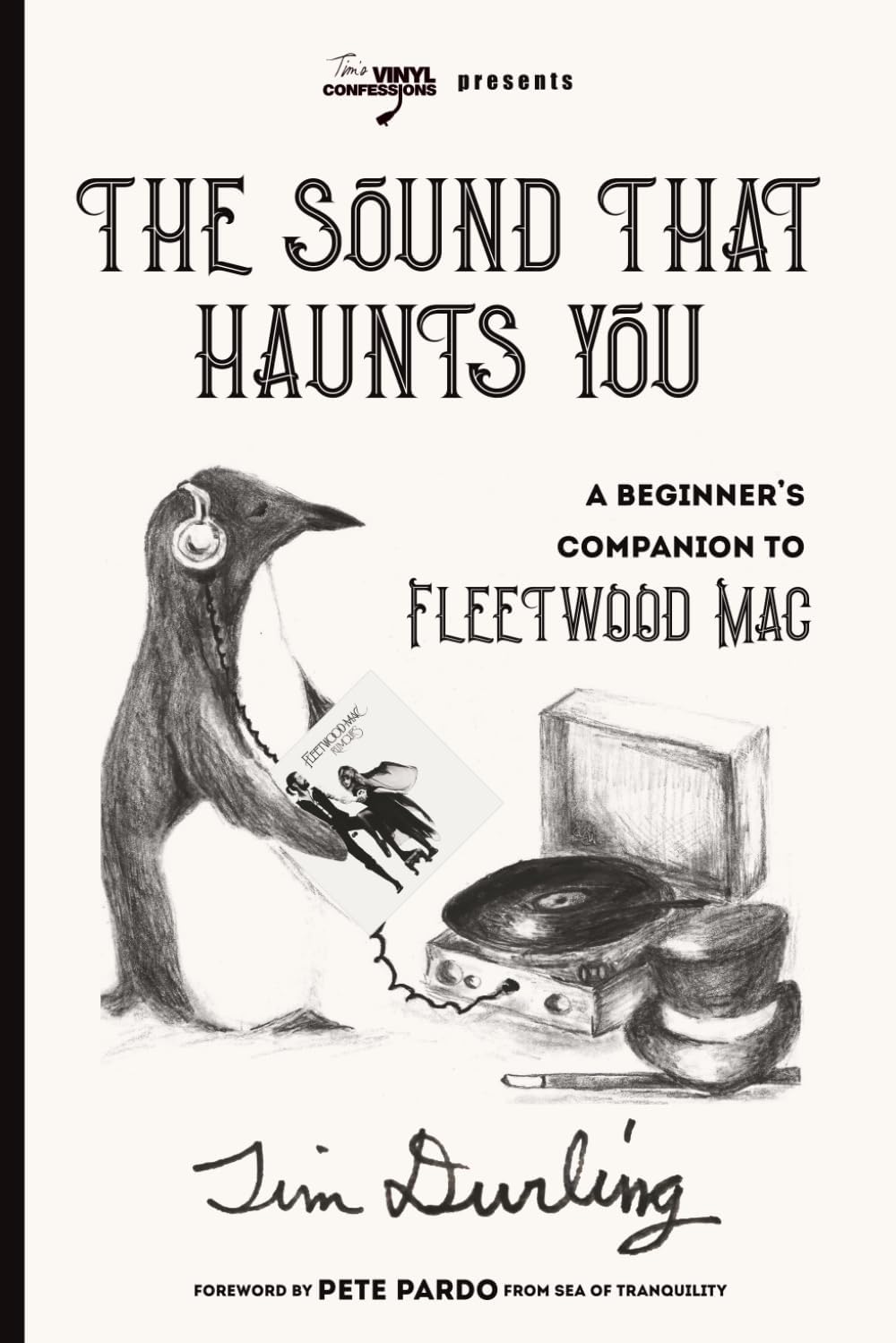
Tim Durling – new book reviews FLEETWOOD MAC catalogue.

Canadian rock writer Tim Durling has a brand new book available . A Beginner’s Companion to FLEETWOOD MAC. Durling looks over and reviews the band’s entire catalogue, which dates back to the late 60s, long before Stevie Nicks and Lindsay Buckingham arrived for the most successful period of the from mid to late 70s. Says Tim – “I tried to cover every original Fleetwood Mac song, which was really confusing in the 1967-69 period but I think I managed it… The idea behind this book is to help the curious new listeners navigate the catalogue.”

The book also includes a list of 100 Fleetwood Mac covers by 100 different artists, as well as a forward by Pete Pardo, and a cool cover drawing by Sally Ann Morgan.

Available in paperback, totaling 151 pages, and available on Amazon for a mere $21 (Canadian) now

LISTEN CAREFULLY TO THE SOUND.

Fleetwood Mac: a band with several distinct lives. The hard driving blues of the Peter Green-led lineup. The dreamy soft rock that defined the Bob Welch era of the early Seventies. The turbulent but undeniably potent chemistry of the Buckingham/Nicks years. It all adds up to a confusing but ultimately rewarding catalogue of music.

But where does one begin?
The Sound That Haunts You is author Tim Durling’s attempt to direct the curious listener from the band’s late Sixties beginnings through their more recent recordings in the 21st Century.

Each of the Mac’s studio albums is analyzed and summarized.

You’ll also discover the sheer breadth of artists who were enchanted by Fleetwood Mac’s music enough to cover their songs. Featuring a foreword by Sea of Tranquility host Pete Pardo.

How does a new listener begin to find their way through such a varied and complicated catalogue? Durling provides an easy-reading road map through the band’s 1968 debut album all the way through 2003’s Say You Will, and beyond! Featuring lovely hand-drawn artwork, and photos from the author’s own collection, The Sound That Haunts You is the perfect companion to sitting by your preferred music source, listening to Fleetwood Mac.

Whether you are a longtime fan or a curious newcomer, this book is for you.

TIM DURLING: An interview with Canadian rock writer on 8-tracks, Y & T, and more

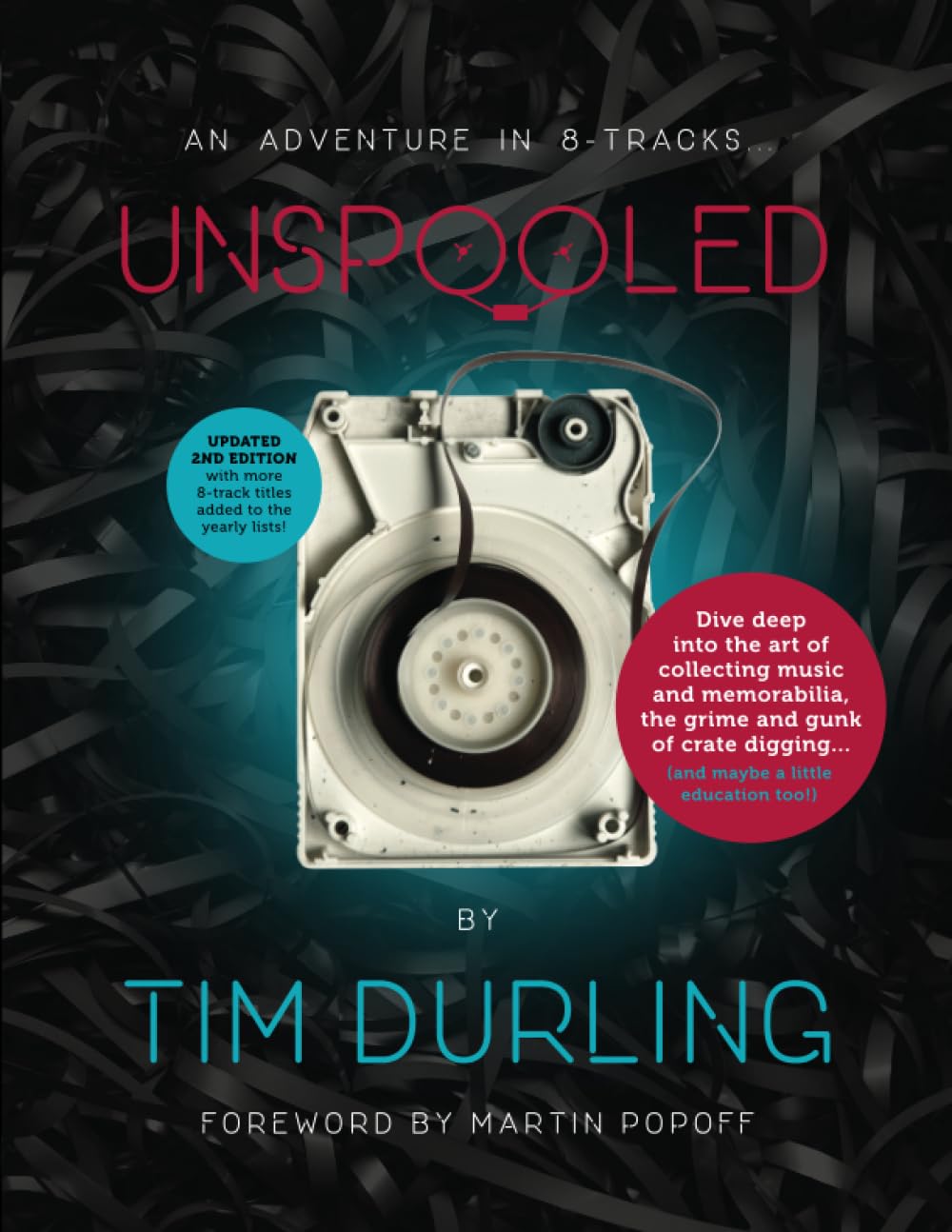
Canadian writer and radio personality Tim Durling, is from a small town in New Brunswick. Adding to his career in radio, Tim has taken to writing books on rock bands and collecting. His book UNSPOOLED: An Adventure In 8-Tracks is about the 8-track cartridge collecting of the 80s(!), with focus on those record club releases. He’s also penned books on Kansas, Y & T, and most recently Sammy Hagar! Below is my interview with Tim Durling, discussing his collecting 8-tracks, his interest in writing about them, and how, as well as touching on his books about Kansas, Y & T, and Sammy Hagar. Tim knows his topics, and speaks passionately and in detail about his works.

So, I’ve went through Unspooled a couple of weeks ago, put it down. For me it’s kind of like a coffee-table book, a fun book to pick up whenever.

Exactly! I’ve even called it a bathroom reader, and I don’t have any problem saying that  because those are books that people return to time and again…But yeah, you’re right, it is a coffee table book. It’s not a book that you necessarily have to pick up and read from cover to cover. Just flip it open to a page and go.

As far as your interest in 8-Tracks, you don’t play 8-Tracks, so how do you kind of get onto it becoming such an obsession? Is it kind of in the way you look at hockey cards or something, where you can’t really do anything with them, you just look at them?

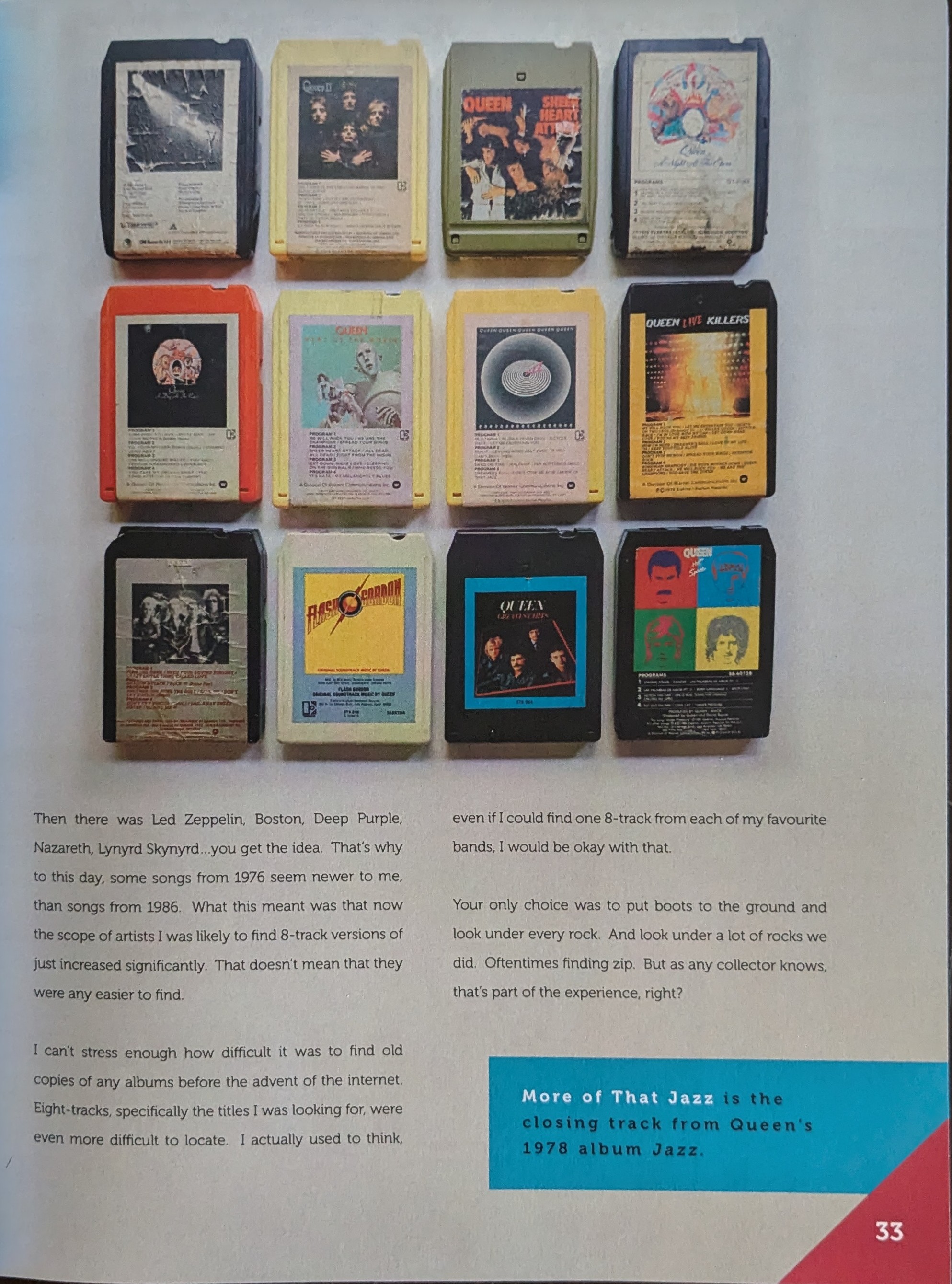
Yeah, so it is kind of weird. When I first started collecting 8-Tracks, I guess it would have been the early 90s, I actually did have a little portable player that I found somewhere, but it ate up an almost pristine copy of ‘Queen II’. So, I said, “I think I’ll just collect these and listen to the CDs. I think that’s what I’ll do”. And I’m a physical format guy, and if I like an album, I kind of want to have as many formats as I can, and 8-Tracks just happened to be one of them a lot of the time. And it is a very niche collecting thing, especially where I don’t actually have anything to play them on. But I basically judge it on – is the label in good shape? Is it nice and smooth? Sometimes they get left in the sun, and they’re all warped and bubbling and sun damaged or water damaged. So, if a label looks really nice, that has a lot to do with my decision to buy one, as well as price and stuff. I do know that there are collectors. They have players, and they refurbish the players, and they refurbish the tapes, and it takes an awful lot of dedication and patience, because you’ve got to get down there. You’ve got to oil the parts. Sometimes you’ve got to re-spool the tapes. What collectors typically say is you don’t ever get a brand new tape and just shove it right into the player. It takes a lot of work, and I’m just not that inspired to go through that. I admire that dedication, but I couldn’t do it for myself.

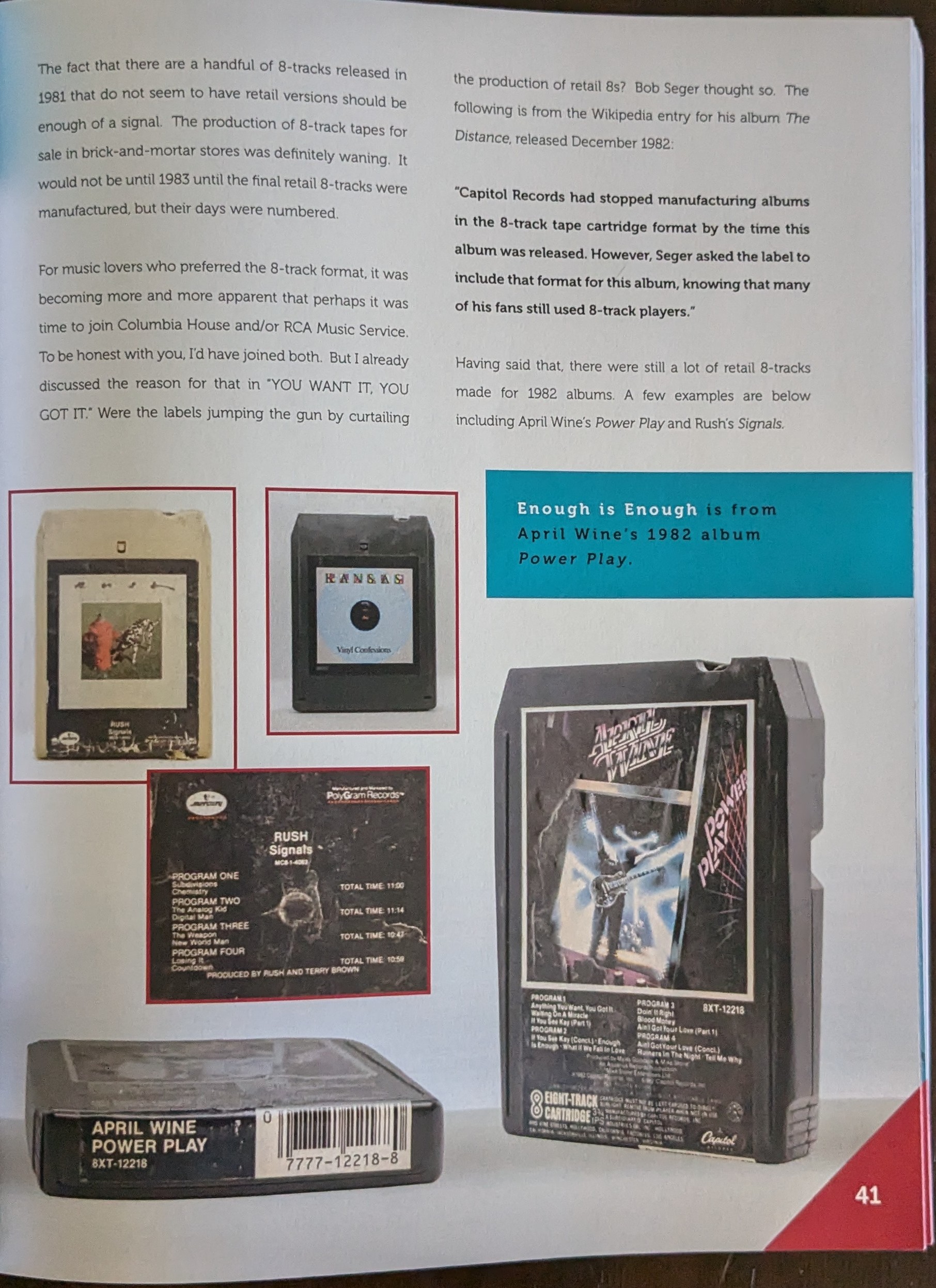
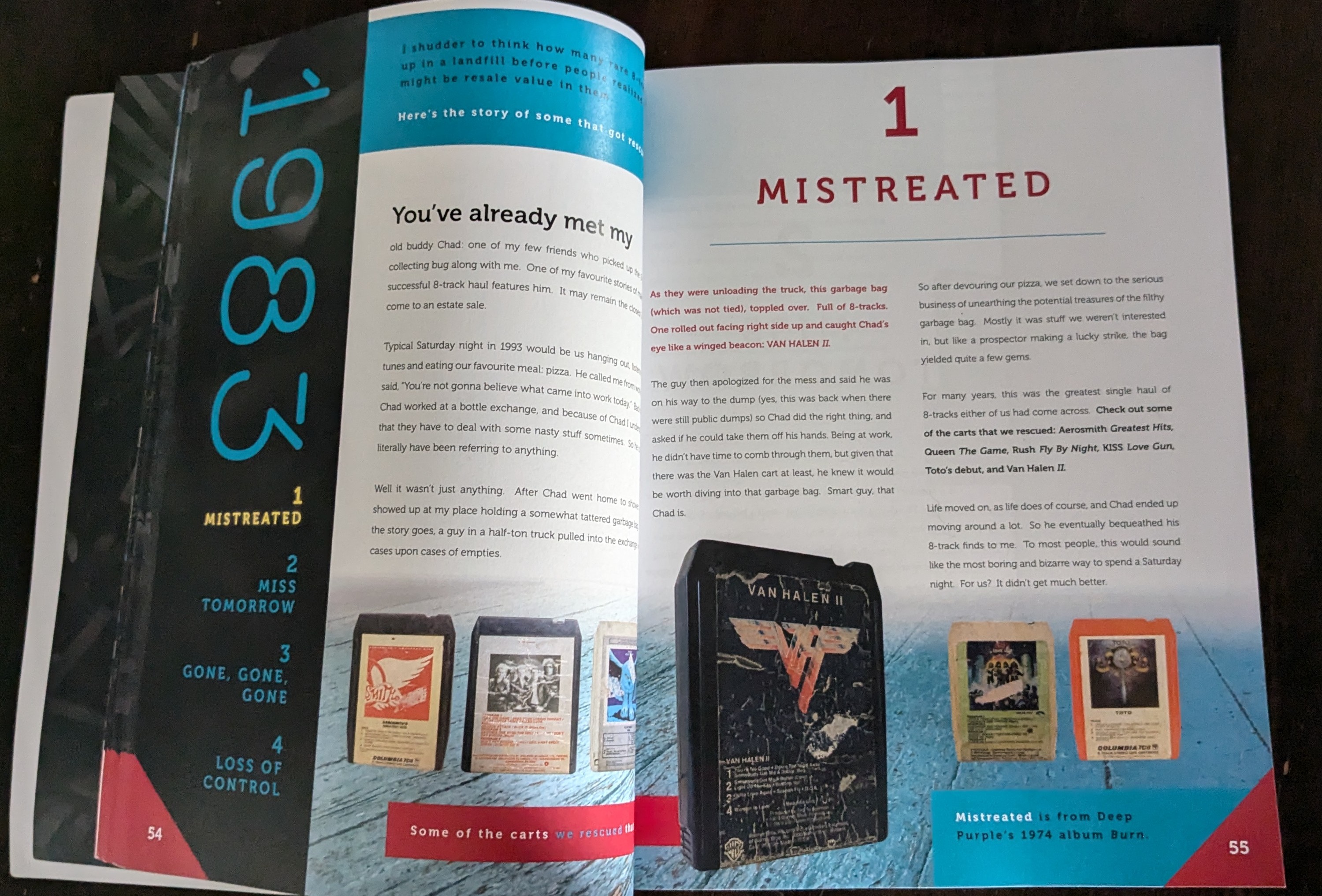
I’m particularly fascinated by what I call RCOs, the Record Club 8-Tracks, which is mainly what’s in this book, which are the tapes that the record clubs, Columbia House and RCA Music Service, made available well past the time when record labels were manufacturing them for retail sale, which was around 1982. That’s when you started seeing 8-Tracks disappear from store shelves. I guess I kind of always thought that’s pretty much the end of the 8-Track, because I never saw any past 1982, 1981, but sometime in the mid-’90s, one of the first times I ever had the opportunity to go online, I wanted to know more. I was really curious about when they did stop making these things, and that’s when I stumbled upon a website called 8-Track Heaven, which is now defunct. There is a chapter about it in the book. There’s an archived version of it. That’s when I discovered this section called the 80s, Record Club Only, the 80s 8-Tracks. I looked, and that’s when I realized that there was this whole other world of collecting that I knew nothing about, where most major label titles were still being manufactured on 8-Tracks, and it went all the way up to 1988. For a kid that grew up in the 1980s like I did, that blew my mind, because I don’t ever remember seeing albums from the mid-’80s onward on 8-Track. Now, part of the reason for that is because it seems to be strictly the record clubs in the United States. There was Columbia House in Canada, of course, but it looks to me like from all the research I’ve done, they went later than retail did, but they stopped around 1984, because I’ve never seen an 8-Track from Canada newer than 1984. The newest one I have is a Columbia House version of Rush Grace Under Pressure.

But in the States, they didn’t manufacture everything. There are some gaps, but they did a lot. They did a lot more than I had any idea, and I thought there should be, I think, any part of music history, no matter how small, should be documented, and this is a part of music history. So that was one of the things I always wanted to do.

Now, when I started off writing Unspooled, I was just going to have a by-the-year list of all confirmed known titles to exist on 8-Track throughout the 1980s. But after speaking with Martin Popoff, who I was a fan of his writing, and then I got to know him through… I was on an episode of Rush Fans, which is just what it sounds like, we’re a group of Rush fans. Martin was on the same episode as I, and I remember thinking ‘if I wanted to have him on my show to talk, I better message him now while it’s fresh in his mind,  Hey, Martin, we just did the Rush Fans show together’. Because I wanted to pick his brain, because since he’s older than me, what he remembers about 8-Tracks and when they disappeared, and I told him about these RCOs, he had no idea. He thought, I think like most people did, turn of the 80s is when they stopped making them, and everybody either, kept buying vinyl or switched to cassettes. And at the end of our interview, he said ‘I think there’s a book here’. And I remember thinking, because I had no… I really had no plans of actually doing a book. It wasn’t something that entered my mind.

I would have been perfectly content if somebody else had done it. I would have just bought the book. But I thought, if Martin Popoff thinks there’s a book idea here, and it doesn’t sound like he’s going to do it, then maybe I’ll give it a go. And so he suggested that I add some more stories in it, some personal stories, some collector stories, because really the broader picture is what drives us to collect things. Like, you know, what drives us to collect hockey cards or antique toys or guns or whatever it is that people are into…And this is just a very, very specific… I call it niche within niche, because it’s not just collecting 8-tracks, but it’s specifically about these hidden ones that you won’t… you’re not likely to see them at flea markets, although you seem to be able to see some good ones. But somebody must have unloaded some from the States, because they’re American ones. I can tell by looking at them. And I wanted to go through year by year. So, it ended up starting in 1981 and going to 1988. The reason it starts in 1981 is because there are the titles that are in the 1981 list, which I put the list at the end of each chapter, those are all titles which seem to exist only as record club tapes. There don’t seem to be any retail versions of them, although it’s very possible that there are, I’ve just never seen them.

Now, between the first and the second edition of Unspooled, I did have to make some changes. There were more titles that I found, and there were certain titles that I found that actually did exist in retail that I had to remove from the first version. As a matter of fact, if I ever did a third printing of this, I’d have to have more to it to do that. But in the 1981 list, I think, I’m going to check this, I think I’m right about this, there is one that needs to come out, and it is, bear with me here, yeah, Nazareth Snaz, the live album, because I actually found a retail version of it. So I’m like, well, that can’t be in the list then. But I went on, you know, have I seen a picture of it? I belong to a lot of Facebook groups about 8-track collectors, and I’ve met a lot of really knowledgeable, reputable people, and if they’re telling me something exists or doesn’t exist, I believe them. And most of the time I’m like, do you have a picture? Yes, here. And here’s how the songs are broken up on it. And so I did a lot of that. And in doing so, you notice a lot of trends, you notice that they really slacked off around 1985, and then 86, and by the time you get to 1988, it’s a pretty small list. But, you know, there’s other things, one of my regrets is that I really wish that I could have found someone who worked at Columbia House or our music service back in the 80s, and said “Look, what was the thought process? Number one, why did they keep making them on 8-track when retail wasn’t selling them anymore? And what finally made you decide to stop making them?” Because between 1986 and 1988, if you were a member of Columbia House, you had four options. You had 8-track, vinyl, cassette, or CD.

So that’s four different, you know, that’s a lot of manufacturing costs. And it’s just crazy that, it’s crazy to me that 8-tracks and CDs coexisted for as long as they did. And it’s just something that I didn’t seem to see any real books on.

I mean, cassettes have come back. A lot of new albums are released on cassette. Vinyl made a major comeback, of course. Vinyl’s always kind of had that cool factor. Cassettes are kind of getting it. 8-tracks have always kind of been frowned upon, people remember how unreliable they were. But what made 8-tracks successful in their earliest days was the portability. It was the first time you could put a player in your vehicle and listen to whatever album you wanted when you wanted. That’s what won out. It won out over sound quality. It won out over being able to look at the artwork. There was no back cover artwork, no lyric sleeves. And even the front cover, if you were listening to a tape, half of it was shoved into the machine. But it was the portability, just being able to drive around and listen to your favorite albums, your favorite songs.

And cassettes, by way of comparison, when they first came out, my understanding is that the manufacturing quality was not up to speed. They really weren’t reliable. So, it was a combination of the 8-tracks just peaking in popularity like any format does, and cassettes becoming more reliable, more advanced, sounding better, and a little smaller, too. A little more portable. And then, of course, when the Walkman came out, hey, not only can you listen to something in your vehicle, you can walk around listening to whatever you want. So that was kind of the death knell, I think, for the 8-track.

But obviously, the record clubs must have felt that there was enough of a market out there that still, that weren’t ready to have a wholesale shift of all their music collection over to another format to keep making them. And it is absolutely fascinating to me because 8-tracks are pretty much synonymous with the 70s when people think of radio stations say, “Hey it’s the 8-track flashback”, and it’s always a 70s song. You wouldn’t think that you’d have albums from 87 and 88. And really, you shouldn’t be. That’s another thing about these. They’re out of time. They don’t make any sense. And that just, for some reason, that concept fascinated me to the point where not only have I looked for albums that I like in this format, it’s not just collecting 8-tracks for the sake of collecting them. I have to like the artist. I have to like the album. But it’s documenting them so people can see ‘wow! Madonna had 8-tracks, Cindy Lauper had 8-tracks…’   To me, it just doesn’t make any sense because you just don’t think of these artists as coexisting with the 8-track era, but they did, and they’re absolutely legitimately….people do manufacture their own. There are people that put new albums on 8-track and, as a tribute, and that’s cool and everything, but these were legitimately sanctioned by the record labels for the record clubs to put their albums out on 8-track form. So, it wasn’t anything I saw, any book resembling this subject, so that’s why I did it.

It’s funny, before we got on, I was flipping through your Sammy Hagar book, and I saw that you had a picture of 1987 on 8-track.

Yep, again, that’s a prized possession of mine too, because you get into those last few years… I can’t imagine that the numbers were produced, even for platinum albums. I can’t imagine there were too many of them produced. So that’s another reason why I would have wanted to talk to somebody that worked there and said, “Did you have some titles that were in the catalogs, but you never actually manufactured?  or did it have to be a case where “We’ve got 50 people that want Michael Jackson’s Bad, we’ll have to run a few off.” or something like that.  I don’t really know.

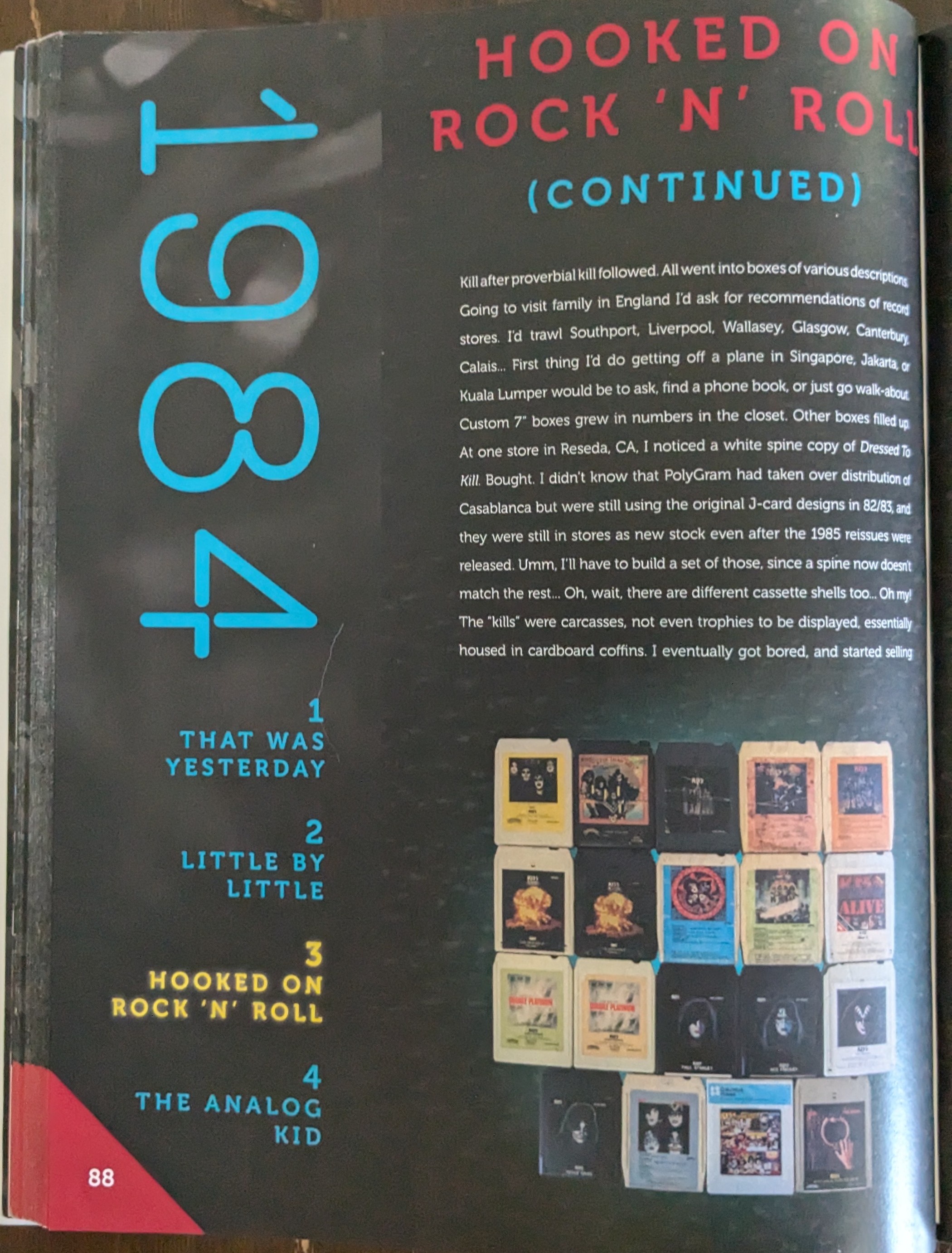
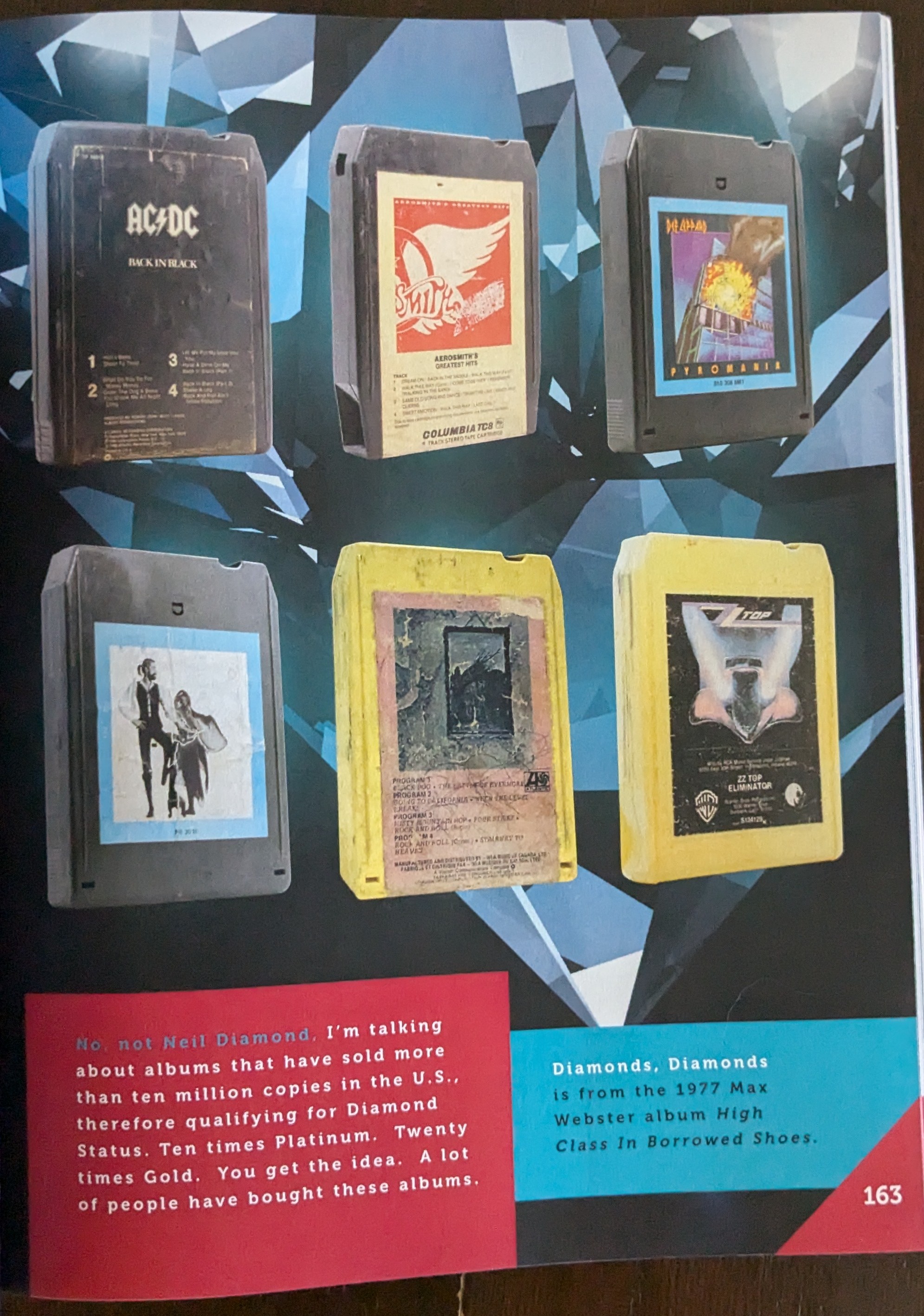
I know that artists that have fan bases that are big into collecting, 8-tracks are just part of that, and that’s why you don’t see a lot of heavier bands, even if they were manufactured on 8-track, because there’s always going to be a bidding war breakout. I know one of the best examples, and it’s not even a band that fits in the purview of this book, because their first three albums came out on 8-track, but they all came out in retail form. There were no, you know, it wasn’t a record club. The only thing, and that’s Iron Maiden, their first three albums came out in the U.S. on Capitol 8-tracks, and those go for hundreds and hundreds of dollars when they do go on sale, because Iron Maiden fans are generally collectors. Kiss collectors, same thing. If you collect Kiss, chances are you’re going to want to collect all the variants of the records and the cassettes and everything, but you’re going to get into the 8-tracks, and that’s when you find out how hard it is to find Creatures of the Night or Lick It Up or Animalize on 8-track, and that’s when they stopped. And that’s another thing. Not everybody stopped in 84. You mentioned Sammy Hagar, I mean, so you’ve got the example of Kiss. Why isn’t Asylum or Crazy Nights on 8-track? I don’t know.

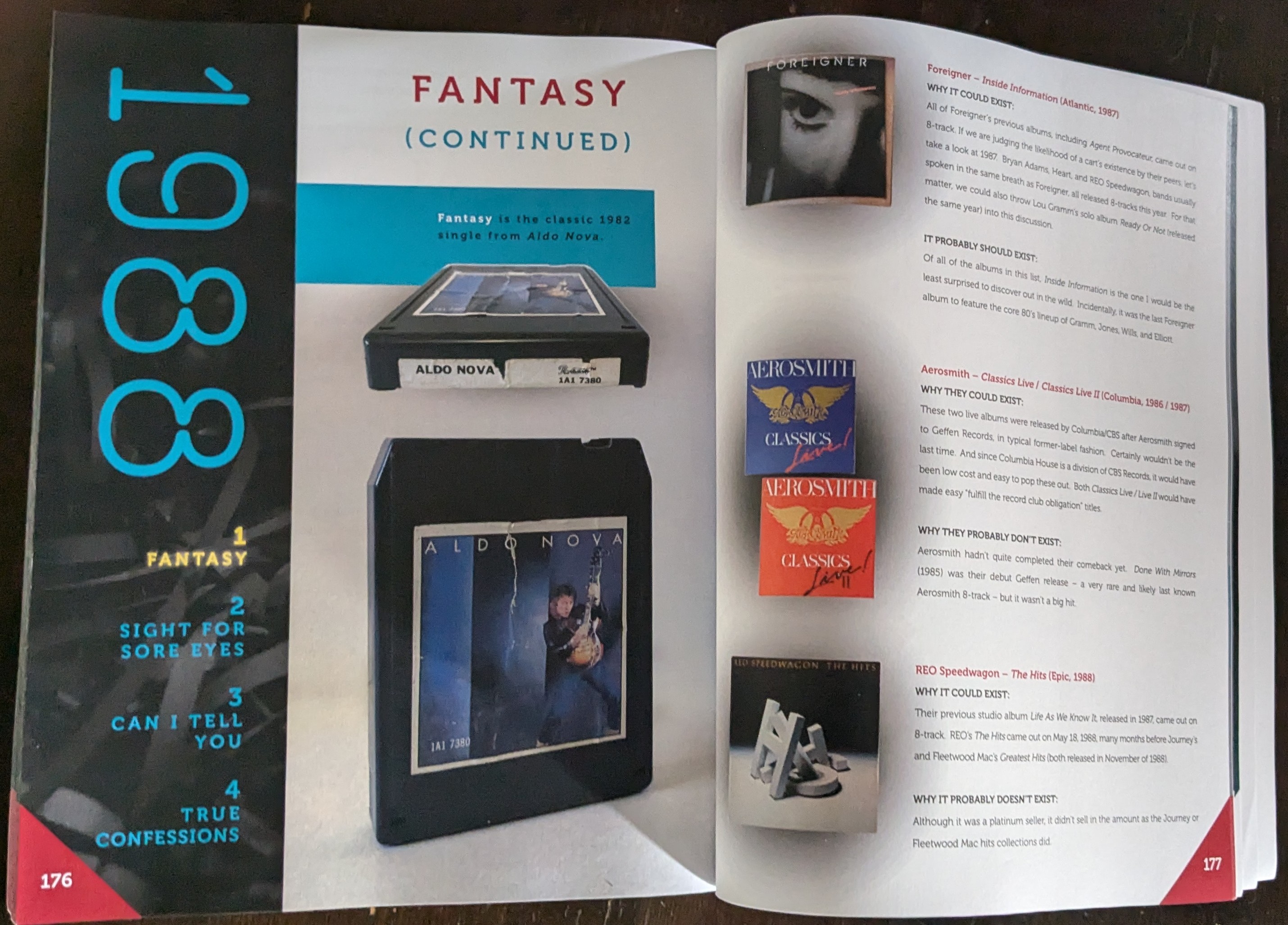
Yeah, it’s kind of random. There are unanswered questions about it, and I can’t prove beyond a reasonable doubt that they weren’t made, but I’ve been looking into this for an awful long time, and either there are so few of them, and people don’t know what they’ve got, or they’re in somebody’s attic somewhere, and they belong to somebody’s parent or grandparent, and they haven’t been unearthed yet, or they just weren’t made. So, I don’t know. That’s why I included a section in my book where I did this ‘fantasy’ of, here’s five titles that could exist on 8-track given the year they were released. Here’s why they could exist. Here’s why they probably don’t, and Asylum is one of them, because I also judge by what else came out on the same label that’s in the same sort of ballpark, and that makes me think that it’s possible.

In researching, I know that 8-tracks had an appeal to truckers in that. Did you ever make connections with anybody that kind of was in that kind of field?

No, no, but that is one of the, I don’t want to say cliches, but, one of the cliches is truck drivers and even just people that drove pickup trucks. You’re typically talking about country and western. And I will say that there is some truth to that in so much as if you were a country music fan in the 80s and you did not want to stop buying 8-tracks when you couldn’t find them in stores anymore, you were well served by the record clubs, because just about every country star you could name, all of their albums came out on 8-tracks. So even relatively newer artists like (say) Dwight Yoakam or Randy Travis or Sawyer Brown, they have 8-tracks. Reba McEntire, for a while, she started a lot earlier. So I think there was something to that. And that’s why it’s even more bizarre to think that there’s an 8-track version of the first Bon Jovi album. There’s an 8-track version of Dokkens’, there’s Ratt Invasion Of Your Privacy, Motley Crue Shout At The Devil. Makes no sense, but they exist. They are 100% real.

And also, I just think people get used to things. That’s why I also included a picture of an 8-track cassette adapter in the book, because I can vividly remember that my grandparents, they had one of those old four-model stereos that had a turntable, and it had an 8-track and a radio. And I had an aunt and uncle that were visiting, and they listened to a cassette, but they had this adapter, and there’s a picture of it in the book. It’s shaped like an 8-track, but there’s a space. You can lay a cassette down in it, plug it into the 8-track player, and it will play the cassette. And that just makes me think of when VHS switched over to DVDs, and then they started coming up with those hybrid combination players. It’s a format shift. There’s been lots of them. Look at VHS tapes now, they’re pretty much worthless. You can go to any flea market, any Salvation Army place, and there’s hundreds of them. Will there ever be a time when they’ll be like, “Hey, you remember those? Those were cool.”  I don’t know. But I do know, you know, the fact that you get Blu-rays now manufactured to look like the old VHS tapes shows that there’s a nostalgia for it.

Yeah, I got tons of VHS tapes. I used to tape stuff off the TV in the 80s and 90s.

Oh, yeah, when we first got MuchMusic. that’s how I consumed music a lot. I’d put a tape in and just let it go.

Of your 8-track collection, is it more retail or more record club stuff you’ve got?

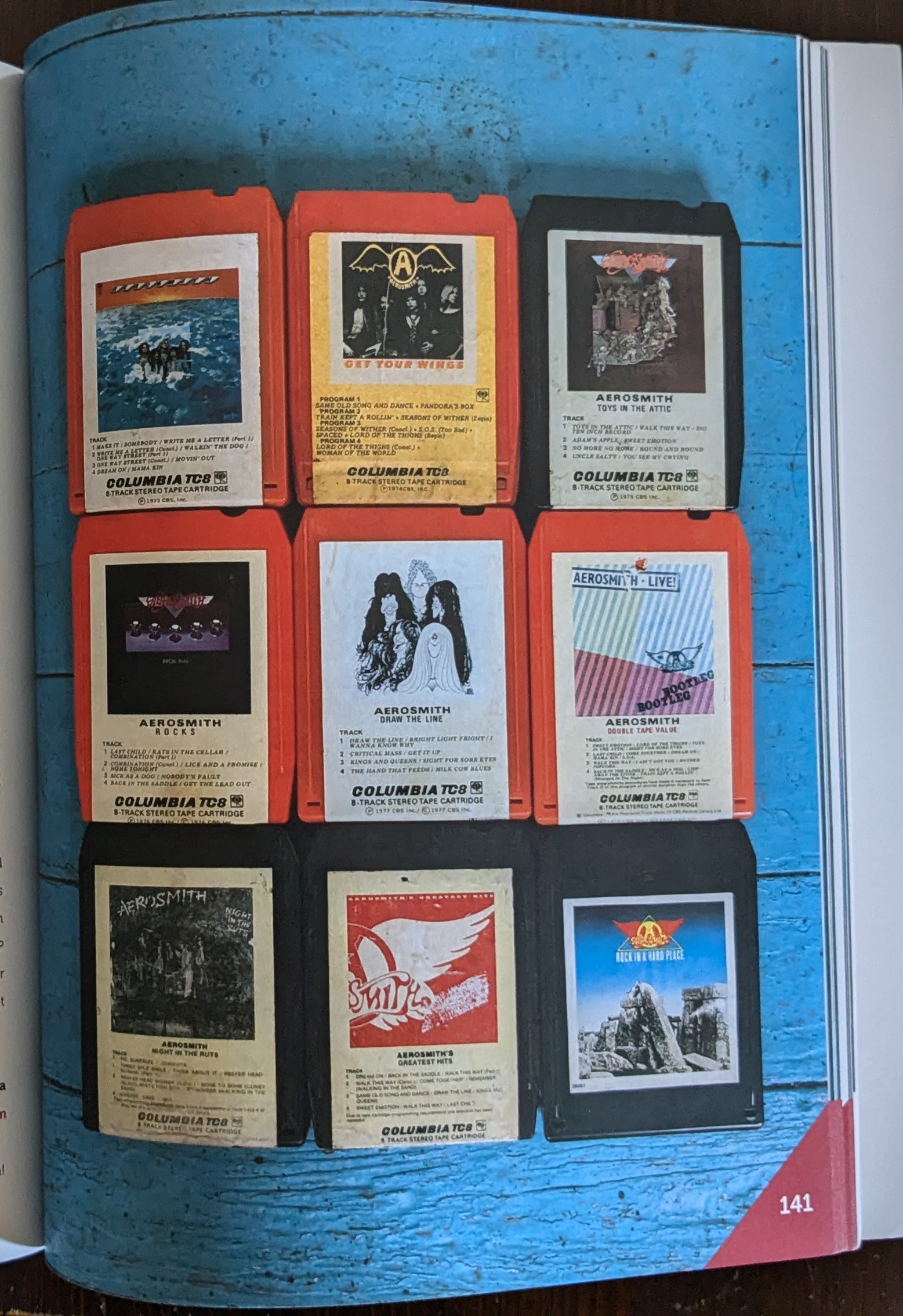
Oh, it’s definitely more retail. There’s just more of them, right, like the bands that started in the early 70s. I’ve got a decent amount of record clubs’, though. It just depends on who it is and how long their career kept going, right? You take a band like Aerosmith, so obviously from their first album, through to Rock And A Hard Place, those were all retail 8-tracks. The one to look for and the one I don’t have is Done With Mirrors. And that’s highly in demand because there don’t seem to be many of them. You get a band like Kiss that obviously kept on going. Their 8-tracks go up to Animalize. So, sometimes there’s only two or three record club ones. And then they stop. So, I definitely have more retail than record club ones.

For me, the interesting reading in the book obviously is the interviews and the guests you had in there that told their stories of that, as you said earlier. Did you come across any collectors in all these groups that you visited that maybe weren’t able to get into your book that had crazy amounts of 8-tracks or,…

I had pretty good luck. Pretty much everybody that I sought after was willing to talk to me. Now, there was one person I talked to who was all ready to talk to me and I was going to do a chapter on them, but then they said they were going to do their own book, and I said “well, ok that’s cool”. They haven’t yet. I’d like to get it when it comes out. But it wasn’t a bad thing.

Did you come across anybody that had an insane amount of 8-tracks compared to what you got?

Yes, I definitely have met people that have hundreds upon hundreds of them. These are people that like a wider span of music than I do, too. So, they’ve got more artists to look for.  I haven’t counted them in a while. I’m looking at them, but I’ve probably got, I don’t want to say 300. I’m not sure. But it’s in the hundreds anyway. It’s a lot. These RCO ones, you’re not likely to find them on eBay, you do sometimes or sometimes Discogs. Most of the time, you go into these Facebook groups. And once people know what it is you’re looking for… because a lot of people buy and sell. I don’t sell, I just buy. But a lot of people buy and sell. And they’ll say “I got a couple of such and such. Is that one you were looking for? …”

That’s how I’ve gotten the last bunch that I’ve been able to get, which include titles like Deep Purple Perfect Strangers, Rush Power Windows – That was a major grail for me. That’s the last Rush one. Queen The Works; that’s the last Queen one. Once you’ve come so far with your collection, about the only way you’re going to really complete any of them, you’ve got to spend a little money. So, you have to balance that out with everything else. I’ve got a few collections that I would say are complete as far as these are all the eight tracks this group or artist put out.

Is there anything, do you have any holy grails yourself, things you’re looking for?

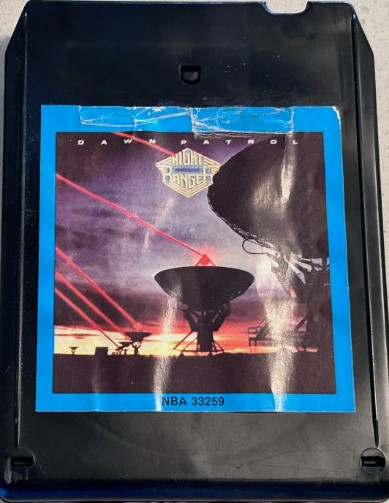
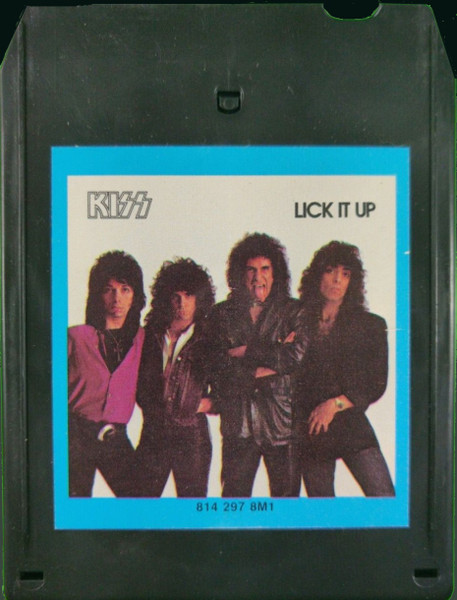
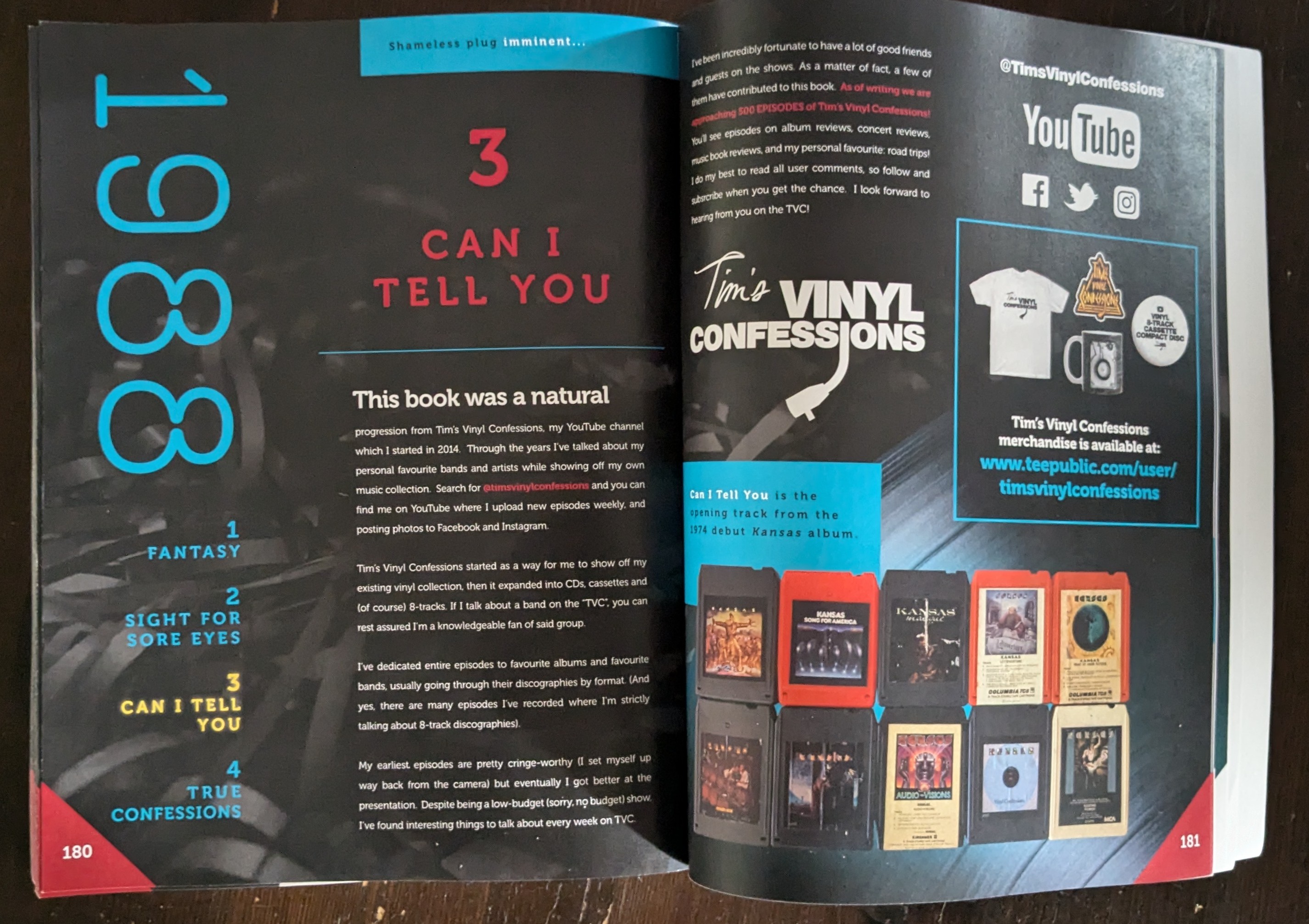
Oh, yeah. Basically it’s completing the collections, starting with my favorite bands. I mentioned Kiss. I don’t have Creatures of the Night or Lick It Up. Now, the funny thing is that Creatures of the Night only seems to exist as a retail, a U.S. retail version, and it’s highly in demand, as is Lick It Up. For some reason, and maybe it’s because it was a more successful album, Animalize is a little bit easier to find. That doesn’t mean it’s easy to find. That means it’s easier than those other two. I have Animalize, but I don’t have Creatures or Lick It Up. So that would definitely be one of my grails. Triumph Never Surrender is one I’d like to get because that would finish my Triumph collection. I have Thunder 7, and again, that seems to be easier to find for some reason. Never Surrender seems to exist only as (I’ve only ever seen) a U.S. RCA Music Service version. But it’s out there. There’s probably a Canadian Attic (Records) one, too. I’ve just never seen one. I know that one of my major grails is the first Coney Hatch, which does exist as a Canadian Anthem, Columbia House 8-track. I was fortunate enough to have Andy Curran on my show, and he didn’t even know they had an 8-track, and I had to show him a picture of it. I said “This is it. And here’s how the songs are broken up”, because they usually had to mix the song order up. We joked. I said  “I’ll know if a bidding war breaks out, and it’s me and one of the first, and it was probably you”.  The first Bon Jovi album I would love to have. I love that album. And just the idea that there’s a Bon Jovi 8-track; it’s just weird to me. As you know, I’m a big Night Ranger fan. I don’t have Dawn Patrol. I have Midnight Madness and Seven Wishes, but Dawn Patrol seems to be harder to find. Normally, it’s the other way around. Normally the newer ones that are harder to find, but not in that case.

I was going to say, Dawn Patrol wasn’t their biggest seller, though, was it?

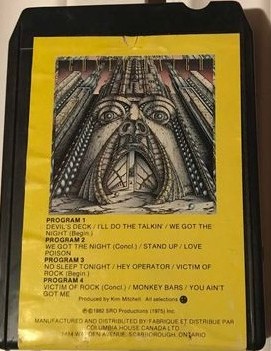
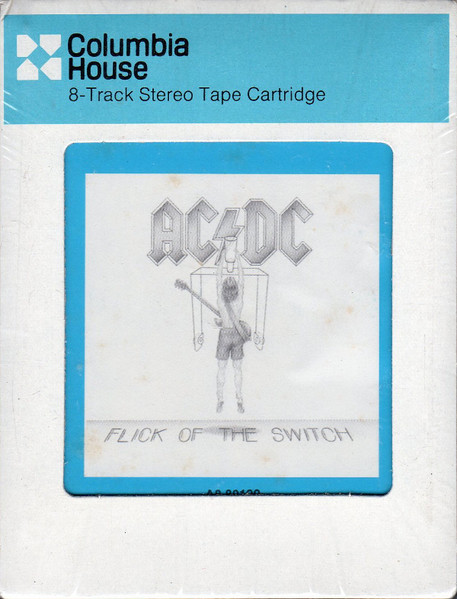
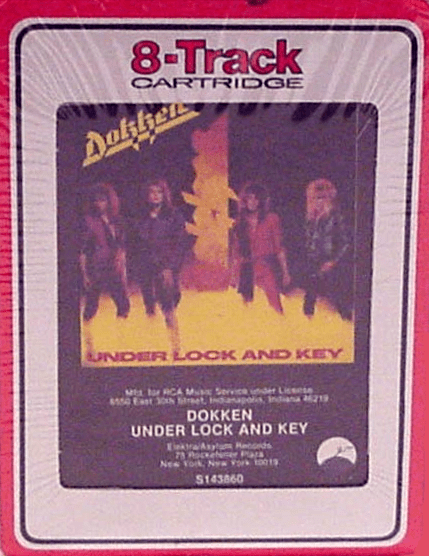
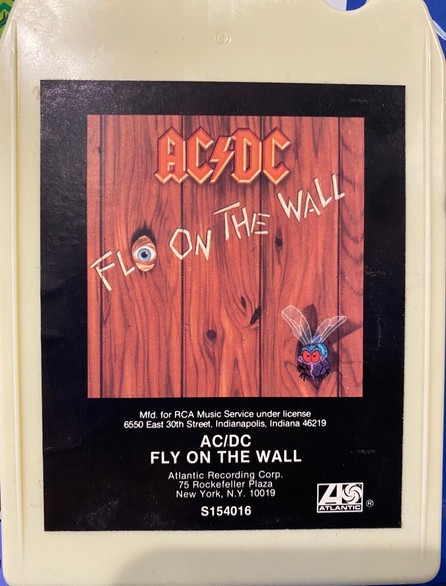
No, and also, when it came out, it was a Columbia House only, as far as I’ve seen it, it was on Boardwalk Records, which went out of business within a year of the album being out. So, I think that has something to do with why that one’s more rare, because it’s easier to find Midnight Madness and Seven Wishes because MCA picked them up. Now, they did reissue Dawn Patrol, but I don’t know if there’s an 8-track version of that. I’d be happy with one of those. There’s one Sammy Hagar that I don’t have, and that’s Rematch, which is the Capitol ‘best of’ that they put out in 1982. And that’s another thing that’s odd, because there doesn’t seem to be an 8-track version of VOA, which doesn’t make any sense, because number one, it was his most successful album, and number two, the album that came after that is on 8-track. And there are a few cases that I’ve come across like that. I mentioned Ratt earlier; the Ratt EP exists on 8-track, as does Invasion of Your Privacy, but Out Of The Seller does not seem to. That doesn’t make any sense. Now, I’m not saying it doesn’t exist, I’m saying I’ve never seen evidence of it, and I would never list something in this book if I didn’t. I would never go by someone saying “I think I saw it once”. I need better proof than that. I need either a picture, or I need someone to say, Tim, I can assure you beyond the shadow of a doubt, here it is, this is what the song order is, then okay. But other than that, as far as other Grails, well, if it’s still there for a while, you could go on Discogs, and if you had 2,000 U.S. dollars, you could get Dokkens’ Under Lock and Key. Now, I like that album, but I don’t like it that much. But is that an outrageous price? I don’t know, because when’s the last time you saw Under Lock and Key? When’s the last time you saw a Dokken 8-track? So that’s what you have to deal with. You have to factor that in. It’s like, how bad do you want it? And yes, sometimes I do think things get overpriced, like anything, but at the same time, I think demand drives the price up. And for some reason, the hard rock and metal bands. Those tapes go up. People are willing to pay big bucks for Ozzy’s Bark at the Moon, because that’s the last Ozzy one, right? And Ozzy’s still popular. Or AC/DC  Fly On the Wall, Who Made Who? Those are two that I don’t have. I’ve got Flick Of The Switch, which is kind of rare, but I don’t have Fly On The Wall or Who Made Who. So, it’s how far up they went when they stopped, and how popular… Because you could go on eBay today and buy a Statler Brothers 8-track from 1987 for five bucks. Just the demand’s not there, you know what I mean? So, it’s not necessarily just the year, it’s who it is.

What other books are you working on as far as… You’ve got the Y & T book, the Kansas book, the Sammy Hagar book, which is more of just a review and listings book. So, curious what else you’ve got on the go

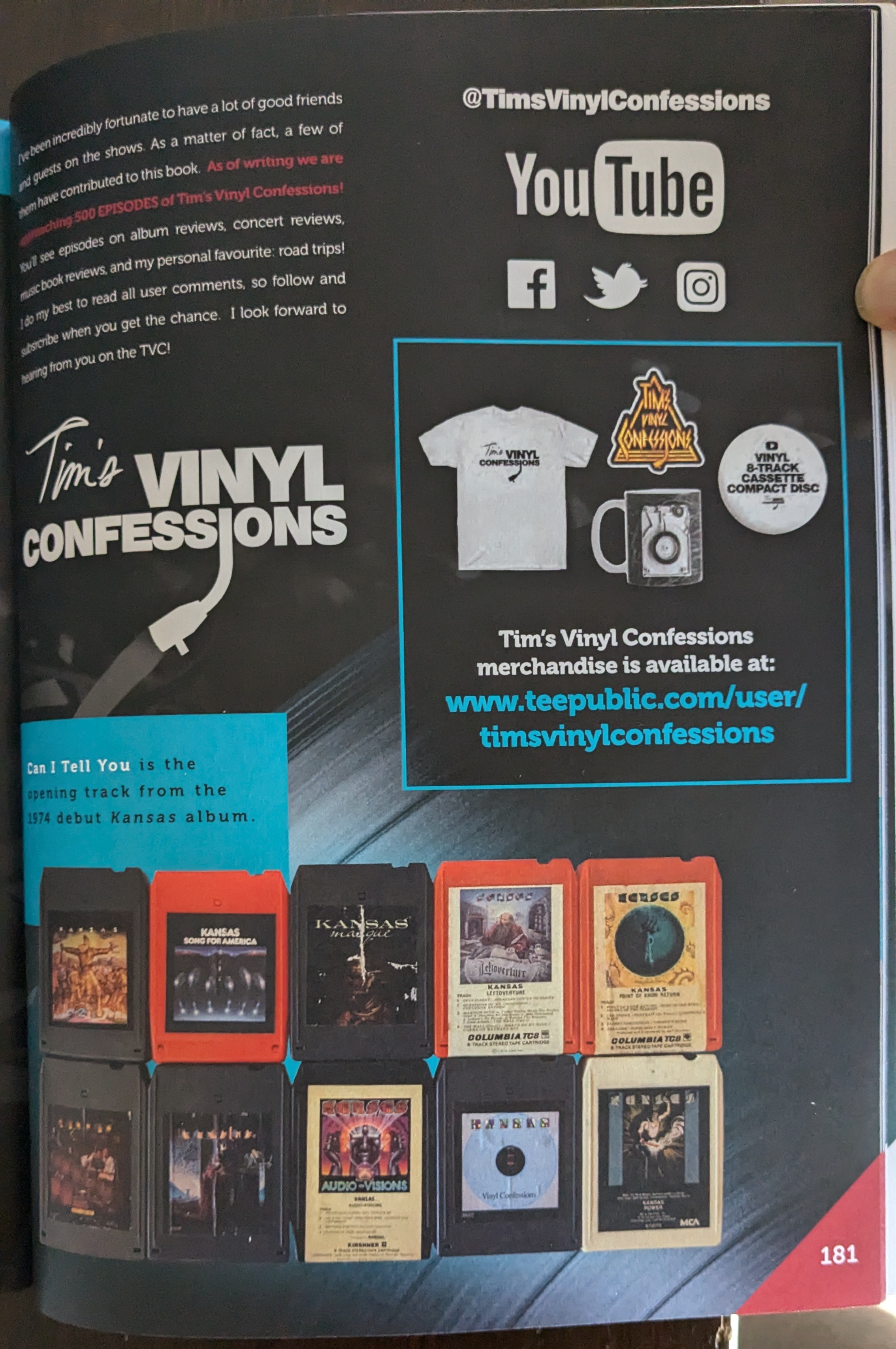
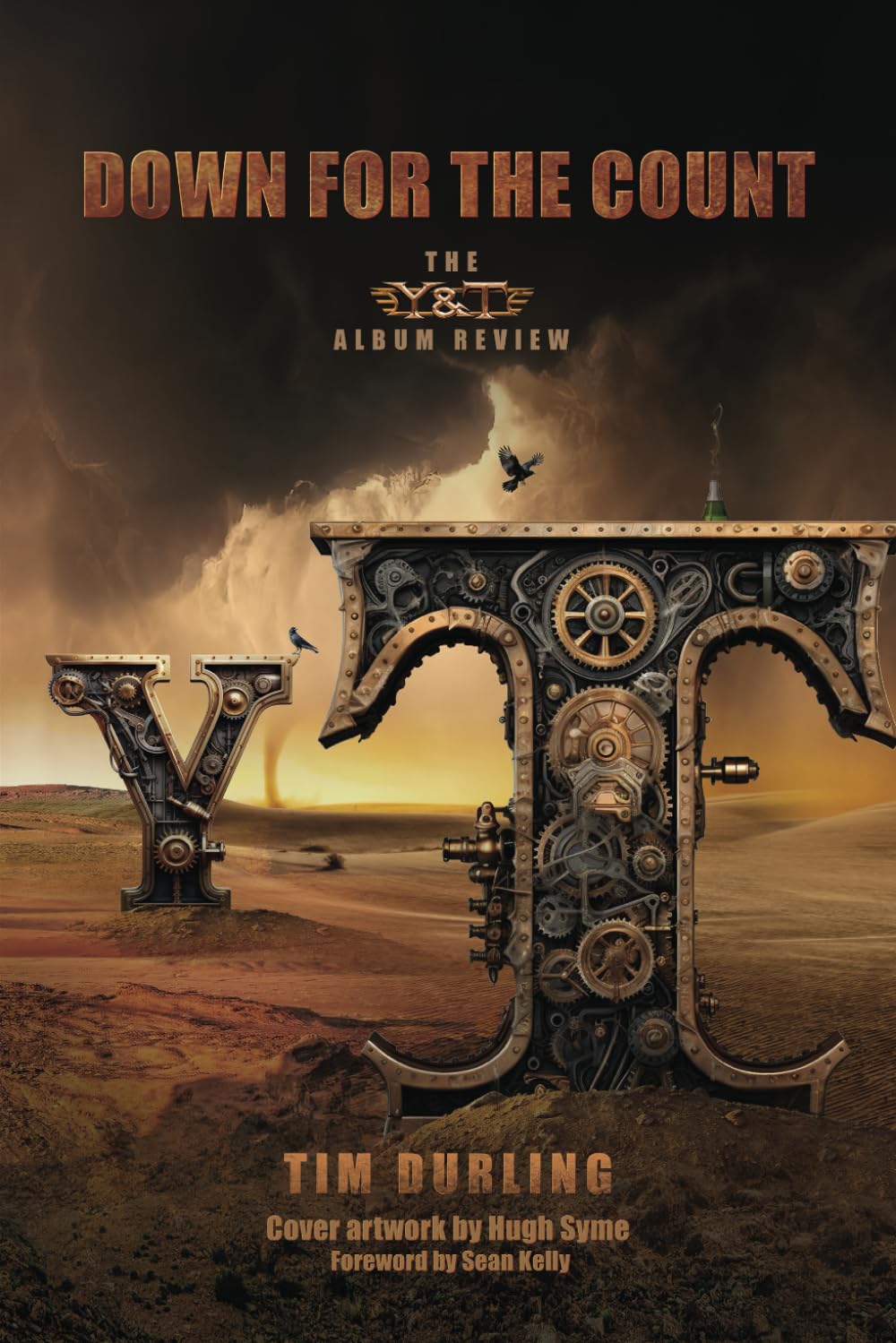
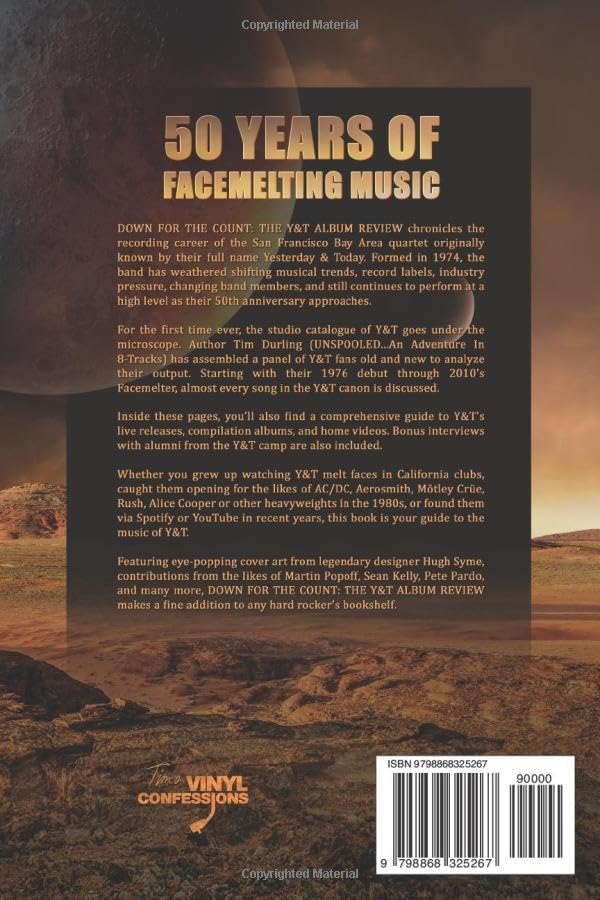
So yeah, Unspooled is unique, because it’s the most expensive book I’ve got, it’s the most graphics-intensive book I’ve got, and I have to give a special thanks to my good friend Matt Phillips. We’ve been friends for over 30 years. He has a company called Go North Design, and he laid this book out, and I would put it up to anybody’s work. I think it’s totally professional-looking. My other books weren’t quite as graphics-intensive, although I was absolutely honored, because my second book (my Y & T book), I made the acquaintance of the one and only Hugh Syme – who’s work I’ve been a fan of for years being a Rush fan. But not just Rush, Def Leppard, Bon Jovi, Aerosmith, Whitesnake, Y & T, Kiss – tons of bands he’s done album covers for, so he designed the cover to that, which was an honor. The Unspooled one was kind of an odd thing, but I think that I’m better at doing books on one band. Y & T has always been one of my favorite bands; they’re one of the unsung bands, and I think they should have been much bigger, so it was a no-brainer that that would’ve been my next book. After that, I’m a huge fan of Kansas, and even though they’ve sold millions of albums they seem to be the 2nd tier of what people think of when they think of classic rock bands. I think they should be up there with Queen and Zeppelin, they’re that good. And I think that the new music they’ve put out in the last few years is just as strong as anything. And that has a lot to do with a band I want to write about. If they’re still writing new music, really good and valid, that makes me want to do more work with them. Then the Sammy Hagar one; I’m a huge fan of his – in All of the capacities that he’s been involved in. So that made perfect sense. And that one was different – the Y & T and the Kansas books were very much modelled after Martin Popoff’s Album By Album series, where he gets a panel of guests, asks a bunch of people the same questions about a particular album, gets their answers, and gets the content that way. That’s how I did my Y & T, and that’s how I did my Kansas. I’ve got 2 books in the works, but I’m not ready to talk about them just yet, but they’re also going to be panel books. And I’ve got another one that’s just about done, and it’s more like the Sammy book where it’s basically just me writing it. And I think that that’s the course that I’m going to follow. Again, I have to reference Martin Popoff because he’s been such a great mentor to me, and he always says, “the books that sell best are the books about one band.”  If you try to do a book about a movement or something like that, they just don’t sell as well as a book about one band. And I also look for band’s that haven’t had books written about them or haven’t had this type of book written about them; that’s been the driving factor.  I plan on doing more. It was just kind of something I stumbled into. Five years ago, I had no books, now I have 4, with 3 in the works. It’s amazing really, and I’m grateful to everybody that promotes them, and has bought them. And the feedback I get – the best thing that I’ve had people come back and say is “I read your Y & T book, I had 1 or 2 of their albums, and now I’ve gone and bought a bunch more of their albums, and I want to check out further.”  I’ve heard that with Y & T, I’ve it with Kansas, and I’ve heard it with Sammy, as a solo artist – “You know I have the Van Halen albums, and I had one of his ‘best ofs’, and now I’ve gone back and got a bunch of others”. And that’s why I started my YouTube channel, and that’s why I’m doing these books – to talk about music I love, and I think needs another spotlight on it.  I love Kiss, but what am I going to write about that hasn’t already been written. I love Rush, but what have I got to contribute to write a Rush book!? Some bands… I don’t want to say there’s too many books – but there’s plenty! And there’s plenty by authors that have an angle that I just haven’t thought of. I would rather do bands where somebody goes “I like that band; I don’t think I’ve ever seen a book on them before.”  And that’s really where I’m going with this. I think I’ve got plenty to keep me busy as far as bands, like ‘who hasn’t been done that could sort of use a tribute?’ Any band that’s been around for 40-50 years, I think should be commemorated in some way. And putting that information down in book form is a lot easier than going online and trying to figure out how many albums somebody has. This way it’s right there; you can pick it up any time, any place, and just look at it.

I like the idea of a Y & T book because there’s a band that’s been going since the early-mid 70s, and most people might know 1 or 2 songs from the 80s…

Yeah! And they probably thought that they stopped in the mid-80s, but they didn’t.

Have you got much feedback from some of these bands?

In some cases, yeah. In the case of Y & T I heard from John Nymann, their guitar player, and he’s been with them since the early 2000s, but his history with the band goes way back in to the 80s as far as being a background singer. And I don’t know if you remember when they had the robot character on stage with them from the In Rock We Trust album!? He was in the suit on stage, so he goes back with them a long way. And their current bass player, Aaron Leigh, I had them both on my show. So, they both have copies of the book.

How about Dave Meniketti?

I haven’t heard. I’d love to get a book in Dave’s hands. He’s the keeper of the flame. In the case of Kansas, it was very gratifying because Kerry Livgren, who was a founding member and wrote a bulk of their songs, a couple of fans made a pilgrimage to his home in Topeka and presented him with the book, and he made a very nice post about it on Facebook. I haven’t talked to him, but he did mention the book, and that was a big help. I talked to Tom Brislin, their current keyboard player, and he’s played with a ton of people; he’s played with Yes, Meat Loaf…he was great. I talked to John Elefante, their former singer, he’s in a couple of chapters from the 2 albums he sang on. I haven’t heard back from Sammy, but I have been in contact with Bill Church, his longtime bass player in Montrose and his solo band.

TIM DURLING LINKS:

To purchase books – https://www.amazon.ca/stores/author/B0CR8Q3G8B

https://www.amazon.com/s?k=tim+durling

https://www.youtube.com/TimsVinylConfessions

https://www.facebook.com/timsvinylconfessions/

https://www.teepublic.com/user/timsvinylconfessions

UNSPOOLED: An Adventure in 8-Tracks

Canadian author TIM DURLING started collecting 8-tracks well after they went out of style And print. Tim’s latest book ‘Unspooled‘ chronicles his collecting of 8-tracks years after the fact, and with a focus on this record clubs (popular in the decades before the internet) who carried 8-tracks

Unspooled will be of interest not just for the history and information on the 8-track format, but also for the nostalgia and the stories. This is a beautiful looking coffee table kinda book that you can pick up anytime, for the reading and for the cool images of hundreds of 8-track cartridges.

Unspooled isn’t just about 8-tracks, as it lists the year to year record club releases throughout the 80s, but also in here are Tim’s personal stories of the whole adventure of collecting. As a collector (mainly LPs and CDs), many of us can relate. Besides his stories, there’s contributions and interviews from fellow collectors, not just in 8-tracks, from Canadian rock writer Martin Popoff’s Forward, to legendary broadcaster Donna Halper (she who began playing Rush in the US), to various other collector’s and experts (be it in 8-tracks or rock knowledge in general!)

At over 190 pages, full of colored images, lists, tales, antidotes, etc… Unspooled should really be worth checking out for any music collector.

+ Recently spoke with Tim Durling, watch for that interview coming here, soon.

*Unspooled can be easily purchased on Amazon.

Also, check out Tim’s YouTube channel – https://youtube.com/@timsvinylconfessions?si=DVpelFnpvXpMemF0