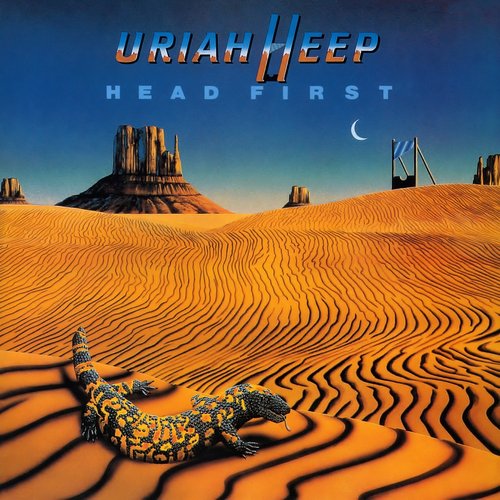
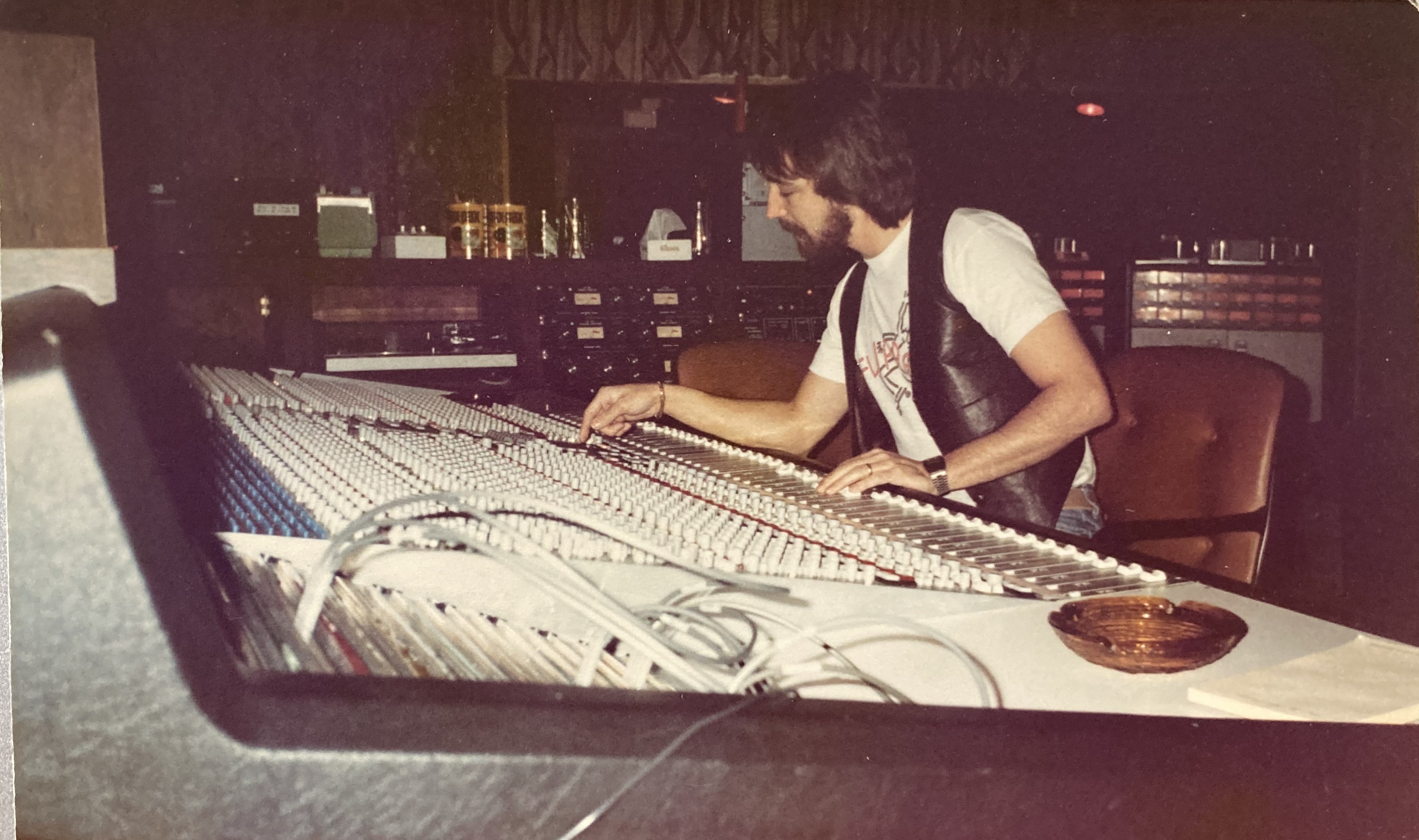
Tag Archives: Ashley Howe

ASHLEY HOWE – An interview with British recording engineer, producer

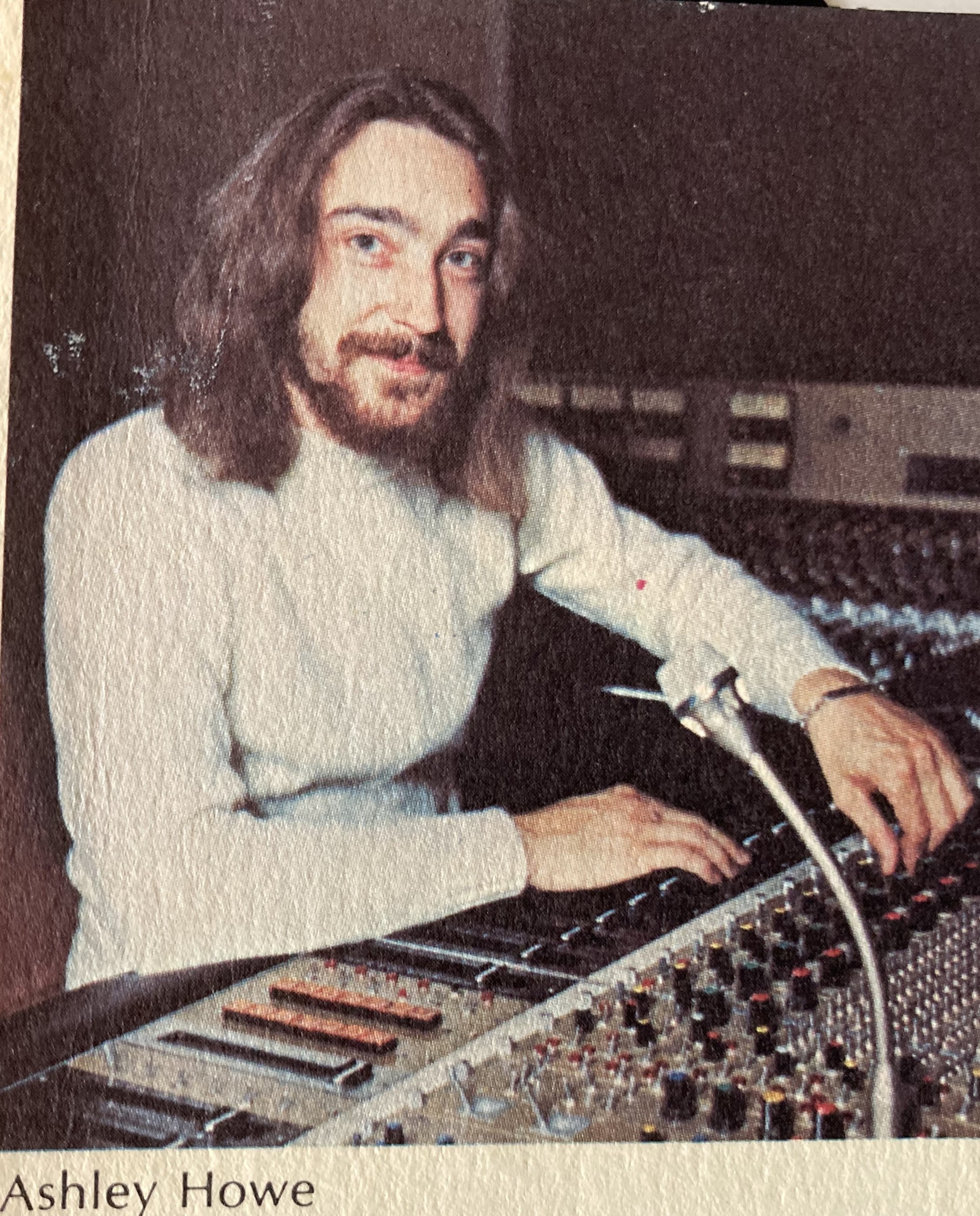
ASHLEY HOWE began his career in 1970, and more recently retired. I had the pleasure of interviewing him this time about his career, where he began as tape operator, and becoming an recording engineer and producer, before relocating to the US to work in television & film sound (where he’s picked up a few EMMY Awards!). Although many Uriah Heep albums will recognize Ashley’s name for the many Heep albums he’s credited on (including producing Abominog & Head First), we discussed a number of other bands Ashley worked with in the 70s and 80s, as well as what he got up to when he left the UK. Ashley has a lot of great stories, and I’m sure (and yes, I did ask!) they could make for an entertaining book someday!. Although Ashley might play it down, but I would say the man’s had a legendary career in the recording business, having been connected to many classic bands and big albums.

We started off this conversation bringing up his recent appearance on Rock DayDream Nation‘s Youtube show, which was a ‘reunion’ show….

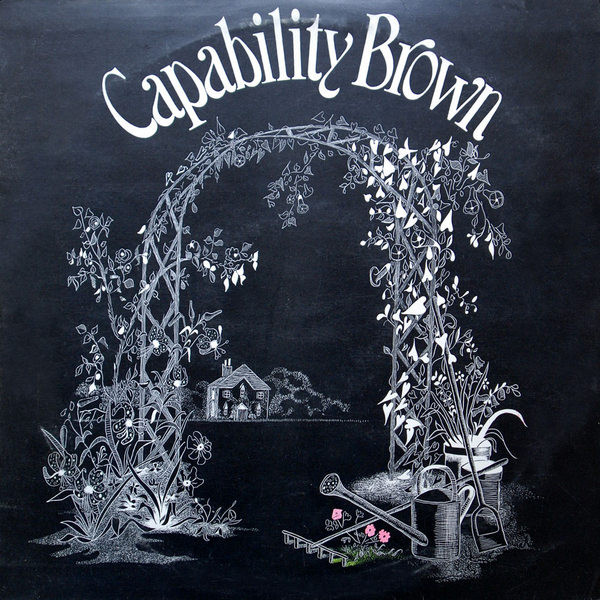
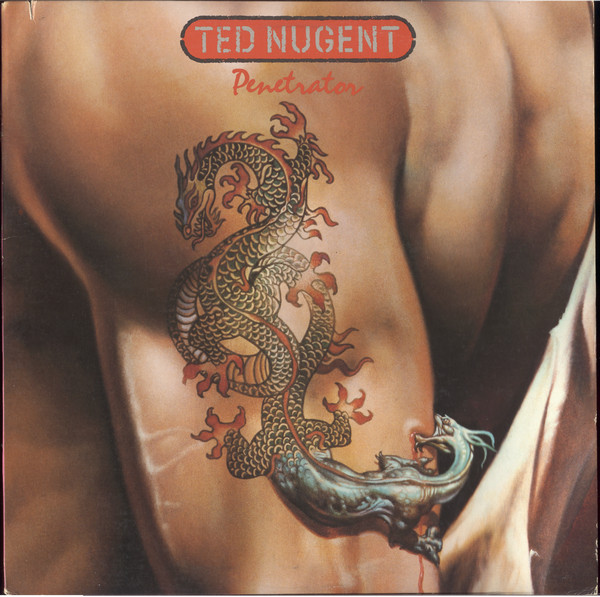
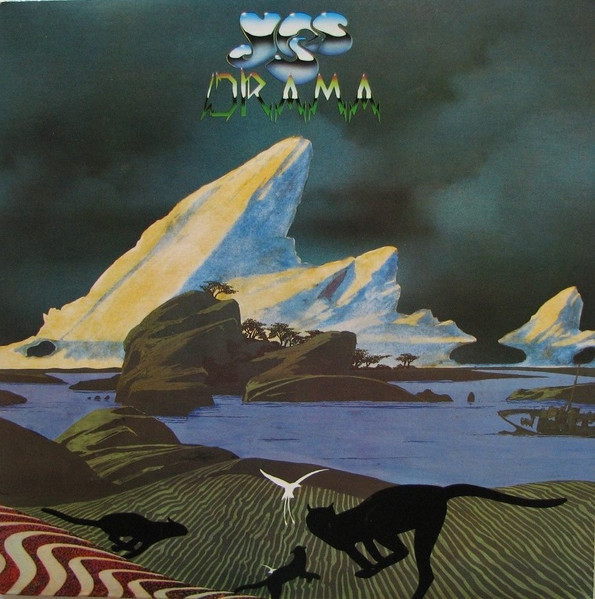
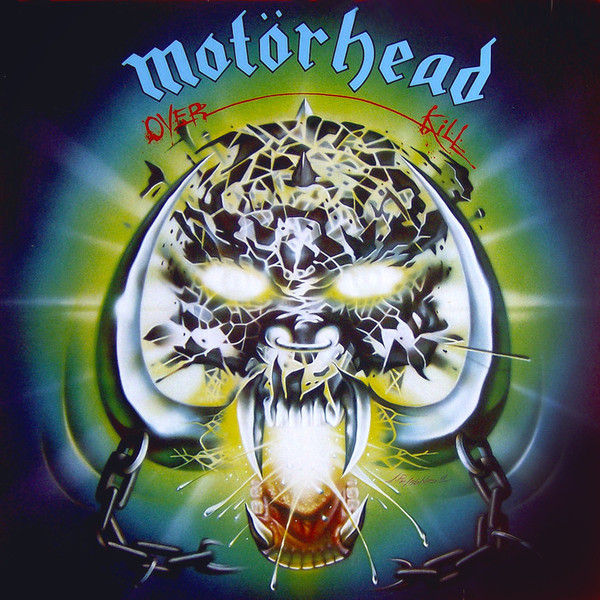
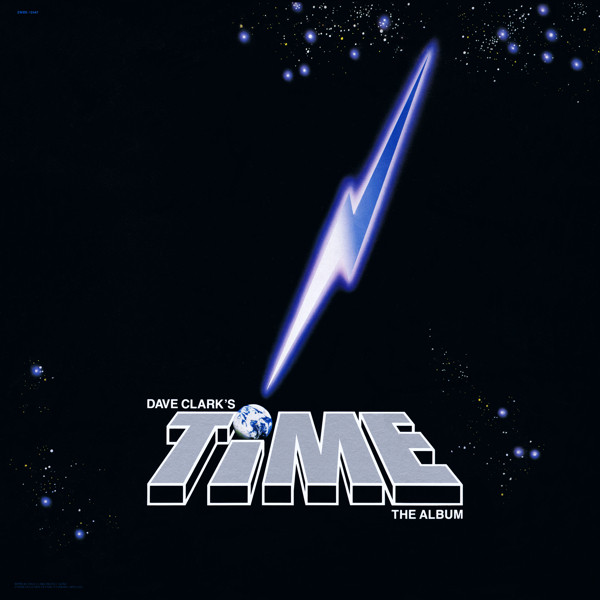
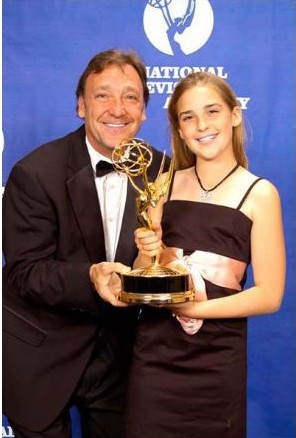
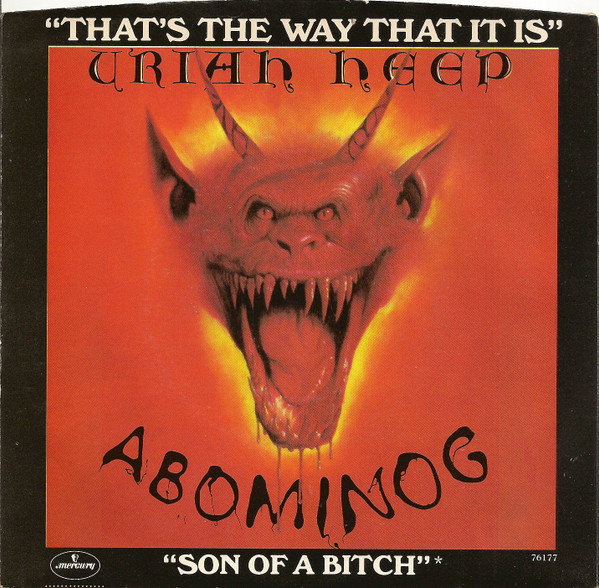
Enjoy the read. All photos were kindly sent by Ashley. I have also included images of albums he worked on over the years (click on the images too!).

You had a reunion recently!?

I had a little reunion with the wonderful Uriah Heep. I do want to just say one thing, a mutual friend of ours, Peter Goalby, that gentleman deserves so much respect, and so much acknowledgement, and the stuff he’s putting out now is just as good as it was 40 years ago.

Yeah, there’s a lot of what-ifs there with that stuff, right? There’s a lot of Wow – if this had come out, what it should have.

Yeah, should have. But just a wonderful gentleman, and one of the best singers I ever worked with, and I was lucky enough to work with some great singers, Freddie Mercury and people like that. Peter’s just, he’s just way up there….

To kick off, I started when I was 16 and three quarters, or 17, in late 1969, with Uriah Heep, and the first project I worked on, and that has a history to it, 15 albums later, and et cetera, et cetera, …but there’s a few stories along the line that people might find interesting.

How did you get into all the, to the technical end of the music stuff?

Well, actually, it’s a good situation. I was in a school group with a guy called Peter Coleman and Richard Dodd. Richard Dodd is a very famous engineer, very accredited, Peter went in first of all, and he became famous very quickly, and he was working at CBS, and I went to CBS to record our little band and snuck in after the Hollies, and decided that this is something I’d like to do.

I actually applied to the BBC, because they were advertising for school leavers in the south, so I went there, and I got my interview, and the guy said, “Oh, absolutely fantastic. How many years experience have you had in television and recording?” I said, “Well, I’m still at school”. He said, “Well, we can put you in the accounting department, and when you’re 32, we’ll re-review you”. 

Well, straight from that interview, I went to a studio, and I was greeted by the studio manager, who turned up about 20 minutes late. The receptionist had told me to sit down and have a cup of tea, so eventually he came down, and as he came off the elevator, he saidHi don’t get up , and he said, “What’s your name?” I said, Ashley Howe, and he said, “Don’t F……g talk to me while you’re sitting down. Let me just tell you that I fire people in 30 seconds.”  And this is the first interview at a real studio.

I then went from that interview to Lansdowne, and at that point, I was feeling a little uncomfortable, and I walked in, and the gentleman that I met Adrian Kerridge, very famous, and he’s sitting behind his desk with his suit on and everything, and I just, he said to me, “What exams do you have? And I said, well, actually, I’m pretty ignorant, really. I don’t really have A-levels or O-levels, but I’m really willing to start at the bottom, be a tea-boy, and put everything into it.” and then  I said, “but I think I need to leave, because I feel so intimidated with you behind that big desk.” 

And so I’ll never forget this, he took his tie off, took his jacket off, came down, pulled the chair up next to me, and he said, “What are your interests?”, I said, “Everything”,   He said, “What are your hobbies?” I said, “I don’t have hobbies. I’m just interested in music.” And that was it, then I started at Lansdowne. Just to cap this story off, years later, I was chief engineer. The guy that was nasty to me turned up to get a job at the place. I turned around to him, I said, “Don’t F….g talk to me while you’re sitting down

That’s quite the beginning. There was an interview posted with Alan Parsons, and he had a similar where he just showed up and took anything type of job.

So, what was the first album you worked on, the first Uriah Heep album!?

That was the first one I worked on. In those days, you worked on a lot of different clients that were coming in through the door, left, right, and center. You’d be doing four or five sessions a day. Yes, that was the first one I worked on.  And I have some interesting stories about Lansdowne, some funny stories, but if you want band stories.
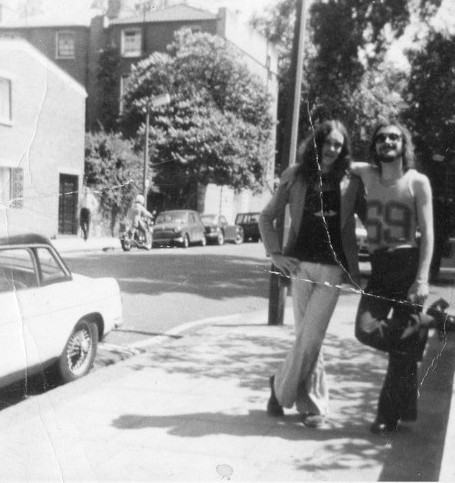
Ashley on the right, w/ Bob Buttersworth, taken1970, while working on the first Uriah Heep record

Yeah, a bit of both. Lansdowne, is that where you were primarily?

That’s where I started off, and then I eventually moved over to the Roundhouse Studios, which Gerry Bron bought, and then took myself and Peter Gallen, the two engineers that pretty much worked on all of his projects, over to there.

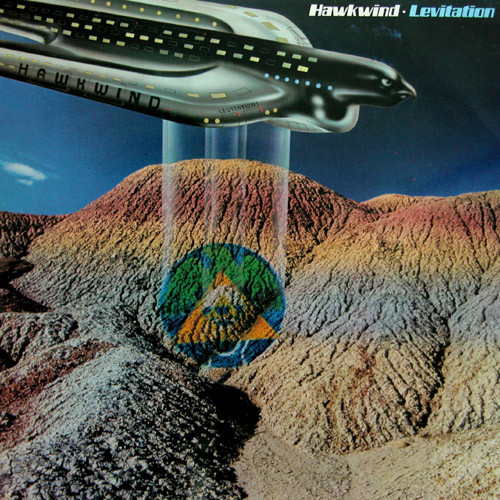
When I went over to the Roundhouse, I became an in-house producer as well. I worked with bands like Hawkwind and Motorhead. I did Overkill with Motorhead, Overkill, and there’s some fun stories from those sessions

When we started to do the album, we were using a drum riser, because the studio was a little dead. We brought in a wooden platform, but Phil was hitting the drums so hard, they kept moving off of it. We tried bricks and everything else. In the end, Phil got two nine-inch nails, and hammered them through his bass drums and into the platform. Another story happened during the first playback. They came upstairs, and Lemmy said “Stop the tape! stop the tape!” So, I stopped it. Lemmy said  “There’s something wrong.”  And I’m thinking, well, I’m not that bad an engineer. There’s only bass drums, guitar, and vocals. He said, “No, no, I can hear my bass.” And I said, “Well, of course you can, you’re playing it.”  He said, “I don’t want to hear it.” I said,  “Well, I really don’t want to hear it either.”

The last thing was that I used to have to wake up Fast Eddie with a broom because he’d fall asleep on the couch. He’d wake up very violently, throwing punches, so I’d poke him in the stomach with a broom, and he’d wake up swinging.

One day I made the mistake of cleaning Lemmy’s bass guitar, because it was so sweaty. When he came in, he couldn’t play it anymore, so he had to go out and get some axle grease.

What music did you grow up on? Before you got involved, what were you listening to, and what bands were you going to see and such?

I was listening to everything on radio. In that era, there was so much great music, but more importantly, great songs. I always thought of myself as a song person.

I didn’t really stick to one genre. There was a lot of American music, a lot of Quincy Jones, a lot of jazz, and of course Led Zeppelin. But really, all the commercial stuff.

Are you familiar with Discogs, the website?

I’ve seen it.

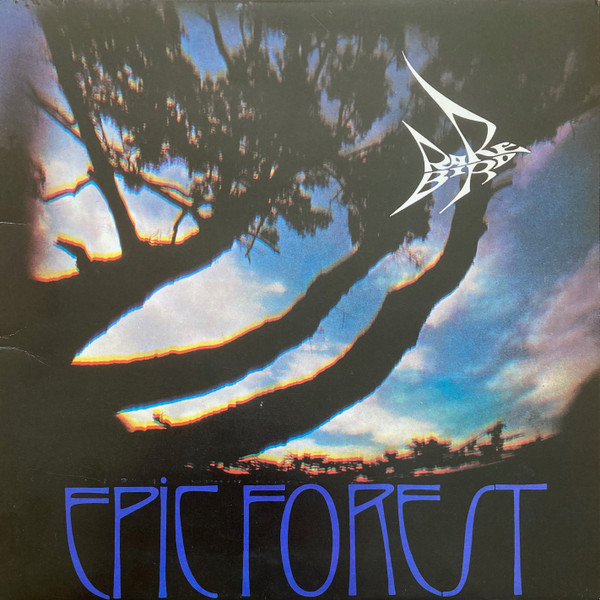
I went into that because it’ll have a listing of everything you’re credited on. It’s quite a thorough listing. A lot of the bands you worked with, I wasn’t familiar with. I had to go back and listen to a few things that were kind of interesting, like Capability Brown, Rare Bird. You did a lot of different bands over there.

What were some of your favorite lesser known artists, that you worked with?

I loved working with Rare Bird. I actually did a little bit of percussion on one of their records. I thought they were very good.

One of my favorite projects was one of the first things I engineered – a band called Spiteri. I think they’re still getting recognition for it today. They very Santana-esque.

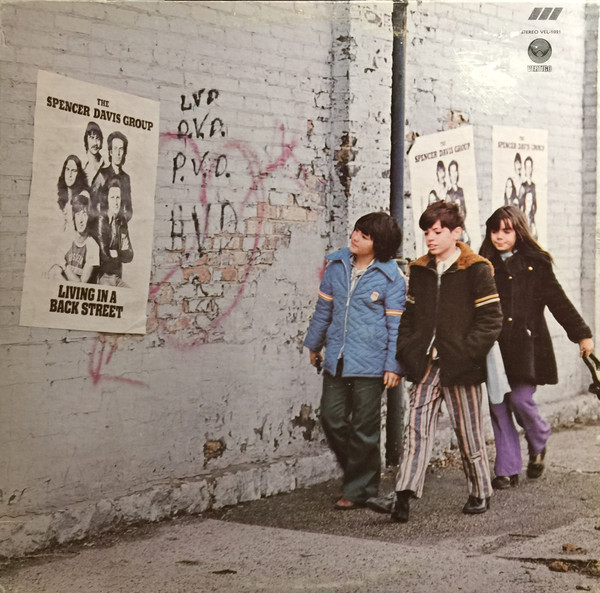
I also enjoyed working on Spencer Davis. That was an interesting experience because I was actually told not to bother recording him. I recorded him anyway.

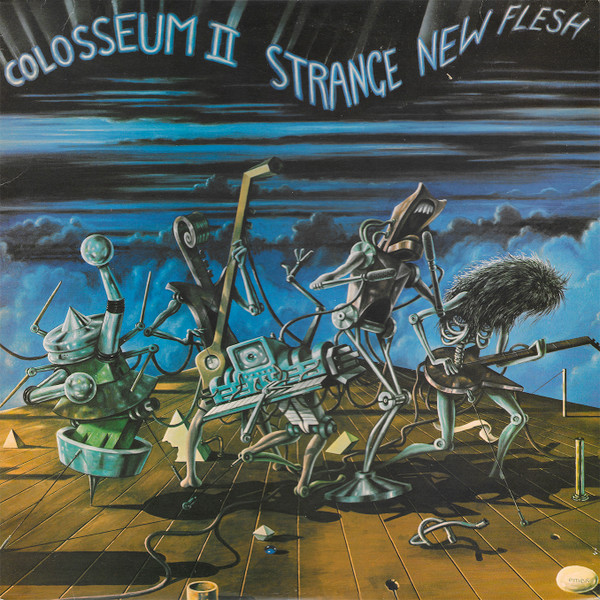
I had a very diverse engineering background. One day I’d be working on the Pink Panther movie, another day with Colosseum. Colosseum was another great band that I worked with.
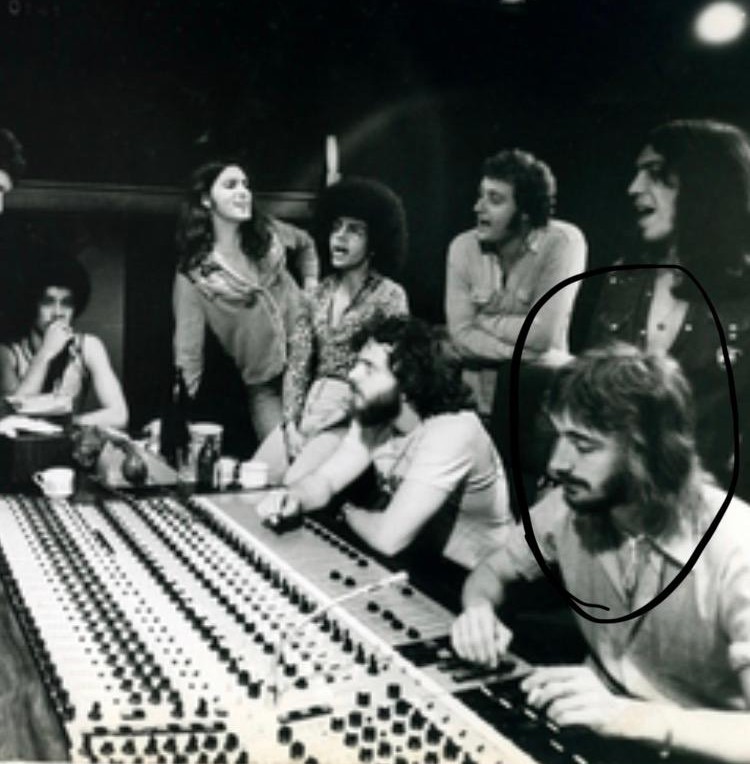
Ashley in the studio with Venezuelan band Spiteri, 1973

That was the one with Mike Starrs on it, right?

Right. It was a lovely album to record because they all wanted to make an album that genuinely reflected what they sounded like. They told me that most engineers would start EQ’ing things before even listening properly to the drums. Nowadays, some people don’t even record drums—they fabricate them.

John Hiseman and Gary Moore both said it was the first album where they felt it truly sounded like them. In fact, I don’t think I used any EQ on John’s drums. It was a great collaboration between very talented people who wanted to make a record and connect with one another. That was a lot of fun.

Hawkwind was fun too, especially with Ginger Baker. There was plenty of drama. We recorded an entire album and then Hawkwind – who had a habit of firing people – fired the drummer! We had to replace the drum tracks. I think we were working on 16 tracks or 24 tracks, and I didn’t have a way of preserving the original drums. So, we brought the new drummer in and he played the entire album in one go. One take. I had to wake him up between takes.(haha) But it was that was a good experience.

Babe Ruth were an interesting band. Very good. They never really got their due. I know they had some following in parts of Canada and UK and that.

Yes, good band.

A little story from those sessions: the producer would often want the guitar tracked six or eight times. We knew after two or three takes it was already huge and wasn’t getting any bigger, so we’d just pretend to keep recording.

It’s interesting because the last one is where they had a lot of change in the band and new singer. I imagine that one probably gets forgotten the most. But you had a lot of name guys in that band that went on to other things.

Well, a lot of these groups—including Heep—went through many different people, eras, and styles. It was a learning experience for everyone at the time.

Thank God for Led Zeppelin not conforming and not following the norm. If you wanted “Whole Lotta Love,” you had to buy the album.

I’ve often wondered, like Zeppelin obviously is the biggest band of the 70s, but all these other bands that, like Deep Purple, even Black Sabbath, they end up going through so many changes. You kind of think that the whole thing about Zeppelin being so popular still is the fact that they just left it where it was.

And that’s the key.

I hate to make the comparison, but it’s a bit like the mafia. You’ve got everybody together, things are working great, and then everyone wants to be the boss. They can’t stay in their own lane, and eventually they all get whacked.

There are very few people who can leave a successful entity and make it on their own. Rod Stewart is one example. He had Faces and then branched off successfully. People can branch out, but in the end, many should stay as they are.

You’ve got to admire bands like The Rolling Stones. They simply are what they are. They do what they do, they’ve got their own clique and there’s a reason those things work.

You should never try to change something that works, because most of the time it won’t.

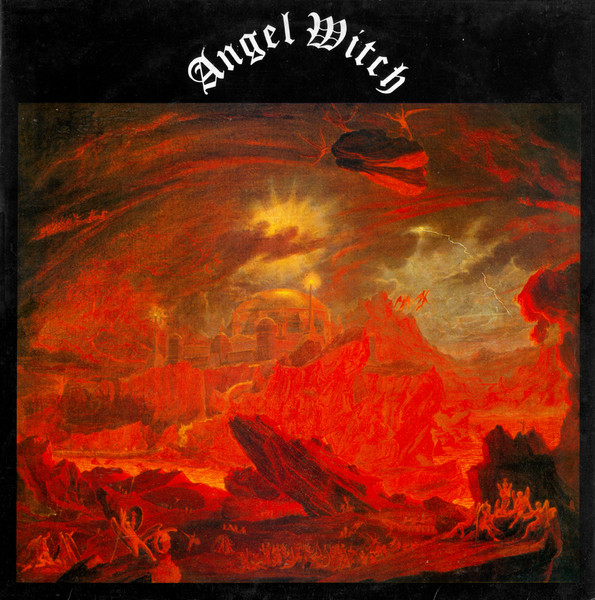
You did the first Angel Witch album, a little more metal there.

I think I was kind of branded, not branded, but nicely mentioned as the “man of metal” at one point. I could tell you a few stories about the Nugent album.
Yeah, you did Ted Nugent, Penetrator. You had Brian Howe on that album. Is it true you asked Peter (Goalby) about doing that album?

At one point, I’d asked Peter when I was doing it, and I think Peter was not free. And in actual fact, when I was trying to come up with a different person to do that, I was walking in the Atlantic and I used to go to Atlantic Studios a lot to get demos and that sort of stuff, and I heard a demo going on with Brian’s voice. And I said, “That’s it. That’s the guy!”

It was difficult to convince Ted to use someone. In fact, one of the reasons I did the album is I said, “Ted, if I’m doing this, I’m not even using anybody you know as musicians. I’m going to bring in outside guys, get an outside singer, and use some outside songs.

The reason we arrived at that point was that John Kalodner had heard the Heep albums and stuff. I believe he was a very good friend of Ted’s—whatever the situation was—and he told him that he should give it a shot because of the way I did things at that time.

So I went in with Ted, and we sat down. I went to meet him, and he said, “I’ve got to tell you, I was just with a very big-name producer, and he told me all my songs were fantastic.”

He played them all to me, and I said, “Well, then you should use them because you’re going to be paying a lot of money, and you’ll have an album. But it’s not going to be what I think you should do. But that’s OK.”

I thought I’d blown it. As a matter of fact, I came back straight into the Uriah Heep album that I was doing in the middle of, got a call, and he said, “When do we start?”

He was the most wonderful man to work with. Huge—biggest ego ever. (Laughs)

On the first day, I had Billy Squier’s band in New York for a week rehearsing, and I brought in six outside songs that we were working on.

Funnily enough, Ozzy was next door. I went to Ozzy and said, “I’m going to be doing Ted next door. Do you want to meet him?” He’s like, “I don’t want to meet him—he’s crazy!”

But Ted was nothing like you’d imagine. I mean, he’s got a big ego, there’s no doubt about it. Long story short, he comes into the rehearsals after a week off. Everybody’s a little intimidated because he comes in with a big presence—no doubt about it.

I needed to know that I was controlling the band because I knew he’d be difficult to control. So he comes in, and I tell him to start the first song. He starts playing, and I stop everybody, but he carries on playing. I said, “Ted—stop, stop, stop, stop.” In the end, I went over and pulled the guitar out of his hands. “We need to have communication. That was me trying you out.”

So he said, “Well, I’m deaf in one ear.” I said, “Which ear?” He said, “Well, I always put my good ear to the amp.” It was a 200-watt Marshall.

So, I got the roadies to put the amp on the other side. And I said, “OK, put your bad ear to the amp and your good ear to me.” And that’s how we started off.

I think there was a lot of respect between the two of us. He spent four days on the album. But on the first day that he went down to do the overdubs, he comes in and he didn’t talk to me at all.  I recorded his guitar in the control room . He started playing  a song and I stopped him because it was a little out of tune.

So I said, “Could you tune the guitar, please?” He took his pistol out of his bag, dropped the bullets out, put them back in one by one. The assistant was now ducked under the desk. He flicked it around, rolled it in his hand, and held it up.

I said, “OK, asshole, you can load a gun. Can you tune a guitar?” He said, “Nobody speaks to the Nuge like this.” And I said, “I’m getting divorced—I don’t care.”

We got on great after that. It was really good. He did everything.At the end of it, he went away and came back three months later to hear the finished album.

He said, “I’ve got to tell you, it doesn’t sound like me. Nobody wanted me anymore.” It was a calculated album, and it did him good. He was very impressed with that.

Draw the Line” was a big hit. And that was, I interviewed Jim Vallance there last year or earlier this year, and that was one of his. That song got done by quite a few people.

Yeah, well, it was an interesting era at that time. And I was starting to get a bit of a reputation for taking outside songs into the situations, which I’d like to point out was not done because of the inadequacy of the people I was working with.

It was done because I think there are very few artists nowadays who can come up with ten or twelve songs that are all great. Adele can pull it off, but most people are always going to have four or five brilliant songs.

I kind of wanted to give everybody their best shot. And I think because of that album, his career took off again. It wasn’t a massive album—it might have gone gold, I’m not sure—but it was designed that way.

What I also found was that using outside songs increased the playing level and improved their own material because you’re trying to prove something. I actually prefer a couple of Ted’s songs to anything else because I think it made him try harder. It certainly didn’t do him any harm.

“Draw The Line” certainly suits him, it doesn’t come off as a cover.

It shows his brilliance as a guitar player, which is another thing.

I’d never really heard Ted before. I’d heard “Cat Scratch Fever.” It’s like when I worked with Yes—I hadn’t really heard Yes before.

But I didn’t think that made any difference because it’s about what you’re doing at the time. It may even have helped in a way to change the model a little bit or give him a different direction.

My opinion of a producer is that he shouldn’t be telling everybody what to do. He should be capturing the performances.

That’s what’s difficult about being both an engineer and a producer. If you’re a self-critical engineer, you shouldn’t be worried about every little pop. There are pops everywhere and all that sort of stuff. But if you clean those up, you can lose performance.

Anyway, that’s my idea. Production should be about encouragement and then telling people when to stop.

I think Freddie Mercury, who was a perfectionist, would still be doing “Bohemian Rhapsody” over and over again if someone had let him. But he nailed it. You won’t get it better than what’s on the record. I don’t care how many melodic changes you make—that’s the best it will ever be.

To me, a producer needs to tell someone when to stop. At least in my career.

What about Brian Howe?

Well, I discovered him and insisted that we put him on the Penetrator album. And the way I work is always kind of one-on-one.

The way I work is always kind of one-on-one. I don’t have other people in there because I find it’s difficult to put someone in a situation where they have to perform. And it’s even more difficult if you’ve got a bunch of people standing around waiting for them to perform. So I like to work one-on-one.

Anyway, on the first day of recording, we were at the Record Plant. I took Brian in, gave him the song, and we started going through it.

He absolutely would not cooperate with any of the ideas I had.

So I said, “Brian, you’re only here because of me. We can fire you and bring someone else in, but I really think we can make this work.”

And he said, “Well, I don’t want to sing it that way.” I said, “In that case, this is the way I want you to do it. If you don’t do it, then it’s not going to work.”

I got a little belligerent, and I actually locked him in the studio. I turned all the lights out and left.

I came back two hours later and said, “Are we ready now?”

He said, “No.”

So I turned the lights out again.

I think I came back about ten hours later. I turned the lights on and said, “Now are we going to do it?”

So we did it. He was a little reluctant, but I think he started to get into it.

To cut a long story short, we played it to Nugent the next day, and he went absolutely bananas.

He said, “Oh my God, this is fantastic!”

From that point on, Brian and I got on. Well, we didn’t really get on, but we got on well enough to make it through.

Years later, I saw on his website that he complimented me for doing it, and we became really good friends.

Unfortunately, I didn’t get to see him before he died. Over the years, we became friends.

I kind of kept that story back because I had a call from his sister and she wanted to know what had happened. To be honest, I didn’t tell her about that because I didn’t see any need to. But it was the truth.

And from that album, he got into Bad Company, which was not a bad move at all.
Now, the other album I thought was interesting was the Wishbone Ash Twin Barrels Burning. But there’s two versions of it. The remix, I don’t know why.

Oh, I didn’t know there was another version. I didn’t know there was a remix.

Yeah, there was a different mix for the U.S., I guess.

Yeah, the U.S. tends to do that. I really didn’t agree with Abominog being rearranged in the U.S. because it was a concept album. It had a meaning, and I really put it together for a reason.

It started off with the old “Too Scared to Run,” which was like, “Yeah, this is the ’70s Heep,” and then it went into “Chasing Shadows” and stuff like that—“Now we’re going to be the new Heep.”

Then the end of it was “Think It Over,” which was really kind of a message to the fans saying, “Okay, I’m not sure if I like this because I love what they used to be.” And to the new people: “Hey, you haven’t heard the old stuff, but this is a mixture.”

But they mucked it up, in my opinion, when they reformatted it.

There’s a few albums like that in the 70s and 80s, where they just, you know, between the US. and the UK, they changed the running order on that.

Yeah, A&R people. In my opinion, there was only one great A&R person, and that was John Kalodner.

I’ll tell you a little story. I was at Atlantic, and they commissioned me to do an album with Lita Ford. We went in, and she didn’t want to be produced by anybody. So I was about three weeks into rehearsals, and she wasn’t cooperating at all.

I got paid by the record company and everything, and I said to them, “Well, now I’ve got time on my hands.”

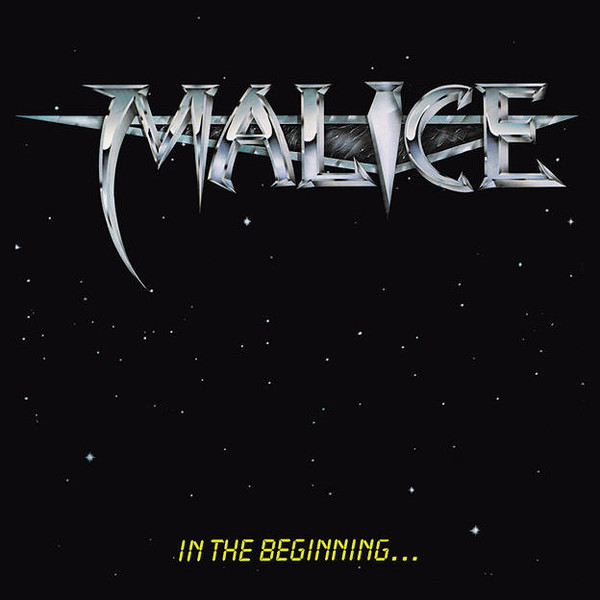
They said, “Okay, we’ve got this other band called Malice.”

I said, “Okay, great!”

So I went into Pasha Studios and started recording Malice. To make a long story short, I kept sending them rough mixes—“Take a look at this…”—and they kept saying, “No, don’t worry about it. Carry on.”

So I carried on and finished the album.

Quiet Riot was next door doing the remake of “Cum On Feel the Noize” and that sort of stuff.

I went to play back the album for the A&R guy, and he said, “Oh, crap, I didn’t realize this was heavy metal!”

I said, “What are you talking about? It’s called Malice! I mean, it’s not going to be called Mary, you know.”

And he said, “Well, we didn’t sign this, did we?”

I said, “Apparently you did, because you gave it to me.” (Laughs)

That was a classic example of an A&R guy. And he was actually at my wedding.

I wanted to ask you, last time you had mentioned that Twin Barrels Burning had started out as a different title.

Yes.

Well, what happened there was that it was originally called The Nature of the Beast—“It’s Just the Nature of the Beast.”

I’m trying to remember what it was… There was the April Wine album The Nature of the Beast.

So at the last minute, they changed the lyrics and everything to “You Make My Engine Overheat,” which, to me, kind of ruined the whole point of it. It changed the whole thing.

But yeah, that was the decision they made because they thought it would be too comparable to the April Wine album.

I know they still have the line in the song, “Nature of the Beast”, but obviously they took, they changed the title.

And that was another interesting little situation.

We were recording at The Sol, which was Jimmy Page’s studio. We were working away one night, and all of a sudden the roadies or security guards came over and said, “We’ve got this guy trying to get into the studio.”

I thought, “Who is it?”

So we looked at the camera, and it was Jimmy Page—the guy who owned the place.

I said, “I think you should let him in.”

He came in, and I was trying to get him to do a little cameo, but he just spent a few hours talking and hanging out.

I learned something from that. I learned that you can have the same guitar with a different player and it’s totally different. Clapton could play a note on his guitar, and I could play the same note, and it just wouldn’t be the same.

So it was very interesting.

It was a fun album to work on. The studio was so dead-sounding that Trevor Bolder and I went to another studio in the middle of the night, and I recorded all the bass parts in one night because I just couldn’t get a bass sound there. Not to say someone else couldn’t have, but I couldn’t.

It ended up fine.

I didn’t end up mixing that album. I think I had to move on to another project because we’d overrun at some point.

I grew up on that band, so I loved it. Having the opportunity to work on a Wishbone Ash album was a lot of fun.

Yeah, it’s a good album. It’s kind of more of a straight forward rock album for them. The song Trevor wrote, “Hold On”, was probably the standout track for me.

I thought it was a good rock album, I think it stands up. I don’t remember, but as you know, with these recordings there’s always some drama going on somewhere. I don’t believe there was any drama on that album at all. It was kind of fun, and we did it as quick as we could because it was a limited budget.
Speaking of ‘Drama‘, you were credited on that album as well! Was that a strange atmosphere with that line-up of Yes?

Very strange.

Again, I wasn’t that familiar with Yes beyond Fragile and that sort of stuff. Steve Howe is an amazing guitarist.

I did all the guitars on the album. They had four studios running at the same time. One person was doing keyboards, and they had six slave rooms.

It was obviously going to be the end of the band because it should have been five solo albums.

Funnily enough, the first time I met Chris Squire, I’d just been working on, I think, a Pink Panther movie or something. Peter Sellers was an absolutely wonderful person.

I said to him, “Would you like a cup of tea?”

And he said, “Actually, I’ll go make you a cup of tea.”

The next day, Chris Squire comes in and says, “I want a cup of tea.”

I said, “Okay, well, the kitchen’s that way,” because I was busy mixing.

And he said, “Well, I’m Chris Squire.”

I said, “Okay, I’m Ashley Howe. The kitchen’s that way.”

The drummer turned around to me and said, “Wow!”

But Steve was just a wonderful person.

I’ll never forget: he was in the control room working out a part, so I put the tape at half speed. He was doing this part with a lot of finger work.

They said, “Okay, let’s record it.”

So he goes downstairs, and I leave the tape at half speed, thinking we’re going to record it at half speed and then speed it up afterward.

He said, “Oh no, put it back to full speed.”

Now we’re twice as fast.

He transposed the entire thing and then said, “Now let’s do a harmony.”

I thought, okay, you might not like the guitar tone, but you can’t fail to admire the technique.

He was wonderful.

He brought in thirteen amps, and we tried about a hundred different guitars for every overdub. In the end, we wound up using the same guitar and the same AC30 combination we’d started with.

But he always said, “I need to try this.”

Unfortunately, it should have been a Steve Howe album because a lot of the guitar work was taken away. When everybody came together, they all played over each other. They literally let the keyboard player play over the guitar parts.

You had to take a lot of stuff out just to make room.

So it was obviously an attempt to solve a difficult situation.

I don’t know if it was one of their worst albums. It was certainly a pleasure to work on.

It’s different, obviously. I kind of like it for being a little more modern…

“Machine Messiah”…There’s a couple of great tracks on there.

But yeah, you got a lot of great things out of it. I mean, in time, you got the next Yes album and it’s a different lineup, and you got Asia and all that.

One other thing I’ve got to show you, I picked this up a couple years ago, a very strange album, Mike Maran.

I recognize this, Mike Maran.  He was a fantastic session keyboard player. In fact, he was very instrumental in a stage-show called Time, for Dave Clark. We had Freddie Mercury on it, Laurence Olivier, Ashford and Simpson, and a lot of other people involved. Mike was very much an instigator of most of the arrangements, and we recorded a lot of stuff in his studio.

At what point did you kind of get out of the kind of the rock producing in the UK and then coming over to moving over to America in that?

Well, between 1980 and ’85 or ’86, I was still doing a few bands. I worked with a band in Australia called The Angels, and I did a few other albums during that period.

But around 1986, I basically stopped doing as much.

To be honest, I was getting a little disenchanted with the way the music business was going. People weren’t using big studios anymore.

A little example of that is that I did an album with John Sinclair and a band called Estrella in 2010.

All done on Pro Tools. In fact, he would send me the files and the overdubs, and in the end I mixed the album on my MacBook—128 tracks.

The big studios weren’t being used anymore. It was becoming too easy for people to do this stuff. Then the age of plug-ins came in. We used to spend all that time trying to work out sounds and tape phasing with our hands, and suddenly it just became too easy.

I didn’t want to get into the disco era and that sort of stuff. I did a few disco records, but to me the music business was changing.

So, what actually happened was that I got married.

I did Time, got married, then came back and worked on the Time project, which involved doing all the films and mixing the double album with all the different artists for Dave Clark back at Lansdowne. That was a lot of fun.

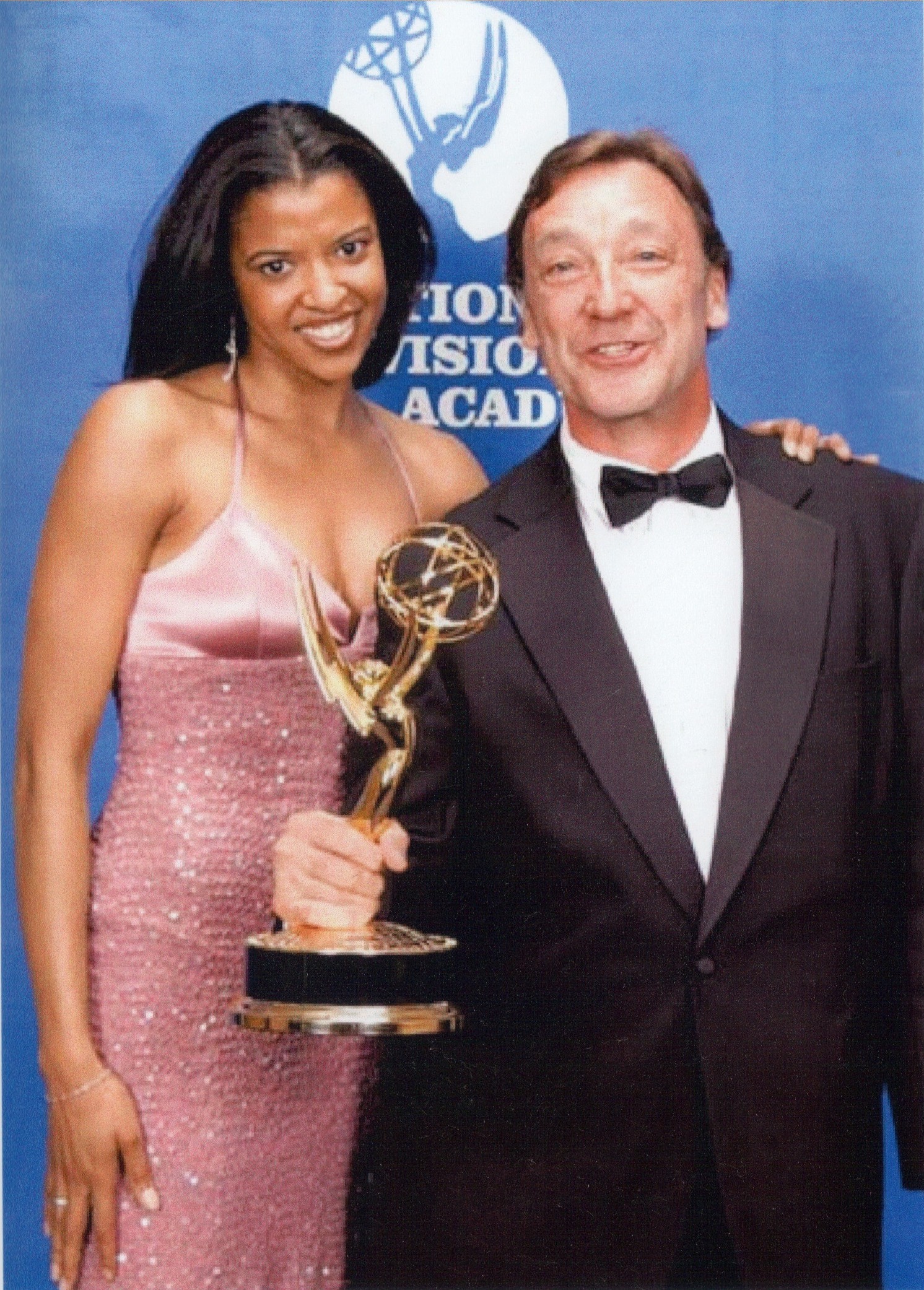
Then I actually went into television on the post-production side. I was fairly successful. I won eight Emmys for post-production work—various long-form shows and things like that.

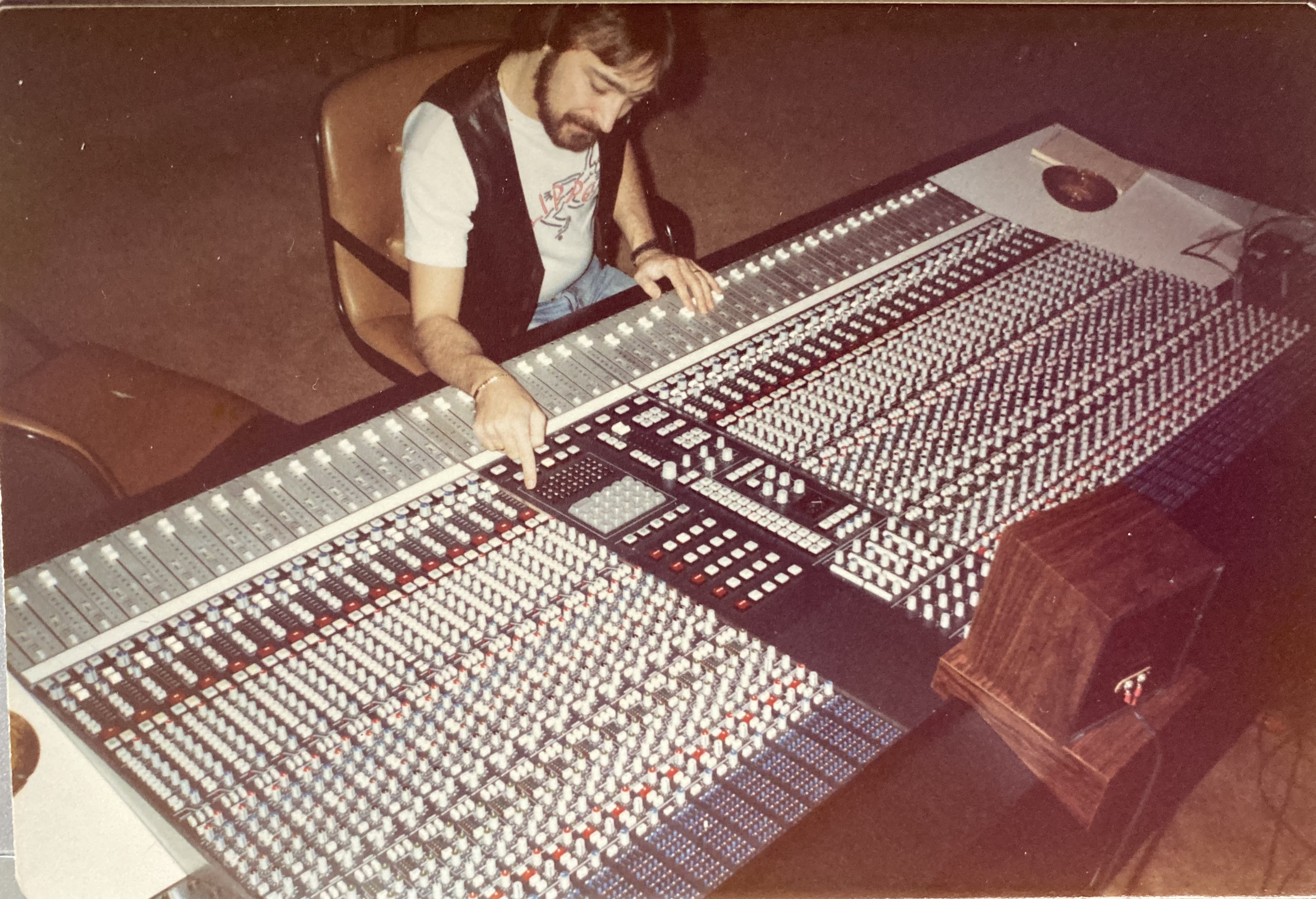
I also did a lot of live television. By moving into post-production, we ended up working on the Massenburg console, so I still got to do some good audio work. It was just a different genre and a different approach.

I went from 128 faders to five.
What exactly will you be doing as far as the sound goes?

Well, it depended. I actually ended up doing a lot of soap operas, where I’d be editing dialogue, adding sound effects and music, and balancing the entire show.

I also did a lot of live post-production for Monday Night Football, for example, where we’d do the opening segments.

I worked on a lot of 20/20 broadcasts and Primetime Live, along with various news broadcasts. Those were live post-production situations where material was constantly being brought in, and I was putting it all together and either airing it immediately or balancing it while it aired.

It was challenging. It was a smaller use of the skills I had, but it still incorporated many of the same processes. I think I managed to change things a little bit, and it eventually made me the highest-paid audio engineer in television, which was great.

I had a separate contract above the union contract. I won eight Emmys doing it, and it was a lot of fun.

With some of the long-form shows, I developed a reputation where producers would simply bring me the tapes, leave me alone, and I’d mix everything overnight by myself and hand back the finished program.

I developed a reputation where, if a project came to me—and I’m not trying to be big-headed; that’s just how it was—there were five other engineers, but they kept booking me. So I was highly paid, working constantly, and enjoying it.

Then, when Disney decided to shut down a lot of its operations, I moved out of post-production and into the live production area.

That wasn’t nearly as much fun. It’s like air-traffic control, but without the rewards.

At that point, they were trying to get rid of people through pure attrition. They even employed people whose job was essentially to watch for your mistakes.

There’s nothing quite like doing a live broadcast to 60 million people with someone standing over your shoulder waiting for you to open the wrong fader so they can write a report about it.

It wasn’t a very pleasant atmosphere, but I wasn’t going to let them use that as an excuse to deny me a full pension. I ended up with lifetime entrance privileges to Disney and things like that. So, I stayed with it.

I’d lost a little bit of enthusiasm—not interest, because I still loved what was going on—but I didn’t totally agree with the methods being used nowadays.

Maybe that’s because I’m old-fashioned. As engineers, we grew up with no second chances. Now you’ve got three million tries. Back then, if you screwed up, you screwed up.

The early Heep stuff was done on eight tracks. We’d be dropping in a bass solo on the backing vocal tracks, and if you didn’t come out of the punch-in at exactly the right moment, there were no more backing vocals.

There was no margin for error. I think that forced everybody to work differently.

You didn’t have computer mixing. You’d mark the tape with a Chinagraph wax pencil, and that would be your base level—not bass as in bass guitar, but your starting point.

You’d move the mix around manually. If you pushed the drums up, you’d probably have to push the guitar up a little too because the balance had changed.

You played the mix like an instrument. Once everything became computerized, it just became too easy.

And speaking of engineers, in those days we cut tape and spliced tape. I was taught by a guy called John Mackswith, an incredible engineer. He made me edit using bent scissors that looked like this.

Once you learned to edit like that, it wasn’t anything like using a splicing block. I kept saying, “Can I buy a pair of straight scissors? I don’t want to make a mistake.” And he said, “Just don’t make a mistake.”

That was the way I was trained. And I didn’t make a mistake. But it’s all changed now. To be honest, it’s become too easy.
And you moved into movies as well?

Yeah, I did soundtracks to a couple of the Pink Panther movies. And I did the recording to Time. Are you familiar with Time?

No.

Okay, well, it was a theatrical production—a musical theatre project—with Cliff Richard and, as I mentioned before, Burt Bacharach, Ashford & Simpson, Freddie Mercury, and a lot of other major artists who appeared on the album.

The production itself was staged at the Dominion Theatre in England, which seated about 5,000 people. We had a live recording studio underneath the theatre, which was fantastic.

Richard Dodd, who is my best friend—we’ve been friends since we were five years old—worked on it with me. Richard and I later got to do Raging Silence together for Uriah Heep, which was great.

So Time was a concept project that Dave Clark put together. It ran in the theatre for years and featured Laurence Olivier.

We had to record Laurence Olivier, who was suffering from Parkinson’s disease at the time, so we literally had to help him into a chair.

I’ve got a lovely story about him. His image was being projected onto a 15-foot holographic head that flew around the theatre.

A guy named Simon Napier-Bell was heavily involved with the theatrical side of things. At that point in time, the biggest productions had maybe fifteen hydraulic systems. His show had something like sixty.

The stage would actually tilt up vertically with performers standing on it. The amount of technology involved was incredible.

I also went to Laurence Olivier’s house to record him personally for some overdubs. Later, we needed him in the studio for filming.

Because of the Parkinson’s, we had to physically secure him in position. Even the slightest movement would become exaggerated on the giant holographic projection. A small shake could move his nose halfway across his face on the screen.

One day, a mailroom boy came in with a message for him. He looked downstairs and realized, “That’s Laurence Olivier.” He was completely starstruck.

Laurence noticed him standing there and said, “Please excuse me. I’m working at the moment, but I need to come upstairs.” He walked up to the kid and said, “Hello, I’m Sir Laurence Olivier.” The poor kid was practically shaking. Then Olivier said, “I’m very sorry to have kept you waiting.” What a wonderful man. What a great human being.

That was the technology we were working with at the time, and it was a lot of fun.

I started out doing the first few performances live. We recorded the raw performances, and once the production got going, I think it ran for four or five years.

That was another collaboration with Richard Dodd because he’d already done half of the double album. Richard and I were fortunate enough to work together several times over the years, and it was always a lot of fun.

Were you on like set for a lot of any of the movies and stuff that you’d meet a lot of people over the years?

The movie work was mostly recording the music—a couple of songs here and there for each production. Even that has a nice story attached to it.

You had to be heavily unionized to work on those sessions, and I wasn’t part of the union. Dave Clark pulled a few strings because he wanted me to do the work. I said, “Great, I’d love to do it.”

But there were all kinds of restrictions. I wasn’t allowed to speak directly to the person operating the recording machine. I had to tell another guy what I wanted, and he would relay the message.

At one point I went out to mic up the musicians and tripped over a microphone cable, pulling the connector out of the wall. I went to plug it back in and they immediately said, “Oh no, don’t touch that!”

So we had to wait fifteen minutes for an electrician to come and plug it back in. Meanwhile, we only had about thirty-five seconds available to record a thirty-second piece of music.

I said to the guy, “Put it into record.” He replied, “You can’t talk to him. You have to talk to me.” I said, “Okay. Don’t put it into record.” He then turned to the operator and said, “The engineer in charge of the session would like you to place the machine into record status.” We just barely got the take recorded.

Afterward I asked, “What would have happened if we hadn’t gotten that?” And the answer was, “You’d have to book another twelve-hour minimum session.”

Then the same person proceeded to tell me, “I don’t understand why we’re losing all our recording business in England.” Dave Clark turned around and said, “Next time I’ll just record in Germany. It would be cheaper to fly all the musicians there. Why the hell do you think you’re losing business?”

It was a very strange atmosphere. But despite all the bureaucracy and obstacles, we got it done.
Are you still active?

Not really, to be honest. Retired…Well, I say retired. I was let go—or they tried to fire me—from ABC, but I was a little smarter than they were. So I ended up with a pension.

I went back and did something with John Sinclair. I’m always open to doing things; I just don’t really need to do it anymore. And I don’t want to spend too many more days in studios. I mean, I spent most of my life in studios.

Have you considered putting some of your stories down in a book?

Well, it’s funny you should say that. I have a lady who contacted me. I believe she’s interviewed a lot of engineers—Richard has been one of them. I think she’s interviewing a bunch of engineers and putting them into some sort of “top” category or collection. So she’s going to come and talk to me.

I would love to do it. I don’t know. I mean, I tell people these stories, and they’re mostly nostalgic, but they also take me back to those moments. A lot of people have said, “You should share them because…”

There’s some interesting stories, not even just with the Heep stuff, but obviously like Motorhead and Yes.

Well, I think I’ve got enough stories to make at least a couple of pages interesting. So, in answer to your question, and ironically enough, she sent me a text yesterday saying, “I’m coming back up your way. Let’s get together.” I know she’s interviewed a lot of very, very accomplished people. I don’t consider myself a big name, but I think I’ve contributed something.

I’ve probably got my name on a couple of million records, but that’s not really the point. I think I actually helped some people, and I think that’s important. So yes, hopefully I’ll have something worthwhile to say and eventually make it into a book somewhere.

And then I’ve got the Uriah Heep stories. I used to be a bit of an idiot. (Laughs) Well, I’d always try to make everybody laugh.

There’s a story from when we were recording “The Wizard.” I’d set Ken up at Lansdowne under a spotlight with a chair in the middle of the room while he was doing his acoustic part. I’d also found a great big cardboard box and written “10 Tons” on it. I positioned it above him where nobody could see it.

As he started playing the intro, I dropped it onto him and covered him with a ten-pound weight, which was very Monty Python. Gerry Bron got pissed off at me and fired me—then rehired me.

I used to do silly stuff like that.

Gerry was one person I never got to interview.

He was an interesting man. I have to say, he looked after the people who looked after him. At the ripe old age of nineteen, he bought me a BMW, gave me a separate contract, and did things like that.

I was doing a lot of engineering work for him, and later Peter Gallen and I worked on the solo albums by David Byron and Ken Hensley. Then Gerry gave me projects with Hawkwind, Sally Oldfield, Motörhead, and various other artists.

So he was very supportive, and I certainly owe him a lot.
LINKS:

https://www.discogs.com/artist/81045-Ashley-Howe

https://www.muzines.co.uk/articles/roundhouse-studios/6629

https://www.imdb.com/name/nm0397777
The story of Paul Bliss’ “That’s The Way That It Is”

British keyboard player, producer, Paul Bliss can be found on the lone album by Dog Soldier, which also included Miller Anderson and Keef Hartley (both of the Keef Hartley Band), he went on to work for various bands before forming The Bliss Band, and releasing 2 albums – 1978’s Dinner With Raoul and 1979’s Neon Smiles. The 2nd album received good reviews, but it’s the album’s last track, “That’s The Way That It Is” (clocking in at over 7 minutes!) that would gain the most notoriety for it being recorded by a few other acts, notably Graham Bonnet for his 1981 solo album, following his time in Rainbow, and then being a comeback hit single in the US for Uriah Heep, on their 1982 album Abominog. Ironically Heep’s then-new singer, Peter Goalby had been replaced by Bonnet in Rainbow!

Songwriter, Paul Bliss recalls that the song was inspired by “just a discussion between two friends with a difference of opinion about something political. I always put more weight behind the music than the lyrics…..which is why I always liked writing with my songwriting partner Steve Kipner because he was so great at meter”.

Recalling the songs creation and recording – “The guitar riff was mine but Bliss Band guitarist Phil Palmer and producer Geoff Westley layered many tracks of guitar to get ‘that’ sound. If memory serves I think there was a track or two recorded at half-speed to get that 12-string effect. “

On the few covers of his song, Bliss notes – “I have heard all the versions and particularly liked the Uriah Heep version…possibly because it was the best known.

Although it was never released as a single for The Bliss Band, Paul recalls that the track did get airplay in Brazil.

The Covers…. For the most part I’ve included covers that were officially relased. There are a few other fairly decent versions on Youtube from cover bands.

GRAHAM BONNET, 1981

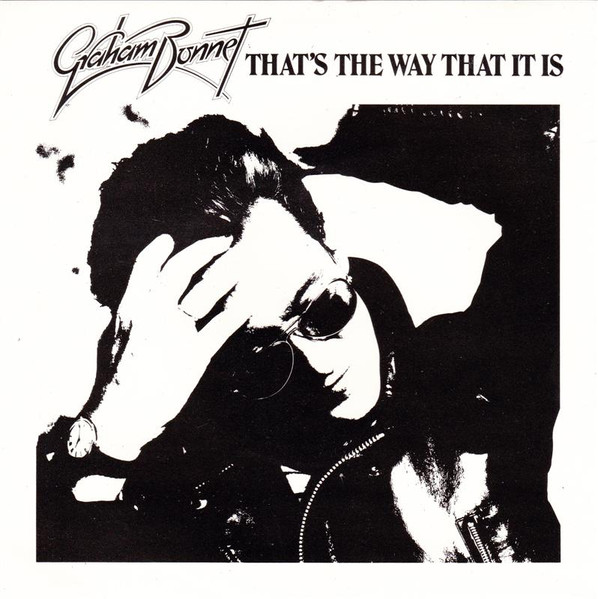
Fresh out of RAINBOW, Bonnet included the song on this 1981 solo album Line Up , which included Mickey Moody, Cozy Powell, Jon Lord, and others. Bonnet’s version was released as a single in the UK and in Australia, in October thqt year. In the UK, it hit #76. It’s a very good version, shortened to just under 3 and a half minutes, a bit laid back, with the focus being on Bonnet’s voice. Line Up also included 2 Russ Ballard (Argent) covers – “S.O.S.” and “Liar”.

URIAH HEEP, 1982

Included on Uriah Heep’s 1982 comeback album, Abominog. This was released as a single and video. It reached #25 on the rock charts, and was close to the top 100 singles, as well as the video being in regular rotation for some time.

Ashley Howe (Producer, 2002) – “The Way That It Is, which I think was a very nice track for them, we originally recorded that at Ridge Farm Studios, and it had the Hammond C3 organ on it, and it was far more ‘Uriah Heep’ than it ended up, but what I tried to do with that was I had originally recorded that as the ‘old’ Uriah Heep, and the old Uriah Heep sound, but we ended up scrapping it because basically it ended up as a good song, but it felt like the ’60s. so what I did was I stripped the whole thing down and I re-started it more along the lines of Journey, like ‘Who’s Crying Now’ – type of feel to it. And we retained the song, which was a good song, and I think just having the whole band out, then they all join in on the 2nd part of the first verse – they came in as Uriah Heep. And I think it was a good new sound for them. “

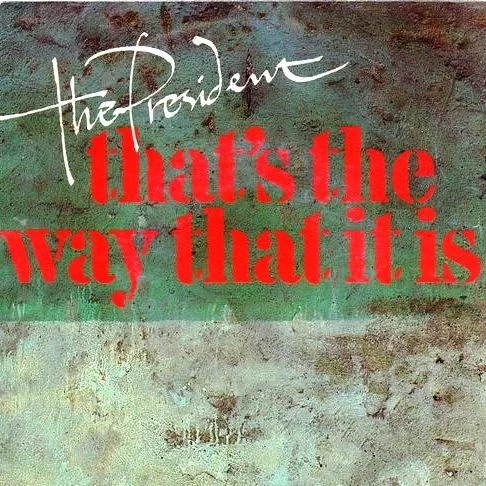
THE PRESIDENT, 1983

From this Dutch band’s 1983 album By Appointment Of. This was also released as a single. Curious to hear from anyone who knows how this version was received in the Netherlands back then.

BLACK PEARL , 2011

I’ve included this version, even though it is a live video only as it features Stef Fontaine (I believe the vocal was re-recorded and dubbed in). Fontaine would replace Peter Goalby in Uriah Heep, briefly in 1986.

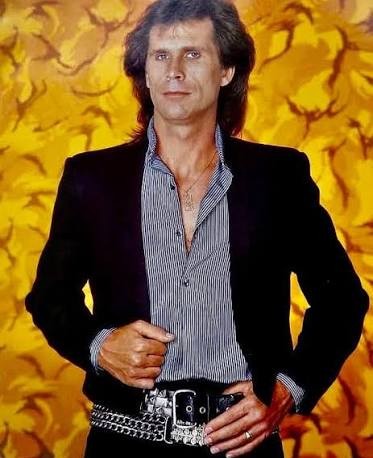
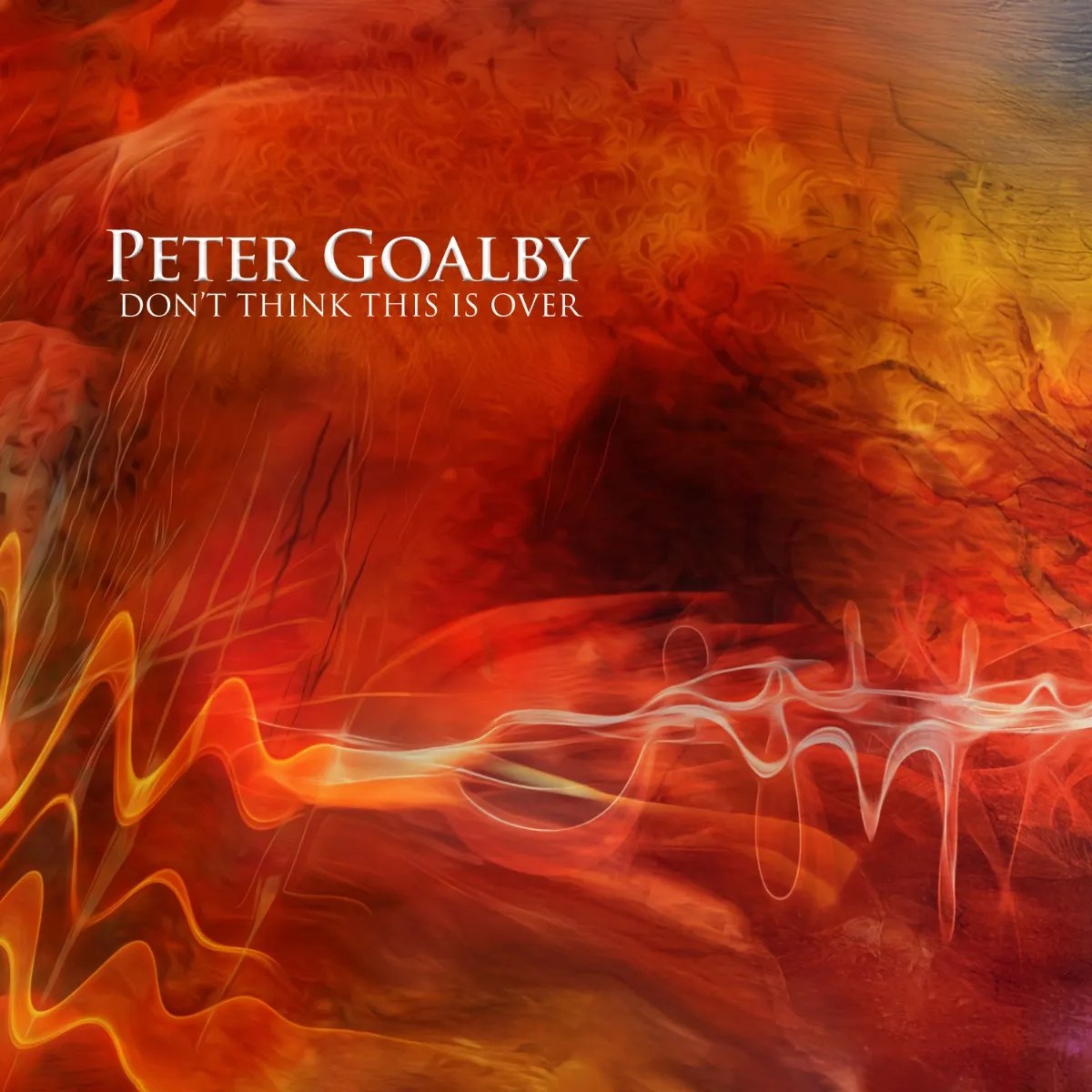
PETER GOALBY – Don’t Think This Is Over, interview by Martin Popoff

Hey folks, this is an interview I did with Peter Goalby on the occasion of his new archival album Don’t Think This Is Over. Kevin Julie has graciously accepted it for publication. It was a delightful, wide-ranging chat, but yes, if there’s any one thing I’d like you to gather from it, it’s that based on these songs, Peter should have been a big league songwriter to the stars, not to mention a famed vocalist past his well-graded run of three albums for Uriah Heep—enjoy! Martin Popoff

I guess to start with, why don’t you explain to me just a little bit, where these new tracks were recorded, like what sort of time period and what they were indicated for, I suppose. I mean, did you think you were going to end up in another major act kind of thing or were they going to be a solo album?

It’s exactly the same story as with Easy With The Heartaches and I Will Come Runnin’. After I left Heep, I tried various things to get back up there with the music scene. What happened was with the new album, which is obviously an old album, the songs are about 30 years old, just over 30 years old. And I signed a publishing contract and a recording deal with Rak Records in the UK; that’s Mickey Most. He was known for all the pop stuff, you know, Suzy Quatro, Mud, Hot Chocolate, all that kind of malarkey. Anyway, I signed with Mickey and we did we did two singles – both failed. But whilst I was under contract, I was on the publishing side of things, I was writing songs; that’s what I’ve always done, I’ve always written songs. And there was a falling out. He let me out of my contract. There was supposed to be an album. In fact, he did go over to America to sort me a record deal. And the story I got back from the people in the offices at the publishing company was he was offered a deal for me, an album deal, but they couldn’t or he wouldn’t agree with the terms. In other words, he wanted a lot more percentage than they were willing to give. And so, he walked away. Martin, that’s the story I got. So, the whole thing fell apart and that was the end of it. And I hand on heart, I totally, because I moved on, I was looking at other things as well. And those songs just got forgotten. And the reason that they reappeared is because the people that are looking after me now went to Rak Records and they said, would they consider releasing the songs? In other words, reverting the songs back to me, the copyrights, because they haven’t kept their side of the bargain. The publishing side of the contract was they would endeavor to try and get covers on my songs, from other artists, which they never did. So no, it was it’s called ‘non exploitation’. It’s in the contract that’s in my favor. In other words, if you don’t roll your sleeves up and do the job, the songs will revert back to the artists. So, it was absolute joy when Daniel Earnshaw told me these songs now belong back to Peter Goalby. I couldn’t even hum you a melody of one of them. I hadn’t got a clue. I mean, I’ve written a lot of songs anyway. I got an email and which said there’s a DAT been found in the offices at because RAK was sold and that whilst they were clearing everything out, there was a DAT and it hadn’t got a name on it. But somebody recognized some of the titles to be my songs. And in all honesty, I didn’t get very excited because I’ve heard all these stories and been there so many times before. But…I played the first song and I was absolutely delighted, I thought, my God, this is good. And then I played the second song and I thought. This is really good. After the third song, I thought, I don’t believe this. And I looked up to the sky and I said, thank you, God.   I got my songs back, and not only did I get my songs back – they’re really good! I believe them to be very good songs. And for the time, if you look back and think of the late 80s when I wrote them and recorded them, and they still stand up today. We’ve done a lot of overdubbing. We put some good guitar work on there. And there it is – “Don’t Think This Is Over”. I’m absolutely thrilled with it, Martin.

Yeah, they are very solid songs. And you would think these could be absolute smash hits. How would you describe this kind of music if you were going to put on your rock critic hat? How would you describe these songs?

To be totally truthful, because it was what you got to remember, if you go wind the back, Easy With The Heartaches and I Will Come Running – All those songs would have been written anyway, whether I was in Uriah Heep or not in Uriah Heep. And most of those songs would have ended up, as I believe most of the songs or some of the songs, on the new album would have been treated differently because Mickey and the guys would have recorded them a lot heavier.  A lot heavier. I mean, if you look back when we did, for instance, Bryan Adams “Lonely Nights”, it’s a pop song. But if you if you get the right players playing the song, it takes on a new meaning.  I totally believe that I automatically write commercial songs. I can’t get away from the fact that I started off in a cover band singing everything from “My Way” to all the pop songs of the day when I was 17, 18 years old. And so I naturally write with introductions, with verses, with chorus, with middle eight, what I call a proper song. And part of the magic, and a lot of the magic that we had with Uriah Heep was. I would take a song, for instance “Too Scared To Run”, and I wrote “Too Scared To Run” two years before I joined Uriah Heep, but when I joined Uriah Heep and I did my audition, and I don’t know whether you know the story (?) – I’d already auditioned the year before, and it didn’t work out. Anyway, the second time around, when we were in rehearsals, I said, why don’t we try a song from scratch? In other words, I can sing “Gypsy”, I can sing “Easy Livin’”; I can sing pretty much all the stuff that they’ve done, we did it. So, we all started at the same place. And they automatically played “Too Scared To Run” in a lot heavier vein. And so I believe, the stuff on this album that’s coming out now, as we speak, it’s AOR. That’s what I think it is.

Were any of these (on the new album) worked up with the band? Were any of these put through the paces with the band, towards the tail end, say Equator, were any of these ever put through the paces by the band?

No. All of these songs were written after I left Uriah Heep. There’s nothing… I wrote “Blood Red Roses” for Mickey after I left. He phoned me up and he said, “We’re doing a new album. Have you got anything that would suit?” And to be totally truthful, I hadn’t at the time. But within about three or four days, I consciously sat down and I thought if I was still in the band, what would I like to put forward as a song? So, I wrote “Blood Red Roses”. But everything on this – my third solo album now, and every song that is on these three albums were written after I left Uriah Heep.

Did you have any interaction with Ozzy on losing or gaining Bob Daisley?

No, not at all. I didn’t know Bob previously, so there wasn’t really a relationship outside of the band, if you know what I mean. But Bob’s great. Absolutely fantastic. I love him dearly. And him and Lee were just fantastic. But going full circle, that’s what the point I was trying to make about 10 minutes ago. It’s because people like Bob and Lee and also John Sinclair and Mick, they think in a heavier vein than I write. And I think the magic that we had was because of what I do is a bit poppy in construction wise – and what they do is heavy. And the two meet, and then you end up with a song like “Too Scared To Run”. I could play you the original version of “Too Scared To Run”, and it’s nowhere near as punchy and as heavy. It’s exactly the same; It’s exactly the same words. It’s the same melody. It’s the same guitar riff. But it’s the way that these rock players, the professional, what I call ‘rock players’; it’s the way they interpret the song. I think that’s what the winning formula was. Definitely.

If Bob, Lee, Mickey and John had worked on the songs on this new album, they would have been a lot heavier. I mean, this album is a bit heavier than my last two in that there’s not so many keyboards on this album. Mickey loves the new album. In fact, I sent Mickey “Sound Of A Nation”, one of the tracks, because I could picture him doing it. not in the exactly the way that I’ve done it, but again, a far heavier version, like a rock anthem.

I knew Ozzy quite well. I’ll tell you a story about Ozzy because at the time we were doing Head First and Bob was splitting between us and Ozzy’s Blizzard of Ozz. And he was in the band, then he was out of the band. And the one day we were in the studio with Ashley Howe and I’d just done the vocal on “The Other Side Of Midnight”, from Head First. In walks Ozzy absolutely out of his tree, drunk with Bob. Bob was practically holding him up. And I’ve met Ozzy before and. They sat down and Ozzy had got a bottle of whiskey in his hand he’d walked in with. Well, I say a bottle of whiskey, about a half a bottle of whiskey, because half had gone. They sat down and I’d finished the vocal, and Ashley was playing it back and fiddling with something. I don’t can’t remember what he was doing, but he played” The Other Side Of Midnight”, and at the end Ashley pretended that it was a guide vocal. And Ozzy said, Fucking Hell! That’s a fucking guide vocal? I can picture him saying it right now. It wasn’t, it was the actual master vocal, and it was a fabulous vocal. And he took a swig of the whiskey. And, you know, like in the cowboy films and they take a swig and they screw the face up and say, “Oh God”(?)  And he said, I hate this. I said, What!? He said, I hate drinking this stuff. I said, Well, why do you drink it? Then he said, I love what it does to me.

Was Ashley part of the heaviness because Abominog is recorded pretty harshly, right? It’s really exciting and visceral and distorted. What did he do to make that album sound as heavy as it did?

I think each member of the band would discuss the sound – like Bob, Ashley would say, I’m going to get you a good bass sound. So, Ashley would get the bass sound for Bob and said, Bob, what do you think? And Bob would say, yeah or nay. And in fact, another very quick story on Head First on “The Other Side Of Midnight”, you’ll notice the bass is quite actually too loud that was because Bob was in the studio when Ashley mixed the song. And when he was doing when he was doing the final mix, Bob leapt up from the seat and just pushed the fader up on the bass. He said, turn the bass up. It was a team effort, Martin. I mean, Abominog and Head First were both team efforts. There was just a great atmosphere. There  I say there was no leader, Mickey Box is a born leader, but he doesn’t know it and he doesn’t show it – If that makes any sense to you. He doesn’t rule with a rod of iron, but he just suggests, well, what if we and let’s try it like this or whatever. But as I was saying, had the Heep lineup played this album, the songs would still be the same songs, but the solos would be heavier. The bass line would be. I mean, it’s a drum machine on a few of the tracks that wouldn’t be there, obviously. You’d have Lee thundering through. And if we were at a rehearsal, Bob and Lee would lay the scaffolding down and it would be a far heavier scaffolding than what’s on my album.

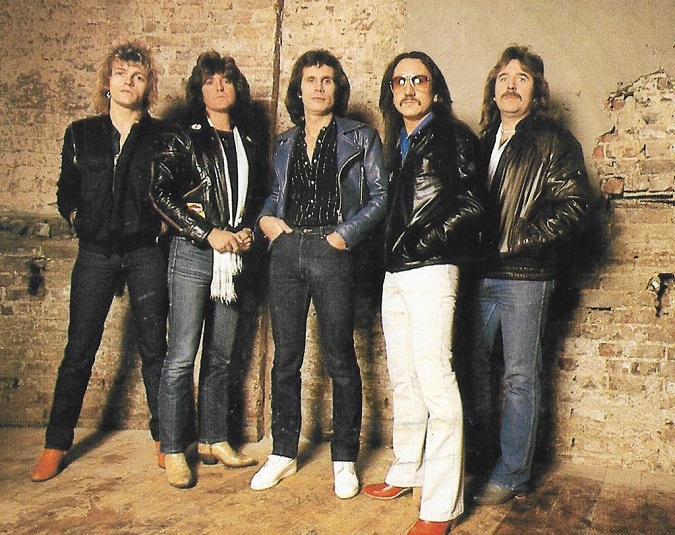
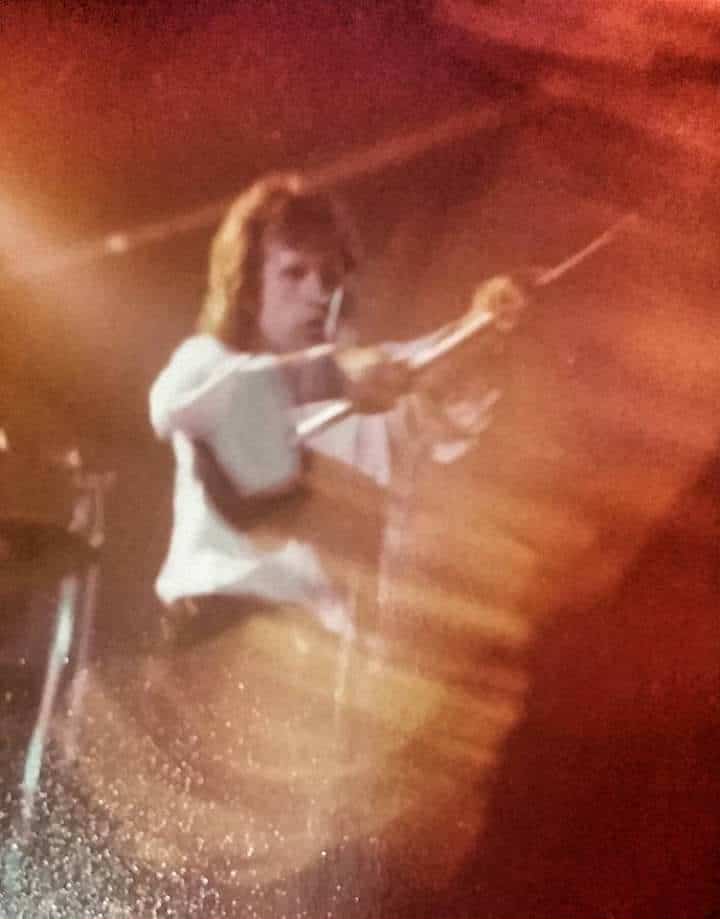
Peter on stage, 1981, photo Lynn Everett

It could be a nice story that two or three of these show up on the next Heep album and it gives everybody something to talk about.

Yeah. I mean, the reaction to the album…I’m bound to say this anyway, but hand on heart again, I’m absolutely gobsmacked. People really do get it! John Sinclair iiplayed on “I Don’t Want to Fight”, In fact, John rearranged “I Don’t Want to Fight” for me. It captures the time. “Heart What Heart”, it sounds ridiculous, but I wanted to write a song… My favorite singer in the whole world is Dusty Springfield. Somebody told me that Ian Gillan (?), (another singer?), Dusty Springfield is their favorite singer as well. I can’t remember who it was…It was somebody out of a big band.

Ian might’ve said that…

And I was absolutely thrilled to think, well, it’s not just me.

How about did to what extent did Bob Daisley write any of the lyrics through those Heep albums?

Bob played a big part of the writing of the lyrics of the album. I wrote that it was Bob and I. OK. No one else. We wouldn’t let anybody else touch. The thing is, at the end of the day, Martin, I’ve got to sing those words. And Bob and I would sit down together in a quiet room and we’d work, work on the song together. As I say, it’s me that has to stand there and sell the words. So, it was me and Bob.

Any interesting stories of how you picked any of these cover versions on the album, the Russ Ballard song or…

Totally down to Ashley. Ashley had got a nest of songs, even before I joined the band. Ashley was such a massive part of Abominog. It was almost as though it was his baby. He obviously had plans even before I joined. Whoever had gone into the singing seat, I think it would have still ended up exactly the same. The band were under a lot of pressure. I don’t know whether I should tell you this, but obviously you want to hear it….when I’ve told it anyway. Mickey was given a whole bunch of money for Abominog. I mean, at that point, it was just the next album.

He had to put the band together. He had to sort the whole thing out. And a lot of the record advance had been already been spent when I joined. And so, we were in a bit of a dire straits situation, which nearly spent all the money. And we hadn’t even started the album. We were under a lot of pressure.

What were you paying for, like paying flat sums to the new members or..?

Yeah, and the rehearsals and the gear and all that. And to be fair, there are probably a lot of bad stories about Gerry Bron. But to be fair, as Mickey always pointed out, Gerry Bron always put his money where his mouth was. They never wanted for anything. So anyway, there was a lot of money being spent, and they hadn’t even got a full band together. He got Lee and Bob and then he got John. When they asked me to join, I was going to America with Trapeze at the time. And I said I was flattered, and I would jump at the job. But the problem was I’ve got to go to America for six weeks.  I thought they’ll find a singer easily, but I went to America for six weeks, and before I went, I said, if you hadn’t found anybody, I would come down and rehearse and see if we could make it work. When I came back from America, I’d been back a couple of weeks and Ashley phoned me, and he said, “Do you want this fucking job or not?” That’s exactly what he said to me. Yeah. And I said, “sorry, but I thought you’d buy now you would have found a singer”. And he said No. Do you know they auditioned 84 singers!?  It’s a fact. I’m not lying. Ask Mickey. They auditioned 84 singers! But, all of this time was going by, and Mickey was spending more and more money trying to hold the thing together.  So, when we finally got a line up, when I actually joined the band, we were under so much pressure to do an album for Gerry Bron to recoup some of his money. Had had we been given the time to write more songs there would have been less covers. But to be truthful, Ashley and Gerry Bron had a vision, had a picture of making the band more commercial.  So, we were on a bit of a loser because everything that we wrote. Gerry would say No. too heavy. And Ashley would be saying, “I’ve got this song …this would be perfect”. So I think between Gerry and Ashley, they steered us in the direction of a lot more commerciality. They wanted us to go to America and sell the band in America. Gerry and Ashley were a massive influence on not only picking the songs, but the whole direction of it all. 

To what extent was anybody in the band aware or inspired of this great New Wave of British Heavy Metal movement around you and how you guys could fit inside of that?

Consciously, no, because we were automatically part of it. I remember when I first started rehearsing with the band, I used to stand there, Martin, and I’d think, wow, let’s just listen to this. It was just fantastic. And the band naturally played in the direction of what was becoming very fashionable. Again, I keep mentioning Ashley’s name; Ashley was such a big part of it all, but obviously the actual playing was down to the players. And I think we were all influenced consciously or subconsciously just by standing next to a jukebox in the pub, and you’re listening to Bon Jovi coming on and all the all these different bands. We used to do a lot of festivals and with Lemmy and Motorhead and all those guys. So, I think it just rubs off. I don’t think it was a conscious effort at all.

Looking back, I don’t think we purposely said we want to try and sound like this. Ashley might have thought that, and Ashley might have pushed it a little bit, to the way that he and Gerry wanted things to turn out. But we just played what we played. I was very proud of what they did to my songs, because there was “Too Scared To Run” and “Chasing Shadows” were my songs. It’s just the way that they played them. 

Absolutely. What else would be a favorite of a Heep original on here and why?

“Think It Over”. I love that song. I didn’t know that already bloody recorded it. No one told me. I didn’t know, but they’d recorded it a year before with John Sloman. I thought it was just Ashley bringing in another cover. I love “Prisoner”. What I do get an absolute fantastic buzz from is when I, if I go on onto YouTube and put on one of those songs on and see the comments that people have put underneath. And they get it. And it really touches me that people get what we were doing.

It’s interesting. I like what you said about Ashley. I mean, the covers fit perfectly. And then if they’re steering you a little bit to, you’re less all-out heavy metal originals, that now melds with the covers and then there’s a couple pretty heavy songs on there still. So, you’ve got this nice range where it’s and we know the UK, and Kerrang, they love their AOR music, their American influence music. And then obviously there’s going to be a big hair-metal explosion soon. So, this is like a perfect proto-setup for that big hair metal explosion kind of…

As I say, direction-wise, we were just playing the way that we played. If we were pushed at all, it was Ashley that was pushing. He had a picture; he had a vision for this album. He wanted to take the band out of the 70s and put the band into the 80s.

Did you guys talk about the album cover?

Oh no, I Hate it. Absolutely.

What did everybody say about it, and how did the dialog go to come up with that?

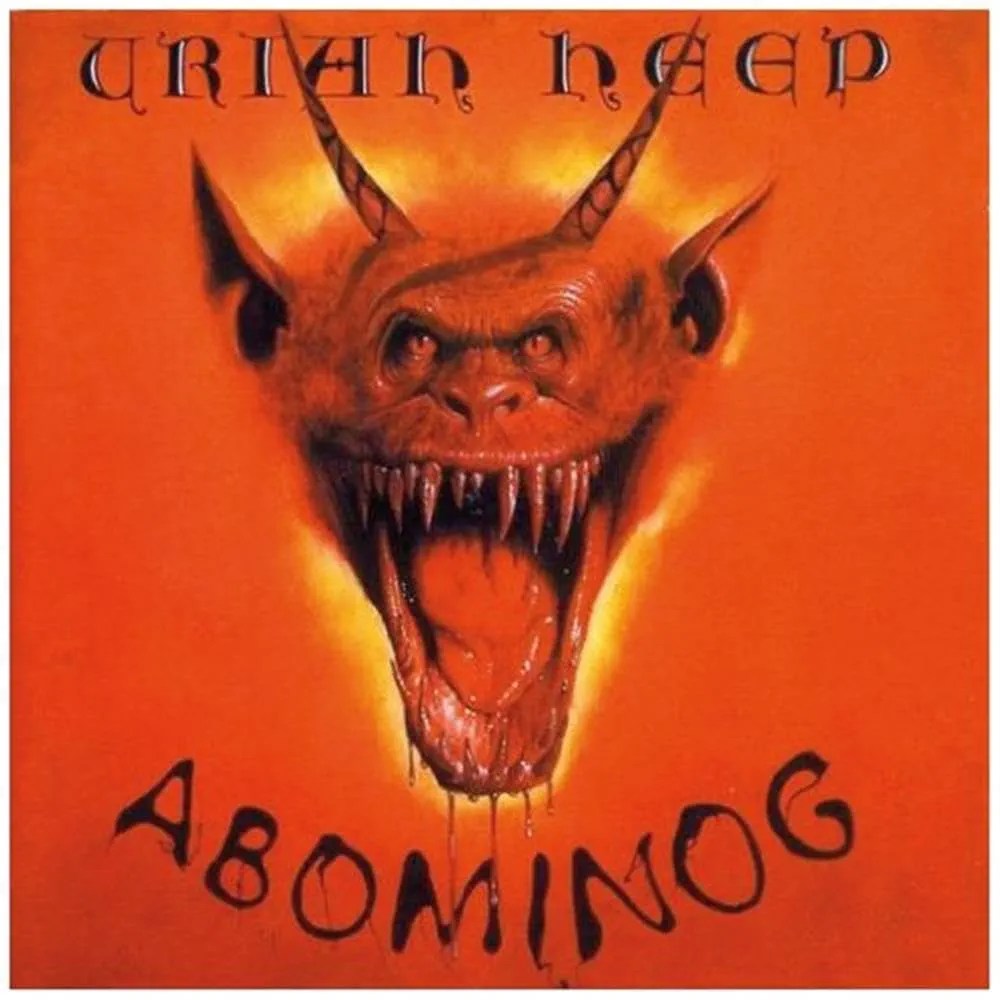
I think we were all too polite to say, it’s yuck. I think what happened was because of Bob and Lee, and because of Bob and Lee’s background with Ozzy, the people that were doing the artwork for the album probably…I wonder, in all honesty, whether they actually listened to any of the songs, because I don’t think they did. Because if I was an artist, doing an album sleeve, I’d listen to the songs, and I wouldn’t come up with that picture. Would you?

Exactly. And how about the title? Where does the title come from?

Bob Daisley, I think it started off with ‘Abomination’, and it was taken from there. Maybe what went wrong was Bob did the title, and then the people looked at each other over the table and said, What picture can we put with this!? But to be fair, we were all too polite. Nobody would stand up and say, “Well, I don’t like it”. They’d say What do you think? Well, it’s okay. We were more interested in the music. I certainly had no say at all in the sleeve. And I think pretty much everybody in the band were in the same situation. I think it was just presented and we thought, well, yeah, we’ll go with that, not knowing that in a lot of areas, it probably did us a lot of damage, because a lot of people would look at that sleeve and think and run a mile. They’d run away and say, no, no, no; they would have this vision of some death metal band, which “Prisoner” and “The Way That It Is” certainly aren’t (haha). To be fair, it sort of worked against us, but it also worked for us, because here we are today, 40 years later, or whatever it is, and we’re still talking about the sleeve,

I think it gave you guys an extra little link to the New Wave of British Heavy Metal. You’re part of this trend that’s, going strong for three or four years?

Yeah.

What is that story of your interaction with Rainbow?

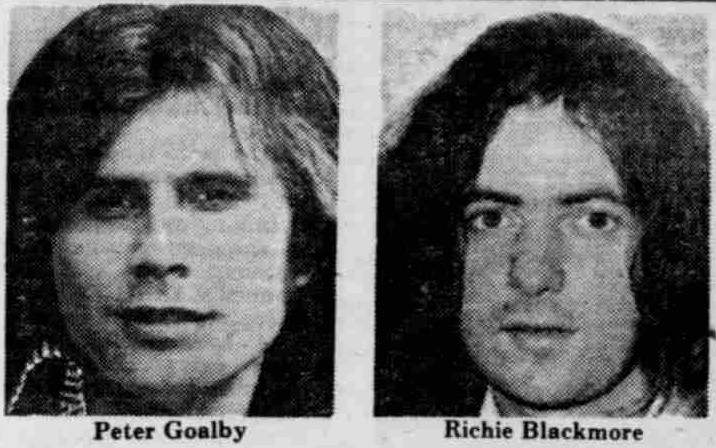
Well, I’ve never told the story, and really for two reasons. One, because I was embarrassed. I’ll tell you the story briefly, and at the end of it all, I felt that I’d failed, and it wasn’t something that I really wanted to talk about Martin because it hurt. I was with Trapeze, and I was sat in my apartment, (or my flat) at home, and the phone rang, and the voice on the other end said, Is that Pete? And I said, Yes. He said, Pete, this is Richie Blackmore. And I said, Fuck off. Who is it? And I tell you I thought it was; do you know John Thomas of Budgie?

Yeah…

I thought, because we all knew each other, and we’re all from the Midlands. I said, Fuck off, John. He said it’s Ritchie Blackmore. I was given your name, and he told me who, somebody given him my name and my phone number. And then I thought, Oh shit, it is Rittchie Blackmore.’  He said, the reason I’m calling you, I’ve heard a lot about you. A lot of people are talking about you with the stuff that you’ve been doing with Trapeze. He said, Would you be interested in joining my band, Rainbow? And I nearly fell off the chair! And I said, Yeah, I would. Things weren’t going very well with Trapeze, which is another story, (but we haven’t got time for that). We had a five minute chat, and he said, Have you got anything you can play to me? And I said, What now? And he said, Yeah. I said, Over the phone?, and he said, Yeah.  I said, We’ve just finished the Trapeze album called Hold On. And I said, I’ll play one of the tracks off that album. On the Hold On album there’s a fantastic song. (I didn’t write it  Mel Galley wrote it) it’s called “Don’t Break My Heart Again”. And the song comes in two sections, there’s like a slow, bluesy section, and then it goes into the proper rock version of the song. I said, I’ll play this song, I put the album on, and I put the phone to the speaker, and the song is six minutes long, and I thought, by the time it’s finished, he’s probably gone. At the end of the song, he was still there. And he said, Would you like to come to New York? And I said, Yeah. When?, he said Tomorrow?  I went to New York. ..I’ll have to speed it up, because we’ll be here five hours, because I was actually in the band for two months, I never told anyone…Well, they never told anyone. Anyway, I went to Connecticut and rehearsed with the band… And the bottom line was, I got the job. I was told to go home, and Bruce Payne, who’s the manager, would call me, which he did. I was on the payroll. To me, that means I’m in the band. I went to Roger Glover’s house. We did a demo of “Since You’ve Been Gone”.  I can’t remember the time frame, but I think it’s over a couple of months. And then we went to Geneva to start recording Down To Earth. Okay? We arrived there and spent a few days doing nothing. And to cut a long story short, one night, about 11 o’clock, somebody came to say, Ritchie wants to rehearse now. And so I thought, Well, what are we going to rehearse? I didn’t even know what we were going to rehearse anyway. Anyway, that was the way he worked. He spent three or four days in the bedroom coming up with ideas, and then he’d bring it to the rehearsal.  I found it all very bizarre in that we went down into the rehearsal room, and they all just started playing and expecting me to start singing. And I thought What(?) I’d never worked like that before Martin. I would learn a song or sit down with an acoustic guitar and go through a song and say yeah, yeah, yeah, and learn it that way. Apparently, I didn’t know at the time, but I’ve learned that since they just expected me to make something up on the spot. And I can remember Don Airey looking at me and laughing and mouthing as though he was singing, and he was saying to me, just sing anything. He was trying to help me. Martin. And I thought, How bizarre!?  So, I started coming out with something from The Exorcist (haha). I mean, no melody, and no idea how the song is supposed to go. Not even time to sit down and think, it was just start singing, just do something – which I did, and I felt absolutely stupid doing it. We did that for, I can’t remember how long(?) And it could have been an hour, it could have been two hours, I don’t know… Anyway, the next morning there was a terrible atmosphere. And Roger Glover came to me and said, Ritchie’s not happy. and I said, Well, I’m not happy either. I said, I don’t know what he wants…I can’t work like this. I haven’t got a clue what you want me to do. And at that point, Roger said, You’re fired!

That is ridiculous. Like, just a little bit of warning, a little bit ‘Okay, this is how we’re going to do this’. It would have solved everything, right?  You’re just blindsided..stupid.  (PG  -Yeah)  I can understand what they’re doing, they’re looking for a vocal melody or whatever, and you’re just supposed to scat over it or whatever…

What he didn’t realize was, I can write songs. The way that I put things together is I put a framework up and I get an idea. I totally get if Ritchie plays a riff, but you don’t need the whole band blowing the roof off for me to try and think of a melody. You sit in a bedroom. I can do all that all my life. I’ve written a few songs.

And what hour was this? What time was this?

Oh, 11-12, o’clock at night. 

And you’re in Geneva. Is this like Mountain Studios or…?

No. It’s a chateau, with a drawbridge, moat, castle – the whole shooting match. We’ve got Jethro Tull’s mobile studio outside. We’re there to make an album. And not one of us knew what the fuck we were doing.

What a story! That’s ridiculous.

So, the day before I was fired, to pass the time away. I used to have a go on Don Airey’s Hammond organ. I can’t play, but I can put things together, and I’d work it out. I’d got an idea for a song, funnily enough… Anyway, when Roger said to me, You’re fired. I said, Why can’t Ritchie fire me? And do you know what he said? what he said was Before you go. can I give you a message(?) Ritchie said, “Do you know that riff you were playing on the Hammond organ? Could you show Don before you go?”

Unbelievable! So crazy. That’s just so rock and roll, right!?  It’s like you’ve got these employees, just give them a little bit of guidance…Just give them a little bit of encouragement of how this is going to go, right!?  You may hear from me at 11 o’clock tonight, or whatever, anything, right!?

Yeah. I mean, I haven’t gone into the other all the details. I’m just telling you a part of it. I’m not telling tales, I’m telling the truth. And part of the reason why I’ve told the story now is because somebody asked me. Nobody has ever asked me, what happened.  So, I don’t mention it. “Oh Peter’s embarrassed. We don’t want to upset Peter”… And I had to come home and tell my wife, I’d been fired, and it broke my heart. I honestly don’t believe I was treated very fairly. I can sing for fuck’s sake, I’m a singer. I didn’t go for the job with Rainbow, Rainbow came to me.

And you’re a writer, and you’re a writer!

Yeah, but I’d never worked like that. I know that the likes of Aerosmith, Steve does that kind of thing, they write in that fashion. Somebody will come up with a riff,

But their nightmare story is they have to do that because Steven will do the lyrics at the very last minute, and they’re just trying to get the lyrics out of him. So that’s really problem there. That’s one of the reasons they keep fighting and breaking up all the time, and albums never happen, is because they can’t get the lyrics out of Steven.

So, to me, it was, it was like me landing on another planet…with the best intention.

I don’t want to keep you forever…

Do you want me to sing you a song!? (LOL)

What was the environment making Head First? And what is your feeling of that album versus Abominog?

I love both albums. The biggest mistake we made or in the four five years that I was with the band is changing producer. I don’t get that to this day. I just don’t get why we didn’t use Ashley. It was madness.

You mean on Equator!?

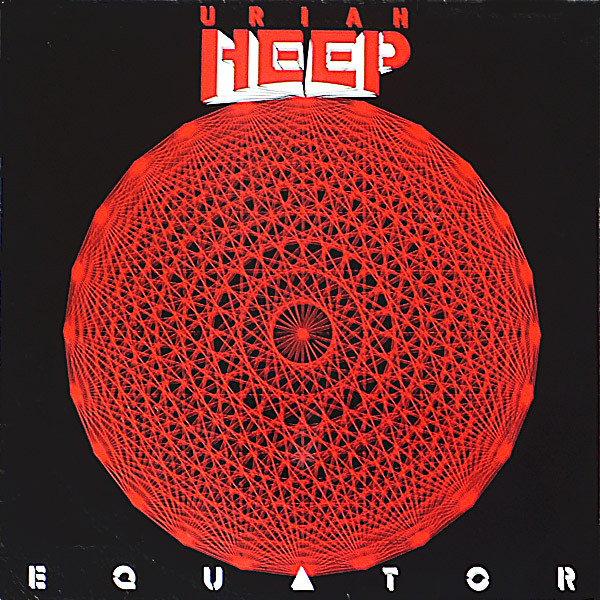
Abominog and Head First were like brother and sister. Just stop and think for one second, the way Ashley recorded, and the way those two albums sounded. Now, picture the songs on Equator, but recorded in the same way, they would have been fantastic. I wrote Equator. I wrote practically every song on there. I get if you don’t like the songs, I have to take the blame. But I’m not taking any blame, because if you go on YouTube, there’s some live stuff, there’s some live versions of some of those songs from the album, and Martin they’re good. They’re plenty good. But it was the whole way the record was recorded. The sound of the album is foul. I can’t even listen to it. And that was one of the main reasons why I left the band. I was so upset and disgusted with the whole… I mean to be fair to Tony Platt, Tony to this day, hand on heart, swears that’s not his mix. He believes that they lost the final mix to the album, and somebody did a very quick mix of the album. Now, I don’t know.  I’m embarrassed by the album, not by the songs. I do believe that most of the songs would have been absolutely bang in line with what we’ve already done on the first two albums, had we had the same producer. And as I say, it’s just such a disappointment that Equator, it just sounds bad.

The sessions were fine. You got along with Tony through the recording?

I got on great, absolutely great. But at the end of the day, firstly, it sounds like it’s in mono. I don’t get that. Why would you do an album in mono? And Tony said he wanted to sound the band to sound authentic, like they would live. That’s complete bollocks. Why would you not want to make an album in stereo!? And, why would you absolutely drench everything in reverb? We’re not Def Leppard, Def Leppard is Def Leppard, Uriah Heep. Is Uriah Heep, I don’t want to beat Tony Platt up. I really don’t, but I just don’t get why that the album sounded so bad. But as I say, as far as the songs are concerned, I have to take pretty much most of the blame, because I wrote them (haha). Okay, I’ve got pretty much all the songs written. John Sinclair and I went and hired a cottage, and just John and I put the songs together and moved keys around, and did all this, that and the other. And then we took pretty much the whole album to rehearsals. Everybody in the band was, well happy with the material. Nobody said, Well, we don’t like this, or we don’t want to record that, or why don’t we record one of my songs!? Or we’re recording too many Goalby songs. Everything was fine. It’s all on paper, it all worked, but by the time we came out of the studio, it didn’t sound anything like what we thought it was going to sound like. But it was too late, as I say. Apart from the fact that we were working too much, too many gigs, that was one of the reasons why I thought I can’t do this. There’s got to be something better, and to be totally truthful, when I left, I honestly thought that I would walk into another gig, and the phone never rang. And it took me about 12 months to realize the phone never rang because the story was put out that my voice had gone my voice never fucking went anywhere. I lost my voice in Australia. I got laryngitis. When you nothing comes out, just air.  I got that, and the doctors made me have four days off. And in the four days off, I wasn’t allowed to speak. And in those four days I thought, I’m not going to do this anymore. So, when I left the band, firstly, they didn’t believe me. I can remember Lee, Lee said, Oh, come on, we’re going to Russia soon. I said, I’m not fucking going to Russia. I’m not going and they thought I was just going through a bit of, you know, at the time, we didn’t know what it was, but I did have mental health problems. I have to put my hand in the air, because after I left the band, I did have a bit of a breakdown. But I think that was partly, because my whole world had fallen apart. But I couldn’t continue doing what I was doing in the way that we were doing it… So anyway, I’m going backwards.

So, did you tour Equator a fair bit?

We did some dates in America. We did a few dates in England, and live the material went down great. That wasn’t the problem.

Where did that title come from? Or where did Head First come from?

I think Head First came from Bob. Equator,i t may have come from John(?)  I can’t remember, to tell you the truth.

I like it. It’s a cool title..

Some people don’t like it.

The album cover’s all right, too.

Again, we got a lot of snip, because the album sleeve was shit. I don’t think it was shit. It depends what you’re looking for.

Head First is a little more high-fidelity than Abominog, and you went to the Manor for that, right!? Any good stories about working at the manor versus the Roundhouse?

Well, the Manor was a far, far better environment. The problem with the Roundhouse was because Gerry Bron was the manager, and because Gerry Bron was the record company, and because Gerry Bron owned the studio, every time Ashley did a mix of a song. Gerry would say, No, mix it again, because every hour that we spent in the studio, guess who was getting the money? Gerry Bron! So, what started off that might have cost 60,000 pounds, because he got Ashley to remix the album about four or five times (lol), it cost’ about 150000 pounds! So, we were well pleased to get out of the Roundhouse. Again, to be fair that was down to Ashley. Ashley refused to work at the Roundhouse because he knew what the problem that we’ve got, Gerry Bron would have a so far in debt that would never make any royalties. But the Manor was a far, far better situation. I loved it. Absolutely loved it.

That’s right. If he’s getting paid for everything, no matter what advance he gives you, he’s going to recoup. It’s like he’s just paying himself, right?

Yeah! And then after Abominog was a big success and sold. I mean, you might know better than I. I haven’t even got a clue how many albums we sold. We were never told. I know it was a lot. And you know what Martin!? never got a penny.

Wow!  If I was to guess, just estimate, off the top of my head, I bet this went over 250,000 in the States. I bet you could add another three to 400,000 in Europe, you know, mainland Europe and UK.

That’s the exact number – 700,000; that’s the exact number that I’ve got on my gold disc on my wall. But I guess that. I didn’t get the gold to pay for it. I paid for it myself.

I think that number sounds sensible.

Yeah. It could have been more. It could have been more.

Yeah…Japan, maybe 50…

And we never received a penny. He put Bronze into liquidation. Because…not just us, he had Motorhead, Manfred Mann, he had quite a few acts on there, and he used the record company money to start his Airline, and that went through the floor. And so, nobody got paid. So, from Abominog and Head First, none of us got any money.

Who did you tour with for these records?

In Europe it was always the same team. We’d go and do festivals nearly every weekend, nearly every weekend we’d be in one European country or another. There’d be Ian Gillan was solo at that point. Gillan would be on the bill Motorhead. Gary Moore, anybody that was successful at the time. And then in America, Judas Priest, I mean, the Mickey and the boys are still touring with Judas Priest to this day. Joe and the boys, Def Leppard, that was great. That was a fantastic time for us when we toured with Def Leppard. Just wonderful, wonderful people. When we were doing the stadiums in America with Def Leppard, and when we’d have our soundcheck in the afternoon, they would be playing football in the auditorium, and Joe used to walk up to the stage and say, Play The Wizard, Pete! They were big fans of Heep, the early Heep stuff like “Gypsy” and “Easy Livin’”, and all that. We got on great. We used to do the radio interviews in the afternoon, and Joe and I, or Phil and I would travel in a taxi together; we were just like family. It was just fantastic. We did the Texas Jam… Funny enough, we did, I did, I think it was 81 or 82, with Trapeze, and a year later I did it with Uriah Heep. And so there were all sorts of bands on there. One story that I like telling in Europe, we were always headlining. And the one festival that we did, it was from all day Saturday and Saturday evening, and all-day Sunday. And we’d played somewhere on the Saturday night, we drove through the night to the town where the festival was, and we got into the hotel about seven in the morning. At about 10 o’clock in the morning, I was woken up by this guitar-riff. And you remember “Radar, Love”, by Golden Earring(!?)  You know the guitar at the beginning?  I was fast asleep in the hotel, and it felt like the walls were shaking. The festival had started. They were first on it was about half past 10 in the morning, and I was lying in the hotel bed thinking, fucking hell! And you know what I thought, Martin, I’ve made it! I’m listening to Golden Earring live, and I’m not on until half past 10 tonight. And I just felt so proud.

It’s just always stuck in my mind. But as I say, I loved being in the band, but I hated all the rest of the stuff that went with it. To tell you the truth, I hated traveling.

Was that laryngitis, you say Australia, were you in the middle of a tour?

Yeah. We’d done Australia the year before, and we’d done really, really well. We did loads of television shows out there, and we did something like 30 live shows, yeah. And then a year later, our manager said, We’re sending you to Australia. And I said, I don’t want to go, because I saw the dates. I saw the dates. There were 42, shows in 36 days. 42 shows in 36 days. (Wow). I complained and complained and complained, and I actually said to the manager, Harry Maloney. If you send me to Australia, I’m going to quit. I’d already had enough, because this is Equator, remember all the shit going on with Equator. Anyway, they sent me to Australia. We were about to two-thirds of the way through the tour and Lee Kerslake took me fishing, sea fishing one afternoon, and whether it was the sea-air, I don’t know what it was, but I came from fishing into the gig, to the soundcheck, and I started singing, Martin, and nothing came out. I’d got no control over it whatsoever. And I thought, I’m in trouble.

How do they not know that you can’t put a lead singer through that?

Well, it’s the old story, you know, maximum three on – one off. Maximum! My world record is 16 back to back.  I stood in the Hamburg Hilton with Gary Moore, and he came up behind me and kneed me in the back of my leg on it, you know, like when you’re kids, we call it dead-legging. And Gary Moore dead-legged me and I turned around, ready to kill somebody. And he said, Hello, Pete. And it was Gary Moore, and he said, How are you? And I started talking. He said, Fucking Hell, man. How’s your voice? I said, I’m struggling, Gary. I said, In fact, tonight… he said, Are you’re playing tonight!? They were all there for a TV show. There was loads of bands. And he said, Are you not doing this TV show!?  I said, No, we’re actually playing live tonight. And he said, Are you going to be okay? And I said, I’m going to have to be. I said, This will be 16. He says, 16 shows back-to-back? And I said, Yeah. He said, I tell you something, Peter. He says, You ought to fucking sack your manager!? And I said, Well, funnily enough, Gary, meet Harry! (Harry was stood next to me) That’s a true story. It was a circus. Martin. It was partly our own doing, because we were really popular, and we could play anywhere in the world. You could go to any country in the world and say, you Uriah Heep. Oh, right! People know. They’re aware of the band. And that was the problem, you know!?  And as I say, 16 shows back-to-back. We once did 23 countries in 30 days! That’s a lot. And people say, Why did you leave, Peter? And then I’ve got to live with the fact that because I’d left, the story was made-up that my voice was fucked. If my voice was so fucked, how come I’ve done three albums since!? 

*Check out www.martinpopoff.com for my new books:

Dio: The Unholy Scriptures and Iron Maiden: Hallowed by Their Name

Also available: Max, Mercyful, Sabotage, Born Again, Sweet, UFO x 2

My audio podcast is History in Five Songs with Martin Popoff (just Google it).

Our YouTube show is The Contrarians.

LINKS:

https://www.cherryred.co.uk/peter-goalby-don-t-think-this-is-over-cd

https://www.facebook.com/groups/petergoalby