FOGHAT CELEBRATES 50TH ANNIVERSARY WITH JULY 16TH RELEASE OF LATEST LIVE ALBUM, ‘’8 DAYS ON THE ROAD” VIA FOGHAT RECORDS, DISTRIBUTED BY SELECT-O-HITS Multi-Platinum rockers FOGHAT celebrate 50 years of Rock n’ Roll with 8 DAYS ON THE ROAD, a 14-track live performance that will be released as a double CD/DVD package on July 16, 2021 on their own Foghat Records label, distributed by Select-O-Hits (which is part of the Sun Records family and is owned by Sam Philips’ son and nephew). It will also be available on 180 Gram Vinyl later this summer. Recorded on November 17, 2019 at Daryl’s House Club in Pawling, NY, the collection features the band’s biggest and most legendary hits, including “Slow Ride,” “I Just Want To Make Love To You,” “Fool For The City,” and so many others.Pre-orders are available on digital outlets including Spotify , and iTunes includes an instant download of “Road Fever” with purchase. A video for “Road Fever” can be seen on the band’s official YouTube page today. The collection will also be available on 180 gram vinyl in the coming months. The band has already started to work on a new Blues/Rock studio album to be released in 2022.Track listing: 1. Drivin’ Wheel 2. Road Fever 3. Stone Blue 4. Fool For The City 5. It Hurts Me Too 6. Take Me To The River 7. Home In My Hand 8. 8 Days on the Road 9. Chateau Lafitte ’59 Boogie 10. I Just Want To Make Love To You 11. Chevrolet 12. Maybellene 13. Play That Funky Music 14. Slow Ride
If you weren’t familiar with this British band from the ’70s, you are missing out, and perhaps one of the greatest live albums of the era, released with the shows – 7 full shows to be precise. 7 shows from the band’s spring 1977 UK tour! While Live In The Air Age was initially released as an 10 track LP/EP and would become the band’s biggest seller, this box set includes all the shows recorded to draw from for that album – in their full glory. Lead by founder Bill Nelson, who handled all guitar and vocals, as well as being the band’s songwriter. Live In The Air Age set list of 15 tracks each night was pulled from the band’s 4 studio albums to that point. Be Bop Deluxe mixed various styles, with the glue being Nelson’s often blues influenced soaring guitar leads with bits of jazz influence, and his stunning and lengthy solos. He had such a unique tone. Musically the band were ahead of their time, likely influencing many hard rock and new wave acts of the late ’70s & ’80s with their progressive style of rock, smooth vocals, keyboards, and harmonies, delivered so well played each night. There are no ‘off’ sounding nights. And though the set-list rarely changed [save for the odd night without the encore], each night is a fantastic listen for the improvisations, Bill Nelson’s speech intros, and simply the playing of the band’s best material such as their biggest hit “Ships In The Nights”, and favorites such as “Sister Seagull” [classic riff], “Life In The Air Age” [the opener each night], and the rockin’ “Mill Street Junction”. The latter half of the shows would feature lengthier improvised jams and solos on such tracks as the instrumental “Shine”, as well as “Terminal Street” [killer heavy guitar solo here] and encore “Blazing Apostles” [which usually runs for 20 minutes] . Nelson’s amazing guitar sound was complimented not only by the rhythm section of Charles Tumahai [bass, backing vocals] and Simon Chase [drums] , but also by the varied spacey keyboards of Andy Clark [see “Adventures In A Yorkshire Landscape”]. The box also comes with a colored booklet full of photos, images, and an essay from Bill Nelson, detailing the era, his recollections of that UK tour, adding a few stories, as well as his eventual reasons for putting the band to rest after 1978’s Drastic Plastic. There’s also further notes from journalist Mark Powell. *There is also a condensed 3 disc version featuring the restored original album, as well as the full show from one of the evenings at Hammersmith Odeon.
LIVE IN THE AIR AGE Box details:
• A DELUXE 16 DISC LIMITED EDITION BOXED SET OF THE CLASSIC 1977 LIVE ALBUM BY BE BOP DELUXE • THE ORIGINAL ALBUM IS NEWLY REMASTERED FROM THE ORIGINAL MASTER TAPES RESTORING THE CORRECT ALBUM RUNNING ORDER • WITH AN ADDITIONAL 14 CDs FEATURING EVERY CONCERT RECORDED ON THE BE BOP DELUXE UK TOUR OF FEBRUARY & MARCH 1977 ALL NEWLY REMIXED FROM THE ORIGINAL MULTI-TRACK TAPES BY STEPHEN W. TAYLER • INCLUDES A BBC RADIO ONE JOHN PEEL SESSION FROM JANUARY 1977 • ALSO INCLUDES A DVD (NTSC / REGION FREE) OF THE STAR RIDER IN CONCERT TV FILM FIRST SCREENED IN 1977, RELEASED HERE FOR THE FIRST TIME • INCLUDES A LAVISHLY ILLUSTRATED BOOK WITH MANY PREVIOUSLY UNSEEN PHOTOGRAPHS & NEW ESSAY BY BILL NELSON • ALSO INCLUDES POSTCARDS AND A REPLICA POSTER
Esoteric Recordings is proud to announce a new re-mastered super-deluxe expanded boxed set limited edition release (comprising 15 CDs and a DVD) of LIVE! IN THE AIR AGE by BE BOP DELUXE. This legendary live album was released in July 1977 and would prove to be the band’s most successful album, peaking at number 10 in the UK charts. The album was issued at a time of growing commercial success for the band and followed on the heels of two highly acclaimed studio albums in thirteen months, Sunburst Finish and Modern Music, both of which reached the top twenty of the UK album charts. Live! In the Air Age would be the band’s only live record and was recorded on a series of dates in the UK in February and March 1977 on the Rolling Stones mobile unit with John Leckie, who had engineered co-produced the band’s previous two albums, supervising the location recordings.
The band’s UK tour began in late January and was an audio-visual extravaganza that featured the use of projection screens and excerpts from the 1927 German silent film Metropolis, director Fritz Lang’s striking science fiction masterpiece. Continuing into February, the first concert to be recorded was at the De Montfort Hall in Leicester on the 12th of that month. The following two nights saw concerts at the Grand Theatre in Leeds which were both captured on tape and saw Bill Nelson perform to an enthusiastic home audience. However, at this juncture fate would intervene to cause a postponement to the remainder of the tour. Travelling to a concert in Bristol on 15th February 1977, Bill Nelson and John Leckie were involved in a car accident which resulted in them being hospitalized at Huddersfield Infirmary. Thankfully, all involved recovered quickly from their injuries, but as a result of the accident, the remaining concerts were postponed until the end of March. The tour began again with two concerts at Hammersmith Odeon in London on March 25th and 26th 1977 which revealed the band to be on top form, feeding off the tremendous warmth of the audience. Further shows in Bristol and Bournemouth on the 27th and 28th March respectively also contained many fine moments. Bill Nelson and John Leckie selected the best performances for mixing at Abbey Road and Advision studios in London and LIVE! IN THE AIR AGE was released in July 1977.
Research of all of the Be Bop Deluxe master tapes revealed that multi track tapes of all the shows recorded on the UK tour of 1977 had survived. After digitizing and listening through to all of the Rolling Stones mobile unit 24-track tapes it was decided to include each concert in its entirety in this expanded boxed set. The concerts were mixed over a period of several months by Stephen W. Tayler and are presented here for the very first time. They reveal the improvisational side of Be Bop Deluxe, particularly on pieces such as Shine and Blazing Apostles which made each concert unique.
This set features the original album, newly remastered from the original master tapes, and restores the correct running order of the original LP release and has three bonus tracks drawn from a BBC Radio One JOHN PEEL SHOW session from January 1977. This box also adds an NTSC / Region Free DVD of STAR RIDER IN CONCERT – BE BOP DELUXE, which was first screened on television in 1977 and appears exclusively in this boxed set for the first time. Finally, this limited-edition boxed set includes an illustrated 68-page book with many previously unseen photographs and an essay of recollections by Bill Nelson. Additionally, the set includes postcards and a replica poster. This special deluxe limited-edition boxed set of LIVE! IN THE AIR AGE is a fitting tribute to a fine live band and the creative vision of Bill Nelson.
Golden Earring is from Holland, and as far as most in North America know of them, they were a 2-hit wonder. They had huge hits with “Radar Love” (1973) and “Twilight Zone” (1982), but Golden Earring is the longest running band that until recently – regularly released albums and toured. The band formed as The Tornados in 1961, changed their name to The Golden Earrings and released their first album was in 1965. And although they’d have hits and success in their homeland, it wouldn’t be til the early ’70s that the band had distribution and an impact in North America with a string of classic albums – Moontan, Switch, To The Hilt, and Mad Love when they’d signed to MCA Records. Many years ago I had [still have] been given a few compilation cassettes of the band from my [late] uncle Jim. I never gave them much play, but in recent years I started filling in the gaps in my Golden Earring collection, and more so started digging the band’s 1977 Live album [2LP]. which – if you don’t have it – I think is one of the greatest Live albums of all time.
At this point the band included founding members George Kooymans [guitar, vocals] and Rinus Gerritsen [bass, keyboards, harmonica, guitar], as well as Barry Hay [lead vocals, guitar, flute], sax – since ’67] and Cesar Zuiderwijk [drums, since 1970] , as well and Eelxo Geiling [guitar]. Aside from Geiling, the other 4 members would remain permanent members until the end. The only personnel changes in the ’70s would be the extra guitar player or keyboard player that the band added for various albums. But, yeah – at the time of the Live album, Golden Earring was a 5 -piece, guitar heavy band; not heavy like ‘metal’, just lots of that cool ’70s guitar sound, with some slide guitar, lengthy solos, etc… The band was far from a ‘pop’ band here, stretching out the 10 tracks here with extended jams and solos, You get a 12 minute take of “Radar Love”, a 12 & a half minute play of the classic “Vanilla Queen”, and a 6 and a half minute version of “To The Hilt”.
Most of the tracks are taken from the band’s latest albums, though material from the classic Switch album is absent. There’s also a 10 minute rendition of “Eight Miles High”, which was actually shortened from the near 19 minute version that the band recorded for their 1969 album of the same name. Side One is probably my favorite here kicking off with “Candy’s Going Bad”, followed by “She Flies On Strange Wings” [from 1971’s Seven Tears] , and a near 10 minute rock out on “Mad Love’s Comin'” – the title track to their latest album at the time, and one that makes me wonder if Iron Maiden was listening to this[?].
If you have nothing of or very little of Golden Earring, Live is the best place to start, just an amazing recording of a classic band at their peak. Recently reissued on white vinyl. Would be nice if there was more to these recordings [see the new Be Bop Deluxe Live In The Air Age box set]. There would be a 2nd Live released in 1981, which only got released in the Netherlands and Germany; it features a completely different set of tracks, played to regular lengths [no 10 minute + jams]. And if you are picking up Golden Earring albums, do yourself a favor and get the original European version of Moontan! it features the classic artwork in a gatefold, as well as the proper 6 tracks, where as the North American version cheaps out on the cover art, and shortens the album to 5 songs. But, as I said – start here with Live. Guitarist George Kooymans was diagnosed with ALS earlier this year, putting an end to the band’s amazing 60 years on the rock stage. But, if you’re a fan of those ’70s guitar / jam bands Live is a ‘must have’. The band’s catalogue is long, but well worth looking in to beyond the hits.
*Live has been recently been reissued on white vinyl vi Music On Vinyl.
I’m always interested in album art and the stories that go with them. I’d like to add more of these stories in the future, but for a start – Sue Candia gives some feedback and the details behind the album art for the new Cactus album Tightrope. In the past Sue has been credited on Vanilla Fudge’s 2001 album , as well as The Lizard’s 2015 album Reptilicus Maximus – Sue was responsible for the titling and interior of these 2 album designs (and Lizards is cool news to me, as I interviewed Randy Pratt on the band, and now of Cactus many years ago about The Lizards, and I was not aware of this this album).
How you wound up being chosen to do it [Tightrope art]
I began designing CDs, gig cards, and T-shirts for Randy Pratt (the harpist for Cactus) some years ago, and for bands produced on his label Hyperspace Records. I probably worked with the Vanilla Fudge on cd packaging and show promos first, and later on various projects for Carmine Appice, Jimmy Kunes, and eventually Cactus. Cactus is a phenomenal band, and collaborating with them on this particular album cover was amazing for me.
The story or concept behind the cover
I wanted to honor the band’s legacy, and so I felt there should be cactuses in the artwork. I was inspired to explore the challenges we face in the current environmental and political climate. My goal was to reflect the band creatively, in a way that is true to their voice and respectful of their talent and scope, to be both contemporary and historic. Hopefully, that comes across to fans.
Familiar with the band’s music [or just this album]
I always liked the classic heavy rock style of the late sixties and seventies, so knew about Cactus prior to getting involved with them creatively. But getting to work with such a talented, iconic band, on a double album, for that I’m very lucky and grateful.
The alternate art to the Cactus album at the Behance site
Yes, the band was split on which song to use as the title track and name of the album, Tightrope or Primitive Touch. So they asked me to come up with concepts for both. Ultimately they agreed on Tightrope and chose the concept that I brought to final for the cover. I had a fun time working on the initial illustrations so I decided to post them on my Behance page along with the finished piece.
Corky Laing is the legendary drummer from Mountain. Laing has had a long and amazing career going back to the ’60’s in Montreal, where he was from. He would join Mountain by the end of the ’60s, playing on all the band’s classic albums, and continue on with the band when he and Leslie West reformed the band in the ’80s. In recent years he’s been playing with his own band, carrying on the Mountain legacy, performing the classics, and a couple of years ago recorded Toledo Sessions, which has recently been reissued on vinyl. Along the way of his 50 year + career, Corky Laing has recorded with numerous bands, a solo album in the ’70s, and a few other projects. I spoke to him recently to discuss Toledo Sessions, as well as some of the other albums he has been apart of . It was a fun conversation, and here’s looking forward to hearing more from Corky in the near future. I did interview Corky some years back for the first ‘Cork’ album, so I am just putting that together and hope to post that as well, in the near future. * For more info on his career and latest releases – check out the links below.
How did the [new album] come about with Mark Mikel and Chris Shutters on there. How did you meet those guys and how did you end up in Ohio?
What happened was I was looking for a guitar player way back, because there’d been a couple of changes over the past 4 or 5 years, and I wanted to get a guitar player that played in that Mountain approach – that vibe. And I went to see Kofi Baker at a show in New York, and he recommended this guy Chris Shutters, who sounds very much like Clapton, he’s really good, but also he could play a lot heavier. So what happened is the show was commended, and Chris Shutters – he’s from Toledo, he drove from Toledo to New York, to get together with me just to so if we could vibe, and I was very impressed with his whole attitude, and at the time I had played with a couple of other musicians that I wasn’t terribly happy with going the long run with, as they say. And Chris said ‘I have this bass player I think you’d really like, and he lives in Toledo also.’ So, he said says ‘why don’t you come to Toledo and check out this guy Mark Mikel?’ , who is apparently a local hero in Toledo, he’s a brilliant musician, and he had his own thing going. And Mark had his own recording studio, and we got together, and played a little bit, and that night – the night that I arrived, apparently says ‘listen, why don’t we go to this place called The Dirty Bird and jam – and really jam’. And Mark at the time had already studied some of the Mountain songs, so we broke right into “Never In My Life” and I’m looking around going ‘how the Hell does this guy know this!?’ Well, Chis had advance messaged him and said ‘learn a couple, maybe we can get right to it.’ and we did, and the response was amazing. So we went back to the studio, and at that time, I think it was about November. And we went in and we started playing, and I must say that after the last 40-odd years of jamming with different people, we locked in – and I’m not saying that to hype you Kevin, but I’m saying it because it is so wonderful when that happens. It doesn’t happen that often. We locked right in, and Chris started singing, Mark sings, and there was this little funky beat up drum set that I was playing, but Mark recorded it, so it sounded brilliant! And that’s when we started going back and forth on these songs over a period of about 6 months. I would go back to Toledo, and to make a long story short we finished off the record, and at the time Jack White [from The White Stripes], he was friendly with this guy I knew Jason Junior, who had his own band.. Anyway there was a little bit of a loop of musicians and record company people around Toledo and Detroit, anyways, this Jason heard the record and he says ‘that’s brilliant, can we put it out?’ And they had a small label , which eventually became Prudential Records. And they put it out, but it was ready because it was just when Co-Vid kicked in. So we had the record, and I put it on hold because we wanted to get some shows, and now it’s been a year and we’re starting to plan the shows for the summer. And I guess you got the press release that the record is now going to be officially available on vinyl, and on CD. And I have to say Kevin, and I’m not a promo slut [well I guess I am], but the point is that we love this record because of the way that it came about, you know – I didn’t go out and hire people off the street, I didn’t hire anybody, they wanted to play and we just played, and as it turned out I’m very very happy with the record, and a lot of people are too. That’s the story.
Well, it’s definitely a ‘band’ sounding album, and will appeal to those Mountain and blues-rock crowd. It’s a great sounding album.
That’s the best thing you could say is that it sounds like a band, right away, because it does. I felt like we’d already been together for 10 or 15 years, with Mark and Chris. It was great! And as soon as you said that in your questionnaire, I said ‘I got to speak to Kevin, he knows his shit.’
Well, a lot of times you get these albums that are listed as ‘solo’ albums and they’re all over the place, but this one sounds like an actual band as opposed to a random solo project.
Yes, I agree. And I’ve had a few of those, so I know what you mean.
Did you do all your recording in Toledo, as well?
All the recording that’s on that record is done in Mark’s studio, in Toledo. And it was mixed by Jason Junior, who is also a drummer for Ted Nugent. He’s a young kid. Jason Junior grew up with Mountain, he’s only 22 years old. He wanted me to teach him when he was 6 years old, and I said ‘come on’. And he stuck with it, and over the last 10-12 years he became a great drummer, a great musician – this is Jason Junior, our record producer, and now he’s playing with Ted Nugent when Ted plays live. What I’m getting at is that it was a bit of a family affair, which is nice.
Can you touch on some of the songs, like did you write your own lyrics or did everyone write their own lyrics?
That’s a good question. Most of the songs, I collaborated on everything. “Knock Me Over” was the first song … Ya know, we were sitting around and we were ‘we gotta write a lyric and it’s gotta be’, and we’re both veterans , so to speak, and I hate that expression ‘Been there – done that!’ I’ve always hated that, and I don’t understand why people say that because if you say that, you’re going nowhere. But the opposite to that is ‘Knock me over’, and Mark and I were saying ‘let’s get a song that really knocks people over’. And you either love it or you hate, but it moves them – it kicks them! And that’s the first song we wrote. And I don’t ever remember playing as much drums on a record as I did then. And they played along, so that record is live – “Knock Me Over”. And as we moved along, I’d come in with a song called “Something’s Got To Give”, which I started writing 5 years ago at my rehearsal place. And if you think politically, this was a couple of years ago, and with the political situation which was stagnant – people were frozen and polarized. So I wrote this song “Something’s Got To Give” in a personal way. You know, like you talk to somebody and they’re totally in distress and they’re languishing, and you give them a little bit of advice and you say to them – ‘hey, something’s got to give – don’t worry about it, it’ll come.’ So the lyric and attitude in that is personal yet political. Some of the other songs Chris Shutter’s came in with and we would tweak them. Mark Mikel came in with “Earthquake”, and I love that song! And we wanted to come up with a track that was relevant for that, because it’s a delicate lyric – “You can cry tears to fill a teacup, but I could weep enough to form a lake”, it’s got some really good metaphors. But that would be Mark’s baby. The other one “Hell Yeah!”, It’s kinda like when we did play shows a year after, and we would get in the back of the car, and I’d be talking and Chris would go “Hell Yeah!”, ya know when you agreed with him. And I thought it was so repetitive. And at one point I came back to my studio and I was playing on my electronic drums, just kidding about, and I sent the drum feel to Mark, and I said ‘what do you think of these electronic drums? which I really don’t like, and he said ‘we could do something – Hell yeah!’ It just became kind of a joke, but it became a favorite on the record because it’s very different, and I love the lyric. And that would be Mark’s baby too. It’s just this thing, and I don’t know if it’s an Ohio thing or a mid-west thing, but it’s kinda one of these trailer park things – ‘Hell Yeah!’ [yells]. (I’ve had 14 coffees so you can tell I’m a little hyped up). and a little background to the music – you know, everybody stretched their playing, Mark stretched the bass playing, and he plays acoustic guitar on “Beautiful Flies”. And “Beautiful Flies” was like the last song we played and I really wanted to get a really ‘up’ beginning to the album, so I went right for the 2/4 beat, the double bass drum, everything I could to jumpstart that baby. And Mark, at the time, picked up the guitar and came up with the lick, and i loved it, I love that feel – it’s really ‘up’. The song itself is just a fun rocker, that we decided to start the album with. And then we had the ballad “The Road Goes On”, which is very much like on the Mountain record, the song “Theme For An Imaginary Western”.
You guys used a lot of harmonies on “The Road Goes On” and “How’s The Weather”. ” How’s The Weather is an interesting one, as soon as I heard that intro I thought of the Allman Brothers.
Could be, that’s a great comparison. Mountain had 2 vocalists, right – Felix sang the ballads, and Leslie had the rustic, gutsy blues voice, so we had a nice dynamic, I loved the vocals in Mountain, when they were vocalizing, so yeah I was really happy with the harmonies on this. And I had nothing to do with the harmonies on this, that would be Mark and Chris, they did a great job. and I agree with you – if it sounds like The Allman Brothers, so be it! A lot of drums for sure, and that’s my fault.
With “Earthquake”, I think the harmonies kinda give it a bit of a Beatles’ feel, and then you got the moog synthesizer in there, which gives it a bit of retro 60/70s feel.
Yea, that’s exactly right. These are things we did think about and a lot of times you think ‘well I made it up’, no a lot of this stuff is big influences. and it seems weird because I influenced them being in the original band, and it’s like a circle. Kevin, in rock n roll – it’s all been done, we played everything. And the thing you’re picking out, which I really respect, is we brought our own thing to what I would consider something that was there. You’ve gotta make it your own, even if you’re doing a cover record. So I like to think that everything we record, or I record, even if I’m copying somebody, I’m bringing my own thing to it. in my case i guess it would be the drumming because I was never really a studio drummer, and I really have my untethered approach to playing, and I got that opportunity with Felix and Leslie, they never told me what to play, they just said ‘show us where the one is, so we know to we come back together’. And that was being lucky, because after that in the 70s, all the drumming was basically tied to a click-track, and I never psychologically or even emotionally – I never had a click-track in my body, I have a heartbeat, but it’s my own – that’s my inventory. So, when it comes to playing, even on this record the guys were beautiful, Mark and Chris just said… and I wanted to edit about 40 per cent of the drumming out of what we did, and they refused, they said ‘no, this is your record, do what you want.’ And who the fuck are they to tell me what to do when it’s my record , and acknowledge me, and it made me feel confident – that’s me and that’s who I am on the record, like it or don’t like it. and i guess it’s sort of a philosophy of life that I’ve been very fortunate to not be tethered or attached to anything else but my own heart. And again, this is who I am and what I do. It’s the philosophy of this record, it’s the Toledo Sessions, it’s a time and place and a creative moment over a period of a few months, at the time.
The other song that stands out is “Information Overload”. I’m curious how much the lyrics have to do with information, technology and the internet.
You nailed it. That’s exactly what Chris had in mind. and also it’s emotional information – like nothing’s personal anymore, it’s just all out there. Ya know, everybody is wearing their heart on their sleeve when it comes to certain things. and maybe there’s certain they shouldn’t talk about. And I don’t know, if you have a relationship and you’re sitting at the table and somebody’s telling everything about how they go to the bathroom – that’s too much information. But the one Chris is talking about is exactly what you said,
Had you done any shows since this album came out?
No, not officially. we’ve been playing Mountain songs, mostly.
I saw some of the last shows you had listed and you had Ritchie Scarlet listed with you…
Yeah, that was one of the changes. That happened about a year ago when Chris was putting out his solo record, and at the time, it wasn’t a break-up, it’s just that we were going to Europe to play, and I needed a guitar player, and I didn’t think twice, I thought Chris would do it, but he was getting married, and he was putting out his record, and he said ‘can I join you in Europe, I need a week’, and it was a 1 month tour?’ , and I said ‘Oh no, it’s going to cost too much’. And Ritchie Scarlet and I had been together with Leslie, Ritchie was playing bass at the time, and I knew he was a great guitar player, and I knew how influenced Ritchie was with Leslie’s tone and Leslie’s attitude towards playing. So since we were playing Mountain songs, and I have to explain that we were playing Mountain songs the way that they were played when we first released the Mountain records. You know, Leslie and I would jam the last last 10-15 years on some of the songs, and go way off the songs, where people wouldn’t even recognize it. So Warren Haynes, from Government Mule came to see me one time, and we were talking and he’s a big fan, and he says “I like it, but I don’t recognize the songs anymore – you’re going off, I didn’t even recognize Mississippi Queen.” – And what he was saying was that Leslie and I were just jamming too much. So why don’t I, when I put the band together with Ritchie and Mark and going Europe, arrange the songs exactly like they are on the record. And it paid off. I don’t think there’s millions of Mountain fans, but the ones that showed up were so appreciative that we played it that way. You know in “Nantucket Sleighride” we put the piano in the beginning, the intro, and it worked. We were very specific and deliberate in the way we played the songs and the way people heard it originally. Because, keep in mind, we’re over in Europe and it’s been 50 years since Mountain Climbing, and people are still coming out for the material.
The other thing that came out was the reissue of Pompeii : The Secret Sessions album. Are you happy with that reissue as well?
This record company found this, and you’ll notice the name of it The Secret Sessions, it’s because nobody ever found out about it. It was a compilation of songs I’d record with different people – Eric Clapton, Ian Hunter, over the years. and this record company, the same record company previous to putting out Toledo Sessions, this was 6 months before that said ‘do you mind if we get permission to put out The Secret Sessions on vinyl because of the archival value of it, and I said ‘great!’ So they wanted to release Pompeii on Record Store Day, and I said ‘fine, you know the repertoire is there’, and we added a couple of bonus tracks, where Jason Junior played the drums on “Growing Old With Rock n Roll”, which was a favorite of Jason’s from a-way back on my solo record. And in capsule form Kevin – Pompeii was a one-off. And to show you how surprised I was, they said ‘we’ll press a couple hundred vinyls’, and I said fine. And Sony got orders for over 1500 vinyls, and they all sold out. I’ve only got one copy, myself. And of course, they’re going to re-release an orange acetate. And apparently the audiophile collectors save those, and I don’t know, it’s new to me. And that particular compilation goes back over 30 years [Ed 40]. People love it. Mick Ronson was brilliant on “The Outsider”. It’s a killer song that Ian was going to throw away! It was in his garbage basket when I went to his house to work with him. I said ‘what’s this?’, and he’s ‘ahh, it’s a fucking ballad, I’m a rocker, I don’t really like ballads’, he says. But he wrote some of the most beautiful ballads in Mott The Hoople. And when you hear it I’m playing the mallets, on the tom-toms, like a ghostly kinda pulse. I love that song! I had a great time with that record. It was done over a period of time and place. And I have to say people like it.
Do you foresee yourself doing a follow-up to Toledo Sessions?
Absolutely! I’m going next week to start doing the demos with a friend of mine there. thing is you can’t go anywhere right now. So to answer your question, we’ll definitely be following it up with another record. Not sure if we’ll call it Corky Laing’s Mountain . The record company wanted to put the Mountain thing in there, and I had no problem with that. And Leslie had no problem with that, he loved the record. I got the endorsement from him because at the time, he told me ‘get a guitar player that can read you as a drummer.’ And that’s when I met Chris. And if I may say so, Ritchie Scarlet was a student of Leslie West, and when we play Mountain songs he [Ritchie] nails it.
You did the Leslie West Band album from 1975, with Mick Jones, and a few other people. That’s an album I really love. Do you have any recall on that album?
What happened there on a business level, Mountain with Felix had just disbanded, and the label – I’m not sure what happened with them, but our manager started a new label called Phantom Records with RCA, and they wanted to put a record out. And Leslie, at that point was thinking ‘where we going with this? We couldn’t call it Mountain, that wouldn’t be fair.’ So Leslie said ‘Do you mind if we call it the Leslie West Band?’ And at the time we had brought in Mick Jones from Spooky Tooth. You know, he was over in England, and through friends and management he wanted to come over. So I was with a guy named Miller Anderson, and we were importing musicians, it was a flowing time Kevin, people were searching for places to land – musicians were looking for places to hook up. And Leslie and I had to really get together and write songs, and I believe “Down By The River” was one of the songs on that record that I played on my solo record that Eric Clapton played guitar on; he really liked it. This was when I was doing my solo record in Macon, Georgia. So what happened was as things moved along, Mick Jones had came in the band, and I was having a difficult time personally, and I left, and Carmine Appice slipped in.
Carmine did the live shows?
He did 1 or 2. I left to do my solo record, and I was having a hard time with Leslie. It was a rough time for us. I called it the ‘7 year bitch’. Leslie and I had been together for 7 years, and I was in a bad head-space, and I wasn’t happy with my playing, so I left, and Leslie went off and did his own thing at that point. And I went to my solo career, which was ’76-77. I have fond memories of Howie Wyatt playing keyboards on that. Howie Wyeth was Andrew Wyeth’s grandson, the artist Andrew Wyeth. And Howie and I became very good friends, and actually Howie introduced me to Kiki Friedman and I would go every Sunday to the Lone Star cafe with Kiki Friedman. That was a time I was bouncing around, bouncing around like a bloody basketball, but it was fun. I have no bad memories of that.
On this album there’s a guy name Ken Asher credited on piano…
A lot of those guys were studio guys. You’re right about that. We did the Leslie West Band, and then he did The Great Fatsby that he put out, and I think I played a couple of tracks on that.
You played drums along with Nick Ferrantella on that album.
Yeah. Nicky Ferrantella was a very close friend of mine, he just passed away last year. He and I were friends when I had my local band in Nantucket, and so when I went in to work with West Bruce & Laing he became my drum roadie, because I wanted to have a friend with me. So for a couple of years, he was my drum roadie, because he’s also a drummer. We had a good time on the road. And I went off the road after West Bruce & Laing, and Nick went off to work with Mick Jones because of the affiliation with Leslie West. And he worked for Foreigner for years. He was a good drummer, and we did a couple of sessions for a couple of soundtracks, which was fun, in Nantucket.
I picked up this album a year ago [Leslie West Band], and i really like the track “Money” ….
‘Whatcha gonna do with the money’ , yeah !
And the “Dear Prudence” take – that was another one. That was very unusual.
Leslie always wanted to do a lot of covers. To take you back – Felix was dead against doing any covers. And Leslie, when he was on his own, he said ‘I want to do these songs’. So that’s why. And “Dear Prudence” was great. I loved that version.
“We Gotta Get Outta This Place” was the other cover.
OK, that’s right…you’re shaking my brains up, Kevin. I gotta think about it.
The other album I’m curious about is you did an album with a band called The Mix, in 1980.
That’s was sort of the new wave, when we came in to the 80s. All the records before that, we were considered the dinosaurs. Then all the punkers came in. I met this guy Stu Daye, through this producer Jack Douglas – the guy who produced Aerosmith. Jack introduced me to Stu Daye. I went to New York to find a band, and they said I had to cut my hair. I felt like Samson ya know, all that rock n roll glam-rock / heavy metal hair – I cut it shorter, so it was more ’80s. And I got together with Stu Daye, who at the time was a local hero in New York, and David Grahame who wrote that song ‘all I wanna do is be with you’ [sings], you know the song by Big Star or something!? Anyway, he was the bass player. And the keyboard player was Chris Meredith. So we lived in New York and we played all the New York clubs. And we were managed by Leber-Krebs, they had Aerosmith, it was bigtime. And they did a great job. And they started their won label called Word Of Mouth. So if you can’t get the record, that’s why, it was a very small label. And quite frankly it was a great little album, I think. But it was on a much smaller scale, the songs were like 2 minutes.
I was curious about that album, as Stu Daye did some stuff with Neal Smith of the Alice Cooper group. And you guys did a cover on there of a song called “Love Is Rather Blind”, which was originally on the Billion Dollar Babies [band] album a couple of years before. How did that come about?
I don’t know too much about that Kevin. But I know Stu, he worked with Cyndi Lauper for a while, when she was local. He’s living in England now. He shows up now and then. Stu is a really good musician. He was a good guy, but he just had no control over his career, he was all over the place. But – a very good musician! And I always liked his voice; he had a really high voice, and it would either drive you crazy or put you to sleep; it was really something.
You did a couple of Mountain albums with Mark Clarke on bass. Do you still have contact with Mark?
Yeah, as a matter of fact he’s playing with Colosseum now. I spoke to him a couple of weeks ago because Leslie had passed away and Mark called me with condolences, and I spoke to him, and he’s doing quite well. We did a couple of tours back then; we did a couple of European and UK tours with Mark.
Yeah, there’s a lot of stuff on Youtube, even from the mid-’80s as well [with Mark].
Are they good? [haha]
There’s some professionally done stuff – TV shows, full shows…
The Dennis Miller Show is the one we did with Ritchie Scarlet for the first time, this was way back in the ’90s. We played “Mississippi Queen”. And Leslie had lost a shit load of weight, because he had lime decease – I didn’t even recognize him! And I hadn’t seen him in 6 years, I was working at Polygram Records as an executive, and he called me up and said ‘David, Dennis Miller wants us to play on this new show he has, do you want to fly to LA?’, and I said ‘Hey, why not!?’. I had a great time. And at that time we al hadn’t seen each other in 6 years, and of course we all remembered “Mississippi Queen”, it wasn’t difficult.
Are you much of a collector of vinyl, do you keep much stuff?
I used to. My son took over my vinyl collection. He has a shitload of stuff. He’s up in Richmond Hill, north of Toronto. I moved down to the States, and I left all my gold records and my stash with Colin; so he is the gatekeeper to all that. But yes I do have quite a few vinyls here, and my son bought me a phonograph player for my studio here, a little portable one, and he has the big one. What I did was I left everything with Colin up there.
The first time I spoke with you was when the first album with Eric Schenkman came out, and you were living in Toronto.
The old Cork band, yeah, we had Noel Redding on bass – that was a lot of fun! Eric is an amazing player. And I met him when I was in New York, and he said ‘let’s get together and jam’, and little did I know that he was moving to Toronto, and that’s where I was living, so.. We hooked up, and quite frankly Speed Of Thought is one of my favorite material records because Eric’s a great writer and a great player. Kevin, I have been really lucky with the musicians I have met and I have played with – I just want to make that clear. I don’t want to boast about what I do, and I will boast about being really fucking lucky because that takes a lot in this business. The first thing you need is a pulse, and the second thing you need is luck to get on.
You’re originally from Montreal. Do you keep up with the Canadian scene?
I would go to the Forum all the time, I was a very big Habs fan, you know when they had the royalty like Maurice Richard. But I am a huge Habs fan, but I don’t keep track of the players right now. And the way the season is this year I can’t keep track. I was a big fan of baseball and Warren Cromartie and Bill Lee, when they played with the Expos. And I did a movie, actually with The Mix, with Stu Daye, we did a movie theme for The Bill Lee Story – I Lost A Grounder In The Sun was the name of the sub-title . And I got to know all the Expos at the time, that would’ve been 1981. When I moved to Toronto I had to be careful because I’m not a big Toronto fan – of any team. Down deep I am very Canadian. I keep track of a lot of the comedians and a lot of the actors that are Canadian. And you know when a Canadian crosses the border in to America, they’re going to try ten times harder, that’s why – Lorne Michaels and the keyboard player from David Letterman – all those guys are Canadian, and people seem to respect the Canadian performers and creative people because they try that much harder, I think – That’s my feeling. There’s something a little extra stock in Canadians when it comes to the creative atmosphere, and that loop. I’m very proud to be Canadian.
Going back to Montreal in the late ’60s, early ’70s – there was a good scene, you had Mashmakan, you had April Wine starting out. Were you familiar with any of those guys back then?
JB and The Playboys, Al Nicholls used to get in touch with me. The Mandala used to come to Montreal [Ed- Mandala was Dominic Troiano’s band]. We played with The Mandala at the Prempter [sp?] lounge, they were playing next door at the Knickerbocker lounge, this goes back to the mid ’60s. The list goes on – The Haunted, I remember all those guys, they were terrific. We did a TV show ‘Something 65’ , or weird little Dick Clark type of show for the Canadians and they did a reunion, and it was a lot of fun. But I don’t know what’s going on these days up there.
The last few years when Leslie was ill, and unfortunately passed last year, can you give me a bit of your memories of him, your first impressions of him and sort of the impact he had on you, and how you got on with him the last few years?
I’ll tell you what it is, Leslie and I were brothers from another mother! we were really close – even in contracts and in divorces; you name it – we’ve been through all of that – record deals, musicians, Leslie and I were in and out of that like sibling rivalry. But if I could make one statement that rings true is that I had the very best of times, at certain times with Leslie West. I mean, we were on top of the world, for years, in and out. And even though the band fell from grace for whatever reason, because of the punk rockers or whatever, I don’t believe that – I had a great great run with Leslie. He had a few personal problems that he had to deal with every day, he was very diabetic, so am I, but he was number one. All I can say Kevin is that here was no better musician to play with, and when I say ‘play’ I talking about – just get right out there – than Leslie. He had the most amazing tone, and above all he had one of the best rock voices ever! and all those guys – Rod Stewart, Paul Rodgers, they all loved Leslie’s voice, and they loved his guitar playing. And in a strange way Leslie never gave his voice much credence, his whole thing was he was a guitar player, but I always loved his voice. And as a matter of fact the last record we did was The Masters Of War, and at the time I didn’t have any ideas to write and neither did he, so what we decided to was – he started playing “Blowin’ In The Wind” by himself – acapala, at certain shows, and people loved it. And Leslie said ‘why don’t we do a whole bunch of Dylan stuff our way!?’, and we did – The Masters Of War – The Mountain versions!
And it was a great time; I think it’s a really great record, we really loved the sound of that record. And here’s the thing, we really didn’t have to worry about writing songs, we had the best songs in the world right there, all we had to do was interpret it. And like I said before I brought what I thought I wanted to bring to the Dylan songs, and Leslie brought what he thought should be his contribution, and it was a lot of fun when you don’t have to worry whether people like the song or not. There was very high points on the Mountain, very high points. And i don’t like to bring up any negatives in any of this business because it doesn’t do you any good. Everybody has their fall from grace, and you fall down and it’s how you get up. And right now Kevin, I’m doing the best I can to get up because a lot of our brothers and sisters in the music business have taken the Nantucket Sleighride, within the whole music promotion and business, and they have not come back. The whole trip in the rock industry is you give up everything to go out there, and again, sometimes you never come back. And we’ve lost a lot of them in the last 3 or 4 years. And I feel very blessed that I am still here talking to you. Here I am talking to you about my history in the music business, and I am very very lucky.
You put out a book a few years ago as well.
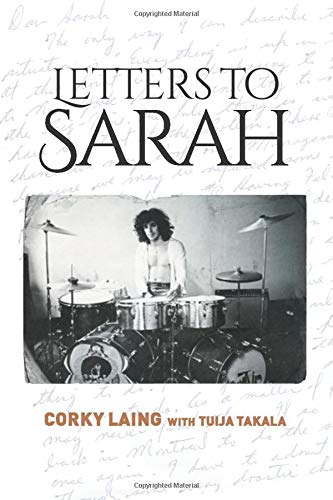
Kevin, get the book, because it does have a lot about Montreal, it’s about me growing up in Montreal, and going to New York, etcetera. The book is called “Letters To Sarah”, Sarah’s my mom. And when I was all Toronto and Quebec, in all these shitholes, I would be alone in the hotel room, and I would always write my mother. I wanted to keep in touch with her, she was always worried about me. I have a bit family, I have triplet brothers, a sister, and the only time I got her gratification was when I wrote her letters. So from the early ’60s to the late ’90s, even when I was playing Carnegie Hall – I’d go back to the hotel or wherever I was staying, and write her a letter, and tell her all about it. So what we did Kevin, is we took all those letters, and when I say ‘we’ – it was with my manager Tuija Takala, she’s a Finish academic doctor, and we wrote the book. She took the dates of all the letters, and in between the dates I would talk about where I was, what I was feeling, I would expand upon that time. And that is why the book is called “Letters To Sarah”. It so happens it sort of reads like a memoir, but that’s alright. Get it, it’s on Amazon.
Anything else on the horizon?
Yeah, everything’s all on the horizon now. We have a new booking agency, and we’re going to start booking August to the next decade! I’m looking forward to a lot of shows. I’m looking forward to playing with Ritchie and recording with Ritchie, playing with Mark and recording, and we’re going to expand the actual performances with videos and back screen, try to bring it up to date, even though we’re old school we’ll bring up the performances. And right now I’m going to focus in on that while I’ve still got a pulse.
Anyone familiar with British singer / performer will want to check out this new CD box. Brown who had had a #1 hit in the UK and Canada [#2 in US] with the song “Fire” in 1968. His stage show included his ‘fire hat’, and he wore black make-up around his eyes, an idea that would later be taken on by Alice Cooper, and later Kiss. When his ‘Crazy World Of Arthur Brown’ [which would feature organ player & co-writer Vincent Crane [pre Atomic Rooster] and drummer Carl Palmer] split up, he started the ’70s with a new band – Arthur Brown’s Kingdom Come, which featured the great guitar work of Andy Dalby for the band’s 3 albums. 1971’s Galactic Zoo Dossier featured such tracks as “Space Plucks”, the heavy instrumental “Gypsy Escape”, “Metal Monster”, and “Sunrise”. Much of this is not your standard rock or prog writings or arrangements of the ’70s, there’s lots of variety, lots of unique theatrical deliveries, humor, but really amazing performances from the band, including organ, and Brown’s vocal delivery ranging from near spoken, and soft pieces to his powerful and emotional vocals on the likes of “Sunrise” .
This stuff is not to be entered in to lightly – you can’t just play it once and categorize it, as there is so much going on musically and lyrically. The follow up album was 1972’s self titled Kingdom Come, which appears simpler with a colorful and word-free cover, and fewer and short song titles. The album is highlighted by “Love Is A Spirit”, and the comical “Traffic Light Song” [that guitar hook reminding me of James Gang’s “Funk #49”], and closing with the 8 and a half minute spacey ballad “The Hymn”.
The 3rd and final album was 1973’s Journey. This would be even more experimental and a bit lighter overall than it’s predecessors. Journey would be the first album in history to use a drum machine [performed by Brown]. Plenty of experimental and diverse keyboards [less organ], with 3 tracks clocking in over 8 minutes, there’s definitely less vocals throughout this album, but best pics for me are the last 2 cuts “Spirit Of Joy” [the single, and which would be covered by Bruce Dickinson of Iron Maiden], and “Come Alive”.
Not sure how these albums sold in the day, but it’s a nice collection of a major period in Arthur Brown’s amazing career. Brown has one of Britain’s most powerful and unique voices, and would’ve been an interesting fit for a number of heavy or heavy blues based bands [see Atomic Rooster, Fleetwood Mac]. He would go on to record many more albums, and appear on other’s albums [see Alan Parson’s Project, Klaus Shulze, Hawkwind, Bruce Dickinson]. In more recent years he is still performing [pre CoVid], and has appeared on stage with Alice Cooper, the Hamburg Blues Band, most recently toured North America as part of the “Royal Affair” package [w/ Yes, Asia, etc..].
Press Release:
Esoteric Recordings is pleased to announce the release of a new boxed set featuring all of the albums recorded by the legendary ARTHUR BROWN & KINGDOM COME issued between October 1971 and April 1973. The band came together in 1970 following ARTHUR BROWN’s failed attempt to form a new band upon the disillusion of The Crazy World of Arthur Brown in 1969. Based in rural Dorset, Arthur had undertaken rudimentary recordings with the bands The Puddletown Express and Rustic Hinge before forming a new, more satisfactory band KINGDOM COME. The initial group came together with a line-up of ARTHUR BROWN (vocals), BOB ELLWOOD (guitars), DAVE AMBROSE (bass), ROB TAIT (drums) and PETE BAILEY (percussion) to record a lengthy jam session in the studio. This tape was impressive enough to lead to a contract with Polydor Records and the album GALACTIC ZOO DOSSIER was the first album by the band. Issued in October 1971, the album featured Arthur Brown joined by ANDY DALBY (lead guitar / vocals), MICHAEL “GOODGE” HARRIS (keyboards), DESMOND FISHER (bass), JULIAN BROWN (VCS3 Synthesizer) and MARTIN STEER (drums). The band’s debut album was a conceptual work loosely based upon the subject of humanity living in a zoo and subject to cosmic forces. As a group, Kingdom Come took the mantle from where the Crazy World of Arthur Brown had left off, presenting a highly theatrical show which utilized the VCS 3 synthesizer and presented a form of experimental rock music which was far ahead of its time. This led to them becoming a popular act on the festival circuit (their memorable appearance at the 1971 Glastonbury Fayre was captured in the documentary film of the same name). For the band’s next album, 1972’s KINGDOM COME, Desmond Fisher departed and was replaced by PHIL SHUTT. The album was another conceptual work and built upon the impact of their debut. Soon after the album’s release Martin Steer and Goodge Harris also departed the band. American musician VICTOR PERAINO joined the group on Mellotron, VCS3 and Theramin and Brown opted to utilize the Bentley Rhythm Ace drum machine instead of a drummer, bringing a new electronic direction to Kingdom Come’s highly inventive Space Rock. This incarnation of the band recorded their final and finest album in the Autumn of 1972, the highly influential JOURNEY. Issued in April 1973 the album was a superb conceptual work and featured such legendary material as “TIME CAPTIVES”, “SPIRIT OF JOY” and “COME ALIVE”. Despite the excellence of the album, KINGDOM COME disbanded soon after the album’s release leaving an impressive legacy. This new remastered boxed set features the albums “GALACTIC ZOO DOSSIER”, “KINGDOM COME” and “JOURNEY”, along with the archive disc “JAM – THE FIRST SESSIONS 1970” and “AT THE BBC 1971-1972” a twelve track CD featuring sessions recorded for the BBC between March 1971 and September 1972, nine tracks of which are previously unreleased. The set also adds thirteen bonus tracks (two previously unreleased on CD) taken from studio out-takes and a rare single. Also included is an illustrated booklet with new essay featuring an exclusive interview with Arthur Brown and a replica poster. “ETERNAL MESSENGER” is a fine tribute to Arthur Brown, a unique and visionary musician.
• A DELUXE 5 CD BOXED SET FEATURING ALL OF THE ALBUMS BY ARTHUR BROWN & KINGDOM COME • FEATURING THE ALBUMS “GALACTIC ZOO DOSSIER”, “KINGDOM COME”, “JOURNEY” & THE ARCHIVE RECORDINGS “JAM – THE FIRST SESSIONS 1970” & “AT THE BBC 1971-1972” (FEATURING NINE PREVIOUSLY UNRELEASED TRACKS) • ALL NEWLY REMASTERED • WITH THIRTEEN BONUS TRACKS, TWO NEVER ISSUED ON CD, DRAWN FROM STUDIO OUT-TAKES & RARE SINGLES • INCLUDES AN ILLUSTRATED BOOKLET WITH PHOTOGRAPHS, NEW ESSAY WITH EXCLUSIVE INTERVIEW WITH ARTHUR BROWN AND A POSTER.
A classic pair of albums that go together as set for me are Alice Cooper’s first 2 solo albums from 1975 & ’76. Welcome To My Nightmare was a huge success, aided by a prime-time TV aired video for the album, as well as a massive tour. AC Goes To Hell would not be as successful, nor would there be a tour, but as far as themes, players, and sound go – these 2 are a pair. Both albums would be recorded at multiple studios, most notably Soundstage in Toronto. As with the earlier AC band successes, Alice solo was still working with (Toronto) Bob Ezrin, and use the former Lou Reed guitar team of Dick Wagner and Steve Hunter, both of whom also guest on earlier AC albums, as well as bass player Tony Levin. There would be other players on each albums as well, a number of them from Canada. Vincent Price, however, would only guest on WTMN!
“Alice Cooper Goes To Hell is sort of a continuation of Welcome To My Nightmare. It’s fun. You don’t really know if Alice woke up from the nightmare or not. He actually goes down to Hell and meets the devil. They have a battle on who is really the coolest.” – AC, Circus magazine, 1976.
Though Goes To Hell would be the weaker of the pair, like Welcome to Me Nightmare it did feature some classics. Both albums would lead off with the title track, both of which are pretty different than the typical rock tune, and both have returned to the live show for many tours. Each had an acoustic based ballad ending side one, both of which became big hit singles – “Only Women Bleed” and “I Never Cry” both reached #12 on the Billboard charts, about 6 months apart, while the former would reach #1 in Canada and the latter #7 here. These created a whole new avenue for Cooper with ballads on AM radio, with more to follow. While Welcome To My Nightmare seems a bit creepier lyrically, both albums would boast a couple rebellious teen anthems, “Department Of Youth” (from WTMN, and issued as a single) and “Guilty” (from GTH, which would’ve made a fine single).
Welcome To My Nightmare is heavier overall with tracks like “Steven”, “Cold Ethyl” and “Devils Food” & “The Black Widow”, while Goes To Hell seemed to have a bit more funky numbers like “I’m The Coolest”, “Give The Kid A Break” and “You Gotta Dance” – a somewhat disco tune, because disco was what was being played in Hell (or Hell was a disco!?). The latter album also had a few more ballads in “Wake Me Gently”, the Judy Garland cover “I’m Always Chasing Rainbows”, and the closing piece “Going Home”. Each album also borrowed some outside material – “Escape” [from WTMN] was a song recorded by The Hollywood Stars in 1974 (and unreleased for decades), with Alice re-writing the lyrics to fit the Nightmare theme. “Wish You Were Here” was borrowed somewhat (riff & solo) from the track “Stage Door Queen” from the 1972 album by Ursa Major – which included Dick Wagner and was produced by Ezrin!
Welcome To My Nightmare featured an iconic album cover from Pacific Eye & Ear, while Goes To Hell was far less memorable, but it did include the ‘bedtime story’ in the liner notes to go along with the lyrics, so.. Welcome To My Nightmare would be made in to a TV special, which included all the songs being acted out to the story, and the ensuring tour was one of the biggest of the decade and of Alice’s career, but Goes To Hell would see no TV show (though Alice did talk in interviews about wanting to make it into a Broadway performance), nor would there be a tour for Goes To Hell, with health issues keeping Alice off the road until his next album.
A proposed tour called “Ol Black Eyes Is Back” was scheduled to start in Canada (with Max Webster as openers), but was cancelled. There was however his performance on The Rock Music Awards in September of ’76, performing a couple of songs from the album with plenty of dancers. The lack of a tour may have also been part of the reason for there not being a follow up single to “I Never Cry”, and part of why WTMN made the Top 10 in Canada & the US, while GTH was in the Top 30 for both countries. It seemed Alice’s post-original band era would be more in to theatrics, but more like Hollywood theatrics with more focus on dancers, less straight ahead rock tunes, and becoming part of the Hollywood community (he would appear on the Hollywood Squares, and even acted in the Mae West movie “Sextette” during this time). His 1977 album Lace & Whiskey was a different story (lyrically and musically) to his first 2 solo albums.
Although I think Welcome To My Nightmare is the better album overall, Goes To Hell is a classic as well, “Guilty” being one of the best Alice rockers during this latter ’70s period and the lyrics to tracks like “Wish You Were Here” and “Go To Hell” being among his most twisted and funniest. I remember getting these in the early ’80s (when I started buying Alice records), and thinking how strange these were next to the Greatest Hits songs I knew – the song “Welcome To My Nightmare” wasn’t really a hard-rocker, with all the horns and soft intro, not to mention tracks like “Some Folks”, “Years Ago”… all very strange to a supposed hard-rock album. And the other I found a bit odd as well with the ballads, and odd tracks like “You Gotta Dance” and “Didn’t We Meet”. But I enjoyed them both repeatedly, as I got in to the stories and Alice’s ability to add and change so much to the character from song to song and album to album. When I first saw him in 1986 (then not thinking I’d ever get to see him) he played both title tracks, and ‘metaled’ them up quite a bit for the times. A great back-to-back adventure in ’70s rock from Alice.



:format(jpeg):mode_rgb():quality(90)/discogs-images/R-370149-1300921861.jpeg.jpg)
:format(jpeg):mode_rgb():quality(90)/discogs-images/R-370149-1436796500-6403.jpeg.jpg)




 Outsider Rock