
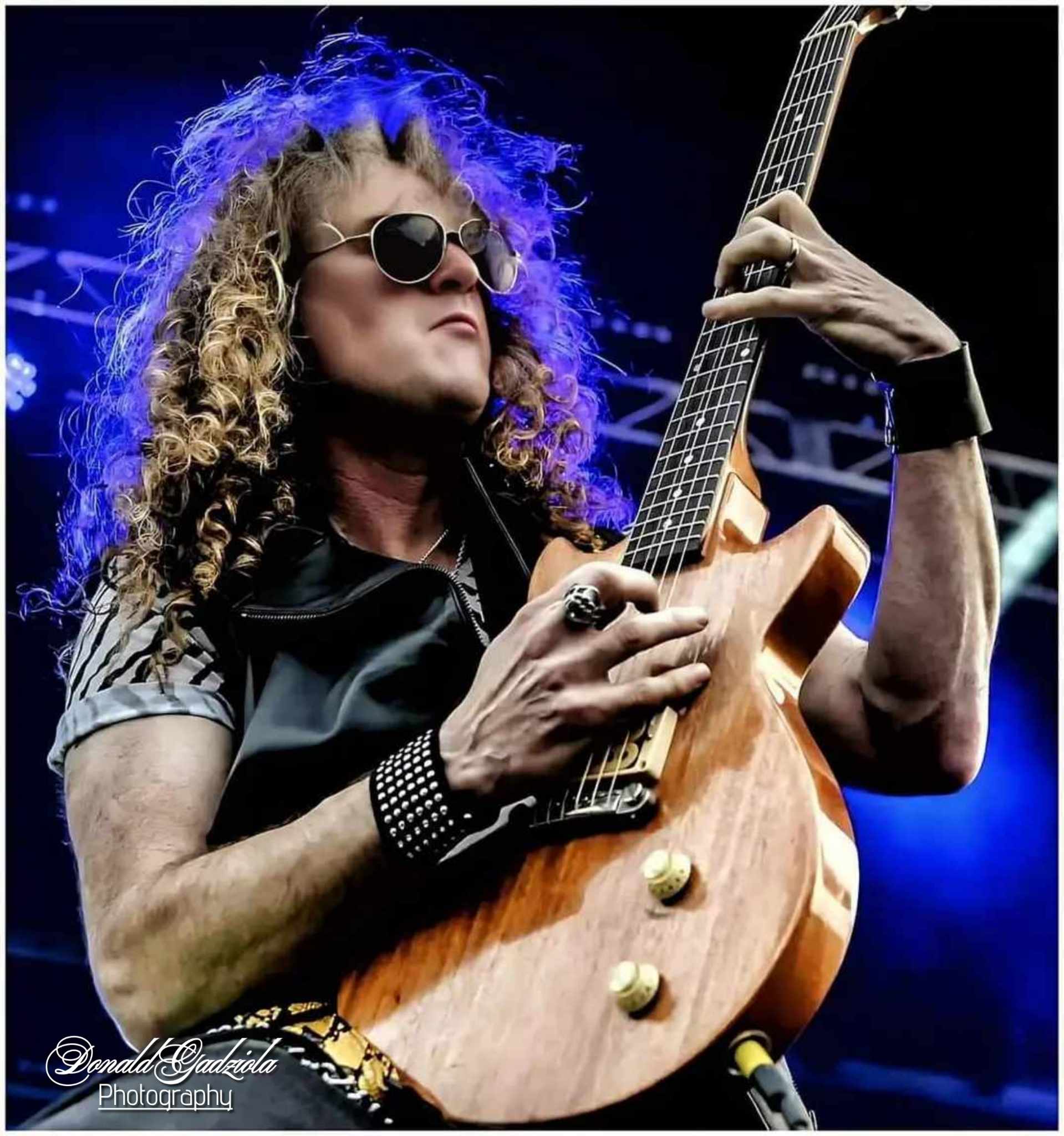
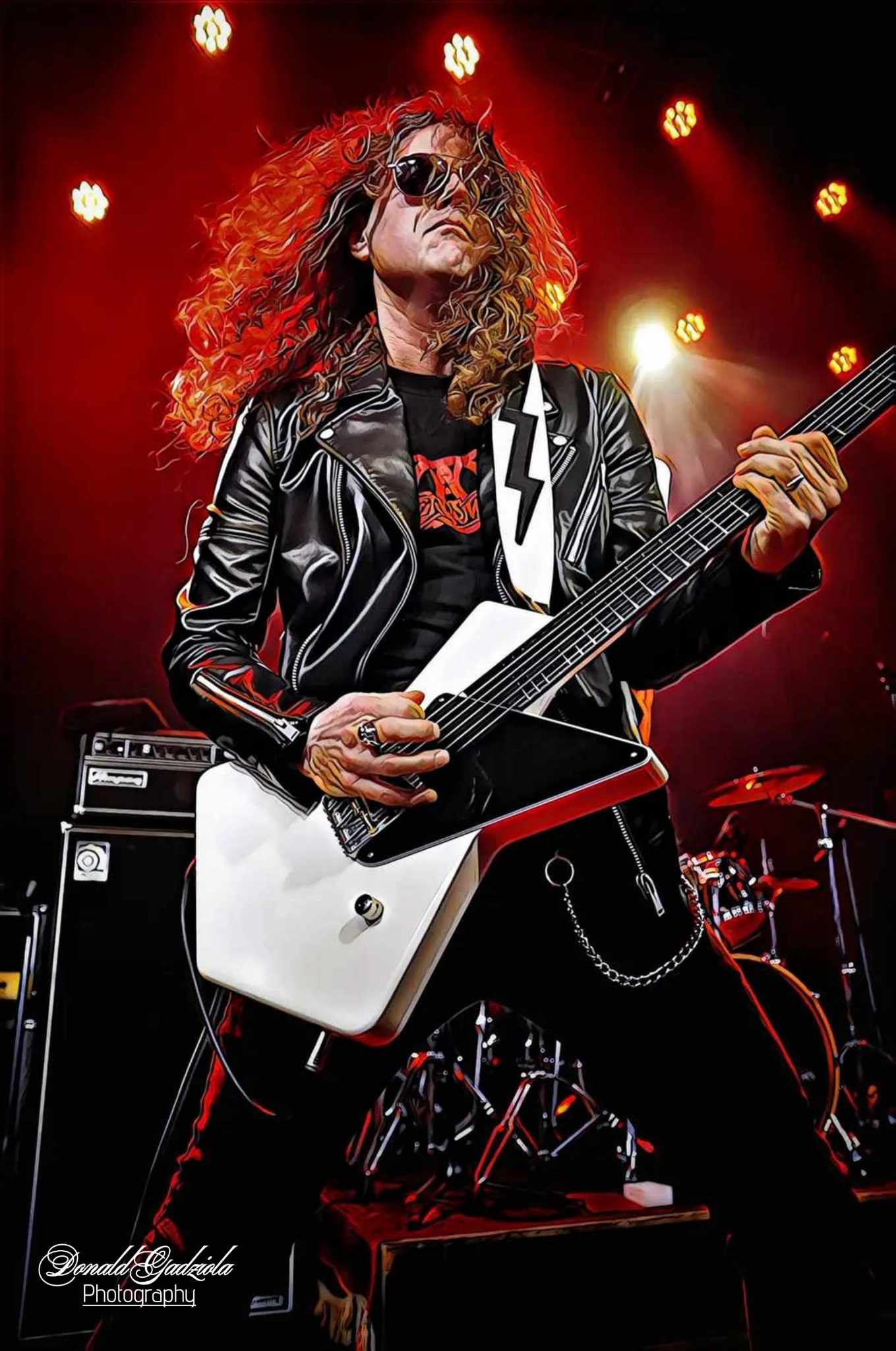
Guitarist SEAN KELLY has become a huge part of the Canadian rock scene over the past 2 decades. In the early 2000s his band CRASH KELLY released a number of albums, and since then Sean has gone on to work with numerous acts as a songwriter, recording artist, and live player – NELLIE FURTADO, HELIX, HONEYMOON SUITE, LEE AARON and CONEY HATCH! Sean has also released a new book which discusses 80s hard rock & metal and includes loads of interviews with legendary 80s players – Don’t Call It Hair Metal. This book, and Sean’s previous writing Metal On Ice can be easily found online and in shops. Below Sean talks about the book and the new CD (sold separately from the book), both highly recommended for fans of 80s hard-rock & metal. Check out the links below. (*Photos courtesy of Donald Gadziola).
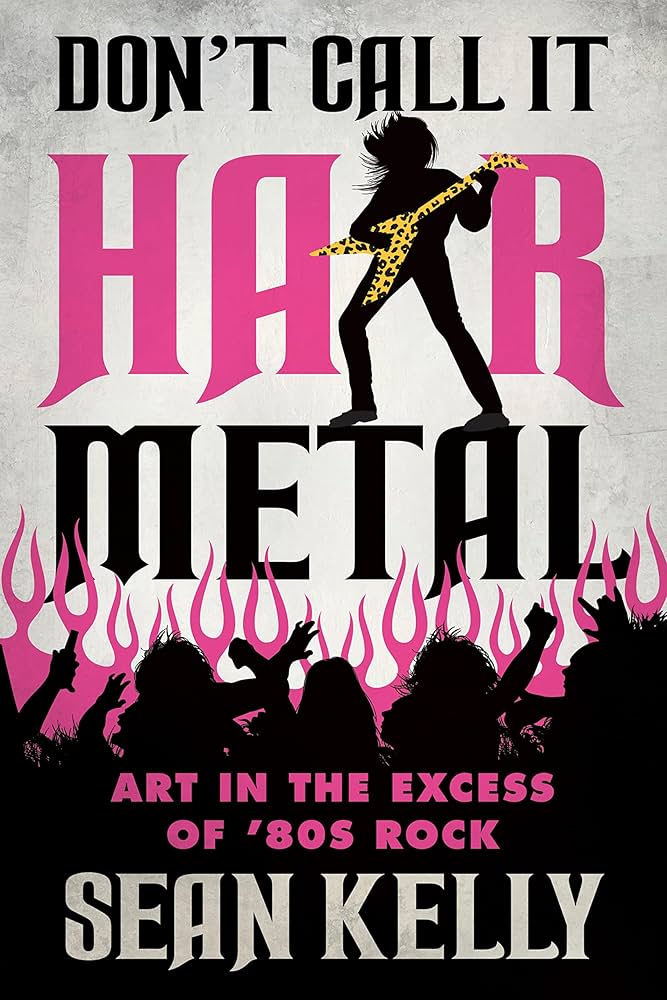
So, the book, I’m assuming the CD is meant to tie in with the book as did with the ‘Metal on Ice‘ and the CD with that book?
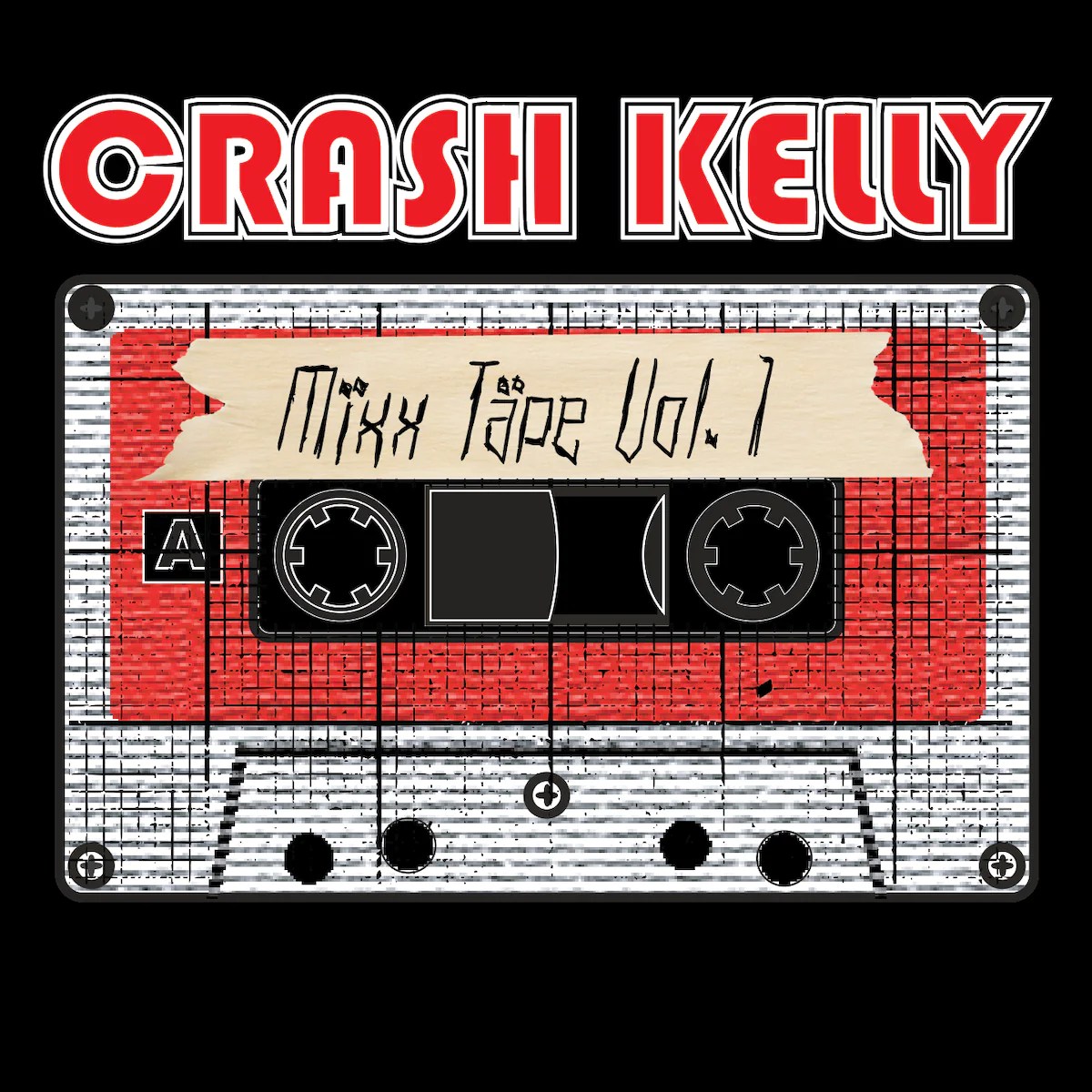
Yeah, exactly. That was something we kind of knocked around before the book came out. We didn’t quite line it up with the book release, but it was something I really just kind of wanted to get out of my system, too. I had a bunch of cover songs that were used as B-sides for, Japanese releases, and those were mostly, the kind of early 70s type stuff or the 70S – mid-70s glam stuff. But I always wanted to cover a couple of these songs, and I thought it would be kind of a nice thing to have as a kind of a compendium to go along with the book. You could listen along, and that was the motivation.
I’m kind of on the fence about ‘covers’ albums, because some bands, I don’t know why they do them, but other bands, depending on the track listing – and what I like about this is the track listing, because it’s a lot of stuff a lot of people would not normally hear covered – like “Roxy Roller” and the WASP song and a few others there.
It’s funny, those were just songs that for some reason or another stuck with me, like “Sex Action” by L.A. Guns, that song has just always kind of resonated with me from a guitar perspective. I just remember the video, so I really wanted to kind of capture that feeling of, for that, like the Troubadour in the early 80s in L.A., and then also the early days of Twisted Sister, which is why I picked “I’ll Never Grow Up Now“. So, kind of really between the early 80s hard rock and Sunset Strip stuff and the 70s glam – that was my whole inspiration for doing the Crash Kelly thing anyway. So, it works as kind of a sign of what Crash Kelly was about, but it also works as a companion to the book.
Is Crash Kelly basically just yourself now, or is it still a band?
I used to say it was kind of like T-Rex or Marilyn Manson. I always considered it a band, whoever was playing with me at the time was in the band, but really it was a benevolent dictatorship, and it still kind of is. It really was my thing, although I have to say that the drummer, Tim Timleck, he’s been my musical partner on so much of this stuff for many years, and he’s definitely a band member. We’re actually working on some solo instrumental stuff for me right now, and the guy is just so talented on so many levels.
And you had a few guests on it as well. I’m just trying to think, Nick from Slick Toxic…?
Yeah, Nick Walsh. Nick and I were in a band together called ‘Revolver’, but I’m a massive Slick Toxic fan. Slick Toxic, really one of the reasons I moved to Toronto was reading about them in ‘Meat Magazine’ and them getting a deal, and then they made that amazing ‘Doing the Nasty’ record. So yeah, I did say it was great. I consider Nick a very close friend of mine, and it was great to have him on that. That was many years ago we recorded that; he’s got the Alice thing down. Nick is a master vocalist, he has his own sound, but he can also kind of catch the tonality of different artists, and he just did the Alice thing perfectly.
When did you move to Toronto?
I moved to Toronto in 1991.
So that was kind of like a tough period for metal and all that, because I remember getting those Meat Magazines and suddenly you had all the Smashing Pumpkins and Nirvana and all these other bands that were on the covers and stuff.
That came just after. When I landed in Toronto in 1991, I’m from a smaller place, so it still very much felt like bands like Skid Row and Guns N’ Roses and Firehouse and Slick Toxic – they were still kind of the big bands, and then there was Extreme and Saigon Kick and all these bands. So, it felt like it was still very vital, and I remember getting to Toronto and immediately going to the Gasworks and seeing bands that were very much in that kind of 80s rock kind of paradigm.
But you’re right, what was really happening was a change of scene was happening, and when it changed, it felt like it changed overnight, and all of sudden things were radically different. And unfortunately for some of us, it was harder to find a place in that, because it seemed like some of the things I valued, like the way I played guitar or the way I looked, those things didn’t seem as relevant. It was a new way of thinking about things.
Regarding the book, what inspired the whole concept, I guess the whole premise of it?
Yeah, I think I got a little flack by some people because they said – “well, who cares about hair metal!? A lot of bands consider themselves hair metal.” But you’ve got to remember, when that term came out, it was after market. That was a term that was applied to 80s rock after the fact.
It was a pejorative term. It was a term designed to put it down. So no matter what it’s become – hey if you embrace it, you call it hair metal, you love it – more power to you! I actually don’t care. But where it comes from is from a pejorative insulting place, and that’s just fact. I’ll argue anybody on that.
And what I wanted to do was… and a lot of these bands have expressed frustration because really what they are is rock and roll bands. And the best of it deserves to be considered among the best of rock and roll. I don’t care what you say, Cinderella? Tom Keifer’s as good a musician as anybody who’s come before or after. So to lump him in under some pejorative title, I find it insulting. And I am an artist. I am a musician. I know how it feels to be lumped into something when it might not be appropriate. So this was a deeper dive into the best of it. Now, sometimes I would go back and listen to things and go, Oh, you know what? I can kind of hear that is formulaic. Or I had to re-investigate or reconsider some things that I initially had thought about some of those bands. But for the most part, I really wanted to tell the story and honor the contributions of those people that made up the soundtrack of my life.
You’ve got a lot of interviews. How much time or (I guess) over how much of a period of time did you collect interviews and stuff for?
It was over about two years. Every time I go in and write a book, I’m working on it right now. I’ll tell my publisher, ‘Oh, yeah, it should be done by this so and so.’ And I always need an extension because what happens is once you start talking to people, new ideas percolate. And new directions reveal themselves. Fortunately, I have an amazing publisher, ECW Press, and an incredible editor who’s become a dear friend, Michael Holmes. And he is so ‘writer friendly.’ He just wants you to write the best book possible. So, if I need more time, he’ll fight for that for me, and I appreciate that.
I know you’re friends with a lot of these people like Dee Snider and that. Have you got much feedback from them regarding the book or the album?
I did. And I have to tell you, on the album not so much because really, let me just talk about the album. The album is only available through rockpapermerch.com. Yeah, I didn’t put it up for streaming. And I’m not really pushing it, and Crash Kelly isn’t really touring. But I kind of like that because the people that are seeking it out are realizing it feels kind of special. It’s something that’s not widely available, and it’s not disposable, unfortunately a lot of great music starts to feel disposable in the age of streaming. You listen to half of a new song, and you go ‘that’s cool’, and it doesn’t stick. And music like anything else – like food and art, takes time to learn to appreciate it. So, I think the people that have actually gone out and picked up the CD and dusted off their CD player I think that they appreciate it.
Yeah, well, with me, CDs are for the car, mainly. I have my vinyl downstairs. But, but yeah, there’s a lot of albums. One thing is there’s so many albums coming out nowadays, it’s tough to keep up, right?
That’s it. And because the technology is such that we can record albums more efficiently, cheaper, I think there is a bit of a glut in the market sometimes, even with bands that, you know, ‘Heritage bands’, so it’s tough. And because you have the access to it, you can flip through and, skip ahead. It’s so easy. It’s not like rewinding a cassette or having to walk over to the record player, pick up the needle, right? I think sometimes good music that normally would have really sat in the listener’s mind doesn’t get a chance to do so.
I think like when we grew up, you put on an album, you had to listen to it, because you didn’t have much else. And you listen to it over and over until a couple weeks later until you got something else. But now you can get three or four things in a day, right?
Totally. And listen, to answer the other part of your question, I had some wonderful feedback, Dee Snider reached out to me to tell me how much he loved the book and enjoyed it. And I’ve had that from a few different people who really kind of told me that. That made me feel good, because I really was writing that to honor them, and honor the artistic motivation of these people.
What’s your take on some of these, a lot of these bands are still going and some of them are kind of like getting a bit of flack, like obviously Motley Crue and a few of these bands that are still going and kind of, you know, making changes and stuff like that!? And then you have other bands that are going strong still, they’re putting out decent albums and stuff.
Yeah, honestly, I think that it’s up to the listener, but people don’t stop being creative. And that’s something that the audience sometimes needs to understand about artists, like, “why are they just putting out new music, it doesn’t sound like their old stuff, or it sounds too much like their old…” Listen, these are just people who want to create, I think it’s important. I think it keeps it fresh for artists. And it kind of re-energizes them to allow them to go and deliver those hits that people love. Yeah, that’s important. And look, at this stage of the game, for artists from the 70s and 80s, a lot of it is based on nostalgia, but it doesn’t mean that they’re not creative people. So, more power to anybody who takes a shot at it and puts something new out there. I appreciate where it’s coming from. And, it’s funny, someone was talking to me about this whole thing about bands that replace members, and when is it too much – I think if there’s some kind of officially sanctioned line to the original band, like, I just had a great chat with Pete Agnew from Nazareth. And Pete acknowledges it’s not the same game without Dan McCaffrey, or Daryl Sweet, sure, but it feels so authentic. We just played a gig with Lee Aaron with Nazareth, and it feels so authentic because it has the blessing of the original unit. Listen, Daryl Sittler doesn’t play for the Leafs, but they’re still the Toronto Maple Leafs, you know what I’m saying? It’s a franchise, and if it’s fostered and passed along with love and respect and integrity, I think it’s a great thing.
With Coney Hatch you’ve done the two live albums, and obviously a couple new tracks. (Yep) Have you guys given any thought to or are you hoping to record something new with those guys?
Absolutely, in fact, you know, I can say there’s been a couple of new things that have been worked on, and I don’t know what format that’s going to take, but you know, we’ve been in the studio and worked on a couple of things, so you never know what’s going to be coming in the future.
Lee Aaron’s another one, obviously you’re playing with Lee. And I never really got into Lee much in the 80s and early 90s, but the last four albums or so, they’re very consistent, very solid pop rock stuff…(Thanks.) Yeah, so I guess what’s your whole thing with her, like how you guys work together and, you know, she’s pretty consistent putting out albums, right?
I mean, Lee Aaron is very much the captain of the ship. But she’s also very, very open to input. We all write together as a band. At first it would be, she would co-write with when I first joined the band, co-write with me or co-write with Dave, the bass player (Dave Reimer.) But now we just all throw our best ideas into the pot, and we work on it together, and it’s been a really great experience. She’s amazing to work with, very open, very collaborative, you know, she produces a record, she’s got the direction, but very open and it’s been a really rewarding experience.
You’ve, obviously you’ve worked with a number of Canadian bands, not just Coney Hatch and Lee Aaron, but Honeymoon Suite and Helix and a few others. Do you ever have stuff where you’re writing with somebody and you think ‘this is an idea or something that would really sound great on somebody else’s thing’, you know, like you ever have kind of a conflict, I guess, of ideas?
Well, not really. I mean, I’ve never kind of come up with something and said, ‘oh I’m going to hold on to that.’ I’m not really like that. I believe in working with the artist at the time, if I’m co-writing with somebody, you know. Yeah, sometimes you bring things that you think they’re going to really love and that they’re going to be – ‘oh, this is going to be perfect, this is going to sound exactly like a vintage track of such and such artist’ and they’ll go, ‘nah, that’s not really what I want to do.’ So sometimes that’s interesting. It’s like, ‘oh okay’. But I’m always open to it. When I’m trying to help, especially when I play with a band that’s had success or a history, I’m just trying to really help them flesh out their vision.

Now you grew up on a lot of the stuff you’re actually playing in now. So what’s, I guess, your whole experience of where you are now looking back at it.. I wonder if you can talk a bit about that, like how that experience of going from being a fan to a band member.
Yeah, I always try and keep that fan alive when I’m playing with those bands, because it’s that excitement in their music that kind of drew me into a career in music. So, first of all, it’s an honor; it’s definitely a thrill. But also, I think that that renewed sense of energy helps to renew them. They start to see the influence maybe they’ve had on other people. And I think it becomes this nice transaction of energy.
Now, do you have any Canadian bands you’d still like to work with?
Ha Ha! Yeah, I want to work with everybody! I’m energized by working with people. I’ve been so lucky to get a chance to work with so many. April Wine comes to mind. I almost had a chance to work with them, but it just didn’t work out. But yeah, Kim Mitchell – that’s someone I’ve always, you know, Kim is to me, the greatest guitar player this country ever produced, so I’d love to love to work with him. You know what!? There’s so many. It’s almost too many (LOL) to think about. But I’ve been sure lucky to work with the people I have. I’ll tell you that much.
In talking with a buddy of mine we’d mention the number of bands that Spider (Sinnaeve) would show up in as bass player. So, in mentioning you he said, ‘he sounds like the Spider of Canadian guitar players.’
I don’t even close to anywhere as talented or prolific. But I’ve been very fortunate. And it’s weird how it’s worked out. Helix and Honeymoon Suite were my first concert. And I got a chance to play with both of them and write songs with both of them. I play guitar because of Twisted Sister, and I got to star in a musical with Dee. It’s kind of crazy.
You’re also doing an acoustic thing with Carl (Dixon)!?
Yep, we have a new project called ‘Northern Strum’, which is a lot of fun. I love working with Carl, and Carl and I are no stranger to the acoustic thing together. We did it for years. But this has taken on a new element and really enjoying it actually working on a couple of new arrangements right now of classic Canadian songs and having a great time with it.
Yeah, that’s just gonna be a corporate thing perhaps!?
That’s kind of the idea, right!? But, you know, we kind of take everything from an artist’s point of view – it’s always really about making something that feels artistically satisfying. And sure, we need to make a living. But wherever we go, it’s always kind of coming at it from the idea of a recording act or recording artist or from an artistic point of view. It’s never about crass commercialism. It’s always about art.
Can you tell me a bit about your own record collection? Do you still collect a lot of records?
You know what, I wouldn’t say I’m a collector, but I buy a lot of records. And I buy a lot of vinyl, just for the thrill of the ritual of taking off the shrink wrap, reading the liner notes, that was very important to me. And like everybody else, I got rid of my record collection. I had tapes, I got rid of tapes, I had CDs. And now I’m just back to vinyl. I just like the ritual of it. I get excited when I see something, maybe it was something I couldn’t afford or couldn’t find when I was a kid. And I find it now. And that’s what it’s really all about.
What are you currently listening to these days?
I just listened to – on repeat, the new Michael Schenker Group, a couple of songs with the guests. So, I was blown away with Joey Tempest from Europe and Roger Glover on “Only You Can Rock Me”. So, I’m a big UFO fan, big Schenker fan. I’ve been listening to that. I’ve been listening to Teaze. I got back into the band Teaze. I’ve been listening to Teaze ‘Tour of Japan’, great 70s Canadian rock band, who are still active. I’m trying to think what vinyl I picked up recently. I grabbed that Kiss ‘Destroyer’ Deluxe version. So, some of the demos on that. But really, – Enuff’s Enuff, Van Halen, Cheap Trick… that’s the stuff that I listen to at home. But I recently started hosting a radio show on 94.9 Rock called ‘Generation X Radio’. And I’ve been getting hip to a lot of great bands like Damn Truth and Sierra Pilot, Art Deco. So that gives me a chance to listen to brand new music. So, kind of the new interpretation by younger artists on the classic sounds that we grew up on. So that’s been great.
You’ve written a few books. Do you read much as far as rock bios?
I read tons of rock bios! I’m constantly reading them. I’m looking forward to the new Cheap Trick one that’s coming out very soon. I forget what the author’s name is, but there’s a new Cheap Trick one ‘From the Bars to Budokan’, I think it’s called. So, looking forward to that. And my buddy Robert Lawson writes some great books. I’ve just been reading his Nazareth book. His Cheap Trick book is excellent; it comes more from a listener, record collector perspective. I just read a couple of books on Power Pop, which were collections of writings by other music writers. Oh, I just read a book I have to tell you about – ‘They Just Seem A Little Weird’ by my good friend Doug Brod. It’s an amazing book that connects Kiss, Cheap Trick, Aerosmith and Stars. It’s incredible!
One last thing I want to ask you is, of your Canadian albums, can you recommend a few of your underrated Canadian bands or albums?
Oh, underrated. Okay, I’ll go Slick Toxic ‘Doing the Nasty.’ I’ll say, underrated, Big House – their self-titled album. Teaze, anything by Teaze. I really love the ‘Tour of Japan’ album because they’re playing great, they’re on fire, they’re in some place that are excited to see them. It’s a great, great record! Underrated(?)….Well, you know what, that first Kim Mitchell EP is crucial. The one with “Kids in Action”.
I remember that, that got played to death on the radio here.
Yeah, there’s bands like Refugee and Orphan and even on the New Wave side – Cats Can Fly or Images in Vogue, you know there was so much world-class music coming out of Canada. And, even on the rock side, Brighton Rock…
I’d like to see somebody do a book someday on just like the top 100 or 200 Canadian rock albums that are less than obvious.
Yeah, that’s a great idea.
LINKS:
https://www.dundurn.com/books_/t22117/a9781459707092-metal-on-ice
http://www.instagram.com/seankellyguitar/?hl=en
https://www.instagram.com/rushguyyyz?igsh=MXVnY2RtNHlzamh4aw==
https://www.baytoday.ca/rooted/north-bay-musician-sean-kellys-new-book-dedicated-to-80s-rock-7360305


 Outsider Rock