I could go on for a while making Uriah Heep lists. Here I’ve gone through all those great Heep songs that never made it to the albums they were recorded for – B-sides, outtakes, demos [good quality]. These are my favorites, and it was tough to edit down to just a dozen [+1] as the band usually had a couple of leftovers from each album – some came out in the day on the back of a 45, and some were mixed and came out years or decades later on remastered CDs or box sets. So these are my favorites, and I know there’s plenty to pick from, so drop a line with your favorites or one in particular that you feels greatly overlooked.
Here Am I
An early Heep gem from Salisbury days. This is one epic piece of everything that made that classic Heep sound and feel, it’s got some soft moments and then crushingly heavy with the Hammond & guitar and harmonies all coming in. An odd omission from those early albums.
Why (14 Minutes)
This song is probably the best known Heep B-side amongst fans. The song has a history to it,a few different releases, most notably the 14 minute version – hence the title. Having been recorded during the Look At Yourself sessions, and then later
prior to Demons & Wizards, it would have been a great track on either album, but I really can’t imagine where it would fit or what I’d substitute. My 2 favorite 70s Heep albums, and this song was so different.
Crystal Ball
A straight up rocker, written by Gary Thain, and leftover from The Magician’s Birthday recordings. Not sure where this would’ve fit on the album, tho’ such a driving rock tune would’ve been nice on the first side. Gary contributed writing to some classic Heep cuts [“Sweet Lorraine”, “Circus”…], but this is the one gem that he was credited as sole writer of.
Stone’s Throw
A demo from the Wonderworld period, which was eventually included on the “Time Of Revelation” box set. This is a very different and outstanding Heep track. An acoustic track, with a unique mix of guitars and vocals. Would’ve made a nice tune for an acoustic showcase. I really like this song, though I’m not sure how it would’ve fit on the Wonderworld album!?
The Time Will Come
A B-side from Return To Fantasy. A very classic-Heep rock track, mixed full of heavy guitar & Hammond organ, harmonies … Love David Byron’s vocal on this. Too bad it didn’t make the RTF album, which could’ve used another heavy song on Side 2. The other B-side [“Shout It Out”] was a decent heavier cut as well.
Name of The Game
High & Mighty, though one of my favorite Heep albums, is criticized by many as being a bit too ‘lightweight’. Though this track wasn’t totally finished, it definitely would’ve beefed up the album [again] on Side 2! Heavy guitar intro, great vocal from David Byron. The other outtake [“Sundown”] wasn’t bad either! Ken Hensley did a solo version of this that wound up on his “From Time To Time” collection.
A Far Better Way
The John Lawton era of Heep produced a number of great B-sides and outtakes [that would surface years later, like this one]. This ballad that builds up til Lawton goes all out. One of the best things he performed with Heep, and it didn’t make it to album…. though I really like the Firefly album as it is, so not sure where it would fit.
The River
My favorite outtake from the Lawton era. It’s classic Heep – mystical, plenty of organ, guitar [tho a bit back in the mix], harmonies, and heavier than many on the Innocent Victim album. Aussum performances from Lawton, Lee Kerslake and Trevor Bolder. This is a track [I think], older Heep fans would’ve welcomed on the album, at the time.
A Right To Live
Fallen Angel produced a number of B-sides and leftovers. This track, written by Lawton – was issued on a promo single, as a B-side. Such a good song; simply astounding that this one [and perhaps 1 or 2 others?] were omitted from that album in ’78, because IMO – there’s a few that it could easily replace.
Son Of A Bitch
A B-side from the Abominog recordings. A solid, heavy, and tough rocker that even got in to the band’s live set during that tour.
Backstage Girl
The B-side to the MTV aimed single “Rockarama”, from the last album to feature Peter Goalby. I very much prefer this song from Peter over the 80s pop mess on the A-side.
Miracle Child
When Phil Lanzon joined Heep in ’86 he brought with him his songwriting, something needed with the departure of Goalby and John Sinclair, who contributed largely to the 80s Heep original output. The band recorded a number of things, including a Live album before a new studio album. This pop-rocker, written and sang by Phil. An underrated ’80s Heep track that would’ve fit nicely on Raging Silence in place of one of the covers.
Hard Way To Learn
Included as a ‘bonus’ track on Into The Wild, in Japan. It’s a fairly heavy ballad, penned by Trevor Bolder. Such a cool classic Heep sounding tune, a shame it was left off the album elsewhere.
You likely haven’t heard of Canadian musician LORENCE HUD unless you’re a fan of APRIL WINE, and recognize his name as the writer of one of the band’s biggest hits – “Sign Of The Gypsy Queen”. However, years before April Wine made this song one of their own classics, with their 3 guitar approach on the 1981 album Nature Of The Beast – this song had a prior chart placing and release on Lorence Hud’s debut solo album in 1972. Hud’s debut album on A&M Records received no US release – Canada and Japan only. The singer/songwriter and multi-instrumentalist played all the instruments on his debut and wrote every track. Sign Of The Gypsy Queen is easily the stand-out track, but the album was a pretty decent collection of pop-rock, folk, a touch of country… The single though would chart on various radio and regional charts throughout Canada, and reached #16 on RPM magazine’s national chart.
Hud being a storyteller throughout this album; I can see how Hud was probably influenced a good bit by Elton John at the time, especially on the piano ballad “Grab Hold & Hang On ” [which also reminds me roughly of the Righteous Brothers “Unchained Melody”] – would’ve made a good single. “Master Of Pantomime” is another good song here, a down-on-his-luck character who entertains for food and drink [reminds me somewhat of Jerry Jeff Walker’s “Mr Bojangles”. That song was issued as a single, along with the track “Siren In The Night” – this track being a bit less folky, featuring more guitar, surprised this one didn’t catch on more. The track “Summer Rose” would later be covered and released as a single by Canadian country artist Wayne Rostad, and becoming a hit on Canadian country charts. https://www.youtube.com/watch?v=jmHkBXTRUCw
For the follow up album Dancin’ In My Head, Hud went to Nashville to write and work with more musicians. This is where any ‘magic’ that the first album featured was lost, in my opinion. Hud was longer writing and playing everything. Producer Norbert Putnam, who’s credits included Joan Baez, Brewer & Shipley, and New Riders On The Purple Sage was hired and brought in numerous musicians – most notably David Briggs [credits included Alice Cooper, Neil Young, Spirit…], and Ginger Holladay [credits include Elvis, Roy Orbison, Baez, Linda Ronstadt]; other players had lengthy list of Nashville sessions. The first single was “Guilty Of Rock ‘n’ Roll”, a more upbeat country-ish tune, with plenty of backing vocals and horns [courtesy of the Memphis Horns]. The song though was penned by Goldberg [who’s songwriting credits included Tom Jones, The Monkees, and Dusty Springfield] . The album as a whole was less folky, a bit more upbeat, but definitely more country sounding, with less impressive songs, and a bit too much of everything [production & outside players], taking Hud from his Canadian folk-pop-rock debut to a hopeful Nashville up and comer. Four tracks come from Nashville writers, a few of which had been recorded & released previously. Notable Hud-written tunes here include “Those Good Time Songs” and “Madame La Rue” [also released as a single]. “The Song That Annie Sings” was also a minor hit in Canada [as it was pushed to country stations]. https://www.youtube.com/watch?v=iS-EPPliDpQ
The album though was a commercial flop, and didn’t break Hud through, perhaps as expected. It was only released in Canada and Spain [I would’ve thought it would’ve received a US release, but see no listings for such]. In 1974 he was the ‘special guest’ to Canadian band The Stampeders, on their tenth Anniversary tour across Canada.
A few further singles were released in ’74 and ’75, but no 3rd album. It would be close to a decade before Lorence Hud returned with a new record. He did reportedly relocate to Los Angeles and work as part of a songwriting company that also included Rick Springfield and Les Emerson [ex Five Man Electrical Band]. A 4-song ‘min-album’ was released in 1983 on Quality Records in Canada. Produced by ‘Moe Bottom’ [hmm…], and engineered by Rich Dodson [of The Stampeders]. Whether he was inspired by the success of April Wine’s version of his song or just wanted to get in to a new rock scene, Hud completely re-invented his image and sound. Gone were the acoustics, folk and country sounds of his previous 2 albums, as he came out with a typical upbeat 80s aor-rock record; all pop-rockers, no ballads. Lyrics are less about tales and more geared to the typical 80s stuff, with anthems like “Don’t Touch That Dial” and “Here’s To You”. This mini-album though features very little information regarding any other players on this or any lyrics, etc.. https://www.youtube.com/watch?v=MnorIZKnfEU
I imagine it stiffed in ’83, as there’s very little info out there on it [tho not impossible to find]. A shame, as Hud had a pretty good rock voice for this sort of stuff, and the songs aren’t bad for the period.
Following this album, not sure where Lorence Hud’s career went, though I found mention of his involvement in a song named “Nature’s Eyes”, co-written by producer Joey Cee for a benefit record. I’ve found nothing further on this [if anyone has it!?]
For much of the 2000’s Hud has been involved in legal issues, all of which is well detailed on Canadian news sites. I’ve attached a few newspaper articles from Hud’s musical career [via http://www.newspapers.com ] I’ve see no CD re-issues of Lorence Hud’s albums listed anywhere, but if you stumble across the first one – check it out.
Since vinyl LPs were deemed out of style in the late 80s/90s, with the push towards CDs, many great albums during the 90s and up until now never saw a vinyl release, and with the cost of manufacturing LPs and buying them since vinyl started making a comeback over the past 10+ years – many new albums are still only seeing a CD or download release. For myself, in most cases – I like to have a complete set of something, unless there’s something I really don’t like in the set; or it may be that I really love a particular album and would love to have it in that format. Bare in mind, I also felt many CDs were too long, with the longer format allowing for artists and record companies to just throw anything on with no thought to running order or best quality; hence many albums would benefit from a simple 9-10 LP release, with a few dodgy tracks left off and or used as ‘bonus’ material elsewhere. So, here’s a dozen albums that I’d like to one day see issued on vinyl. For the record I’ve checked these releases on discogs.com to see if there ever was a vinyl LP version.
Badfinger – Head First
The last Badfinger album before the band split, followed by he tragic death of Pete Ham. It was posthumously released decades later. Featured bob Jackson on keyboards, replacing Joey Molland. A great album!
April Wine – Attitude
Canada’s April Wine made this aussum comeback album in 1993, but at the time LPs were no longer ‘in’, so this was a CD & cassette only release. Classic hard-rock ‘Wine! With 14 songs, could make a decent double LP.
Styx – Cyclorama
The band’s first album without Dennis DeYoung, and only 1 of 2 since 2003 [excluding the covers album]. I really liked this one, far better than their previous “Brave New World” album. Featured Lawrence Gowan in for DeYoung and Glen Burtnik, and a mix of great songs like “These Are The Times”, “Fields Of The Brave”, and “Captain America”. Another with 14 songs, could make for a decent 2LP set.
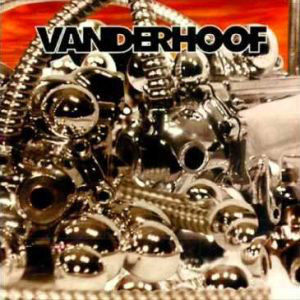
Vanderhoof – Vanderhoof
I got this in 1998 to review at the time [as with a few here]. This album was a great surprise – being a Heep fan, loved the classic heavy rock sound and mix of guitar and Hammond organ. This all coming from Kurdt Vanderhhoof of Metal Church. Killer tracks like “Take To The Sky”, “Out Alive”, and “Machine”. He did a follow up album, but not as impressive. https://outsiderrock.wordpress.com/2020/03/26/interview-with-kurdt-vanderhoof-from-the-archives-1999/
Talas – If We Only Knew Then What We Know Now
Talas was legendary in the upstate New York area in the 70s and early 80s, with a few line-up changes, but the recording & classic line-up was the trio of Billy Sheehan, Dave Constantino, and Paul Varga. In 1997 they played a sold-out show in Buffalo [Kleinhan’s], and released this 15 track live disc just in time for the band’s 1998 show. It would be a few years before any further shows, and more recently Sheehan have reformed an 80s version of the band fronted by Phil Naro. BUT, this is an excellent live recording, and with the ‘bonus’ track [from Japan CD] – this would make a killer 2-LP live release.
Ten Years After – Now
I knew [and still do] very little of TYA when I got this years ago [2005]. At the time the band had long since parted ways with Alvin Lee, and in his place was Joe Gooch. I really liked this album, heavy blues rock, a lot of great songs like “Time To Kill” and “When It All Falls Down”, an enjoyable listen. Cool cover [at least the Canadian version]. Gooch did one more studio album with TYA, which I’ve yet to get. Would love to have this reissued on vinyl.
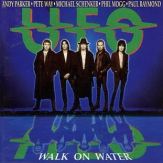
UFO – Walk On Water
This album was a big deal when it came out – a reunion of the classic line-up, new album issued in Japan first on CD – a killer album, as good as the band’s classic 70s stuff. There’s been a number of other issues on CD – many drop off the 2 remakes at the end of the album, but there has never been a version of this on vinyl. A few of the post 2000 albums have been reissued on vinyl in recent years, but not this one.
Heaven & Earth – Windows To The World
The first ‘band’ album from Stuart Smith’s band H&E; this line up featuring Kelly Keeling on vocals [ex Baton Rouge, MSG]. Solid album of 11 tracks [+ a hidden track] from 2000. The band’s later 2 albums are both excellent, with numerous line-up changes, and nice cover art, issued on vinyl.
Coney Hatch – Four
The reunion album of this Canadian band from 2013. Plenty of cool rockers on here with “Boys Club”, “Revive”, and “Blown Away”. I enjoyed the band’s three ’80s albums, and this cover art is an improvement over the band’s last album [“Friction”], so I’d be happy to have the complete set….maybe make a mixed tape of CH songs!? http://www.travellersintime.com/UniversalWheels/Hatch2014.html
Jorn Lande & Trond Holter – Dracula : Swing Of Death
I like concept albums, especially if they’re not dragged out over a very long CD with a pile of filler and endless guests all to tell a simple tale. This is a great concept album from 2015, with legendary metal singer Jorn Lande and guitarist Trond Holter, who tell the dark story of Dracula in this rock ‘opera’. Ten tracks, very heavy, yet plenty of melody and a few quieter pieces. Pretty fitting cover art.
Berggren/Kerslake Band – The Sun Has Gone Crazy
A collaboration between former Heep & Blizzard of Ozz drummer Lee Kerslake, and singer/guitarist Stefan Berggren [ex Company Of Snakes]. A solid rock album from 2014, featuring a number of excellent rock tracks like “Walk Tall”, “Back On The Road Again”, and “Super Sonic Dream”. A triumphant album with Lee, years after he had to retire from Heep, for health reasons. Would love to see this on vinyl; a must for fans of classic Heep. Pretty cool album cover too. http://www.travellersintime.com/UniversalWheels/Kerslake2014.html
I did this interview with Kurdt Vanderhoof for the release of his solo project ‘Vanderhoof’, in March of 1999. That album was an amazing set of classic rock & metal influences, lots of killer guitar and Hammond organ.
Kurdt Vanderhoof is a founding member of the band Metal Church , who have recently reunited the original line-up and recorded a new album, as well as releasing a live disc from 1986. Kurdt had left the band in the late 80s, but continued to write songs for them and play on some of the albums.
Last year he put together his own project “Vanderhooof”, and recorded an album with all the qualities and trademarks of a classic 70s album from the likes of Heep, Purple, Sabbath, etc… Those that have heard the album will agree that it’s brilliant, with plenty of hammond organ up front, heavy guitars, great vox, and cool production techniques that give it an authentic 70s sound and feel. The album is highly recommended! Here I had the chance to discuss this album with Kurdt, as well as some of his 70s influences. Also worth checking out is Kurdt’s 1991 project “Hall Aflame”.
Q– As you also write most of the Metal Church material, how did you approach writing your solo album differently? KV: I took the approach that I wanted to create a record that was a collective of all my favorite styles of music and my biggest influences growing up. Basically, I wanted to form a band that was completely my ultimate band as opposed to following any trend. I also needed an avenue that had no musical restrictions that I could always write pretty much what I wanted. I have to say a lot of my inspiration was in response to the ABSOLUTELY HORRIBLE state of rock in the 90’s. And try to do what I could to provide an alternative to alternative. New bands can’t play and they can’t write songs and they have become so cliché phobic that all the things about Rock&Roll that made me want to be a musician are totally non existent in modern music. We need ROCK STARS again. The kids need to have musicians that are worth looking up to and are something to aspire to. If I could, I would stop this Hip Hop movement in its tracks!!! Kids have not learned to play or sing, they have learned to run a computer and samplers and have developed no musical skills what so ever!
Q- what can you tell me about some of the people who played on your album? (reference to Damon Albright, Brian Cokeley, Dave Hawkes, Kirk Arrington)
KV: Damon Albright lives in Sacramento and spent his early days playing bar bands around Tacoma and Seattle. He also hates the state of Rock in the 90’s and was a perfect fit into the project. Dave Hawkes and Brian Cokeley are 2 musicians that I have known for quite a while and had work with both of them quite a bit in the studio, producing their bands demos etc.. They were also very excited to work on a project that was going in the direction that I had planned. Kirk I have worked with for years growing up and in Metal Church.
Q- VANDERHOOF has a lot of variety on it, what did you set out to accomplish musically and commercially with this album?
KV: I refuse to make one dimensional records. I was just drawing off my favorite records in the sense that the best bands always were capable of making “Music” and not just one style. Most records these days are like “you’ve heard one song then you have heard the album” and that has got to stop or we will not have any Rock music in the future.
Q- what inspires your songwriting – lyrically & musically? (any process to it?)
KV: No real process to it. Its just something that I’m very passionate about and I’m constantly trying to create music, and hope that I will always be writing.
Q- A lot of the album has a very 70s influenced sound to it, as well as the ‘vinyl’ cracklings, was this deliberate to make it a more 70s inspired sounding record?
KV: The 70s sound was extremely deliberate!!!!!
Q- “Take To The Sky” ( a fave of mine) features some great hammond & drum sound, and when it reminds me of Uriah Heep’s “Look At Yourself” album (that sound). What can you tell me about how this song came about? KV: I really wanted to use the Hammond Organ in a hard rock context. No one is doing that anymore and wanted to start having the keyboard player be an actual member of the band again. These days they seem to be just nameless side-men playing behind the P.A. And I really feel that it was an obvious acknowledgment of what a great band Uriah Heep was. I would like to bring back the days when keyboard players were heroes as well as the singers and guitar players i.e.: Wakeman, Hensley, Lord, Emerson, etc
Q- what can you tell me about inspirations or influences to some of the other stand-out tracks (few words required, small antedates) – like “Falling To earth, “Angel Now” (again love the Hammond!), “Out Alive” (great heavy riff!), and “Beg” (another great heavy track).
KV: Again, I really felt it important to make a record that was not one dimensional and had a lot of different moods and styles.
Q- are the string sounds on “50 Cent Symphony” all synthesized or authentic? they sound great! what else can you tell me about this song?
KV: Everything on the album and every album that will follow are all the real thing!!!! The strings are real Mellotron and it’s all analog synths. If you read in the credits it state that all instruments were played by carbon based life-forms and everything is analog. No computers, no samplers, no drum machines. Recorded on Tape etc…
Q- were you very pleased with the final album, and will you plan to do another in the future?
KV: I’m very pleased and proud of the record ! It will be re-mixed for release in North America. That should take care of any Sonic problems that I would like to fix.
Q- were you pleased with the reception the album got? everyone I know who’s heard it – loved it!
KV: I was pretty stunned by the response but I guess I knew in my heart that if it did get a chance to be heard that there was enough people like myself that would “get it”.
Q- A lot of Uriah Heep fans have commented that some of the tracks on your album sound very much Heep inspired/influenced. Any truth to this? Are/were you much of a Uriah Heep fan? (if so, can you tell me about the band’s influence, your favorite Heep songs, albums, etc..??)
KV: Yes, A BIG Heep fan!!! Very Heep influenced and proud of it!! Faves are: Gypsy, Look at Yourself, Sweet Lorraine, 7 Stars, Traveler in Time, and many more !! Albums: Heep Live, Demons and Wizards, Sweet Freedom.
Q- Who are your own favorite singers, guitarists, keyboardists, songwriters, and albums.. ??
KV : Fave singers: Ian Gillan, Robert Plant, and I’m sure quite a few others. Fave Guitarists: Alex Lifeson, Michael Schenker, Tony Iommi, Brian Robertson, Scott Gorham, Steve Howe, Pete Townshend. Fave Keys: Keith Emerson, Rick Wakeman, Ken Hensley, Jon Lord. Overall idol: Pete Townshend!!
Q- Early biggest influences?
KV: Earliest BIG influences: The Beatles made me want to do it, Grand Funk Railroad and The Who made me want to make it REALLY REALLY loud!! RUSH made me want to skip school and learn how to play.
Q- What do you currently listen to a lot of?
KV: Currently I’m listening to a lot of early 70s Prog. And of Course Thin Lizzy UFO, Rush, Styx, Grand Funk, Max Webster, Zep, and a lot of KANSAS
Q- What are current plans (recording & touring) for Metal Church? When is album due out? (label?)
KV: The Church album will be coming out in June on Great Northern/ Nuclear Blast. Touring is something that might be kinda difficult due to the fact that most of the guys are in the Wife-Job-Kids thing. But are going to try to get out there for at least a few shows.
Q- where are yourself and Metal Church based out of?
KV: We are based out of Olympia Washington.
Q- any other current or future projects you are involved in or planning ?
KV: The minute I deliver the new Metal Church record we shall begin the new Vanderhoof record. Which I’m more excited about than any other record I have ever done!! It will be more progressive and heavier and just more everything that isn’t being done anymore!!! Hope you like it!!!!
Fun thing about collecting Uriah Heep is there is never an end to the albums worth checking out. I did a Part One of Heep Related albums a couple of years ago, fun list to put together. Working on Part 3, but need to pick up a few omissions that I’d like to check out. Any big Rare Heep-related albums that I should be checking out?
Toe Fat – Toe Fat [1969]
The last band Ken Hensley was in before joining Spice. Lee Kerslake was also in this band, and both were on the debut TF album – which was based around legendary British singer Cliff Bennett. Much of the album [I believe] was written by Ken, and he sang lead on the song “The Wherefors And The Whys”. It also included a cover of Elton John [Reg Dwight]’ “Bad Side Of The Moon”. A cool album of fairly heavy blues rock, with Ken playing guitar throughout.
Head Machine – Orgasm [1970]
A side project Ken recorded under a pseudonym for producer David Paramor [who also produced The Gods]. Songs written by Ken, but credited to Paramor. Quite a solid heavy album, somewherez between Toe Fat 1 and Weed. Lee Kerslake involved as well. “Climax – You Tried To Take It All” also appeared on the TF album.
Cressida – Cressida [1970]
British psych/progressive band that included drummer Iain Clark. The band is often cited as an important act in the early days of progressive rock. This 5-piece band’s debut album, while not overly heavy, featured plenty of different styles, instrumentation, and a great voice in Angus Cullen. Good luck finding one, as original pressings from 1970 go for upwards of $400 on Discogs. Both albums reissued on CD [Repertoire] years ago.
Tempest – Tempest [1973]
When Mark Clarke left Uriah Heep he had the support of Gerry Bron who would sign Mark’s next band, which would also include Jon Hiseman, Allan Holdsworth and singer Paul Williams. This debut is fairly heavy and progressive. Some great tracks like “Gorgon” and “Dark House”. The band released one more album minus Holdsworth and Hiseman, but with Ollie Hallsal, this 2nd album featured “Stargazer”, which was also recorded for Ken Hensley’s “Eager To Please” album – which Clarke featured on.
David Bowie – Aladdin Sane [1973]
Despite Trevor Bolder’s many years and songwriting contributions to Heep, many remember him more so as one of the Spiders who played on the essential David Bowie albums. These are the only Bowie albums I own. “Aladdin Sane” being his best IMO, featuring “Watch That Man”, “Panic In Detroit”, “The Jean Genie”. ..
David Byron – Baby Faced Killer [1978]
David’s first [and only] real post-Heep solo album; a collaboration with longtime friend Daniel Boone [aka Peter Lee Stirling]. Much more of a pop album, trying to keep up with the late 70s scene; a mixed bag of different styles from pop-rock, a bit of disco/dance, ballads… I actually like a lot of this. “Only You Can Do It”, the title track, “Don’t Let Me Down” – fun stuff. Mick Box was the anonymous special guest on the closing ballad “I Remember”.
Lion – Running All Night [1980]
Not to be confused with the LA band of the 80s that featured guitarist Doug Aldrich, This band featured John Sinclair, as well as British blues singer Gary Farr [ex T-Bones], and guitarists Steve Webb [ex Jess Roden Band] and Robin Le Mesurier [who’d played with Air Supply, and went on to record with Rod Stewart]. A decent pop rock album that featured a number of styles, with Sinclair co-writing almost every track. Notably, it includes the original version of “Running All Night With The Lion” – which Heep re-did on Abominog, as well as the intro/hook to “Sell Your Soul” on the standout track “Sweet Fire”.
Asia – Asia [1982]
Years after leaving Heep John Wetton would front this ‘super group’, that also included Carl Palmer, Steve Howe, and Geoff Downes. Their debut album was one of the biggest albums of ’82, featured a number of hit singles and radio hits, most notably “Heat Of The Moment”. The band would have trouble trying to recapture that impact on the 2nd album. But Asia would make Wetton a huge star, perhaps the most successful ex Heep member.
Ozzy – Bark At The Moon [1984]
The first Ozzy Osbourne studio album after firing Lee Kerslake & Bob Daisley, and the passing of Randy Rhoads. Kerslake & Daisley had rejoined Heep, but after the 2nd album Bob was lured back to write and play on this album [it would not be the last album Bob wrote plenty on]. One of the last classic Ozzy albums IMO. Included the hit title track and hit ballad “So Tired”.
Joshua – The Hand Is Quicker Than The Eye [1983]
Stephen “Stef” Fontaine fronted Heep for one North American tour in the fall of 1986, after Peter Goalby [as well as John Sinclair] had left. Not much was known about him at the time, nor had he sang on many albums, but he did sing on this classic HR/AOR album by the band Joshua [lead by guitarist Joshua Perahia]. It would be the only album he did with them. They did have a huge hit with the track “November Is Going Away”, in Japan.
Stratus – Throwing Shapes [1984]
Following Praying Mantis, Bernie Shaw, along with the Troy brothers joined Clive Burr [ex Iron Maiden], added keyboard player Alan Nelson, and were briefly Clive Burr’s Escape, then eventually changed name to Stratus and recorded this lone album, many of these titles being previously demo’d as PM tunes [a few appear on the Japan CD release of PM “Demorabilia”, 1999]. Still a decent album, with the band going for a more American AOR feel. The band eventually split, with Shaw joining Heep a few months later, and the Troy brothers reforming Praying Mantis [with a number of cool albums since then; notably 2003’s “The Journey Goes On” which featured John Sloman on a number of tracks]
Ozzy Osbourne – No Rest For The Wicked [1989]
I started out a huge Ozzy fan on the first few albums, but I eventually lost interest. This is the last one I got upon release [and on vinyl] , and liked at the time. It is also the last to feature Bob as a co-writer, and the first to feature John Sinclair on keyboards [post-Heep]. Besides the hit “Miracle Man”, it also included “Fire In The Sky” – which had been demo’d during Heep’s Abominog sessions at Ridge Farm as “Valley Of Kings”.
The Sweet – Live At The Marquee [1989]
The lone Sweet album to feature Phil Lanzon on keyboards. Recorded in early ’86, but not released til 1989. This features 3 sides of live Sweet, and 1 side of studio tracks – one being a cover, and the other 3 being good catchy HR/AOR co-written by Phil Lanzon. This was Phil’s last stop before joining Heep a few months after this was recorded. Also features Paul Mario Day on vocals [original Iron Maiden singer].
John Sloman – Disappearances Can Be Deceptive [1989]
The first solo album from John, who had a short stint fronting Heep in 1980-81. This album apparently took years, change in producers, and probably a lot of stress to finally get out in 1989. A shame it didn’t do more, as there’s plenty of memorable pop rock, catchy songs on here like “Foolin’ Myself”, “Now You Say Goodbye”, and “Hooked On A Dream”. features help from a strong cast, including former bandmates Gregg Dechert, Pino Palladino, Alan Murphy [of Level 42, RIP], and Richard Cottle [see Phil Lanzon’s solo albums].
*(I intitially intended Not to include any posthumous or compilation albums, but I felt there was a few essential Heep related releases worth recommending.)
Ken Hensley – From Time To Time [1994]
Years prior to Ken making his comeback to recording and touring he helped put together and release this ‘from the vaults’ release. FTTT comprised of demos, B-sides, and outtakes he made during his time in Heep and in the immediate years after he left. Tons of gems on here, and plenty of big name guests on various tracks. Love the early demos with Paul Kossoff and Simon Kirke, as well as the later tracks recorded and left off of the “Free Spirit” album. Such a great release, with loads of liner notes and photos. Essential Heep related stuff.
John Lawton Band – Sting In The Tale [2003]
Although John never really went away, and always kept busy after his time with Heep, he really made a ‘comeback’ to the Heep fans in the early-mid 90s through his band Gunhill [and their news being relayed to the Heep faithful through the UH Appreciation Society magazines]. He was a busy guy from then for a number of years with guest appearances at Heep gigs, a short tour [standing in for Bernie Shaw], and a string of releases. “Sting In The Tale” was my favorite from this period; a solid rock album, and a great band – including Canadian guitarist Erol Sora and bassist/songwriter Steve Dunning [more on in next list!]. An album full of energy, and some classics like “Written On The Wall”, “Take You High”, and the drinking anthem “Slamming It Down”. A shame there wasn’t a follow-up! CDs came signed. Erol Sora went on to release a few solo albums, and [drummer] Benjy Reid went on to record with Praying Mantis.
David Byron Band – One Minute More / Lost & Found [2004]
A fantastic collection of David’s last band project ‘The Byron Band’. Featuring demos from David’s collaboration with guitarist Robin George from 1980 – 82. There’s also a live recording of the band from 1980, which includes 2 Heep favorites in the 8 song set. Demos that would’ve made a great 2nd Byron Band album are well worth hearing, like “Safety In Numbers”, “Fool For A Pretty Face”, “Gets A Little Crazy”, and the ballad “One Minute More” – would’ve helped make a great follow up to his last album ‘On The Rocks’.
New Nadir / The Secrets [feat Gary Thain] – Uncovered [2009]
For fans of Gary Thain, these are 2 of the bands Gary recorded with in the late 60s. There are single releases that can probably be heard on Youtube from such bands as The Strangers and The Secrets [feat Gary], but this LP comprises of 1 side of the band New Nadir and the other side of Me & The Others – both sessions taking place in 1967. Cool 60s pop stuff. I kinda prefer the New Nadir side where Gary’s playing stands out more, but… A great release – not just for the chance to finally have these recordings, but also for the extensive liner notes contributed by a number of his former bandmates.
Living Loud – Living Loud [2004]
Short lived supergroup featuring Bob Daisley & Lee Kerslake [both Heep and Ozzy], along with Steve Morse & Don Airey [Deep Purple], along with Scottish born singer Jimmy Barnes [Cold Chisel] – who is huge in Australia [where he’s from]. Their lone album features re-workings of 6 songs from the 2 albums Lee & Bob played and wrote on with Ozzy & Randy Rhoads, plus 5 originals. Good recordings, tho I prefer Barnes on the original stuff more. Great to hear Bob & Lee together again.
John Sloman – El Dorado [2018]
Since 2003 John Sloman returned to recording solo albums. This is his 4th in 15 years, a tribute to his late brother Robert. A very unique album lyrically and musically, as John has quite a style of his own. John writes, sings and plays everything. This album is a journey, to be listened to start to finish. Check it out!
Lucifer’s Friend – Black Moon [2019]
Lucifers Friend reunited a few years previously with 3 original members a compilation [w/ 4 new tracks added], a live album [at Sweden Rock Fest], and a new studio album soon after. But this – their 2nd studio album is much more in tune with what old LF fans will appreciate on songs like “Passenger”, “Rolling The Stone”, and the title track. Love the album artwork too – wish it came out on vinyl.
Phil Lanzon – 48 Seconds [2019]
Let than 2 years after his first solo masterpiece, Phil released this 2nd great album. More pop and prog, with a similar cast of characters. Some real stand-out songs with “Rock N Roll Children”, “Road To London”, “You Can Make A Living”, and the epic title track based on the tragic San Francisco earthquake of 1906. Highly recommended!
Bernie Shaw/ Dale Collins – Too Much Information [2019]
After many years of hoping to finish a full album [Heep singer Shaw and Canadian musician/producer Dale Collins had released a 3 song EP in 1999], an 8 track album was finally completed. Collins wrote a number of good songs that suit Shaw’s vocals. Tracks like “Alone”, “Here We Go” and the ballad “Sad Song” are excellent, and this album was well worth the wait.
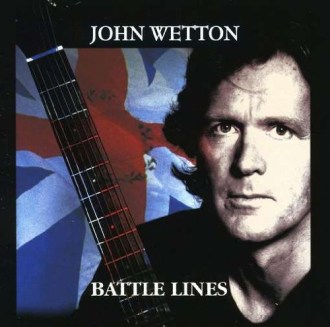
John’s albums with Asia were a few of my favorites growing up – especially the debut, and that was long before I discovered his past with King Crimson, UK, Uriah Heep, etc… That first album was huge back then, and it’s hard to imagine any albums having such an impact these days. By the time Asia ended in the late 80s, I had moved on to other bands [a few such as noted above], but upon getting to hear John’s solo album “Battle Lines” [94] I loved it, and felt [still do] that it was the best thing he’d done since that first Asia album. I was also given the opportunity to interview him at the time twice [on phone , then in person] for a local magazine. After the first phone conversation, a lengthy one to the UK, John let me know he’d be over near Niagara soon – in Buffalo, New York. A few months alter I requested a press pass and an interview – and got to sit down with John prior to his solo [acoustic] show at Nietzches in Buffalo. Those were 2 of my favorite interviews I’d ever done. John was happy to talk about any period of his career, from his early days to his favorite King Crimson album [Red], to his 2 records with Uriah Heep, Wishbone Ash, UK, Asia, and his then-current album and tour, where he joked in comparison to the 80s “where I’m not so big anymore”. Being a Heep fan I wanted to talk a good bit about that period, and John spoke of that time fondly, despite it ending with his departure and David Byron’s firing. He was friends with David for years after Heep, recalled how he’d gotten a German Shepherd pup from David a year before David passed. He also recalled hearing from David just a few months prior to David’s passing, with David offering back a mellotron he’d bought from John many years before, and that he was one of the few from the music industry to attend David’s funeral in 1985. Regrettably, I had a shitty camera back then that I took with me, which would regularly stick, so the photo I had of John and myself stuck during being taken, and I was cut off. I did get one of John, but took none during the show. It was a great solo performance of tracks from Asia, UK, King Crimson, and his solo album Battle Lines; with a lot of die-hard fans shouting out their favorites, and 2 encores! I recently pulled out the tape of those interviews and listened through, and am currently listening to a rough recording of that show, as well.
I did get to interview John years later, via email, for 1 or 2 of the reunited Asia albums, but never got to see him again. When the band passed through the area on the last tour of the original 4 – I hadn’t been paying attention and was too late to get the time off work, but figured I’d see them next time – which there wouldn’t be! There would be 1 further album [with Sam Coulson replacing Steve Howe], but sadly John’s bout with cancer took him far too early. It was a shock to read the news and the first ‘rock star’ passing that really upset me. In his later years John overcame a lot, and put out some of his best music on those last 4 Asia albums, particularly “XXX” – which is my favorite Asia album since the first one. There have been plenty of bass playing-singers out there, but none who covered so much ground, playing with so many different bands, and being a huge part of so many classic albums as John had been. RIP
TEN CLASSIC SONGS FROM JOHN :
This was hard to pick as I have a few favorite albums that I could’ve easily picked multiple songs from [Asia, Battle Lines, KC’s Red…]
Starless
I love this song in any version – live or live and abbreviated, such a great melody, and the original version cranked up is pretty crazy – very intense and heavy. https://www.youtube.com/watch?v=OfR6_V91fG8
One Way Or Another
John co-wrote 2 songs on High & Mighty with Uriah Heep, and sang lead on this one. A majestic rocker that started off the album, and was the single in a few countries. A shame it never caught on. https://www.youtube.com/watch?v=tamqKHVM3lc
Paper Talk
From John’s first solo album Caught In The Crossfire. A solid album, pre-Asia. Smooth atmospheric tune that eventually builds up. Great track, one of many here that would’ve made nice single releases in the early 80s. Martin Barre [Jethro Tull] on guitar. https://www.youtube.com/watch?v=JyJt3G7Cvgk
Only Time Will Tell
There was a string of huge hits off this debut album in ’82, and a number of classic album cuts that were a bit more progressive. I’ll take this one, with it’s classic keyboard intro, and it’s melody and John’s delivery of this tale. (2) Only Time Will Tell by Asia REMASTERED – YouTube
Go
The lead off single from the 3rd Asia album Astra, after Steve Howe departed, and in came ex Cobra guitarist Mandy Meyer. Cool rock tune; one of the harder edged songs from Asia. https://www.youtube.com/watch?v=OubZVZyl2ww
Right Where I Wanted To Be
First track on John’s Battle Lines album, one of my favorite albums he did. A nice uplifting pop track; great singing and production. He sounds happy here, and the rest of the album is an amazing set of songs. https://www.youtube.com/watch?v=j6irjPeDcuc
Tomorrow The World
From the last album featuring the original Asia line-up. This is my 2nd favorite Asia album, lots of cool pop-rock, memorable and catchy songs. This is a great upbeat opening track. https://www.youtube.com/watch?v=RnJu1_12WJI
Here’ most of the items I took with me to Buffalo, that John signed. I also have a few Heep posters hanging around…
[photos of John – 1 by me, 2 from inside of Chasing The Dragon CD cover]
KJJ, 03/20
Although I was a huge rock fan in the 90s – I was no fan of 90s rock! All that Seattle scene and “alternative” rock bullshit was not for me. I didn’t give a crap about most of the new stuff – whether it was from Seattle or a few ‘new’ bands from Canada! Bands that I enjoyed from the 70s and 80s were then rarely on the radio, without major record deals or hip in certain rock magazines. Times were a changing. Fortunately the 90s was not a total lost decade, but classic bands weren’t releasing albums yearly or even bi-yearly, with many lucky if they released 2-3 in the whole decade! But there was a number of great albums, a number of comeback albums, and a few that re-started my interest in some classic bands. Despite how shitty the 90s were there were some highlights, and perhaps next time i’ll come up with a list of new or newer bands that released great albums in the 90s!
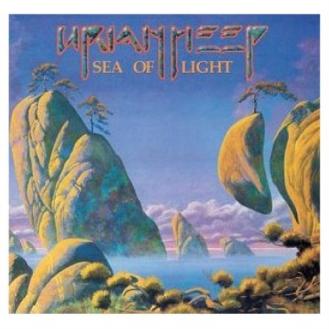
Uriah Heep – Sea of Light [95]
As a fan since the late 80s, with the band’s first 2 studios albums with Bernie Shaw & Phil Lanzon [and what would become Heep’s longest serving line-up] I didn’t have huge expectations of a ‘classic’ Heep album, but I was wrong! Sea Of Light blew me away upon first hearing it. With 12 tracks ranging from the metal guitar opener “Against The Odds”, which was the heaviest rocker the band had done since “Too Scared To Run” opened the Abominog album in ’82, a lengthier epic ballad in “Love In Silence”, an all-acoustic ballad [and single] “Dream On”, more progressive rockers like “Logical Progression” & “Universal Wheels”, as well as plenty of memorable rockers with “Time Of Revelation”, “Fear Of Falling”, and “Spirit Of Freedom”. The album featured Roger Dean artwork, the first he had done for the band since ’72. Sea of Light was the album that brought back many old Heep fans that had passed on the band years ago. It was nicely followed up by ’98’s Sonic Origami.
UFO – Walk On Water [95]
UFO with Michael Schenker is kind of THE line-up for me. I love that string of classic albums from the mid 70s to late 70s when Schenker left, and had/have a hard time getting into UFO beyond that [tho a few latter albums ain’t too bad!]. In the same token tho, I find much of Schenker’s post UFO stuff hit and miss. The classic UFO reunion started with a tour of Japan, followed by this album of 8 new tracks and re-recordings of old favorites “Doctor Doctor” and “Lights Out”. The new songs tho jumped out; lots of heavy guitar, great riffs, energy, and classic sounding UFO with rockers like “Self Made Man”, “Venus”, “Stopped By A Bullet” and “Darker Days”. Cool cover shot of the band over blue backing with big UFO logo. Saw the band on this tour in Buffalo, with Simon Wright subbing for Andy Parker. By then there was a US release [for the tour], which lobbed off the 2 remakes, and featured a less memorable cover. None-the-less, they sounded great. The follow up wouldn’t come til 2000, with ‘Covenant’, which I wasn’t as enthused about. Eventually Schenker would leave again, permanently.
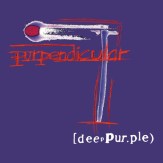
Deep Purple – Purpendicular [96]
When Deep Purple Mark 2 reunited in 1984 it was a huge deal in the press, and the band delivered a great album titled Perfect Strangers, but the follow up was less than stellar, and by then certain bandmembers were no longer getting along [again]. 1990’s Slaves & Masters featured Joe Lynn Turner in for vocalist Ian Gillan, making a more AOR sounding album….kinda like 80s Rainbow! Record company pressure returned Gillan for one more album in ’93, but Ritchie Blackmore left soon after, and that for many fans meant the band couldn’t continue. But, Deep Purple carried on, eventually choosing American Steve Morse as permanent replacement and recording Purpendicular. Compared to the band’s previous 3 albums, Purpendicular was far above [IMO] and far beyond any expectations I would’ve had. Blackmore had that distinctive guitar sound and contributed much of the band’s classic material, but the new DP sounded rejuvenated, fresh, and full of new and varied melodic material. With 12 great songs that flowed nicely together, from “Vavoom: Ted The Mechanic”, “Sometimes I Feel Like Screaming”, the acoustic “The Aviator”, great rock riff to “Somebody Stole My Guitar” – my favorite DP album!
John Wetton – Battle Lines [94]
I loved that first Asia album in ’82, and the 2 follow-ups weren’t bad, but this – to me , is the next best thing John did after that Asia debut. An AOR / softer rock/pop album, but such great melodies, lyrics, vocals, a number of cool guests, and production. From the uplifting opener “Right Where I Wanted To Be”, to ballads like the title track, “Hold Me Now”, “You’re Not The Only One”, and another upbeat track [co-written with Jim Peterik] “Space & Time”; I can still pull this album out and enjoy it any time. Although John continued to release solo albums, as well as a string of excellent Asia reunion albums, Battle Lines is my favorite of his recorded works [followed by Asia debut and Asia “XXX”]. Was fortunate to get to see him and sit down to interview him on his acoustic tour for this album; a very nice guy, happy to talk about his career. I wish I’d seen him more, was very shocked and saddened by his passing in 2017.
Rush – Counterparts [93]
This is the album that brought me back to Rush after a few albums I either didn’t get upon release or listened to much. Loved Moving Pictures and Signals, enjoyed Grace Under Pressure, and saw that tour and Power Windows tour, but that latter album and a few that followed got lighter and lighter and more keyboards…. Then “Stick It Out” came on the radio, and it sounded like Rush was back to being a guitar heavy band. The rest of the album was full of classic sounding Rush, especially “Animate” [my favorite here], and then tracks like “Cut To The Chase”, “Cold Fire”, and “Nobody’s Hero”. Test For Echo was a fine follow up; a classic pair of Rush albums.
April Wine – Attitude [93]
I saw April Wine at the Kingswood Music Theater, north of Toronto on what was their farewell tour in ’84 [?]. The band’s album at the time was Animal Grace, which I thought was pretty good, but apparently it’d be there last as the 5 piece classic line-up. Myles Goodwyn would record 1 further album under the name April Wine, and then nothing for years. Saw the reunited line-up in St Catharines in ’92, and in ’93 Attitude was released. Featuring Goodwyn, along with legendary drummer Jerry Mercer, guitarist Brian Greenway, and new guitarist Steve Segal, as well as the return of bass player Jim Clench. Attitude was a nice surprise – loaded with guitar heavy rockers and a few choice ballads, like the best 80s album they made – 9 years later. First single and heavy sugary ballad “If You Believe In Me” got loads of air-play, and the album boasted heavy guitar rockers like “Givin It, Takin It”, “Strange Kind of Love”, “It Hurts”, “That’s Love” and “Here’s Looking At You Kid” [which I think were also singles and/or videos]. Other ballads like “Can’t Take Another Night” [by Brian Greenway & Jeff Nystrom], and “Hour Of Need” offered plenty of variety for fans of the band’s 80s heyday.
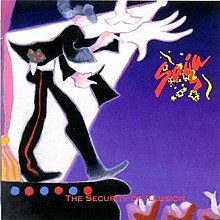
Saga – The Security Of Illusion [93]
From Toronto, Saga released a pile of consistent aor/prog albums from the late 70s til early 80s, most notably 1982s Worlds Apart – which featured the hits “On The Loose’ and “Wind Him Up”. Following 1985’s Behaviour album the band underwent a few personnel changes; the 2 ensuing albums didn’t keep my interest. But, 1993 saw the classic line up reunite for another go with this album. To me, this was a return to the classic Saga sound, with a bit more bite. Lots of great melodies and performances with songs like “Without You”, “Mind Over Matter”, “Alone Again Tonight”, and particularly the title track. The band toured Canada on this album, saw them in St Catharines, Ontario – took my LPs and got them all signed! https://www.youtube.com/watch?v=r8i6AySQDNw
Alice Cooper – The Last Temptation [94]
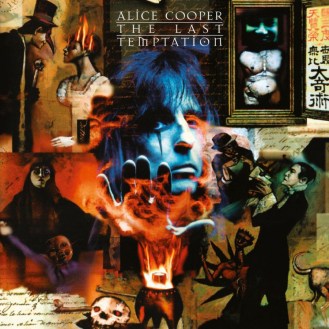
Though not a lot of new Alice Cooper music was released in the ’90s, this is one of 2 great albums. I loved 1991’s Hey Stoopid, full of big rockers, a few heavy ballads, and plenty of humour, but this album took a bigger step from that ’80s hair rock, and features plenty of classic Alice tunes, despite it probably selling less than his previous 2 albums. Alice didn’t tour this album either. The album was a concept based on moral issues, with Steven being the character in it. I’m not good at explaining it, but there was comics by Neil Gaiman to go with the release [first presses in some countries included the 1st comic in the series]. The Last Temptation did not feature a lengthy list of guests musicians either, with a line up, including guitarist Stef Burns [ex Y&T], keyboard player Derek Sherinian, Greg Smith on bass, and drummer David Oosikkinen. “Lost In America” was the first single and big timely anthem from it, still features in his live show. But there was plenty more cool rock here such as “Nothing’s Free”, “Bad Place Alone”, “You’re My Temptation” [one of 2 tracks co-written w/ Jack Blades & Tommy Shaw]. 2 of the best being the ballads “Stolen Prayer” [written by Chris Cornell, who also wrote 1 other song, and sings back up], and the 2nd single “It’s Me” [also co-written with Blades & Shaw]. Great album!
Black Sabbath – Cross Purposes [94]
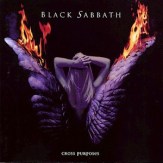
Following Sabbath’s 2nd split with Ronnie James Dio & Vinny Appice after 1992’s Dehumanizer album Tony Martin was brought back for a couple more. Ex Rainbow drummer Bobby Rondinelli also played on this one. I really liked the albums Tony had done previously, so no big deal to me. Cross Purposes was heavy, but had a touch of keyboards and a bit more melody in places. I loved “I Witness”, “The Hand That Rocks The Cradle”, “Psychophobia” and “Back To Eden” – and favorite track being the haunting “Cross Of Thorns”. Wish I had this on vinyl. I wasn’t as crazy about the follow-up [Forbidden], but this is a classic Sabbath album for me. https://www.youtube.com/watch?v=kkihaICItis&list=PLBzBwYhHpqLLszPlcn8dgdqh-AvQ4Mxmp&index=2
Ozzy Osbourne – Ozzmosis [95]
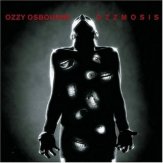
I followed Ozzy’s career from the Blizzard of Ozz album til about here. Frankly, after he split up the original band, and became a solo act with players and writers coming and going album to album, I thought there was a steady decline with each record. No More Tears in ’91 was good, but I wasn’t crazy about it; but I did take to this album when I heard “Perry Mason”. Also loved the heavier tracks here – “Denial” and “Tomorrow”, as well as “See You On The Other Side”. Fave cut being the Jim Vallance co-written “I Just Want You”, an epic Ozzy tune, with classic intro from Rick Wakeman. Geezer Butler also played on this! Too bad it didn’t come out on vinyl at the time. Ozzmosis is the next best thing he did following the first 4 [studio] albums, and I don’t think Ozzy’s done much since this [that I care to remember].
Artist Dave Field was around for the golden era of British pop & rock, during the mid 60s to mid 70s, and wound up drawing and designing a number of classic rock and reggae album covers during this era. He would wind up working on albums by AC/DC, Manfred Mann, Nazareth, Rod Stewart, The Rolling Stones, Uriah Heep, Eddie Grant; as well he’d create a number of band and record label logos.
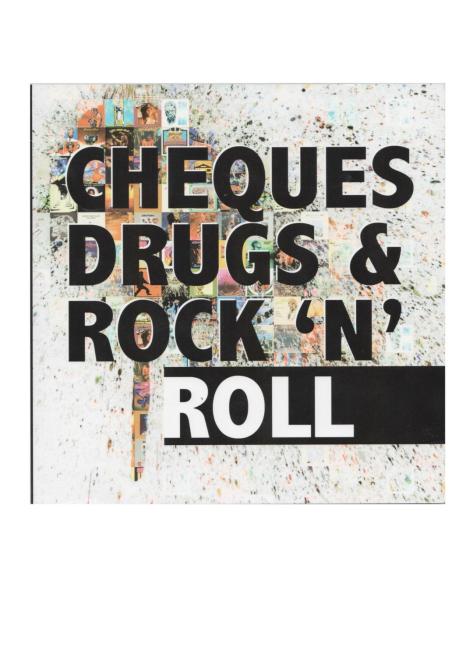
He’s recently documented those days of his career in a new book titled “Cheques, Drugs & Rock ‘n’ Roll”, via New Haven Publishing . It’s an entertaining read, telling Dave’s rise to becoming a name album artist, his work and brushes with some of Rock’s greats, details of many of his classic covers and memorable logos, and some of the wild parties and antics that occurred.
For more on Dave’s art or his music, check out these links. (*Book ordering links at the end of this page.)
Your story is not what I expected — You started out wanting to be a rock star, but wound up getting in the business through your art. Is that latter part fairly true?
It was the dawning of the sixties and at the age of about 11, I had only been influenced by my older brother’s taste in music, mainly Elvis , Bill Hayley, Lonnie Donnegan, Gene Vincent and the fifties rock and roll icons, although I did get into Buddy Holly in a big way. I started listening to the new rock and pop bands that were emerging and changing from America to Liverpool and London and coming from a small village in Nottinghamshire, North East Midlands and my pipe dream was to be a rock star.
What made me choose a more realistic career was that I was top of my primary school at art and I won an art competition out of about 200 schools in Nottinghamshire with a road safety poster design.
From my rebellious higher secondary education years at Newark Grammar School, I went on to a freer and more liberal environment at Mansfield College of Art and took a vocational course which was more geared to design in the workplace. Two of the tutors were from London and I was encouraged to set my sights in the design and advertising field in the capital. Whilst at high school and at about 1S years of age, I formed a band with my mate Derek who owned a red and white Burns Guitar, and modelled himself on Hank Marvin of The Shadows; With other mates, Cliff on drums and Olly on bass I was the singer, we called ourselves ‘West Point 5’ for some reason and we played village halls and friends parties; we did all the hits of the day – ‘Good News Week’, House of the Rising Sun; ‘Keep on Running; a few Buddy Holly Numbers, ‘Satisfaction’ from the Stones, Beatles, Hollies, Manfred Mann, etc., etc. I was amazed how cool it was that even at our level, I would be swamped by screaming girls and having my shirt ripped from my back and being adored by chicks, I was living the dream.
Having completed my 2 year vocational course at Art College and choosing not to go on to get a BA in Graphics, with £50 savings in my pocket, I headed for ‘The Smoke ‘, London here I come. I dossed on the floor of my brother’s mate’s flat and searched, knocking on doors for a job in the advertising, design business.
You created a lot of classic album covers and logos, but you got out of it in the late 70s. You cited punk and changing times in the industry; do you regret leaving that phase of your career behind?
I do regret leaving the music biz, but times they were a changing.
What would be your most iconic and recognizable work and designs – in advertising and LP covers?
My iconic pieces were Castrol GTX pack design, Alex Harvey ‘Tomorrow Belongs to Me’ and ‘Next’, Brian Jones ‘Joujouka’ , The Stones graffiti for the album plus campaign for ‘It’s Only Rock N Roll ‘ , Eddy Grant ‘Message Man’, The Equals ‘Mystic Syster; Uriah Heep ‘Return to Fantasy’ , Status Quo ‘Quo’, Roy Wood’s ‘Wizzo’ , Rod Stewart’s ‘Blondes Have More Fun’ – hand drawn lettering, AC/DC’s first album ‘High Voltage’.
You met and made numerous contacts, friends, and influential people in that period from late 60s to mid 70s. Who had the most impact on you professionally and personally?
I was impressed and influenced by Derek Taylor, the Beatles’ press officer, Dezo Hoffman, the Beatles’ personal photographer who had a major input for their films ‘Help’ and ‘Hard Day’s Night’. Derek gave me an ‘in’ to some big names and Dezo let me rent a room to set up studio in Chinatown in the centre of the West End of London. Richard Perry, Captain Beefheart and Harry Nilsson’s producer. Manager and promoter Terry King. Trevor Churchill, the Stones ‘ caretaker manager for a period and Derek Nicol of B&C Records and Mountain management, Sydney Pemberton, Don Baines and Max Rayner from my Advertising days.
There were a number of huge album artists back in the day – Rodney Matthews, Roger Dean, Storm Thorgenson – anyone who you really got on with or admired? [if there’s such a thing as a fraternity of album artists]?
I met Roger Dean for a spell, there’s a section in my book about that and the only time I met Storm Thorgenson resulted in me telling him to fuck off, when he asked me if I was his taxi. I am however in the book of the album covers, a few times.
There wasn’t a fraternity, most artists were freelance or working out of their own studios and the only time we seemed to meet up was when tendering for jobs at record companies etc., work was mostly competitive, although saying that, I normally had a few jobs on the go at any one time.
Have you kept a large stash of photos and unused art sketches or roughs that might be found in your book?
Unfortunately, apart from some photos from my session with Jagger and some stuff from the make up of the Brian Jones’s ‘Joujouka’ album, the only other piece of work I have is a first pull of a silk screen poster for Pink Floyd 1974 Japanese Tour which I did with a mate of mine Roger Riley the chief silk screen printer and designer for Big O Posters, the leading poster printer of the time. The story about this is in the book.
Can you give me a Top 10 of favorite albums from that era [listening to – not necessarily ones you worked on]
My favorite albums were….The Beatles – White Album, Stones – Their Satanic Majesties, The Pretty Things – SF Sorrow, Steve Stills 1, Hendrix – Electric Ladyland and Axis Bold As Love, Little Feat – Waiting For Columbus, Spirit – 12 Dreams of Dr Sardonicus, Joe Walsh – Barnstorm, and But Seriously Folks, James Gang – James Gang, Crosby & Nash – If Only I Could Remember My Name, Zeppelin – most albums, Santana – Abraxas, Zappa – Hot Rats, Captain Beefheart – Clear Spot, Grateful Dead – American Beauty, Fairport Convention – Leige and Lief, Bob Dylan – Blonde On Blonde and Desire, to name a few.
Is there anyone from that era that you keep in touch with and still work with or socialize with today?
I still contact Eddy Grant from time to time, as well as members of Alex Harvey Band and Nazareth. A great many people I knew are no longer with us.
What field do you work in now [or retired]? You are still active as an artist?
After leaving London to relocate in Mid Wales, I worked as a freelance designer/illustrator, working again in industry doing work for local businesses in and around my county until 1986 when I was head hunted by a publishing company Pictura Graphica, based in Sweden to produce book illustrations, posters and greetings card produce and then a Cotswold based company Paper D’Art. In 1998 I went pretty much full time for a company Excelsior Graphics based in Warrington until we were taken over by the corporate giant, Card Factory where I became chief Illustrator until opting for redundancy in 2012, due to relocation issues.
I still l do art and commissions when I can get the work, things have changed since I last was freelance and I find the workplace some what ageist.
I now am seriously in need of work, I’m struggling a bit and finding it hard to exist on a state pension.
You now play music. Can you tell us a bit about how and when you got back in to that? and a bit about your band and musical influences?
I’ve always been in some sort of band, usually rhythm guitar and backing vocals, but now I front my own band The QUIRKS, I lead sing and write and compose most of our material. We play local gigs and small town festivals and we have supported The Pretty Things in Wolverhampton. We are told that we are a cross between Zeppelin, The Clash and The Floyd.
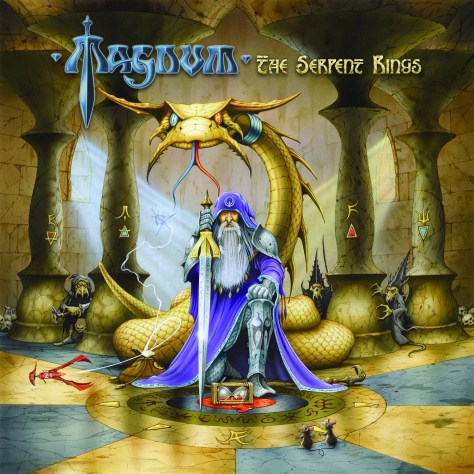
Magnum is one of those rare consistent bands these days – conssitent in recording a new album every other year, and consistent in delivering something that fans will easily like, always full of a mixed bag of good songs. “The Serpent Rings” features 11 newly penned tracks from guitarist/songwriter Tony Clarkin, in the usual variety of Magnum pomp, pop, prog and hard rock. On the band’s previous album (Lost On The Road To Eternity), I thought the keyboards were lacking in some songs (in the mix) with then-new keyboard player Rick Benton, but keyboards are well in the mix of every song here, making for a bigger production and classic Magnum sound throughout. “Where Are You Eden?” is the first track and it’s easily the stand-out for me upon first listen, classic Magnum upbeat beginning, slightly reminiscent of “Live Til You Die”, from Escape From Shadow Garden (and yes – it mentions shadows!). Getting more in to this album the band seems to have picked up on more impressive and adventurous productions [see the previous album’s title track], with songs like “House Of Kings” – a real rocker with a few surprises, “Crimson Of The White Sand”, “The Great Unknown”, “The Archway Of Tears” and “The Serpent Rings”. Also digging more rocking tracks like “You Can’t Run Faster Than Bullets” and the first single “Not Forgiven”.
One thing that is always impressive about Magnum albums is that there is so many good songs, so many changes from song to song and within each song – that you never get too used to the album anytime soon, and can pick up on a different favorite track many listens down the road. *Clarkin, singer Bob Catley, Benton and drummer Lee Morris are joined by new bass player Dennis Ward (ex Pink Cream 69 and Place Vendome). Available on CD and 2 LP ! Fantastic Rodney Matthews cover art as well.
Some bands are forever remembered by the masses and media (for good or bad), for 1 track. For Europe – 1986’s “The Final Countdown” is that song! A huge selling 80s pop-rock anthem with an unforgettable keyboard riff that played throughout the song, a catchy chorus, a fast guitar solo, and a return to chorus that played out til the end, making for live reaction purposes. The song and a few other hits from it [the sappy ballad “Carrie”] would put the band in that 80s keyboard drenched, over the top hair-metal category. The album (Europe’s 3rd) and title track single would be Top 10 in most countries, but it was a success story there would be no repeat of on follow up albums. Guitarist John Norum, unhappy with the direction and “poodle rock” labelling, would leave the band afterwards. The band carried on with Kee Marcello [ex Easy Action] on guitar for 2 more albums [1991’s “Prisoners In Paradise” is a fine album], before the band split up. In 2003 the band reformed with Norum on guitar and the rest of their 80s line up – Joey Tempest, John Levén, Mic Michaeli and Ian Haugland, and have been putting out solid albums since 2004’s “Secret Society”. They remain a bigger draw in Europe and other parts of the world, but some regions [like North America] have a hard time getting beyond the band’s big hit and image from ’86.
Europe albums since reforming show the band’s classic rock influences, and are heavier and darker than The Final Countdown, more align with the band’s first 2 albums, but throw in a bit of blues, more hammond organ, acoustic guitar, and you get a band trying to be more in tune with 70s greats like Zeppelin, UFO, Deep Purple and Thin Lizzy, and far beyond the 80s bands still out there [and not creating anything – if at all, … see that other big tour]. Actucally, check ouot 2008’s live release “Almost Unplugged”, which includes 4 covers [alongside Europe’s own fan favorites], most notably UFOs “Love To Love” and Thin Lizzy’s “Suicide” . Also worth checking out the band’s few official live releases “Live At Shepherd’s Bush, London”, and their 2013 “Live At Sweden Rock” festival performance. On tour this summer, with Foreigner [hmm] and Kansas in North America; I’d like to see Europe much more than the other 2, as they’re still producing great albums on a regular basis, and have much more to say than just a few hits.
If you’re not familiar, here’s a dozen Europe favorites since the band’s comeback [I purposely left off all the title tracks – which would add another 4 or 5 songs]….
Always The Pretenders
From 2004’s Secret Society, a brief light intro and the band comes rockin in. Gone is that 80s production, determined – like the rest of this album to put aside those hair-metal days, while still coming up with catchy rock tunes. A great video single from this album.
The Beast
one of the band’s heavier rockers in their catalogue, from Last Look At Eden.
No Stone Unturned
another great rocker from 2006.
Hero
a slightly more pop rock tune, paying tribute to the band’s musical ‘hero’ [judging from the video, I’d assume this was about Phil Lynott]. from 2009’s Start From The Dark.
Firebox
2012’s Bag Of Bones is a fantastic album, produced by Kevin Shirley. As much as i liked the few before it, is a step up in more great songs and more diverse writing with plenty of rockers, more blues, and more acoustics. Aussum heavy track!
Not Supposed To Sing The Blues
Classic tune; the title says it.
Drink And A Smile
A short acoustic number from Bag Of Bones; sounding much like it was influenced by the acoustic Zeppelin classics.
Days Of Rock n Rolll
War Of Kings remains my favorite Europe album; it is the one that got me to rediscover the band; heavy, but not one dodgy track on this album. This one tells us no one is too old for rock n roll!
Nothin To Ya
Love the intros on the War Of Kings tracks, and the production [courtesy of Dave Cobb. Another memorable heavy rock tune.
California 405
A classic organ intro sets the tone before the the band comes in to this cool driving rocker. My fave track on this album.
Pictures
I will take ballads like this over the likes of Carrie – anyday! dark, atmospheric, with a very almost psychedelic early 70s feel to it musically and lyrically. From Walk The Earth.
Turn To Dust
great mid tempo rock tune. Lots of different tracks on Walk The Earth, a bit of a 70s vibe throughout, love the Hammond organ on this. The animated video for this song is aussum, created by the same guys that did Deep Purple’s “The Surprising” video.
Albums: Start From The Dark – 2004
Secret Society – 2006
Last Look At Eden – 2009
Bag Of Bones – 2012
War Of Kings – 2015
Walk The Earth – 2017







 Outsider Rock