British band Thunder’s latest album will reaffirm to many just how good and how underrated this band is. The band’s first few albums all boasted multiple singles in the UK and charted high in their homeland, but that success seemed to elude them in some places, particularly North America. The band’s classic rock mix of pop, blues rock, acoustics, all lead by the guitar & songwriting talents of Luke Morley and the distinctive vocals of Danny Bowes should’ve made Thunder a household name, picking up the torch from fellow British legends like Zeppelin, Bad Company, and Whitesnake, all of which come across in the band’s latest album that features 11 tracks. Admittedly, I don’t know all of the band’s catalogue, but I’d say it’s a safe bet to put this album alongside the band’s first 3. It boasts rockers like “Going To Sin City” and the lead off track “Last One Out Turn Off The Lights”, both full of energy, and easy to get in to. Lots to dig in to here with the heavier blues rock of “Young Man”, and upbeat rock cuts “You’re Gonna Be My Girl” and “She’s A Millionairess”. Favorites also have to include “Force Of Nature”, and the ballad “I’ll Be The One”, both full of tasteful guitar, with the latter being largely piano based but leaves room for a tasteful guitar solo, before coming back down.
What a great album, and one that [if you’re not familiar with Thunder] will leave you wanting to pursue more of the band’s catalogue. [I will be]
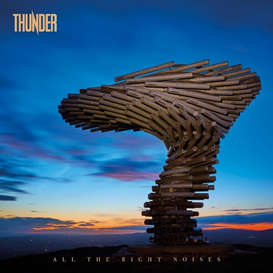
British hard-rock heroes, Thunder, have announced the release of their 13th studio album ‘All The Right Noises’ on 12th March 2021.
The album is a return to the full-throttle sound of Thunder that has seen them create a hugely successful 30+ year career at the forefront of British rock, all built around the lifelong friendship of vocalist extraordinaire Danny Bowes and songwriting genius and guitarist Luke Morley.
‘All The Right Noises’ is an intense confection of illicit charms that reasserts their authority as the number one band in the land. Recorded in the months leading up to the first Covid-19 lockdown, it was originally due for release in September 2020. Strange to reflect then on how much of the new material appears to address the challenging new world we now inhabit.
On the album, Luke says “ All the songs were written and recorded pre-Covid. But it is interesting how if you look at some of the tracks through the prism of Covid they still make a lot of sense.”
‘All The Right Noise’ will be available in 1CD, 2CD, 2LP, and 4LP formats, with the 2CD and 4LP releases containing bonus tracks.
The LP versions feature a stunning pop-out of the ‘Singing Ringing Tree’ which appears of the album’s glorious artwork. The photo cover art was shot by the band’s long term collaborator Jason Joyce. The sculpture, which also appears in the video for ‘Last One Out Turn Off The Lights’, is set in Burnley, Lancashire, and resembles a tree which harnesses the energy of the wind to create a choral, discordant sound.
It is another chapter in the band’s incredibly successful history that has seen them create a succession of some of the most highly-regarded rock albums of the past 30 years.
With their most recent success, Thunder have proven themselves as vital now as when they emerged with their debut album in 1990 ‘Backstreet Symphony’, and their hit follow-up in 1992 ‘Laughing On Judgement Day’, which was only kept off the top spot by Kylie Minogue.
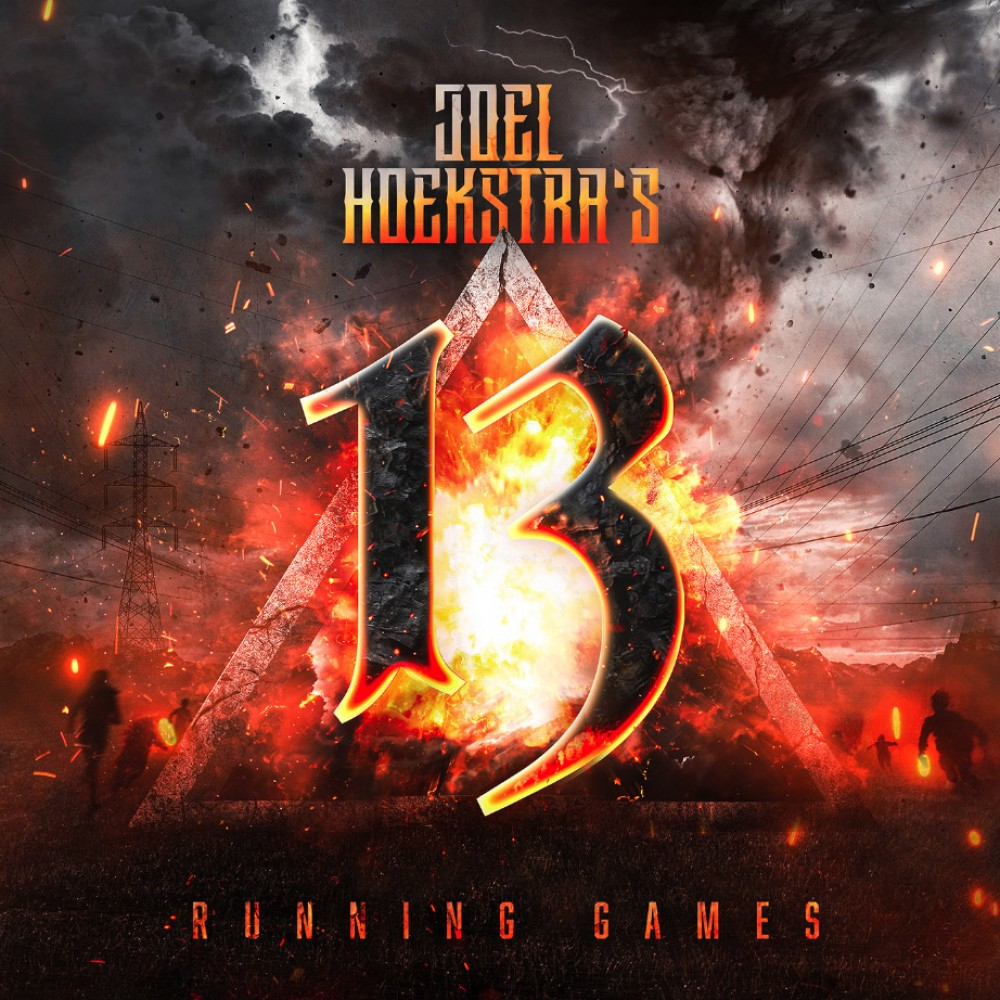
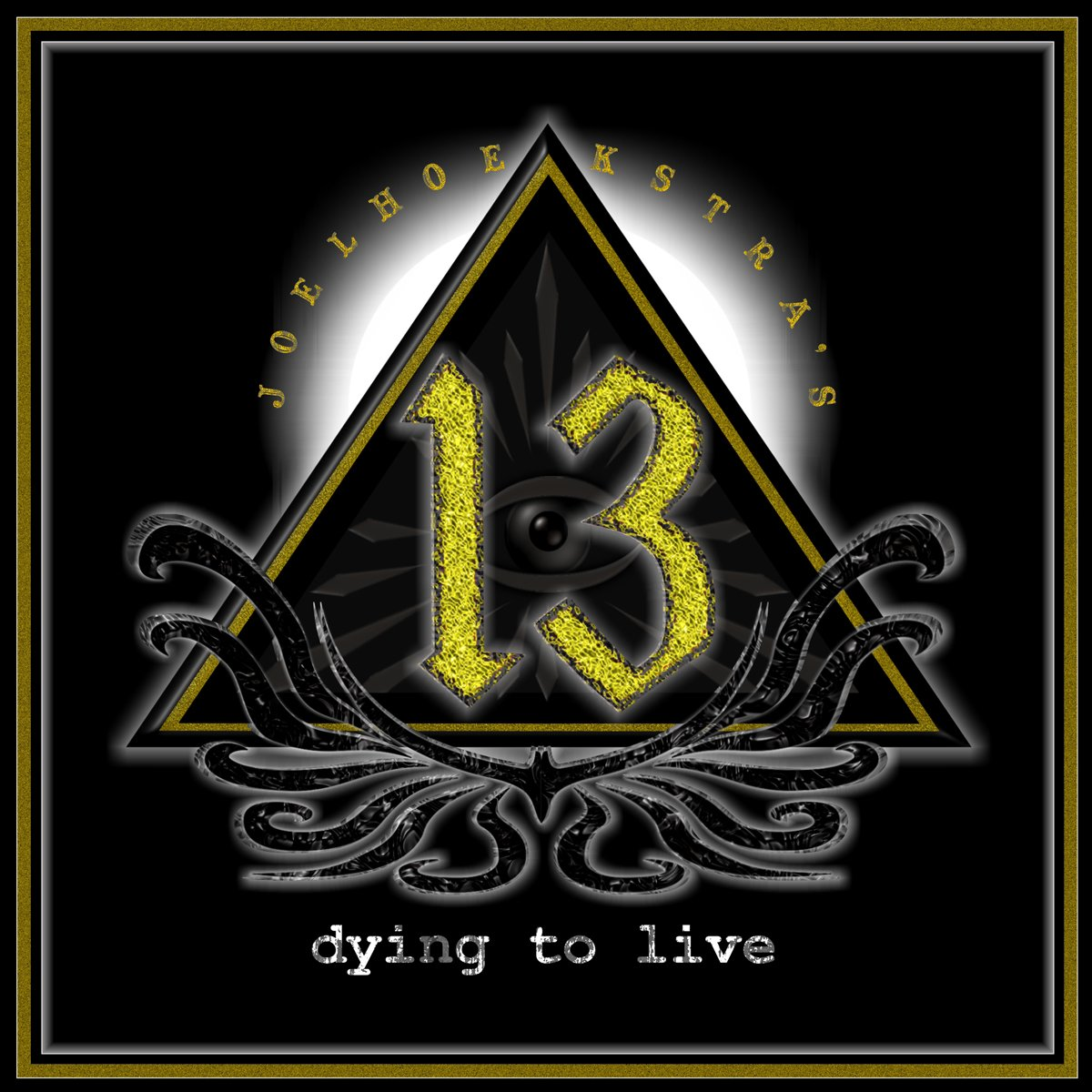
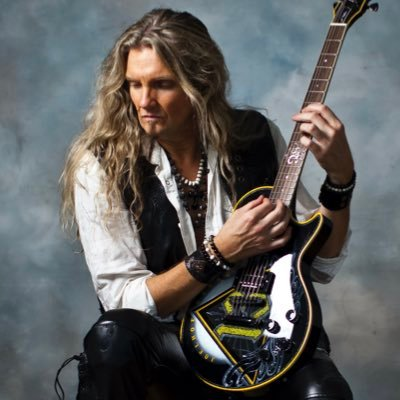
American guitarist / songwriter Joel Hoekstra, best known as the guitarist in Whitesnake these days, as well as having been in Night Ranger, Trans Siberian Orchestra, and more recently has toured with Cher, recently released his the follow up to his 2015 hard rock album – Dying To Live under the name Joel Hoekstra’s 13. The album is Running Games, which features Hoekstra as guitarist / songwriter / producer, and he’s supported by a great band, notably Vinny Appice on drums. The album is full of cool hard-rock / metal, as well as more melodic rock tracks. Here Joel answered questions to his new album, the Joel Hoekstra 13 project, and a few others regarding his music and bands he’s been involved in….. Enjoy the read and check out Running Games.
First, how have you been surviving through the whole CoVid thing? Keeping healthy? And has this pandemic given you more time to work on things [musically & home] that you might not normally be doing?
I’m doing fine all things considered. Healthy and making a living. I try to exercise every day. Well, I’m very busy but a totally different kind of busy. Lots of teaching, Cameos, sessions, writing, quarantine videos, etc.
This is your 2nd album under the Joel Hoekstra’s 13 name. Now, your previous solo albums were instrumental[?] Can you explain how the change to a full ‘band’ type project came about, along with the players [most of which are the same on both albums], and the ’13’ meaning?
After I released the instrumental albums I became more well known for hard rock through being a part of Night Ranger, Rock of Ages, Trans Siberian Orchestra, Whitesnake. I wanted to release something that sounded like a band, but also something where I write everything. So a project name made the most sense and ’13’ kept it short. It’s a lucky number.
How did you wind up with the players you have on the 13 albums? Quite a cool line up with Russell Allen & Jeff Scott Soto, as well as Tony Franklin, Vinny Appice..
Tony Franklin and I played on the VHF project together and I asked him first. He recommended Vinny and at the same time Russell Allen joined TSO and I heard everything he could do. From there, having top pros/friends Derek Sherinian and Jeff Scott Soto are easy decisions. In short – these guys are all great players and friends of mine.
Curious how songs come about for you – musically and lyrically?
I usually start by writing riffs on the guitar while singing. I’ll typically write a chorus first and a melody for the rest of the riffs. Once that’s in place, I’ll write the lyrics for the verse, bridge, etc. This is not for every song, but is the usual method.
On Dying To Live I really liked “Say Goodbye To The Sun” and “Scream”, but “Until I Left You” was the standout song for me. Can you give me a bit about those songs being created [lyrically / musically], and perhaps anything else from that album that really stood out for you?
Some of the ideas on Dying to Live had been around a while. ‘Until I left You’ and ‘Say Goodbye to the Sun’ were both in that category. ’Scream’ was one of the final ideas that I wrote. ‘Until I Left You’ was written singer/songwriter style on acoustic, the rocked-up for the record.
When did you find time to put together Running Games [between other projects & tours]?
Once I mentally committed to doing the album it seemed pretty easy. I had many ideas that fit into the sound of the project. So as to “when” that’s a bit complicated. Some of the riffs are older than others. I enjoy writing on days off on the road.
Running Games is really a solid album – a great listen with plenty of favorite tracks. Was it easier / harder to write and record compared to Dying To Live?
I don’t think either was harder than the other, but I felt like I had defined and focused the sound of the project better this time around.
“Finish Line” is an awesome opener! For me, it really has a Dio feel to it – musically & lyrically. Curious if you hear that and if there’s any Dio influence or perhaps deliberate nod there?
Well, that’s the center of the sound for the project. I always say it’s melodic hard rock that’s Dio’ish at it’s heaviest and Foreigner’ish at it’s lightest.
Can you talk a bit about the video for “Finish Line”? It’s quite unique. How much creative input did you have in that?
I gave the artist Wayne Joyner a rough idea of what the video could be about and he really did a great job. I always wanted to have an animated video. That’s really the benefit of working with Frontiers because they had established that relationship.
The song “Running Games” really stands out and really is a great closing track, despite being the only really light & acoustic number on such a heavy album. Can you tell me a bit about this track – where it came from and the idea to produce it as an acoustic number, with harmonies… ? [Was this written at the beginning or end of the project?]
I had named the album Running Games and sequenced the song order and realized it was ending with about 4 mid tempo rockers in a row. I felt like it needed something to tie it all together and give it a more interesting ending. So I wrote the song at the last minute basically. I’m really glad I did too. For me, it made a world of difference.
Can you give me any antidotes to some favorite tracks – Heart Attack, Lonely Days, Hard To Say Goodbye, Fantasy [?]… Anything that you’re particularly happiest with?
I’m happy with all of it. It’s nice to see people chiming in with their favorite songs and to see every song title included from someone. I think that’s a good sign. No duds. Haha! The riffs for ‘Heart Attack’ were written in Reno at the the Whitesnake studio, ‘Lonely Days’ in Germany on a day off, ‘Hard to Say Goodbye’ in Tokyo on a day off and ‘Fantasy’ is the oldest riff. I wrote that in Omaha, for Inglorious as a potential song idea for their first album.
Conditions willing, do you foresee taking this project and players out to perform live / tour ?
I’d love to. We did one show in support of Dying to Live on the Monster’s of Rock Cruise, so its happened. You never know. Let’s get the world open and I’ll take it from there.
You’ve been playing and recording with Whitesnake for the past number of years. Curious how that gig came about and can you talk a bit about the whole experience or performing, writing, and recording with a guy who’s legendary in 2 historical hard rock bands?
Foreigner’s manager Phil Carson got me an audition and it went really well. It was a definitely a case of the early bird get’s the worm. It sounded like a great opportunity and I went after it. Working with DC is great. He’s a great boss/bandmate and friend. I’m very grateful to be a small part of the band’s amazing history!
Any favorite Deep Purple And Whitesnake songs and/or albums [that you weren’t on]? Any stories of perhaps having these albums or being a fan as a teenager?
I love all of it. The Whitesnake catalog is amazing and having the opportunity to revisit the old Purple classics was really fun.
Of the stuff you recorded with Whitesnake [including Flesh & Blood] – do you have any favorite tracks or performances? Songs you are happiest with.
Not really. I’m honored to be a part of the process. I’m especially honored that DC would include me in the writing and thrilled to have 8 co-writes with him from that period.
You’ve also played with Night Ranger, Trans Siberian Orchestra, Rock Of Ages on Broadway, and more recently Cher. Any highlights from a few of these tours or shows ?
All of it. When I set out to be a professional guitarist, I never really thought I’d be able to do all of these great gigs, so it’s a blessing. All the way…
What else do you currently have on the go recording-wise…or in near future?
I recently gave the guitar riffs to our project with Nathan James, so I think people can look forward to hearing that later this year, although I’m not sure of the release date, etc. Outside of that I just want to stay productive on a daily basis and do the best I can at every turn. It’s hard to predict where that will take me. That’s part of the fun.
What does Joel Hoeskstra listen to? Can you give me a list of favorite albums or bands from your younger years and what you might be listening to these days?
Not much these days. By the time I’ve taught lesson for 6 hours and possibly done a session, I’m pretty much done with music for the day. As a kid I started out listening to hard rock/heavy metal…AC/DC, Black Sabbath, Ozzy, Dio, Iron Maiden Scorpions, Dokken, Queensryche. As I got older more melodic bands like Journey, Foreigner, Boston. Rush and Yes were big influences. Classic rock bands like Zeppelin, Pink Floyd, Jim Hendrix, The Doors are favorites and then all of the guitar albums like Yngwie, Vai, Satriani, Steve Morse. All f that stuff had a big impact on who I am today.
The Uriah Heep studio albums during the David Byron era featured numerous fantastic – and in many cases often overlooked tracks. So I picked 10 favorites that were neither major singles [worldwide] or included on the Live ’73 album, and in many cases not regular returnees to the live set [if they were ever even in it] since their release.
Drop some feedback with a few of your own overlooked Byron era favorites — which won’t include that half dozen hits and set-list staples for the past several decades.
Ill Keep On Trying
From Uriah Heep’s debut album in 1970. A very underrated album in the band’s catalogue that boasted the classic “Gypsy” and the ballad “Come Away Melinda”. But aside from ‘Melinda’ and a few others (well, North American version included “Bird Of Prey” instead of “Lucy Blues”, so I’ll take our version), this is a very heavy album. This track has all of what would become the band’s trademark sounds – the heavy organ and guitar, the big harmony vocals, a few changes in pace…love Alex Napier’s drumming on this track [and others], the over 1 minute intro, loads of energy on this song, sounds like it must’ve been a blast hearing recording this one. Probably my favorite track on the album.
From the last album featuring David Byron on vocals. Admittedly I have a soft spot for High & Mighty, despite it being less ‘eavy, a commercial flop, and not well liked by many of my fellow Heep die-hard fans. But, I thought this track really stands out on this record [especially on side 2], with it’s acoustic intro and verses, and the heavier chorus with the high backing vocal. David sounds great on this. Great guitar sound tone played out for the last minute of the track.
Sweet Freedom had a number of tracks I could’ve chose for here, but this is the closing cut, love the lyrics – and the good vs evil situation David is singing about being in. A fantastic heavy production with the near minute intro, including organ, piano, heavy guitar, the Heep choir…. before David’s voice comes in to deliver a dramatic tale as only David could. One of the band’s greatest performances IMO. Clocking in at just over 7 minutes. It was the last of the Byron era epics.
The last track on Return To Fantasy. Great worldly lyrics from Ken Hensley, and a song very relevant today. Amazing song on an album side that isn’t one of the band’s best from that era. Too bad this song was not stretched out longer. But a great mix of acoustics and organ, and David’s vocal delivery is superb, again breathing real life in to Ken’s words.
One of my favorites on Demons And Wizards, credited to Box / Kerlsake & Hensley. With the Heep choir intro and Lee Kerslake’s powerful drumming, a very underrated track on the band’s biggest album, overshadowed by the hits “Easy Livin” and “The Wizard”. The song drops from heavy guitar to a softer verse with harmonies, then picks back up. Love Mick’s guitar work, and with the organ exchange during the instrumental section.
A classic acoustic number from Sweet Freedom, credited to Box / Kerslake, and Gary Thain. A great summertime feel, about the band’s take on LA. Strange that this track never got more attention. Should’ve made a great worldwide single.
From The Magician’s Birthday, penned by Ken Hensley, and featuring Ken on slide guitar. A dark and haunting track full of guitar, piano, synths, the Heep’s choir, and Lee Kerslake’s drums driving it all.
One of those unique Heep tracks from Look At Yourself, a bit of light and and lots of weight. Issued as a promo single in North America, a shame as this would’ve made a fine global single. The track gets better as is picks up pace following guitar and harmony break, and last verse, as it speeds up frantically with slide guitar and high pitched vocals. Great drums by Iain Clarke on this track [and album!]
Yes, the title track from Heep’s 1974 album. Amazing track and an unusual type of album opener (ballad) that was never used as a single nor featured on any live releases from the Byron era. “Wonderworld”, written by Hensley, being about dreams. An unusual sounding album, but plenty of great songs on it.
This is one of those odd early tracks featuring Ken Hensley on vocals. It was issued as the 2nd single from Salisbury, in Germany and the US – interesting as “Lady In Black” [previous single] was also sang by Ken. Anyway, love that light guitar intro before the band kicks in with that ‘gallop’ . I often wonder if this was a favorite track of Steve Harris. A great rock track, with those unique harmonies that kinda bounce around and echo. Fine drumming by Keith Baker, and some cool fast dueling guitar as the track speeds up to the end. I wonder if this track ever got played live.
Martin Popoff’s latest book titled “Rebel Rouser : A Sweet User Manual” is just out and promises to be a fascinating read on one of the UK’s greatest and most under-appreciated rock bands. As a fan, especially of the band’s mid ’70s hard rock phase – I am really looking forward to this!
Martin – “Glad to see this one finally out. Amazed at how little there has been on this band over the years. They’ve sold millions of records, but weird amongst bands, most of them were singles! And bloody all over the world. Plus those singles get unfairly maligned. They’re pretty cool, the mellow ones and the heavy ones alike, but of course it’s the metal they forged that me and my readers dig the most. Yeah, basically Sweet Fanny Adams, Give Us a Wink and Off the Record are the trilogy of a reason why I wanted to do this. And I guess one other reason, man, Andy is the last man standing and I wanted to show him that someone cares enough to do this, although he knows the guys are well-regarded, if getting a little forgotten.”
From Martin’s own details and ordering info – The book is 286 pages rendered in my usual format, namely every song discussed, one chapter per album, with dual tipped-in sections of colour photography, but also with black-and-white imagery lovingly marbled throughout. You’ve all been very kind in making my recent books like this on Angel, Mercyful Fate, Maiden and Priest sell good, so this one is very much a style match to those, with lots of detail and trivia nugget-mining not found amongst the almost non-existent material out there on Sweet. As the back cover sez…“Everybody wants a piece of the action!” They were the heaviest of the gender-bending glam bands in Britain in the ‘70s, with smash hit after smash hit and a stronghold in Germany of all places. Soon Sweet—Brian Connolly, Andy Scott, Steve Priest and Mick Tucker—would extricate themselves from their producer puppeteers and make a clutch of classic heavy metal albums still revered today. Desolation Boulevard, Sweet Fanny Adams, Give Us a Wink and Off the Record… these records formed the core before disaster struck, with lead singer Connolly falling prey to the demon drink and dying from it slowly over the following 20 years. Mick and Steve are now gone too, with Andy Scott being the last man standing from the UK institution that brought us “Ballroom Blitz,” “Action” and “Fox on the Run.” Come hear the band’s singular and bizarre start as pop tarts, their middle with one of rock’s most revered drummers in Mick, and how it all went wrong in a blizzard of booze, cocaine and busted relationships. But also, in the spirit of the book’s User Manual subtitle, come explore the band’s plethora of singles, non-LP B-sides, hard rock album classics and otherwise weirdly released songs as Martin plays DJ for you, taking you to every corner of the band’s crunchy catalogue blessed by the most angelic harmonies ever committed to virgin vinyl.
Ordering – Price including shipping: US orders: $39.00 US funds, Int’l orders (all books go air): $48.00 US funds Canadian orders: $42.00 Cdn. funds. Again, ask me if you’d like a PayPal invoice (please indicate what country you are in) or just do yer usual and direct funds to martinp@inforamp.net *Sweet postage savings to be had for multiple orders (or two of pretty much anything—long story, ask me!), for both US and Canadian orders.
The 4th album from the band featuring the vocals of Jeff Scott Soto [Sons Of Apollo, ex Journey], along with members of Swedish bands Eclipse and Work Of Art. Eclipse is a band I only discovered last year, not very familiar with Work Of Art much, but anything with Jeff Scott Soto is always something good. This album is full of great melodic hard rock, added in a bit of pop / aor. Lots of rockers, a couple of ballads , with pretty much every track being a potential hit single (if only this was 1985 and such bands got regular radio play and record companies released those 7″ singles!). But seriously, this album is a fun listen, with no filler, and lots of energy. Fave tracks being – “Big Boys Don’t Cry” – the first song and single, with a chorus that is reminiscent of something Def Leppard might’ve done in the 80s (only better produced), “The Call Of The Wild”, “Coming Home” and “You Better Believe It” (the latter 2 sounding like they would’ve fit nicely on the last Eclipse album). Great big memorable choruses, some cool riffs, cool guitar breaks, solid production…. Digging this, along with the new Joel Hoekstra (where JSS also guests), and new live Eclipse album. *Available in CD & LP (I see I missed the LTD red vinyl)
Much to the delight of melodic rock fans around the globe, W.E.T. has announced the release of their fourth album, “Retransmission”. Core members Jeff Scott Soto, Erik Mårtensson, and Robert Såll deliver another astounding album that will surely be a contender for Melodic Rock Album of the Year 2021.
W.E.T truly epitomizes what melodic rock has become in the new decade. The key element at the foundation of W.E.T has always been to create a modern melodic hard rock sound that will drive the genre into the future. Combining powerhouse rhythms and top notch production, the music is equally classic and contemporary. “Retransmission” is nothing else than an absolute milestone, which is well in keeping with the tradition established by the three amazing records that have preceded this one.
Starting with a genre-defining self-titled debut, Robert Såll (the “W” from Work of Art), Erik Mårtensson (the “E” from Eclipse), and Jeff Scott Soto (the “T” from Talisman) accepted the daunting task to give that debut a follow-up, “Rise Up”. After that stellar follow-up, their third opus, “Earthrage”, cemented a legacy of music which will stand the test of time.
Tracklist: Big Boys Don’t Cry The Moment Of Truth The Call Of The Wild Got To Be About Love Beautiful Game How Far To Babylon Coming Home What Are You Waiting For You Better Believe It How Do I Know One Final Kiss
Line-up: Jeff Scott Soto: Lead Vocals Erik Martensson: All Rhythm Guitar, Some Lead Guitar, Backing Vocals & Keyboards Robert Säll: Keys and guitar Magnus Henriksson: Lead Guitar Andreas Passmark: Bass Guitar Robban Bäck: Drums
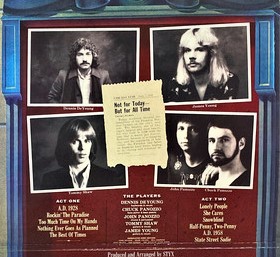
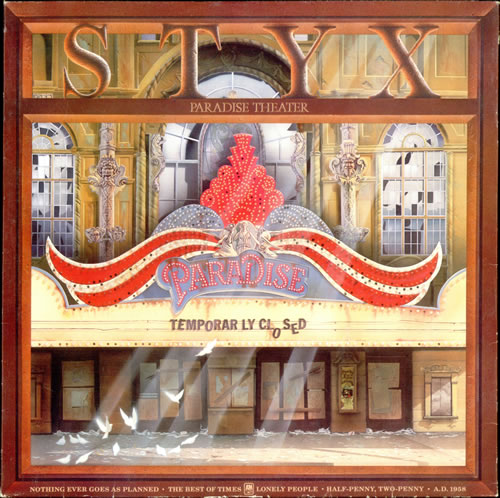
Released in January of 1981, Styx’s latest in a string of huge selling albums would be the first album I ever bought brand new. At that point I liked the single “The Best Of Times”, and nearing my 12th birthday. Purchased this at a record stand at the CNE in Toronto. My dad took me that day, as I think he had dropped off my older brother for a concert that day, as well. I can clearly recall that stand and flipping through for this LP, and my dad not being enthused at my decision to spend my $ on a record for that day! I still have that copy… .played it a number of times while writing this. I enjoyed that album from the start, the story behind the theater, the songs, the artwork, the gatefold cover, the band logo etched in on side 2, The front album cover depicted a drawing of the front of the theatre [spelt with an ‘re’ on the front] with cars from the 30s or 40s in front, and the building in all it’s glory lit up for a big evening; while the back cover showed the theater [spelt ‘er’] all closed up and in decay. Quite an introduction to a young music fan then, [at that point I think I had a few used albums I’d obtained from a school friend] – playing track to track, reading the liner notes, credits, lyrics – in the unfolding cover, the smell of new vinyl…
“I was 26 years old when I painted the album art for “Paradise Theater”. It’s true that I don’t paint album cover art these days mostly because I am no longer an illustrator and to be an illustrator now days means an intense knowledge of the digital world. I admit that I am and have always been a painter and am woefully inept at anything digital. I am painting constantly however as my love for and of the craft has not diminished but has only grown. I was fresh out of art school and had a position as one of two illustrators at an illustration shop, Willardson/White owned by illustration legends, Charles White III and David Willardson, Charlie and Dave had gone to Japan for awhile and the Styx job landed on my desk. It was a concept album with the idea created by Dennis DeYoung. Dennis had found a serigraph print done by the artist Robert Addison. It was a print of a closed formally grandiose theater in a state of disrepair. Dennis thought such an image along with an image of the theater in it’s glorious heyday would make a fitting metaphor of America. At the time Styx was a significant band for A&M Records so they were given a hefty budget. Edward Witus designed the lettering and I did the rest including painting Ted’s lettering. The job just kept growing as A&M approved and liked the results I was giving them. What had started as a simple front and back cover became art for posters, as well as more art created for a 45 sleeve, a center label which was also used as a lazer etched design in the record vinyl, art for point of purchase displays and art for outdoor boards and off shoots such as blow ups of a small marquee I painted on the album cover, “Sparky The Flying Dog”. There are a number of hidden signs on the album but as for the spelling of Theater vs. Theatre I really have no idea as I didn’t lay that part out. I would imagine though that “Theatre” may seem more elegant or snooty and would fit nicely with grand opulence of the era depicted on the front cover. A&M was a good client back then and the the art director and I worked well together. I did other album art for them besides Styx and Oingo Boingo. Oingio Boingo was actually done with Danny Elfman as he preferred to bypass the A.D. and work directly with me. I also did album work for other labels including some Christian artists and some album art for movie scores and soundtracks…. I had a full color comp sketch that I painted but sold. A&M considered it their top art for that year and chose it to make limited edition prints which are quite rare. I sold most of my artist’s proofs. – Chris Hopkins, 2021 (Chris Hopkins Art)
I have read further notes from Chris Hopkins online stating that the album cover was not based on 1 theatre in Chicago, but more so from a number of images he was shown for reference. There are a number of old Chicago theater photos out there that bare some resemblance to the album cover, most notably The Granada, Marbro and Paradise! (You can check images out searching at – http://www.cinematresures.org) .
It would also introduce me to Styx, who were probably my first favorite band, as I would go out and buy albums such as Pieces Of Eight and The Best of soon after. I think I picked up Pieces Of Eight mainly because it was on sale & display in picture-disc form at the local Sam The Record Man.
Playing this album nearly 40 years later, I think I actually like it more, as I grasped the concept more now – compared to the 12 year old me – who was more in to it for the hits at the time. I still like how the album starts with Dennis DeYoung’s “AD 1928” on the piano, which is in part from the first single “The Best Of Times”, and before “Rockin’ The Paradise” comes charging in. Rockin’ The Paradise is rare in that all 3 singers/writers share the writing credit, while Dennis sings a solid upbeat rocker that really gets things going. It is really the dramatic introduction for what’s to come, much in the same way the song “Grand Illusion” did for that album. A video was made for the song, and it was released as a 7 inch single in the UK and Europe (among other places) .
“I had never heard of it. It closed in 1958—it was on the West Side. (Around 1980) I was walking through an art gallery, and there was a serigraph of a painting of the Paradise Theatre by Robert Addison, an artist who lived in Chicago. I looked at it, and if you see the back side of the album cover, where the theater is in disrepair, our album art is a paraphrasing of his painting. So I saw it, and in the painting it said, “Closed Indefinitely.” And I thought, that feels like a metaphor for America in 1980. And I bought [the serigraph], brought it home, and I looked at it and thought about it. Then I went to the guys and said, “What about a thematic album based on a once-proud movie house that has fallen into disrepair and urban decay from neglect…as a metaphor for the United States in 1980? And that was when (Ronald) Reagan and (Jimmy) Carter were going at each other. So that’s where the whole idea for the Paradise Theatre album came from, from that painting.” – Dennis DeYoung (https://www.songwriteruniverse.com/dennis-deyoung-styx-2017.htm)
“Too Much Time On My Hands” was the 2nd single, and also went Top 10 in Canada & the USA. I was not as crazy about it on it’s own then, but somehow it fits better and sounds better as part of the whole album [if that makes sense]. Definitely catchy, and had/has a wide appeal. It is one of 2 Tommy Shaw penned tracks.
” I liked the idea of the Paradise Theater concept, but just wasn’t coming up with any songs. Suddenly I felt like I had an assignment to write a song. I never have been that good at that. So I was a song short. It was the last day of song rehearsals for the record, and we were scheduled to go into the studio the next week. I lived in Michigan, so I would drive over every day. I got about five miles from the rehearsal hall in Indiana, and all of the sudden, it came on in my head like a song on the radio. And I said, “Okay, all right, all right, all right. I got to get there. I got to get there before I forget it.” I parked the car and I ran in and I said, “Chuck, play this—duh, duh, duh, da, duh, duh. And now J.Y., play A. Okay, when I say, everybody go to D, and I’m going to sing this part: ‘duh-dah-duh-duh-dah-duh-duh.’” I was calling out chords, and it was sort of an audible. I yelled out the changes as we were going along, and we played it and that was pretty much it.” – Tommy Shaw (https://music.avclub.com/tommy-shaw-of-styx-17982248000)
“There was a place near where I lived in Niles, Michigan, a little tavern right next door to the Catholic church…. I think officially it was called Mark’s Tavern, but everybody called it Mark’s Bar. It was the local watering hole…. The drinks were good, and the drinks were cheap. You could go in there with 20 bucks and be a hero, you know — buying rounds of drinks. And you’d always run into somebody you knew in there.” – Tommy Shaw (https://styxworld.com/blogs/news/styxworld-exclusive-the-inside-story-behind-too-much-time-on-my-hands)
The other Tommy Shaw track being the lighter pop track “She Cares”, which features saxophone courtesy of Steve Eisen – who guested on a few Styx albums, as well as Dennis’ solo albums. It is [IMO] the least memorable track on the album, kinda bubble-gum, and not really suiting the album’s theme. Heck, even the title is pretty forgettable.
Dennis DeYoung wrote the majority of this album, which is interesting in light of what came before and after this album — the 2 weakest albums in the bands 1975-83 era catalogue (IMO), both plagued by lighter-poppier material [though in all fairness, other members of the band share in the blame on Cornerstone, but DeYoung gets it largely for spearheading the writing, the themes, and for the hit “Babe” during this era]. “Nothing Ever Goes As Planned” was the 3rd single in Canada, USA, and Japan (while other countries got “Rockin’ The Paradise”), and although it didn’t make the top 10 as the previous 2, it did land in the top 40 in Canada, but much lower in the US. This, as well as “Lonely People” – both kinda funky pop-rockers, storytelling theatrical pieces, complete with cool guitar breaks, added horns, synths….
“The Best Of Times” was the first single, and probably the reason I bought this album at the time, I loved it then, as it was all over the radio. The song was a #1 hit in Canada, and #3 in the US. Along with the other singles, and a massive world tour, it would make Paradise Theatre the band’s biggest album (and only #1 in the US). Like side 2 of the Paradise Theatre album, this single also featured the ‘STYX’ etching, released in many territories.
“Like (author) Charles Dickens said, “It was the best of times, it was the worst of times.” I paraphrased that in the lyric of the song. For me, the song is simple. It’s when the world goes mad, how do you cope? And in this instance, it’s the love between two people, that they make their own paradise within their companionship, their love for each other, and their own home. And that’s what “The Best of Times” is about…it’s saying that The Best of Times are when I’m alone with you.” – Dennis DeYoung (https://www.songwriteruniverse.com/dennis-deyoung-styx-2017.htm)
After all the hits and more pop-rock gems on this album though is perhaps James Young’s finest pair of classics back to back on any Styx album – “Snowblind” and “Half Penny, Two Penny”. Snowblind being the closest progressive track on Paradise Theatre, co-penned with DeYoung and Shaw (who was apparently uncredited for lyrics). A great build up from the quieter to the hard hitting sounds of the band, and the shared lead vocal from JY an Tommy Shaw. Probably a great live song back then.
“JY had a song, I think he did have the title, but you know all the parts he sings, “Mirror, Mirror,” all that stuff? That’s what he wrote. Then after the “Mirror, Mirror” part, he had another song that went double-time that he had written that he thought matched, they went together. And I said, “JY, that second half of that is not going to cut it. That beginning is genius, you can’t go wrong, you can bet the kids’ college fund.” And I went in and I finished the song. So all the parts that Tommy sings, including the chorus, not the lyrics, I wrote. I think those lyrics are JY’s and the “Mirror, Mirror” parts are his but all those chords and that melody, that’s me. Now people don’t expect it, do they, because I guess I’ve so much success writing hit ballads that they think that’s all I do, but that’s not true. You can listen to any number of songs – “Grand Illusion,” “Castle Walls,” “Rockin’ The Paradise,” “Lorelei,” “Born For Adventure;” I mean, the list goes on and on. That’s me in there. …But “Snowblind,” that’s how it came about. And here’s what I did, this is how I was the kind of leader of the band. Not the dictator but the leader, the guy who kind of brought things together, because there is no Styx record without those other four guys. That’s a fact. We were a band together making that music. BUT, I said to JY, “This second part of that song that I’m writing, I think Tommy should sing it.” How’d you like to go to the original idea guy and tell him you should let Tommy sing the second half (laughs). That’s what I did, because I knew Tommy would be the right guy to sing that part.” – Dennis DeYoung (https://glidemagazine.com/245206/dennis-deyoung-formerly-of-styx-speaks-the-truth-about-broadway-lies-history-of-renegade-bipartisan-news/)
“On “Snowblind” from Paradise Theater, the keyboard thing in the beginning was my idea. I’ve got an electric piano that sits right next to my guitar, and I was just fiddling around and came up with it. Actually, I like to know how to play all my songs on both guitar and keyboards. With ‘Half-Penny Two-Penny,’ for instance, I doubled on guitar and piano as well as sang all the vocals in my rough demo. Basically, I want a song to be good in my own mind before I present it to the band, and when it comes to my ideas about specific keyboard parts, I’m often quite opinionated. Many times Dennis will hit upon something that’s better than I originally conceived, but basically I’m a real son-of-a-bitch [laughs]” – James Young (James Young-The Guitar Player Interview (racerrecords.com)
“Snowblind”, like the Black Sabbath song of the same name, was penned about cocaine. – “That’s what they say…. Yeah, I had done some research into those lyrics. Everybody was doing it back then—it’s not my excuse, but it was just what you did. If you were going to party back in those days, cocaine was just one of the things on the menu. I never did heroin, because I thought that meant I was doing heavy drugs, which shows you the insanity of doing drugs. I probably should have done heroin, because I understand heroin actually makes you feel good. Cocaine just makes you stupid.” – Tommy Shaw (link below)
“Snowblind” was also singled out by the Parents Music Resource Centre (a bunch of Washington wives claiming to be part of the moral majority). The song was claimed to have included “backwards Satanic messages”. Ridiculous to think now that these people had any clout, and could come up with such stupid claims. But it got the band even more attention – “I know. We loved that…. There was a backward thing on there, but it was “If you don’t like this, you can kiss my ass,” or something like that. From what I understand, the kids that were in church groups were flocking to the stores to buy that. So I think it backfired.” – Tommy Shaw ( https://music.avclub.com/tommy-shaw-of-styx-1798224800)
The album’s big rocker – “Half Penny, Two Penny” was co-written by James Young and Ray Brandle – who (according to my check on Discogs) was only credited on later CD issues and re-issues of Paradise Theatre. Brandle had credits on a few very early Styx songs. Interestingly, he was also a lyric writer for another Chicago band in the ’70s – The Roseland Band. They also had a song by the same name, co-written with Brandle, but not the same song musically or lyrically. It was unreleased, but a live recording of it can be found on youtube. This song is a classic JY rocker, that is definitely comparable to “Miss America” from The Grand Illusion, and lyrically suits the album as it comes to the end, after a cool guitar solo, followed by another verse and chorus, the song slides back in the album’s theme, as guitars disappear for piano and saxophone, and eventually the piano carries write in to “AD 1958”, which reprises the “Best Of Times” melody with a closing lyric. A half-minute of “Half Penny…” [roughly] was aired in the detective show Hart To Hart in May of 1981 (episode – The Latest In High Fashion Murder) . Following the “AD 1958” farewell, the album trails off with the piano playing of “State Street Sadie”, which is likely titled after the late 20’s silent film.
“I suppose, on the Paradise Theater album, and the Paradise Theater being an allegory, not so veiled an allegory, for the state of America at the time… concept of justice for money and the other roles that money plays in our capitalist society led me to write that song. “ – James Young (hob.com – Styx Interview (jamesyoung.ws)
“There was no doubt that in response to Cornerstone, which preceded it, and my own grumblings about how soft Cornerstone was, internally anyway, that “Paradise Theatre definitely had more punch, and kind of elevated the band again as a rock band. So another great moment in Styx history was 1981.” – James Young (Q&A with Styx :: The Grand Illusion | Lawrence.com)
I really enjoyed revisiting this album, one of my Styx favorites, still. I didn’t realize it then, but this was the band at their commercial peak, and then things soon went downhill. “Mr Roboto” came out, and it was a great single, despite it’s lack of guitars. But I remember getting the Kilroy Was Here album, and excited about the story and album packaging, but really disappointed in the album upon listening to it. I’ve pulled it out recently, and still don’t like most of it. I thought the Kilroy movie/video thing was pretty neat, but the album lacked hard rockers. The double live Caught In The Act came out not too long after (which I picked up at Sears!), I didn’t dig the new track “Music Time” (more ’80s pop), and really wasn’t enthused by the whole album (and I like live albums). There are a few live shows from the Paradise Theatre tour on youtube (Maryland 81 and Budakon 82) which seem a bit more lively – worth checking out (would be cool if someone tidied these up and released them).
If you are not familiar with guitarist Joel Hoeskstra, his long list of credits also includes Jimi Jamison [RIP], Michael Sweet [Stryper], and Jack Blades [Night Ranger] . This is the second album under the Joel Hoekstra’s 13 name, with much of the same line up. I got the first one from 2015, and thought it was a good hard-rock / metal release, but this – Running Games is a step up, with 11 solid tracks! It gets much better with each listen; can’t wait to get this on in the car. First track “Finish Line” is an easy favorite, sounding very Dio-like; that comes charging out with a heavy riff, great vocals, even the lyrics seem to come off as something Dio could’ve penned. But a great mix of ’80s influenced rockers like “I’m Gonna Lose It”, “Heart Attack”, and “Lonely Days”. There’s a few lighter moment here, such as near ballad “How Do You”, and the acoustic title track – which is totally different to anything else here, but what a great song!
Joel Hoekstra, best known to legions of rock fans as the current guitarist for Whitesnake and Trans-Siberian Orchestra (and also known for his work with Night Ranger and the Broadway show Rock of Ages), returns with his sophomore album, “Running Games” from his electrifying solo project, Joel Hoekstra’s 13.
Hoekstra once again handles the bulk of the creative process, overseeing production, songwriting and arranging (music and lyrics), and crafting his vision for this powerful hard rock record. Add Chris Collier’s masterful mixing and the result is ‘70s/’80s classic hard rock with 2020’s muscle. As with the debut, “Running Games” features an all-star cast of musicians including none other than Russell Allen (vocals), Tony Franklin (bass), Vinny Appice (drums), and Derek Sherinian (keyboards). The amazing Jeff Scott Soto also lends a helping hand with background vocals.
Says Joel, “Years ago, I released three solo albums that were mainly instrumental guitar music. With Joel Hoekstra’s 13, I have started to work on something that showcases my production, writing, and playing in the genre that I’m known for, which is melodic hard rock. “Running Games” is more focused and more mature compared to [debut] “Dying to Live” and hopefully the fans will enjoy it!”
On ‘Running Games’, lyrically Joel focuses on escaping problems both past and present by providing playful, imaginary, and serious takes on the situations.
Long hailed for his astounding, note-perfect guitar playing, Hoekstra’s playing here raises the bar to a new level.
Look out for “Running Games” on February 12, 2021.
Tracklist: Finish Line I’m Gonna Lose It Hard To Say Goodbye How Do You Heart Attack Fantasy Lonely Days Reach The Sky Cried Enough For You Take What’s Mine Running Games
12. Lay Down Your Love (Bonus Track – Digital)
Line-up: Joel Hoekstra (Whitesnake/Trans-Siberian Orchestra) – guitars Russell Allen (Symphony X, Adrenaline Mob) – lead vocals, backing vocals Vinny Appice (ex-Black Sabbath, DIO) – drums Tony Franklin (ex-The Firm, Blue Murder) – bass Derek Sherinian (Sons Of Apollo, Dream Theater, Black Country Communion) – keyboards Jeff Scott Soto (Sons Of Appollo, Trans-Siberian Orchestra) – backing vocals
Special Guests: Lenny Castro (TOTO) – percussion Chloe Lowery (Trans-Siberian Orchestra) – backing vocals Dave Eggar (Evanescence, Coldplay) – cello Katie Kresek (Adele, Five For Fighting) – violin, viola
Guitar Legend TOMMY BOLIN Celebrated With New Collection Of Lost Tracks!
Los Angeles, CA – This year will mark the 45th anniversary of the passing of Tommy Bolin, the supremely talented guitarist and songwriter, best known for his work with Deep Purple and The James Gang, who captivated the world with his sophisticated and ferocious playing. Bolin’s tragic death, he was a mere 25 years old, has been one of rock music’s great “what ifs” forcing critics and fans to grapple with what Bolin might have been able to accomplish in subsequent years were he still alive, given that he managed to produce such amazing works of mature artistry at such a young age. Many point to Bolin’s most fully realized, and sadly final, album, the magnificent Private Eyes, as proof that for all of Bolin’s success, the man was just getting warmed up!
Private Eyes was Bolin’s second solo album, following up the classic Teaser album in 1975, and after his departure from Deep Purple. There have been numerous posthumous ‘archive’ releases over the years, and as a fan I’m also curious and keen. 12 tracks are included on this release, as a couple of songs get more than one version. Really looking forward to hearing this, as Bolin was not just an amazing guitar player, but a fine singer and great songwriter.
Now a new collection of never before released outtakes and demos from those recording sessions will be released showing the many sides of Bolin’s talent. The collection is called Shake The Devil – The Lost Sessions and will be released on February 12 courtesy of Cleopatra Records. Licensed directly from Bolin’s estate and with informative liner notes from rock journalist Dave Thompson, these recordings offer both acoustic, instrumental and alternate versions of some of Bolin’s best known tunes including his most popular song, “Bustin’ Out For Rosey.” That track is today offered as a special sneak preview of the album, which will be available on both CD as well as a gorgeous gatefold vinyl with your choice of white, purple or red vinyl!
2-CD And 2-LP Versions Of First Black Sabbath Albums With Ronnie James Dio On Vocals Feature Newly Remastered Audio Along With Rare And Unreleased Music
*Looking forward to these! Perhaps my 2 favorite albums in the Black Sabbath catalogue.
Live Versions Of “Heaven And Hell” And “The Mob Rules” Available Today As Digital Singles
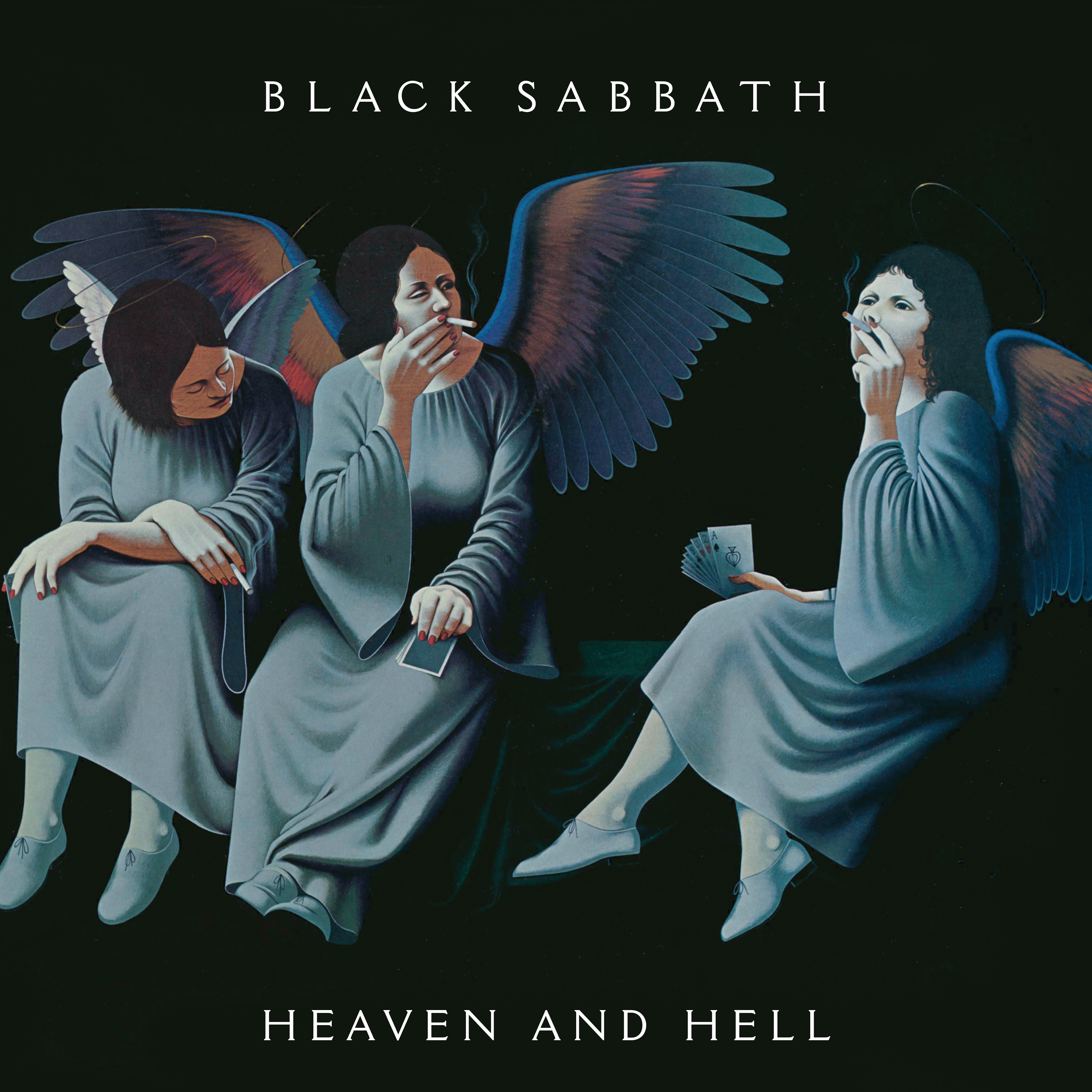
LOS ANGELES – Singer Ronnie James Dio joined Black Sabbath in 1979 which resulted in two back-to-back classic albums: Heaven And Hell and Mob Rules. On those memorable albums, Dio’s soaring tenor and gothic songwriting were the perfect foil for the band’s bone-crushing mix of razor-sharp riffs, intense grooves, and dark imagery.
Rhino salutes the long shadow cast by this short-lived lineup with newly remastered versions of both albums expanded with rare and unreleased music. HEAVEN AND HELL: DELUXE EDITION and MOB RULES: DELUXE EDITION will be released separately on March 5. Each album will be available on 2-CDs ($19.98), or a 2-LPs ($31.98). Due to space constraints, both vinyl editions include a selection of bonus material from the CDs. The music will also be available via digital download and streaming services the same day. A rare live version of “Heaven And Hell” and a previously unreleased live version of “The Mob Rules” are both available today as digital singles. Click HERE to listen now.
Dio joined Black Sabbath for the first time in 1979 and quickly found kindred spirits in guitarist Tony Iommi, bassist Geezer Butler, and drummer Bill Ward. When Heaven And Hell was released in April 1980, the album was met with effusive reviews for the band’s return to form on metal masterpieces like “Neon Knights” and the title track. The album reached #9 in the U.K. and #28 in the U.S., where it was also certified platinum.
HEAVEN AND HELL: DELUXE EDITION adds several bonus tracks that have never been released in North America, including versions of “Children Of The Sea” and “Die Young” recorded live in 1980 in Hartford, CT. The set concludes with live rarities like “E5150” and “Neon Knights” that originally appeared in 2007 on the Rhino Handmade’s limited edition collection, Black Sabbath: Live At Hammersmith Odeon.
To follow-up Heaven And Hell, the group returned to the studio in 1981 to begin recording Mob Rules, with drummer Vinny Appice joining the band for the first time. Released in October 1981 and certified gold, the album was another Sabbath classic, including standouts like “The Sign Of The Southern Cross,” “Turn Up The Night” and the title track.
MOB RULES: DELUXE EDITION boasts an expansive selection of rare and unreleased recordings. Along with additional tracks from Live At Hammersmith Odeon, the collection also includes a newly mixed version of “The Mob Rules.” The cherry on top is an entire concert recorded in 1982 in Portland, OR. Highlights include stellar performances of “Neon Knights” “Heaven And Hell” and “Voodoo.”
The Dio-fronted lineup disbanded in 1982 but reunited a decade later to record Dehumanizer and tour before going on hiatus again. The group came together again in 2006 to record three new songs for Rhino’s era-spanning collection, Black Sabbath: The Dio Years. The collaboration led to a highly anticipated world tour in 2007 where the group was billed as Heaven And Hell. Their final album of new material, 2009’s The Devil You Know, again demonstrated the musical bond between the band members was unparalleled.
HEAVEN AND HELL: DELUXE EDITION 2-CD Track Listing Disc One: Original Album (2021 Remaster) 1. “Neon Knights” 2. “Children Of The Sea” 3. “Lady Evil” 4. “Heaven And Hell” 5. “Wishing Well” 6. “Die Young” 7. “Walk Away” 8. “Lonely Is The Word”
Disc Two: Bonus Tracks 1. “Children Of The Sea” – Live B-Side Of “Neon Knights” * 2. “Heaven And Hell” – Live B-Side Of “Die Young” * 3. “Lady Evil” – 7” Mono Edit (unreleased on CD) Hartford Civic Center, Hartford, CT (August 10, 1980) 4. “Neon Knights” * 5. “Children Of The Sea” * 6. “Heaven And Hell” * 7. “Die Young” * Hammersmith Odeon, London (Dec 31, 1981- Jan 2, 1982) 8. “E5150” 9. “Neon Knights” 10. “Children Of The Sea” 11. “Heaven And Hell”
2-LP Track Listing Side One 1. “Neon Knights” 2. “Children Of The Sea” 3. “Lady Evil” 4. “Heaven And Hell”
Side Two 1. “Wishing Well” 2. “Die Young” 3. “Walk Away” 4. “Lonely Is The Word”
Side Thee 1. “Children Of The Sea” – Live B-Side Of “Neon Knights” * 2. “Heaven And Hell” – Live B-Side Of “Die Young” * 3. “Lady Evil” – 7” Mono Edit (unreleased on CD) 4. “Neon Knights” – Live 1980 *
Side Four 1. “Children Of The Sea” – Live 1980 * 2. “Heaven And Hell” – Live 1980 * 3. “Die Young” – Live 1980 *
MOB RULES: DELUXE EDITION 2-CD Track Listing Disc One: Original Album (2021 Remaster) 1. “Turn Up The Night” 2. “Voodoo” 3. “The Sign Of The Southern Cross” 4. “E5150” 5. “The Mob Rules” 6. “Country Girl” 7. “Slipping Away” 8. “Falling Off The Edge Of The World” 9. “Over And Over”
Bonus Tracks 10. “The Mob Rules” – Heavy Metal Soundtrack Version 11. “Die Young” – Live B-Side Of “Mob Rules” 7” * 12. “The Mob Rules” – New 2021 Mix ** Live At The Hammersmith Odeon London (31/12/81 – 2/1/82) 13. “Country Girl” 14. “Slipping Away” 15. “The Mob Rules” 16. “Voodoo” Live At Portland Memorial Coliseum, Portland, OR, April 22, 1982 17. Intro ** 18. “Neon Knights” **
Disc Two: Bonus Tracks Live At Portland Memorial Coliseum, Portland, OR, April 22, 1982 1. “N.I.B.” ** 2. “Children Of The Sea” ** 3. “Voodoo” ** 4. “Black Sabbath” ** 5. “War Pigs” ** 6. Drum Solo ** 7. “Iron Man” ** 8. “The Mob Rules” ** 9. “Heaven And Hell” ** 10. Guitar Solo ** 11. “Sign Of The Southern Cross/Heaven And Hell” – Reprise ** 12. “Paranoid” ** 13. “Children Of The Grave” **
2-LP Track Listing Side One 1. “Turn Up The Night” 2. “Voodoo” 3. “The Sign Of The Southern Cross” 4. “E5150” 5. “The Mob Rules”
Side Two 1. “Country Girl” 2. “Slipping Away” 3. “Falling Off The Edge Of The World” 4. “Over And Over”
Side Three 1. “The Mob Rules” – Heavy Metal Soundtrack Version 2. “Die Young” – Live B-Side Of “Mob Rules” 7” * 3. “The Mob Rules” – New 2021 Mix ** 4. “Sign Of The Southern Cross/Heaven And Hell” – Reprise **
Side Four Live At The Hammersmith Odeon London (31/12/81 – 2/1/82) 1. “Country Girl” 2. “Slipping Away” 3. “The Mob Rules” 4. “Voodoo”
* previously unreleased in North America ** previously unreleased
MEDIA CONTACT Chip Ruggieri Chipster PR & Consulting, Inc. chip@chipsterpr.com
The title “Hobo” [and lyrical subject] is another widely used amongst bands in the ’70s and ’80s. Aside from just the 6 tracks I chose here, there’s plenty of songs with ‘hobo’ in the title or lyrics. There was a few others with the same title in the ’60s [UK band The Outlaws, and US band Good Rats]. Heck, Whitesnake’s huge hit “Here I Go Again” was about a hobo, originally done with the lyric “like a hobo I was born to walk alone” – Coverdale altered the word hobo to ‘drifter’ when the song was redone [and became a hit] in 1987 concerned people might think he was singing something else. Weird. Actually, I don’t hear the term hobo used often much anymore; a hobo being a homeless person, drifter, vagrant…
Anywayz….
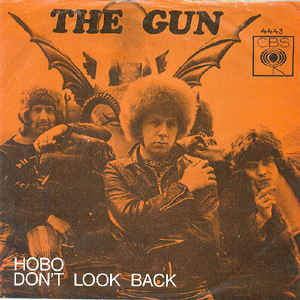
The Gun
From the band’s second album. [The] Gun was a trio, consisting of Adrian and Paul Gurvitz, as well as drummer Louie Farrell. The Gurvitz’ had been a part of late 60s band The Knack, who recorded a number of singles, while Farrell had recorded with Bulldog Breed. I prefer the band’s 2nd album GunSight, though the debut may be better known, as it was the first to feature Roger Dean artwork. “Hobo” is a fine, lighter number, based on acoustic guitar, with soft vocals and harmonies, and slide guitar, giving this a bit of a southern feel. Nice blend of guitars – [acoustic, slide, electric], as the track picks up a bit, then fades out. This song fits perfectly in this album that is a brilliant mix of hard rock, psychedelia, and acoustics. Great vocals and songs. A shame there wasn’t a third album, as the band split with the Gurvitz brothers going on to Three Man Army [w/ drummer Mike Kellie of Spooky Tooth], and later The Baker-Gurvitz Army [w/ Ginger Baker]. No idea what became of Farrell. Footnote- early on the band hired Jon Anderson as lead singer, and had an organ player; both were soon let him go.
Bullet / Hard Stuff
This track was initially recorded by Bullet and released as a single in 1971. It was the band featuring former Atomic Rooster members John Du Cann [aka Cann], and Paul Hammond, as well as John Gustafson [ex Quatermass, and singer Harry Shaw. The band took on the name Daemon, then Bullet, after realizing they couldn’t use the Atomic Rooster name [Vincent Crane owned it]. They then changed name to Hard Stuff [due to another band of the same name Bullet in the US], and let Shaw go. So the track was re-done with new vocals by Du Cann for the first Hard Stuff album Bulletproof, released in 1972. A little guitar build up, and this one kicks in to a heavy riff. It’s straight ahead guitar, bass , drums rocker here; great guitar playing and vocals , cool slide guitar. Standout track on a classic album! This stuff has all been re-issued on Purple Records [2017].
Lucifer’s Friend
This rocker leads off the 2nd album by this German band titled WhereThe Groupies Killed The Blues from 1972. Cool jazzy intro, with John Lawton coming in with those vocals [screams] early on, similar to “Ride The Sky”; maybe this rocker was trying to recapture the same feel of their debut single[?], but there’s much more going on here than a straight ahead proto-metal classic based on a heavy riff. This track, co-written by Lawton and [guitarist] Peter Hesslein was also issued as a single in Spain & Germany. Lyrically written from the perspective of a hobo, who is really just kinda complaining how his life is no fun, on the run. Great track, and I love the guitar soloing here, as well as the Hesslein’s playing out til the end, great bass, piano, drum sound … a good bit of funk, jazz, hard-rock… Co-produced by Herbert Hildebrandt and Conny Plank [RIP]. RIP – Dieter Horns [19.12.20]
Shanghai
This UK blues/funk/soul rock band featured Mick Green on guitar, who had a long history going back to Johnny Kidd & The Pirates in the ’60s, and was a big influence on the likes of Pete Thownsend, Wilko Johnson, and Mick Box . The band also included Chuck Bedford [vocals, harmonica], who had previously recorded for Motown act Celebration. Mike Demain [bass, keyboards], and Pete Kircher [drums, vocals], and featured backing singer Barbara Bedford. Shanghai started as Fresh Meat, releasing 2 singles – one of which was “Hobo”; they then released a single prior to this album under the band name ‘Hobo’. This track is a great funk/soul number, that kicks off side 2. Kinda slower tempo’d, that reminds me in parts of David Essex’s “Rock On”, but then picks up during the chorus, with sweet backing vocals and guitar. Bedford and Demain both left following this debut album and legendary British soul singer Cliff Bennett was brought in for the band’s 2nd [and final album]. Bedford would record a couple of solo singles, but I’ve found no info on him [or Demain] after that. Peter Kirchner would turn up in Status Quo for a bit in the ’80s, and Mick Green would go on to reform [and record with] The Pirates. *Anyone have this LP? I need a copy!
Triumph
The first single[A-side] by Canadian band Triumph in 1975 was penned by Larry Leischman of Rhinoceros. The single was recorded before guitarist Rik Emmett joined the band, and featured founding members Gil Moore [drums, vocals], Mike Levine [bass], Fred Keeler [guitar], and Peter Young [organ]. Neat guitar intro from Keeler, who had a great history, having played with the likes of David Clayton Thomas in The Shays, and recorded albums with The Majestics [1968] and Jericho [1971, produced by Todd Rundgren!]. Not a bad hard rock track, decent enough as a single; the playing is great, and Gil Moore’s vocal isn’t bad. Definitely has an early Canadian sound to it, and a very different sounding band to what Triumph became big with a few years later. Both Keeler and Young left around the time of the single’s release, with Rik Emmett joining shortly after, and presumably this track was quickly forgotten. Haven’t found much info on what became of Peter Young, tho’ he did write a book – Let’s Dance : A Celebration of Ontario’s Dance Halls and Summer Dance Pavilions. Freddie Keeler has been hailed as an integral member of the Toronto sound of the ’60s, and sadly passed away in July of 2019 [RIP]. I’ve yet to find any pics of this line-up of the band [or in it’s original name – Abernathy Shagnaster].
Rough Diamond
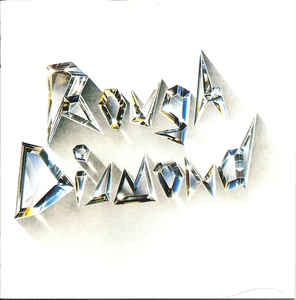
This is from the band and lone LP released immediately after David Byron’s departure from Uriah Heep. I really like this album. The band and album were over-hyped in some of the press, and the album wasn’t much of a success, and band soon folded. This one is a band composition with a neat intro / hook from from Clem Clempson, and a great vocal from David Byron, who seems to tell the story of a guy going from woman to woman and getting rejected, before admitting he was wrong and returns to the one he initially left. A decent rocker, with a mix of guitar and organ, and a cool quiet instrumental section that kicks back into the main riff, before dropping down again into a sorta jazzy keyboard and saxophone section, throw in some more guitar, more piano, synths… clocking in at nearly 6 minutes, over half of this track is instrumental, and eventually fades in to the next cut, a short keyboard instrumental by Damon Butcher titled “The Link”. Co-engineered by the legendary Richard Digby Smith, who would later produce Byron’s last recordings.


:format(jpeg):mode_rgb():quality(40)/discogs-images/R-17054514-1611676431-5475.jpeg.jpg)