Tim Durling – new book reviews FLEETWOOD MAC catalogue.

Canadian rock writer Tim Durling has a brand new book available . A Beginner’s Companion to FLEETWOOD MAC. Durling looks over and reviews the band’s entire catalogue, which dates back to the late 60s, long before Stevie Nicks and Lindsay Buckingham arrived for the most successful period of the from mid to late 70s. Says Tim – “I tried to cover every original Fleetwood Mac song, which was really confusing in the 1967-69 period but I think I managed it… The idea behind this book is to help the curious new listeners navigate the catalogue.”

The book also includes a list of 100 Fleetwood Mac covers by 100 different artists, as well as a forward by Pete Pardo, and a cool cover drawing by Sally Ann Morgan.

Available in paperback, totaling 151 pages, and available on Amazon for a mere $21 (Canadian) now

LISTEN CAREFULLY TO THE SOUND.

Fleetwood Mac: a band with several distinct lives. The hard driving blues of the Peter Green-led lineup. The dreamy soft rock that defined the Bob Welch era of the early Seventies. The turbulent but undeniably potent chemistry of the Buckingham/Nicks years. It all adds up to a confusing but ultimately rewarding catalogue of music.

But where does one begin?
The Sound That Haunts You is author Tim Durling’s attempt to direct the curious listener from the band’s late Sixties beginnings through their more recent recordings in the 21st Century.

Each of the Mac’s studio albums is analyzed and summarized.

You’ll also discover the sheer breadth of artists who were enchanted by Fleetwood Mac’s music enough to cover their songs. Featuring a foreword by Sea of Tranquility host Pete Pardo.

How does a new listener begin to find their way through such a varied and complicated catalogue? Durling provides an easy-reading road map through the band’s 1968 debut album all the way through 2003’s Say You Will, and beyond! Featuring lovely hand-drawn artwork, and photos from the author’s own collection, The Sound That Haunts You is the perfect companion to sitting by your preferred music source, listening to Fleetwood Mac.

Whether you are a longtime fan or a curious newcomer, this book is for you.

GREG T. WALKER interview: Two Wolf, Blackfoot…

GREG T WALKER is best known as a founding member of the classic Southern rock band (and highly underrated) BLACKFOOT, with whom he recorded and toured with from the 70s to mid 80s. And in the very early days he was also a part of LYNYRD SKYNYRD. When Blackfoot broke up, Greg went on to various other projects, with his most recent being a brand new album with TWO WOLF. The band’s self titled debut comes after a decade of Greg keeping the band going. If you like Southern Rock, I cannot recommend this enough. Two Wolf is a heavier rockin’ band, even to Blackfoot. The album (available on CD and now LP) even includes a few Blackfoot remakes.

I was happy to talk to Greg about Two Wolf and their new album, as well as going back to talk about his Blackfoot days. Hope you enjoy the read. It was one of my favorite interviews I’ve ever done; Greg was a pleasure to talk with, and I hope to see the band sometime up this way.

*Please check out the links at the end of the interview. I have included links to songs in the text, highlighted.

Can tell me a bit about the band, you guys have been going for a bit, haven’t you? You had an EP in 2017?

I formed Two Wolf in 2015, and Lance (Lopez) was in the original lineup. He only lasted about two months because he had some prior commitments, and then we brought Chris Bell in, and he also had some commitments. So, it was a couple years. We were just a three-piece, and then we got Chris and Lance both back in the band at the same time, and that was the magic. That’s what I wanted. So, that’s Two Wolf today.

And Lance, he co-wrote most of the stuff, and he’s quite a guitar player, and, it’s a very heavy album to what I expected, in comparison to the Blackfoot stuff.

Yeah, it’s at least as heavy as the heavy Blackfoot stuff. Lance wrote two or three of the songs; I co-wrote, as Chris Bell and myself did, you know, we all contributed to it. And we did three Blackfoot covers, as you can see. I really was hoping maybe one, two at the most, but Chris and Lance really love the Blackfoot catalog, and especially as guitar players, that guitar-driven band. So, we wound up with three, and it turned out to be a blessing.

Are those three regulars in your set list?

Yes, they are.

Can you tell me a bit about how you met Lance? I know he’s a good bit younger than the rest of you guys, I think, and he had his own gig going for a while there.

I actually met him through a drummer friend, who was the first drummer in Two Wolf, and he said, “I know this guy that’s a blistering guitar player”. So, that’s how I met Lance. It was through the drummer at the time.

How long has this album been in the works? How long have you guys been writing, and how long was the recording process?

It took about a year. We made four trips into the studio. We didn’t have a record deal, we just wanted to do an album and have it ready in case. And then we submitted it to Cleopatra, and they instantly said, “we love it”, and boom, it’s a done deal.

Can tell me a bit about the album artwork? Who did that and what kind of inspired it?

That is a girl named Sophie Armatol. She lives in France. I had met her when I was over there several times, and I saw her work, and I said, “oh, you’re just wonderful as an artist”. So, we gave her the initial concept. We definitely wanted wolves involved. She sent a bunch of sketches, and then we wound up with the one that’s on the cover now.

Can you tell me a bit about some of the songs? What stands out for you, and does everything kind of get rotated into the set list from this album?

We do every song on the new record. And some additional Blackfoot songs that are personal favorites. But you definitely will hear every song on that record, we do every single one.

Do you have any favorites of your own? Things you like doing, and things you’re kind of happiest with the way they turned out?

As in, you know, the original days, “Diary of a Working Man”. I love that song, always did, and we never played it live back in the d ay, not one single time. But we’ve been playing that song in the set for several years. So, we recorded it, and, and it came out really great. So, that’s among the favorites, but I couldn’t really pick one favorite. I love them all. We put our hearts and souls into every song, no matter who wrote it. So, we’re real happy with the way it turned out.

I like “Too Hard To Handle” and “Keep On Moving”, I think, is the single!?

“Keep On Moving”, yeah, that was one of my tracks that I always thought that was a B song. You know, it’s just a fun rocker; it wasn’t Beethoven, that’s for sure. But the guys love that song, and it actually came out real good, and that is the single.

Obviously, people want to hear some Blackfoot stuff, but you guys got your own thing, your own album. How is the response to that stuff?

It’s just going great. We got incredible reviews, response on every format, and hope I don’t jinx myself. Nobody’s said anything bad yet.

So, it’s out on CD and vinyl(?)

Vinyl comes out October 17th.

Did you guys have much stuff left over that you might already have the beginning of something new…?

Well, like I say, we’ve made four trips into the studio. We generally would do like four at a time. It’s interesting, I remember years ago, vinyl, you could have 45, 50 minutes on it, and now they say it’s like 20 minutes per side, and you can’t exceed that. I’m like, what changed!? I don’t know. That’s it. We did an album’s worth of songs, and then we got the deal, and then we started playing a lot more live, and we didn’t have a chance to go back in the studio. But we will soon, because even at the end of the original recording, we were already talking about, can’t wait to start on number two. You always want one more album.

Can you tell me a bit about some of the songs that you had a hand in writing? Was there any ideas or songs that had been sitting around for a while, for years, maybe?

“Keep On Moving” was, solely my composition. “Great Spirit” was started by a friend of mine in Montana, who I’ve known since the 70s, and he had the basic concept for that, and we joined up and finished it. “Traveler” was a song that we actually had played in the Blackfoot years, that was written by myself and our drummer Jackson (Spires). No big story there, it’s just, I had an idea, I played it, and he got on the drums, and then he helped me write the lyrics to it. And “Great Spirit”, most of the lyrics were from my friend in Montana, and I added to that, like a bridge and so forth, but I co-wrote those two, but “Keep on Moving” was one of my sole compositions. Again, I didn’t think it would ever be on the record, but I loved it.

Two Wolf, 2017 5-song EP. (cove art – Sophie Armatol)

I want to talk a little bit about some of the Blackfoot stuff as well. Do you still keep in touch with Charlie?

Yeah, I do. Charlie lives about a little over an hour from me. He lives just east of Gainesville, Florida. We stay in touch. He, oh my God, he still plays like he did years ago. His back problems have stopped him from playing live. I mean, he can stand up, maybe two or three songs, and then he’s got to sit down. It’s his spine, it’s been bothering him for years and years, but he came over here back in March, and a drummer came over. I met my drummer through Charlie, actually, and Charlie walked in and said, I want to play 10 Blackfoot songs, so we went out the studio, and I just had chill bumps listening to him play. It still sounded like the day we recorded it. He hasn’t lost anything. That guy can take a $50 guitar and a $50 amp, and he sounds like a Les Paul through a Marshall. I don’t know how he does it. It’s all in his fingers, I think.

In the beginning, you and Rickey were both briefly with Lynyrd Skynyrd, but you went off and obviously started the Blackfoot album, so how did the whole first album come about, because you guys went through a lot of changes there, and you never had a keyboard player in the beginning, either. That’s the other thing, as far as the Southern rock bands that had…

No, we didn’t. I played a couple little bitty piano parts, but you don’t really hear them on the earlier albums. But, we’d known the Skynyrd boys for a long time before we ever joined the band, in Florida. So we were friends, and Ricky joined first, and I came in three months later, I think it was, on bass, and at the time. It was going to be permanent, at least we signed a management contract and recording, but that music didn’t come out for two or three years after we originally recorded it, because we had already left the band. What I wanted to do was reform Blackfoot. I told Ricky that I just feel this urge to go back and pick up where we left off. We need to finish what we started. And, Jackson was another childhood friend from kindergarten, so, we were the nucleus, because we grew up since little bitty kids. But he agreed, so we put the band back together, and fortunately, because of our time at Muscle Shoals with Skynyrd, they said, send us a demo tape, so we did, you know, reel to reel. And they liked it enough, and they said, if you can get down to Alabama, we will record you and see if we can get you a deal. And they did. So, that was No Reservations. It came out, and…it did sell, I don’t know, 30 or 40,000 copies, maybe. And the next year we did Flyin’ High, on the Epic label. And same thing, it just came out and went at the same time. And then we went three years without a label, and then we hooked up with a guy who’s sister worked at Warner Brothers, on the Atco label, and so we recorded Strikes with a mobile unit, and signed us to a deal, and Strikes came out, and we became a 10-year overnight success. You know, it’s like a brand new band, but I said, Yeah, we’ve been together 10 years, but that went gold quickly, and then Platinum, and that set the tone for the years to follow.

Now, that was probably the band’s biggest album, I believe, right?

Yes.

I love the logo on the Flyin’ High album! What did you actually think of those first two albums? Is anything that stands out for you or that you particularly liked?

I always liked all of them. We would mutually agree on which songs to put on the record. We recorded more, and there were songs left over. I haven’t listened to that record in a long, long time. There’s some funny stuff on it, there’s some good stuff on it, anything in between.

Strikes is like an easy favorite for me. I still hear “Highway Song” on the radio from Buffalo once in a while, but you did the two covers on there, which was interesting. “I Got A Line On You” and “Wishing Well”, which I thought was a great cover. Was it your own ideas to do those covers, or was it kind of suggested?

Yeah, we had done both of those songs in our early club days. And it was just personal favorites.

Matter of fact, I think we did a third cover was “Pay My Dues”, an old Blues Image song; another personal favorite. In fact, we were in the studio warming up, and the mobile unit was out back, and we were just getting everything tuned, and we started playing that song, and the opening chord, you just hit it and let it ring, and the engineer just quickly hit the button. We didn’t know it. So we did the song, and we finished, and we said, “Okay, we’re warmed up, we’re ready to go, let’s start recording”. He said, “I think you need to come in and listen to that”. We said, “Listen to what? He said, “I just recorded your warm-up song”, and it made the album. I mean, who would have thought!?

Well, I think this album is a very consistent album for me. I really like the cover of “Wishing Well”, and obviously “Train, Train”, and “Highway Song”.

And then you did, like, these two albums, Marauder and Tomcattin’, which were both excellent albums, but they really didn’t kind of put you guys over the top.

No, they both went gold, but they didn’t have the sales that Strikes did. Tomcattin’, I love that record. That was like on steroids, so to speak. That’s a heavy record, and Europe really embraced it. They loved it over there.

You guys had a bigger following over there. Is that correct? Like, from the stuff I see in the UK press and that, from that time?

Yeah. I mean, there were periods that we may have done better over there, as opposed to over here, that we played here a lot more, of course. But we did a lot of tours over there. We did all the big festivals, you know, Reading and Donington, Monsters of Rock. And, we were playing with Deep Purple and ACDC, and we got to be friends that led to later tours over here. We played with AC/DC, a tour with Bon Scott. And then when Brian came in after Bon passed away, we did another tour with AC/DC. I love those guys. They still do what they do, and they do it great.

Now, this album (hold up Highway Song Live), I don’t think this one got released over here, the live album.

I think they released like 10,000 copies is all, which really upset us because it was a political thing going on with the Atco label in England, in London; a personal vendetta that I won’t go into. But they sent 10,000 copies over. That album would have sold great had it been released, and at the numbers that the others had, because everybody loved live albums at that time. That’s a blistering album.

I have the King Biscuit Flower Hour one that came out years ago. I think that’s from ’84. And I have this (I hold up the 4-CD Gimme Gimme Gimme set), it’s a bootleg, but it’s got all the radio shows gathered on this.

Oh yeah. I don’t remember what’s on that, but yeah, I’ve got a copy of it.

It’s all gathered radio shows that you guys did over the years.

And some of the bootlegs, they look legitimate, but they’re really bootlegs.

So what changed as far as, you know, did you guys think you need to bring in a keyboard player or was it kind of the record company thought you needed one?

I think it was more from the record company at that time hair bands were gaining popularity. They started kind of taking over and it’s like, “You guys need to get with the modern era, change your hairstyle, change your stage clothing”. And I said, “We’re not going to wear a spandex. I can tell you.” (haha).. that was just not in our DNA. But yeah, it was grabbing at straws from the record company. And in the end, by the time we got to Vertical Smiles, that was a kiss of death, and we couldn’t do anything right in their opinion. So the album came out and just went to the bottom.

Did you initially think it was a good idea or do you think it was a bad idea from the start?

I know Jackson and I were not really in favor of a keyboard player, because we were a guitar driven band. But, you kind of get backed against the wall and it’s either “you got to do something or we’re not going to give you support”, you know, the record company. So we called John Lord and he said, “If you’d have called me two weeks ago, I would have been on the next plane to America…I just signed on with a new band called Whitesnake”. So then we got in touch with Ken Hensley and then he’s the one that came in. Ken was a brilliant musician, a hell of a cat to hang out with, very, very talented guy, played really great slide guitar, which I didn’t know until he joined the band. I said “My favorite Uriah Heep album was that one with the mirror on the front”. He said, “Look At Yourself” – “Man, that guitar playing is brilliant”. He goes, “Oh, thank you”. And I said, “What do you mean, thank you? He said, “That was me”. I said, “You played slide?” He said, “Every song that had slide, that was me”. So he turned out to be a real talent. He was a great vocalist, player. Yeah, he’s got the package. But he didn’t stay until the end. He left. You know, the band eventually broke up.

Have you ever heard the album Toe Fat, that he did?

Yes.

And then there’s an album called Weed. So, he did a lot of interesting stuff outside of Uriah Heep that was all guitar stuff.

He did.

So now Siogo is one I really liked. I get that it steers away from the Southern rock sound, but it still has a lot of great commercial rock songs. “Teenage Idol” was good, but, kind of probably lyrically timely, for that era. “Heart’s Grown Cold”, “Crossfire” and the one that Ken brought in, “Send Me An Angel“. The one I really like is the track “Sail Away”. Do you remember that one?

Yeah.

Do you recall who came up with that (Sail Away), like the riff and how that song came about?

I kind of think that was Kenny’s original idea, that we built on… I think, I’m pretty sure.

Yeah, because I think it’s co-credited to a few of you guys on the album.

That’s when MTV really took hold of the business. Everybody was forced to do videos. So the hair-bands, they were younger and they adapted very well, but for us it looked cheesy. I mean, I look at those videos today and I just laugh. I’m like, Oh, my God! We’re musicians, not actors.

That video of “Teenage Idol” with Rickey just walking along, meeting people, and you guys didn’t come in til the end. (lol…Greg shakes head). But, I thought this was a great album.

And then, obviously you had this (Vertical Smiles), which kind of turned out to be a disaster. Did you guys get a lot of grief for the cover? (I hold up cover)

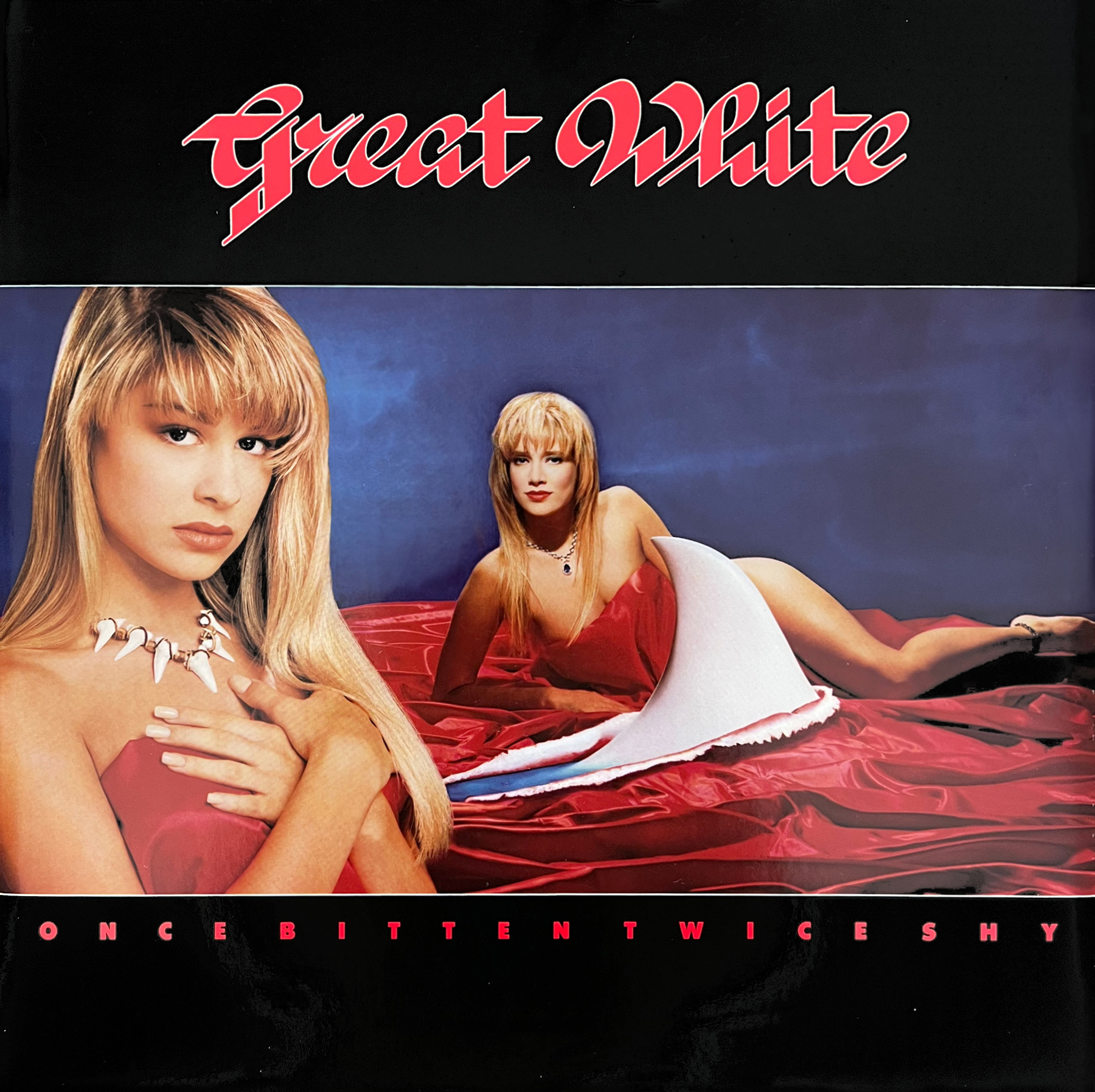
(laughs) I don’t remember now, it’s been so many years, why we came up with that cover. It was mostly our snapshots. And I know that the female part of Atco Records at the time when they saw that cover, oh, it made them so mad. They were like, “You male chauvinist pigs!” We were like, “it’s just an album cover”. Of course, the title, if you don’t figure it out, I guess you still live in a cave. but they got it. And…Yeah, that was the kiss of death.

And there was obviously a story behind the title for that one as well (Siogo).

Yeah, we won’t go into that. Our road crew came up with with that, and it was on their bus. They had a big cardboard thing in the front lounge of the bus that said S.I.O.G.O., but for each letter, there was a word below it. We laughed at it at the time, and it wound up being an album name. So Ricky was doing an interview one time and asking what it stood for. And he just didn’t even think he just spit it out. And why!? Oh, my God. You know, you couldn’t edit back then like you can now. But it is what it is.

I watched a clip from on YouTube this morning was a little video of you guys interviewed, all in the studio with Eddie Offord. It was MTV. It was like a three or four minute interview, and Ricky did most of the talking…So Charlie was there in the studio while you guys were doing Vertical Smiles. And he left at some point during that.

Yeah. Before it was finished he left. He was just kind of tired of the game, the politics. So, you know, Kenny was in the band and because Kenny played guitar, he couldn’t duplicate what Charlie did, of course, but he was good enough that we pulled it off. And it worked great. And then when Kenny left, we got Bobby Barth in the band from Axe. Bobby lives about four miles down the road from me now. So, you know, we had our hurdles, but we we kept going.

Now there’s some covers on this album, which I assume weren’t all your ideas, like the Peter Cetera song and stuff like that.

Yeah. See, that was that record company pressure because anything that record companies had the publishing on, they pushed out, because they had screwed the writers out of royalties, that was very common back then. We worked it up and we thought, OK, we we gave it a little bit of a harder edge, and I mean, it worked ok. We did it live. Yeah. And I don’t know if it helped or hurt, but that that whole album was different than what we had done up to that point.

I remember reading something from Rickey at the time (or shortly after) where he said there was three or four very heavy tracks that were removed. So I’m curious what you would recall of those songs and if they’ll ever surface?

They did not. The record company sent four of their top people down to the studio, Eddie Offord’s studio, which was an old movie theater. So they sat there in the front row. Eddie had these gigantic monitors, I mean, size of a bathroom. He had it cranked on 10. And those those guys and girls sat there and listened to the complete album, and they said, “Oh, my God, this this is a masterpiece…. You reinvented yourself…. It’s going to go straight to number one…It’s going to be a platinum selling record”. We’re all excited. So, we left the next day and said we’re going to take two weeks off, which we rarely ever did.

On the third day, Rickey calls and he said, “Are you sitting down?” And I said, “No”, “Sit down. I got something to tell you”. And I said, what? He goes “Atco just turned down side B”. And I said “What!? Three days ago they were raving about it”. So the people that were there went back to New York, and played it for the top brass, and they go “Oh no, we’ve got to replace side B.” So, that meant for us going back in the studio multiple times, doing 3 or 4 at a time. I’ve got a reel to reel tape here, it’s one of 2, and there’s 30-something songs on that tape, and the other’s got about the same. I can’t play it because it’s the quarter track tape, I think if I played it now it would just come apart. Nobody has those old machines anymore. So they got us going in, and at that point we were grasping at straws. We replaced side B with new material, and they finally agreed to it, and the record came out.

It’d be a shame if those tracks never came out, if there was a way they could come out. I think Rickey had mentioned 3 or 4 specific titles. After the band broke up, Rickey, obviously continued without you guys. You guys got the band back together without Rickey, after he’d joined Skynyrd. Was there anything you guys did with Bobby (Barth) during that time; that you recorded?

In the 90s, yeah Rickey had continued on and changed it to ‘Rickey Medlocke and Blackfoot’, but he was the only original member, of course, until he joined Skynyrd in ’96. In the meantime, Jackson got in to The Southern Rock All-Stars, Dave Hlubeck, and a couple of the ‘Hatchet guys in and out, and I did some shows with them, here and there. In 2004 I reformed Blackfoot with Jackson and Charlie, and that’s when we brought Bobby Barth in, on lead vocals and lead guitar. We did that for seven years; we had a great run. And then in 2011, on December 31st that ended. I said Ok, it’s time to put it to bed. But we got to resurrect it for seven years

Was it that ended mutually or was it Rickey that didn’t want it to keep going?

We had worked out an agreement for seven years, and we didn’t want to extend it, And Rickey wanted to revive it, his version, which he wound up doing, but he was not in the band, it was other players.

Yes, kind of bizarre.

Yeah, it is very bizarre. But it was a great seven years.

So, was there any recordings during that time? Did you go in the studio at all?

No. But we did a live record, for Cleopatra, actually. It was us, Molly Hatchet, and the Atlanta Rhythm Section, we, all 3 , did a full album, with video, and they released it. And that thing sold great! It was simply called ‘Blackfoot;, because we had the rights to use the name Blackfoot. And when we signed with Cleopatra this year for the record that’s coming out in a couple if weeks (the CD is already out), they said “we worked with you guys before”, and I said “you worked with me”. And Lance had worked with them too, with his solo stuff. So, that was a live record, it’s a great record, the video, the production; everything was first class.

(Dare I ask), Do you talk to Rickey at all still?

Not at all! He’s been doing his Skynyrd thing all these years. The last time I saw him was 2005, when Jackson was on a ventilator. He came to the hospital, and we caught up then, and talked, and I haven’t talked to him since. But I wish him well. I think he’s doing a great job and has had a great career with Skynyrd; I hope he stays with them another fifty years!

Is there anything, other than the Vertical Smiles tracks, that might be in the vaults, that you guys could ever discuss putting out?

We always had songs leftover, with the first record No Reservations, we always had six, seven, or eight songs leftover record after record. I don’t know where they are, or who’s got the masters. There’s probably enough for three full double sided albums worth of tracks. And it wasn’t like they’re throwaway tracks, we would do a lot of songs, and you kind of had to put all the titles in to a hat, and do like this (covers his eyes), reach in and grab a piece of paper. No real B songs at all.

Do you guys, Two Wolf ever play up this way?

We were in Syracuse a week and a half ago, at a place called ‘Sharky’s‘. It’s a big covered pavilion. It was in the 70s in the day, but when we got on by dark it had dropped to 55, so the tuning was bad (haha), the guitars were going out of tune. But it was beautiful up there; the leaves were turning, it’s was bright and sunny..

(we finish up talking of the band’s upcoming shows in North Carolina, south Florida, and I suggest that the band comes up across the border sometime, which Greg says he’d Love to!).

LINKS:

https://www.twowolfrocks.com/

https://www.facebook.com/twowolftheband

https://cleopatrarecords.bandcamp.com/album/two-wolf

https://m.facebook.com/armatolsophiegraphicdesign/

http://www.swampland.com/articles/view/title:greg_t_walker

https://100percentrock.com/2025/09/a-dirty-dozen-with-greg-t-walker-from-two-wolf-august-2025/

https://www.classicrockhistory.com/an-interview-with-greg-t-walker-lynyrd-skynyrd-blackfoot-two-wolf/

https://www.boomerocity.com/interviews/1775-lance-lopez-talks-about-being-in-two-wolf.html

ACE FREHLEY -Spaceman (2018),

ACE FREHLEY was the original and legendary guitarist, who would come across as the coolest member of KISS. His passing yesterday came as a shock to many. Though not with Kiss since 1982, save for a few reunion tours and an album (late 90s), Ace remained in the spotlight , larger than life. Not the biggest writer while in the band during it’s first decade, he did come up with classics like “Cold Gin”, “Strange Ways”, and “Shock Me”. His 1978 solo album was the best (and highest seller) of the band members 4 solo solo albums released at the same time, featuring the hit single, his version of Russ Ballard’s “New York Groove”. But when he left the band in ‘8282, Frehley proved he wasn’t done, his album’s Frehley’s Comet and Second Sighting (as Frehley’s Comet), were as good as or Better than anything the band did in that decade without him. Surely songs like “Rock Soldiers” and “Insane” would’ve been standouts in Kiss’ 80s catalogue. While not busy recording in the 90s (like many older acts), Ace got more serious in the post-2000s. and while his former band gave up recording new material after 2012, Frehley picked it up, recording 6 albums since 2009’s Anomaly, and including 2 albums of cover songs. His last album was last year’s 10 000 Volts, which featured the title track and “Walkin’ On The Moon”. Heck, I’ve yet to pick that one up.

But, going through these this morning, I am picking 2018’s Spaceman. For me, I find Spaceman to be the most solid thing Ace recorded over the past few decades. And though I was never a fan of his vocals, it’s not too bad here, and suits these songs perfectly. Favorites include “Rockin With The Boys”, “Pursuit Of Rock And Roll” and ” Without You I’m Nothing” (co-written w/ Gene Simmons). Heck, I even liked Ace’s take of the Eddie Money hit “I Wanna Go Back”. This was a really good album, full of big riffs and solos, great sounding, and there’s no skip-over cuts for me! I did get the CD and the limited picture-disc LP at the time (Record Store Day, w/ poster).

RIP Ace.

Norway’s GAZPACHO to release ‘Magic 8-Ball’

Norwegian art-rock/prog band GAZPACHO have been releasing albums since the early 2000’s, with the new album scheduled for October 31. The music is kinda lighter, experimental, atmospheric…but check out the new single “We Are Strangers”, which is a standout track here, and pretty representative of the band’s sound here. *Check out the press info below, as well as videos and links below.

Widely regarded as one of the most innovative acts in modern progressive music, Gazpacho have carved out a cult following with their unique blend of art rock and cinematic storytelling. From their critically acclaimed 2007 masterpiece Night to the hauntingly beautiful Demon (2014), the band has consistently pushed the boundaries of progressive music.
 
 They’ve toured with legends like Marillion, played to devoted audiences across Europe, and earned a reputation for crafting concept albums that challenge and move listeners in equal measure.
 
After a five-year break, Magic 8-Ball marks Gazpacho’s return with eight new tracks built around the idea of fate. How it moves without warning, and how the choices we make can slowly strip away who we thought we were. 
 
The title, Magic 8- Ball, ties into the idea of randomness and inevitability. Shaking something for answers you already suspect and repeating the cycle over and over. The idea of infinity is central. These stories repeat throughout the album. Different forms, same patterns always finding a way back.
 
 Musically, the album stays true to Gazpacho’s core. Atmospheric, layered, and emotional. But more focused. No unnecessary weight. Just eight stories told with clarity and tension. The album was mixed by Thomas Juth (a-ha/Elton John/Paul McCartney/Cat Stevens) and mastered by Hans Olsson at Svenska Grammofonstudion Mastering.

Of interest to fans of Marillion, The Pineapple Thief, Steven Wilson, Riverside…

Gazpacho:
 Jan-Henrik Ohme – vocals
 Thomas Andersen – keyboards, programming
 Jon-Arne Vibo – guitars
 Mikael Krømer – violin, additional guitars
 Kristian “Fido” Torp – bass
 Robert R Johansen – drums

LINKS:

https://www.facebook.com/Gazpacho.Official.BandPage

https://gazpachoband.bandcamp.com/album/magic-8-ball

https://www.instagram.com/gazpachoband

Drew Struzan – album cover artist,RIP

American artist Drew Struzan passed on October 13. He may be better known for the movie posters he created throughout the late 70s and 80s before moving in to comics, book covers… In the early 70s though Struzan illustrated some of classic rocks most iconic covers, working as part of Pacific, Eye And Ear.

His best known illustrations would be Alice Cooper’s Greatest Hits, as well as Welcome To My Nightmare. He also illustrated covers for Black Sabbath (Sabbath Bloody Sabbath), Iron Butterfly, Black Oak Arkansas, and The Beach Boys, among others.

Below is (random) gallery of some of the covers he illustrated.

GRAHAM BONNET BAND announce live album – ‘Lost In Hollywood Again’

Legendary rock vocalist GRAHAM BONNET and his own group, the GRAHAM BONNET BAND, are thrilled to announce the release of their new live album, Lost In Hollywood Again,’ out on December 12, 2025, via Frontiers Music Srl.

To celebrate the announcement, the first single, along with a live video, “Since You’ve Been Gone”, is out now.

GRAHAM commented: “It goes without saying, that ‘Since You’ve Been Gone’ should be the first single off our new live DVD. It’s the song that put Rainbow on the map and jettisoned my career. It’s a damn fine song and I wish I’d written it with Russ Ballard.”

On August 29, 2024, the GRAHAM BONNET BAND took the stage of the world-famous Whisky a Go Go in Los Angeles for a night that perfectly captured the power, history, and energy of one of rock’s most distinctive voices. Filmed and recorded in front of an enthusiastic crowd at the legendary Sunset Strip venue, ‘Lost in Hollywood Again‘ showcases not only GRAHAM’s unparalleled legacy but also the chemistry and fire of his current band.
Lost in Hollywood Again‘ is more than a concert – it’s a celebration of GRAHAM BONNET’s enduring legacy and timeless songs, carried by a legendary voice, elevated by outstanding musicianship, and standing as a testament to the lasting power of hard rock.
The setlist is a journey through BONNET’s remarkable career, featuring classics from Rainbow, Michael Schenker Group, and Alcatrazz, alongside hard-hitting originals from the GRAHAM BONNET BAND catalog. With Graham’s trademark vocals in top form, the performance blends nostalgia with vitality, proving why he remains an enduring force in hard rock.
On this unforgettable night, GRAHAM BONNET’s iconic vocals were supported by the virtuosic guitar work of Conrado Pesinato, the driving bass of Beth-Ami Heavenstone, the soaring keyboards of Alessandro Bertoni, and the precise, energetic drumming of Francis Cassol. Together, they brought each song to life with intensity and precision, creating a truly memorable live experience.
GRAHAM BONNET is known for his powerful and versatile voice. He first achieved chart success in 1968 as part of the duo The Marbles, whose single “Only One Woman” reached No. 5 in the UK. Over his long career, he has recorded and performed both as a solo artist and as a member of several prominent rock and heavy metal bands, including Rainbow, the Michael Schenker Group (MSG),  Alcatrazz, Impellitteri, Blackthorne, and others.
BONNET’s time with Rainbow was a defining period in his career: he joined in 1979, replacing Ronnie James Dio as vocalist, and contributed to the album ‘Down To Earth,’ which included hits such as “Since You’ve Been Gone” and “All Night Long.” After leaving RAINBOW, he resumed his solo work and later joined and formed several bands, including MSG and Alcatrazz.
In later years, BONNET continued to release solo albums, formed the GRAHAM BONNET BAND, and also participated in projects like Michael Schenker Fest. He remains active in recording and touring.

Pre-Order Lost In Hollywood AgainHERE

Track List:

1. Eyes Of The World

2. All Night Long

3. Love’s No Friend

4. Making Love

5. Since You’ve Been Gone

6. Keys solo

7. Lazy

8. Imposter

9. S.O.S.

10. Desert Song

11. Drums solo

12. Night Games

13. Into The Night

14. Assault Attack

15. Too Young To Die, Too Drunk To Live

16. Lost In Hollywood

Band:

Graham Bonnet – Vocals

Conrado Pesinato – Guitars

Beth-Ami Heavenstone – Bass

Alessandro Bertoni – Keyboards

Francis Cassol – Drums

photo credit: Enzo Mazzeo

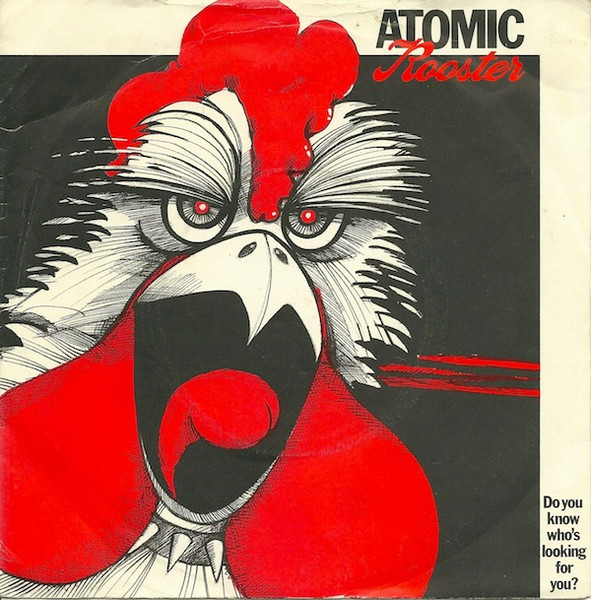
ATOMIC ROOSTER – Circle The Sun Interview

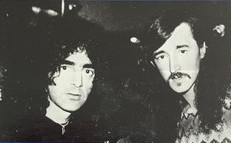
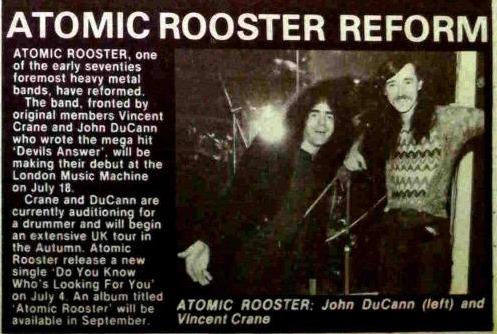
ATOMIC ROOSTER, the legendary British progressive band was founded and lead by Hammond organ player and songwriter Vincent Crane. The band went through several changes during their run from 1970-1974, with guitarist Steve “Boltz” Bolton joining for the album ‘Made In America’, which also featured singer Chris Farlowe and drummer Ric Parnell. Bolton left before the next album while Crane carried on until the band split. Crane would resurrect the band periodically, in 1980 and again in 1983.

Nearly a decade ago Steve Bolton resurrected ATOMIC ROOSTER, originally with singer Pete French (who sang on the ‘In Hearing Of’ album). In recent years French dropped out of the band, which has carried on as a 4-piece, which (besides Bolton), includes drummer Paul Everett, bass player Shugg Millage, and keyboard player/vocalist Adrian Gaultrey. The band has released a brand new album, Circle The Sun, which is recommended to not only Rooster fans, but also to fans of 70s heavy Hammond driven rock.

Below is my interview with Steve Bolton and Paul Everett discussing the new album, as well as the reformation of the band and happenings over recent years, as well as some cool recollections from Boltz about his early days with Atomic Rooster, as well as touring with THE WHO. This was a long one, so apologies for taking a while to get this edited and up, but hope you enjoy the read, and check out the links below, and check out Circle The Sun (on Cherry Red).

(We started out talking about the band’s merch ..)

Is there a vinyl copy of the album?

Paul: There will be a vinyl. The vinyl will be landing mid-October, but not through Cherry Red. Basically it’s coming direct from the band, but that will be available. There will be a link on the social media within the next couple of weeks.

The band came back together in 2016, and Pete (French) was a part of that for a number of years.

Steve: OK, about 2016, I got a call from a guy that’s an agent in the UK saying he’d been asked if he could get an Atomic Rooster tribute act, because tribute acts are a big deal. And he said, “well, I can probably do better than that”. So, he contacted me and said, how do you fancy a reformed Atomic Rooster? I said, well, yeah, there are a few issues that we need to get the clearance from the late Vincent Crane’s wife, Jeannie, which we did. She gave us full permission to use the name and to press on and keep the music alive and do new material. So, I contacted Rick Parnell, who was living in the States, who was the drummer in Rooster, then he subsequently died. But that’s another story. But it proved a bit difficult because he was in the States and it was all a bit tricky. So as far as the vocals go, there were two people still alive. One was Chris Farlowe and the other was Pete French. So, I contacted Pete French and he was up for it. Then we eventually ended up with this lineup we have now.  Paul, how long has this actual lineup been now, with Adrian, Shugg and you? 

Paul:- I joined just before Covid. And then with the current lineup as the four piece as it has been since 2023.

So, you kind of answered how the whole Atomic Rooster reunion came about. And you initially had Pete in there for a number of years, and he left.

Well, I just want to say I’ve done many things since my original time in Atomic Rooster. Yeah. When I was just knee high to a grasshopper, I was in Rooster for about 18 months. First third of that was with Pete French, and then the last two thirds was with Chris Farlowe. So, it’s something that had been sort of behind me and people were asking me a lot about Atomic Rooster and I really it was something I did in the past. You know, you move on. I’ve done lots of other things, quite important things, but this kept coming. So, when it was put to me, I thought, why not!?

It’s interesting, Atomic Rooster over here, I don’t know how much you guys toured over here in the early days. But it’s still kind of a lesser known, those albums are kind of hard to find. So, what are the crowds like when you guys play in the UK? Because I know the band had a couple of hits in the early days there and you had a good following.

Paul: It varies. In the UK we do good numbers; In Eastern Europe we do really good numbers. So, the last festival show we played, what three weeks ago(?) in the in the Czechia, there was about 12,000 people. That’s a festival show, so I’m not saying all the people came to see us, but…

Steve: Can I just say here, that this festival, we were kind of told it was it was a heavy metal festival – which we’re not, to be quite honest. And Arthur Brown, God bless him, Arthur’s still going strong. He couldn’t do it for one reason or another, so they asked us. We flew over there, and normally it goes like this – we get somewhere and we go to a hotel and chill out. But on this occasion, (we didn’t. I’m up at three o’clock in the morning. I’m sure Paul and the guys were). And so we got to Czech Republic to Prague early in the morning, early Saturday morning. We drove to this festival, which was in this beautiful town. And it turned out it was a death metal festival. It was like “Oh, OK!” We’re not only not heavy metal, but we’re also definitely not death metal, you know what I mean? So anyway, so it was such a great vibe. It was such a fantastic vibe at this place. There weren’t any bad vibes or anything. And it’s just absolutely rammed in this old fort outside, three different stages, all huge stages; the main stage and then a couple of lesser stages, which we were on. But it was still quite a big stage. So, we just soaked it in. We just stayed there all day; none of us had any sleep, but we just wandered around and met people, and we soaked in the vibe.

So when we had we had a chance to set the gear up, (most of which is what all of it was borrowed, hired, rented gear for the show), but the band before us, I believe, were a Japanese death metal band who’d been going for donkey’s years and they filled the field out, 10,000 people or so with them. And then when they finished, the field emptied!  I said to Adrian, as we were setting our gear up on the stage, “My God, look, the field’s empty.” But by the time our first number, we saw the pit, the field got absolutely rammed. And you know what!? They absolutely loved us. It was just fantastic. It was so great. We could not have gone better. And it shows you that we were genre bending.

It’s interesting because I think Atomic Rooster is one of those bands that the name and the image from the early days, people have kind of misconstrued what the band was about. And they kind of lumped them in with heavy bands. And, Made in England, the album you were on is probably the most unusual of the five there. It’s a little more funk and a little bit.  Do you get, especially in England, a lot of diehard fans from the old days that come out with their albums and stuff?

Paul: Yeah, there’s lots of them. Lots, and lots. And they’re very proud, because obviously, if you’re aware of that record Made In England, the original vinyl is now quite a collector’s piece with the denim sleeve. So, people who turn up with one of them are really, really happy with it.

Yeah, I don’t have that one; I’ve got this (hold up Canadian LP)

Steve: There’s a story about that because Vincent Crane, God bless him, he was such a sweet bloke. I remember him saying bright eyed and bushy tailed. “I’m going to call the album Made in England, because of the American market”.

He so desperately wanted to break into the American market. And you know what!? I’m going to we’re going to release in real denim covers, three or four different colored denim joint, purple, gray color. And so we saw it. But by the time it got released in America, they deemed that was going to be too expensive. And just to this, this cover here, the one you’ve got with Big Ben and the House of Parliament. And so it didn’t backfire, but it didn’t go according to plan. Never mind things happen.

So that was the only album you were on. But the next album, you weren’t on anything from that, right?

Steve: No, I just as I said, I was in the band for 18 months.

I want to go back to where we are now. So, the set list, does it really kind of cover the whole five album run of the band during the 70s? Or is there a lot of new stuff as well?

Paul: Yes. With the set currently is probably, with the new record coming out, is probably in a 60/40 split in favor of the new album. But we change the set quite regularly. Sometimes halfway through the gig. So, we do play something from all the older albums. We do now, we never used to. But now we would because, the line that we have and the mentality between the band, like we never used to play songs off Made in England up until recent years. But now we can do that and we can do some of the other stuff off the very first record. But previously, the majority of the set was based around the In Hearing Of album, which, there’s only so many songs on one album. So, it gets a bit tiresome playing the same stuff. But now the set is fresh…We play loads of back catalog and more importantly, the new tunes fit in there like a glove.

Steve: When you have a singer that I mean, this happens a lot, a singer that doesn’t play an instrument, for example, then it’s very difficult for the band to go off. And now we’re in a position where we can look at each other and go off on a tangent. We can paint ourselves into a corner but come out of it. And I feel that there’s such a joyous vibe on stage, in a gothic sense, that people pick up on that, and it’s just a great thing. We’re really excited.

And the new album just we’re really excited about it because of the way it came together. We didn’t kind of plan it directly, “Now we’re going to put this this time aside to record a new album”. It was a case of we got together some weird twist of fate because half the guys live up north and I live down south. But we got together and we had a quick rehearsal and we looked at each other and Adrian says, “well, I know this guy who’s got a studio in Lincolnshire. So, we ended up in that. We did like five tracks and then we went back a couple of months later and did another five tracks. And bingo – we had an album, new original stuff. And we got a new mental head on, we were like embracing this Edgar Allan Poe gothic going on, like a B-movie gothic thing. And that’s and that’s really freed us up… because a lot of the older stuff. I mean, Vincent Crane had problems, mental problems, and it is apparent in a lot of the songs, a lot of this doom, death and doom and death walks behind you. I would say about four or five years ago, it was starting to get on my nerves, thinking, I said to my wife, “I can’t I can’t handle doing this much longer, because it’s like really depressing”, but then when we became a four piece, all of a sudden, it was like a light bulb had gone on, and we all went, “let’s embrace this”. So now we go on, and we totally living the music. And it’s a great thing. That was the whole vibe for the new album. 

Can I ask like, you and Adrian, do you are you to handle the vocals on the new album? 

Yes. Adrian is the lead vocalist. Adrian is such a talented guy; he plays, he’s an unbelievable vocalist. There are 10 songs, I wrote five of them, of which I sing the five songs.

But the majority of the stuff, including the older stuff, Adrian is the lead vocalist. I mean, I’m not the lead vocalist in Atomic Rooster. I occasionally sing lead vocal.

I haven’t seen the performance or the writing credit. So, I didn’t know that. I was going to ask you about Adrian, where you found him, because it’s almost like on the new album, you guys went back to that classic kind of heavier, progressive Atomic Rooster sound. It’s got that kind of the wild organ sound and the interplay between the guitar and organ.

Steve: people say that; they say it was like they were transported back, to the early 70s. And people are wigging out, I mean, just get getting real gone. And there’s so many of these old prog bands that get back together.and it’s just they stand there, and they just play the stuff as was. And this is, although I’m saying it myself, this new version of Rooster is like a living organic thing that pulsates, and every gig is different. even though we might play the same set, every gig is different. And to me, that’s a beautiful thing. 

Yeah, well, it definitely has that sound. Vincent Crane had that distinctive organ sound, like when you listen to those old albums. And I think with Adrian, you’ve kind of got that sound.

Steve: Adrian is a child of the 70s, but he’s just born in the wrong era. This is great for us. He knows exactly all the history of the music that I grew up with, for example, he knows everything, which is fantastic. 

Paul: He’s a walking encyclopedia of music, and musical instruments, and just he completely embraces that entire lifestyle. And kind of that era, the 70s is his thing. 

Steve: It could not have been anybody else but Adrian. 

Paul:  Me personally, me and Adrian have been friends since like our late teens, and that’s how I ended up in the band, Adrian was in the band prior to me. So, the band’s never gone searching for members. It’s always been, “I know the guy, I know the right fit”. And that’s, and honestly, when we’re on tour, we’re on the road, it’s the easiest thing in the world. It’s like everyone just gets along, there’s no arguments, it’s just four friends just traveling around playing music by the like. 

Steve: Can I just say about recording the album, the guy that recorded it, a guy called Phil Wilson. A good friend of Adrian’s, and he’s in cahoots with this guy, and they own the studio. It was perfect for us. It was a studio in a forest, deep in a forest, and we just drive up there and we go in there and there’s a big, huge playing area where we could set up and play and record it. And that’s what we did, straight to tape. Vocals, obviously, were added on later. And very few, all the guitar solos, all the organ solos, everything was live in the same room, which is great. And Phil, and I’d heard through Adrian, he was a fan of mine. Everything was just right..  And I walked it and I said to Phil, and Phil pointed out to me later, he said, “the first thing you said to me was make it as gothic as possible”. And we didn’t have to say anything to Phil. We didn’t have to say a thing. He just recorded it exactly how he wanted it. 

Paul: I do think the album reflects, a bit of a Jerry Lee Lewis type of vibe. There wasn’t many takes and we could have, we could have spent months, you know, pre-production and that, but we wanted to be live, as live and as raw as you can make a studio album. So it does have that feeling to it. Like every musician in the world, you listen back to something, you go, “maybe I wouldn’t have done this and I wouldn’t have done that”. When you listen to the album as a continuous piece, I think it makes sense as a journey.

Steve: And that was the way we played it then. We might not play it like that tomorrow, which is the way we are live, you know. Yeah, we played it like that yesterday, but tomorrow it’s different. If it wasn’t, we’d get bored. 

I want to ask Paul, what sort of stuff did you grow up on? Because I think to myself with the four of you guys, where somebody would find, (and you kind of answered it already), but where somebody would find like-minded guys that want to join a band that was defunct 50 years ago, pretty much. 

Paul: Being from the city I’m from, music is, well, it’s everywhere. It’s just piled up on, you know, there’s gigs and musicians in every genre you can think of. So obviously being from Liverpool, you’re very quickly exposed to the 60s. The Beatles thing here is kind of, well, it’s massive. And then very quickly, I grew up playing in bands that were around in the 60s. All the Merseybeat bands, I played in quite a few of them.

And then just through them, them being older in the 60s, and then introducing you to bands like bands like Traffic and people like that. And then that just goes on to someone else. And then when you start getting around to like Little Feet and The Band. and people like that, you very quickly realize who else is into that and who isn’t.

And Adrian grew up probably about eight to ten miles away from me, in a seaside town just up. And he was just, the band I was in when we were at school and the band he was in, we’d play the same shows. And it was very, you just chat and it would be very quickly become, you get it, you’re not trying to play… The rock when I was a teenager was things like, I like it, but it’s not stuff we tried to play. It was like, you know, bands like Limp Bizkit and Linkin Park and Sum 41, that kind of thing. So, it’s very quickly you establish who else is into that older vibe.

Without going down the mainstream route of, you know, obviously everyone loves Purple and Zeppelin and people like that. Well, it’s fine that people actually like slightly more underground thing. And then the Rooster thing was a band I was always aware of from the Death Walks Behind You album, because I was big into Sabbath, so it kind of comes hand in hand. But even though Adrian was playing in the band, I didn’t know the band had reformed. That was something I wasn’t aware of until a couple of years down the line. And then I played a gig with Adrian and Shugg (the bass player), playing some of Adrian’s other material. And that’s when the conversation was struck, would I be interested in coming because the previous drummer just, people move along, life changes, things happen. So, they were like, “would you be interested in coming on board?” That’s pretty much how I got to the point of sitting here.

So, have you familiarized yourself with the whole catalog by now? 

Paul: Yeah, so a lot of it. And not even that, also, the individual drummers and their individual styles and who did what, because obviously, if anyone is a fan of Rooster, they’ve had more personnel than some football teams. So, it takes a little while to get your head around it, you know. And obviously, Steve knows this more than I do, but the different feels on the different records. Like in the live set, off the Maiden in England album, we play “People You Can’t Trust”; playing that compared to “Sleeping For Years” or “Death Walks Behind You” is two different sets of tools. 

Even the Made in England album, Ric Parnell’s “All In Satan’s Name” was kind of…

Paul: That was the very first song I learned from Rooster for the first rehearsal, the first day I ever met Steve was “All In Satan’s Name”. That was the first one. 

Steve: I remember that. So, when Ric wrote that song, Rick doesn’t play an instrument apart from the drums.  We shared a flat together. He was my sort of my ‘guru’ because I was straight from Manchester, where I’m from originally, green behind the ears. I came down to London. Within a few months, I get a job in Atomic Rooster. I think, how did this happen? And we go to the States once; we go to the States twice, and everything that that sort of touring in America at that time, 1971, you can imagine what it was like. So, I come back and I’m like, I’ve been experienced and the whole thing. So, I ended up then moving in with Ric. And he wrote that “All In Satan’s Name”, and he had all the riffs in his head. He would like sing the riffs, a bit like when Captain Beefheart did to the Magic Band. He would sing the riffs, and I’d have to try and work out what he meant. But by the time the song came together…I love that song. But we don’t actually do it, do we, Paul!? 

Paul:  No. We rehearsed it for the when I very first joined the band. But the breaks were kind of put on it by certain personnel in the band at that time.

Steve: Yeah, let’s do it! It’s great. It was great live at the BBC Theatre, in central London. And I can actually, you know, you can’t remember shit that happened a million years ago, but you can remember one thing. I can remember pulling up with Ric. Between us we had a small Ford Anglia car with big wheels on. We pulled up in central London; in those days you drive into central London, park your car and we fell out into the studio. There’s an audience, and we got on stage and played. I can remember it as though it’s yesterday. But yeah, it was a great live version.

Ric was a bit of a character. I think I corresponded with him a bit there years ago and he had he had told me how he was offered the gig in Uriah Heep and then he didn’t take it for musical differences or whatever, then he joined Atomic Rooster next.

Paul: I think from my personal perspective, Ric was a phenomenal drummer and his playing style, I believe Rooster was the right choice for him rather than Uriah Heep. 

So, the new album, can you guys can talk a bit about some of the songs and what stands out for you, what came out first, what got written first… 

Paul: Steve can do his bit and I know some of the information from Adrian’s side, but I can make my best attempt of putting it in some sort of chronological order.

Steve: A track called “Rebel Devil”.  I guess I was taking that “Devil’s Answer”, that sort of dark side of Rooster – “Rebel Devil”. But it just came. My wife and I went camping. We rented this cottage for a couple of days and I took a little parlor guitar, and we sat down while Louise was setting up and I just wrote it. And it’s one of those songs that just came out. And then I modified the lyrics. There’s a song called “Never To Lose”, which was a song of mine, which is on a B-side of a 70s Rooster single record. It was a B side, “Stand By Me”. We modified it and it became this new version. And, what else…(?) Oh, “Pillow”…

Paul: How “Pillow” ended up as the recorded version we have…the format we have was basically  Shugg couldn’t make the set up day at the studio, and we had an evening free, and we set up a little drum machine, and we just programmed the little beat into it, and that’s how “Pillow” came out, because one of the bandmembers was late.

Steve: And I’s scary.

Paul: Yeah. And obviously you (Steve) had it down and had different versions or ideas in your head, but I don’t think you or me, or anyone expected it to come out as the version that’s on the record.

Steve: The whole thing was…there no effort. You know, when you don’t feel any resistance in forward motion…  I was slightly concerned because I know what a great musician Adrian is. So, when Adrian said I’ve got this tune, it’s a bit mental, I’m thinking “oh shit”, because I’ve got to learn this, because he’s a great player and I might be out of my depth (lol). It’s like anything, when you hear a track, until you get to play it you don’t know if it’s in your possibilities.
Is “Fly Or Die” yours or Adrian’s?

Steve: It’s Adrian’s.

Leading off the album, you can definitely ‘get’ that it’s Atomic Rooster.

Paul: That was the one that was put together the morning of, or the day before we went in. Adrian said “I’ve got an idea”….just a few smalls parts. He hardly had a framework for it, but it wasn’t something that had been mapped out previously or he had a complete working version for it. The version you hear on the record was just developed, they must’ve been 4 takes of it; it’s just us playing it in the room, and that’s just what come out.
Steve: And Safe Haven studios is deep in a forest, in Lincolnshire, but my sister in law lives like 25 miles down the road, so I stayed there rather than forking out for a hotel. And everyday when I drove at 8 o’clock in the morning, from her house to the studio, I would be writing lyrics and solidifying ideas for the songs. I’d pull over and have to just scribble shit down. So, by the time I got to the studio I said “right, let’s do it!”. It was great fun.

How did the song “Circle The Sun” develop in to being the title track?

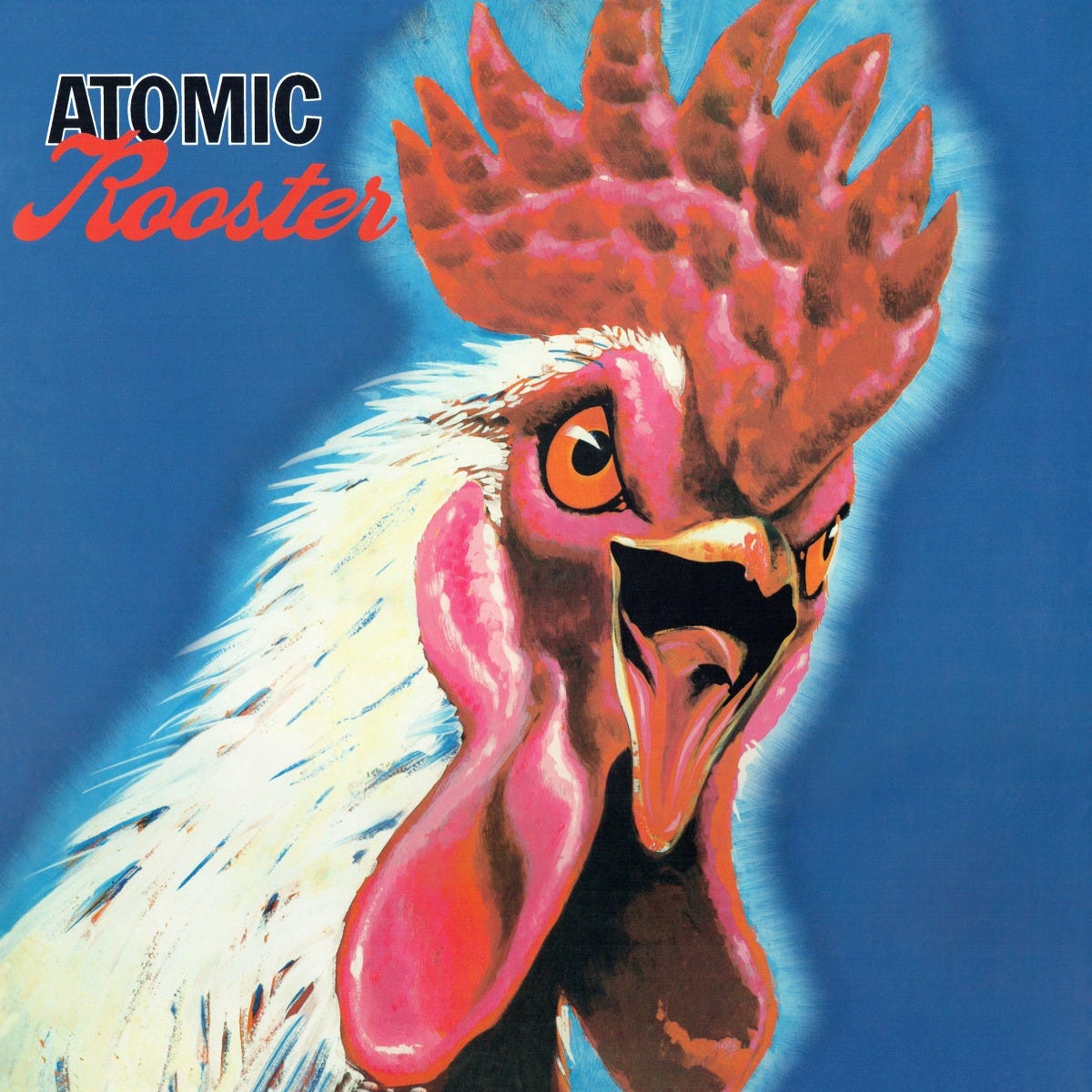
Steve: It was a song I wrote, and it was deliberately, lyrically, kind of an antidote to “Black Snake”, which is the famous Rooster track (“black snake, living in a black hole..”). So, this was like coming out, and into the sun, embracing life and being out.. So, this was like an antidote to “Black Snake”, in my head. It just seemed, I think between us, we thought it was a suitable title. And the artwork was my wife’s son, who lives in Italy. He’s an artist, this is what he does, so I put it to him, “could you possibly come up with some ideas?”. And he came up with that rooster, and at first I looked at it…and then I got it. So, he’s been great.

It (the cover) is very catchy, it’s very bright, it immediately sinks in. So, I’m glad that there’s 10 tracks on here, because you get some new albums and they’ve got 14 or 15 tracks, and I’m usually out after 9 or 10 songs.

Steve: I’m like that with a live band, even if I love the band, I’m like 40 minutes max, and I want to go…  

Paul: I got invited last night to go see Bryan Adams in Liverpool…And he’s playing his new album, he’s come away from his label…and he’s playing really good, and obviously he’s got to play the new album, it’s self-published – it’s him putting it out, But  after like 6 songs I get it – the album’s great, but unless the album changes drastically through it and keeps you on your toes. You’ve only got so much listening capacity before you go “I get the vibe, that’s it,  I’m done”.

I’m like that with albums. I like the old style of 20 minutes on each side, and that’s it.

Steve: Frank Zappa would always have like 11 or 12 minutes on a side, which is nothing when you think about it, but he said he gets maximum level with the less that you have on a vinyl album, each side.

Also, it’s like going to see a band live, and youguys talked about putting a lot of the new songs in the live show, where as with , especially the older bands, put out a new album and you go to the show and they play 1 or 2 songs from it; what was the sense of putting out an album if you’re not going to play it live.

Paul: I think, especially with this record, the set alters quite a lot, but we’ve been careful, and I don’t think it’s intentional, it’s just that we’re aware of the legacy of the band and pushing it forward. The material sits quite well with the old material, so in the set, if you don’t purposely tell the audience ‘this is a new track’…

Steve: Exactly. Someone said they wouldn’t know if you didn’t say it’s from a new album, they would just assume…

Paul: Especially with tracks like “Fly Or Die” or “No More”, they definitely have that early 70s organ driven, gothic, proto-metal thing going on, and it’s kind of .. like we played the track “No More” at the festival in the Czech Republic, and to look up from the drum kit and see people having a circle pit going on to an Atomic Rooster song was kind of surreal

It’s interesting, because if you take a band that’s ‘hits’ band, like Foreigner, that plays the same 12 songs, if they ever changed that, people would be like “what is this?”

So, what of all the 10 tracks are you guys going to eventually get to be playing, all of them?

Paul: Yeah. We play most of them live at the moment with the exceptions…

Steve: We probably won’t play “Pillow”. We sometimes have been using it to go on stage with, to set the mood, the dark, you know, Phantom of the Opera, (the original version, not the Andrew Lloyd Webber version), but you never know.

Paul: “Pillow” would be the one that it’d take a bit more, just from my point of view, it’d involve bringing electronics onto the stage and that kind of thing. And the vibe of the band is like we still want a Hammond and a Leslie and a 1960s Ludwig drum kit. And, electronics on the stage isn’t really the thing. But, you know, we never say never.

So, we will eventually play everything off the new album. The one for me that is kind of difficult to play, but we do play it is “Blow That Mind”., because there is two drummers on that track. It was an idea that came after hours. We’d stopped tracking for the day, we’d all sat around and had a drink and it was like, “Oh, let’s try this”. And the guy who produced the record, Phil, is also a drummer, and we’ve known each other for quite a while. We played it, but we did it with no click, and it was all live with two drummers that never played together before. So it was it was an experiment.

Steve: The Allman Brothers did that.

Paul: Yeah, well, that was the whole idea is that the Allman Brothers, and but then trying to obviously the parts aren’t overly complicated but trying to replicate that feel on your own live… sometimes can become a bit much without overplaying. So that one, for me is the one where every night I think,’ right, this is it. This is this is this is showtime’.

You guys had a single out last year. And I also found I also came across a there was a live in studio recording there from two years ago.

Paul: Basically how it worked was we finished the record. And then we were quite lucky, a  few different labels came knocking at the door. What we wanted was a company that will have a feeling for the band already. Like Cherry Red have some of the other catalog, one of the other labels who came our way, have some of the rest of the catalog. And there was two or three others. So, we held off for a while, but obviously we were out touring. We had to have something new to sell, so we put two of them an EP, as a single and then took some live tracks that were recorded at a place in Germany called Kolossal, just to give it a bump to make it a full CD to sell on the merch table. But they were only ever available at shows. Then then 40 copies was what we had left over, then got sold through Facebook market, social media just to put them up for sale. First come first serve.

Steve: I don’t think those tracks that are on that that that single or EP,  they’re not mastered, are they?

Paul: No, they are mastered. They are mastered technically, but they’re not done to the quality of what the albums that come out because they weren’t the final mixes. They were mixed and quickly mastered just for merch market rather than mass. And then as of I don’t think Steve knows this yet, we’ll have a new double album available come end of October as well. It’s called “Completely Live”, it was recorded in Scotland last year. 

Steve: I haven’t heard this.

Paul: It’s sometimes how things like move for when we’re preparing for a tour. You need more product. 

And obviously it helps to reintroduce the band in that.

Paul: It does. It’s a good quality live album. It was a show with a great vibe. So that will be that ‘should be’ out end of October.

And that’s coming out through Cherry Red as well?

Paul: No, it’s not. The only thing that is currently coming out via Cherry Red at this moment is the Circle of the Sun album on CD. IIn a nutshell, it’s the first album in 40 years. They don’t know what it’s going to do. And we like them as a label and Mark from East Terek and John from Cherry Red and Matt, the press guy, are all great guys, so when we spoke to them, we felt that was the right place for the album to sit. With their other roster of artists and things like that, the Rooster name, it doesn’t stick out – it sits in there nicely and it’s kind of at home with friends

So, the live album, when what is that coming out on? 

Paul: It will be self-published by the band, so it will be a merch album and then eventually it will end up when the new eShop is set up, it’ll end up on there as well.

OK, so you guys are going to set up an online shop for like shirts?  

Paul: Yeah, It’s in the works at the moment. But yeah, I don’t know.

Steve: Not only is Paul a fabulous drummer, he’s the business engine of this band. Paul gets the stuff done.

Has recording this new album kind of spurred you guys on that, you might want to start thinking beyond this album already?

Paul: Yeah, most definitely.  I could tell you, this new album, I wasn’t even the band, this album should have happened many years ago. It didn’t for one reason or another. Some of the material, I know from Adrian’s point of view, he had some of the ideas already and then certain people would often put barriers in the way. And then once them barriers have been removed, the freedom was there. So, yeah, we’ve already spoken about another record after this one. But like everything is kind of let’s just get this one out first and then see where we’re up to. But I do believe another one will happen as of when and on what label; hopefully it’ll be on Cherry Red. But, we’ll just get this one out first and see what it brings. And hopefully the other thing for you and your guys, hopefully we will come Stateside at some point in the next year.

Yeah, I was going to ask that. I know a lot of the older bands have been here for years..

Paul: There was a full a full US and Canadian tour booked – Full, all done, sorted for 2022, and then again, certain barriers were put in the way and pulled out very, very last minute. And then, we’d been in contact with the promoter again and we were due, and it was booked again. But we should be we should be in the States right now. But Adrian’s wife’s due to give birth. So that got rescheduled but rescheduled till when yet is another matter.

Are you looking at, obviously like when the older bands come over, you’re looking at a package tour with at least one or two other bands!?

Paul: In the first instance, it wasn’t and how it was working was there was two or three festivals that wanted the band. So, it was already worthwhile running the tour. When it was rescheduled, it was going to just be us, but that is kind of all up to the promoter, however they feel it would do on it’s own or, but hopefully we’ll get to do it. And that is a conversation I’m very much involved in at the moment.

Steve, I was wondering if I can ask you a bit about the 70s era there. In your viewpoint, why the band kind of changed regularly, and you were there for the one album. What do you think was kind of the lack of success or the whole lack of consistency with Atomic Rooster? 

Steve: I’m living in Manchester, that’s where I’m from. And I used to go and see bands at the University of Manchester, because they had a stage and they had visiting bands. And I remember distinctly going to The Crazy World of Arthur Brown. It was Vincent Crane, you know, the Crazy World of Arthur Brown – Vincent Crane, Carl Palmer on drums and the bass player. And I’m just spellbound. I’m looking at this, you know, Arthur’s got the flaming headdress on. Vincent, it’s just like a demon on the Hammond organ. I remember he obviously a blow lamp and melted the keys on the Hammond, so they were like dripping like candle wax. And never did it cross my tiny mind that like two years later, I’d be in London playing with Vincent Crane in Atomic Rooster. So that’s what happened. That happened with The Who as well. I used to go and see The Who and then I ended up playing with them. Anyway, so with Rooster, I was aware of Atomic Rooster, and then the singles “Tomorrow Night” and “Devil’s Answer”. And I remember when I joined, it was great. I’m straight from Manchester to London. I joined the band. And there was a bit of controversy about the new sound of Rooster, because I wasn’t playing like John Cann, that sort of like, in my mind, maybe over the top guitar. You love it, I hate it, but whatever. But you know, and I think when I left, I think it sort of went downhill then. Were you asking about what happened to Rooster and how it fizzled out!?

Yeah, kind of like, that the band never kept a consistent lineup, which is probably the main issue, but there was never that major success to keep the band going.

Steve: Vincent, as I said before, had mental problems. It was difficult for him, I think. I had conversations with him, and he wanted the band to be, he was into James Brown a lot. And if you listen to the first Crazy World of Arthur Brown, they do a track called “I Got Money”, which is a frantic track, but it’s a James Brown track. And Vincent wanted it to be more like James Brown. I mean, really, that wasn’t going to happen. So, he would get horns on tracks, I think “Save Me” has got horns on it and stuff.

Paul: One of the versions of “Devil’s Answer” has got horns as well, hasn’t it!?

Steve: But it’s like English session musician horns of the period, so they’re not snappy like James Brown. But that’s what he always wanted. And when I auditioned for the band, I think he saw that I have a certain amount of funk in there, and he could use that. He didn’t want an over-domineering guitar player as John Cann had been. It was tricky at first, because there’s always a bit of flack, you know, from fans about, “Oh, this New Direction – don’t like it”, and everything. It ended up as a good band. It was tricky when Pete French left, but he got poached by Carmine Appice and Cactus. That was his big thing, so he floated off and joined Cactus for a while. And then Chris Farlowe came in the band. And I mean, Chris, Chris is great. But to me, I was a little bit young…we did the Made in England album with Chris. And I was pleased, I think I got two songs on there.

I had that on yesterday. I noticed the production; you got the horns and some stuff like that on that album. It’s definitely not as heavy of a guitar and organ album.

Steve: I would occasionally be having a jam in the Speakeasy or something. I remember once this was like, a year or two after I’d left Rooster, and Vincent coming up “Bolton, what are you up to?”  It really distressed me when I read about, you know, he committed suicide. He was a sweet guy.

Had you kept in touch with him in later years?

Steve: No, as I said, only a couple of times subsequently after I left Rooster I ran into him a couple of times. He joined a band Dexy’s Midnight Runners. I think he joined them for one album.

It seems like an odd move.

Paul: It’s definitely an odd move. Dexy is a really good band, great musicians, but Vincent in the mix is a bit of a…seems like odd.

Steve, you went on to Headstone. I was checking that out, and I see that David Kaffinetti, from Rare Bird, he passed away a couple of months ago. He was in that. 

Steve: No, Mark Ashton from Rare Bird. He was a drummer in Rare Bird and David Kaffanetti, I think he guested on a couple of tracks.When I was with Rooster, we did a gig and this kid on acoustic guitar, Mark Ashton opened up for us. We hit it off, we got chatting. It was like a love affair (haha).I’ve met another bird. So that’s what happened. We formed the band Headstone.We did two great albums, but no great success. Cult albums now, apparently. And then I moved on to other stuff.Doing lots of sessions, which was my intention. 

Now, you toured with Paul Young as well. Do you remember a singer named John Sloman when you were with him?

Steve: Yeah, I know, John. I was speaking to John just relatively recently. He’s a friend of Pino’s from Wales. And realize John’s got a bit of a history as he had a band Lonestar, right!?

Yeah, he put out a book a couple of years ago. It’s quite eye opening.

(a bit of chat about band’s John sang with)

Steve: John’s great…So the Paul Young band, we toured incessantly for two years. Great success. I wrote a song for Paul and that was on the quadruple platinum album, you know, and all that stuff. And that ran it’s course, and I decided to leave. Then Paul asked me back. After about a year, I was trying my own band, but he asked me back. He said, “we’ve got this guitar player, but we want you back”. So, I joined back and then we went on a world tour. He had a couple of backing vocalists, one of whom was John Sloman. John came around the world with us. And also, after that, after Paul Young band, I ended up doing some stuff with Belinda Carlisle, went on the road and John Sloman was the backing vocalist there.

And then you did the Who thing. I saw the Who in 89 in Toronto. And it’s funny seeing a band that has 4 or 5 guys on the albums, but you go see them and there’s like 8+ people on stage! How long did you work with the Who for?

Steve: Well, that was a weird one. I mean, it’s all quite current now because of what’s going on with it, what has really gone on with the Who and the little tantrums on stage and all… But that was another weird thing, I used to see the Who, the original Who, with Mooney. I saw them without Roger Daltrey – just Pete, John, and Keith Moon. We got the word, because I was a Mod, before I saw the error of my ways, I was a mod on the Manchester scene, and we got word that The Who were doing a secret gig over in Burry. So, we all piled in to cars, and went over to this ballroom, in a suburb in north Manchester called Burry.  And we looked at the stage, there was a full drum kit, the Who drumkit, 2 Marshall stacks, and I remember talking to John Enthwhislte, and he said “Roger’s not singing with us tonight”. And we were like “why?” And this was at the time of “My Generation”, which was the peak Who period at the time. And I think he said “He’d done too much speed; he couldn’t make the gig.”. And years later when I was playing with The Who I was talking to John, I said “do you remember you and I had a conversation, and you told me …”, and he said “do you know what you saw? Pete has always hated Roger, so he wanted to try out some gigs without letting Roger know to see how it would go.” And all these years later, he’s still there; the lovers are still together (haha).

So, one day I got a phone call, and it’s a shit day because my wife’s leaving me, and we’ve got a young son, and I’m really down in the dumps… and this voice says “Boltz, it’s Pete Thownsend. I want you to join The Who”. It was this bizarre thing, because never in your wildest dreams would you think you’d be playing guitar for The Who! But it was good, because the Ox was still there. But I know what you’re saying because they’ve got backing vocalists, and a f**king horn section, and they didn’t need all that. And Pete, basically he wanted me to egg him on to play electric guitar again because when we first started playing that tour he was playing acoustic guitar, but as the tour progressed, he started to get the Strat out, so we were both really going for it.    

Was Rabbitt (Bundrick) on that tour?

Steve: Yeah, Rabbitt was on that tour. Rabbitt was full-on on that tour! We were In production rehearsals in Saratoga Springs, and Rabbitt had been on a bender and he was late! And Pete’s like “Where the f**k’s Rabbitt? I’ll get him..”, and he dragged him out of bed. Yeah, Rabbitt was a nightmare. I remember we were in a room, there might’ve been some stuff going on (it might’ve been girls or something), but Rabbitt was just there, and we just said to Rabbitt “Will you go, Can we make this more clear – just leave.” And I’ll always remember this, when Rabbitt got to the door he turned around and said “Well, as Jerry Lee  Lewis said ‘never mind!”, and I said “Did he say that?”, he said “I don’t know”, and went out the door (haha). The funny things you remember. Rabbitt’s great though; a great keyboard player.

How many tours did you do with The Who?

Steve: Just the one. We went around England, played major venues, and we went around the States. It was suppose to go on around the world, but Pete pulled the plug on it. Basically, I think he was doing it to make money for Roger and John, just as a money-maker, because we were making a lot of money on this tour. I was a bit disappointed, because, although I got paid a bunch of money for it, it wasn’t that much money after you got taxed. It was suggested to go around Europe and Australia, and that would’ve bought me a house! But it wasn’t meant to be. But, it was a great experience.

What else do you guys have on the go?

Paul: Well, Steve and I, obviously both play in multiple projects. I played with a Canadian band a couple of times, they’re called Blackie And The Rodeo Kings; I played with them a couple of times over in the UK when their drummer couldn’t tour. And I play in another original project, at the moment with one of my friend’s who is Charlie Chaplan’s grandson. We go out doing his music across Europe, and that’s pretty cool. And then home for me is I’m one of the resident guys at the Cavern Club, so I play there a couple of nights a week when I’m home, not on tour. We’re all working musicians – if you’ve got a gig, and we can get paid, I’m in. And Steve’s always got loads of projects. And Adrian plays for the actor Keifer Sutherland, he plays guitar in his band, and he plays with an American band The Fun Loving Criminals – Adrian plays 70s Leslie-Hammond organ in a mid 90s Hip-hop band; it’s quite an interesting gig. And Steve’s got his own original projects outside of the Rooster, like Deadman’s Corner…

Steve: Solo acoustic gigs…

Paul: And Shugg, the bass player, plays in a multitude of original projects; the majority are kinda like Americana, Westcoast, that sort of thing.

Steve: I’ll tell you Kevin, this new album is like a new dawn for the Rooster. We do gigs and young people are there. Young people are loving the band because they’re feeling this energy we’ve got. We’re not just a bunch of old geezers going through the motions; it’s like a new project, I think.

Paul: Yeah. A lot of bands, like Rooster, that reform, that kind of thing, and are missing some core members, and you have the same old rhetoric “Oh, that’s not them because such and such isn’t there.” And I get that, but we fully believe, that with this line-up  of the band at the moment, it’s not resting on it’s laurels, we’re not sat back…

Steve: We do get people who’ve come, I wouldn’t say just to bitch, but they’ve come, and came up and said and they’re not expecting, like “what can it be” , there are certain members not there, all those preconceived thoughts…

I think the new album will a lot of that to rest because, to me, it does sound like Atomic Rooster.

Paul: It does. And as I said, the album should’ve happened a long time ago. There was barriers in the way, and then barriers crept in to the live show, it was a bit stale after a while. Now, you come to the show, you’ll never want your money back. You come to watch Atomic Rooster, and what you get is Atomic Rooster.

Steve: I’d want my money. (lol)

LINKS:

https://www.cherryred.co.uk/blog/circle-the-sun-fire-still-burns

https://www.facebook.com/AtomicRooster16/

https://www.cherryred.co.uk/blog/circle-the-sun-fire-still-burns

https://www.steveboltz.co.uk/

https://www.facebook.com/profile.php?id=100063568121404

https://www.guitarplayer.com/guitarists/pete-townshend-substitute-guitarist-steve-bolton-on-the-who-1989-tour

https://www.youtube.com/@SteveBoltz

GOLDEN EARRING – On The Double, expanded reissue

Originally released in 1969, On The Double was GOLDEN EARRINGS’ ambitious double album. This will be reissued November 14 on CD, including bonus tracks and booklet. *Check out the press info and link below.

  • Expanded edition of the band’s very first double album, released in 1969, including the Golden Earring classic ‘Just A Little Bit Of Peace In My Heart
  • Remastered for the first time from the original first-generation Phonogram Studio and Sterling Sound master tapes
  • Including four bonus tracks, including previously unreleased stereo mixes of ‘Dong-Dong-Di-Ki-Di-Gi ‘Dong and Wake Up-Breakfast‘!
  • Including a 20-page booklet with liner notes, memorabilia, and photos

Founded in 1961 by George Kooymans and Rinus Gerritsen, Dutch rock band Golden Earring (or Golden Earrings, until 1969) started off as a beat band, experimented as a psychedelic quartet and finally became a heavy rock group. Their ninth album Moontan (1973) – including their classic track Radar Love – hit the international album charts and is the band’s most successful album in the United States, being the only Golden Earring album to be certified Gold by the RIAA.

On The Double, Golden Earring(s)’ very first double album, was released in April 1969, after the band had been working on it for about a year. The two records contain nineteen songs, each with its own style. From acoustic tracks like Angelina, Judy, and Murdock 9-6182 and the robust psychedelica of Backbiting Baby and Song of a Devil’s Servant to the heavily orchestrated Just a Little Bit of Peace in My Heart, which was already released as a single in November 1968, reaching #2 in the Dutch Top 40. This song is now considered a bona fide Earring classic.

This expanded edition includes four bonus tracks: the single Dong-Dong-Di-Ki-Di-Gi Dong, with its B-side Wake Up-Breakfast, which gave the group its very first number one hit in July 1968. For the first time, the original stereo mixes of both tracks have been released. The single Where Will I Be, with the B-side It’s Alright, But I Admit It Could Be Better, was recorded by the group in New York City in May 1969 and marked the very last recording the band made with drummer Jaap Eggermont.

All tracks have been 24 bit/192 kHz remastered from the original master tapes.

This expanded CD edition of On The Double is the seventh instalment in a special series of remastered & expanded albums by Golden Earring, overseen by Red Bullet catalogue and band archivist Wouter Bessels.

TRACKLISTING:

1.        Song Of A Devil’s Servant
2.        Angelina
3.        Pam Pam Poope Poope Loux
4.        Hurry, Hurry, Hurry
5.        My Baby Ruby
6.        Judy
7.        Goodbye Mama
8.        Murdock 9-6182
9.        Just A Little Bit Of Peace In My Heart
10.      The Sad Story Of Sam Stone
11.      High In The Sky
12.      Remember My Friend
13.      Time Is A Book
14.      Backbiting Baby
15.      I’m A Runnin’
16.      I Sing My Song
17.      Mitch Mover
18.      God Bless The Day
19.      The Grand Piano
+ BONUS TRACKS
20.      Dong-Dong-Di-Ki-Di-Gi Dong (stereo version)
21.      Wake Up-Breakfast! (stereo version)
22.      Where Will I Be
23.      It’s Alright, But I Admit It Could Be Better

On The Double (remastered & expanded) is released by Red Bullet Productions on 14th November 2025 and available through all renowned worldwide music dealers and online shops, plus digital channels (Spotify, Apple Music, a.o.).

URIAH HEEP – Wonderworld (1974)

Wonderworld was URIAH HEEP”s seventh studio album, released in 1974.. it was the band’s 4th (and last) one featuring the “classic line up” (Mick Box, David Byron, Ken Hensley, Gary Thain, Lee Kerslake) as Gary Thain would be let go before the next one (and tragically passed away not too long after that). Wonderworld was also the band’s 2nd album for Warner Bros in North America, which likely meant big things were expected following Sweet Freedom. I am probably (and presumably) one of the many who thinks this album is full of classic Heep tracks but due to its sound – find it hard to take regularly..

Wonderworld was the 2nd Heep.album to be recorded outside of the UK, this time in Munich, Germany, and again for tax reasons. The band used German engineers Hans Menzel and Reinhold Mack (better known for working on a number of Queen and ELO albums). Some band members would later cite that the recording abroad caused a lot of the friction and less than stellar outcome.

Many songs were based around Hensley’s dreams, as the title “Wonderworld” referred to. The album’s cover art would feature the band posed as statues, a cover designed by Graham Hughes (cousin to The Who’s Roger Daltrey, and who had designed a number of Who album covers). I actually liked this cover, though Hensley, in particular did not. Asked about album covers, he once stated “I particularly dislike Wonderworld and Conquest, but nowhere near as much as I hate Toe Fat 1“. Some years ago when Ken was being acknowledged with a new statue of himself, I responded on social media if he would be re-enacting his Wonderworld pose, to which he responded in capital letters that NO, he would not be. Mick Box, who misread things, did not send in shoes for the shoot, so he is the only member barefoot on the cover.

More so than Sweet Freedom, Wonderworld saw Heep producing shorter tunes, ditching the lengthy epics, but still offering up quite a variation of tunes. The album opened with the title track, featuring a grand intro from Hensley, coming down to a soft piano before David Byron’s vocals come in softly. A near ballad that soars up and down between the verses to chorus and back, and an underrated classic in the band’s catalogue. Side one also contained 2 rockers, the classic “Suicidal Man” and “So Tired”. “Suicidal Man”, a favorite, would return to the live set in 1980, when longtime Heep fan John Sloman joined, and recommended it to be included. “So Tired” perhaps reflected the band’s state at the time, having such a non-stop recording-touring schedule at the time. It reappeared in the band’s live set in the early 2000s. The first side also includes the fan favorite “Shadows And The Wind”, which starts out soft and builds up, with the Heep choir adding a unique arrangement towards the end. “The Easy Road” ends side 1; this piano based ballad featured strings arranged by Mike Gibbs. It’s interesting (to me) that this type of ballad pre-Kiss’ huge hit “Beth”, which came a year later, and that it was never issued as a single! It did feature in the band’s live set at the time, and has been brought back periodically over the last few decades.

Side 2 opens with upbeat rocker And single, “Something Or Nothing” This is one of my favorite songs here, and a shame it doesn’t get more attention. The band adds some slower blues rock, with the guitar heavy “I Won’t Mind”; this one may have been better geared to the live show, featuring multiple guitar solos, but it kinda falls short in being an epic here. The album’s last 2 tracks are again something different in “We Got We”, and somewhat eerie (musically) closing track “Dreams”. The latter, again, was a chance where the band might’ve expanded this into something greater, like most closing tracks that came before, but instead it just ends with vocal lines mixed in from the track “Dreamer” (from the previous album), before grinding to a halt. All seeming a bit rushed, But not bad.

The single “Something For Nothing” was backed with the non-LP “What Can I Do”, a decent cut, that could’ve easily substituted for a few album cuts. The band’s 25th Anniversary box set Time Of Revelation, also included 2 outtakes from these sessions, the excellent acoustic track “Stones Throw”, as well as “Love, Hate, and Fear”, which sounds somewhat unfinished.

Despite a big promotional campaign and world tour, Wonderworld was seen as a disappointment to many fans, and is still a controversial album for some, due to the drop in sales, the aftermath of the album. It may not sit top 10 with many Heep fans (does it?), but it was the last Uriah Heep album to chart on the Billboard’s top 40 albums (only Return To Fantasy and Abominog would break the top 100). Wonderworld did reach the top 10 in a number of European countries, and #31 in Canada. It also made fans and influenced the likes of A-HA’s Morten Harket, and German guitarist/songwriter Axel Rudi Pell. The band were featured on US TV, filmed live at Shepperton studios (which was later transferred to being a live album release). Live At Shepperton featured a number of tracks from Wonderworld. A shame there was no 2nd single from this album, as the band went on break following the electric shock suffered by Gary Thain in Dallas on the Wonderworld tour, followed by his firing. But 1975 would become another very busy year for the band, between a line up change, new album, and solo projects.

Wonderworld is being reissued (again) as part of the 5-disc box The Shadow And The Wind – 1973-1974, in November.

WONDERWORLD – Uriah Heep – Warner Bros. W 2800
Always in demand as a top concert draw, Uriah Heep has proven over the past few years that it is indeed a viable’ recording act as well. With several Gold disks behind them, the fellows in Uriah Heep have reached a plateau of success that gets brighter and brighter with each new piece of work. Certainly this LP with its accent on strong bass and lead guitar riffs (not to mention Davey Byron’s vocals) will attract even more devotees to the Heep fold. Best cuts off this stunner are “The Easy Road,’ “Something Or Nothing,- and the mind boggling title track. (CashBox, 29-06-74)

URIAH HEEP-Warner Bros. WB 7836
SOMETHING OR NOTHING (prod. by Gerry Bron/
Bronze) (WB, ASCAP)
From their “Wonderworld” of hard rock, the group’s strongest single effort since switching labels. Gutsy get -down still leaves room for quite a catchy melody riff. (Record World, 1974-08-03)

Uriah Heep/WONDERWORLD/Warner Bros. ( Past Uriah work
has included some decent writing. Their power wasn’t excessive because of the substance. Here the power is empty as it drives too many songs with no reason to exist. Flabby
.) (Walrus, 07-10-74)

ALICE COOPER, new book: ‘I’m Eighteen and School’s’ Out, by Ian Hoey

How the Journey Between Two Rock Anthems Took the Alice Cooper Group from Obscurity to International Infamy

Ian Hoey, who is a “sometime radio reviewer, writer, host & stranger in the crowd”, has authored his first book – I’m Eighteen and School’s Out, out now. The book focuses on the ALICE COOPER era from Love It To Death to after School’s Out, the albums that made such a huge impact, particularly with the anthems that title this book.

Ian Hoey: “I really wanted the added context of where they were at the time and the public and press attitudes to them as their success grew. I also aimed to write a book that would be equally entertaining and informing for people who knew next to nothing about the band and people who knew a huge amount already”.

The book pulls from online archives, and many of his own interviews. “Not just with the obvious candidates, but also people who worked for them, with them, or just happened to be around at the times some of the things were going on.”

A lot of research went in to I’m Eighteen and School’s Out through research, with another aim being to give credit to those around the band, who, according to Ian, “are often treated as minor characters in the history, or even ignored completely. Joe Greenberg and Cindy Smith Dunaway being the two main examples.”

Looking forward to reading this and talking with Ian in the near future. You can order I’m Eighteen and School’s Out on Amazon and various online shops (including Indigo).

*You can look up Ian’s new Facebook page to promote the book – https://www.facebook.com/profile.php?id=61581636807359

Below is the press info on the book:

The Alice Cooper group are one of the most influential rock bands of all time. And yet, when the histories of popular music are written, they are often in the margins or even overlooked completely. This book redresses that and puts the spotlight on their pivotal period of development from the winter of 1970 to the summer of 1972, bookended by the hit singles I’m Eighteen and School’s Out.

Containing numerous new interviews and contributions alongside detailed research, I’m Eighteen and School’s Out places the Alice Cooper story in context with the music scene of the time, paying special attention to the acts who were often considered their rivals, from Screaming Lord Sutch to David Bowie.

This is the extraordinary tale of the people who made the band what it is and how they ultimately triumphed against the odds in a most spectacular way.

Rock, reviews, news, interviews, & more.