As I recently had the privilege of interviewing Steve Bolton and Paul Everett to discuss the upcoming new Atomic Rooster album. It was an interesting and lengthy discussion on the band and mainly their current happenings. But, until I’m done editing, I thought I’d take up a retro review on the band’s 1972 album Made In England, which featured Bolton on guitar. ….
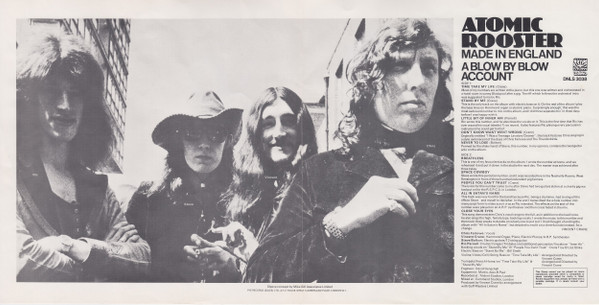
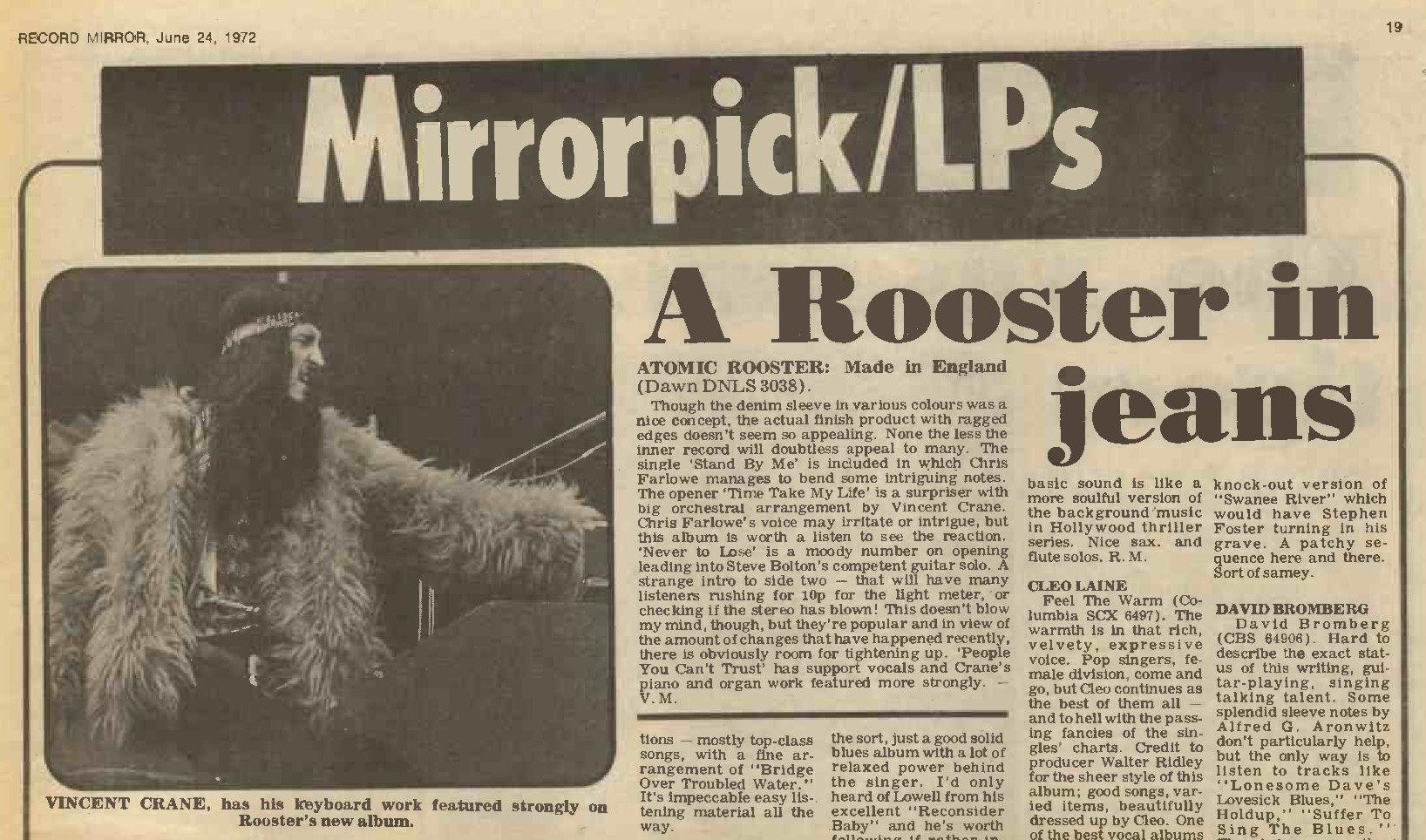
On ATOMIC ROOSTER’s 4th album, the line up changed once again, with Steve Bolton now on guitar, and singer Chris Farlowe replacing Pete French. Farlowe already had a lengthy career going back to the early 60s, recording with various bands and as a solo artist, but was a more soul and blues singer and writer. He’d also been (and still is) with COLOSSEUM. And although Atomic Rooster may have gained a reputation as being a heavier, darker sounding band (early proto-metal) on their previous albums, Farlowe brought with him some of that soul and funk influence, as Made In England took a bit of a turn from the earlier albums.
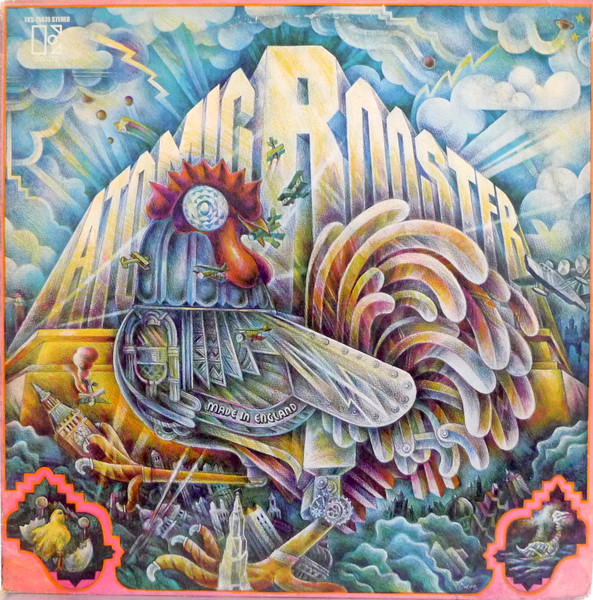
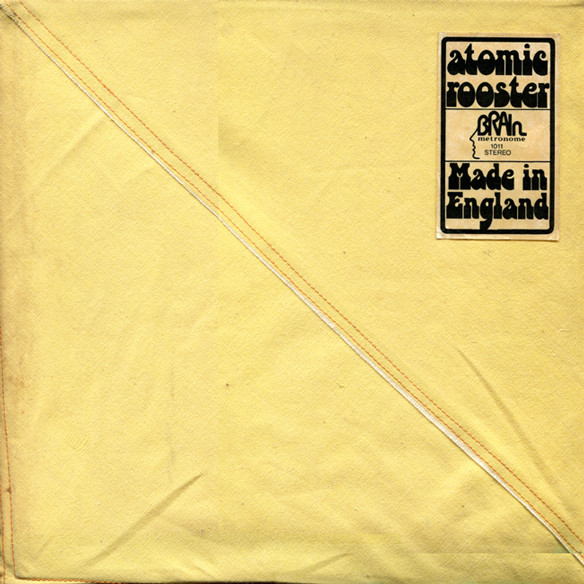
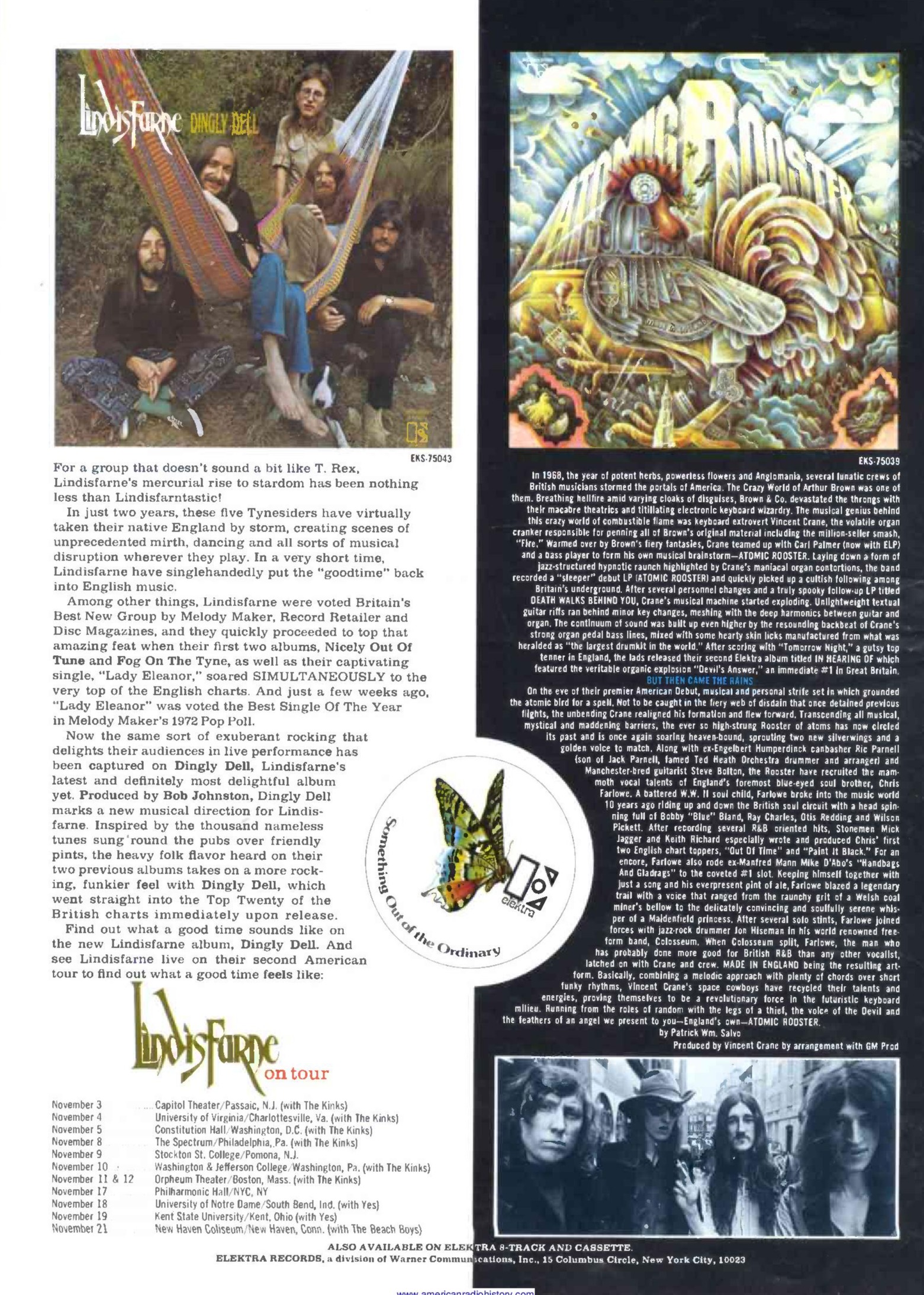
Like most Atomic Rooster albums, Made In England came with different covers from country to country. In Canada and the USA, the album came with very detailed piece from American artist Abe Gurvin, who had done covers for The Mothers of Invention, Jimmy Smith, Bread, and many different genres of music during the late 60s to early 70s. In other countries, Made In England came in a denim wrapped cover, which varied in color depending on the country. The denim cover was designed by Mike Gill, and I gotta wonder if anyone out there has collected them all!? (I have not pictured all different colors below).
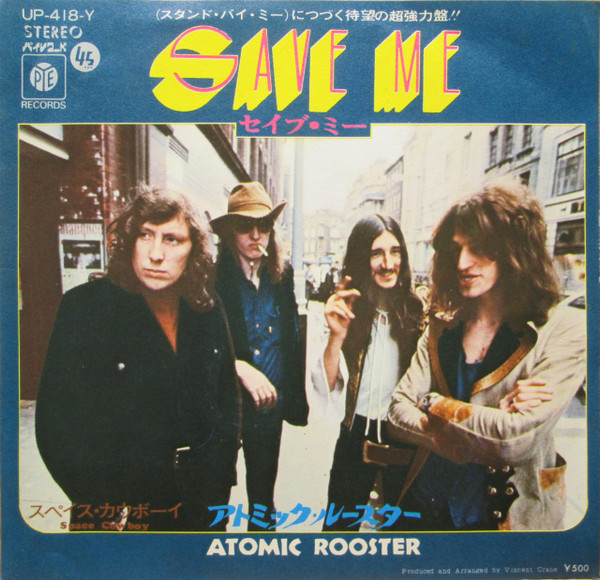
While Vincent Crane wrote the bulk of this album, it also featured contributions from other members, with (drummer) Ric Parnell and (guitarist) Steve Bolton each adding 2 cuts, Parnell penned and sang the excellent slower heavy psych rock of “Little Bit Of Inner Air” and the evil titled “All In Satan’s Name”, a rocker that is lead by Crane’s organ playing, while both tracks are highlighted by heavy solos from Bolton. The guitarist would contribute the stand out “Space Cowboy” (a b-side to “Save Me”, that wound up on the next LP); musically fits it’s title, as well as the slower “Never To Lose”; somewhat of a ballad that builds up and then comes back down, again, featuring a heavy solo from Bolton, and so suited for Chris Farlowe’s big voice. “Never To Lose” has also been reworked and rerecorded for the band’s upcoming new album Circle The Sun.
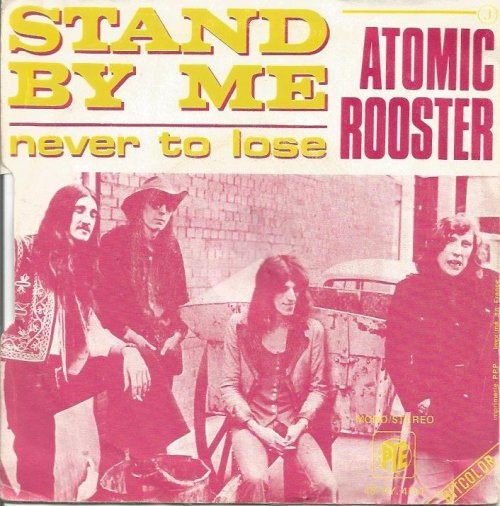
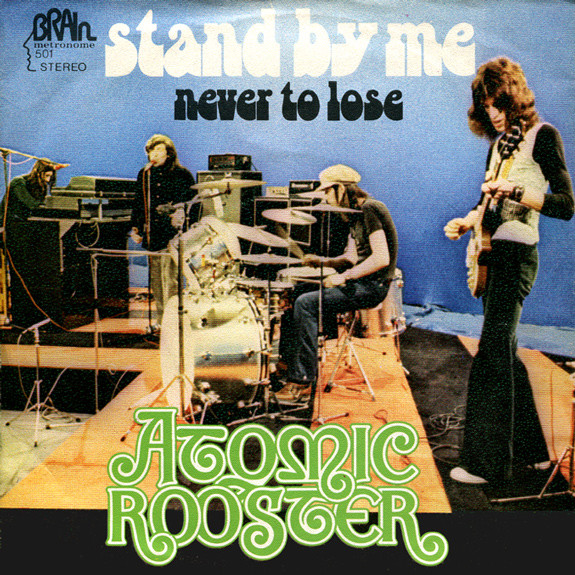
Vincent Crane, aside from organ and piano throughout this, would also add orchestration arrangements, notably on the first 2 cuts “Time Take My Life” and the funk rock of “Stand By Me”. The latter was issued as a single, and I’m sure if this was Rare Earth in the US, it might’ve been a hit in North America. The added soul and funk influence also comes up in tracks like “People You Can’t Trust” with it’s added gospel-like backing voices, and “Close Your Eyes”, featuring piano, and having a pretty upbeat feeling, between Farlowe’s vocals and the backing vocals, and “Breathless”, with it’s jazzy piano, and featuring a powerful guitar break thrown in for added weight, before dropping back to the piano.
Made In England was certainly a new direction for the band, and perhaps an underrated gem of early 70s progressive rock. Although the album didn’t chart well in the UK or US, it did reach #60 in Canada, and #42 in Australia. Bolton left not too long after, and formed Headstone, and later toured with The Who and Paul Young. The band recorded one more album, Nice ‘n’ Greasy (aka as ‘IV‘ in North America), before disbanding until a new line-up emerged in 1980. Later CD reissues of this album would add bonus tracks, notably the band’s BBC performances in ’72.
Two New LPs From Elektra Elektra Records will soon release new albums by Atomic Rooster and Casey Kelly. “Made In England” is the third album by Atomic Rooster to be released in this country. The group is headed by Vincent Crane, former organist for the Crazy World of Arthur Brown and composer of his greatest hit, “Fire.” This album marks the first appearance with the group of their newest member, Chris Farlowe, who is now their lead singer. The LP contains Rooster’s current single, “Stand By Me.” A tour for the group is being planned for November. (Cashbox, 08-26-72)
ATOMIC ROOSTER – Made In England. Elektra EKS 75039 Although A.R has previously only attracted a small following of self -proclaimed anglo- philes their future now appears bright and their destiny obvious. The acquisition of Chris Farlow as lead singer is a coup to be envied and admired. Farlowe is no musical novice; his credentials are legion his suc- cesses legendary. Group organizer and or- ganist Vincent Crane is again treading upon virginal musical territory. Best cuts are “Little Bit of Inner Air,” and “Breathless.” (Billboard, 09-09-72)
MADE IN ENGLAND- ATOMIC ROOSTER-Elektra 75039 Chris Farlowe, Ric Parnell, Vincent Crane and Steve Bolton present the third installment of their unique brand of heavy British rock. Eleven cuts meant to be played at only the highest volumes, and sure to test the eardrums of all good Rooster fans. (Record World, 09-09-72)
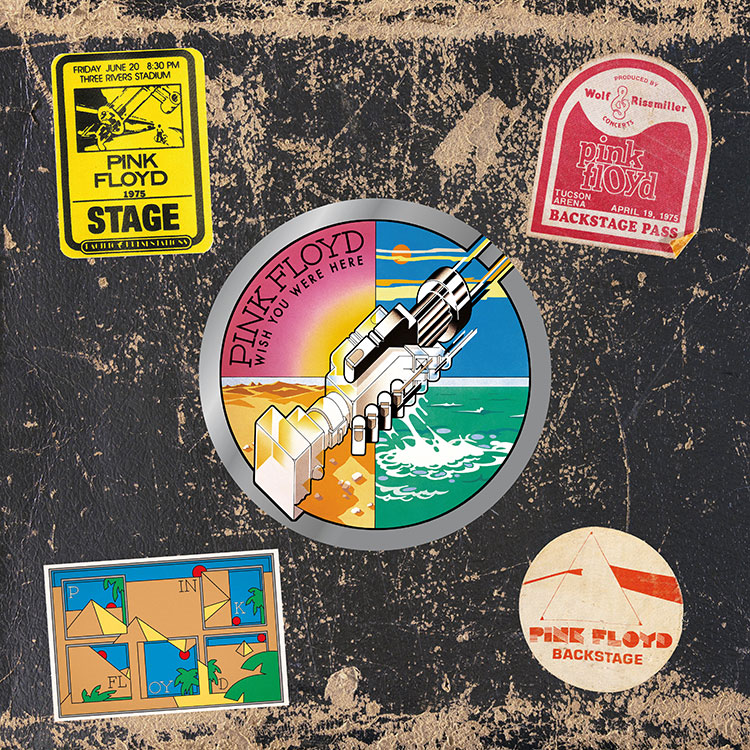
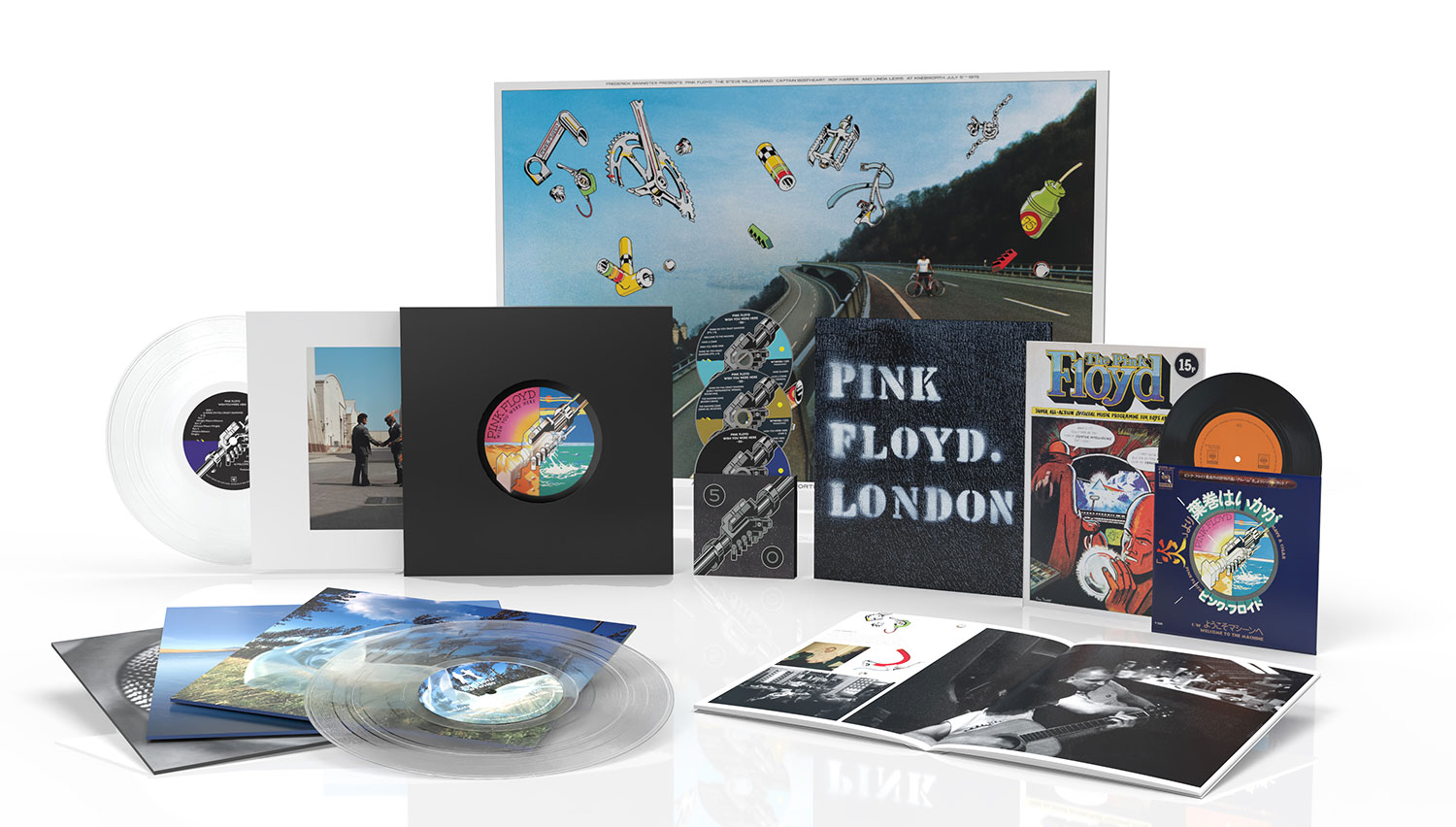
PINK FLOYD’s classic 1975 album, and arguably their best, is getting a 50th anniversary box set release on December 12. The box comes in multiple formats – 3LP, 2CD (or Super deluxe with everything, plus hard cover book, poster….),Blu-ray…. Included are 9 bonus studio tracks (alternates, demos…), as well as a live show from Los Angeles Sports Arena, 1975 (see formats). One of the bonus cuts, “The Machine Song (Demo #2)” has been released. *For pre-ordering, more details and track-listing, see links below..
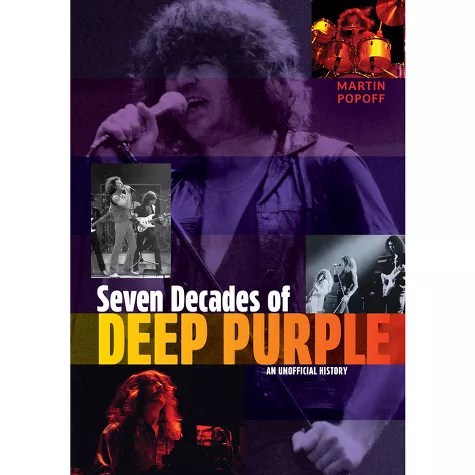
Canadian rock writer Martin Popoff has a new book on DEEP PURPLE, coming out October 28. Popoff has penned a number of Deep Purple and related books, notably Gettin Tighter (2005) and Castle Full Of Rascals (2009). *Check out book info below, as well as ordering link at the bottom.
Dive into the saga of Deep Purple and unravel the untold stories behind the legendary band, from their groundbreaking albums to their tumultuous journey through rock history to the present.
Seven Decades of Deep Purple tells the electrifying story of one of the most iconic bands in rock history. From the band’s explosive formation in 1968 to the classic Mk. II lineup—Gillan, Blackmore, Glover, Lord, and Paice—and through all the iterations to the present day, this book delves deep into the band that brought the world unforgettable hits like “Hush,” “Speed King,” “Child in Time,” “Smoke on the Water,” “Highway Star,” “Burn,” and “Perfect Strangers.”
Through nearly 50 interviews by the author with Purple alumni, plus dozens more with others who are part of this story, readers will journey through the group’s formation, lineup changes, album sessions, and live performances, with the narrative emerging as the story of creativity itself, a tale enhanced by the use of over 450 images. Album by album, it’s Deep Purple’s music that gives this book its solid-rock foundation. Starting with 1968’s Shades of Deep Purple, the book discusses all their genre-defining albums, including In Rock, Fireball, Machine Head, Burn, Purpendicular, Whoosh!, and 2024’s =1. Seven Decades of Deep Purple captures the essence of a band whose influence transcended generations and shaped the sound of modern rock. Whether you’re a lifelong fan or new to their music, this book is a must-read for anyone wanting to explore the legacy of one of rock’s most enduring and relentlessly vital and creative forces.
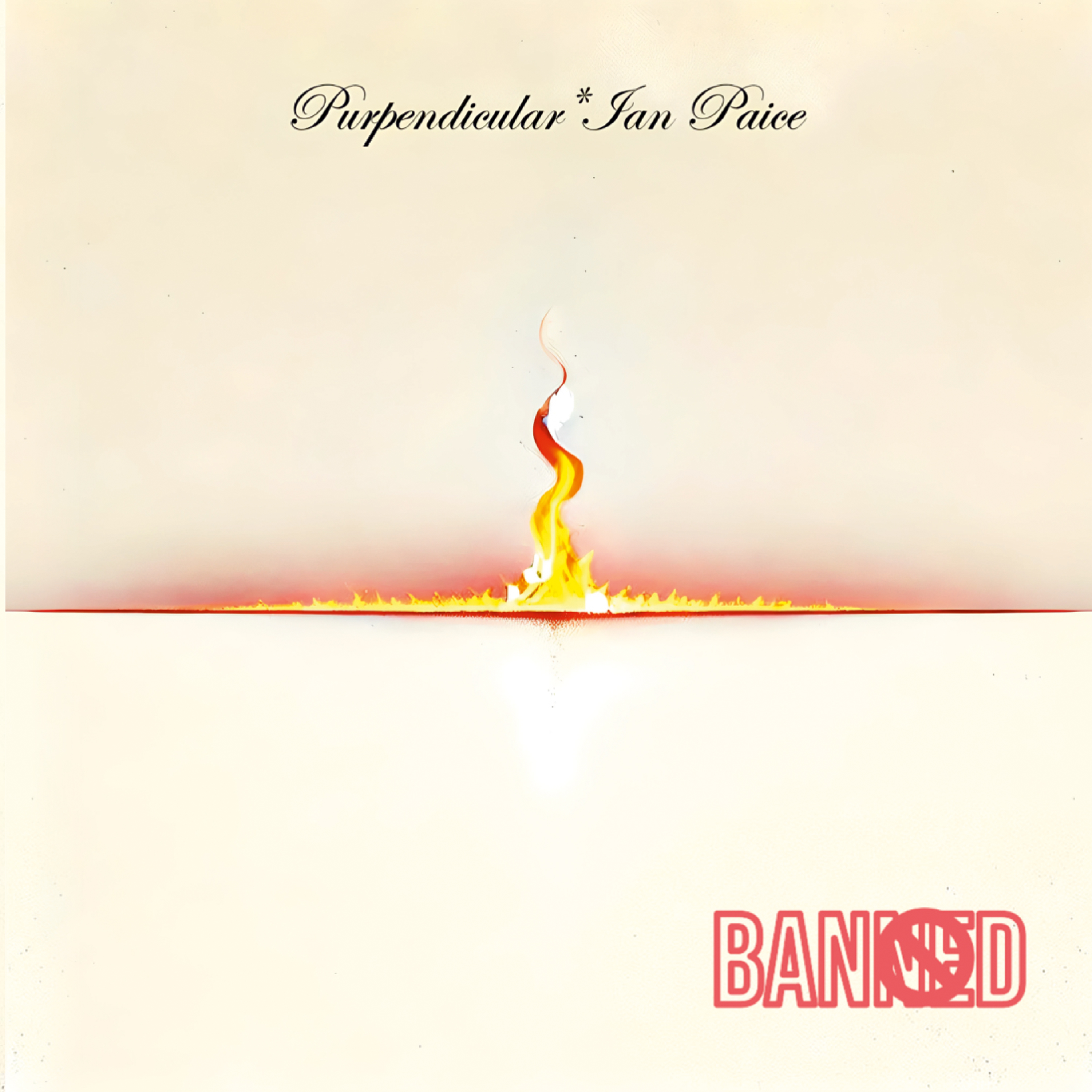
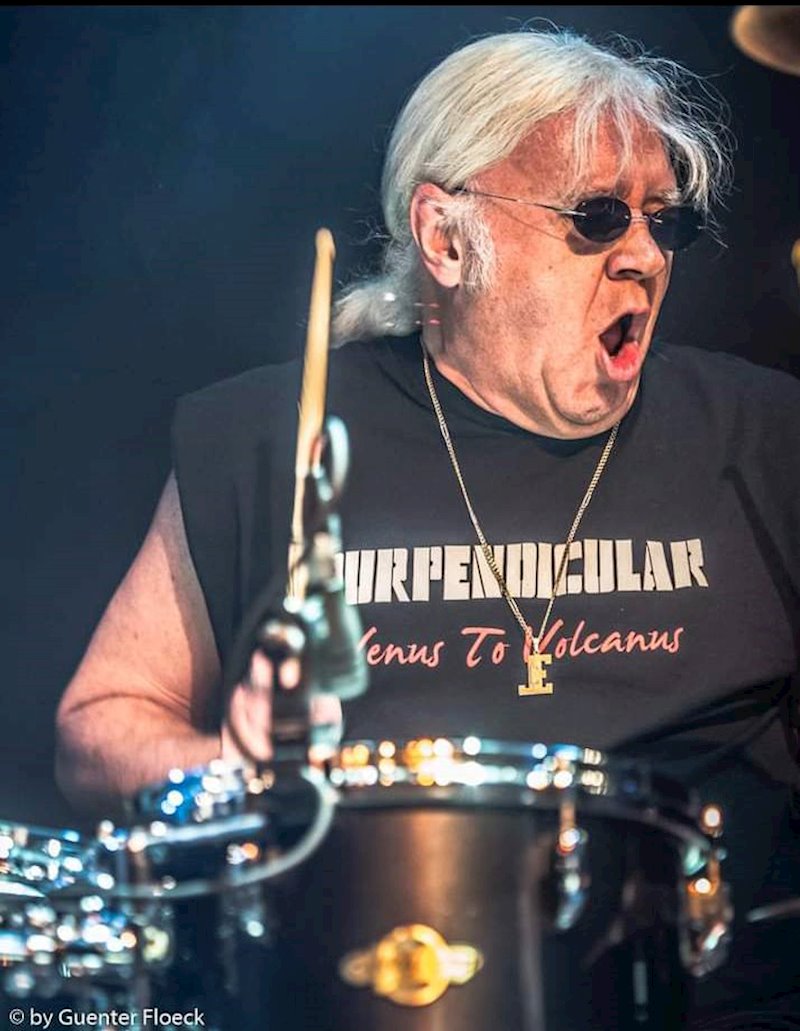
PURPENDICULAR, the band named after one of my favorite Deep Purple albums, and also features Ian Paice , on drums, have their 4th album ‘Banned‘ coming out on October 4th! Check out the bio below, as well as the 2 videos released so far, band photos, and links below.
In the hot summer of 2024, PURPENDICULAR decided to write their fourth album in a remote village high in the mountains near Porto, Portugal.
The concept was agreed on the first night, but that concept took a twist when the devastating fires took place that very evening, putting the lives of the band in grave danger.
The band were rescued off the mountain from their villa, to a safer option and to an alternative accommodation, where they spent the night watching the fires rage on the veranda.
It was here titles and more ideas came to fruition, to add to the already conceptual theme of Banned, which summarizes today’s sensitive culture, in that the slightest wrong word can get you banned, adding the pun Banned with the last two letters before the last D in the word being crossed out equaling the word BAND.
With all this in mind and the whole band in agreement, it was then decided to add an autobiographical theme also, telling the story of events as they unfolded that treacherous night where many people lost their lives and homes.
The final recordings of the album were completed in Italy, Poland, and the UK. The record is produced by Alessandro Debiaggi and Robby Thomas Walsh. It is a fresh modern look back at the ’70s! It is advised to play this record very loud!
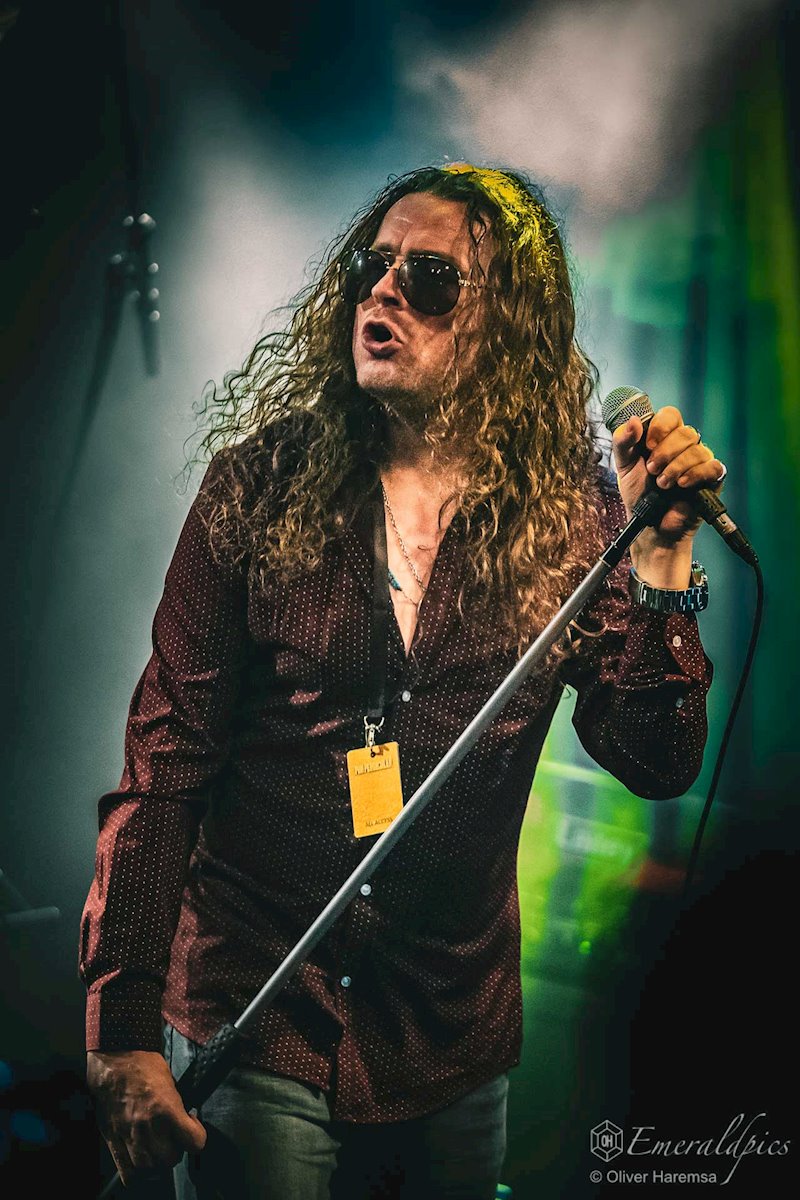
Line-up: Robby Thomas Walsh (Ireland) – vocals (Roger Glover, Tony Carey, Joe Lynn Turner) Ian Paice (UK) – drums (Deep Purple, Whitesnake, Gary Moore) Murray Gould (UK) – guitars (Eric Clapton, Elton John, Joe Bonomassa) Alessandro Debiaggi (Italy) – keyboards (has toured with Ian Paice Purpendicular since 2022) Mauricio Torchio (Italy) – bass (has toured with Ian Paice Purpendicular since 2022, here replacing the unavailable Nick Fyffe)
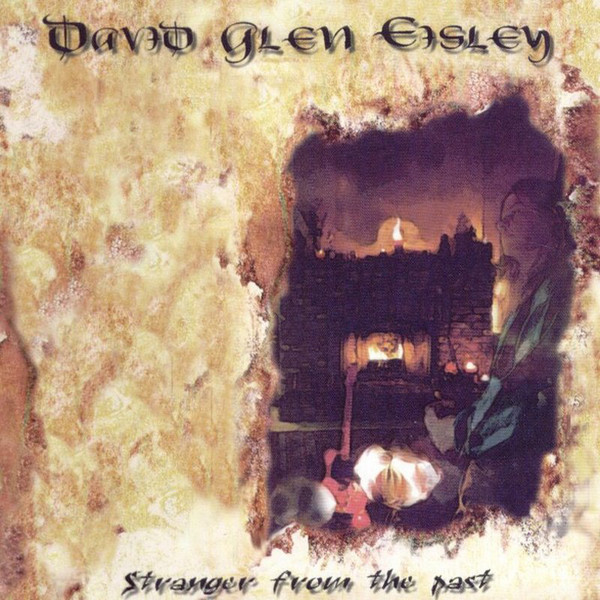
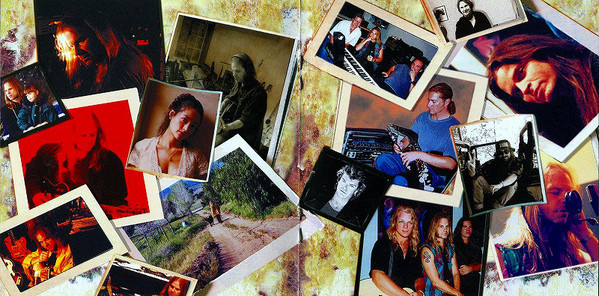
This is an interview I did (via email) with David Glen Eisley in 2001 to promote his solo album Stranger From The Past. I’ve added in a few youtube links and images, but the text is as it was in 2001.
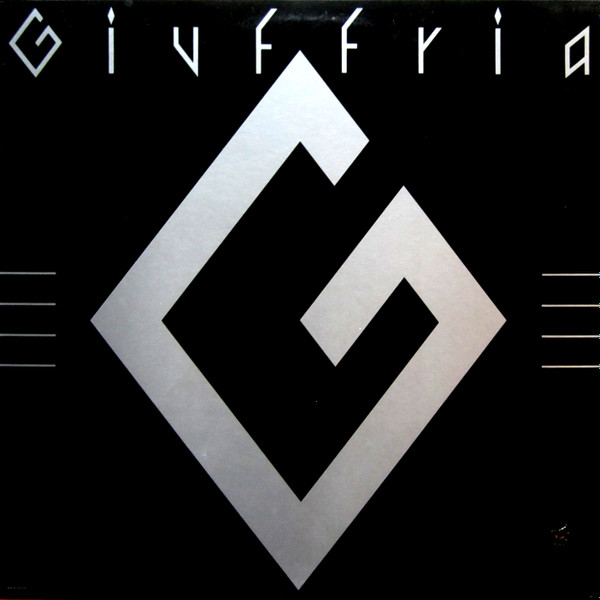
David Glen Eisley was best known as the former singer for the 80s rock band GUIFFRIA, who released 2 albums [featuring ex ANGEL keyboardist Greg Guiffria]. Since then Eisley has had a few other projects, that didn’t rival the success of Guiffria, and with many 80s rockers was seemingly brushed aside by the music labels and biz. But Eisley is back with his debut solo album released last year on Frontiers Records titled “Stranger From The Past”. It features Eisley not only as vocalist/songwriter/producer, but also on guitar, keyboards, bass, and even drums [on one track], as well as notable friends and former bandmates – guitarist Craig Goldy [Dio/Guiffria], bassists Chuck Wright [Guiffria] and Stephan Ellis [Survivor], and drummer Ron Wikso [The Storm, Foreigner].
Here I swapped questions and answers with David, who discuses his career, notably the Guiffria days, as well as the making of his new solo album.
What sorts of music did you grow up on? Can you give me a short list of favorite bands, singers, guitarists, songwriters, etc… ? Any heroes in particular?
DGE- Beatles, Dylan, CSN&Y, Bad Company were bands that I was into. Paul Rodgers, McCartney, Little Richard were singers I admired. My Dad was really into big band jazz and got me into it at a young age before I discovered rock and I started studying drums, which I became fairly proficient at. But the Beatles hit and that was it!
Can you give me a Top 10 [or more] of all-time favorite albums?
1.Sgt. Pepper (Beatles), Blood on the tracks(Dylan) Exile on main street(Stones) Joshua Tree(U2) Highway 61(Dylan) Déjà vu(CSN&Y) Blue(Joni Mitchell) Straight Shooter(Bad Company) Nebraska(Springsteen) Blonde on Blonde(Dylan)
Were you in any name bands prior to Guiffria?
No!! I was busy drinking and playing baseball!!
How did the whole Guiffria thing come together? Were you familiar with Angel and Gregg Guiffria prior to then? That band had quite a few great names in it, with Chuck Wright and Craig Goldy, how did things seem to work?
I had no idea who Gregg or Angel was. He got my number from a bass player that I had done a session with and the guy recommended me as Gregg was tryin too put a new band together. He called me and just the sound in his voice sounded different than the norm so I figured it might be something kinda real. I showed up for the “audition” and we immediately started writing a song. It was a real strange connection. But it seemed to work. Things just started to evolve from there.
What was the deal with Gregg initially wanting to call that band ‘Angel’? And is it true You were the one who suggested ‘Guiffria’’?
I think he was just thinking that it was a known name so maybe that would help in getting a new deal. Well, we did get a deal but ultimately the company and us realized that we sounded nor looked at all like Angel so we weren’t! Nobody seemed to be able to come up with a name so at the last minute being we were in the era of Van Halen, Montrose and all the other namesake bands I came up with Giuffria. What the fuck was I thinking?? Oh well.
In retrospect, what do you think of those Guiffria albums? Highs and lows? Was there ever any conflict in the band with the excessive use of Greg’s keyboards over Craig Goldy’s guitar work?
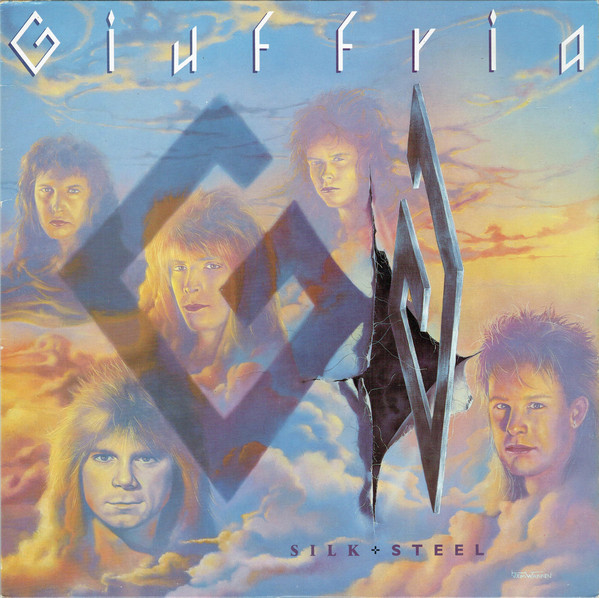
I think the first record has some great moments. I think we didn’t have a clue as to what we were until we hit the road. Then we realized we were a potent rock band. Unfortunately that band couldn’t keep it together for #2. I think we would have given Goldy more room and we would have done a great record. Instead the keyboard prominence became even more on Silk and Steel. I think Gregg and I wrote some good songs on that record and we should have sold them to a big adult contemporary artist to do. We would have made more money!! The record really wasn’t the band as it was, although Lanny is a great player. Yea, as in any ego driven entity there were a lot of conflicts but I think the split was just Gregg and I were just not feeling the same about shit anymore and we were sick of all the bullshit we went through with the record company. We just said ”See Ya”.
Did you have any contact with Gregg [or still have] after the Guiffria days? Any reason he didn’t ask you to participate in House of Lords? [How many Guiffria outtakes ended up on the first HOL album?]
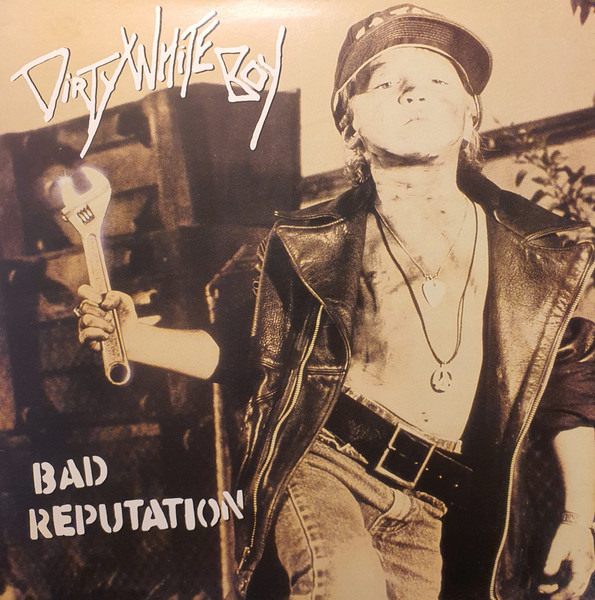
He did not ask me to join House of Lords because that would just be Giuffria again with a new drummer! Besides I had already met up with Earl Slick and Dirty White Boy was on the horizon. I don’t talk to Gregg much. He really doesn’t play much anymore and has gotten very successful in business. Although I think he’s going to play a bit on the HOL record.
Any stories from the Guiffria days and the tour supporting the reformed Deep Purple?
The Deep Purple tour was a great experience in learning what to do on the road and what not to do. I had a great time but at times it was pretty rough. I mean dealing with Mr. Blackmore at that time was interesting to say the least. We finished that tour and hooked up with Foreigner on their last big one. That was a big improvement in terms of general treatment.
What can you tell me about DIRTY WHITE BOY? You guys only did 1 album? Any major gigs or breaks there? How did that whole project come and go? [in a nutshell]
DWB was a victim of timing and circumstances. Thee record company, Polygram was getting ready to clean house and make more room for the Grunge attack and R&B acts. We were touring in Europe as the record was released there first and were being told there was really no company back home. Dismantling of a sorts. We had no support for a domestic release and it all just fizzled away! Although the record was produced all wrong I really dug that bands vibe. We really became a “freight train from hell” on the road. The record does not reflect that unfortunately.
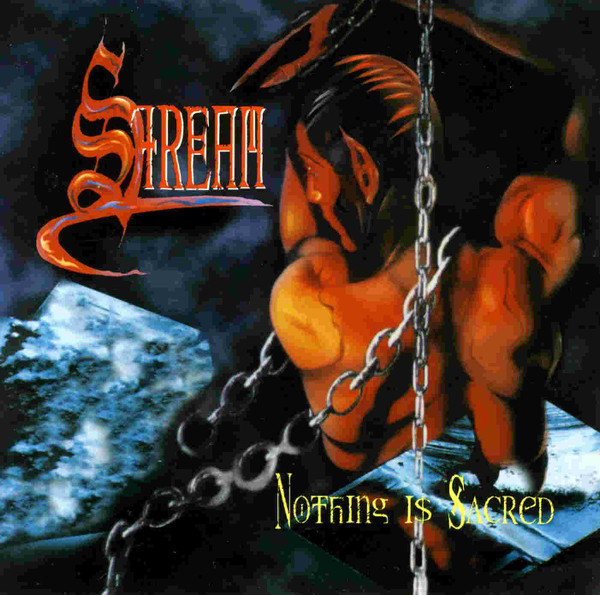
You did the Stream album with such names as Bob Daisley [Ozzy / Heep / Rainbow] – a great bass player, as well as Eric Singer ! Quite a line up!! What happened with this project? Any stories from working with the likes of Daisley & Singer?
Stream was really just a money gig. I had known Bob from another situation that I passed on and he called me to do this thing. There was really no ample time and everything was rushed. It really had no band thing going at all. I think all of us were just throwing it together, collect the doe and not give it much thought beyond that. Eric is a likable guy and a great drummer!! I really never hung with them other than that short trip. Forgettable period!
What else have you been involved in over the years? Any bands, sessions, guest appearances … ?
I’ve been getting into some acting the last couple of years and find I like it. Some independent films, some TV and a couple commercials one being a thing with Ringo which was a great gig!! He’s a real trip and a great guy!! You hang with a Beatle for a couple of days and everything else kinda pales away after that!!
When did you begin work on ‘Stranger From The Past’?
I started Stranger in May of last year. They released it in November of last year and here I am again frying in the summer again. Time is going way to fast my friend!
I take it ‘Stranger…’ is your first solo venture (? ) Why so long, having been around for so long?
Truthfully there have been three periods where I was going to go it solo. Two of which were just prior to my two main bands. The thought of the band thing at each turn felt comfortable to me so I passed the solo thing up. In hindsight I kinda wish I would have just had the balls and said “Sorry I don’t do bands” but I didn’t. That’s OK.
What’s the history of the songs on Strangers? Were they written more recently or things you’ve had from past years and saved?
It was about 50/50. I had a few of them existing for awhile in one form or another. So after being approached by Frontiers I got an idea as to what they were looking for and then picked ones I had and then proceeded to write the rest.
You wrote, produced, and played a lot of instruments on this album. Was it a very personal record, musically and lyrically ?
Yea, to a degree I guess anything someone writes it’s a bit personal. Everything comes from different times in one’s life. Some things are a little less heavy than others but are still from personal trips or memories.
This album has a somewhat classic rock / aor style to it. Was there a particular direction or audience you intended to go at? I think it’s quite an appealing album that many rock fans would enjoy.
Like I said I got an idea what they the market would bare so to speak and then tried to be true to myself and came up with this collection. If I had not considered what anybody or any audience expected from me it would have been much more stripped down, funkier and acoustic driven but I’m happy with the overall results.
Can you give me a few words or any stories to go with a few of my favorite cuts from the album > Stranger From The Past, Can’t Call It Love, Don’t Turn Away [which is my favorite here] and When It’s Over(?) Do you have any personal favorites [and stories to go with] ?
Stranger began with a lyric idea I put together after listening to a taped lecture on passed life trips experienced by this woman who was documented for real. About coming back and all that kind of stuff. After writing it the title seemed to apply to me and my career so that’s how that happened. Cant Call it love was part of a song I wrote awhile back. I re-worked it for the record and really had fun with that one. My daughter India can be heard at the end when she sneaked into my studio one day and I was giving her the “please be quiet” sign. She got a little pissed at me and left slamming the door behind her. I kept it as it hit just as I hit the last chord. Thanks India!! It is really representative of me and my “rock” roots. Don’t Turn Away was written off of a piano lick I had come up with awhile back. Lyrically it was written about a friend who was going through a messy relationship. When its Over was about the same period of time and kind of based on the same subject matter. Goldy played some really nice stuff on that I thought. Funny though, we had nothing around at the time but a tiny little practice amp. We just stuck it in a little closet with a mic. That guitar solo was done awhile back in another space and time! But I loved what he played so I did everything I could to transfer it into the master track. It seemed to work.
Craig Goldy plays a lot of guitar on this disc. I take it you guys are good friends!? Do you have plans to work together in the near future? Perhaps form a band ? 🙂 And do you have plans to gig or tour to promote Stranger From The Past?
Goldy and I have remained very good friends. He’s been busy with Dio, who is another really nice guy. I’m glad they are hangin’ again. Goldy was one of the people who were always tellin’ or asking me when I was gonna go it solo. Always supportive. So I called him while he was out on the road and he said “cool I will be back such and such a time. I’ll come right over. He did lucky for me. He is one of the few people who know me well enough to know exactly what I’m lookin for. He did his entire bit in a day and a half with never hearing the songs before. Although he drank all my Vodka in the process! If it was possible I think we’d love to put something together in the future. Who knows. Tour plans for Stranger?? I really don’t know. That has a lot to do with the record company, tour support etc, etc.
How has fan and press reaction been to Strangers.. ? What have been some of the highlights as far as reviews and/or press features go? Any chart placings around the globe?
The response to the record has been really good generally. The press and ads have been very positive. I think I’ve been gone for awhile so it has been a bit of re-aquatinting myself to the scene again. A couple of the larger mags in Europe have placed me in different charts and its all been positive. I’m really not on top of all that. Sorry.
You sang all the vocals [w/ harmonies], played a lot of guitar, keyboards, bass, and drums on this album. Why did you take on so much yourself, and how did you determine where and when to use the various guests?
I did most of it myself because I kinda of know how I want it to feel. That’s my main thing. I don’t really care if it’s not the best technical playing going on. My songs are just that and if the feel ain’t right then I have trouble carrying it through. The guys who played on it know me very well and played what I would have played if I had the chops to do it. But some of the stuff I heard in my head I can’t execute. So enter my “wiz kid buddies”.
I take it singing is your first love? How do you see yourself as guitar player, keyboard player, etc… ?
Singing for me is on and off. I wont sing for a long time and then all of a sudden I will be writing or doing sessions and be singing again. When I do it makes me feel good but I don’t go out of the way to go and sing with the guys every other night. I’d rather sit in playin’ drums or a little guitar. Weird huh?? I am really quite a sloppy and un-educated guitar player as well as keyboard player but for my stuff it seems to work and I have fun doin it. And my stuff is really all I’m concerned with. I do outside money sessions with my voice. So I really don’t give a shit. I mean I would love to do what Craig can do but I cant. But he cant ballroom dance like I can! HaHa!
Having played alongside Greg Guiffria for a few years, it’s interesting that the only keyboards you tend to use here are piano, Hammond, and some synths as background effect. I take it you wanted to make this a very guitar oriented album?
Gregg was really into Keith Emerson through his life and chose that really over the top keyboard trip which worked great for us. My thing isn’t really guitar or keyboard driven. I think its more song driven. I had no need for all of that stuff. But your right it’s a little more guitar oriented than keys.
Any stories from the recording or making of this record you’d wish to share?
Other than I had a good time doing it in my studio in my barn alongside the horse and my pot belly pigs there is really nothing out of the ordinary to report on it.
Do you have plans to make another solo album in the near future? Anything you’d do differently?
I think I might do another one for Frontiers at end of the year but I’m not sure. Might do it on my own label Ol’ Boothill Records. A new album would be just that. “A new one”. So until I’m into it I don’t know what will be different other than songs.
What Kiss album did you guest on?
I think it was the Animalize record. I’ll check on that. I was working on a record in the same studio as them and Gene found out I was there. He sent a note over to our room and asked if I could come across and give them a hand on some song. So I did. Me Paul Winger (Kip’s bro) Gene, Paul and I. We had a good time. Paul was funny as shit! Anyway, I left. They sent me a check and I never even asked what record it was as I was really not into Kiss at all. I will ask Bruce or Bob Kulick who are friends of mine. They obviously will know
What do you listen to these days? and what do you think of the rock scene out there for artists like yourself compared to how it was 15 years ago?
I primarily listen to older stuff. My Dylan records, U2, Springsteen, a lot of soundtrack stuff. I only really listen to music in the car. I’m busy doing other things. Well the rock scene as we knew it in say the mid 80’s through the mid 90’s has changed quite a bit. As rock and roll should, it caters to the very young. But generally the corporate powers aren’t interested in shoving really good stuff down kid’s throats. I find it very interesting that us baby boomer kids that have our own kid’s see our own kids getting into Hendrix, Zeppelin, Beatles, Stones, etc … as well as Britney Spears and that lot which is cool. I mean, the stuff we grew up with was very powerful music and it stands the test of time. Everything now is nothing more than quick soundbites for the most part. Here today then See Ya!!!
Anything else you’re currently involved in – musically or other interests?
I’m writing a screenplay right now and working on a kids’ album concerning education which I hope to have finished and out by next year.
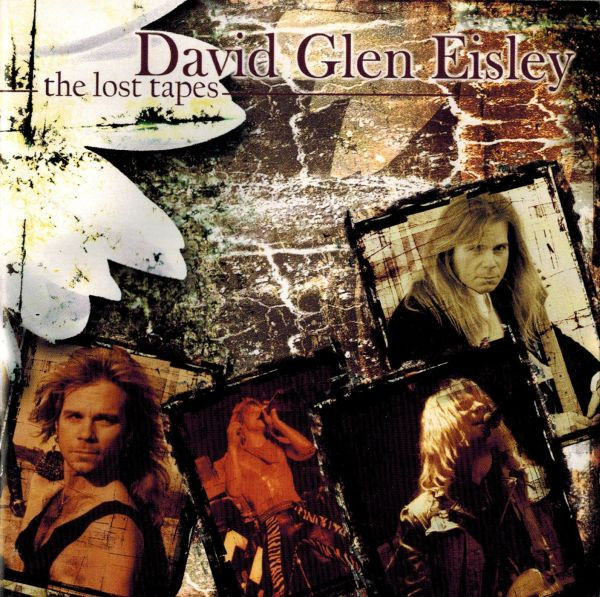
There is a compilation record of sorts coming out in August that has old stuff from Giuffria and DWB days. It’s kinda cool. Its called David Glen Eisley/ ‘The Lost Tapes’. You might find it interesting.
This was the debut solo album from the former GUIFFRIA singer. Guiffria, the air/hard rock band lead by former ANGEL keyboardist Gregg Guiffria released 2 albums in the 80s,, had a hit single with “Call To The Heart”, and opened for Deep Purple, and (later) Foreigner. But after the 2nd album Guiffria decided to rename the band, and change singers. Years ago, when Stranger From The Past came out in 2000, I interviewed David Glen Eisley (need to dig that out and re-post), and I played the heck out of this CD in my car, loved it!
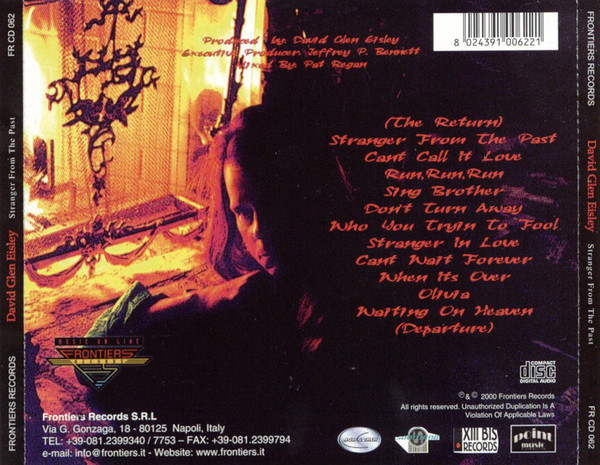
Stranger From The Past featured a number of guests and strong supporting players, notably Craig Goldy on guitar (Dio), Ron Wikso on drums, and bass player Chuck Wright (Quiet Riot), though not all on every track. It began with the intro “The Stranger”, which leads right into the title track. There’s a good mix of good rockers like “Can’t Call It Love”, “Run Run Run”, and “Can’t Wait Forever”, as well as ballads “Don’t Turn Away”, and “Stranger In Love”. A solid album, that I still pull out from time to time.
Stranger was followed up a year later with The Lost Tapes, a collection of songs Eisley recorded with various projects prior to 2000. Strangely the tracklisting seems quite similar to the new Guiffria release (?) The Lost Tapes was a decent set of songs too, with standout anthems like “Stand Up” and “Are You Ready”, as well as “Lay Down Your Love” and “Slip Of The Tongue”.
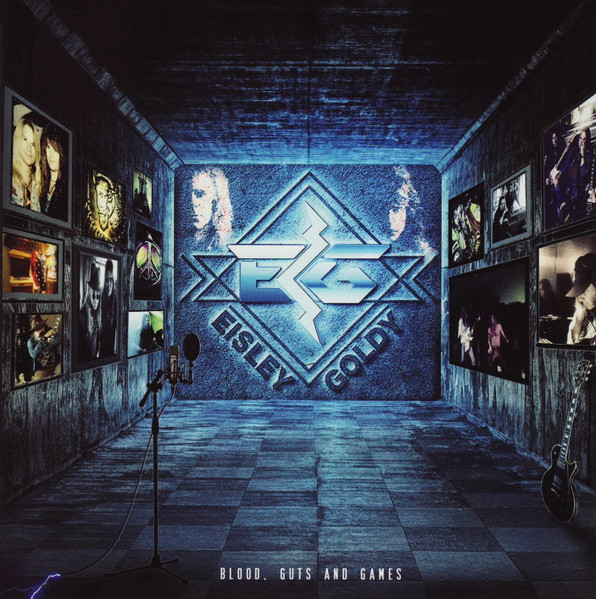
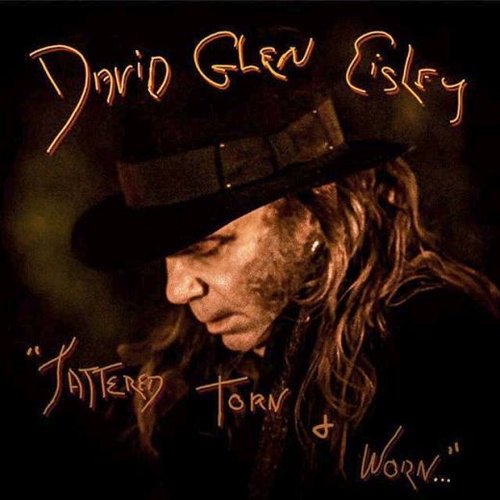
Since then DGE has released a few solo albums, as well as a collaborative album with Craig Goldy, but nothing as memorable as Stranger From The Past (IMO). He did have a huge hit with with “Sweet Victory”, w/ the late Bob Kulick (the SpongeBob song!). The man’s also gone through personal issues to deal with (the passing of his wife late last year). Here’s hoping David finds his way back to creating new music in the future. Until then, look up this album (YouTube, Spotify, Apple).
RICK HUGHES DELIVERS A SPECTACULAR SOLO ALBUM WITH ‘REDEMPTION,’ REUNITES MEMBERS OF ONE OF OZZY’S BEST LINE-UPS FOR COVER OF THE WHO’S “THE REAL ME”
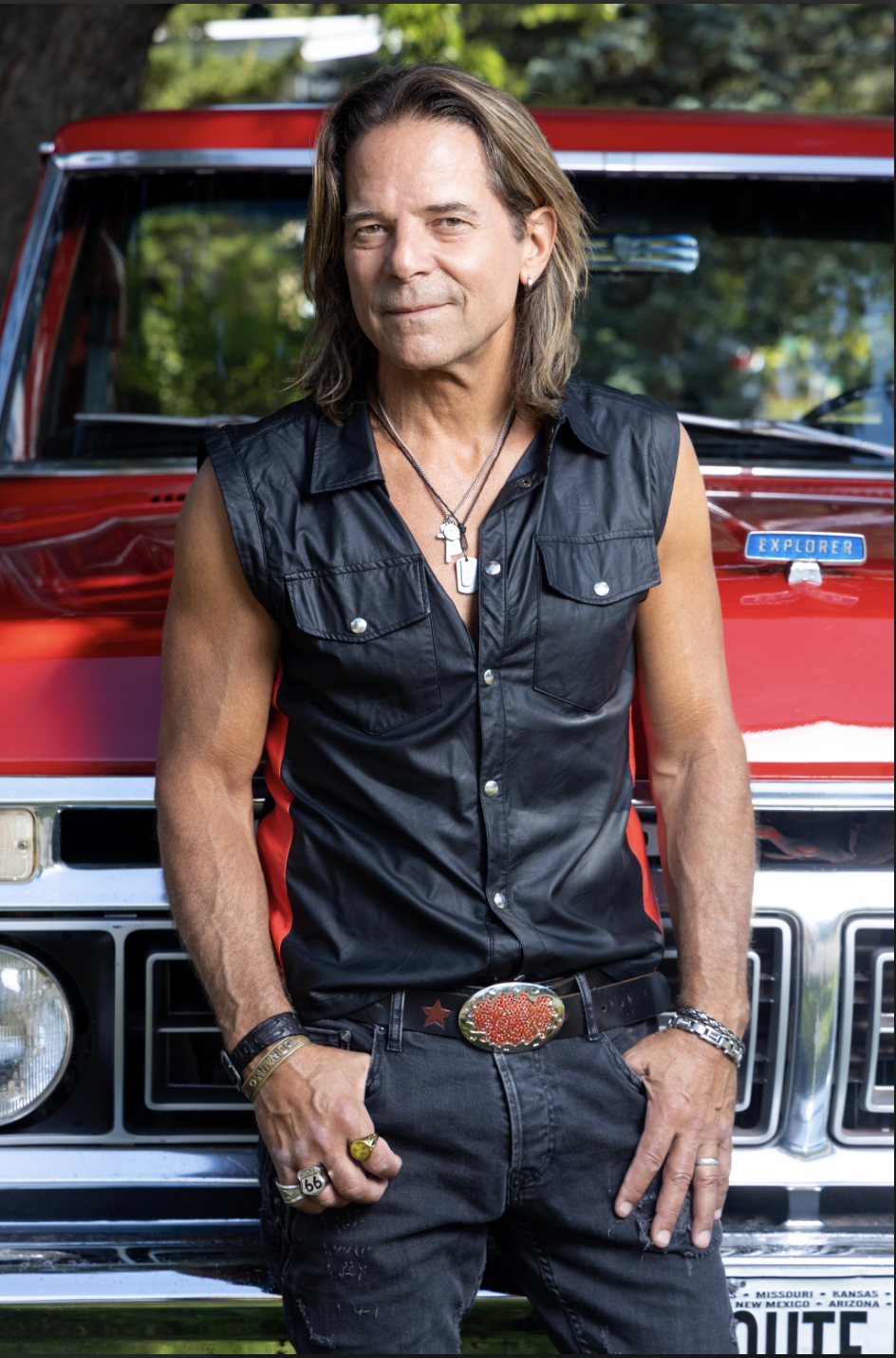
Canadian-born Rick Hughes is renowned for his powerful and rangey voice as the lead singer of the legendary metal band Sword, and of the hard-rock band Saints & Sinners. A seasoned performer with hundreds of headlining shows in Canada, America, Europe and Japan over the years, and his superb stage performances while opening for bands such as Metallica, Motorhead, Alice Cooper, Black Label Society, etc.
So when it was time for him to record ‘’Redemption’’, his first international solo album, he spared no expenses and efforts to make this album a great one, hiring producer John Webster (Aerosmith, Mötley Crüe, AC/DC, etc.) and renting HippoSonic Recording Studio (formerly known as Little Mountain Studios) in Vancouver to record this opus.
The first salvo is coming out September 5, 2025, and it is quite an event in itself: his first single and video is a supercharged version of The Who’s classic ‘’The Real Me’’ – reuniting after 43 years Ozzy Osbourne’s 1982 band consisting of Brad Gillis on guitar, Rudy Sarzo on bass, and Tommy Aldridge on drums. This is the band that did the last leg of the ‘’Diary of a Madman Tour’’ in 1982 after the tragic departure of the great Randy Rhoads, and that then recorded Ozzy’s classic live album ‘’Speak of the Devil’’.
*Pick up the Limited Edition Bundle (100 copies) that includes a collectible 7” vinyl of the “Real Me” signed by Rick Hughes, Brad Gillis, Tommy Aldridge, and Rudy Sarzo.
The resulting sound is epic, and so is the spectacular video that was shot and directed by Matthew Lucas (Kringle Time, Moonshot, We Meet Again, etc.) at the state-of-the-art L.A. Castle Studios, with post and editing by Montreal’s Jean-Marc Laurin (Jurassic World, Star Wars: The Force Awakens, Game of Thrones, Assassin’s Creed, etc.).
”The Real Me stands as a cornerstone of my album ‘Redemption’,” says Rick. “As a lifelong fan of The Who, I wanted to pay tribute to the golden age of 70s rock. To capture that spirit, I brought together a true supergroup with Tommy Aldridge, Rudy Sarzo and Brad Gillis, a unique moment where legends unite to breathe new life into a classic.”
“This very special song is part of the upcoming Rick Hughes Album ‘Redemption,’ a collection of great rock songs to be released on Friday, October 24 2025 on CD, Vinyl, and Digital format worldwide by Deko Entertainment, and featuring more great collaborations with some famous musicians.
Included are 2 more songs featuring the superb songwriting and inspired guitar playing of the great Brad Gillis, another featuring the extraordinary talent of The Door’s legendary guitarist Robby Krieger, and great contributions from rock royalty Lee Aaron, vocal powerhouse Amy Keys (Ringo Starr, Phil Collins, Toto, Sting, Stevie Wonder, etc.), rising guitar hot shot Jacob Deraps, as well as Rick’s gifted sister, Lulu Hughes.
With its great performances, ‘Redemption’ is a very special and unique rock album that brings together 7 songs in English, 1 bilingual and 2 songs in French.
‘REDEMPTION’ TRACKLIST:
Vinyl version:
Side A: 1 ) Dead End Road 2 ) Croire En l’Homme 3 ) The Real Me 4 ) Carry The Torch 5 ) Will of the Gun
Side B: 1 ) Shake My Soul 2 ) Someday 3 ) Dans La Peau 4 ) In a Perfect World 5 ) Ça Va Brasser
CD Version:
1 ) Dead End Road 2 ) Croire en l’Homme 3 ) The Real Me 4 ) Carry The Torch 5 ) Will of the Gun 6 ) Shake My Soul 7 ) Someday 8 ) Dans La Peau 9 ) In a Perfect World 10 ) Ça Va Brasser 11 ) Bonus Track: Dans La Peau (french version)
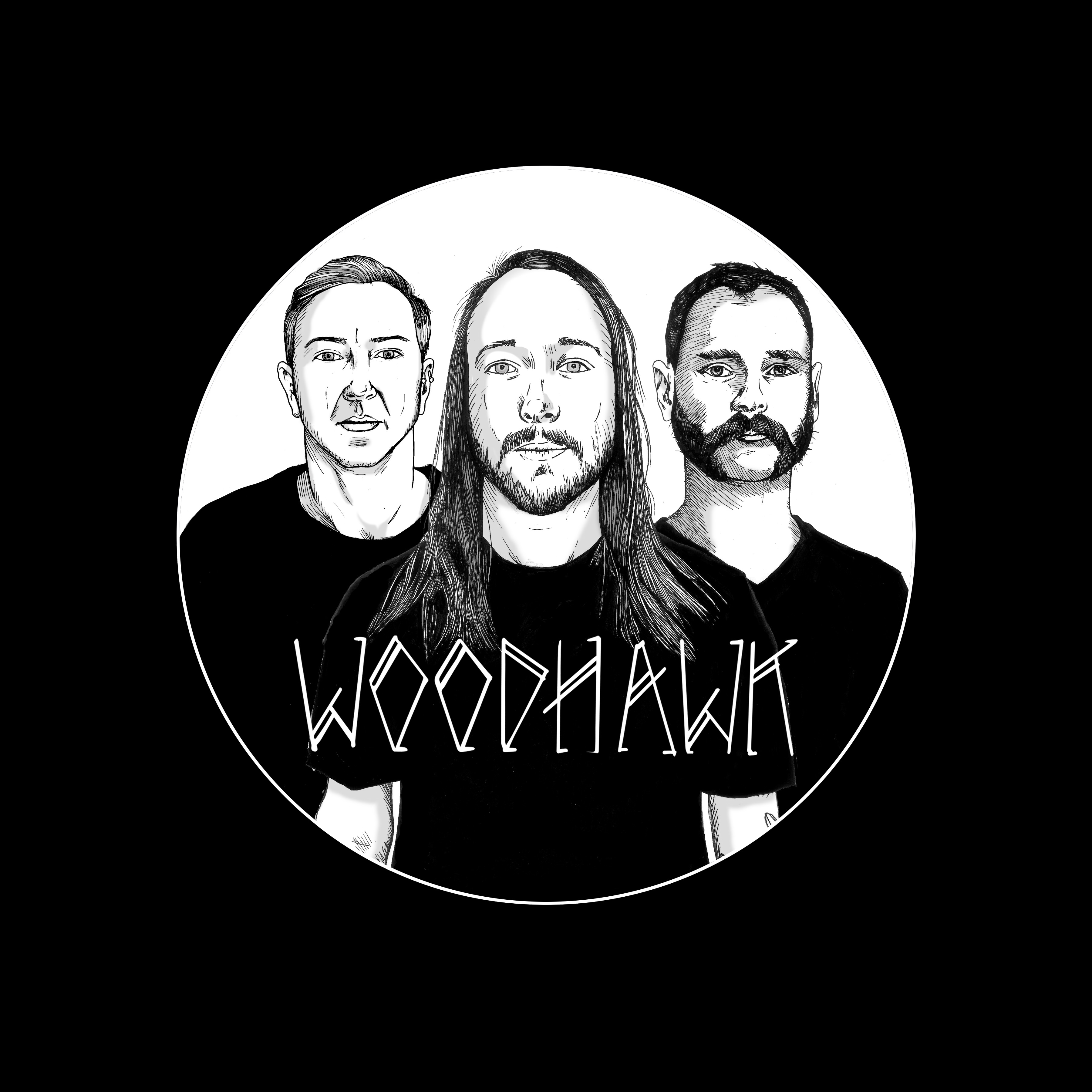
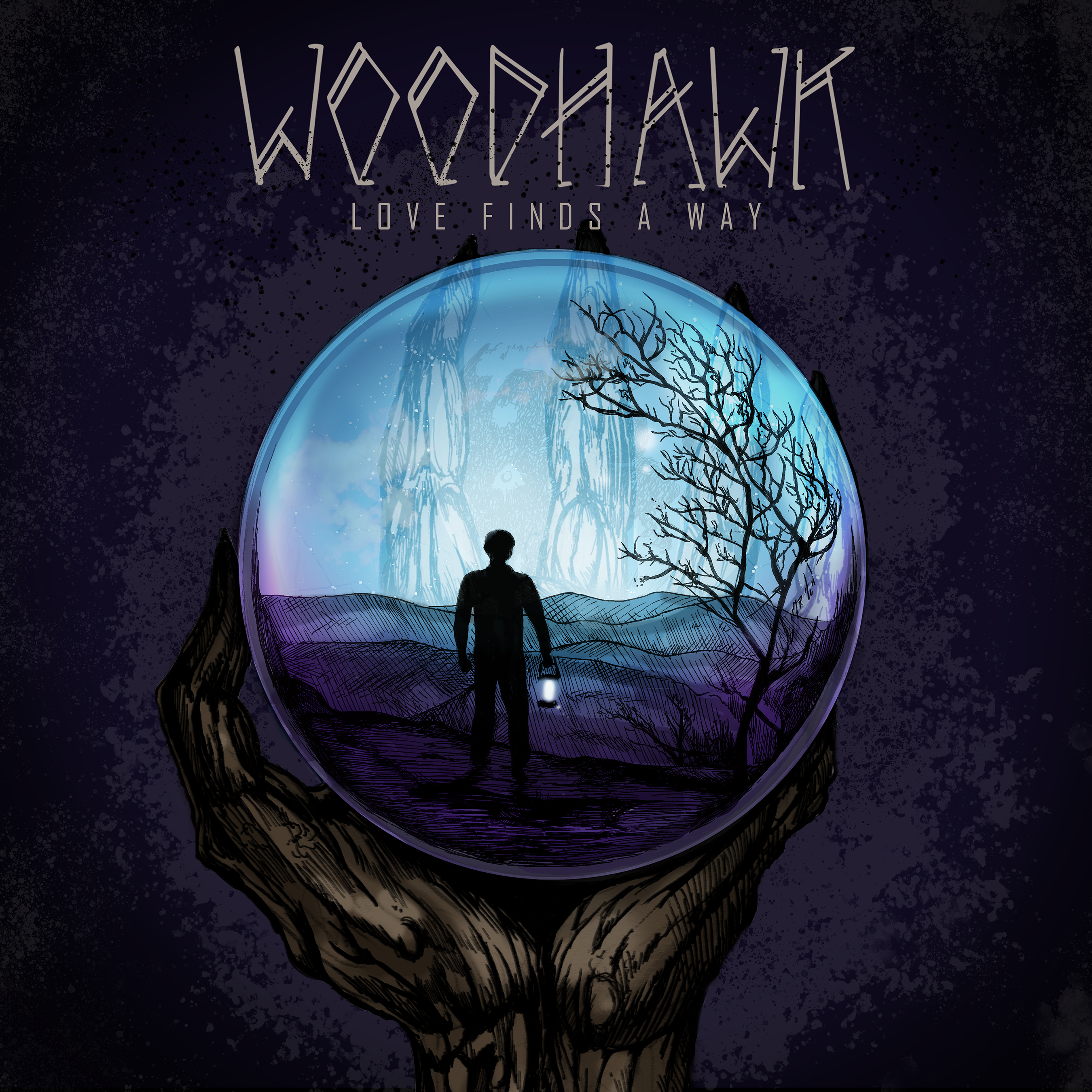
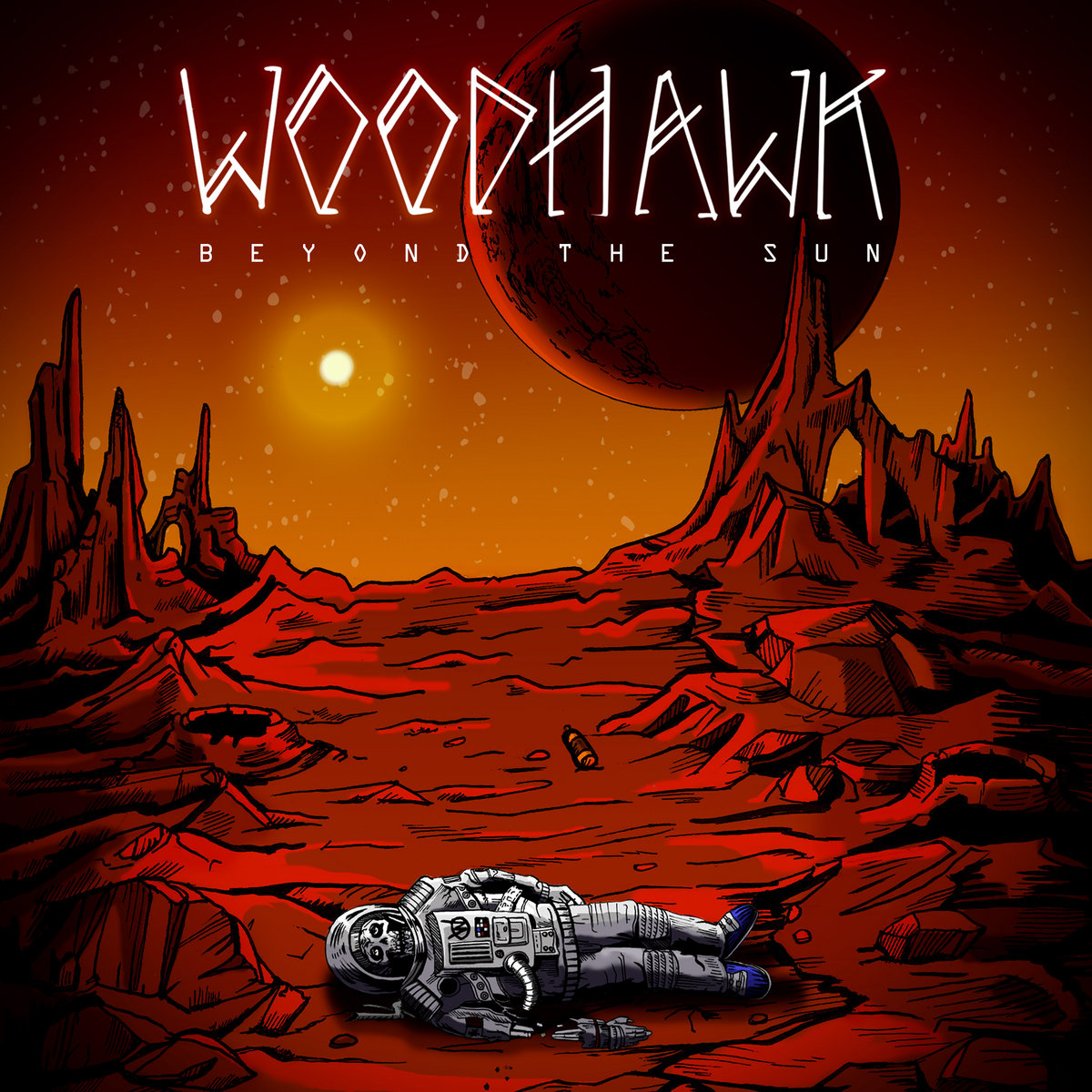
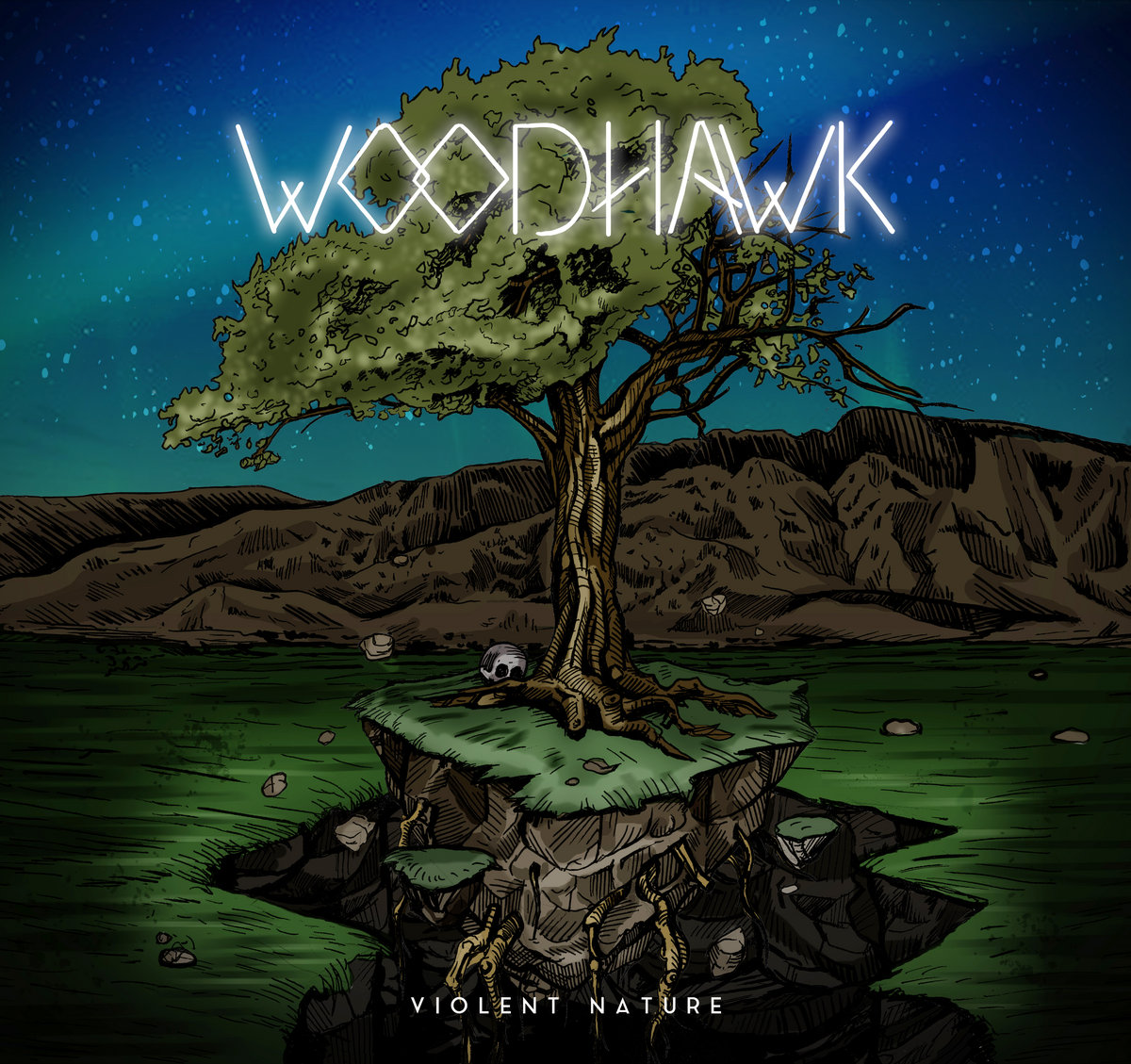
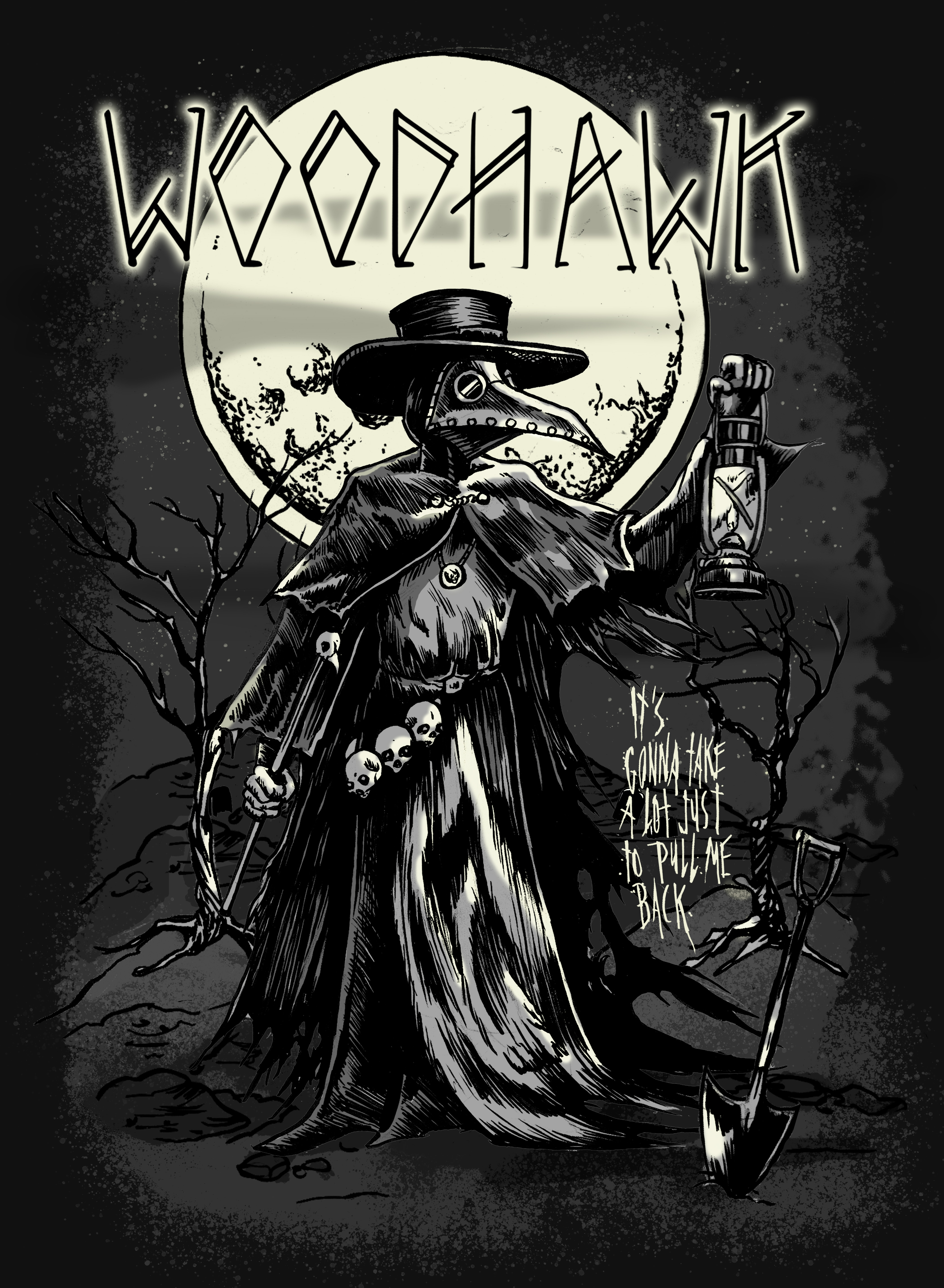
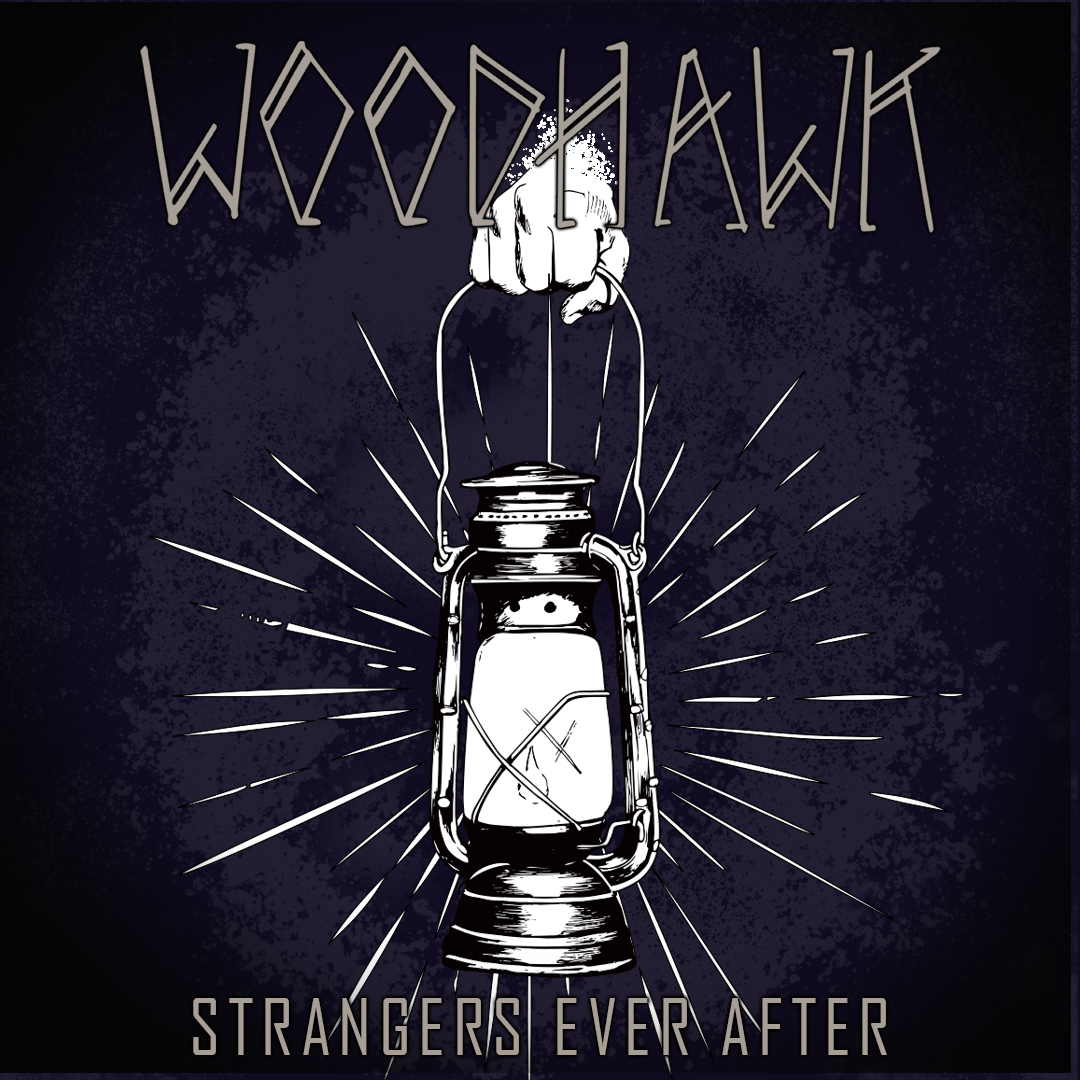
Canadian artist Mark Kowalchuk has created the 3 album covers for Canuck stoner-rock band WOODHAWK, from Calgary. The latest design from Mark is the brand new Woodhawk album Love Fins A Way. All 3 Woodhawk covers are eye catching and creative, and each has a story to them. I recently swapped questions and answers with Mark regarding these album covers, as well as what else he is up to creatively in the rock music field. Check it out below, along with images of Mark’s work, and check out the new Woodhawk album!
As an artist, what is your ‘field’? Who do you design for—concertgoers, advertising, album covers, or other media?
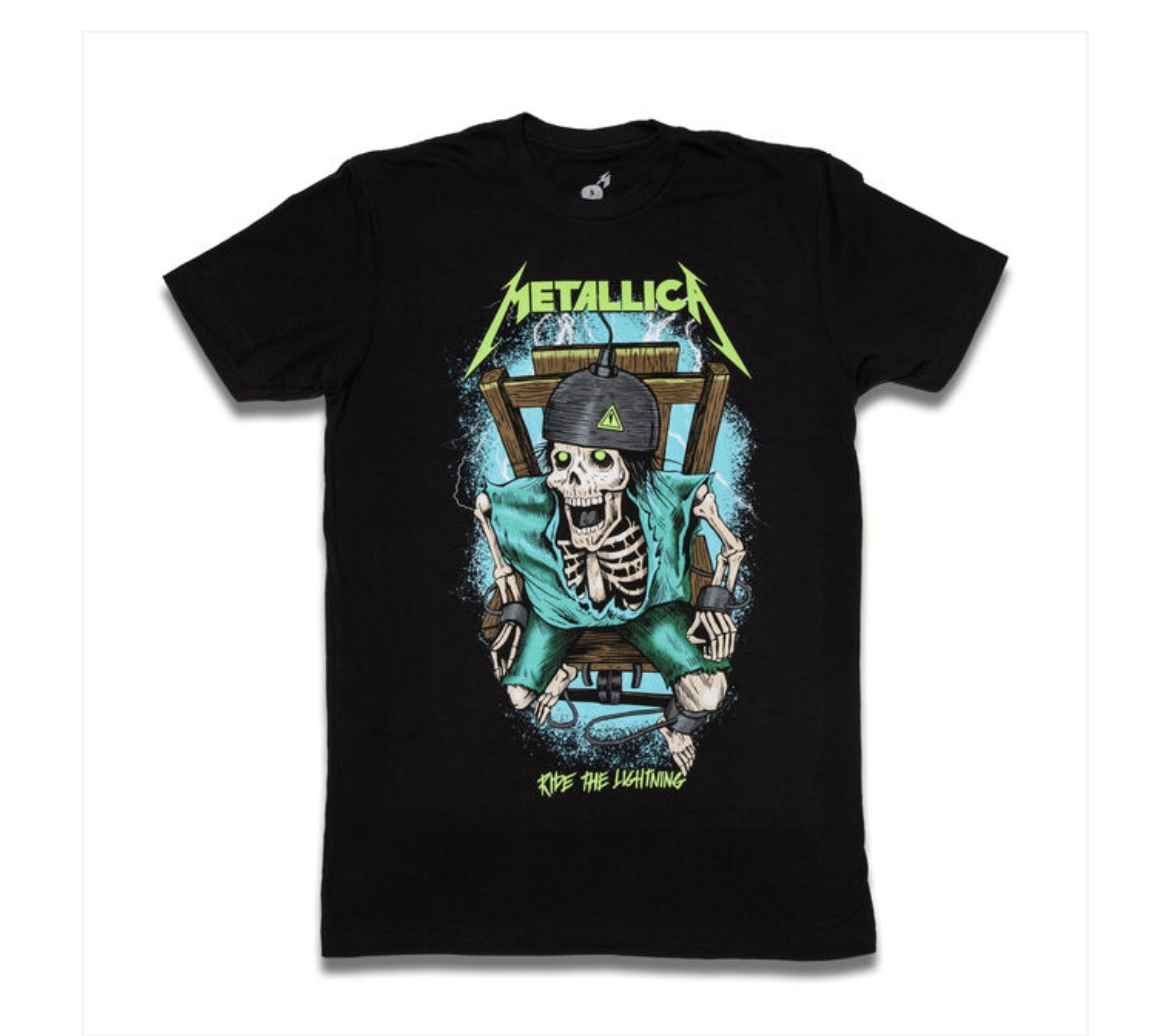
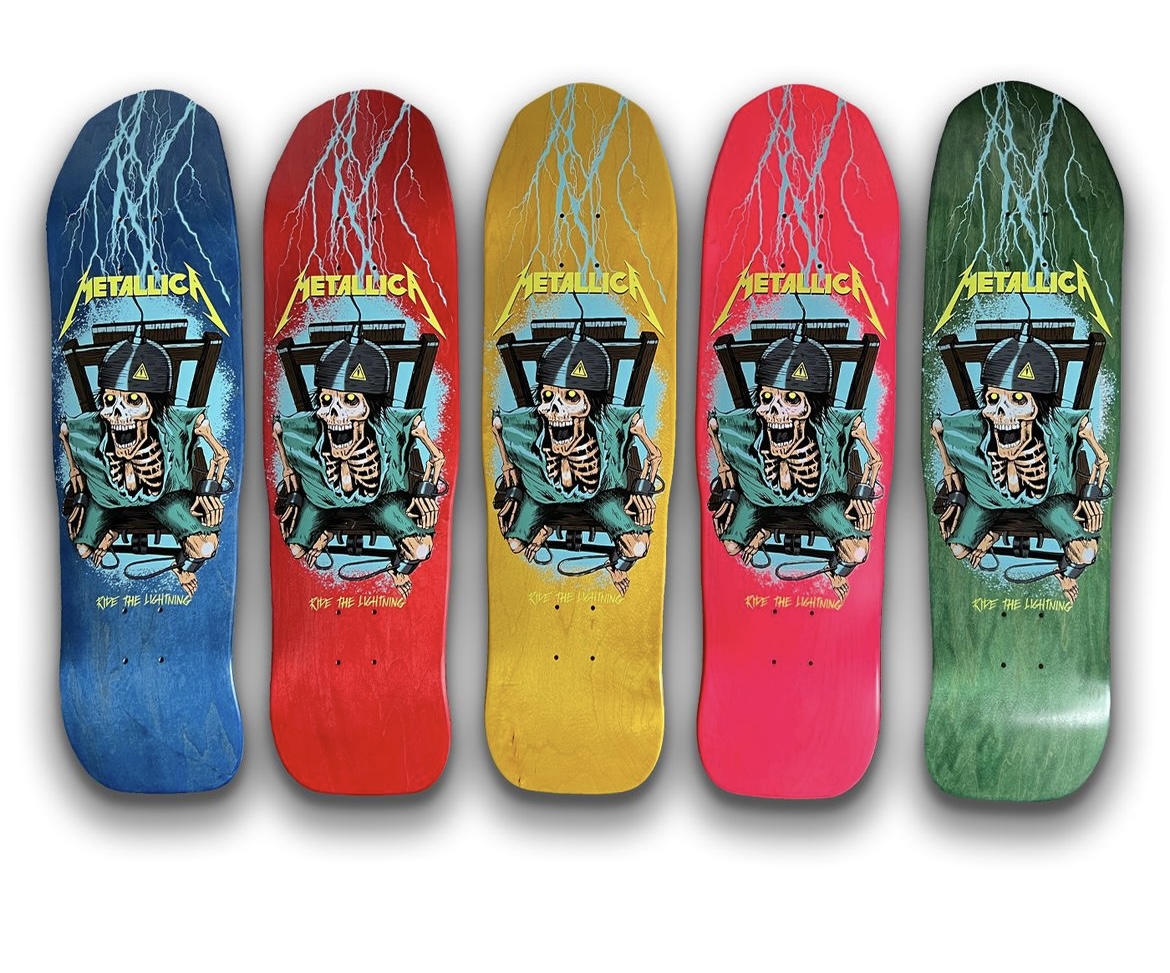
Most of the work I do is for the skateboard and snowboard world. I only create art for a few select bands: Metallica, In Flames, Souls of Mischief, and Woodhawk. Most of what I do for these bands is merchandise design. I create album art for Woodhawk, but generally, people hire me for apparel design, as that’s where I’m most experienced.
You’ve done the three Woodhawk album covers. How did you get involved with them? What’s the connection?
Working with Woodhawk happened quite organically, actually. I was doing artwork for another friend’s band at the time Chron Goblin (I used to skateboard with those guys a lot back then) and I met the Woodhawk guys at a show where they played alongside Chron Goblin. They liked the work I had done for Chron Goblin and asked me to do a few designs for them, which eventually led to a lot more collaboration.
Each of the Woodhawk covers suits the title well. Can you share the idea or story behind each of them? Did the band members contribute input or suggestions?
For Beyond the Sun, we went with the concept of an astronaut who’s been forgotten on a planet far from Earth. My personal interpretation is that he’s ventured too far, and that ends up being his demise.
Violent Nature is full of symbolism. There’s a lot of yin and yang imagery, the tree is fruitful on one side and decaying on the other.
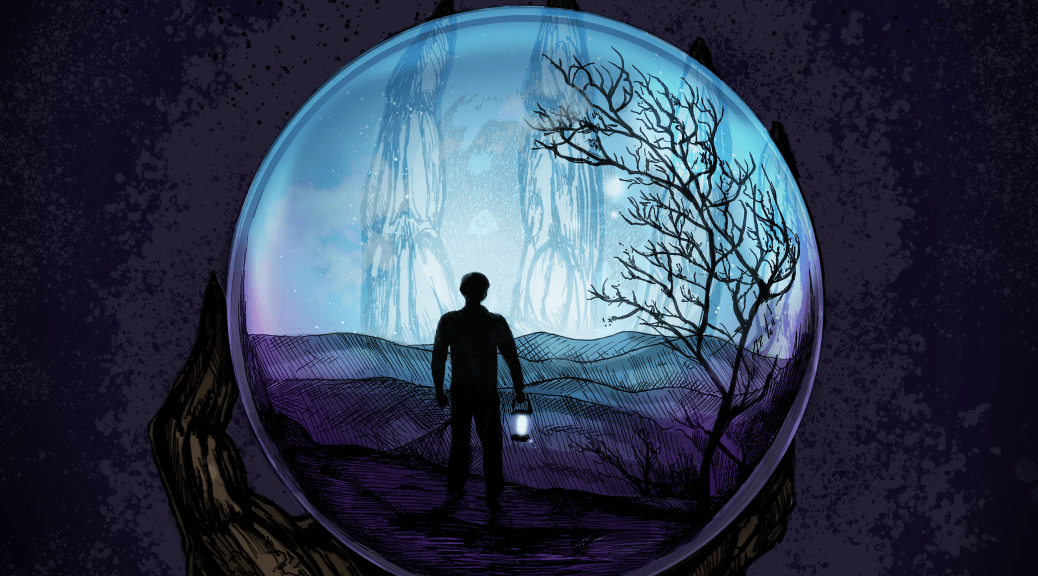
For Love Finds a Way, the main character is lost in a strange land he doesn’t recognize and is trying to find his way. He’s being watched by a ominous creature larger than him, though that part is left open to the viewer’s interpretation.
The band has a lot of input into their look and designs. We usually meet up over some tasty wings and beers and talk about what the album is about and the direction they want to go in. Each album has a different mood, and they’re good at providing me with examples and mood boards to convey the vibe they’re after. They trust me to bring something extra to the artwork and allow me to incorporate my own interpretation as well.
For example, they wanted the wanderer on Love Finds a Way to be holding a lantern. I felt the lantern had strong symbolic weight, so I focused on emphasizing that element. One thing I will say is that we work well together in blending their ideas with mine.
I presume you hear some of the music before each album is finished? Does that influence what you create?
Absolutely. It’s essential for me to hear the music, it’s mandatory to create the proper visuals.
Are any of the landscapes based on real places or perhaps photos you’ve come across, or are they purely imagination? All of them come fully from my imagination, they’re not based on real places. For Beyond the Sun, I imagined he might be on Mars since the album has a red theme, but I didn’t look at any actual Martian landscapes or reference photos. It was all from my head.
What’s your method for creating artwork? (Drawing, painting, digital, etc.) Can you walk us through the process of designing Love Finds a Way? I’ve got my process dialed in,kind of like baking a cake, really. First, I sketch out 3 to 5 rough concepts in my sketchbook. Then I usually meet up with the guys (over delicious beer and wings, which I mentioned early). They give me feedback, and I take notes to move into a second round of sketches.
Once we settle on a final concept, I do the clean inking. I scan the linework and color it digitally. I always keep the original ink work as-is—I don’t redraw it digitally because I think it keeps that personal, hand-drawn feel intact.
Are you doing any other pieces for the latest Woodhawk release—posters, singles, shirt designs? I just finished a few new merch designs for them, which you’ll be seeing shortly. The guys usually call me as they need me, so your guess is as good as mine. The magic eight ball says: “Chances are good.”
Who are some of your favorite album artists or covers (besides your own)? I’ve always loved the work of Alex Pardee, his art for A Sense of Purpose by In Flames is awesome. I’m also a big fan of some of Mastodon’s covers, especially Cold Dark Place, and my friend Skinner did Once More ‘Round the Sun, which is killer. Tool’s album art has been a huge part of my upbringing as well.
Do you have any favorite songs from the latest Woodhawk album? My top pick is White Crosses, with Killing Time coming in second, and I’ll explain why. The lyrics in White Crosses about going to hell alone really resonated with me at the time. I was going through a dark period in my life, and it felt like the song was mirroring exactly what I was experiencing. From my perspective, it might be the darkest song Woodhawk has ever written.
Killing Time is also powerful, what a way to close the album. It feels like slamming the door behind you as you walk out. There’s a real sense of pain and loneliness in that track. Art evokes emotion, and that one nailed it for me.
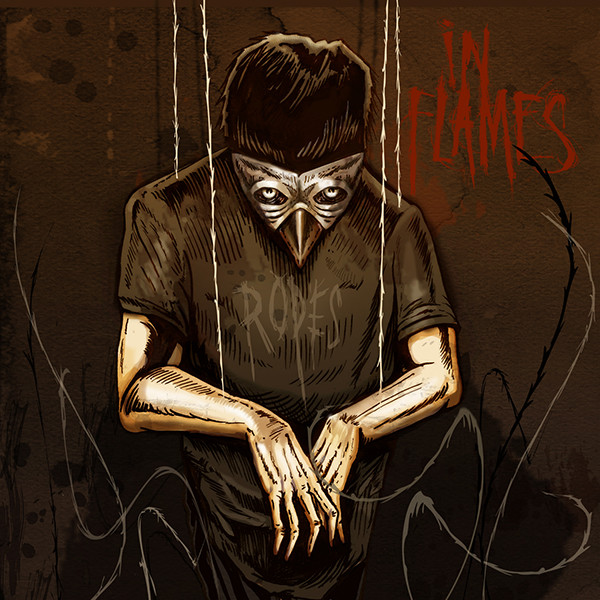
Have you worked on any other album covers besides the ones for Woodhawk? Yes, I’ve done two projects for In Flames in the past. I did the single artwork for Ropes and the fold-out cassette design for Clayman 2020.
ScreenshotScreenshot
Where can people find more of your artwork, album covers, or prints? I’ve been too busy with projects lately to focus on prints or a dedicated website, but you can see all my artwork on my Instagram: @mark_kowalchuk
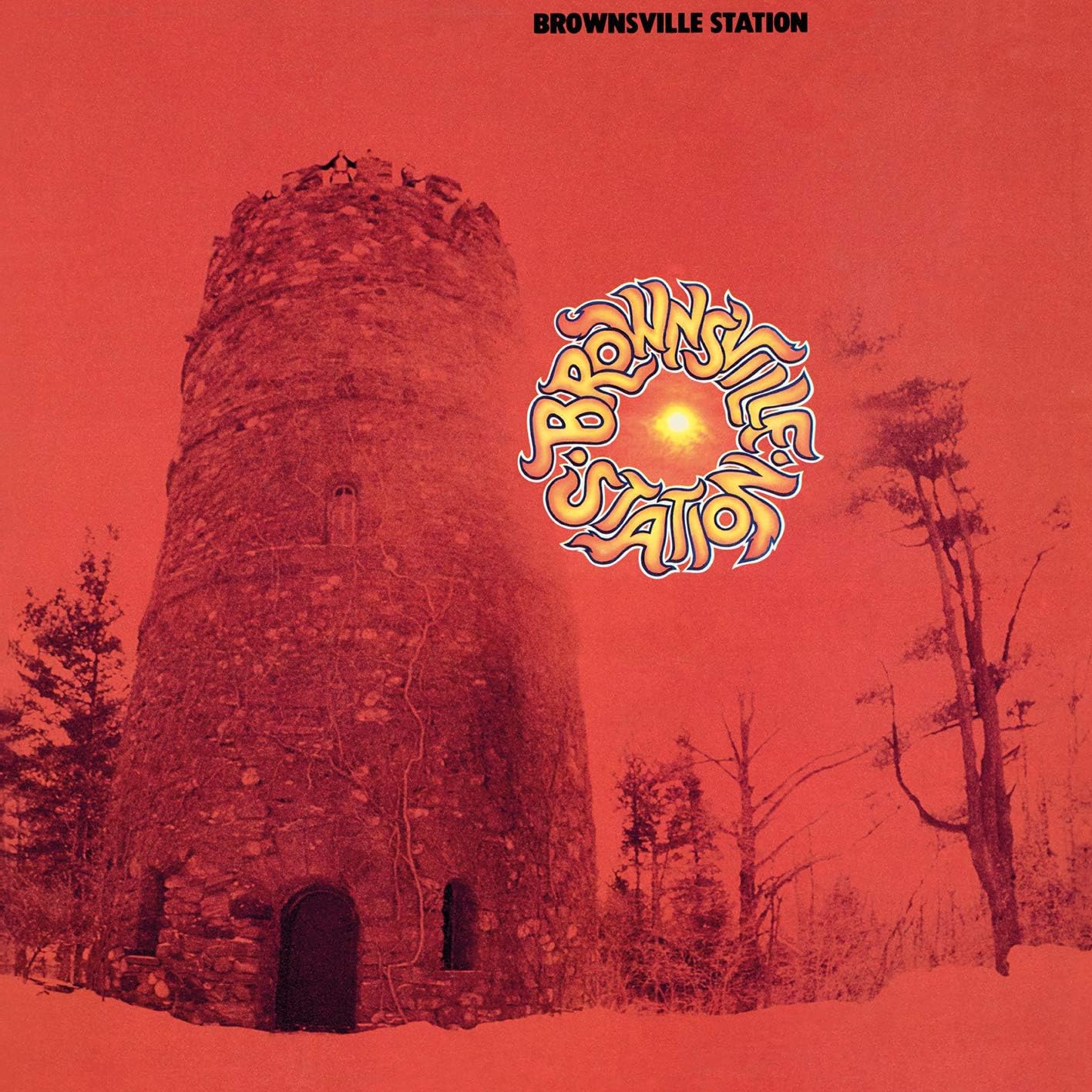
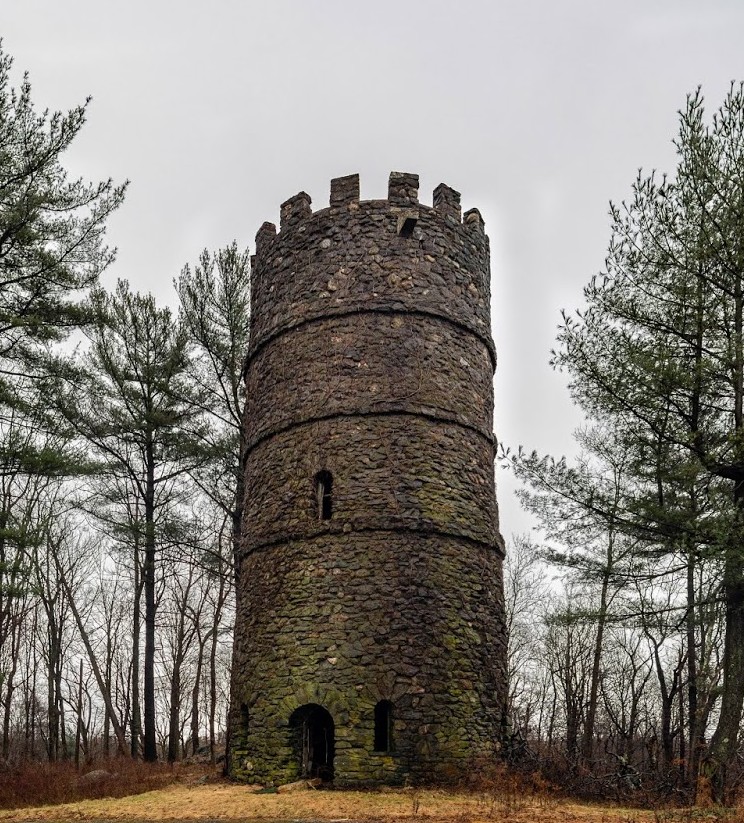
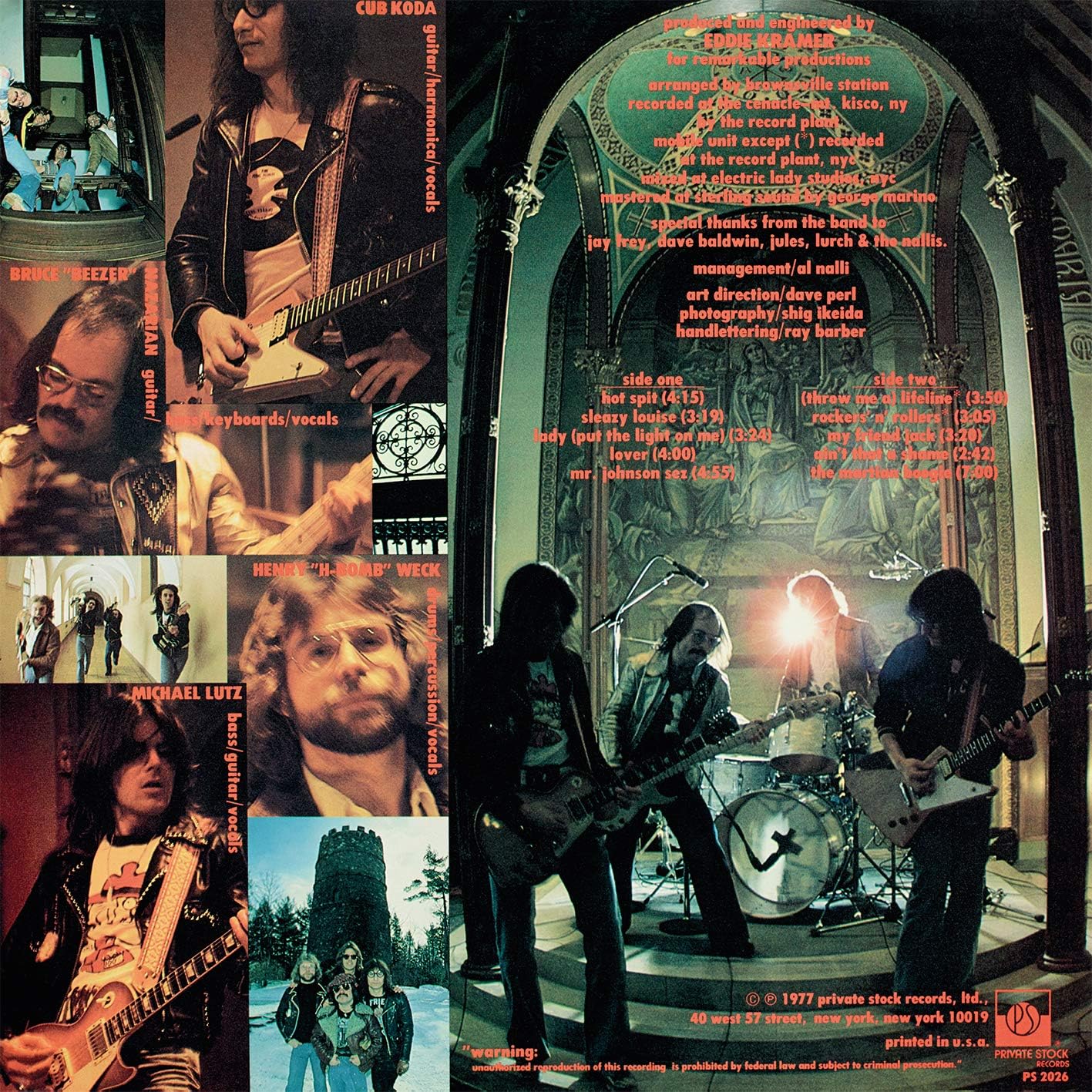
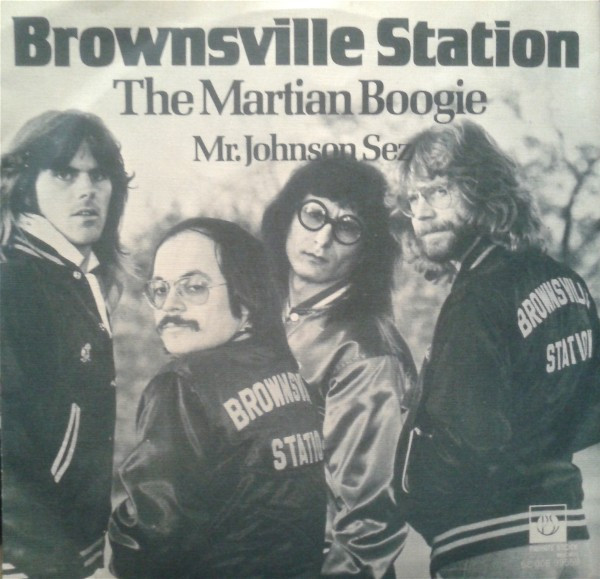
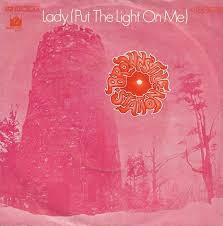
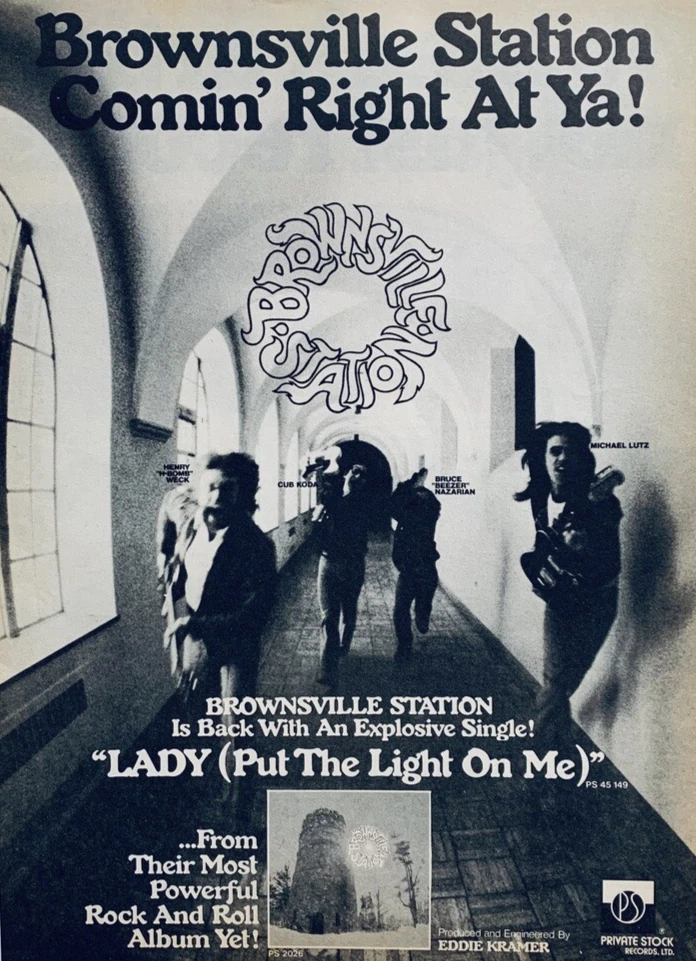
After a long delay, a line-up change, and signing to the Private Stock label (another small label), BROWNSVILLE STATION released what many consider to be the band’s best album in the spring of 1977. It’s their self-titled album, often dubbed the ‘red album’ for it’s cover (also referred to as the band’s ‘lost’ album being the only one not given a proper CD release). After the excellent Motor City Connection album, the band added Bruce “Beezer” Nazarian on guitar, keyboards, and vocals. Nazarian had previously guested on the track “You Know Better”, from MCC. (Now) legendary producer Eddie Kramer was brought in to produce the album. A busy year for Kramer, as he was also involved with such bands as Led Zeppelin, The Rolling Stones, Kiss, Bad Company, and Angel (among others) throughout the year. Recorded largely at The Cenacle of Mount Kisco, NY, a former convent (abandoned and demolished in 2019), also known where Aerosmith recorded their Draw The Line album, also released later in ’77. The cover for the red album was taken on the property by Shig Ikeda (legendary photographer, better known for his photos of Blondie).
The band took on a more harder edged sound, heavier on the guitar and stories. Cuts like “Sleazy Louise”, “Hot Spit”, and “Rockers n Rollers”. The band also took on a more commercial (or radio friendly) approach with songs like “Lover”, “Throw Me A Lifeline”, and the hit single “Lady (Put The Light On Me)”, a song co-written by British producer/songwriter – Phil Wainman & Brotherhood Of Man’s John Goodison. BS also featured a rockin’ updated cover of Fats Domino’s “Ain’t That A Shame” (this was a year prior to Cheap Trick’s live version, which became a hit single for them). Another highlight is the southern blues of “Mr Johnson Sez”, a tribute, in which the band include legendary delta blues player Robert Johnson in the writing credits. Also included is the band’s nod to Jack Daniels via the country sounding story “My Friend Jack”. Last up is the band’s legendary late-night bizarre sci-fi tale of “The Martian Boogie”. This one would feature on the Dr Demento radio show, and was issued as a single, becoming another minor hit. “The Martian Boogie” is also the next most likely Brownsville Station song (after “Smokin’ In The Boys Room”) that one might still here on FM radio.
Though Brownsville Station boasted 2 minor hit singles, the album didn’t do as well, but this line-up stayed together for one more album. In 1978, then signed to Epic, the band altered their name to just ‘Brownsville’, and released Air Special. Produced by Tom Werman, longtime producer for Ted Nugent, as well as Cheap Trick, Molly Hatchet, and later ’80s metal acts like Twisted Sister and Dokken. Werman seemed to help attempt to make the band more straight ahead hard rock and commercially appealing, but to me this album was a bit of let down after the 1977 album. It featured the single “Love Stealer” (another Phil Wainman track), but it did not chart. The band broke up soon after.
Although there’s been no proper CD release of Brownsville Station, Music On Vinyl did release limited edition red and white vinyl (separately) copies of this album in 2019.
BROWNSVILLE STATION (Private Stock 149) Lady (Put The Light On Me) (3:24) (Utopia/Dejamus – ASCAP) (Wainman, Goodison) A soulful vocal chorus lifts this record above the norm of hard rock offerings, but make no mistake, this is rock at its most unrefined. A definite audience participation number. Any pop stations won’t be able to resist this re- emergence on a new label. (CashBox, 05/77)
BROWNSVILLE STATION (Private Stock 167) The Martian Boogie (4:20) (Ainal) (Lutz, Weck, Koda, Nazarian) This edit of the LP version still combines the best of talking blues, science fiction and passages reminiscent of Blue Oyster Cult. The band isn’t self-conscious about it’s somewhat juvenile sense of humor, brought forth with an alien squeak and eerie music reminding one of “One Step Beyond.” – CashBox, 08/77.
BROWNSVILLE STATION – Brownsville Station – Private Stock OGPS-2026 – Producer: Eddie Kramer – List: 6.98 Tight. brash and uncompromising rock and roll is their forte and they promise not to make you think, get involved or become spiritual. But if you like it loud, sassy and simple, this quartet has just the right sound to test your stereo equipment. No punk rockers these guys, Brownsville Station gets the point across without drowning it in over -amplification. For top 40 and AOR playlists. (CashBox, 1977-04-30)
*Michael Lutz, lead singer for Brownsville Station, has become the first rock musician (as far as we can tell) to qualify for the 26+ miles of the Boston Marathon (the Brownsville Station LP is due out on Private Stock at the end of the month) .. (CashBox, 04/77)
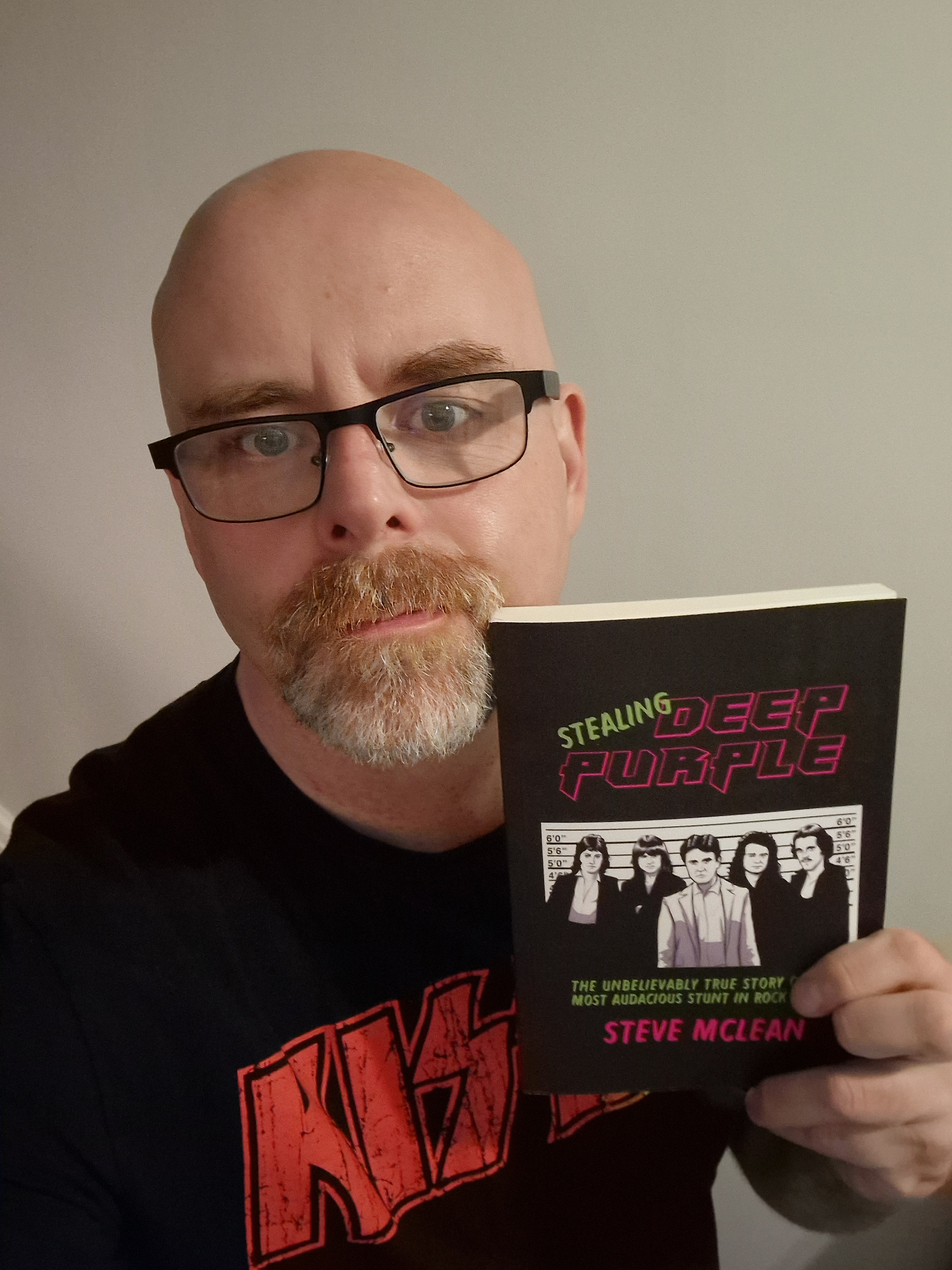
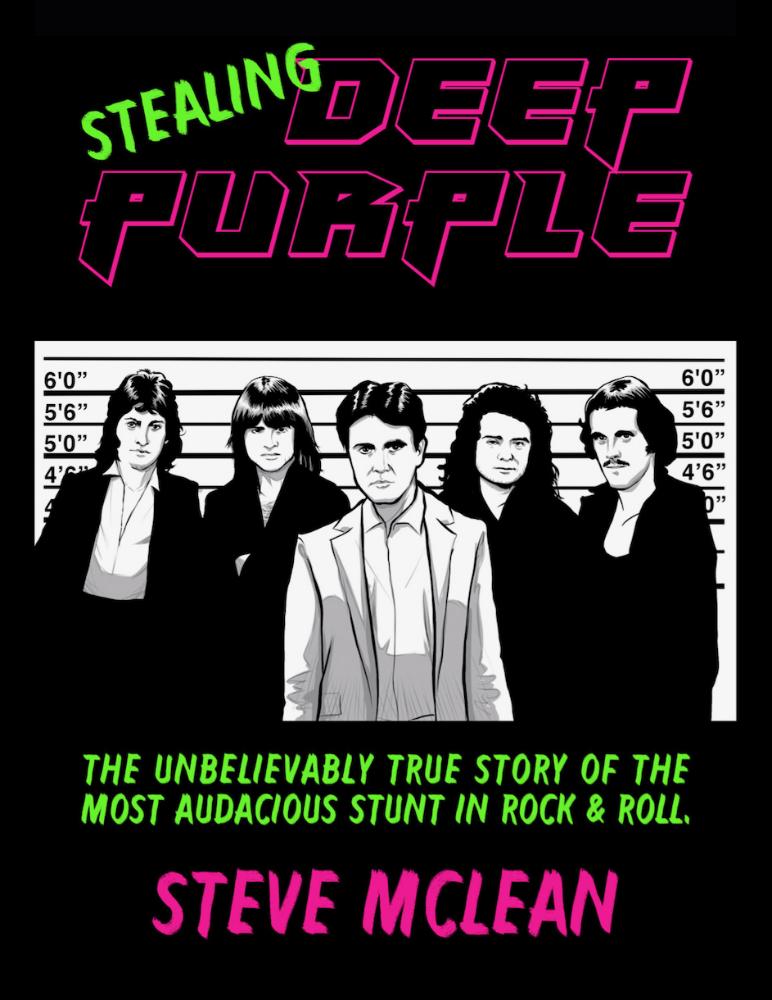
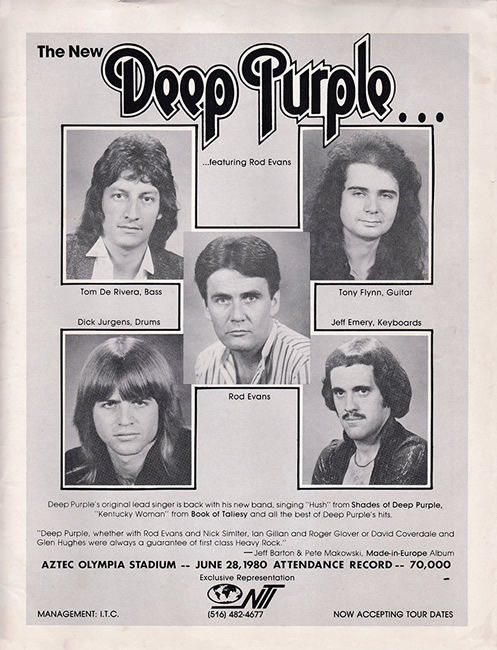
Steve McLean is primarily known as a stand-up comic, originally from Scotland, but now in London. McLean also is a passionate music fan, and particularly of Deep Purple. In 1980, originally DP singer Rod Evans fronted a new band that took the name ‘Deep Purple’ (or ‘The New Deep Purple’), as the group was defunct at the time, and began doing shows throughout North America. They were ultimately stopped, and through the court case it cost Evans in fines and future royalties. From then on Rod Evans disappeared from the spotlight completely, and hasn’t been heard of since. But in Stealing Seep Purple, McLean has researched throroughly and published the story of that strange chapter in Deep Purple’s history, often not mentioned so much.
Below Steve’s answers my questions pertaining to this period and the making of his book. A very interesting story, well worth checking out. *You can find out more on Steve and Stealing Deep Purple at the links at the bottom.
Did you have any connection to this 1980 era of Rod Evans DP? (did you see the band or follow the story at the time?)
Alas, I was four or five years old at the time. The first I heard part of the story was when I was 17 (1993). I was visiting London to see Aerosmith at Wembley Arena. I was in a bar called The Royal George which used to be a rock pub and there was a guy from the U.S. who said he saw Deep Purple in a small club near Boston in the autumn of 1980. The friend I was with, who was a bit older than me and a massive Deep Purple fan, called the guy out for talking bullshit, since Deep Purple were not together at the time. It got quite tense.
I later learned of the Rod Evans group and have been kind of fascinated about the tale since then. Now, the show that the guy in the bar was talking about near Boston (I think in Lowell or Lynn) might have been cancelled, there are conflicting reports. So it is possible that the guy was bullshitting in a different way. He might have seen the adverts for the show before it was cancelled and decided to tell young and naive strangers a tale. And it’s possible that the shows weren’t cancelled and did go ahead and he was there. But it’s also possible that he went to a different show in the same town on a different day. There was no publicised ‘tour schedule’ as such. The plan for the band was to play in small towns and just advertise the shows locally.
What we do know is that there was around 70 shows and there is printed evidence of about half of them. That’s the kind of fuzzy details we’re dealing with when it comes to “The New Deep Purple”. The book attempts to unpick the facts from fiction.
During the late 70s there was a lot of band’s ‘resurrected’ in questionable ways. Curious if you dug in to some of these other bands at all (for research). The one I’m thinking about it Steppenwolf, where there were a number of versions of the band on the road at the same time (a couple of these guys wound up in DP1980). Much of this came from John Kay’s book.
John Kay’s book is excellent. It does however tell us a story that we don’t often consider in our appraisals of the events.
The ‘questionable ways’ that the band was resurrected were initially empowered by Kay granting a license to the band name. Now that license ended up getting abused by multiple Steppenwolf members and also by musicians who had never been anywhere near the original Steppenwolf (namely Tony Flynn and Geoff Emery who both went on to be in the New Deep Purple), but without Kay agreeing to the license for original reconstituted band, well I wonder if the others would ever have happened.
I don’t blame John for what he did, he had bills to pay and licencing deal from the name of a band that he no longer had any interest in must have seemed like free money. It appears Kay took over two years to launch legal action against the multiple bands using the Steppenwolf name and even then it seems, to me at least, he was only really outraged about it when the licensing fees stopped coming in.
I think a person would have to be incredibly naive to believe that John Kay wasn’t aware what was being done to the Steppenwolf name. This sort of behavior was as old as the entertainment industry; From fake circuses pretending to be connected to Barnum, the unofficial versions of Gilbert and Sullivan musicals to the multiple versions of the Zombies or The Animals. It only really seems to be a problem for the venues or the promoters when the ruse is discovered by the general public. Personally I think the industry operated under a blanket of plausible deniability.
I spoke to a few members of reconstituted bands to try to get an understanding of how things worked in such a group. Musicians from the likes of The New Cactus Band and The New MC5 (who did shows with The New Deep Purple). In contrast to the rock and roll luxury lifestyle, they often painted a bleak picture of working bands on gruelling schedules singing for their supper.
What sparked your interest enough in this period to want to write about it?
I just think it’s totally WTF! The Mexico chapter of story alone has its roots in the Mexican revolution, it also involves the civil rights movement, a burgeoning rock scene and a happy ending. Not bad for a episode that also includes a riot, a crowd crush and a Red Cross emergency triage unit! I was interested because it’s the kind of story I’d like to read. I’m a stand up comedian and I write hour long shows. I don’t write shows about things I don’t love or I’m not interested in. I think anyone reading the book will understand that I love Purple’s music and I love the tale, fans can tell if you’re a fraud and the last thing I’d want is for any hardcore Deep Purple fan to think I’ve done a disservice to the band they’ve devoted their lives to.
This period is often overlooked or unmentioned in Deep Purple books and stories. Do you feel it is a valid period that deserves to be told and mentioned In the band’s history? And do you feel this tour might’ve had any connection or influence in the band’s eventual reunion a few years later?
It’s definitely a valid part of their history and I think it should be embraced by the band. There’s line in this book that says something like ‘This is an interesting story because Deep Purple are a great band. Without Deep Purple being as great as they are then this story would be nothing’
I found the most negative opinions of the The New Deep Purple come from people who didn’t attend the shows. I spoke to folks who went to the shows and had a great time (as well as those who thought it sucked!)
I think the resulting court case was the first time the Deep Purple members had all worked together in any capacity for years. Probably the first time Blackmore had anything to do with them that wasn’t through third parties. I would say the court case did a lot to defrost the atmosphere between everyone. It’s weird to say this but I think it was the first step on the road to the reunion and without it, who knows, the reunion may not happened or might have been a few more years away.
I get why fans are reluctant to embrace this part of history. It’s stirs complex emotions and the book highlights the darker side to the musicians we love. As mentioned above, I spoke to a few fans of the band who attended the shows, plenty had a good time (a match in number for those who had a bad time). One person went to a show with her brother and that was her last memory of him before he passed away and another person met a girl at the show, they dated, got married, had kids and now have grandchildren… his whole family is thanks to that show. As I ask in the book, who are we to take that away from them?
There is a lot of stories and photos from this tour online; what gems have you dug up through your research? (people you’ve interviewed, photos or video you came across, etc…)
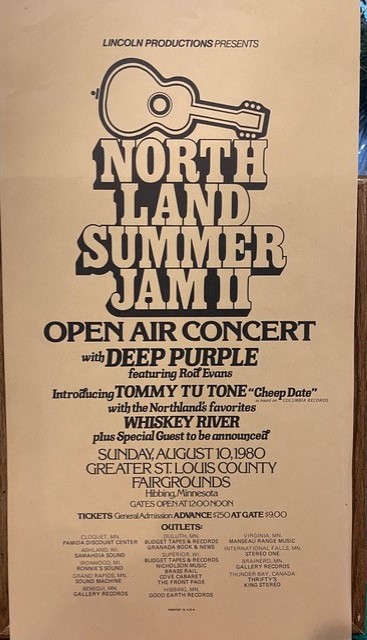
Most of the stuff I acquired were memories and clippings from newspapers. That said I came across a few ticket stubs and such. Norm from the Whisky River Band sent me a lovely colour version of a poster from the Northland Summer Jam II. It was a grandly titled small festival, akin to a county fair and it was the ideal stomping ground for the New Deep Purple. A rural small town that didn’t get much in the way of entertainment that attracted mainly a casual fan who had little idea of what the band was supposed to look like. In such an environment, where there was no pressure from a partisan crowd, The New Deep Purple seemed to put on a good show.
One of my other favourite bits I came across was Jim Dandy’s performance supporting the band in Mexico. It’s on Youtube, The clip was also great for contacting people who had been to the show and had first hand accounts of the gig. History has remembered the trouble in Mexico as being down to the New Deep Purple’s performance but the reality is somewhat different…
Did you search out fans for stories and memorabilia or did you get enough that simply came out with previously unwritten recollections of shows and encounters?
There’s a lot of accounts online already but yes I actively sought out fan accounts, mainly from the larger shows. The problem with this is that memories are fuzzy and it was 45 years ago, so I had to be wary of what to trust. One excellent bit of information I found out from a staff member from the Baby O bar in Seaside Heights, New Jersey. The show didn’t actually go ahead, even though there a previous reports saying it did. It was cancelled not long before the band went on stage. I’ve read online that people had attended the show but that’s not true according to the door staff. Now, once again, that’s not to say that a show at the Baby O didn’t take place on a different date or that there wasn’t a show in Seaside Heights on that day. If you read the book you’ll read about a string of cancelled shows and postponed dates and moved venues. It was hard sorting out false memories for actual fact, but I think I’ve done a decent job in piecing it all together.
The band, at the time had said they were recording an album. This obviously never came out, but did you find any truth to this and what do you think the impact of this might’ve been had it come out back then?
I honestly don’t know what to believe here. I know that the same claims were made by the versions of Steppenwolf (and the Zombies etc),
It seems to me that if I wanted to give legitimacy to a band trying to convince the public they were the read deal, then I would certainly say ‘we’re recording an album’ or ‘we’re in talks with a label’ as it’s the kind of thing a legally-sound band would say in an interview.
That said Mike Curb was reportedly interested in the band and he wasn’t a fool. It’s likely Warners-Curb paid for some demos until they realised the legalities of trying to release a record as The New Deep Purple.
Did you find yourself feeling sympathetic for Rod Evans after all this? I was always under the impression he was simply duped into this whole situation.
The book started out as an investigation but evolved into a document of understanding and perhaps a plea for clemency.
I don’t however think he was ‘duped’ into what he was doing. It’s a popular fan opinion because, fans being fans, don’t like to think that the people that they love would behave in any way we wouldn’t like them to, but to say Rod was duped is a bit of insult to his intellect. He had been involved in the industry for about a decade before his 1974 retirement, I think it was an idea that he was fully onboard with but I also think it got away from him.
Part of the reason that it got away from him was that I think he thought he was legally in the right, to begin with at least. I think he thought he had, if not the blessing from the Deep Purple management, then the begrudging verbal agreement from them. There’s enough evidence in the book to suggest this.
Reading between the lines of the statements that came out from the band and management, it reads to me very much like a lot of non-denial denials. A lot like when Mick Fleetwood commented on the fake Fleetwood Mac.
Personally, I think he had some rights to the band name, but not the brand, if that makes sense. Put it this way, if he’d gone out a Rod Evan’s Deep Purple or Rod Evans From Deep Purple and just played Deep Purple Mark 1, I don’t think he’d have been hauled through the courts in the same way.
If taken in the context that Deep Purple had broken up and they weren’t really bothered about playing together again, then the prospect of licensing revenue, (perhaps unbeknownst to the Lord, Paice & Co) would have once again seemed like free money to Deep Purple’s management, just as it may have done to John Kay.
Although for balance I should probably point out that Purple’s management team moved a lot quicker than Kay to put a stop to things… The Steppenwolf saga may have even changed the Deep Purple management’s minds. By that time the damage to the name of Steppenwolf was highly evident for the whole industry to see.
The whole mystery of Rod Evans, and what became of him after this period has quite a following of its own online. Did you find much on Rod and those that knew him after the court case and all?
I spoke to a couple of people who claimed to know him but I after a few questions it turned out they were probably talking shit. There’s one guy going around various Facebook comments section claiming to know Rod and his movements, but it seems to be a desperate cry for attention. Bobby Caldwell, Captain Beyond’s drummer says he is in touch with him and guards his phone number like ‘Fort Knox’ I sent Bobby a message asking if he’d put me in touch but I got no reply, If you’re out there Rod, I’d love to hear from you. I’m happy to amend anything in future editions of the book if you think I’ve got it wrong, please get in touch. One of my main goals of this book was to ‘open the story out to the floor’ …which it has already done. I’ve had few people get in touch, nobody has contradicted me yet but I’ll be happy if someone says ‘you’ve got this bit wrong…. I know because I was there’
It’s been heavily reported that Rod has lost his Deep Purple royalties, I wonder if that only means officially and that they band are in fact ‘looking after him’ and making sure he gets his share. It would make sense based on their comments that they felt he was in with bad people and that the only way to stop him was to sue him. But then maybe that’s what I want to believe.
How is the book been made available at present? Will it be available via Amazon, etc..?
It’s available through my site Deeppurplebook.com and through Lulu Publishing. I’m trying not to use Amazon… mainly because of the disgustingly low fees they pay authors. Can you believe they uploaded my book to their in-house publishing without my permission? And then paid me pennies for the copies they sold. I was several emails before they’d take my work off of their website. The more authors I speak to the more I hear of how Amazon seem to behave like gangsters.
What other books have you authored? Any details of rock books of interest?
This is my first book! I’m a stand up comedian and in a previous life I was a development producer for documentaries. If you’re reading the book and you think it’s paced like a documentary film, that’ll be why. I’ve previously written reviews and opinion pieces for magazines and websites.
Are you planning on or working on any other rock n roll books?
So, my next project is to turn Stealing Deep Purple into some kind of show. I envisage it being a multi media presentation that’s funny and informative.
I’d quite like to pull at the threat of the numerous fake Iron Butterfly bands that existed in the late 1970s, so that might be my next book.





 Outsider Rock