In this 2nd installment of The Story Behind The Album Cover, guitarist Mike Coates tells about his own creation for the US band Asia’s 1980 LP [the band’s 2nd] – Armed To The Teeth. This cover instantly reminded me of the Conan comic books, my dad was an avid comic collector and had a huge collection of Conan comics. My dad didn’t like any of the music I listened to, but he would’ve loved the artwork on this cover.
Concept of the cover and tie-in with the songs …
The cover was meant to portray the total concept nature of the entire album. I call the him the “Time Warrior.” The concept was the survival of the human spirit through history. The songs are about very different times so I used weapons from various eras. I tried to use real props to draw from, e.g. the sword, the bow and arrow, the six gun, and the rifle.
How it was drawn…
The guy’s body was drawn from several body builders, my own shinguards, a New York Giants football helmet, and those were my legs at the time. The tank was a Joe Kubert creation. That’s London burning in the background. Most of the body parts were mine. I am an Eckist so the concept was very spiritual. Kind of a western culture version of Arjuna and the Gita. The original drawing was quite large and done with a mechanical pencil. An ad agency did the color overlays. The drawing took many weeks. The colors about two hours. They kept pulling up the graphite and so I wind up correcting the cover’s extensive detail at least four times. It will be fun seeing the enlarged picture again when the LP box set comes out shortly.
Comic and Conan influence…
Yes, I was really into comics. Joe Kubert was an early influence. But I was really a Marvel fan and John Buscema was my hero. Frank Frazetta was also a major influence. In fact, I did a huge painting of Conan (on two house doors) that we used on a large easel behind the band for years. I had hoped to do one for each person on stage, but that one painting took three months so that was never realized. Those doors are still in my bedroom. There are good images of it in the CD booklet. I had hoped to do a drawing for the first cover (Conan breaking a bull’s neck) but again ran out of time putting the band together. I wrote all of our original material, so time was always an issue. Our engineer on “Armed to the Teeth” had just worked on the Bad Company “Run With the Pack” album, so that finished the front cover concept.
Through the use of Youtube and Discogs over the last few years I’ve stumbled upon different bands that existed before a much bigger band of the same name – best examples being the Asia from the US and the 2 other British bands that played under the name Iron Maiden in the ’60s and 1970. Back before the internet it was likely much more difficult for bands to realize that the band name they had chosen had already been used or was in use, and many bands probably didn’t think about the importance of registering a band name at the time. I think this sorta came to light more so in the late ’70s to early ’80s when bogus versions of Steppenwolf and Deep Purple existed, the latter being sued out of business – these bands though were related to a previous line up of the band, which in these cases was now being used by 1 former member who didn’t have the right to the name, until someone took legal action. In this series I want to point out successful bands [or in a few cases, had well known players and should’ve done better] that had names that had been previously [or still were] used by an unrelated band that also recorded.
I’ve put down 12 cases of names being re-used or taken. I’ve put the emphasis on the lesser known band, in most cases the first one(s). I’ve also provided a few links to check out. I had a list well over 20 to start, so there may be a Part 2 down the road. Check out some of these bands on youtube, and leave me some feedback in the comments.
Asia
The ‘supergroup’ named ‘Asia’ debuted in 1982, and there self-titled album was one [or the] biggest of that year. They would follow it up with another highly successful album in’83 before the band’s fortunes started to drop and non-stop personnel changes would occur with the band over the next few decades before the original band reunited for 3 albums in the 2000s. But, that Asia -featuring John Wetton [RIP], Carl Palmer, Steve Howe, and Geoff Downes had used a name that was already in use by an American band from South Dakota, another prog / hard rock 4-piece who had recorded 2 albums – 1979’s self titled, and 1980’s Armed To The Teeth, which featured a pretty cool cover drawn by the band’s guitar player . The band consisted of – Michael English – vocals, bass, percussion, Larry Galbraith – vocals, guitars, mandolin, Mike Coates – guitars, mandolin, piano, harpsichord, mellotron, background vocals, and Doug Johnson – drums, percussion [replaced John Haynes]. This Asia’s sound was based more around the twin guitar approach, great vocals and harmonies, mellotron, and lengthier prog pieces with fantasy and history based songs like “The Road Of The Kings”, “Xanadu”, “Kamikaze”, and “Genghis Khan”. Not much in the way of ‘commercial’ rock of the time here, aside from the ballad “Paladin” [issued as a single], on the 2nd album. Both worth checking out, but may as well get the CD [see link below], as original copies of the first LP are over $300 and the second – over $100, on Discogs. Anyway, also check out the link below for Mike Coates detailed account of how they were duped out of the name by the supergroup’s management, and which ultimately lead to the band’s demise.
One of the biggest bands in heavy metal history got their start in the mid ’70s, founded by bass player Steve Harris. The name was taken from the 16 century torture device [or 18th, depending on source] . However, the British metal legends were certainly not the first to the use the name for the their band. There were 3 previous bands that used the name, 2 of which, also from the UK recorded original material under, and another being a 5-piece all-female band from the mid-west USA, though I can’t say they recorded anything – but check out the link below on a brief history of the band with photos and show adverts.
The first Iron Maiden was from Basildon, Essex. This band started as a folk duo and eventually became more of a blues outfit. The band seemed to have a number of connections and brushes with opportunity. They eventually signed to the Gemini label and recorded demos in 1969 for a proposed debut album. A single was also released on Gemini in 1970. with the line-up – Steve Drewett [vocals, harmonica], Trevor Thoms [guitar, vocals], Barry Skeels [bass, vocals], and Steve Chapman [drums, who had replaced Paul Reynolds].
But when a tour of Australia was cancelled, things started to fall apart with Chapman leaving. Their recordings were eventually released under the Iron Maiden name, titled Maiden Voyage in 1998. Interesting stuff, kinda psychedelic, bluesy, a bit folky, even a bit doomy. The CD includes the band’s single, as well as 2 tracks recorded under their previous name ‘Bum’, one of which is titled “God Of Darkness”. Bass player Barry Skeels would go on to record with Zior.
Another Iron Maiden hailed from Bolton, a trio formed in 1967 and consisted of Ian Boulton Smith [aka Beak, lead & rhythm guitar], Paul T.J. O’Neill [drums, keyboards, lead vocals, producer], and Derek Austin [bass, vocals]. This band was a heavier rock band [ala Zeppelin, Free]. I recall reading in a Steve Harris interview [or book?] how he’d got a call regarding another band named Iron Maiden and asking [or demanding?] that he cease using it, to which Harris [I think] ignored it and went out to register the name. Maiden from Bolton disbanded in 1976 anyway. Guitarist Ian Boulton Smith left the band in ’75, and the band carried on with a replacement [Noel Pemberton-Billing], but after more changes they split. Smith passed away from cancer in ’76, and nearly 30 years later O’Neill put together the band’s recordings to release on CD,. He would contact Rod Smallwood [Iron Maiden manager], who would give the band’s OK [with an adjustment to the name], and would also advertise the album’s release on Maiden’s website. Under the name ‘The Bolton Iron Maiden’, they made 1000 copies of the CD Maiden Flight [1970-1976] . A 2nd CD was released years later, as well O’Neill would carry on and record a 3rd CD under the band name, released at the end of 2020. *All profits from Maiden Flight and Boulton Flies Again are given to two cancer charities in Beak’s honor. Cancer Research UK and Macmillian Cancer Care.
Although it’s interesting to note that Steve Harris’ band went on with a name that was in use [and was made aware of], the other 2 British bands that had used the name prior would benefit [or living members would] by having a starting point [name recognition] to release the music they made decades ago. Perhaps without the one Iron Maiden that’s known world wide, recordings from the other 2 bands might’ve never seen the light of day[!?] … Check out the links below for more info on the other Iron Maidens.
This one is one that puzzles me, as Canada’s FM had started as a progressive 3 piece in the mid ’70s, and were still active when the British aor band formed and took up the same name. Hmm, but oh well. Very different sounding bands. I don’t know how much activity or success Canada’s FM ever had in the UK, but I am pretty sure the British FM would be hard to find in any record shop or heard of here. Just a guess. I have most of the Canadian band’s albums, but nothing of the UK band. I’ve checked out plenty of FM [UK], but not too crazy to get anything anytime soon. Canada’s FM, from Toronto originally featured just Cameron Hawkins [bass, keyboards, vocals], and Jeff Plewman [aka -Nash The Slash electric violin, mandolin, vocals], and would soon add [drummer] Martin Deller. Nash left after recording of the legendary debut [rereleased after Nash left, as Black Noise] , as he also had a successful and pioneering solo career. Black Noise featured the band’s best known song “Phasors On Stun”. His replacement was Ben Minks for the next 3 albums [Minks also known for his work with KD Lang, as well as Rush’s Geddy Lee]. Nash would return to the band in the ’80s, as the band became a 4 piece and took on a slightly more commercial approach [I saw them open for Rush at one point]. The original trio reunited in the ’90s for a brief tour of Ontario to promote the CD release of Black Noise, and record a live album. I saw 2 of these shows. Plewman [Nash] passed away in 2014, and though he hadn’t been in the band for years, it continued with Hawkins and numerous changing line-ups. [Well, that was longer than I planned]. FM were never really a commercial band, being very ground breaking in their sound, and I would say the closest thing to them would’ve been John Wetton’s short lived UK .
FM [UK – as they would add to their name in the US] formed in 1984 Merv Goldsworthy [bass], Pete Jupp [drums], Steve Overland [guitar/vocals], Chris Overland [lead guitar] . and Philip Manchester [keyboards]. Chris Overland would be replaced by Andy Barnatt. The band created a strong following in the UK, releasing a number of albums before breaking up in ’95. FM [UK] plays hard-rock / AOR, and features a great singer in Steve Overland. They returned a decade later, and have released a number of albums consistently, including 2020’s Synchronized [Frontiers].
“We did find out, that’s when we had to change the name to FM UK in America, in the States we had to change the name, which was really crap.”, recalled Pete Jupp in a 2011 interview for Metal-Rules.com
Touch
Many may be familiar with the US AOR band Touch, who were formed in the late 70s in New York, and released 2 albums, as well as had a few hits – “Don’t You Know What Love Is” & “When The Spirit Moves You”. The band was /is lead by keyboard player / songwriter / producer Mark Mangold [who’d recorded with 60s band Valhalla]. This ‘Touch’ reformed in recent years and just released a new album – Tomorrow Never Comes.
However, in the late ’60s there was a band using the name Touch, from Portland, Oregon. The band featured the vocal talents of Jeff Hawks, and recorded one album in 1969, as well as a few singles. The album was recorded at Sunset Sound in Hollywood, and was known for drawing the likes of Mick Jagger and Jimi Hendrix, who hung around at the time. The band split soon after it’s release, with a few of the members going on to form Stepson. The album would have an impact on a number of bands, including Uriah Heep.
Billion Dollar Babies is the name of a Swedish metal band, who’ve released 3 albums from 2010 to 2017. Not too bad actually, well worth checking out. But the name has been used so often, and it all comes back to the Top selling album by the original Alice Cooper, released in 1973. More so, ex members of Alice Cooper recorded the album Battle Axe under the name in 1977, and I’m sure there’s been a number of AC tribute bands that have used [or are using] the name as well.
The German heavy metal band founded by Rudolf Schenker released their first album in 1972, though Schenker likes to date the band to 1965 [when he was in High School, whatever]. So if that was the case, the German Scorpions were the 3rd rock/pop band to use the name.
The Scorpions, from South London started in 1959, It featured brothers John & Ted Barber, along with drummer Ivor Knight [having replaced Mick LeDieu]. The band released 2 instrumental singles in 1961, – “Rockin’ At The Phil” [a Chuck Berry cover, and “Ghost Riders In The Sky” [originally by Western artist Stanley Davis Jones, and later covered by Johnny Cash, as well as US band The Outlaws]. The band recorded more [and tho’ I’m not sure of dates]; at some point also went by the name The Ferridays. A 32 track “Anthology” of their recordings was released in 1996, which included some tracks done with legendary British producer Joe Meek [see next entry]. The band were still playing up until 2010, at least [on youtube].
There was also a 5 piece band going by The Scorpions from Manchester. Originally including Tony Postill [guitar], Rodney Posthill [guitar], Tony Brierley [bass], Mike Delaney [drums]. and Pete Lewis [vocals]. The band’s records would only get released in The Netherlands, where they would go play, and they had a hit with a cover of Fats Domino’s “Hey Josephine”. Within a few years though Lewis was the only original member left. The band continued to release singles, and even a few LPs in the mid ’60s – but only in The Netherlands. “Hey Josephine” became a hit again in ’77, and Lewis with a new version of the band recorded an album, consisting of new and re-recorded songs. The band played in The Netherlands up until 1979. Lewis passed away in ’85. Interestingly, Graham Lee and a few other non-original members released a CD in 2011 as The Scorpions.
The Outlaws
The name The Outlaws has been used a few times, probably most notably by the Southern rock band from Florida, formed in the late ’60s by guitarist / vocalist Hughie Thomasson, and by teh time of the first album in ’75 consisted of Billy Jones [guitar], Frank O’Keefe [bass], Henry Paul [guitar, vocals], and Monte Yoho [drums] . The band would release numerous albums over the decades, and scored hits with “Green Grass And High Tides”, “There Goes Another Love Song”, and a cover of “Ghost Riders In The Sky”. The band was non active for some time when Thomasson joined Lynyrd Skynyrd, but returned a decade later. Thomasson passed away in 2007, and Henry Paul & Monte Yoho kept the band going, following legal issues over the name. They released a new studio album last year.
Now, the other Outlaws was a British band that was put together by producer Joe Meek, and existed from ’60-’65. An instrumental group, originally put together to back singer Mike Berry, who had a string of hit singles. They would also back other singers, as well as record their own material. The band was known for it being a starting point for such rock notables as Mick Underwood [Quatermass, Gillan], Chas Hodges [Chas & Dave], and largely – Ritchie Blackmore [Deep Purple, Rainbow]. A few CD compilations of the bands singles would be released as recent as last year.
Angel
Not that either rock band that used the name Angel were huge successes, but the US band formed in ’75 featuring Frank Dimino [vocals], Punky Meadows [guitar], Gregg Giuffria [keyboards], Mickey Jones [bass] and Barry Brandt [drums] are best known. The band was signed to Casablanca Records, the same label as Kiss – who they be forever linked to. The band released 5 studio albums and 1 live set from 1975 til 1980 before breaking up. The first 2 albums were the bands most popular amongst longtime fans, being more progressive and harder rocking, but then looking for singles the next 3 albums consisted of more pop oriented rock tunes. More recently Dimino and Meadows reformed a new version of the band and released the excellent Risen album in 2019.
In the UK though the name Angel existed briefly from 1974-’75 as a glam band. The band was managed & produced by Andy Scott and Mick Tucker of Sweet, who knew bandmembers from their previous band – Pebbles. As Angel, they released just 2 singles in their short existence, sounding very much like Sweet. The band consisted of Brian Johnson [vocals], Martin Kemp [bass], Steve Rickard [drums], Joe Ryan [lead guitar], who was replaced by Bob Banasiak for the 2nd single. Both A-sides -“Good Time Fanny” and “Little Boy Blue” were penned by Scott, while the B-sides were the band’s own. Hmm, sounds familiar. The first single [“Good Time Fanny”] became a hit in Germany, and the band would go tour there. Bravo Magazine [Germany] would also vote the band 2nd place in best newcomers [behind Queen]. After a change in line up, the 2nd single was recorded and released, but failed to chart. The band recorded more tracks in 1975, following a few line-up changes, but nothing came of these, due to record company & management issues, and they broke up. Singer Brian Johnson [not the guy from AC/DC] joined Belgian band Octopus, and had a pile of hit singles with the, In 2005 Angel did a reunion show, and subsequently released a 15 track CD of all their studio recordings from 74 & 75, plus live tracks from the 2005 concert. In 2010 a reformed version of the band released the CD The Butterfly Song.
Best known band using the name Magnum is British hard-rock / pomp band who were founded by guitarist / songwriter Tony Clarkin and singer Bob Catley in the early ’70s. By 1978 they signed to Jet Records and released their first album. The band scored hits in the UK, and released a pile of great albums before splitting in 1995. The band had 0 success in North America and rarely played over here. The band reformed in 2001 and have continued to release excellent albums every few years, despite a number of personnel changes. Clarkin and Catley remain the face of the band.
The name Magnum though would be used by a few other bands in the US. There was the California based funk/latin/jazz band that released their lone LP Fully Loaded in 1974, as well as a few singles. There was also a band from Pennsylvania who would release a trio of singles from 1980 to 84, and a full album in 1989. Again, not sure why these guys wouldn’t have know the name was already in use by the time they recorded, but oh well. The band was largely a covers bands, performing hard-rock / AOR hits, and were founded by keyboard player Lonnie Warner and guitarist Steve Weiss in ’78, and included drummer Dave Werkhiser, lead vocalist [and keyboardist] Tommy Zito, and bass player Butch Samolewicz. In ’83 the band released a 10 song cassette of originals titled Hot Nights. And by the time the band released their only CD, of 8 songs titled No Secrets in 1989, the band had gone through more changes, and then featured singer Robert Mason [later of Lynch Mob, Cry Of Love, and Warrant] and were produced by Benjy King [who’s various credits up until that point included Rick Derringer, Scandal, and (the late) Alan Merrill]. Original singer/keyboardist Tommy Zito joined AOR rockers Aviator for a few years. The band split in the mid ’90s, but apparently do the occasional local reunion show, and has added ‘USA’ to their name [online]
UK band Thunder formed in the late ’80s, and were hailed as the next huge classic rock band to follow the likes of Zeppelin, Bad Company,… with their 1990 debut Back Street Symphony. The band remained highly successful in the UK and elsewhere, but had no such fortune in North America [see Magnum]. Lead by the talents of singer Danny Bowes – Lead Vocals and guitarist Luke Morley, and originally including keyboardist Ben Matthews, bass player Mark Luckhurst, and drummer Gary [Harry] James [who would later join Magnum for a number of albums]. The band split a few times over the years, but are back making great music in recent years, including the recently released All The Right Moves, with 4 of the original members.
The name Thunder had been used before, notably by 2 separate bands in the US. The first being the short-lived band featuring guitarist / songwriter John Nitzinger [Nitzinger, Bloodrock] and bassist David Hungate [Toto], as well as singer David Alley, drummer Randy Reeder [Bloodrock], keyboardist Whitey Thomas [Nitzinger],… Not really sure who Was the band, as there’s only 2 guys featured on the back cover, tho Nitzinger, Hungate, and Alley all contribute to the songwriting, and Thomas serves as co-producer, and there’s also a number of guitar players credits, and a pile of female backing singers. Hmm.. Anyway, not a bad album. I have the Nitzinger albums, and this is comparable with songs like “King’s X”, and the fast rocker “Power Glide”. Not consistently heavy tho, plenty of slower funky tunes and a few ballads. Nitzinger would go on to record a number of his own albums, as well as recording with PM [w/ Carl Palmer], Alice Cooper, and Dave Evans [original AC/DC frontman]. Hungate would join Toto til 1982 and do tons of session recordings in Nashville, and Randy Reeder would go on to record on the lone LP by hard-rock / prog band Alexis [1977]- which was produced by Ron Nevison [great sounding album, cool cover!]
A Southern rock band, from Tennessee used the Thunder name, consisting of bassist Chopper Anderson, drummer Tris Imboden [Honk, Kenny Loggins], and guitarist / vocalist John Porter McMeans, and guitarist / keyboard player Mo West. The band released 2 albums – 1980’s self-titled, and 1982’s Headphones For Cows [great title and album cover!], adding keyboardist Denny Henson [Fools Gold] for the 2nd album. The albums, usually listed as Southern rock, are kinda that late 70s AOR rock, but occasionally touch on funk, blues and country. Good tunes include “Easy Street”, “Service With A Smile”, “Can’t Let Go / Can’t Hold On” and “Midnight Heartache”. I prefer the 2nd album, being a bit more upbeat.
Chopper Anderson would join the reunited line up of Whitford- St Holmes [on their 2015 album], McMeans would go on to write and record with Dan Seals, as well as release a solo CD in 1991 with West as producer. West passed away in 2010.
American heavy metal band Skid Row arrived in 1989 with their excellent debut album, featuring the hits “18 And Life” and “Youth Gone Wild”. The band was originally fronted by Canadian singer Sebastien Bach, who later went on to acting and a solo career. The band split after 3 albums, but reformed with a different singer 6 years later. Although a cool name for a metal band, the New Jersey based band was not the first to use it – that would be the legendary Irish blues rock band originally consisting of bassist Brendan ‘Brush’ Shiels , drummer Noel ‘Nollaig’ Bridgeman, guitarist Bernard “Ben” Cheevers on guitar, and singer Phil Lynott! Gary Moore would soon join, and Cheevers would leave, and Lynott was fired by Shiels, having appeared on just 1 single, making this Skid Row a trio. In return for letting him go Shiels would give Lynott a bass guitar and taught him how to play it. The band’s debut album in early ’70 was pulled quickly so that the band could re-record some tracks and add newer ones. It was re-released in the fall of ’70, titled Skid. It was followed by 34 Hours [titled after the amount of time taken to record it] A 3rd album was recorded but not released until 1990 under the title Gary Moore/Brush Shiels/Noel Bridgeman. The band under Shiels’ went through numerous changes and would feature guitarists Eric Bell [for a few shows], then Paul Chapman. Shiels would return with a new 4 piece line-up in the mid-70s, and release the double live set [mainly covers] Alive And Kickin’. Noel Bridgeman would go on to record a number of albums with Irish folk singer Mary Black, among others, and passed away March 23 of this year. Chapman went on to record and tour with Lone Star and UFO, before passing in 2020. Moore had a lengthy solo career, as well as a period in Thin Lizzy, he passed in 2011. Shiels latest solo album was in 2012. In later years he also challenged and protested the use of the band name by the American band [see link below].
Well, long before the massively successful US band had their top hit “To Be With You” in 1991, the name Mr Big had been used for years by a British band. The US band formed in the late ’80s, featured the vocals of Eric Martin, and bass player Billy Sheehan, guitarist Paul Gilbert, and drummer Pat Torpey [RIP, 2018]. The band released 9 studio albums, as well as had a number of smaller hits, and live albums – particularly in Japan where they were huge.
The band name had previously been used by a British band formed in 1967 under the name Burnt Oak, before changing it to Mr Big in 1972. Original members were – Jeff (Dicken) Pain [guitar, vocals], Pete Crowther [bass], John Burnip and Vince Chaulk [drums]. The band was managed by Bob Hirschman, who also managed Mott The Hoople. They signed to Epic in ’74 and released their first album Sweet Silence in ’75, and would land the opening slot for Queen’s Night At The Opera UK tour. The 2nd album Photographic Smile was recorded in Los Angeles and featured the pop song “Romeo”, which would become a top 10 UK hit. And this is where things get confusing – Photographic Smile came out in late ’76 in North America , where the band was signed to Arista [EMI also issued it then in Japan], EMI would release the self-titled album [w/ a different cover] as the band’s 2nd album in the UK, and everywhere else. The Arista version would feature a mix of songs from both albums [EMI], so there was only 2 albums. Later they’d be openers for Sweet in Europe, but by ’76 they were big enough to headline their own UK. They also toured the US in ’77 with shows alongside Tom Petty & The Heartbreakers, Journey, and Kansas. Mr Big had also seen a few personnel changes. The band’s 3rd album – Seppuku would be produced by Ian Hunter in 1978, but due to record company & management issues would not be released until 2001 when Angel Air Records put it out. A single “Senora” [co-written by Hunter] was issued and the band promoted it on UK’s Top Of The Pops, but the band split up soon after.
A few members [Dicken and Crowther] went on to form Broken Home, who released 2 albums, and scored a few minor hits in Norway. Dicken would later revamp the band with former member Edward Carter, releasing albums in 1996 and 2011. Drummer Vince Chaulk would go on to record with Streetband [which featured Paul Young]. replacement drummer John Martyr went on to record with Voyager and Alaska.
A shame this Mr Big didn’t last longer, their first few albums are full of pop and hard-rock, as well as unique instrumentations and arrangements, and great harmonies,. Not unlike Queen in some ways, but a bit more experimental at times, Favorite tracks – “Time Base”, “Sweet Silence”, “Enjoy It”, “Easy” and “Can We Live (Angel Of My Life)”, In one of the links below, the name dispute is also discussed, as the band felt they’d registered the name in 1973.
Pyromide is the 3rd album from Finnish metal band Temple Balls. If you just want to hear some all-out 2 guitar, heavy, pounding hard rock & metal, with cool lead vocals, melodies, and big vocal choruses – then check this out. There’s a number of kick-ass rockers here in “T.O.T.C.” [Thrill of the chase] , “Fallen Youth” [shades of Dio as this one starts] , and “You Better Run”.
Fave cuts here would be “Bad Bad Bad” [an easily likeable tune, a bit less metal, and a bit of pop, the anthem “Heart Of A Warrior” , and the power ballad “If Only I Could”, which starts on piano and becomes pretty heavy, no mushy stuff here; killer guitar solo. I really like the production and sound of this whole thing. This just gets better after a few listens. Now I am curious about the rest of this band’s stuff. Pretty cool album cover as well from Jan “Orkki” Yrlund.
About:
Temple Balls are an energetic hard rock band from Finland. “Pyromide”, their Frontiers debut and third album overall, is a tour de force of melodic hard rock that sees the band pushing themselves onto the world stage. Produced by none other than Jona Tee (H.E.A.T.), “Pyromide” is a tour-de-force of hooks, powerful rhythms, and anthemic rock ‘n roll like it was meant to be played.
For the past couple of years, Temple Balls has kept busy both in the studio and on the stage. Opening for such bands as Sonata Arctica, Queen, Deep Purple, and Uriah Heep, the band has proven to be more than capable to handle stages of any size, whether it be a big festival or your local club’s stage. Live, this band will set your friggin’ pants on fire and turn you into a believer.
The band’s first official single, ’Hell And Feelin’ Fine’ was released in September 2016 and got loads of airtime on Finnish Radio Rock. The band’s debut album was recorded at Karma Sound Studios (Thailand) in May 2016, and saw the daylight on February 24, 2017. The album was produced by Tobias Lindell, who is known for his collaborations with Europe, Mustasch, and H.E.A.T. Fall of 2017 started with a sold out tour across Finland with Battle Beast. The band also played in Japan for the first time and did a five day tour of Ukraine in late 2017. After their swing through Japan, the readers of the biggest Japanese rock magazine Burrn! voted Temple Balls as ‘the second brightest hope’ and additionally were chosen as ‘The Newcomer of the Year’ on Masa Ito’s Rock TV.
The second album, “Untamed” dropped on March 8, 2019 and immediately got fantastic reviews from music media such as Soundi and Burrn! magazines. The band also toured Europe as support fro Sonata Arctica, cementing their reputation as a stellar live act.
Temple Balls third album, “Pyromide” is now ready to be unleashed. Produced by none other than Jona Tee (H.E.A.T), it is a stunning punch in the face for all lovers of anthemic and melodic hard rock.
Tracklist: Thunder From The North Long Ways, Long Lies T.O.T.C. Fallen Youth Bad Bad Bad What Is Dead Never Dies Unholy Night Heart Of A Warrior You Better Run If Only I Could Something To Die For
Line-up: Arde Teronen – Vocals Jimi Välikangas – Bass Jiri Paavonaho – Guitar Niko Vuorela – Guitar Antti Hissa – Drums
In what is to be Dennis DeYoung’s final album – 26 East Vol 2 will not disappoint DeYoung or so those old Styx fans who still miss him as part of the band. Assuming Dennis is at peace with this being his last, one can’t help but feel a bit sad for him, having created such a fantastic repertoire of music for fans, and here it is – the Grand Finale! And a bit sad [regardless of what you think of his departure from Styx], that he ends his career not as part of the legendary band he helped create and lead for many years. Although I have not picked up everything Dennis did outside of Styx, the guy’s music holds a place for me as one of my first favorite bands whom I collected right til they split in the ’80s, and who’s lyrics usually meant something . I hope the guy has a book in his retirement plans! Having said all that, I enjoyed 26 East Vol 1 last year, but I think I just may enjoy this one a good bit more. At first I thought the cover was a bit odd, a throw back to the ’60s, but really it’s a nod to Meet The Beatles! There is plenty of reflecting in this diverse batch of tunes, and a few nods to his past with Styx, and plenty of those old Styx harmonies. The album opens with “Hello Goodbye”, and it’s a Beatles’ inspired upbeat pop number, complete with horns, and plenty of Beatles references. Sure there’s a few ballads, most notably “Your Saving Grace” and “Always Time”, which would have fit well on a classic Styx album.
Actually there are a few tracks here that wouldn’t be out of place on a Styx album, and thus will appeal greatly to those fans, like “Proof Of Heaven” which – with those harmonies and chorus remind me of the track “Pieces Of Eight”, and of course “The Isle Of Misanthrope” sees DeYoung return to those progressive Styx cuts. “There’s No Turning Back Time” is an early favorite here, starting as a ballad and going through a few changes and picking up the pace when the band kicks in, and lyrically one of a number of songs here that just may bring out an emotional reaction to those fans of DeYoung’s writing.
Aside from the opening track there is some catchy upbeat stuff, such as “Land Of The Living” [this would’ve made a fine single at one point], and the rock track “The Last Guitar Hero” [with Tom Morello of Rage Against The Machine], a song citing rock being dead due to technology, a great tune. The album ends with a revisit of “The Grand Finale”, so wonderfully put on here, as it caps off more than just another album.
Such a great set of songs, varied, touching on everything DeYoung was best known for in Styx. Fans will appreciate it, as he kinda returns home [minus the band] on this album. Very much looking forward to getting the gatefold vinyl LP, opening it up. putting it on the record player, and enjoying it as I did with those old Styx albums decades ago.
RELEASE DATE: June 11, 2021
Former Styx frontman Dennis DeYoung is back with the second volume of his fond farewell to recorded music, “26 East, Vol. 2.” As with the preceding volume, “26 East, Vol. 2” once again hints strongly at DeYoung’s rock roots with Styx. The production and musicianship are EPIC, and those timeless vocal arrangements get delivered in spades. A fitting goodbye and a final signature on an outstanding body of work which will stand the test of time!
DeYoung has previously stated that “26 East” will mark his retirement from the world of recorded music. It was thanks to Frontiers CEO, Serafino Perugino, that given the abundance of material, Dennis agreed to split the album in two parts. This second half starts where the previous one left off and sees DeYoung collaborate again with the awesome Jim Peterik, a fellow Chicagoan and nearby neighbor, for the songwriting on select tracks.
“The last album was supposed to be my final album, but there were so many songs written that Serafino Perugino, CEO of Frontiers, suggested dividing it into two albums rather than one,” DeYoung states.
“26 East” was the address where DeYoung grew up in Roseland, IL on the far south side of Chicago. This is where the band was formed in his basement in 1962. Across the street lived the Panozzo twins, John and Chuck, who along with DeYoung would go on to form the nucleus of Styx.
The process that brought forth the album beginning in the first place started when Jim Peterik, a fellow Chicagoan and nearby neighbor, sent a song to Dennis.
“If not for Jim Peterik’s encouragement, talent and prodding I would not have recorded this music,” says DeYoung. “He once told me the world needed my music; to which I replied ‘have the world text me for verification.’ We collaborated from the get go, happily and seamlessly and at this time we have written 9 songs together of which five will be on Volume 1. Just two Chicago guys doing what they do best, making music and having a laugh.”
Tracklist: Hello Goodbye Land Of The Living The Last Guitar Hero (Featuring Tom Morello) Your Saving Grace Proof Of Heaven Made For Each Other There’s No Turning Back Time St. Quarantine Little Did We Know Always Time The Isle Of Misanthrope Grand Finale
Line-up: Vocals: Dennis DeYoung Drums: Mike Morales, Ed Breckenfeld, Matthew DeYoung & The Late Khari Parker Guitar: Jim Peterik, Mike Aquino, August Zadra, Jim Leahey Solo on Last Guitar Hero: Tom Morello “The Great Houdini” Bass: Jim Peterik, Jim Majors, Me on Synth Bass. Keyboards: Me & Why Not? Horns on Hello Goodbye, The Ides Of March: Tim Bales, Steve Eisen & Henry Delgado Accordion: Mr.Tacit Background Vocals: Jim Peterik, August Zadra, Kevin Chalfant, Suzanne Deyoung, Tito Gobi, Craig Carter, Mike Morales & Me. Mostly Me, I Work Cheap And Was Always Available. Besides My Voice Always Reminds People Of A Very Popular ’70s And ’80s Group. No, Not The Pointer Sisters. Michael Manson Gospel Group on Your Saving Grace Matthew DeYoung would like to dedicate his performance on the Grand Finale to his mentor John Panozzo. The ride cymbal Matthew used was given to him by John.
Norwegian guitarist / songwriter / producer Ken Ingwersen releases his 2nd solo project June 7. Ingwersen is known to Uriah Heep/Ken Hensley fans for being the guitarist in Hensley’s band Live Fire [having played on a few studio albums and a pair of live ones with the late keyboard player & songwriter], as well as his band Wonderworld [the Live Fire guys who’ve recorded 3 albums to date], and has wrote, played on and produced numerous albums, most notably the classic Street Legal album Thunderdome [1999]. The Future Looks Bright is the follow up to 2010’s excellent Reincarnation, featuring some eye grabbing artwork that speaks to state of the world, and is done by the man himself.. And like Reincarnation, The Future Looks Bright is full of cool guests, and a good variety of great tunes. Ingwersen has a knack for coming up with memorable rockers, which usually include a few changes or some pop element, making this not quite metal, but definitely would appeal to metal fans, given some of the riffs, solos, and the guest singers. Sure there’s no Glenn Hughes this time around, but there are some impressive singers like Age Sten Nilsen [Wig Wam, Ammunition] who delivers a strong voice on the opener “I Wait For Nothing”, a great uptempo rocker to kick things off. And there is no shortage of great rockers here, such as the heavier “Raining Down”, featuring Rasmus Andersen [Diamond Head], “Touch The Sky”, which really soars with Ingwersen’s guitar playing and the vocals of Brandon Baumann [of the US band Diamond Lane], and “Just An Illusion”, probably the heaviest track here [metal], due largely to the guitar sound and solo, and by the vocals of Truls Haugen [of Norwegian band Circus Maximus]…
Geez, I’m going to have a lot of bands to check out because of this album…. Chesney Hawkes, who also appeared on the first ‘Dojo’ album, is back here on the track “Gone”, it’s a bit of a lighter track about dealing with loss. Hawkes’ voice suits this perfectly, as he has a bit of softer feel, and the song is in the same vein as the track “Reincarnation”, which he sang on the first album. Love the guitar solo, as Ingwersen can deliver with a great feel, ala Gary Moore. “Never Forget” is the track I was looking forward to the most when I saw the list of singers – as it is sung by Andrew Freeman [ex Lynch Mob, Devil’s Hand, Last In Line] , A slower paced heavy rock track, which picks up during the chorus, a bit darker, reminds me of Rainbow in places. The album’s title track features the vocals of Ray Van D, from the Netherlands, as well as Wonderworld bandmate Tom Fossheim on drums. It’s probably the lightest / most ‘commercial’ song here, but another great one – based on acoustic guitar, it’s got a nice summertime feel; the song is based on what’s going on in the world today. Dig the solo as well [I hear a bit of Brian May]. “Sun Goes Down” is the last vocal track, a straight ahead rock tune featuring Scott Foster Harris [Tracii Guns’ League Of Gentlemen]. There are also 2 instrumental tracks on the album that highlight Ken Ingwersen’s guitar playing. As I said above, the guys plays with a lot of emotion, and I am reminded of Gary Moore and David Gilmour at times during his instrumental pieces. And if anyone has heard his playing on Ken Hensley’s “The Curse” from the Faster album, you will know what I mean – “Longhaired Blues” starts out soft, but it takes off, one of my favorite songs here, and “Cuarenta Dias” is a slower number, that eventually picks up, with some nice changes, before coming back down. A nice change of pace and fitting ending to the album!
Ten tracks, and all though I have a few early favorites, there are no duds, and enough changes from song to song to keep me wanting to just restart this. For me, it’s a step up from the previous Dojo album, simply due to the material being stronger and more consistent. A fine choice of singers and stellar production, A shout out to drummers Bjørn Olav Lauvdal [ex Street Legal] and Sturla Nøstvik [ex Artic Trond] . Fans of Ken’s playing, as well as fans of all the great hard-rock, AOR, and metal that keeps coming from places like Sweden and Norway will dig this!
I’m always interested in album art and the stories that go with them. I’d like to add more of these stories in the future, but for a start – Sue Candia gives some feedback and the details behind the album art for the new Cactus album Tightrope. In the past Sue has been credited on Vanilla Fudge’s 2001 album , as well as The Lizard’s 2015 album Reptilicus Maximus – Sue was responsible for the titling and interior of these 2 album designs (and Lizards is cool news to me, as I interviewed Randy Pratt on the band, and now of Cactus many years ago about The Lizards, and I was not aware of this this album).
How you wound up being chosen to do it [Tightrope art]
I began designing CDs, gig cards, and T-shirts for Randy Pratt (the harpist for Cactus) some years ago, and for bands produced on his label Hyperspace Records. I probably worked with the Vanilla Fudge on cd packaging and show promos first, and later on various projects for Carmine Appice, Jimmy Kunes, and eventually Cactus. Cactus is a phenomenal band, and collaborating with them on this particular album cover was amazing for me.
The story or concept behind the cover
I wanted to honor the band’s legacy, and so I felt there should be cactuses in the artwork. I was inspired to explore the challenges we face in the current environmental and political climate. My goal was to reflect the band creatively, in a way that is true to their voice and respectful of their talent and scope, to be both contemporary and historic. Hopefully, that comes across to fans.
Familiar with the band’s music [or just this album]
I always liked the classic heavy rock style of the late sixties and seventies, so knew about Cactus prior to getting involved with them creatively. But getting to work with such a talented, iconic band, on a double album, for that I’m very lucky and grateful.
The alternate art to the Cactus album at the Behance site
Yes, the band was split on which song to use as the title track and name of the album, Tightrope or Primitive Touch. So they asked me to come up with concepts for both. Ultimately they agreed on Tightrope and chose the concept that I brought to final for the cover. I had a fun time working on the initial illustrations so I decided to post them on my Behance page along with the finished piece.
In March of 2000 I interviewed John Corabi for the release of the 2nd Union album Blue Room. There was also a live album released in there, but this would be the last from the band, which is a bit of shame. Corabi went on to record a number of other things, solo and with the Dead Daisies – which were all solid hard rock albums. Unfortunately he left the Dead Daisies a while back, but here’s hoping he’s got something new in the near future. He released an excellent acoustic CD in 2013 and a live album in 2017, where he performed the Motley Crue 1994 album. He was also on a couple of releases by ESP [Eric Singer Project], which also included Bruce Kulick, and Chuck Garric [Alice Cooper].
Well, if ya liked the debut album from Union – featuring John Corabi [ex Motley Crue / Scream] and guitarist Bruce Kulick [ex Kiss] – you’ll like this! “The Blue Room” is every bit as strong as the debut, yet a bit heavier in places, and bit more refined – sounding more like a distinct band than the debut [IMO]. Lead off tracks “Do Your Own Thing” and the Sabbathy riffs of “Dead” set a heavy, almost darker tone. “Everything’s Alright” is interesting lyrically more so, with it’s Beatles’ references; musically more reminiscent of Corabi’s Crue era. The Blue Room does have a few lighter moments such as the Kulick sang “Dear Friend” – which has acoustic verses before the pace and band kick in for the aggressive chorus. “I Wanna Be” is probably my fave here; it’s a bit lighter than the heavy stuff, and has a decent melody and vocal to it that make it stand out as memorable. A pretty decent HR album all-round. I recently had the opportunity to speak with singer John Corabi about the new album, and a few other aspects of his career. John was pretty cool and I wish them luck with the new album and tour.
How’s the response been to the new album?
It’s been pretty good, I mean the press has been cool to us, and radio’s embracing more than the last record. But it’s gonna take time getting this thing off the ground, ya know there’s still a little resistance [I guess] because basically we’re not the flavor of the month.
I found when the first album came out, it was a good album, and it got decent reviews and press in the metal mags and that, but I didn’t hear anything on the radio around here….
Yeah, it’s just weird! I mean, everybody’s concerned with playing the new Limp Bizcuit, Kid Rock, Korn – that kind of stuff; and that’s basically what’s happening right. What we’re doing which is just straight ahead rock n roll, as far as the radio stations go, is not in demand, but I find it really odd that when Poison and Motley Crue go on tour and they basically sold out last summer every show in America; I find it odd that there’s that many people at every show but according to the radio stations and MTV nobody really cares anymore.
About the Live album…Did that come about intentionally or kind of by accident? because it’s kind of an odd time for a ‘live’ album.
It’s definitely an odd time to do a record, but ya know the bottom line is Mayhem was falling apart, we had no support, and basically they went belly up and we were kinda out there with no support from a label, no label to be honest with ya! And we came back to LA and we did 2 shows with Cinderella, and the first show we did was at a place called the ‘Key Club’ here in Hollywood, and they were doing some recording for a live record. And the guy from the record label heard the band, and he thought that we were really cool, a great band live, and he wanted us to record our set as well and do a live record for his label, and we thought it might be kind of a cool idea considering we had no label and didn’t even know if we would get signed again, so we just figured it’d be a way for us to take those songs from the first album and kind of re-release them in a different format, and hopefully keep our fingers crossed that we were sitting on “Frampton Comes Alive” – ha ha…
It was a good live set because you did a couple of the Crue and Kiss things, and a cover of the Cheap Trick tune…
We also did The Beatles’ tune “Hide Your Love Away”.
I noticed on the new album there’s the one track that makes a lot of references to the Beatles.
Well, “Everything’s Alright”. I tried to make some kind of a statement but with using all Beatles’ titles. So it’s weird, it turned out that it’s a lot of peoples’ favorite tune on the record.
On the first album you and Bruce wrote everything. How does this album differ from the first one, were the other 2 guys more in to the writing?
Well yeah, we all kinda developed the songs together. the first record was Bruce and I in the studio with this guy Curt Cuomo, and we recorded it at home, and Curt basically sat down with us, and we all figured out what drum parts to play and played them on a drum machine, and then between me and Bruce playing guitars and stuff like that , we played all the guitars and bass, and then basically when James and Brent joined the band we just had them play what we already played. This time there was no demos, we had ideas on tapes, we just got together with Bob Marlette and jammed everything as a band, and we kinda sifted through what we thought were the 10 best ideas, and then we developed them as a band.
How did you hook up with Bob?
We actually have the same manager. I have 2 managers that I’ve had since my days with The Scream, and Bruce has a manager that – Larry Maser – who used to manage Kiss there for a while. So when we joined forces we kept our managers, and my managers and his manager work together. But my guys handle us and they handle Bob Marlette. So I guess they must’ve been playing him our first record and telling him we were getting ready to do another album, and see if he’d be interested in working with us. We sat down, and we talked with him for a while, and he had a lot of great ideas. So we said “all right, f**k – let’s try it! Cool”.
For a ’90s [2000] you guys keep it to 10 songs, where as a lot of bands go overboard these days and put like 15 songs on them, and half of it’s garbage and that. What’s changed over time that where bands are putting 14, 15 songs on albums…… ?
Well, I think that as a whole – if you look at society in general, everybody goes for quantity not quality, know what I mean!? And some of my records don’t even have 10 songs on them. There’s some Zeppelin albums that have like 7 tunes, Aerosmith’s “Get Your Wings” has like 8 songs it, but they’re all great! And we just wanted to make sure that we had a great album; and I hate when bands put out a record with like 14 songs and you get through the first 4 or 5 songs and the record just blows after that. So we just said “F**k it! Let’s just concentrate on 10 tunes; get them all dialed, write the best lyrics we can, write the best guitar parts, best vocals, and do the best production we can…” I guess it always boils down to how many records you sell; a lot of press and a lot of the radio interviews we’ve done they’ve said that, that the album is a complete record – it’s a great record from front to back.
How did you guys approach this differently, as far as what you were aiming for sound-wise. On the first Union album I could pick out certain Motley sounds and certain Kiss sounds, but this one you guys have a more definite sound of your own, and there’s not so many traces or ex bands and that; you know what I mean!?
Right. We’ve been together now 2 years, and that’s the idea. Any bands, like Zeppelin, The Beatles, Stones, or Aerosmith – they all kind of bartered on their past or influences. I mean Zeppelin on the first record or so was like heavy blues, and then as they started to grow and go further in to their career they started to develop, and they started to encorporate things like acoustic guitars, Indian sounding things, funk, and all this kind of stuff, and made it their own. The same with Aerosmith. And the Beatles and Stones – the first records they did were covers, and then they developed into great songwriters that they are. But I think, it takes any band, like in ours where you got 2 guys who got together and decided to put a band together with no real long-standing run in the clubs, I think it’s a great sounding record for a first album, and now it’s like we’re kinda growing in ourselves and we’re figuring out like the writing and stuff, and hopefully the next album will be even better. I just think that band’s are supposed to grow and figure out what their sound is, and as they go they kinda figure out where they’re going.
Where do you see Union fitting in [and I hate to use labels], but you have the metal labels and the newer alternative stuff, and you guys kinda come across the middle somewhere…..
To be honest with you, I think we’re kind of sitting on the fence. I don’t really consider us an old, yeah there might be a history there and there might be traces of where we came from, but we’re definitely not an alternative band either. Although if you look at it, we’re definitely an alternative to the alternative. Right now down here it’s all Korn, Limp Bizcuit, Kid Rock, Backstreet Boys, and we’re not jumping on a bandwagon, I don’t want to be a ‘flavor of the month’. Bands used to have 15 minutes of fame, now they got like 5! And I don’t want that! For me personally, I hate being mediocre, and settling for anything; I just do what I do, and do it the best I can. And that’s all I can do. I work hard; I like working real hard, and I like trying to give people my personal best every time that I go out and sing, or every time I step on stage – that to me is what it’s all about. And if people like it then that’s great; if they like it don’t that’s fine too, because I’m not making any changes; I don’t think people would buy it if I came out air-baggy pants on, and a hat with my hair in braids, and started doing rap or try to be like Limp Bizcuit — I don’t think it’d be believable.
As far as the lyrics go, what did you guys draw from?
Just life. Songs like “Do Your Own Thing”, “Dead”, and “Who Do you Think You Are” kind of have a common thread through. Basically those things are about like “I’m doing my own thing, and if you don’t like it – f**k you!” It’s like “this is how I feel the way I do, and dressing the way I dress, and looking the way I look….” And it’s good for people to have an opinion about things, but when they become condescending that’s what I f**king hate! Songs like “Shine” and “No More” – that’s just about life. You turn the news on any given day of the week, and it’s hard not to realize we live in a pretty shitty f**king society – where kids are going to school blowing other kids away…..it’s pretty shitty place! I think that if kind of take a step back and take a deep breath, somebody could make some changes, know what i mean!? But i think as a society we’re just content to sit on our fat asses and do absolutely nothing about it. I’m not trying to preach, but in my world – there’s a line in one of my Motley songs that’s “you can do what you want with your world, but my world ain’t gonna stay the same”. Ya know – I want to make a change, make everything better for myself and everybody around me. It’s just my way of telling people to take the blinders off.
What are you guys pushing to radio as far as a single?
Right now “Do Your Own Thing” is at radio in America, and is actually doing quite well; we got about 80 stations in America playing it, and we’ve got a great response from some of the tracks. Some people like it, some people don’t. But that’s why Baskin Robbins has 32 flavors of ice-cream — not everybody’s going to like the same thing. But that song’s doing really well, and a lot of people have been showing interest.
Are there any other songs that stand out personally for you, or any that have any sentiment or anything whatever…?
I don’t know, that’s a tough question. A lot of people ask that, that’s like asking me which testicle do I like better! ha ha – my left one or my right one! The thing that I like about music is depending on what mood you’re in you can create, and depending if you want something that sounds evil or somber there’s a song on there for all those different moods; I just like creating moods, and there all favorites in their own little way, they’ve all got their own little personality to them.
What happened with the ESP thing [Eric Singer Project]?
We kind of do occasional gigs here and there. It was only meant to be a fun thing. We went to a Kiss convention, and we just kind of jammed. The guy that ran the convention asked us if we wanted to record a few of those songs and sell them [basically] to the Kiss fans through the internet; and as it turned out some people bought it and liked it, and some happened to be presidents or vice-presidents of record labels, and the thing wound up getting a deal here in America, and one in Japan, and one in Sweden… so it actually did better than I thought it would do. It was all in fun, and it was cool thing to kinda sit around and talk with Bruce, Carl, and Eric about like when the time I got high at the Philadelphia Spectrum and saw Aerosmith, and we just started reminiscing. It was a blast doing it. We still do a few things once in a while, but when our regular schedules allow us to.
What else in the future plans for Union?
Just to go out on tour, and hopefully we’ll get some support from radio and MTV, and the bottom line is that hopefully the Canadian fans and the American fans will embrace what we’re doing, and we’ll continue to have a career. The bottom line of it is, is unfortunately this art that we call music is also a business and if we sell records then we’re going to be able to continue to make music; if we don’t sell records then what happens is bands get dropped. …. I still think there’s a lot of fans out there that want to go and see a guy walk on stage [and i hate to say it, but] have that rock star mentality. I think people are tired of seeing a guy on stage that looks like the guy that delivers their mail. And I think they wanna go and have fun and sing along, and have their balls kicked in, and have their loud music, and just live vicariously through the people they’re watching on stage. That’s what I’m all about. I love the kind of music that we do is the kind of music that we grew up listening to like the Zeppelins, the Aerosmiths, the Beatles, and the Humble Pie’s … and so that’s what I draw from. I think that there still is a lot of people out there that enjoy that kind of music.
Yeah there is; it’s unfortunate the way the business is.
It’s the industry [pardon the term] ‘gurus’ – that think they have their finger on the pulse of America or Canada, and it’s sad because it makes a lot of musicians like myself sound like we can’t stand bands like Limp Bizcuit or Korn – when in all actuality I love those guys; i think they’re f**king great! I know the guys in Korn, I wouldn’t say we’re friends but i can call them and I can sit down and talk to them, and to be honest a lot of those guys are fans of stuff that Bruce and I and Motley Crue and Scorpions and all this other kind of stuff; they’re fans of this kind of music, and they just took it and put their own twist on it. Unfortunately is when a band like that start selling all these records then all these industry jerk-offs decide that that’s what they need to sell. It’s what sells, so they go out and sign 50 bands like that, and hence the 15 minutes of fame gets cut down to 5 because the market just gets completely saturated with the same kind of music; and people get tired of it. You can listen to some R&B stations right now, and all you’re gonna hear is Backstreet Boys, then there’s N’Sync, and then there’s 98 Degrees – and they’re all the same; it’s just like a formula. I see the figures in magazines like Poll-Star where you have a band like Motley Crue or Poison, who are technically on paper not the flavor of the month, but when you see them go on tour and have astronomical numbers, and do astronomical amounts of business in the concert world it’s kind of makes you scratch your a*s and go ‘what the f**k is going on here!?’ And i think why don’t these people get it.
Were you familiar with Bruce before you actually hooked up with him?
Yeah; actually Bruce and Nikki used to hang out quite a bit; so Bruce used to come by the studio or hang out at Nikki’s house when there was like a birthday party or something; so I was familiar with him, and his wife at the time [Christina]. But as far as his work with Kiss, I gotta be honest — yeah I was familiar with songs like ‘Domino’ or different things I heard on MTV or the radio, but I wasn’t like a really big Kiss fan; I was when I was younger I got like the first Alive album and ‘Rock n Roll Over’ and I was a huge Kiss fan, and then after that I kinda went on to checking out bands like Humble Pie and Led Zeppelin, and I really got more into the British stuff.
Any favorite songs or reflections from the first Union album?
Well I was just telling my girlfriend the other day that I really thought the song “Empty Soul” should’ve been released as a single; I thought that was a really cool tune.
“October Morning Wind” was my favorite.
We did release “October Morning Wind” as a single, but again radio just didn’t embrace it. I think we had like 20 or 30 stations playing it – which isn’t bad, but if you really want to move records and become a household name you gotta have like 150 to 200 stations playing your song constantly.
Was ‘The Scream’ your first recording band?
I was in a band before that , and we did some recording for demos as different record companies had advanced us some monies to do demos, but nothing ever really came out of it. But as far as released to the masses, yeah it would be The Scream.
Got a favorite recording or memory from that era?
It was like 10 years ago; it’s weird how time flies! The whole time was just so new and so fresh and so fun. We were all green behind the ears; just pumped about being on a tour bus, and going into a studio with a guy like Eddie Kramer. We were just so excited about the whole thing that everything was amazing to us. It was our first opportunity to go over to London and play over there; it was a lot of fun. The whole thing is kind of a blur to me because it was all fun!
[Regarding the Crue album]. What can you tell me about the song “Drift Away”, as far as the lyrics..?
That’s actually a song I wrote right before I joined Motley, and I played it for the guys and they really dug it, so we just kind of kept it the way it was. It was just kind of one of those time where even though I had a lot of fun doing The Scream record and going on the tour, there was just so much shit that I wasn’t really prepared for. I wasn’t prepared for the politics in the music industry; and there was a lot of things that were happening like the label was pushing us to release this song and we wanted to release this other one, and then it kinda started to become like conflict and turmoil with the members of the band [The Scream]. So when I came home from the tour I kind of sat down and wrote that tune, and was kind of aggravated. It was like where ya just go to bed and you’re trying to figure out like ‘what the hell happened during your day’, and you get up the next morning and look in the mirror and you’re like ‘F**k – what am I doing? why am I doing this? It’s nothing but a headache!’ … And I was just really at the point where I didn’t like the way the label was handling things with The Scream, and I was actually contemplating just giving up and leave the band and not play music at all. It was weird; it was like no sooner said and Motley called – which gave me a whole new booster shot in the arm. But it seems weird sometimes when you’re at the end of your rope something will just come along and hook you for a little longer.
Glenn Hughes was on the Motley record. How did you get him on there?
He was friends with Mick [Mars]. It was awesome, Glenn’s always been like one of my idols. So that was just insane having Glenn come in and do some vocals with me. Also Billy Preston came in and played on the record too. It was a blast – we had Glenn come in one day and Billy come in another day. But the song that Billy played on didn’t appear on that Motley record, there was another record called ‘Coronary’, and Billy plays on a song called “Baby Kills”. And we hung out, and be jamming and talking with him, and Billy would break into the keyboard solo of “Get Back”.
You’re involved in some of the Tribute projects that Bruce and Bob Kulick are as well….
Yeah I’ve done a few, probably more than I should’ve, but these record companies call up and ask if I want to sing on a track or 2. Some of them are really cool, but other ones I don’t really care for because I’ll go in and sing ’em and then they take them and they do these industrial remixes. I’m a traditionalist – I like hearing 2 guitars, bass and drums, and some of that stuff is just not my bag.
What are you currently listening to?
It’s weird I’ve got everything from Erica Badue to Led Zeppelin. I’ve got Jemerique. My girlfriend went out and got the Tommy Lee record. I like this band ‘Fuel’, Marylin Manson’s last record I thought was real cool. I’ll listen to anything if it’s good. Oddly enough I thought that Backstreet Boys song “I Want It That Way” – love it or hate it [and I know they played the shit out of it!], but if you just break it down and listen to the song – it’s a well written tune. And I think Celine Dion has an amazing voice as well.
Are you friendly with any of The Crue guys?
Yeah, I’ve been talking with Nikki, not on a regular basis because he’s so busy. But everything’s cool now, we’ve actually patched up our differences, and we’ve actually done some talking about possibly doing some writing again in the future.
You mentioned your favorite singers before – Plant, Tyler, and Paul Rodgers. Do you like Steve Marriot?
Yeah I liked Steve Marriot too.
Guitar players? Bands?
I love Jimmy Page; i think Page is amazing! Hendrix was great. I think George Harrison was completely underrated. But I also like Eddie Van Halen, and the guy from Rage Against The Machine – Tom Morello – I think he’s awesome. I love a lot of different bands; but again a lot of stuff I listen to is old classic bands like Sabbath, Zeppelin – all the old stuff, because basically all the new stuff today is derived from it, so why not go to the source!? But [as i said before] I love Zeppelin and Humble Pie, and some of my favorite bands are Aerosmith, Grand Funk … Grand Funk was just brilliant — vocally and they all played their asses off, and they wrote great songs.
Anything else you want to add in regarding anything or the new album?
I just want to thank everybody for supporting the band, and hopefully we’ll get up to Canada and do some shows for you guys.
In 1998 I had the opportunity to interview Bruce Kulick for his new band ‘Union’ (which also featured John Corabi). This was a fun conversation, as I got to inquire about Bruce’s work with Billy Squier and Kiss, as well as the new album from him & Corabi in Union. A few months later Union played a club show over in Buffalo [or nearby….I can’t remember the name of it]. I went with a buddy, had a good time, got a few pics, as well I had Bruce sign my Alive 3 poster – I had had the other 3 Kiss signatures on it already, but at the Alive 3 promotional signing years before I had pulled out a Black Jack LP for Bruce to sign first and then when I pulled out the poster – security stepped in, as there was only 1 signature per guest. So, I was glad to get it signed and hang it it up. I interviewed Bruce again, some years later for his first solo album. I will follow this up with my Corabi interview I did for the release of Union’s 2nd album.
Bruce was with KISS from 1985 to ’95, making him the band’s longest serving guitar player. He is currently promoting his new project ‘UNION’, which features ex MOTLEY CRUE / SCREAM singer John Corabi, Canadian drummer Brent Fritz, and bassist Jamie Hunting. The band’s debut album on Mayhem Music is heavy, yet the songs retain a somewhat commercial edge and melody. Personally, I like it a lot more than the last KISS album! UNION is definitely a band to watch for in the near future!
Billy Squier – You played on his first album. What do you recall of that album?
I really like that album; I really enjoyed that record! He wanted to hire Brian May from QUEEN – and he knew Brian. So for him to settle on me, I was very flattered, as you can imagine. I saw him work very hard. That wasn’t the record that put him over the top, as you know, but there was good material on that album.
I thought that album was a little underrated.
Absolutely! But, you saw the talent the guy had, and the vision. It was just going to happen a year later on the next record. It was a good experience. He asked me to go on the road but I couldn’t because of my band with Michael Boltin at the time, which was called ‘BLACKJACK’. But it worked out. I might not have been available for KISS if I was on the road with Billy Squier.
You did “Rich Kid” on that album, your brother did Paul Stanley’s album and the tracks on “Killers” (KISS). that riff on “Rich Kid” is very similar to “Tonite You Belong To Me” (from Stanley’s album) and “Nowhere To Run” (from Killers).
Well, Paul’s solo record was in some ways like the style Billy Squier was doing at the time, so there was a common thread there – which is just like really cool poppy-rock ‘n’ roll. And they knew each other; they were part of that whole New York scene, New York – Boston.
Regarding KISS, what were some highs and lows of your time with the band?
There was some very exciting times! Like playing Madison Square Gardens, doing Donnington in England, Maple Leaf Gardens – that was fun too. Certain places like South America, traveling to Japan, having kids camp outside your hotel, you know! And going to Europe, Sweden with everybody screaming and stuff! A lot of that kinda stuff. And also doing some cool TV shows like Jay Leno, Conan O’Brien – all those kind of highlights! I guess the only lows I had was obviously that sometimes the relative success of the albums being up and then down. Another highlight was the MTV Unplugged thing, and that also became bitter sweet because that pushed the reunion thing that happened, so that of course being the ultimate low.
Any favorite tracks or albums?
“Unholy”, “Forever”, “Tears Are Falling”. A lot of stuff from Revenge – I really dug. There’s a couple of things on Carnival that really showcased me; so again throughout all the albums there’s some things that stand out.
Did you ever get, I wouldn’t say upset, but a little miffed by perhaps being overshadowed musically by the mystique that surrounded Kiss, a lot of the hype and that??
There’s no doubt there’s a shadow of the make-up era which has not as much to do about music as that ‘set’ element of Kiss – which is an important one, even though I still feel the band was able to hold it’s own as an exciting rock group. But it turns out that’s a part of the band you can’t shake from it. No matter how much you’re pictured without make-up and then going on out there just like any other band. I still think there was a certain attitude and style of the band without make-up that was very different; but it’s hard to compete with platform boots and rockets shooting out of your guitar, and the ‘space’ out-fits, ya know!? And I’m not saying that to take anything away from that; all that’s entertaining and exciting, but it does create a certain thing that you can’t even compare with it, because you’re not playing in the same field. Eric Carr had the ‘fox’ for a while, and even Vinnie (Vincent) became a make-up character, and I think that worked, but I never had that opportunity, and the band never put the make-up on with me, so it was a different form of the band.
Did you ever feel your own playing got over-shadowed by Gene and Paul doing all the interviews and everything?
I knew, press-wise, that the story would always be Gene and Paul’s thing, ’cause they created the band. And even with the make-up and reunion thing – they mostly do the interviews. I’m just really proud that obviously, with UNION, I have a lot to say and a lot to be proud of! You know, the press are going to choose where they feel the story is.
Do you still have contact or connections with the (KISS) guys at all?
Yes, everything’s been really cool with the guys. I just recently gave them a couple of the discs, advanced CDs, and Paul asked me to help him on some of his songwriting demos – to decide which songs he was going to present for the next album. So, that was kinda cool. He’s very comfortable with me, and I really enjoyed playing guitar with him; we know how to communicate that way. So he hired me to do that kind of work, and that’s exciting!
You’ve probably been asked this a million times, but can you clarify – regarding ‘Creatures Of The Night’ – if and what you played on that album?
Actually, I played nothing on that album. At the time Ace wasn’t in the band, so they had a lot of different players on that record; from Dick Wagner to Robin Ford! He played the solos on a couple of things like “I Still Love You”. And Steve Ferris, the guy from MR MISTER, played the solo on the song “Creatures Of The Night”. But basically what happened on that record was they didn’t know what was going on with Ace, and it was obvious, I think, he was going to leave or whatever. That was a good record that got over-looked. And then later, when I joined, I think they said “OK – let’s put a new cover on with the non make-up band. Since you do some of these songs maybe we can sell it like that!” – which was a stupid idea! But, the record companies will always look at ways to try and increase the profits and sales. But, I think it was a mistake that they did it; and there I am on the picture. I didn’t ask to do it, you know!?
Have you read any of the KISS books that have come out recently?
“Black Diamond” – I read. That was kinda cool! I have “Kiss and Sell” – but have not read it yet, next plane ride I’ll take it along. And I still haven’t read “Kisstory”, …but I was there – I know it! (ha ha).
How was the Black Diamond book?
I did find some things that weren’t actually correct, but I realize he’s relying on a lot of different things. It’s kinda weird to read about a situation you’re so close to. I did enjoy it though!
Thoughts on ‘Carnival Of Souls’??
I’m really happy that it came out, of course, because it was so heavily bootlegged, and there was songs missing on the bootleg, the sound quality was terrible. I wanted people to hear it the way we recorded it and mixed it. I spent a lot of time working on that record; we all worked very hard on it. I’m a little disappointed with the packaging, but when I weigh that against whether it’d be out or not – I’m thrilled to death! So, overall I really can’t complain about it – I’m just excited that it finally got released in it’s full sonic glory.
Favorite tracks??
I love “I Walk Alone”. “Jungle” is great! “Master And Slave”. There’s some really interesting playing from me, a lot of different songs. There’s nothing I really dislike on the record. It was certainly a very heavy – dark album. And Toby, the guy who produced it with the band, and mixed it – even mixed it really dark. But I think it stands on it’s own for what it was.
What influenced some of the heavier – darker sounds on it, compared to previous albums?
“Revenge” had some darker stuff on it, maybe not quite as dark as this, but we were kinda getting more into some heavy riffs, and it wasn’t calculated. It was like – I came up with a lot of really dark riffs, which was fun to do. “Childhood’s End” and “I Walk Alone” certainly aren’t that dark sounding at all. But, it just evolved as a real guitar heavy – crunchy record. We’d fooled around with alternate tunings before, but everybody was writing some really heavy riffs in some of those tunings, so it just went a little bit on the heavy side there.
What’s the story behind you and John [Corabi] meeting? Did the high profiles play a part?
Well, on paper – of course the high profiles look like – “wow! this could be cool!”, but it wouldn’t have mattered how cool we look on paper if we didn’t get along and realize we’re into the same kinda music, you know!? And that was the beauty – as soon as I started playing a riff he responded well. We were both having a lot of personal things in our lives, we were in upheaval at the time, and both had careers in a new direction – not knowing where we were heading with. So, there was a lot to bond over. And it turned out that the music just came together very easily – very easy to create, and it was obvious that we were meant to work together.
Was it easy to find a deal?
It was a little difficult. Our first batch we didn’t really play for a lot of people, but we had a couple of acoustic songs on it, and people didn’t understand, you know – “what are they doing?”. But we had to keep writing, and by then we shopped a real cool tape – 4 songs. There was some people at real major labels that really liked it, but there was no way they were going to get it past their ‘higher ups’, because very few rock bands in the whole sense of what UNION is about have been signed of late, and I think they’re missing out. But “Mayhem” got it right away. This is what we’re into, and this is what we want to do. We didn’t try to calculate the market or create something that’s like “OK – this is what the labels are looking for!” We didn’t do a KISS or MOTLEY record because we’re not Kiss or Motley – we’re UNION!
The band’s based on you and John. How much of a part did Jamie and Brett play?
Both of them are very creative. In the sense of songwriting, they weren’t actually involved as songwriters, but certainly they were very creative on their instruments. Jamie’s a really great bass player and moves around in a really cool fashion. He’s definitely a master at his instrument. At times, because he was re-creating some of the demos, because he came in a little later, he had to take some suggestions from me, and I think he was appreciative a lot, because he knew it worked. And Brent was there a little earlier, so some of the beats that are on the record were right there from the ‘formative stages’ – so to say. We’re really proud of their contributions – John and I. It is a band; I wouldn’t want anyone to think that they’re just hired guns. We’re gonna sink or swim all together on this, and profit or not together. We’re not in a position to ‘hire anybody”, so we’re all along for the ride, bumpy or not!
How does the songwriting work with you and John?
Well, generally – he’d play me a riff, I’d play him a riff; he’d come up with something and I’d go “what’s that?”, you know. And off we’d go. Sometimes we’d have a song done in a half an hour, sometimes it would take 3 days. We really worked hard on it, and our co-producer – Kirk Cuomo, got involved in writing and helped out – did a lyric that was missing, an inception or a bridge. We all really worked hard on it.
You both play guitar and (presumably) sing!?
I’m not as strong of a singer as John, but yes.
Is there a lot of duo guitar on the record, or do you do most of the guitar work?
John is just about on every song, on a rhythm track as a scruff guitar, so he was very involved in, you know – “laying that track”. I did more work on guitars, because that’s my job. John’s a good guitarist, very valuable for the whole situation.
I’ll tell you, I’ve had the album for about a week now and I quite like it because it’s got the heaviness of the last Kiss album, and it’s got a certain ‘rawness’ – production wise. And it’s also got a lot of melody and it’s very radio accessible, I think.
Thank you!
Not to put down the last Kiss album, but “Union” is a lot more accessible as far as the harmonies.
I think Union overall – is a bit more melodic than Carnival… Again, it’s not intentional, it’s just what we wanted to do.
What are some of your favorite tracks?
I love ’em all – I gotta tell you! There’s certain songs that really feature me.
Anything that stands out as far as being a single?
I think “Old Man Wise” is great start to show people – “hey – we kick ass, and here we are!” It’s got some real catchy riffs and parts in there. “October Morning Wind” is a very cool acoustic song that I can hear it crossing over. “Pain Behind Your Eyes” has definitely got a very catchy hook that people seem to remember and point out to me as being real hooky. I love “Let It Flow” because of the whole ‘opus’ of it. It’s a long song, with a lot of guitars and stuff. But like I said – I dig all the songs. “Tangerine” – sometimes I can’t get that out of my head! I just dig the album, you know!?
And even the ballad type songs like “Love Don’t Need Anymore” have got quite a bit of bite to them.
Yes!
Any favorite guitar solos?
The stuff on Let It Flow – I’m really quite proud of. There’s a couple of different solos in the songs and each one is a different level of intensity, shall I say!? One’s where I’m showing off a little more classic melody type of thing, and then like Jimmy Page, and then I kinda brewed some nasty unholy thing with the wah-wah. So, it was kinda nice to spread out on that and play a couple of different things. I think the solo on “Empty Soul” was cool. I’m proud of them all! There’s even a little ‘trip of the back-woods’ thing in the song “Get Off My Cloud”. So for all you classic guitarists trying to figure it out – you’re not gonna get it buddy! (ha ha).
“October Morning Wind” – was that Zeppelin influenced at all?
Actually, when I came up with the music for that I was thinking of an old Cream song that had this half-step kind of acoustic thing going on. I forget the title now. Anything from that era I’m turned on to!
Favorite guitar players?
Oh, definitely – Jimmy Page, Jimi Hendrix, Jeff Beck, Eric Clapton, Eddie Van Halen, Brian May…there’s a few there!
Anything to add?
I just want to thank all the Kiss fans who have been supportive over these years, and I hope that they give Union a shot, and they come to check us out live. Mayhem’s really behind us, so if you have any trouble finding it – they have a ‘888’ number (which is toll-free). For this kind of music we need everybody to make the effort. It’s us vs the Spice Girls, you know!? (ha ha!)
Cactus emerged in 1969, following the break up of Vanilla Fudge, featuring Carmine Appice and Tim Bogert, along with Jim McCarty and (singer) Rusty Day. both from Detroit. The original line-up made 3 albums before splintering, with a few members carrying on with various line-ups and adjustments to the name. Cactus was not a huge commercial success at the time, but earned the title ‘the American Led Zeppelin’. In 2006 Appice, Bogert, and McCarty reformed the band with Jimmy Kunes on vocals (Day had been murdered in ’82), and added Randy Pratt on harmonica. Bogert retired in 2008, and sadly passed away in January of this year. After 2016’s Black Dawn, McCarty would retire, and in 2017 guitarist Paul Warren joined. Now, prior to hearing the new album Tightrope I knew very little of Warren (knowing in most recent years he played with the late Brian Howe and before then Rod Stewart). So doing a little research on him I was amazed to see just how long Warren’s career goes back (a quick check on Discogs!) and some of the other legendary acts and recordings he’s been a part of. From Motown acts like The Temptations, Rare Earth, to Funkadelic, Ray Manzarek (Doors), Tina Turner, Richard Marx, Joe Cocker, and Rod Stewart…. Frankly there was so much of interest, I wound up having to skip a few things with my questions.
His work on the new Cactus album as guitarist / co-writer / co-producer is another great step, as he helps the band put together their best album in decades.
You joined Cactus following the band’s Black Dawn album, how did that come about and were you familiar with the band or guys prior to?
I’m from Detroit, so I was familiar with Jimmy McCarty – from Mitch Ryder And The Detroit Wheels. And I was familiar with Carmine and Bogart because I bought the first Vanilla Fudge album when I would’ve been 13 or something. And Rusty Day I knew because he’d been singing with Ted Nugent, another Detroit act. And I’d seen them play at my local high school or something, so. I was patiently waiting, I was anxiously waiting Cactus when I heard about it. So I’d bought the first 2 albums, I saw them live in concert, and I actually introduced myself to to McCarty and Rusty Day the night my band opened for them at a place called ‘ The Eastown’. I was in a band called Justice at the time, I was 15 at the time and Charlie Bosssalini (who guy who got me that Funkadelic session and Rare Earth years later), was the manager of that band. And I introduced myself to McCarty and Rusty that night, they were both very nice. I was a huge fan, but I didn’t pay any attention after the 2nd album, I kinda lost interest or maybe radio wasn’t playing them much. I really didn’t know what was going on with them. But when they broke up Rusty got ahold of me and I was the guitar player in the first band he put together after Cactus broke up. So I’d already had a musical brush with them long before I joined. And then Cactus were playing in Detroit, I was in Detroit, and they were playing a place called ‘The Magic Bag‘, and Doug Podell – a program director / big shot DJ, a sweet guy in the Detroit area, asked me to join him to go see Cactus, so I went. I was really impressed by everything. And I went and introduced myself to Jimmy Kunes that night at the merch table, and he remembers this very well. And I spoke to McCarty a little bit. And I’d forgot all about it. And Carmine had asked me to do another project with him when I was still with the Mod, and it wasn’t the right fit for me, and I passed. And he called me back a few years later and asked me to do that project again , and I agreed to do one show just because I wanted to play with Carmine so bad. And we hit it off like a house on fire, playing together, I mean at the very first rehearsal we were both grinning from ear to ear. So when Jimmy decided health-wise that he didn’t want to tour any more, I get a call from Carmine, I hadn’t spoke to him, maybe in a year, and he said ‘Look McCarty’s going to have to be replaced, he doesn’t want to do this any more.’ And as I recall he said ‘if you don’t do it I’m going to break the band up, because you’re the only guy I can think of that would be the perfect fit.’ And he liked the fact that I also was from Detroit, as McCarty was. And I think not only as a hook, but I think musically too Detroit has a certain thing going on about it, very aggressive the rock players. And I hadn’t really been playing rock in a long time . With Rod I did “Hot Legs” and things like that, but most things were really kind of pop, and I certainly hadn’t been playing Hard-rock for decades, so. But being familiar with Cactus I knew exactly what they were about. So I learned the material and we did some gigs, and so after a period of time they decided they wanted to make an album, and I had a lot of riffs, some had been around – one in particular -“Preaching Woman Man’s Blues “, I wrote that in 1979, it had been sitting around for a long time. “Tightrope” – I kind of rearranged those, there’s 2 main licks in that song that I borrowed from a song I’d done on my last solo album, actually it’s from 2 different songs, so if you listen to those 2 songs you’d go ‘Oh, Ok, there’s Tightrope’. And then, of course, I wrote a bunch of stuff from scratch, as well. I brought in the riffs, Carmine made suggestions, we changed things around, we got an arrangement going, we gave them to Jimmy Kunes once they were done, and he put lyrics, melody and eventually sang the vocals to them.
Is it fair to assume you brought up the idea of covering “Papa Was A Rolling Stone”? Did you have a vision of how you wanted it to sound?
It was not. We were doing a gig in Chicago, a year or so before we actually made the album. We were at sound-check, and I started messing around with it, and you know Cactus does a jamming, and we were, I don’t even remember what song it was, we were jamming and I just started playing “Papa”, and I went up and started singing for the Hell of it, and Carmine went nuts – he loved it. So we actually put that in the show, that one time only, somewhere in the middle of it we did a little bit of “Papa”. And when we went in to record the first song was “Primitive Touch”, which as I recall, we all wrote that collectively in the studio together. And once we got that down, I think Carmine said ‘let’s do Papa’, I can’t remember if just started playing and I just started making shit up, as we went along. But I do know that we all played through it all, one time – with no arrangements, just absolutely flying by the seat of our pants. And we all got kind of excited about how it sounded, so we said ‘Hey – let’s record it!’ So that arrangement, that was no arrangement, I’ll have to learn that again to play it live, if live gigs ever start again. And we just ad-libbed that. And I’m singing half the vocals on it, that’s because Jimmy Kunes wasn’t wasn’t familiar with it, and I said ‘I’ll lay down a work vocal and you can take it home and learn the song from the work vocal.’ So that was a one pass, there was no way we were going to keep it. And everybody, including Jimmy, Carmine, Randy Pratt – they all loved my voice on it. As a matter of fact Randy was pushing really hard for leaving my vocal throughout the whole thing. Out of respect to Jimmy, and the fact that I didn’t want to have to sing it live because it’s a lot more work [laughs], I refused, I said ‘no, I’ll do it as a duet with Jimmy.’ So, my singing on that was a work vocal, no fixes, a one pass, just rough, and we went with it. And I muted myself to make room for Jimmy, and he went in and did his vocals on a separate day.
How did the Tightrope album come together – was much of it done through sharing files and info through email / online? Or was there any band collectively [in whole or part] in the studio together?
Almost all of it was cut live as a band, which was something I hadn’t done in years. It reminded me of Motown – all these guys went in the room, started bashing it out, got it together and hit ‘record’. And I might overdub a lead part or double a part, or something, but it was collective. Then Co-vid hit, and almost everything was 100 per cent done, except for – there was a few keyboard thing I wanted to hear on say “Suite 1 And 2”, and clavinet on “Primitive Touch”, and also I hadn’t laid down the solos yet before Co-vid for the song “Elevation”, which by the way was based on a riff Carmine had around for quite some time, he told me. So I hired a studio hear in Nashville, that’s run by a keyboard friend of mine – Michael Whittaker. And I went in there and laid down the keyboards, just he and I, and then I laid down the solos for “Elevation”. But, other than that everything was done in New York, at Randy’s studio. And when it came time to mix, it went around and around, because it was Co-vid time. There was the engineer – who had files, and myself and Carmine co-producing . Carmine, he was generous, I mean it’s his band – he’s Carmine, he owns the name and he’s been around a long time, but he trusted my instincts. But, like me and the engineer would discuss things and he’d send me something to listen to, and then I’d play it for Carmine and he’d say Yay or Nay. And of course, he made lots more suggestions than that, especially about his drums, his sound. Yeah, so the 3 of us mixed that, basically with files and over the phone.
You co-wrote the tracks – “Tightope” and “All Shook Up”. What can you tell me about these songs. You also wrote “Suite 1 And 2: Everlong, All The Madmen”, Can you tell me a bit about this song? What inspired lyrically, musically?
Well, I didn’t write any of the lyrics on the songs – that was all Jimmy Kunes. “Tightrope”, as I explained – there’s 2 main riffs in that song, one came from a song of mine called “Made To Be Loved” and the other one was a song of mine called “Back Where I Belong”, both from my previous solo album The Paul Warren Project, 2011. So I rehashed those riffs, and then we did an arrangement, and then Jimmy took it and wrote the melody and the lyrics. As far as “All Shook Up”, that was made up in the studio. Carmine had a beat, he wanted to use a certain feel – the drum part, and I just wrote a riff around it in the studio, and wrote some chord changes . We laid it down, and it was a bit long here and there, and I remember we cut a few little pieces out , just to make a bit more tidy , and again we gave it to Jimmy and he went home and wrote the lyrics and melody. As far as “Suite 1 And 2”, that’s a song I had completely done, minus the lyrics. I had written it for a group here I Nashville I was producing called The Cunning, and we never got around to recording that one. So I had that sitting around, the melody, everything but a lyric. And there was a little discussion up front about that one, because Jimmy wasn’t used to singing someone else’s melodies, but I held firm on that and said ‘no, it’s got to be my melody, but go home and write a great lyric.’ – which he did! I did have some words floating around, but what he wrote was so much better, it fit the song and the mood and the style to melancholy [??]. And then his vocal performance! I must’ve told him probably ten times – It’s my favorite vocal on the record. His interpretation of the melody and the lyrics he added, I was just flabbergasted with his work on it. That’s my favorite collaboration between Jimmy and I. And Carmine had “Elevation”, he came in with the main riff, I know I added a couple of chords here and there, but that was basically his baby, but again Jimmy wrote the lyrics and the melody. So I’m a co-writer on everything but the bonus tracks. And I would say the initial ideas in, maybe 50 percent of the cases in those 10 songs came from me. But then Carmine’s a genius with arranging, he can come up with how to change things around, put them in different orders, and drop a beat and add things, you know – he’s very musical for a drummer. I’ve never met a drummer so musical. He’s not just about grooves and tempos and percussion, he’s got a great ear. Yeah, so I mean it was a collaboration musically between Carmine and I to get the tracks together, and then Jimmy put the icing on the cake.
Any insight to any of your favorite moments for you on the album – songs, performances, solos?
Well “Tightrope” attacks, right out. There’s a reason that’s the first song. Carmine and I through out ideas for running order, but ultimately I presented him with the running order that they’re in, and he agreed with it. And I know I did it a little different than him, he was looking at it from tempo-wise, you know – fast song, slow song, shuffle, straight, but I also wanted to look at it from keys, because rock riffs are often written in the same key, so a lot of the songs were in E and A, so I wanted to do it based on Carmine’s tempos and things like that, but I also looked at keys, and flipped it around. So, ultimately it just seemed that “Tightrope” was so good and so impactful that it was a no-brainer to start with that one. I’m really pleased wth the whole thing. “Suite 1 And 2” I’m partial to, and it’s the only thing that really stands out as being completely different to anything Cactus has ever done, and I was actually not sure how it was going to be received, because it was so different. But everybody was enthusiastic about it and I think everyone’s really happy with it. We spent more time mixing that than any of the others, I know that. I really love “Primitive Touch”, I just think that jumps out of the speakers as well, very aggressive and well performed, everybody killed on that one. I really like “All Shook Up”, but that riff I wrote for that I was kind of thinking of “Paperback Writer” by The Beatles, so It brought a little bit of pop sensibility there; that song’s a little poppier in general. But it’s still done the way Cactus plays, which is very aggressive. So yeah, I think stylistically that one and “Suite” are my favorites, only because they’re just so different than all the rest, but I love it all. I can tell you of the tunes I didn’t quite get finished mixing, I would’ve liked to have had a little more time, but we ran out time, the label had to have the record out, was “Preaching Woman Man Blues” and “Third Time Gone”, I wish had maybe a couple more hours for each of those, to tidy them up. But I’m still pleased with them, they still sound great. Randy Pratt plays his ass off on this record, by the way. it’s by far the best I’ve ever heard him. And we spoke last night, and he feels the same way, this is a big step up for him. [“Shake That Thing”, I felt was such a great song] Nobody else could make it that day, except me and Carmine; it was just he and I in the studio and he had a beat that he wanted to use. So he just started playing the beat, and I sat down and started making up the riffs and the chord changes as we were going . And we ran through it maybe once, and I said ‘Yeah, it’s all there’, so we hit ‘record’. And again, there was no arrangement , we didn’t bother, we were just jamming. We only played it twice, and the first time I made up all the changes and the riff, and we got excited, then hit record and just made up and arrangement I made up in my head, as we were going. So that was flying by the seat of our pants as much as “Papa” or “Primitive Touch”. That came from nothing, there was nothing there to be cut when we went in , and when we left that day that track was virtually done.
The last track [“Wear It Out”] features Jim McCarty on guitar and Phil Naro on vocals, who also wrote the lyrics. Were you on this track with Jim? And do you know how Phil got involved?
No, I did help mix it though. They cut the vocals. I wasn’t a party to any of the actual recording, but Josh the engineer had mixed it and sent it to Carmine, and Carmine sent it to me and asked me what I thought. And the only thing that I requested as a change was that that Jim’s solo should be louder. And I think something to do with the effects on the vocal or lack there of, or EQ or something . Primarily I just know for sure that I said ‘turn the solo up’. And then Carmine, from that mix asked me to work with the engineer to try and get a better kick-drum sound; it might’ve just been the volume. I think he asked for more volume, and it was hard to get with the way it was recorded, so I think we may have changed the EQ or something there. I never even met Phil, I wasn’t familiar with him prior to that either. I know Jimmy, for some reason didn’t end up finish writing that or singing it, and I know Carmine went with Phil.
(Bruce Pilato – I managed The Platinum Rock All Stars, which Carmine was in, along with Rudy Sarzo, and Gene Cornish of The Rascals, and Geoff Downes of Asia and Yes, and Bumblefoot on guitar. And there was one point where Jimmy wasn’t sure about his commitment to Cactus because he was doing this Humble Pie thing, that version of Humble Pie. So he didn’t want to cut this track, so Carmine said have Phil sing it, and Phil sang it…….But I’m really glad Jimmy decided to make the commitment back to Cactus, because I think that album is incredible, and I think he realizes now that Cactus is the band where he needs to be.)
(Paul continues) – I think so too. Jimmy from the get has befriended me, which was nice. I mean everyone was nice, and Carmine – I’m there because of Carmine, my respect for him couldn’t be greater, but Jimmy – when I first went out on the road he wanted to hang every night; he’d call me and we’d have a couple of beers together or something. So, we’ve been in communication a lot, last night for example we were texting back and forth for a couple of hours. But he’s in to it. There was a little tension in the mixing, you know what it’s like – the bass player thinks there should be a little more bass, the singer thinks there should be more vocal, the drummer thinks there should be more kick or something, everybody’s got there opinion, which is a difficult way to work when there’s too many opinions, but Carmine ultimately threw it in my lap and let me make the call. So Jimmy and I, there was some issues there about his vocal volume, and / or maybe the sound of it. But then about a month ago, he apparently went and listened to the whole record on a different system than he been listening to, and he contacted me that night just freaking out, and he apologized profusely for stirring anything up, just saying what a great record. He’s very excited about the record, as he should be. It’s a great record and everyone I played it for loves it. It way harder rock, I would not normally put something like that on my stereo. I listen to more song melody type of stuff – Beatles, Burt Bacharach , I’m a big Burt Bacharach fan as writer.
Recollections From Paul Warren’s Career back to his early days….
Joni Mitchell’s one of my all-time favorite artists. I mean when I was 18, on the road, I used to carry a little record player around with me, and all I listened to was For The Roses and Blue. I took those on the road with me everywhere. I set up the little stereo and listened to them on days off . She’s one of the greatest writers that ever lived.
Early influences as a writer, guitar player – favorite players, albums…
The first thing that really stands out, I mean I listened to some stuff when I was younger, rock n roll – ’50s rock, I had older sisters who bought those records, but I think it was around “Louie Louie” by The Kingsmen that I just went crazy. I guess that’s considered garage rock now, and that was the first album I bought – Louis Louis by The Kingsmen. I got a guitar when I was 12. I’ve been listening to music almost constantly since I was about 5. And I’d gone through my Elvis phase when I was quite a bit younger. My first guitar influence would’ve been Chuck Berry, and The Ventures, until Hendrix and Cream came out around ’67 and everything changed. I almost had to learn how to play all over again. As far as writers, I really got interested in songs around the British invasion time – The Beatles, obviously, but my favorite band – it’s funny in that era of the British Invasion from ’64 forward there was the standard question ‘are you a Beatles or a Stones fan?’ , and my response always was ‘I’m a Kinks fan.’ It was the Kinks for me. When I heard “You Really Got Me” I literally just about passed out – I was so excited. It just flew out of my speakers and that record has since been the clam to how that sort of guitar sound started, that distorted slap chord – power chord style of rock. Some people say they invented heavy metal, I wouldn’t go that far. And the interesting thing about that is that I’ve since read that Ray Davies when writing that song was trying to write something like “Louie Loue” . So the first song I wrote, I still didn’t have a guitar, but I wrote it in my head was kind of a Kinks rip-off, style wise. And then I got more interested in The Beatles, so I started listening to them closer – as writers. And started really writing pretty regularly around the time I was 15. Favorite guitar players to this day would be Hendrix, early Clapton, all the blues guys – BB King, Albert King, Freddie King. Peter Green from the original Fleetwood Mac was a big influence on me as well.
Working with Motown, recordings with the Temptations…
I was out playing Top 40 in a little dive bar called Jimmy’s Lounge in the Detroit area, and the bass player on that was the one that got me the gig. He was 5 years older than me and he went on to become Bob Seger’s Silver Bullet Band’s bass player throughout that entire era. And he and Bob both tried to get me to join the Silver Bullet Band a couple of times, and the last time was when I was 20, and I moved to LA instead with Motown. But I was 17, playing underage in clubs, and had been doing for 2 years at that point. At Jimmy’s Lounge, with Little Reuben And The Second Floor. Other than the bass player, it was a pretty lousy band, but we worked 6 nights a week, 4 sets a night. And I made a tidy 200 bucks a week at that time, which wasn’t too bad for a 17 year old. And one night on a break there was 3 guys sitting at a table and they asked me to join them, which I did. And one guy Bob Babbitt, who was a Motown bass player – there was only really 2 guys that did all the hits – Babbitt and James Jamerson. And then there was a drummer, relatively new to the Motown scene at that time, but real good friends with Babbit, Andrew White, and there was a guy named Mike Campbell (who later changed his name to Michael Champion), and he was one of the only white artists ever signed to Motown at that point. And they said ‘Look, we love your playing .’ And Babbit and Andrew White had been in a band with Dennis Coffey prior to this meeting with me, called Scorpio, and they were doing kinda like a ‘rock’ thing . And they said ‘we really want to put a band together and Mike can sing, and they said ‘do you write?’, and I said ‘yeah, of course I write’. So Babbitt arranged for some studio time , free studio time – including an engineer at Motown, late at night, I think we started around 11 at night, and I tossed in one of my songs and we cut that instrumental. And Michael Campbell had a song, and he showed me how that went, and we cut that instrumental, and at 3am, I think, we finished up with all the overdubs and everything. The engineer was tired and wanted to go home, and we never did get around to putting down the vocals on that stuff, but we did a rough mix that night, went our ways, and I got a call from [I can’t remember his name], the guy that ran Motown 9?)… Berry Gordy was the CEO – The Godfather, so to speak. And they had an office downtown and a lot of the day to day record business was run out of that office. And the head guy’s secretary called me, and he said ‘look, I’ve heard this tape, it’s surfacing around and people are handing it around at Motown, and it’s interesting – do you have more songs with lyrics and melodies?’ and I said ‘Sure’. And he asked me to come down to the office with an acoustic guitar to play him some of my material . So I showed up. And my material, the 2 songs (the one and a half I got through) – the one was called “I Wanna Die High”, which was very influenced by Hendrix -lyrics, the material like “If 6 Was 9”, all about ‘freaks flashing by, and no woman could control me’, that sort of stuff. So, I got through that one, and I’d written both of these songs when I was 16, even though I was 17 at the time, so the lyrics were pretty, let’s just say – young . And the next one was called “I Turn To Goo”, which was about having an orgasm [laughs], and I think I was half way through that one and he stopped me and said ‘I have no idea what you’re doing, I have no idea what these words mean – you’re definitely not right for this label!’. So I packed up my shit and went home. But as it turned out that tape found it’s way in to the hands of Norman Whitfield – the producer, who you know, Norman wrote and produced for everybody at Motown – The Temps being probably his biggest act. He co-wrote “Heard It Through The Grapevine” and some absolutely legendary stuff – “Just My Imagination” and “I Wish It Would Rain”. And Norman had just been trying to blend psychedelic with soul music and was calling it ‘Psychedelic Soul’, like a new concept he had come up with. So he had done that with The Temps on Cloud 9, and Psychedelic Shack. And I played rock, and the guy that played the rock for Motown at that time was Dennis Coffey, but Dennis Coffey was literally just a jazz guy with a fuzz box and a wah-wah trying to simulate rock, and Norman could hear by my playing that that’s who I was and that’s what I did. So I got home from Jimmy’s Lounge one night, at my girlfriend’s, I was living with at the time , I received a call from a lady named Asari Graham, who was Norman Whitfield’s assistant and to call her as soon as I got in and don’t worry about waking her up, so I called Asari probably around 3 or 4 in the morning and she said ‘Can you be at Motown tomorrow morning at 10am to do a session for Norman Whitfield?’, and I said ‘Of course – no problem!’ And in the meantime I didn’t have a car or a driver’s license, but I arranged for a friend to drive me down, I got there at 9am, after a couple of hours of sleep and I’d never done a session, I’d only been in the studio one time and that was with a self-contained band when I was 15, so I didn’t really know how it really all worked. But time since dictated that I be there early and ready to go, so when the guys started falling in, I was all set up and tuned up and ready to play. Looking back, it must’ve been funny then because I was looking like ‘I’m going to make a record, I’m going to be a rock star’, so I showed up in platform shoes and a green velvet suit, and my hair spiked up in the back like Rod Stewart, and they all blew in in t-shirts and jeans and whatever. And that session… you know I did a lot of recording for Motown over the years, and sessions go so fast, and Motown was doing it like an assembly line, and Barry’s since even admitted they styled their way after Henry Ford’s car factories. So we cut 3 songs in 3 hours, and as soon as you’re done with one – you’re on to the next, so you don’t often remember what you just finished. And by the time you walk out of there you might not remember any of it. I was driving, once again, back to Jimmy’s Lounge a couple of months later, and I heard a something on the radio, and I was like ‘man – that’s familiar!’, then I recognized my own playing, and it was “Papa Was A Rolling Stone”, but not by the Temptations, it was by a group Norman had signed called The Undisputed Truth; they had a number One with a song called “Smiling Faces Sometimes”, a great song, another Whitfield song. So I heard that once on the radio, and I never heard it again. The record was a flop, and I continued doing sessions for Norman and a couple of other producers, and a session was a union day of 3 hours , and sometimes I’d work for 2 producers in one session. You’d get a flat fee for 3 hours, and another producer might come in and I’d cut something for someone else. I did a couple of albums worth of material for ‘The Undisputed Truth’. I continued recording for The Temps, as a matter of fact I was in Palm Springs about ten years ago doing a benefit concert with Vince Gill and Richard Marx, and I went in to a pawn shop and saw box set of The Temps. I picked up and went through this box set, and I’m on 7 tracks, and some I didn’t remember at all! So I bought the CD, went home and listened to it once, and was like ‘I don’t remember that song, but that’s not me’, but my name’s on there and I know my playing. But in the midst of all this, some how one of the tracks was “Papa Was A Rolling Stone”, Norman had re-written it for The Temps – the bass line was completely different , the riff was different. And I cut it with a band. Everybody knows the great thing about Motown everybody’s set up in one room, pretty much. The percussionist, and maybe the B3 (? this is a long time ago), No, it was the percussionist, he’d be in an isolated booth, and in the main room would be the drummer, the piano, the organ, bass player, and sometimes up to 3 or 4 guitar players. So I cut the track with the normal ensemble of musicians there, and then Whitfield had me come back and do overdubs, just he and I , some lead fills around the vocals, and some other stuff. Yeah the vocals weren’t on there yet, but Norman wrote and knew exactly, he dictated exactly what The Temptations sang. So he sang to me and I played around his vocals. And I did one more overdub, a rhythm overdub on it. And I had no idea at the time how monumental that recording was and how eventful it was going to be for my career. I do remember at the time I was playing at another club in the Detroit area called King Arthur’s, and the Grammies were on that night, and “Papa” won 3 Grammies that night, and between sets I would call my same girlfriend, and say ‘what’s happening?’ and she said ‘oh, it just won Best Instrumental track.. or it just won Best song..’, I don’t remember what the Grammies were for, but it won 3 of them that night. And the doors flew open. And at that point I started doing every session in Michigan, not just for Motown, but for Gladys Night And The Pips, for their producer down in New York, and every jingle, I was on pizza commercials – you name it, practically every session going down in Detroit at that time. And then Motown moved to LA, and Whitfield asked me to join him, and they put me up in a hotel, and paid my fare out there, put me on a small salary, and kept me busy with sessions to pay the bills.
Familiar with other Motown players such as Dennis Coffey and Joe Gutc?
I knew Joe Gutc before I ever worked in Motown, I only met him once – I bought a guitar off of him. He advertised it in the Detroit Free Press, and I went and bought a 1959 335 off of him for 225. bucks. So that was the first time I’d heard that name, and I didn’t hear that name again until I got to LA. I never did a session with Joe Gutc, I never saw him in the studio. Dennis Coffey, sure I did a lot of sessions, he was on a lot of them, as were Robert White and Joe Messina, and of course bass players – Bob Babbitt and James Jamerson, and Pistol Allen, Earl Van Dyke, and Johnny Griffith, Eddie Bongo (or Eddie Brown) were all the main guys, they played on everything. And Joe Gutc I never heard his name or saw Joe until I got to LA, and that was not associated with Motown.
The story behind playing on Funkadelic’s “Get Off Your Ass And Jam”.
When I was 15 in Detroit, I was managed by a guy named Charlie Bossalini, and his partner Robert Middleman. and when I got to LA in ’74, Charlie was managing Rare Earth and Parliament / Funkadelic, along with another guy. And he called me up one night in LA and said ‘Grab your guitar’, the main guitar player for Funkadelic had been arrested that night for heroin possession, and George Clinton wanted to carry on with the session, so I showed up with a guitar, they had an amp. They gave me $50 under the table, no union deal, and a big pile of white powder was on the consul, I was welcome to help myself to it, too. And they said ‘just go in and play’. The track was all cut, the last thing they added was my lead guitar. They said ‘just go in and go wild’, throughout ? the track, so that’s what I did. I got my 50 bucks, I jumped in a cab, and I went back to my apartment.
Was George Clinton happy with it?
Well yeah, he loves it. But there’s a whole mystique around that track. On line there’s been amazingly long threads about who the guitar was, and this was partially George’s fault because he wrote a book and in his book he said they were in the studio and some guy off the street walked in, a junkie, and George gave him 50 bucks to play the solo, and when he was done he left the building and he never heard from him again, he tried to find him to hire him. So I know that makes for a much better copy than the true story, but if you look my name’s on the album. And I injected into this thread arguing who it was, and fans attributed it to numerous other guitarists that worked for Funkadelic, and Bossalini the guy that hired me, actually piped in to it and said ‘No, I’m the guy that hired him – I was there’. I’ve seen George once, but I didn’t have a chance to speak to him.
A short stint with Rare Earth making the Back To Earth album –
Rare Earth had split up at that point, and a guy named Gil Bridges had retained the name. Gil was one of the original members, and primarily played a little sax and tambourine, so he had the rights to the name. And they had just hired Jerry Lacroix from Edgar Winter’s White Trash to sing, and Frosty from Lee Michael’s to drum, I was a big fan of both of those guys, and Reggie McBride from Stevie Wonder to play bass. And Charlie Bossalini, going back to Funkadelic, he was also managing Rare Earth. And I kept calling, when I got to LA, I was trying to hustle up a gig , because what had happened by this time was Norman Whitfield decided to start his own label, and he wanted to sign me as a solo artist to Whitfield Records, distributed by Motown. And he presented me with a contract, which I took to an attorney who told me I’d be insane to sign that contract. He said ‘they’re even joking about it, it’s Delirium Productions, and that’s anyone that signs them to us would have to be delirious.’ So I had to tell Whitfield that after all he had done for me that I wasn’t going to sign with him. And that ended our working relationship. So when I called Charlie, hustling for work he said Rare Earth might be looking for a new guitar player. I was actually living on the fly at that point, I didn’t have a permanent home. And I went to that audition on an RTD bus, I loaded my amp and guitar on to a bus and went to the SIR – the very first SIR in Santa Monica. I got there an hour before them, was all set, knew their material inside and out and aced the gig. And yet they were short on material and so I started writing and presenting songs and they loved them, so that was the first time I ever had any of my material on a record. The first single was one of my co-writes. And I went up to ASCAP, I was so broke, I mean God, they later told me they had no idea I’d ridden the bus and how broke I was, they said ‘you seemed to have your shit so together that we just thought we were lucky to get you’. And I ended up going to ASCAP and making a deal. I said to the guy ‘look you can have me right now for a thousand bucks’. and he said ‘I’ll give you a cheque right now for 500 bucks and I said ‘Done!’ So I signed with ASCAP. And then I got screwed because the album was in the can and then the guys in Rare Earth, the producer Stewart Levine and the leader said ‘look, we got to go back and cut 3 more tracks.’, and I was like Why?’, and they said ‘Just to add them in the can’. So we went back and cut 3 songs I wasn’t familiar with. And just before the record was record to come out and be finalized I got a call from Motown to go down to Jobete Publishing Company , and I went down and they said ‘Ok, we’re going to publish your songs’, and I was green but I had spoken to enough people who said keep your publishing that’s where the money is. And I said ‘No, I’m going to keep my publishing.’ and they said ‘we just happen to have 3 songs in the can that we do publish, and if you don’t sign with us we’re going to put those songs on the record instead of yours’. So it was obvious what I was going to do. So they set me up for that one…. We recorded them and they had them in the can because they owned the publishing on them. So it was all sneakily done. They had us record those so they could threaten me to get my publishing for those songs.
Highlights for you as a player / contributor, working with the likes of Tina Turner, Richard Marx…
Well, Tina – I cut a lot of songs with her that helped get her her record deal. And her producer, a staff producer at Capitol was a huge fan of mine and he got me in on that. So it was all me and other studio guuys, and Tina would come down and we did pre-production rehearsals for a week or 2. And I was singing background with her. Anyway, once we went and cut the tracks, and then when it came time for vocals Carter called me up and said ‘Tina really wants you to be there when she’s doing her vocals.’ So I went down to the studio and it was amazing – I’m watching Tina Turner record vocals, and between you and me, she never sang a bad vocal in her life. At one point I remember Carter asked her to do one more and when she got off the talk-back I said ‘Why?’, and he said ‘I just want to hear her sing!’ [laughs]. You know, because every one was a take. And we were down there and there was a song we’d been rehearsing and I was singing the high part on, and she said ‘I want Paul to come in and sing with me, I need his energy, it’s not the same without him. So Carter said ‘let me hook up another mic’ , and she said ‘no, I want him to sing on the same mic as me.’ So I got to go in and sing, standing right next to Tina with the headphones on, on the same mic, which was a highlight. I remember thinking ‘wow, a kid from the farms of Michigan never thought this would happen.’ Because I admired Tina’s talent so much. Richard Marx – it’s a long story of how I got on that. I really didn’t want to do the gig, but I did it as a favor for the head of his label and his manager, because he had never done live performances. So I was hired as MD, and this was the first substantial gig I was hired as Musical Director on. So I got to hire all the musicians, I put the shows together, Richard would show up. He was there for all the first tour rehearsals, but by the 2nd tour, by that point he trusted me so much I would just go in and I’d put the show together and I’d rehearse the band, and help the lighting director put together the whole package, and then Richard would come in and I’d teach him the show. He’d signal to the band – ‘we added a solo here, blah blah blah…’ So that was exciting. Joe Cocker – playing Woodstock. It wasn’t what I’d hoped, but it was somewhat monumental. It was a lot of fucking people there! That was Woodstock ’94. And it was Joe – and to my knowledge he was the only guy that had been there in ’69 and came back for the 2nd one. So there was a bit of history involved and I got to be a part of that.
From Paul Warren Project FB – on stage w/ Rod Stewart, Tina Turner, Ray Manzarek
Highlights of recording and touring with Rod Stewart
I’ll start with the highlights of the live shows. Glastonbury – my nickname for that is ‘Limeystock’ , it’s a 3 day festival every year in Glastonbury, England. And we performed there, and it was a live broadcast all through the UK , and mixed by Bob Clearmountain for TV, as it was going down live. And I had a specially good night that night. That was 115 thousand people out there holding up lighters or whatever, before cellphones became the thing…oh maybe it was cellphones – it 2001 or 2002. But just looking at that sea of light, and fortunately I was On that night, and it was broadcast live and everybody was raving about my performance the next day. And then re-showed that on Boxing Day in England, as well. I’m real proud of that night, that was a magical moment. Also we did Rock In Rio, for what that’s worth. And we did the 10th Anniversary of Princess Di’s death, at Wembley Stadium. And looking out seeing the royal kids playing air-guitar to my solos was kind of a laugh, I got a kick out of that. And with Rod wanting a Knight-hood we played for the Queen, and he was doing a lot of favors for the royal family – we played for Prince Charles – we played there for his birthday, and we stayed at one of his guest houses. Those are moments that you kind of go ‘How the fuck did I end up here?’ And I was also working for 10 years, on and off, for this very famous singer in Europe -Eros Ramazzotti , an Italian singer, and we did Pavarotti And Friends in Modena , at Pavarotti’s house, that he’d do it every year. It was us and The Spice Girls, and Celine Dion, and Stevie Wonder, and Pavarotti would always do a duet with these big stars. And Eros brought me and the piano player to play along with, using the house band. So I’m standing there on stage playing guitar while Pavarotti was singing, and looking out at an open air audience, under the stars in Italy was a moment of ‘Holy crap! How did I get here?’, ya know. It was a real moment of ‘Wake up Paul. Don’t forget this Paul, this is never going to happen again.’ As far as recording, shortly before I left him, Rod was going to do a blues album with Jeff Beck and invariably they had another falling out, so that didn’t happen. So he decided to record a blues album with his touring band, and that morphed in to anybody who had any songs, so of course, I presented some songs. And he was using Chuck his keyboard player to kind of co-produce that. And one song we cut was a cover of “Here Comes The Night” by Van Morrison And Them. Which had a great chorus, but the verses were really wordy. I said ‘How did that go?’ and he said ‘There’s too many words, I can’t sing it, I ran out of breath.’. I said ‘Well, you know you could re-arrange the phrasing on that.’ and he goes ‘What do you mean?’, and I said ‘Well, I can fix that, I can fix that in 10-15 minutes.’ So he said ‘Ok, show me what you’ve got.’ So while they were working on something else, I sat down with a piece of paper and pen, and re-qrote the lyrics, went in and did a work vocal for Rod to learn from, and he said ‘Dude, you’re a genius, you’re fucking brilliant! If you ever done work as a producer?’, and I said ‘Of course I have.’ . And he said ‘Do you want to produce my vocals for this album?’, and I said ‘Absolutely!’ So that album was called Time, it came out in 2013, and it was #1 throughout the UK, it Top 40 for something like 6 months, top 10 for over a month, and the single was #1 – and I produced the vocals on that record. So that was my recording highlight. I played on it, just not on every track, I played on a couple of tracks because he used a variety of musicians.
Working with the late Brian Howe [ex of Bad Company] –
By the time I joined Brian he was no longer in Bad Company, we were touring under the moniker ‘Brian Howe – Former Lead Singer of Bad Company’, because he didn’t get to walk with the name. He’d been out gigging under his own name ‘former lead singer’ logo for some years already. I came in and we were talking, and before I even played a note he told me I was his new musical director, just from the conversation. So I really had a good time with that, and I enjoyed the songs. I was already a huge Brian Howe fan. in the ’80s while on tour with Richard i remember hearing the song “Holy Water” on the radio, and I was ‘Holy shit, this sounds good. The singer’s insane!’ So I bought that on cassette, at a truck stop on the road, and Richard and I used to listen to it every night, the Holy Water album with Brian singing and writing, every night in the back of the tour bus. So, a friend of mine was playing bass for Brian, and he said ‘I’m going to want to get you on this gig. You’re the perfect guy.’ So I was really excited about it; I had a lot of admiration for his talent, and he was still singing his ass off. We became very best friends, we spoke every single day. And then he passed away last May, 2020. And that was that. I lost that gig, but more importantly I lost one of the best friends I’ve ever had.
I don’t know , but there didn’t seem to be a lot of released in 1983. A little scarce. A few decent albums, and sophomore releases. A good list, but not a great one, with none of these releases being their band’s biggest albums or mega successful, thus making it difficult to really place these in order [all pretty close for me] 1984 would be a busier year, I think.
Aldo Nova – Subject
The follow-up to Aldo Nova’s hugely successful debut album. Though not nearly as big, it did contain a lot of great songs like the hit “Monkey On Your Back”, “Hold Back The Night”, “All Night Long”, and a strange cover choice being Coney Hatch’s “Hey Operator.” Released in October.
Coney Hatch – Outa Hand
The band’s 2nd album, produced by Max Norman, and released in the summer. A bit lighter on the production], but still full of good guitar rock songs like the single “First Time For Everything”, as well as favorites “Don’t Say Make Me”, “Some Like It Hot”, “Shake It”, as well as the band’s lone ballad “To Feel The Feeling Again.”
Headpins – Line Of Fire
Saw Headpins open for Loverboy in 1983 at the CNE. The album came out that month as Darby Mills would announce that the band had a new album out the next day – then they only played one song from it! My favorite of the band’s 3 albums with “Feel It (Feel My Body)”, “Just One More Time”, “Celebration”, and “Don’t Stand In The Line Of Fire.”
Loverboy – Keep It Up
[see above] Saw these guys at the CNE in ’83. Their 3rd album, released in June and still good, the band’s 2nd to reach Billboard’s Top 10. [next albums would dip IMO with a number of outside written tracks]. Featured hits “Hot Girls In Love”, “Strike Zone”, and “Queen Of The Broken Hearts”.
Saga – Head Or Tails
The follow up to the highly successful World’s Apart. I played the heck out of this album at the time, a bit more pop-ish, but plenty of excellent songs like “The Flyer”, “Scratching The Surface”, “Social Orphan”, and “Cat Walk”. Released in September.
Helix – No Rest For The Wicked
After 2 independent albums Helix, from Kitchener signed to Capitol and released this in March. The album saw 3 singles — Eddie Schwartz “Does A Fool Ever Learn”, “Heavy Metal Love”, and “Don’t Get Even Get Mad” [by Lisa Del Bello & Tim Thorney] , as well as favorites “Dirty Dog” and the title track. The album made Billboard’s Top 200, and would be the start of a great run of successful albums, hits, and videos.
Red Rider – Neruda
Released in January, the band’s 3rd album featured the classic hits “Power” and “Human Race”, as well as favorites “Napoleon Sheds His Skin” and “Crack The Sky [Breakaway].” The track “Can’t Turn Back” would be used in an episode of Miami Vice.
Orphan – Lonely At Night
Winnipeg’s Orphan debuted in August, featuring singer / songwriter / bassist Chris Burke-Gaffney [ex of The Pumps] . The band’s first of 2 albums featured the singles “Saved By The Bell” and “Miracle”, and most notably the favorite title track, as well as decent pop-rockers in “Hello” and “What Kind Of Love Is This”.
Anvil – Forged In Fire
Anvil’s 3rd album and 2nd to be produced by Chris Tsangerides, released in April. Great title track to kick off the album, as well as favorites “Free As The Wind”, and the single “Make It Up To You”.
Killer Dwarfs – Killer Dwarfs
From Oshawa, Ontario, the Killer Dwarfs debuted in ’83, with bandmembers adopting the name ‘Dwarf’. Not sure how well this did, but it did get a Juno nomination, It included a number of good metallic rockers like “Are You Ready”, “Heavy Mental Breakdown”, and “Prisoner”. A pretty cool debut, but through record company changes it would take 3 years til the next one.
Other releases : Exciter Heavy Metal Maniac, Bryan Adams Cuts Like A Knife, Prototype Prototype.


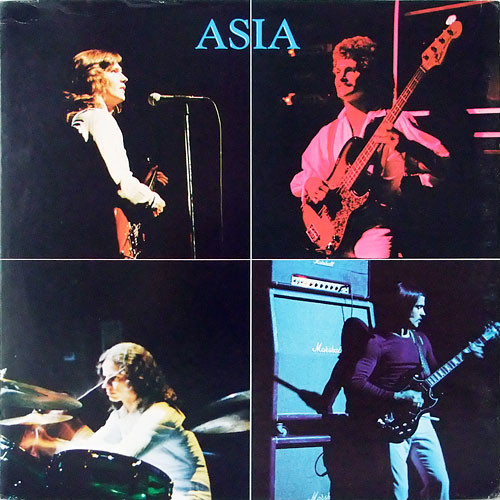
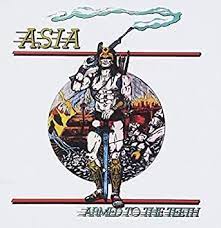
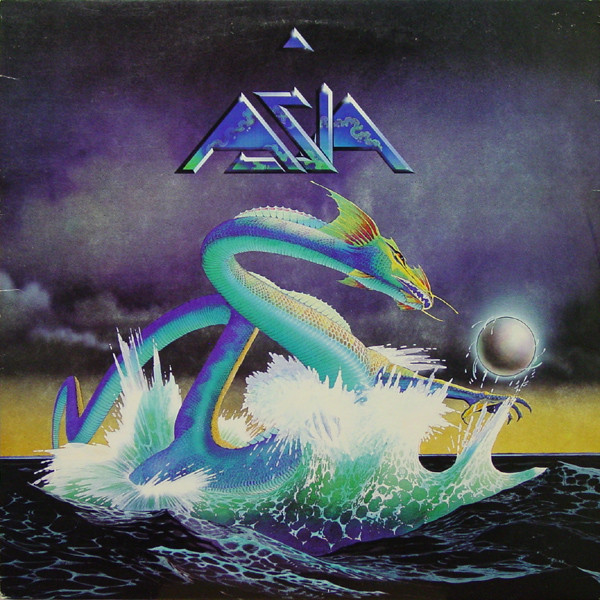
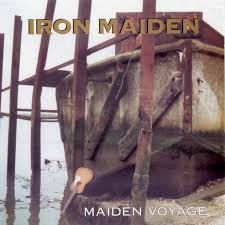
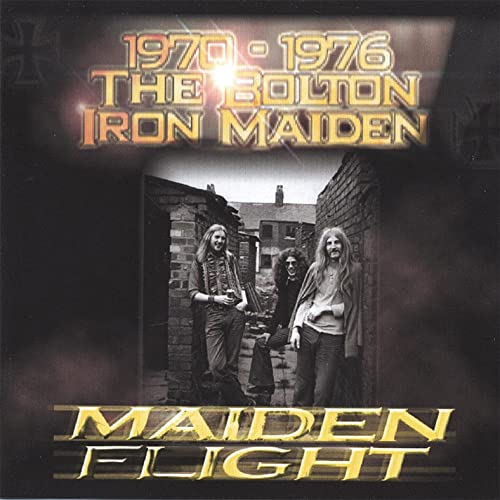
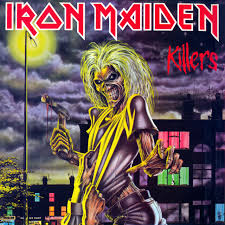
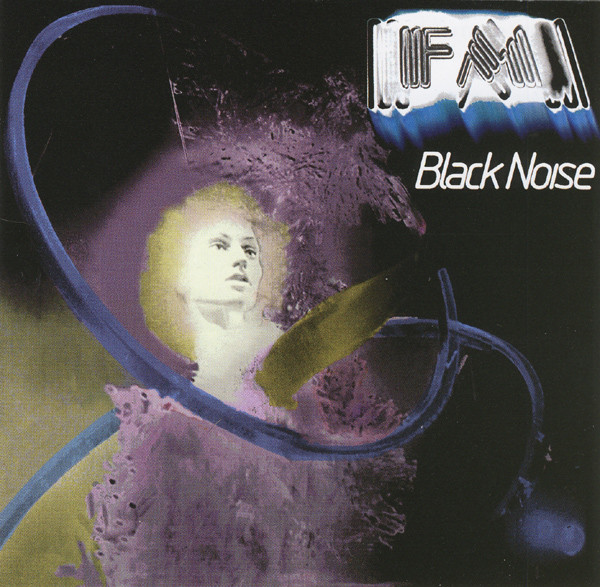
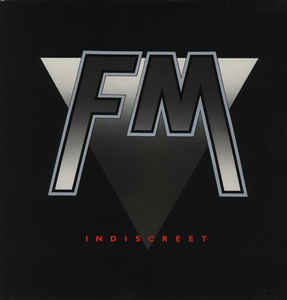
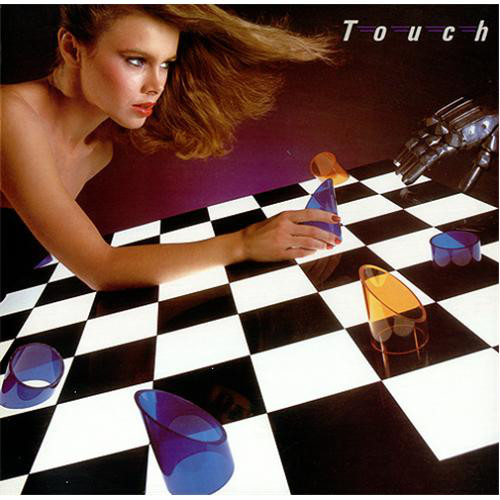
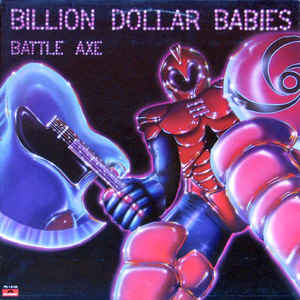
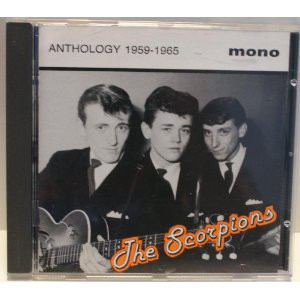
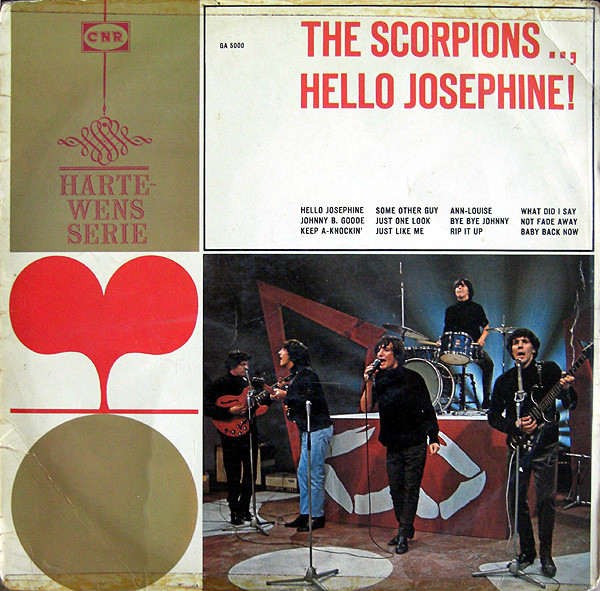
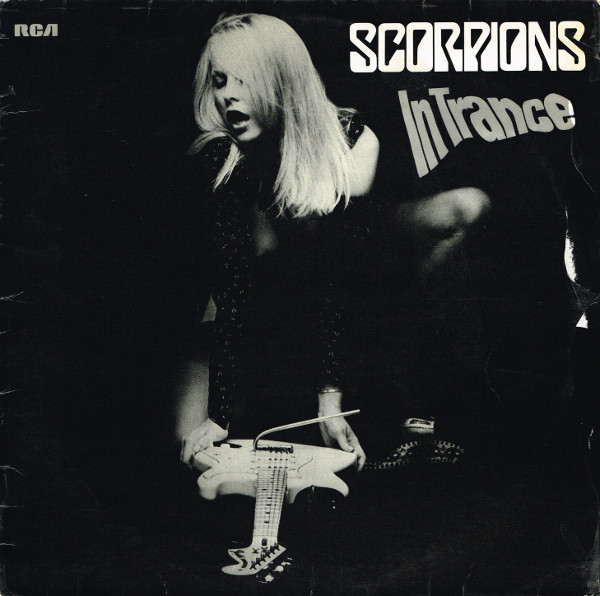
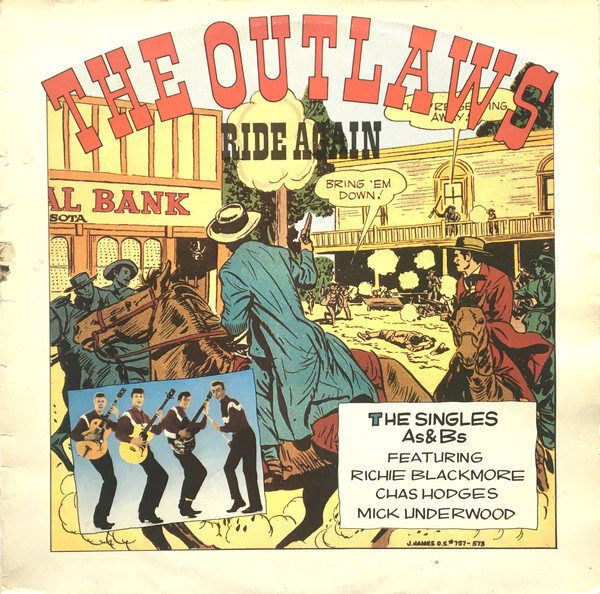
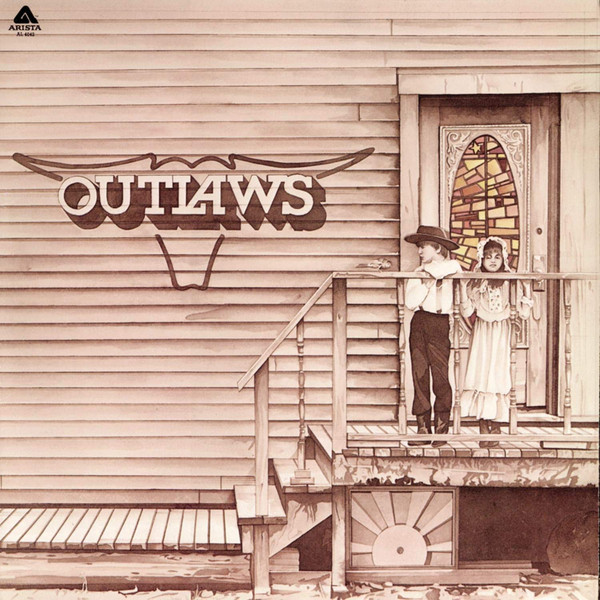
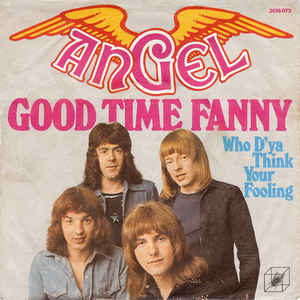
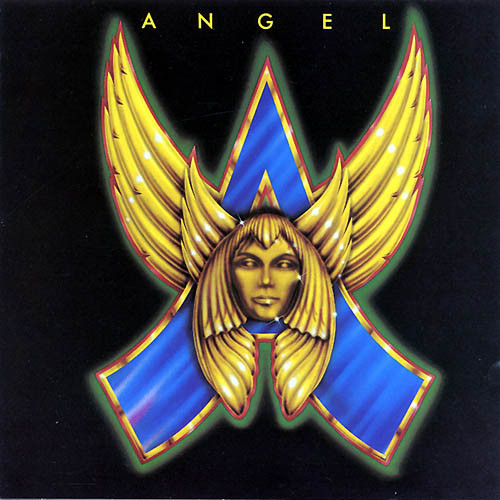
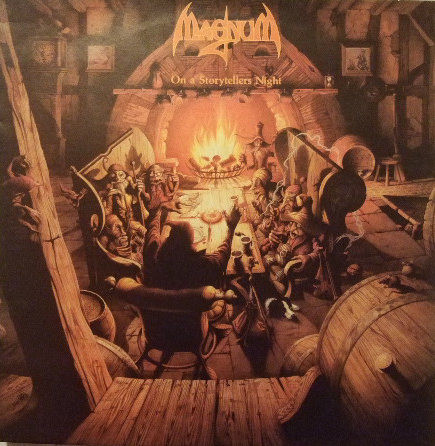
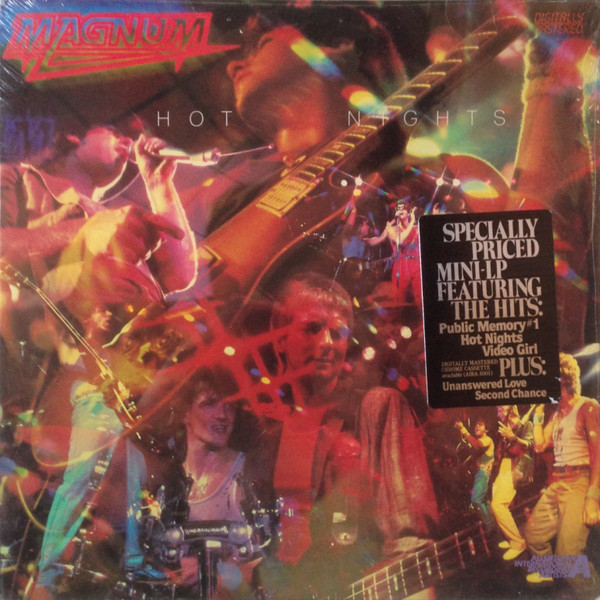
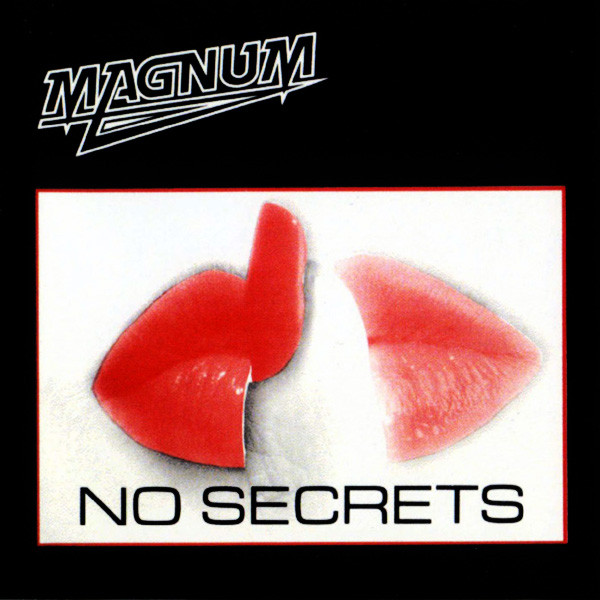
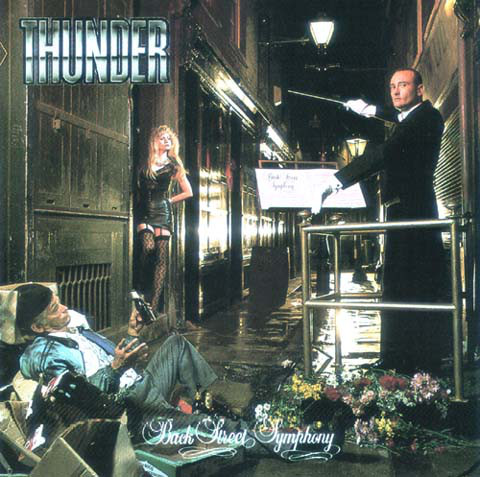
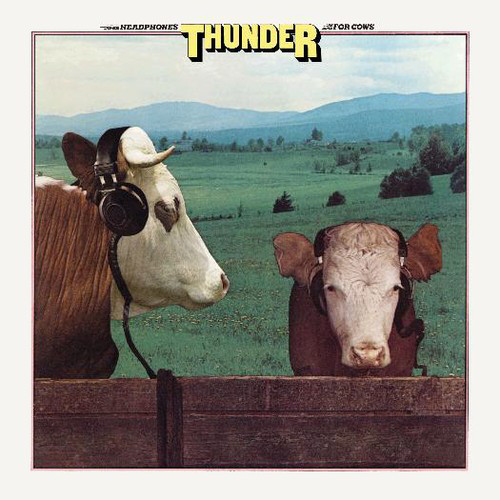
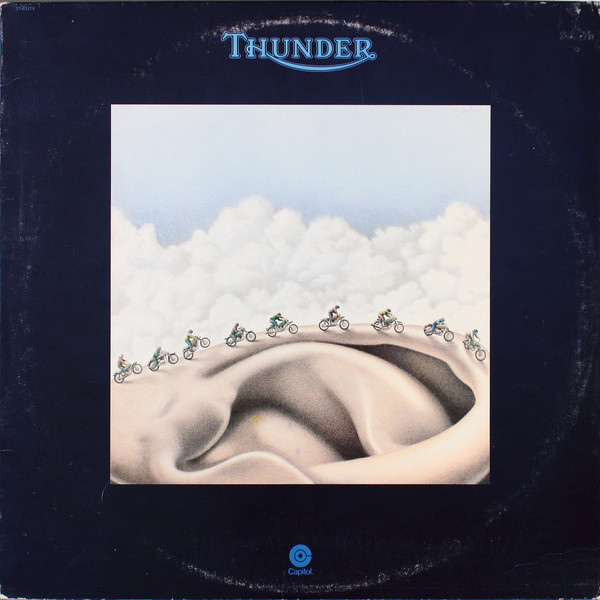
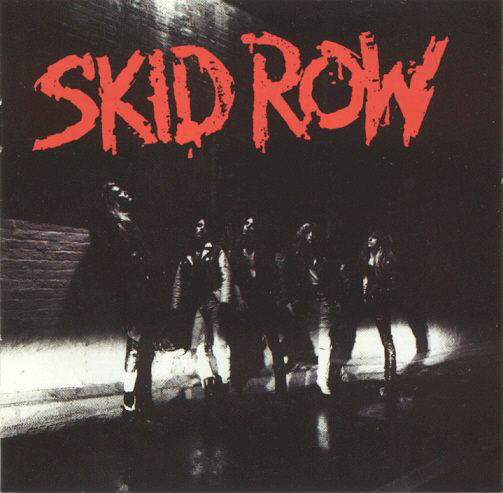
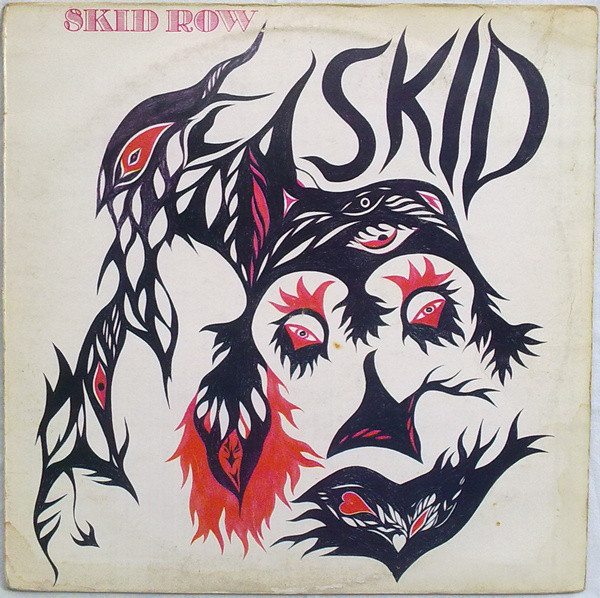
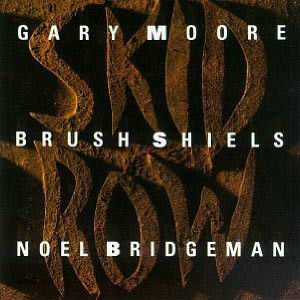
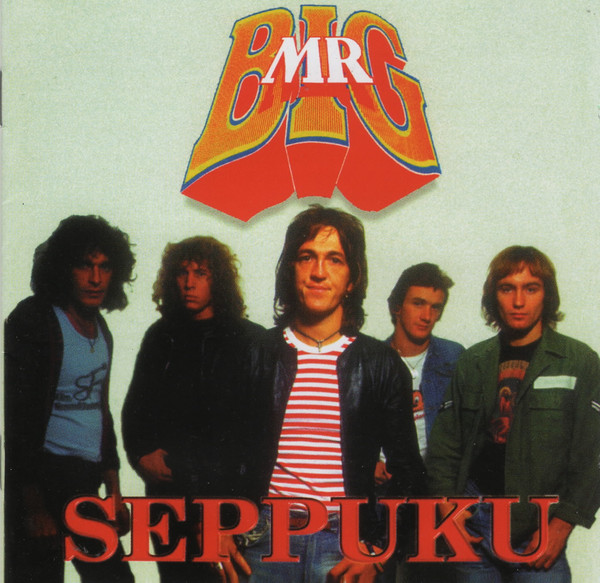
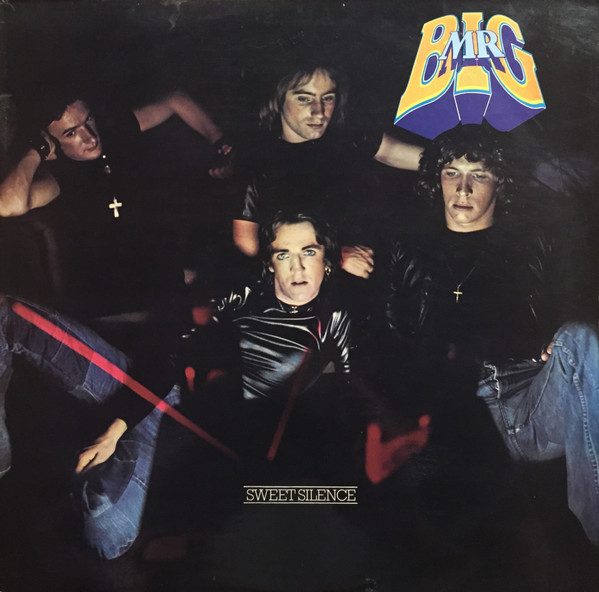


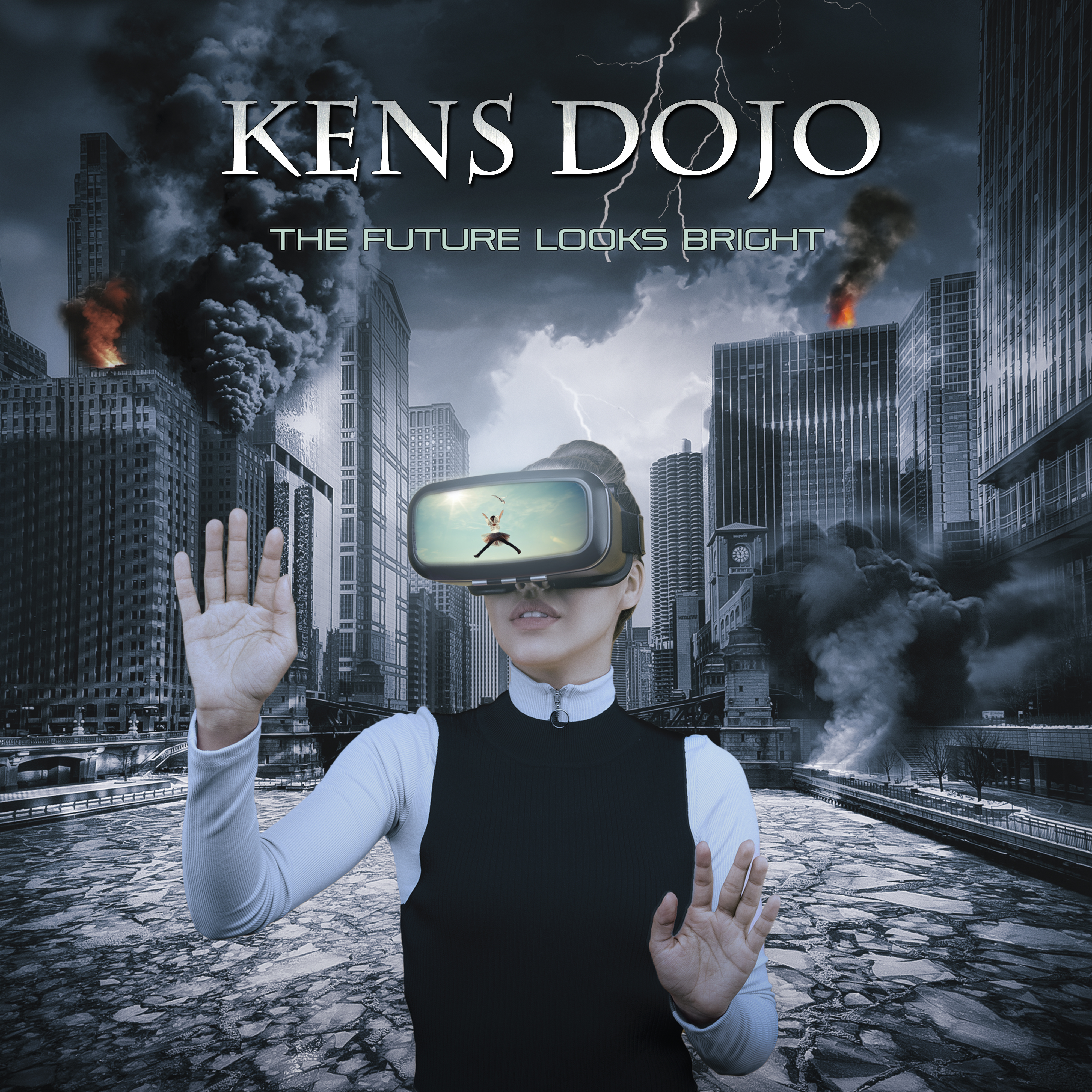


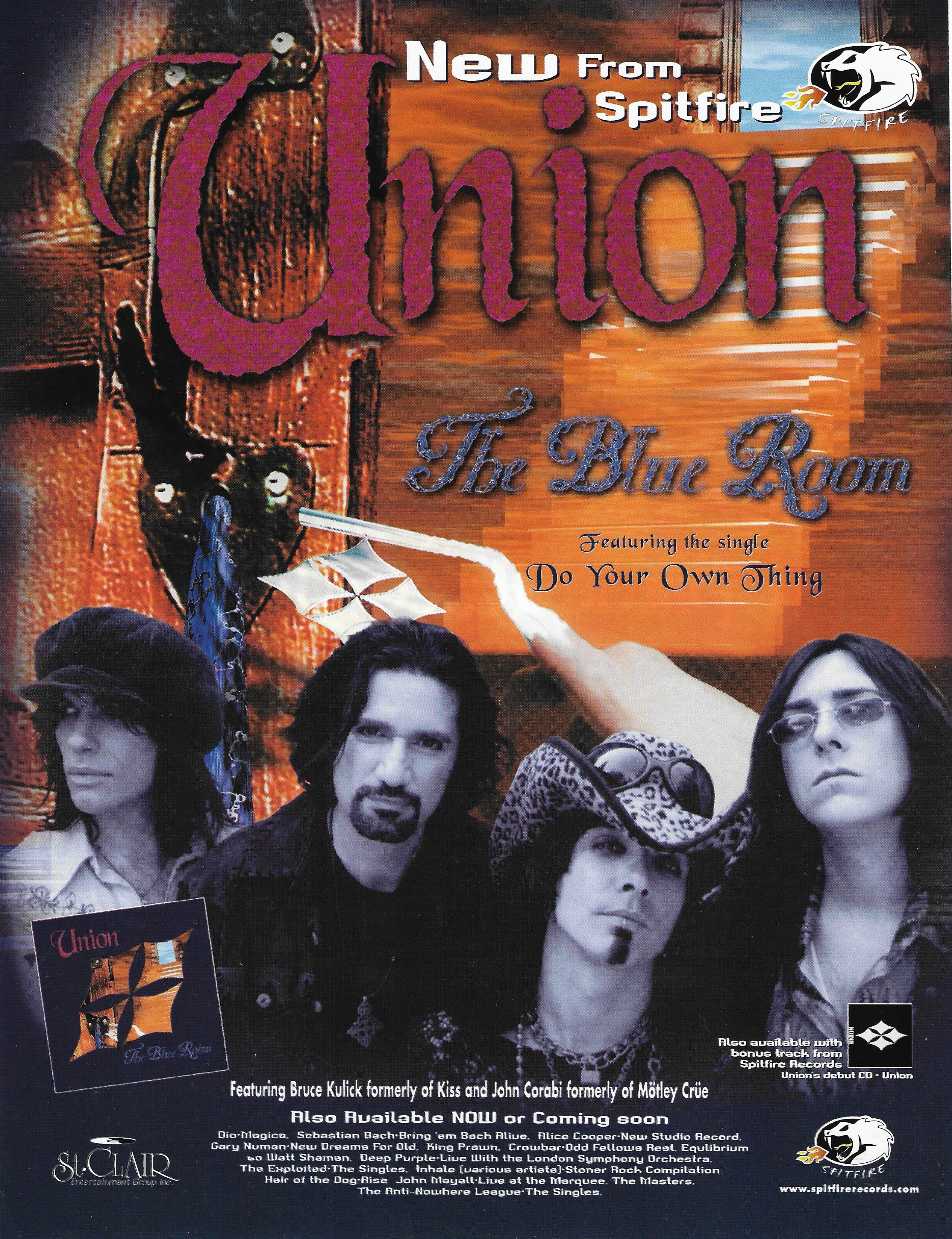


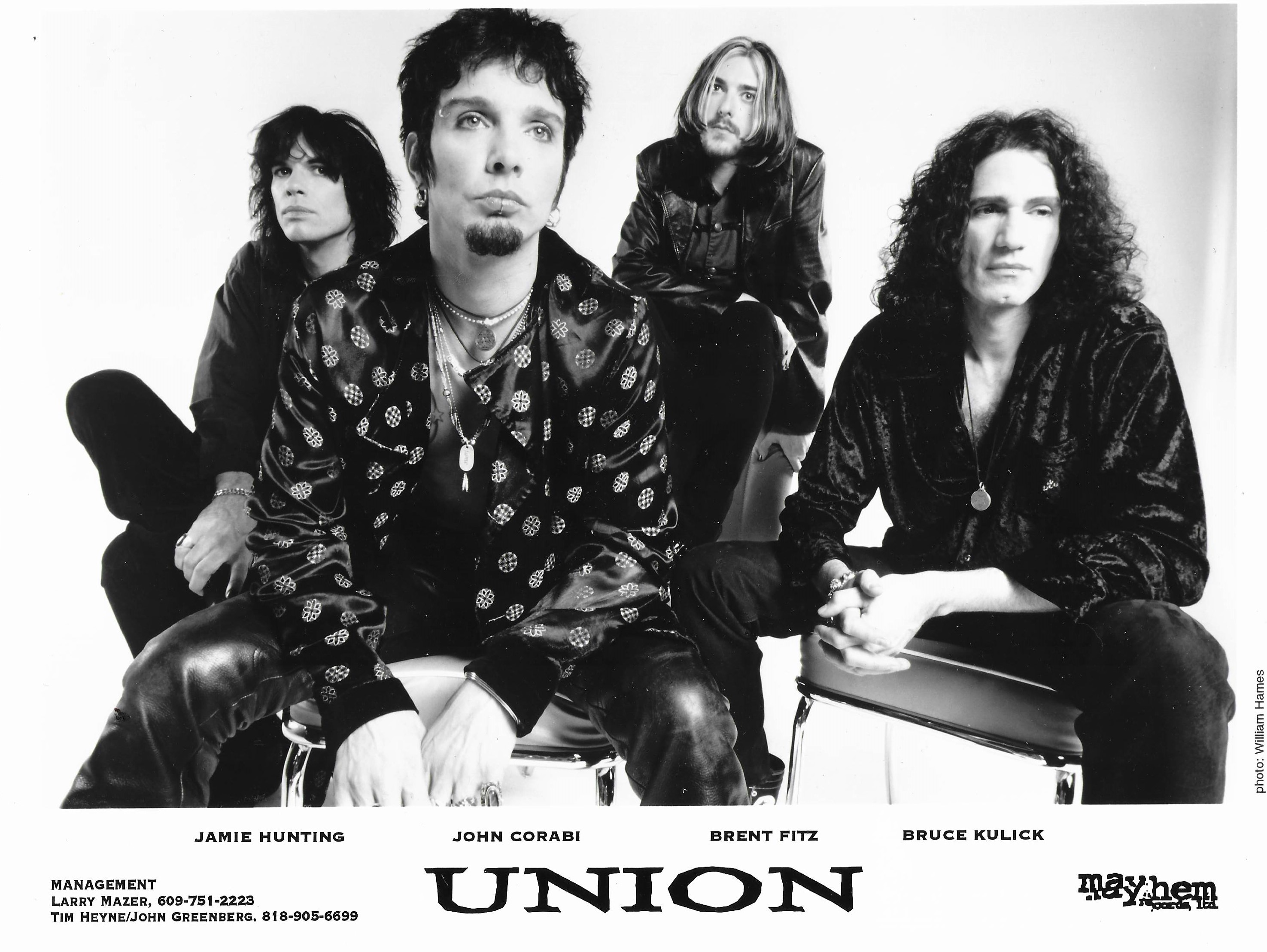
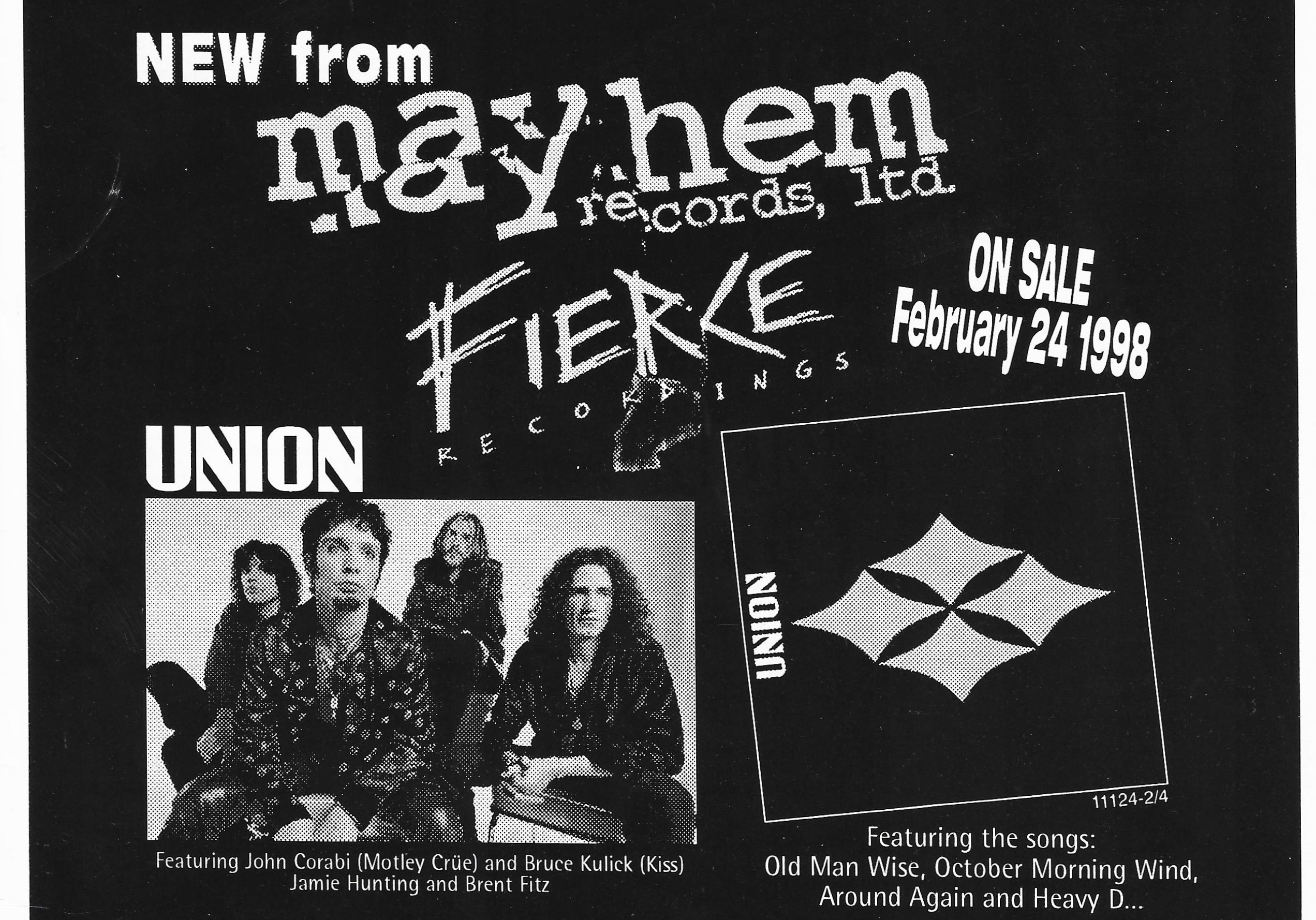


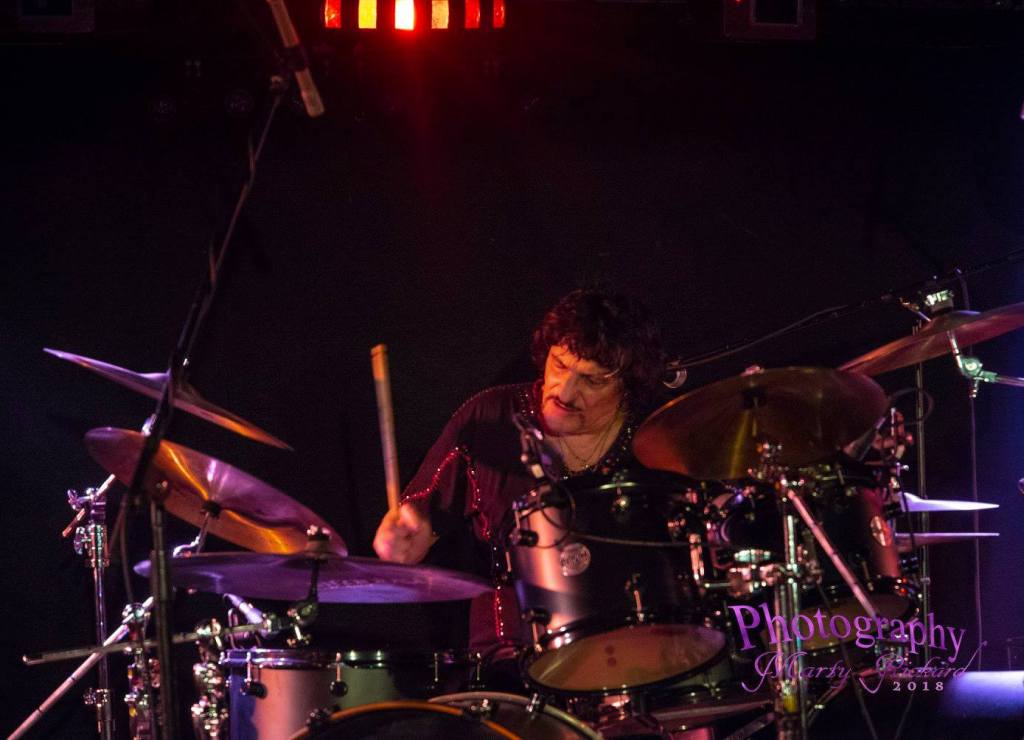
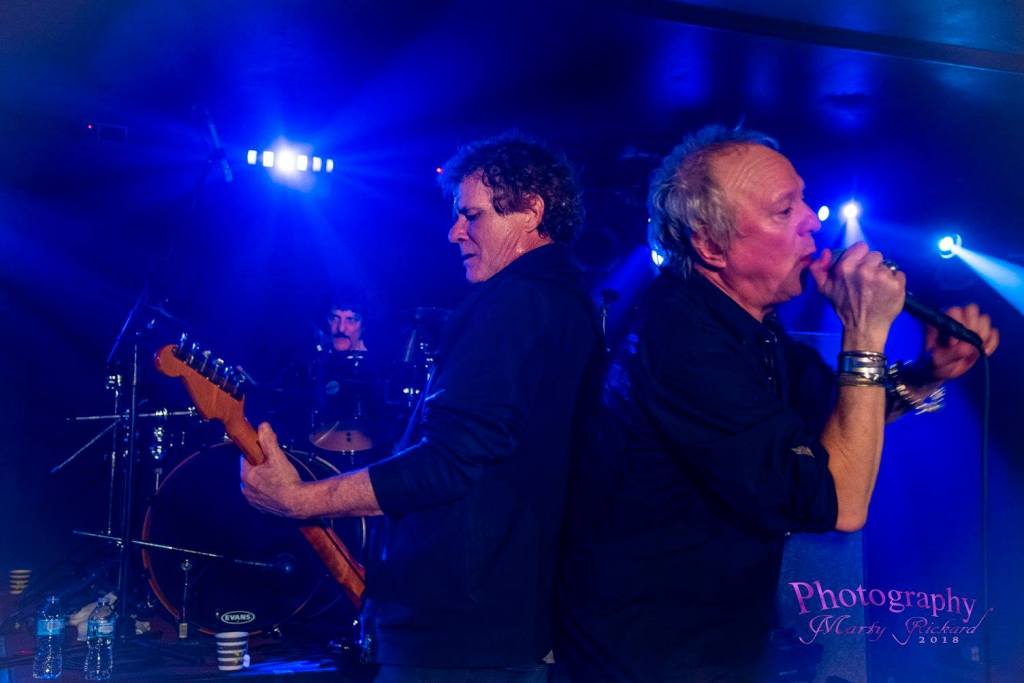
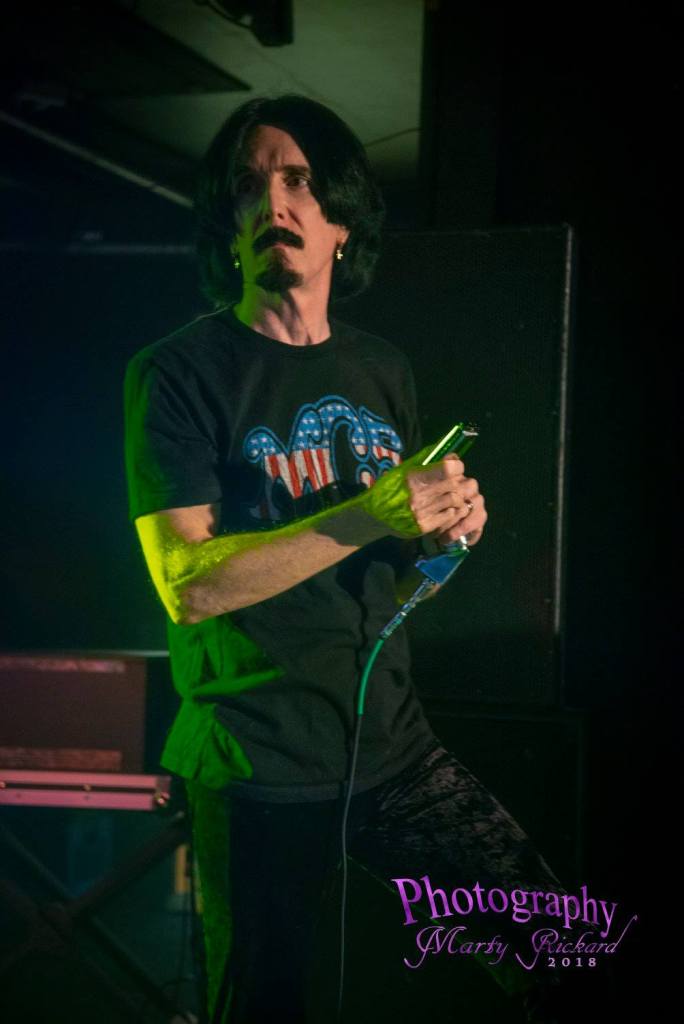
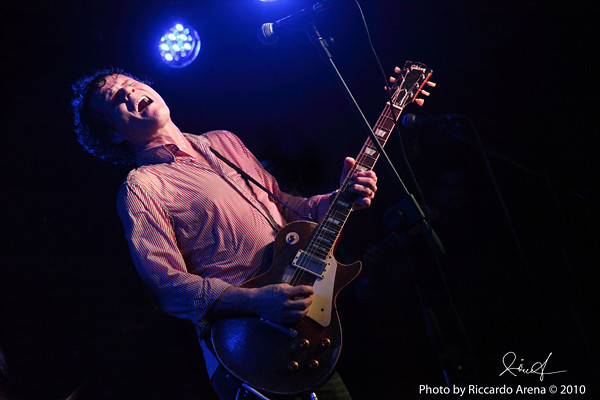
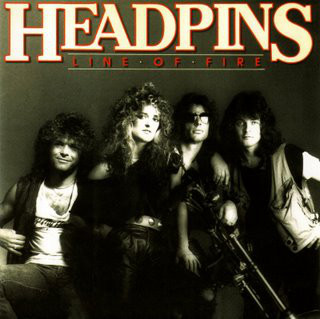

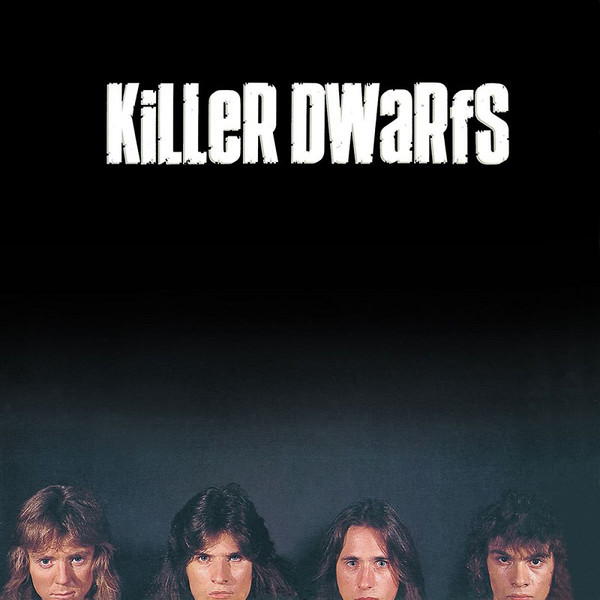


 Outsider Rock