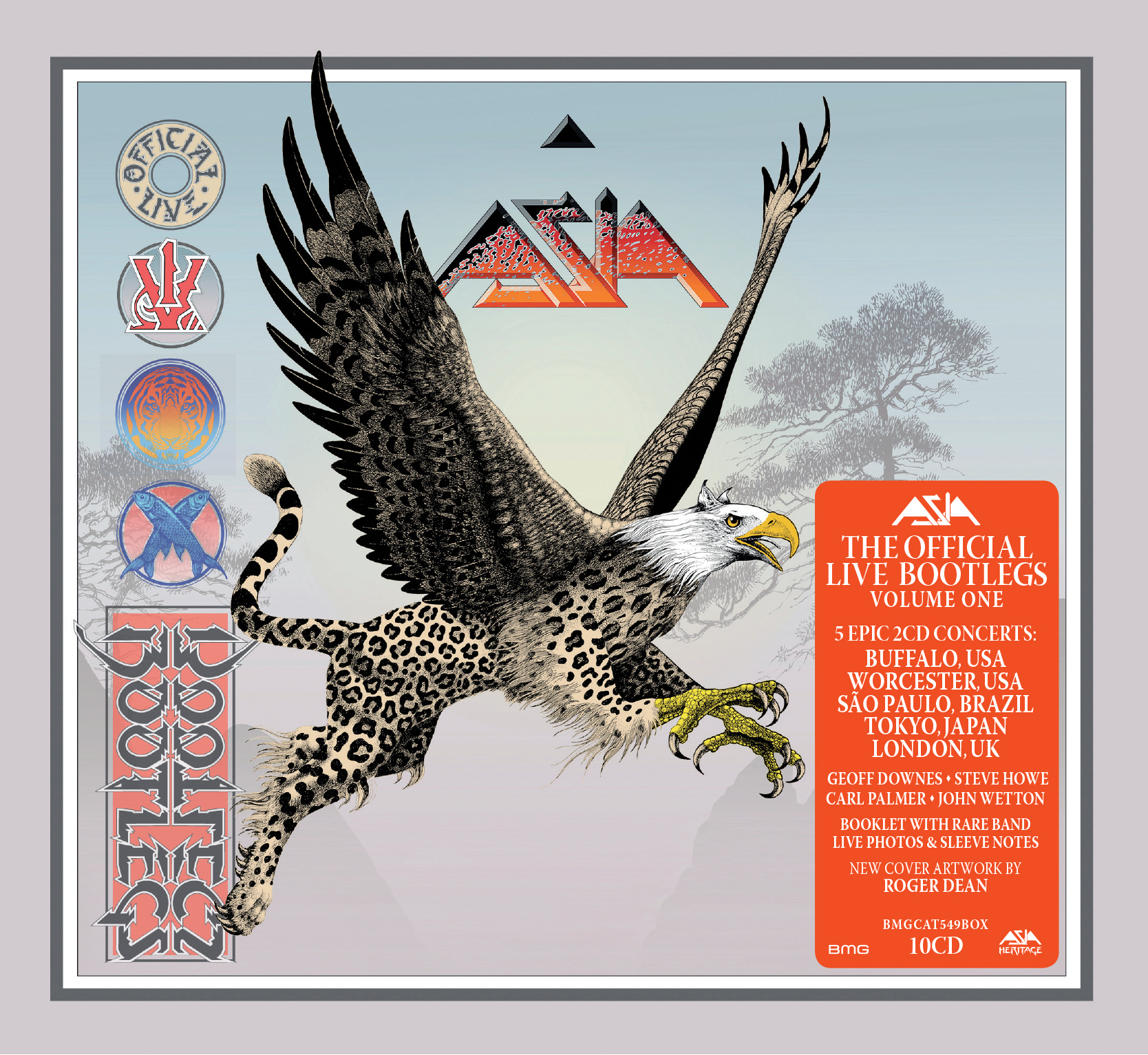
The Official Live BootlegsVolume 1 Out on 26th November 12th October 2021: Multi-platinum selling English supergroup ASIA are to release a 10CD boxset The Official Live Bootlegs Volume 1 through BMG Records on 26th November 2021. There will also be a digital album featuring a selection of 24 tracks taken from the full boxset, out on the same day.
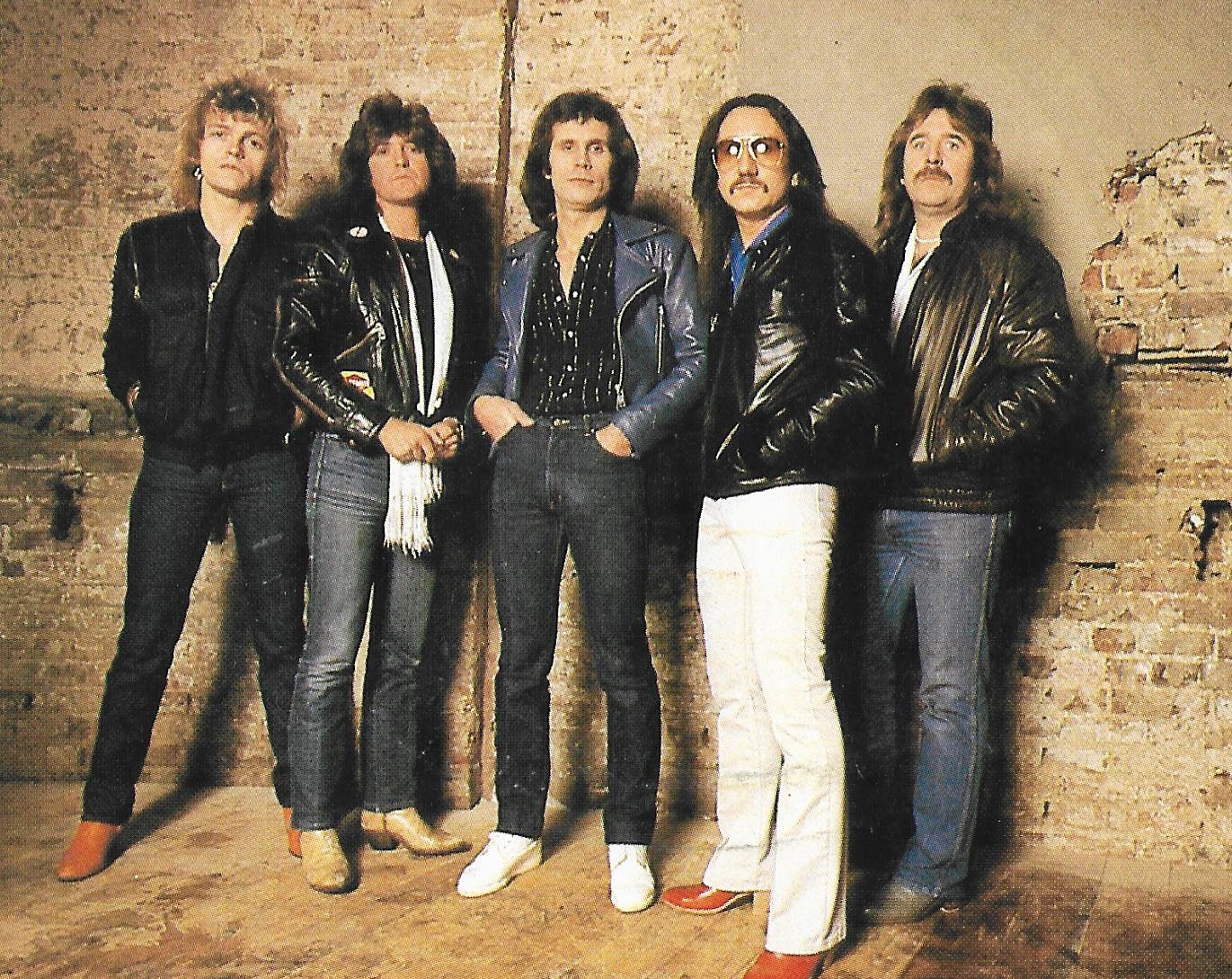
When ASIA came out on the scene in 1982, they were a huge global success with their debut single “Heat Of The Moment” and debut album – which was #1 on the US Billboard charts for 9 weeks! The band was instantly dubbed a ‘supergroup’ based on the success and achievements of it’s band members – ASIA: Geoff Downes (The Buggles, YES, keyboards), Steve Howe (YES, solo, guitars), Carl Palmer (Emerson, Lake & Palmer, drums) and John Wetton (King Crimson, UK, Uriah Heep, bass/vocals).
The original foursome recorded just 2 albums, the self-titled debut, which also included the hits (“Only Time Will Tell” and “Sole Survivor”), followed by 1983’s Alpha (which featured the big hit “Don’t Cry”). Soon after John Wetton left the band, then returned, followed by Steve Howe’s departure (Howe went on to the successful GTR project, before resuming a solo career). The band carried on, making one further album with Mandy Meyer, and a few singles beyond that, before splitting up. Geoff Downes later formed a new version of the band (w/ John Payne), and Wetton went on to record a number of solo albums). The original line-up reunited in 2006, releasing Fantasia : Live In Tokyo (2007), and would release 3 further studio albums – Phoenix (2008), Omega (2010), and XXX (2012), before Howe left again (to focus on YES), and the band recorded just 1 further album in 2014 (Gravitas, with Sam Coulson), before the passing of John Wetton in 2017.
ASIA didn’t release an official Live album in their original line-up until the reunion happened, although there were radio shows and audience recordings out there from the ’80s, as well as now hard to find series From The Asia Archives in the early 2000s (which I might think included some of these shows came from?). So, this Volume 1 of the bands “official Bootleg” recordings will be easier to obtain and a nice addition to their catalogue for fans. The 5 shows in this slipcase box set include > 1982 (Buffalo, NY, USA), 1983 (Worcester, MA, USA), 2007 (São Paulo, Brazil), 2008 (Tokyo, Japan) and 2010 (London, UK), with all shows taking up 2 CDs each. *BMG also recently released a 5CD slip box of the ‘reunion’ albums. As one who has very little live Asia, I am looking forward to this.
“This historical collection represents some of our finest and most defining live moments,” says Geoff Downes, “from the very first ASIA tour in 1982 and the Alpha tour the following year through three of our many ‘Reunion’ shows. It was such a privilege to take ASIA’s music to these different continents and feel the warmth and support from fans all over the world. We hope this brings back great memories and inspires others to appreciate the music of ASIA”.
This the first time these recordings have been made officially available by ASIA and they are presented together in a superb collector’s edition boxset with original artwork by Roger Dean, who created all of ASIA’s album artwork.
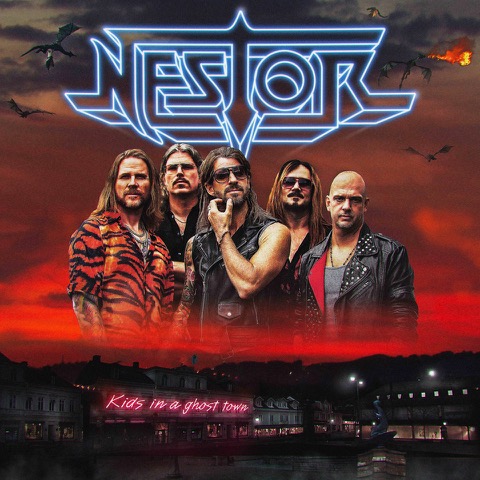
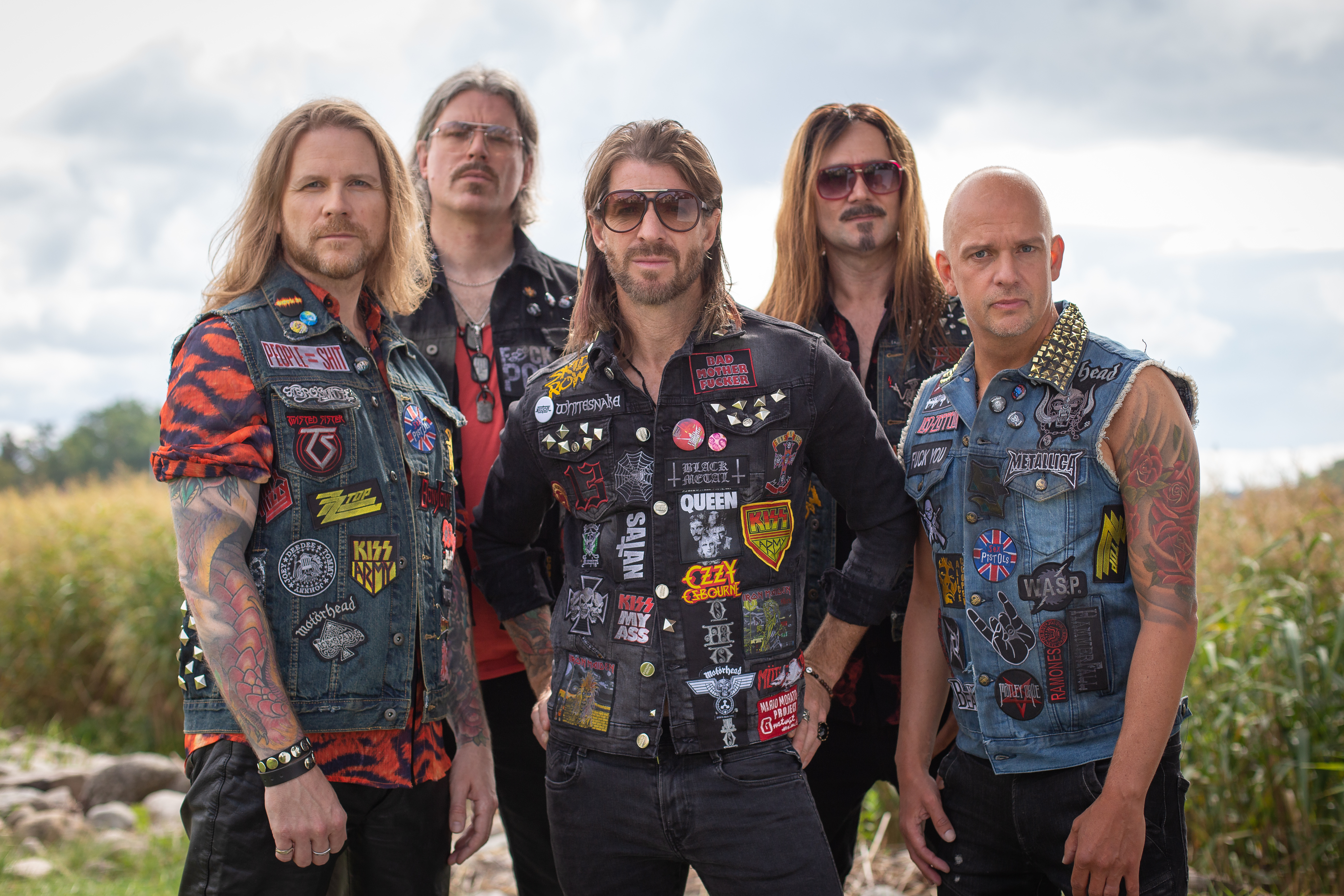
NESTOR are five childhood friends who formed a band over three decades ago in their hometown of Falköping, Sweden. Now the rockstar dreams of their youth have been revitalized and once again the band embraces influences from the ’80s with tongues-in-cheek and a lot of heart.
Sweden band NESTOR debuted their first track via youtube back in March. The song “On The Run” is a classic ’80s type energetic aor-rocker, with a great riff, catchy chorus’, reflective lyrics, and a hilarious video featuring the band’s singer travelling back in his Volvo picking up his old bandmates to resurrect the band. It reminds me of Motley Crue’s “Home Sweet Home” video from ’85 as well as those Twisted Sister clips from the era. They followed that up with “1989”, a song about their fondness for that year — it was the year the band actually existed, as I listened to an interview with frontman Tobias Gustavsson where he talked about the band’s beginnings. “1989” is a punchy ’80s styed rocker, and again with another awesome video. The band’s third track released was the power-ballad “Tomorrow”, which is a duet with ’80s pop star Samantha Fox. Another outstanding track and accompanying video clip, featuring Fox, who looks and sounds better than I remember her from the ’80s. The track rivalling any of the great power ballads from 35 years ago. Now the whole album is ready to be released to the world on October 22. It features 10 tracks, and if the first 3 songs released got you excited for this album (with those 3 songs having been seen/heard over a million times on youtube), then Kids In A Ghost Town will be worth the wait! Every track would be a potential single if this was 1984. Kids In A Ghost Town might get you thinking back to those bands that were huge over decades ago like Journey, Van Halen [w/ Hagar], Kiss, Europe, Y & T… you’ll find plenty here to like, Great hooks, riffs, keyboards, all produced and presented like a lost ’80s album. Lots of fun, retro AOR rock tunes, lyrics reflecting and referencing the past relationships, stories and ’80s women – such as on “Perfect 10 (Eyes Like Demi Moore)”, other favorites being the heavier “Firesign”, “These Days”, as well as closing ballad “It Ain’t Me.” Included in the credits is Swedish songwriter Andreas Carlsson who has writing credits with TONS of 80s and 90s acts, including Bon Jovi (see Bounce), Paul Stanley (see Live To Win), Europe (see Back To Eden), Def Leppard (see X), as well as pop acts like Britney Spears, Katy Perry, Celine Dion…. (seriously – look this guy up). Kids In A Ghost Town celebrates the spirit of the ’80s rock era in music and image. Can’t wait to get this CD for the car… may even want to dig out a jean jacket!
The album is produced by Tobias Gustavsson, mixed by Sebastian Forslund (The Night Flight Orchestra), and mastered by Thomas “Plec” Johansson at The Panic Room.
TRACK LIST: A Fanfare For The Reliable Rebel (Intro) / On The Run / Kids In A Ghost Town / Stone Cold Eyes / Perfect 10 (Eyes Like Demi Moore) / These Days / Tomorrow (Feat. Samantha Fox) / We Are Not OK / Firesign / 1989 / It Ain’t Me
NESTOR ARE: Jonny Wemmenstedt (guitar), Mattias Carlsson (drums), Tobias Gustavsson (vocals), Marcus Åblad (bass), Martin Frejinger (keyboards)
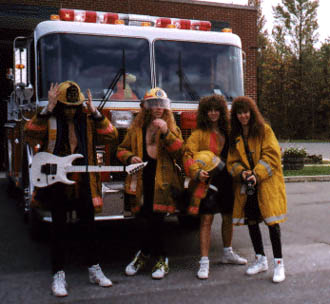
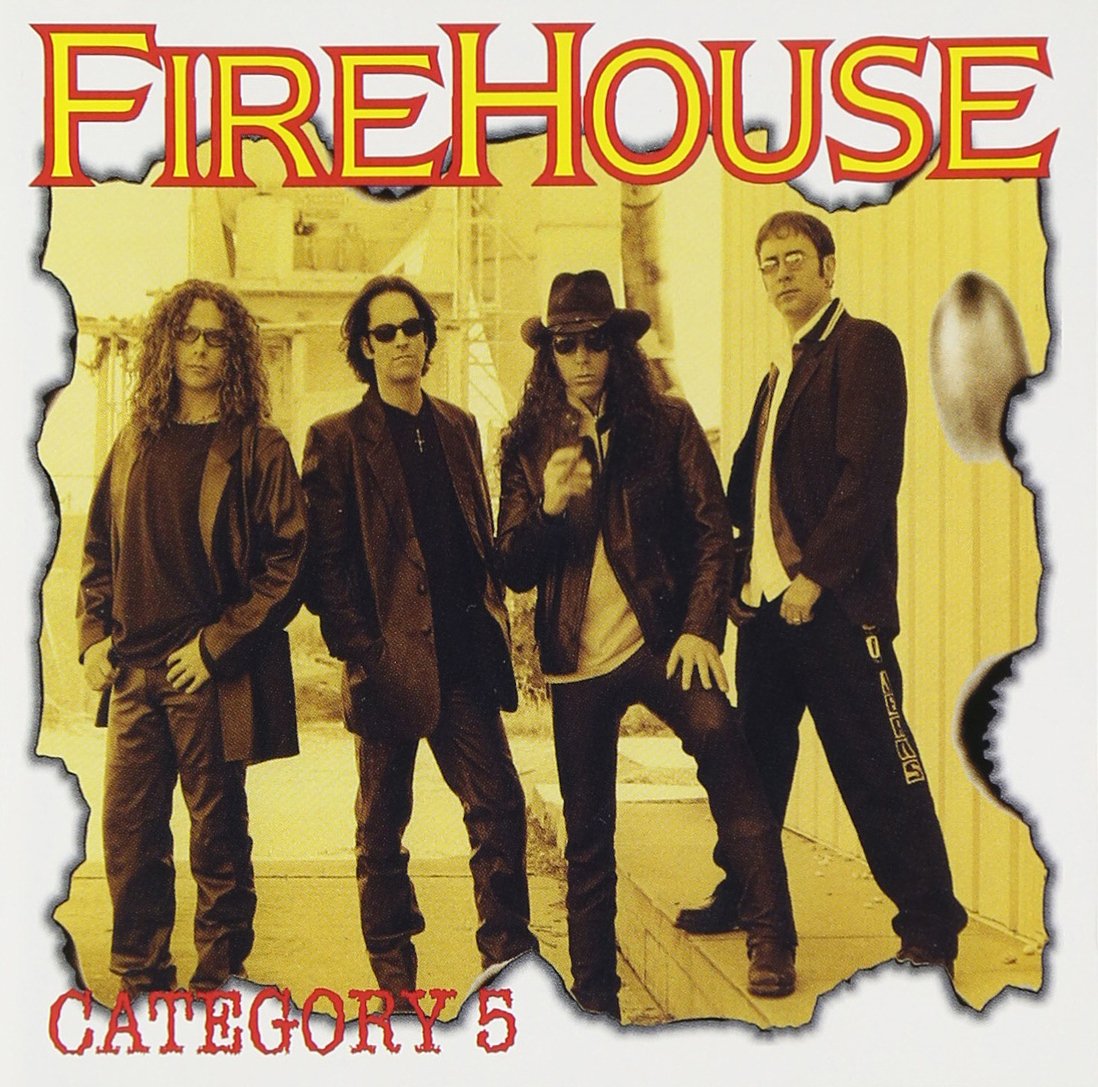
Firehouse came out at the end of the ’80s with their hugely successful, high energy debut album, which featured the hits “All She Wrote” and “Don’t Treat Me Bad”, as well as favorites “Shake & Tumble”, “Love Of A Lifetime”, and “Rock On The Radio”. There’s a new reissue of that album out [Bad Reputation Records], which adds 2 acoustic tracks, and a 2nd CD of live tracks. In December of 1999 I interviewed guitarist / songwriter Bill Leverty for the band’s latest album at the time – Category 5. The following year bass player Perry Richardson left the band, and has since joined Stryper in recent years. Firehouse is currently playing live shows, but their last studio release was 2011’s Full Circle. Since 2007 Bill Leverty has released 5 solo albums, including last year’s Divided We Fall. *You can check out Bill Leverty’s solo albums and stories at http://www.leverty.com
“FIREHOUSE’s latest album is called Category 5. The band, for a decade has included vocalist [and keyboardist] CJ Snare, bass player Perry Richardson, drummer Michael Foster, and guitar player Bill Leverty. I recently had a nice conversation with Bill about the band, the new album, and almost everything else pertaining to FIREHOUSE. The new album [on Mystic Records] is recommended to those in to the melodic rock, featuring a number of great pop-rockers and powerful ballads. For more on Firehouse check out www.firehousemusic.com , or check out Bill Leverty’s own site http://members.aol.com/leverty”
How’s the response been to the new album?
Overwhelming! The people who have heard it, a lot of people are saying it’s our best album ever.
I must confess that I’m not overly familiar with the band apart from what I’ve heard on the radio in the past, so I don’t know what I expected, but thinking from seeing you in the Metal Edge pages and that that probably accidentally lumping you in with a few other bands would be a big mistake. This album’s got a real good pop-rock feel to it.
I think we have elements of the metal-edge thing in our music too, and elements of other stuff, and it’s just kind of mish-mashed in to our style, and we’ve always been liking all kinds of music so much that we really didn’t know what to put on our records. The way we do it is everybody writes and we take the best songs, and put them on there every year. And these were the best songs we had this year. It’s kind of interesting because we didn’t have any pre-conceived notions about what we wanted this album to sound like, we just wanted the best songs that we could come up with on there. There’s a little bit of diversity on there, I think.
There’s quite a bit. For instance like “I’d Do Anything” – which has kind of a country feel to it.
There’s a Southern feel on a couple of songs. We’ve all kind lived in the South for so long that it’s hard not to have that as an influence, and we really love the soul-ful vibe of Southern music, whether it comes from Country or Southern rock, or even old blues and stuff like that.
Where abouts are you guys based out of?
I grew up in Richmond, Virginia, but I live near Tampa, Florida now. We kind of live from Tampa to South Carolina, to Virginia — scattered about the South-East there.
Now you guys have been together for about 9 years now!?
It’d be 10 years now. We got together in ’89, actually really late ’88, but we’ve always said ’89. So it’ll be 11 years coming up.
When you guys started out did you have any plans of long-term goals that you sort of achieved or are still looking for?
We just wanted to make a living playing music, and trying to get our music out to as many people as possible, and have fun doing it. We had no idea that we’d get any real success, although we believed in ourselves and we had our dreams. Our goals were really to get a record deal, and we were really luck we got a record deal, and that record company pushed the buttons for us back there in ’91 and we had a lot of things happen for us, so it overwhelmed us all. Back then we were just happy to be playing music, especially music that we wrote because before that we were playing a combination of other people’s music and ours. I still like playing other people’s music, it’s just that it’s that much more gratifying when you’re a songwriter and you get your songs played on to an audience that knows them.
What did you guys grow up on?
Everybody in the band has very diverse influences, which is kind of neat. My earliest influences were Stevie Wonder and Led Zeppelin, and then I got in to Eddie Van Halen, Ted Nugent, Michael Schenker, and then Randy Rhoads. Perry grew up , and when he was very young played in a gospel quartet, and his dad played bass, and he learned the bass from that. Michael started playing drums when he was 3, ridiculously young, he’s been playing them forever. I didn’t start until I was 15. But his parents were really in to Elvis, so he had Elvis on all the time in the house, so he was rocking and rolling at a very early age. And CJ was classically trained in the beginning as a pianist, and then he got to sing, and he was in a choir. He was in the Pennsylvania State Choir, and he was first chair tenor. in the Pennsylvania State Choir by the time he was a teenager, so he was studying real hard with that. But then he started listening to Alice Cooper and Kiss, then Judas Priest and things changed. So, we all come from a very diverse background, but our common love is Hard-Rock…..and Soft-Rock, but you know – Rock n Roll.
You guys do a lot of harmonies, probably some of the best harmonies out there that a lot of hard-rock bands try to do, and it seems so natural for you guys. Have the harmonies always been there, what influenced that?
Oh thank you. I think that was a big influence on us all from the very early days. We’ve always tried on all our albums to have a lot of background vocals because it just adds to so much to so many songs where you could really emphasize words, and add layers of sounds to make the band sound bigger. We’ve all come from bands where we had that many people singing in the band, and when we put this band together we wanted to make sure that everybody could sing, even sing lead because we wanted our background vocals to be strong. And that’s one thing that we really concentrate a lot on when we rehearse is the vocals. A lot of times we’ll rehearse without our instruments, which is good, and just sing. We put a lot of emphasis on that.
When I listen to you guys I hear a little bit of Cheap Trick, a little bit of Bob Jovi [on the lighter stuff], and a little bit of Uriah Heep [on the harmonies]. Is there any bands out there that you guys kind of look upon that maybe this is where you want to go – direction wise, or who you want to compare yourself to?
Not really. I would love to be a band like say The Eagles – they’ve been around forever, and they have so many songs that people know and some of them are really hard-rockin’, and some of them are slow and soft, and some of them are kind of twisted. But I also like bands like The Scorpions too. I love the Scorpions, I love The Beatles, I thought Zeppelin was awesome, Aerosmith is a great mentor-type band for Firehouse, and Kiss; certainly Aerosmith because they still have their 5 guys together, which we do too which is so neat to see a band like that that has been together for that long, like the Stones. And they can keep putting out good music – I mean the last Kiss album was great, the last Aerosmith album was great, and I like the last Stones record too. It gets tougher and tougher for rock music as time goes on, but I really think that longevity is the key, and that we’ve got what it takes to be around for a long time, because we all love to write music, and we’re obsessed by it.
You guys all write, how do you come together with the songs?
When we’re touring it’s very difficult to write, I have a hard time anyway. I used to try to do it, but there’s so many distractions. What i do is I go home, and I’m off for a day and then I’m going nuts for something to do, so I just go in my studio and stay in there for weeks at a time, and don’t shave, and some times I don’t even shower. And I just go through all these ideas that I’ve been storing in my mind; like we’ve been on the road for 18 months on this last tour straight, so I came home with a lot of ideas in my head that I just wanted to document, and then I just keep developing them, and at some time we’ll get together and collaborate as a team, and we’ll come up with some more songs. Usually CJ and I put our stuff together, and we complete each other’s songs, and we co-write on a lot of other new ideas, and then we’ll get everybody together again and have another writing session, and then we’ll have pre-production for the album, and put all our songs together that we got – the demos, and listen to them, and then we decide which songs we’re going to put on the album.
How many songs do you usually come up with before you actually lay down the album?
Generally I say between 30 and 40.
You guys do a number of ballads here, and what I like about the ballads is you guys don’t do the ‘A typical’ rock ballad, like a lot of bands that have the formulated rock ballad down. Take a song like “Dream” – which is a very different to what’s out there, and it’s a great song.
Well, we’ve never done a song like Dream before. We heard the demo, and we really liked it. Perry had written it with 2 of his friends in Myrtle Beach. It’s a song about a child dying in their parent’s arms. Before we heard the song Perry told us what it was about, and then he played us the song, and we were like all in tears by the end of the song; and then we were like “yeah – that’s gotta be on there!” That song is really a beautiful song. We’ve been playing it live, and it’s a lot of fun to play live.
You guys also do a lot of pop-rock stuff like on “The Nights Were Young” and “Have Mercy”, i love the keyboard intro on that. (BL: “Thank you!), and “Can’t Stop The Pain”, obviously.
That’s the first single that Mystic Records has chosen, and that’s a song about the loss of my father. I wrote the skeleton of the song with Perry and Michael, and shortly after Perry’s father died, and he wrote a really good part to add to the song, and we recorded it. I’ve gotten a lot of e-mails from people who’ve said it’s helped them with the loss of a loved one, and they can relate to what the song’s about.
Do you incorporate a lot of life experiences in to the songs?
Absolutely. If it’s not our life experiences, it’s somebody else’s that we know.
Well, that’s an obvious choice for a single. It’s a great catchy song, and lyrically has something to say. What stands out for you on the album – songs that you like to play live, or you’d like to see as a single?
We’ve been playing Can’t Stop The Pain live, and that’s a great song to play live, for me because there’s a lot of guitar and soloing; it’s rocks too and people get it right away, people have been enjoying that song a lot. We’ve also been playing Dream, and we’ve been playing Have Mercy [which you also mentioned]. It’s so difficult because when I hear the album I like every song for something different because it reminds me of something different. I like the mandolin part in I’d Do Anything. I like the song “If It Changes”, and the sitar part that i played; it was fun to play, it has sort of an Eastern vibe.
You guys get a lot of different sounds in there with the sitar, the keyboard, and the mandolin; it’s not just your basic 4-man set up of guitar, bass and drums.
We try to stretch as much as we can without getting to be too strange; we don’t want to sound too weird. We want a sound that’s solid and that people can relate to. We’re not all that twisted as people, so we don’t really write to come up with something twisted or hard-core.
Is there anything as far as attitudes and your everyday life that influence the music as far as keeping it positive?
Yeah, we definitely try to accent the positive in our lyrics and in our everyday lives, on and off the stage. We’re guys that we’re not perfect by any stretch of the imagination, but we try to do the right thing in our personal lives as well. We try to write about things that you can give to your neighbor and he can play it for his kids as well, because I don’t have any kids yet, but I have nephews and nieces and I want them to be able to hear my music. And as soon as you put language like in the locker room then you limit your audience and you also offend people, and we’re not into being an offensive band, I think.
Do you have a problems with bands that are?
No, not at all. It’s great to be America where you can say whatever you want, but I have chosen to do it this way.
Where are you guys now – on the road?
Well, we’re writing songs for a new album right now, and we a ‘live’ album coming out real soon also. We recorded one night in Japan. That’ll be out right around Christmas, and available on our web-site which is > http://www.firehousemusic.com < . In the meantime we’re going to be writing and then recording. We might go out and do a string of dates in February, we’re working on that now. But the plan is if it doesn’t look good for that then we’ll wait for the spring, and finish the album – then go out and tour the summer. We’ve been out on tour for 18 months in support of this album. We just got off the road actually. I know it sounds different where you normally put out a record and then go tour, but we didn’t have a deal when we first put out this record, and we went out on the road and played every club in every town, and by doing so i think it helped get us a deal and get some people realizing that we’re still together and we hadn’t fallen off the face of the planet. VH 1 came out and did a “Where Are They Now?” special on us, which was real cool. And that wouldn’t have happened if we weren’t on the road at the time, so it all happened for a reason. And we’ve played every place about 2 or 3 times, so we kind of need to come back, write another album, and get out on the road in the spring, and we plan to go out with a package, which we’re working on, until the summer.
Any other bands you’re teaming up with?
Yeah, we have a manager named Perry Cooper, he works with Atlantic Records for 18 years as a vice-president in the Artist Development department, and he was introduced to me through a friend named Brian Johnson – who you might have heard of!?
From AC/DC!?
Yeah, and actually Brian’s helping us with a song. He’s writing a song with us for the next album.
What have been the highpoints for you guys over the years?
To me the most memorable high was when we won the American Music Award for Best New Hard-Rock / Heavy Metal Band. It was at a time where so many things were going on that were really good, but that is the one thing that I can look at every day and say “I remember those days – that was great!” It was also gratifying because we were voted on by the people, and not by the industry, not that the industry’s bad, but because it’s good to know that the listeners are out there; the real people that buy the music picked us and not some people in a boardroom that made a political decision.
Since the award, how about your favorite things such as live draws? Or bands you’ve toured with that stood out memory wise?
We’ve had so many great tours, we’ve been real lucky. In the beginning we went out with Warrant, and that was a tour that was hugely successful, selling out every shed and venue that we went to. And then we went straight in to the studio and recorded our 2nd album – “Hold Your Fire”, and before we even finished mixing the record we were out on the road with Tesla on a tour that was supposed to last 6 weeks and that lasted for 9 months, and that tour sold out every where it went, and it also went around twice to a lot of the same places because it was so successful for so long. And then we actually went out with Poison right after that for a little while, and then Damn Yankees, and that was a really good tour as well. It was also a great honor to be open for like Ted Nugent, Tommy Shaw, Jack Blades, and Michael Cartellone – a great band. It was cool to open for Poison too, they’re a great band, they got a great show, and we learned a lot about what to do in the music business and what not to do also. That was interesting, and that was always one of the bands that i wanted to open up for because they had this huge following, and they had a type of music that was good-time rock n roll – and that’s the kind of rock n roll we’re after. Bon Jovi would be a great band if we could open up for them too, but we’ve never been able to.
I think the last Bon Jovi album was their best.
Yeah, I think Richie’s such a great guitar player, and a great artist. His solo album was awesome.
What are your thoughts on the current scene? There’s a lot of crap in the business with a lot of good basic rock bands being left out due to trends and stuff. Where do you see the industry at the moment, as far as being good for you guys and some of the other bands you mentioned?
I think it’s good for us right now, it’s not great, but it’s good, and getting better, a lot better than it was a couple of years ago. The industry – radio programmers, video channel programmers, record store managers and so forth have come to realize that that whole decade of music that we had from ’82 to ’92 was very successful, and a lot of people that listened to that really liked it. And all of sudden there’s a couple of bands that came out that were very different, maybe some sounds were over-saturated, and everything changed, and everybody said “we’re not playing that kind of music anymore.” Well it’s just until recently that people are going – “Well — those people didn’t just fall off the face of the planet either! There’s people that like that kind of music, STILL like that kind of music, and missed it.” And they’re finding out that, you know – you put out these ‘Ballad’ albums or these ‘Rock n Roll’ albums and they all sell over a million copies that this type of music is still hot, and that they made a mistake by shutting the door to it. They should’ve played every type of new music, but not alienated the last decade that they had supported in the past 10 years or so.
It’s good to see a resurgence in melodic rock, because a lot of it got shoved to the side in the early ’90s, which kind of sucked.
I see a huge resurgence, and I also see a huge resurgence on the road. When we go to a town and let’s say we went to a town back in ’96 or ’97 we couldn’t get any radio station to do anything – and now they’re calling us, and saying “Hey before you come here can we arrange for you guys to come in and sing a song for us on our ‘5 o’clock Drive Home’?” Which makes us go “Hmm.” Maybe they’re saturated with all the stuff that sounds alike. And that’s happening everywhere. Even these ‘Perfect Hair Shows’ on a lot of these stations, for lack of a better name, they should call them ‘Melodic Rock Shows’ because they’re the most popular shows on the stations is what a lot of these guys are telling me. They’ve got one in Tampa. It started out as “Perfect Hair”, and they started off as once a week, and then it went to every day for half an hour, and then they increased it for an hour because everybody calls, and it’s such a huge hour for them.
Even the stations around here, a couple of stations brought back the ’80s Weekend’ or a ‘Hair Fix At 5’ where they play some Poison or Bon Jovi or whatever. And a lot of that stuff really got shut off the radio for a few years.
It did. It was not cool at all to be a part of that. And they’re finding out that “Gosh – it actually was cool, and some of this other stuff we’re listening to is so primitive.”
Do any of you guys do anything outside the band such as guest appearances or solo things?
We really haven’t at this point. We’ve just focused all our time on Firehouse, and that’s what we really have to do right now. That’s what pays the bills. As soon as we get Firehouse at a level where people know who we are, …I think our songs are more famous than the band. People know songs like “Love Of A Lifetime” and “Don’t Treat Me Bad”, I don’t think everyone knows the name of the band, and also we have to change the perception of the band because everybody thinks that what we are – Don’t Treat Me Bad and Love Of A Lifetime because that’s all they’ve ever heard, and there’s a lot more to us than that. Until that happens I don’t know if we’ll have time for other projects unless something comes along that we can’t refuse then we’ll have to make time for it. But right now, Firehouse takes up my time 365 days of the year.
Any hobbies outside of music?
Recording…..just music. [ha ha]. Actually, I’m an ice hockey freak. The Red Wings are my favorite team, and I also like the Leafs a lot. Cujo is a great goaltender, and I got a Leafs’ jersey that a friend of mine in Toronto gave me, it has my name on the back of it. My favorite player on the team is Steve Thomas, he’s wicked, got a great shot, he’s a great player.
I was over in Buffalo a few months ago, saw Lynyrd Skynyrd.
Did you really?? We opened up for Lynyrd Skynyrd and that was like a dream come true! They were the biggest influence on me as a kid, a musical influence as far as writing, and learning how to play a whole song all the way through. When I first started I learned all these Lynyrd Skynyrd songs, and played them in my band. And we got to open up for them and meet them; it was just awesome! We played 3 shows with them on the Poison tour.
I love their new album, and seeing them live was just unbelievable!
Yeah, I’ve met Rickey Medlocke a couple of times, and he’s great, and it’s cool that he’s back in the band after all those years.
Are you familiar with Uriah Heep?
Oh yeah! That was one of Perry’s [our bass player] biggest influences. He brings a lot of that to the table when it comes time to lay down the fifth harmony, the real high, ya know!? [sings the words ‘Easy Livin’]. He was really in to that. And I love Uriah Heep! Great band! I just love the sound of the organ too, “Sunrise” and all that stuff.
What are you listening to currently?
I’ve got Jeff Beck’s new album – “Who Else?”. I love Jeff Beck, he’s one of my favorite guitarists of all time. It’s a really cool album, and he’s just from another planet, ya know! I like everything he’s ever done, and I got to meet him too – which was another dream come true. I have to say that’s the best. On the radio and on the video I’ve seen the new Foo Fighters, and I think that’s a good song. I’ve always like the Foo Fighters ever since they came out, Dave Grohl’s really talented, and he deserves every bit of what he’s got. He writes very melodic songs that are ‘hip’ and ‘today’. What a great writer, and a great singer. I think the guy’s got a great voice. I really have a lot o respect for him. He also comes from my home state of Virginia.
What is this “Compassion In Action” that is mentioned on the CD?
It’s a charity that Perry turned us on to where it goes to help pay for Hospice care for people who are about to pass away. They have shelters out in San Francisco, and they’re trying to get more shelters. This guy named Damion Brinkley, who is the head of it, and he’s been on Oprah Winfrey like 7 times, and he’s physically died several times from being by lightning and other accidents, and he’s come back with a lot more spiritual and wisdom and knowledge than he ever had before, and he’s turned his whole life in to doing things that are good for people.
Familiar with the Canadian scene?
A little bit.
Any bands in particular?
Yeah, Harem Scarem. We met those guys in Japan just this past year, great people. I liked their music too – they sent me a record which was really good.
My friend and major STATUS QUO Fan Alex Gitlin looks at the career and highlights of the band’s founding bass player.
RIP Alan Lancaster, the original bass player of Status Quo, the British blues-boogie institution, and the irreplaceable 1/4 of the Frantic Four
He passed away from multiple sclerosis on 26th September 2021 in Sydney, Australia, aged 72.
During their incredible run between the first album in 1968, Picturesque Matchstickable – Messages from the Status Quo, and his somewhat acrimonious split from the band in the mid-80s (he’d relocated to Australia in 1977), he performed on 12 top 10 UK albums and 17 top 10 UK singles.
Alan’s last gig with Quo, prior to the reunion in the 21st century, was opening the Live Aid at the Wembley Stadium in London.
In 2013-14, the original Frantic Four reunited for one last fling, touring the UK, Germany, Holland, Belgium and France. Each gig was greeted emotionally by fans who’d been waiting for this reunion since 1981, the year drummer John Coghlan departed.
Although by now there were signs of his debilitating disease beginning to show (at one point there were rumours of the pick being taped to his hand), he soldiered on with the “no time like the present” attitude, giving the fans exactly what they’d come for. His bass, alongside Coghlan’s drumming, was the locomotive engine that was the classic Quo rhythm section.
It was around 1970 when Quo had disposed of psychedelic frills and kaftans, replacing them with denim and growing their hair long. For the band’s third album, Ma Kelly’s Greasy Spoon, which tentatively pre-defined their to-be trademark sound, he wrote Daughter and Is it Really Me/Gotta Go Home.
The following year’s Dog of Two Head, the wheels were fully in motion, and here Alan contributed Umleitung (a co-write with keyboardist Roy Lynes), Something’s Going on in My Head, and Someone’s Learning. This was also their last album for Pye, in 1972 Status Quo were signed to Vertigo.
On their breakthru 1972 Piledriver album, Alan co-wrote A Year with Bernie Frost and All The Reasons with Rick Parfitt. He also sang lead on the cover of the Doors’ Roadhouse Blues, which became a live staple for the band.
On the 1973 stone-cold classic, Hello, the entire band wrote Roll Over Lay Down, UK No. 9 and top 10 in many countries in Europe; on Blue Eyed Lady, co-written by Alan and Rick Parfitt, the vocals were shared by Alan and Francis Rossi. And also he had a hand in writing Softer Ride (sung by Rossi).
On 1974’s Quo, he handled the lead vocals on four tracks, Backwater, Just Take Me, Drifting Away, and Don’t Think It Matters, and co-wrote six.
As the band was in the middle of a purple patch of hit singles and albums, 1975’s On The Level, considered by many as the finest in the band’s entire catalogue, he wrote Broken Man (also singing lead) and Over And Done. And he handled the lead vocals on another cover, Chuck Berry’s Bye Bye Johnny, also a great live favorite.
1976’s Blue For You has Alan on lead vocals and writing contributions on the opener, Is There a Better Way, the seminal and bluesy title track, Rolling Home and Ease Your Mind.
By 1977, the tide was turning, Quo were a mainstay on the European rock circuit, selling out arenas in Germany, but their sound became a bit softer, although the writing quality remained steadfastly top-notch. Here on Rockin’ All Over The World Alan contributed Let’s Ride, You Don’t Own Me, co-written with Mick Green [of The Pirates], and Too Far Gone.
They continued to pursue the same direction of commercial British pop-rock with a boogie edge in 1978, with If You Can’t Stand the Heat…, here Alan’s contributions are Gonna Teach You To Love Me and Stones. By this time, Alan had moved residencies to Oz, while the relationship between the dynamic duo Rossi-Parfitt had soured due to the out-of-control use of drugs.
In 1979, Whatever You Want (the album) reached No. 4 in the UK, and here Alan contributed Who Asked You and High Flyer. And the following year, on Just Supposin‘ – Over the Edge (a co-write with Keith Lamb), The Wild Ones and Name of the Game (co-written with Rossi and the band’s keyboardist Andy Bown).
1981’s Never Too Late also had two of Alan’s songs, Mountain Lady and Don’t Stop Me Now (once again a Bown co-write). And the following year’s cleverly titled 1+9+8+2 (equals 20, commemorating the twenty years since the band’s inception in 1962) had Alan’s I Love Rock and Roll, I Want The World To Know (another one co-written with Lamb) and Big Man (once again co-written with Mick Green).
Back To Back in 1983 became the final album for Alan Lancaster, who contributed Ol’ Rag Blues (co-written with Lamb) and Your Kind of Love, while he was reportedly distraught over Rossi’s Marguerita Time betraying the band’s classic heads-down no-nonsense boogie sound. When they appeared on BBC’s Top of the Pops to mime to the single, his place was taken by Jim Lea of Slade. Elsewhere on other television appearances, he was replaced with a cardboard cutout.
R.I.P. to the diamond geezer and the seminal part of classic Quo. Whether it’s his singing, bass playing or songwriting, he didn’t do things by halves, putting his heart and soul into what’s now regarded worldwide as the British rock legend.
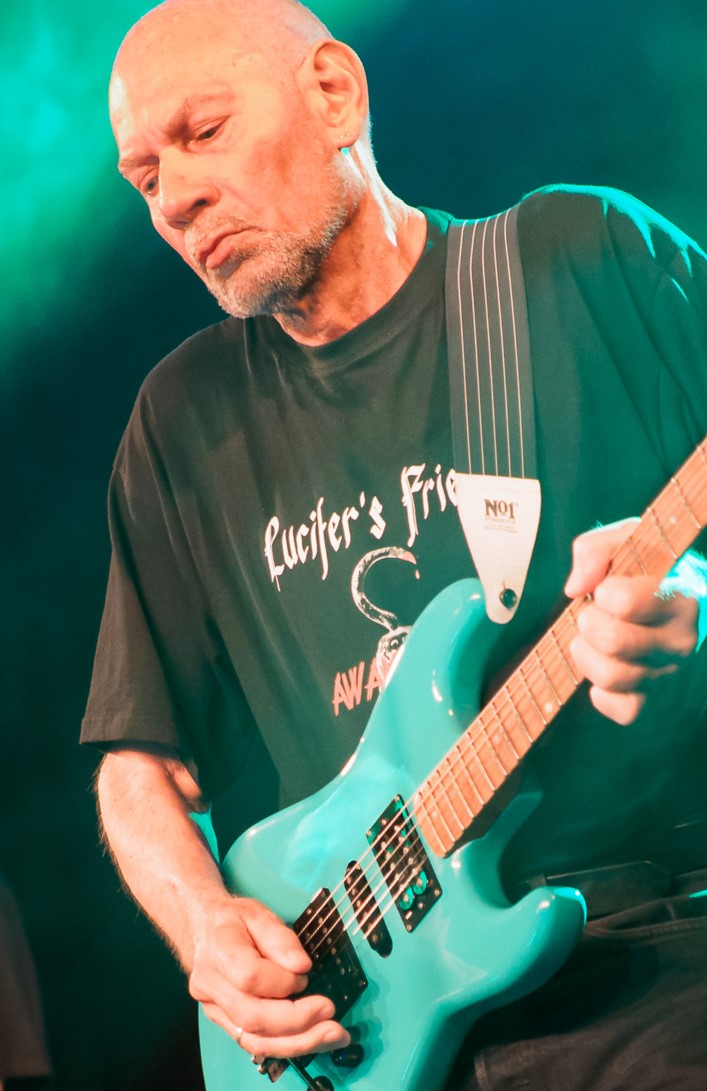
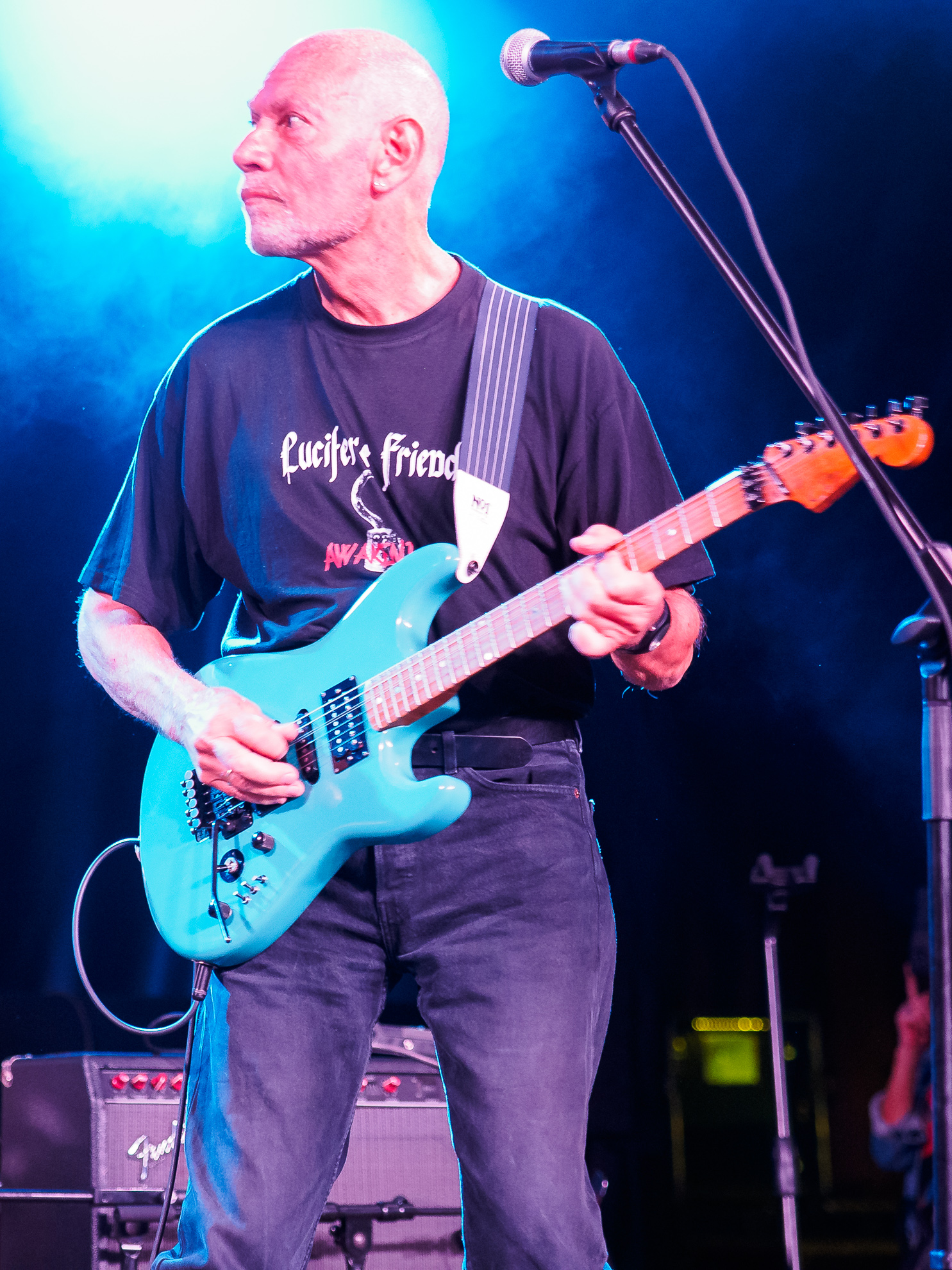
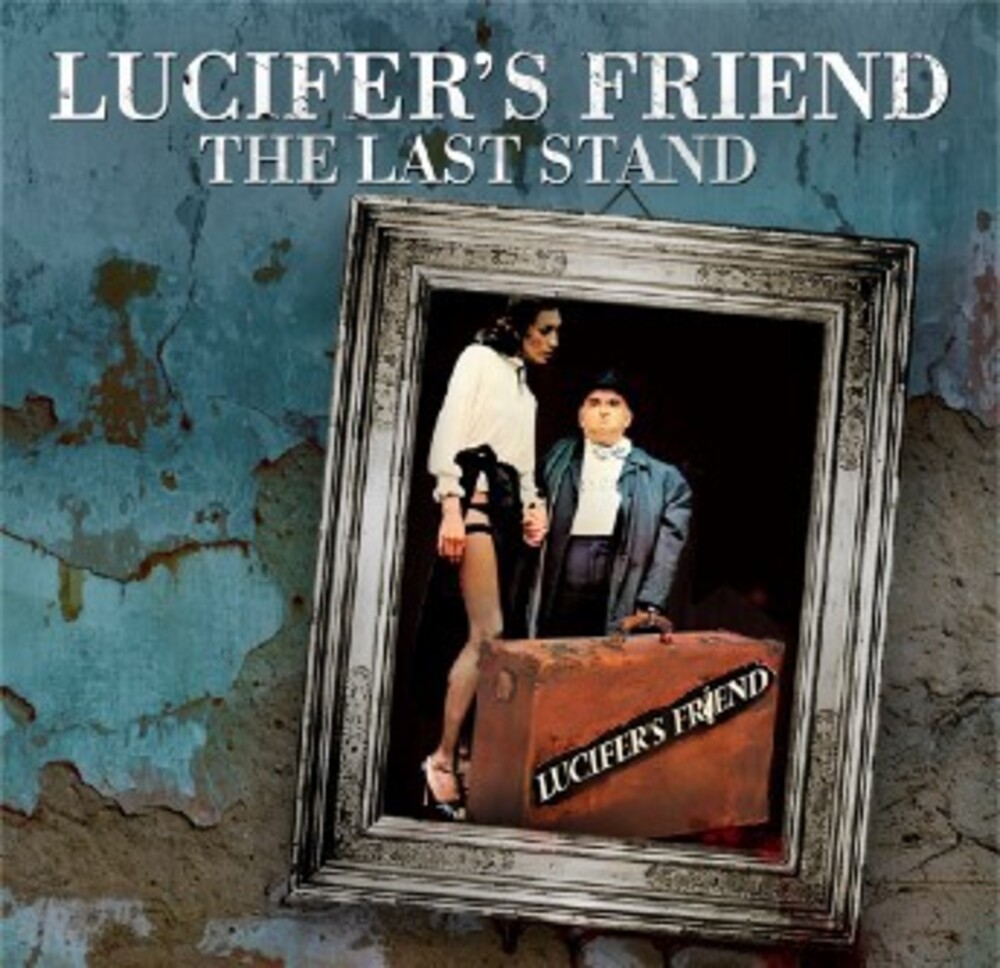
For Lucifer’s Friend fans, despite the recent deaths of both Dieter Horns and John Lawton [Dec ’20 / June ’21], there are a couple of upcoming releases that will [hopefully] lift fans’ spirits. October will see the second solo release – Night Drive 2, from guitarist Peter Hesslein, and in December there will be the Lucifer’s Friend compilation The Last Stand. In this exchange Peter Hesslein gives some answers regarding both of these new releases, as well as future releases that fans can look forward to.
The reaction to the first Night Drive album was a huge surprise for me, with unanimously positive reviews, I had planned the album for myself to relax and to bridge the gap until the next Lucifer’s friends album for the loyal fans, I was initially a little insecure as the rock lovers can be felt, I was immediately motivated to find a successor with many good reactions, especially since John still had not started with the vocals, although the playbacks were completely finished.
When was the 2nd Night Drive recorded? and does it differ much from the first one?
Night Drive 2 was finished in May 21st, it’s a little more rocking than number one.
After so many years of working in bands or with other people, how did you enjoy recording solely for yourself?
Working while listening to top musicians from all over the world naturally shaped me, as I have already done everything myself for Lucifer’s Friend and John had given the vocals, it was a habit for me.
Do you foresee yourself doing another such solo album, or is there something else [musical direction] you’d like to record in?
I finished the recordings for Night Drive 3 and I even aimed it towards Brazilian music, inspired by my long-time friend and percussion player Pablo Escayola
Nice. when is this planned for release?
In May 2022.
Lucifer’s Friend :
The Last Stand compiles songs from the LF albums ’94 to 2019. Is this basically your own choices or how did you choose the tracks?
The Last Stand was supposed to be the new Lucifer’s Friend album, as this wasn’t possible now, management decided to turn it into a sampler of tracks from the last four albums. I chose these songs in the sense of being John’s favorite songs.
Is there more Lucifer’s Friend stuff in the vaults that could be released — be they leftover studio tracks, demos…?
Lucifer’s Friend only have playbacks without vocals.
You had mentioned previously a LF recording from Japan. Might this be something you could still release, and is there any other live recordings that was could be issued?
There is a live recording from Japan, but unfortunately the quality is too poor to be released.
Regarding the unfinished LF album – I understand that everything was done except for the vocals!? If so, is this something that could be finished musically OR with ‘guest’ singers?
The management has decided to close the chapter of Lucifer’s Friend for the time being.
Curious if there were any song titles [?]
Since John always wrote his lyrics shortly beforehand, so unfortunately, none exist.
Is there any chance we could still get proper CD reissues of the entire Lucifer’s Friend catalogue? [maybe a box set]
When the management gets the rights for a box set from the different companies, maybe at the end of ’23.
Is this something that is being planned with a particular record company?
That is planned with Cherry Red.
Might you consider writing a memoir of your career in music?
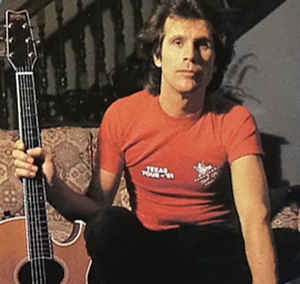
Peter Goalby had a long and successful career throughout the ’70s and ’80s. From Wolverhampton (England), Peter was in such bands as Fable and Trapeze as a singer, guitarist and writer. He also had a solo deal with Magnet Records in the ’70s, releasing a few singles. Following a final tour and live album with Trapeze he joined a revamped Uriah Heep, lead by Mick Box. As a frontman and writer he played a major role in the band’s resurrection in 1982 with the successful Abominog album, followed by Head First, and then Equator. In this interview [his first since his interview with the Uriah Heep Appreciation Society in 1992, and his first since walking away from the music business] Peter explains his reasons for leaving the band, as well as a few events that lead him to leaving music all together in the early ’90s. He took other jobs, put away his guitar, and moved on, having little contact with the music industry. However, November 5th marks the return of Peter Goalby in a way – it is the release date for his brand new album – songs that he’d recorded over 30 years ago! Songs he feels strongly about, and that he needs to see released. Easy With The Heartaches will be his first album since 1985! Peter says he is “thrilled” with this new album. And here’s hoping that it generates enough interest that we might hear more from the man!
*Check out the link at the bottom to order Easy With The Heartaches.
To go back a bit, I just want to clarify that you did not leave Uriah Heep because your voice was gone – it was the relentless touring along with personal matters at the time!? Can you talk a bit about that decision and how it came about ? Did the lack of success with Equator play a part as well?
The touring was relentless from day one. Everything revolved around the live shows . Just to give you some idea, we once did 22 countries in 30 days. My longest run was 16 nights back to back. I remember checking in to the Hamburg Hilton and I bumped into Gary Moore in reception. I told him that this was show 16 on the bounce, he said “Sack your manager!” Our manager was standing next to me, so I said “Gary meet Harry!” LOL. Equator was a major part of the end for me. I have never understood why we did not use Ashley Howe on this third album > I was told we were using Tony Platt because he had worked with Mutt Lange. The album flopped mainly because the sound is awful. It’s drenched in Reverb and difficult to follow. Way too many overdubs. We arrived in Australia to do our second tour in two years. We were met from the plane by three people from CBS Records. They had no idea that we had a new album out (Equator). We were so pissed off – I could not believe it . What a cockup! So. as the first Aussie tour went so well. this time they put 36 shows into 40 days . We got about three quarters through it, then one afternoon Lee took me fishing off the rocks. All I caught was a throat infection – Laryngitis. I lost my voice completely for 4 days. I was not allowed to speak at all. We resumed the tour and my voice was fine. My voice did not give up, I did! Many reasons added up to me wanting to leave but my voice was fine. I hope you will agree when you listen to my album . I am so proud that finally people will listen to my very best work. I love the songs – all of them! It’s the real me, what I always wanted. The story of me having problems with my voice suited the band at the time, it fitted in . No one ever asked me if it was true. This is my first interview since those days [ed – UHAS int] .
Can you touch briefly on the highlights of your career – with Heep, Trapeze, as a solo artist… Any tracks you were most proud of or favorite concert moments?
There are so many Highlights in my career – Fable was a great band, all 5 of us sang; I loved the harmonies and all that stuff. We were a cover band really but we did the songs live better than the original artists. I was thrilled when I was asked to join Trapeze. Mel was a great guitarist, very unique style of playing. I wrote three songs for Trapeze – “Livin’ On Love”, “Don’t Ask Me How I Know”, “When You Get To Heaven”. All three ended up on side one of the album, Yea! My favorite Trapeze track I sang was “Don’t Break My Heart Again” – I think I did a fine job on that one !? Castle Donnington was the start of the Heep story – we blew all the other Bands off the stage, as we did so many times, at many festivals over the years. We headlined so many, all over Europe, it was great! I remember waking up one morning in a hotel in Europe, I could hear the riff to Golden Earing “Radar Love” live – It was 11am, the show had started and we were not on until 9pm. I thought to myself “Wow that’s where I am, great stuff!” I loved working with Def Leppard – Joe, Phil and the boys – great people, they really were. We were all great buddies at the time. Joe and I played golf in Las Vegas. We used to share a taxi when doing the radio interviews before every show. I was watching Sky Arts TV channel the other day, watching the Eagles live, and I thought “look at the size of that gig!” – then realized it was the LA Forum. I have played that gig! I loved playing India, that was incredible, And yes, I really do have a scar on my back, where I was bitten by a naked Indian guy who jumped on the stage. I regret not doing Russia; that must have been fantastic for the boys.
Was the possibility of a trip to Russia in talks before you left?
Just before we went to Australia for the second time , we were offered Russia but it was not officially on . I did not realize it was going to be that big , must have been incredible . Well done Mick.
Too Scared To Run was a great intro for the band!?
When I wrote “Too Scared To Run”, as I did with a lot of songs, I always pictured certain bands playing it or what would they would they do. And I wondered what would Phil Lynott and Thin Lizzy do? And it’s really weird because looking at some of the comments on the internet about ‘Too Scared To Run’ one guy actually said that it reminded him of Thin Lizzy! So, I thought ‘yeah, I got it right.’
Immediately following Heep, was your initial plan to get on with a solo career or was there other options, offers, things you wanted to do? And what lead to eventually writing and recording these tracks that make up Easy With The Heartaches?
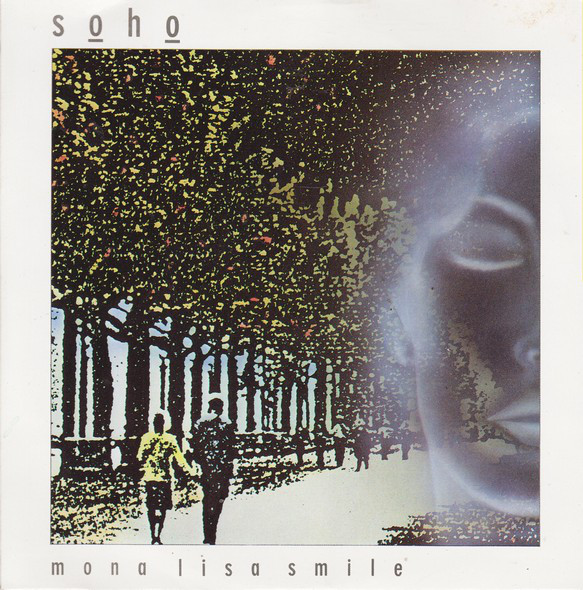
Straight after leaving Heep I I was introduced to Mickie Most. He had just bought back RAK records from EMI. He signed me and we made two singles which he produced . “Mona lisa Smile” an d then a great song called “I Don’t Wanna Fight”. I then got a publishing contract with Rondor Music. They treated me very well. I was allowed to go into the studio any time I had new songs and record them . Which I did; that’s how these recordings came about. I would wait until I had three or four songs ready to go, then book the time in Mad Hat studio in Wolverhampton . We would record three songs complete in a couple of days . To be honest I was thinking maybe I would get an offer from a band. I never thought of me doing a solo thing or having my own band. My writing was getting better and better at the time; I felt like I was in the zone. The songs were getting stronger and stronger. Had I stayed with Heep they would have ended up as Heep songs I am sure. I also think part of the reason the songs were getting better was that I now had the time to concentrate on being a writer. Really that’s all I wanted to do, be a writer of songs. The songs on Easy With The Heartaches were written after I left Heep, there was nothing left laying around with the band, nothing. John Parr contacted me, he had heard some of my songs and loved them. He asked if we could do some co-writes for his next album I said YEA. We wrote “It’s Startin’ All Over Again”, “Everytime”, and “This Time”, which John put on his Man With A Vision album. John played all guitar solos, I played all other guitars. I also did some co-writes with Robin George. Robin is from Wolverhampton, so we knew each other for many years . I have put three Goalby / George songs on my album : “I Built This House”, “Monalisa Smile”, and “Chance Of A Lifetime”. They were recorded in Robin’s home studio.
In talking about some of the tracks – Monalisa Smile is one many will know [as it was a single], but it also created a bit of controversy in comparison to a Heep track on Raging Silence!?
When Heep were doing Raging Silence, Mick asked if I had any songs they could do. I had “Monalisa Smile”, and I wrote a new song especially for the album, I called it “Blood Red Roses”. It is a great song. So I sent those two songs to Mick. Then when I heard the album I played “Blood Red Roses” and thought “WOW – I should have recorded it myself”. I loved it . But the next track came on and my father-in-law said “that’s your song too ?” I phoned Mick and said that “Voice On My TV” was the same as “Monalisa Smile”. He told me it was a co-write with the new keyboard player. Mick apologized and it has not been mentioned since that day.
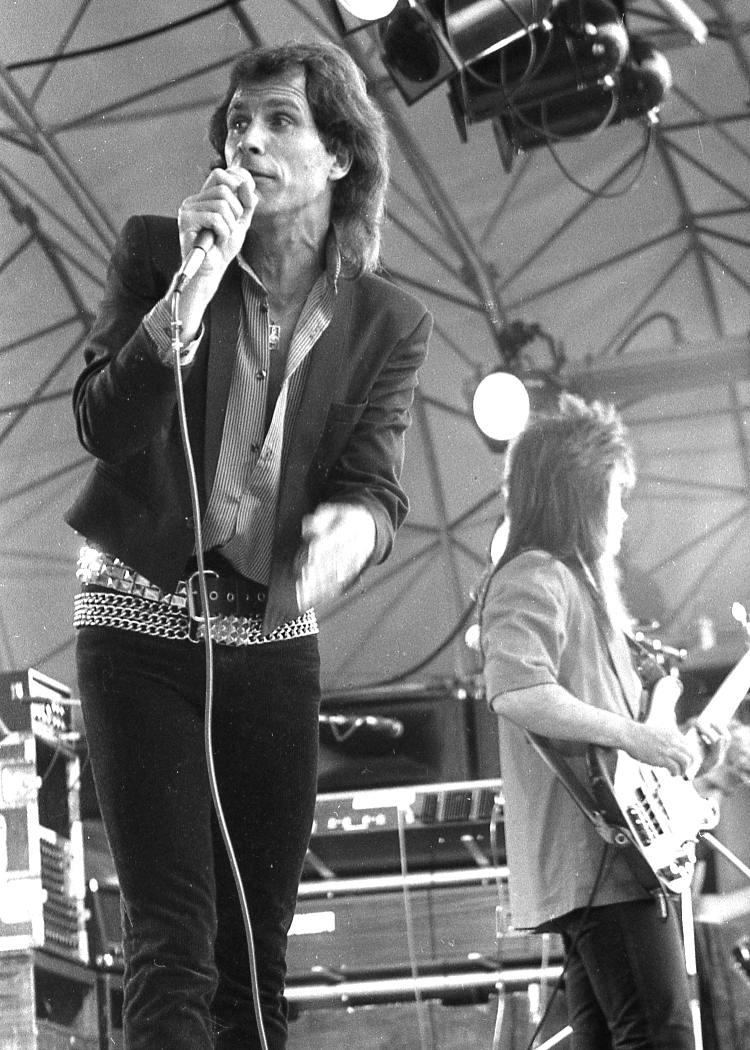
[Peter Goalby: Rantarock Festival, June 1985. Photo courtesy of Juha Kivinen]
Do you have any personal favorite tracks on this album? Anything specific that you felt would’ve made a great single at the time you recorded them?
I love every track on Easy With The Heartaches. I chose that song as the title track because of the lyrics. They are rather fitting. they mention ‘too scared to run’ and ‘Rainbow’. I think my very favorite has to be “They’ll Never Find Us”, it fits together so well, and I sing it well (I hope).
These songs have always been noted as being demos!?
I call them demos, but they sound as good as anything else that’s out there from the 80s.
What happened following these recordings that they ended up getting shelved [and eventually bootlegged] and you eventually leaving the music business as a writer / performer?
Mickie Most went to America with “I Don’t Wanna Fight” and “Monalisa Smile”, and got me an album deal. And they offered him 15 points [percentage breakdown], and he wanted 19, and he walked away! So yet again – this is the story of my life! There would’ve been a Pete Goalby album a few years after I’d left Heep.
This single started to do well, it was on round table, which is a Friday night radio show where they play new singles and comment on them UK DJ Mike Reid was on that night .I remember it well, I was listening to the show. They played my record and Mike said – “What a song. The vocal is a hit vocal, but the production sounds so old fashioned . It sounds like the sixties. Awful”. Monday morning Micky pulled the record from release. He withdrew the record .
I remember there was a shake up at Rondor, my contract was up for renewal. The guy that had signed me got fired and so did all of his Artists – including me . So that was the end of that. I decided enough was enough and quit the music industry. I had given my all for so many years but decided there were other things in life like being happy.
In the years since leaving the business did you miss it at all – not so much the ‘business’ end, but the writing, recording or performing live? And do you still play on occasion [in private, for company or yourself]?
I missed it all, big time! That’s why I stopped completely. That was the only way to deal with it. I was in denial. It took a long time to get over it all and become normal again. I could not figure out why I could not get it off the ground. So I stopped. I have not picked up a guitar in many years. And the same with the singing. The last singing I did was for Uli Roth, 1992, I think. Looking back, I hated the music business, but loved the music . This album is so important to me. I truly believe these are my best songs.
What sort of lead you at this stage to get these recordings out? Curious if you’ve seen a lot of positive comments about your recordings with Heep and Trapeze, and if that played a part? Can you kind of go through what got you motivated, and the whole process to get to this release? {i believe it was late 2019 when you first mentioned it].
I had been looking on YouTube etc , and was blown away with the comments about the songs. People totally get it! And that’s great. So many people saying they like the songs. A very important thing happened to me when I was 60 years old – my Mother told me the man who I thought was my Dad, actually was not my Dad. My real father was a singer and piano player – Wow! Then it all made sense. I finally knew who I was and where it all came from. Had I known this before I would not have stopped singing and writing etc (isn’t it a strange old world?) Losing Trevor, Lee and Ken made me think real hard about things. I thought when I go, some one will buy the rights to my songs and release them anyway. So I decided to stick around and hopefully enjoy releasing the album and all that goes with it.
Has this release inspired you to want to see more stuff from your past get released [or reissued] – like Fable, various singles…..?
As I said when I am gone , it will all get released so, if that’s what people would like . Then let’s go for it now Kevin.
Why did you decide on Easy With The Heartaches as the title?
I wanted to call it Easy With The Heartaches because it could be about me, if you listen to the words.
As you had more than enough songs to pick from [people who have the ‘bootleg’ out there will say there’s songs missing]. So curious how you chose the songs for this release? And what might become of the ‘leftovers’?
I was not even aware there had been a bootleg album of my songs. I thought some one had been nice enough to put a couple of my songs on You tube. I wanted the album to be punchy. After being in such a great band with Mick. I think that is what people will expect. I have more songs and we will see how things go with this album.
How happy are you with this album being released [finally]?
This is my first album since Equator and it’s been such a long time. It’s weird but I can detach myself from them ’cause it’s been so long since recording them. It’s as though I am listening to some one else. I think he is good, I like his voice! But I love the songs and style of the songs. It’s the kind of music I love. So it makes me very happy.
Could you foresee yourself recording anything new – be it reworkings of old songs or perhaps writing something new?
I am not sure about singing or writing new songs but lately I have learnt – NEVER SAY NEVER!
How involved and happy were you with the Trapeze compilation that came out in 2019?
I had a nice surprise last year with the release of the Trapeze compilation. I don’t know why but they did not use “When You Get To Heaven”. I think that was a strong song… Anyway, never mind. I was not involved at all with the release. I was asked to do something for the sleeve notes, which I was very happy to do.
There are a number of things in the Heep vaults from your time – the Ridge Farm stuff, the live in Auckland show, there’s also a live show from Glasgow [radio broadcast]. . Would you be keen to seeing some of this stuff ever released?
No! The live in New Zealand I think is fab. I’ve watched it. That was done properly, it sounds good, we’re playing [what I call] proper songs. That wouldn’t be a problem. But all this stuff like Ridge Farms, and stuff I’ve seen over the years like backing tracks, I’m thinking ‘who is doing this, what is the point?’ , it’s crap – it’s not very good. [Q- stuff on the box sets?] . Yeah, I don’t agree with any of that, it was never meant to be released. You wouldn’t release them at the time. The reason something doesn’t get released is because it’s not strong enough or it’s not in the right style, or whatever. So you pick and choose what’s going to be on the album, and all these songs get fallen by the wayside, and a lot of them aren’t even finished because you think there’s no point in finishing it because it’s not going to make it; it’s a no-go. And to hear them coming out as bonus tracks, I’m embarrassed, because it was never meant to be!
You remained a very private person since leaving the business, even avoiding social media. Can you give fans an insight in to how you are doing and what you’re into these days?
So, it’s all looking great, I have been very lucky in many ways. I am enjoying my Retirement, although I think I will be very busy after November 5th. We are still very much into our horses and horsey stuff.
Though it’s been a long time – have you occasionally been recognized or approached by fans while out in public?
I am still recognized, yes. I have always played it down though. A lot of our friends still don’t know I was a singer in the 70s and 80s. It’s great fun when they find out.
You spent a lot of time with Trevor and Lee, and were friendly with Ken. Any special memories or tales of any of them?
We lost Trevor, Lee, Ken , and then John Lawton . I did not know John but he was part of the family and all are missed .
I loved Lee, he looked after me . Bob Daisley said , if Lee tells you anything you must either half it , double it, or completely ignore it LOL
Bob called Lee ‘Grenade Head’ ’cause he was likely to go off at any moment LOL. Bob and Lee were very close right until the end .
Lee was an absolutely fantastic drummer. To stand to in front of the drum riser with Lee playing behind me, his bass drum used to blow out my trousers, he was so loud, he was like Cozy Powell. Cozy was exactly the same. A fantastic drummer. But Dave Holland was a great drummer too.
Trevor – What a bass player! I still see him all the time on all the Spiders From Mars videos on TV. Trevor was also a funny guy; very quiet but in a calm way I loved sharing a stage with Trev.
Ken, what a talent – so many classic songs . I wish I could have shared a stage with Ken. It did cross my mind to do an album with him but I left it too late . He was a great keyboard player; a different style to my mate John Sinclair, Both fantastic.
You’ve kept in touch with Mick over the years, and presumably John Sinclair. And Bob Daisley was in the band prior to Trevor…
Yes I am in touch with Micky but more so with my mate John, he is the funniest man in the world, so funny. He said to me a few months ago – “Pete you are the best singer I have ever worked with… Oh, apart from OZZY!” LOL
When Bob left the band I was so upset, as we were great together. He is a great bass player and writer – ,everyone knows that. Bob and Lee together, WOW – bloody fantastic! It was an honor Bob.
If you were to ever join Heep onstage for a couple of songs from the ’80s — what would you like to do? 🙂
If I ever joined Mick on stage for a couple of songs from the 80s – “To Scared To Run” – for sure, as it’s my song. And I think maybe “The Other Side Of Midnight.”
A new compilation from German progressive / hard rock band Lucifer’s Friend marks the end of this great band, following the losses of founding members Dieter Horns [bass] last year, and singer John Lawton earlier this year. The band had began in 1970, and continued until 1981 with Lawton leaving the band in 1976 to join Uriah Heep, then returning for one album in 1980 following the departure of his replacement Mike Starrs. The band regrouped in 1994 as Lucifer’s Friend II, minus founding member – keyboard player Peter Hecht, and with a new drummer, and released the album Sumo Grip. They disbanded again, but Lawton, Horns, and guitarist Peter Hesslein would reunite again in 2014 to record some new songs for the compilation Awakening in 2015. They then played some shows in 2015, when they would record Live At Sweden Rock [issued the next year]. 2016 also saw the release of a brand new studio album titled Too Late To Hate, which was followed by 2019’s excellent Black Moon album. During this time health issues prevented the band from playing live before the Covid pandemic started in 2020. At the time of Black Moon John Lawton stated that another album was largely done, and was just awaiting his vocals. But Covid had closed the studio John would normally work out of, so no chance to record seems to have shelved this project. Sadly, In December of last year Dieter Horns, who had had recent health issues contracted Covid-19, and passed away in hospital. Further tragic news came when John Lawton suddenly passed away on June 29 of this year, leaving fans shocked. Late last year Peter Hesslein released his first solo [instrumental] album Night Drive, and is set to release the follow up, Night Drive 2.
The Last Stand is a fitting touch to end the band’s catalogue (unless of course, there’s things in the vaults 🙂 ) . It is compiled by Hesslein, from the albums from Sumo Grip, up until Black Moon.
Track Listing:
1 Heartbreaker 2 Sheree 3 Ride The Sky ‘94 4 You Touched Me With Your Heart 5 Pray 6 Did You Ever 7 Demolition Man 8 When Children Cry 9 Straight For The Heart 10 This Time 11 Black Moon 12 Passengers 13 Call The Captain 14 Freedom 15 When You’re Gone (Live)
In my teenage years I came across Spirit, probably from “I Got A Line On You” or a few other classics on Toronto radio. I think I picked up the LP Spirit of ’84, with all the remakes of the few songs I knew. On one of my excursions to downtown Toronto with my uncle when I was 14 or 15 I picked up a number of Spirit albums in various used shops along Yonge Street – heck, I’ve still got a few stickers from those stores on my records! (Peter Dunn’s Vinyl Museum was a favorite stop). Years later I had written an address I found for Spirit in a magazine (I assume), as I was writing the odd review for a local music magazine. Sometime in late 1996 I received a package from their management, and it was a letter from Randy California, along with the band’s latest [and last] CD – California Blues. I reviewed it sometime soon after, and not too long after read that California had drowned off the coast of Hawaii. It was sad news indeed. I (obviously) still have that CD as well as the letter, which I will dig out and post here sometime.
• NEW REMASTERED EIGHT DISC BOXED SET FEATURING EACH ALBUM RECORDED BY THE LEGENDARY BAND SPIRIT RELEASED BY THE MERCURY LABEL BETWEEN 1975 AND 1977 AND IN 1984 • PLUS 102 PREVIOUSLY UNRELEASED LIVE RECORDINGS AND DEMOS COMPILED BY SPRIT ARCHIVIST MICK SKIDMORE • INCLUDES THE ALBUMS ‘SPIRIT OF ‘76’, ‘SON OF SPIRIT’, ‘FARTHER ALONG’, ‘FUTURE GAMES’, AND ‘THE THIRTEENTH DREAM (SPIRIT OF ’84)’ REMASTERED FROM THE ORIGINAL MERCURY MASTER TAPES PLUS A BOOKLET WITH NEW ESSAY BY MICK SKIDMORE.
A very thorough 8 CD set from one of American’s classic late 60s / 70s bands. Sprit may be better known for their earlier material like The 12 Dreams Of Dr Sardonicus [the band’s 4th album] and the hits like “I Got A Line On You” and “Nature’s Way”, but the band carried on for years, and this box set compiles the band’s recordings during the mid 70s and 1984, while on Mercury Records. It includes the 5 albums recorded during this time, as well as a disc of demos & live tracks, a previously unreleased live show from ’75, a disc of studio outtakes from 74-75 + Randy California demos, and the 5 discs of the albums all contain a number of bonus tracks. There’s over a 100 previously unreleased tracks here! So safe to say a must have for Spirit fans.
This collection starts with 1975’s Spirit Of ’76, which saw a new line-up of the band. Following 1970’s highly successful-classic 12 Dreams Of Dr Sardonicus, Jay Ferguson and Mark Andes also left to form Jo-Jo Gunne, and following a riding accident and head injury Randy California also left, and would record a solo album Kaptain Kopter and the (Fabulous) Twirly Birds. Founder/drummer Ed Cassidy and keyboardist John Locke recorded Feedback in ’72 with a new line-up, before Cassidy and California [his stepson] got back together and eventually created the double album – Spirit Of ’76. Recorded as 3-piece, Spirit Of ’76 consists of 25 tracks, largely written by California & Cassidy with favorites like “Victim Of Society”, “Sunrise”, and the gospel ballad “Thank You Lord”. For being mid ’70s, this album still has a definite ’60s psych feel throughout, with plenty of folk, blues, rock, country influences, as well as off spoken word, and a number of interesting covers such as Dylan’s “The Times They Are A Changing”, “Like A Rolling Stone”, the Stones “Happy”, as well as “Hey Joe” – tho’ not penned by Hendrix, California had played with Hendrix early in his career. There’s 14 bonus tracks on the 2nd disc, consisting of alternate takes and live tracks recorded in ’74.
Next up was Son Of Spirit, recorded later in ’75, followed by 1976’s Farther Along. These 2 albums make up disc 3, along with 5 bonus tracks. Son Of Spirit, still recorded as a trio, with Barry Keene on bass, included almost all Randy California material, a bit more country-ish in places, featured the single “Holy Man” and a cover of The Beatles’ “Yesterday”. Farther Along saw Spirit return to being a 5 piece with Locke and Andes returning, as well as Matt Andes on guitar/vocals. I liked this album a lot more, though it took on a number of new styles, as well as strings on some tracks, horns on a couple. Favorites include “Stoney Night”, “Mega Star”, “Diamond Spirit”… the title track was issued as the single (and a live version is included among the bonus cuts), and it closed with a instrumental string version of “Nature’s Way”. The band’s final album for Mercury in the ’70s was 1977’s Future Games, which seems like more of a Randy California solo project, mainly written by California, and a bit of help on a few tracks from Cassidy, as well as guests like Kim Fowley. A strange album , featuring no other original band members [aside from Cassidy]. It’s like some strange sci-fi concept with all sorts of odd tv clips inserted, and sound effects, amongst the 22 [!!] titles, many of which clock in around or just under a minute. It does include a decent cover of “All Along The Watchtower”. Tacked on the Future Games disc is 11 bonus tracks, including alternate takes and demos. 1984’s The Thirteenth Dream (aka Spirit Of ’84) saw the original band reunited again. The band would re-record many of their classics, as well as include a few new songs. I liked this album, as it was nicely up to date at the time, and a bit heavier. It also featured a number of guests, notably Bob Welch, Howard Leese, Neal Doughty, and Matt Andes. The disc is filled out by a half dozen excellent sounding live tracks from 1986. Disc #6 is titled Spirit Of Salvation and is full of unreleased studio material from 1974-75, as well as a pile of Randy California demos. Next up is a 15 song concert from the Armadillo in Austin, Texas, recorded in June of ’75. A really solid performance and recording, features a killer rendition of “All Along The Watchtower”. The 8th (last) disc consists of the Future Games demos, and I really dig this, as you can hear the songs better without so much clutter; sounds very good. It is completed with 8 live tracks recorded at the Agora in 1975; among them is a great 9 minute take of “Like A Rolling Stone”, as well as excellent performances of such classics as “Mr Skin” and “I Got A Line On You” – to close things out.
This is a very thorough and valuable collection of one of America’s great, underrated bands. Loads of different material album to album, and so much bonus material, with live stuff, makes this a highly recommended addition to any Spirit fan’s collection, as well as a cool piece for curious types who don’t want to pick up the band’s output separately.
Incidentally, this is the latest Spirit box set from Cherry Red, as there are a number of others, covering every era of the band, and Randy California’s work.
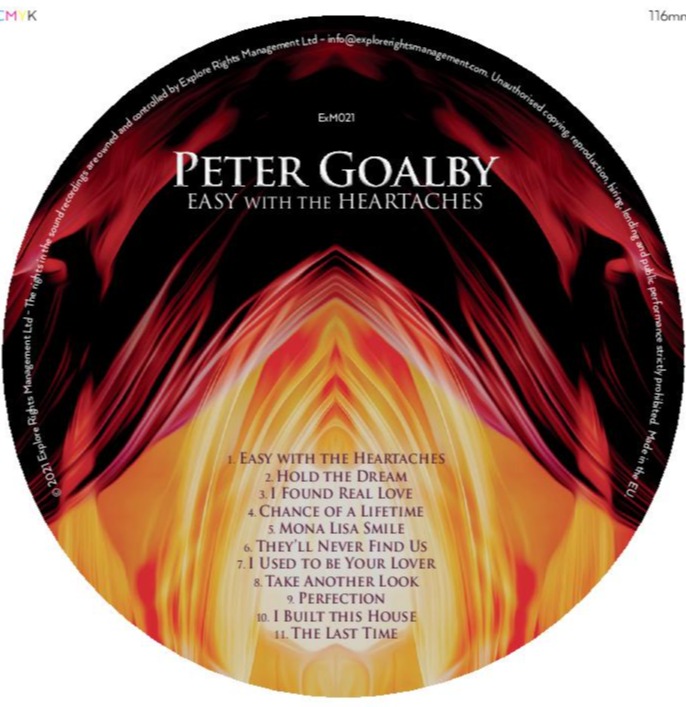
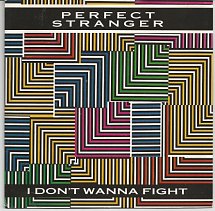
Peter Goalby left Uriah Heep following 1985’s Equator album and world tour. His first move was to release a single under the name Perfect Stranger in 1988. The singer, who also was a major songwriter during his time in Heep would resurface on the band’s 1989 album Raging Silence, as he wrote the single “Blood Red Roses”. As well he wrote “Falling Apart”, for Smokie on their 1989 album Boulevard Of Broken Dreams. He would also record a number of tracks for a solo project in 1990. A few of these tracks would see the light of day on official releases – “Mona Lisa Smile” was issued as a single in 1988, co-written & arranged by guitarist Robin George [ex Byron Band], and produced by Mickie Most. That track, as well as “Chance Of A Lifetime” [also on Easy With The Heartaches] were also recorded by UK band Estrella for their 2012 album Come Out To Play [an album produced by former Heep keyboardist John Sinclair]. Peter also wrote for a few other artists [notably John Parr], as well as guested on stage with Uli Roth, but would retire from the business, and taking on a job for a guitar company. But these recordings would later find their way out on the internet – bootlegged to download or on Youtube. His 1990 unreleased solo album was no secret amongst Goalby’s fans. Recently retired, and knowing these are the last things he wrote and recorded, and was proud of, the singer finally decided it might be a good idea to get his lost solo album out as an official release. Easy With The Heartaches features 11 tracks personally overseen (from tape transfer, mastering and artwork) by Peter Goalby. And here’s hoping that fans enjoy it, it’s not the last we hear from him!
Track Listing:
1 Easy With The Heartaches 2 Hold The Dreams 3 I Found Real Love 4 Chance Of A Lifetime 5 Mona Lisa Smile 6 They’ll Never Find Us (Running For Our Lives) 7 I Used To Be Your Lover 8 Take Another Look 9 Perfection 10 I Built This House 11 The Last Time
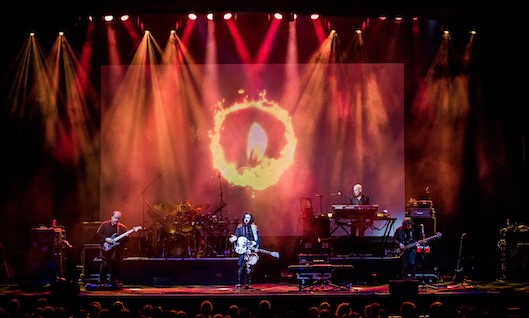
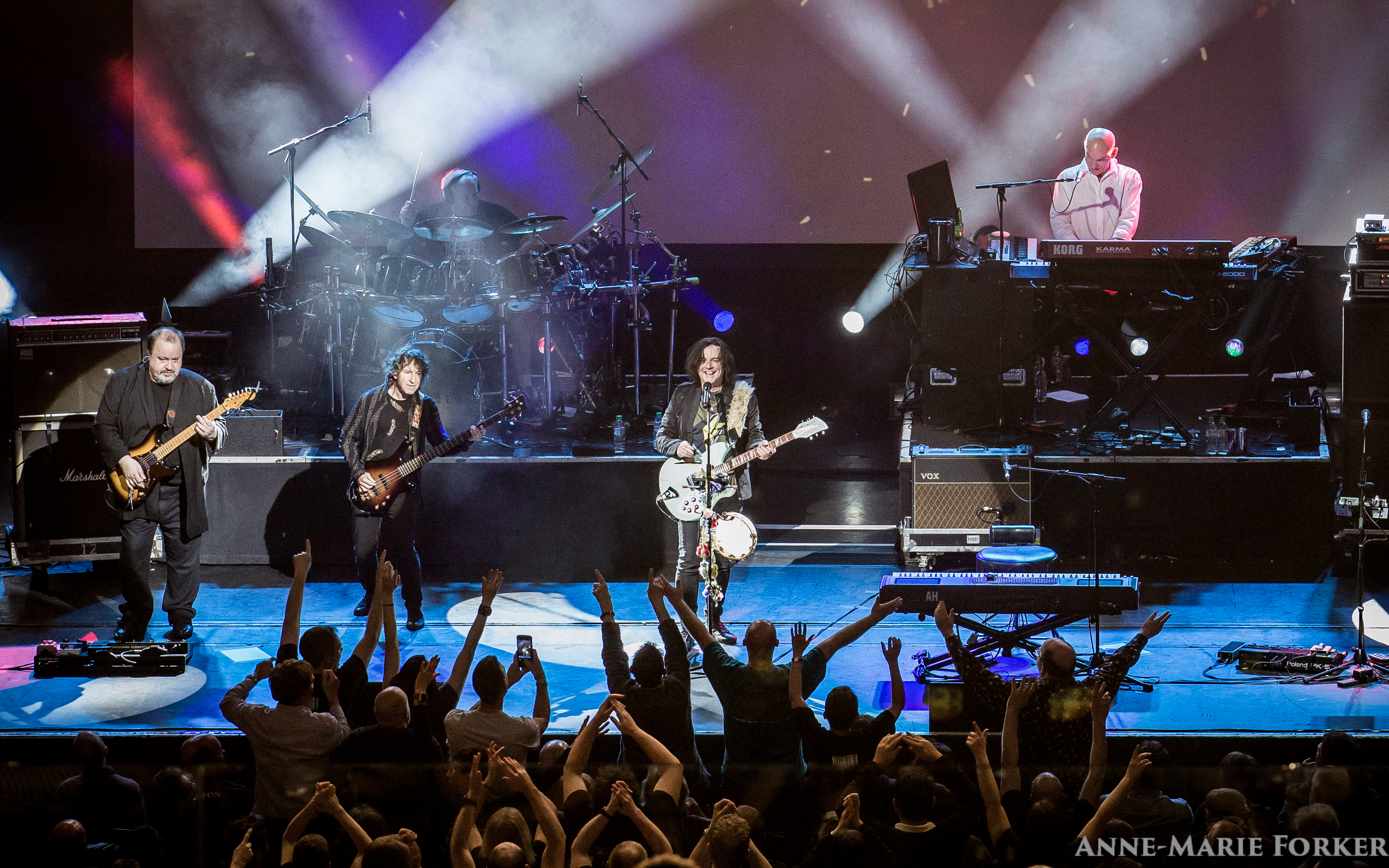
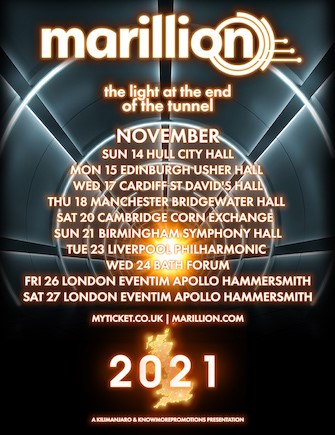
British progressive band Marillion bring their The Light At The End Of The Tunnel tour to the stages of Britain with a 10-date tour in November culminating in 2 nights at the London Eventim Apollo, Hammersmith.
Steve Hogarth says: “No, it isn’t a train coming the other way, it is in fact, The Light at the End of the Tunnel. We spent our time IN the tunnel writing our twentieth studio album.
We will tour in the UK in November and debut one or two new tracks, along with what we feel is the best of our (let’s face it) huge catalogue.
Our fans are legendary creatures of faith and enthusiasm – some say obsession – so we can’t wait for that feeling of reunification as we return from the wilderness, to the stage. The light is gonna feel good.”
The Light At The End Of The Tunnel Tour November 2021:
Sunday 14th Nov Hull City Hall
Monday 15th Nov Edinburgh Usher Hall
Wednesday 17th Nov Cardiff St David’s Hall
Thursday 18th Nov Manchester Bridgewater Hall
Saturday 20th Nov Cambridge Corn Exchange
Sunday 21st Nov Birmingham Symphony Hall
Tuesday 23rd Nov Liverpool Philharmonic Hall
Wednesday 24th Nov Bath Forum
Friday 26th Nov London** Eventim Apollo Hammersmith (seated)
Saturday 27th Nov London** Eventim Apollo Hammersmith (standing)
**Please note the Apollo Hammersmith shows will be – one night seated and one night standing.
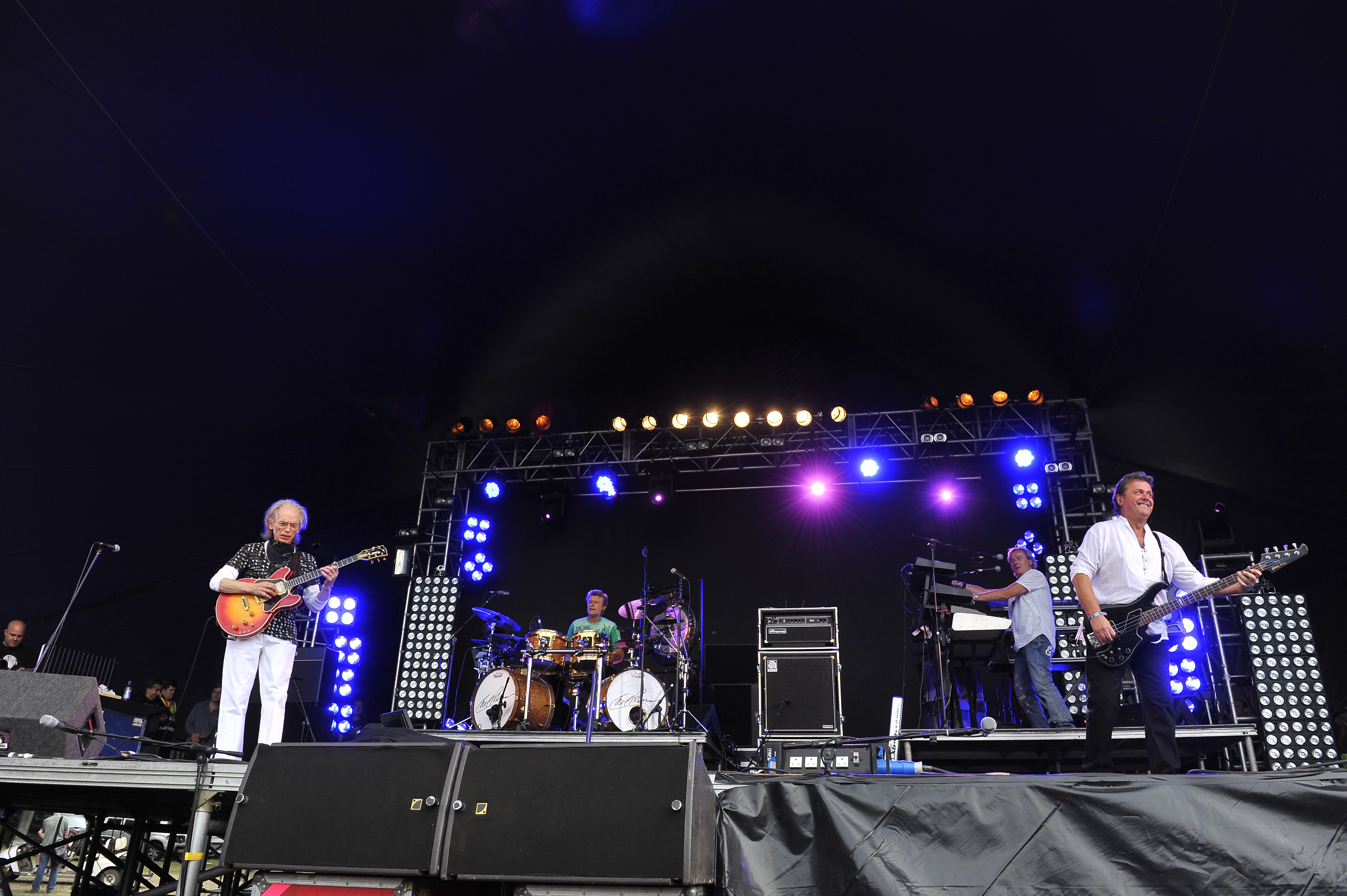
MARILLION are: Steve Hogarth – lead vocals, lyrics, keyboards, percussion, Steve Rothery – electric guitars, acoustic guitars, Pete Trewavas – Bass, Guitar, Backing Vocals, , Mark Kelly – keyboards, and Ian Mosley – drums, percussion.
The band’s latest studio album’s are 2016’s F.E.A.R. [Fuck Everyone And Run], and 2019’s With Their Friends From The Orchestra. The band is currently working on An Hour Before It’s Dark – for 2022 release.




:format(jpeg):mode_rgb():quality(90)/discogs-images/A-467614-1455915428-9524.jpeg.jpg)