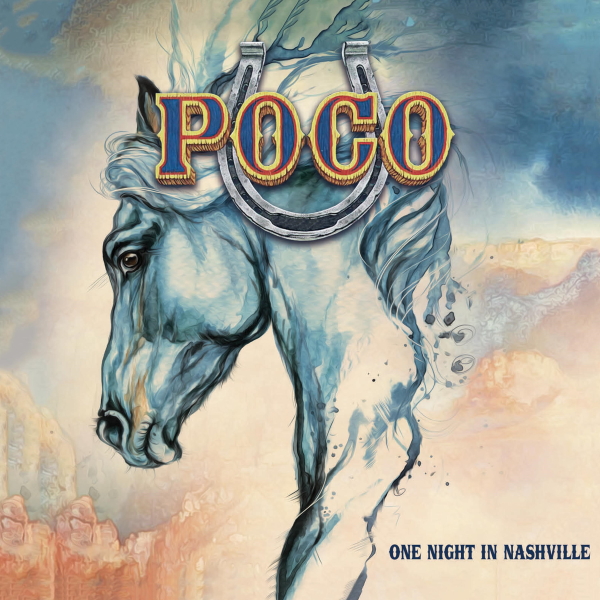
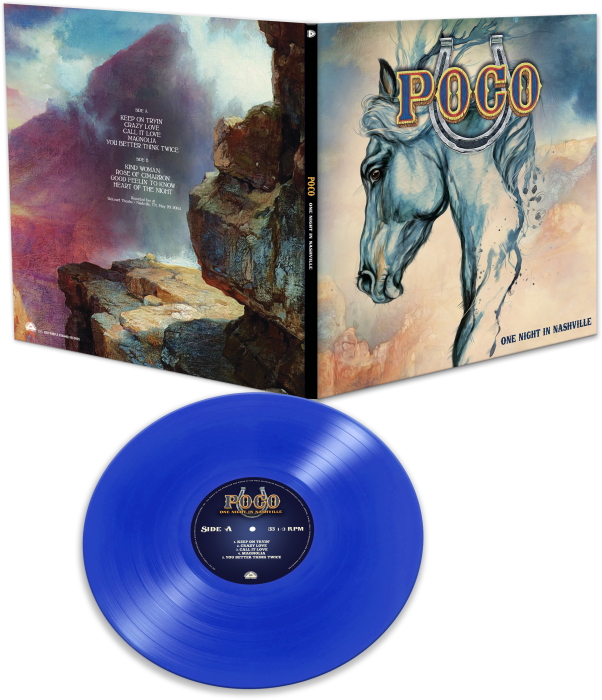
A band I am not so familiar with, but I do remember buying the cassette single of their big 1989 hit “Call It Love”. What a great song! And I have picked up a number of Poco albums over the years, but never gave them the time, I guess. But checking out this upgraded version of their 2004 Nashville show, originally released as the CD/DVD Keeping The Legend Alive is an eye opener to the band’s catalogue, not to mention their flawless performances of their hits and classics. “Call It Love” is here, as is their biggest hit, 1978 top 20 hit “Crazy Love” [from their biggest album – Legend] , and their classy rendition of JJ Cale’s “Magnolia” (originally a single from 1973’s Crazy Eyes). I could go on, but this is just an excellent live concert. Poco may have been a slightly less rockin’ act in the same ‘country-rock’ category as The Eagles (their was a few personnel connections too), but they definitely had their own brand of classic rock with great melodies and harmonies, and this is a great intro (or reminder) of the band, who at the point of this show, had 18 studio albums. *This is the first time this is on vinyl (and a nice shade of blue!), tho’ I’m not a fan of condensing these down to fit on 1 LP, but oh well… Classic album art that’ll look great alongside the rest of the band’s albums.
Brand New Vinyl Reissue of “One Night In Nashville” From Country Rock Icons POCO!
Los Angeles, CA – Long before Wilco or The Jayhawks or Ryan Adams, there was one country rock band that towered over all others. Founded by former members of the brilliant Buffalo Springfield, Richie Furay and Jim Messina, along with multi-instrumentalist Rusty Young and drummer George Grantham, Poco pioneered a blend of sounds that would come to dominate singles charts and radio for years to come. Indeed, some of Poco’s most beloved tracks are still treasured by fans today including “Crazy Love,” “Heart Of The Night,” “Call It Love” and “Rose Of Cimarron.” These songs as well as the nearly 20 studio albums the band released over the years have ensured that the Poco legend endures.
While Poco’s recording output is well-known and widely celebrated, the band’s live performances are the true treasures for longtime fans. One very special concert occurred one night in Nashville, TN in 2004. Original members Furay, Young and Grantham all participated as well as longtime member Paul Cotton. Together, the group offers up fantastic renditions of their biggest hits and most beloved songs. Now this special live performance is being released on glorious vinyl in a limited-edition TRANSLUCENT BLUE as well as on digipak CD. It’s a superb package that fans old and young will not want to miss!
TRACK LIST: CD 1. Where Did The Time Go 2. Keep On Tryin’ 3. Crazy Love 4. Pickin’ Up The Pieces 5. Bad Weather 6. Call It Love 7. Let’s Dance Tonight 8. Magnolia 9. You Better Think Twice 10. Spellbound 11. Indian Summer 12. Kind Woman 13. Rose Of Cimarron 14. Ride The Country 15. Good Feelin’ To Know 16. Heart Of The Night
VINYL SIDE A 1. Keep On Tryin’ 2. Crazy Love 3. Bad Weather 4. Call It Love 5. Magnolia 6. You Better Think Twice
SIDE B 1. Indian Summer 2. Kind Woman 3. Rose Of Cimarron 4. Ride The Country 5. Good Feelin’ To Know 6. Heart Of The Night
PHOENIX formed after ’70s classic band ARGENT disbanded, as it consisted of John Verity, Jim Rodford and Bob Henrit. Verity had joined Argent for their last 2 albums, replacing Russ Ballard; the band took on a change of direction, but Verity wanting to get back to a more straight ahead rock band came up with Phoenix. The band debuted in 1976 with their self-titled album. Not sure how well it did, but it is a classic ’70s hard-rock album, full of great guitar, Verity’s distinctive vocals, and a killer rhythm section., and stand outs like “From The Ashes”, “Woman Like You”, and “Easy”. Highly recommended ’70s rock listening, with Verity putting out a 30th anniversary CD edition some years ago.
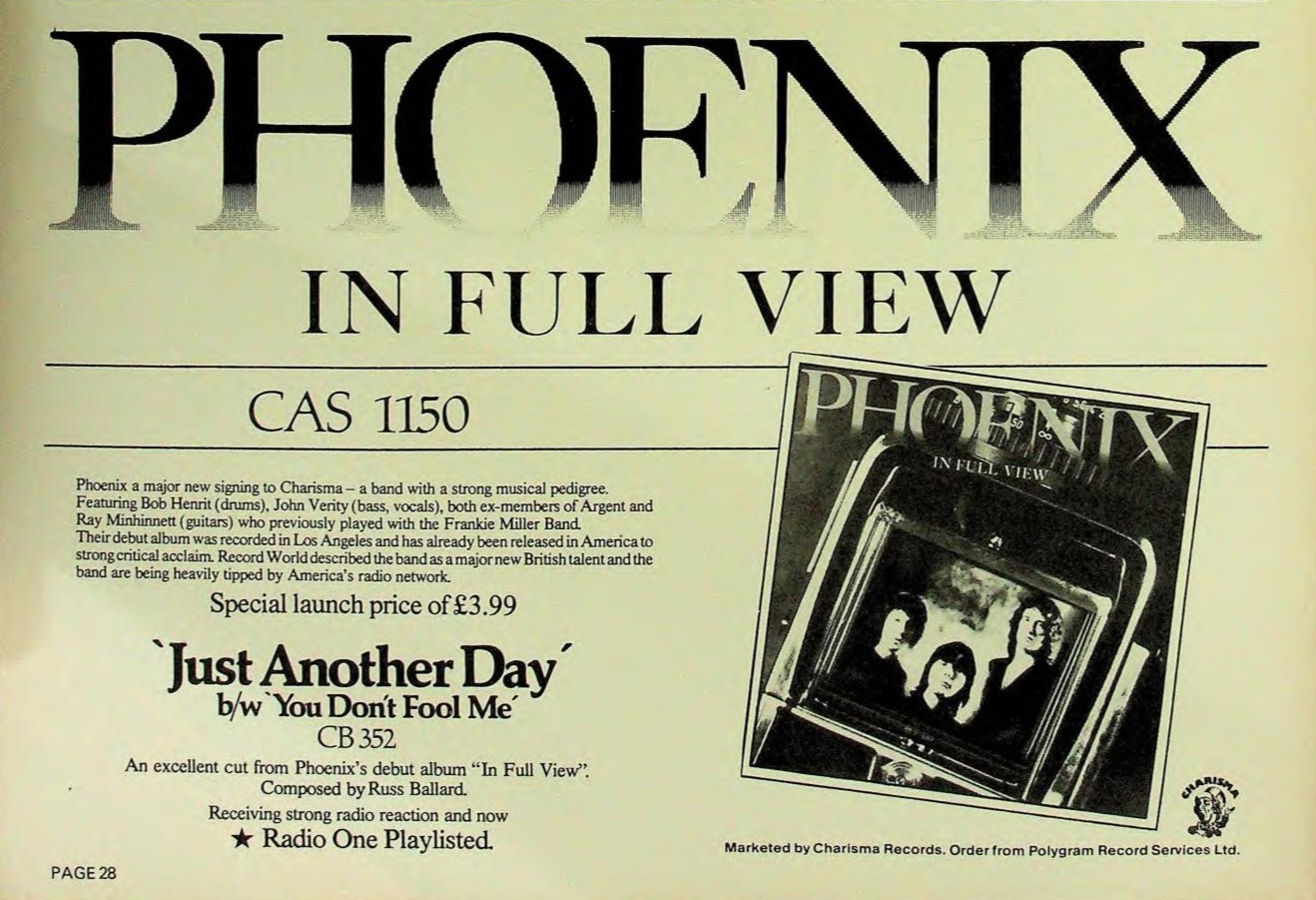
Anyway, the band went in to record a 2nd album (which is the topic here), which was shelved as the record company at the time wanted the band to take on a more American radio friendly sound, hence 1979’s flop – In Full View. The band would release 1 more single before disbanding.
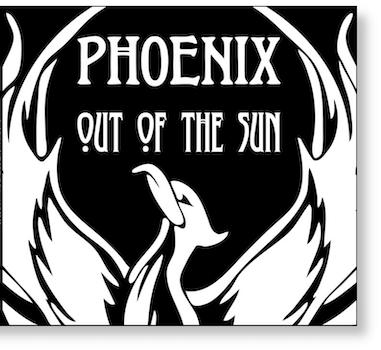
Now, nearly 43 years later that 2nd ‘lost’ album has been rediscovered and mastered for release by John Verity. Titled Out Of The Sun, with a cover that resembles that classic album cover for the Phoenix debut album, featuring 8 tracks individually penned by each band member, as well as a track from Chris White (Zombies).
Upon first listen through, it is safe to say if you liked that first Phoenix album – you will really like this! A great mix of rockers, ballads, a bit of funk, blues… Out Of The Sun opens with “Are You Ready”, an upbeat heavy rocker, very fitting musically and lyrically here. (Can’t help but be reminded of Grand Funk’s song of the same title). There are a couple of piano based ballads [featuring Rod Argent] – “Fallin'”, which is highlighted by Verity’s vocal, harmonies, and a smokin’ guitar break, as well as the cut “When My Boat Comes In”, again with a great high vocal,, a bit of synths, – this one would’ve made a fine single. “Loser” is a rocker, with a good bit of attitude; this song really makes me think these guys were really having a blast recording this stuff. “Spider Woman” is a cool sounding slower number, a bit funky, great groove, one of my favorites here, as is “Take My Music”, a bit more of an uptempo rocker, complete with some nice backing harmonies, a few changes, killer guitar sound; too bad this one fades out so soon. “Winds Of Change”, followed by “You Got Soul” close out this disc, both strong cuts, a bit of blues, soul, funk, and solid rock.
It is a shame this album was lost for so long, because it is a fantastic follow up and equally as impressive as the debut. Not a dodgy cut here. Just a very cool sounding guitar rock album of the 70s, from a tight sounding band that ended too soon.
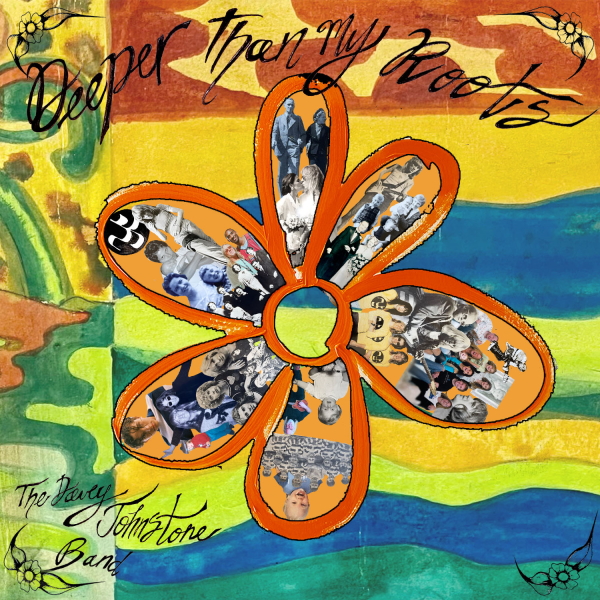
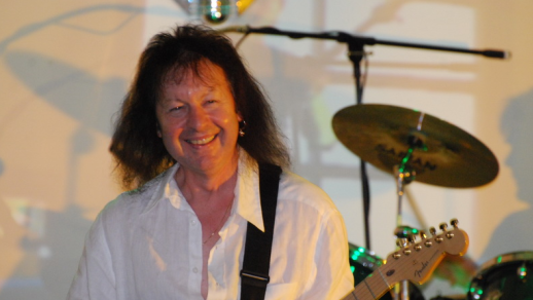
Davey Johnstone is the Scottish born guitarist, most known for being a key part of Elton John’s band, for the most part, since 1971. There was a break in the late ’70s where he joined Alice Cooper’s band for a few albums, and has worked with a number of other acts over the years. Deeper Than My Roots is just Johnstone’s 2nd solo album (tho’ this is labelled as a ‘band’ album) since 1973’s Smiling Face, which featured fellow members of Elton’s band. His new album is made with his offspring, who all contribute to the playing, vocals, and even the awesome artwork! The artwork alone got my attention, wish there was a vinyl version of this! It goes with the music within, which has a definite ‘early ’70s vibe with great vocals (most of which supplied by Johnstone’s youngest son), harmonies, acoustic guitars, keyboards, nothing really hard rockin’, largely ballads, but plenty of cool guitar work and a few classic solos, atmosphere, and great songwriting, all wrapped up in a sweet production. Favorite tracks include the first video-single “Melting Snow”, opening cut “Go Easy On My Heart”, “Boxer In The Corner”, and the instrumental “Walt Dizney”. Deeper Than My Roots also includes 2 ‘bonus’ tracks, one being a cover of The Beatles’ “Here, There, And Everywhere”, and the other being Davey’s 2020 single “All The Time In The World”.
*See the press release below:
Elton John Guitar Legend Davey Johnstone To Release First Single ‘Melting Snow” From Forthcoming Solo Album!
Davey Johnstone has been Elton John’s guitarist for 50 years. He has also played with Alice Cooper, John Lennon, Stevie Nicks, Lenny Kravitz and many, many more! In his role as Music Director he will resume the hugely successful Farewell Yellow Brick Road tour with Elton and the band in January 2022.
Davey is releasing the first single “Melting Snow” from his forthcoming solo album “Deeper Than My Roots”!
Watch the video for “Melting Snow”:
During the COVID-19 recess, Davey has recorded an album utilizing the incredible talents of his children, plus a few close friends. The album has a wide range and crosses genres.
Elliot, the youngest Johnstone, is lead vocalist on the record, with Davey supplying one lead vocal himself. Charlie Johnstone recorded many of the basic tracks at their home in California. Charlie also supplied keyboard and background vocal parts. Jesse Johnstone played drums remotely from his home in L.A. Jesse also joined his father and eldest sibling Tam Johnstone, on writing, recording and producing the album’s two instrumentals, “Black Scotland” and “Walt Dizney”. The beautiful artwork for the sleeve was conceived and designed by Juliet Johnstone.
Denny Seiwell, the legendary drummer from Paul McCartney and Wings helped out on three tracks, and Nigel Olsson supplied drums on “Melting Snow”.
Much of the recording was done by Major Wynn at Marlon Hoffman’s Kenrose Studio in California.
Davey Johnstone’s forthcoming full-length album titled “Deeper Than My Roots” will be available on Spirit of Unicorn Records in January 2022.
Many years back I had written to John Verity (ex Argent, Phoenix, Charlie). I really dug that first Phoenix album, and had picked up one of his solo albums, his albums with Argent, and Charlie. But I still had a lot to get, so many of my questions were a bit of ‘fishing’ as I wasn’t familiar with a number of projects. We also didn’t have youtube back then or Discogs to research on…. Anyway, I tried to get a good account of John’s career, and he replied with lots of information and stories. With the recent news of a new release – the ‘lost’ Phoenix album, I decided to re-post this (w/ a few edits), and links and tracks put in.
John Verity has been in the rock business since the late ’60s, but his name came to prominence in 1975 when he replaced Russ Ballard in ARGENT. After 2 albums with Argent, Verity formed the band PHOENIX – who released 2 albums, before releasing a few solo albums, recording an album with US aor band CHARLIE, and getting into production work. John Verity still records and gigs to this day, and is currently readying a new album as well as re-releasing some things from his own catalogue. For more on the man check out>http://www.johnverity.com
What can you tell me about your early days — bands? – people of notoriety you played with? earliest recordings? breaks? etc…
I Started in the 60’s with groups in my home town, Bradford, Yorkshire. Played R&B, Pop & Blues. Got my first real break when I was asked to play guitar for 60’s R&B/ Pop star ‘Dave Berry’ – great experience as we gigged solidly & toured heavily until the band was asked (without DB) to go to the Bahamas for a stint at the ‘Jokers Wild’ club in Freeport, Grand Bahama, in 1968. We stayed for almost a year – I did my first singing then ( I was never allowed to sing before, but we did so many sets, 7 nights a week that our main vocalist needed a break!). In ’69 a promoter from Miami spotted us playing at Jokers Wild and invited us to Florida to do some serious gigs. The band didn’t last long, but I stayed behind & formed the first JV Band with US musicians, gigged with Hendrix, Janis Joplin, Mountain, Canned Heat, PG&E, and others before moving back to UK. Got my first record deal with ABC / Dunhill on my return to UK in 1970/71.
What do you remember of this album? who produced it? any ‘name’ people involved? how did it do? read ‘was recorded late ’72 for Probe/ ABC Dunhill’.
Sorry.. No names on the album. Produced by Steve Rowlands who produced the Herd, Family Dogg, and other pop bands in the UK around that time.
Who was in the first Verity Band? any stories from Hendrix , Mountain, or Canned Heat? what kind of music were you doing back then?
The US JV Band was a three piece – Teddy on drums & Mark on bass. No surnames I’m embarrassed to say – its a long time ago! Nothing earthshaking to report on the other bands I’m afraid. Hendrix was kinda unhappy because people were shouting for the old stuff – he was into the Band of Gypsies thing — line-up was Billy Cox & Buddy Miles. The gig was in Miami – I believe it could have his last in the US.
How did you come to join Argent ?
My first album ‘John Verity Band’ was released on Probe/ABC Dunhill late ’74 and I went on the road touring as support to Argent. Russ Ballard decided to leave on that tour, and recommended me as his replacement.
You played on just ‘Circus’ and ‘Counterpoint’ albums? anything else? [live or unreleased?]
There are unreleased tracks, also we ‘reformed’ to do some sessions in ’77 – the line-up was Rod, Russell, Bob Henrit, Jim Rodford & Me. The tracks were never released & and the ‘reformation’ never happened. I ended up spending quite a lot of time in the studio with Russell working on his songwriting projects during that period – ’78 to ’81. Russell was also involved in the final ‘Phoenix’ recordings in 1980. The lineup was me Bob & Ray, plus Dave Wintour on bass and Russell on piano. We recorded two songs that Russell had written – ‘Juliet’ & ‘I Surrender’. The record company Charisma didn’t like ‘I Surrender’ – said it wasn’t a commercial song! & released ‘Juliet’ as a single instead with no success. B side was ‘I’m In Love’ from “In Full View”. Russell used our version of ‘I Surrender’ as a demo, and ‘Rainbow’ picked up on it. The rest is history…
Were you familiar with Argent prior to joining them? what band did you [and John G.] come from?
I wasn’t really familiar with the band prior to the support tour – but the sheer quality of their musicianship just blew me away.. I think I’ve covered my background prior the Argent. John G was much younger with little band experience – he was a truly natural, gifted musician though, but never liked the touring aspect – well, he hated it really!
Did you feel any pressure/criticism having to fill in Russ Ballard’s spot, baring in mind he wrote a lot of the earlier classics? [did you write songs in these days? ]
I did feel pressure – I just wanted to be good, and make my mark. I did write songs (I had written the John Verity Band album), but there was no chance of writing songs for Argent with someone with pedigree of Rod around!
What was the plan or direction / aim of the new line-up when you joined?
The band was getting into Fusion/ Jazz Rock which I didn’t really like, and anyway they were such a great rock band. I think we lost our way really… musically.
Was Rod the musical ‘director that lead the band away from more rock stuff?
Kind of. The rest of the band seemed happy enough at the time, to go along with this ‘new’ direction. I suspect Robert was a little unhappy at the change but probably I was the only one who felt really uncomfortable with it. I was quite shocked when the new songs were first presented to me, but I didn’t have the confidence to speak out at the time…
How do you feel the 2 Argent LPs you were on compared to previous Argent LP? Were there any successful singles? Why did the band split?
I didn’t feel that the later albums were as successful musically as the earlier albums, though they had their moments. There were singles, but no success. The band split because (a) we weren’t making any money! (b) Rod & John G were sick of touring. (c) Rod wanted to move in a different direction musically (I was agitating to move back to Rock & Roll) (d) I wanted to form a straight ahead power trio with Bob & Jim – ‘Phoenix’.
How much of the drums did Phil Collins play on Counterpoints?
About half. Some tracks are half Bob & half Phil!.
Were you happy with this radical shift away from the anthemic early 70s heavy rock in the Free vein towards spacey jazz-rock, and if so, were you instrumental in this switch?
No, hated it!
How did The John Verity Band [1974] come about, who were the members, where from (which bands)?
All the members of the JV Band were from local bands in my home town (Bradford). We met when I returned from US early ’70’s. The earliest sessions for the album in ’72 were done with session musicians, but I wasn’t happy & formed a ‘normal’ band line-up with Geoff Lyth (guitar & keyboards). We had various bass players & drummers, and the line-up finally settled at Jerry Smith (bass), & Ron Kelly (drums) in time for the album sessions which began at Advision studios in London late ’73. Album produced by Steve Rowlands.
Any singles released? much success, tours, breaks…? How did that one album do on the market?
Lots of gigs – toured with Argent, the line-up changed. New line-up included Biff Byford (Saxon) on bass, and guitarist Paul Quinn (Saxon). I produced the first Saxon album a couple of years later.
What happened afterwards – why did it break up? [anything recorded after the 1974 album that didn’t get released?]
We were rehearsing for a new album when the Argent gig was firmed up. Biff, Paul & the guys gigged as the John Verity Band without me! before forming ‘SonOfABitch’ which became Saxon.
You formed Phoenix with Jim Rodford and Rob Henrit [from Argent days]. How did this band begin? Was it intentional to make it a heavier sounding band than Argent?
Yup. [See above] – during the final Argent US tour, I had the feeling that we should be moving into a more straight ahead direction. I knew that there was a niche for us & Bob & Jim agreed. We signed to CBS though, and it took too long to get product out, by which time the UK music scene was being swamped by New Wave/ Punk. We were Dinosaurs in the UK by then.
You all contributed to the first Phoenix album, which was a classic LP IMO. What happened with the first album — much success, etc… ?
We did well in some areas. Lots of great response to gigs – we toured UK/ Europe & Scandinavia with Aerosmith, but I decided to get into Production.
Who else did you produce of note?
Saxon, Tank, Motorhead, Searchers, Marseille, BlackSlate, Brian Connelly (Sweet) – plus lots of bands’ ‘first albums’.
Can you explain the change prior to the 2nd Phoenix LP in which Jim left and was replaced by Ray Minhinnett – who played guitar, while you doubled on bass [guitars, vox…], and also added Ronnie Lee Cunningham on keys?? [where did Ray and Ronnie come from?]
Ray was/ is a buddy of mine. He was with Frankie Millers Full House. Fantastic guitar player, and we wrote songs together. Jim was offered the gig with the Kinks & went with our blessing, but we decided not to replace him – I played the bass parts & then added my guitars later. The other guys were brought in as session players by our American producer. Great musicians but I didn’t feel the album worked – no ‘Band’ vibe.
In Full View also featured a few outside penned tracks — “I Don’t Mind” [Walden] – where did this come from? as well it included Russ Ballard’s “Just Another Day” – why did you do this song?
I’m always open to good outside material and we felt ‘I Don’t Mind’ was a strong song (sent to us by the Publisher). I had engineered & played/ sung on Russell’s demo of ‘Just Another Day’ and asked him if we could do it for Phoenix.
What happened on the 2nd LP that would explain the change from the debut? Was there outside interference, recording company, etc.. ?? How well did this LP do?
The record company was responsible for the change of direction which I felt was a disaster. It didn’t do well.
Any examples or stories pertaining to this?
Not really – the business was in real upheaval at that time, and the UK scene was particularly screwed up, so Charisma decided we should go to America to record. I was thinking New York – they were thinking LA. We went to LA. WRONG!
I presume Phoenix split after the 2nd LP!? what were the highlights of this band for you? what happened in the end?
The highlight was the early period when we first came off the road with Argent. We were all match fit and playing well. Bob, Jim & I have great respect for each other as musicians & people. I loved that band, but it should never have been allowed to change direction musically, or be interfered with by outside producers & record company personnel!. Bob & Jim are good friends to this day and often form the current JV Band line-up for gigs & recording. I love them both like brothers.
What did you do in the years following Phoenix and the first “Verity” LP? any other bands, recordings, ..?
Mostly production & writing/ session playing. Russ Ballard, Ringo Starr, Colin Blunstone, Bowowow, Tank, Motorhead, Saxon etc.
You auditioned for Uriah Heep. were you disappointed this didn’t pan out ? What do you recall of the auditions? Have you had any other contact or association with an Heep guys?
Not too disappointed as it was only intended that I fill in until the band found someone permanent – which they did with Pete Goalby. All good players – Mick’s an excellent guitar player. Pete G’s a fantastic singer & good friend today.
What’s Pete up to these days? Ever worked with him?
Never worked with Pete – just jammed at a gig one time, but we’re buddies – been through a lot of the same music biz bullshit. He’s well, but having a break from it for a while.
Interrupted Journey was a very classy ’80s HR album, and still stands up pretty good today. You produced and engineered the album, as well as guitar & vocals, and had a long list of guest players,..Was it really a solo album? and who exactly was in the band? Who toured with you, etc.?
Yes, it was a solo album initially, which I began recording in ‘down time’ at Livingston Studios in between production projects. As recording progressed I began to ask my friends to sing & play on it. The touring band had Steve Rodford (son of Jim!) on drums, and my old mate Terry Uttley (Smokie) on bass, who became my partner in crime for some time until Smokie re-formed.
What can you tell me about how the guest-list became on this album > Rutherford, Argent, Ballard, Terry Uttley… ?
Mike Rutherford contacted me because he’d heard that I was doing a solo album. He wanted to produce or participate in some way. I went to Genesis’ studio where we recorded 3 songs with just me, Bob Henrit, & Mike playing. I added all the extra stuff at my own studio. Dave Wintour was doing lots of bass sessions around that time, including Russ Ballard & Leo Sayer.
Why did you re-do “Just Another Day” – the Ballard song that you had recorded with Phoenix? and what can you tell me about some of the other outside penned tracks, such as the Mike Rutherford song, “Love Is Blind”, “Stay With me Baby”, “Chippin Away At The Stone”… ?
I re-recorded ‘Just Another Day’ because I felt that we had screwed it up on the Phoenix album. The other songs were just great pieces that I wanted to do my own version of. Mike wrote some stuff especially for me which was nice. ‘Stay With Me’ is my favorite song (I’m re-doing it on my new album!)
What were your favorite tracks on that album? Any singles? much success, etc.. ?
I don’t have a favorite track. It’s my best work to date, with the exception of the first ‘Phoenix’ album.
What can you tell me about your association with CHARLIE? Did you only play on the 1 album? What happened with this gig?
I was brought in to ‘rough up’ Charlie’s sound in a production sense, and Terry was going to get involved in the production of a new Phoenix album. In the event, I ended up singing & playing on the Charlie album, and I brought in Bob Henrit on drums. The Phoenix album was abandoned. I thought the Charlie album was good, but I didn’t enjoy the ‘painting by numbers’ approach so I left to start ‘Interrupted Journey’.
What can you tell me about the 3rd Verity album Rock Solid? [who played on it? how well did this LP do?]
Rock Solid was done in my own studio. I did a lot of the work myself, with my usual guests dropping by. Unfortunately the label went broke soon after release, but I hope to get it re-released soon.
What have you done since the last Verity album? Recordings? Bands? [what can you tell me about such albums as Hold Your Head Up, etc…?]
Hold Your Head is a compilation of various JV Band stuff. The title track is an un-released track which I originally recorded for Interrupted Journey. I’ve continued to gig & record/ do production & try to help young musicians develop their careers. I’m currently working on a new album & preparing older material for re-release.
What are you involved in outside of music? hobbies, interests… ?
Music Music Music – boring old rock fart!
Can you give me a few of your favorite guitar players, influences, singers, songwriters, ? What do you listen to these days?
My influences are wide – Hendrix, Beck, Clapton, Aretha, BB King, Beatles, Dylan. I listen to whatever takes me.
Interview – Kevin J. 2000. / *top photo from Johnverity.com
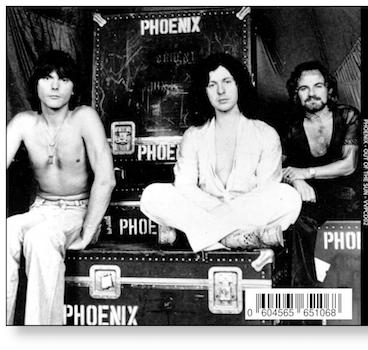
Phoenix was a short-lived 70s trio consisting of ex Argent members John Verity, Jim Rodford, and Bob Henrit. The band’s debut was the excellent 1976 self-titled album that featured great guitar rock and vocals, featuring such stand-outs as “Easy”, “A Woman Like You” and “From The Ashes”‘. After a few years the band returned with 1979’s In Full View. This album saw Ray Minhinnett (ex Highway) added on guitar and American Ronnie Lee Cunningham (ex Law) on keyboards, while Rodford had left with Verity also playing bass. Rod Argent and Russ Ballard also made guest appearances. American producer was also brought in to work with the band in LA. But the album was softer, more mainstream, and lacked the feel of the first one. Frankly, I just never got in to this one. However, we now come to learn that a 2nd Phoenix album, with the original trio was recorded in ’77, and recently mastered and released by John. Below, John gives details and the story behind the ‘lost’ Phoenix album which can now be ordered through his website – http://www.johnverity.com
An amazing piece of news is that just a few months ago we rediscovered the ‘Lost’ Phoenix album. Back in 1977 Bob Henrit, Jim Rodford, & myself went into Trident Studios in London to record the follow up to our first album “Phoenix’. The new album was to be titled ‘Out of the Sun’.We really felt we had pushed the envelope both technically and creatively with this one, and I was proud of what I had achieved as a producer using the tools at my disposal. Sadly our record label CBS did not agree. Punk/New Wave had really taken a hold and almost overnight we were simply unfashionable…The album was put on ice, and somehow the masters were lost – until now.
By a twist of fate I got the opportunity to look again at these recordings with a view to releasing them over 40 years after they were recorded. A copy of the last set of mixes I had done resurfaced and I was able to get them restored, and then I remastered the tracks at home in my studio. We secured funding from fans and had the CD manufactured for release after all this time. I think the result is stunning. Transform yourself back to the ’70’s!!’
*Some years ago I interviewed John Verity (via email), and I be re-posting that here soon.
NEKTAR began in Hamburg, Germany in 1969 and released a number of classic progressive rock albums in the ’70s, such as A Tab In The Ocean, Remember The Future, Down To Earth, and Recycled. Through many line up changes, a break up in 82, and reformations since 2000, plus the loss of founding member (singer/guitarist) Roye Albrighton in 2016. The band now based in the US, recently released a new CD/DVD package of their 2020 album. *See the press release below for more details.
THROUGHOUT THE 1970S NEKTAR RELEASED A SERIES OF ACCLAIMED ALBUMS, SCORING CHART SUCCESS IN GERMANY (WHERE THE BRITISH BAND WAS BASED) AND LATER IN THE USA (WHERE THE BAND RELOCATED).
FOLLOWING THE PASSING OF ORIGINAL GUITARIST / VOCALIST ROYE ALBRIGHTON IN 2016, FELLOW FOUNDER MEMBERS DEREK “MO” MOORE (BASS, VOCALS), RON HOWDEN (DRUMS, VOCALS) AND MICK BROCKETT (LYRICS, VISUAL CONCEPTS) REUNITED, ALONG WITH RANDY DEMBO (BASS, 12-STRING GUITAR), RYCHE CHLANDA (GUITAR, VOCALS) AND KENDALL SCOTT (KEYBOARDS) TO RECORD
CHLANDA ORIGINALLY RECORDED WITH NEKTAR IN 1978, AND FOR ‘THE OTHER SIDE’, THE BAND UPDATED SOME OF THOSE IDEAS WHICH EVOLVED IN THE BASEMENT OF MOORE’S HOUSE IN NEW JERSEY WITH RON HOWDEN. THE 1978
UNRECORDED SONG ‘SKYPILOT’ HAS EVOLVED INTO ‘SKYWRITER’ IN 2019. ‘I’M ON FIRE’ IS THE MUSICAL ADAPTATION OF A POEM WRITTEN BY MO FOR HIS SOON-TO-BE WIFE, NICKI, DURING THAT SAME TIME PERIOD.
THE CLOSING TRACK, ‘DEVIL’S DOOR’, WAS ORIGINALLY PERFORMED LIVE IN 1974, BUT NEVER FEATURED ON A NEKTAR ALBUM. UPDATED AND RECORDED FOR THIS ALBUM, THE SONG FEATURES THE PRESENCE OF THE LATE ROYE ALBRIGHTON ON THE INTRODUCTION TO THE TRACK, WHOSE WONDERFUL GUITAR PART WAS TAKEN FROM A LIVE SOUNDBOARD RECORDING MADE IN 1974.
KENDALL SCOTT’S DISTINCTIVE AND VERSATILE KEYBOARD PRESENCE HAS ENHANCED THIS CONSIDERABLY, WHILE RANDY DEMBO, WHO ORIGINALLY JOINED NEKTAR IN 2004, BRINGS THE SOUND TOGETHER WITH 12-STRING AND BASS GUITARS, ROUNDING OUT THE INSTRUMENTAL ARRANGEMENTS. RON HOWDEN HAS BEEN A CONTINUAL DRIVING FORCE OF THE BAND, WEATHERING ALL VERSIONS OF NEKTAR SINCE ITS CONCEPTION IN 1969. WITH MICK BROCKETT NOW BACK IN THE FOLD (WITH HIS VISUAL CONCEPTS AND IDEAS AS AN ESSENTIAL PART OF THE BAND MAKING THE MUSIC AND LIGHT THEATRE A REALITY). ‘THE OTHER SIDE’ IS A STUNNING ALBUM FROM A LEGENDARY BAND
Disc One:
1. I’m On Fire 2. Skywriter 3. Love Is / The Other Side 4. The Light Beyond 5. Look Thru Me 6. Y Can’t I B More Like U. 7. Drifting 8. Devil’s Door
Disc Two: DVD
The Making Of The Other Side : A Documentary About The Making Of The Album And The Reunion Of Nektar
The 2nd YES album to featured Jon Davison on vocals. I never did give it’s predecessor much of a chance [but have picked it up while enjoying this new one]. The 2nd video released “Future Memories” I really liked right away, and that got my interest. It is still the stand out song here, for me, a classic Yes ballad, and if the band ends tomorrow Jon Davison will have left an amazing mark with this one. Lead off track / video “The Ice Bridge” is a strong track as well, love Geoff Downes bright keyboards throughout this number, with the intro briefly reminiscent of ELP, and elsewhere this song reminds me a bit of Saga, and love Steve Howe’s riff and solo. Davison and Billy Sherwood co-write and share vocals on the upbeat “The Western Edge”. Though much of this album is near ballads or acoustic numbers, it is a pretty uplifting set of songs, as The Quest according to guitarist and producer Steve Howe – “The Quest is a strong album with a common theme: posing the great questions of life and finding that we have our destiny within our own hands.” The band also pays tribute to The Beatles in the track “Mystery Tour”. YES also pays homage to their won past according to Geoff Downes – “There’s a lot of retro sounds, reminiscent of some of the early Yes recordings. I was really a big fan of Tony Kaye, his style of Hammond playing, and even going back to the Drama album, the basic keyboard instruments – like the Hammond organ and acoustic piano – have really come out on this album..” The album also includes orchestra on a couple of tracks – Howe’s “Dare To Know” – “I wanted to augment what Yes does – To have something as beautiful as an orchestra was really appealing, and that was done remotely in Macedonia. Paul K. Joyce did the arranging for me.” The orchestra was also used on the Davison / Sherwood track “Minus The Man”. Howe’s “Leave Well Alone” is an epic Yes tune with a classy mix of vocals, and plenty of changes, and I’m pretty sure I hear a nod to “Starship Trooper” later on in.
As I’ve said previously, I never was a huge Yes fan, and post 90125 albums were hit and miss with me, but I did like The Ladder, and going back recently [upon hearing this] really liked Fly From Here, so I will put The Quest up there as my next favorite Yes album, despite being fairly laid-back, overall. There are a few songs that have jumped out at me, and there is lots to still get in to here. For all that’s been said of the line-up being without a few founding members, I am quite happy with this and look forward to more.
The Quest comes in various formats, colored vinyl, a box set… Beautifully packaged in Roger Dean artwork again.
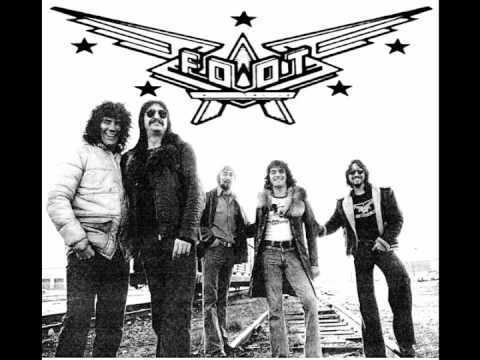
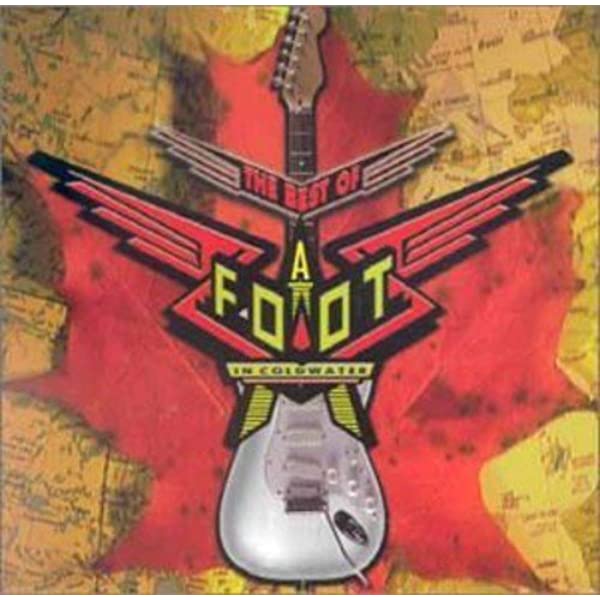
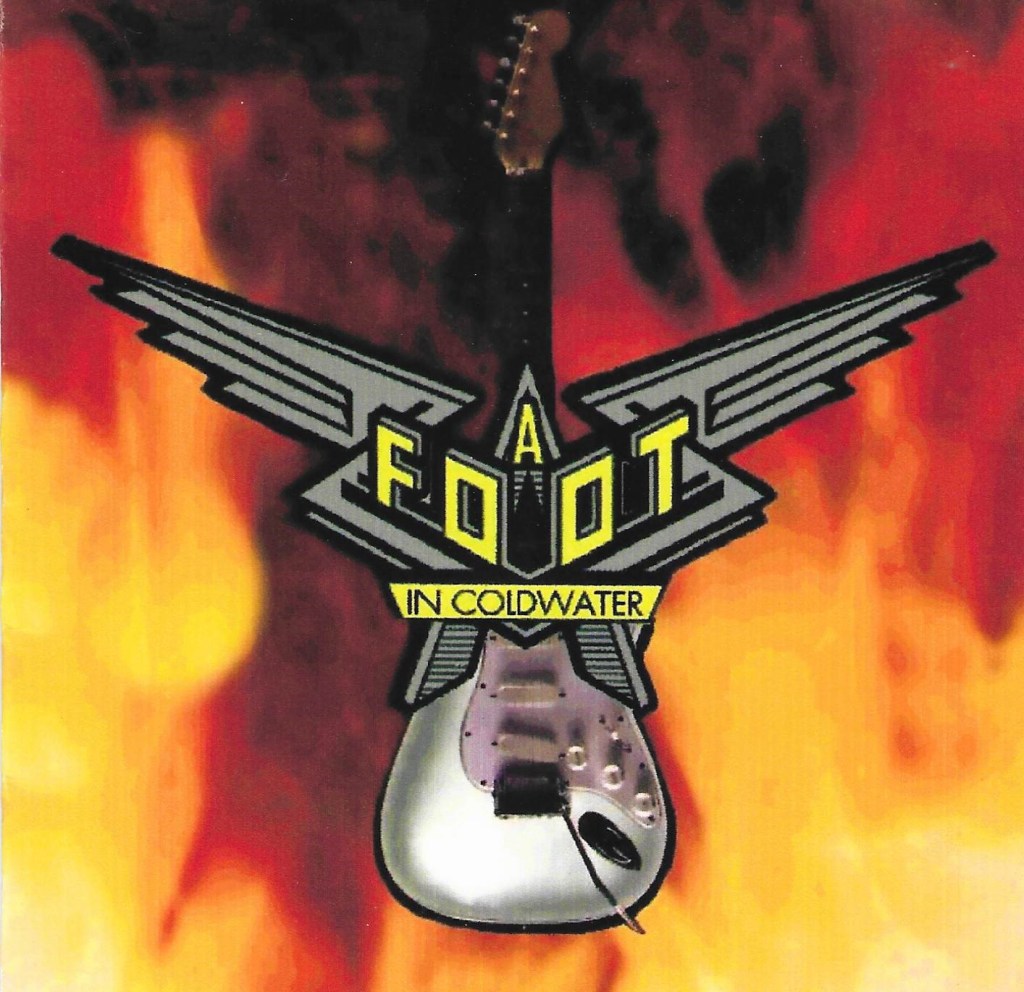
Canada’s A FOOT IN COLDWATER released 4 albums in the ’70s, had a couple of hit singles here, then split after the 4th, but reunited on a few occasions. The Toronto band included Alex Machin [lead vocals], Hughie Leggat [bass], Bob Horne [keyboards], Danny Taylor[drums], and Paul Naumann [guitars]. The band’s first 2 albums were released in Canada on Daffodill Records, though the debut was also issued in Australia and New Zealand. But it was the band’s 3rd album All Around Us in 1974 that finally saw the band signed to Elektra Records and get released in the US and the UK. The album included 5 tracks taken from the band’s first 2 albums (notably the hits “(Make Me Do) Anything You Want” and “(Isn’t Love Unkind) In My Life”) , as well as new songs. Legendary British producer John Anthony (Queen, Van Der Graaf Generator, Genesis, Roxy Music…) was brought in to co-produce (along with Francis W.H. Davies;, also co-engineering was Mike Stone), with the album being recorded in Toronto and London [UK], and American artist John Van Hamersveld was tasked with the album’s cover art. The logo featured on the cover would be re-used elsewhere on CD compilations and concert shirts (I picked up 1 of each when I saw the band in 2011). *The album cover in Canada would be silver, while the US version would be white with the added ‘Or’ to the title.
Below is John’s words about the about cover for All Around Us, as well as info on his career before and after….
John Van Hamersveld’s background …
In 1967-68 I was a rock concert promotor for my company called Pinnacle Production, putting concerts on for a year. My partners and I booked and heard 43 bands twin a night on a Ltexlancing sound system. I was losing my hearing in the process. (Pinnacle Dance Concerts, which was founded in 1967 by Sepp Donahower, Marc Chase and John Van Hamersveld. Pinnacle promoted the early shows of the Grateful Dead, Jimi Hendrix, Janis Joplin, Traffic, Cream, The Jeff Beck Group with Rod Stewart and Pink Floyd. The Single Wing Turquoise Bird Light Show did many of the multimedia light shows at the Pinnacle Concerts.) … I was in the business for 17 years 1967 to 1984, and when the business went digital, I left the industry to work in Surf Subculture, and the re-entry of The Endless Summer Poster into the culture in the 80s.
On getting A Foot In Coldwater assignment…
Elektra Records had their office up the alley from Willoughby street where my studio was at the corner of Las Cienega Boulevard. There was the art director Glenn Christensen who was given 30 to 40 album cover projects to design every 90 days. He had to pick photographs and designs to get the order together. So he called me and gave me the Foot In Coldwater LP cover. (Glenn Christensen: US art director, graphic designer & photographer for Buddah Records, Elektra/Asylum Records, and 20th Century Fox Records. Glenn Christensen may have made the photograph, the photographer not credited)
Glen gave me the album cover because the group’s manager by contract didn’t with the art director doing the cover and campaign, the manager wanted control.
Familiar with or meet the band beforehand?
The politics of the company people at Elektra Records was the art director to guide the will. I don’t think Glenn introduced me.
Creating the band’s logo for the cover….
I presented the idea of a logo as the cover like a lot of bands used in the promotes. The title words were weak. So I thought a logo-like image would be more dominant in the Record Store, and they would hang the promotional logo around the store.
The wings: meaning… High Flying. Arranging the title words was being abstract in typography. The logo would be the visual trick for the promotion, visually simple, could be on the drum kit, ads, t’shirt, etc. The group didn’t photograph well, no style! They needed style, so the logo became the style.
All that JVH did on All Around Us…
Created the design of the front and back.
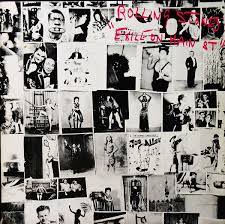
The most famous album cover worked on.
Exile On Main Street, by The Rolling Stones!
Other famous and favorite ones John worked on…
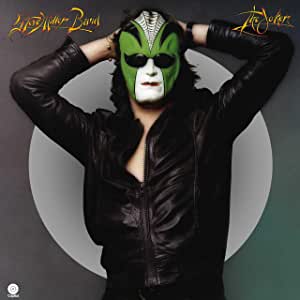
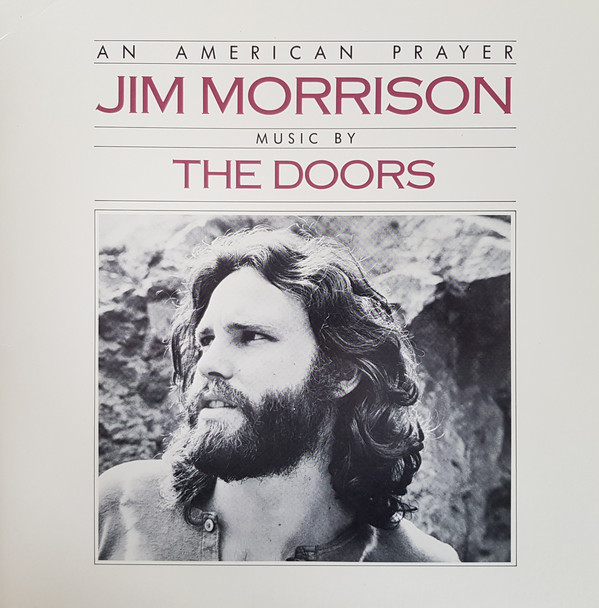
The Endless Summer soundtrack album from the movie 1965. The Beatles, MMT album 1967, The Jefferson Airplane, Crown of Creation 1968, Bob Dylan’s, soundtrack album Pat Garrett and Billy The Kid 1972, The Skeletons from the Closet: The Best of the Grateful Dead 1974, Steve Miller’s The Joker 1976, and Fly Like an Eagle 1978, Blondie’s Eat to the Beat 1979, Kiss, Hotter Than Hell 1974, The Doors, American Prayer, Jim Morrison’s Poetry album 1978. Claudia Lennear album cover Phew !, 1973 … to name a few.
Other art John has done over the years, and places people can view his work…
Loud ‘n’ Proud is the title of Martin Popoff’s brand new book. It’s a visual history of the band, much like some of his previous ones in this series – Uriah Heep, Thin Lizzy, BOC…. below is the press info / details from Martin.
Nazareth: A Visual Biography is my weighty 1.65 kg, 8 ½” x 12” hardback coffee table book on Scottish hard rockers Nazareth. Easy PayPal buttons right here: http://www.martinpopoff.com/html/nazareth-a-visual-biography.html The chief mission is to celebrate the entire 50 years of the band’s hard-working career, utilizing my time-honored detailed timeline and quotes format. But that’s just the start. Besides the fully 52,000 words of academic timeline framing and commentary from the band in their own words, the book features fully 615 pictures, placed reverently upon sumptuous 100 lb. gloss paper. “Now you’re messin’…” Dunfermline, Scotland’s finest may not sound like much of a boast, but Nazareth made sure the world heard them howl, staking their claim first down in London but then conquering in sequence Canada, Germany, Russia and Brazil, all territories that remain huge Naz-lovers to this day.
Happy bassist Pete Agnew has been a constant throughout—running the ship in fact—but perhaps most notorious through the lineups that have flown this proud banner through the years has been vocalist Dan McCafferty, forced to the sidelines recently due to respiratory issues, much to the sorrow of millions of fans around the globe. But as Pete has said, “You don’t retire from this business—you do it until you die,” and so the band carries on, now with Carl Sentance singing up a storm, in front of a lineup of consummate songwriters and musicians that has been stable for an astonishing run of beloved recent albums. But it is of course the material from the glory years that keeps packing the venues.
Scotland wouldn’t be on the rock ‘n’ roll map without the likes of Razamanaz, Loud ‘n’ Proud, Hair of the Dog, Expect No Mercy and No Mean City going gold and platinum across more territories than most bands can find on a map, let alone having been there. And inside of those records… well, classic rock radio would be a sadder place without “Broken Down Angel,” “Bad Bad Boy,” “Woke Up This Morning,” “This Flight Tonight,” “Hair of the Dog,” “Miss Misery,” Love Hurts,” “Telegram,” “Hearts Grown Cold” and “Dream On” at the level of constant rotation they still enjoy today. So come join the celebration, as Martin Popoff takes us through 50 years of Naz, utilizing his trusty timeline technique, with illuminating quotes along the way. But that’s just the academic side: Loud ‘n’ Proud – 50 Years of Nazareth is all about the pictorial, from live shots to posters, 45 sleeves, magazine ads, backstage passes, ticket stubs and promo items. That’s all here, decade by decade, creating a sumptuous historical document that is a feast for the eyes, hopefully consumed with a jar or two at the ready .
Again, the link to order is: http://www.martinpopoff.com/html/nazareth-a-visual-biography.html Books will be signed by me to you unless you wave your arms wildly and tell me otherwise within like half an hour of ordering. Price including shipping (yes, it’s higher than usual, but this is now ordered in very low quantities): US orders, $75.00 US funds; Int’l orders (air mail), $99.00 US funds; Canadian orders, $88.00, Cdn. Funds. If you would like a PayPal invoice, please indicate what country you are in and give me the email address you use at PayPal. Or just do yer usual and direct funds to martinp@inforamp.net . *Or mail payment (personal check in US funds, cash, or INTERNATIONAL money order), to: Martin Popoff, P.O. Box 65208, 358 Danforth Ave., Toronto, Ontario, Canada M4K 2Z2. Email martinp@inforamp.net with any questions. Sweet postage savings to be had for multiple orders (or two of pretty much anything—long story, ask me!) for US orders.
My friend and major STATUS QUO Fan Alex Gitlin looks at the career and highlights of the band’s founding bass player.
RIP Alan Lancaster, the original bass player of Status Quo, the British blues-boogie institution, and the irreplaceable 1/4 of the Frantic Four
He passed away from multiple sclerosis on 26th September 2021 in Sydney, Australia, aged 72.
During their incredible run between the first album in 1968, Picturesque Matchstickable – Messages from the Status Quo, and his somewhat acrimonious split from the band in the mid-80s (he’d relocated to Australia in 1977), he performed on 12 top 10 UK albums and 17 top 10 UK singles.
Alan’s last gig with Quo, prior to the reunion in the 21st century, was opening the Live Aid at the Wembley Stadium in London.
In 2013-14, the original Frantic Four reunited for one last fling, touring the UK, Germany, Holland, Belgium and France. Each gig was greeted emotionally by fans who’d been waiting for this reunion since 1981, the year drummer John Coghlan departed.
Although by now there were signs of his debilitating disease beginning to show (at one point there were rumours of the pick being taped to his hand), he soldiered on with the “no time like the present” attitude, giving the fans exactly what they’d come for. His bass, alongside Coghlan’s drumming, was the locomotive engine that was the classic Quo rhythm section.
It was around 1970 when Quo had disposed of psychedelic frills and kaftans, replacing them with denim and growing their hair long. For the band’s third album, Ma Kelly’s Greasy Spoon, which tentatively pre-defined their to-be trademark sound, he wrote Daughter and Is it Really Me/Gotta Go Home.
The following year’s Dog of Two Head, the wheels were fully in motion, and here Alan contributed Umleitung (a co-write with keyboardist Roy Lynes), Something’s Going on in My Head, and Someone’s Learning. This was also their last album for Pye, in 1972 Status Quo were signed to Vertigo.
On their breakthru 1972 Piledriver album, Alan co-wrote A Year with Bernie Frost and All The Reasons with Rick Parfitt. He also sang lead on the cover of the Doors’ Roadhouse Blues, which became a live staple for the band.
On the 1973 stone-cold classic, Hello, the entire band wrote Roll Over Lay Down, UK No. 9 and top 10 in many countries in Europe; on Blue Eyed Lady, co-written by Alan and Rick Parfitt, the vocals were shared by Alan and Francis Rossi. And also he had a hand in writing Softer Ride (sung by Rossi).
On 1974’s Quo, he handled the lead vocals on four tracks, Backwater, Just Take Me, Drifting Away, and Don’t Think It Matters, and co-wrote six.
As the band was in the middle of a purple patch of hit singles and albums, 1975’s On The Level, considered by many as the finest in the band’s entire catalogue, he wrote Broken Man (also singing lead) and Over And Done. And he handled the lead vocals on another cover, Chuck Berry’s Bye Bye Johnny, also a great live favorite.
1976’s Blue For You has Alan on lead vocals and writing contributions on the opener, Is There a Better Way, the seminal and bluesy title track, Rolling Home and Ease Your Mind.
By 1977, the tide was turning, Quo were a mainstay on the European rock circuit, selling out arenas in Germany, but their sound became a bit softer, although the writing quality remained steadfastly top-notch. Here on Rockin’ All Over The World Alan contributed Let’s Ride, You Don’t Own Me, co-written with Mick Green [of The Pirates], and Too Far Gone.
They continued to pursue the same direction of commercial British pop-rock with a boogie edge in 1978, with If You Can’t Stand the Heat…, here Alan’s contributions are Gonna Teach You To Love Me and Stones. By this time, Alan had moved residencies to Oz, while the relationship between the dynamic duo Rossi-Parfitt had soured due to the out-of-control use of drugs.
In 1979, Whatever You Want (the album) reached No. 4 in the UK, and here Alan contributed Who Asked You and High Flyer. And the following year, on Just Supposin‘ – Over the Edge (a co-write with Keith Lamb), The Wild Ones and Name of the Game (co-written with Rossi and the band’s keyboardist Andy Bown).
1981’s Never Too Late also had two of Alan’s songs, Mountain Lady and Don’t Stop Me Now (once again a Bown co-write). And the following year’s cleverly titled 1+9+8+2 (equals 20, commemorating the twenty years since the band’s inception in 1962) had Alan’s I Love Rock and Roll, I Want The World To Know (another one co-written with Lamb) and Big Man (once again co-written with Mick Green).
Back To Back in 1983 became the final album for Alan Lancaster, who contributed Ol’ Rag Blues (co-written with Lamb) and Your Kind of Love, while he was reportedly distraught over Rossi’s Marguerita Time betraying the band’s classic heads-down no-nonsense boogie sound. When they appeared on BBC’s Top of the Pops to mime to the single, his place was taken by Jim Lea of Slade. Elsewhere on other television appearances, he was replaced with a cardboard cutout.
R.I.P. to the diamond geezer and the seminal part of classic Quo. Whether it’s his singing, bass playing or songwriting, he didn’t do things by halves, putting his heart and soul into what’s now regarded worldwide as the British rock legend.









:format(jpeg):mode_rgb():quality(90)/discogs-images/A-467614-1455915428-9524.jpeg.jpg)
 Outsider Rock