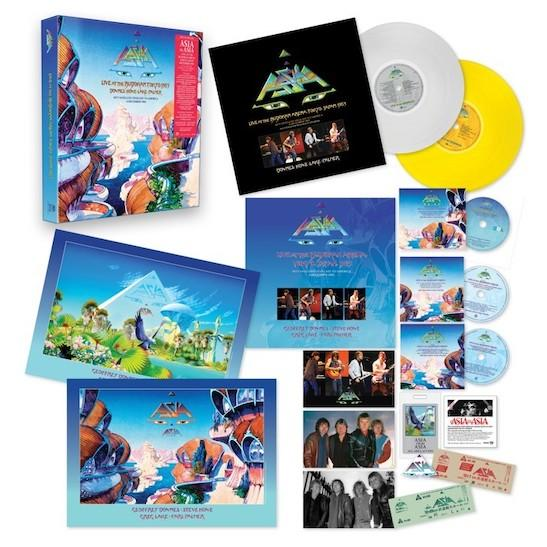
ASIA announce they are to release ASIA In Asia – Live At The Budokan, Tokyo, 1983, as a Deluxe box set containing: 2LP, 2xCD, 40 page 12” book, Blu-ray video, printed memorabilia and ‘ASIA’ pin badge, through BMG Records on 10th June 2022.
*Also available as a 2LP Gatefold, 1CD and Digital Formats.
ASIA, Geoff Downes (The Buggles & YES, keyboards & backing vocals), Steve Howe (YES, guitars & backing vocals) and Carl Palmer (Emerson, Lake & Palmer, drums) with special guest Greg Lake (Emerson, Lake & Palmer, bass & lead vocals), visited Japan at the end of two years of touring to promote their phenomenally successful eponymous debut album (1982) and the follow-up Alpha (1983).
The second of three shows at the historic Budokan arena in Tokyo, on 6th December 1983, would make history as first live broadcast between Japan and MTV in America, an amazing achievement for its time. This performance has previously only been available on VHS. The concert featured some of ASIA’s biggest and most memorable tracks including, Time Again, Only Time Will Tell, Sole Survivor, Wildest Dreams and the global hit single Heat Of The Moment.
Greg Lake stepped in, at short notice, following the sudden departure of ASIA’s founder member John Wetton ahead of the Japanese dates. Despite a short period for Lake to learn the songs, and some changes to the arrangements to accommodate Lake’s different vocal range, the Japanese shows were hailed a great success.
Carl Palmer was proud of his former ELP bandmate for performing exceptionally in the situation. “Greg Lake did a great job jumping into John’s shoes. So many songs to sing, he did it so well. It was impressive.”
Geoff Downes, too, was pleased with the event, especially given the massive undertaking. “It was a grand and sumptuous affair. The stage was the iconic ‘A-frame’ shape we had for the US tour. I think we pulled it off admirably in the end. There were some good people behind us: crew, lighting designers, cameramen and backing singers, it was quite a production.”
“The show was an important global commitment,” says Steve Howe, “so we had to rise to the occasion, which we did, with Greg’s help. We couldn’t have done it without him, for sure.”
For Downes, the release stands as a testament to the band’s resilience. “It deserves its place in the Asia catalogue. Aside from its musical strengths, it demonstrates the level of professionalism that we have always striven to bring to the ASIA name.”
This newly packaged box set includes:
Exclusive new artwork by Roger Dean
Color vinyl 2LP of original MTV Telecast concert audio, remixed 2022 from the master tapes, with two previously unreleased, post broadcast encore tracks
2 x audio CD:
Live at The Budokan Arena, Tokyo, Japan, MTV satellite telecast concert (6 December 1983, USA time), remixed 2022 from the master tapes by Matt Wiggins and Rick Nelson
Live at The Budokan Arena, Tokyo, Japan, previous night’s show (6 December 1983, Japanese Time), remixed 2022 from the master tapes by Hiroki Furutani
Audio-visual Blu-ray of restored original broadcast concert with 2022 remixed audio (Duration: 1hr 20 mins), plus restored original concert laserdisc featuring alternate camera angles (Duration: 1hr).
40 page, deluxe 12” book with rare and unseen band photos, memorabilia and extensive new sleeve notes new quotes from the original band members
New, bespoke metal and enamel ‘ASIA’ logo pin badge
Printed memorabilia: 2 x exclusive new Roger Dean artwork A3 posters, 2 x reproduced live broadcast original concert tickets, Replicated, matt laminated original AAA backstage pass, Original concert VHS advert, 3 x glossy 8” x 5” rare band photos
ASIA In Asia – Live At The Budokan, Tokyo, 1983 Tracklist (2 x LPs, CD1 & CD2)
1. Introduction From Mark Goodman (MTV)
2. Time Again
3. The Heat Goes On
4. Here Comes The Feeling
5. Eye To Eye
6. Steve Howe Solo (Sketches In The Sun)
7. Only Time Will Tell
8. Open Your Eyes
9. Geoffrey Downes Solo (Ihiri – The Setting Sun / Bolero)
10. The Smile Has Left Your Eyes
11. Wildest Dreams
12. Carl Palmer Solo
13. Heat Of The Moment
14. Sole Survivor
15. Cutting It Fine
16. Daylight
ASIA in Asia – Live at the Budokan, Tokyo 1983 – out 10th June
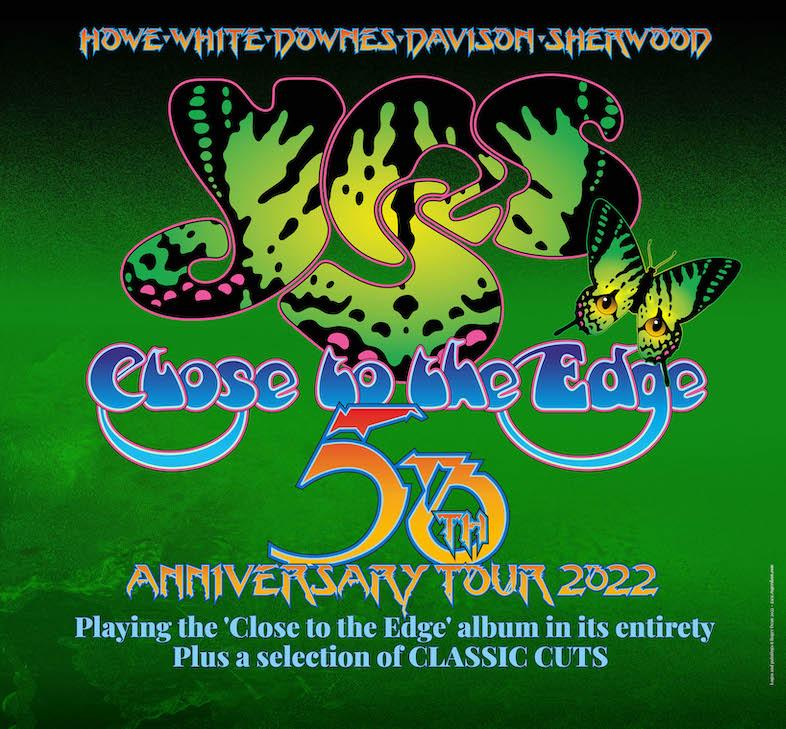
Progressive pioneers YES have announced a change to their forthcoming The Album Series Tour 2022 as they will celebrate the 50th anniversary of their iconic album Close to the Edge. This tour, twice rescheduled due to the Covid pandemic was intended to showcase YES’s 1974 classic Relayer album but will now feature Close to the Edge, performed in full, along with other classic tracks from YES’s extensive catalogue. An announcement regarding the European dates will be made shortly. The tour line-up features Steve Howe (guitars), Alan White (drums), Geoff Downes (keyboards), Jon Davison (vocals), Billy Sherwood (bass guitar and backing vocals) with additional drums and percussion by Jay Schellen. All tour dates are as previously announced and all tickets remain valid. A full performance of the Relayer album will now be featured in a future tour in The Album Series.The show will comprise full production and a high-definition video wall directed by Roger Dean who will also be joining the tour with an exhibition of YES related art. Following the release of The Yes Album and Fragile, in 1971, YES released what is widely considered one of the most defining albums, not only for YES but for the whole progressive movement. Close to the Edge became an inspiration for their contemporaries and for successive generations of musicians. “We reached a real high, doing ‘Close to the Edge’,” said Steve Howe. “We valued the musicianship, the artistic ideas and the vocalising that people bring and that’s why we’re still doing it, because it’s exciting to do! ‘Close to the Edge’ was voted the most-proggy album possibly ever made. It was very experimental. We had already done 10-minute epics but with ‘Close to the Edge’ we just took it a stage further and I’m very pleased we were brave enough to do that.”
YES 2022 UK Tour Dates Are: June 2022 15th June Wednesday Glasgow Royal Concert Hall17th June Friday Manchester Bridgewater Hall18th June Saturday Nottingham Royal Concert Hall20th June Monday Liverpool Philharmonic Hall21st June Tuesday London Royal Albert Hall22nd June Thursday York Barbican 24th June Friday Birmingham Symphony Hall 26th June Sunday Newcastle O2 City Hall 28th June Tuesday Dublin Eire Vicar Street 29th June Wednesday Cork Eire Opera House Tickets remain valid for the rescheduled shows. For full details and to book tickets for all shows go to venue website or http://yesworld.com/live where you can also book Meet and Greets with the band.
About YES Steve Howe: guitars, backing vocals (1970 –1981, 1990–1992, 1995–present) Alan White: drums, percussion (1972 – present) Geoff Downes: keyboards (1980–1981, 2011–present) Jon Davison: lead vocals, acoustic guitar (2012–present) Billy Sherwood: guitar, backing vocals ((1994, 1997–2000), bass guitar, backing vocals (2015–present)
Formed in 1968 by Jon Anderson and the late, and much-missed, Chris Squire, YES have been one of the most innovative, influential and best-loved bands in rock music history. Their 1970s albums The Yes Album, Fragile, Close to the Edge, Yessongs (a triple live album set), Tales From Topographic Oceans,Relayer and Going For The One were ground-breaking in musical style and content. Their music also became synonymous with artist Roger Dean whose distinctive YES logo design and artwork adorned the lavish gatefold presentation sleeves of many YES albums.With sales of over 50 million records, the Grammy-award winning YES were inducted into The Rock And Roll Hall Of Fame in 2017 where they performed Roundabout from the album Fragile and the FM radio-friendly Owner Of A Lonely Heart from the 1985 album 90125. In 2021 YES released their 22nd Studio album, The Quest, produced by Steve Howe, which went to No.1 in the UK rock chart and entered the Official UK Album Chart at No.20. http://www.yesworld.comhttp://www.facebook.com/yesthebandhttp://www.twitter.com/yesofficialhttp://www.youtube.com/user/yesofficialhttp://www.instagram.com/yesofficial soundcloud.com/yesofficial
Italian power-metal band with their 3rd album. Some fine heavy riffs, lots of fast metal numbers, good production. Tracks range from the roaring speedy opener “Exile To Anse”, to powerful metal rockers like “Amber Of Illusion”, the first single “Wailing In Red”, and closing favorite “The Strangers”. For fans of such bands as Helloween and Gamma Ray.
*For more info, check out the press release below, plus links:
Rockshots Records will be releasing LionSoul’s third album “A Pledge To Darkness” this coming April 2022. The full length follows the band’s albums “Welcome Storm” (2017) (Limb Music), their self-released Omega” (2013) and EP “The Throne” (2015). Since the band’s formation in 2012, they have shared the stage and toured with artists such as Domine, Iron Savior, GammaRay, Kissin’ Dynamite, Geoff Tate, Tygers Of Pan Tang in Italy and across Europe along with festival appearances on Metal For Emergency (IT), Biker Fest (IT), and Loud and Proud Festival (IT). The new album “A Pledge To Darkness” is a huge step forward in LionSoul’s career as it is more heterogeneous, in some ways darker than the previous ones. Featuring 11 roaring cosmic tracks, it brings with it nuances ranging from thrash to melodic death metal, including some death metal vocals in order to give more emphasis to certain passages. The album is a composition of different stylistic approaches that converge into the power/heavy roots that still remain at the basis of their sound. The songs range from a classic power metal opener with spatial atmospheres up to a futuristic western ballad, from speed metal tracks – that wink at thrash and melodic death metal – to 80’s synth-wave tunes, from mid-tempo hymns in Teutonic/industrial style to the almost omnipresent Cyberpunk themes. “A Pledge to Darkness” remains in all respects a power metal album, but with some dosed contaminations. Overall, its goal is to take you on a hyperspace voyage from Tatooine to 2049 Los Angeles, while passing through Tranctor. The band explains further: “Imagine your planet at the end of its life and you have the burden to preserve the knowledge so you take a spaceship for a trip to L A in 2049 meanwhile you pass through a portal between 1953 to 1986 and also you change your skin to save the human race from a virus.”
Today, the band shares their first single entitled “Wailing In Red”. The track is a Blade Runner-inspired story, the wailing of an android who cries red tears. “It’s a classic heavy metal riff that continues for all the verses before turning in a fast chorus, all that arranged in a modern key, with some industrial synths to act as a frame for this cyberpunk drama-inspired song. It’s our first single, a meeting point between classic heavy metal and modern sounds, fast, the notes reflect the obscure and the emblematic nature of the theme addressed in the lyrics with Claudio’s powerful growl vocals inserts.” adds the band.
Continuum Exile to Arise Amber of Illusion Wailing in Red No Beginning (Nor An End) Soldier through time Skin 2 A Pledge to Darkness Red Flame Man, Machine, Almost Rhyme The Strangers
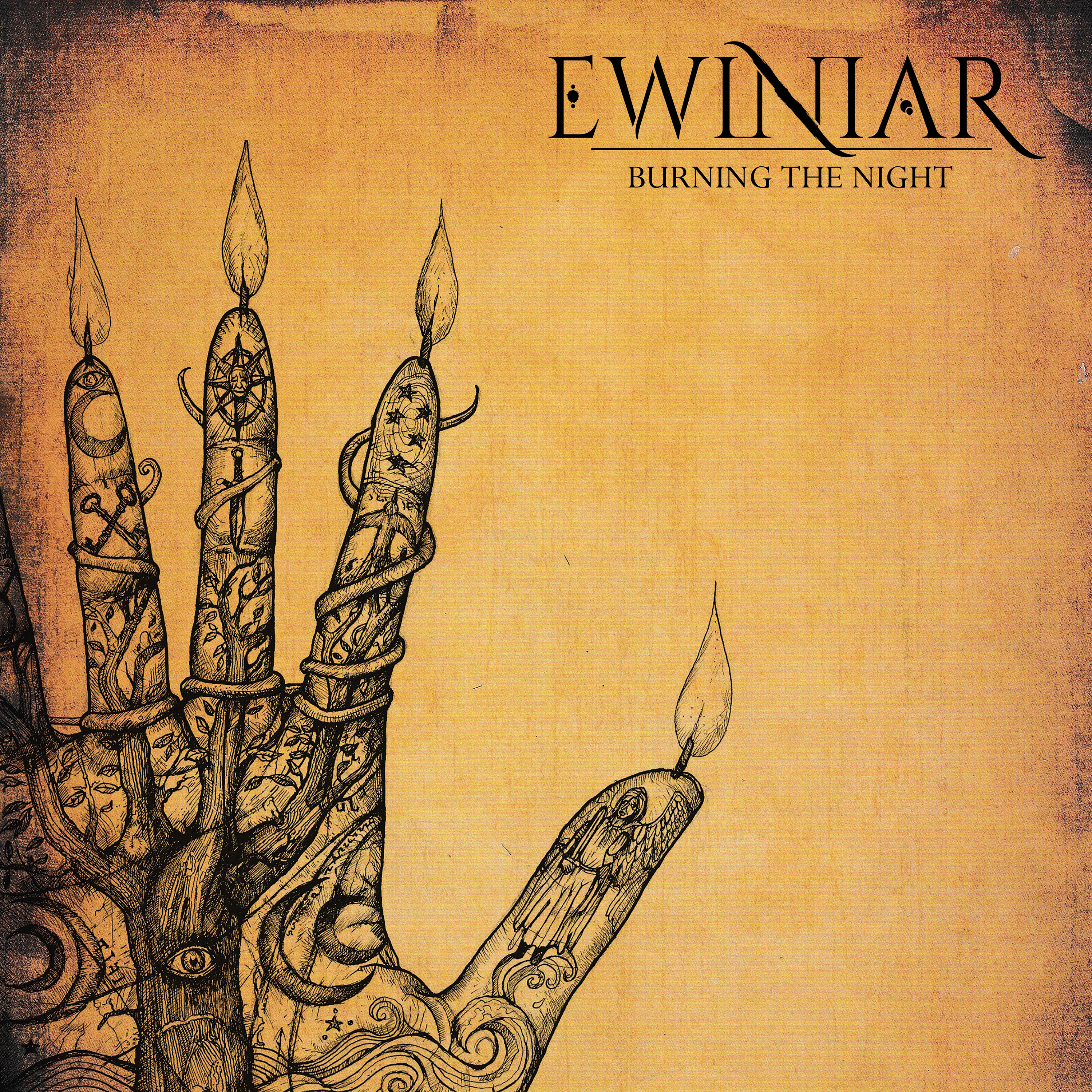
Ewiniar is a duo from Croatia consisting of Marin and Katarina Tramontana. This husband & wife metal/goth rock act deliver a strong 9 song album Burning The Night, with Marin handling the music writing & arranging, as well as playing all instruments, while Katarina penned the lyrics and delivers powerful vocals throughout this set. A great production, good songs, and solid performances throughout this album. Love the guitar sound throughout this, as well as the various keyboards, plenty of drama, and light & shade throughout this. A pretty heavy album, that is so well put together. Fave cuts include opener “Against The Stream”, “Years Of Heaven” (the first single), “Mother”, and the title track that ends the album. Highly recommended modern heavy rock!
XXV is the new and fifth album from Belgian rock band Beyond The Labyrinth. The CD was issued in December of 2021, followed by a digital release in February. The album’s title is to celebrate the 25th anniversary of the band. And tho’ Beyond The Labyrinth debuted in 1997 with a 3-track EP, their first full album didn’t come until 2005.
I am not familiar with the band’s earlier releases, but can tell a lot of ’70s and ’80s influences, from prog, to hard rock, to AOR. You get plenty of synths, some heavy guitars, some cool keyboard intros. “Louder Than Thunder” has a bit of a Judas Priest feel to it, but the ’80s synths bring it back from being ‘metal’ , more like AOR / hard rock. “Dedicated To Sir J / Rush Rush Rush” has a lengthy and slow organ intro that would sit nicely on a Deep Purple album, and the song is an upbeat rocker, with some synths and backing vox, kinda making it more like modern Uriah Heep. The ballad “In Camera” is more synth driven, with a cool guitar break, and you get more of Journey feel to it. Best tracks come in the 2nd half of this set (for me) being “This Is How We Roll”, “Improve, Enhance”, and “Long Way Home”, all should appeal to fans of Journey, Toto, Saga…
*Check out the band’s website to hear the album and ordering links below.
t
Filip Lemmens (Vocals) Geert Fieuw (Guitars, Backing Vocals) Dominic Heynderickx (Bass) Eddy Scheire (Keyboards, Backing Vocals) Michel Lodder (Drums and Loops)
Tracklist:
1 – Altitude For Energy
2 – Louder Than Thunder
3 – Invisible Battle Scars
4 – Nothing Comes For Free
5 – Dedicated To Sir J./Rush Rush Rush
6 – Falcon Eye
7 – In Camera
8 – This Is How We Roll
9 – Improve, Enhance
10 – Up There In The Sky
11 – Rise Above
12 – Long Way Home
Bonus tracks:
13 – Healer (2021 version)
14 – Wings (2021 version)
*Silver Edition comes with bonus live DVD and CD compilation.
A cool instrumental track from former Streetfighter & Dedringer guitarist MK (Mike Kremastoules). “Run” will appeal to fans of Gary Moore and Steve Vai, great melody and it rocks. Check out the press release and video below. You can also check ut more tracks from his upcoming album at his website – https://www.mikekremastoules.com/
Press release:
Rising rock instrumentalist MK (Mike Kremastoules) unveils news of his latest video & single release ‘Run’. The late 2021 debut ‘Butterfly’ provided an insight into MK’s emotive & soaring guitar work – now this contrasting single shines a spotlight on MK’s capability to crank things up and enter the retro hard rock arena.
‘Run’ powers along with its driving stadium rock grooves – providing the back drop for MK’s melodic hook lines and themes and for his solo outbreaks to take more adventurous twists that turns. Sonically tipping it’s hat to heavyweights such as Joe Satriani, Steve Vai, Slash and Gary Moore, this new instalment from MK is taken from his forthcoming album ‘Calling’. A collection of instrumental tracks exploring his adoration for guitar playing whilst projecting a fusion of styles from a wide musical spectrum. As a stalwart of the British music scene (formerly earning his stripes as lead guitarist with 80’s outfit Ded Ringer), MK’s music oozes maturity in sounds, techniques and compositional qualities.
Having taken his first steps into a solo career in 2021 – the Leeds (UK) guitarist entered the world with the soulfully melodic and ballad-like ‘Butterfly’. After debuting on the No1 playlist spot at Banks Radio Australia, the track (with its genre blurring qualities of progressive rock, blues and AOR), quickly captured support from radio stations and specialist media around the globe, including the likes of UK’s Total Rock & Hard Rock Hell Radio and many in the US. MK now strides forward with his energetic new track ‘Run’ – embarking on a relentless crusade to reach a wider audience of rock music lovers. News of his full debut album and UK live shows will be landing very soon.
One for head bangers and air guitarists alike – Run is officially released on digital platforms on Monday 28th Feb 2022 via Kycher.
For fans of Maiden, Helloween, and Angra, among others. Italian band Vanderlust will release their debut album next month. The album features fast and metallic rockers, as well as using some acoustics on the stand out cuts “The Last Ganymedian” and “Zima Blue”. Fave rockers being “High Hopes” and “Ten Years Black”, great sounding heavy guitar, and the latter should appeal to fellow Maiden fans.
*Check out the press release below
Cosmic metallers VANDERLUST (ft. members of S91, Dreal) will be rocketing their self-titled debut album on April 15th, 2022 via Rockshots Records
Birthed to travel the cosmos, Italy’s Vanderlust is a power-heavy metal band with prog-thrash influences that tells tales of space travels, astronomy, space engineering, and sci-fi adventures.
“We tried to mix a prog-thrashy riffing in the roots of Megadeth, Vektor and Tool with epic vocal parts like Iron Maiden, Helloween, Angra, and Lione’s Rhapsody. We also put sci-fi elements in our songs, so you can hear also something from Voivod.” adds the band.
This debut recording is like a stellar system with 12 different planets. The star at the center of the system represents the heavy-power metal around all the songs revolving. Despite all the tracks being irradiated by the same light, they are all different from each other. Vanderlust has fast thrash, slow and doom, shiny and brilliant to grunge, and darker songs. Like planets, which appear like simple small bright spots, but in reality, are all big worlds, Vanderlust‘s songs are more complex than they sound at first listen. In fact, you can easily sing along to some of the choruses even if there are complex riffs in the background. Vanderlust is particularly proud of the participation of opera singer Letizia Cappellini who does vocals on select tracks and helps the band further expand the vocal register of their compositions. The band also adds the presence of synths and electronic elements to the compositions to set the sci-fi mood of the lyrics.
“The main goal was to start a metal band that could be an inspiration for young people, a band that could tell them stories from the future when mankind will have overcome its limits and the solar system will be an entire human colony. This idea came to mind to founding members Francesco and Santo when they began their search for other members that could fit. Drummer Giacomo Mezzetti joined the space odyssey right before the covid-19 outbreak. Vocalist Riccardo Morello joined the band during the first lockdown in Italy, so the first song was entirely composed online, using videocalls and file sharing.” adds the band.For their live aspect, Vanderlust is currently working hard to create a thrilling spectacle, giving all their energy to the fans and letting them join them on the space journey.
Track Listing: 1. Intro (0:58) 2. High Hopes (3:34) 3. Orphan Planet (3:41) 4. Forgotten Breed (5:13) 5. The Last Ganymedian (3:45) 6. Scavengers Of Kuiper Belt (4:02) 7. Mass Effect Destruction (2:04) 8. Requiem For An Ancient World (4:59) 9. 3 Suns (4:44) 10. Dyson’s Swarm (4:00) 11. Ringworld (3:26) 12. Ten Years Back (3:38) 13. Zima Blue (4:39) Album Length: 48:49
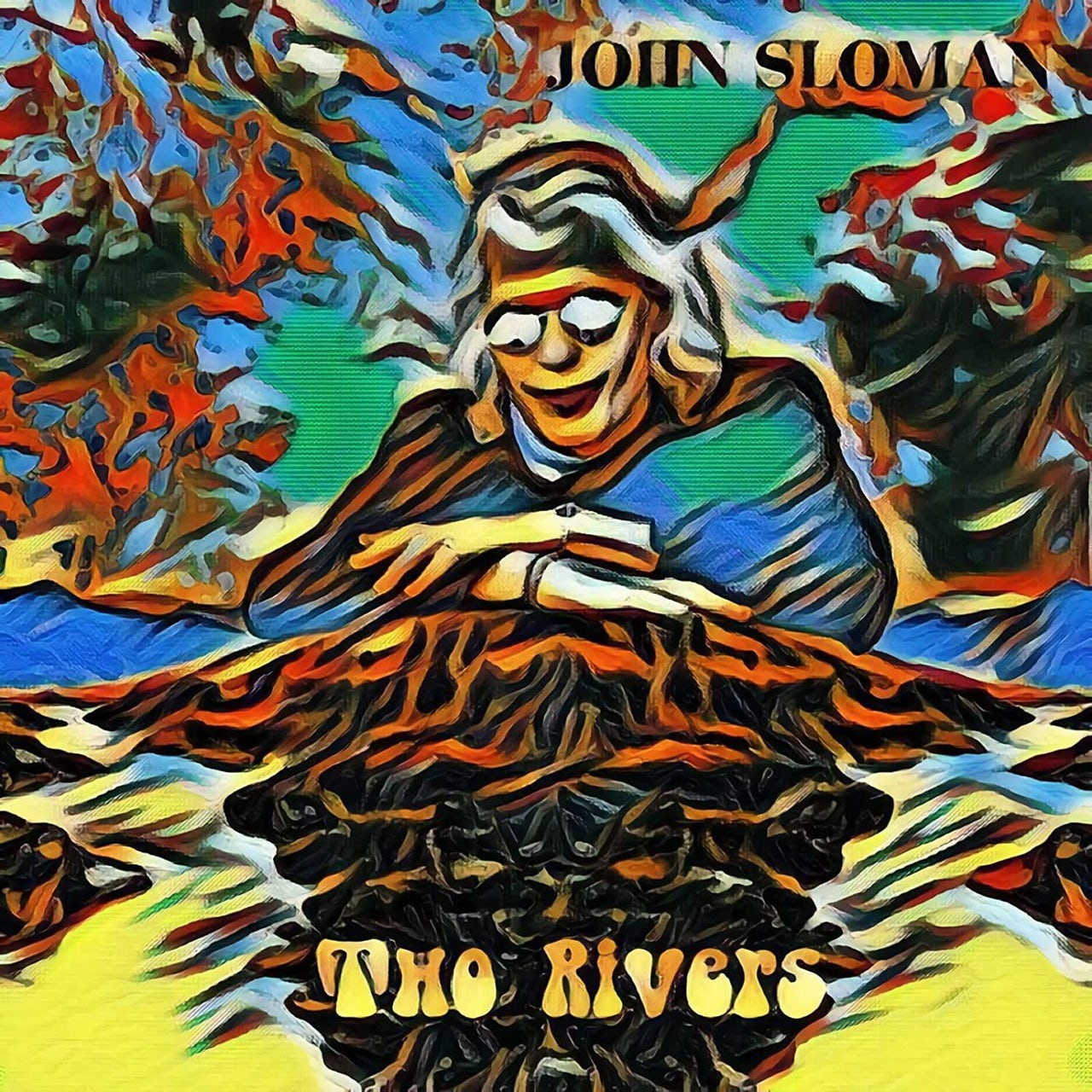
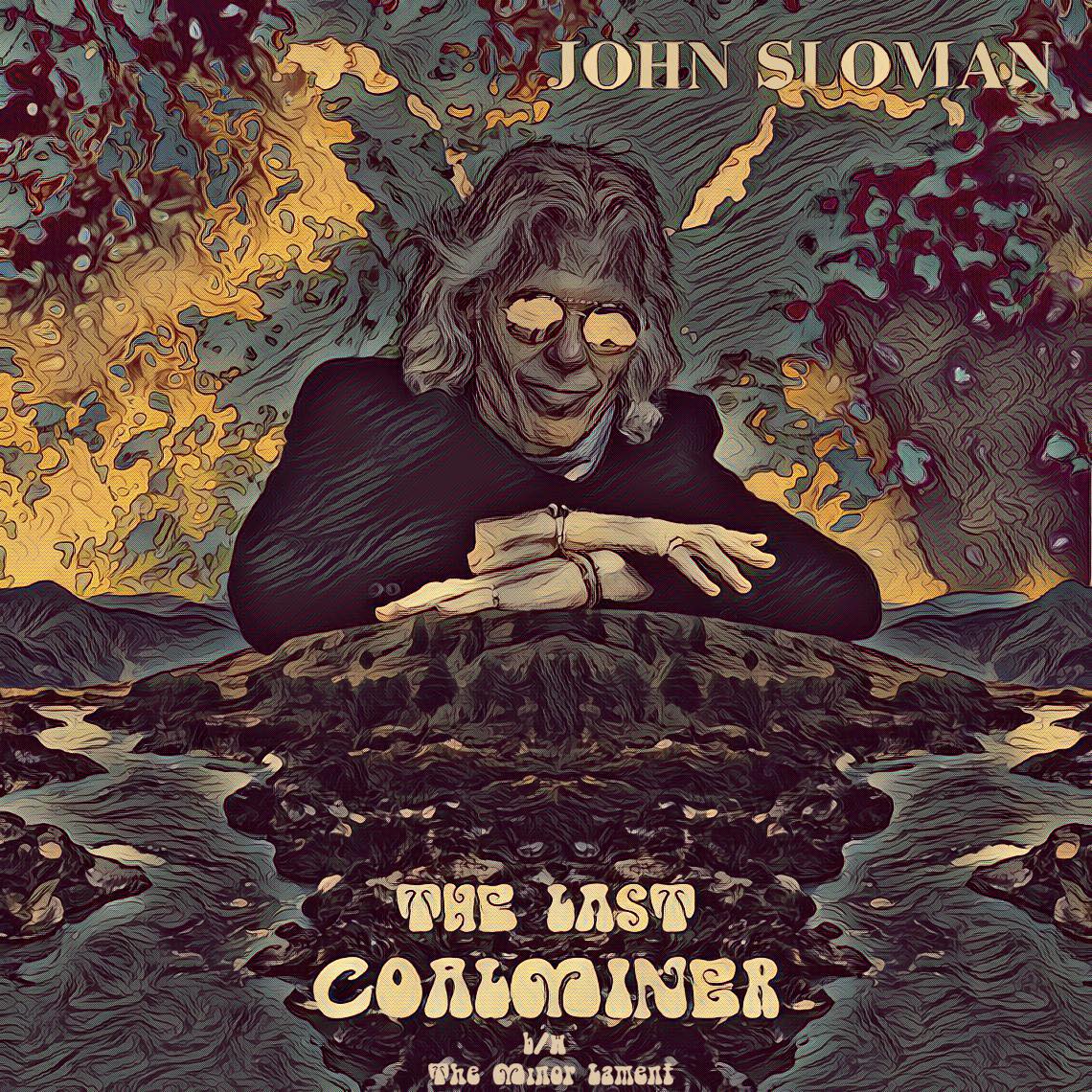
Early on John Sloman’s career was highlighted by stints in Lone Star, Uriah Heep, as well as Gary Moore’s band. And being a singer, songwriter and multi-instrumentalist his career looked like it should’ve taken off following those associations, but after his solo album was finally released in 1989, news on John seemed to go quiet for many years . But since 2004 John Sloman has been making and releasing solo albums every few years, all unique and very far from his days as a big rock frontman. His newest album is titled Two Rivers, and will be out in a couple of weeks. The first single “This River Is A Time Machine” is out (digitally) now and you can also pre-order the new single “The Last Coalminer” here – https://music.apple.com/gb/album/the-last-coalminer-single/1613515077
I recently did a lengthy interview with John (in multiple segments!), which I’ve edited the first part here which focuses mainly on Two Rivers. as well as some of John’s early influences, what he was up to in the ’90s, his forthcoming book, as well as his time in Canada in the late ’70s with Pulsar. Part 2 will be up (hopefully) in a few days and will discuss John’s days with his Lone Star, Uriah Heep, and Gary Moore, among other things.
First thing I want to talk about is the album artwork…
The artwork was done by Callum Fernandes Clarke, and really he’d done a great job on the artwork and I just wanted the artwork, I guess to be a little psychedelic. When I was talking to Rob Corich and Callum about it I said It’d be nice to have something a little striking about it – like all the great album covers back in the late 60s and early 70s, where the actual images on the sleeve could take you somewhere else. And I just wanted it to convey the kind of conflict, if you like, that what was going on in my own head, the idea of the 2 rivers and being pulled this way and that , and a bit of kind of turmoil going on. And Callum captured it perfectly, you know – the turmoil that was going on in my head at the time of should I live here – should I live there? That’s gone on for decades, and at the moment I’m still in London. But I’ll probably end up moving back to Wales, after all.
I want to get to the whole concept of the album. My understanding is it’s stories from your childhood, and your adult life….
Yeah. The whole thing came about really was, over the years, I’ve lived in London for decades. I moved to London when I joined Heep. So all the years I’ve lived in London I used to think ‘well I’m missing stuff back in Wales’. I had 3 brothers and 2 sisters, and lots of friends there. And I always felt like when I was in London I felt like there was something happening in Wales, and then when I’d go back to Wales for a while I always felt like there was something happening in London that I should be doing. So there was always this kind of tug of war going on between the 2 locations. So I guess the title Two Rivers personifies that kind of tug of love, really, that’s gone on over he last 4 decades. And that’s how the album came around. Then there was a point where my late brother was in hospital, and I kind of made my mind up that I was going to move back to Wales at that time. And him and I were going to get an apartment together. And that was it, that was going to be my catalyst for me moving back. But when my brother died it kind of threw everything up in the sky really, and I ended up doing album about him – Robert, which was El Dorado, and then I did Metamorph after that. But the whole time I had this idea for this album that I wanted to do about this whole tug of love that’s gone on over 4 decades. And I guess I had one – Two Rivers, an idea for that and I kind of sat on it for a while, you know ‘that might be an idea for an album sometime’, and I had the last track, which it’s not really a song as such, it’s just a little piece of music called “Farewell To London Town”, and I just thought ‘well I’ve got the beginning of an album and I’ve got the end of an album.’ So over a period of a year, maybe, the year before last, I just filled in all the blanks. But there’s songs about childhood, yeah, and there’s song about when I first moved to London and joined Heep – there’s a song about that. I mention Trevor Bolder in it, not by name but as one of the Spiders. And there’s one that’s a little tribute to my ex girlfriend’s mum who’s no longer with us. I guess I feel like it’s an album of resolution, in a lot of ways, because I feel like I’ve resolved a lot of issues that I had with places and people – some people who are no longer here, no longer on the planet. But it was a bit of psychiatrist’s couch actually. as songwriting often is. I feel like I got a lot off my chest, if i could put it like that.
I thought it was a great storytelling listen. I had it on the other night with the headphones and listened all the way through. It’s obviously not a conventional rock type of album. And beyond your time in Heep, Gary Moore and after your first solo album you never really wrote for the mainstream or commercially. Your writing is very different. So what influenced your writing musically and lyrically to separate yourself from the typical commercial type of rock stuff?
I grew up listening to all the bands that we all grew up listening to, you know Zeppelin, Purple, and Heep too, of course, and Free… So I had all that going on, but I’d also, from a really early age there was lots of different styles of music played in the house. My parents – my dad loved opera, my mom, both of my parents both liked songs from the 40s and 50s, lots of Hollywood musical stuff Rodgers and Hammerstein and all those guys, and Leonard Bernstein – that was a biggie. I heard West Side Story, and my grandmother, she kind of got me singing . She was the first first person that got me to sing, that taught me that I had a voice, and that was probably about when I was 7 or 8. She taught me a bluegrass song called “Are You From Dixie”. And I just used to be wheeled out for family parties from around when I was 7 to sing this bloody bluegrass song! And I didn’t know where the song had come from, I didn’t know who did it, and i sang that, it was kind of like my theme tune whenever there was a family party, when people visited – ‘Hey John’s going to sing’, you know!? And when I kind of grew up and was listening to all those bands I mentioned earlier, in my teen time, I was also listening to a lot of instrumental music, people like Miles Davis and Chick Corea. I loved Todd Rundgren’s stuff. And Todd did a lot of great prog-rock stuff as well as his singer-songwriter mode. And discovering Todd really opened my eyes to the fact that…he was like the bridge between prog-rock and singer-songwriter, and I thought ‘well hang on – this guy’s doing all this, he can do both. Why can’t I?’. So Todd was a huge influence. Jeff Beck Blow By Blow, people like that, Bill Cobham Spectrum. So there were no vocalists on the albums. and people like Weather Report, Joni Mitchell – she did a lot of classic stuff in the early 70s but then she hooked up with some of the guys from Weather Report, Jaco Pastorius. So I had this kind of 2 pronged attack really, I felt like I was living in 2 different towns, musically. And sometimes they just didn’t go together. I remember sometimes I used to sing at this club called The Moon Club, which is where everyone used to cut their teeth back in Cardiff in the early 70s, and I would throw in all these kind of jazzy singing licks, and we’d be playing stuff like Chuck Berry, and stuff like that, and the management just didn’t take kindly to me screwing with the melodies and stuff like that. But when it came to writing my own stuff I said ‘OK, I’m just going to do exactly what I want to do.’ And back in the early 80s, a guy at Atlantic once said to me ‘we really love your voice John, but you’re too diverse, musically diverse’ . Where as now I think it’s opened up, people are not so close-minded, musically, and I think young musicians can get away with a lot more than they used to, primarily because lots of people came along after I was first out there, people like Prince where they just did exactly what they liked. And Frank Zappa, people like that… And I just made up my mind that if I wrote a radio friendly song I would try and give it a spin, you know give it a little twist if I could. And then when I started recording from home, from 13 Storeys on (the last 20 years), I’ve gradually become more and more nomadic, musically and just doing exactly what I wanted on any one given day. And it’s worked out for me artistically, I don’t know about commercially [laughs], but it’s worked out artistically.
Is that the reason you tend to do everything on your albums, you don’t collaborate or have any guests, anything like that?
It’s just kind of evolved like that really. I could get people involved, but here’s the thing – I don’t have a budget, so you’re getting in to a whole thing now where you’re hiring musicians and it gets difficult, because on the level that I’ve been operating you might be breaking even, and really people rely on live gigs these days to make a living – as musicians. And I just thought ‘well I can do it all myself, so I may as well.’ But, of course I haven’t ruled out the possibility of getting in the studio with a band at some point again. I’ve talked to Robert about this. about going in and doing an album like Dark Matter where I just rehearsed a band, and just went in and recorded everything, literally in a few weeks. Just did it like back in the day, where a whole album would be done inside a month, top and tail. I’ve got another album that I’m doing right now that I’m going to release next year, and that’s another one where I’m playing everything on it. And that’s going to be more of a rock album. But the one after that I’m going to go in to a studio with a band, and it’s going to be more of a collaborate thing. And it’ll be much more like Dark Matter and stuff like that, and I’m going to get a few guests on as well. And I’ll be looking forward to that, to just writing 10 solid songs and just going in and lay it down, you know!?
I want to ask about the instrumentation on the new album, because you play everything, it’s a a deep album, but there’s no guitar riffs, there’s no solos, there’s no big drums….Can you talk a bit about what you played and how you put it all together?
I wanted the instruments to be very rootsy, acoustic, and folky. So the percussion I have, I just have a North African drum, that I’ve had for over 20 years, and I’ve used that on most things I’ve done since; just like a little bongo drum really, like a jam-beat , I’ve got various shakers, so that’s the only things I used to create any kind of groove. I’ve got a temple bell kind of thing, that’s almost like my own little private joke for myself, because every album I do now I put that thing on – whether it fits or not I just put that on. It’s like a signature. There’s a harmonium, a real old school harmonium which is real nice for getting a real nice drone under something , and mandolin, piano, I use a bit of piano, acoustic guitar, a bit of fiddle (not too much), and a bit of blues harp, a harmonica here and there, a little bit of chromatic harmonica as well. It’s just all those kinds of instruments, and I think I may have snuck a bit of sitar on, I can’t remember. I did some sitar on the album previous. Really what I’d like to do is put an acoustic band together and do just a handful of gigs to promote this album. Get a couple of musicians who are all multi-instrumentalists. That’s what I’d like to do, I’d like to find a couple of guys, like a John Paul Jones kind of guy, who slip between bass and mandolin, and can do some keyboard stuff. Maybe with 4 of us we could do a really nice show, you know, very the sound pallets, make it quite interesting.
How did you go about doing all the choir voices? You must’ve did several takes on all those….
Yes [laughs]. That’s something I’ve been in to doing – the multi track vocal thing. I used to get pulled in to do that on other people’s albums, just to do a vocal arrangement as a session singer. So when I got my own little studio set up at home, I quite enjoyed just messing with voices, and sometimes I’d pitch-shift the voice as well, like there’s a track on the new album called “The Last Coalminer”, and I pitch shifted my voice down a little, the speaking voice that is, because I wanted to do something where it didn’t sound like me at all, I wanted it to be a character, I wanted it to sound more like…there’s a Welsh poet Dylan Thomas or Richard Burton – someone like. And I thought ‘well I’ll just make it sound like an actor playing a part’. I recited it like a poem, and then I pitch-shifted it down, ever so slightly until it sounded not like me. And at that point I thought ‘that’s good enough’. I didn’t want to end up sounding like Darth Vadar.
The thing I like about that, and mentioned in my review, is that it needs to be listened to as a whole album as opposed to picking out single songs. I think sometimes people pick out a song and listen and go ‘what is this?’, like “The Last Coalminer”, but if you listen to it in context of the whole album it’s very fitting.
Thanks for that. And that’s really how I like to work. I like to conceptualize things. I spent about 10 years working on film scripts. I had a brief period trying to get in to the film industry, and that kind of heightened my hunger for conceptualizing things – like I did on 13 Storeys and stuff like that. I’ve done a few albums where it’s conceptual. And this last thing is no exception. I’m glad that you say that – that it hangs together. It’s meant to be listened to as an album instead of just pulling a track out.
Having said that, was it hard for you to pick out singles for videos from that?
Well, the first one I thought was fairly obvious to me, the first one that we did “This River Is A Time Machine”, because it’s got a nice groove and it’s quite the immediate type of song. So Robert at Red Steel said ‘well what would you do as a second single?’ , and I just wanted to do “The Last Coalminer”. It doesn’t exactly sound like the perfect single (laughs); it’s not the sort of thing you would normally release as a single, but I wanted to see this video idea I had for it. I thought it would be great to do a really nice black and white video and make me look like an old miner. So that’s what we did. And again, Callum, the guy who does all the art stuff for Red Steel, he’s put together a great video for it, as he did for “This River Is A Time Machine”.
And you’re going to do one more after that!?
That’s right. After that we’re going to be doing one for a track called “70s Sunday”, which is a comment on the whole lockdown madness, that was going on. So we’re going to do a video for that, because I think (again), it lends itself to visual stuff. I think Callum will have a field day putting some visuals to that.
That song is very different because it’s simpler, and in it you talk about Sunday and not being able to go shopping and all that stuff. And that’s stuff from decades ago that obviously a lot of people are going to remember, when life was obviously simpler.
Yeah. Where I grew up there was nothing happening on Sunday; it was just The most boring day. And obviously we find ourselves during lockdowns, especially the first lockdown here, I mean Oh God – the weather was beautiful but there was nothing to do, there was no where to go, there was no one you could see. I just thought ‘this is like the 70s in Wales.’…the early 70s that is. So yeah , that’s what we’ll be doing, I think it’ll work really well with some good visuals.
Photo: Jeff Moh
What else for you stands out on this album that you’d like to perform live, Or do foresee yourself possibly doing the whole album live?
That’s what I would love to do! I think it would work by just getting a few guys together and saying I want to do this album live. That’s all I want to do. And just kind of present it, really – as a piece of work. Because when I do this next thing, which will be a more rock thing, yeah I’ll have a full rock band… But yeah, that’s what I’d love to do is just put a whole show together, do it in the order that the album is in, and so end the whole the thing with the track called “Farewell To London Town”, a very kind of melancholy thing. I’d like to get a male voice choir involved to do “The Last Coalminer” live. And just do it, do it as a totally live performance. And I’d love to get an actor to recite what I did on the album, and let them do it, and I’d just be part of the choir. I just think that would be a really nice thing to do, because all you’d need is piano accompaniment; it would just sound amazing. And in Wales there are so many of these lovely choirs around, these male voice chorus. There’d be a male voice choir locally that I’m sure I could pick up, and they would jump at the chance to do something interesting, something original. Because generally, they’ll be singing a lot of similar material.
I want to go back to the beginning of your career then to where you are now, and ask – does the what you are doing now suit you more than the whole rock band thing that you were doing in the 70s and 80s?
This is where I was always heading. And if you’d have said to me back then – what do you want to do? I would’ve just kind of pointed to people like Todd Rundgren, and an element of Zappa, and I wouldn’t have been able to articulate it, I would’ve just said ‘I want to just be able to do my own thing’. And I’d like to play a lot of my own stuff, and I’d like to have my own studio. That was always my ambition, if you like, to do that. But of course, at the time, the business wasn’t set up for that. If you wanted to do your own album as an artist you had to own your studio, and you would’ve have had to make a shit load of money. And so, it was just a pipe dream – the idea of having your own set up. So back then that’s what I wanted. I remember when I went to Todd Rundgren’s studio I thought ‘God, I wish I had a place like this, its fantastic!’ But I knew I needed to make a lot of money in order to do that. And it’s only when I got my own set up at home, and I’m talking 22-23 years ago was when I got my own set up at home. Before that I had to go to to other people’s studios and it’s good, because you’re collaborating with people then, but it’s bad, because if you do something you’re not happy with you can’t just throw it in the garbage because yourself and the people you’ve collaborated with have put this time in to it, so then you have to try and make it work. Where as when I’m at home, in my own and I’m doing something – ‘you know what? this isn’t quite working out’ – I can just throw it in the garbage and start again. there’s no committee. Yeah, but back in those days I just wanted to be where I am now. I mean, I wish I had my own studio set in beautiful grounds set by the river or something (laughs), but unfortunately I don’t. I live in the south-east of London, it’s a nice part of London, and I’ve got neighbors, so I’ve got to think about my neighbors, and I’ve got to pick my moments when I can work. For instance – I can’t work at night, that’s a no no. So I’ve just got to wait until I can sell a few CDs, and then maybe I can move to where I can work at night, you know, because that’s really when a lot of ideas come to musicians and creative people is when you’re burning the midnight oil.
After your 1989 solo album Disappearances Can Be Deceptive there was a long gap before you got back in to making solo albums. So I’m wondering if that album was why you got out of making solo albums then or did you get in to other things? And what got you back in to doing solo albums again?
Yeah, for a start – doing that album was pretty tough, it took a lot out of me. That came out in ’89, and I had a few scars from that whole experience and I didn’t stop doing music, you know. Straight away in 1990 I put a band together Pino Palladino and Steve Boltz, and he’d just come off tour with The Who, and John Munro – who played drums on Disappearances .. We put a band together in 1990 called Souls Unknown. So we did that for a while. I was doing a lot of writing and recording at the studio; a friend of mine Jez Coad . a great musician and producer, I did lots of stuff over at his place. Basically, I did a lot of writing and recording, and a lot of stuff from that period that just didn’t see the light of day. And I was saying to the guys at Red Steel the other day that I intend to do something with some of this material because like what you’d said now ‘what happened after Disappearances‘ – because the impression is that I kind of went away for a while and didn’t do much. I was writing and recording, but I just couldn’t get the stuff out. It was a really strange situation where the music business after Disappearances, there was this thing where the music business seemed to think that ‘we don’t think that we’re going to be able to make money out of this guy’ , and the music business took a step away from me and i kind of took a step away from it as well. So we ended up kind of estranged really. So I worked as a session singer for a while. I was singing on other people’s albums. I sang with Jools Holland for a while; Jools Holland has got a famous music show over here, on TV, everybody appears on it who’s anybody. So I did quite a bit of stuff for Jools. I did lots of stuff, just as a hired voice really on other people’s stuff. And then at some point in the late ’90s I decided that I was going to go to Nashville. So I thought – I’ll go back to Wales, and I’ll put all my musical instruments for sale in the local newspaper, and sell everything – my amp, my Strat, all that stuff – I’m just going to keep my acoustic guitar and I’m going to go to Nashville and be a songwriter!’ So, I go back to Wales, this is 1997, and I put my stuff in the local paper and I didn’t get One call! And no one was interested in buying it. So I guess that may have been a sign from the universe, maybe, to keep going. So in the end I got involved with this Wallaston Wales [?] ; this friend of mine who’d I mentioned earlier, Richard Dunn, he’d been in Van Morrison’s band, and Richard and Pete Hurley – who was the bass player with Lone Star, and Colin Griffin – who was the drummer with The Sensational Alex Harvey Band. We all got together and did this soul album, if you can believe it, like a blue-eyed soul album. And I sang under the name Earl Grangetown , and I’m giving away a secret to you. The reason I did it under another name was because I told the guys ‘Look, there’s no point in you selling this with my name on it because the people that like my stuff – they’re not going to like this.’ Because I was singing in kind of a soul-y falsetto. It was more like Prince than a rock band. So we did this thing, and again, it was another album that didn’t actually see the light of day. I did this other thing, during the same period for Mike Oldfield, and again, that was just a one-off track that supposedly for an album, but Mike Oldfield didn’t release it. I did a lot of my own stuff during that period, but also for other people that just never saw the light of day. There was also a project I did with Pino Palladino, and again, Pino and I would do a load of material and the idea was to do an album, but it just didn’t happen. Then I moved back to London in 1999, and within about a month of moving back here my brother Laurence just keeled over and died one day, he was 33. And that was the beginning of the 2nd part of my so-called ‘career’ ,really. It was like the new testament, if you like. That was the period when I really started to find myself artistically, because what I did was I got my first home recording set up for the first time, ever, and that’s when I started working on the album 13 Storeys. And that ended the period you just talked about, that period immediately after Disappearances, which – let’s face it, was a ten year period where I appeared to have gone away. But I was really active, but I just couldn’t get anything released. It was a really frustrating time. But then from ’99 onwards I started getting my own stuff out there, and I was more in control of what I was doing.
You mentioned the blue-eyed soul stuff. Was Glenn Hughes much of an influence on you?
Absolutely! Early on Kevin. I absolutely loved Glenn Hughes! I loved the Trapeze album You Are The Music, We’re Just The Band, the one with “Coast To Coast” on it. And then when Glenn and David Coverdale joined ‘Purple I just thought they were amazing together. I loved Glenn Hughes’ voice. But of course, Glenn was influenced by Stevie Wonder – as am I. We were both white guys influenced by the great black soul singers of the early ’70s – especially Stevie Wonder. Yeah, Glenn’s amazing, he’s still amazing now. I haven’t seen him live, but people tell me he is still as good as ever. And long may he continue.
Did you get in to Tommy Bolin much – as a songwriter and player?
Do you know what – I loved Teaser! I really loved that album. We used to play it to death. I used to be in a little band Trapper back in the early 70s, in Wales. And we used to – Pino and I , and John Munro, the drummer; we used to play Teaser like Crazy. Because there was this lineage where Tommy Bolin worked with Billy Cobham on Spectrum, and you would trace these kind of musical family trees, you know pre internet, so you just had to know someone. And it was ‘oh right – Tommy Bolin was on Spectrum with Cobham, and then Tommy joined Deep Purple, and then you got Jeff Beck who worked with so and so, and there’d be all these links of all these amazing people who did all these amazing instrumental albums. But yeah, I loved Tommy Bolin, and of course he did great stuff with Purple as well.
Going back to your earlier days, I’m wondering if you’ve kept in touch with Gregg Dechert much?
It’s funny you should mention it – I heard from Gregg yesterday! We keep in touch. Gregg and and I were like brothers, we were very close. I admired him because I’m an instinctive musician and I never ever learned theory, and Neil Murray tried to get me to learn the theory at one time [laughs], and bought me some music books – they’re still up on my shelf. But Gregg of course, he studied at the Toronto Conservatoire, and he’s just an unbelievable musician. So Gregg and I are in touch every few months. but yesterday he called just to say he caught “This River Is A Time Machine”, he’d heard the track and seen the video. And of course on the video is all the photographs of a lot of bands I’d been in, one of which was Pulsar with Gregg. He said he loved the track, and he loved that there was photos from those days. I’m hoping that he’s going to be able to come over, because I want to do some stuff with him. It would be amazing if things opened up a bit, you know after the Covid thing, and Gregg could come over, and I could put something together with Gregg. We could put it together in month. It’d be amazing. He’s a fantastic musician, and a lovely guy as well! … Gregg is the most unbelievable musician, but he’s not egotistical at all. And so he doesn’t like to toot his own horn at all. He’s just a lovely guy; he’s like that hippy mentality, and he hates the music business, we’re very alike in that way (him and I). …. We had a great time together, we loved working together.
Are you going to do anything with the Pulsar stuff? The demos?
Someone cleaned up the demos, and digitized then, and sent me a copy, Recently Dixie Lee died, sadly, at the end of January. So when I got the news on Dixie my mind went back to that time in Kitchener in ’79. It was a special time. And obviously Gregg, Dixie, Pino, and Dave Cooper – it was a really good band. And Dave is sadly no longer with us. Dave was a fine player too. And I found a load of pictures the other day. I’ve got about 20 photos here of Pulsar that I didn’t realize I had. I could do a nice package here – make a CD, and make a really nice booklet with the photos. Almost like the band that never was (that kind of thing).
David Cooper used to have a website and had all that stuff – photos and demos. And when he passed it disappeared.
That was sad. I was in touch with David quite a lot actually, say in about the last 6 months of his life. Dave sent me a lot of his stuff. He sent me live stuff that he had done, and Captain Coop and all that. And it sounded to me like he was getting a 2nd wind – where he was getting a lot of attention and a lot of respect again as a player, and then he got sick. And it was really awful, the fact that his lungs just gave out. But yeah, we swapped a lot of stuff during that period. But I’ve got those images, and I’ve included about 10 photographs that I didn’t realize I had in my book. They’re just black and white photos. But they’re live, taken at the Leger Lodge where we did like a residency at one point. It was a great time. Really, it was living the dream. And had the Heep thing not happened I would’ve gone back o Canada and continued with Pulsar. We came back to England, Dixie and I, because we’d had a falling out – Dixie and the rest of us. So Dixie wasn’t involved anymore, so we needed a new drummer. We needed to sort out our visas, so we decided to come back to the UK, Pino and myself, and went back to my parent’s house in Wales and there was these telegrams from Bronze records. And that’s how that happened. So I thought the only band I knew on Bronze Records was Uriah Heep and ‘no it can not be them!?’ And then I got a call from Doug Smith, who was managing Motorhead, and he said ‘John, Bronze records is keen to speak to you.’ And then I got a call from Trevor Bolder, and that got the whole thing rolling. But had the Heep thing not come in to the picture I’d have gone back to Canada because Gregg and I were mates, and Dave Cooper and I, and the four us would’ve continued. We’d have found ourselves another drummer, and that was it. It would’ve been an ongoing thing, but the Heep thing happened and my life took another turn.
How many gigs do you recall playing with Pulsar (roughly), when you were over here?
I’m going to say we did about 5 gigs that were different bars, one of which was in Cambridge. We did a Battle of the Bands in Cambridge, and the prize (laughs) was a week playing at this bar in Cambridge! 2nd prize was 2 weeks! (laughs). But that was great. We did the week residency at that bar in Cambridge, we played at a place called The Brislow [?]. We played 5 or 6 gigs at different venues, and then we did 2 weeks at a place called Moose Lodge. And we were just tightening ourselves up, and the idea was to then get a record deal, do an album, and then do a proper tour. we just didn’t get that far. But live – we were good. The band was tight, we’d rehearsed a lot. But unfortunately, the whole thing happened with Dixie and that was the end of it.
What’s going on with your book and when might we see it?
The book is done really. It’s been done for a long time. What happened was 6 months ago I thought, and I wish I never thought this – it meant that I had another 6 months to mess around with it. I thought ‘You know what? It needs some photos.’ Because I’d wrote it just as text, and I thought ‘Oh, that’s a good read!’, and then I thought “I’ll just throw a couple of photos in.’ , and you know what happened – I got carried away! I put lots of photos in, I did little kind of cartoon-y type of sketches where I didn’t have photos for a particular thing – you know back in school days I may just done a little cartoon. So as a result it’s put another 6 months on the whole thing. So, the book itself was finished 7-8 months ago, and then the photo thing happened. So I’m reading through it one last time and then I’m going to put it out. I have moments where I think ‘what the Hell am I doing putting a book out?’ There’s a lot of personal stuff in there, it puts a lot of stuff that happened in my so-called career in to some personal context. And so people who are interested in what I’ve done might understand a little more about what happened to me – away from music as well, and what effect being in the music business had on me. So the album is coming out March 25th, and the book I’m going to do an Amazon on it, so I’m going to say May – early May.
The last time we connected in 2019 you said you were going to do a book and one more album, and if the album didn’t sell you were quitting!
That’s true, That’s absolutely true! I’ve been saying this to people for a while that if I couldn’t get someone at a label or something involved I was just going to stop. And I’ll tell you why – because it’s such a soul destroying thing just to put an album up on the net, especially as a download. So I thought I’m going to put something up online, just kind of fishing, really, to see if anyone might be interested in putting my album out. Two Rivers was already finished. I just put something up on Facebook, It was just in one of those moments of ‘Oh, what the hell!?’ I mean, my brother didn’t believe I was thinking of quitting, you know, none of my friends did, they were ‘ Yeah, we’ve heard this before, John’.
So I put this thing online and I got a message from Paul Davies, who’s one of the guys with Red Steel. And I thought nothing of the message. I didn’t know who Red Steel was. It was one of those things where a message gets buried, and I didn’t think much more of it. And a few weeks later I got contacted by a journalist that I know, and he said ‘Robert Corich is trying to get ahold of you.’ And then I thought there must be a connection with the other message I got, and sure enough there was. Also, Robert had come to a few gigs, about 3 years ago, with a couple of journalist friends of his. So he knew quite a bit about me, and I knew quite a bit about him.
So, with the book, I guess it’s for every possible reason. At the time I was writing it, I thought ‘well, I’m never going to do anything again in the music business.’ and ‘chances of me finding a new record label are next to impossible.’ So ‘I’m just going to do one more record – Two Rivers (the current one), and then I’m going to stop. It’s going to hurt but I’m going to have to stop.’ So that’s how I wrote the book that it’s my last will and testament. It’s honest – that’s what I will say, about it. Robert said to me ‘are you going to update it?’ to include the last few years, and the whole Covid thing, and also his involvement. And I’m not going to; the book ends in 2016 when my brother Robert died. And really that’s what made my mind up that I wanted to write something, I did a lot of soul searching. And later that year I played at a festival up in the north of England called the SOS Festival. And I was interviewed by two journalists before I played that day, and I was just telling a few stories about what have you . And they both said to me, You should write a book. And I said, Well, I’m going to say to you what I say to all my friends (who would say that) and that is ‘I’d write it – but who would read it? ‘ And these 2 journalists said, I think many people would read it. So that’s when a light went on in my head, if you like, because sometimes you just need someone to give you one tiny little bit of encouragement, you know!? And I got here and what happened was my brother, Robert, he had a laptop that he had at the hospital. He was in hospital for three years before he died. And when all his possessions were returned to the family when he died, one of the things that was returned to the family was his laptop. And what I did was I wrote the whole book on Robert’s laptop, which I thought was kind of poetic. And Robert would’ve loved that. He would’ve been one of those people saying ‘write that book!’ He would’ve been pushing me.
So yeah, it’s about my brother Rob, it’s telling the story of what happened to him. It’s about my time in bands. It’s about family. It’s about the world. It’s a little bit of the odd bit of conspiracy stuff here there – which people can take with a pinch of salt, I might add. It’s a bit of everything, if I can put like that. It’s called Lost On Planet Artifice (as in artificial). And I just carry the metaphor for the whole thing.
But the book is done and I’m going to put it out. I’ll be honest with you, Kevin. I am more nervous about this than any music thing I’ve ever done, because I’m stepping out of my comfort zone. My plan, my idea for the book is that I will do a solo show around it. I tell stories from the book, read some passages from the book, because I think sometimes it’s better, rather than just tell stories, to read a bit of the story from the book., because some of it, even if I say so myself, is quite funny. And (I’ll) play some music that is relevant to whatever story I’m telling – and that could be a song of my own or a song from one of the bands I’ve worked with, or a cover of one of the bands I grew up listening to. And if I’ve got copies of the book at these shows I would like to do then hopefully I can sell a few copies at the shows. That’s what I plan to do.
I think that sounds very interesting. I think a lot of people that know your music it will fill in a lot of gaps for them.
Yeah, it’ll definitely do that. Because I spent my 50s – I was still doing music, but I spent my 50s trying to get a movie made. And you know people don’t realize I was getting involved in other areas. I was actually writing screenplays. Yeah, and oh boy, that’s another whole… I thought the music business was a trip. With the film business – unless you raise the money your film just remains a hundred and whatever sheets of A4 paper. That’s all. At least with an album you could just record it at home and people will still hear it. Where as with a script you need someone to put a lot of money in it. And so, I’ve written about that too, in the the stories.
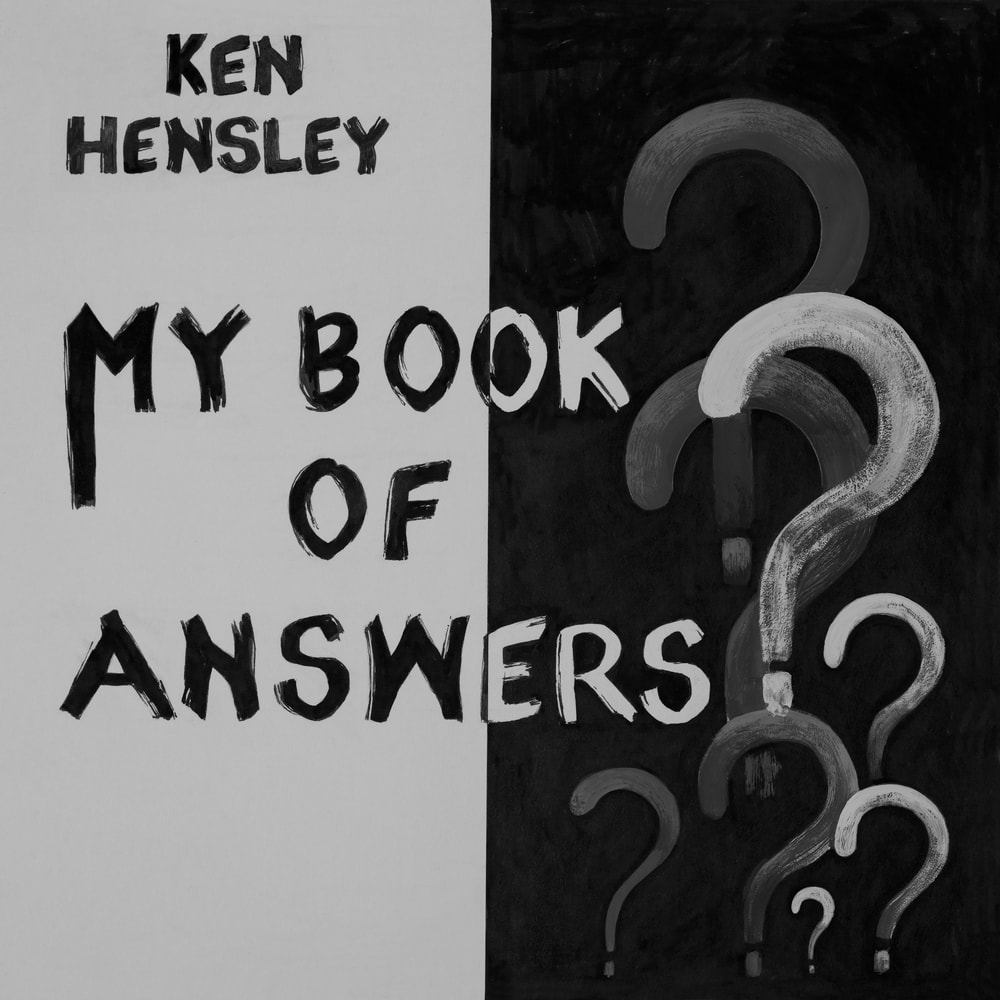
Originally released last year on CD & vinyl, Ken Hensley’s posthumously released My Book Of Answers will get a special white & black ‘splatter’ vinyl reissue in May, on Cherry Red Records.
The album came months after Hensley’s passing, featuring 9 tracks, and cover art by Olesya Vasilieva, package design by Hugh Gilmour, and lengthy liner notes from Ken Hensley, as well as from Steve Weltman (manager & friend). Each track on this album was accompanied by a video. Stand-out cuts included “The Cold Sacrifice”, “Stand (Chase The Beast Away)”, and “Lost (My Guardian)”.
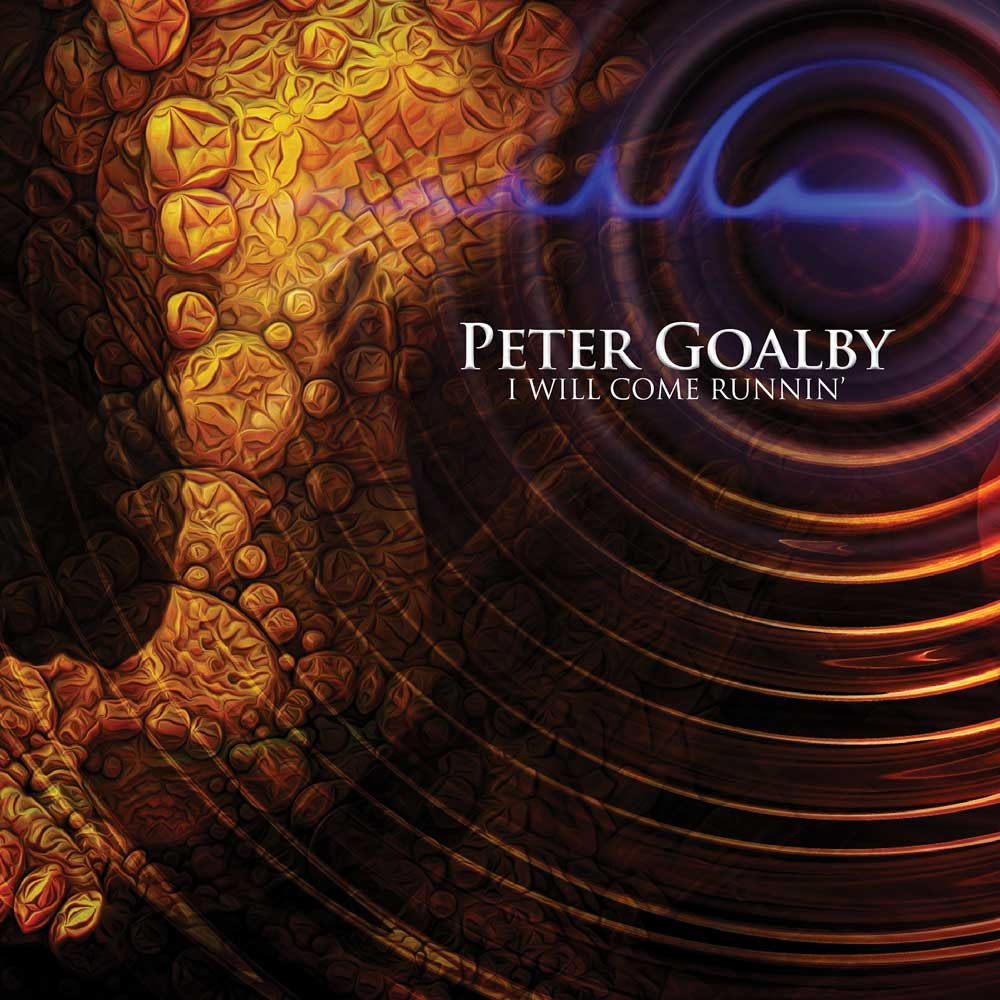
A mere 6 months following the Peter Goalby’s debut solo release (of archived recordings), Cherry Red Records will release a follow up titled I Will Come Runnin’, also recorded during the same period.
Fans who waited 30+ years to hear something new from Peter following his departure from Uriah Heep, and a solo single, can add another album consisting of 10 songs, along with the aid of Paul Hodson, Robin George, and Eddy Morton.
Peter Goalby has been extremely surprised and happy with the response & reviews to the first album. I Will Come Runnin’ will be released May 6, 2022, and can be pre-ordered at Cherry Red Records, as well as Amazon.
*A 10-track album personally overseen (from tape transfer, mastering and artwork) by the former Uriah Heep and Trapeze vocalist .
1 I Will Come Runnin’ 2 Rock ‘N’ Roll Crazy 3 A Brand New Love 4 Dancing on Water 5 Somebody’s Fool 6 It Was There All The Time 7 Waitin’ For An Angel To Call 8 There’s Always A Place In My Heart 9 Perfect Strangers 10 A Little Piece Of Heaven






 Outsider Rock