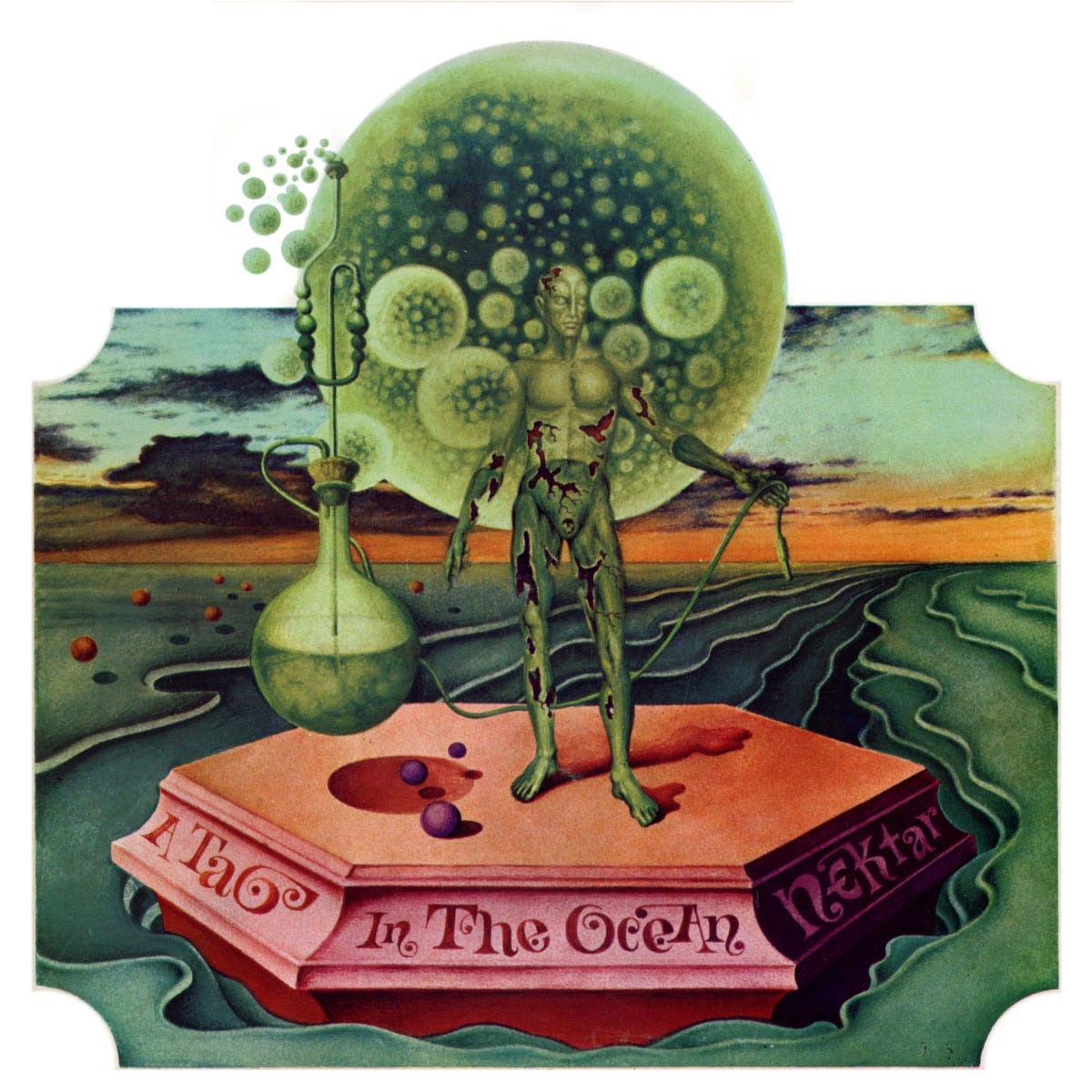
Classic prog rock band NEKTAR has a 5-disc box set coming out on November 28, on Esoteric. A Tab In The Ocean is highlighted by it’s 17+ minute title track. *Check out the info below, as well as track-listing, and link to pre-order.
Originally featuring just four pieces, the album’s first side would be dominated by the extensive title track which was a progressive rock tour de force. The remaining tracks, ‘Desolation Valley / Waves’, ‘Crying in the Dark’ and ‘King of Twilight’ would also become Nektar classics. The album was recorded and mixed at Dierks Studios, Stommeln, Germany in October 1972, produced by Peter Hauke & Nektar and engineered by Dieter Dierks. Among the admirers of this album was Steve Harris of Iron Maiden and his band would cover ‘King of Twilight’ on the B-side of their ‘Aces High’ single in 1984. This new box set edition features 4 CDs and a region free Blu-Ray disc and has been newly remastered from the original master tapes. It includes a new stereo & 5.1 Surround Sound mix of the album and also features a marvelous, previously unreleased complete concert recorded in Erbach, Germany in April 1973 and a newly remastered version of the 1976 US album version.
DISC ONE
2025 mix
1. A Tab in the Ocean
2. Desolation Valley / Waves
3. Crying in the Dark
4. King of Twilight
Bonus track:
5. We Are the Ocean
DISC TWO
The 1972 album mix
1. A Tab in the Ocean
2. Desolation Valley / Waves
3. Crying in the Dark
4. King of Twilight
The 1976 US album mix
5. A Tab in the Ocean
6. Desolation Valley / Waves
7. Crying in the Dark
8. King of Twilight
DISC THREE
Live in Erbach, Germany 22nd April 1973
1. Look Around
2. Cast Your Fate
3. A Day in the Life of a Preacher
4. Desolation Valley / Waves
5. Crying in the Dark / King of Twilight
DISC FOUR
Live in Erbach, Germany 22nd April 1973
1. Good Day
2. Let it Grow
3. Wings
4. Oddysee / Ron’s On / Never Never Never
5. 1-2-3-4
6. Do You Believe in Magic?
7. What You Gonna Do
DISC FIVE
Blu-Ray
5.1 Surround Sound & Stereo mixes & original stereo mix
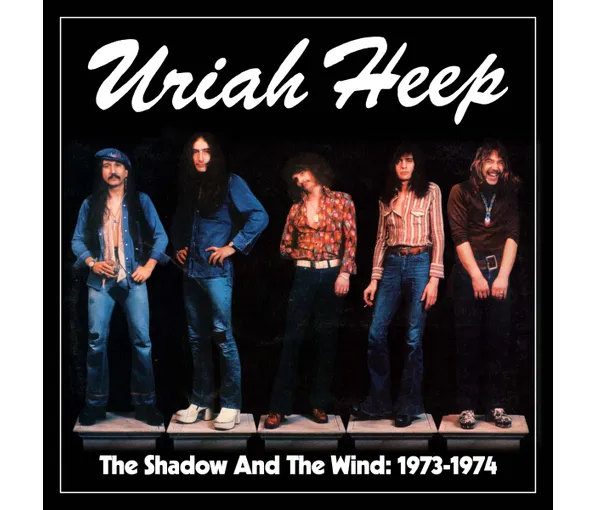
HNE (Cherry Red) is releasing a 5 CD box compiling URIAH HEEP’s studio and live recordings starting with the classic Live…January 1973 through to the live recordings from the Wonderworld tour. Not sure if there’s anything here that hasn’t been released before, but it seems likes an interesting collection. A busy period for Heep, featuring what most hail as the ‘classic line up’. Coming out November 28. *Track-listing below. Pre-order link at the end.
Following hot on the heels of Led Zeppelin, Deep Purple and Black Sabbath, British hard rock legends Uriah Heep released their debut album in June 1970. Featuring David Byron on lead vocals, Mick Box on lead guitar and Ken Hensley on keyboards, ‘Very ‘Eavy Very ‘Umble’ is quite rightly regarded as a major influence on the development of hard rock and heavy metal. 1970 was the centenary of Charles Dickens’ death, and having originally been called Spice, they switched to the more Dickensian Uriah Heep when Hensley joined their ranks after spells in The Gods and Toe Fat before recording their debut.
Like their hard rocking contemporaries of the 1970s, it was live on stage where Uriah Heep truly shone, and no self-respecting rock or metal band of the era could be without a classic double live album, and ‘Uriah Heep Live’ (CD1) is no exception. Recorded at Birmingham Town Hall in January 1973, and released three months later, it delivered their third gold record in a row in the States, it remains a testament to the classic line-up of Box/Hensley/Byron/Kerslake/Thain.
Back in the days when bands were expected to be prolific enough to release two new albums a year, Uriah Heep released their sixth studio album ‘Sweet Freedom’ (CD3) in 1973, by which time they had been joined by drummer Lee Kerslake (Ozzy Osbourne) and bassist Gary Thain, which many see as the most enduring line-up of the band. The album saw Ken Hensley develop as a songwriter, with the music a blend of proto heavy metal and progressive rock, consolidating their growing popularity at home as well as the all important US market. ‘Sweet Freedom’ was followed by ‘Wonderworld’ (CD4) in June 1974, with the hard rock attack of Mick Box’s guitar, alloyed to Ken Hensley’s keyboards and David Byron’s operatic vocal approach making the band a formative influence on bands such as Queen. With a significant dent in the charts on both sides of the Atlantic, ‘Wonderworld’ featured the single ‘Something Or Nothing’, but was the last studio album to feature bass guitarist Gary Thain.
It was the classic Box/Hensley/Byron/Kerslake/Thain line-up that would record ‘Live at Shepperton ’74′ (CD5) the same year. Issued in bootleg style artwork, the album wasn’t given an official release until 1986, and captures the band in a more intimate setting in front of a much smaller, invited audience. CD2 was originally released as part of a deluxe version of ‘Live 1973’ and features the band in 1974 with a US Radio show session, and with film mixes from the Shepperton show and on an extended ‘Rock ‘n’ Roll Medley’.
Uriah Heep continued to tour and release new albums until the present day. In 2025 they launched their farewell tour, celebrating 55 years of music. The package includes liner notes based on new interviews with founder member, Mick Box.
DISC ONE
URIAH HEEP LIVE 1973
1 Sunrise
2 Sweet Lorraine
3 Traveller In Time
4 Easy Livin’
5 July Morning
6 Tears In My Eyes
7 Gypsy
8 Circle Of Hands
9 Look At Yourself
10 Magician’s Birthday
11 Love Machine Rock ‘N’ Roll Medley
12 Roll Over Beethoven
13 Blue Suede Shoes
14 Mean Woman Blues
15 Hound Dog
16 At The Hop
17 Whole Lotta Shakin’ Going On
18 Blue Suede Shoes
DISC TWO
U.S. RADIO SHOW 1974
1 Something Or Nothing
2 I Won’t Mind
3 Look At Yourself
4 Gypsy
FILM MIXES USED FOR RADIO
5 Easy Livin’
6 So Tired
7 I Won’t Mind
8 Something Or Nothing
9 The Easy Road
10 Stealin’
11 Love Machine
ROCK ‘N’ ROLL MEDLEY ’74
12 Roll Over Beethoven
13 Blue Suede Shoes
14 Mean Woman Blues
15 Hound Dog
16 At The Hop
17 Whole Lotta Shakin’ Going On
18 Blue Suede Shoes
DISC THREE
SWEET FREEDOM (1973)
1 Dreamer
2 Stealin’
3 One Day
4 Sweet Freedom
5 If I Had the Time
6 Seven Stars
7 Circus
8 Pilgrim
Bonus Tracks
9 Sunshine
10 Seven Stars (Extended Version)
11 Pilgrim – Extended Version (Previously Unreleased)
12 If I Had the Time (Demo)
13 Sweet Freedom (Alternative Live Version) 14 Stealin’ (Alternative Live Version)
DISC FOUR
WONDERWORLD (1974)
1 Wonderworld
2 Suicidal Man
3 The Shadows and The Wind
4 So Tired
5 The Easy Road
6 Something Or Nothing
7 I Won’t Mind
8 We Got We
9 Dreams
Bonus Tracks
10 What Can I Do
11 Love, Hate and Fear (Previously Unreleased Version)
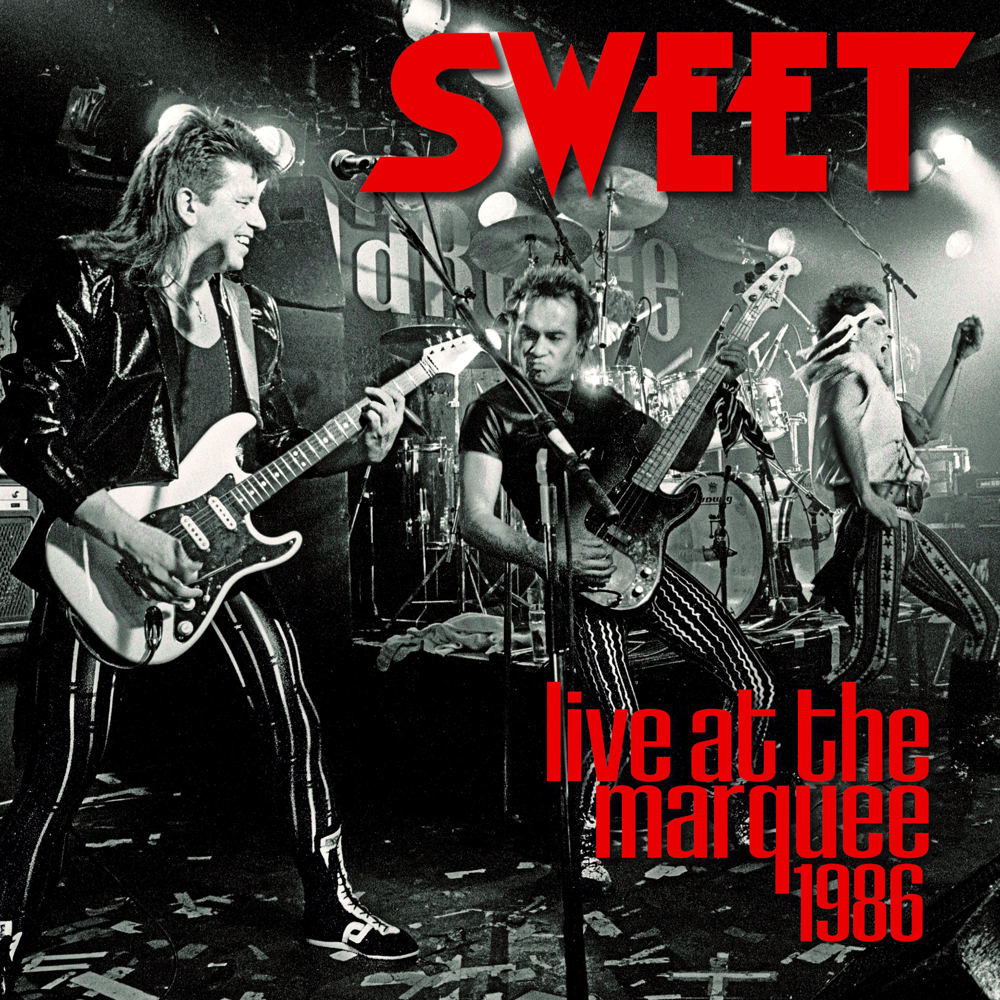
Metalville Records continue their reissues of SWEET albums with Live At The Marquee, which was recorded in February of 1986. This release does not include the 4 studio tracks from the original 1989 release, but includes 2 live songs not on the original either. *Check it out.
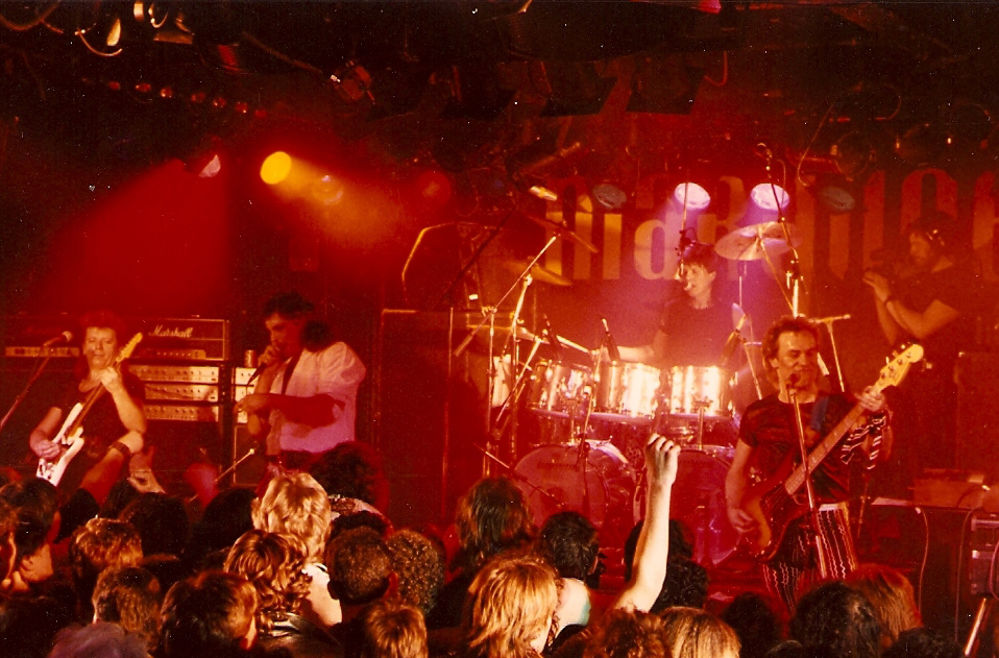
Live At The Marquee was recorded at London’s Marquee Club in February 1986, shortly before the legendary venue closed its doors for good. The SWEET lineup at the time consisted of original members Andy Scott (lead guitar) and Mick Tucker (drums) as well as Paul Mario Day (ex-Iron Maiden) as lead singer, bassist Mal McNulty (Slade), and Phil Lanzon (Uriah Heep) on keyboards. At this concert, the band presented a heavier sound without losing the energy and appeal of the classic hits and anthems.
Live At The Marquee is a rare gem in SWEET’s catalog and is now being re-released on CD and vinyl.
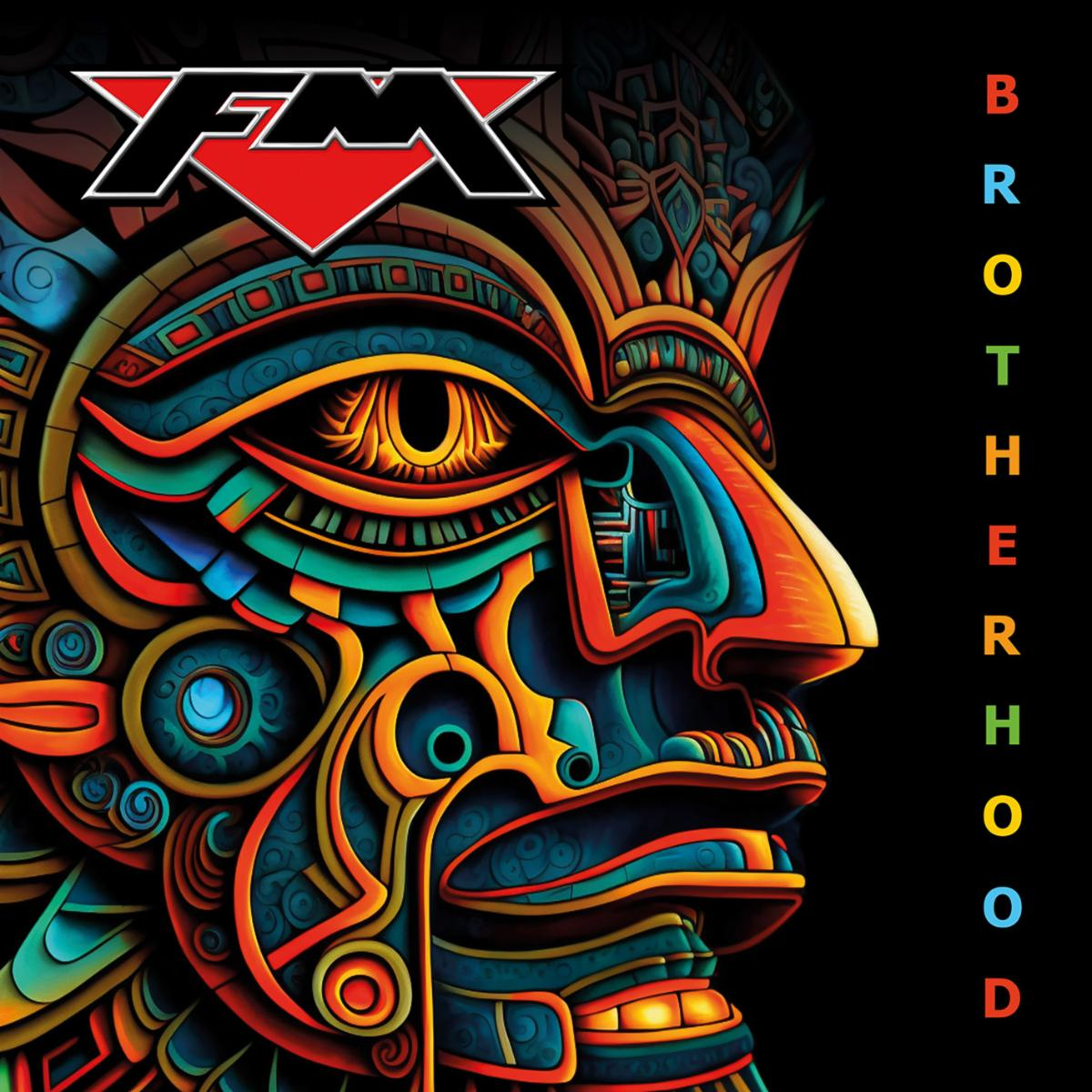
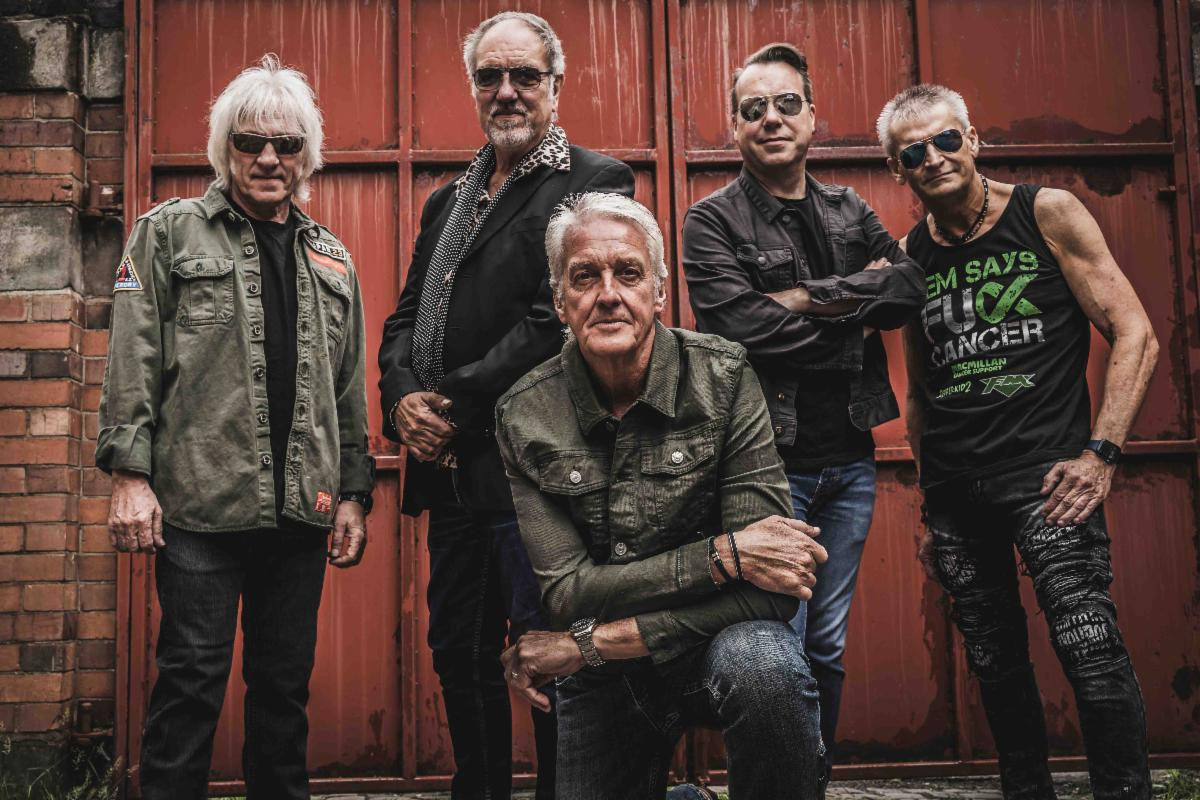
British band FM will their 15th studio album next month. They’ve released 2 singles/videos so far, both are excellent aor-type rockers. Check out the press info below, as well as the videos, and the links.
It’s no surprise that FM’s upcoming album ‘Brotherhood’ continues to showcase their signature blend of hook-laden AOR and blues-tinged hard rock that solidifies their status as masters of the genre.
‘Brotherhood’ showcases a band at the top of their game with highlights including an infectious anthem “Living on the Run,” anthemic rocker “Don’t Call It Love,” the punchy and powerful “Coming For You,” and the emotionally charged “Time Waits For No One,” all tracks that echo the spirit and melodic strength of FM’s early classics, while being unmistakably fresh and vibrant.
Opening track, “Do You Mean It,” brings a bluesy, soulful vibe that echoes the Doobie Brothers’ classic “Takin’ It To The Streets” sound, setting the tone for the album. ‘Brotherhood’ also features one of FM’s most powerful ballads to date, “Just Walk Away” – a beautifully emotional song that highlights the band’s mastery of melodic rock. Wrapping up the album is “The Enemy Within,” a track that introduces exciting new sonic ideas while retaining the powerful and melodic qualities FM fans love.
Supporting vocals from a female guest choir add warmth and dynamic depth to “Do You Mean It” and “Just Walk Away,” perfectly complementing Steve Overland’s consistently exceptional lead vocals.
Overland comments on the new album: “I am proud of the new album. It is one of our strongest song albums to date. It is another milestone, as it’s FM’s 15th album. It’s very well-paced and has great variation in song styles throughout. The album’s big ballad, ‘Just Walk Away,’ is one of our best. I hope our fans feel the same way as we do about ‘Brotherhood.'”
To promote ‘Brotherhood,’FM will embark on a major UK headline tour in September 2025 with 14 confirmed shows, followed by European dates in early 2026. Visit FM’s official website for tickets.
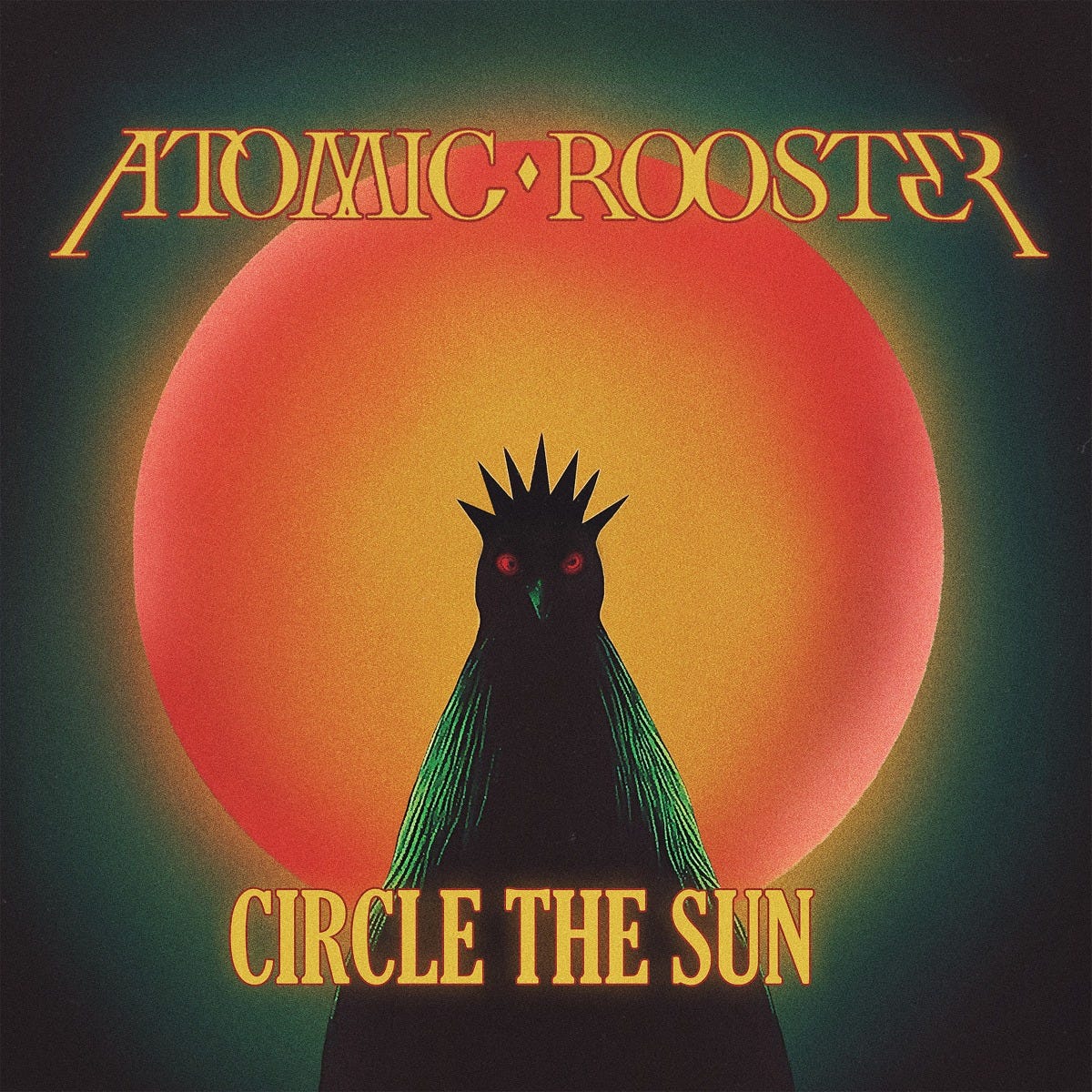
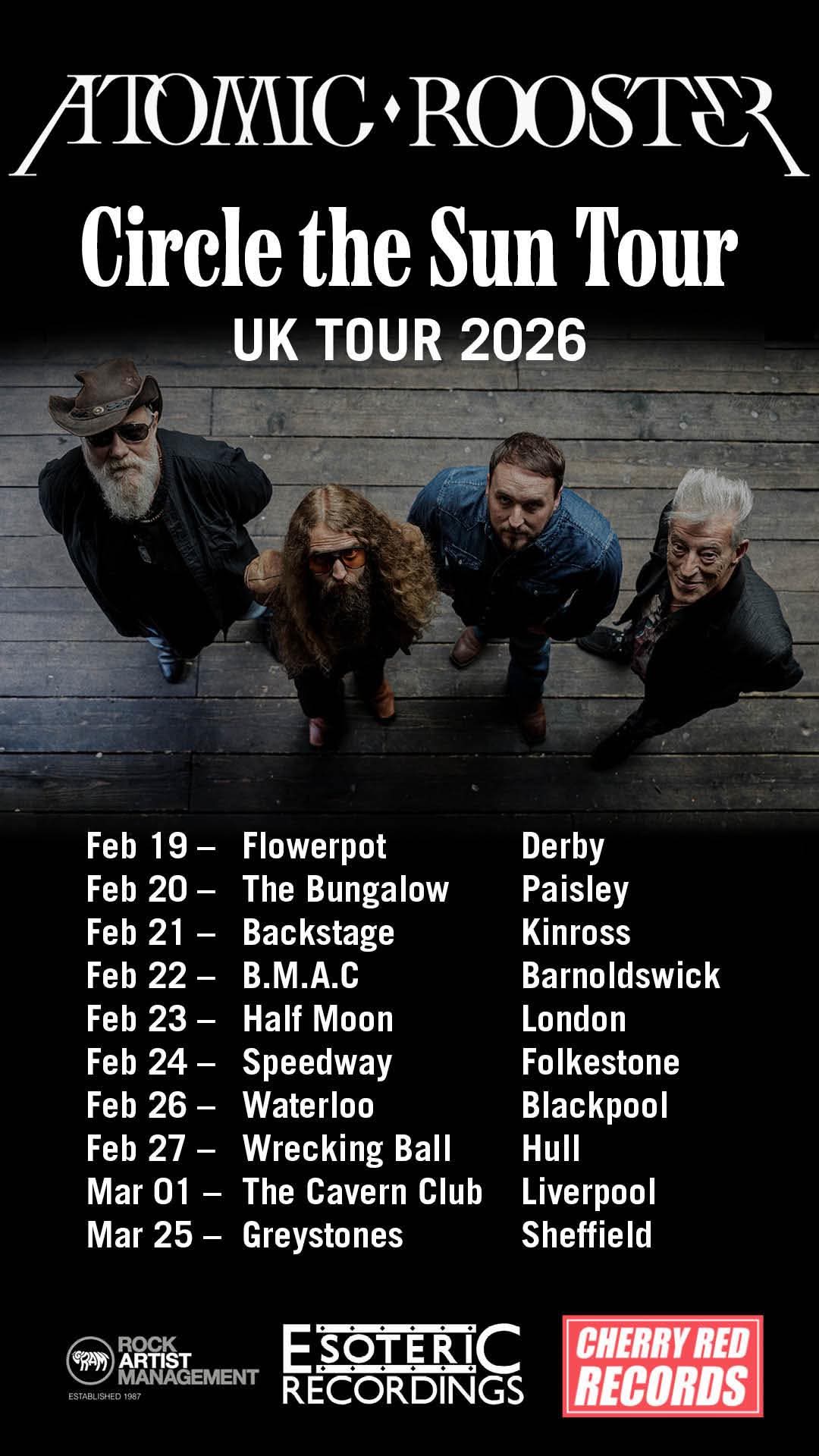
Esoteric Antenna is proud to present Circle The Sun, the powerful new album from legendary British rock outfit Atomic Rooster — their first full collection of studio recordings in over 40 years.
Emerging from the shadows with ten brand new tracks, Circle The Sun marks a monumental return for a band whose influence helped shape the landscape of early 70s hard rock and progressive metal. Rich in atmosphere and attitude, the album draws on Atomic Rooster’s signature blend of thunderous guitar riffs, brooding Hammond organ, and complex rhythmic interplay — updated for a new era.
Led by the formidable lineup of Steve “Boltz” Bolton (guitar/vocals) (a Rooster veteran from the Made in England era), Adrian Gautrey (keyboards/vocals), Shugg Millidge (bass), and Paul Everett (drums), the band brings renewed energy and purpose, honouring the spirit of Vincent Crane while forging forward into fresh sonic territory.
Highlights include the soaring urgency of “Fly or Die,” the swaggering title track “Circle the Sun,” and the bluesy, defiant “Rebel Devil.” Fans of the band’s proto-metal classic Death Walks Behind You will find much to love, while newcomers will be struck by the album’s dark, modern edge.
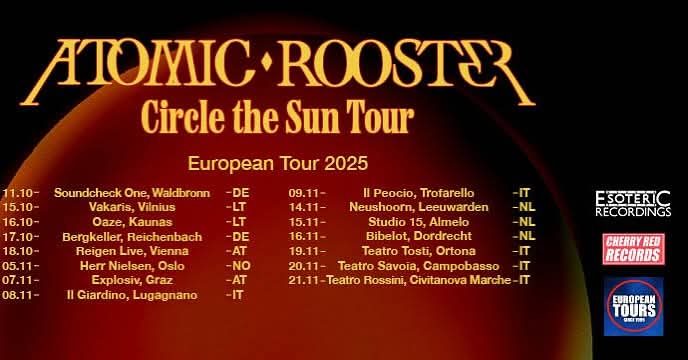
With live concerts across the UK and Europe planned to coincide with the release, Atomic Rooster’s resurgence is not just a return — it’s a rebirth.
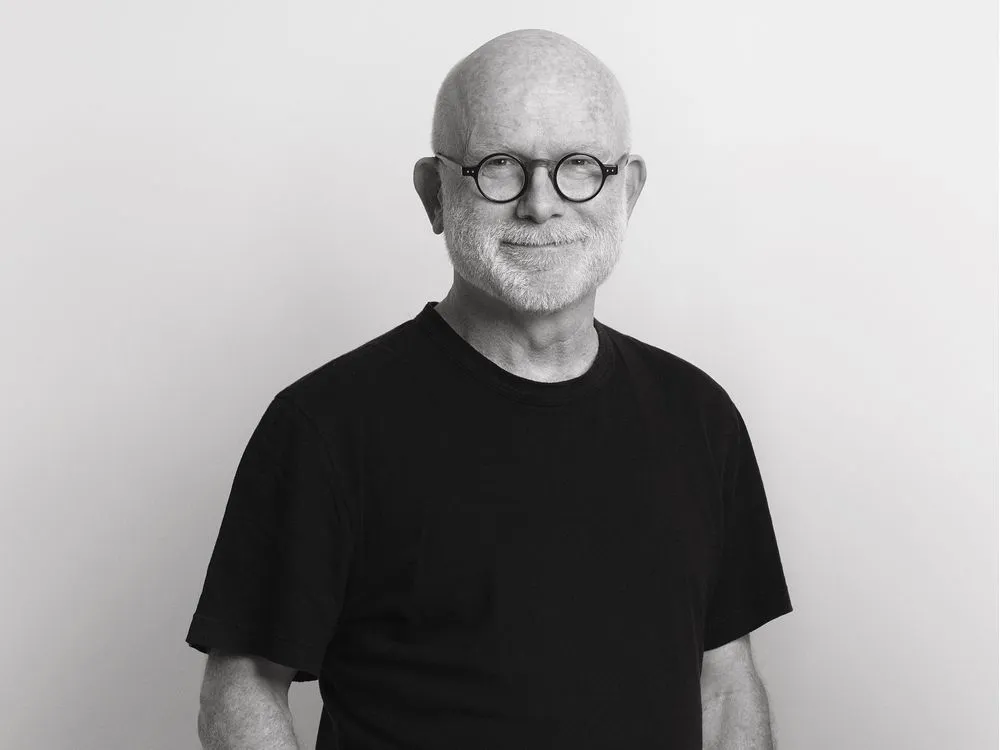
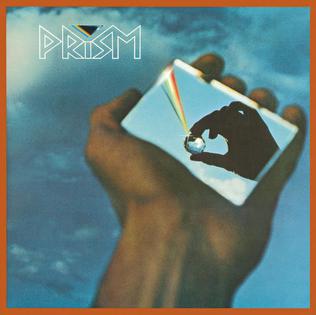
Canadian songwriter JIM VALLANCE came to be a big name in the 80s as Bryan Adams writing partner. Vallance however, had been writing songs in his teen years. In the mid 70s he joined a band that would become PRISM, as their drummer and main writer on the band’s debut album, under the pseudonym Rodney Higgs. After leaving Prism, he wrote songs for BTO, and met a young musician & writer named Bryan Adams. He co-wrote with Adams throughout much of the 80s, as well as writing (or co-writing) hits for numerous bands & artists over the next few decades, including Loverboy, Aerosmith, Ozzy Osbourne, Rick Springfield, Alice Cooper, and Scorpions. His name is on plenty of massive hits, huge selling albums, Juno awards….. This interview kinda scratches the surface of Jim’s history and some of the music he wrote and artists he wrote with. When our conversation was done I had a 1001 more things that came to mind! But Jim Vallance has loads of amazing stories and recollections, and I am thankful he shared some here. Enjoy the read.,
*Check out www.jimvallance.com for more on his history in the music business, stories, and lists of songs and artists Jim is connected to.
You have a long relationship with Prism, and then a bit with BTO, and then Bryan Adams, obviously. But you were in groups, and you were a musician before you became more known as a writer, correct?
Yeah, I started playing in bands when I was 13, and all through school, pretty much every weekend, I was playing a dance or something.
And then when I graduated grade 12 in 1970, I didn’t have any interest in college, but my parents insisted I go. So, I did one year of college, and then after that, I just started playing with bands again. I was living in Vancouver, Canada, and there was a very robust club scene at the time.
There were probably 20 clubs in and around Vancouver, and let’s say 20 bands. And so, each band would do a week at a club and then move to the next club. We just all did the same circuit with the same booking agency.
And around and around you’d go, year in, year out, six nights a week at these clubs. I did that for a bunch of years in the early to mid 70s. And then I was lucky enough to start getting some session work. Mostly playing on McDonald’s commercials and that sort of thing, just music for advertising. I did that for a few years. And that’s around the time I started writing songs and joined this Canadian band called ‘Prism’. That would have been mid to late 70s. We got a record deal, made an album and had a bit of success in Canada, but not much else. We didn’t really make any waves outside of Canada.
Vancouver and Toronto must have been the two biggest spots I can see as far as, because I’m in Niagara Falls, so I think Toronto and Vancouver seem to be the biggest kind of center for bands, Canadian bands when there’s, you know,
A couple of exceptions like April Wine, I think were from Montreal. But yeah, for the most part, it was Vancouver and Toronto.
And you had tons of bands come out of there, other than obviously – Loverboy and all the bands that came before and after them that were connected.
The Payolas, and BTO – even though they were originally from Winnipeg, pretty much launched out of Vancouver because their management was Bruce Allen. So, they were West Coast based.
Now, before you got into like with the Bryan Adams stuff, how did you get into songwriting specifically as opposed to just when you dropped out of bands and that? When did you decide sort of to drop out of the playing-performance part of it and just stick to songwriting?
Well, I had been writing songs since maybe I was 16 or 17.
I didn’t have any place to go with them, but I was writing anyway and just, putting them on a cassette tape and that would go on my shelf somewhere. So, when Prism got a record deal and the record started to get some chart action in Canada, and again, a little bit in the USA, we started doing a bit of touring to promote the record. I remember we opened some shows for Heart, who had just started to have some success with their first album, Dreamboat Annie. And we opened some shows for Foreigner, who were also just coming out of the gate with their hit “Feels Like the First Time”. And so that was my first experience touring. Because we were the opening act, there weren’t many perks; it was five guys in a rental car eating microwaved tacos at gas stations. That was kind of our life, staying in cheap motels, two guys to a room. After that tour, I really decided that that was not my calling; that’s not my idea of a good time. I quit the band as a player, continued writing, but pretty much after that, I was no longer a band member and just concentrated on writing. And that’s also around the time I ran into Bryan and met him for the first time. He and I started writing and after that, that’s all I did.
You guys had a number of songs on that BTO album, which I have here somewhere. I did put together a bunch of albums. The second one that had Jim Clench.
That’s right.
And Bryan would have been very young at that point, correct?
Well, he was 18 when I met him in January 78. And then it was into 1979 when I was working with BTO. So, Bryan would have been 19. He contributed a song that he wrote called “Wasting Time”, I think.
He wrote that on his own and BTO recorded that. I wrote two songs. One was called “Rock and Roll Hell” and the other one was called “Jamaica”. And those were both on the BTO album also.
That’s an interesting album, obviously because Randy Bachman was no longer there. What was your connection to, I guess, you ended up writing for certain bands? Did you have a connection to them? Or was it more so just the producers?
In the case of BTO, Bruce Allen had managed Prism, and he was managing BTO also. So that was kind of my connection to BTO.
That’s how I got put together with that band. It was through the management.
And then you and Bryan just kind of rolled on from there?
And then by this time I’d met Bryan and he and I were writing. I pulled him into that project as well.
From there, you did a lot of Canadian stuff for the longest time, Canadian bands. One thing you did do, you did some Toronto stuff. That was fairly early on, 1982.
Yeah, there you go. 1982. I can’t remember how that came about. I think I got a call from their record company asking me to write with them.
I’m not sure how I came to be in that, with that connection, because I didn’t really have any ties to Toronto, the city or the band. But I did go back and wrote some songs with Brian Allen and Sheron Alton, the two guitar players in the band. I can’t remember how many songs I wrote with them.
I think there was four or five over this album.
Yeah, four or five. And one in particular, I remember it really clearly.
They were really nice. They were a couple, Brian and Sheron. I remember going over to their house one night in Toronto and they made a nice dinner.
And then after dinner, we went downstairs, they had a studio in their basement. As is the case with so many songs I’ve written, when you go in a room with another writer or another couple of writers, kind of the first thing someone says is ‘do you have anything? Do you have any ideas?’ And on this particular day, I had an idea. It was very minimal. There was almost nothing to it. It was really just a title. And I said, ‘Yeah, I have a title.’
“What About Love” And I said, and ‘I have sort of a melody idea, but it’s just one note. Sort of like John Lennon with “All You Need Is Love” was just one note.’ So, they thought that was okay.
We started working on it. And in my experience, it’s one of the fastest songs I’ve ever been involved in writing. I think by the end of that evening, we had the song finished. We each contributed equal amounts of lyric and melody. We just bounced ideas back and forth between the three of us. I remember one particular line that I thought was really good; I think it was Sheron’s idea – “I can sell you what you don’t want to buy.” I thought that was really good. So, by the end of the evening, we had this song called “What About Love”. And a few days later, we went into the studio, and the Toronto band recorded it. For some reason, the drummer, Barry, who was a really, really good drummer, for some reason, he didn’t think he could capture the feel. So, I ended up playing drums on the recording.
Fast forward a few more weeks, and it’s time to choose 12 songs for the album. I think there were 20 songs to choose from by this time. And the band voted. and “What About Love” was not one of the songs they chose. So, it ended up just ended up on the shelf, I mean, literally forgotten.
Because I hadn’t written it in my studio, I didn’t keep a copy of the tape. Brian and Sheron somewhere have a cassette tape with our original writing demo. But to this day, I don’t.
I think it came out as a bonus track somewhere.
It did further down the road, but at that time, 1982, it was a reject. The song disappeared, and I forgot about it because I didn’t take a tape home with me. I completely forgot about that song. Three years later, 1985, my phone rings and it’s Don Grierson, who’s the head of A&R Capitol Records in Los Angeles.
And he says ‘Hey Jim, congratulations, you’ve got the first single on the new Heart album!’ And I said, ‘What song is that?”’ And he said, “What About Love” And I said ‘How did you find that song?’ …You know, how did that song come to your attention? Anyway, long story short, what had happened is Toronto’s label, Solid Gold Records went bankrupt, and their entire publishing catalog, all their songs were acquired by EMI Publishing in Toronto. At EMI there was a fellow named Mike McCarty, and Mike went through every song in the Solid Gold catalog, whether the song had been recorded or not, and he found “What About Love”. And he thought it was really good, so he sent it to Don Grierson in Los Angeles. Don Grierson sent it to Ron Nevison, who was producing the next Heart album. Ron Nevison played it for the Wilson sisters, Ann and Nancy. And I didn’t know, I heard the story 20 years later. I finally heard the story, how when he played it for them, they hated it!
Ann said, ‘We’re not going to record this song’, and apparently Nancy even got up and walked out of the room and said, ‘No way! we’re not doing this song’. So, Ron said, ‘Okay, wait a minute. I’ll make a deal with you. Let’s record the song. If you still hate it, I promise I won’t put it on the record’.
So, I guess they recorded it. They must have ended up liking it. And it ended up being their comeback single, because they had a couple of albums that hadn’t sold very well. The record company was going to drop them if they didn’t have a hit. So, this ended up being the hit that they desperately needed.
Yeah, because when they came back, they were using a lot of outside writers and stuff for most of those albums from then on.
“These Dreams” was written by Bernie Taupin.
A lot of people that don’t know that, right!? Especially the Toronto connection. I didn’t know that till about 10 years ago when I picked up the Toronto CD that was on it.
So do you get much in the way of requests like from artists that specifically come to you and say, you know, ‘we’re looking for something specific’ or people that come to you and say ‘we want to write with you’…How does that whole process work?
It’s the only way it works. I’ve tried again and again over the course of my career, even after I’d a bit of success to write a song and send it to somebody. And it, it never works out. I can’t think of a single example of doing that and having the song recorded. It seems to me the only way to get a song on an album is if the artist or the manager or the record company or the publisher approaches you with a request. So that was really how my songwriting career unfolded and continued through the eighties and nineties and 2000s was just, waiting for the phone to ring and, it was exponential.
Once I had one hit song, then two people call you. And once you have two hit songs, four people call you. And the next thing you know, the phone’s ringing all the time. As a consequence, I was very, very busy for a couple of decades writing with hundreds of different artists.
Well, going through this stuff, like just now, I’m a big fan of Uriah Heep and Alice Cooper, Ozzy, a lot of stuff that I go through and you’re on so many of these albums.
You wrote with John Wetton. How did that work out with John?
I did. And again, I don’t know how I came to John’s attention, but he was just a lovely guy. He came to Vancouver. He came over from the UK and we spent a week writing together for a solo album. He had previously been with Asia and had that huge hit with “Heat of the Moment”. And then he’d also been with King Crimson. And I really enjoyed John. The other thing that was great was, because he had an endorsement with Ibanez Guitars, he was allowed anywhere in the world to walk into a music store and walk out with a free guitar. So I drove him down to Longwood McQuaid and he grabbed a Ibanez bass and he used it for the week that we were writing together. And when he left, he just gave me the bass. Now, I’m right-handed, but I play left-handed. And interestingly, John was left-handed, but he played right-handed. So this bass was of no use to me. But 30 years later I gave it to my son and he still has it and he uses it on his records. The thing with John was he was doing a solo album and we wrote, I can’t remember how many songs ended up on the album, but we wrote four or five songs in the week that I was with him, which were, I mean, when you’re writing and you put down, you record a quick demo, you try and capture some of the instruments, you try and determine what the bass is going to play, what the drums are going to play, but you don’t spend a lot of attention on detail. You just record a pretty quick demo.
And then from there it goes in the studio and a proper recording is done. In this case, for reasons I still don’t understand, John may not have had the budget, but he ended up just using our demos on his record. And I was quite disappointed if I had known they were going to be used, I would have spent more time and more attention getting them right. So that was a bit of a disappointment, to be honest. I think they deserved a better recording in each case.
I think you got four songs on there, but it was kind of, sound-wise, it was a bit of a letdown compared to the Battle Lines album that he had prior to.
Yes, for that very reason. He didn’t take the time or the expense to do it properly.
The one album you did with Ozzy, you had a few songs on. The one song that I really like on there is “I Just Want You”. Did you actually go and work with Ozzy or how were you doing things?
Ozzy came to me. Ozzy lived in Los Angeles and he flew up to Vancouver and we had just a lovely week. He was such a nice man. We had a lot of fun. I mean, I don’t know how we got work done because he loves to make people laugh. I think we spent more time laughing than we did writing. It was really a lot of fun spending time with him. But we did get two songs written.
Ozzy and I were both quite disappointed with the final result. We loved what we wrote, but we didn’t love how it ended up sounding on the record. And Ozzy’s said that a few times. In fact, when the songs got recycled on a Greatest Hits package, I think they first came out on the album Ozzmosis, and then it appeared later on Prince of Darkness, I think it was a box set.
And for the second time around Ozzy used the demos that we had done in my home studio. And again, not quite enough time was put into getting the demos right because they were never intended for release. But Ozzy still preferred the demos to the master recordings.
Well, “I Just Want You” was probably my favorite track of that era, in the 90s. I think he had Rick Wakeman play on it.
That’s true, yeah. That’s a plus, I guess.
You didn’t reconnect with him again after that?
We didn’t write together again, but we kept in touch over the years. Whenever I was in L.A., whenever Ozzy was in Vancouver, we’d get together. So, we remained friends. And again, I can’t say enough about him. He was such a lovely man.
The songs you wrote with Alice Cooper, you wrote a few on Hey Stoopid. Do you remember much of those?
One was called “Die For You”, and the other one…”Dirty Dreams”.
I like “Die For You”. It was a busy album. There’s a lot of different writers and players.
Alice and his wife Sheryl came to Vancouver for a week and had a really nice time. Me and Alice and Sharon and my wife went out for dinner a few times. Alice has the most amazing stories because he knew everybody.
His group of friends included Groucho Marx and John Lennon. I mean, he hung out with the most eclectic group of people and had the most amazing stories. So again, I really enjoyed Alice.
A lovely guy.
One album that I found interesting to find you on is a British band I really like that really never got any traction over here. And that’s Magnum.
Oh yeah.
You wrote “What Kind of Love Is This” with Tony Clarkin!?
Again, I don’t want to sound like a broken record here, but these were all such nice people to spend time with. Tony was just a gentleman. He came over from the UK to Vancouver and we spent a week. I think we wrote more than one song, but only one of them ended up on the album.
I think that was the album the record label tried to break them over here, but it didn’t. They never really caught on.
Which is unfortunate.
You’ve also done some arranging and producing as well.
I think so. You’d have to remind me.
The one thing you, it’s funny because there’s a song called “Love Stealer” and you did some stuff with Ian Lloyd. Oh, yeah.
I have that record. And “Love Stealer” was written by a guy named Phil Wainman, who I actually corresponded with a few months ago about that song, because that was a song that got recorded by a lot of acts. So, yeah, he did some stuff with Ian Lloyd.
That was, again, around 1979, I think. (I’m trying to remember). Quite some time ago. Ian, a great singer; he had one of those gravelly voices, sort of in the Rod Stewart-Bryan Adams’ style. Bruce Fairbairn produced the album, and I think I wrote a couple of songs on it, and played on it, and did some of the arranging on it. One of my memories is we did some of it in New York, at the Power Station, and there was an Ian Lloyd album, and there was another album under the band-name ‘Fast Forward’, and one of the songs (“Slip Away”). But what was a thrill for me was, because I was a huge Cars fan; they’d already had their first album released, and it had done very well, and their second album hadn’t been released yet, but it was ‘any day now’. So, Ric, and Benjamin Orr came to the studio, Ric played guitar, Ben played bass, and I played drums – so I got to be a ‘Car’ for a day, so it was very exciting. And then when the session was over, they played us their new album, which was ‘Candy-O’. So, me and Ian were among the first to have heard that album, a week or 2 before it came out.
Uriah Heep recorded “Lonely Nights”, which was odd as Bryan had a hit with it not too long before.
I don’t know how that song got to them. Bryan might’ve had something to do with it, but I have no recollection of it.
No. (ed: talk briefly about Jorn, Jim makes a note of it).
(Showing Into The Fire LP) I’ve got most of Bryan’s albums up until the end of the 80s, and the one album I never thought got enough attention was this one (Into The Fire). Was that a hard album, having to follow up Reckless?
I have a lot of thoughts on that album. First of all, I’m surprised how many people tell me it’s their favorite Bryan Adams’ album, because it’s not my favorite. We had just come off the huge success of Reckless, a number one album in Canada and the USA, a number one single.. Can’t remember how many copies it sold, 20 million or something. And it had been a long slow climb over a period of 6-8 years. The first didn’t do very well, the 2nd didn’t do any better, then Cuts Like A Knife put Bryan on the map, and then Reckless was a huge hit. At that point we had a choice of doing something bigger and better than Reckless, and weren’t sure we could, Or do something different than Reckless. And around that time Bryan had been doing concerts like ‘Live Aid’, and touring with U2, Peter Gabriel, Bruce Springsteen, and Sting. And all of those artists, their lyrics are more sophisticated than what we had been writing; our songs were all sort of boy-girl relationship lyrics. U2 and Peter Gabriel were writing more, if not political, at least more topical subjects. So, we had a talk about it, and Bryan decided we needed to be a little more topical in our songwriting. We sat down with that idea, and started writing songs like “Native Son”, which was about the injustices inflicted upon native Americans by the early settlers. We wrote a song called “Remembrance Day”, which about the first world war…and that’s kind of how it went. We spent the better part of a year writing and recording that album, and the analogy I like to use is by this time the 2 of us had spent the better part of 10 years together, in a small room with no windows, writing songs. And during the course of that album we just finally started getting on each other’s nerves a bit. So, it was a difficult album to write for a bunch of reasons. Musically and personally, I don’t think we were on the same page, for a number of reasons. And by the end of the album, we pretty much burned each other out and decided to take a break after that. And the break we took was 5 or more years. So, I don’t have fond memories of that album, for all the reasons just mentioned. But again, some people think it’s Bryan’s best album.
Well, with Cuts Like A Knife and Reckless, those albums were so big. Every day on MuchMusic you saw the latest video repeatedly. For me, it was a different album, and maybe that’s why I liked it.
Obviously, you’ve got a lot of stories behind (the songs. Have you ever written or put together any of your memoirs or anything?
No, people ask me all the time. My website is my book, really. I don’t know if you’ve seen my website, but there’s a lot of stories on there.
Yeah, I’m kind of on it right now. I’ve gone through that and Discogs the last few days. You’ve got a great setup because there’s obviously references to the songs and samples and stuff like that.
I’ve tried to. I mean, I love stories.I love reading about the Beatles and the Beach Boys and the stories behind the songs. So, I’d hope to do a little bit of that with my website.
I like finding out stuff behind songs as well as album covers. I’m big into looking for people that have done album covers and talking to them. So, speaking of Bryan, aside from the albums and the songwriting, did you have much else to do with him as far as any other arranging or deciding on what went on in the album or anything?
Well, arranging for sure.
Every song Bryan and I wrote, we recorded a very meticulous demo in my home studio. So, every part, like I would play bass and drums and keyboards and Bryan would play guitar and do the vocals. And we’d spend as much time arranging and recording the demo as we did writing the song.
We considered the parts, piano, guitar, bass and drums to be as important as the song itself. And that’s what Bryan’s band would hear and they would learn their parts from the demo. And then obviously, Mickey Curry, Bryan’s drummer, would pretty much play the parts that I’d written for the drums, but he would just play it way better than me.
And same for the bass and the keyboards and so on. But the actual demo recordings were the template for what would end up on the record. As far as deciding what would go on the record, I mean, for the most part, at least for Bryan’s albums, we hardly wrote any more than 10 or 12 songs anyway.
It’s not like we had 30 to choose from. We pretty much wrote what would end up on the record. And interestingly, “Summer of 69”, which ended up being one of the big songs from the Reckless album, we recorded that in my home studio at least three different ways. Three completely different arrangements to get it right. And we still didn’t think we got it right and we very nearly left it off the album. Same with the song “Heaven”, which ended up being a number one single on the Reckless album.
A record company fellow told Bryan, “Don’t put Heaven on the album. You don’t need a ballad. It should all be rock songs.”
And so I don’t know if Bryan ever considered leaving “Heaven” off the album, but it was at least discussed. And then “Run To You”, another big hit off the Reckless album, we’d originally written for Blue Oyster Cult and they didn’t record it. And as a result, Bryan didn’t initially think of it as a song for him because we’d written it for somebody else. So that song almost didn’t go on the album. And the only reason it went on is Bryan’s producer, Bob Clearmountain, said ‘we need one more song’. So “Run To You” just happened to be kind of kicking around.
I read that story about Blue Oyster Cult not recording it. Did that have anything to do with the similarities to any of their own songs?
Well, we actually went out of our way to craft a guitar riff that sounded a little bit like “Don’t Fear the Reaper”. We thought, if we do that, Blue Oyster Cult will love our song. They’ll consider it just one of theirs. Now, what’s really interesting is, we wrote the song to specifically market it to Blue Oyster Cult and then we heard they didn’t like it. And this would have been 1983, I think. I didn’t know until last year, 2024, I got an email from Joe Bouchard, original bass player for Blue Oyster Cult. He sent me an email and he said, “I just want you to know the story is that we turned your song down.” He said, “In fact, we never even heard your song. Either the record company or our manager or somebody else heard it and didn’t pass it on to us. We never even heard it.” So, I thought that was an interesting sort of, bookends to the story.
Yeah, because that would have been the last album Joe was on, That was Revolution By Night.
OK….Well, Joe said, had he known, he definitely would have recorded it because he loves the song, but he says he never even heard it.
I’ve seen Joe and corresponded with him for years. He’s got a lot of really good solo albums out.
I’ve met him a few times now as a result. He’s an interesting character. They all are.
I was a big Loverboy fan in the 80s. It was the first band I ever went to see in concert. I know you did “Jump” and “Dangerous”.…Did you have a lot of connection with them being on that Vancouver scene?
Not so much. I mean, by the time I do remember meeting Mike Reno during those club years that I was telling you about, he was in another band, another local band. But no, surprisingly, because the Vancouver bands all kind of, work the same circuit, but they weren’t working the same clubs at the same time. So, we very seldom ran into each other. We were always working different clubs. So, I didn’t know any of those guys until after they had some success.
Bob Welch recorded his own version of “Remember”, which I thought was an interesting choice.…I remember watching that video for “Remember” of Bryan’s when it came out. How did that first album actually do? The purple one.
It didn’t do very well at all. I think out of the gate, it might have sold 25,000 copies in Canada. So yeah, it didn’t do well at all.
But for the second album, that was A&M Canada, on the first album. For the second album, Brian moved his contract down to A&M Los Angeles, and they put him in touch with Bob Clearmountain, who was an up and coming producer and engineer at the time. He went on to work with Bruce Springsteen, The Rolling Stones, Roxy Music, Pretenders. So, you know, Bob made a huge difference on the second album. It just sounds light years ahead of the first album.
You used Jim Clench on that album as well, which obviously you must have known Jim from BTO on that. Did you know much of Jim?
I didn’t know him very well. I mean, just again, through the BTO album, I spent a bit of time with him while we were doing that record. And I was certainly aware of his contribution to April Wine for BTO. But no, I wouldn’t say we were friends.
I was good friends with Fred Turner. He and I would spend time together away from the studio.
You did a number of songs with the Scorpions, which I thought was an interesting match.
It was. I enjoyed that.
Again, they came over to Vancouver from Germany and we spent a couple of weeks writing. Me, Klaus (the singer), Rudolf (the guitar player), and Herman (the drummer). The four of us co-wrote however-many songs that were on that album. I can’t remember how many I contributed to.
That was the late 80s there. So, they were kind of going for more of an almost, like a radio friendly sound at that point, right?
I think it was, it ended up being their most successful album (Crazy World) up to that point, I think.
And 38 Special, I know you did some stuff with them, who I never saw as a Southern rock band because they always came off as an AOR band to me.
I know. I mean, they had a Van Zandt brother in the band, so that gave them the Southern rock credibility. But otherwise, they were a pretty straight ahead rock band.
And the other most interesting one I see you wrote with was Rick Springfield.
I love Rick. He was in Vancouver, because he was an actor, as well as a musician. And he was in Vancouver for a month, doing a film. He had quite a bit of downtime, so whenever he was not on the film set, he’d be over at my place, and we’d write some songs.
Do you keep in touch with any of these guys?
Rick and I are always in touch. I saw him. I live in New York, so I saw him the last time he came through here performing. He did a show in New Jersey, and I went to that.
And we’re both huge Beatles fans. So, whenever there’s any Beatles nugget that comes up on the internet, I’ll send Rick a note, or he’ll send me a note.
It’s interesting that people have that perspective, that perspective of him as being the actor, and then having those hits in the early 80s, and then kind of drifting away. But he really, his history went back to the early 70s, right? He had a couple albums back in Australia.
He started off as a musician then in Australia. And when he came to America, it was acting that put him on the map, with his role in the TV show General Hospital. And then back to music after that again.
One song I like of yours as well is the one, it was recorded by Ted Nugent, as well as Paul Dean, and that was “Draw the Line”.
I wrote that with Bryan, and I thought Bryan was going to record it, but he ended up giving it to Paul Dean first for Paul’s solo album, as far as I recall. And I’d forgotten that Ted Nugent did that one.
And you did all sorts of stuff with Aerosmith when they, obviously, that’s an older chapter, there’s a long list of Aerosmith songs.
Yeah, I wrote, they recorded 12 songs of mine. But I think I wrote more than that. There’s probably a few still on the shelf somewhere.
Great. I mean, Steven and Joe were the band members that I spent the most time with. So, we got along great. I mean, Steven is crazy; he’s a crazy genius. He’s got just the most amazing ideas lyrically and musically. And Joe Perry is an amazing riff guitarist. He just comes up with endless guitar riffs and every one of them sounds like a song. So that’s why many Aerosmith songs start with Joe’s riff. Really the heart and soul of Aerosmith sound is Joe’s guitar.
I’m kind of in awe of all the bands you’ve worked with, because it’s just an amazing list. And obviously, you could spend hours talking about them. Do you have any favorite things that have been surprise hits for you or?
Everything’s a surprise. I mean, never once in my whole career did I ever say, ‘today, let’s write a really bad song/.
I mean, something that you gave to somebody and suddenly it came out more than you expected.
Probably in every case. You try and do your best work, you can never tell when you’re writing it, if it’s going to be a hit or a miss.
One of the first big successes was “Cuts Like a Knife”. That was one of Bryan’s first hits. And we put the same effort into writing that song as we did, the album before that didn’t do as well. So, who’s to say why suddenly that song, you know, found a place on radio and became a hit. And then when “Heaven” went to number one, that was a great surprise. We couldn’t have predicted that.
No, anytime a song does well, I’m delighted and surprised because you really can’t, you can’t plan, you can’t predict. So those are just gifts when they, unexpectedly go to the top of the charts.
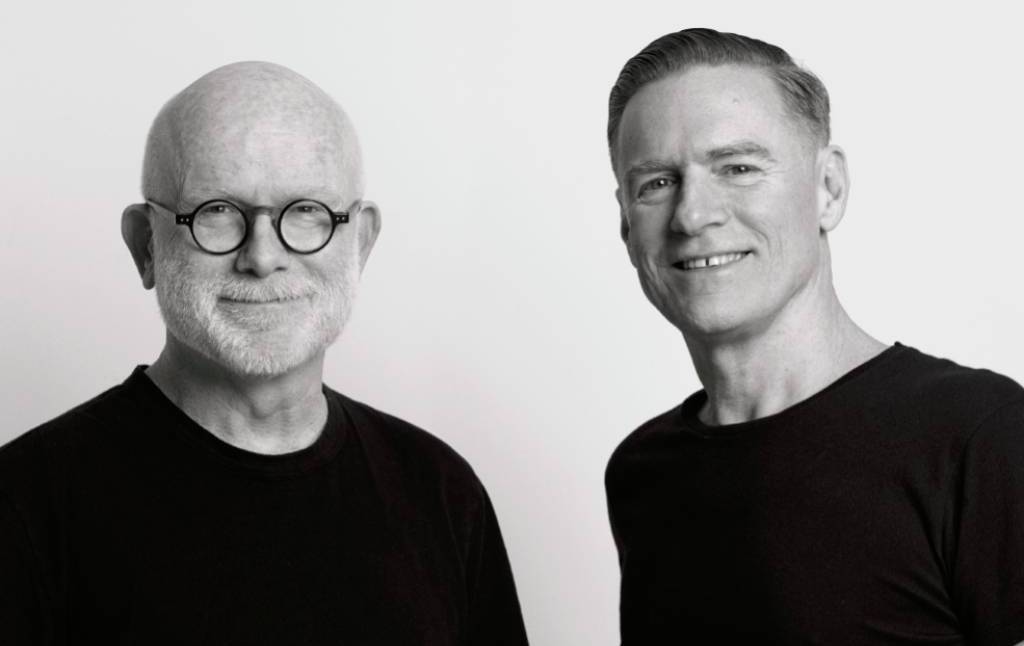
JIm Vallance, Bryan Adams – 2022
Are you still, do you still write a lot?
No, I’m kind of done, I think. I’m 73. I did it every day for 50 years.
Laurie Mansworth has been part of the British scene since the late 70s. He joined NWOBHM band MORE, writing and playing on their 1981 debut album, before forming AIRRACE, and later moving in to production work, notably THE TREATMENT (which includes his son Dhani). More recently he’s formed MANSWORTH. In this exchange Laurie answers my questions about the bands and recordings he’s been apart of over the past (near) 45 years. *Check out the clips included, as well as the links below!
Can you give me a few of your own favorite guitarists, bands and albums from your youth, that lead you into performing and recording?
Well definitely AC/DC, I loved music from a very early age, especially all the glam bands like Slade, T-Rex and The Sweet. I am also a massive fan of Jeff Lynne and ELO, but I would say AC/DC are the main reason I wanted to be in a band.
Do you recall how MORE came together? I had read initially it was more of a blues band. Did you know any of these guys prior to?
I joined MORE when their guitarist Paul Todd left. It was before we signed to Atlantic and the band were just a straight forward heavy rock band by then. I auditioned at Ezzee Hire in Marker Road in north London. I never knew any of the other guys but I immediately clicked with Paul, Brian and Frank. It was the loudest band I ever played in and I’m lucky I still have great hearing.
How did the band end up getting signed to Atlantic, and then get put together with Al Nalli & Henry Weck? Were you familiar with either from the Blackfoot and Brownsville Station connection?
Phil Carson label boss at Atlantic heard the band on the Tommy Vance Rock Show. He came down to a gig and we signed a massive deal with Atlantic soon after. The label put us together with Al Nali and Henry Weck. I wasn’t familiar with Blackfoot at the time but me and Al still remain in touch. Ricky Medlock and Al stayed at my parents place in London when they were playing a festival in the UK in the 80s so we all got to know each other well. Al’s sister Rene Nali signed Airrace to Atco in the US, I also stayed with Ricky when I visited Al on a couple of occasions.
Songs were credited to the entire band then. Were they band really band collaborations? Any that originated from you?
I wrote a lot of the MORE stuff with Paul but I was only seventeen at the time and green behind the ears. Let’s just say I was relieved of my song writing royalties by a few of my other associates.
That was the label’s idea. Some bands were getting initial successes with cover songs so that’s what we did. I was a fan of the original version but not completely sold on ours.
What were some of the biggest gigs and support slots did you guys play?
We did the Killers Tour with Iron Maiden throughout Europe, that was big. There were so many supports Krokus, Ted Nugent, but the biggest was opening for Foreigner at the Nuremberg ring. The audience was huge as far as the eye could see. Soon after we were healing decent size venues like the Rainbow in Finsbury Park on our headline shows. It was an exciting time.
You left the band, presumably from Kenny Cox wanting to do it without you(?) Did you have any further contact or connection with any of the guys?
Kenny was a not a pleasant man to be in a band with, I loved playing in MORE with the other guys but it was a dictatorship, as I was writing most of the material I wasn’t too sad to leave and do my own thing. Paul left soon after for the same reason. I have always kept in touch with Brian and Paul. Sadly as you know Paul passed away recently and I was so glad we got a chat about old times a week before he left us.
What was Peter Grant’s involvement early on with Airrace?
Yes, Peter managed Airrace for a short period we moved on.
Beau Hill, at that point, had produced the first RATT album. How did you guys get put together with him, and how did you like working with him?
Again it was the label. Beau had made a couple of hit records and they thought he would do a good job.
Shaft Of Light has a very 80s production, with the keyboards, the drum sound….were you happy with the overall finished album?
Not really, . I always felt that the Airrace album wasn’t as good as the demos we did with Tony Platt. Beau Americanised the band and I personally feel we should have stayed more guitar based like foreigner. The AOR fans still see it as a classic so I’m not complaining. Personally I would have rather made a much tougher sounding record.
What sort of opportunities did Airrace get early on – any opening slots or big shows?
Yes, we supported AC/DC on the flick of the switch tour and also Queen on The Works tour. We had some great shows, It doesn’t get much better than opening for Queen.
Was there any official videos made at the time (being the MTV era)?
No videos unfortunately, Atco really dropped the ball with Airrace. There were a lot of internal problems at the label during the time we were signed to them. It’s a shame as the band should have done a lot more.
Back To The Start sounds great! Much livelier than Shaft of Light, a very good album, but it seemed to get a very limited release (CD only through Frontiers). Might there be a chance of reissuing this one?
I’m sure it will be rereleased at some point. It was a good album, much more like the Airrace live sound. The drummer Simon Dawson who played on that album is now in Maiden so it may well have get another release in the near future.
Were you happy with Back To The Start? Why did it not lead to a 3rd album sooner?
Overall yes. I only had a small budget to make the album and I always feel I we could have done better. I think it went down well with the fans of the band and that’s the most thing. Frontiers have been a great support in my career and I still work with them with the Treatment.
On the 3rd album, you changed the entire band, really, including singers. Why was that?
Many of the old lineup had moved on to other things so I had no choice. I must say Untold Stories had the most chart success across the globe that any of the others. It made even made the to 40 in Japan which was a nice surprise. I was very happy with who that album went down.
You put Airrace to rest after that, and formed ‘Mansworth’. What’s been going on with this project? Will there be a record anytime soon?
We have recorded a Mansworth album that I love. Not sure when it will be released I’m still looking at the options. I’m taking sometime out at the moment. I suffer with fibromyalgia and it’s something I’m trying to get to grips with.
You are also involved in production, especially with The Treatment. Are you more comfortable these days as a producer than as a performer?
I would say yes. I like performing but my main role for the last 16year has been working with the Treatment. It been great touring with my son and the Grey brothers are like family, we have had some amazing times with that band.
What projects are you working on these days?
I’m taking it easy at the moment but I’m sure I won’t stay quite for too long 🙂
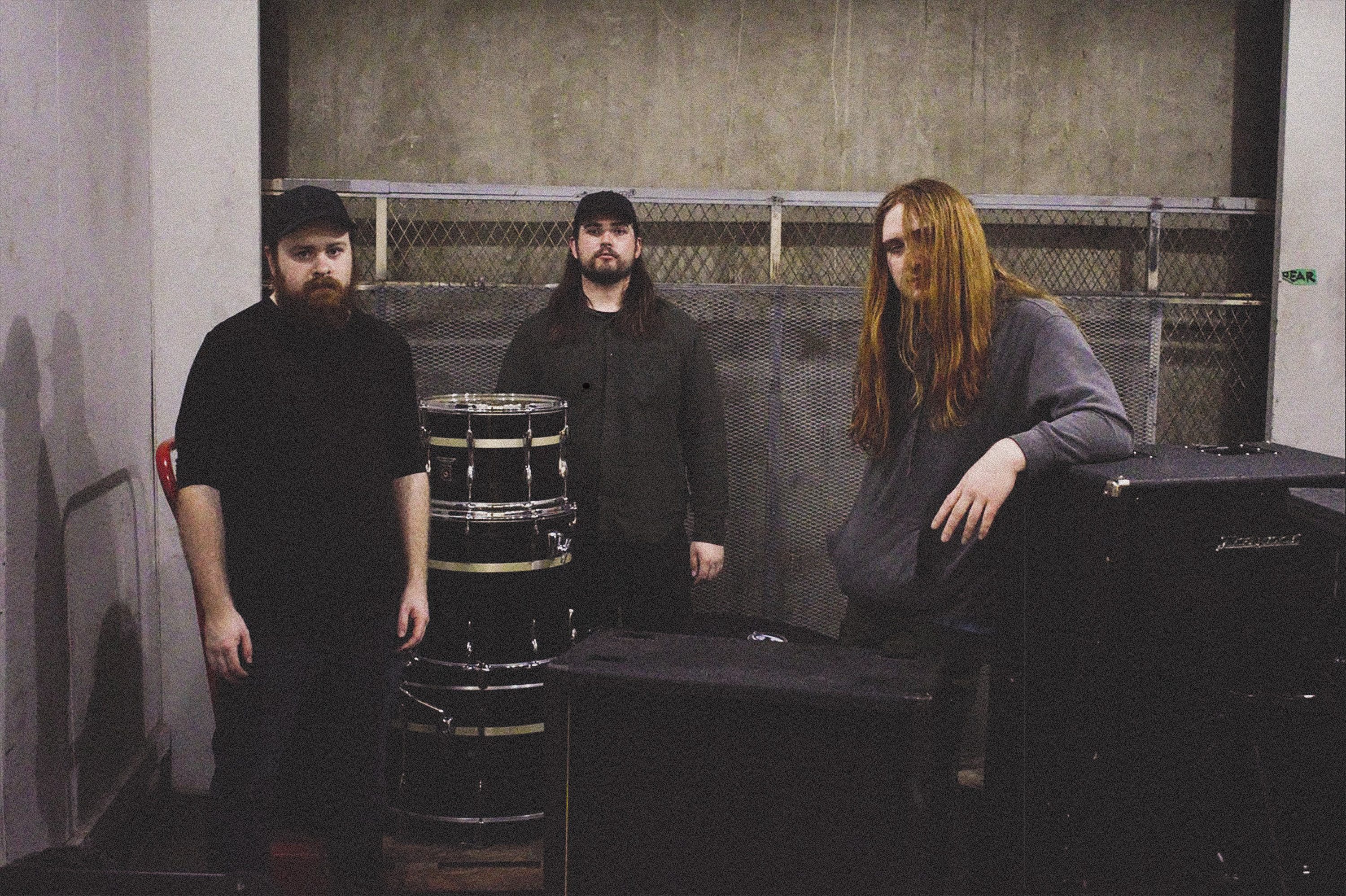
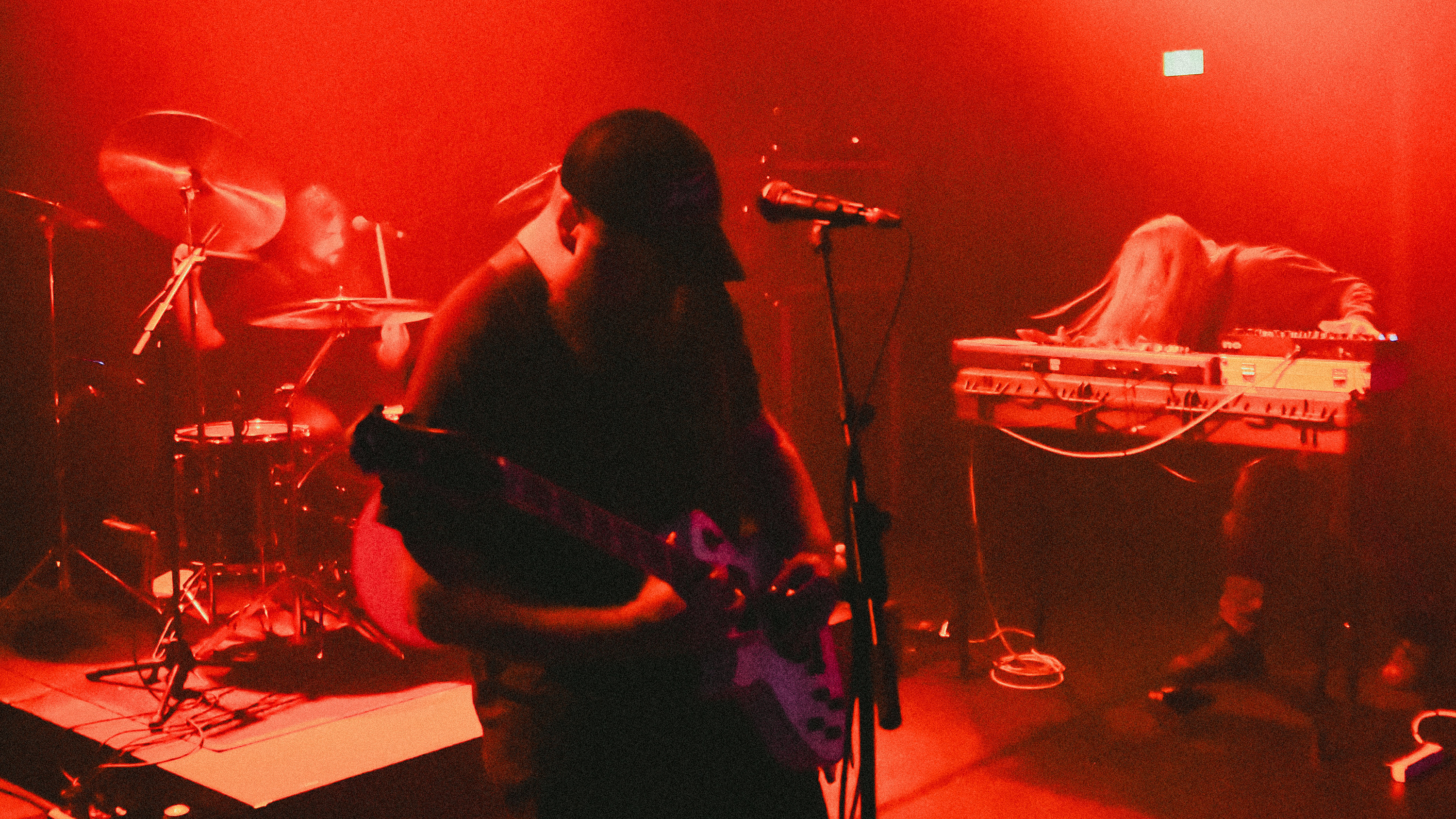
L-R-Andrew Blackborow (Guitar, Vocals), Joe Zandwyk (Drums, Vocals), Sebastian Hogg(Keyboards) Photo Credit by Luka Kartveli
IVY GARDENS, the experimental sludge metal band from Niagara Falls, Canada, has announced the release of their highly anticipated new music video for the single “Burden” and their sophomore album,” Death of Don Valley”, set to drop on August 29th, 2025, via Paper Cut Recordings. The record marks a bold new chapter in the band’s sound, with more complex compositions, darker themes, and a shift into a more experimental and atmospheric direction. Formed in the parking lot of Princess Auto, Ivy Gardens’ journey began with a mutual love for covering Rush instrumentals and an obsession with heavy, sludge-infused sound. From those humble beginnings, the band’s unique chemistry and vision have led to the creation of their most ambitious and thematically focused album yet.
“Burden”, the first single from “Death of Don Valley”, showcases a satirical take on nihilism, with dark and comical undertones. The track was one of the first songs written for the album and features a fast-paced, relentless tempo that gradually picks up speed in the studio. Lyrically, it’s a satirical take on the archetypal nihilist, with a dose of doom and gloom that veers into a comical extreme. The band describes it as “quick and succinct”—a track that encapsulates the essence of their new sonic direction.
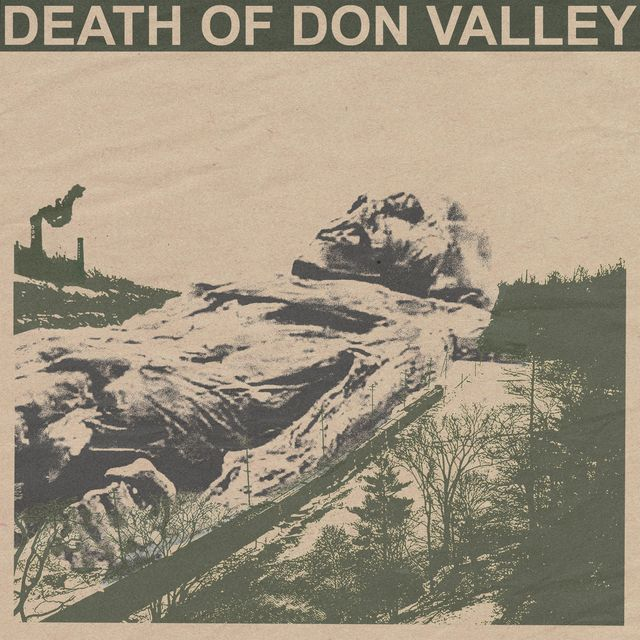
“Death of Don Valley” is a concept album, exploring the themes of death, decay, and the unstoppable erosion of life and the environment. The concept is rooted in the history of the Don Valley River, a once-thriving waterway now plagued by pollution and degradation. The album’s artwork reflects this with the haunting image of a corpse between the banks of the flooded river, anthropomorphizing the water itself as it becomes a symbol of death and decay.
The material on “Death of Don Valley” was designed to be heard live, with massive stacks of amplifiers and a commitment to delivering the music in all its raw, unfiltered glory. It marks a bold new direction for Ivy Gardens; the band has no plans of slowing down. Their dedication to the project is evident in every note they play and every lyric they write as they continue to push musical boundaries and explore new sonic territories. Lyrically, the record draws from a mix of historical events, such as the tragic story of Canadian bush pilot Martin Hartwell, and fictional narratives, creating a dark and gripping atmosphere. The songs explore everything from violence, death, and survival to environmental destruction and existential dread. As the band explains:
“Death of Don Valley is the natural progression of their sound, with more complexity and a deliberate thematic structure. Musically, it marks a shift in Ivy Gardens’ approach. This album is darker, more experimental, and more intricate than our previous work on 2024’s Goon. While Goon carried a more positive, energetic vibe, this LP is more about confronting the darker aspects of life, and it reflects a deeper exploration into musical and thematic complexity.”
Ivy Gardens’ influences are vast, ranging from progressive icons like Rush, Yes, and King Crimson to sludge pioneers like EYEHATEGOD and Iron Monkey. Their sound blends elements of stoner metal, sludge, math rock, and progressive rock, creating an unpredictable listening experience that takes the listener through a series of emotional and sonic landscapes.
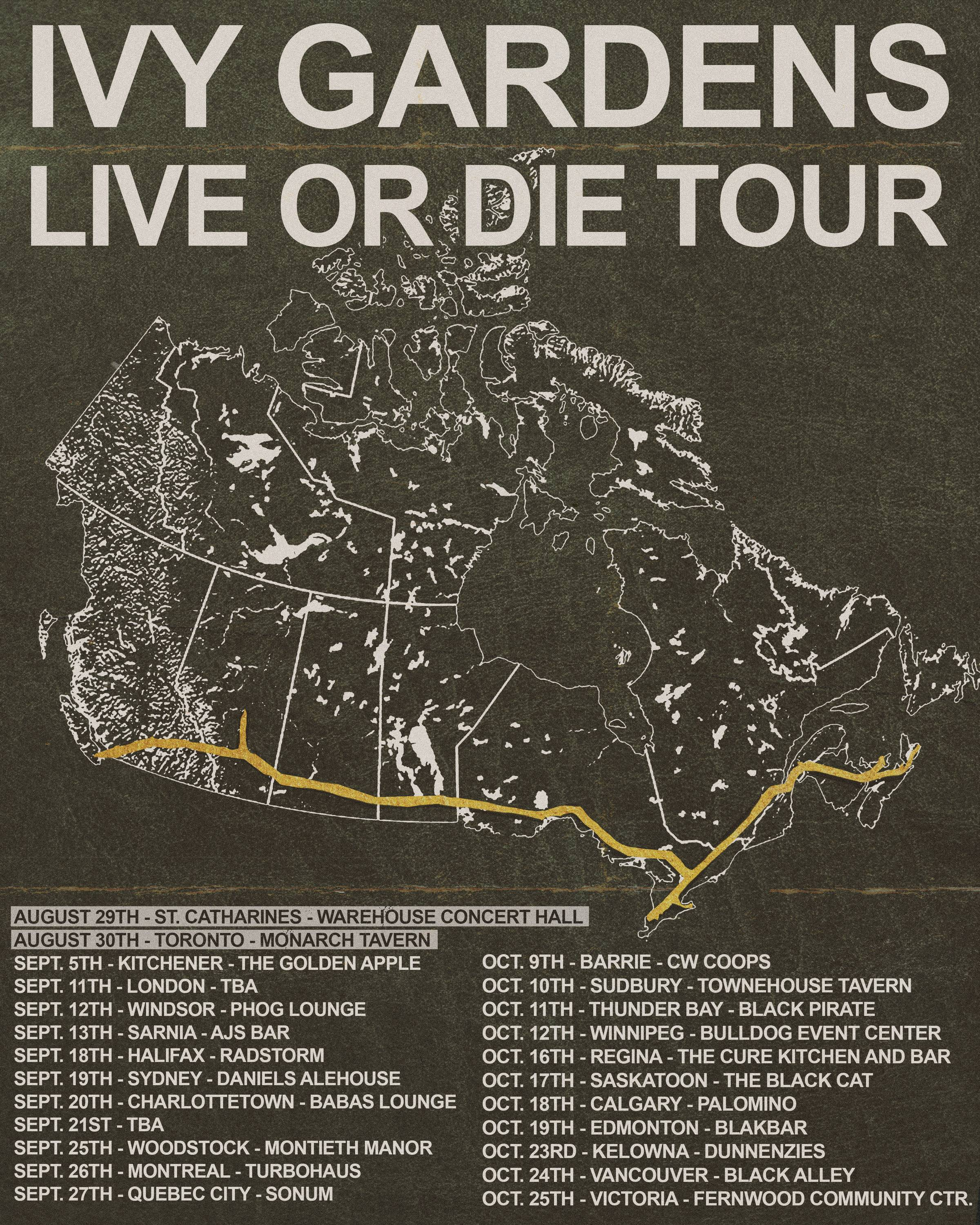
Fans of Ivy Gardens can expect an intense live performance soon, as the band does plan to tour in support of the new album this coming September. Stay tuned for dates to be announced, and Ivy Gardens are bringing their thunderous sound to stages nationwide. Expect a live show that will test the limits of your ears and your emotions.
Ivy Gardens – Live or Die Tour: Aug 29 – St. Catharines, ON – Warehouse Concert Hall Aug 30 – Toronto, ON – Monarch Tavern Sept 5 – Kitchener, ON – The Golden Apple Sept 11 – London, ON – TBA Sept 12 – Windsor, ON – Phog Lounge Sept 13 – Sarnia, ON – AJs Bar Sept 18 – Halifax, NS – Radstorm Sept 19 – Sydney, NS – Daniels Ale House Sept 20 – Charlottetown, PEI – Babas Lounge Sept 21 – Moncton, NB – TBA Sept 25 – Woodstock, NB – Montieth Manor Sept 26 – Quebec City, QC – Scanner Bistro Sept 27 – Montreal, QC – Blue Dog Oct 9 – Barrie, ON – CW Coops Oct 10 – Sudbury, ON – Townhouse Tavern Oct 11 – Thunder Bay, ON – Nortenos Cantina Oct 12 – Winnipeg, MB – Bulldog Event Center Oct 16 – Regina, SK – The Cure Kitchen and Bar Oct 17 – Saskatoon, SK – The Black Cat Oct 18 – Calgary, AB – Palomino Oct 19 – Edmonton, AB – Blak Bar Oct 23 – Kelowna, BC – TBA Oct 24 – Vancouver, BC – TBA Oct 25 – Victoria, BC – TBA
Canadian hard-rock band LOVER have been out playing together for well over a year now, and recently released a 2-song cassette, consisting of a pair of kick-a*s 80s influenced rockers – “Fatal Attraction” and “Bad Love”. Lover is working on more songs, as well as getting more shows booked.
In this exchange , drummer Hunter Raymond discusses the band’s brief history, their recordings, future plans, and more. Check out the tracks, as well as ordering info and links (below).
Can you give me a bit of pre-history to what lead to Lover coming together?
Hunter: I had recently moved back to Calgary from Toronto, and I knew Jacob and Chris from partying and playing shows in the past with my old band MIDNIGHT MALICE. Jacob and Aidan have another band together called FLASHBACK, which is more of a hard rock band. I went to see their show, secretly scouting, and after they played, I was convinced they were the guys I wanted to start a band with. As it turns out, Aidan had a whole stockpile of riffs that were too metal for flashback. Jacob convinced Aidan I was the man for the job by showing him old Midnight Malice footage. Chris, whom I hadn’t seen in years, happened to be at the flashback gig that night, and we talked about jamming and said we would get together soon. Cale from RIOT CITY was also there and mentioned to Aidan and Jacob that they should ask Chris to play in their new metal project. It was all meant to be, really; we all wanted to start a band with each other without even knowing it. From the first chords struck, we all knew this was going to be something special.
You guys have a 2 song ep out, on cassette — Is there more tracks recorded? and why did you choose to release just these specific 2?
At the moment, we only have demos recorded, nothing we would release to the public. We chose those 2 songs because they were the first ones we had solid. All of us were really excited about the sound and wanted to get the ball rolling, become a legit band. The best way to know if you are any good is to share it with the world. Let there be judgment!
Why a cassette release, as opposed to just digital or CD?
Collectors still enjoy tapes, so that’s what we went for. We are only doing a limited run, so grab them while you can!
It would be cool to press it on a 45 record in the future. People still want to hold onto the real thing; streaming is so impersonal. We wanted something for the people to own.
Can you give me a few favorite bands, musicians, and a short list of favorite albums growing up?
The hardest question to answer is, there is so much good music out there! Thin Lizzy for sure, Phil Lynott amazing songwriter, and Brian Downey is an absolute monster of a drummer. Deep Purple, Judas Priest, and Aerosmith, I love those bands. We all really like Sweet and their album Desolation Boulevard. I was really into Motley Crue, Motorhead, UK Subs, and G.B.H. when I was younger; I’ve always been a bit of a punker. My first Motorhead record was Iron Fist. I got it when I was about 13-14. I snuck away from a school trip in Halifax to find a record store. I had only heard of Motorhead up until then, and they didn’t disappoint! Iron Fist will always be in my top 10.
When might we see a full-length album from Lover? Is there any label or outside producer you are working with?
So far, no labels or producers, Aidan and I are the producers mainly. Aidan is also a good recording engineer so he is doing all of that. He recorded, mixed, and mastered the Fatal Attraction EP. My drum tracks are all done for the full length, and the boys are working on their guitars as we speak! We are planning on having it all done for the new year, so early 2026, we will have it ready for all you headbangers!
How many songs do you guys have prepared or working on? And what can people expect song wise?
The full length will be 9 songs, and they all sound different. We like to try and get different feelings for every song, to keep people interested. Some fast ones, some groovers, some melodic and technical songs. They all sound like us, though, and they all rock!
No ballads yet. We also have about 3-4 more songs we are working on for the 2nd album, and we aren’t slowing down anytime soon!
Can you explain a bit about where song ideas come from, and how songs are put together by you guys? (Lyrically and musically)
Musically, Aidan writes almost all of the riffs; he usually has a style of song he wants to write. Then we will go jam his riffs to get a solid structure and record a demo. I write 95% of the lyrics. I take the demo home to write the lyrics. The guys will sometimes give me a theme or song title to work from. The Lyrics are mostly about real-life experiences, some are fantastic stories I make up. I wrote one song about Jacob and his sweet 1963 Plymouth Valiant, which is called “On the Road’ What a sexy car! Girls are obviously a subject but we try to be creative and not write the same song twice. Basically, whatever vibe the riffs have dictates the lyrics.
What is the music scene like in Calgary, especially for bands trying to push original songs? Or is the scene kinda geared towards cover bands (as it is here in the Niagara region) ?
I’m sure there is a cover band scene here, but I don’t see it. That being said, there are plenty of original bands that do really well crowd-wise here; people love to come out and support local shows, which is awesome. There aren’t too many bands like us, though. The scene here is more aggressive, darker metal or punk. We don’t always fit the bill, but people love us all the same; we are their guilty pleasure.
What does your set list comprise of? Mostly (or all) originals? Any particular covers?
We play all originals; one of us always suggests a cover, but they never seem to materialize. I’m sure one day we will find one we all agree upon. The most recent idea is “Set Me Free” by Sweet. Will it actually happen? Only time will tell.
What have been a few of the bigger shows, festivals you’ve been part? Any opening slots for anyone major?
We have only been playing shows for about 1 year, and already had the pleasure of playing the Electric Highway Festival here in Calgary, and Armstrong Metal Fest in the BC interior this summer. Armstrong was headlined by HAVOK, BORN OF OSIRIS, and our good friends RIOT CITY. Electric Highway headliners were BISON, CASTLE, and LA CHINGA. Both of those festivals were an absolute blast and we can’t wait for more opportunities like those!
What do you guys have coming up? Any international interest or show offers further east?
We have our songs playing internationally, but no show offers as of yet. An East coast tour for spring/summer of 2026 is in the works, so hopefully we get out there to see you soon. I know a lot of amazing Bands out East who want to get shows going with us, so expect fully stacked bills and pure rock n roll mania when it happens!! LONG LIVE ROCK N ROLL
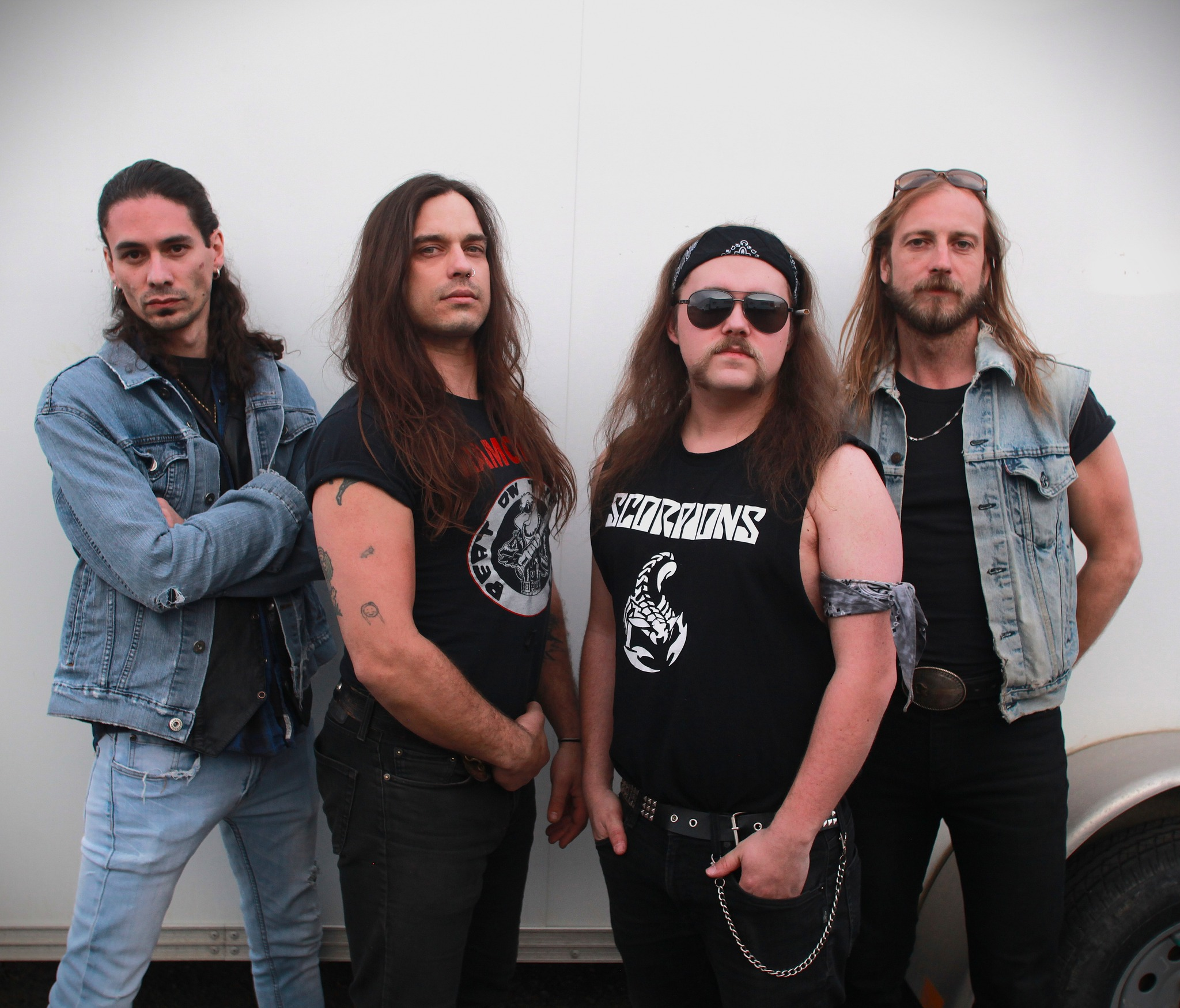
Aidan Desmarais – lead vocals, guitar Hunter Raymond – drums, vocals Jacob Chase – bass guitar Christopher LoNigro – guitar
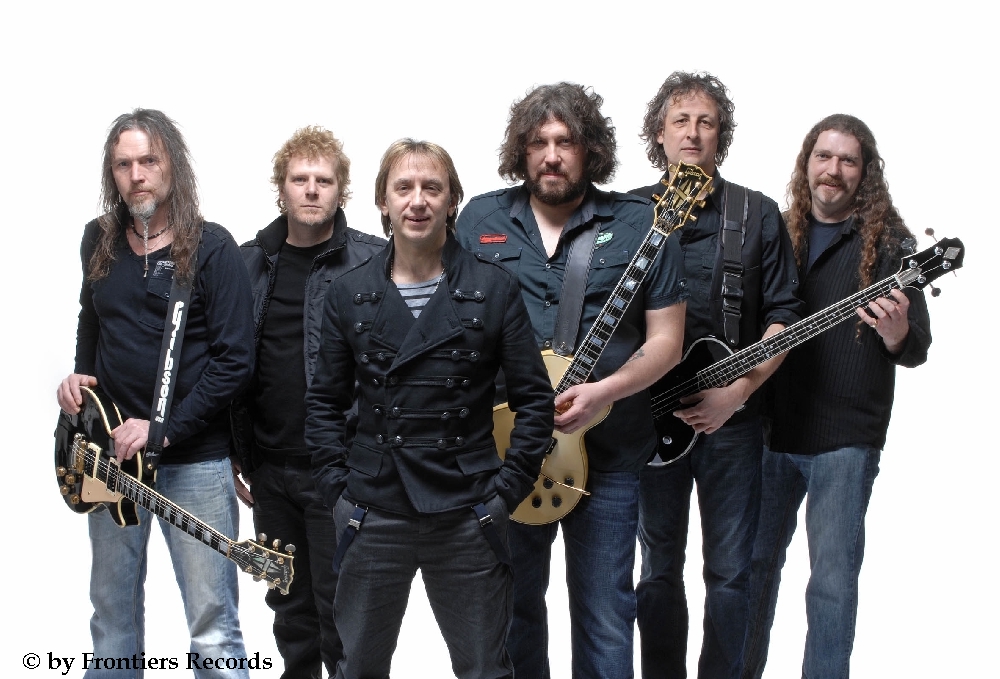
Well, as often happens, I get into (or pick up) an album, and some of the names and associations lead to further records and bands to look into. I previously posted on the debut from NWOBHM band MORE, which featured singer Paul Mario Day (RIP), who went on to a few other bands of note, but it is guitarist Laurie Mansworth, who left after the first album and soon put together a new band. AIRRACE would be Mansworth’s new band, and over a few decades the band put out 3 albums.
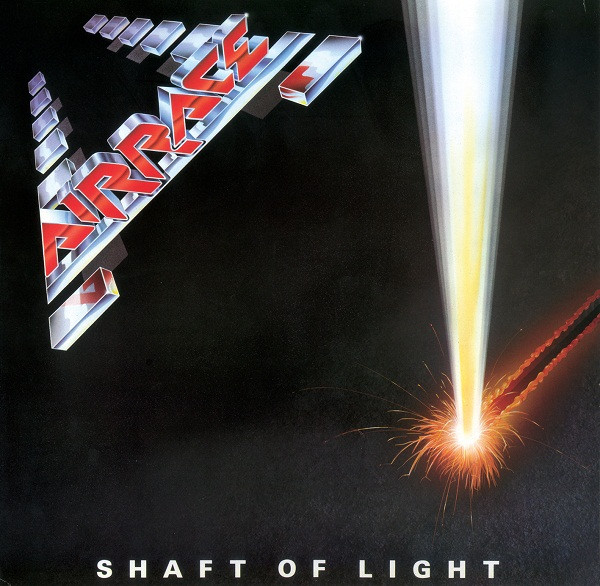
The first AIRRACE album, Shaft Of Light, came out in 1984 and was the debut of drummer Jason Bonham, who’s connection to Led Zeppelin manager Peter Grant helped the band land a record signing. Bonham left after that to join VIRGINIA WOLF, before forming his own band BONHAM. The band also included keyboard player Toby Sadler (ex White Spirit, and pre Samson), singer Keith Murrell, and bass player Jim Reid. The debut was produced by Beau Hill (who at that point, had produced Ratt’s Out Of The Cellar), Anyway, that album got great reviews. It had a lighter 80s AOR production sound to it. It did feature the single “I Don’t Care”, as well as rockers like “Promise To Call” and “Not Really Me” . After Bonham left, the band seemed to fade away, with Murrell joining MAMA’S BOYS for a bit, and Mansworth going on to various other things, most notably producing THE TREATMENT. In 2009 Rock Candy released a 25th anniversary edition of Shaft Of Light, with bonus tracks. This anniversary edition lead to the band reforming for shows and eventually a new album.
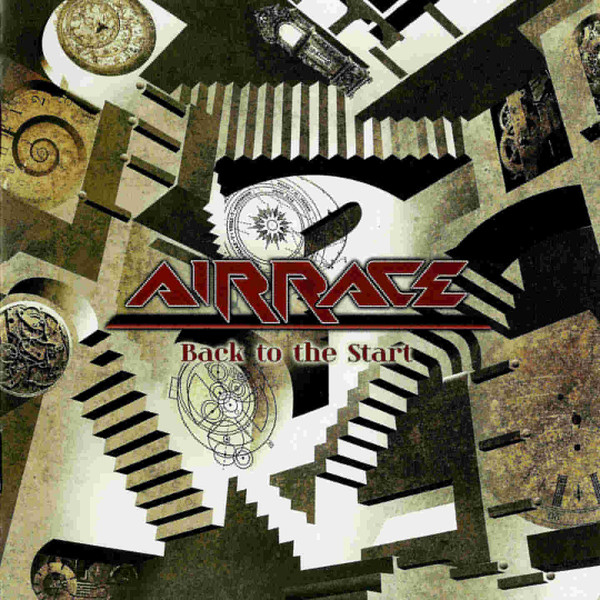
Mansworth, Murrell, and Reid returned for Back To The Start was released in 2011, joined by Chris Williams (keyboards), Dean Howard (guitar), and Simon Dawson (ex Outfield; now Iron Maiden’s drummer). Back To The Start was a better sounding and more hard rocking release, with guitars more up front, and a much more lively production. Still had that 80s appeal, with the keyboards and the backing vocals reminiscent of Journey. Back To The Start is a fairly solid listen beginning to end, with standout tracks being opener “Keep On Going”, “So Long”, “Call Me Anytime”, and the riff driven “Enough Of Your Loving”. Well worth checking out, but not easy to find, as this only got a CD release on Frontiers (Italy), as well as a Japanese release. Here’s hoping someone reissues this one (yes, I need one).
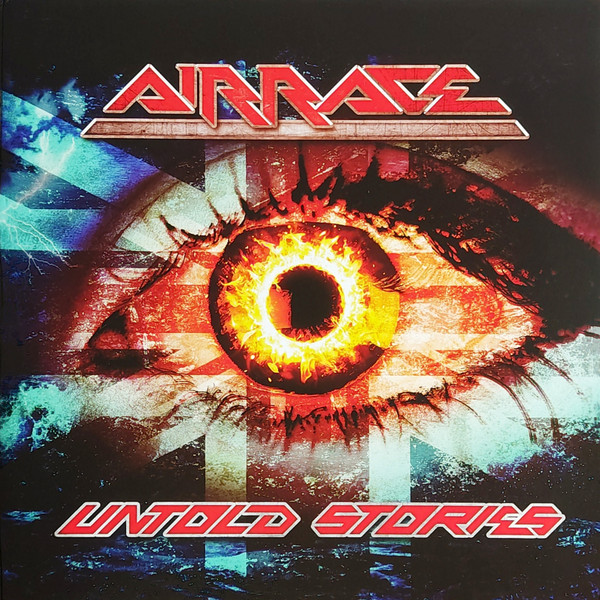
Laurie Mansworth put together a new line-up for the third AIRRACE album, 2018’s Untold Stories, which included singer Adam Payne, drummer Dhani Mansworth (The Treatment), and bass player Rocky Newton (MSG, Lionheart). Since 2019 Laurie has put together a new band ‘MANSWORTH’, and from what I read they were recording an album.