Tag Archives: Ozzy

PETER GOALBY – Don’t Think This Is Over, interview by Martin Popoff

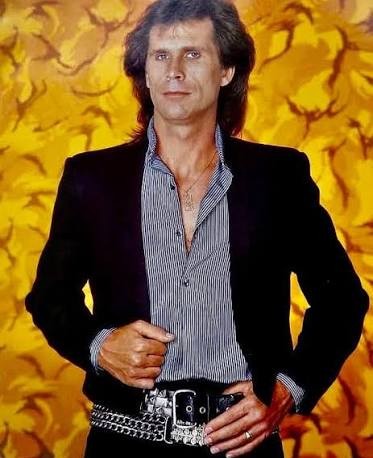
Hey folks, this is an interview I did with Peter Goalby on the occasion of his new archival album Don’t Think This Is Over. Kevin Julie has graciously accepted it for publication. It was a delightful, wide-ranging chat, but yes, if there’s any one thing I’d like you to gather from it, it’s that based on these songs, Peter should have been a big league songwriter to the stars, not to mention a famed vocalist past his well-graded run of three albums for Uriah Heep—enjoy! Martin Popoff
I guess to start with, why don’t you explain to me just a little bit, where these new tracks were recorded, like what sort of time period and what they were indicated for, I suppose. I mean, did you think you were going to end up in another major act kind of thing or were they going to be a solo album?

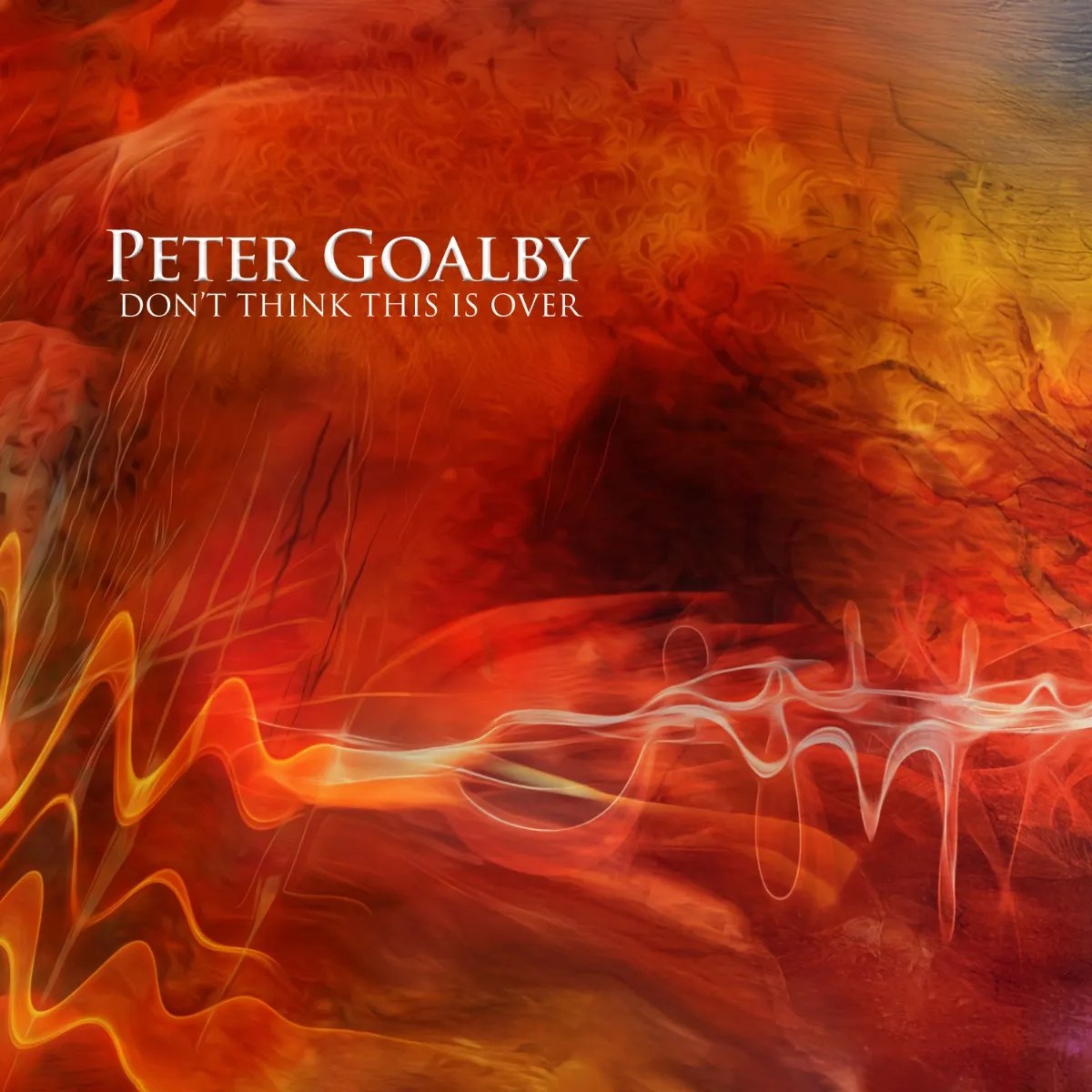
It’s exactly the same story as with Easy With The Heartaches and I Will Come Runnin’. After I left Heep, I tried various things to get back up there with the music scene. What happened was with the new album, which is obviously an old album, the songs are about 30 years old, just over 30 years old. And I signed a publishing contract and a recording deal with Rak Records in the UK; that’s Mickey Most. He was known for all the pop stuff, you know, Suzy Quatro, Mud, Hot Chocolate, all that kind of malarkey. Anyway, I signed with Mickey and we did we did two singles – both failed. But whilst I was under contract, I was on the publishing side of things, I was writing songs; that’s what I’ve always done, I’ve always written songs. And there was a falling out. He let me out of my contract. There was supposed to be an album. In fact, he did go over to America to sort me a record deal. And the story I got back from the people in the offices at the publishing company was he was offered a deal for me, an album deal, but they couldn’t or he wouldn’t agree with the terms. In other words, he wanted a lot more percentage than they were willing to give. And so, he walked away. Martin, that’s the story I got. So, the whole thing fell apart and that was the end of it. And I hand on heart, I totally, because I moved on, I was looking at other things as well. And those songs just got forgotten. And the reason that they reappeared is because the people that are looking after me now went to Rak Records and they said, would they consider releasing the songs? In other words, reverting the songs back to me, the copyrights, because they haven’t kept their side of the bargain. The publishing side of the contract was they would endeavor to try and get covers on my songs, from other artists, which they never did. So no, it was it’s called ‘non exploitation’. It’s in the contract that’s in my favor. In other words, if you don’t roll your sleeves up and do the job, the songs will revert back to the artists. So, it was absolute joy when Daniel Earnshaw told me these songs now belong back to Peter Goalby. I couldn’t even hum you a melody of one of them. I hadn’t got a clue. I mean, I’ve written a lot of songs anyway. I got an email and which said there’s a DAT been found in the offices at because RAK was sold and that whilst they were clearing everything out, there was a DAT and it hadn’t got a name on it. But somebody recognized some of the titles to be my songs. And in all honesty, I didn’t get very excited because I’ve heard all these stories and been there so many times before. But…I played the first song and I was absolutely delighted, I thought, my God, this is good. And then I played the second song and I thought. This is really good. After the third song, I thought, I don’t believe this. And I looked up to the sky and I said, thank you, God.   I got my songs back, and not only did I get my songs back – they’re really good! I believe them to be very good songs. And for the time, if you look back and think of the late 80s when I wrote them and recorded them, and they still stand up today. We’ve done a lot of overdubbing. We put some good guitar work on there. And there it is – “Don’t Think This Is Over”. I’m absolutely thrilled with it, Martin.

Yeah, they are very solid songs. And you would think these could be absolute smash hits. How would you describe this kind of music if you were going to put on your rock critic hat? How would you describe these songs?

To be totally truthful, because it was what you got to remember, if you go wind the back, Easy With The Heartaches and I Will Come Running – All those songs would have been written anyway, whether I was in Uriah Heep or not in Uriah Heep. And most of those songs would have ended up, as I believe most of the songs or some of the songs, on the new album would have been treated differently because Mickey and the guys would have recorded them a lot heavier.  A lot heavier. I mean, if you look back when we did, for instance, Bryan Adams “Lonely Nights”, it’s a pop song. But if you if you get the right players playing the song, it takes on a new meaning.  I totally believe that I automatically write commercial songs. I can’t get away from the fact that I started off in a cover band singing everything from “My Way” to all the pop songs of the day when I was 17, 18 years old. And so I naturally write with introductions, with verses, with chorus, with middle eight, what I call a proper song. And part of the magic, and a lot of the magic that we had with Uriah Heep was. I would take a song, for instance “Too Scared To Run”, and I wrote “Too Scared To Run” two years before I joined Uriah Heep, but when I joined Uriah Heep and I did my audition, and I don’t know whether you know the story (?) – I’d already auditioned the year before, and it didn’t work out. Anyway, the second time around, when we were in rehearsals, I said, why don’t we try a song from scratch? In other words, I can sing “Gypsy”, I can sing “Easy Livin’”; I can sing pretty much all the stuff that they’ve done, we did it. So, we all started at the same place. And they automatically played “Too Scared To Run” in a lot heavier vein. And so I believe, the stuff on this album that’s coming out now, as we speak, it’s AOR. That’s what I think it is.
Were any of these (on the new album) worked up with the band? Were any of these put through the paces with the band, towards the tail end, say Equator, were any of these ever put through the paces by the band?

No. All of these songs were written after I left Uriah Heep. There’s nothing… I wrote “Blood Red Roses” for Mickey after I left. He phoned me up and he said, “We’re doing a new album. Have you got anything that would suit?” And to be totally truthful, I hadn’t at the time. But within about three or four days, I consciously sat down and I thought if I was still in the band, what would I like to put forward as a song? So, I wrote “Blood Red Roses”. But everything on this – my third solo album now, and every song that is on these three albums were written after I left Uriah Heep.

Did you have any interaction with Ozzy on losing or gaining Bob Daisley?

No, not at all. I didn’t know Bob previously, so there wasn’t really a relationship outside of the band, if you know what I mean. But Bob’s great. Absolutely fantastic. I love him dearly. And him and Lee were just fantastic. But going full circle, that’s what the point I was trying to make about 10 minutes ago. It’s because people like Bob and Lee and also John Sinclair and Mick, they think in a heavier vein than I write. And I think the magic that we had was because of what I do is a bit poppy in construction wise – and what they do is heavy. And the two meet, and then you end up with a song like “Too Scared To Run”. I could play you the original version of “Too Scared To Run”, and it’s nowhere near as punchy and as heavy. It’s exactly the same; It’s exactly the same words. It’s the same melody. It’s the same guitar riff. But it’s the way that these rock players, the professional, what I call ‘rock players’; it’s the way they interpret the song. I think that’s what the winning formula was. Definitely.

If Bob, Lee, Mickey and John had worked on the songs on this new album, they would have been a lot heavier. I mean, this album is a bit heavier than my last two in that there’s not so many keyboards on this album. Mickey loves the new album. In fact, I sent Mickey “Sound Of A Nation”, one of the tracks, because I could picture him doing it. not in the exactly the way that I’ve done it, but again, a far heavier version, like a rock anthem.

I knew Ozzy quite well. I’ll tell you a story about Ozzy because at the time we were doing Head First and Bob was splitting between us and Ozzy’s Blizzard of Ozz. And he was in the band, then he was out of the band. And the one day we were in the studio with Ashley Howe and I’d just done the vocal on “The Other Side Of Midnight”, from Head First. In walks Ozzy absolutely out of his tree, drunk with Bob. Bob was practically holding him up. And I’ve met Ozzy before and. They sat down and Ozzy had got a bottle of whiskey in his hand he’d walked in with. Well, I say a bottle of whiskey, about a half a bottle of whiskey, because half had gone. They sat down and I’d finished the vocal, and Ashley was playing it back and fiddling with something. I don’t can’t remember what he was doing, but he played” The Other Side Of Midnight”, and at the end Ashley pretended that it was a guide vocal. And Ozzy said, Fucking Hell! That’s a fucking guide vocal? I can picture him saying it right now. It wasn’t, it was the actual master vocal, and it was a fabulous vocal. And he took a swig of the whiskey. And, you know, like in the cowboy films and they take a swig and they screw the face up and say, “Oh God”(?)  And he said, I hate this. I said, What!? He said, I hate drinking this stuff. I said, Well, why do you drink it? Then he said, I love what it does to me.

Was Ashley part of the heaviness because Abominog is recorded pretty harshly, right? It’s really exciting and visceral and distorted. What did he do to make that album sound as heavy as it did?

I think each member of the band would discuss the sound – like Bob, Ashley would say, I’m going to get you a good bass sound. So, Ashley would get the bass sound for Bob and said, Bob, what do you think? And Bob would say, yeah or nay. And in fact, another very quick story on Head First on “The Other Side Of Midnight”, you’ll notice the bass is quite actually too loud that was because Bob was in the studio when Ashley mixed the song. And when he was doing when he was doing the final mix, Bob leapt up from the seat and just pushed the fader up on the bass. He said, turn the bass up. It was a team effort, Martin. I mean, Abominog and Head First were both team efforts. There was just a great atmosphere. There  I say there was no leader, Mickey Box is a born leader, but he doesn’t know it and he doesn’t show it – If that makes any sense to you. He doesn’t rule with a rod of iron, but he just suggests, well, what if we and let’s try it like this or whatever. But as I was saying, had the Heep lineup played this album, the songs would still be the same songs, but the solos would be heavier. The bass line would be. I mean, it’s a drum machine on a few of the tracks that wouldn’t be there, obviously. You’d have Lee thundering through. And if we were at a rehearsal, Bob and Lee would lay the scaffolding down and it would be a far heavier scaffolding than what’s on my album.
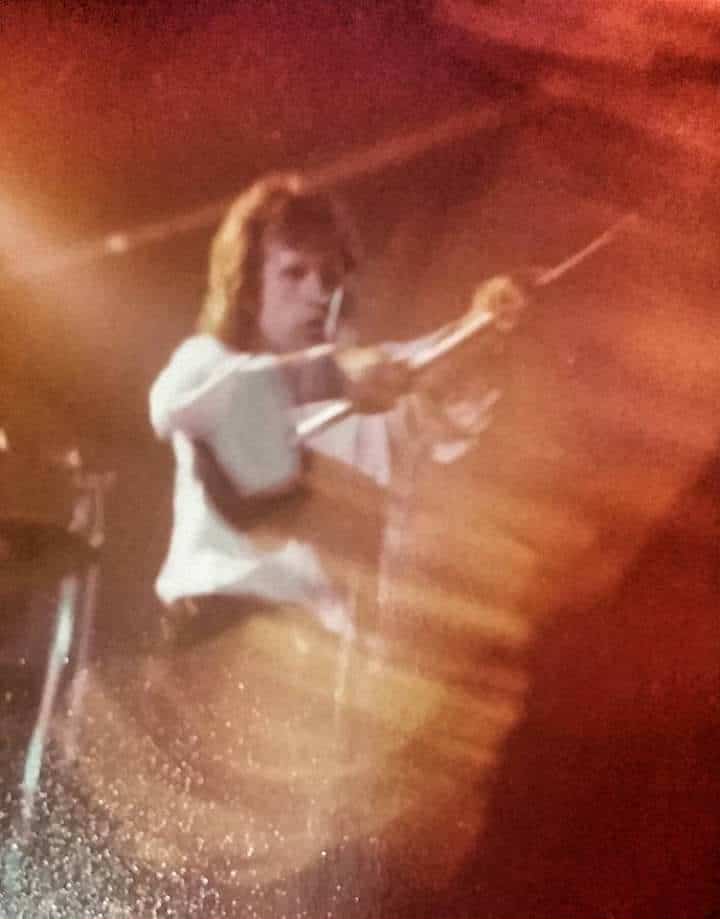
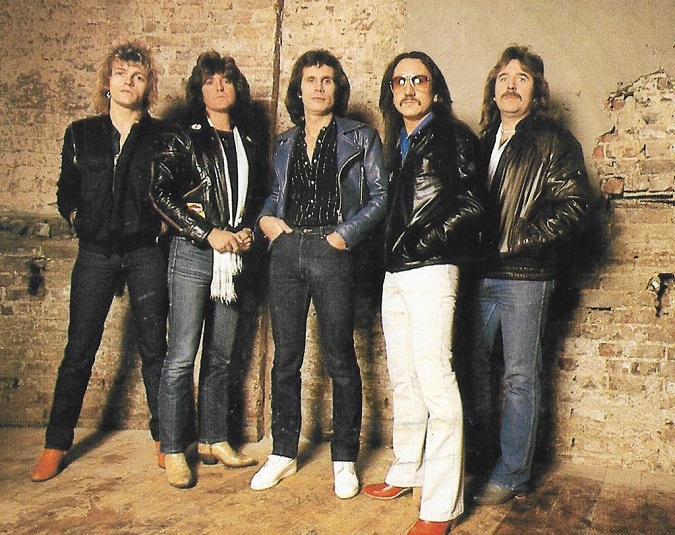
Peter on stage, 1981, photo Lynn Everett

It could be a nice story that two or three of these show up on the next Heep album and it gives everybody something to talk about.

Yeah. I mean, the reaction to the album…I’m bound to say this anyway, but hand on heart again, I’m absolutely gobsmacked. People really do get it! John Sinclair iiplayed on “I Don’t Want to Fight”, In fact, John rearranged “I Don’t Want to Fight” for me. It captures the time. “Heart What Heart”, it sounds ridiculous, but I wanted to write a song… My favorite singer in the whole world is Dusty Springfield. Somebody told me that Ian Gillan (?), (another singer?), Dusty Springfield is their favorite singer as well. I can’t remember who it was…It was somebody out of a big band.

Ian might’ve said that…

And I was absolutely thrilled to think, well, it’s not just me.

How about did to what extent did Bob Daisley write any of the lyrics through those Heep albums?

Bob played a big part of the writing of the lyrics of the album. I wrote that it was Bob and I. OK. No one else. We wouldn’t let anybody else touch. The thing is, at the end of the day, Martin, I’ve got to sing those words. And Bob and I would sit down together in a quiet room and we’d work, work on the song together. As I say, it’s me that has to stand there and sell the words. So, it was me and Bob.

Any interesting stories of how you picked any of these cover versions on the album, the Russ Ballard song or…

Totally down to Ashley. Ashley had got a nest of songs, even before I joined the band. Ashley was such a massive part of Abominog. It was almost as though it was his baby. He obviously had plans even before I joined. Whoever had gone into the singing seat, I think it would have still ended up exactly the same. The band were under a lot of pressure. I don’t know whether I should tell you this, but obviously you want to hear it….when I’ve told it anyway. Mickey was given a whole bunch of money for Abominog. I mean, at that point, it was just the next album.

He had to put the band together. He had to sort the whole thing out. And a lot of the record advance had been already been spent when I joined. And so, we were in a bit of a dire straits situation, which nearly spent all the money. And we hadn’t even started the album. We were under a lot of pressure.

What were you paying for, like paying flat sums to the new members or..?

Yeah, and the rehearsals and the gear and all that. And to be fair, there are probably a lot of bad stories about Gerry Bron. But to be fair, as Mickey always pointed out, Gerry Bron always put his money where his mouth was. They never wanted for anything. So anyway, there was a lot of money being spent, and they hadn’t even got a full band together. He got Lee and Bob and then he got John. When they asked me to join, I was going to America with Trapeze at the time. And I said I was flattered, and I would jump at the job. But the problem was I’ve got to go to America for six weeks.  I thought they’ll find a singer easily, but I went to America for six weeks, and before I went, I said, if you hadn’t found anybody, I would come down and rehearse and see if we could make it work. When I came back from America, I’d been back a couple of weeks and Ashley phoned me, and he said, “Do you want this fucking job or not?” That’s exactly what he said to me. Yeah. And I said, “sorry, but I thought you’d buy now you would have found a singer”. And he said No. Do you know they auditioned 84 singers!?  It’s a fact. I’m not lying. Ask Mickey. They auditioned 84 singers! But, all of this time was going by, and Mickey was spending more and more money trying to hold the thing together.  So, when we finally got a line up, when I actually joined the band, we were under so much pressure to do an album for Gerry Bron to recoup some of his money. Had had we been given the time to write more songs there would have been less covers. But to be truthful, Ashley and Gerry Bron had a vision, had a picture of making the band more commercial.  So, we were on a bit of a loser because everything that we wrote. Gerry would say No. too heavy. And Ashley would be saying, “I’ve got this song …this would be perfect”. So I think between Gerry and Ashley, they steered us in the direction of a lot more commerciality. They wanted us to go to America and sell the band in America. Gerry and Ashley were a massive influence on not only picking the songs, but the whole direction of it all. 

To what extent was anybody in the band aware or inspired of this great New Wave of British Heavy Metal movement around you and how you guys could fit inside of that?

Consciously, no, because we were automatically part of it. I remember when I first started rehearsing with the band, I used to stand there, Martin, and I’d think, wow, let’s just listen to this. It was just fantastic. And the band naturally played in the direction of what was becoming very fashionable. Again, I keep mentioning Ashley’s name; Ashley was such a big part of it all, but obviously the actual playing was down to the players. And I think we were all influenced consciously or subconsciously just by standing next to a jukebox in the pub, and you’re listening to Bon Jovi coming on and all the all these different bands. We used to do a lot of festivals and with Lemmy and Motorhead and all those guys. So, I think it just rubs off. I don’t think it was a conscious effort at all.

Looking back, I don’t think we purposely said we want to try and sound like this. Ashley might have thought that, and Ashley might have pushed it a little bit, to the way that he and Gerry wanted things to turn out. But we just played what we played. I was very proud of what they did to my songs, because there was “Too Scared To Run” and “Chasing Shadows” were my songs. It’s just the way that they played them. 

Absolutely. What else would be a favorite of a Heep original on here and why?

“Think It Over”. I love that song. I didn’t know that already bloody recorded it. No one told me. I didn’t know, but they’d recorded it a year before with John Sloman. I thought it was just Ashley bringing in another cover. I love “Prisoner”. What I do get an absolute fantastic buzz from is when I, if I go on onto YouTube and put on one of those songs on and see the comments that people have put underneath. And they get it. And it really touches me that people get what we were doing.

It’s interesting. I like what you said about Ashley. I mean, the covers fit perfectly. And then if they’re steering you a little bit to, you’re less all-out heavy metal originals, that now melds with the covers and then there’s a couple pretty heavy songs on there still. So, you’ve got this nice range where it’s and we know the UK, and Kerrang, they love their AOR music, their American influence music. And then obviously there’s going to be a big hair-metal explosion soon. So, this is like a perfect proto-setup for that big hair metal explosion kind of…

As I say, direction-wise, we were just playing the way that we played. If we were pushed at all, it was Ashley that was pushing. He had a picture; he had a vision for this album. He wanted to take the band out of the 70s and put the band into the 80s.
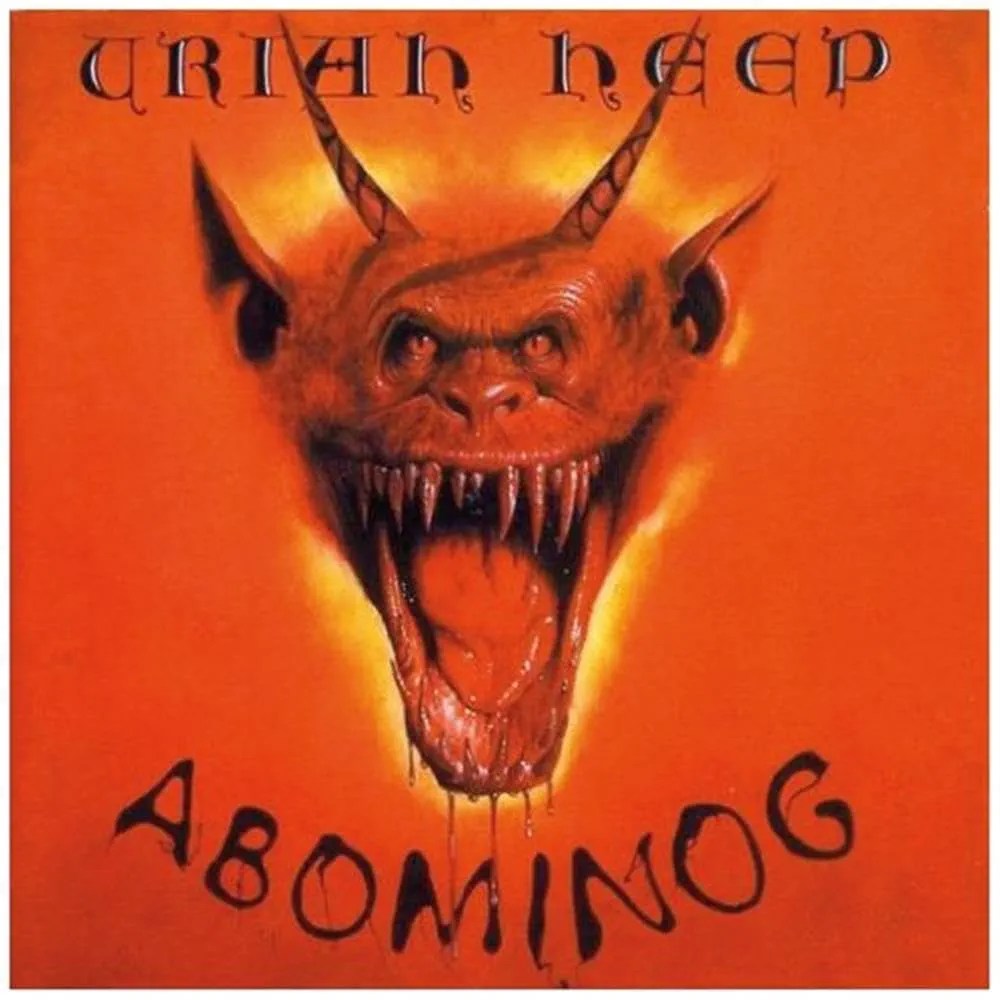
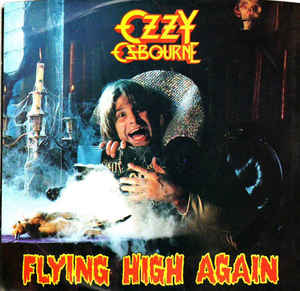
Did you guys talk about the album cover?

Oh no, I Hate it. Absolutely.

What did everybody say about it, and how did the dialog go to come up with that?

I think we were all too polite to say, it’s yuck. I think what happened was because of Bob and Lee, and because of Bob and Lee’s background with Ozzy, the people that were doing the artwork for the album probably…I wonder, in all honesty, whether they actually listened to any of the songs, because I don’t think they did. Because if I was an artist, doing an album sleeve, I’d listen to the songs, and I wouldn’t come up with that picture. Would you?

Exactly. And how about the title? Where does the title come from?

Bob Daisley, I think it started off with ‘Abomination’, and it was taken from there. Maybe what went wrong was Bob did the title, and then the people looked at each other over the table and said, What picture can we put with this!? But to be fair, we were all too polite. Nobody would stand up and say, “Well, I don’t like it”. They’d say What do you think? Well, it’s okay. We were more interested in the music. I certainly had no say at all in the sleeve. And I think pretty much everybody in the band were in the same situation. I think it was just presented and we thought, well, yeah, we’ll go with that, not knowing that in a lot of areas, it probably did us a lot of damage, because a lot of people would look at that sleeve and think and run a mile. They’d run away and say, no, no, no; they would have this vision of some death metal band, which “Prisoner” and “The Way That It Is” certainly aren’t (haha). To be fair, it sort of worked against us, but it also worked for us, because here we are today, 40 years later, or whatever it is, and we’re still talking about the sleeve,

I think it gave you guys an extra little link to the New Wave of British Heavy Metal. You’re part of this trend that’s, going strong for three or four years?

Yeah.

What is that story of your interaction with Rainbow?

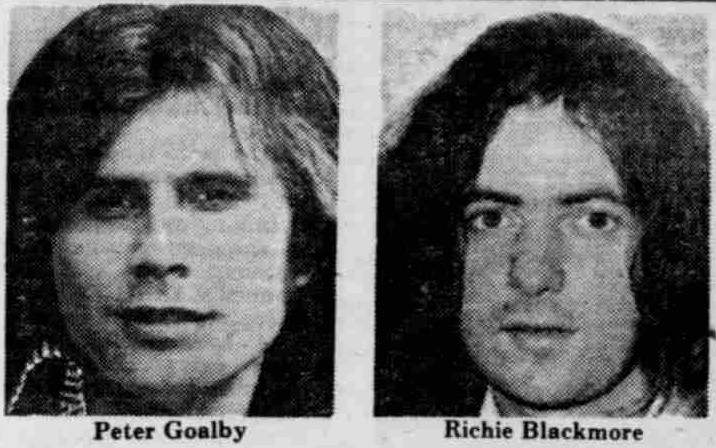
Well, I’ve never told the story, and really for two reasons. One, because I was embarrassed. I’ll tell you the story briefly, and at the end of it all, I felt that I’d failed, and it wasn’t something that I really wanted to talk about Martin because it hurt. I was with Trapeze, and I was sat in my apartment, (or my flat) at home, and the phone rang, and the voice on the other end said, Is that Pete? And I said, Yes. He said, Pete, this is Richie Blackmore. And I said, Fuck off. Who is it? And I tell you I thought it was; do you know John Thomas of Budgie?

Yeah…

I thought, because we all knew each other, and we’re all from the Midlands. I said, Fuck off, John. He said it’s Ritchie Blackmore. I was given your name, and he told me who, somebody given him my name and my phone number. And then I thought, Oh shit, it is Rittchie Blackmore.’  He said, the reason I’m calling you, I’ve heard a lot about you. A lot of people are talking about you with the stuff that you’ve been doing with Trapeze. He said, Would you be interested in joining my band, Rainbow? And I nearly fell off the chair! And I said, Yeah, I would. Things weren’t going very well with Trapeze, which is another story, (but we haven’t got time for that). We had a five minute chat, and he said, Have you got anything you can play to me? And I said, What now? And he said, Yeah. I said, Over the phone?, and he said, Yeah.  I said, We’ve just finished the Trapeze album called Hold On. And I said, I’ll play one of the tracks off that album. On the Hold On album there’s a fantastic song. (I didn’t write it  Mel Galley wrote it) it’s called “Don’t Break My Heart Again”. And the song comes in two sections, there’s like a slow, bluesy section, and then it goes into the proper rock version of the song. I said, I’ll play this song, I put the album on, and I put the phone to the speaker, and the song is six minutes long, and I thought, by the time it’s finished, he’s probably gone. At the end of the song, he was still there. And he said, Would you like to come to New York? And I said, Yeah. When?, he said Tomorrow?  I went to New York. ..I’ll have to speed it up, because we’ll be here five hours, because I was actually in the band for two months, I never told anyone…Well, they never told anyone. Anyway, I went to Connecticut and rehearsed with the band… And the bottom line was, I got the job. I was told to go home, and Bruce Payne, who’s the manager, would call me, which he did. I was on the payroll. To me, that means I’m in the band. I went to Roger Glover’s house. We did a demo of “Since You’ve Been Gone”.  I can’t remember the time frame, but I think it’s over a couple of months. And then we went to Geneva to start recording Down To Earth. Okay? We arrived there and spent a few days doing nothing. And to cut a long story short, one night, about 11 o’clock, somebody came to say, Ritchie wants to rehearse now. And so I thought, Well, what are we going to rehearse? I didn’t even know what we were going to rehearse anyway. Anyway, that was the way he worked. He spent three or four days in the bedroom coming up with ideas, and then he’d bring it to the rehearsal.  I found it all very bizarre in that we went down into the rehearsal room, and they all just started playing and expecting me to start singing. And I thought What(?) I’d never worked like that before Martin. I would learn a song or sit down with an acoustic guitar and go through a song and say yeah, yeah, yeah, and learn it that way. Apparently, I didn’t know at the time, but I’ve learned that since they just expected me to make something up on the spot. And I can remember Don Airey looking at me and laughing and mouthing as though he was singing, and he was saying to me, just sing anything. He was trying to help me. Martin. And I thought, How bizarre!?  So, I started coming out with something from The Exorcist (haha). I mean, no melody, and no idea how the song is supposed to go. Not even time to sit down and think, it was just start singing, just do something – which I did, and I felt absolutely stupid doing it. We did that for, I can’t remember how long(?) And it could have been an hour, it could have been two hours, I don’t know… Anyway, the next morning there was a terrible atmosphere. And Roger Glover came to me and said, Ritchie’s not happy. and I said, Well, I’m not happy either. I said, I don’t know what he wants…I can’t work like this. I haven’t got a clue what you want me to do. And at that point, Roger said, You’re fired!

That is ridiculous. Like, just a little bit of warning, a little bit ‘Okay, this is how we’re going to do this’. It would have solved everything, right?  You’re just blindsided..stupid.  (PG  -Yeah)  I can understand what they’re doing, they’re looking for a vocal melody or whatever, and you’re just supposed to scat over it or whatever…

What he didn’t realize was, I can write songs. The way that I put things together is I put a framework up and I get an idea. I totally get if Ritchie plays a riff, but you don’t need the whole band blowing the roof off for me to try and think of a melody. You sit in a bedroom. I can do all that all my life. I’ve written a few songs.

And what hour was this? What time was this?

Oh, 11-12, o’clock at night. 

And you’re in Geneva. Is this like Mountain Studios or…?

No. It’s a chateau, with a drawbridge, moat, castle – the whole shooting match. We’ve got Jethro Tull’s mobile studio outside. We’re there to make an album. And not one of us knew what the fuck we were doing.
What a story! That’s ridiculous.

So, the day before I was fired, to pass the time away. I used to have a go on Don Airey’s Hammond organ. I can’t play, but I can put things together, and I’d work it out. I’d got an idea for a song, funnily enough… Anyway, when Roger said to me, You’re fired. I said, Why can’t Ritchie fire me? And do you know what he said? what he said was Before you go. can I give you a message(?) Ritchie said, “Do you know that riff you were playing on the Hammond organ? Could you show Don before you go?”

Unbelievable! So crazy. That’s just so rock and roll, right!?  It’s like you’ve got these employees, just give them a little bit of guidance…Just give them a little bit of encouragement of how this is going to go, right!?  You may hear from me at 11 o’clock tonight, or whatever, anything, right!?

Yeah. I mean, I haven’t gone into the other all the details. I’m just telling you a part of it. I’m not telling tales, I’m telling the truth. And part of the reason why I’ve told the story now is because somebody asked me. Nobody has ever asked me, what happened.  So, I don’t mention it. “Oh Peter’s embarrassed. We don’t want to upset Peter”… And I had to come home and tell my wife, I’d been fired, and it broke my heart. I honestly don’t believe I was treated very fairly. I can sing for fuck’s sake, I’m a singer. I didn’t go for the job with Rainbow, Rainbow came to me.

And you’re a writer, and you’re a writer!

Yeah, but I’d never worked like that. I know that the likes of Aerosmith, Steve does that kind of thing, they write in that fashion. Somebody will come up with a riff,

But their nightmare story is they have to do that because Steven will do the lyrics at the very last minute, and they’re just trying to get the lyrics out of him. So that’s really problem there. That’s one of the reasons they keep fighting and breaking up all the time, and albums never happen, is because they can’t get the lyrics out of Steven.

So, to me, it was, it was like me landing on another planet…with the best intention.

I don’t want to keep you forever…

Do you want me to sing you a song!? (LOL)

What was the environment making Head First? And what is your feeling of that album versus Abominog?

I love both albums. The biggest mistake we made or in the four five years that I was with the band is changing producer. I don’t get that to this day. I just don’t get why we didn’t use Ashley. It was madness.

You mean on Equator!?

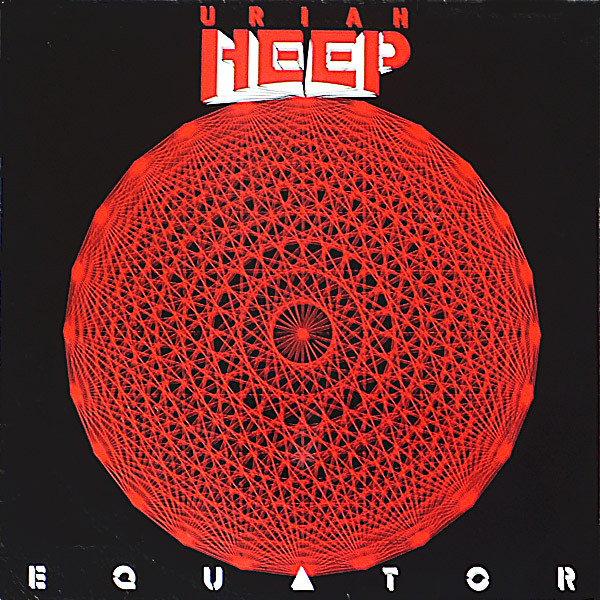
Abominog and Head First were like brother and sister. Just stop and think for one second, the way Ashley recorded, and the way those two albums sounded. Now, picture the songs on Equator, but recorded in the same way, they would have been fantastic. I wrote Equator. I wrote practically every song on there. I get if you don’t like the songs, I have to take the blame. But I’m not taking any blame, because if you go on YouTube, there’s some live stuff, there’s some live versions of some of those songs from the album, and Martin they’re good. They’re plenty good. But it was the whole way the record was recorded. The sound of the album is foul. I can’t even listen to it. And that was one of the main reasons why I left the band. I was so upset and disgusted with the whole… I mean to be fair to Tony Platt, Tony to this day, hand on heart, swears that’s not his mix. He believes that they lost the final mix to the album, and somebody did a very quick mix of the album. Now, I don’t know.  I’m embarrassed by the album, not by the songs. I do believe that most of the songs would have been absolutely bang in line with what we’ve already done on the first two albums, had we had the same producer. And as I say, it’s just such a disappointment that Equator, it just sounds bad.
The sessions were fine. You got along with Tony through the recording?

I got on great, absolutely great. But at the end of the day, firstly, it sounds like it’s in mono. I don’t get that. Why would you do an album in mono? And Tony said he wanted to sound the band to sound authentic, like they would live. That’s complete bollocks. Why would you not want to make an album in stereo!? And, why would you absolutely drench everything in reverb? We’re not Def Leppard, Def Leppard is Def Leppard, Uriah Heep. Is Uriah Heep, I don’t want to beat Tony Platt up. I really don’t, but I just don’t get why that the album sounded so bad. But as I say, as far as the songs are concerned, I have to take pretty much most of the blame, because I wrote them (haha). Okay, I’ve got pretty much all the songs written. John Sinclair and I went and hired a cottage, and just John and I put the songs together and moved keys around, and did all this, that and the other. And then we took pretty much the whole album to rehearsals. Everybody in the band was, well happy with the material. Nobody said, Well, we don’t like this, or we don’t want to record that, or why don’t we record one of my songs!? Or we’re recording too many Goalby songs. Everything was fine. It’s all on paper, it all worked, but by the time we came out of the studio, it didn’t sound anything like what we thought it was going to sound like. But it was too late, as I say. Apart from the fact that we were working too much, too many gigs, that was one of the reasons why I thought I can’t do this. There’s got to be something better, and to be totally truthful, when I left, I honestly thought that I would walk into another gig, and the phone never rang. And it took me about 12 months to realize the phone never rang because the story was put out that my voice had gone my voice never fucking went anywhere. I lost my voice in Australia. I got laryngitis. When you nothing comes out, just air.  I got that, and the doctors made me have four days off. And in the four days off, I wasn’t allowed to speak. And in those four days I thought, I’m not going to do this anymore. So, when I left the band, firstly, they didn’t believe me. I can remember Lee, Lee said, Oh, come on, we’re going to Russia soon. I said, I’m not fucking going to Russia. I’m not going and they thought I was just going through a bit of, you know, at the time, we didn’t know what it was, but I did have mental health problems. I have to put my hand in the air, because after I left the band, I did have a bit of a breakdown. But I think that was partly, because my whole world had fallen apart. But I couldn’t continue doing what I was doing in the way that we were doing it… So anyway, I’m going backwards.

So, did you tour Equator a fair bit?

We did some dates in America. We did a few dates in England, and live the material went down great. That wasn’t the problem.

Where did that title come from? Or where did Head First come from?

I think Head First came from Bob. Equator,i t may have come from John(?)  I can’t remember, to tell you the truth.

I like it. It’s a cool title..

Some people don’t like it.

The album cover’s all right, too.

Again, we got a lot of snip, because the album sleeve was shit. I don’t think it was shit. It depends what you’re looking for.
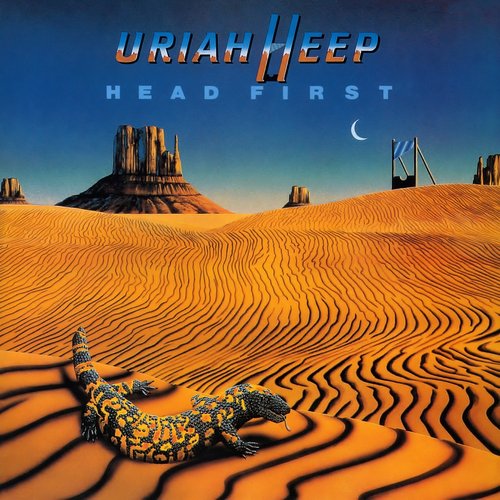
Head First is a little more high-fidelity than Abominog, and you went to the Manor for that, right!? Any good stories about working at the manor versus the Roundhouse?

Well, the Manor was a far, far better environment. The problem with the Roundhouse was because Gerry Bron was the manager, and because Gerry Bron was the record company, and because Gerry Bron owned the studio, every time Ashley did a mix of a song. Gerry would say, No, mix it again, because every hour that we spent in the studio, guess who was getting the money? Gerry Bron! So, what started off that might have cost 60,000 pounds, because he got Ashley to remix the album about four or five times (lol), it cost’ about 150000 pounds! So, we were well pleased to get out of the Roundhouse. Again, to be fair that was down to Ashley. Ashley refused to work at the Roundhouse because he knew what the problem that we’ve got, Gerry Bron would have a so far in debt that would never make any royalties. But the Manor was a far, far better situation. I loved it. Absolutely loved it.

That’s right. If he’s getting paid for everything, no matter what advance he gives you, he’s going to recoup. It’s like he’s just paying himself, right?

Yeah! And then after Abominog was a big success and sold. I mean, you might know better than I. I haven’t even got a clue how many albums we sold. We were never told. I know it was a lot. And you know what Martin!? never got a penny.

Wow!  If I was to guess, just estimate, off the top of my head, I bet this went over 250,000 in the States. I bet you could add another three to 400,000 in Europe, you know, mainland Europe and UK.

That’s the exact number – 700,000; that’s the exact number that I’ve got on my gold disc on my wall. But I guess that. I didn’t get the gold to pay for it. I paid for it myself.

I think that number sounds sensible.

Yeah. It could have been more. It could have been more.

Yeah…Japan, maybe 50…

And we never received a penny. He put Bronze into liquidation. Because…not just us, he had Motorhead, Manfred Mann, he had quite a few acts on there, and he used the record company money to start his Airline, and that went through the floor. And so, nobody got paid. So, from Abominog and Head First, none of us got any money.

Who did you tour with for these records?

In Europe it was always the same team. We’d go and do festivals nearly every weekend, nearly every weekend we’d be in one European country or another. There’d be Ian Gillan was solo at that point. Gillan would be on the bill Motorhead. Gary Moore, anybody that was successful at the time. And then in America, Judas Priest, I mean, the Mickey and the boys are still touring with Judas Priest to this day. Joe and the boys, Def Leppard, that was great. That was a fantastic time for us when we toured with Def Leppard. Just wonderful, wonderful people. When we were doing the stadiums in America with Def Leppard, and when we’d have our soundcheck in the afternoon, they would be playing football in the auditorium, and Joe used to walk up to the stage and say, Play The Wizard, Pete! They were big fans of Heep, the early Heep stuff like “Gypsy” and “Easy Livin’”, and all that. We got on great. We used to do the radio interviews in the afternoon, and Joe and I, or Phil and I would travel in a taxi together; we were just like family. It was just fantastic. We did the Texas Jam… Funny enough, we did, I did, I think it was 81 or 82, with Trapeze, and a year later I did it with Uriah Heep. And so there were all sorts of bands on there. One story that I like telling in Europe, we were always headlining. And the one festival that we did, it was from all day Saturday and Saturday evening, and all-day Sunday. And we’d played somewhere on the Saturday night, we drove through the night to the town where the festival was, and we got into the hotel about seven in the morning. At about 10 o’clock in the morning, I was woken up by this guitar-riff. And you remember “Radar, Love”, by Golden Earring(!?)  You know the guitar at the beginning?  I was fast asleep in the hotel, and it felt like the walls were shaking. The festival had started. They were first on it was about half past 10 in the morning, and I was lying in the hotel bed thinking, fucking hell! And you know what I thought, Martin, I’ve made it! I’m listening to Golden Earring live, and I’m not on until half past 10 tonight. And I just felt so proud.

It’s just always stuck in my mind. But as I say, I loved being in the band, but I hated all the rest of the stuff that went with it. To tell you the truth, I hated traveling.

Was that laryngitis, you say Australia, were you in the middle of a tour?

Yeah. We’d done Australia the year before, and we’d done really, really well. We did loads of television shows out there, and we did something like 30 live shows, yeah. And then a year later, our manager said, We’re sending you to Australia. And I said, I don’t want to go, because I saw the dates. I saw the dates. There were 42, shows in 36 days. 42 shows in 36 days. (Wow). I complained and complained and complained, and I actually said to the manager, Harry Maloney. If you send me to Australia, I’m going to quit. I’d already had enough, because this is Equator, remember all the shit going on with Equator. Anyway, they sent me to Australia. We were about to two-thirds of the way through the tour and Lee Kerslake took me fishing, sea fishing one afternoon, and whether it was the sea-air, I don’t know what it was, but I came from fishing into the gig, to the soundcheck, and I started singing, Martin, and nothing came out. I’d got no control over it whatsoever. And I thought, I’m in trouble.

How do they not know that you can’t put a lead singer through that?

Well, it’s the old story, you know, maximum three on – one off. Maximum! My world record is 16 back to back.  I stood in the Hamburg Hilton with Gary Moore, and he came up behind me and kneed me in the back of my leg on it, you know, like when you’re kids, we call it dead-legging. And Gary Moore dead-legged me and I turned around, ready to kill somebody. And he said, Hello, Pete. And it was Gary Moore, and he said, How are you? And I started talking. He said, Fucking Hell, man. How’s your voice? I said, I’m struggling, Gary. I said, In fact, tonight… he said, Are you’re playing tonight!? They were all there for a TV show. There was loads of bands. And he said, Are you not doing this TV show!?  I said, No, we’re actually playing live tonight. And he said, Are you going to be okay? And I said, I’m going to have to be. I said, This will be 16. He says, 16 shows back-to-back? And I said, Yeah. He said, I tell you something, Peter. He says, You ought to fucking sack your manager!? And I said, Well, funnily enough, Gary, meet Harry! (Harry was stood next to me) That’s a true story. It was a circus. Martin. It was partly our own doing, because we were really popular, and we could play anywhere in the world. You could go to any country in the world and say, you Uriah Heep. Oh, right! People know. They’re aware of the band. And that was the problem, you know!?  And as I say, 16 shows back-to-back. We once did 23 countries in 30 days! That’s a lot. And people say, Why did you leave, Peter? And then I’ve got to live with the fact that because I’d left, the story was made-up that my voice was fucked. If my voice was so fucked, how come I’ve done three albums since!? 

*Check out www.martinpopoff.com for my new books:

Dio: The Unholy Scriptures and Iron Maiden: Hallowed by Their Name

Also available: Max, Mercyful, Sabotage, Born Again, Sweet, UFO x 2

My audio podcast is History in Five Songs with Martin Popoff (just Google it).

Our YouTube show is The Contrarians.

LINKS:

https://www.cherryred.co.uk/peter-goalby-don-t-think-this-is-over-cd
https://www.facebook.com/groups/petergoalby

RICK HUGHES – Redemption Interview

photo – Dominic Gouin

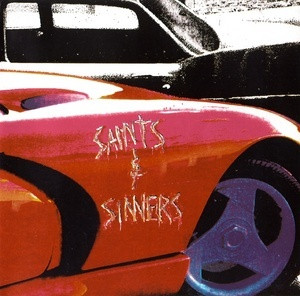
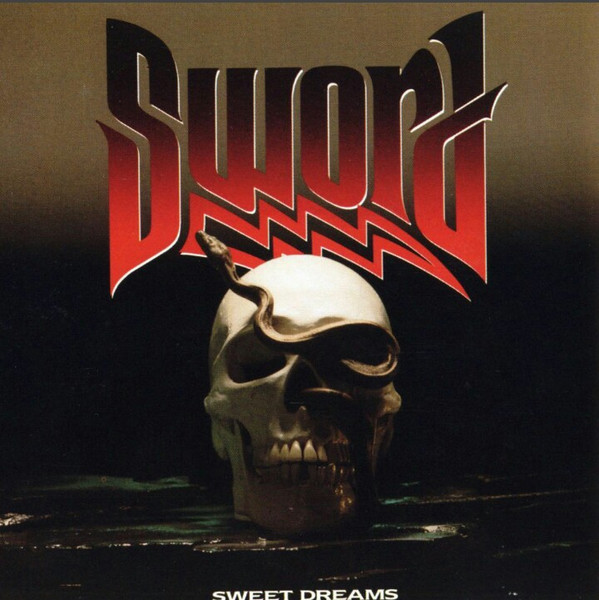
Canadian singer and songwriter RICK HUGHES has a new solo album out (October 24) called Redemption. Rick is also the singer for Canadian heavy metal band SWORD. Sword released 2 albums in the 80s on Canadian label Aquarius, and went on to tour supporting Alice Cooper and others (I must’ve seen them in Toronto on the Raise Your Fist and Yell tour in Toronto). Since then Rick went on to front SAINTS & SINNERS, and release a few solo albums. Now Rick is back with an excellent new solo album, with great songs, including a few covers, and some very special guests. Redemption can be ordered at: https://www.dekoentertainment.com/inthesquare/rick-hughes

Below, Rick and I talked about his new album, plus Sword, as well as his influences, and favorite artists. …..

With the first single, “The Real Me”, you had a lot of guests on it and that, so I’m wondering from where you’re based, how you got all those guys involved? What the connection is with Brad Gillis and Tommy Aldridge and that?

That’s a connection that comes from my Saints & Sinners days. With Saints & Sinners, I was working with the keyboardist from San Francisco, Jesse Bradman, a good friend of mine. When we started to get the project for my new album, that was like two years ago, we went about asking for songs. We asked Jesse if he had some songs to propose for my new album. And he says, “Yeah, I got a couple of songs that I wrote with Brad Gillis”. So, we said, Oh, we want to hear that song. Upon hearing the songs, I fell in love with the songs. I says, can I please have them? They say, Yeah, of course! That’s how we got Brad Gillis, because he accepted to let me record the song. And then we became friends. So, when it was time to record “The Real Me”, we said, well, we have Brad for his songs, because he plays on his songs, of course. And lucky for us. So, we said, “Can you do another one?” And we asked him to play on “The Real Me”.  And that’s when the idea came about to reunite him with Rudy (Sarzo) and Tommy Aldridge.

That’s interesting, because when I saw that, obviously, like, I was a big Speak Of The Devil fan when that album came out with that Ozzy lineup.

So Was I !

I’m curious how you got to where you are now with this new album Redemption, because I’ve recently picked up a couple of the Sword albums. So obviously, it’s a very different sound. You got a lot more variety on the on your new album that.  Can you talk a bit about how you are where you’re at now, as opposed to just doing the Sword stuff or kind of more of the metal stuff?

That’s a very good question. And the answer is quite logical, is that when I’m a metal singer, or I chose to record metal, I do it with Sword If it’s a solo project, like here in Quebec, I’ve been doing 50 to 100 shows a year for the last 20 years. And the shows that I do are for seven years old to 77 years old people, you know. I’m the kind of guy that when I wake up in the morning, if I listen to music, I listen to The Band, Elton John, metal stuff.  Later on in the afternoon, if I have to go around and do other stuff, listen to blues, hard rock… When I ride my Harley, sometimes I listen to heavy metal. But I’m a fan of music. My biggest influence is Robert Plant.  So, if you take Robert Plant’s career, I’m not trying to mimic or duplicate, but when your mentor does stuff, you kind of go that way without even noticing it. When you think about Robert Plant, since Zeppelin and today, it’s totally different. He’s never redone the same album.  It’s always been different. So that’s what I try to do with my solo career, I do what people already know me for.  I’m a singer and I love rock music. So, rock music’s got plenty of genre – it’s got heavy metal, it’s got hard rock, it’s got blues rock, it’s got heavy blues, it’s got pop rock, it’s got rock, it’s got country rock. So that’s the sound you hear on my album, just what I just described.

Now you do have a few covers on the album, in particular, “The Real Me”. I love the Who albums. I’m kind of curious why you picked that one of all the Who stuff.

Because of the playing.  When my manager and I decided on this song, we said, “Okay, let’s redo The Real Me, and let’s find the perfect musicians to render the song. So, it was magical because that was way before Brad was even in the conversation. So once Brad got in on the song, then we went for Tommy Aldridge and Rudy Sarzo, with the result that we hear on the recording.

There’s a few other covers, you do the Michel Pagliaro song. I imagine he’s a big influence on you. We don’t see him much outside of Quebec, I assume, but the albums are pretty easily to find here. But I wonder if you can talk a bit about that track that you chose.

Again, a very good question and I’ll answer it by answering two questions because probably you’ve got another question around the corner. Michel Pagliaro, we affectionately call him ‘Pag’, is one of my main influences. As a kid, when I first saw him on TV, that’s when I fell in love with the guy, with the attitude, the music, the sound. Pag is like the rock and roll attitude, man; this guy is amazing. And when it was time to choose the songs, I said to the producer, John Webster, and my manager, I told them, “We need at least a couple of French songs on the album”.  And they obviously asked me, “Why is it so important?”  I said, “Because I’m a loyal guy. I’ve been playing here in Quebec for 10 years. I’ve been doing 50 to 100 shows a year, there’s some French material in the show. There’s obviously a lot of English material because I’m more at ease singing Americana kind of stuff, or even British stuff. But still, there’s a section in my show that that’s Francophone for my Francophone fans.  So, I said to my producer, I said, “Listen, John, you’re the best producer in the world in my book. I’m about to do one of my most important albums. There’s got to be a couple of songs in French”.  I’m a loyal guy. I don’t want to leave my French speaking fans out of this album that is so important. And the way I closed the deal I said to him, I said, “It doesn’t matter if it’s French or English at the end of the day, because just think about Rammstein, they’re German, they sing in German, everybody loves it. You wouldn’t change German to English because of the way it sounds. So same goes with my French song on the album.  I’m sure that the English-speaking fan will find something interesting in the French song or they’ll catch a glimpse of the words. And yeah, I’m confident they’ll like it as much as they’ll like the English song.

It’s interesting because I think Michel Pagliaro did the same thing where he had some French and some English songs on various albums and that. Correct?

True. Yes. A lot of artists here in Quebec do that, they mix both, because as you can hear, I’m a French speaking guy. Rick Hughes is my real name. It’s not a stage name. My father was from Irish descent. So, it is my real name. But I’ve grown in a French environment. My girlfriend is French, my dogs, my kids, everybody around my neighbors. I speak French 24 7. So that’s it. But like I said earlier, I love the sound of singing a song in English.

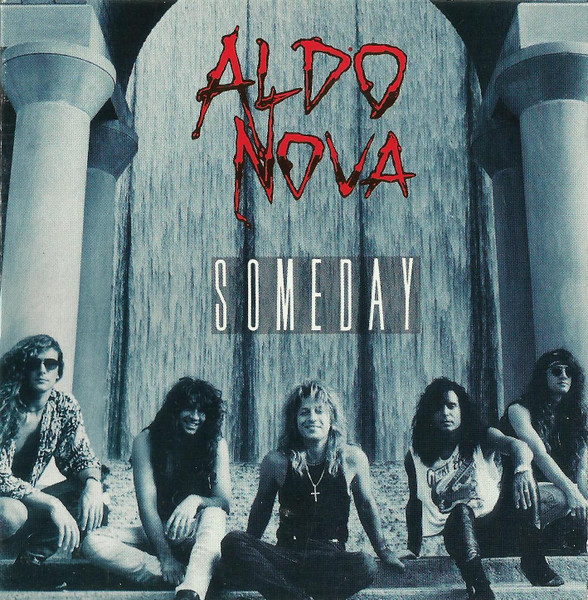
The other cover, I wouldn’t say it’s cover. Actually, it’s your song, the Aldo Nova track “Someday”. I listened to that. I thought I know that because I got that here (held up Blood On The Bricks CD).  Obviously, that song is good 30 plus years old. You’ve done a lot of work with Aldo as well, that song and some other stuff as well.

This is such an important song for me. And I’ll tell you why. I wrote the song while I was working with Aldo on Saints & Sinners album. Aldo was producing the Saints & Sinners album while Jon Bon Jovi was producing his album, Blood on the Bricks for Aldo. So, while he was producing Saints & Sinners, he had written some amazing songs for the album. And so one night I came to him and I showed him “Someday” and he says, “Wow!” I said, “Cool, you like it? So, it’s going to be on the album?” He says, “No… let me ask Jon because we’re looking for a ballad right now. We’re missing a ballad. And if you would allow me to use your ballad on my album, I’d be very grateful.” I says, “…if Jon likes it, then it’s yours!  I got plenty of good songs on Saints and Sinners. And again, you wrote some excellent songs for me. So, it would be just a show of gratitude to leave you the song.”  So, the next day he called me and says, “Jon loves it. We’re going to use it for my album”. A couple of months after that, they gave me a call, they were in studio and they were rearranging the song, changing some lyrics, adding some parts here and there. So that’s how Aldo and Jon are credited on the song.  But I am the main songwriter of the song. So, I wanted to redo it. But I waited to make sure that it was okay with Aldo.

Well, it’s a great inclusion. It was a hit and it’s something obviously people will be familiar with.

And what I meant by this song is very important is that, like you said, that’s 30-something years ago that Aldo recorded that song. At that time, I was a young, struggling artist from Quebec. I had two kids that were just born. My wife, at that time and I wanted to buy a house, but we needed the down payment for a house. And we were, you know, scratching and putting some money aside and getting ready to buy a house.  It would have taken us a long time. And by leaving that song to Aldo, the first royalty check that I got was the down payment for the first house I bought. So, it’s a gift that keeps on giving.

Well that works out then…The other person you have on here I see a lot lately, he’s on the new Alice Cooper album as well, is Robbie Krieger (on “Dans La Peau“) . How did you wind up with him on the album? 

The album was recorded at Little Mountain Studio in Vancouver where Aerosmith, Bon Jovi, name it, they all recorded there. Now it’s called Iposonic Sound, but it’s the same. Nothing has changed. Frames on the wall, everything’s the same. So, everything was recorded there. It’s a live album.  We got the rhythm section to record all the songs there. So, it’s a live album. But when it was time to record my duet with Amy Keys, a fabulous female singer.  Man, I’m a big fan of hers. She was available but only in Los Angeles. So, they gave me a call.

They said, “Okay, Amy wants to do the duet with you, but it’s going to have to be in L.A. I said, “okay, so let’s do it in L.A”….”Okay, well there’s a studio in L.A. It’s Robbie Krieger’s studio, and it’s near where she lives. They got the equipment”, I said, “Wait, wait, wait! … you had me at Robbie Krieger”. I’m a big, big, big Doors fan. We went to Robbie Krieger’s studio to record Amy Keys. And while she was there recording the song, I came up with the idea.  I told my manager, I said, “Why don’t we ask Robbie to play on that song?” It’s a kind of bluesy country-ish kind of song. And he goes, “that’s a long shot”. I said, yeah, but if we don’t try it, we’ll never know.  So, we tried and he said yes. And that to me is like, it’s not even a dream come true because I never even dreamt that Robbie Krieger would play on one of my albums. I’m very, very grateful to him.

Well, yeah, it’s an interesting inclusion. He seems to do a few guest appearances; he’s on the new Alice Cooper album and he’s on an album by Blue Coop, which is the BOC guys and that. And the other guy you’ve mentioned on this album, I’m not familiar with him, is Johnny Hallyday.

Oh, Johnny Hallyday! I’m a fan of this guy. He’s like the French (from France), Elvis Presley. He died in 2017. And he was filling stadiums back in France, like 80,000 people.

He was a big, big, star, big, big influence on me as a kid, because my mom was a big fan of Elvis and of him. My mom was an artist, you know!? The Johnny Hallyday song is not known. It was kept quiet. It was released and they took it out. But before they took it out, I had a copy of it that I had put on a CD that time when we could burn CDs. So, I was listening to the song all the time and I kept it private, I didn’t want anybody to steal that idea because I thought it was such a good song. It’s like a hard rock, heavy blues kind of song. And the subject matter is so, so, SO, up to date.

How did you get a hold of it? It was an outtake from an album?

Well, you know, when I mentioned Amy Keys; Amy Keys was one of his backup singers for many years. So, he would do duets with her. The guy that wrote the song, the duet with Amy Keys, wrote the song for Amy Keys and Johnny Halliday, but Johnny died. He never could even listen to the song or let alone record it.  So, it fell into my lap. That’s when I said, “Yeah, I’m a big Johnny fan. That was meant for Johnny, I want that song!”  That’s how the connection was made.

You mentioned this album being a very important album. I get the impression in like reading some of the notes that it’s quite, some of the songs are quite personal for you. So, I wonder if you can talk a bit about the importance of everything as an album and some of the songs as being personal to you.

Just the title, you know, I was looking for a word that was the same word in French than in English, so not to deny my French root. And a couple of words came to mind, and then I came up with, Redemption, came into my head. Because I’ve been around the block a couple of times.

I’ve toured with Motorhead in the UK. I’ve been here, there, everywhere. I say that very humbly.  I had my shares of let down and get up again and fight more – that’s the story of my life. And my philosophy about that is that we’re in a constant state of redemption if we strive to get better every day as a human being. So, if you look up redemption, not in a biblical sense, but in the literal sense, it’s about focusing on yourself, not on others or what happens around the world. It’s just focusing on you and how you can make your world better. And the best way to do that is to forgive yourself all the time for everything that you do.  If you’ve done something wrong, or that was not quite right, just forgive yourself and just readjust. That to me is redemption. I thought the title was perfect because of my age, where I’m at in my life right now, the importance of that album, and all the subject matters on the album.  They’re not that serious; they’re not pointing fingers at anybody. I wanted to create an album where if somebody digs it, well, while he listens to it, he forgets about the world, he forgets about anything, he just thinks about himself and how he feels upon listening to the album. That’s why there’s so much difference between one song to the other, so people can travel in their mind, and not always stay on the same train.

What else do you have planned for promoting this? Will you be doing any shows outside of Quebec? Anything planned as far as a band goes or anything?

That’s the main reason why I did the album, is to get more shows going. I really, I truly come alive on stage. That’s my second favorite place in the world. My first favorite place in the world is here at home with my wife and my people. My second favorite place is on stage.

As soon as I put one foot on the stage, “Whoa!”, something happens. And it’s been like that since the beginning; and it’s still like that.  So, yeah, the reason for this album is to get us more shows, you know, abroad, not only in Quebec. I would love to go play in Niagara. I’ve been there before.

Growing up where you did, obviously, there’s a lot of Montreal, Quebec has kind of its own scene. There’s a lot of stuff that we don’t see much out of over here. But there’s a lot of great bands from Quebec, like Frank Marino, Pagliaro, Offenbach.

April Wine! They were based out of Quebec.

I’m a big April Wine fan.

What kind of stuff you grew up on and what some of your favorites as far as the Canadian scene went.

When we’re young, we get influenced by the music our parents listen to, as long as they listen to something cool. My parents were really cool. My father was a guitar player, singer, leader in a rock band, and my mom would sing in the band with him, a bit Johnny Cash- June Carter kind of stuff. They had this amazing vinyl collection when I was a kid. They had Zeppelin, Janis, French stuff, lots of Elvis. So, it was very rock and roll. So, my early influences were Led Zeppelin, Janis Joplin, Pink Floyd, some French stuff like Offenbach, Pagliaro. But yeah, it starts at home, or with your friends. In my case, it started at home. We’re a musical family. Everybody does music in my family. My sister sings on the album with me. My brother plays drums in Sword.

Did you keep a big record collection growing up?

Yes, I still have my vinyl collection, and I still have some old record players, like we used to have when we were kids, with the cabinets there. I got two, and I play my records on that. I got one in this room and I got one in my ‘man cave’.

The SWORD albums, which I recently picked up, the Unidisc reissues. You guys were on Aquarius, and I think Aquarius closed up at some point in the early 90s. Did you guys have any say in these reissues?

No, it’s Unidisc that handles that, but we had a good relationship with Unidisc. George, the owner of Unidisc, is a great guy.  He’s taken good care of Sword’s albums. As you can see, the reissues are beautiful. The way he redid the sleeves and everything.  It’s really good. Are you aware that we recorded a third album!?

Yeah, I was looking at that, and I see there was a limited amount of vinyl for that. I was just looking at trying to find a copy.

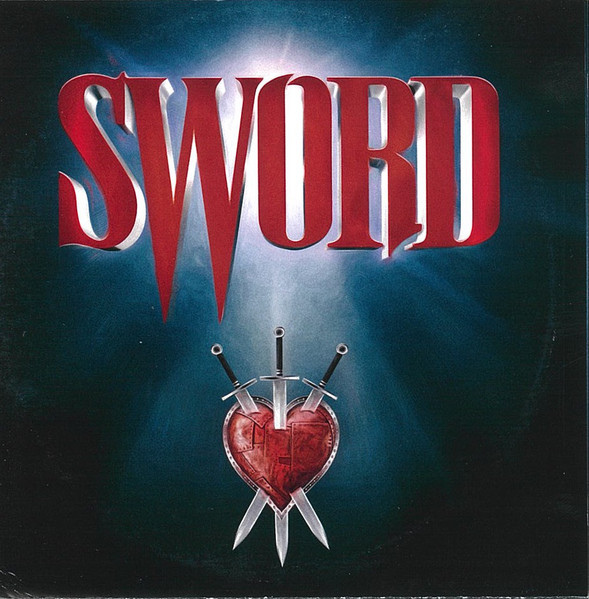
It’s just called Sword III.

Yeah, and then there was the live album as well?

Yeah, the live album was (done) before, but Sword III  was released in 2023, a couple of years ago. We love that album too. It sounds great. By the way, I’m rehearsing with Sword tonight. I’ve been rehearsing for the past five weeks because we’ve got some shows coming. We’re friends since we were 15 years old. We’ve always been together.

You guys must have had some success. You had a lot of names on the albums. You had Gary Moffet, you had Jack Richardson producing the one album and that.  So, what are some of the highlights of those first two albums, that period there?

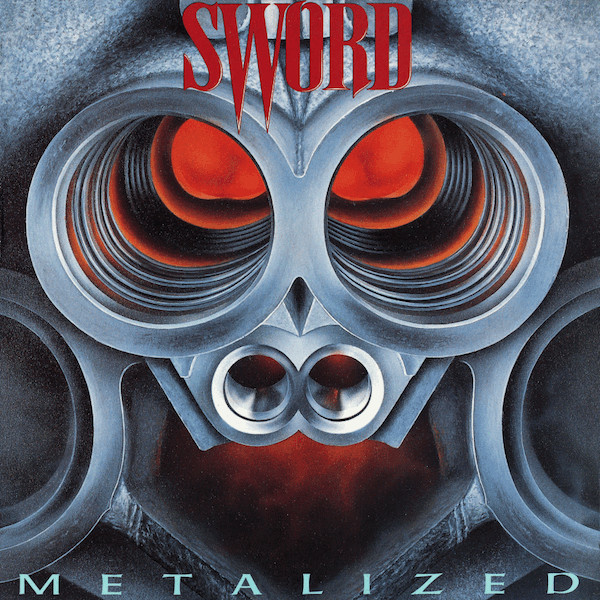
Well, it was the best of times. My brother and I started to make music like we were 13.  I was 13, he was 14. I played the guitar and he was banging on stuff. And then he got drums, I got an electric guitar. Then we met the two Mikes – Mike Plant and Mike Larock. We were living in the same town. So, we were 16, 17 years old. We did the bar circuits for years and years. And we built up a fan base. In 1986 we signed with Aquarius. We released Metallized, and the next thing you know, we’re opening for Metallica! And then we got a call from the UK to go open for Motorhead. We got back, we did the second album, and then we went on tour with Alice Cooper.

That was a dream come true because my brother and I, when we were in our teens, we were the guys that would go in line at the A&M record store and wait till the door opened to buy the new Alice Cooper album, Welcome to My Nightmare and all that stuff. We were big fans of Alice Cooper. So, we got to open for him like 10, 15 years after being big fans, and get to meet him! We were so in awe. And you mentioned Jack Richardson, who worked on some Alice Cooper albums; and that (again) was another dream come true.

The other guy who recorded one of your albums was Gary Moffet, an amazing guitar player.

Yes. And amazing songwriter.

Have you seen the new version of April Wine at all?

Yes, I saw that. And the singer is a good friend of mine – Marc Parent. I played with him a couple of times. We had a show together. He’s good, he’s got a good voice, and he’s a good Good guitar player!

What else do you have on the go?

That’s it. I’m very happy with the team I have on this album. I’m really looking forward for the world to hear it because I know that with Sword and with Saints & Sinners I’ve got some fans here and around the world. So, they’ll discover a new sound, which is who I am today, what I listen to, what turns me on, what gives me the shivers, what makes me think. It’s like a good movie – if you sit down and watch a good movie, for a couple of hours you get inspired because of the message, well, the same goes for music. That’s what it does to me. If I put on a good album, I won’t stop in the middle I’ll listen from beginning to end because I know it will take me somewhere else in my head and my thoughts. You travel without leaving home! Just sitting down. Like when we were kids, and we got Pink Floyd The Wall, how that changed our lives. I remember as a kid listening to The Wall and crying on some songs because I thought ‘wow, this is so beautiful!’ And it changed my life, a little bit. And then I heard another album that changed my life a little bit. Music does that to you.

A good songwriter will not only work on the music, but also on the lyrics to make sure that what he says reflects what he thinks, and what he thinks is right. And again, a good songwriter will do that. There’s songs that I’ve heard 20-50 times and they still do the same thing to me. They make me want to be a better person. Music does that to you. People take it for granted, but music is like food for thought; it’s food for your soul.

Is there any plans for another Sword album?

Yeah, probably. I’m doing some rehearsals with Sword because we got some shows coming up, but I’m really focused on my solo project. I just can’t wait for the album to get out, and to start to tour for that album. When I’m done with that, the timing is right, then it’s going to be Sword.

You mentioned a few of your influences. What are a few of your favorite albums of all time; albums that have stuck with you, that you can put on anytime?

 Of all-time, I’d say Led Zeppelin I, II, III, and IV. Every Black Sabbath with Ozzy, with Dio, and Born Again with Ian Gillan… Those are my favorites – Dio, Ozzy, Robert Plant, some Judas Priest. Those are my favorite singers, biggest influences.

LINKS:

http://www.rickhughes.ca

https://www.facebook.com/RickHughesOfficiel

swordmetalized.com

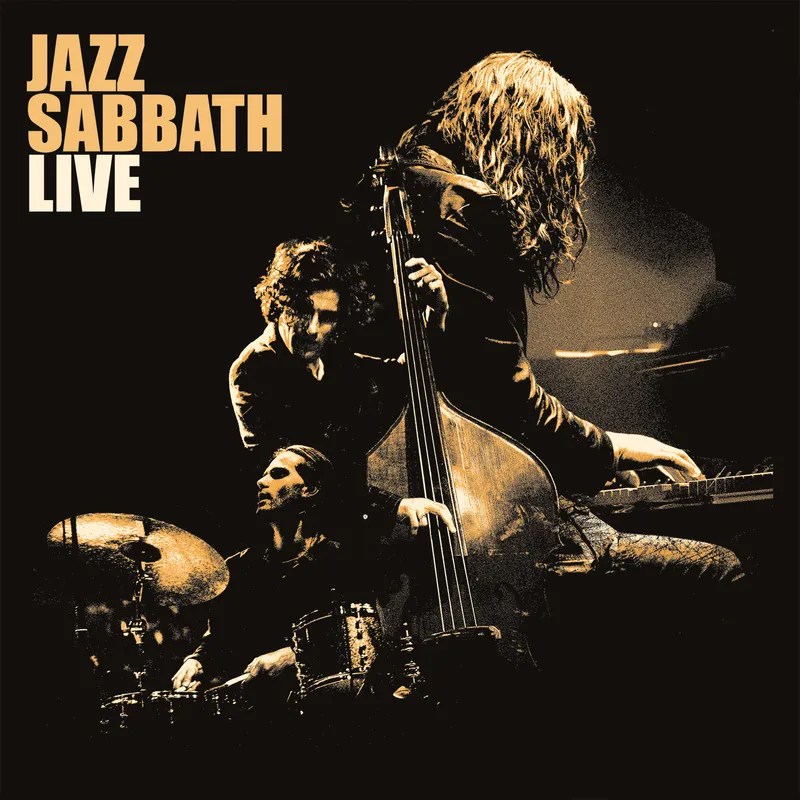
JAZZ SABBATH Live – RSD release

The first live recording of longtime Black Sabbath/Ozzy Osbourne keys and guitar player Adam Wakeman’s project JAZZ SABBATH. Eleven Black Sabbath songs re-imagined as classic jazz tracks.
On the three studio albums released by Jazz Sabbath, the trio are backed up by additional musicians on brass, horns, guitars and a wide range of key instruments. Jazz Sabbath’s live shows are basic and raw, with just an upright bass, drums and a grand piano. In this set-up the trio takes these songs into long, elaborate improvisation sessions, miles from the versions they recorded in the studio, not knowing if songs like Rat Salad will be seven minutes long, or fourteen.
This live album was recorded at the legendary Paradox Jazz Club in Tilburg, The Netherlands, twenty-five shows into their 2025 tour, and shows Jazz Sabbath at their best. It’s available as part of RSD Black Friday at indie record stores as a double album pressed on translucent orange vinyl, in an exclusive gatefold sleeve.

Tracklist
A1 Black Sabbath
A2 The Wizard
A3 War Pigs
B1 Behind the Wall of Sleep
B2 Iron Man
B3 Fairies Wear Boots
C1 Hole in the Sky
C2 Paranoid
C3 Into the Void
D1 Rat Salad
D2 Children of the Grave

BLACK SABBATH – Top 20 of the ’70s

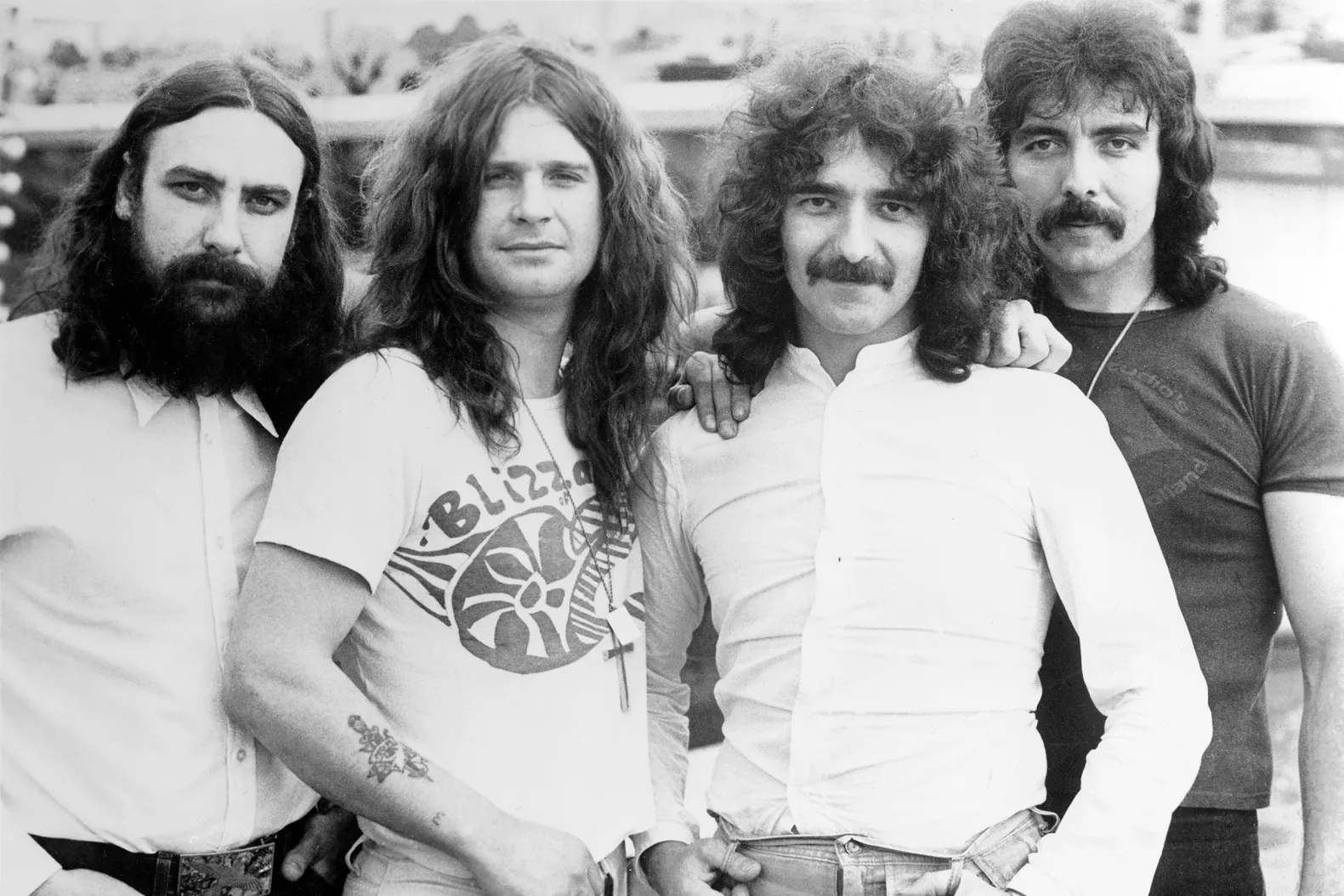
Black Sabbath was one of my early favorite bands, with a few of those early albums being the first I ever owned. I remember buying 4 of the first 5 albums for 50 cents each from a school mate’s older brother (along with Kiss Alive), when I was maybe 11. So I played these albums like crazy back then. The original Black Sabbath had such a unique sound between Tony Iommi’s riffs – which songs were almost always based around, Geezer Butler’s huge bass sound that usually doubled up the guitar, Ozzy’s distinctive vocals – the guy may not have been the greatest singer, but NOBODY sounded remotely like him, and then Bill Ward’s jazz influenced drum style, and (again) no other drummer sounded like Bill, especially on those early albums. And songs were not simply based on one riff, Sabbath had the ability to make things so much more interesting and epic, often with big changes in tempo or direction mid-song, sometimes multiple times in the same song, with totally different styles and new riffs. The band recorded 8 albums throughout the ’70s, with Paranoid being their biggest one, which featured “Paranoid”, as well as classics “War Pigs” and “Iron Man”. Over the years tho’ some of those songs have been played to death, so it was a no-brainer for me to not include them all here. Sabbath had some interesting, some scary, and some bad album covers back then. I gotta say it was Ozzy’s Speak Of The Devil 2LP live set that was a huge deal for me as well. Although it wasn’t Black Sabbath, he did do a pretty thorough set of Sabbath classics, and it would be the first time for me hearing tracks from a few Sabbath albums I didn’t have (like Never Say Die and Sabotage). Despite the band’s first few being hailed as their best, I have more of an attachment to a few of those later albums. By the time time I had those early Sabbath albums in my new collection, at a young age, this original line-up was well over, but I was happy to have seen the band (minus Bill Ward in 2015).

So, leaving my own picks for Black Sabbath’s best below, plus my album ranking below.

  1. Sabbath Bloody Sabbath

2. You Won’t Change Me

From Technical Ecstasy, tho I’m sure ranks low among Sabbath ’70s fans, I like most of it. The added use of keyboards (courtesy of Gezz Woodruffe) on various tracks adds a lot of color and feel to songs here without necessarily losing any heaviness. Love the organ riff throughout this one, the piano in the mix, and Iommi’s guitar sound and solo.

3. Hole In The Sky

Sabotage has a few killer rockers, kinda more hard-rocking, faster, and less doomy. This one being my favorite here, with the band just jumping right into that big sounding riff & beat. Just my opinion, but I think Ozzy sounds at his best on this album and the next one (Technical Ecstasy).

4. Sweet Leaf

Following the coughing, a classic riff kicks off the band’s 3rd album Master Of Reality. Well written and produced, Huge sound on this album. This one never gets old.

5. N.I.B.

From the band’s debut. Sabbath had such a sound early on that no one else came close to. Such a distinctive bass intro, followed by the riff, just classic.

6. Snowblind

Volume 4 seemed to be the band’s doomiest record (IMO), slower paced and very dark musically and lyrically. This track, about cocaine, is my favorite here.

7. Back Street Kids

Another from Technical Ecstasy. A great opener. Love how this one chugs along, slightly brighter sounding, killer guitar solo, and then it all comes to quick close.

12. Symptom Of The Universe

Another from Sabotage, (again) with the band just getting right into it, like the beginning of thrash metal. Interesting change of direction 3 quarters of the way through tho’, like back to a bit of a hippy tune.

8. Junior’s Eyes

From the last album with Ozzy. Again, the band trying something different, tho (for me) it doesn’t all work here, but this one stands out.

10. War Pigs

The first song off the band’s massive 2nd album, Paranoid. This one being slow, dark, and crushingly heavy for the time with that sound based around Tony Iommi’s riff. Kinda like a follow up to the band’s self titled opener from the debut.

11. Dirty Women

Another great track from Technical Ecstasy. Just dig the big sound on this, Ozzy’s vocals, especially after the break and things pick up, followed by Iommi’s lengthy soloing as the song plays out, just epic.

12. Thrill Of It All

Another riff driven rocker from Sabotage. Dig how the track picks up, keyboards in the mix, and Ozzy sounding at his best on this album. “Oh yeah – Oh Yeah!”

13. Children Of The Grave

From Master Of Reality, just a cool riff and with Bill Ward’s drums, sound like this song marches along, which suits the lyrics, I guess.

14. The Wizard

That first Sabbath album had some outstanding and different things going, including this with Ozzy’s harmonica intro, followed by a classic heavy song.

15. Megalomania

Over 9 and a half minutes of epic Sabbath. Bill Ward kills it here, along with Ozzy’s performance being a highlight here,

16. Sabbra Cadabra

From Sabbath Bloody Sabbath. Quick and catchy riff opening this one. Love the change of pace mid way through with the addition of Rick Wakeman on keyboards. I had a tough time picking another from this album, aside from this, “Killing Yourself To Live” and “A National Acrobat” are favorites here.

17. Electric Funeral

Preferring the non-hits from Paranoid, this slower doomy number, with (as always) Iommi’s riff being the main focus, and with a cool mid-song change in direction before coming back to the riff. Ozzy’s delivers the song’s sinister lyrics so fitting.

18. Supernaut

Love the continual riff going here, along with Ozzy’s vocals and Bill Ward bashing it out all the way through.

19. After Forever

The 2nd track from Master Of Reality. Lots of classic songs here, such as “Into The Void” and “Lord Of This World”, but I always dug this one. Religious lyrics, posing questions.

20. Johnny Blade

Strange – synthesizers opening a Sabbath song, instead of a big riff. But another favorite from Never Say Die. Excellent, but very different, as the band seemed to be looking for new ideas near the end of the ’70s.

Next up: Never Say Die, Gypsy, Black Sabbath, Wheels Of Confusion, A National Acrobta.

BLACK SABBATH 70s ALBUM RANKING

There’s been times where any Sabbath album from this era has been my favorite, even briefly, but my first choice has always been at the top. This is MY own ranking, based on what I like and listen to most these days, and get that (like many of us), this could change drastically next year.

Master of Reality – to me, just the most solid Sabbath album track to track. On other Sabbath albums of the 70s, there always seems to be something I either can’t get in to or just doesn’t fit. Plus, that huge sound going here with Tony’s guitar from “Sweet Leaf” right through to “Into The Void”.

Technical Ecstasy

This album always ranks low amongst the Sabbath 70’s albums, but I really like it. I like the production, the keyboards used without taking away from the weight of the Sabbath sound, and Ozzy sounds great here. I love most of this, even don’t mind the Bill Ward ballad (though I have no idea why a band with such a distinctive lead singer would have someone else sing such an oddity on album). Lyrically, a bit less doomy, and almost more rebellious at times, with songs like “You Won’t Change Me”, “Back Street Kid”; plus “Gypsy” and “All Moving Parts (Stand Still)”.

Sabotage

Love Sabotage for the big 3 kick ass rockers here, being “Symptom Of The Universe”, “Thrill Of It All”, and “Hole In The Sky”, plus the epic “Megalomania”. A few things on side 2 tho I’ve just never gotten in to, but maybe one day.

Volume 4

This album has a lot going on, just thinking about it. A fairly dark album, musically and lyrically, but so much good stuff from “Wheels Of Confusion”, “Snowblind”, “Supernaut”, “St Vitus Dance”…. I can do without “Changes” though.

Black Sabbath

I remember getting this and hearing this when i was like 10 or 11, and it being so heavy, dark, almost scary (especially the song “Black Sabbath”). Kinda not right that I’ve got it so far down my list, but I’d heard it so much, and a few things I never got into. Years later I would get the first Lucifer’s Friend album, an interesting comparison, but no one sounded as evil as Black Sabbath did on this debut.

Paranoid

The band’s 2nd and commercial break through, due to “Paranoid” becoming a hit single. A bit more consistent than the debut, IMO, and though I love this album, I don’t know if I ever need to hear “Paranoid” or “Iron Man” again.

Sabbath Bloody Sabbath

Bringing this album home at such a young age, I think I kept it a bit hidden due to the cover, not wanting to answer any questions. But the lead off title track just blew me away, still my favorite 70s Sabbath track. I remember getting Speak Of The Devil (and subsequent Sabbath reunion live albums), and being disappointed that Ozzy didn’t sing the song in full…if at all on some). But, kind of a grey sound to this album beyond that, though there is a number of excellent tracks – “A National Acrobat”, Killing Yourself To Live”, “Sabbra Cadabra”, and I always liked “Fluff”, an odd instrumental ballad.

Never Say Die

I think I heard the song “Never Say Die” on Speak Of The Devil first, and then finally getting this album, and wondering why it sounds almost sloppy or something. But I did really dig this album for a brief period with songs like “Johnny Blade”, “Junior’s Eyes”, “Shock Wave” and even the jazzy “Air Dance”, but not a fan of a few things (sax on Sabbath album!?), and the overall sound of this record.

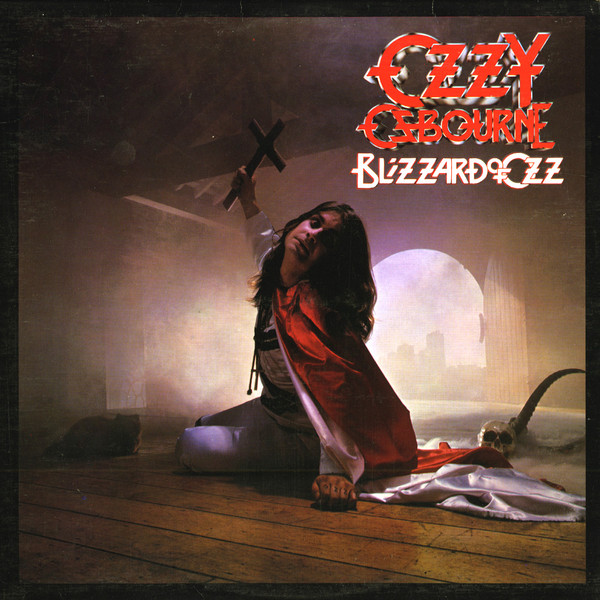
A Pair Of Classic Albums: Blizzard Of Ozz & Diary Of A Madman

You know, those albums that go together as a set, if you have one – you got to have the other[?] They are linked in some way, be it – cover art, band line-up / personnel, success, sound, lyrical themes and song titles, etc…

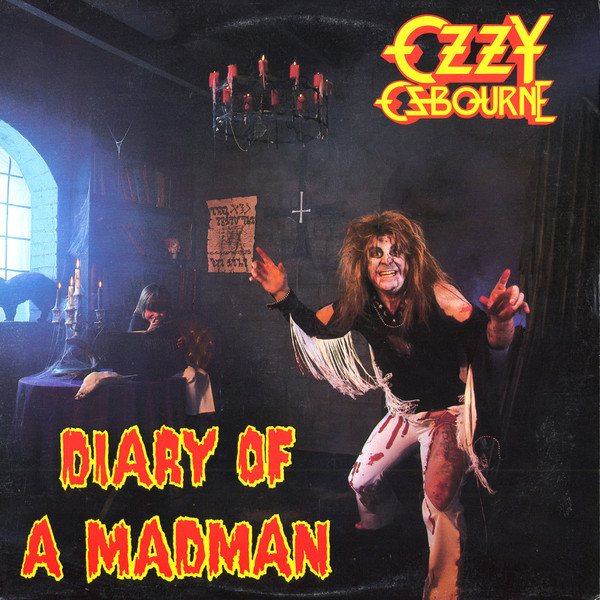
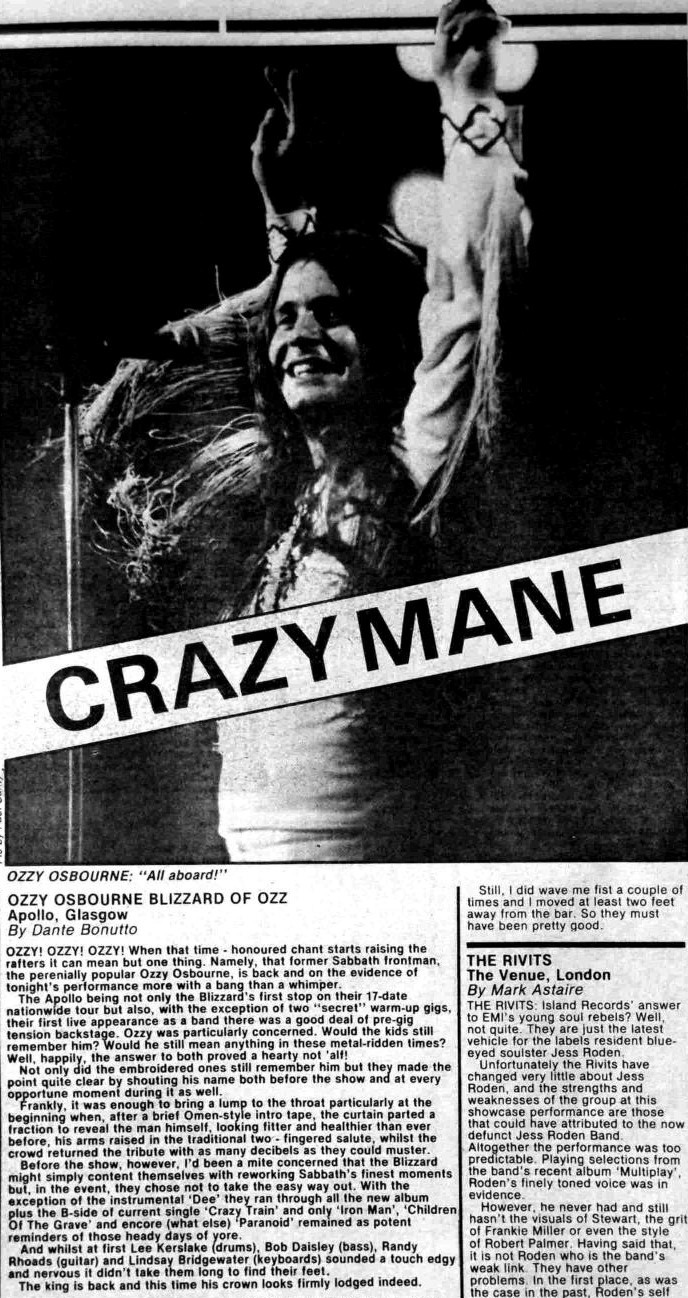
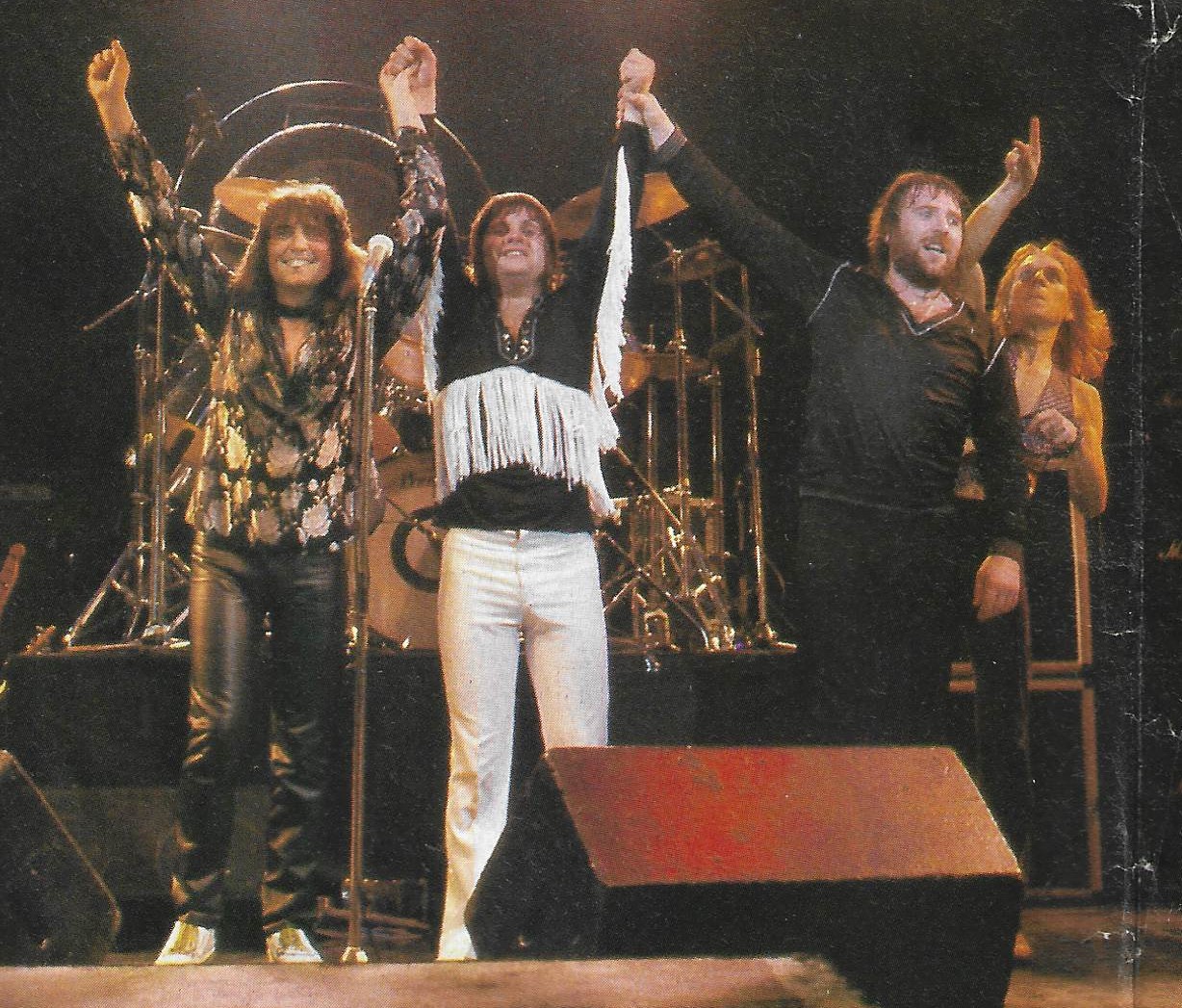
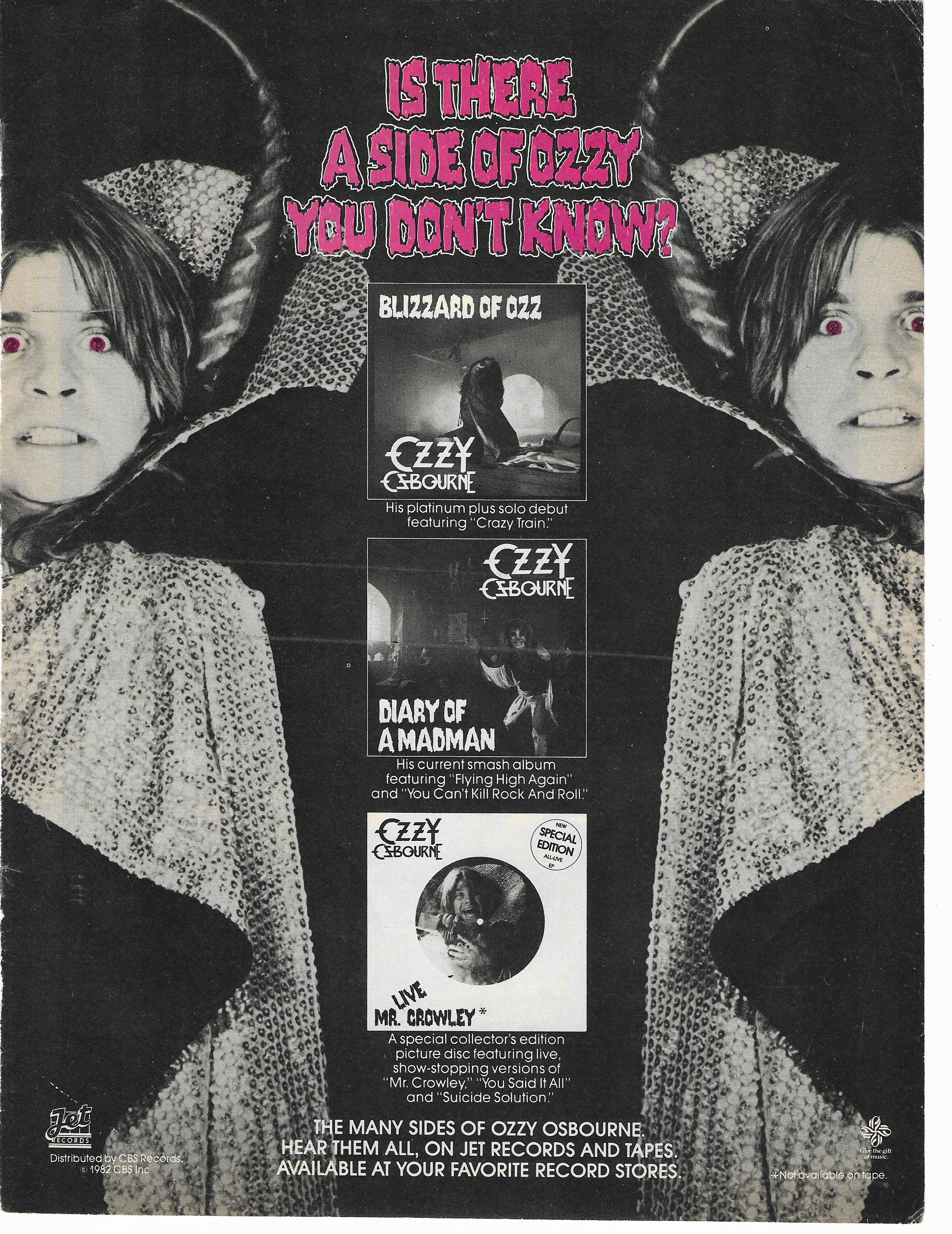
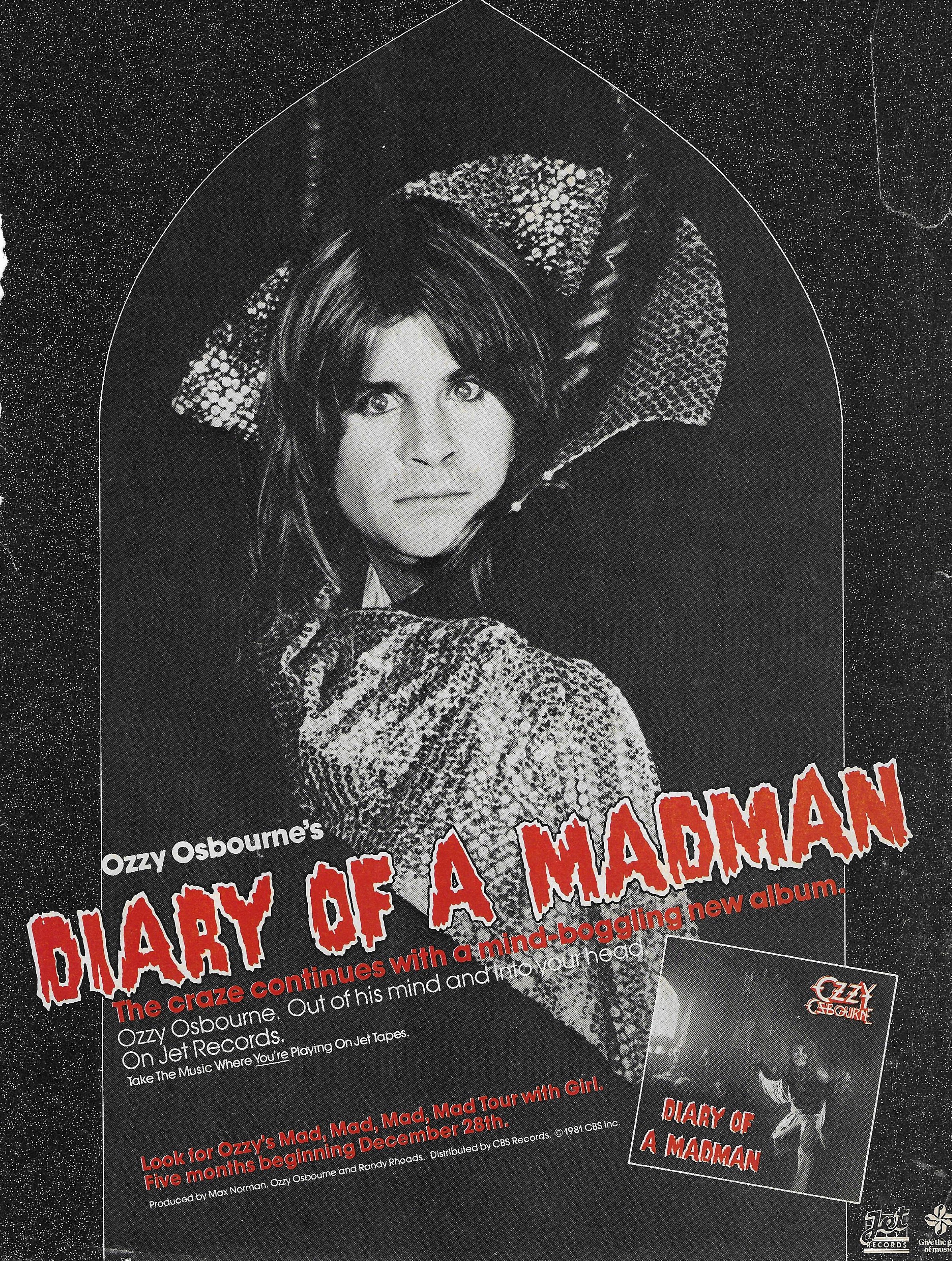
So, I’ll start with one of the easiest pairs of albums for me, and that is the first 2 Ozzy Osbourne albums [aka the Blizzard Of Ozz band]. 1980’s Blizzard Of Ozz and 1981’s Diary Of A Madman – the same band, written & recorded less than a year apart, for the same label. These 2 go together as a set, more than anything else in Ozzy’s career, and for me it was all downhill after these 2 albums. Both were major successes, and gave Ozzy’s post-Black Sabbath career a huge lift-off. (I’ve also added in some detail & recall).

“I went to a gig in London, and there was a band called ‘Girl’ playing, and they were a Jet Records band; Widowmaker had also been on Jet Records (as you probably know). I was looking for work myself, and I thought ‘well, it’s always good to put yourself around and see who’s about!’ I met Arthur Sharpe – who had been working for Jet Records, and it was Arthur who introduced me to Ozzy. Ozzy told me he was about to form a band and would I like to go up to his house in Stafford, and have a play, and he’d get a couple of local musicians in, and I said ‘Yes’. So I went up there, and he knew I’d just come from Rainbow; he said he liked my playing and would I be interested [?]. And I said ‘yes, I’d be interested in getting a band together with Him, but I wasn’t so sure about the local drummer and guitar player that he’d got in. And he said ‘OK, leave it to me, hang on a minute.’ And he walked out of the room and in to the studio that was in his house and said ‘OK guys – it’s not working out – Now pack up your stuff and go!’ [laughs]. And that was how he told them, which I thought was quite funny. Then he got on the phone to Arthur Sharpe and said ‘Bob and I get on like a house on fire, and the fire-brigade’s just left!’ And we went from there. He said he knew a guitar player that he’d met in LA called Randy Rhoads, so Jet Records flew Randy over and we started auditioning drummers…. He [Lee] was the last drummer we auditioned, and we must’ve auditioned 30-40 drummers at that time. We almost decided on 1 or 2, but they didn’t work out, and we had one more to audition and that was Lee Kerslake…. We auditioned down at The Who’s rehearsal place at Shepperton in London, and he perfect within the first number! I think the first song we did was ‘I Don’t Know’, and as soon as Lee started playing he just went for it ‘big time’, broke sticks, bits of sticks were flying everywhere, and Randy and I looked at each other and thought ‘this is the guy!’. He was like a bull in a China shop – he was perfect!” – Bob Daisley, 1999

To start you had a new band [for any doubters, look up earliest band photos] that featured the line up of Ozzy Osbourne [fired from Black Sabbath, but who had a distinctive voice and was a major character], along with Bob Daisley – ex of Rainbow, Widowmaker, and whom would pen most of the lyrics on the 2 BOZ albums], Lee Kerslake – the last to join, had been a huge part of Uriah Heep’s classic line-up having played on their biggest albums, And a young American guitarist named Randy Rhoads – Rhoads was a guitar teacher, and previously played with LA glam rock act Quiet Riot; he could play classical guitar, as well as contributed huge riffs and solos. He had a sound of his own, and as far as ’80s guitarists go, he was #1 for me – NO one sounded like him, or was as creative.

“He [Randy] was admittedly influenced by Ritchie Blackmore, Jimi Hendrix, and certainly Eddie Van Halen, you can hear a bit of the Van Halen thing in his playing. But he had his own interpretation, and he had a great musical background, having come from a musical family – his mom ran a music store and Randy had been a teacher for quite a few years himself. It really fell together right, the chemistry was right, we got on well as personalities.” – BD

Although the band would co-produce both albums, Max Norman engineered Blizzard, while serving as co-producer on Diary [while Lee & Bob were cut out of the credits on this album]. You had Don Airey playing keyboards on the first album, while Johnny Cook played on the 2nd [uncredited]. And even though the album covers aren’t very similar, they do feature what would become Ozzy’s classic logo, as well as a photo of Ozzy in some scary setting [with upside down crosses], taken by legendary rock photographer Fin Costello.

(5) Ozzy Osbourne – Mr. Crowley Live EP (with Lyrics) – YouTube

“That was the idea – to make it a sort of comic book image. It took on legs with ‘Diary Of A Madman’ and with ‘Bark At The Moon’… It worked in establishing Ozzy after the Sabbath imagery. It’s the same stuffed cat on the first two. The cover for Japan’s Tin Drum cover was shot on the Diary set on the first day of construction.” – Fin Costello

I can put on either of these albums any days, both feature 8 classic songs [OK, Diary features a short guitar piece by Rhoads titled “Dee” for his mom, and “No Bones Movies” may have been a later add on that isn’t quite as outstanding]. But, both featured killer intro songs [“I Don’t Know” vs “Over The Mountain”], followed by a classic rocker that would be the major hit single off the album [“Crazy Train” vs “Flyin’ High Again” and become one of Ozzy’s trademark tunes, followed by a ballad [or lighter track\ featuring Randy Rhoads on acoustic guitar [“Goodbye To Romance” vs “You Can’t Kill Rock n Roll”]. Each featured another killer rock song with lyrics based on dark subjects to kick off side 2 [“Mr Crowley” vs “Little Dolls”.] “Little Dolls” would feature 1 of 2 big intros from the drummer.

It was just on the spur of the moment. And as we were writing it, and I went ‘I’ve got an idea for this’, and I did, as simple as that!”  – Lee Kerslake, 2014

(5) Little Dolls – YouTube

Also included would also be a fast paced rocker [one that is under appreciated IMO – “Steal Away” vs “S.A.T.O.”] , as well as an epic track featuring classical guitar and strings [or synths resembling strings] [“Revelation (Mother Earth)” vs “Diary Of A Madman”] – both have the band coming off like an metal orchestra! And not to be forgotten were 2 other fan favorite / classics [“Suicide Solution” vs “Believer”].

(5) Revelation (Mother Earth) – YouTube

Unfortunately, the band would be split with Daisley & Kerslake being fired before the release of Diary Of A Madman [hence, no credits and a photo of the ‘new’ Ozzy solo band on it]. A shame there are no official live releases from the one UK tour this band did, though there was a 12″ Live EP released between albums featuring live versions of “Mr Crowley”, “Suicide Solution”, and the non-album track “You Said It All”. The BOZ albums stand above and apart from anything else Ozzy did in the years [and decades] to come, and I eventually lost interest.

(5) Ozzy Osbourne – S.A.T.O. – YouTube

Over the Mountain, Flyin’ High …- They’re great tracks, they’re so different. And I was the first to ever put triplets in to an introduction of a song, also a single on Over The Mountain.”  – Lee K.

Randy Rhoads was tragically killed in a plane crash on March 19, 1982. A live ‘tribute’ album w/ Randy was eventually released, featuring much of these 2 albums, but with Ozzy’s US touring band.

“He was a very dedicated musician; he practiced a lot, he was really in to music. He was a very young up and coming guy. I think he got an award as one the ‘best new talents’. He certainly was and still is an influential guitarist for that sort of music, and he certainly had a lot to do with the success of Ozzy’s career as well!” – Bob D.

Bob and Lee went on to join a reformed Uriah Heep after their departure from BOZ, and .bring some of that ‘heaviness’ and energy to the albums Abominog & Head First. Bob would return to work with Ozzy, while Lee stayed with Heep for the remainder of his career. The pair reunited for 2004’s Living Loud project [along with Don Airey, Steve Morse, and singer Jimmy Barnes] where they did an album which included a number of remakes from Blizzard Of Ozz & Diary Of A Madman. In 2007 Lee was forced to retire, due to health issues, and sadly passed away September 19, last year. He made record a solo album in his last few years [recently released] titled Eleventeen.

Following the loss of Randy Rhoads, Ozzy carried on – first with a live album of Black Sabbath tracks [guitarist Brad Gillis doing an excellent job], followed by 1983’s Bark At The Moon. By this time Bob Daisley had left Heep and returned to write [uncredited for a few more Ozzy albums]. Max Norman was also back for Bark At The Moon, and the live albums, as was Don Airey. I liked that album [Bark] at the time, to me it tried to keep to the pattern of the 2 BOZ albums, and Jake E Lee [who would also get hosed, as well as not credited for his writing] did a great job. But the album was less heavy and less consistent, as well as including the ridiculous sappy ballad “So Tired”. Bob would go on to work on Ozzy albums The Ultimate Sin and No More Tears, as well as record with Black Sabbath, Gary Moore, and The Hoochie Coochie Men. He also wrote his book “For Fact’s Sake”, published in 2013, which detailed his career, with plenty of insight and stories into his time writing and recording Blizzard Of Ozz & Diary Of A Madman, and generally setting the record straight about his years working with Ozzy – a must read, really. Don Airey would eventually join Deep Purple, and Ozzy would carry on recording solo albums [with one released last year]. and with much of his live repertoire reliant on classics from the albums the original band created. I haven’t bought an Ozzy album in years, [mainly, but] not just for it being that last few I heard sounded forgettable, but the treatment of former band members [Sharon once referring to Lee & Bob as ‘session players’], the re-writing of Ozzy’s early history by Sharon, and Ozzy’s overall rise to fame as a TV star / celebrity, with his ‘metal’ persona and music taking a laughable back seat were about it for me. I was happy to see him with Black Sabbath 4 or 5 years ago, but I’m done with adding to my Ozzy collection in this lifetime – unless I come across something already out there of the original BOZ band I haven’t heard or have.

RIP Lee and Randy.

Additional links:

(5) Ozzy discusses the Blizzard of Ozz band BBC Aug 1980 – YouTube

(5) Over the Mountain featuring Randy Rhoads, Bob Daisley and Lee Kerslake only – YouTube

The Official Bob Daisley Website

Randy Rhoads: “I started tuning up and Ozzy said, ‘You’ve got the gig.’ I didn’t even get to play!” | Guitar World

CRR Interview – Bob Daisley: Diaries of a Madman! (classicrockrevisited.com)

Lee Kerslake: the last interview | Louder (loudersound.com)

KJJ, 03/21