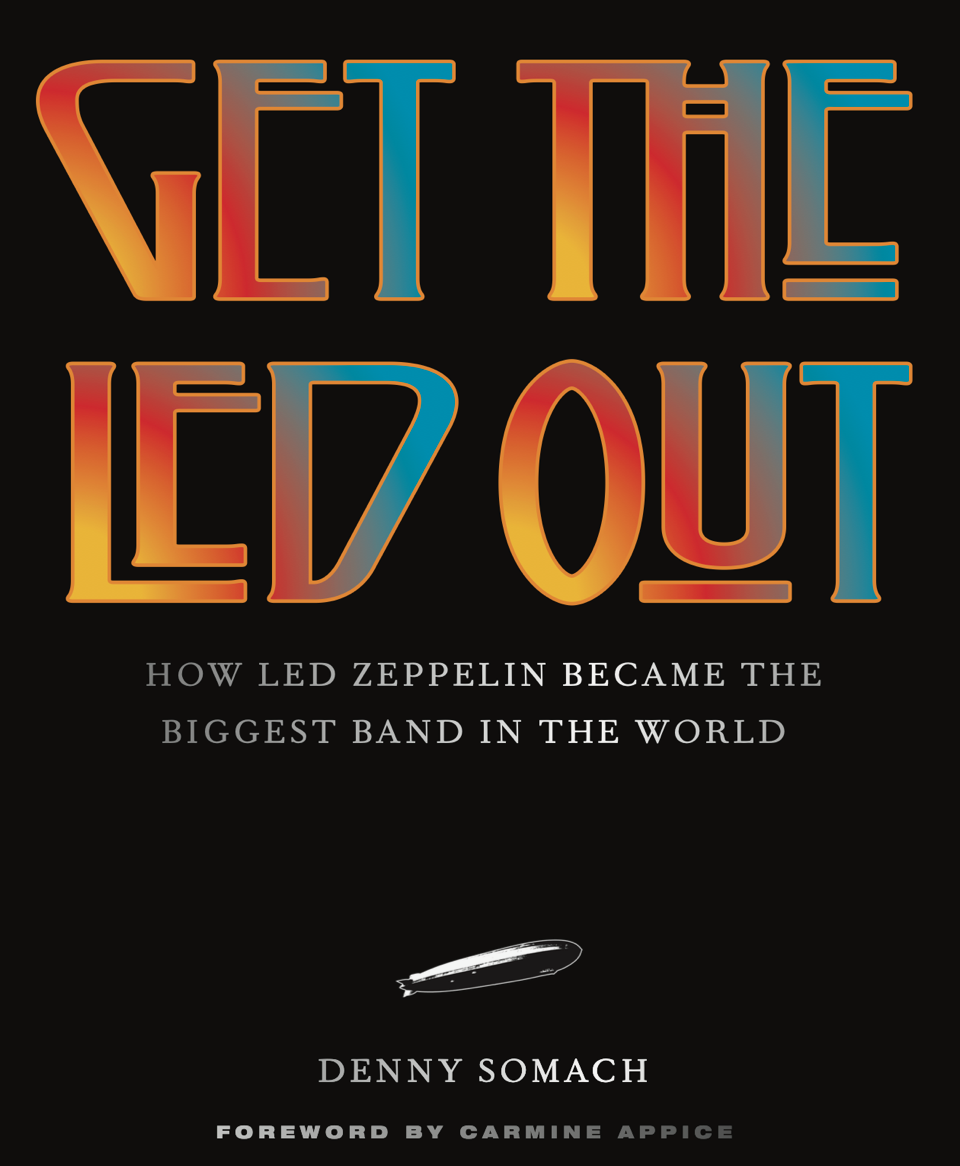
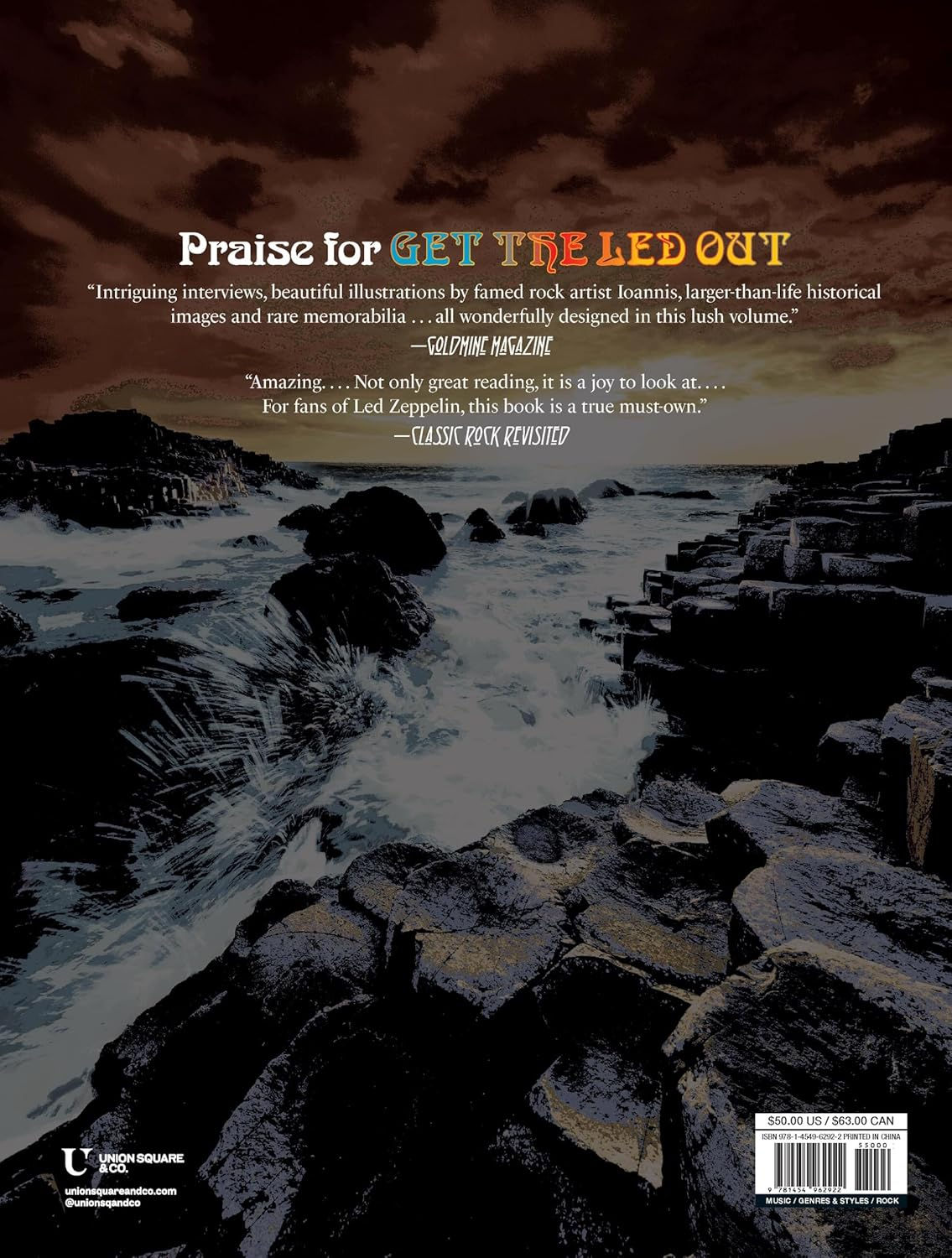
Denny Somach has released Get The Led Out: How Led Zeppelin Became The Biggest Band In The World‘. I have the 2014 title of this book, which featured artwork by album cover artist Ioannis, who passed away earlier this year. This 2025 edition features a new cover, a forward by legendary drummer Carmine Appice. According to Somach – “This is a new book with over 200 new pages and photos, it does include 10 or so of the best interviews from the original, but being treated as a new book”. See the press info below, and link at the bottom.
In-depth, lushly illustrated coffee-table book. The book starts with a unique day-by-day timeline that reveals quirky insider details, achievements, and exploits. Thirty-plus rare, candid interviews follow, featuring all Zeppelin members and other musicians and industry insiders, including Jason Bonham (drummer and son of legendary Zeppelin drummer John Bonham), Chris Squire (Yes), Joe Perry (Aerosmith), Alice Cooper, Paul Rodgers, and music producers industry legends Eddie Kramer and Ron Nevison, Danny Goldberg (Swan Song Records, Vice President) and Craig Kallman, current Chairman of Atlantic. The book is illustrated throughout with photographs, reproductions of memorabilia from a major private Zeppelin collector, and specially commissioned artworks by noted album cover artist Ioannis. It also features a comprehensive timeline of the band and complete discography including solo projects from each member. Coverage of the reunion concert film in 2012 at the O2 in London, Celebration Day and the presidential Kennedy Center Honors appearance in 2012.
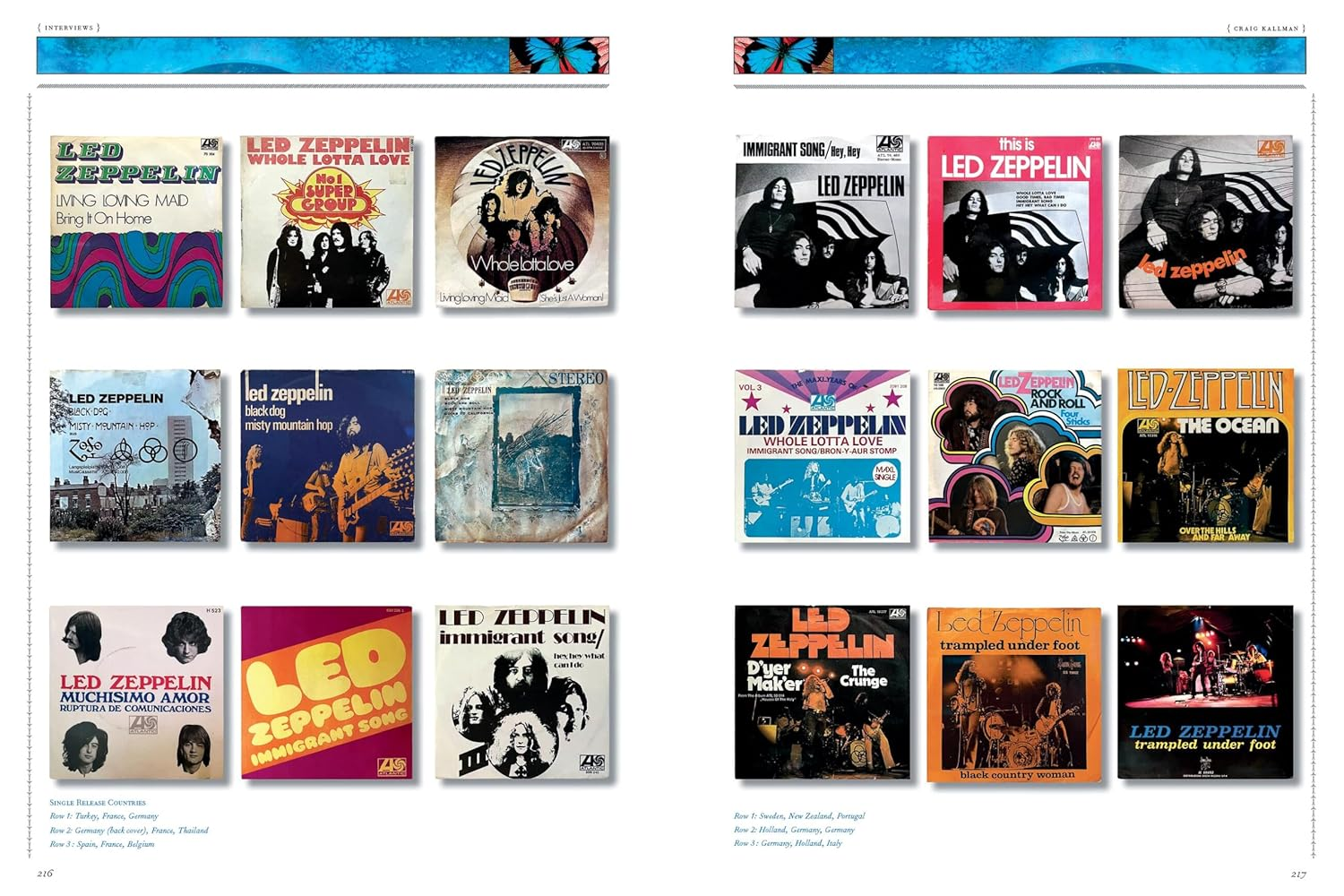
For the first time anywhere from the personal collection of Craig Kallman, a copy of every 45 picture sleeve from around the world. Zeppelin rarely allowed singles to be released, but different countries pressed up singles that were immediately recalled and/or destroyed.
For the first time an interview with Mark Andes, the only living member of Spirit who was involved along with the estate of Randy California in the Stairway to Heaven vs Taurus copyright trial.
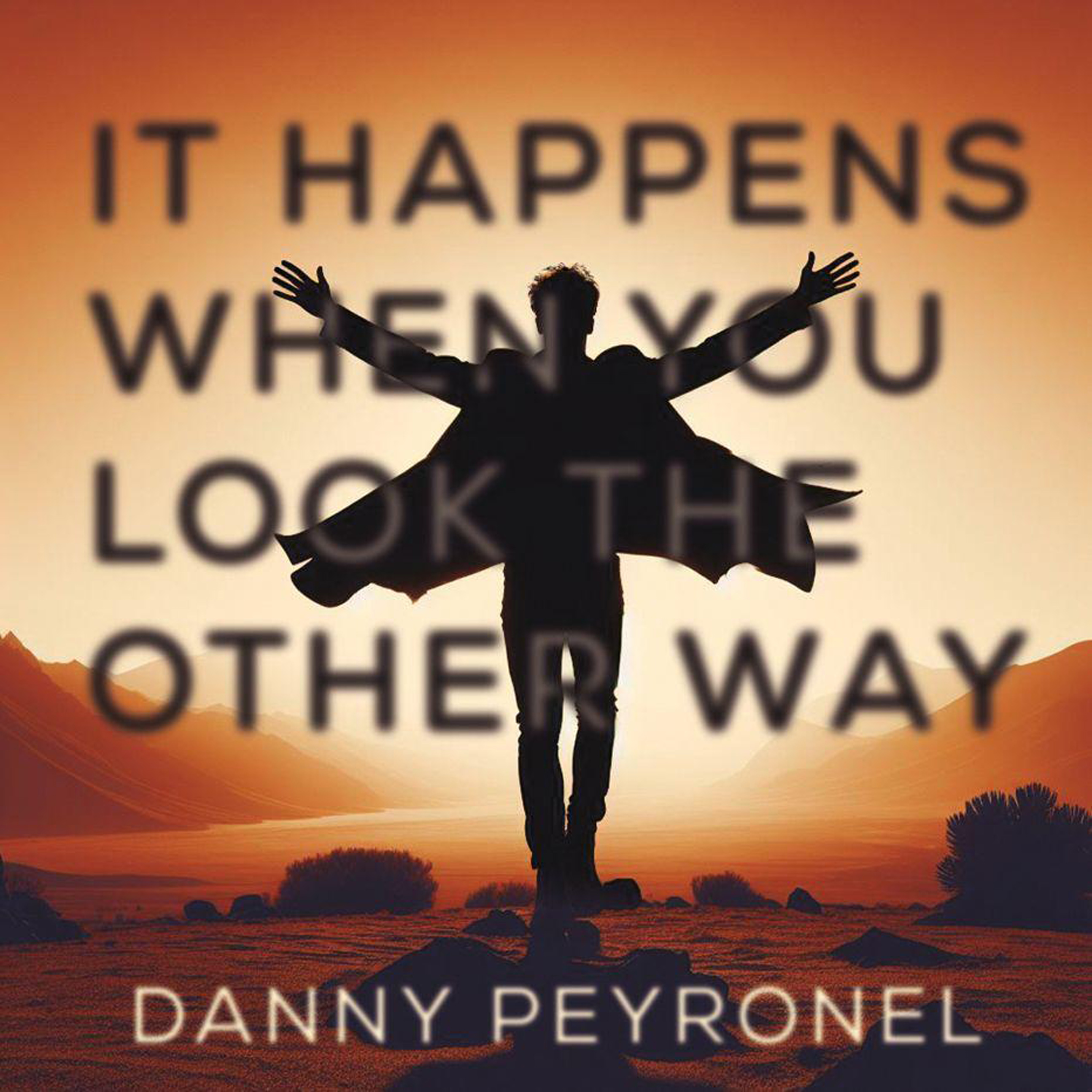
Singer, songwriter, Danny Peyronel has a new solo album out. Peyronel is best known as keyboard player with The HEAVY METAL KIDS, followed by UFO, and later resurrected the HMKs as singer, and played with X-UFO. It Happens When You Look The Other Way contains 16 tracks. Check out the press info/bio below, as well as the videos from the album and links at the end.
DANNY PEYRONEL started making music as a pro while still a teen a million years ago, at the height of The Golden Age of Rock. He was a founder member of iconic London band the HEAVY METAL KIDS, who became yhr reference for the incipient Punk movement.
Moving on to legendary rockers UFO, he was their original keyboardist, writing songs that changed the band’s direction. He went on to write multi-million selling hits like ‘Midnight at the Lost and Found’ for MEAT LOAF, as well as others for DAVID GILMOUR, SADE and more. In the 80’s he became lead singer and frontman with his band TARZEN, and the 90’s saw him work with Desmond Child, writer of some of the biggest hits of BON JOVI, AEROSMITH & ALICE COOPER.
Back in Europe, he released his first solo album, ‘Make the Monkey Dance’, and resurrected the HEAVY METAL KIDS for their critically acclaimed swansong ‘Hit the Right Button’. More recently, his X-UFO released a powerful live album recorded at various European Festivals, ‘Vol.1: The Live Files’, followed by a studio record, ‘HOUSE of X’.
Now in Barcelona, Danny recorded his new album, ‘It Happens When You Look the Other Way’, with the help of David Pereira-Oleart, guitarist, producer and video creator, and featuring top local talent as well as life-long colleagues. The band, led by David Pereira-Oleart (Lipstick) on guitar and featuring young guitar prodigy Martin Buszano, Lakis Economou (Malcolm Bruce Band) on bass and Javi Rojano Reina (Amaro) on drums, is gearing up to present the new album throughout Europe and the Americas. Special guests stars will be featured nightly.
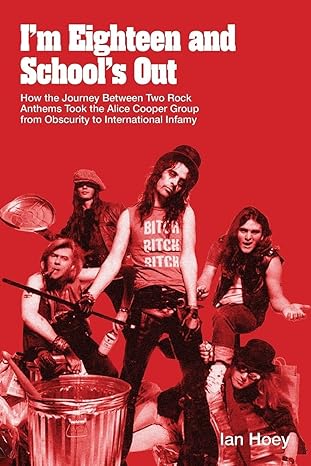
How the Journey Between Two Rock Anthems Took the Alice Cooper Group from Obscurity to International Infamy
Ian Hoey, who is a “sometime radio reviewer, writer, host & stranger in the crowd”, has authored his first book – I’m Eighteen and School’s Out, out now. The book focuses on the ALICE COOPER era from Love It To Death to after School’s Out, the albums that made such a huge impact, particularly with the anthems that title this book.
Ian Hoey: “I really wanted the added context of where they were at the time and the public and press attitudes to them as their success grew. I also aimed to write a book that would be equally entertaining and informing for people who knew next to nothing about the band and people who knew a huge amount already”.
The book pulls from online archives, and many of his own interviews. “Not just with the obvious candidates, but also people who worked for them, with them, or just happened to be around at the times some of the things were going on.”
A lot of research went in to I’m Eighteen and School’s Out through research, with another aim being to give credit to those around the band, who, according to Ian, “are often treated as minor characters in the history, or even ignored completely. Joe Greenberg and Cindy Smith Dunaway being the two main examples.”
Looking forward to reading this and talking with Ian in the near future. You can order I’m Eighteen and School’s Out on Amazon and various online shops (including Indigo).
The Alice Cooper group are one of the most influential rock bands of all time. And yet, when the histories of popular music are written, they are often in the margins or even overlooked completely. This book redresses that and puts the spotlight on their pivotal period of development from the winter of 1970 to the summer of 1972, bookended by the hit singles I’m Eighteen and School’s Out.
Containing numerous new interviews and contributions alongside detailed research, I’m Eighteen and School’s Out places the Alice Cooper story in context with the music scene of the time, paying special attention to the acts who were often considered their rivals, from Screaming Lord Sutch to David Bowie.
This is the extraordinary tale of the people who made the band what it is and how they ultimately triumphed against the odds in a most spectacular way.
Been some time since I finished a top 10 Canadian list, though I’ve got a few years started….1978 was a good year! If there’s any glaring omissions (in your opinion), please leave it in the comments!
APRIL WINE – First Glance
The first April Wine album to feature guitarist Brian Greenway and the start of the band’s most commercially successful era. Featured the breakthrough US radio hit “Roller”, as well as “Coming Right Down On Top of Me”, “Rock n Roll Is A Vicious Game”, and dark heavy cut “Silver Dollar”. Arguably the band’s best album.
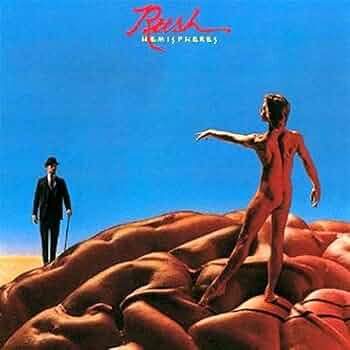
RUSH – Hemispheres
The band’s 6th studio album, released in October of that year, featured the classic “The Trees”, as well as epic “La Villa Strangiato”.. The last to feature such lengthy conceptual tracks.
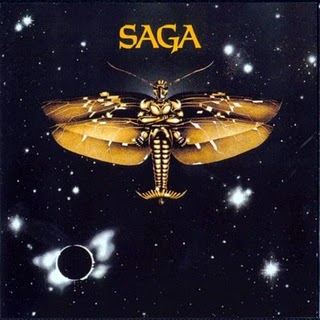
SAGA – Saga
The debut from Toronto’s SAGA (or, Oakville), a band with rock, pop and more so prog influences. It is the first half dozen albums that make up the band’s classic period for me, with Saga featuring such songs as “How Long” & “Humble Stance” (both featured on the live ‘In Transit‘ album a few years later), as well as favorites “Will it Be You”, “Perfectionist” and ‘Tired World”. Classic album and album cover!
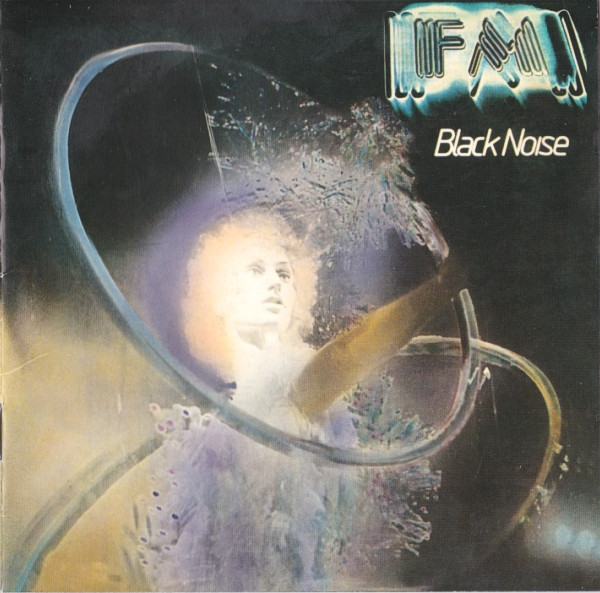
FM – Black Noise
Originally released in early 1978 by the CBC, in limited edition vinyl. Black Noise would go on to become a progressive rock classic. It was rereleased later the same year via Passport (Canada), and eventually on CD in 1994 – where the original trio of Cameron Hawkins, Martin Deller and Nash the Slash undertook a mini-tour in Ontario to promote it’s release. I saw 2 of these shows, got the CD & poster signed. A must-hear album featuring the hot “Phasors On Stun” (Star Trek Reference), “One O’clock Tomorrow”, “Journey”, and the title track. Amazing stuff!
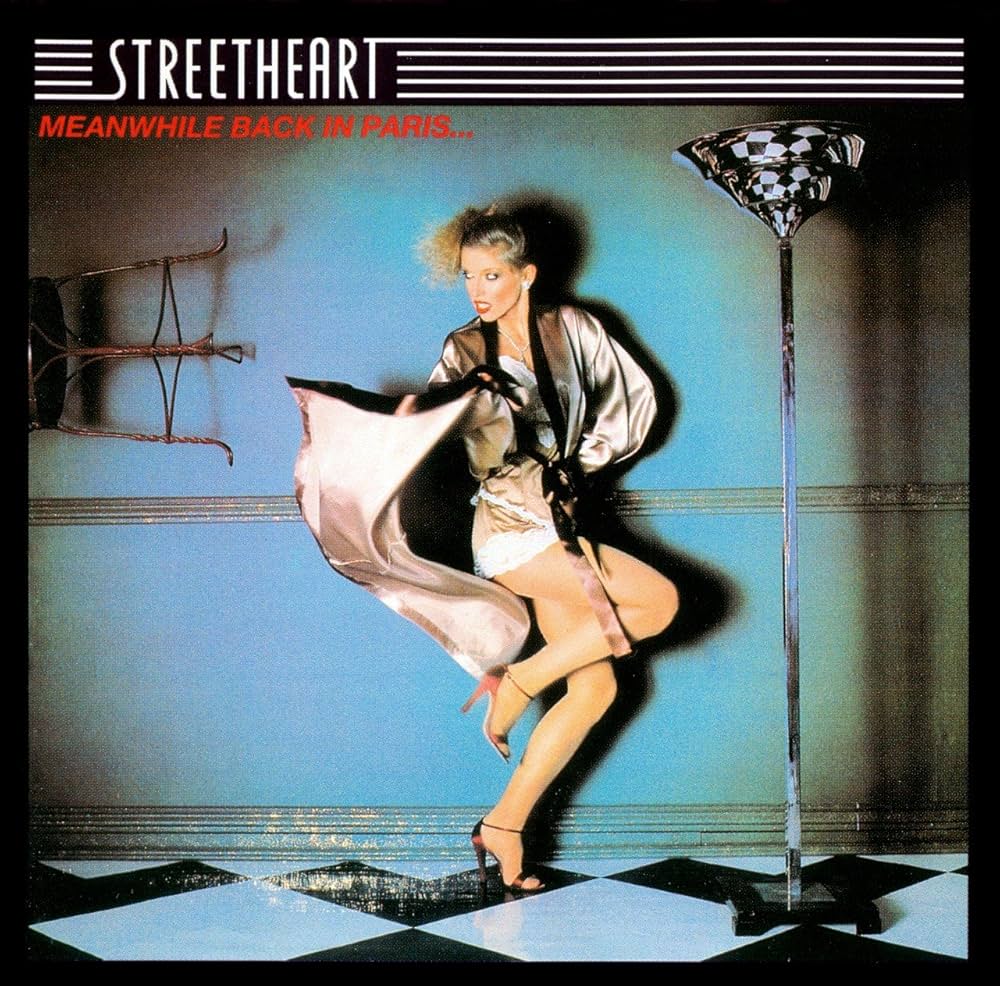
STREETHEART – Meanwhile Back In Paris
The Regina, Saskatchewan band’s debut album, released in May (or June?) . Fronted by legendary Kenny Shields (RIP), and originally featuring guitarist Paul Dean & drummer Matt Frenette, along with bass player Ken ‘Spider’ Sinnaeve, and Daryl Gutheil on keys. This features the classic “Action”, as well as favorites “Move on Over”, “Pressure” and “Look At Me”. Dean left before the 2nd album and was soon joined by Frenette to form Loverboy. Sinnaeve, who’s played with numerous Canadian acts would also later join Loverboy. Meanwhile Back In Paris would go platinum in Canada. Paul Dean would record a new version of “Action” for his first solo album in 1989.
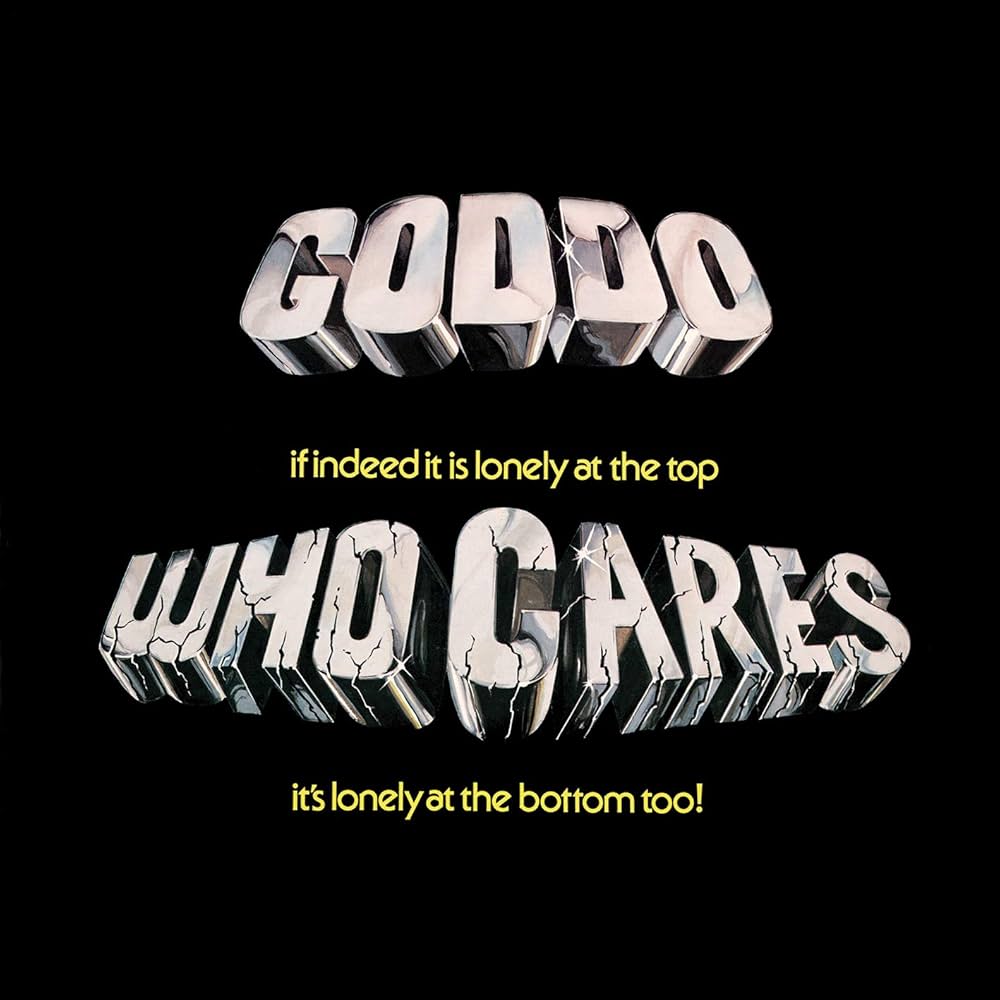
GODDO – Who Cares?
Released very early in the year, this Toronto trio’s 2nd album was a fine follow up to their excellent debut. Featured classics like “Tough Times”, “Sweet Thing”, “Oh Carole (Kiss My Whip)” and closing epic “Too Much Carousing”. The 1994 reissue of this added a half hour of outtakes.
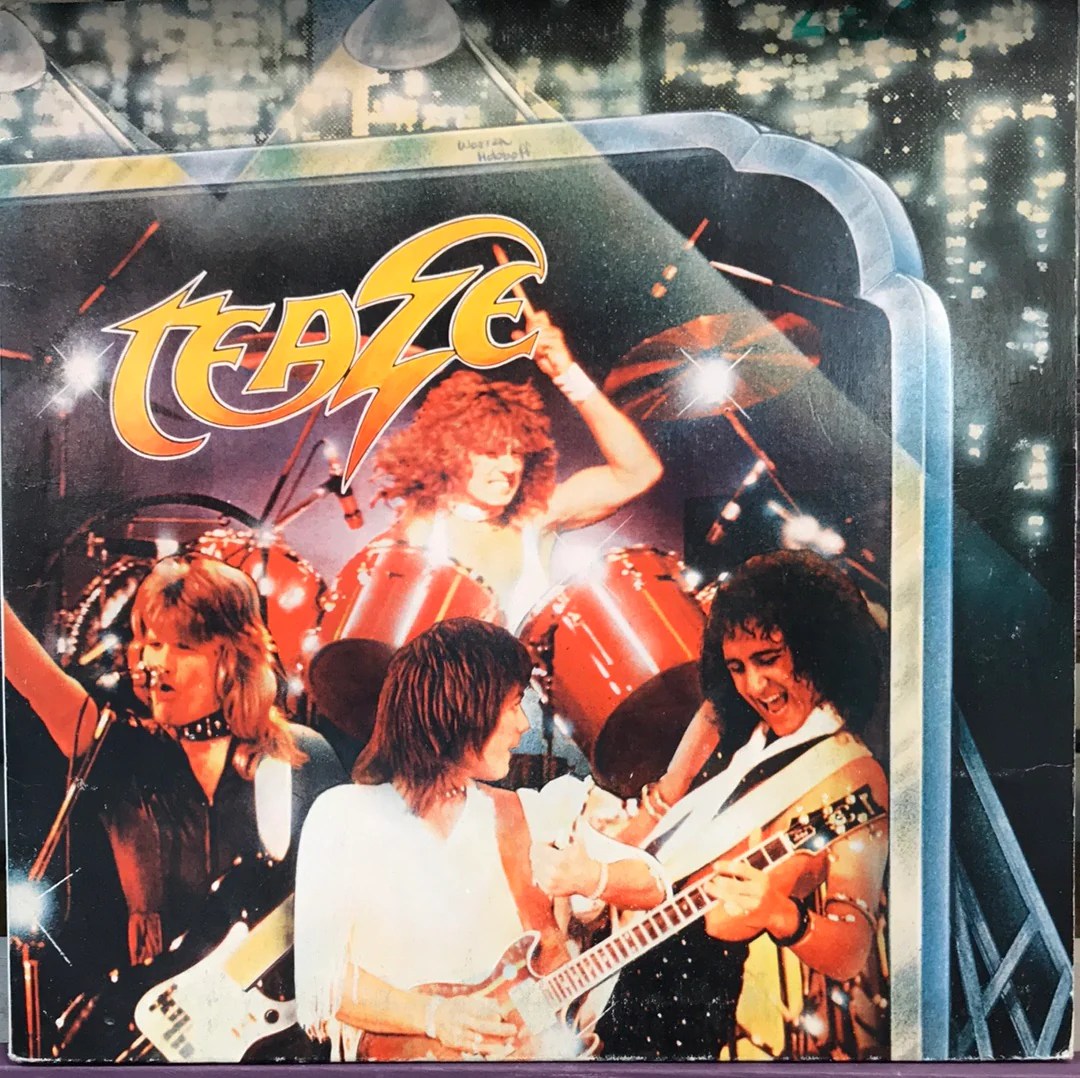
TEAZE- On The Loose
Windsor, Ontario’s TEAZE’ 2nd album, and full of party rockers, anthems, and a few ballads. Includes opener “Gonna Have A Good Time Tonight”, plus rockers like “Ready To Move”, “On The Loose”, and ‘Never Again’, as well as ballads “Stay Here” and (country influenced) “Sweet Misery”.
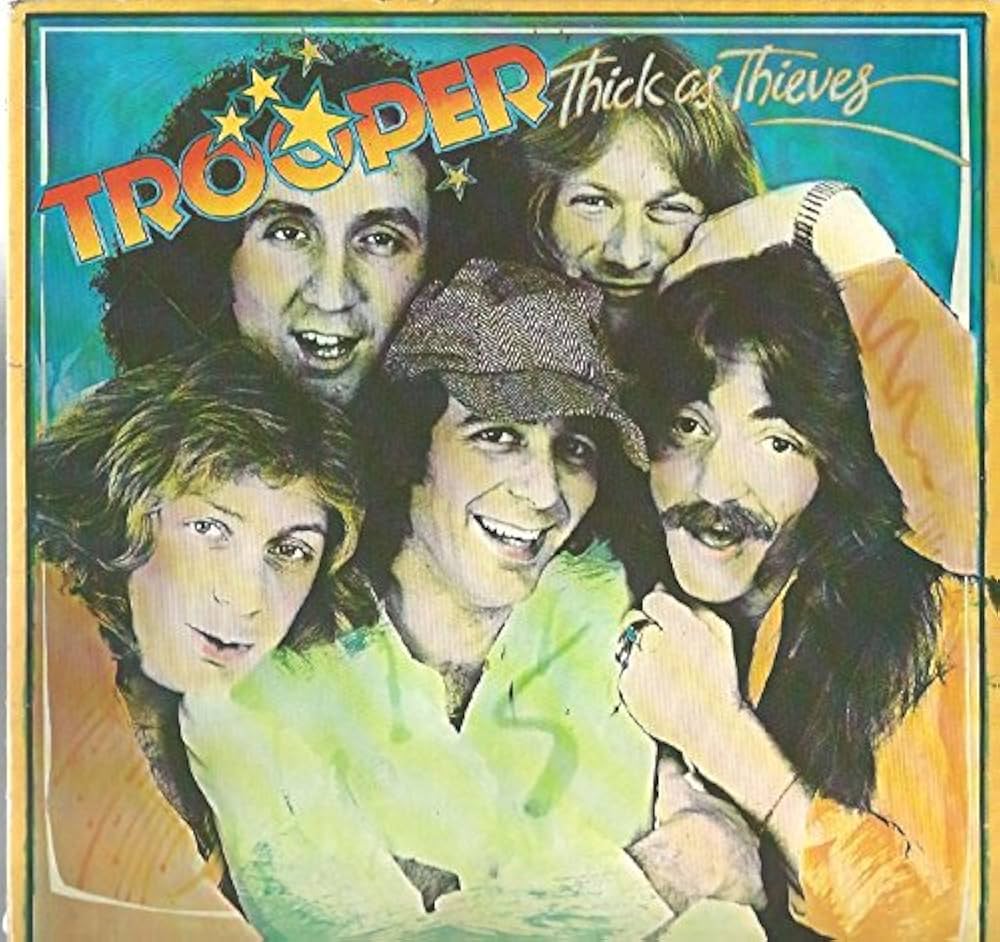
TROOPER – Thick As Thieves
Released in June. Thick As Thieves was the last Trooper album produced by Randy Bachman. Best known for featuring their trademark hit “Raise A Little Hell”. Kind of a middle of the road rock album, with the only other real rocker being favorite “Gambler”. It also featured 2 further singles, both sung by keyboard player Frank Ludwig – “The Moment That It Takes” and the excellent “Round, Round We Go”.
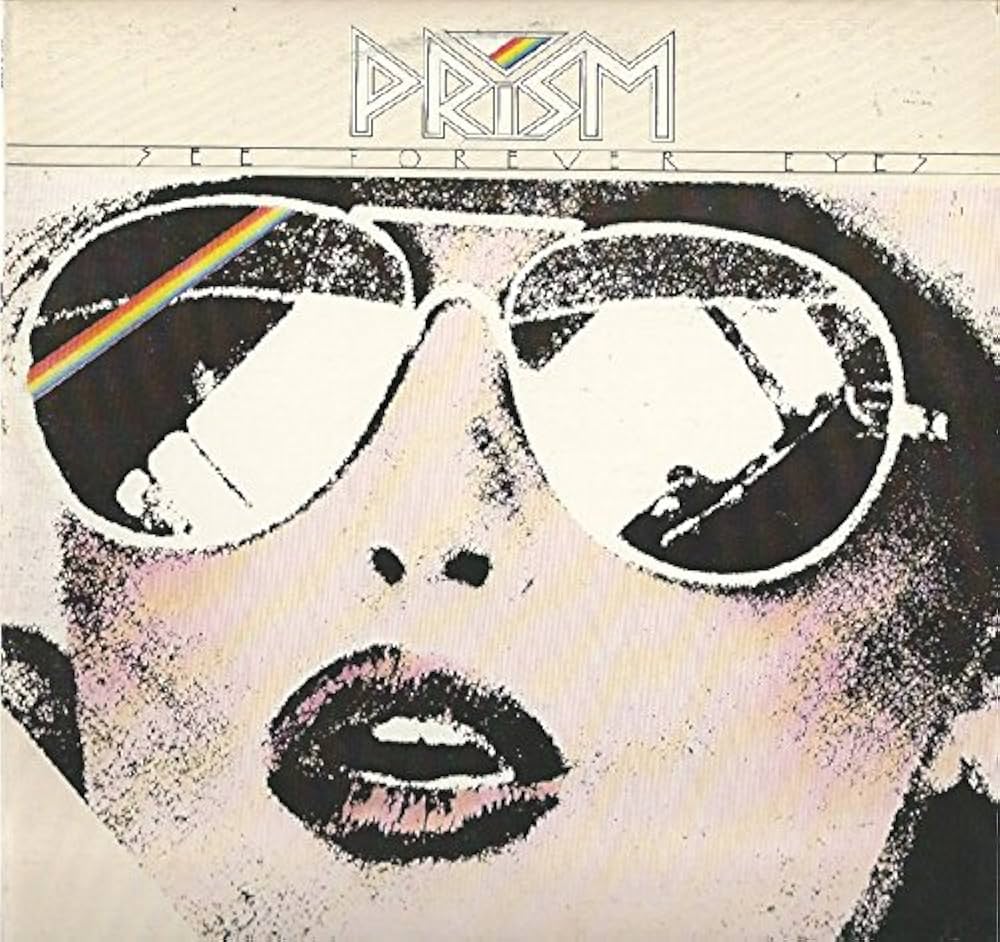
PRISM – See Forever Eyes
The 2nd album from Vancouver’s PRISM. This one released in June saw a few line up changes, and featured 4 singles, notably “Flyin” and “Take Me Away”, both from new guitarist Alan Harlow. One of the band’s best!
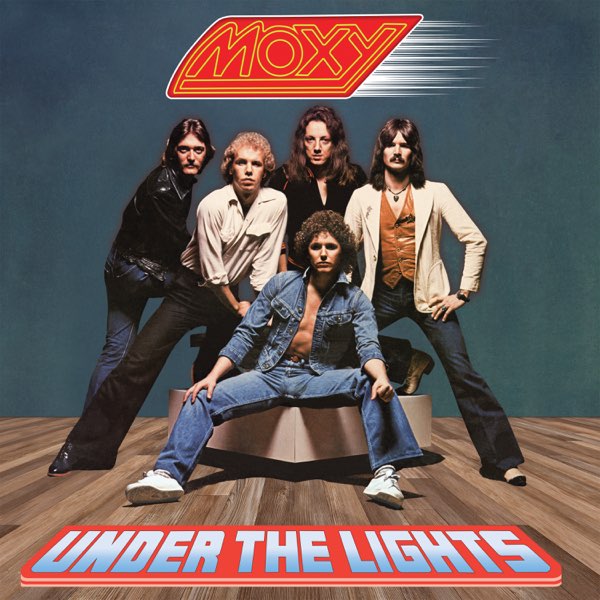
MOXY – Under The Lights
The 4th and final Moxy studio album. This one featuring the vocals of Mike Rynowski (aka Reno). A decent album, tho’ different from the previous ones. Reno, of course, went on to huge success with Loverboy, and Under The Lights would be reissued as Thinking About You (with just Reno on the cover). Earl Johnson has more recently put together a new version of Moxy…I wonder if they perform anything from this album(?)
*Other albums from ’78 that I either didn’t make my top 10, and in a few cases I don’t have – WALTER ROSSI – 6 Strings, 9 Lives, ZON – Astral Projector, BOB SEGARINI – Gotta Have Pop, BTO – Street Action (1 of 2 featuring the late Jim Clench instead of Randy B), CHILLIWACK – Lights From The Valley, THE GUESS WHO – Guess Who’s Back (post Burton Cummings, hmm), RANDY BACHMAN – Survivor, BILLY WORKMAN – Billy Workman (this is one I am looking for, if anyone has it….), EDEN – Eden (interesting prog album, does anyone have this?), AERIAL – In The Middle Of The Night (interesting sounding band from Saskatchewan, w/ Hugh Syme cover design) , FOSTERCHILD – Troubled Child
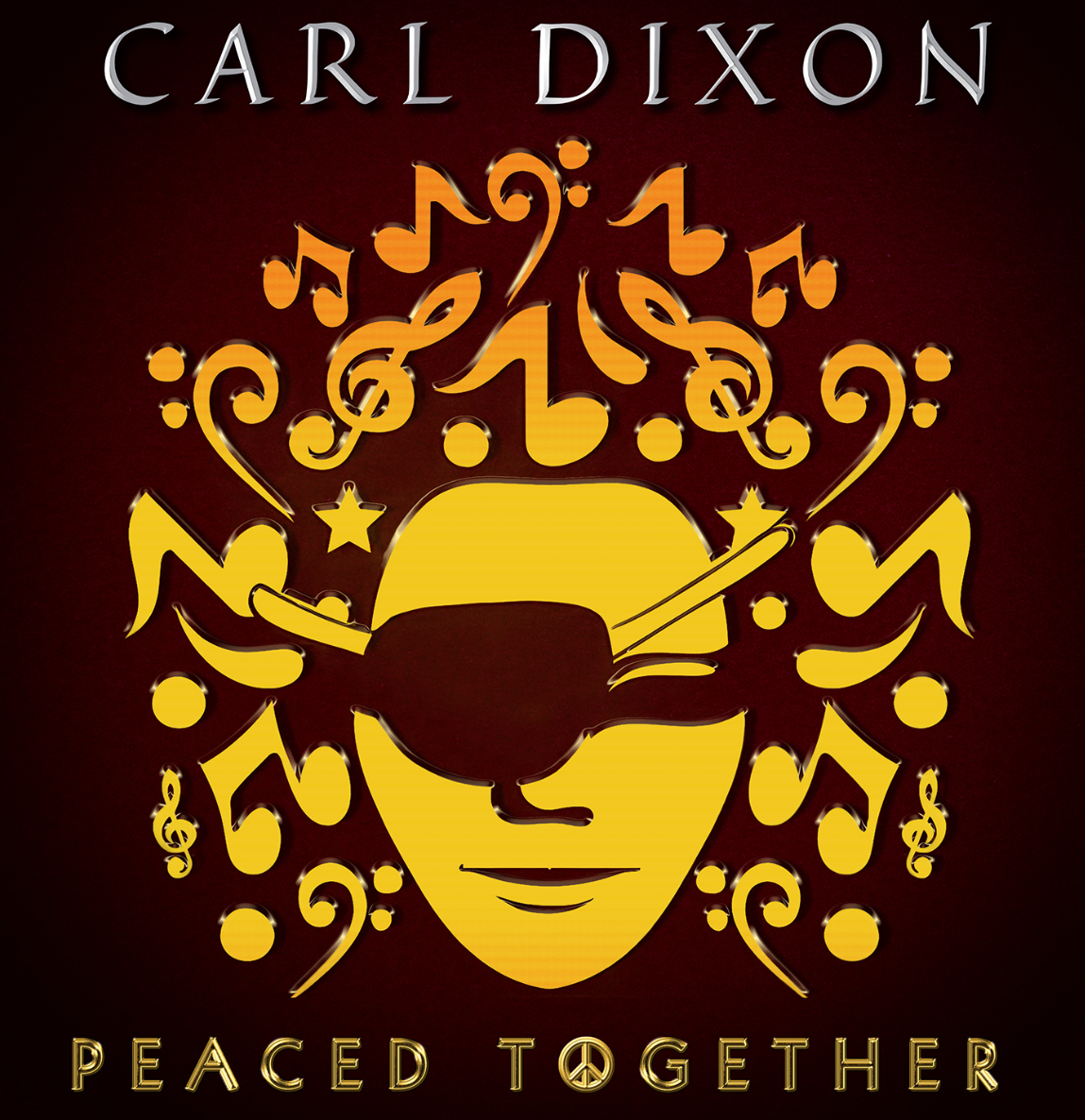
“More than three years in the making, the 6CD box set will arrive in fans hands by October 24. You can pre-order NOW, with the full digital delivery due next month.”
‘Peaced Together’ is a 6CD box set in a ‘fat-pack’ jewel case, limited to strictly 500 units worldwide and priced at $99 (including worldwide shipping).
Since 2022, Carl Dixon and MRC CEO Andrew McNeice have been swapping files, sourcing audio, digitizing tapes, reels and DATs and then starting over again with new improved files. JK Northrup has been involved all along the way, adding his thoughts and overseeing the remastering of every track.
Carl Dixon states: “PEACED TOGETHER is in part the realization for me of every artist’s dream; that people care about your work and want to share it with the world. It is, I hope, part of its charm that this project is based largely on music that has never gone through the stages of refinement, polishing and presentation to the world in big-bucks album releases. This collection consists of my unreleased musical works save one or two exceptions. It spans many years and veers across different styles and genres, some more fashionable now than others, but I’m pleased that I can hear elements of my true self throughout. Some of these works were rerecorded for inclusion in album projects but most remained known only to me and to those who helped make them. I am delighted to now have these many “hidden gems” released out into the wide world by Andrew McNeice and MelodicRock Classics. I hope they bring a measure of joy to all who choose to spend time listening. Rock on wit’ ya bad selves!” ~ CD. 2025
Carl Dixon is of course the world renowned Canadian guitarist, singer and songwriter, who has been fronting CONEY HATCH since 1981 as well as releasing 6 solo albums and writing with a whole host of chart topping artists along the way.
The 6CD set will be broken up into the following categories: Disc 1 – Anthems Volume 1 Disc 2 – Anthems Volume 2 Disc 3 – More Rock & Some Roll Disc 4 – The Softer Side Disc 5 – A Little Centre of Left Disc 6 – Tracks That Can’t Be Left Behind
These songs come from a variety of sources and eras, but it’s best left to Carl to expand on his earlier comment:
“The one hundred-plus tracks on ‘Peaced Together’ are evidence of a life spent in song writing whenever and however it could be done. From my earliest studio demos with my high school chums, to the most recent DAW creations from my home studio, it’s all expressing something that I thought needed to be said. We all write, sing and play our personalities through our art. Here lies AOR Rock in various stages of development, sure, but there’s so much more in addition. Some of the AOR stalwarts who appear on Peaced Together as co-writers and performers include Stan Meissner, Marc Ribler, Van Stephenson, Brett Walker, Taylor Rhodes, Kevin Savigar, Marc Ferrari, Steve Shelski, Jack Conrad and Steve Plunkett and that’s just Disc 1! Harry Hess turns up in two songs we recorded during the run-up to the debut Harem Scarem album; that’s his unmistakable voice you hear on Too Much Paradise. Songwriters are generally an affable, collaborative bunch and I learned much from all of my partners over the years. Special mention must go to Van Stephenson who was very kind and instructive in his gentle way when I was a greenhorn turning up in Nashville for the first time. Four of these songs are my collaborations with him. Uniquely, eight tracks included here are collaborations with my father Ron Dixon, based on his poems and writings. Something of him endures through the music. A VERY wide range of styles and approaches is heard on ‘Peaced Together’. Nashville, New York, L.A., San Francisco, Pittsburgh, Toronto and smaller communities; I travelled far and wide to meet great people and make these songs. There’s lots of rock as you might expect with my history but also pop, blues, country and funk. Sometimes they were just for fun, sometimes it was like trying on a stylish hat to see if it looked good on me. I’m proud of all of these tracks, else I would not have put them out on display like this. It’s crazy to me that we haven’t emptied the cupboards to make this collection.”
All pre-orders will receive the complete audio package well in advance of the physical delivery, and is the only way to guarantee a copy of this amazing set of songs in a one-off pressing. It’s hoped most regular MRC retailers will carry copies of the set, but pre-order here to be guaranteed and get the full advance audio delivered soon.
The full track listing is as follows:
DISC 1 01. Buried Alive 3:18 02. Walk Through The Fire (Demo) 3:50 03. Cloud Of Love 5:16 04. Good Time To Be Bad 3:35 05. Don’t You See 3:20 06. I Believe In Angels 3:59 07. Love Strikes (Demo) 4.00 08. Edge Of A Heartbreak 3:41 09. Hold Your Fire 3:06 10. Kid Blue 3:21 11. Leap Of Faith 4:20 12. Love’s Gonna Take Some Time 3:18 13. Hot Streak Gone Cold (Demo) 3:35 14. She’s A Touch Like You 4:05 15. If Love Could See Me Now 3:44 16. Until The Dawn 4:13 17. Hard To Leave 4:03 18. All I Want 3:56 19. Fight For Your Love (vocal Jimmy Lawrence) 3:50
DISC 2 01. Fuel For The Fire 3:52 02. Against The Night (Demo) 3:51 03. Fools Paradise 3:03 04. Goodbye To A Good Thing 3:36 05. From Here On 4:51 06. Come My Way 3:39 07. Might Have Been 2:59 08. Here Comes Trouble 3:42 09. Taste Of Love (Demo) 4:33 10. Up To No Good 4:03 11. Animal Attraction 3:46 12. Bad To The Bone (vocal Andrew Elt) 4:12 13. Bad Seed 3:33 14. No Middle Ground 4:42 15. Shadow (Demo) 4:05 16. Magic Happens 3:54 17. Treacherous Emotions (Demo) 3:49 18. To The Love 4:13 19. I’m Rattled 2:39
DISC 3 01. A Fool in Love 3:30 02. Giving Up The Ghost 4:25 03. Too Much Paradise (vocal Harry Hess) 4:05 04. Across the Great Divide (Demo) 5:51 05. Knee Highs 5:38 06. To Fall In Love 3:18 07. Old Testament Rock 3:11 08. Don’t Walk Away Dreaming 4:35 09. Trust Me 4:09 10. Hot Florida Sunshine 4:55 11. Busted (Demo) 3:48 12. Illumination 3:49 13. Around and Around 3:22 14. Little Dancing Queen 3:58 15. I Know How to Treat a Lady (vocal Jimmy Lawrence) 3:42 16. Little Dreamer 3:58 17. Only a Fool 3:50
DISC 4 01. Can I Love You 3:34 02. Younger Generation 5:09 03. Where Do I Begin 4:06 04. Dreams Gone 2:25 05. Easy Words 3:59 06. Don’t Disappoint Me 2:58 07. Don’t Turn Out The Light 3:39 08. Song From The Island 3:04 09. Goodbye Eyes 4:59 10. Might Still Be in Love 3:15 11. Just Because 3.42 12. How’s Your World Spinning 3:55 13. Tell Her I Called 3:24 14. Green Diamond 3:00 15. Until The Dawn 3:57 16. Same Moon Shining 2:56 17. Thought It Would Be Fun (Demo) 3.49
DISC 5 01. Can’t Lose (What You Never Had) 4:17 02. Just a Few More Hours 3:08 03. Waiting In The Wings 3:27 04. Jacob & The Pig 3:39 05. That’s Right 3:11 06. Seven Day World 3:23 07. Angel On Main Street 2:50 08. Get Whatcha Wanna 3:24 09. Missing You 3:56 10. I Want You 3:53 11. Showtime 3:33 12. Stand Together (Female Vocal Jessica Benoit) 4:26 13. It Is What It Is 4:01 14. Was Your Heart Broken 4:03 15. Strange Way To Live 4:05 16. Keep Your Control 4:04 17. Behind the Open Door (Demo) 5:44
DISC 6 01. Together Takes Us Any Place 2:46 02. Make Up Your Mind 3:05 03. So Much Love 4:01 04. When I Remember 4:19 05. By My Side 3:17 06. Look For Me In Dreamland 2.53 07. It’s A Wonder 2:26 08. Just A Girl I Used To Know 3:35 09. She Breaks Your Heart 3.16 10. Strayed And Stolen 3.28 11. The Gizmo In My Head 2:24 12. Take It Out In Rock ‘n Roll 2:09 13. The Big 3-OH 3:14 14. Prisoner (with Jessica Palmer & Jessica Benoit) 3:31 15. Walk in Clouds 2:34 16. I’d Never Have Fallen 3:39 17. Theme from Tornado Hunters 0:45 18. Hendrix Tornado 0:53 19. The Blood Rises (Demo) 4:26
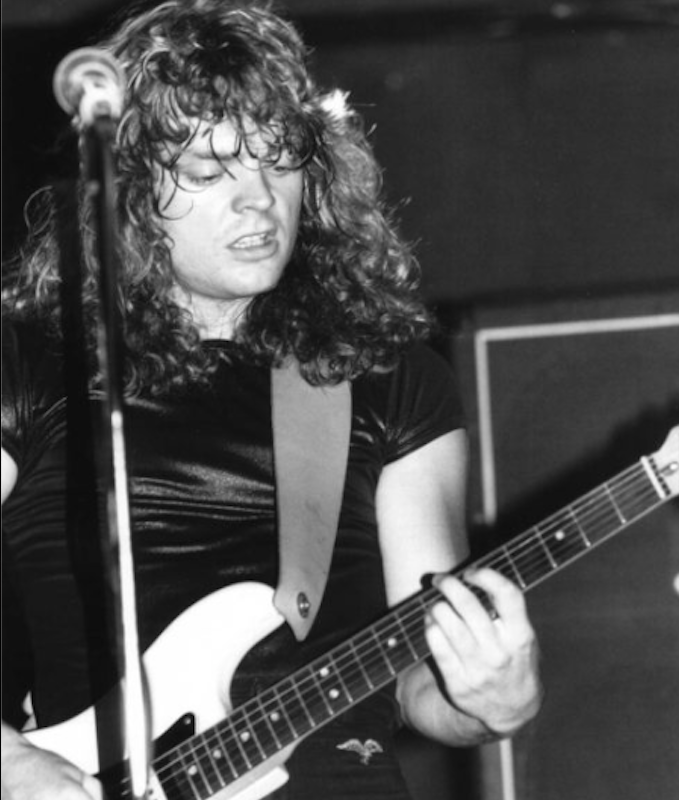
Carl here: – Some of these songs were written when I was this young!
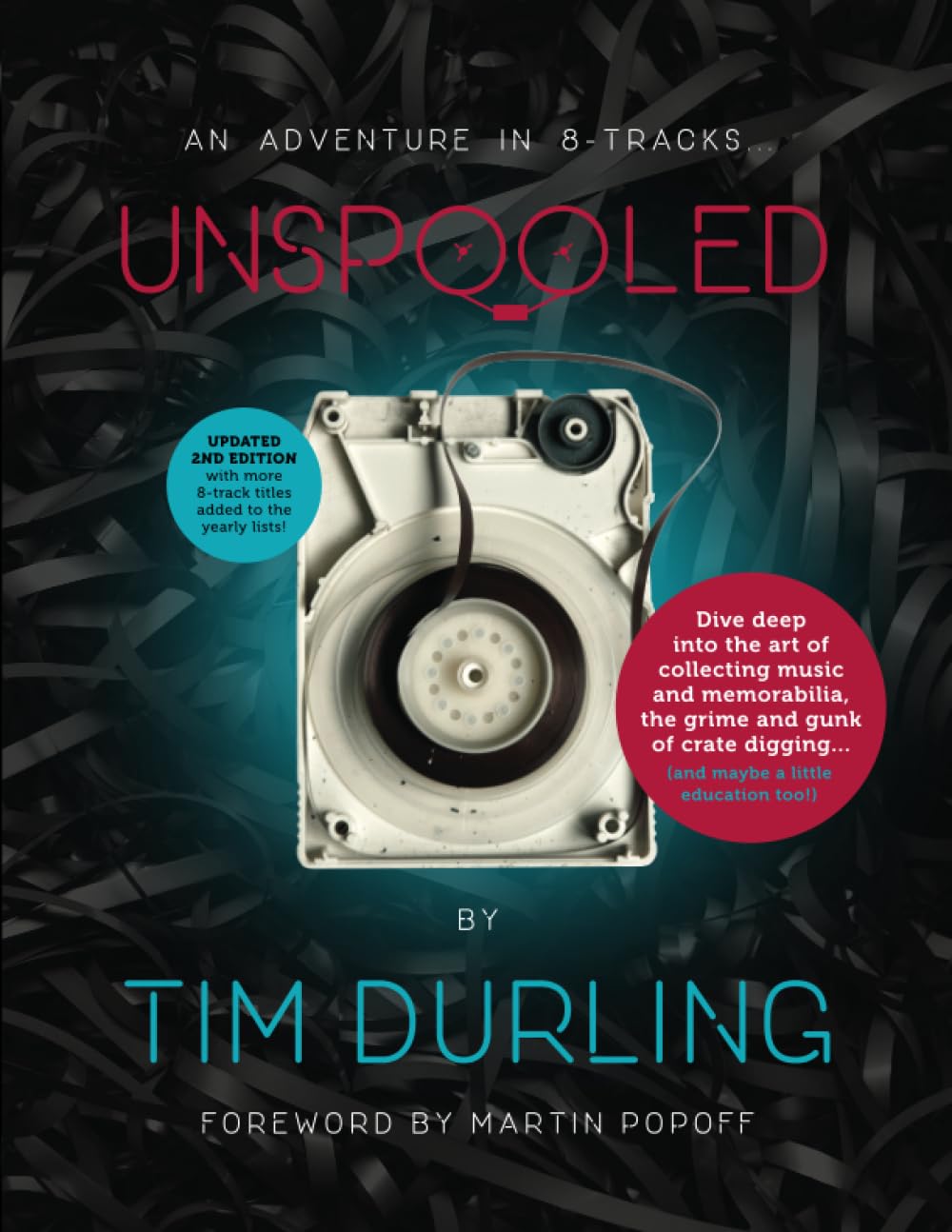
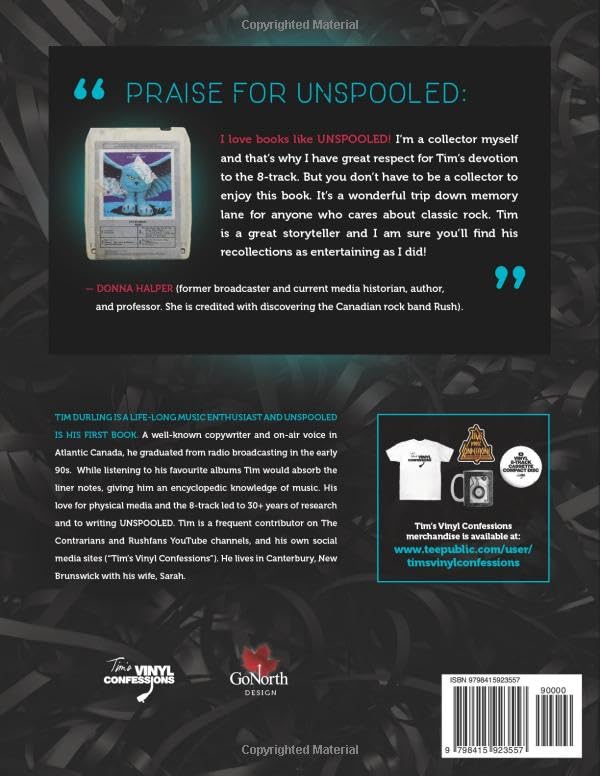
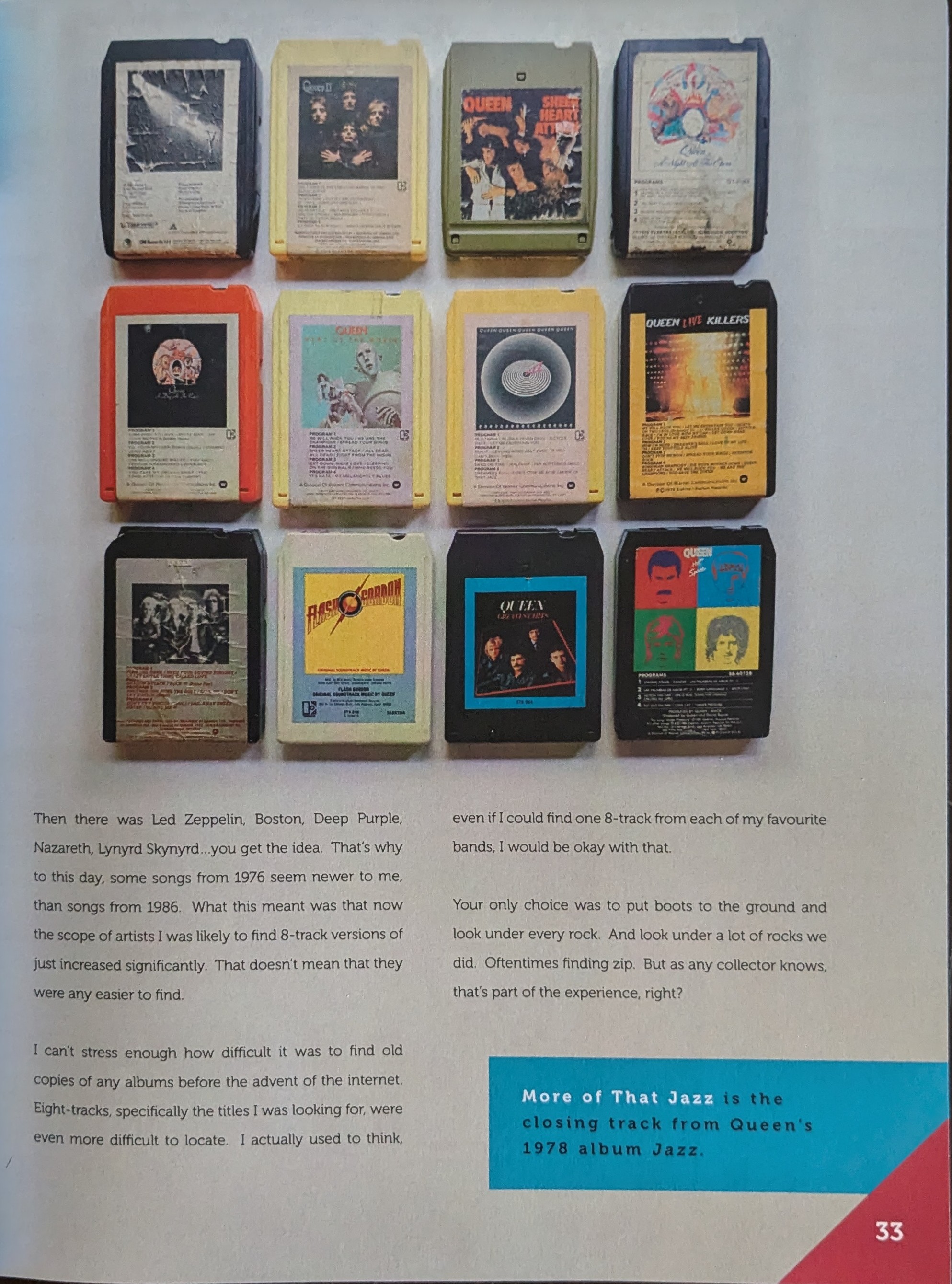
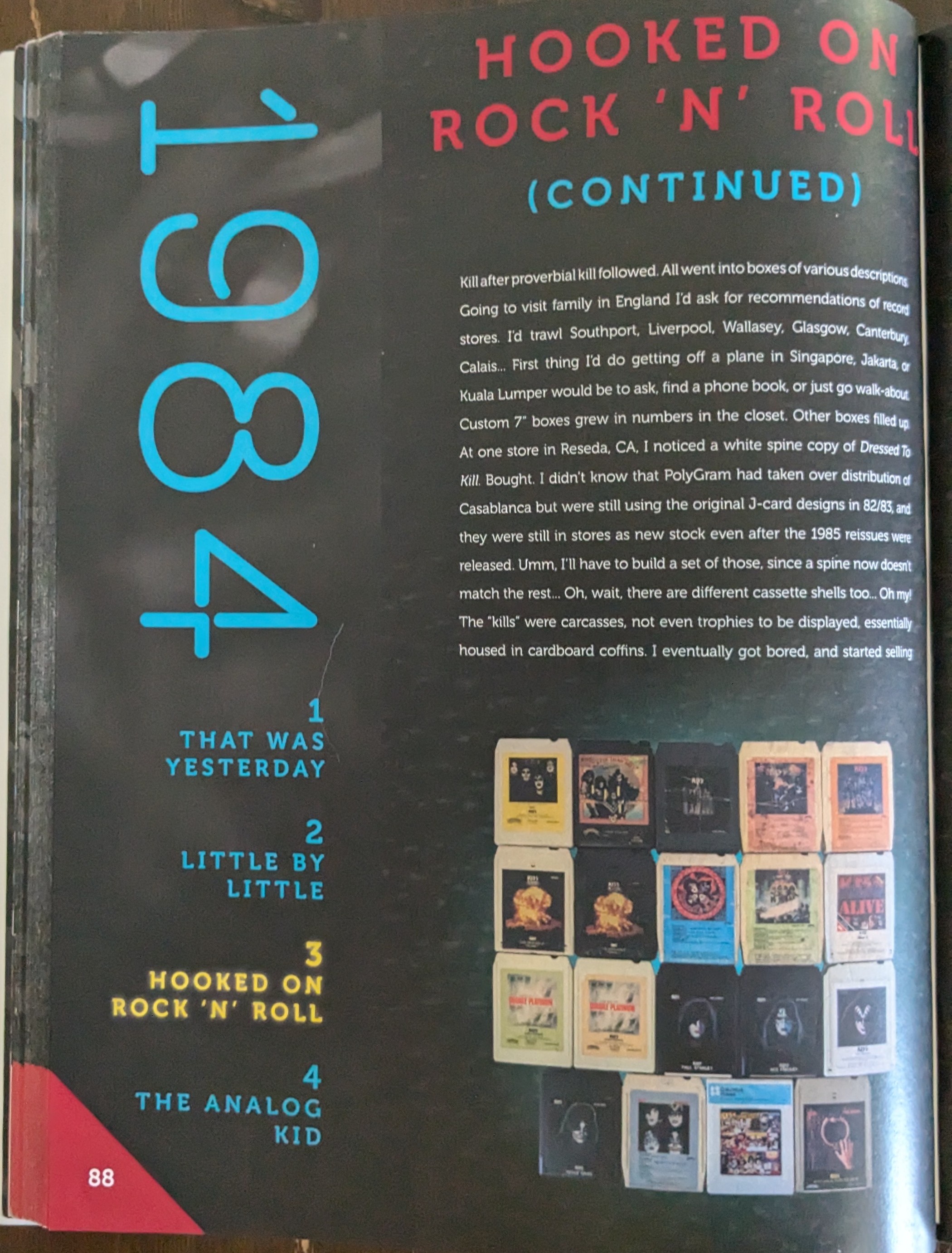
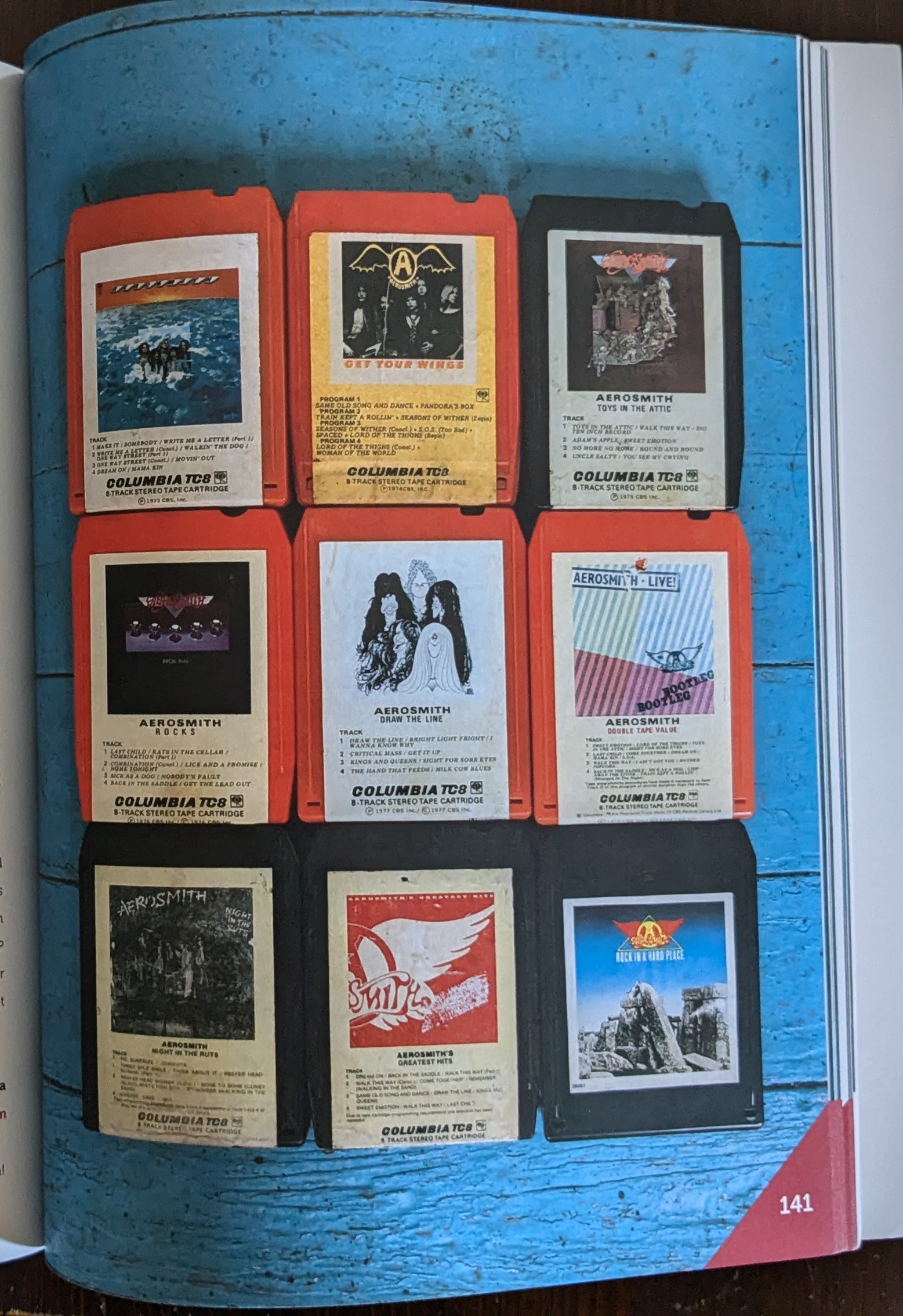
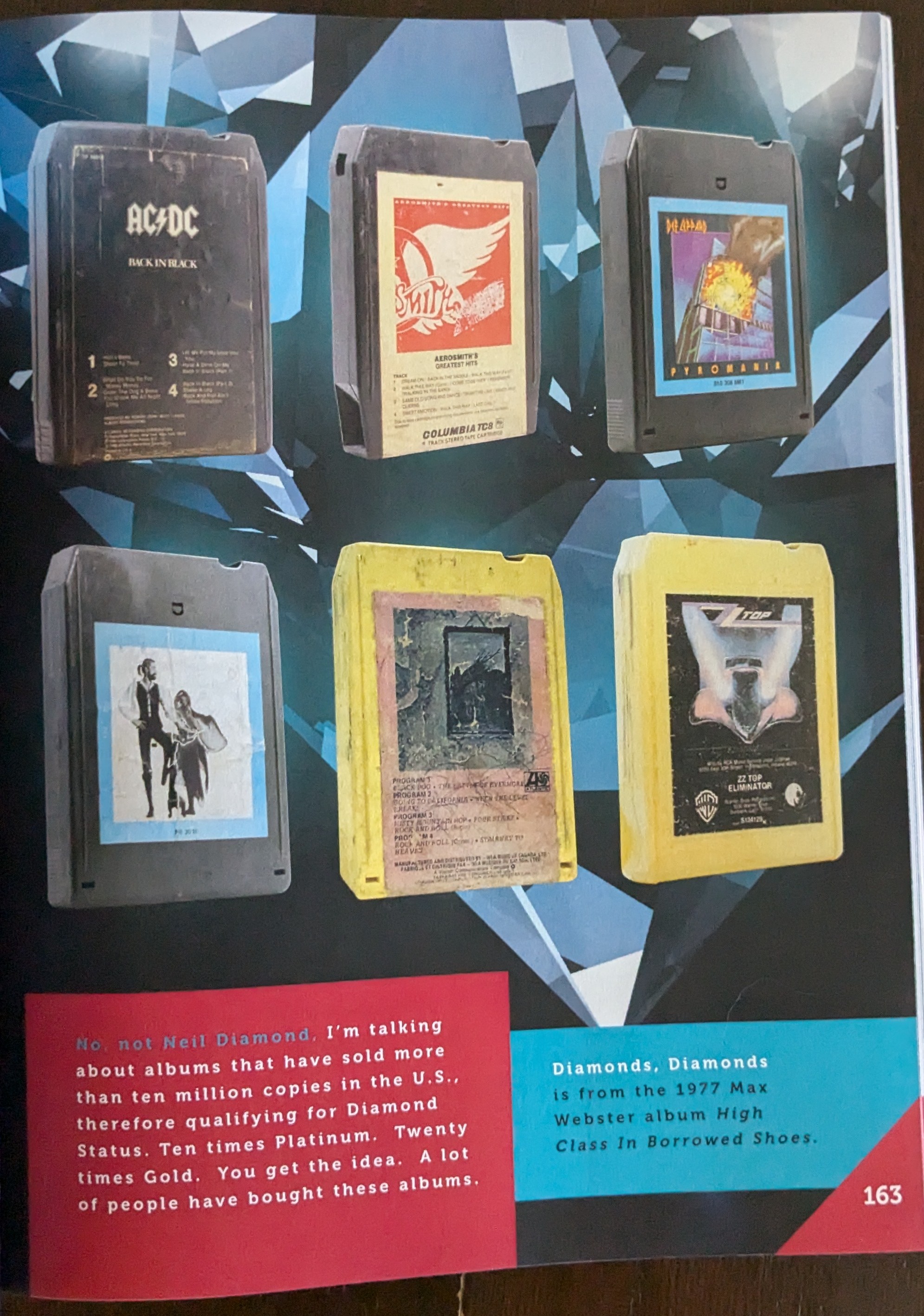
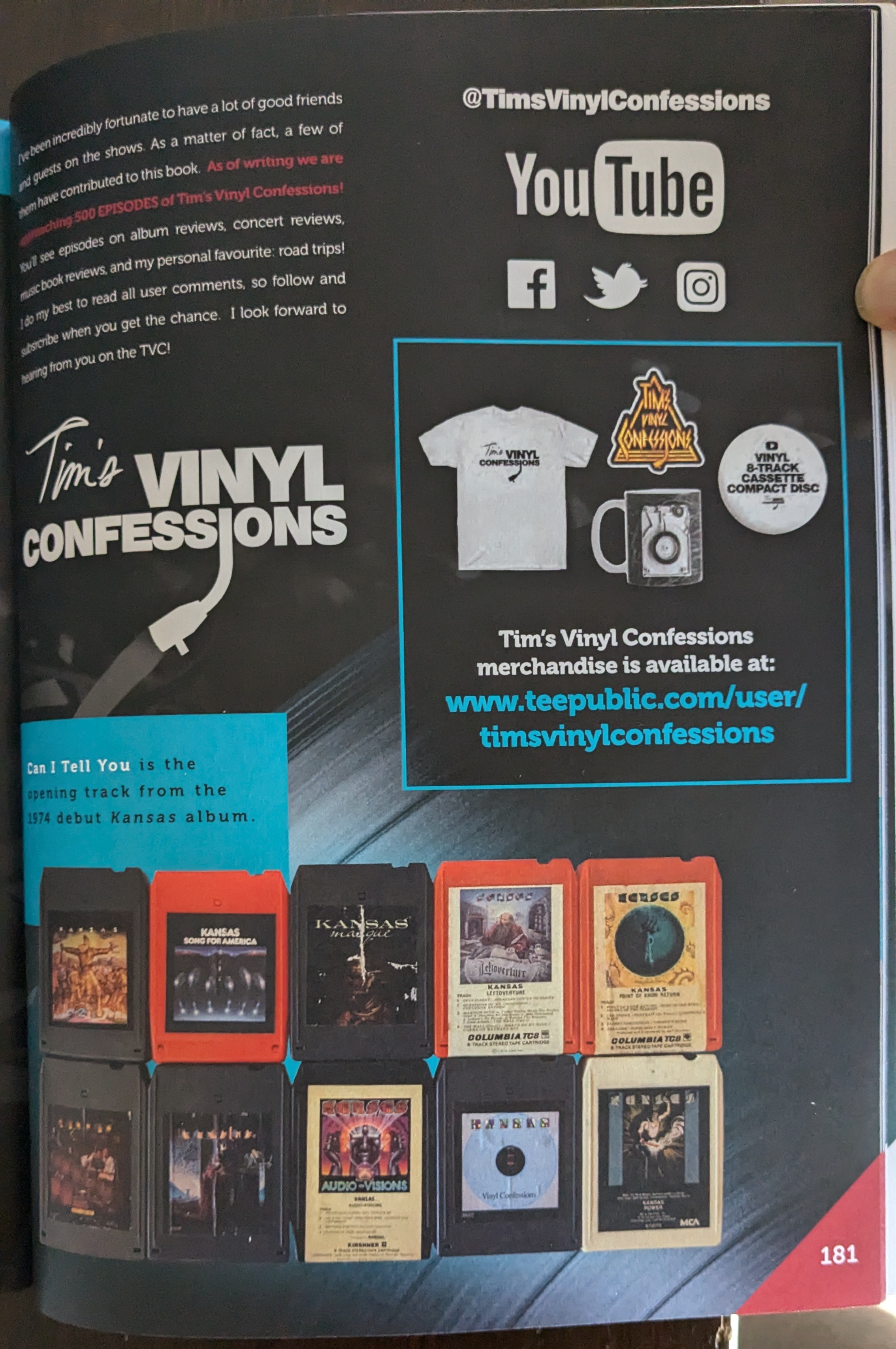
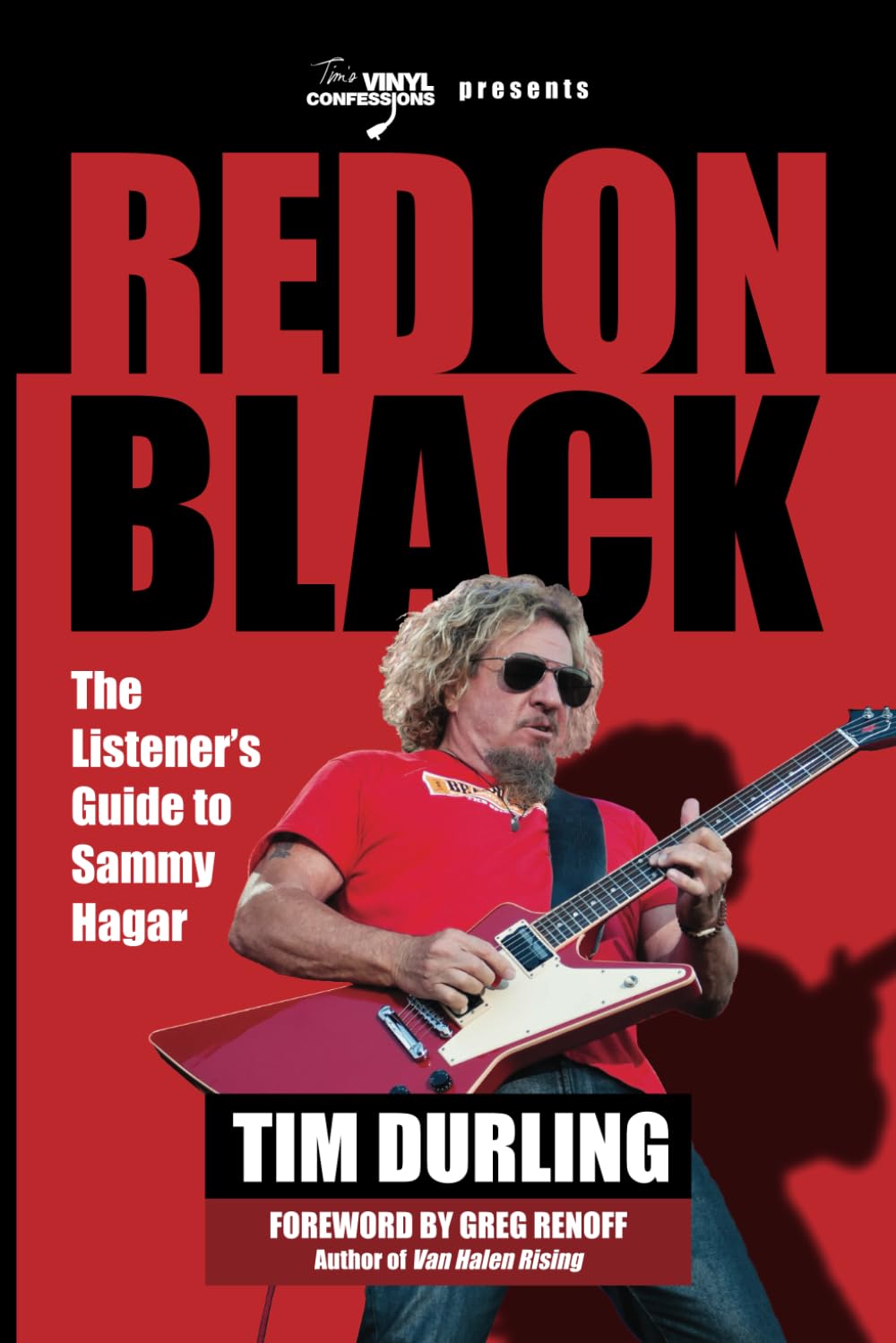
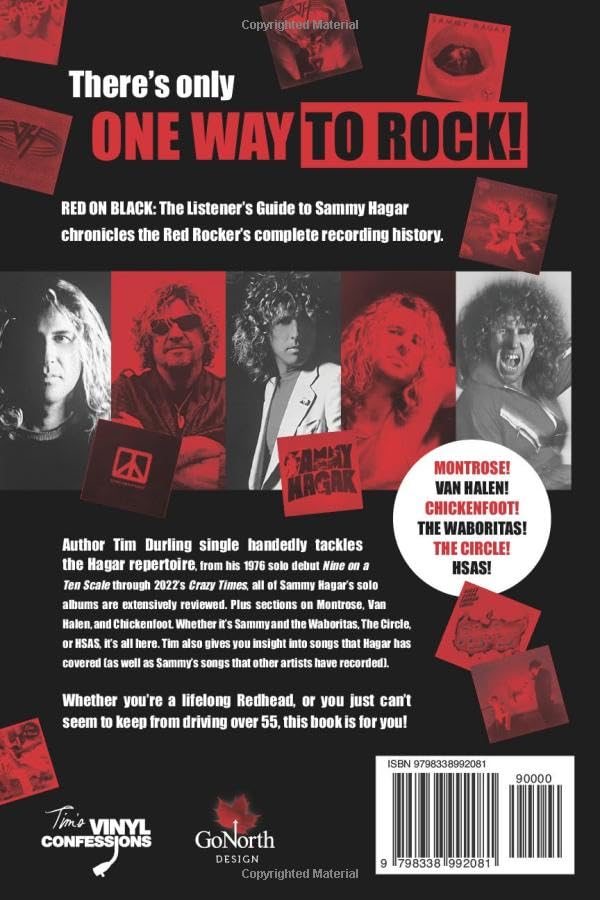
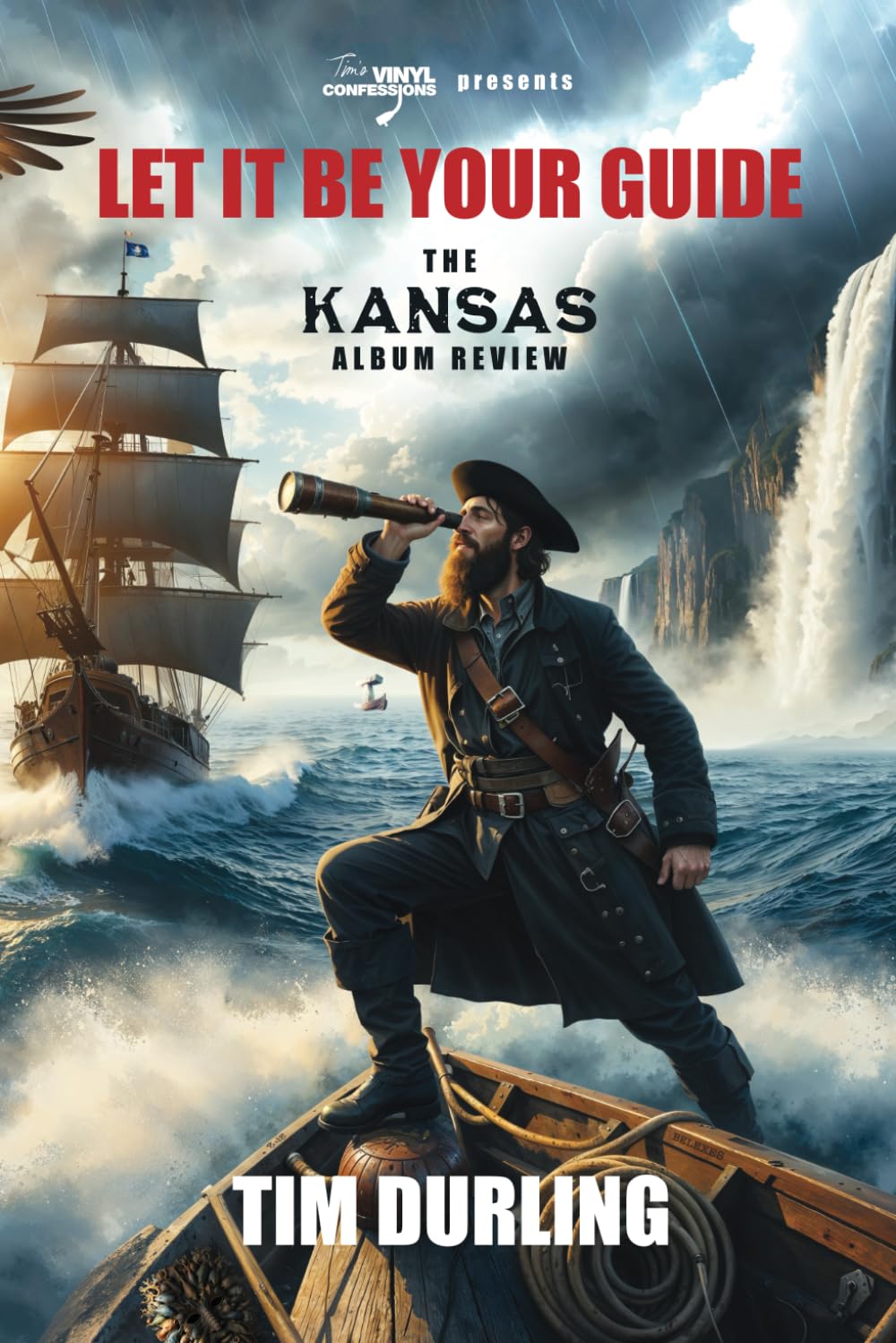
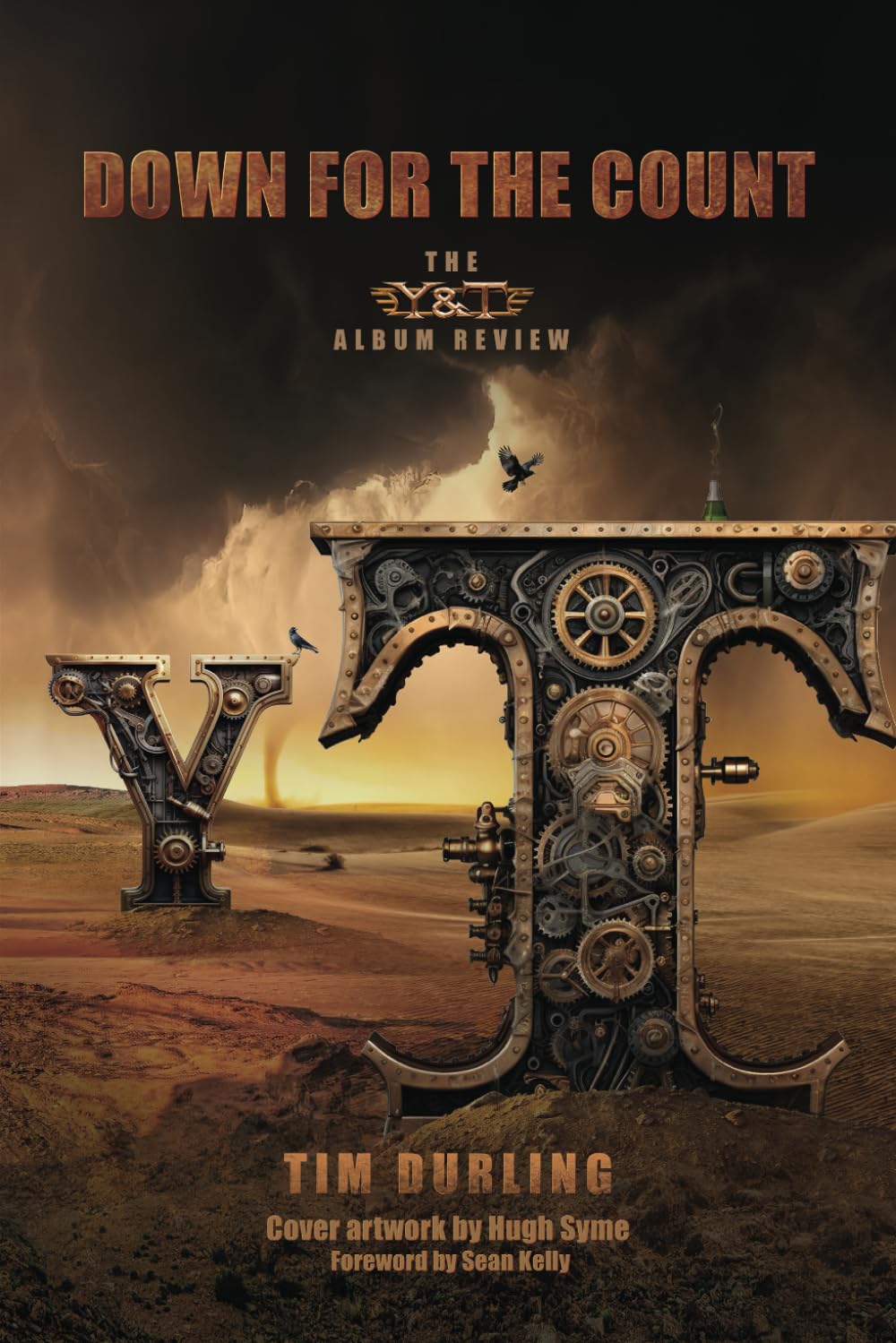
Canadian writer and radio personality Tim Durling, is from a small town in New Brunswick. Adding to his career in radio, Tim has taken to writing books on rock bands and collecting. His book UNSPOOLED: An Adventure In 8-Tracks is about the 8-track cartridge collecting of the 80s(!), with focus on those record club releases. He’s also penned books on Kansas, Y & T, and most recently Sammy Hagar! Below is my interview with Tim Durling, discussing his collecting 8-tracks, his interest in writing about them, and how, as well as touching on his books about Kansas, Y & T, and Sammy Hagar. Tim knows his topics, and speaks passionately and in detail about his works.
So, I’ve went through Unspooled a couple of weeks ago, put it down. For me it’s kind of like a coffee-table book, a fun book to pick up whenever.
Exactly! I’ve even called it a bathroom reader, and I don’t have any problem saying that because those are books that people return to time and again…But yeah, you’re right, it is a coffee table book. It’s not a book that you necessarily have to pick up and read from cover to cover. Just flip it open to a page and go.
As far as your interest in 8-Tracks, you don’t play 8-Tracks, so how do you kind of get onto it becoming such an obsession? Is it kind of in the way you look at hockey cards or something, where you can’t really do anything with them, you just look at them?
Yeah, so it is kind of weird. When I first started collecting 8-Tracks, I guess it would have been the early 90s, I actually did have a little portable player that I found somewhere, but it ate up an almost pristine copy of ‘Queen II’. So, I said, “I think I’ll just collect these and listen to the CDs. I think that’s what I’ll do”. And I’m a physical format guy, and if I like an album, I kind of want to have as many formats as I can, and 8-Tracks just happened to be one of them a lot of the time. And it is a very niche collecting thing, especially where I don’t actually have anything to play them on. But I basically judge it on – is the label in good shape? Is it nice and smooth? Sometimes they get left in the sun, and they’re all warped and bubbling and sun damaged or water damaged. So, if a label looks really nice, that has a lot to do with my decision to buy one, as well as price and stuff. I do know that there are collectors. They have players, and they refurbish the players, and they refurbish the tapes, and it takes an awful lot of dedication and patience, because you’ve got to get down there. You’ve got to oil the parts. Sometimes you’ve got to re-spool the tapes. What collectors typically say is you don’t ever get a brand new tape and just shove it right into the player. It takes a lot of work, and I’m just not that inspired to go through that. I admire that dedication, but I couldn’t do it for myself.
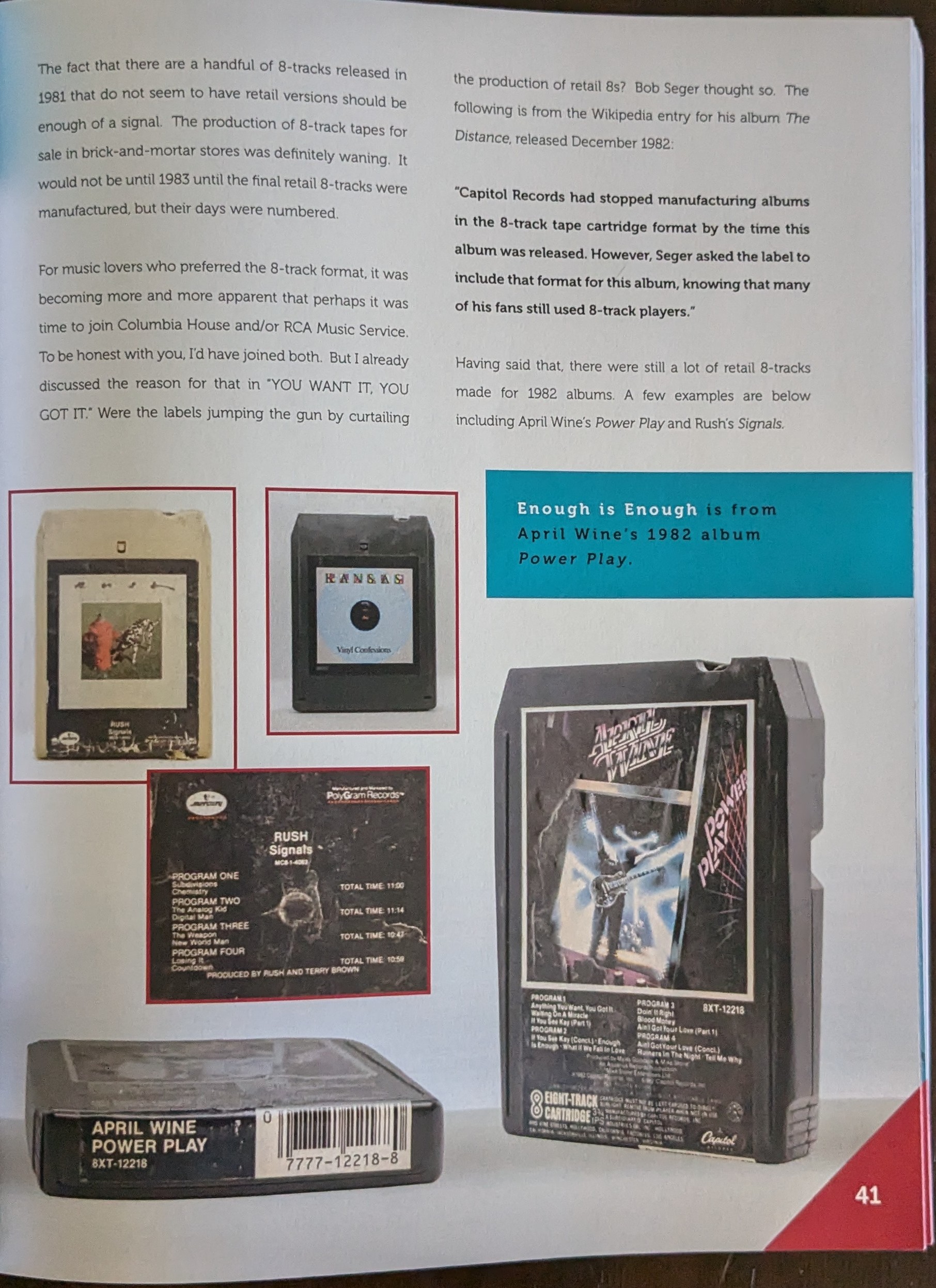
I’m particularly fascinated by what I call RCOs, the Record Club 8-Tracks, which is mainly what’s in this book, which are the tapes that the record clubs, Columbia House and RCA Music Service, made available well past the time when record labels were manufacturing them for retail sale, which was around 1982. That’s when you started seeing 8-Tracks disappear from store shelves. I guess I kind of always thought that’s pretty much the end of the 8-Track, because I never saw any past 1982, 1981, but sometime in the mid-’90s, one of the first times I ever had the opportunity to go online, I wanted to know more. I was really curious about when they did stop making these things, and that’s when I stumbled upon a website called 8-Track Heaven, which is now defunct. There is a chapter about it in the book. There’s an archived version of it. That’s when I discovered this section called the 80s, Record Club Only, the 80s 8-Tracks. I looked, and that’s when I realized that there was this whole other world of collecting that I knew nothing about, where most major label titles were still being manufactured on 8-Tracks, and it went all the way up to 1988. For a kid that grew up in the 1980s like I did, that blew my mind, because I don’t ever remember seeing albums from the mid-’80s onward on 8-Track. Now, part of the reason for that is because it seems to be strictly the record clubs in the United States. There was Columbia House in Canada, of course, but it looks to me like from all the research I’ve done, they went later than retail did, but they stopped around 1984, because I’ve never seen an 8-Track from Canada newer than 1984. The newest one I have is a Columbia House version of Rush Grace Under Pressure.
But in the States, they didn’t manufacture everything. There are some gaps, but they did a lot. They did a lot more than I had any idea, and I thought there should be, I think, any part of music history, no matter how small, should be documented, and this is a part of music history. So that was one of the things I always wanted to do.
Now, when I started off writing Unspooled, I was just going to have a by-the-year list of all confirmed known titles to exist on 8-Track throughout the 1980s. But after speaking with Martin Popoff, who I was a fan of his writing, and then I got to know him through… I was on an episode of Rush Fans, which is just what it sounds like, we’re a group of Rush fans. Martin was on the same episode as I, and I remember thinking ‘if I wanted to have him on my show to talk, I better message him now while it’s fresh in his mind, Hey, Martin, we just did the Rush Fans show together’. Because I wanted to pick his brain, because since he’s older than me, what he remembers about 8-Tracks and when they disappeared, and I told him about these RCOs, he had no idea. He thought, I think like most people did, turn of the 80s is when they stopped making them, and everybody either, kept buying vinyl or switched to cassettes. And at the end of our interview, he said ‘I think there’s a book here’. And I remember thinking, because I had no… I really had no plans of actually doing a book. It wasn’t something that entered my mind.
I would have been perfectly content if somebody else had done it. I would have just bought the book. But I thought, if Martin Popoff thinks there’s a book idea here, and it doesn’t sound like he’s going to do it, then maybe I’ll give it a go. And so he suggested that I add some more stories in it, some personal stories, some collector stories, because really the broader picture is what drives us to collect things. Like, you know, what drives us to collect hockey cards or antique toys or guns or whatever it is that people are into…And this is just a very, very specific… I call it niche within niche, because it’s not just collecting 8-tracks, but it’s specifically about these hidden ones that you won’t… you’re not likely to see them at flea markets, although you seem to be able to see some good ones. But somebody must have unloaded some from the States, because they’re American ones. I can tell by looking at them. And I wanted to go through year by year. So, it ended up starting in 1981 and going to 1988. The reason it starts in 1981 is because there are the titles that are in the 1981 list, which I put the list at the end of each chapter, those are all titles which seem to exist only as record club tapes. There don’t seem to be any retail versions of them, although it’s very possible that there are, I’ve just never seen them.
Now, between the first and the second edition of Unspooled, I did have to make some changes. There were more titles that I found, and there were certain titles that I found that actually did exist in retail that I had to remove from the first version. As a matter of fact, if I ever did a third printing of this, I’d have to have more to it to do that. But in the 1981 list, I think, I’m going to check this, I think I’m right about this, there is one that needs to come out, and it is, bear with me here, yeah, Nazareth Snaz, the live album, because I actually found a retail version of it. So I’m like, well, that can’t be in the list then. But I went on, you know, have I seen a picture of it? I belong to a lot of Facebook groups about 8-track collectors, and I’ve met a lot of really knowledgeable, reputable people, and if they’re telling me something exists or doesn’t exist, I believe them. And most of the time I’m like, do you have a picture? Yes, here. And here’s how the songs are broken up on it. And so I did a lot of that. And in doing so, you notice a lot of trends, you notice that they really slacked off around 1985, and then 86, and by the time you get to 1988, it’s a pretty small list. But, you know, there’s other things, one of my regrets is that I really wish that I could have found someone who worked at Columbia House or our music service back in the 80s, and said “Look, what was the thought process? Number one, why did they keep making them on 8-track when retail wasn’t selling them anymore? And what finally made you decide to stop making them?” Because between 1986 and 1988, if you were a member of Columbia House, you had four options. You had 8-track, vinyl, cassette, or CD.
So that’s four different, you know, that’s a lot of manufacturing costs. And it’s just crazy that, it’s crazy to me that 8-tracks and CDs coexisted for as long as they did. And it’s just something that I didn’t seem to see any real books on.
I mean, cassettes have come back. A lot of new albums are released on cassette. Vinyl made a major comeback, of course. Vinyl’s always kind of had that cool factor. Cassettes are kind of getting it. 8-tracks have always kind of been frowned upon, people remember how unreliable they were. But what made 8-tracks successful in their earliest days was the portability. It was the first time you could put a player in your vehicle and listen to whatever album you wanted when you wanted. That’s what won out. It won out over sound quality. It won out over being able to look at the artwork. There was no back cover artwork, no lyric sleeves. And even the front cover, if you were listening to a tape, half of it was shoved into the machine. But it was the portability, just being able to drive around and listen to your favorite albums, your favorite songs.
And cassettes, by way of comparison, when they first came out, my understanding is that the manufacturing quality was not up to speed. They really weren’t reliable. So, it was a combination of the 8-tracks just peaking in popularity like any format does, and cassettes becoming more reliable, more advanced, sounding better, and a little smaller, too. A little more portable. And then, of course, when the Walkman came out, hey, not only can you listen to something in your vehicle, you can walk around listening to whatever you want. So that was kind of the death knell, I think, for the 8-track.
But obviously, the record clubs must have felt that there was enough of a market out there that still, that weren’t ready to have a wholesale shift of all their music collection over to another format to keep making them. And it is absolutely fascinating to me because 8-tracks are pretty much synonymous with the 70s when people think of radio stations say, “Hey it’s the 8-track flashback”, and it’s always a 70s song. You wouldn’t think that you’d have albums from 87 and 88. And really, you shouldn’t be. That’s another thing about these. They’re out of time. They don’t make any sense. And that just, for some reason, that concept fascinated me to the point where not only have I looked for albums that I like in this format, it’s not just collecting 8-tracks for the sake of collecting them. I have to like the artist. I have to like the album. But it’s documenting them so people can see ‘wow! Madonna had 8-tracks, Cindy Lauper had 8-tracks…’ To me, it just doesn’t make any sense because you just don’t think of these artists as coexisting with the 8-track era, but they did, and they’re absolutely legitimately….people do manufacture their own. There are people that put new albums on 8-track and, as a tribute, and that’s cool and everything, but these were legitimately sanctioned by the record labels for the record clubs to put their albums out on 8-track form. So, it wasn’t anything I saw, any book resembling this subject, so that’s why I did it.
It’s funny, before we got on, I was flipping through your Sammy Hagar book, and I saw that you had a picture of 1987 on 8-track.
Yep, again, that’s a prized possession of mine too, because you get into those last few years… I can’t imagine that the numbers were produced, even for platinum albums. I can’t imagine there were too many of them produced. So that’s another reason why I would have wanted to talk to somebody that worked there and said, “Did you have some titles that were in the catalogs, but you never actually manufactured? or did it have to be a case where “We’ve got 50 people that want Michael Jackson’s Bad, we’ll have to run a few off.” or something like that. I don’t really know.
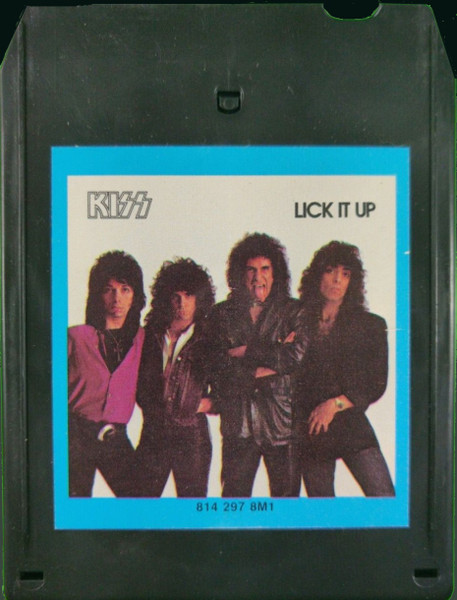
I know that artists that have fan bases that are big into collecting, 8-tracks are just part of that, and that’s why you don’t see a lot of heavier bands, even if they were manufactured on 8-track, because there’s always going to be a bidding war breakout. I know one of the best examples, and it’s not even a band that fits in the purview of this book, because their first three albums came out on 8-track, but they all came out in retail form. There were no, you know, it wasn’t a record club. The only thing, and that’s Iron Maiden, their first three albums came out in the U.S. on Capitol 8-tracks, and those go for hundreds and hundreds of dollars when they do go on sale, because Iron Maiden fans are generally collectors. Kiss collectors, same thing. If you collect Kiss, chances are you’re going to want to collect all the variants of the records and the cassettes and everything, but you’re going to get into the 8-tracks, and that’s when you find out how hard it is to find Creatures of the Night or Lick It Up or Animalize on 8-track, and that’s when they stopped. And that’s another thing. Not everybody stopped in 84. You mentioned Sammy Hagar, I mean, so you’ve got the example of Kiss. Why isn’t Asylum or Crazy Nights on 8-track? I don’t know.
Yeah, it’s kind of random. There are unanswered questions about it, and I can’t prove beyond a reasonable doubt that they weren’t made, but I’ve been looking into this for an awful long time, and either there are so few of them, and people don’t know what they’ve got, or they’re in somebody’s attic somewhere, and they belong to somebody’s parent or grandparent, and they haven’t been unearthed yet, or they just weren’t made. So, I don’t know. That’s why I included a section in my book where I did this ‘fantasy’ of, here’s five titles that could exist on 8-track given the year they were released. Here’s why they could exist. Here’s why they probably don’t, and Asylum is one of them, because I also judge by what else came out on the same label that’s in the same sort of ballpark, and that makes me think that it’s possible.
In researching, I know that 8-tracks had an appeal to truckers in that. Did you ever make connections with anybody that kind of was in that kind of field?
No, no, but that is one of the, I don’t want to say cliches, but, one of the cliches is truck drivers and even just people that drove pickup trucks. You’re typically talking about country and western. And I will say that there is some truth to that in so much as if you were a country music fan in the 80s and you did not want to stop buying 8-tracks when you couldn’t find them in stores anymore, you were well served by the record clubs, because just about every country star you could name, all of their albums came out on 8-tracks. So even relatively newer artists like (say) Dwight Yoakam or Randy Travis or Sawyer Brown, they have 8-tracks. Reba McEntire, for a while, she started a lot earlier. So I think there was something to that. And that’s why it’s even more bizarre to think that there’s an 8-track version of the first Bon Jovi album. There’s an 8-track version of Dokkens’, there’s Ratt Invasion Of Your Privacy, Motley Crue Shout At The Devil. Makes no sense, but they exist. They are 100% real.
And also, I just think people get used to things. That’s why I also included a picture of an 8-track cassette adapter in the book, because I can vividly remember that my grandparents, they had one of those old four-model stereos that had a turntable, and it had an 8-track and a radio. And I had an aunt and uncle that were visiting, and they listened to a cassette, but they had this adapter, and there’s a picture of it in the book. It’s shaped like an 8-track, but there’s a space. You can lay a cassette down in it, plug it into the 8-track player, and it will play the cassette. And that just makes me think of when VHS switched over to DVDs, and then they started coming up with those hybrid combination players. It’s a format shift. There’s been lots of them. Look at VHS tapes now, they’re pretty much worthless. You can go to any flea market, any Salvation Army place, and there’s hundreds of them. Will there ever be a time when they’ll be like, “Hey, you remember those? Those were cool.” I don’t know. But I do know, you know, the fact that you get Blu-rays now manufactured to look like the old VHS tapes shows that there’s a nostalgia for it.
Yeah, I got tons of VHS tapes. I used to tape stuff off the TV in the 80s and 90s.
Oh, yeah, when we first got MuchMusic. that’s how I consumed music a lot. I’d put a tape in and just let it go.
Of your 8-track collection, is it more retail or more record club stuff you’ve got?
Oh, it’s definitely more retail. There’s just more of them, right, like the bands that started in the early 70s. I’ve got a decent amount of record clubs’, though. It just depends on who it is and how long their career kept going, right? You take a band like Aerosmith, so obviously from their first album, through to Rock And A Hard Place, those were all retail 8-tracks. The one to look for and the one I don’t have is Done With Mirrors. And that’s highly in demand because there don’t seem to be many of them. You get a band like Kiss that obviously kept on going. Their 8-tracks go up to Animalize. So, sometimes there’s only two or three record club ones. And then they stop. So, I definitely have more retail than record club ones.
For me, the interesting reading in the book obviously is the interviews and the guests you had in there that told their stories of that, as you said earlier. Did you come across any collectors in all these groups that you visited that maybe weren’t able to get into your book that had crazy amounts of 8-tracks or,…
I had pretty good luck. Pretty much everybody that I sought after was willing to talk to me. Now, there was one person I talked to who was all ready to talk to me and I was going to do a chapter on them, but then they said they were going to do their own book, and I said “well, ok that’s cool”. They haven’t yet. I’d like to get it when it comes out. But it wasn’t a bad thing.
Did you come across anybody that had an insane amount of 8-tracks compared to what you got?
Yes, I definitely have met people that have hundreds upon hundreds of them. These are people that like a wider span of music than I do, too. So, they’ve got more artists to look for. I haven’t counted them in a while. I’m looking at them, but I’ve probably got, I don’t want to say 300. I’m not sure. But it’s in the hundreds anyway. It’s a lot. These RCO ones, you’re not likely to find them on eBay, you do sometimes or sometimes Discogs. Most of the time, you go into these Facebook groups. And once people know what it is you’re looking for… because a lot of people buy and sell. I don’t sell, I just buy. But a lot of people buy and sell. And they’ll say “I got a couple of such and such. Is that one you were looking for? …”
That’s how I’ve gotten the last bunch that I’ve been able to get, which include titles like Deep Purple Perfect Strangers, Rush Power Windows – That was a major grail for me. That’s the last Rush one. Queen The Works; that’s the last Queen one. Once you’ve come so far with your collection, about the only way you’re going to really complete any of them, you’ve got to spend a little money. So, you have to balance that out with everything else. I’ve got a few collections that I would say are complete as far as these are all the eight tracks this group or artist put out.
Is there anything, do you have any holy grails yourself, things you’re looking for?
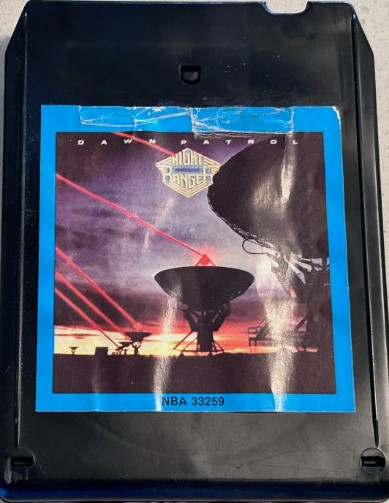
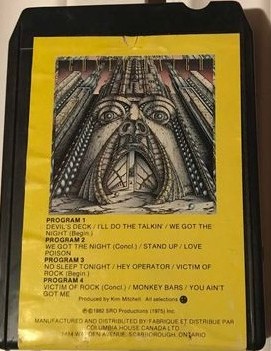
Oh, yeah. Basically it’s completing the collections, starting with my favorite bands. I mentioned Kiss. I don’t have Creatures of the Night or Lick It Up. Now, the funny thing is that Creatures of the Night only seems to exist as a retail, a U.S. retail version, and it’s highly in demand, as is Lick It Up. For some reason, and maybe it’s because it was a more successful album, Animalize is a little bit easier to find. That doesn’t mean it’s easy to find. That means it’s easier than those other two. I have Animalize, but I don’t have Creatures or Lick It Up. So that would definitely be one of my grails. Triumph Never Surrender is one I’d like to get because that would finish my Triumph collection. I have Thunder 7, and again, that seems to be easier to find for some reason. Never Surrender seems to exist only as (I’ve only ever seen) a U.S. RCA Music Service version. But it’s out there. There’s probably a Canadian Attic (Records) one, too. I’ve just never seen one. I know that one of my major grails is the first Coney Hatch, which does exist as a Canadian Anthem, Columbia House 8-track. I was fortunate enough to have Andy Curran on my show, and he didn’t even know they had an 8-track, and I had to show him a picture of it. I said “This is it. And here’s how the songs are broken up”, because they usually had to mix the song order up. We joked. I said “I’ll know if a bidding war breaks out, and it’s me and one of the first, and it was probably you”. The first Bon Jovi album I would love to have. I love that album. And just the idea that there’s a Bon Jovi 8-track; it’s just weird to me. As you know, I’m a big Night Ranger fan. I don’t have Dawn Patrol. I have Midnight Madness and Seven Wishes, but Dawn Patrol seems to be harder to find. Normally, it’s the other way around. Normally the newer ones that are harder to find, but not in that case.
I was going to say, Dawn Patrol wasn’t their biggest seller, though, was it?
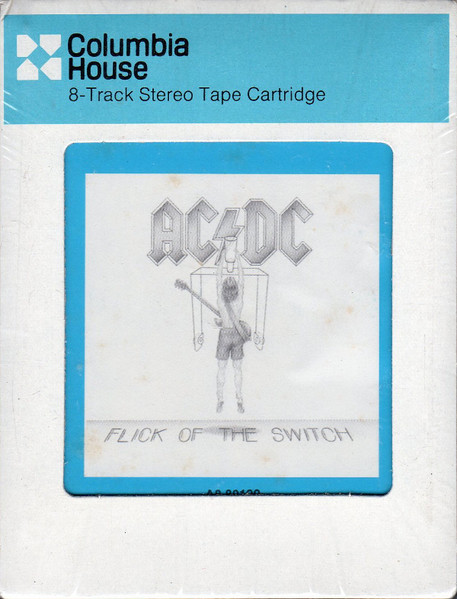
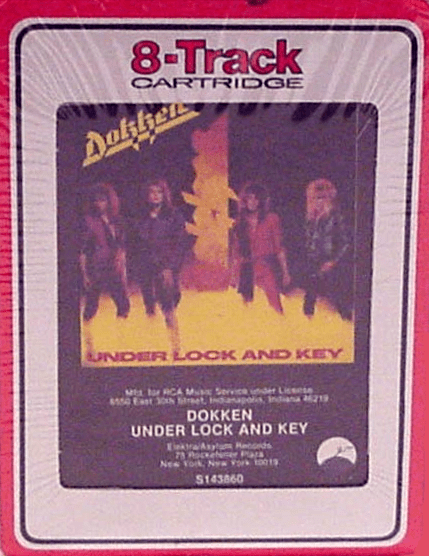
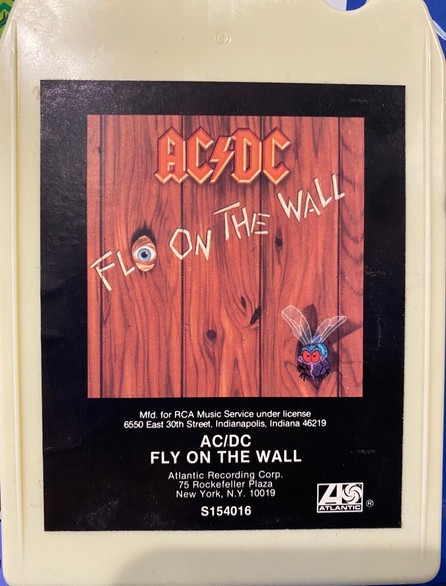
No, and also, when it came out, it was a Columbia House only, as far as I’ve seen it, it was on Boardwalk Records, which went out of business within a year of the album being out. So, I think that has something to do with why that one’s more rare, because it’s easier to find Midnight Madness and Seven Wishes because MCA picked them up. Now, they did reissue Dawn Patrol, but I don’t know if there’s an 8-track version of that. I’d be happy with one of those. There’s one Sammy Hagar that I don’t have, and that’s Rematch, which is the Capitol ‘best of’ that they put out in 1982. And that’s another thing that’s odd, because there doesn’t seem to be an 8-track version of VOA, which doesn’t make any sense, because number one, it was his most successful album, and number two, the album that came after that is on 8-track. And there are a few cases that I’ve come across like that. I mentioned Ratt earlier; the Ratt EP exists on 8-track, as does Invasion of Your Privacy, but Out Of The Seller does not seem to. That doesn’t make any sense. Now, I’m not saying it doesn’t exist, I’m saying I’ve never seen evidence of it, and I would never list something in this book if I didn’t. I would never go by someone saying “I think I saw it once”. I need better proof than that. I need either a picture, or I need someone to say, Tim, I can assure you beyond the shadow of a doubt, here it is, this is what the song order is, then okay. But other than that, as far as other Grails, well, if it’s still there for a while, you could go on Discogs, and if you had 2,000 U.S. dollars, you could get Dokkens’ Under Lock and Key. Now, I like that album, but I don’t like it that much. But is that an outrageous price? I don’t know, because when’s the last time you saw Under Lock and Key? When’s the last time you saw a Dokken 8-track? So that’s what you have to deal with. You have to factor that in. It’s like, how bad do you want it? And yes, sometimes I do think things get overpriced, like anything, but at the same time, I think demand drives the price up. And for some reason, the hard rock and metal bands. Those tapes go up. People are willing to pay big bucks for Ozzy’s Bark at the Moon, because that’s the last Ozzy one, right? And Ozzy’s still popular. Or AC/DC Fly On the Wall, Who Made Who? Those are two that I don’t have. I’ve got Flick Of The Switch, which is kind of rare, but I don’t have Fly On The Wall or Who Made Who. So, it’s how far up they went when they stopped, and how popular… Because you could go on eBay today and buy a Statler Brothers 8-track from 1987 for five bucks. Just the demand’s not there, you know what I mean? So, it’s not necessarily just the year, it’s who it is.
Version 1.0.0Version 1.0.0
What other books are you working on as far as… You’ve got the Y & T book, the Kansas book, the Sammy Hagar book, which is more of just a review and listings book. So, curious what else you’ve got on the go…
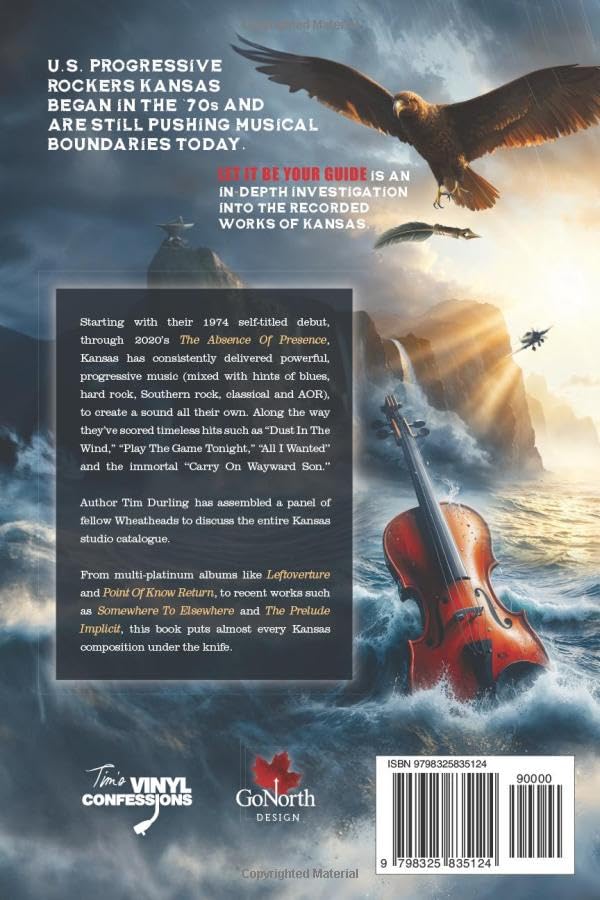
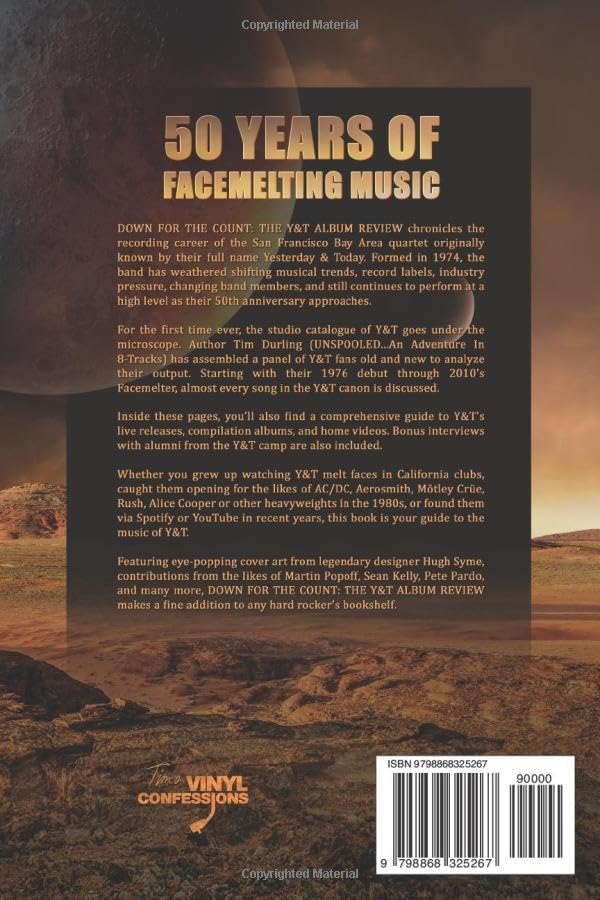
So yeah, Unspooled is unique, because it’s the most expensive book I’ve got, it’s the most graphics-intensive book I’ve got, and I have to give a special thanks to my good friend Matt Phillips. We’ve been friends for over 30 years. He has a company called Go North Design, and he laid this book out, and I would put it up to anybody’s work. I think it’s totally professional-looking. My other books weren’t quite as graphics-intensive, although I was absolutely honored, because my second book (my Y & T book), I made the acquaintance of the one and only Hugh Syme – who’s work I’ve been a fan of for years being a Rush fan. But not just Rush, Def Leppard, Bon Jovi, Aerosmith, Whitesnake, Y & T, Kiss – tons of bands he’s done album covers for, so he designed the cover to that, which was an honor. The Unspooled one was kind of an odd thing, but I think that I’m better at doing books on one band. Y & T has always been one of my favorite bands; they’re one of the unsung bands, and I think they should have been much bigger, so it was a no-brainer that that would’ve been my next book. After that, I’m a huge fan of Kansas, and even though they’ve sold millions of albums they seem to be the 2nd tier of what people think of when they think of classic rock bands. I think they should be up there with Queen and Zeppelin, they’re that good. And I think that the new music they’ve put out in the last few years is just as strong as anything. And that has a lot to do with a band I want to write about. If they’re still writing new music, really good and valid, that makes me want to do more work with them. Then the Sammy Hagar one; I’m a huge fan of his – in All of the capacities that he’s been involved in. So that made perfect sense. And that one was different – the Y & T and the Kansas books were very much modelled after Martin Popoff’s Album By Album series, where he gets a panel of guests, asks a bunch of people the same questions about a particular album, gets their answers, and gets the content that way. That’s how I did my Y & T, and that’s how I did my Kansas. I’ve got 2 books in the works, but I’m not ready to talk about them just yet, but they’re also going to be panel books. And I’ve got another one that’s just about done, and it’s more like the Sammy book where it’s basically just me writing it. And I think that that’s the course that I’m going to follow. Again, I have to reference Martin Popoff because he’s been such a great mentor to me, and he always says, “the books that sell best are the books about one band.” If you try to do a book about a movement or something like that, they just don’t sell as well as a book about one band. And I also look for band’s that haven’t had books written about them or haven’t had this type of book written about them; that’s been the driving factor. I plan on doing more. It was just kind of something I stumbled into. Five years ago, I had no books, now I have 4, with 3 in the works. It’s amazing really, and I’m grateful to everybody that promotes them, and has bought them. And the feedback I get – the best thing that I’ve had people come back and say is “I read your Y & T book, I had 1 or 2 of their albums, and now I’ve gone and bought a bunch more of their albums, and I want to check out further.” I’ve heard that with Y & T, I’ve it with Kansas, and I’ve heard it with Sammy, as a solo artist – “You know I have the Van Halen albums, and I had one of his ‘best ofs’, and now I’ve gone back and got a bunch of others”. And that’s why I started my YouTube channel, and that’s why I’m doing these books – to talk about music I love, and I think needs another spotlight on it. I love Kiss, but what am I going to write about that hasn’t already been written. I love Rush, but what have I got to contribute to write a Rush book!? Some bands… I don’t want to say there’s too many books – but there’s plenty! And there’s plenty by authors that have an angle that I just haven’t thought of. I would rather do bands where somebody goes “I like that band; I don’t think I’ve ever seen a book on them before.” And that’s really where I’m going with this. I think I’ve got plenty to keep me busy as far as bands, like ‘who hasn’t been done that could sort of use a tribute?’ Any band that’s been around for 40-50 years, I think should be commemorated in some way. And putting that information down in book form is a lot easier than going online and trying to figure out how many albums somebody has. This way it’s right there; you can pick it up any time, any place, and just look at it.
I like the idea of a Y & T book because there’s a band that’s been going since the early-mid 70s, and most people might know 1 or 2 songs from the 80s…
Yeah! And they probably thought that they stopped in the mid-80s, but they didn’t.
Have you got much feedback from some of these bands?
In some cases, yeah. In the case of Y & T I heard from John Nymann, their guitar player, and he’s been with them since the early 2000s, but his history with the band goes way back in to the 80s as far as being a background singer. And I don’t know if you remember when they had the robot character on stage with them from the In Rock We Trust album!? He was in the suit on stage, so he goes back with them a long way. And their current bass player, Aaron Leigh, I had them both on my show. So, they both have copies of the book.
How about Dave Meniketti?
I haven’t heard. I’d love to get a book in Dave’s hands. He’s the keeper of the flame. In the case of Kansas, it was very gratifying because Kerry Livgren, who was a founding member and wrote a bulk of their songs, a couple of fans made a pilgrimage to his home in Topeka and presented him with the book, and he made a very nice post about it on Facebook. I haven’t talked to him, but he did mention the book, and that was a big help. I talked to Tom Brislin, their current keyboard player, and he’s played with a ton of people; he’s played with Yes, Meat Loaf…he was great. I talked to John Elefante, their former singer, he’s in a couple of chapters from the 2 albums he sang on. I haven’t heard back from Sammy, but I have been in contact with Bill Church, his longtime bass player in Montrose and his solo band.
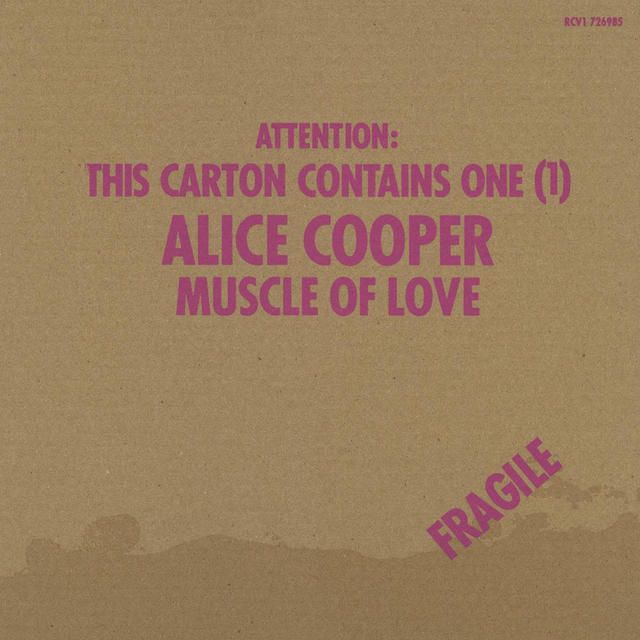
On most days Muscle Of Love is my favorite ALICE COOPER album. It was the last of the original band, being released near the end of 1973. It was the follow up to the band’s biggest album, and massive – Billion Dollar Babies, released earlier in that same year! While Muscle Of Love didn’t sell as well as it’s predecessor, it did go Gold and hit the Top 10 in the US, while making it to #4 in Canada (RPM). It didn’t boast as many hit singles as Billion Dollar Babies, the hit singles being “Teenage Lament ’74” and “Muscle of Love”, but it did feature a number of classic Cooper tracks such as the lead off “Big Apple Dreamin”, “Never Been Sold Before”, the ballad “Hard Hearted Alice”, and cool closing cut “Woman Machine”. A bit less theatrical than the string of classic albums leading up to this, but this is just a great rock n roll album! Perhaps it was a bit rushed at the time(?) and with Bob Ezrin not producing it, nor guitarist Glen Buxton playing much of a role on it, and a good portion of this album never played live, Muscle Of Love did not get a fair shake compared to those leading up to it!? Either way, I love this album. It’s got 9 memorable AC songs and is a fantastic listen beginning to end. So I am extremely excited for this release – the last of America’s Greatest rock n roll band!
Check out the press info, clips, and ordering link below.
The definitive version of the band’s seventh and final full-length offering encompasses 11 previously unreleased tracks, spanning recently unearthed Early Versions and Alternate Mixes of staple songs. Additionally, the liner notes feature an in-depth and immersive track-by-track account of the story behind MUSCLE OF LOVE, as told to renowned music journalist Jaan Uhelszki. She spoke extensively to Cooper, guitarist Michael Bruce, bassist Dennis Dunaway, drummer Neal Smith, and additional guitarist Mick Mashbir to compile the most comprehensive discourse on this record ever published thus far.
MUSCLE OF LOVE saw the band double down on their rock ‘n’ roll roots, delivering an uncompromising body of work buoyed by impeccable playing, massive hooks, and good old-fashioned Detroit grit. Produced by Jack Richardson and Jack Douglas, it cracked the Top 10 of the Billboard 200 and scored a Gold certification from the RIAA. This uncompromising body of work includes the famed title track “Muscle of Love” as well as “Teenage Lament ’74,” “Big Apple Dreamin’ (Hippo),” and “Hard Hearted Alice.” It would also be the final album recorded by the original band, and they definitely went out with a bang, to say the least.
LP 1 A1. Big Apple Dreamin’ (Hippo) A2. Never Been Sold Before A3. Hard Hearted Alice A4. Crazy Little Child B1. Working Up A Sweat B2. Muscle Of Love B3. Man With The Golden Gun B4. Teenage Lament ’74 B5. Woman Machine
LP 2 C1. Big Apple Dreamin’ (Hippo) (Early Version) C2. Never Been Sold Before (Early Version) C3. Hard Hearted Alice (Alternate Mix) C4. Crazy Little Child (Early Version) D1. Working Up A Sweat (Alternate Mix) D2. Muscle Of Love (Alternate Mix) D3. Man With The Golden Gun (Early Version) D4. Teenage Lament ’74 (Acoustic Diversion) D5. Woman Machine (Alternate Mix)
The CD version adds:
BluRay Disc Featuring The Quad Mixes 1. Big Apple Dreamin’ (Hippo) 2. Never Been Sold Before 3. Hard Hearted Alice 4. Crazy Little Child 5. Working Up A Sweat 6. Muscle Of Love 7. Man With The Golden Gun 8. Teenage Lament ’74 9. Woman Machine
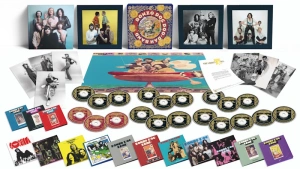
Madfish Music is delighted to announce the forthcoming release of “Still Barking” a highly anticipated CD/DVD box set of the Bonzo Dog Doo-Dah Band. This deluxe compilation will be on sale from today for release on 13 December 2024.
This major retrospective box set has been in the making for seven years. Band members Roger Ruskin Spear, “Legs” Larry Smith, Rodney Slater, Vernon Dudley Bowhay Nowell, Sam Spoons and Neil Innes were involved in defining the original concept. Titling the set “Still Barking” was very much Neil’s idea. Sadly, Neil, Sam and Vernon passed away before the set’s completion, but their involvement has been immeasurable.
Initial work on the box set was halted by a court case which the Bonzos eventually won. Madfish Music overcame numerous hurdles to clearing material, finding masters and sourcing unreleased material. Surviving and former band members contributed reminiscences and pithy tales and fans were invited to put forward their own memories and memorabilia.
The result of everyone’s hard work and dedication has culminated in two editions of the box set (see Editors’ notes for list of contents). The Standard Edition will feature 17 CDs and three DVDs plus a hardback coffee table book featuring a new essay by esteemed music journalist Chris Welch, archive writings, memorabilia and photographs, and a detailed chronology (cornology) of the band. The Special Edition release will also include a shellac 78 rpm record, an etched, one sided 7” single featuring a previously unreleased version of “Boo!,” reproductions of early promotional posters and booklets, plus an exclusive signed print of the box set artwork by artist Dan Abbott.
Formed in the early 1960s by art students Vivian Stanshall and Rodney Slater, the Bonzo Dog Doo-Dah Band began as a jazz ensemble parodying the music of the 1920s and 30s. Already proving they were a creative force, their art school training further encouraged them to think outside the box – twist the norm and mix genres. Elements of slapstick comedy, music hall, Mariachi flavors, psychedelia and bawdy seaside humor all conspired and inspired the growing band to evolve into a pioneering force in rock and comedy. Their satirical songs, surreal humor, eccentric and eclectic performances quickly made them a favorite on the London underground scene and secured them a permanent residence in the counterculture prevalent at the time.
Their appearances on the TV show “Do Not Adjust Your Set” gained them national fame and featured many of the songs that have become lifelong favorites of fans and critics alike. “I’m the Urban Spaceman,” became the band’s most successful UK hit produced by Paul McCartney under the pseudonym Apollo C. Vermouth.
“We know Bonzo’s fans will be excited about this release,” a spokesperson for Madfish Music explains. “In addition to remasters of the band’s original albums, we have sourced rare and previously unreleased outtakes, BBC Sessions, short films, vintage footage, live recordings and films of concerts in Europe and USA. This was a band that would leave an indelible mark not just on their fans but the music and comedy world.
“‘Still Barking’ is the definitive 20-disc limited edition boxset, the ultimate tribute to a band that defined a genre. Dive into the eccentric world of the Bonzo Dog Doo-Dah Band and experience their enduring legacy.”
BOXSET CONTENTS 17 CDs documenting a spectacularly entertaining career featuring: • Stereo versions of all the band’s original albums, carefully remastered to capture their idiosyncratic charm • Additional versions of “Gorilla” and “The Doughnut in Granny’s Greenhouse” in their original mono mixes • A newly compiled CD of all the band’s singles • Two discs of demos, rehearsals, and outtakes • A single disc of backing tracks • Three discs of BBC Sessions that capture the band’s eccentric live energy • Two live discs: Studio Bellevue, Amsterdam. Recorded: November 1968. Transmission date: 3 January 1969 Fillmore East, NYC, 17 October 1969 • A CD featuring a live rehearsal for a show from London’s Marquee Club and additional material of band rehearsals from the Manor Studios in Oxfordshire.
Plus: • Three DVDs of visual material, including the complete “Do Not Adjust Your Set” shows, “Colour Me Pop,” “Beat Club,” and more. Highlights include rare appearances, short films, and vintage footage from the height of their career. • 148-page hardback coffee table book featuring an essay by Bonzos authority Chris Welch and an in-depth Day By Day Chronology/Cornology by noted author Andy Neill (The Who; Ready, Steady, Go!). Also includes tributes and remembrances from fans, friends and band members including Rodney Slater, Yvonne Innes, Roger Ruskin Spear, “Legs” Larry Smith, Pete Townshend & Stephen Fry, alongside images and photos from throughout the band’s career, and much more.
Note: the following content is only available in the Special Deluxe Edition: • Seven reproduction band photo prints individually signed by Roger, Rodney, “Legs” Larry & Vernon • 3 band art prints • Reproduction of Imperial Records US promo poster • 1967 Liberty Records press release





 Outsider Rock