

In Part One of my conversation with John Sloman, John talked in-depth about his new album Two Rivers, which has just been released on CD (I am still hoping for a vinyl edition). John also talked about his forthcoming book – Lost On Planet Artifice – which should be available through Amazon in about a month. Part 2 of my conversation with John is discussing his time with Lone Star and Uriah Heep. This period was what brought John’s name and talents to so many rock fans, and perhaps what is best known in his earlier work. John shares some great stories, some of them pretty funny, some a bit personal, but I must say he is most sincere, has a great sense of humor, friendly, and in some instances I felt for the guy. But regardless, John made an impact and he has his own story to tell. From just the stories John shared with me in our conversation, I am looking forward to his book — he has a great memory and loads of awesome stories. I have more to share – from John’s ’80s period with Gary Moore, Paul Young, his solo album [so watch for Part 3]
In the meantime check out John’s new album Two Rivers (you can read my review and part one of this interview elsewhere here). And follow John on Facebook for updates – https://www.facebook.com/johnslomanofficial
*John’s next single/video will be the track “70s Sunday”, available in a few weeks!
Enjoy the read. Leave us some feedback and a Like.
Lone Star – Was that your first time in the studio?
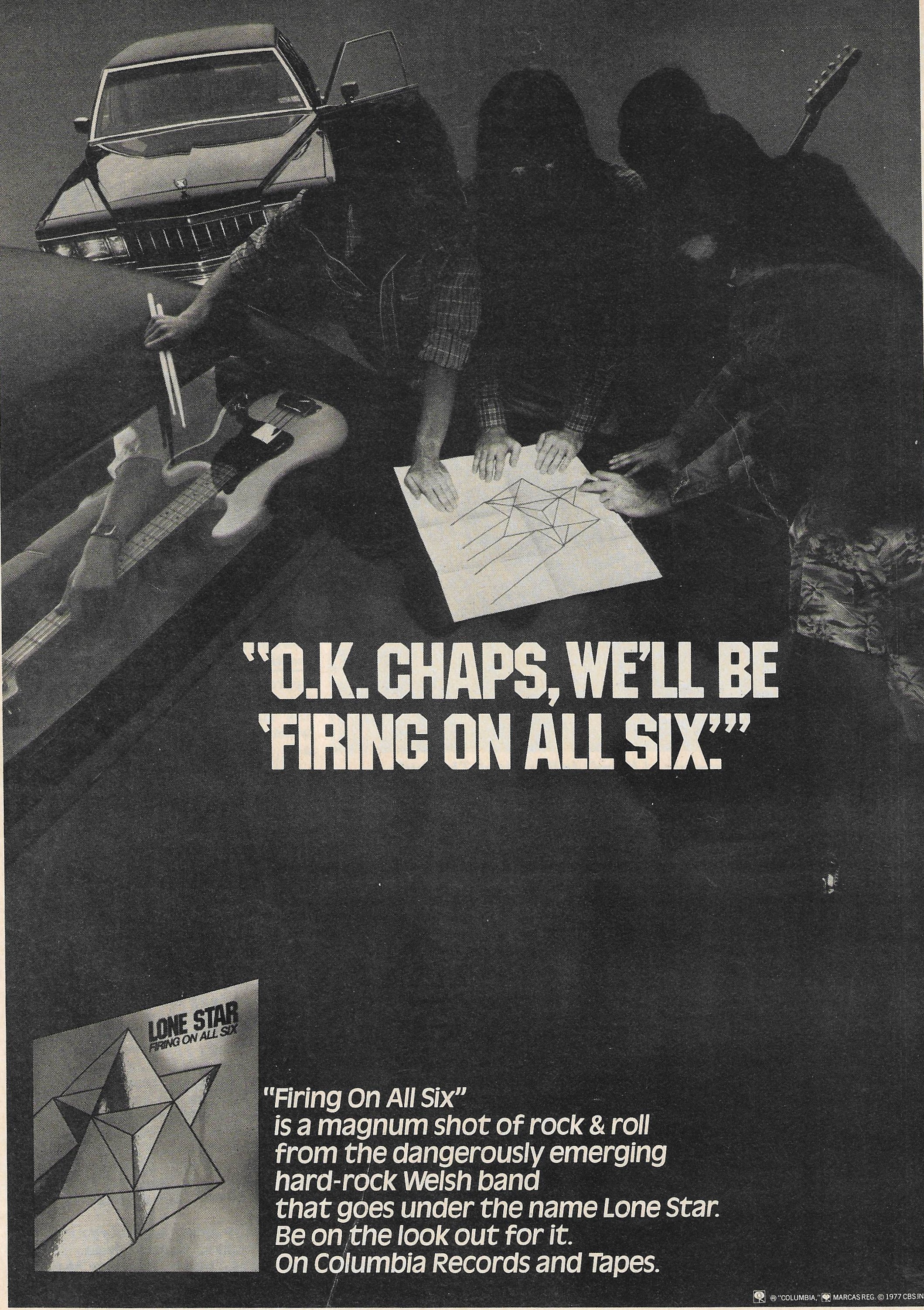
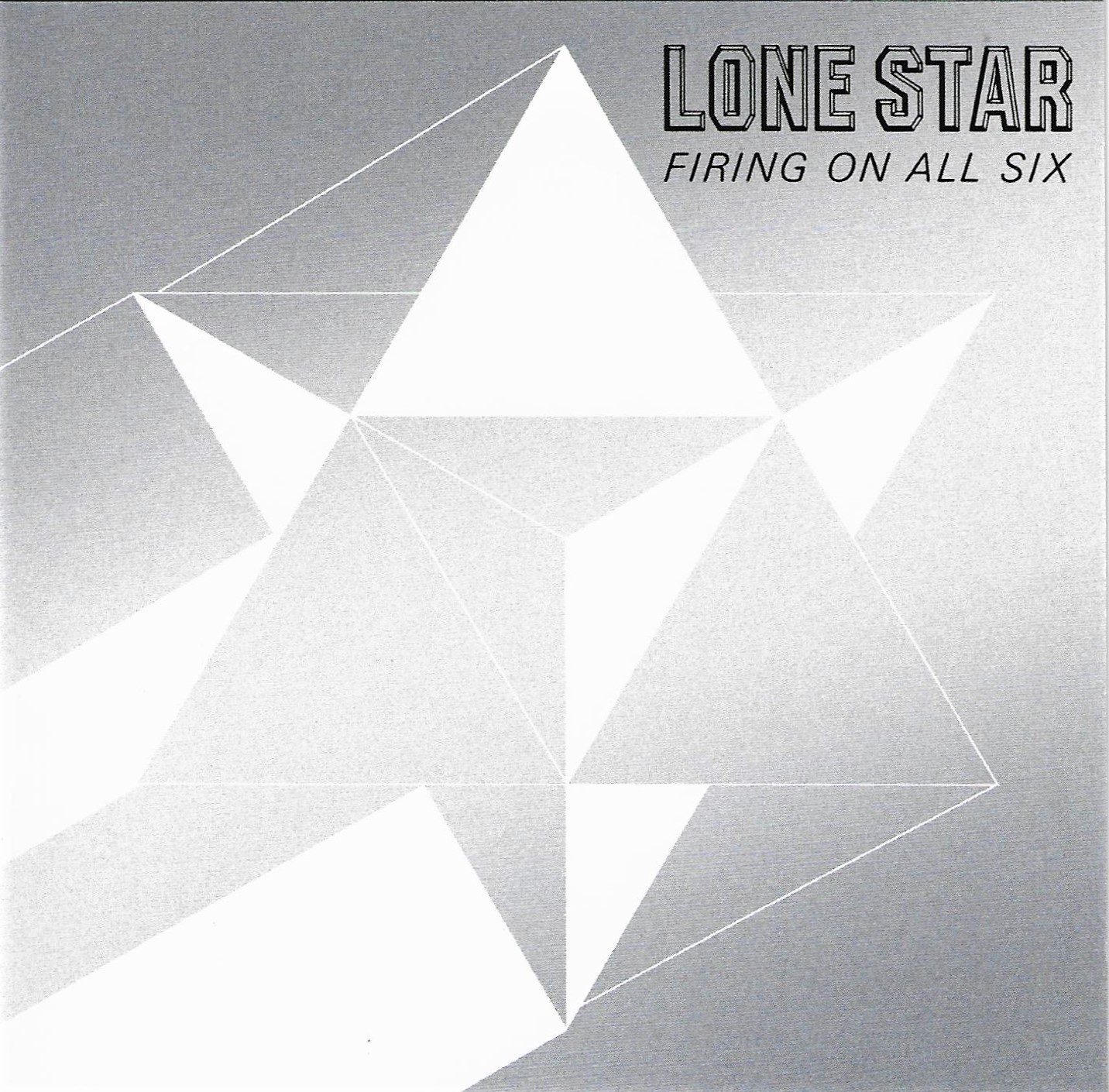
It was kind of, but when I had the band Trapper, with Pino Palladino, back in ’74-’75, we did a tour of Germany, we did a few actually. But on the first tour Germany we hooked up with a guy who was with a German band called Amon Duul. They were a German prog band, and so you know prog is really big in Germany and around Europe. So anyway, we kind of befriended this guy, he wasn’t much older than us, and his name was Jan. And one night he said ‘come down to the studio and we’ll just have a jam.’ So that was the first time that I ever put on headphones and heard my voice coming back through the headphones. And I’ve got to be honest – it was quite a shock, because especially with a good sound on your voice and also a really good high quality mic, and suddenly every little detail was coming down the cannons. And another time, the next time and only other time before Lone Star, I got contacted by these guys who were employees at EMI in London, and they decided that they wanted to do their own project. I can’t remember how they heard about me because I was just a teenager living in Wales. And they contacted me the usual way back in those days – which was a telegram (laughs), because my parents weren’t even on the phone. And I ended up coming up to London and we did a session at Sarm Studios, which was one of the really big studios in London at the time. And Roy Thomas Baker was producing, and also Mike Stone was on the session, and he went on to Journey, and also a guy called Gary Lyons was on the session, and Gary was really young at the time, I’m talking the summer of ’76. And of course Gary went on to produce the Lone Star album. So when it came the following year – the summer of ’77, to do the Lone Star album I kind of knew Gary, well I’d met him that one day I was in the studio with him, so it kind of broke the ice. And I think he was really helpful for me because he wasn’t that much older so I kind of felt like he was my generation, if you like, because the Lone Star guys were a bit older than me.
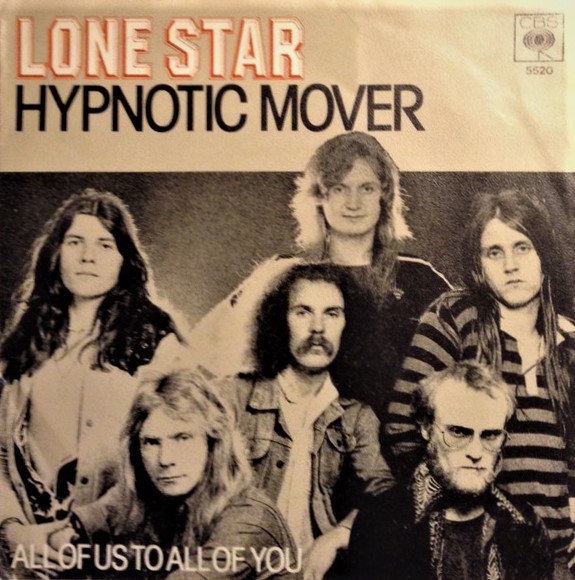
I remember the first day when we were going to do the vocals, because the guys put the tracks down separately. Sometimes when you do albums you’ll sing along with the band, and I’ve done albums like that, where as with Lone Star they preferred to do the backing tracks and really nail the backing tracks, and then I might do a guide vocal later . But when it came to do my actual vocals, and the guys had finished all their backing tracks, and most of them had gone home, Gary Lyons said ‘Ok let’s start your vocals tonight’ . And in those days you had a tape op in the studio, who was kind of like an apprentice. And Gary took some money out of his pocket, might’ve been a 5 pound note, and he gave it to the tape op and said ‘go on and get John a bottle of port’. And he turned to me, and my eyebrows shot up, because I’m just 19 years of age, I’m not at the age where I’m going to go guzzling port. Anyway, Gary looked at me and said ‘it’s really good for your voice.’ So I thought OK, and this bottle of port shows up, and Gary says ‘hang on there. have a glass of port while I do a few little mixdowns.’ So to cut a long story short I virtually drank that whole bottle of port and I had to be carried to my bed! (laughs), and we missed that day’s recording. So that (day) was cancelled and we had to start the next day. And the first track we did was called “Hypnotic Mover” – that was first vocal I did on Firing On All Six.
What songs originated from you or that you had a hand in writing?
Well, when I passed the audition I then stayed in this place with the guys, a rehearsal place called The Farm Yard. It was out in Little Chalfont, which was really picturesque, just like how Americans or Canadians might think of a picturesque village just outside of London. So I guess we spent about a week there. And my first task after getting the gig, one of the guys gave me a pen and paper and said ‘we’ve got this thing we’ll play you and see if you can come up with some melodies and some lyrics for this.’ And they started jamming out this track, and it was all lots of great riffs and stuff, and that’s what became “From All Of Us To All Of You” , which became the last track on Firing On All Six. So that was the first thing I did with Lone Star. And the 2nd thing I did was they went on to play this kind of heavy funk track, and I wrote the lyrics and melodies to that – which was “Rivers Overflowing”. They had “The Bells Of Berlin” more or less completed, so I don’t recall getting too much involved in “The Bells of Berlin”, as much as I like to say I did (laughs). “Seasons In Your Eyes” was myself and Ric Worsnop, the keyboard player, who’s also Canadian. What happened was he and I went to this place called Ridge Farm, which was the kind of place back in the ’70s where bands would go just to write and routine new material before going in to the studio. It was a really expensive place, but a really beautiful place. But again, just the very epiphany of what you’d think ’70s rock musicians would do. There was a little stage in a farm house, an old English farm house. We’d go there after we’d have have our breakfast cooked in the morning, and then our lunch and evening dinner cooked by a very nice young lady called Stephanie. And we had these tiny cottages around there, it was a really beautiful place to stay. And they had a tennis court there, and we ended up having a tennis tournament when we should’ve been writing material. But anyway, one morning I couldn’t sleep and I got up really early and went over to the barn where all the equipment was set up and Ric was already over there. And Ric was a really lovely guy, a really good musician, and he had like sort of a hippy mentality – which of course was at odds with the whole punk thing that was going on at the time. So anyway, Ric had been up, must’ve gotten up about 5 o’clock that morning, and he’d been recording his own [?] chorus , because we’re right out in the middle of the country, and there was this beautiful bird song. So he’d recorded all that morning’s bird song, a [?] chorus, on the band’s Revox tape machine, and he was playing it in the barn when I walked in. And he put it through the speakers, and it was really beautiful, and the sun was streaking in through the windows, you know, really lovely. So it kind of set the mood really for what was to follow. So Ric sat down, he had a Fender Rhodes suitcase, and he sat down and started playing this really nice piano piece. And it sounded like some kind of old classical piece, with a medieval kind of flavor. And I said ‘Ric, what’s that?’, and I expected him to tell me it was some kind of standard, and he said ‘Oh it’s just some thing I’ve been working on’. So he played the melody, and I sat down and got a pen and paper, and I came up with the words and (vocal) melody for “Seasons In Your Eyes”. Ric and I wrote that. Also there’s a track called “Time Lays Down”, and the guys had the initial groove, a really kind of lovely funk thing, which was a kind of a crossover thing, so I was sat up in this chill-out area upstairs, where I used to sit and strum one of the band’s spare guitars. So I was playing this old Strat and I came up with the chords for the verse, I came up with the chords for the middle eight, and I also wrote the melody and the lyrics for “Time Lays Down”. “Time Lays Down, and Time Lays down beside me and goes to sleep” – that was a lyric in a song I wrote with Trapper, when we were 18. I wrote a song with Pino Palladino and that line was in that song. Obviously those songs we did with Trapper they just vanished in to the ether. I can remember the titles, and I’m sure Pino can remember some of the chords. So, anyway, I contributed a lot to Lone Star – not just the lyrics and the melodies, but I contributed some guitar bits and pieces. But I suppose that doesn’t really get acknowledged, especially when you’ve got 2 really good guitar players in the band. And it’s kind of frustrating that people didn’t realize or didn’t know just how much I had contributed.
The one song that stands out for me is “The Ballad Of Crafty Jack”. It’s got some great lines in it.
Yes. That was Pete Hurley, the bass player – he had like a Wyatt Earp kind of droopy mustache, a really distinctive look. And Paul Chapman, he came up with this alter-ego and nickname for Pete, because Pete looked like something straight out of the old American west, you know!? And Paul used to call him Crafty Jack Hurley, instead of Pete Hurley. So when it came to doing “Crafty Jack” (the track), Paul said ‘we should do something like with Wild West lyrics’, So, Paul, Tony and myself got around the piano and we actually collaborated on that. Paul was really in to… he may have even come up with the Lone Star name, but he was really in to the wild west thing. So, he was really keen to do that trying to hide out from the gunmen. I liked that track, and I loved Dixie’s drumming on it too; it was great!
Yeah. Now you guys did some touring. Any recall on those?
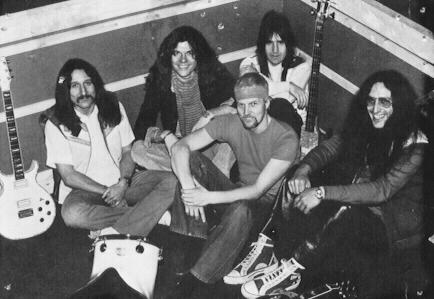
When I joined them, they had a British tour already planned, but Kenny Driscoll had left, so the first thing they said to me, once it was decided that I was going to be in the band. They said ‘How do we feel about fulfilling these dates that we’ve got?’, because we were in January and the tour was more or less the following month. So there was very little time to get it together. And so I said ‘Well, yeah – I’m up for it.’ We did a British tour and then that was around college kind of venues and stuff like that. And then we did a full-on major theater tour, headlining later on – that would be autumn. Yeah. And then strangely, we ended up going out opening for Mahogany Rush – Frank Marino. And that was only a month after we’d done a British tour! But as you can appreciate, Britain is not that big. And so, if it was America you know, we could understand why we go on the road and then go back on the road a month later to do more gigs, But in Britain, I mean, really, at that time you covered it in a month, for sure. So what happened was we did the major headline tour where we headlined places like the Rainbow Theater in London, which was really a beautiful 2000 seater. And then within a month we were back out again, playing virtually the same venues, but this time we were the opening act, which is a really strange thing. That was the first indication that maybe we didn’t have the right management -You know what I mean!? I was the new kid, so, you know I’d just turned twenty at that point. I was just thinking – ‘Well, keep your head down John – these guys know what they’re doing.’ But we went out with Frank Marino and instead of doing the Rainbow Theater at the London date we did what was called the Hammersmith Odeon at the time, which as I’m sure you know, is an absolutely beautiful, beautiful venue in London and it’s a really prestigious venue still today. So we opened for Frank Marino for, I guess, maybe two or three weeks around Britain. And he was great, by the way, he had a three piece together. Yeah, and it was just a strange feeling that we were doing the same; we were virtually doing the same venues.
One night we were playing in Sheffield in the north of England, and we had a young band called ‘Stranger’ opening for us. Now I say young – they were only (say) two years younger than me at the time. But anyway, these guys – they had this very wealthy guy who was managing them. And what he’d done at one point, I think hired a venue, something like Hammersmith Odeon, like I’d just mentioned – for them to do like this then hyped up gig. So that’s the kind of management they had. So their manager must’ve bought their way onto the tour, opening for us. So it’s all going well. You know, the band are really nice guys and the manager’s really nice. So we get to Sheffield. We come off stage and there’s this whole drama going on in the dressing room, in the backstage area. And it turns out that while we were on stage, the support act – Stranger, were just trying their first joint. And as they were in the process of smoking their first ever joint, you know those fire doors that you have in a building where you push the bar and it can open out onto the street? Well, these fire doors opened from the outside of the building and the local drug squad burst into the dressing room. And so they arrested this terrified support band and their manager and they took him off to the local police station. So that’s what we come off stage to is like this whole drama about what had happened. So we get in the tour bus and off we go down to the local police station. Steve Woods, the manager who now works in LA with people like Alter Bridge, anyway, he gets off the tour bus and goes in to the police station and pleads for Stranger to be released. And so minutes later, and we’re all still on the tour bus, here comes Steve Woods, our tour manager, followed closely by all these still ‘ash in face’ 17, 18 year olds, that he’s just bailed out, and the manager. So anyway, of course, these kids fill us in on all the details that have happened. And so here comes a drug squad detective. He gets on the bus and walks the length of the bus and we’re all at the back of the bus (Lone Star) and he leans over and he puts an elbow on the seat, you know, and he’s just stood there. And he goes ‘Next time guys’. So obviously they we out to bust Lone Star, we had a little bit of a reputation. Anyway, the detective turns and he’s walking off the bus. He gets as far as the front of the bus and Tony Smith, one of the guitar players, calls from the back of the bus – ‘Hey, do you want to come back to our hotel and smoke a joint with us?’ So, at that point the rest of us drew in a sharp intake of breath, ’cause we thought ‘this is it now – this guy is going to arrest us’. Yeah, but it kind of like he just stood there, paused and probably thought about arresting the whole lot of us. But he just stepped off the bus, and that was it. But yeah, that was Lone Star for you. They were kind of fearless about stuff like that.
Were you playing anything from the new album at that point?
Oh yeah. Well on that tour it was a mix of the two albums at this point, but we did a lot – we did “Bells Of Berlin”, and we did “Seasons In Your Eyes”, and we did “Crafty Jack” live, and “All Of Us To All Of You”. And we probably played “Hypnotic Mover”, that track had like a ten minute solo in the middle of it, a Paul Chapman solo that was, well, that whole section. And I’ve got gig tapes from those days straight off the board.
(I was going to ask) if anybody saved anything ?
Oh yeah. I mean, they’re not great quality. I was talking to Robert Corich about it, and Rob was going to help me and maybe try to restore some of these old, you know, their these old ’70s cassettes. And so, unfortunately there’s these moments on the cassette where it drops out. But these are once in a lifetime things, never to be repeated. And the solo section in that one track “Hypnotic Mover” – It didn’t make the album It just got cut from the recorded version, but live it was just amazing. The whole band are on fire during that. So I have that, I have a gig or 2. And also I have a version of “Seasons In Your Eyes”, that we recorded at that place Ridge Farm, where where we wrote it. Did you ever come across a prog band called Gong?
I know the name. I don’t have anything of their’s
They had a flute player called Didier, because they were a French band. He used to hang out at this place Ridge Farm. So when we demo’d “Seasons In Your Eyes” – Didier played flute and a little bit of saxophone on it. So I’ve got that as well, which is kind of like a curiosity because when we came to do the actual recorded version on Firing On All Six Jeff Wayne did the string arrangement, the guy that did War Of The Worlds. He was great. but it is very bombastic, you know!? Where as the idea – what we wanted on it was like the string arrangement at a very low key, like on the Beatles “Yesterday” – that kind of thing. But Jeff Wayne, he made it sound like War Of The Worlds (laughs), which it was meant to be like a little thing, a folk song.
I want to move on to your first interaction with me with Uriah Heep. As far as you know, even before your audition. Had you had any other interaction before actually getting your audition or sharing a bill or anything?
Well, there’s this famous story going around, which I don’t know whether you heard where I was an apprentice fitter welder, and when I left school, I worked on the docks, the Cardiff docks for a while on the tugboat, which was a trip. I was there for about about six months – straight out of school. And then from there I went on to technical college, to be a fitter welder. I had no intention of being a fitter welder, but the reason I got on this course at the technical college was because I was able to do gigs at night, where as when I was on the docks. I couldn’t. So anyway, while at technical college, I got really friendly with a guy called Neil Rodgers, who was a fellow musician. It was just him and I in the whole class that were musicians. And so we hung out all the time, you know, and we became really close friends. And Neil, was a gigantic Uriah Heep fan, and bare in mind, this is 1974. So that will give you an idea of the line up of the band. So, to him Gary Thain was a living God, Neil was a bass player and he absolutely worshipped Gary Thain. So when it was announced that Heep were coming to Cardiff, and we had a great venue in Cardiff called the Cardiff Capital, and everyone played there. I eventually played there with Lone Star, actually. And it was the thing to do, you know, as a rite of passage thing to be able to play that venue. So when it was announced that Heep were coming to Cardiff, Neil said one day and in the college canteen ‘hey, we’ve got to go John’, and of course I knew Heep, I had a couple of their albums – Magician’s Birthday, Look At Yourself, and I loved Magician’s Birthday! And Wonderworld – because it was the Wonderworld tour. So, I don’t know about you, but I wasn’t keen on Wonderworld as an album. I actually went and bought the album. [Me: I thought the songs were good, but the sound….] Yeah, I think that’s what it is. Where as I really liked Sweet Freedom, I thought that was a really good album. So anyway, Neil says, let’s go get tickets. So, ‘Yeah OK’. So I said to Neil. ‘Well look, give me some money and I’ll go down to the box office’, because he didn’t live in Cardiff. he lived in a place called Port Talbot, which was a half an hour away by train. So Neil says, ‘Well look, why don’t we go on queue overnight?’ And I looked at Neil and said ‘What!?’ Honestly, I said, ‘Why would you queue overnight for concert tickets?’ And he said, ‘Because I want to get the best possible tickets’. Like I say, Neil was a huge fan! Now, bare in mind it wasn’t exactly the warmest time of the year. So anyway, Neil and I, we showed up at Cardiff Capitol one night with a bottle of vodka. And there were a few other people there that I remember. And we just sat there; we killed the bottle of vodka in the first hour and then we froze our asses off for the rest of the night! Anyway, we got the tickets. And of course, then the awful thing happened with Gary Thain being electrocuted in Dallas. So, again, Neil comes in one morning to college, and he’s got the Melody-Maker or the New Music Express or whatever, and he’s like beside himself. It’s as if one of his own family has been electrocuted on stage – his whole day is destroyed. So of course, what happened then was the British gigs had to be rescheduled. So I think it happened later on in the autumn, as I remember. So we went along, the night of the gig and I thought they were great (Heep). I remember Mick playing a red Les Paul Junior, which, you know, I’ve been used to seeing Mick playing an SG, during that era. And Lee, obviously he had his stainless steel kit. So anyway, the gig was good and we come outside the theater at the end of the night. And we’re with a friend of mine as well, from the from the band I had, Trapper, this guy Jiffy. But Jiffy was a big Gentle Giant fan, he didn’t care too much about Uriah Heep anyway, he just come along for the night. So Jiffy says ‘Let’s go get last orders’, because in those days the pubs closed at half passed 10. So we’re to go get last orders in a pub in town, and Neil says ‘No – I don’t want to get last orders I want to go ’round the back and see the band!’ And I look at Neil and say ‘Oh, okay’, because I’d never done this before. So he says ‘just come on, let’s go around the back of the theater’. So we go around the back of the theater, there’s nobody there and there’s like an alleyway that connects with the main road. So you come in off the main road and it’s just like, it’s deserted, there’s nobody there, there’s not even a street light illuminating it. But all we saw was a door with ajar to the back of the theater. So Neil – who’s as bold you like says ‘come on’, and I was ‘what are you doing? We’re going to get in to trouble here’, and he’s ‘Let’s just go in’. So we push the door open, Neil’s leading the way. We go up the stairs and now we’ve come up onto the level where we’re on the main corridor and there’s all the rooms off this corridor and of course that’s where all the dressing rooms are, so we could hear voices at the end of the corridor. Suddenly, here comes Ken Hensley walking towards us. So, now he sees us, and of course, if you’re on tour, then you know the people who are part of your crew and the people who are not. So as soon as he sees us he knows we’re just kids who’ve just been to the gig. So Neil, as if he’s known Ken all his life goes ‘Ken how are you doing?’ And Ken just says ‘hey you guys had better get out of here now because these people, (I don’t know who he meant by these people. I think he may have meant the Heep crew), ‘These people are not going to be happy with you guys walking around backstage’. So we turned around and we go back down the stairs, and now we’re back out into the alleyway. And by now, there are a couple of other people there, there’s probably about another ten people in the alleyway, all waiting to see the band. So as soon as we get down into the alleyway here comes the sound of the platform boots down the stairs and the band are coming down in to the alleyway. So Mick is the first to emerge, he’s got a plastic cup with (I think) vodka or something. He’s all smiles, you know – ‘How ya doin’ mate?’, shakes my hand, gives me his drink, I seem to remember. He was lovely. Lee also was absolutely lovely. And then Gary Thain came down. I remember Gary had cut all his hair off, I remember that. So Gary, but he didn’t look well. He was obviously still recovering from that awful thing that happened in Dallas. So he got straight into the limousine. And of course, Neil, just because he followed him over to the limousine, Gary winds the window down and Neil has five minutes of conversation with Gary talking about what you could imagine, right – He’s meeting his bass hero in his favorite band, and he just wants to know how long has he been playing, how does he practice.. He tries to get as much information out of this guy as he can. Gerry Bron stood by the limo (I remember), looking like Q from one of the Bond movies; you know, very aloof. David Byron got carried out between two roadies, and put straight into the limousine. He was still wearing his stage clothes. And Ken Hensley came out, and he was very aloof. And, you know, as he was with us when we invaded the backstage area (laughs). So the weird thing was, they all got into the limousine and I guess the whole thing, once they come into the alleyway, that whole little thing, probably took about five minutes, you know – Neil had his conversation with Gary and they all got in a limousine and the limo reversed because there was no room for the limousine to turn around, that’ll tell you how narrow this alleyway was. They reversed out onto the main road and they were gone. Now, I had the strangest – it was kind of a strange feeling it left me with. It was only one of those kinds of ‘someone walks across your future’, I won’t say walks across your grave – but someone walks across your future. And you know, I obviously five years time from then I would meet all those people again. (With the exception, of course, of Gary and David Byron); And all of them would reveal themselves to be exactly the same as they revealed themselves to me that night in that alleyway. You know, Gerry Bron and Ken would be aloof with me forever. Mick and Lee were just lovely, they were kind of like brothers – brothers in the way that they interacted. It was almost like they were brought up in the same house -you know, they had the same kind of sense of humor and same way of speaking. And yeah, so it’s just an interesting thing that they were all exactly how I met them back in 74. But you know, life is strange sometimes.
Did you ever share that story with them once you got in the band?
No, no, I didn’t. I told Heep’s tour manager – Chris Healey. I don’t know whether you’ve ever heard about Chris, he was the legendary tour manager for years and years. Chris just laughed and laughed and said, ‘That’s a fantastic story’. I said, well It’s absolutely true. ‘You got to tell Mick.’ And so the whole time in the band I didn’t say anything to Mick, and I really don’t know why I didn’t. It’s almost like I had other things to think about (laughs). And but yeah, that’s exactly how it was. Unfortunately, Neil, who was the instigator of the whole thing. he is no longer with us, It’s a lovely memory from my teens. And you can imagine what it was like – how Neil was when I joined Heep. He just couldn’t believe it, you know!?
I want to talk a bit about making the album. The band had started songs with John Lawton prior to you, and a couple of those made it onto the album and then you brought in two songs as well. So I’m kind of curious, and I don’t know if you can answer the whole thing, but how your songs ended up on the album and how you weren’t credited?
Well, firstly when I joined Heep – and at first they just thought that I was a singer and I played some guitar and some piano. And for instance, when Lee was fired his drum kit stayed on the studio floor for several days, and eventually I piped up and said, ‘I can play drums. Do you want me to play some drums so you can routine some of the songs?’ And of course, they all looked at me like I was nuts. And then eventually they just shrugged and said ‘Yeah sure, go on then’. So for an afternoon, I sat on Lee’s drum kit, his stainless steel Ludwig drum kit, and I was the stand-in drummer for Uriah Heep. You can imagine if that happened today social media would have been full of images, but nobody recorded anything – nobody took any photographs. But that’s the truth. So anyway, what I’m saying is, bit by bit they were learning that I have more to me than just the singer. Then one day we were in the process of recording songs, you know they had done the backing tracks, and I sat there at the piano just having a little noodle as I did from time to time, and I started playing “No Return”, just the figure from the verse. And “No Return” and “Won’t Have To Wait Too Long”. these two songs, I’d written in Canada when we were there the previous summer. So I was just playing it and Chris Slade happens to be sat on his drum kit at the time when I was playing it, and Chris looked over and said, ‘What was that?’ and I said, Oh, it’s just one of the songs I was doing in Canada’. So then Chris joined in. Then of course, Mick plugged his guitar in, and as soon as Mick started playing it sounded like a potential Heep track because whatever track Mick adds his guitar to, because his playing is so distinctive, it sounded like a Heep track. And then, of course, Ken started playing, you know, adding his Hammond. So anyway, so that’s how it happened. And then we put that track down, then the guys realizing I could write said ‘what else have you got?’ So I then threw “Won’t Have To Wait Too Long”, which I don’t think was right for Heep anyway. So we recorded a version of it and it made the album. So anyway, so here I am. I’ve got 2 tracks on a Uriah Heep album, and I’m thinking ‘Well, this is good – you know, things are looking really very positive.’ And suddenly I felt like, ‘Well, I’m getting into a better position here than I was previous’. Because as I’m sure you know, there was a lot of pushback, resistance you know, from my being in the band in the first place, especially from Ken. So anyway, one day I get called upstairs up into Bronze Records because, you know, Bronze Records, the label was directly above the Roundhouse Studios. I get called upstairs to a meeting with Gerry Bron and Bronze’s internal lawyer, a guy called Irving Teitelbaum. So, basically, on the one hand, they’re congratulating me on getting two songs on the Heep album. But then in the next step they tell me that CBS has been in touch and CBS were taking up the option on the contract that they had signed with Lone Star, which basically was binding whether we stayed together as a band or we split in to solo artists. It was what was known as ‘joint and several’. So basically, it looked like I was still signed to CBS. So I just said ‘well what’s going to happen to the songs?’ Gerry and this lawyer say, ‘Well, if you put your name to the song, the royalties will go to CBS because they will go towards the Lone Star debt – the debt that had been run up by the band when they were signed. I said to the lawyer, ‘How much is the Lone Star debt?’ And bare in mind now this is 1980. And the lawyer looked at me and said, £90000, ( Me – wow!). Yeah, really. So I was just 22 at the time. I could have bought the entire street where I was born for 90 grand! So anyway, I obviously thought ‘Well, I’m doomed, it over!’ And the lawyer said ‘There is one way around it and that is that if you put the other guys in the band names to the songs and the royalties will be paid to you’. Now this is what happened. So I told Gerry and Irving ,that if that’s the choice I said, ‘I want people to know that I have written these songs. I want my name on my songs.’ That’s what I told them. So we’re along six weeks and we’re just about to go on stage at Hammersmith Odeon, it was Valentine’s Day 1980, my first tour and a box of Conquest albums had arrived backstage. So, you know, all the band are just taking a copy of the album and reading all the credits and stuff. And I take a copy out and I look and I see that my songs have been credited to Mick, Trevor and Ken. And not only that, they were assigned to Ken’s publishing company, so which of course, made Ken the publisher of my songs! So I was really angry, really upset, and I felt like I’d been screwed over – Not by Mick and Trevor I might add, I’d been screwed over by Ken because it turned out when we were in rehearsals for the tour, Ken had walked into the pool room, (you know – the games room that you have in the rehearsal room) And I wasn’t in the room, but he had a song assignment and he asked the guys to sign this song assignment, signing my songs over to his company. And the guys said ‘does John know about this?’ And he said – ‘Yes’. And so they signed their name to my songs thinking I knew about it. And then the royalties would he paid me as per what that lawyer suggested to happen. So that’s what happened with my songs. Not one penny did I ever receive for Conquest, when the vinyl came out. I’m not saying that Mick or Trevor had my royalties. I don’t believe for one second they did. They were, I guess you could say they were just innocent in the whole thing. But, you know, Ken was not so innocent. And his publishing company had the publisher’s share. And well, you know, what can I tell you? And when Conquest came out on CD 14 years later, I decided that I was going to get my songs back, get my name back on my songs. That took me another four years to get my songs back. And the guys said that I didn’t write the songs, and then they said that they’d bought me out. It was all complete and utter bullshit! So all the negativity that I feel about Uriah Heep is mostly to do with what happened after I left the band. You know, the stuff that happened with my songs, of course, I’d only been in the band two or three months at that point, and of course, that destroyed me. And what I’m saying is – In spite of that, I still was able to continue with the band. But of course, I was always looking over my shoulder as far as Ken Hensley was concerned. But then the stuff that happened after I left the band is really the main reason why I stayed away from Uriah Heep and anything to do with Uriah Heep all these years, because a lot of the negativity around me, I mean, hey Kevin – if fans don’t like what I do -well I accept that, you know!? We all have opinions. I don’t think fans realize what I had to deal with when I was with the band and some of the utter crap I had to deal with when I was there, you know they almost tried to blame me for Conquest, which was ridiculous because Conquest was 70 percent recorded when I joined the band. So it was a tough time. And as a result, I decided to kind of screen off that whole period so I wouldn’t have to talk about it. And really it’s only now, I guess in the last couple of years because I had written a book where I’ve addressed a lot of this stuff because I thought ‘You know what? I’ve got let out some ghosts here; so that’s what I’ve done. And by way of waving goodbye to it once and for all.
The way the Heep history goes, it kind of made things sound like Conquest was a crash and burn period because of you. And that album never got a North American release, which I found kind of odd …
Yeah, I did not understand it at all. It was a bit like we had a tour with Lone Star planned and we rehearsed at this place called Manticore Cinema in London; this amazing place that was owned by Emerson, Lake and Palmer. And we were due to do a North American tour and you know when you get that feeling when somewhere out there a plug is being pulled and you don’t know why(?) And so Lone Star never made it to North America, even though we rehearsed ready for it, you know!? The same goes with Heep – the album didn’t get a release in America, and there was no dates in America when I was with them. I never understood that because Heep were a successful band, and they had a successful period in America. And I thought and taken for granted that ‘We’re going to end up touring the States’ – but it didn’t happen, very strange! So I felt that, like I said a moment ago, that sense that the plug is being pulled on stuff, but no one is explaining why.
It’s just a great shame. I mean, I heard various stories. After I left Heep actually, my very long term girlfriend, she was also in the business and I continued to hear lots of news about Heep, through the grapevine because she was in the business and, you know, you couldn’t help but hear what was going down. Oh, and also my manager who managed my solo stuff while I was signed to EMI – we then fell out, and guess who he ended up managing? Uriah Heep! So it didn’t help that my ex-manager ended up managing Heep. So it was a lot of negativity stirred up all over again. But I have to say I had a lot of respect for what Mick did, because when the band kind of fell apart after, you know, the Conquest line up, he went around America in a van or small bus, and he built the whole thing back up again. And you’ve got to respect that. I know that Heep really is Mick’s band, it always was, wasn’t it? He was kind of the mainstay, I think anyway. Even though Ken was the main writer, I always felt that the spirit of Uriah Heep was Mick Box. And I thought ‘Wow, the fact that he’s gone out and built the whole thing up again’. And I guess it’s hard to let go of something when you’ve spent, well all of your life.
Going back to your audition, I read some comments somewhere where you thought you had a bad audition, So I wonder with all the confusion (Ken wanting Peter Goalby), how it all went about that it was eventually decided.
Well, yeah, I get the impression that like Trevor told me that time when I went and stayed with Trevor after I just came back from Canada in 79, and the whole thing was first put to me ( if you like) about, joining the band. When Trevor said to me ‘Look, you know Heep are not a happy ship.’. So maybe then maybe there was always that conflict in Uriah Heep!? And so when it came to making decisions, they were not as one, you know? Maybe that’s just how it always was — They just couldn’t agree on stuff. You know the story with the first day I showed up to start doing the Conquest recording and there was a meeting convened upstairs in Bronze and I wasn’t included in the meeting. And I thought they were going to have a meeting to change their mind about having me in the band. So they left me downstairs in the studio just noodling away on the piano. The next thing you know, here comes Lee walking towards me and I said Hi Lee, and he says ‘cheers mate, I’m off – I’m going.’ And I’m ‘Where are you going?’, and he said ‘I’ve just been fired.’ What!!? And so that was it, that was the first day I recorded on Conquest. So imagine being me at 22, and I had to either jump through all these fiery hoops anyway, and Trevor has told me that the band is not a happy ship, so now the guy that I grew up listening to, who played on all those – some of the classic Heep albums has just been fired on the first day that I’m doing the album with them! So you know, I had to watch my back. I really, really had to watch my back.
And we were away one time on an Italian tour, and we were in a nightclub – all of us, the band and Ken’s girlfriend were there. I got up and went to the bathroom; I came out of the bathroom and Ken’s girlfriend was stood there and she looks at me as she goes ‘Hi John’, and said ‘How ya doin’, (I won’t say her name). And she engages me in some kind of small talk for a second. I thought she was there waiting for Ken, you know. And so she then, out of the blue says to me ‘John, I went to a clairvoyant and he told me that you and I are going to have an affair. Are you man enough?’ Now, this is Ken’s girlfriend, so I looked at her and I just smiled and walked away because, now I was 22, but I’d been around, and I had the feeling that something wasn’t right about that. What I’m saying is I felt like I was being set up, because Ken, and I don’t want to put too fine a point on it – but he literally hated the sight of me. He definitely hated the sound of me. And so I to this day, I always thought that Ken put her up to it. Because imagine if I said to her ‘OK, sure’. Then all she has to do is go back to Ken and and say ‘Yeah, John says he will.’ And then Ken has suddenly got a bloody good reason to get me fired from the band. So that was the kind of atmosphere that prevailed while I was in Heep. There was this kind of intrigue; there was this prevailing sense of ‘Hey, I better watch my back’. But luckily, the longer I was in the band, the closer I got to Trevor Bolder, the closer I got to Chris Slade, and Chris ended up managing me briefly after Heep, by the way. And so, and of course, Mick as well. So what happened (was) Ken ended up being kind of over there, even though he was a mainstay of the band..
He was the odd one out!?
Well, yeah, but how strange. Because I knew about Ken. I knew that he’d written all this stuff. Ken was writing great material when I was still in school. So I I had respect for what Ken had done. There was never, we never had an argument. I’ve read stuff on the back of, you know, sleeve notes of reissues talking about personality clashes. We never had one cross-word, basically because Ken never really talked to me. I remember at my audition, he said to me ‘Are you nervous?’ , and I nodded because I was so nervous because I knew what I was walking into by this time. You know when you’re so nervous that you can’t hide it? And bare in mind that I was a really young guy at this point. And so I just nodded and I said ‘Yeah I am.’ And Ken’s eyes widened and he just went – ‘Well, don’t be!’ And I just thought well, OK, I think I know you and I are never going to be buddies. It’s a shame, because you know what? I wish we’d had that moment where I could have run into him in a bar and bury the hatchet. And there’s a few people in the business that there have been stuff where I thought, ‘You know, I hope one day I run into him so I can settle that and we can maybe shake hands and have a beer and just say ‘OK, that was then – let’s leave it where it is in the past.’ Yeah, but unfortunately, you know, I never, ever ran into Ken. Yeah. And but he continued to run me down in various interviews and stuff for years after.
The whole myth kind of got blown bigger after you left, obviously. And even with the internet, with more interviews, that there was all these issues.
Yeah. And for years I didn’t have a right of reply because the internet was in it’s infancy, and my brother Robert, who was the first in my family to get online. And so he would come across a lot of this negativity about my time in Heep, and he would then call me up really pissed off ‘Hey you won’t believe what they’re saying about you John!’ And in the end I just had to kind of cut myself off from it because it could because it make you quite sick when all you’re hearing about is negativity. You know if people have opinions, I’m cool with that. Like I said, fans of the band(?) – no problem, you know!? But I mean, everyone’s got their opinion of who should be in a band. But it was just the fact that it was strictly one way traffic with Ken and. And so in the end I just had to pull the shutters down, batten down the hatches.
So was there anything else other than No Return and Won’t Have To Wait that you brought in to the you guys had tried out or maybe put to tape?
Not really. No. I think I just felt that I would just quit while I was ahead. I didn’t expect to get any material on the album, It was just a massive, unexpected event, you know. And “No Return” – they really liked “No Return”. And then they just said ‘Well, what else have you got?’ And I just I thought ‘Well, what else did I do in make in Canada? So I pulled out “Won’t Have To Wait Too Long”. But no, there was nothing else that I was going to play the Heep guys at that point. Because of the whole situation around me, you know, the auditions and what have you. And the fact that I knew how Ken felt, I just thought ‘I don’t want to push my luck.’ And when we did it, when we did those two songs, we recorded them and I remember thinking at the time “No Return” sounded particularly good. It was a particularly good version, but I thought, Well, you know, I’m not going to hold my breath. I’m not going to say I’m not going to count my chickens that that is going to be on the album. I just thought, Well, we recorded it – we’ll see if that makes the final cut. I was really, really surprised that both of my songs ended up making the album, you know!? Because I thought at the time, because of the kind of writer that Ken was, I thought ‘Well Ken must have like 50 songs just sitting in his drawer at home that he could’ve just pulled up.’ But maybe he didn’t, you know, maybe he was going through a period where he didn’t have a lot of material. So that’s why it was allowed for me to nudge those songs into the into the repertoire.
Yeah, I mean, that was a strange period, I guess, for him. And then you had Trevor as well put in a couple of songs, so.
Oh yeah. Trevor – Trevor was a really good writer. As you know he did “Fools” and “It Ain’t Easy”. But not only that, I mean Trevor could write in a lot of different genres like I could. And so one moment he could do a really nice ballad and the next thing he could say ‘I’ve got this AC/DC kind of guitar, you know, three piece four on the floor drum groove.’ And AC/DC were just happening at the time I was in Heep and Trevor was a huge fan of AC/DC.
Do you recall what happened to the version of him singing It Ain’t Easy? (On the on the album credits he was credited with singing It Ain’t Easy, but it’s obviously you)
Yeah, I I’m laughing now! But at the time it was really, really awful. I mean, Trevor and myself – we became really close friends quite quickly. We had exactly the same take on music, and I think on a lot of things. We were just friends, you know – straight away. And so when it came the night I found out that my songs weren’t credited to me and the whole thing with “It Ain’t Easy” being credited as Trevor having sung it. So I found out on Valentine’s night, which is the night we did Hammersmith Odeon. And none of us had seen the album cover yet. We were told – ‘Oh yeah there’ll be a box of albums in the dressing room for you guys, to take one each’. It was about an hour before we’d be going on stage and all the others helped themselves to an album, so I went over there and pulled out the album, and of course I saw my songs credited to Box/Bolder & Hensley, and I was stewing from that when I saw that Trevor was credited with singing “It Ain’t Easy”. And that was really difficult for me because Trevor and I were really close, even by this time. So Trevor just looked at me, put his hands up and ‘John I have no idea what the Hell’s going on here!’ And I said ‘I don’t get it either because Gerry was actually in the studio when I recorded It Ain’t Easy.’ And he was very very complimentary to me about how I sang it, because if you notice it kind of stands alone – the voice I used on “It Ain’t Easy”; it doesn’t have any kind of ‘rock histrionics’ or anything, I just sang it as a really straight ballad, because it’s such a nice song. So I really don’t get it – obviously Trevor had nothing to do with it, so I hate to say it, but I wonder if whoever did the credits on the album made that error. And of course people have always said to me ‘Hey John – what’s the deal with It Ain’t Easy – that’s you isn’t it?’ And of course, once the credits are on an album – you try changing them once that album’s been released! And I was really upset that night, about the whole thing. As you can imagine finding out my vocal performance on “It Ain’t Easy” being credited to Trevor was like kind like adding insult to injury, after what they’d done with my songs. And of course I was told ‘Well we’ll change it John when we do another run of the albums.’ , but of course it was never changed! And I can’t remember if it was ever changed on the CD; it took me a few years to get my songs credited to me on the CD. And again, the sleeve notes on the CD (I can’t remember who wrote them), but it was anything but complimentary (laughs). I just felt like – this was 14 years after I’d been in the band and I’m still getting kicked around by this. So having looked at the CD, that’s when I thought I’m going to get my songs back, so that’s when I got myself a lawyer, and of course it was 14 years too late, really. And I do not hold Trevor responsible for that, at all!
I have the 2000 edition of the CD, and it still mentions Trevor singing it.
(Laughs) – OK, it’s a weird one. I’m talking 1994, when I got my lawyer and then stuck to my guns. It took me a few years to get my songs re-credited to me, but because of the statute of limitations on legal claims I was only entitled to receive royalties that had accrued over the previous 6 years. And of course that meant that I had no entitlement to royalties on the vinyl release, which of course was the one that would’ve made the most money.
Was there a take with Trevor actually singing it?
Not as far as I know. That’s a good question. I wonder; that would be very interesting. I remember that Trevor had a Revox at home, because he had a music room in his house, and he and I would be in there, and generally as it’d work out I’d be playing a Fender Rhodes and he’d be playing a guitar, would you believe – that’s how he’d write. And whatever we came up with, we’d demo on this little Revox that he had, and that would subsequently be played to the band. So I’m wondering if that’s the way that Trevor presented “It Ain’t Easy”(?). I’m sure he would’ve just recorded it on his Fender Rhodes and sang a version of it on the Revox. But that is an interesting question. It’s somewhere buried in all the Heep stuff. It would be an interesting curiosity, wouldn’t it!?
Fans have always been under the impression that there was another take of it with Trevor (singing), and it was just changed (or whatever) later on in the recordings.
I’d never really considered the possibility that Trevor may have actually sung it once. And that things just got lost in translation over the months at that particular time.
I mean it’s more likely that in amongst Trevor’s personal music affects there might be an old school cassette or a Revox reel to reel of some demos, and that’s possibly where you’ll find a version of Trevor singing that. And amongst other things.
There was a Trevor Bolder solo album released last year .
Trevor was a very interesting guy – his time with Bowie. It was quite a wide ranging musical experience he had from Bowie in to Heep. Just the Bowie stuff alone, of course, being involved in the Bowie albums and then to be in Heep – it would have formed his writing in a positive way, that’s for sure. But he told me lots of great stuff about being with Bowie. I remember when he told me Bowie came in to the studio one day and just said ‘OK I’ve got this idea – I’m going to be Ziggy Stardust and you guys are going to be the Spiders From Mars.’ And Trevor told me ‘we just all fell about laughing – we laughed at it, and said you’ve got to be kidding!?’ and he said ‘No, I’m serious guys. This is going to be a thing.’ There was also the time when they were doing “Jean Geanie” – the solo on “Jean Genie”, and when it came time to doing the solo section, Mick Ronson just plays that one note (John mimics it). And what he was doing was getting the sound on his guitar – that’s all he was doing, but what happened though was it was recorded and the producer (Visconti) said ‘Yeah, that’s it Mick.’ And Ronson said ‘what are you talking about? I was just messing around.’ and he said ‘No, that was perfect.’ And I just think that’s amazing, because it’s perfect for the track, and you couldn’t imagine a regular guitar solo on it once you’ve heard that one-note guitar solo. It’s just etched in to your memory.
You were around for Ken’s departure, and I kind of want to get your version of how it went down.
It’s kind of like – I could sense the distance between him and guys as well; so it wasn’t just the distance between Ken and myself – which I’d just accepted that that’s the way it was. I joined in October of ’79, and I think Ken left around the following August. So in that period of 10 months (or whatever) Ken became more and more distant. He would bring songs to rehearsal, and they were not the most Heep sounding songs anyway. And looking back now I can see that Ken was probably looking at himself as more of a solo artist than a member of Heep, and it was long before I started to think along those lines myself. So maybe I recognized that in Ken – that he was almost putting together his exit strategy.
One night Trevor invited myself and my then-girlfriend, and Ken and his girlfriend over to Trevor’s for dinner. Now by this time – myself and my girlfriend and Trevor and his wife were really good friends. We spent a lot of time over at Trevor’s, and we’d often go over for dinner. We were like a pretty solid four-some, you know. So anyway, in to this solid four-some comes Ken and his girlfriend one night, and we all meet over at Trevor’s. It’s a little strange because we’d never done this before. So we’re having drinks and just generally trying to loosen things up a bit. We ended up at the table, having dinner, and Trevor’s wife Anne was a particularly good cook and she cooked a real lovely dinner, I remember. But during dinner the conversation was always slightly strained. And when we were having dessert, and believe it or not, after all these years I can remember what we had for dessert – we had strawberries and cream. Very English – strawberries and cream. We sat there and we were trying to have this conversation, and the conversation’s flowing in this fairly awkward situation. And while we’ll all eating our strawberries and cream – you know (like) one of those lamps that hang low over the dinner table that people used to have – especially in the 70s. There was a moth flying around this lamp, the whole time we were having our dessert. And I noticed it, and everyone was noticing this damn moth, but no one wanted to kill this moth or anything, we were just trying to ignore it. So anyway the conversation is kind of getting more intense, and it’s almost like this month is picking up on this intensity and the moth is circling the lamp faster and faster the more tense the conversation gets. And eventually the moth dies and falls straight in to Ken’s strawberries and cream! And I guarantee you ALL of us wanted to dig it out of Ken’s strawberries and cream – ‘let me get that for you Ken.’ because he was the last guy in the room that we wanted that to happen to. So that was the kind of tension there was socially. And that was the only social occasion during my whole period in Heep that I ever ever had that involved Ken. Yeah we’d all be in the bar as a band, but I’m talking away from the band.
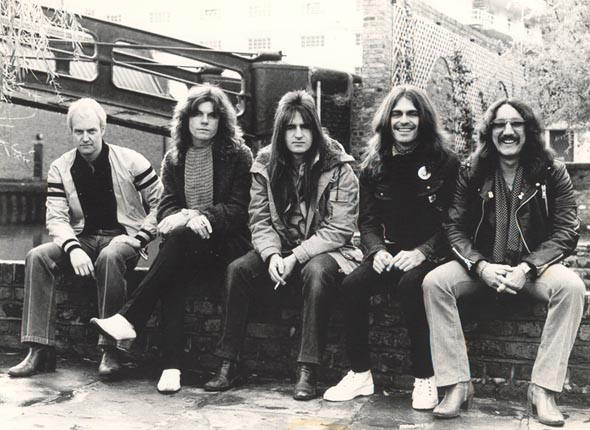
So we’re in to August and I’ve done my bits and pieces with UFO, and Mick is still recovering with his hand from having a minor car accident, which is why I did the solo on “Think It Over”. So we get a call, all of us, to meet up at Bronze Records, and have a meeting with Ken. So, I kid you not, we didn’t think this was going to be anything more than ‘hey let’s get together and discuss what we’re going to do.’ So we all go up to the boardroom at Bronze. And I remember that Ken had fitted himself out in a brand new wardrobe, and he’d kind of changed his appearance. And you know when people do that they usually plan on making a few other changes in their life? From my experience. And that’s the first thing I noticed ‘wow Ken’s done something new to his hair and he’s wearing a completely new wardrobe of clothes.’ So we go in the boardroom, and we’re all just sitting around, waiting, and having a general chit-chat about what we’re going to do. And then Ken just went in to this whole spiel and said ‘Look guys – I’ve thought about this long and hard, and I’ve decided that I’m going to leave the band.’ I kid you not – there was complete silence. I shudder to think what it was like for Mick to hear those words. Because for him and Ken, for whatever happened personally, they worked together threw all the halcyon days of Heep, back in the early 70s. So Mick must’ve thought ‘F**k . well what now!?’ And regardless of Ken and how he felt about me I felt the same, I thought ‘Well this is over now, surely!? There’s no way that Heep are going to continue without Ken.’ – That was my thought. I knew about the band back in their glory days and everybody knew that Ken Hensley was the mainstay of the band – material-wise. So yeah, I thought ‘this is over!’ And then Ken got up and promptly left, and we just sat there fairly shell-shocked. And they had no ideas at all about who they could replace Ken with, because I think for someone like Mick, when you’ve been in a band that’s rock solid, and I know Heep changed singers and what have you, but for Ken to go!? I am sure that was one person Mick never thought he’d have to consider a replacement for. So weeks went by – weeks and weeks where the only person I remember being mentioned as a possible replacement was Morgan Fischer from Mott (Mott The Hoople). At the time I wondered where did that come from, the connection!? But of course, it must’ve had something to do with the Bowie connection because Bowie wrote ‘All The Young Dudes’ for Mott The Hoople, and obviously Trevor would’ve known Morgan Fischer through that. So I’m assuming that was the connection. So the better part of a month went by with nothing happening, and again we were in the boardroom, and I said ‘Look guys I know someone, but he lives in Canada.’ And I knew loads of great players, but to know a great player who had a great voice was a tall order. So Mick and Trevor said ‘well that’s not a problem. Is he good?’ and I said ‘yeah, he’s amazing! He’s an amazing musician, he’s got a great voice, and he looks the part too!’ And they didn’t hesitate. I was really amazed. They said ‘well let’s get him over.’ So I called him that Thursday from Bronze. I remember I used Chris Healey’s phone. And of course Gregg was up for it. And pretty soon he came over, within a week I think.
A strange period then!?
It really was, because Lee going – even though I hardly knew Lee, I knew his contribution to the band, so that was my first shock – when Lee went on the very first day I was to start Conquest. That was a big deal. I thought ‘wow! if they’ll get rid of Lee – they’ll get rid of anybody!’ But then for Ken to go I genuinely thought ‘this is never ever going to work without Ken.’ It sounds silly, but at the time I thought ‘well this is like Deep Purple without Jon Lord.’ But of course, a terrible thing happened to him, and they continued with Don Airey, and have been going a number of years without Jon Lord. So there are ways around these things. But as far as the band being the same as before, I figured it was highly unlikely. It was going to be a different band with a different guy on keys – whoever we got in. The way I saw it Kevin, at this time what happened was we had the opportunity to go down to Rock City (I don’t know if you’ve heard about this), but Chris Slade had an interest in a studio down in Shepperton, it was a studio based on the locks there called Rock City and his Earthband partner / bass player Colin Pattenden was also a business partner in this studio. So Heep got some recording time down there, and we really liked it. We were away from Bronze Records and away from Roundhouse Studios where Heep had done all their albums for so long, and it was kind of like a breathe of fresh air, you know!? We were out of the city and we had Gregg in the band, and there was this sense of – and I know this was a few years before what Yes did, but when they got Trevor Rabin in and the way they re-invented themselves as a band, and then launched themselves on to the ’80s, basically as a completely different entity – and were very successful, in spite of what people thought was going to happen. And really that’s what I was thinking at the time, and Trevor too – this could be an opportunity to re-think the band and launch what was considered to be a 70s band on to a new decade. And so Chris Slade took some of the tracks that we’d recorded at Rock City, and he was going over to Germany for something (can’t remember what it was; I think it was a trade show, because he was involved with Staccato drums). So while he was in Germany he played someone at a German label our tracks that we’d recorded at Rock City, and this guy at this label flipped, and the guy said ‘well who is this?’, and Chris said ‘I can’t tell you who it is because they’re involved with another label.’ And the guy from the German record label says ‘Regardless of who it is I’d like to offer a record deal based on the tracks that I’ve heard.’ So Chris never told this guy that it was Uriah Heep. He then came back to London and got us all together and said ‘Listen guys a label has offered us a deal in Germany, and they don’t even know who the band is yet!’ And I’m sure if this label found out it was Uriah Heep, who were huge in Germany, they would’ve offered an even better deal on that basis. But what happened was Mick wasn’t keen on doing it, and I kind of understand because Mick had seen his whole world (really) falling apart or changing, (at the very least) drastically — Lee, his long-term friend is gone, then Ken, and now he was recording in a different studio than the Roundhouse, with the possibility of a completely new record contract, and label – away from Gerry. So I completely understand why Mick didn’t want to do it. But you know what – I think if we’d done that the outcome would’ve been completely different.
Yeah, the band probably needed a new start at that point.
Yeah, and I think that possibly the band wouldn’t have broken up, and that particular line-up may have stayed together for a few years, because it would’ve felt like a totally new band – with, obviously, only Mick left as a founder-member. But the tracks that we did down at Rock City were really good. They sounded fresh. And if you knew that they were Heep you’d say ‘Oh yeah I can hear Heep’, but I think if you weren’t told it was Heep you may not have been able to put your finger on who it was. The thing of course is Mick’s guitar playing.
Did you keep a copy of the tapes?
Uhh.. (trying to think)..I don’t have the stuff from Rock City, unfortunately. What happened was Gerry came down one day to Rock City, by which time he must’ve got wind of something in the air, so he came down to Rock City (and) before you know it we were back at the Roundhouse – working on the stuff that we’d started at Rock City, and our brief kind of sabbatical (if you like) from Bronze Records and the Roundhouse Studios was over. So, the recordings that people talk about as being the precursors to the Abominog recordings with me still on them, and obviously Gregg and Chris they were started at Rock City and we reworked them at the Roundhouse, and I couldn’t tell you what we kept and didn’t keep. And some of the songs ended up being played on that last tour, at the end of 1980 – “Only Yourself To Blame” and “Taking It All The Way”, stuff like that. Those songs sounded good live, they really did work. But in the end I just ended up with a few mixed tapes from the sessions. I’ve got a few of those in the cupboard, stored away, but I’ve never played them.
Is that something you would ever like to see released?
I’ll tell you why I’d be nervous about it, was because it was the sound of a band in it’s death-throws really. My heart wasn’t in it at this point, and I began to bring songs in to the studio that really had no business being on a Uriah Heep album. But what it was I was thinking ‘well what else can we record?’ There was this sense of ‘what else do you got, guys?’ And at this time, and I didn’t realize it, but I was already subconsciously. thinking about doing my own thing. So when I think of a lot of the stuff we recorded at that time I just have a little shudder – Oh God, that was not a happy period. I wasn’t singing well, plus a lot of the songs just didn’t suit, a lot of the stuff we brought in. There was a great song from Gregg called “I Never Want To Be Without Your Love”, and I think Gregg actually sang the vocal on that – and that’s really great. And that would’ve absolutely made the album. I imagine that Gregg has done that live himself, with the bands he’s put together since.
Think It Over and Inside Out – were those actually rehearsed with Ken, or were those new once Ken had gone?
“Think It Over” came out of me and Trevor, over at his place. This was during a period where we had broken off in to writing factions within the band. Mick didn’t necessarily write, he would kind of put his 2 pents in once the song was kind of written. Ken would always write alone. And Chris wasn’t writing at this point. So I had the piano intro thing, I had the basic chords, and I played it to Trevor one day over at his place, and Trevor really liked it, and Trevor came up with the ‘da da da da – da du dum – da da dah’ on guitar. So what happened was we were rehearsing at a place called Jumbo Management [laughs] – a strange name for a rehearsal space. We were rehearsing and writing new material for a week or 2 in the summer, and I drove off with Trevor at the end of the day, and Mick drove off on his own to go home, and later that day I got a call to say that Mick had been involved in this minor car accident, and injured his hand. So he was going to be out of action for a few months. So that’s how I came to do a lot of demos down at Rock City, and that’s how I came to do the guitar solo on “Think It Over” – down at Rock City, that was, and a few other bits and pieces. And meanwhile Ken was no where to be seen. I often asked myself ‘why wasn’t Ken there?’ But he wasn’t; he was off doing his own thing. And he just left us to demo our songs that we were writing – which of course is not a good sign if you’re in the same band. “Inside Out” – that was a song I’d written in early ’79, before I went to Canada. I had an old upright piano in my parent’s house, in a little room, and it was awful, it was out of tune, you could barely hear what key I was playing in. So, I wrote quite a few songs – I wrote “Won’t Have To Wait Too Long” on that. And when I was going to do the audition for Heep I pulled out the lyrics to “July Morning” on the inside sleeve of my copy of Look At Yourself , and I learned “July Morning” while accompanying myself on that old out of tune piano. Anyway, I wrote “Inside Out” on that the previous year. And that became “My Joanna Needs Tuning”. “My Joanna” – which is Cockney rhyming slang for piano, which is why it was called “My Joanna” – “My Piano Needs Tuning” [laughs]
Just to clarify – the single ‘Think It Over’ came out with “My Joanna” on the back of it. So my question is did either song begin with Ken and just re-done with Gregg?
I remember recording “My Joanna” with Ken, I remember doing that because I remember Ken playing that ‘dah dah dah’ on his Hammond, and I thought ‘Wow, that sounds really great!’ That must’ve been recorded earlier on for Ken to put his Hammond on it. But Ken was no where near “Think It Over”, he didn’t play on that at all. But yeah, there is a Hammond version with Ken playing, and I played piano on it – the same set-up as when we did “No Return”.
Regarding your departure – was it harder to leave because it was a big name band or was it easier to leave because it was such a mess?
That’s a good question! I will say that once I was in Heep, I didn’t think that I was in a major band, they just became people, and most of them I really liked, and as you know, Ken and I were just not an item (laughs). It just became personal – that’s my point. It became a group of people, a group of guys, and I didn’t think any more than ‘Oh this is Uriah Heep who did this, and who did Magicians Birthday‘ , or whatever. They were a major band when I was in school. I didn’t think about all that. I was too busy having personal relationships with them. You know, soon after you join a band it becomes all about the personal relationships quite quickly; otherwise it’s not going to work. So, as the end of 1980 was coming in to view, it bothered me greatly, especially as we came in to 1981 and we were back at the Roundhouse, which was a fairly soulless kind of studio . It wasn’t conducive to the creative spark, you know!? Like you go in to some studios and you think ‘wow this is great’. They’ve got a wonderful set-up, and you relax immediately and you feel creative where at the Roundhouse – it was more like going in to an office. That’s really how it was, really cold. Cold and clinical. So there we were back there, and there was a sense of ‘OK what songs have we got?’ So I was just pulling up all these songs that I’d written a year or 2 before I was even in Heep. And I knew that as I was taking it in to the guys – ‘Oh what am I doing?’ And meanwhile I started, I would write the odd song by myself, and I would sit on it for a week or so, and think ‘that’s good! .. Should I play that to..’ . And i played one to Trevor one day and I remember Trevor saying to me ‘I like it John. Where do I get to do my bit?’ And it kind of reminded me – ‘oh yeah, I’m in a writing relationship with Trevor’. And I’d just presented a finished song. You know, I wasn’t fully conscience of what was happening to me at that point. It wasn’t til Trevor said what he said that I thought “Oh God I’m writing whole songs, suddenly’. So something must’ve been going on on a sub-conscience, and Trevor helped me to see that. ‘Something’s changing here.’ So we recorded a version of that song; that was a song called “Falling” . So over a period of weeks I started telling my girlfriend, and she was in the business too, so she understood what could happen. And I kind of discussed it with her a few times. – ‘I really don’t feel good about continuing with the band. I feel like I want to do my own thing.’ And then there was a meeting one day, a new contract was presented to the band. Gerry waited for everyone to sign this new contract, and then revealed that because of some debt that the band had run up with the record label – that the band needed to take a cut in wages. And I thought that that was a pretty rude stroke. Now I was a young guy, and Trevor was a little older than me and he had a wife and young family and a mortgage to think about. Where as I was 22 and just living in a cheap apartment, myself and my girlfriend. Not that I’m saying we could just take it on the chin and think nothing of it, but it was just a rude stroke – what Gerry did. And Trevor, I remember he hit the roof, because he realized this was going to have a massive effect on his life. So this all fed in to my sense of ‘this is not a happy ship.’ What kept things floating prior to this was we were kind of happy in our work, even though Ken was over there and there was a sense of something good or positive was in it, and then suddenly, I didn’t think that the creativity was there and then there was this contract situation with Gerry – and that was it for me! I just thought this just seems to be a running theme within the Heep camp where there’s always a stroke, So one night I was at home and my girlfriend was out, and she knew that I was going to leave Heep. And I called up Trevor and I just said ‘Hey Trevor can I come up and see you?’ And Trevor lived about an hour’s drive away, right over on the other side of London. It was a Saturday night, I remember it well. I walked a considerable part of the way because I was so nervous about talking to Trevor about it that I wanted to take as long as possible to get over to Trevor’s place (laughs). So I walked for about an hour, and in the end I flagged a London cab to take me the rest of the way. So I knocked on the door, Trevor answered the door with this knowing look on his face. And 3 minutes later we sat at the dinner table where we’d had dinner with Ken and what have you, and had many happy times. And I told Trevor and he just looked at me straight away, and ‘I knew it the moment you said you wanted to come over.’ So we had a drink that night and sat for an hour or 2, and I just left. It was awful because those guys, like I said earlier, had become friends – Gregg was already a friend, Trevor had become a friend, Mick I was very fond of, and Chris had become a friend. And Chris, after Heep, would go on to manage me, and for many years he was like a mentor. Chris was ten years older than me, and Chris became a very important person in my life. So that’s how it happened. So all the negativity about my time in the band – that happened after I was in the band . In the December before I left I had to have a tonsillectomy because of various issues with my throat during that year. I got tonsillitis, and I had digestive problems that were causing all manner of problems with my throat – acid reflux, everything. I eventually had my tonsils removed in December, and after I’d Ieft the band Gerry Bron refused to pay the bill [laughs]. We were on a medical insurance plan, and Gerry refused to pay the bill. which was awful. And he held out for about a month, refusing to pay the bill, which only assured to convince me that I’d made the right decision to leave the band. So he eventually agreed to pay the bill, and it was on our medical insurance thing. So that started the whole negative thing about me. Then about 2 months later, I was living in London, and all the musicians around London were saying ‘Hey John we heard you were fired from Heep.’ And I was ‘What do you mean? Far from it, I left.’ So that circulated for a long long time. And people to this day still believe that I was fired. So I’m afraid that’s how it was. But I’ll give you a footnote here many many years later I opened for the guy who wrote “Come Away Melinda” (ed: Tim recorded the track previously and was signed to the Bron roster) – Tim Rose. It was down in Wales, Tim was doing his solo acoustic set, and I was doing my solo acoustic set. So it was actually what ever year Tim died, this was a couple of months before he died. So after the gig Tim was sat at a table with all his CDs, like people were starting to do at that time, just selling his CDs. So him and I have a conversation – ‘hey I liked your set John… Yeah, I really liked your’s’ … and there was a brief pause and Tim looked at me and he said ‘I hear you were in Heep!?’ , and I said ‘Yeah, I was.’ And he looked at me again and he said (laughs) ‘did you get your money?’ , and I shook my head, and Tim just looked at me and said ‘what a bunch of See You Next Tuesdays!’ And that was the end of our conversation, because as you can imagine there were people around that were buying Tim’s CDs. So I just assumed ‘oh right – this has been going on a long long time.’ And when he said what he said I don’t think he was referring to the band, he was referring to the whole Bronze Records set up, the publishing arm, and all the rest of it.
Links:
https://www.facebook.com/Red-Steel-Music-244496395603999/
https://www.facebook.com/groups/1829308237286411
https://www.facebook.com/groups/335228970241723











 Outsider Rock