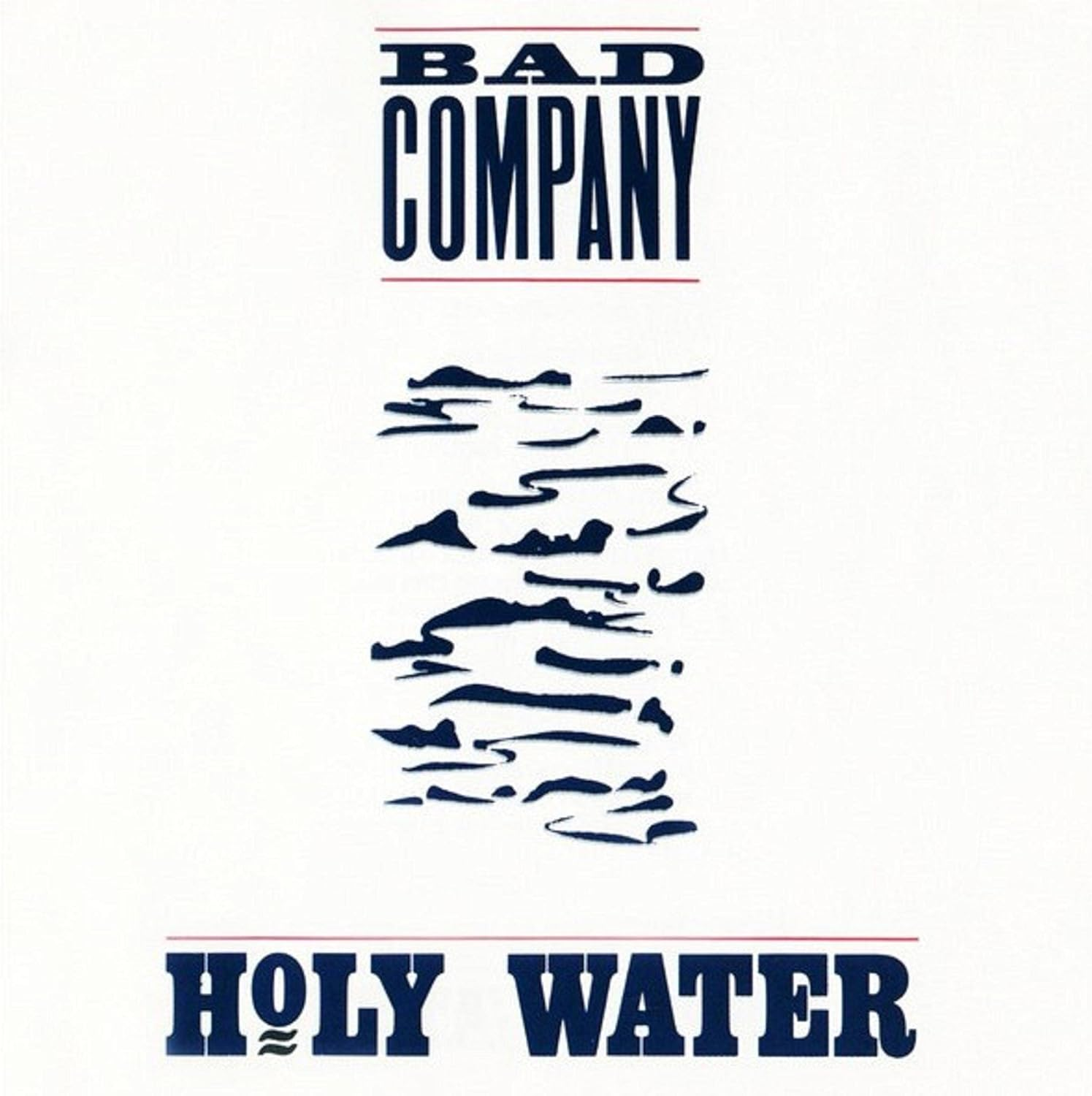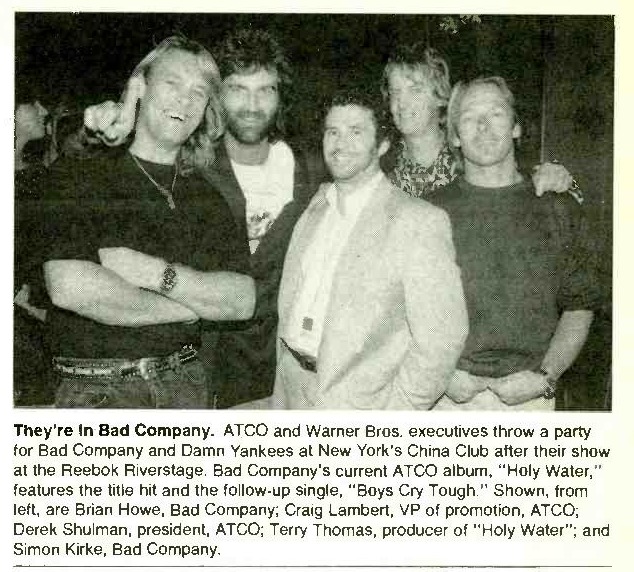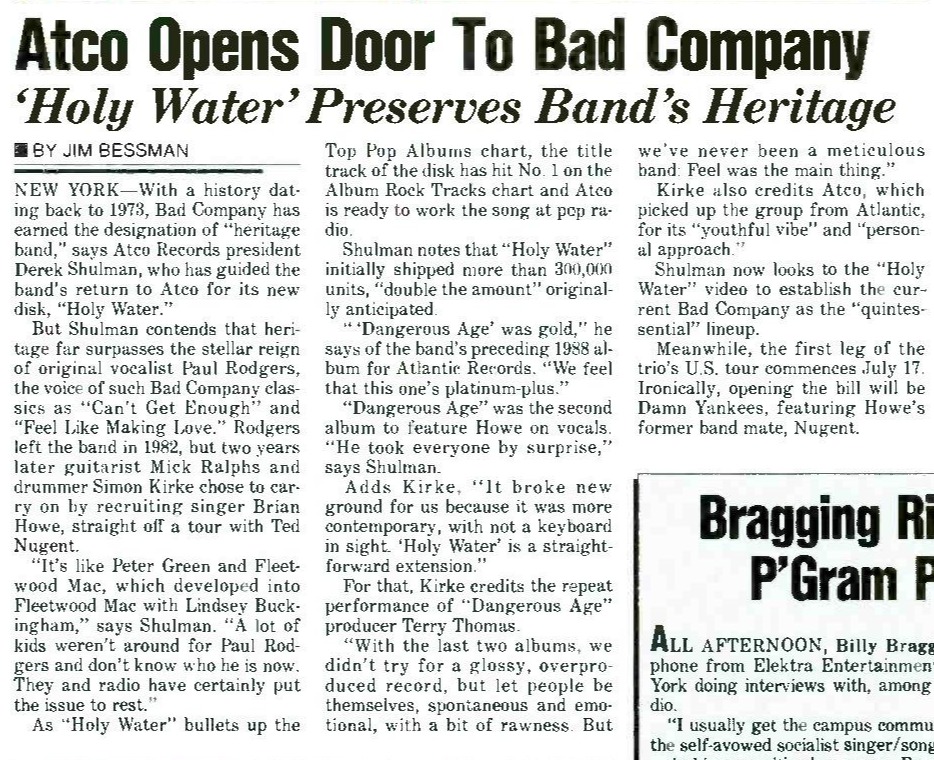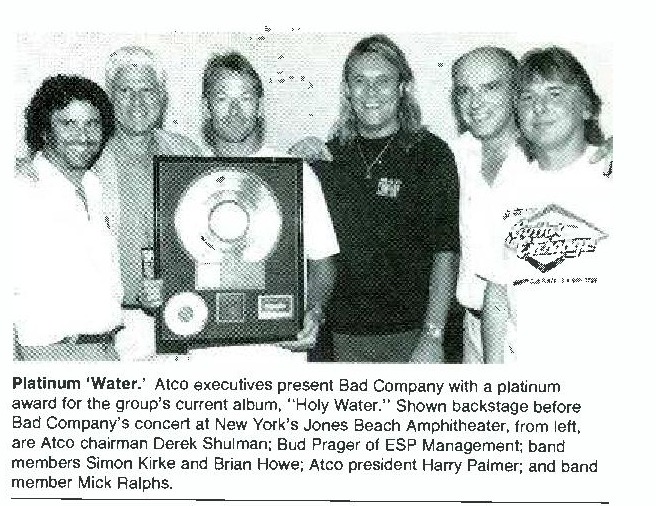
Holy Water was the 3rd studio album from the reformed BAD COMPANY, fronted by Brian Howe. The band had reformed in the mid ’80s, but with Paul Rodgers not involved, Howe was recommended by Mick Jones (Foreigner), who had his eye on Howe as a potential replacement to Lou Gramm.
Produced by Terry Thomas (ex CHARLIE), Holy Water featured 13 tracks, more than half co-written by Howe & Thomas, with the producer also co-writing a few others. Holy Water would become the most successful Bad Company album of this period, featuring 3 hit singles – “If You Needed Somebody”, “Walk Through Fire”, and the title track. Bad Company, during this era had adjusted to the times, with a more AOR, pop-rock approach, but still guitar driven (more so here), with blues feel at times on Holy Water (courtesy Mick Ralphs’ guitar); kinda like a heavier Foreigner (IMO), and a bit of that Def Leppard 80s glam-rock feel. Lyrically, not very original, nor much different to the types of things many other 80s acts were writing about (see above mentioned bands, Loverboy, etc..) This album included other favorites and potential singles, with songs like “With You In A Heartbeat”, “Stranger Stranger”, “Fearless” (that intro reminds me of that Damn Yankees hit….wonder which came first?), plus “I Don’t Care” and “Boys Fight Dirty”, The last song is the most different here, “100 Miles”, a tasteful acoustic ballad, sung by Simon Kirke.
I really liked this era of the band, never having been a huge Bad Co fan, I thought the albums with Brian Howe especially the latter 3, were good. A shame that Howe (and this era) doesn’t get more credit for keeping the band going, And very successfully. Songs from this period are not included on any Bad Company compilations, and barely mentioned at the band’s official website (and not positively). Recently Friday Music released a limited 35th anniversary turquoise colored vinyl of Holy Water. Friday Music also released a 2-CD Holy Water w/ Dangerous Age (the previous Bad Co album), with a few bonus tracks in 2013. (RIP Mick Ralphs and Brian Howe)
Holy Water PRODUCER: Terry Thomas Atco 91371 – Classic rockers follow up 1988’s certified -gold “Dangerous Age” with an invigorating set of hard -edged stompers, laced with blues and pop sensibilities. Title track /first single is a kicking, radio-ready anthem, as is “Boys Cry Tough,” both of which are highlighted by singer Brian Howe’s powerful pipes. Contrast comes from “If You Need Somebody” and “100 Miles” (sung by drummer Simon Kirke), a pair of well -sung, cliché -free ballads. (Billboard, 06/90)
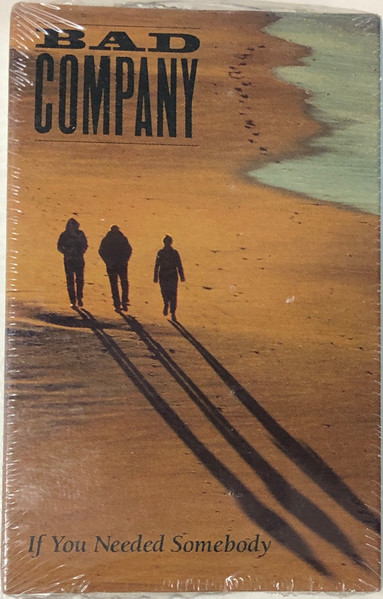
BAD COMPANY If You Need Somebody (4:21) PRODUCER: Terry Thomas WRITERS: Howe, Thomas PUBLISHERS: Warner Chappell /TJT Songs /Phantom /WB, ASCAP Atco 4 -98914 (c /o Atlantic) (cassette single) – Sensitive rock ballad is given depth and dimension by singer Brian Howe’s heartfelt performance. One of many fine tracks on the band’s current “Holy Water” set. (Billboard, 10/90)
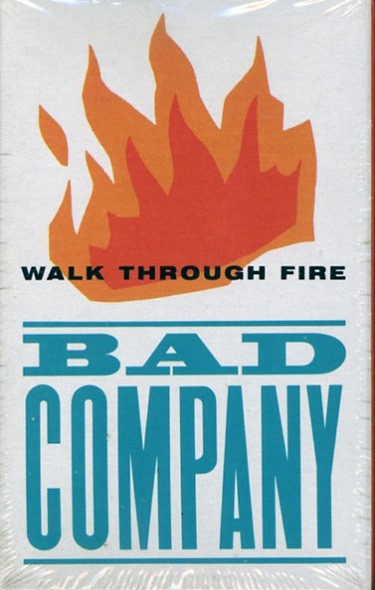
BAD COMPANY Walk Through Fire (4 48) PRODUCER: Terry Thomas WRITERS: Howe. Thomas PUBLISHERS: Chappell /TJT Songs, Phantom /WB. ASCAP REMIXER: Larry Dvoskin Atco 4053 (c /o Atlantic) (cassette single) – Third helping from band’s excellent “Holy Water” album is an acoustic – softened pop /rocker that is fueled with a sing -along chorus and well – produced performances. Equally strong choice for top-40 and album rock radio formats. (Billboard, 1991)
“More than three years in the making, the 6CD box set will arrive in fans hands by October 24. You can pre-order NOW, with the full digital delivery due next month.”
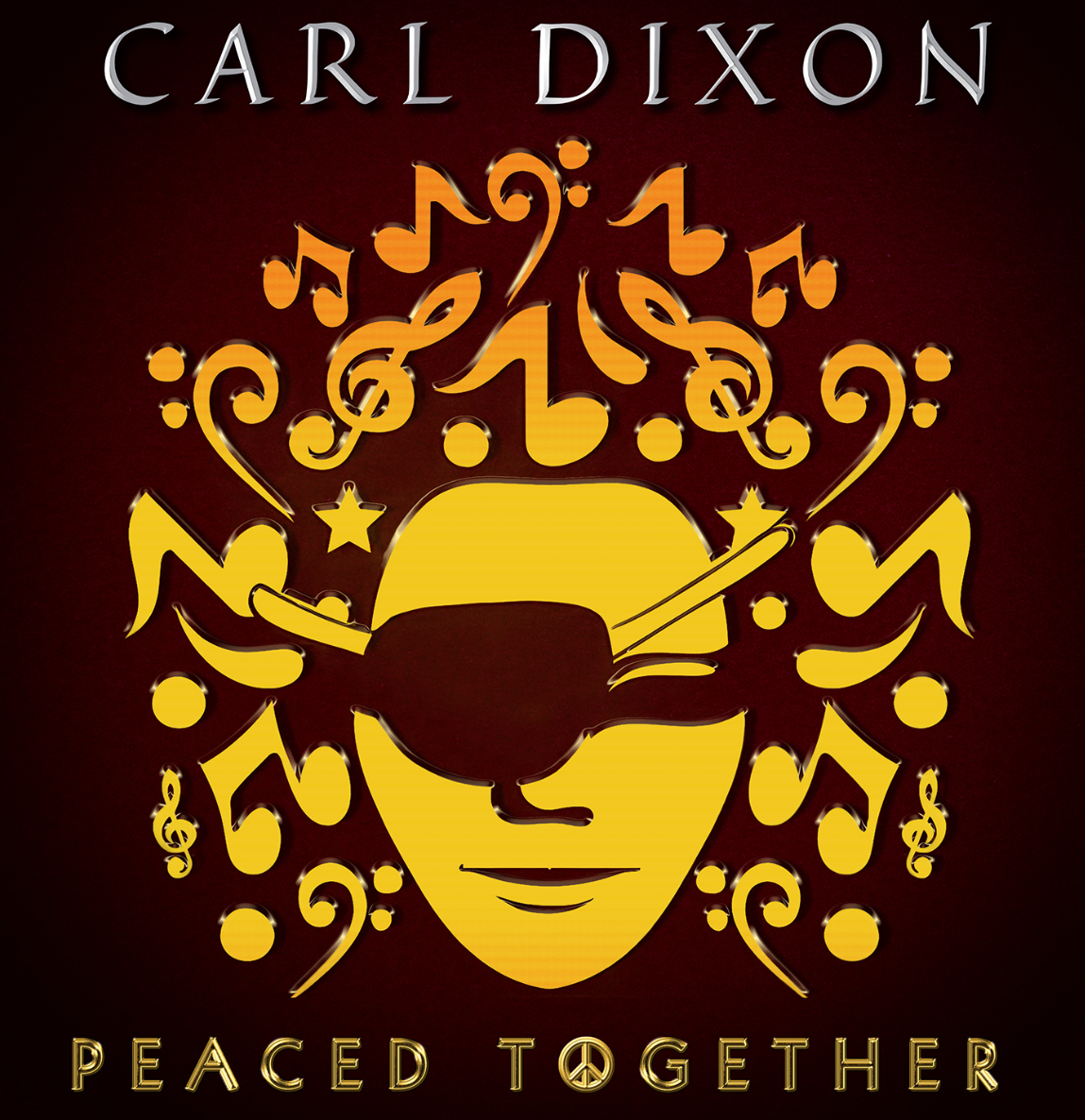
‘Peaced Together’ is a 6CD box set in a ‘fat-pack’ jewel case, limited to strictly 500 units worldwide and priced at $99 (including worldwide shipping).
Since 2022, Carl Dixon and MRC CEO Andrew McNeice have been swapping files, sourcing audio, digitizing tapes, reels and DATs and then starting over again with new improved files. JK Northrup has been involved all along the way, adding his thoughts and overseeing the remastering of every track.
Carl Dixon states: “PEACED TOGETHER is in part the realization for me of every artist’s dream; that people care about your work and want to share it with the world. It is, I hope, part of its charm that this project is based largely on music that has never gone through the stages of refinement, polishing and presentation to the world in big-bucks album releases. This collection consists of my unreleased musical works save one or two exceptions. It spans many years and veers across different styles and genres, some more fashionable now than others, but I’m pleased that I can hear elements of my true self throughout. Some of these works were rerecorded for inclusion in album projects but most remained known only to me and to those who helped make them. I am delighted to now have these many “hidden gems” released out into the wide world by Andrew McNeice and MelodicRock Classics. I hope they bring a measure of joy to all who choose to spend time listening. Rock on wit’ ya bad selves!” ~ CD. 2025
Carl Dixon is of course the world renowned Canadian guitarist, singer and songwriter, who has been fronting CONEY HATCH since 1981 as well as releasing 6 solo albums and writing with a whole host of chart topping artists along the way.
The 6CD set will be broken up into the following categories: Disc 1 – Anthems Volume 1 Disc 2 – Anthems Volume 2 Disc 3 – More Rock & Some Roll Disc 4 – The Softer Side Disc 5 – A Little Centre of Left Disc 6 – Tracks That Can’t Be Left Behind
These songs come from a variety of sources and eras, but it’s best left to Carl to expand on his earlier comment:
“The one hundred-plus tracks on ‘Peaced Together’ are evidence of a life spent in song writing whenever and however it could be done. From my earliest studio demos with my high school chums, to the most recent DAW creations from my home studio, it’s all expressing something that I thought needed to be said. We all write, sing and play our personalities through our art. Here lies AOR Rock in various stages of development, sure, but there’s so much more in addition. Some of the AOR stalwarts who appear on Peaced Together as co-writers and performers include Stan Meissner, Marc Ribler, Van Stephenson, Brett Walker, Taylor Rhodes, Kevin Savigar, Marc Ferrari, Steve Shelski, Jack Conrad and Steve Plunkett and that’s just Disc 1! Harry Hess turns up in two songs we recorded during the run-up to the debut Harem Scarem album; that’s his unmistakable voice you hear on Too Much Paradise. Songwriters are generally an affable, collaborative bunch and I learned much from all of my partners over the years. Special mention must go to Van Stephenson who was very kind and instructive in his gentle way when I was a greenhorn turning up in Nashville for the first time. Four of these songs are my collaborations with him. Uniquely, eight tracks included here are collaborations with my father Ron Dixon, based on his poems and writings. Something of him endures through the music. A VERY wide range of styles and approaches is heard on ‘Peaced Together’. Nashville, New York, L.A., San Francisco, Pittsburgh, Toronto and smaller communities; I travelled far and wide to meet great people and make these songs. There’s lots of rock as you might expect with my history but also pop, blues, country and funk. Sometimes they were just for fun, sometimes it was like trying on a stylish hat to see if it looked good on me. I’m proud of all of these tracks, else I would not have put them out on display like this. It’s crazy to me that we haven’t emptied the cupboards to make this collection.”
All pre-orders will receive the complete audio package well in advance of the physical delivery, and is the only way to guarantee a copy of this amazing set of songs in a one-off pressing. It’s hoped most regular MRC retailers will carry copies of the set, but pre-order here to be guaranteed and get the full advance audio delivered soon.
The full track listing is as follows:
DISC 1 01. Buried Alive 3:18 02. Walk Through The Fire (Demo) 3:50 03. Cloud Of Love 5:16 04. Good Time To Be Bad 3:35 05. Don’t You See 3:20 06. I Believe In Angels 3:59 07. Love Strikes (Demo) 4.00 08. Edge Of A Heartbreak 3:41 09. Hold Your Fire 3:06 10. Kid Blue 3:21 11. Leap Of Faith 4:20 12. Love’s Gonna Take Some Time 3:18 13. Hot Streak Gone Cold (Demo) 3:35 14. She’s A Touch Like You 4:05 15. If Love Could See Me Now 3:44 16. Until The Dawn 4:13 17. Hard To Leave 4:03 18. All I Want 3:56 19. Fight For Your Love (vocal Jimmy Lawrence) 3:50
DISC 2 01. Fuel For The Fire 3:52 02. Against The Night (Demo) 3:51 03. Fools Paradise 3:03 04. Goodbye To A Good Thing 3:36 05. From Here On 4:51 06. Come My Way 3:39 07. Might Have Been 2:59 08. Here Comes Trouble 3:42 09. Taste Of Love (Demo) 4:33 10. Up To No Good 4:03 11. Animal Attraction 3:46 12. Bad To The Bone (vocal Andrew Elt) 4:12 13. Bad Seed 3:33 14. No Middle Ground 4:42 15. Shadow (Demo) 4:05 16. Magic Happens 3:54 17. Treacherous Emotions (Demo) 3:49 18. To The Love 4:13 19. I’m Rattled 2:39
DISC 3 01. A Fool in Love 3:30 02. Giving Up The Ghost 4:25 03. Too Much Paradise (vocal Harry Hess) 4:05 04. Across the Great Divide (Demo) 5:51 05. Knee Highs 5:38 06. To Fall In Love 3:18 07. Old Testament Rock 3:11 08. Don’t Walk Away Dreaming 4:35 09. Trust Me 4:09 10. Hot Florida Sunshine 4:55 11. Busted (Demo) 3:48 12. Illumination 3:49 13. Around and Around 3:22 14. Little Dancing Queen 3:58 15. I Know How to Treat a Lady (vocal Jimmy Lawrence) 3:42 16. Little Dreamer 3:58 17. Only a Fool 3:50
DISC 4 01. Can I Love You 3:34 02. Younger Generation 5:09 03. Where Do I Begin 4:06 04. Dreams Gone 2:25 05. Easy Words 3:59 06. Don’t Disappoint Me 2:58 07. Don’t Turn Out The Light 3:39 08. Song From The Island 3:04 09. Goodbye Eyes 4:59 10. Might Still Be in Love 3:15 11. Just Because 3.42 12. How’s Your World Spinning 3:55 13. Tell Her I Called 3:24 14. Green Diamond 3:00 15. Until The Dawn 3:57 16. Same Moon Shining 2:56 17. Thought It Would Be Fun (Demo) 3.49
DISC 5 01. Can’t Lose (What You Never Had) 4:17 02. Just a Few More Hours 3:08 03. Waiting In The Wings 3:27 04. Jacob & The Pig 3:39 05. That’s Right 3:11 06. Seven Day World 3:23 07. Angel On Main Street 2:50 08. Get Whatcha Wanna 3:24 09. Missing You 3:56 10. I Want You 3:53 11. Showtime 3:33 12. Stand Together (Female Vocal Jessica Benoit) 4:26 13. It Is What It Is 4:01 14. Was Your Heart Broken 4:03 15. Strange Way To Live 4:05 16. Keep Your Control 4:04 17. Behind the Open Door (Demo) 5:44
DISC 6 01. Together Takes Us Any Place 2:46 02. Make Up Your Mind 3:05 03. So Much Love 4:01 04. When I Remember 4:19 05. By My Side 3:17 06. Look For Me In Dreamland 2.53 07. It’s A Wonder 2:26 08. Just A Girl I Used To Know 3:35 09. She Breaks Your Heart 3.16 10. Strayed And Stolen 3.28 11. The Gizmo In My Head 2:24 12. Take It Out In Rock ‘n Roll 2:09 13. The Big 3-OH 3:14 14. Prisoner (with Jessica Palmer & Jessica Benoit) 3:31 15. Walk in Clouds 2:34 16. I’d Never Have Fallen 3:39 17. Theme from Tornado Hunters 0:45 18. Hendrix Tornado 0:53 19. The Blood Rises (Demo) 4:26
Carl here: – Some of these songs were written when I was this young!
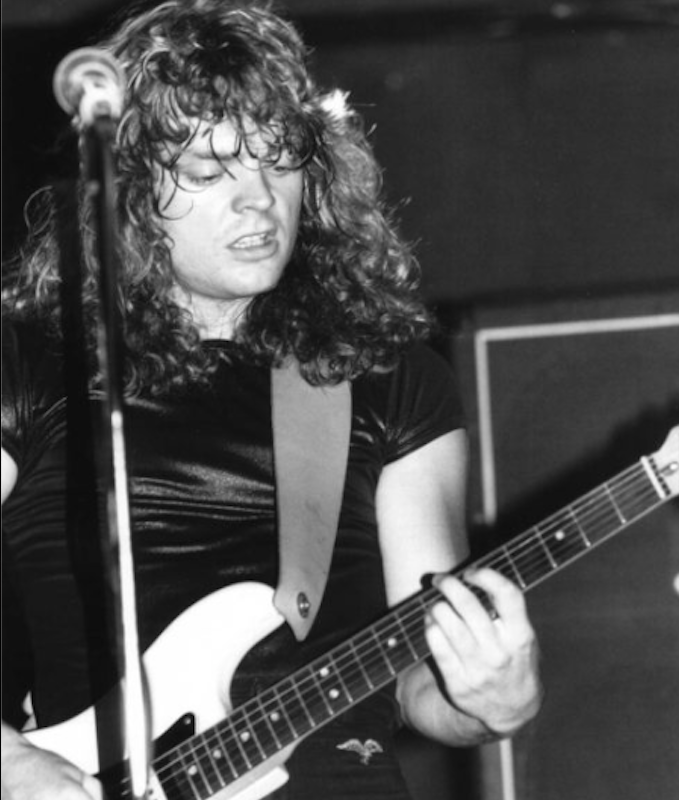
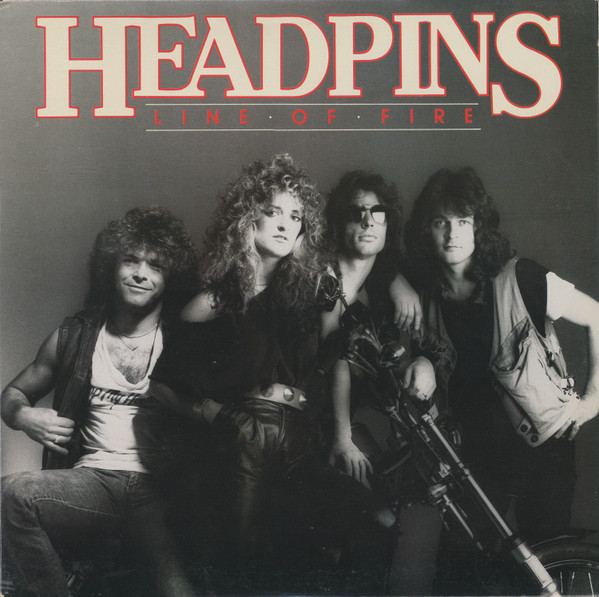
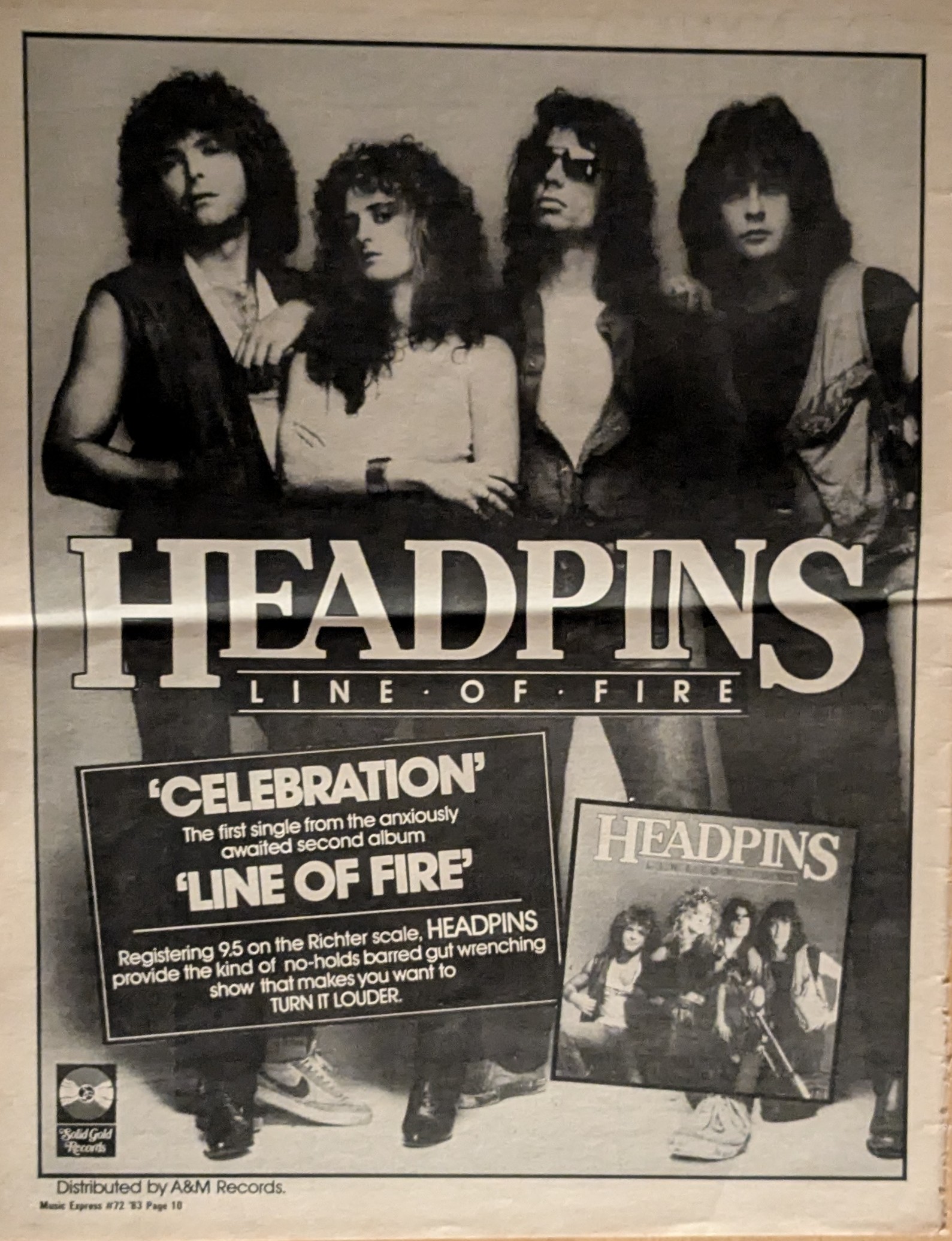
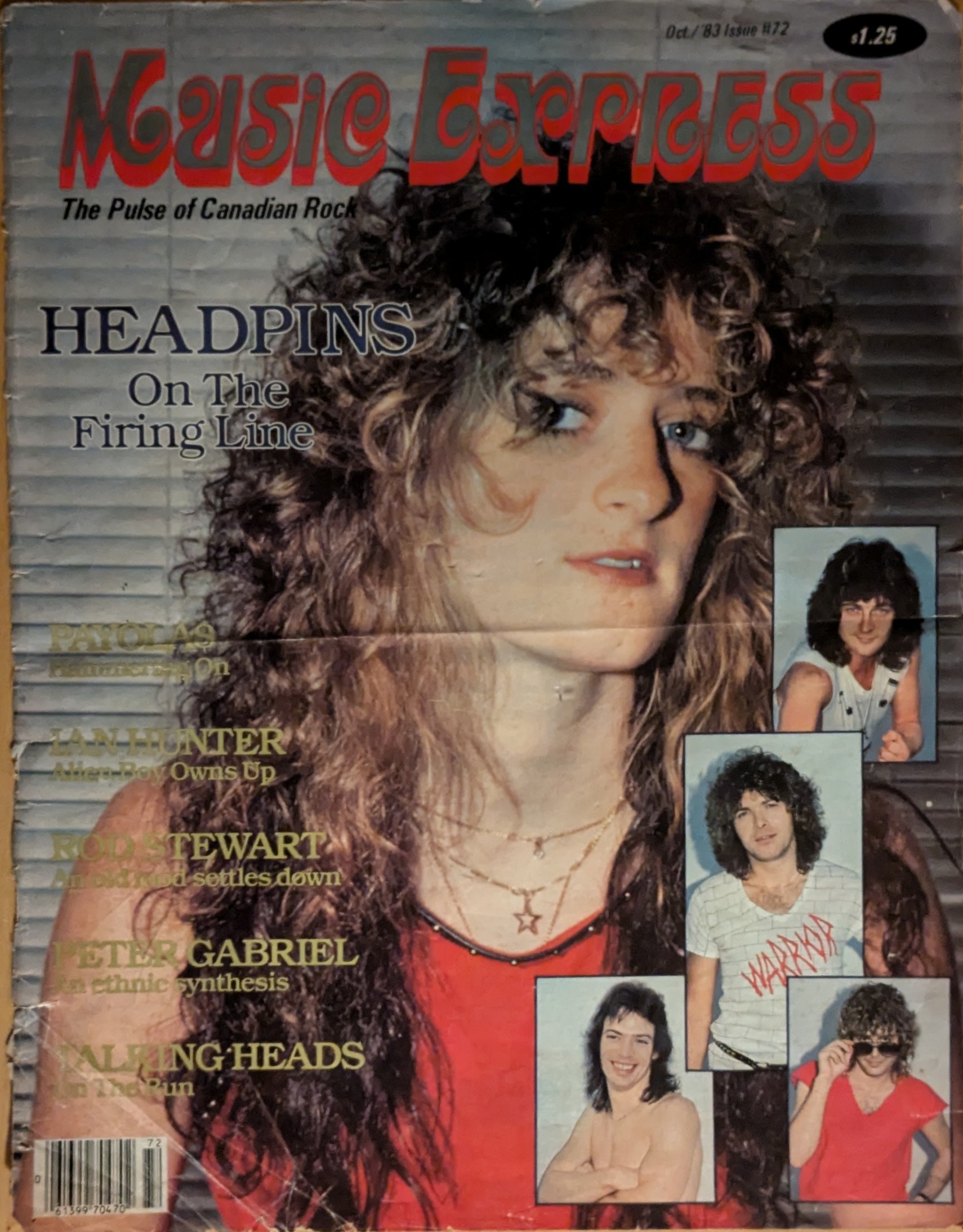
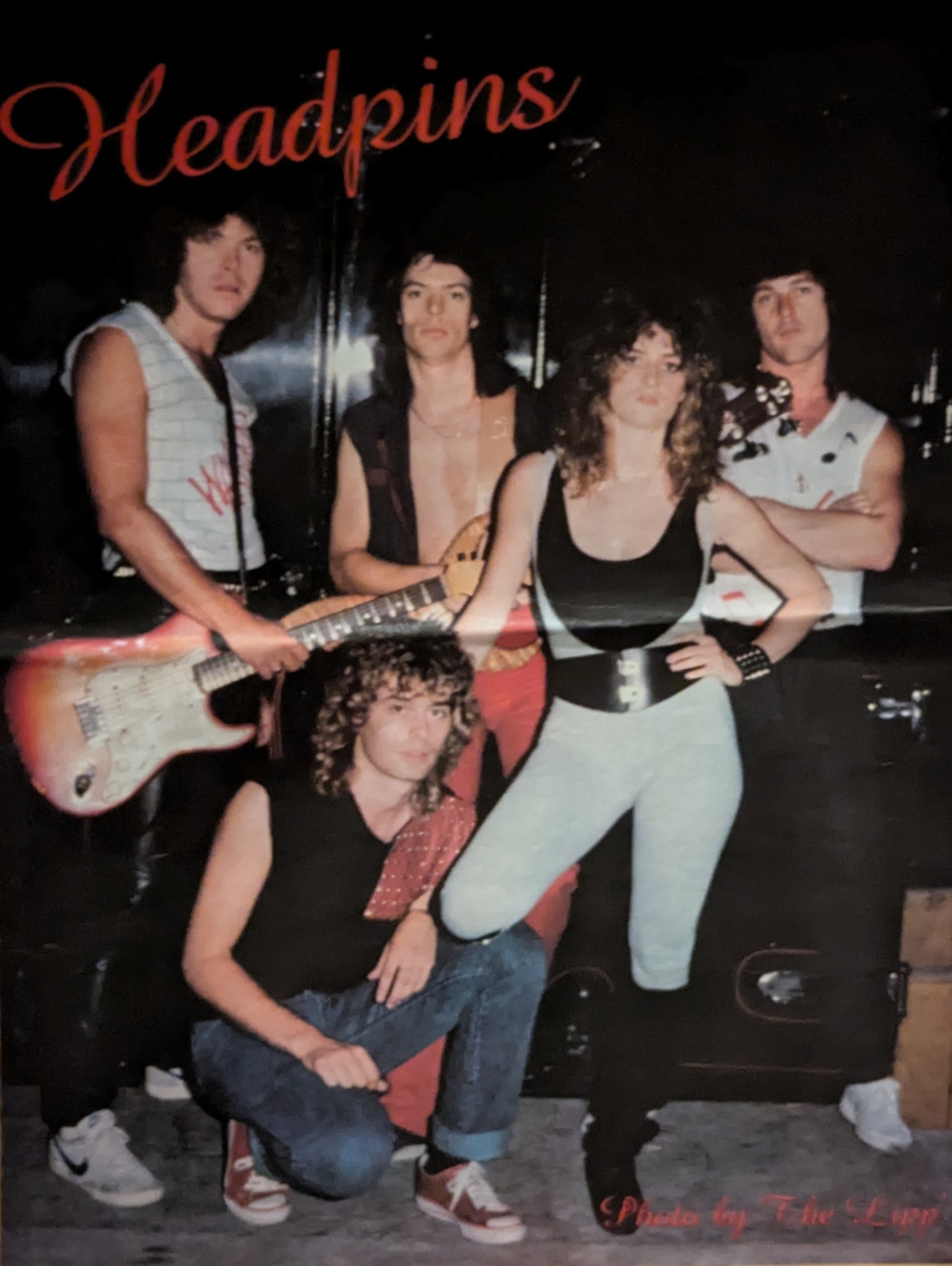
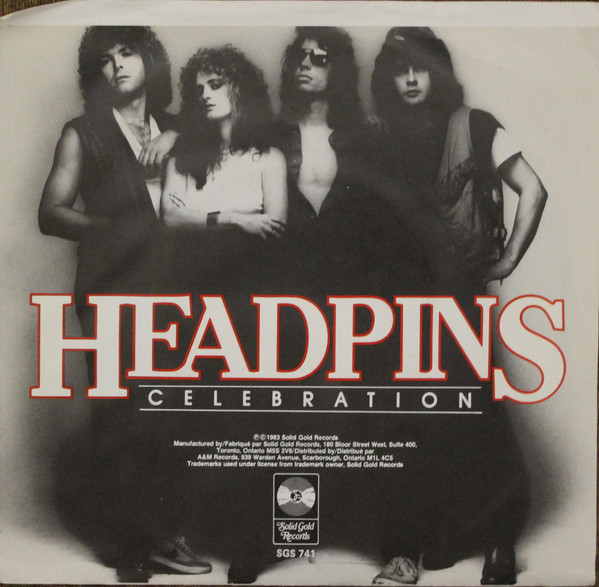
Released in the summer of 1983, Line Of Fire was the Headpins 2nd album on Solid Gold Records. Founded a few years prior with (then) Chilliwack members Ab Bryant (bass) and Brian MacLeod. The band went through a few changes, with drummers Matt Frenette (Loverboy) and Bernie Aubin essentially changing places, and singer Denise McCann being replaced by Darby Mills. The band’s debut Turn It Loud, gained a lot of attention and radio play with the hit single “Don’t It Make Ya Feel”, as well as the title track – “Turn It Loud” and “Breakin’ Down”. The Headpins sound centered around MacLeod’s guitar sound and Darby Mills powerful vocals (dubbed the “Queen of scream”). Line Of Fire took on a bit more of a radio friendly approach in the songs and a bit of keyboards on a few tracks. The album’s cover is a photo of the band on and around a motorcycle, with the back cover being another band photo, but geez, the small red lettering on the back, makes a good bit of this hard to read!
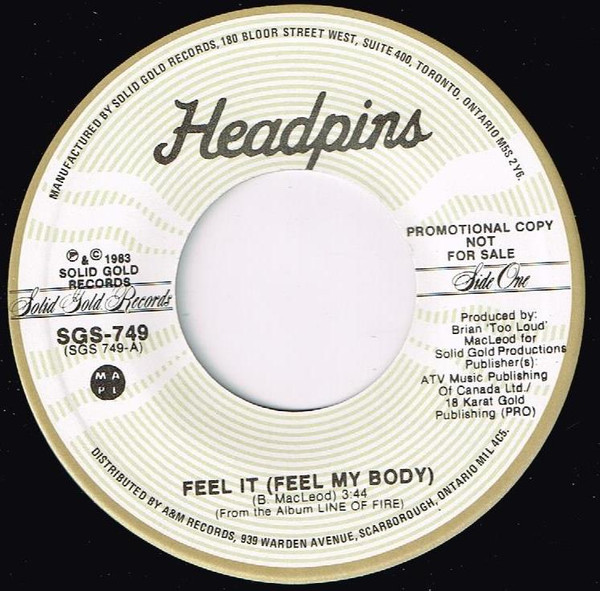
Anyway, I saw the Headpins open for Loverboy in August of that year. During their set Darby Mills announced that the new album would be in the shops the next day before the band played “Feel It (Feel My Body)”, which was the only new song included in their set!
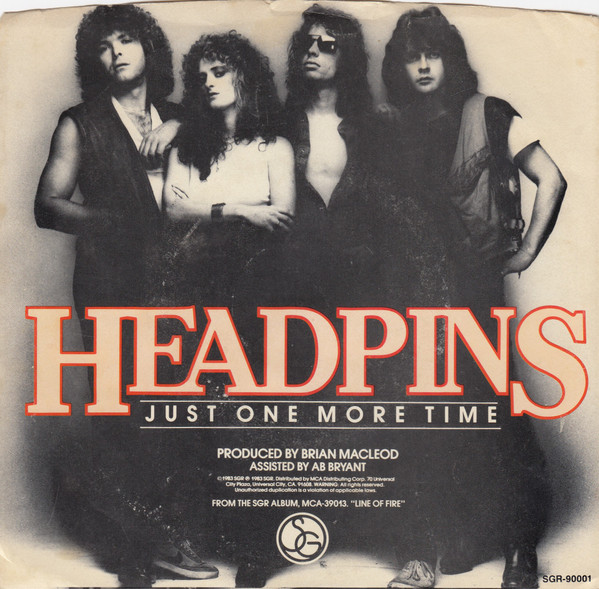
Line Of Fire was a very good album, all around. It featured 2 classic dark, hard n heavy side openers in “Mine All Mine” and “Don’t Stand In The Line Of Fire”. Then there was the 3 singles, all melodic rockers – “Celebration”, “Just One More Time” (the band’s only single to crack Billboard in the US, @ #70). The more poppy “Feel It (Feel My Body”) featured a bit more keys and horns, and received a good bit of radio play. “Double Trouble” was another fine rocker. 8 tracks, all written by MacLeod (with Mills co-writing 2, and Ab Bryant another). Line Of Fire gave the band their 2nd platinum album in Canada.
The band’s label Solid Gold went under before the band’s 3rd (and final) album 2 years later. Head Over Heels was recorded for MCA records, a bit lighter, featuring the single “Stayin’ All Night”, as well as favorites “Never Come Down From The Danger Zone” and “Still The One”, but it didn’t fare as well as the previous 2 records. Still well worth checking out. Darby Mills left the band soon after, and released a solo album in 1991 (Never Look Back), while McLeod wrote & recorded with Mike Reno (Loverboy), and recorded an album with Chrissy Steele (Magnet To Steel) in ’91. MacLeod passed away in 1992. The Headpins would eventually reform with a few new players, and still play today (albeit with a different singer as well).
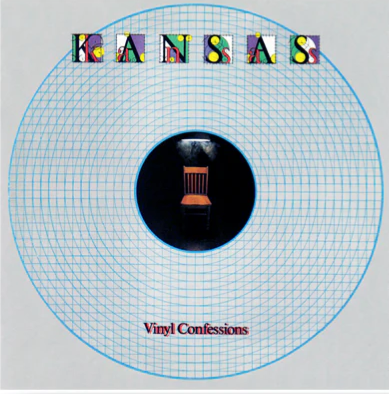
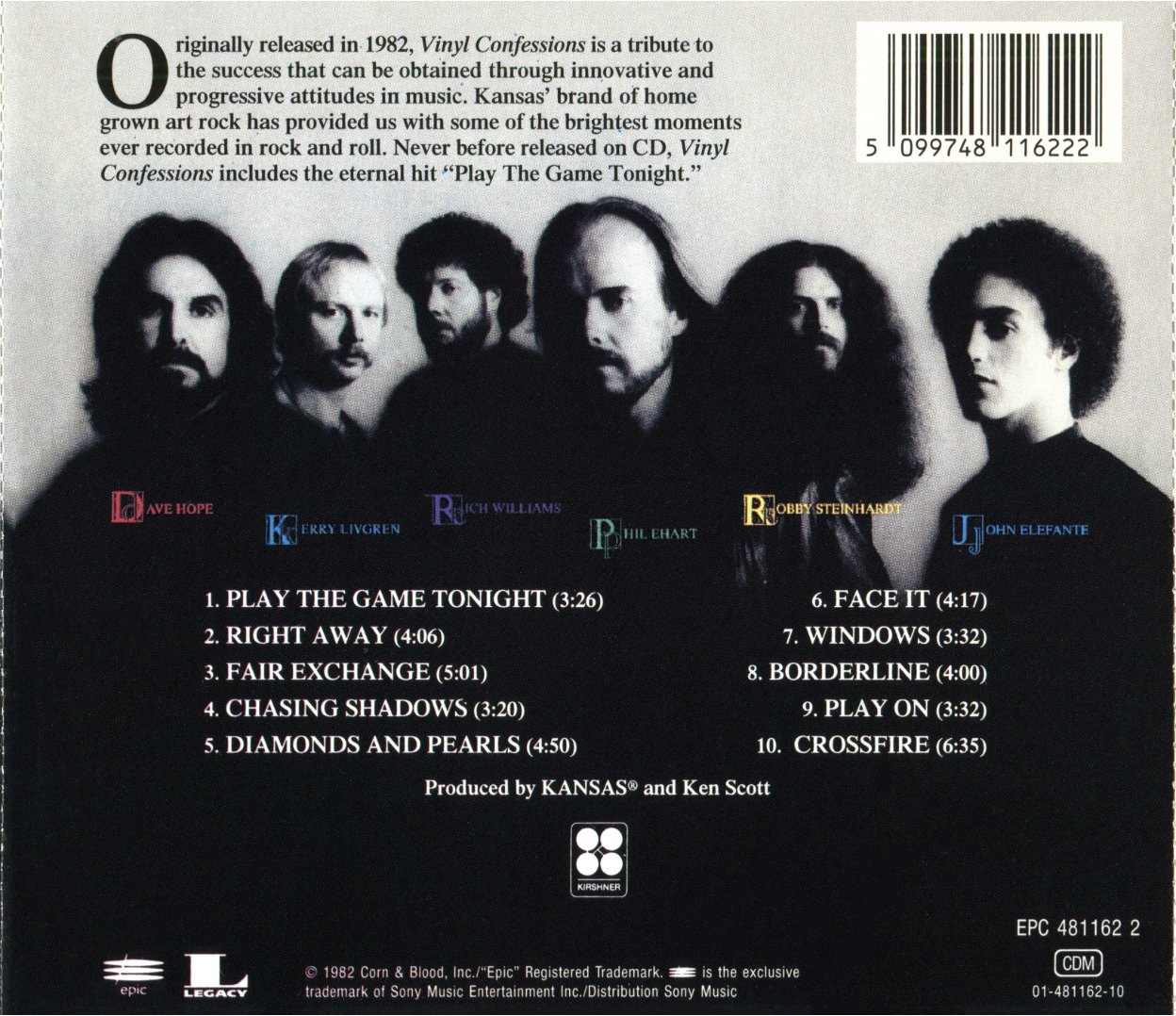
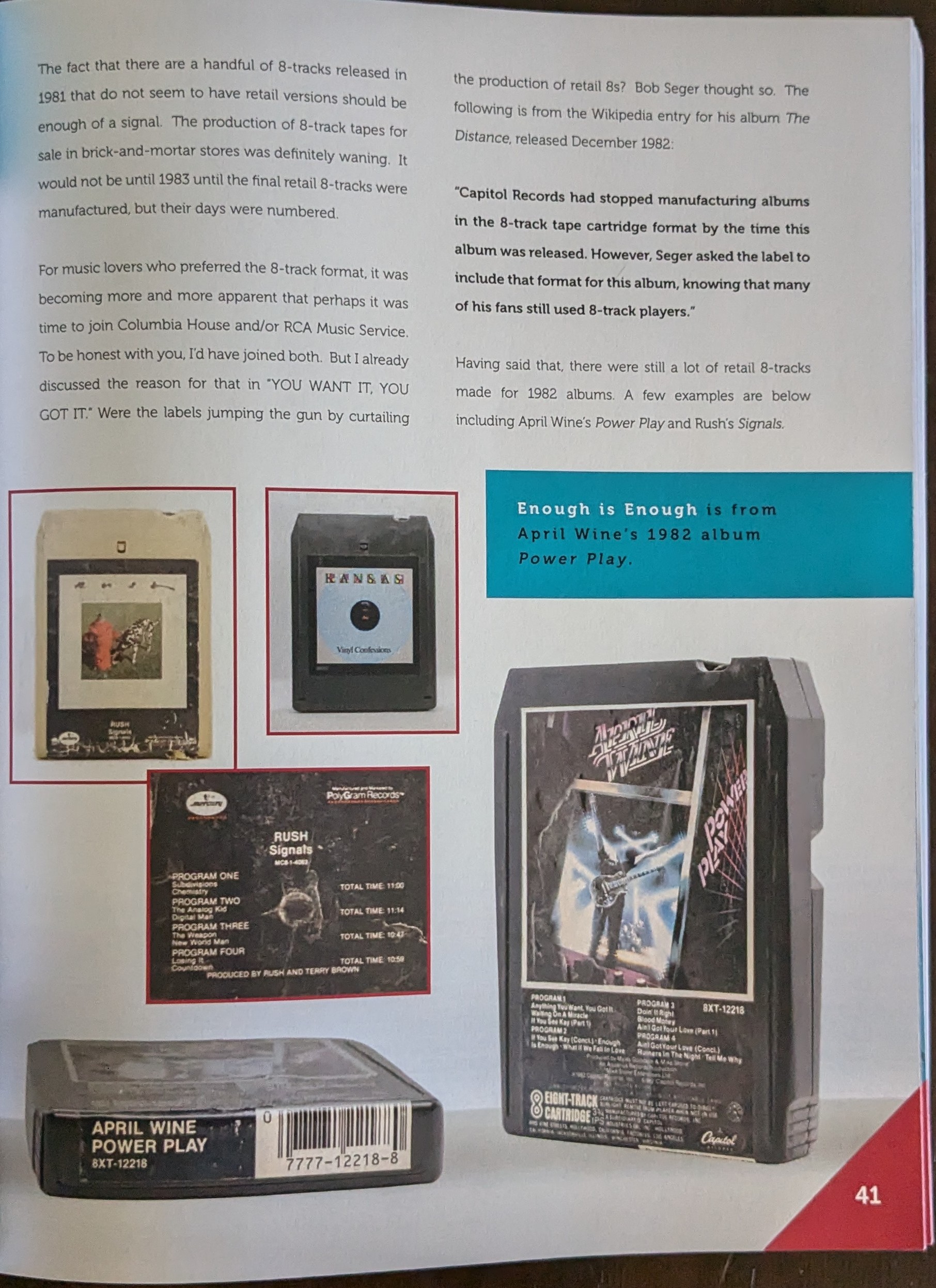
Andrew Barnum has worked on a number of different album covers over his career, and more recently having been checking out KANSAS’ 80s records, I wanted to find out more about 1982’s Vinyl Confessions. It was an album that saw a few changes for the band – singer, sound, and cover art! A very different cover than the band’s previous ones. Andrew gives us some great insight to the Vinyl Confessions artwork and period of the band, as well as a bit about other aspects of his career and covers he’s done. *Check out the links at the end, and the galleries of Andrew’s work.
How did working on the Kansas cover come about? Had you done many album covers prior to this? How did you get involved? And were you familiar with the band?
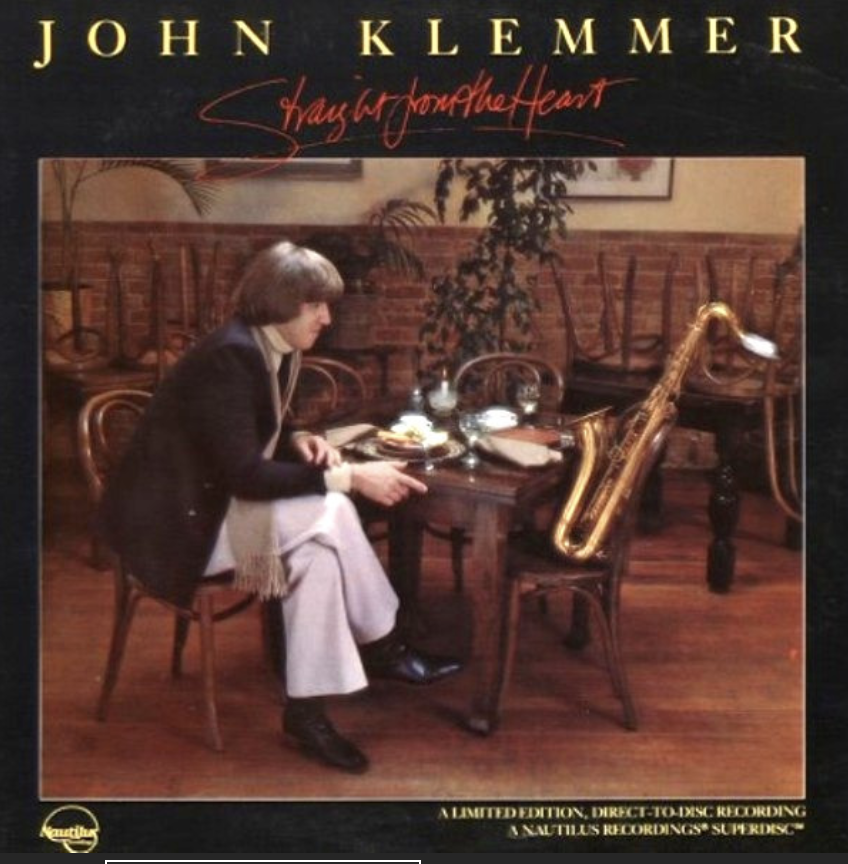
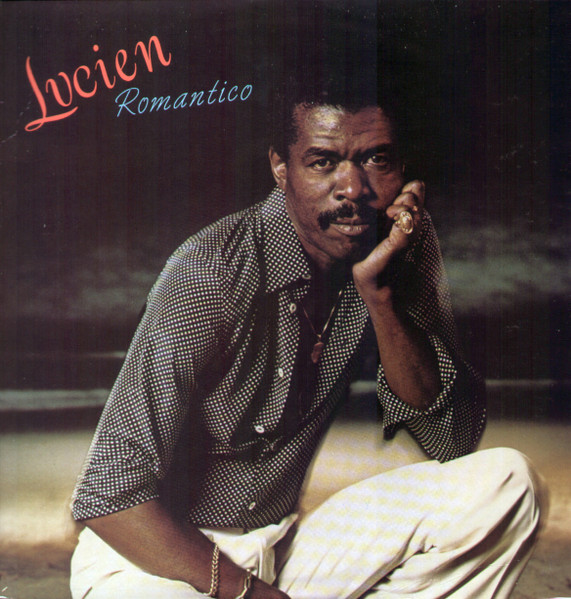
As an American born Australian, I returned to the USA from Sydney in 1977 as a freelance graphic designer, and aspiring singer-songwriter. Designing by day, performing music by night. After freelancing for 3 years, I landed a real job at a company called Print, Film and Tape in Burbank (Movies, Music, Arts) that lasted a year, which led to joining Tom Drennon. I can’t remember how it happened; Tom was all music business design work, from covers, to promo campaigns, and tour identity collateral. Here’s Tom’s covers: https://bit.ly/4mp2Gpw . I’d only done a few of album covers as a freelancer both by saxophonist John Klemmer (Brazilia, Straight to the heart) and jazz singer Jon Lucien. By 1980 I’d met my soulmate, art director, and music partner Lissa Mendelsohn and formed our post-punk band ‘Live Nude Girl.’ Our freelance designing was with Macy Lipman Music Marketing, and Larry Vallon Concert Promotions. I was familiar with Kansas by reputation only, and that Tom had done numerous covers for the band, and other Epic Records artists.
Can you explain the whole idea behind the cover, your contributions, how it was all put together?
This album was a monumental change for the band because a change of lead singer. Tom recounted after the concept meeting at the studio, that the band felt under intense scrutiny because of the line-up change, under a microscope so to speak. Tom’s key image idea was the interrogation chair. That began the process of designing a package that was looking at the band in minute detail during this re-invention. Hence the stripped back blue-print imagery. The design was also influenced by the 80s post-modern design shift that had begun in LA. The new cover was breaking with the past Kansas tradition of earthy, painted imagery. This was achieved by both the chair photo, and the striking B&W band photo, and primary colours in the logotype, and band names on the photo. Pre-digital, all the assets were hand drawn, typeset, and composed on full size paste-up boards.
Can you explain your technique used for this cover?
Drawn, or re-touched B&W bromide film elements (typesetting, image) pasted in position for CMYK print film colour separations. Very standard pre-digital print production. An assembly of visual assets.
Did you also happen to do the lettering on the front cover? Any idea why the band’s logo (on all previous album covers) was not used?
The logo brief was to create something new for Kansas, while creating continuity with their classic forms on previous covers. This led to researching typefaces in the trusty (copyright free) reference of the time, Dover books. We found ‘the sixteenth-century German artist Albrecht Durer’s instructional treatise on the geometric construction of Roman capitals, with precise directions for each letter and general directions for Gothic capitals and miniscules, Of the Just Shaping of Lettersby Albrecht Dürer.’ (Google books) The roman titling we found which contained both capital and lowercase outlines served the purpose of detail, scrutiny, and classicism. We added the bright colour set within the letter forms.
Was Kansas a band you listened to? Any recall listening to this album?
Not really on our post-punk radar at the time. But fully aware of their impressive stature and sales.
Did you do any other album covers beyond Vinyl Confessions? And what do you do now?
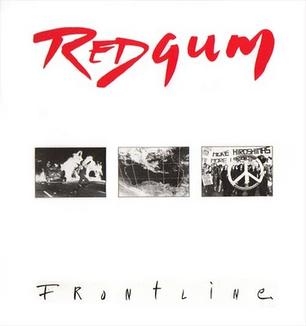
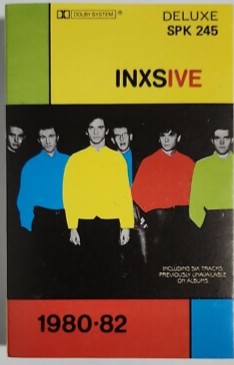
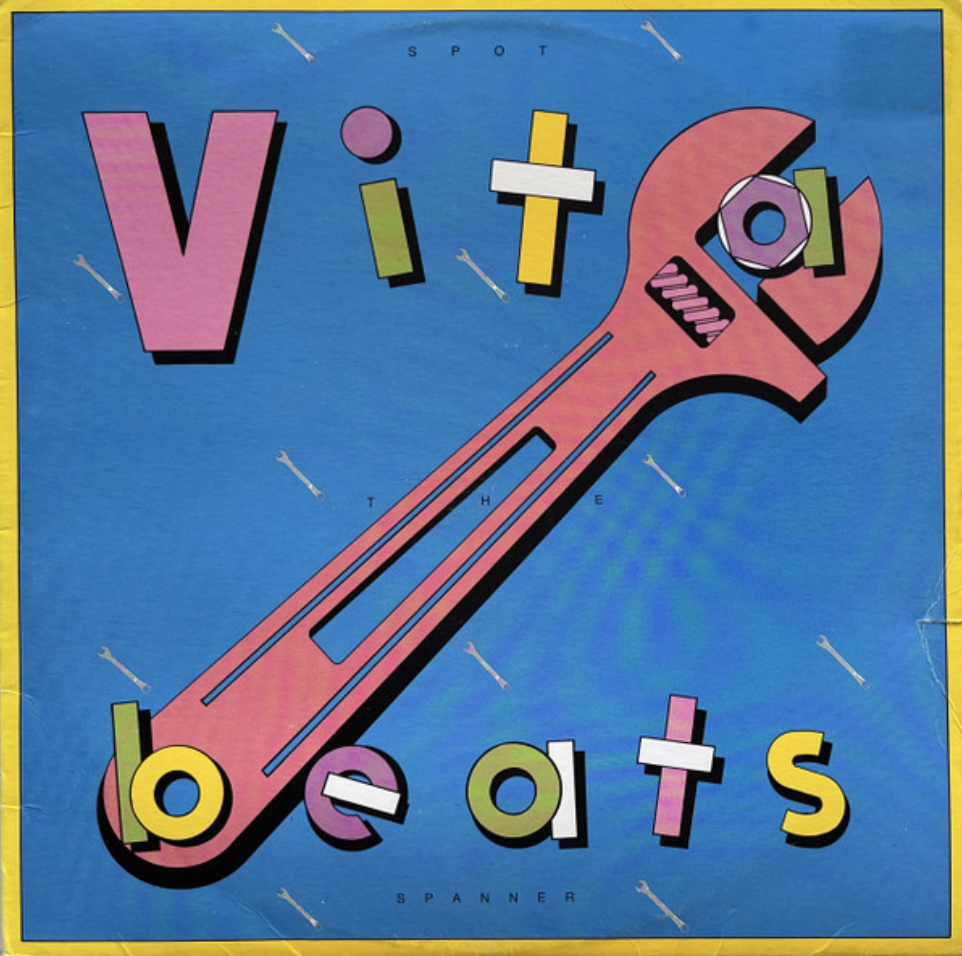
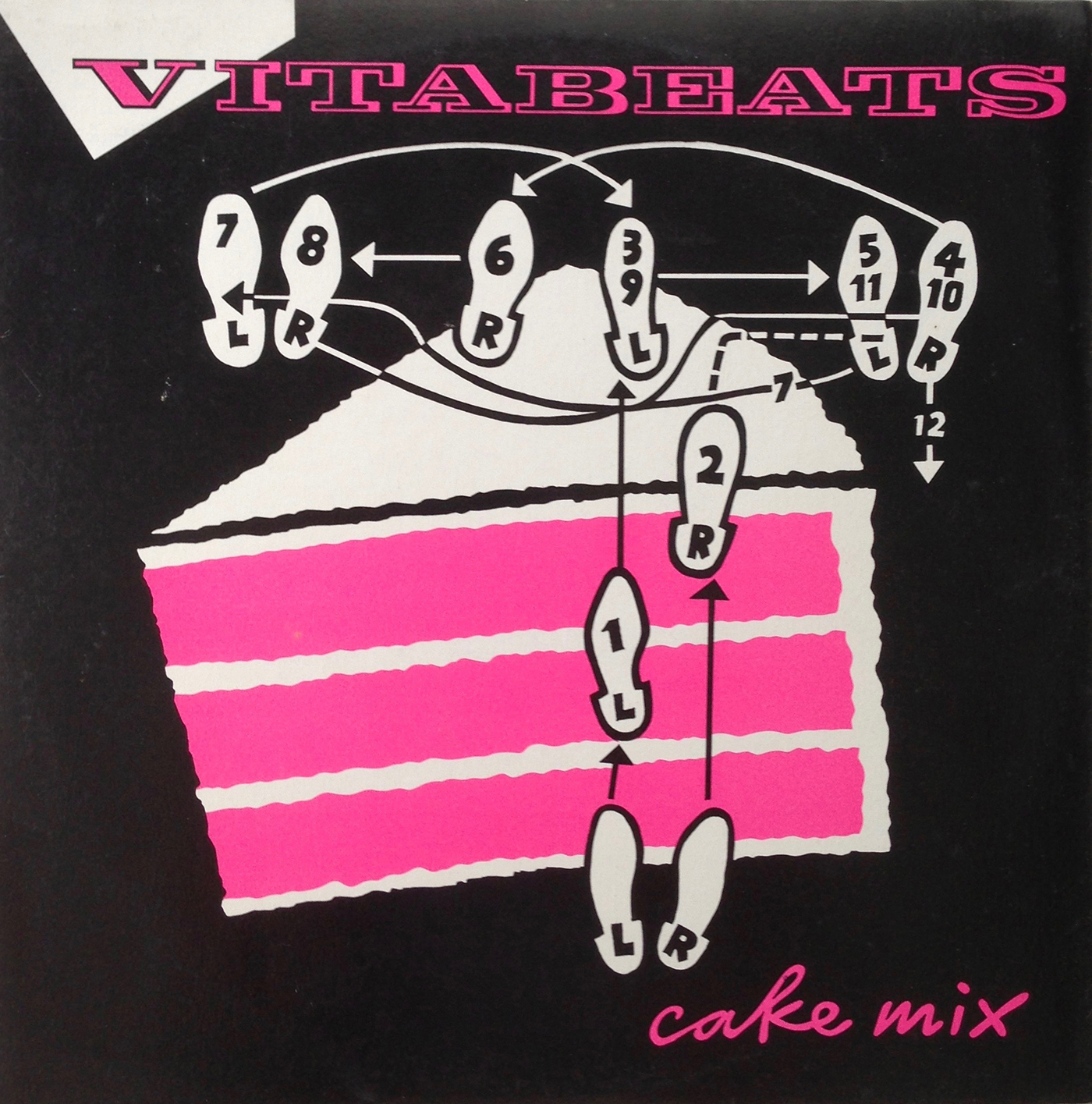
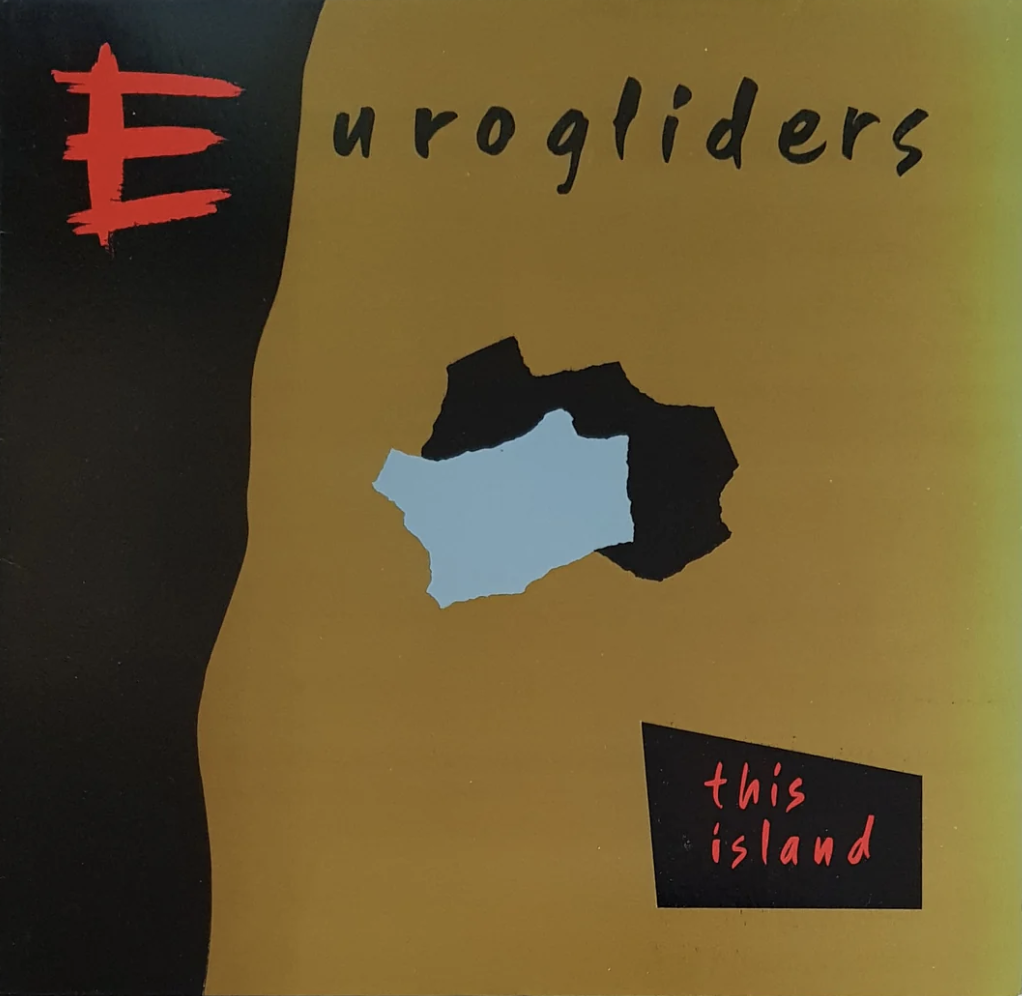
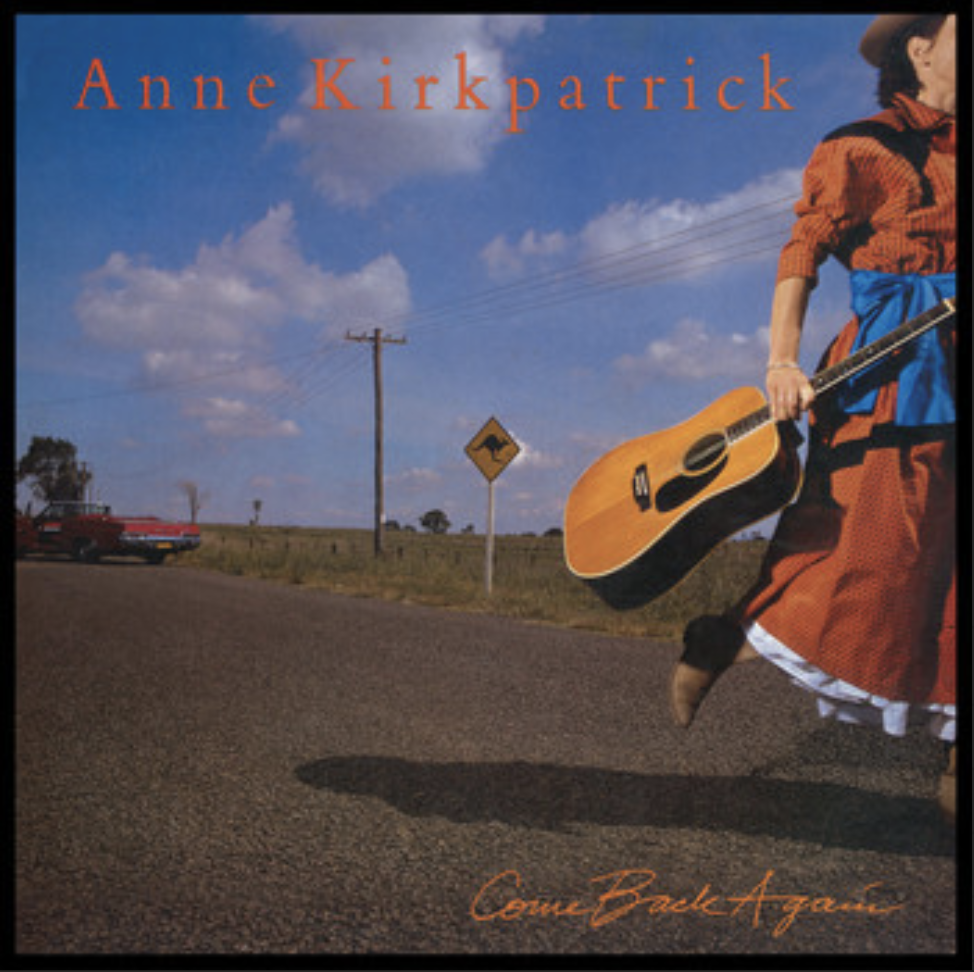
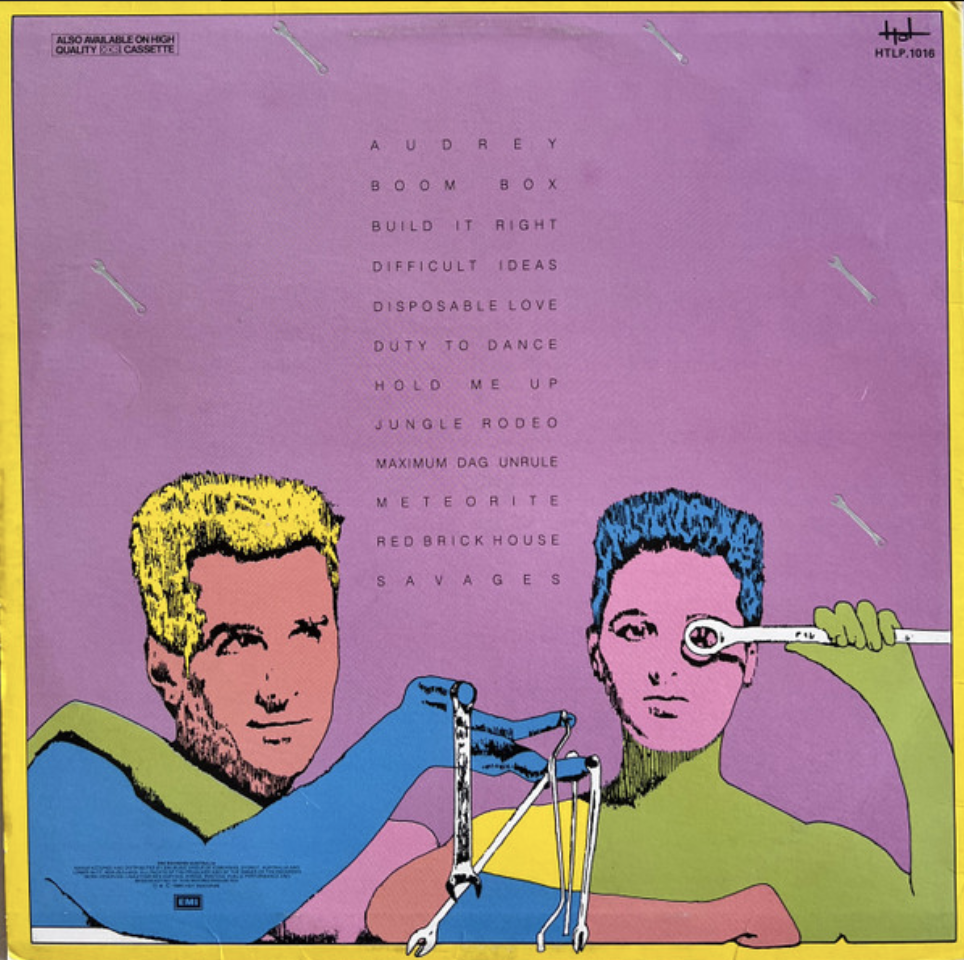
(Well, since then, in the art world) After Lissa and I were married in LA in 1981, all roads started leading back to Sydney after a honeymoon trip, we reconnected with design and music in Sydney which led to a new freelance life as A&L Barnum Design, and our ‘Live Nude Girl’ demos being heard by local producer Mark Moffat at Festival Records. By easter 1982 we’d sold up our chattels, and moved to Sydney. Again, design by day, and music by night, sometimes vice-versa.And a new band name for our new duo ‘Vitabeats.’We’ve designed covers for Inxs, Eurogliders, Redgum, Anne Kirkpatrick, Mary Jo Starr, Mark Callaghan (Gangajang) and Java Quartet. And Vitabeats and my 8 solo albums (see atbarnum.bandcamp). We are both exhibiting artists. Mexico City born Lissa’s Aus-Mex paintings, and my more conceptual minimalist works. barnumgroup.biz/art
Have you ever seen the Uriah Heep album cover for ‘Equator’ (1985)? (check it out)
I note the similarity to ‘Confessions.’ Also a progressive hard rock band re-defining itself with graphic impact for the mid 80s. The image looks a slice through the earth at the equator. Global warning anyone?
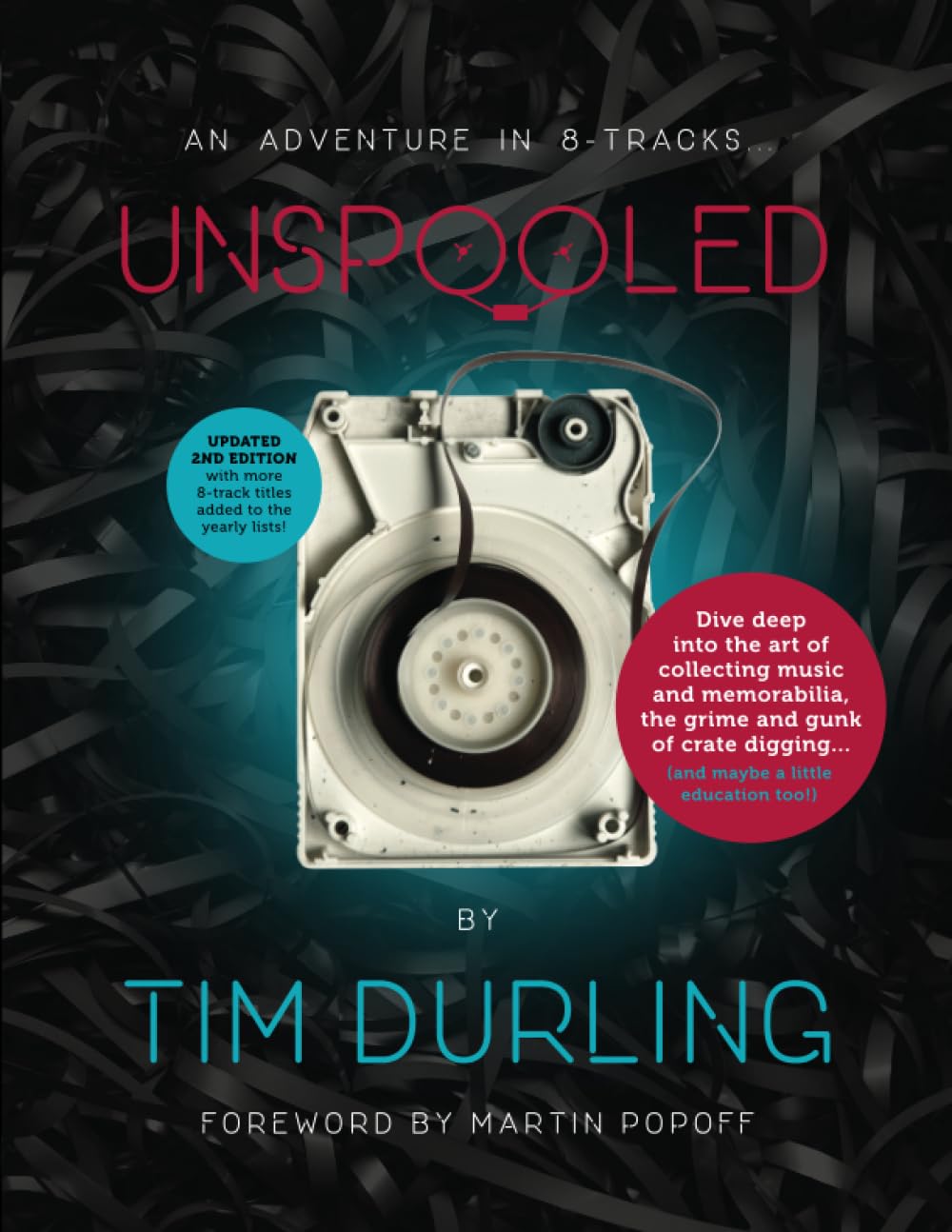
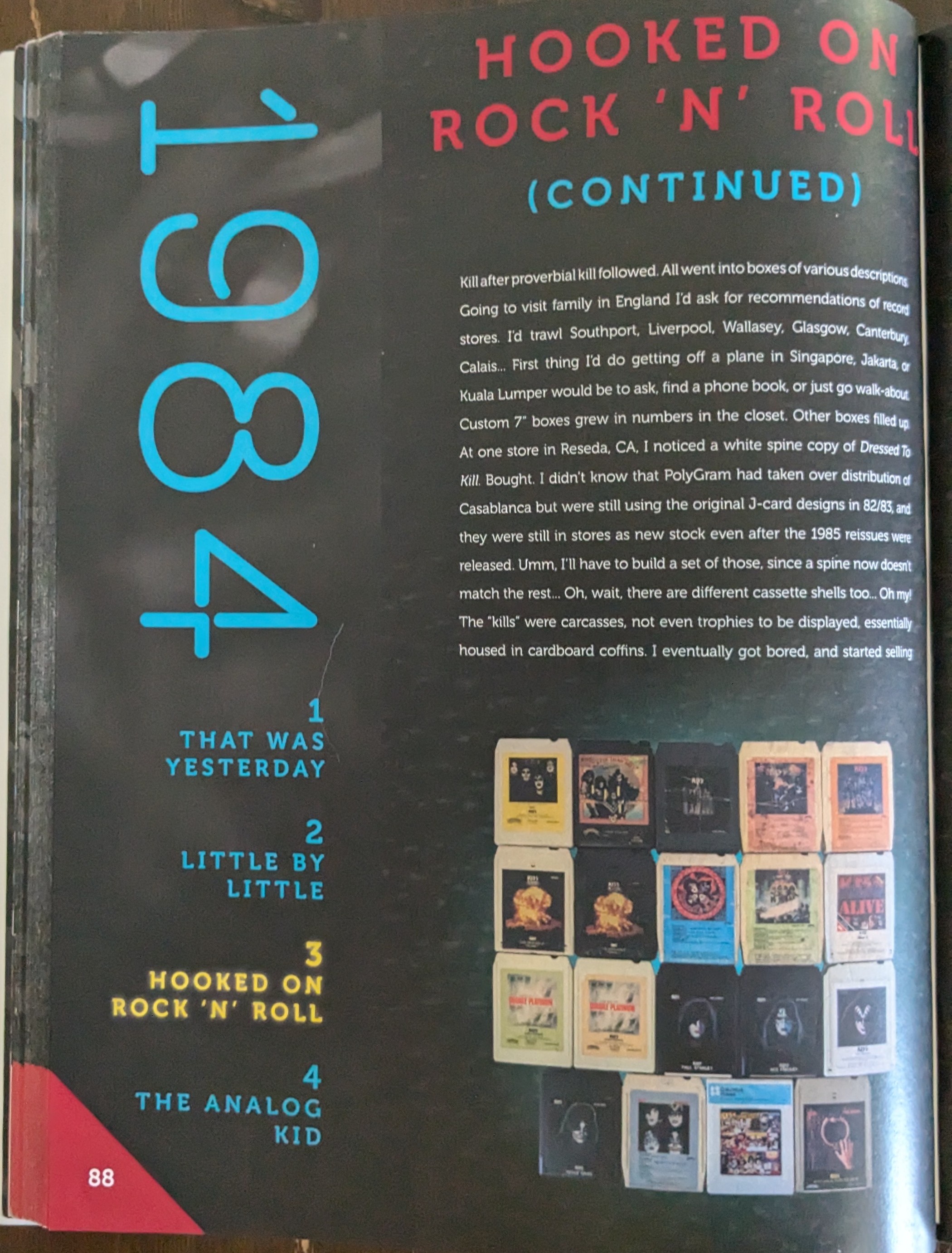
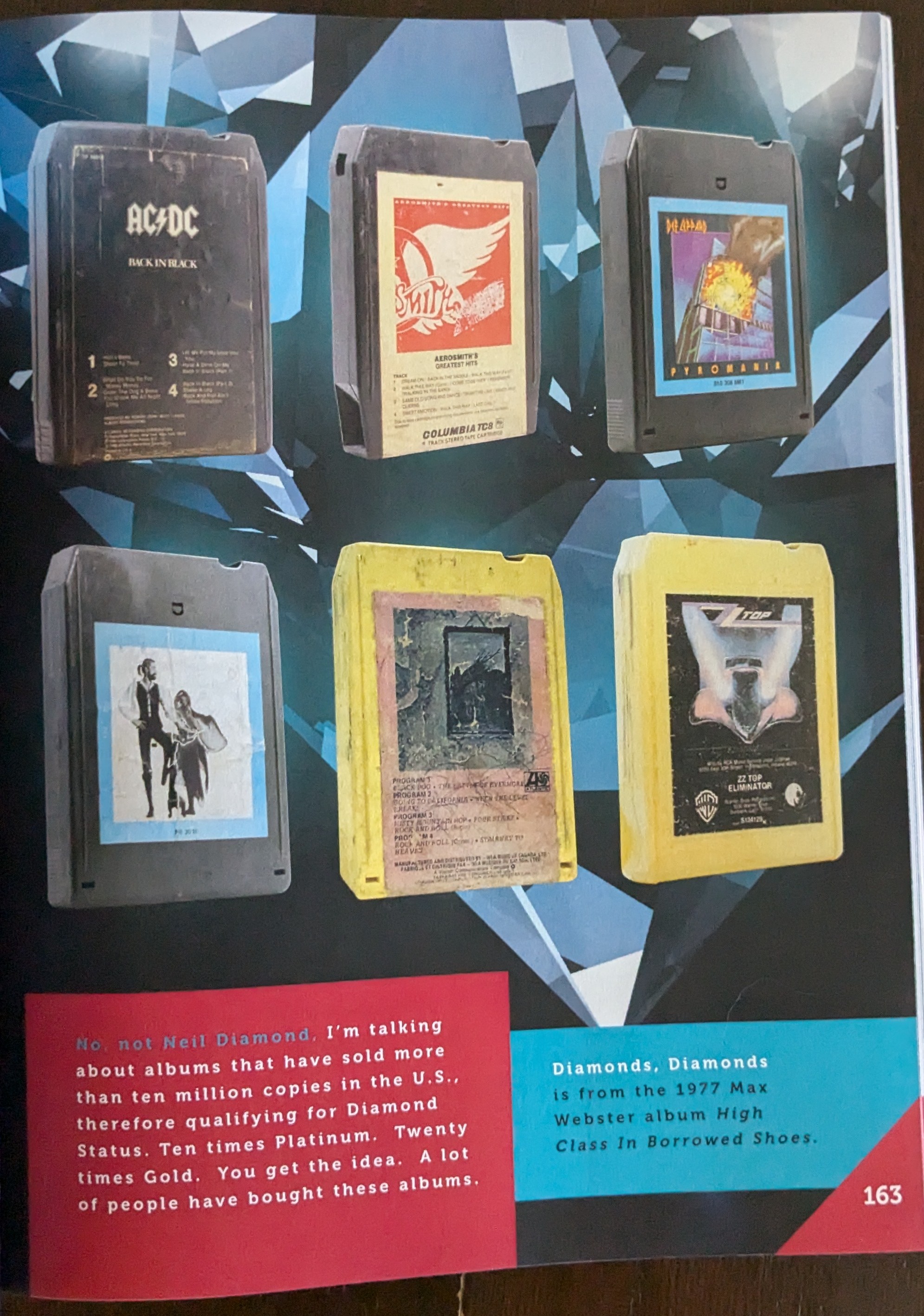
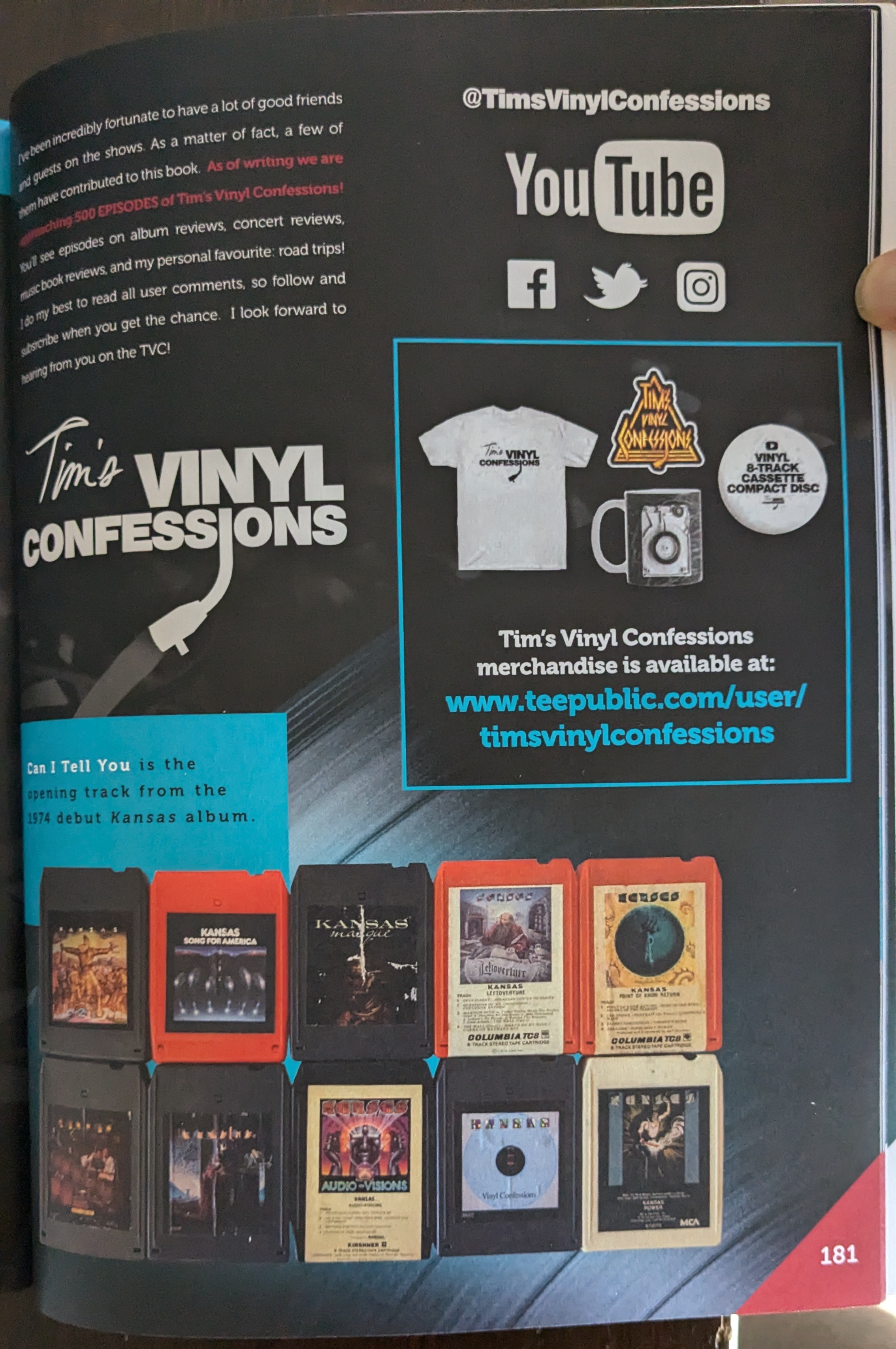
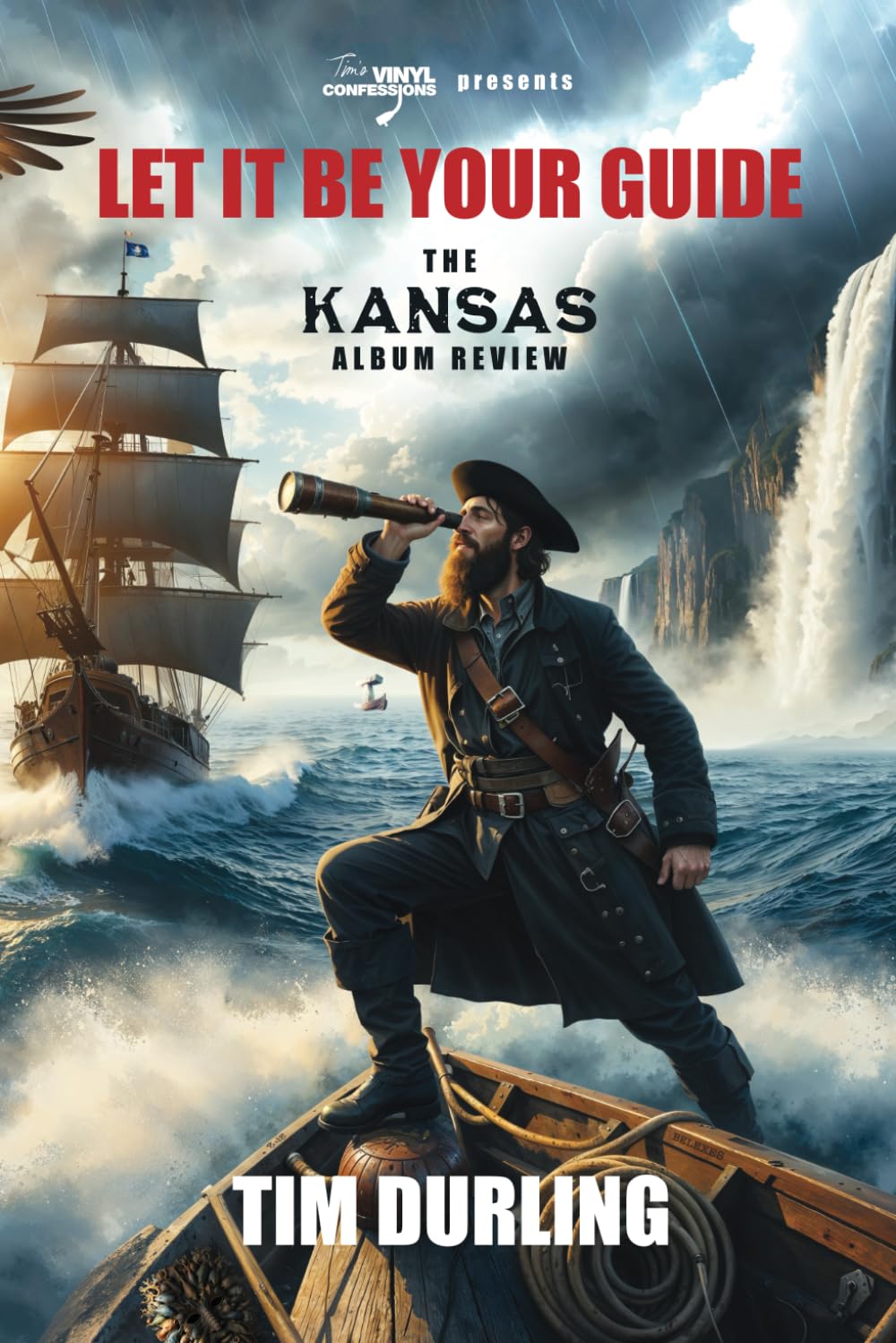
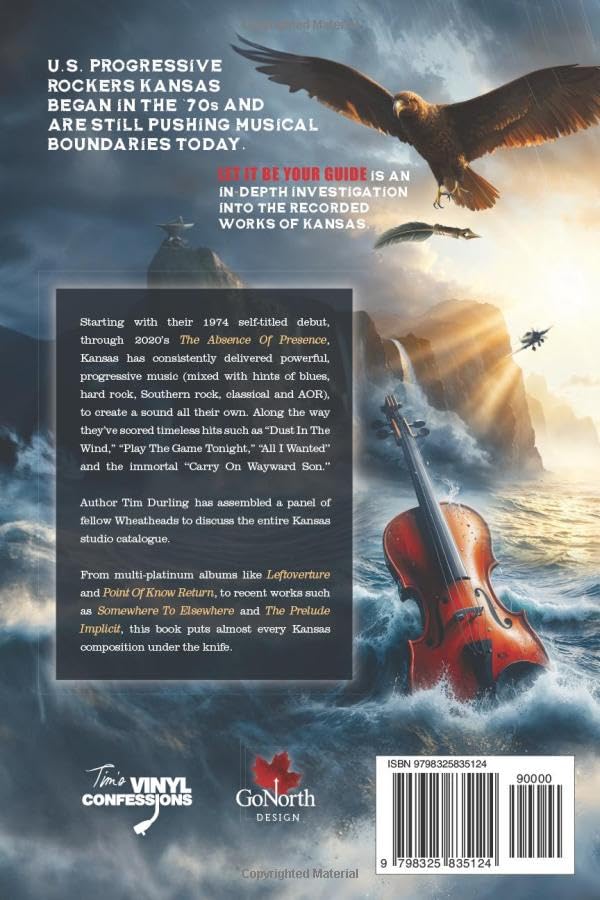
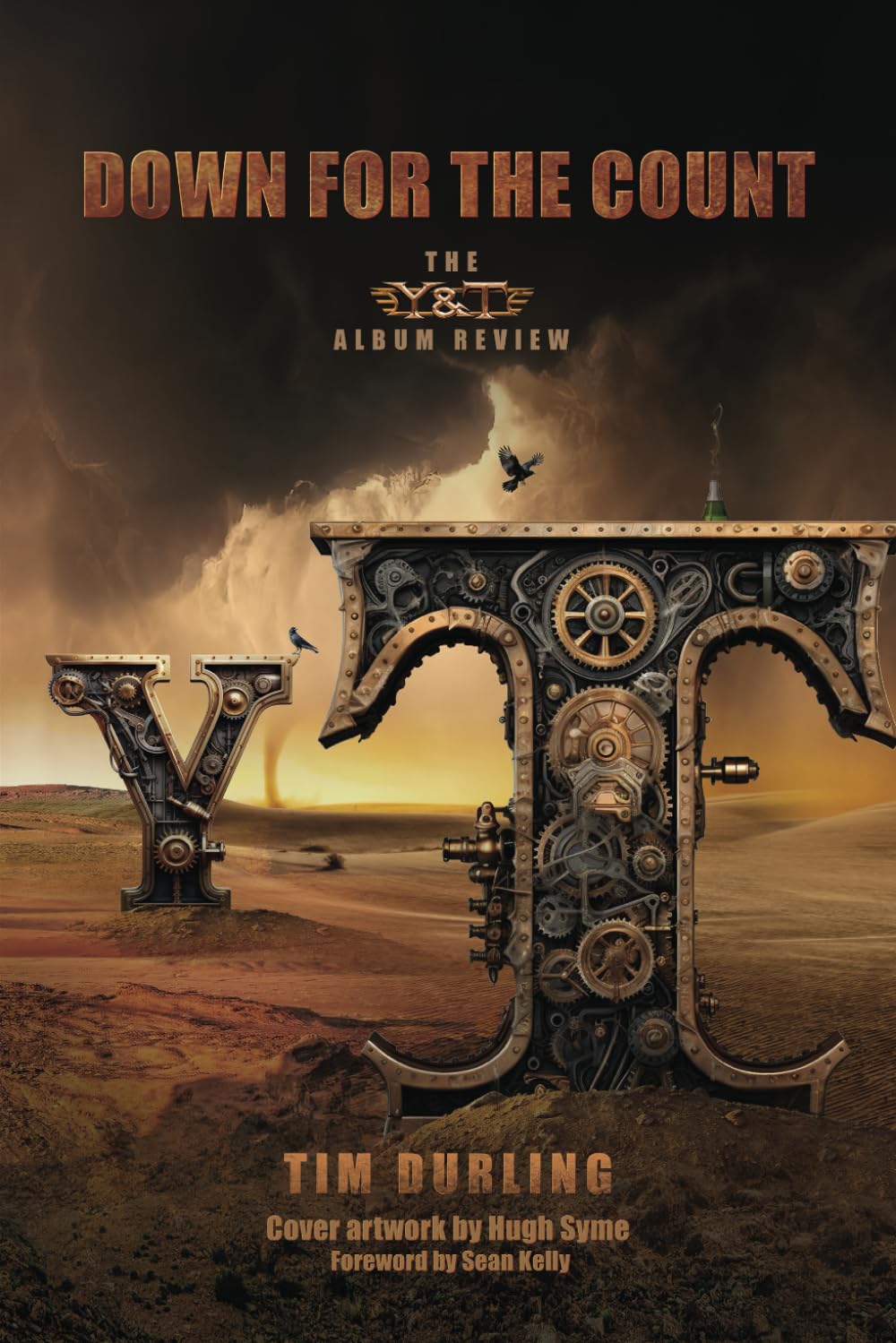
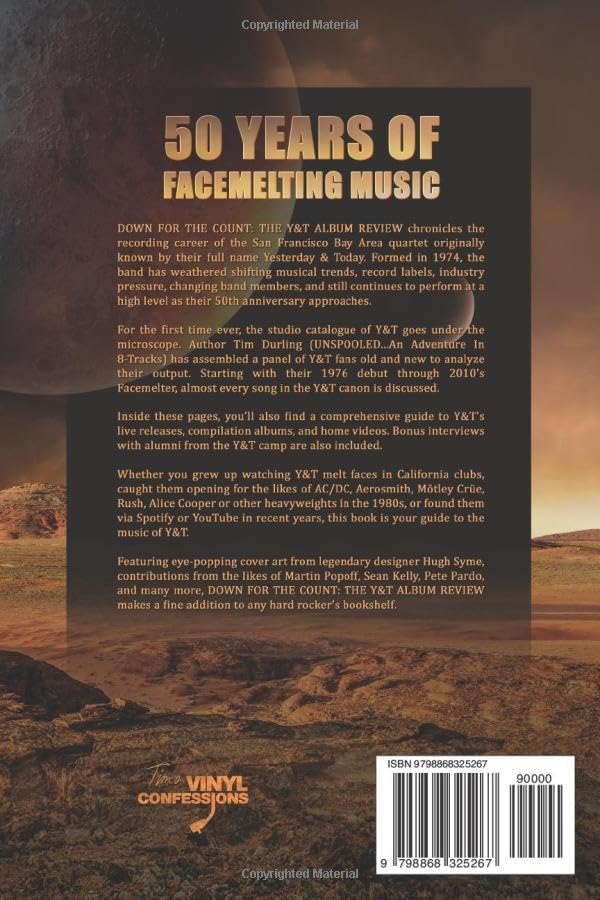
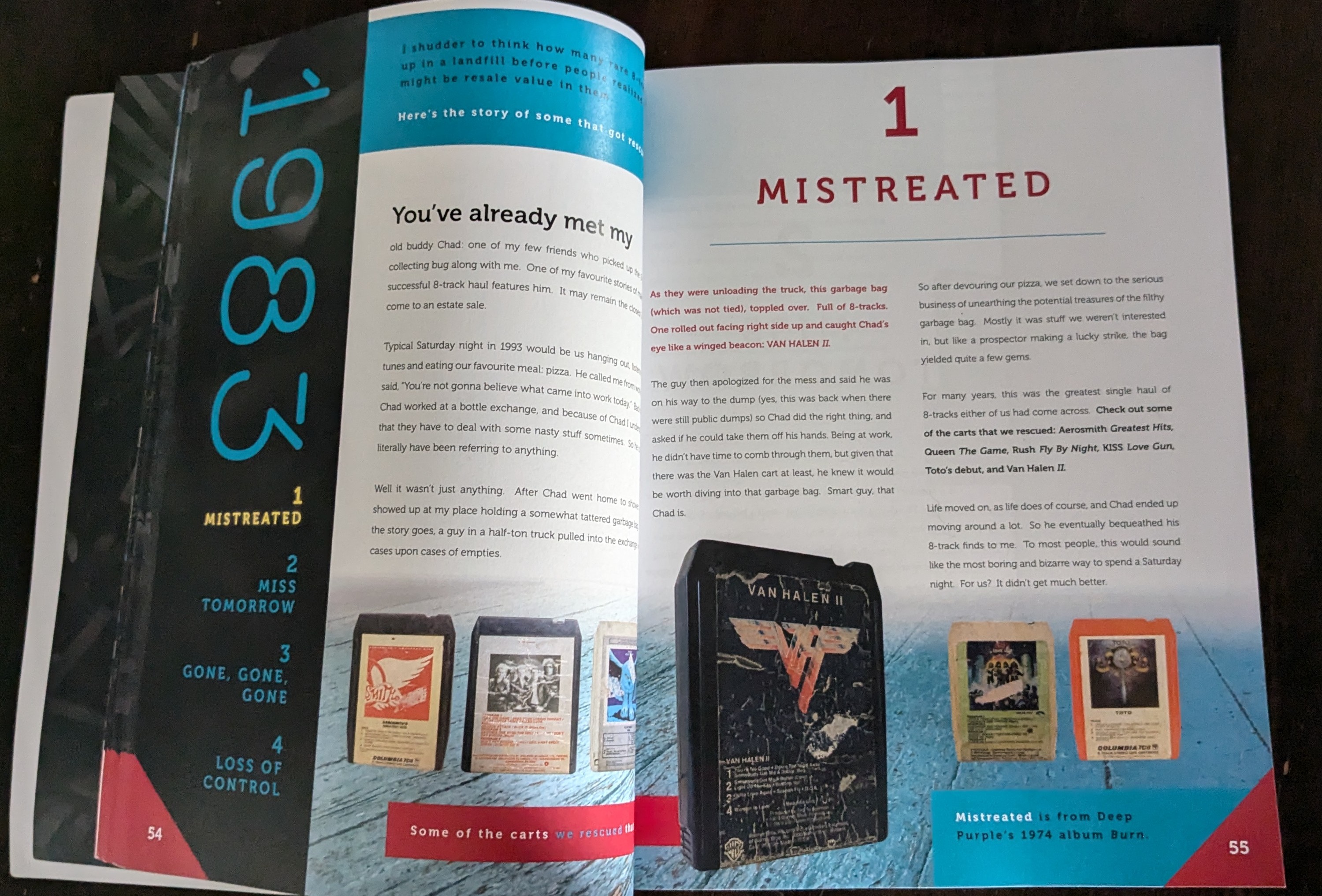
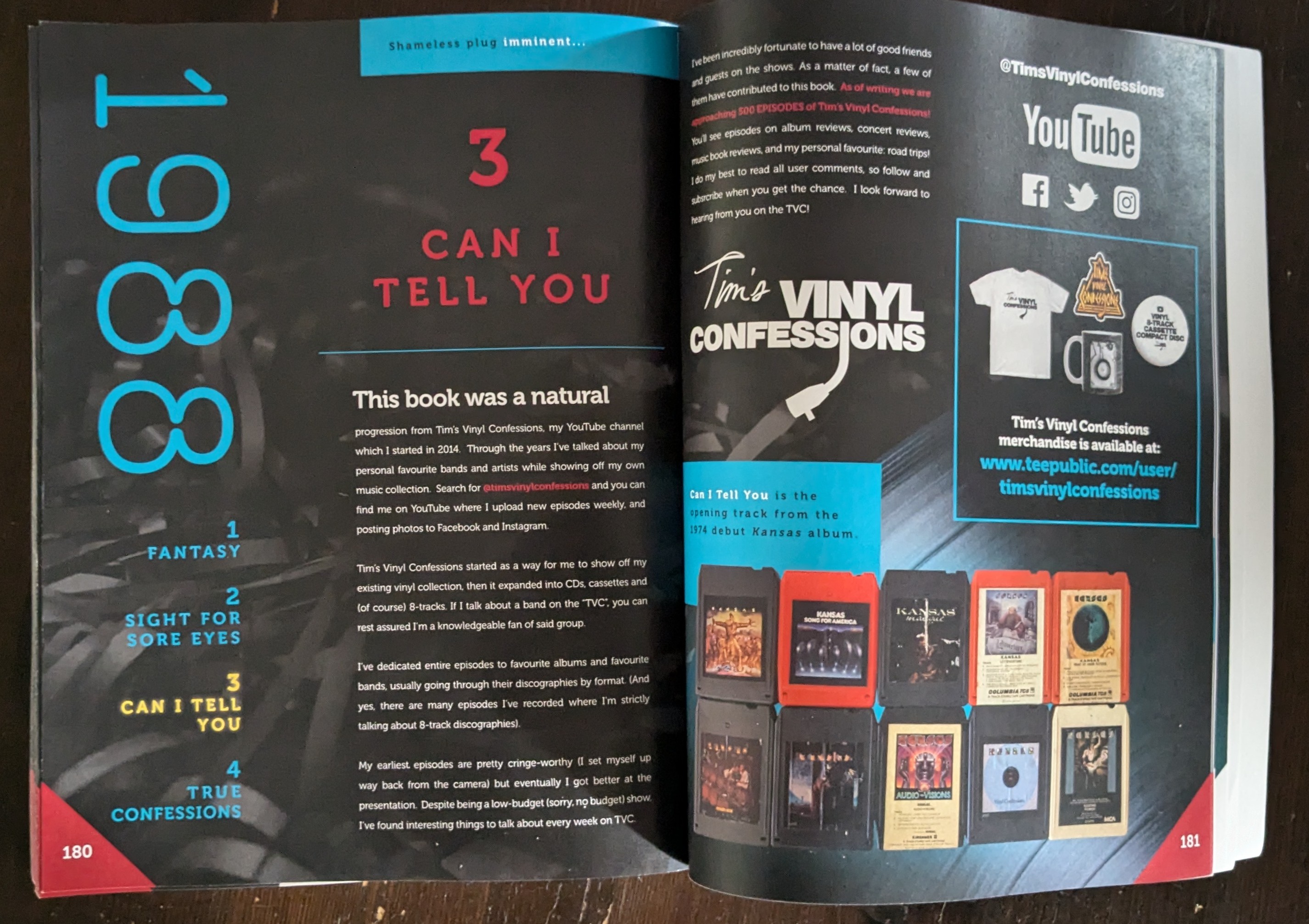
Canadian writer and radio personality Tim Durling, is from a small town in New Brunswick. Adding to his career in radio, Tim has taken to writing books on rock bands and collecting. His book UNSPOOLED: An Adventure In 8-Tracks is about the 8-track cartridge collecting of the 80s(!), with focus on those record club releases. He’s also penned books on Kansas, Y & T, and most recently Sammy Hagar! Below is my interview with Tim Durling, discussing his collecting 8-tracks, his interest in writing about them, and how, as well as touching on his books about Kansas, Y & T, and Sammy Hagar. Tim knows his topics, and speaks passionately and in detail about his works.
So, I’ve went through Unspooled a couple of weeks ago, put it down. For me it’s kind of like a coffee-table book, a fun book to pick up whenever.
Exactly! I’ve even called it a bathroom reader, and I don’t have any problem saying that because those are books that people return to time and again…But yeah, you’re right, it is a coffee table book. It’s not a book that you necessarily have to pick up and read from cover to cover. Just flip it open to a page and go.
As far as your interest in 8-Tracks, you don’t play 8-Tracks, so how do you kind of get onto it becoming such an obsession? Is it kind of in the way you look at hockey cards or something, where you can’t really do anything with them, you just look at them?
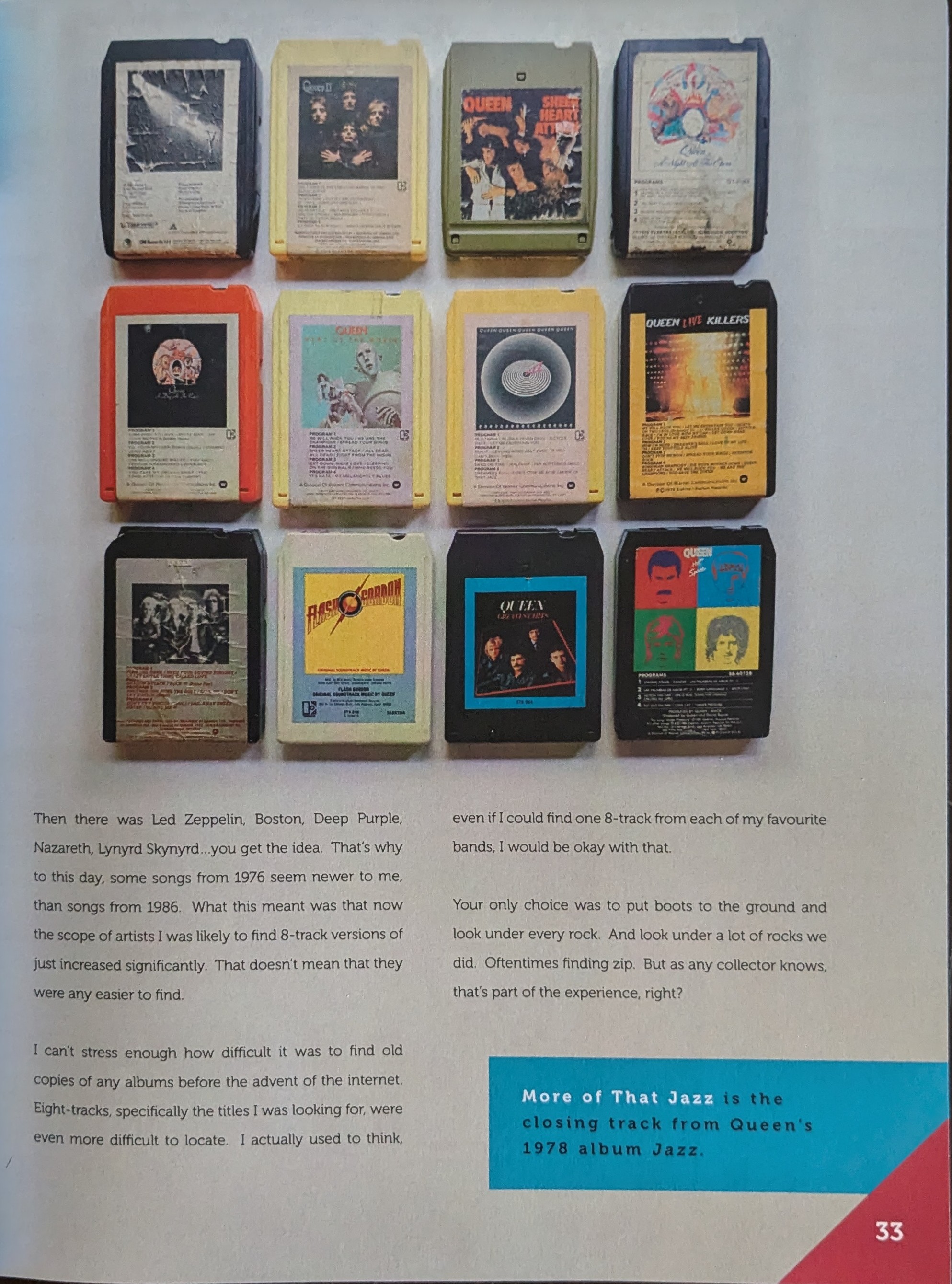
Yeah, so it is kind of weird. When I first started collecting 8-Tracks, I guess it would have been the early 90s, I actually did have a little portable player that I found somewhere, but it ate up an almost pristine copy of ‘Queen II’. So, I said, “I think I’ll just collect these and listen to the CDs. I think that’s what I’ll do”. And I’m a physical format guy, and if I like an album, I kind of want to have as many formats as I can, and 8-Tracks just happened to be one of them a lot of the time. And it is a very niche collecting thing, especially where I don’t actually have anything to play them on. But I basically judge it on – is the label in good shape? Is it nice and smooth? Sometimes they get left in the sun, and they’re all warped and bubbling and sun damaged or water damaged. So, if a label looks really nice, that has a lot to do with my decision to buy one, as well as price and stuff. I do know that there are collectors. They have players, and they refurbish the players, and they refurbish the tapes, and it takes an awful lot of dedication and patience, because you’ve got to get down there. You’ve got to oil the parts. Sometimes you’ve got to re-spool the tapes. What collectors typically say is you don’t ever get a brand new tape and just shove it right into the player. It takes a lot of work, and I’m just not that inspired to go through that. I admire that dedication, but I couldn’t do it for myself.
I’m particularly fascinated by what I call RCOs, the Record Club 8-Tracks, which is mainly what’s in this book, which are the tapes that the record clubs, Columbia House and RCA Music Service, made available well past the time when record labels were manufacturing them for retail sale, which was around 1982. That’s when you started seeing 8-Tracks disappear from store shelves. I guess I kind of always thought that’s pretty much the end of the 8-Track, because I never saw any past 1982, 1981, but sometime in the mid-’90s, one of the first times I ever had the opportunity to go online, I wanted to know more. I was really curious about when they did stop making these things, and that’s when I stumbled upon a website called 8-Track Heaven, which is now defunct. There is a chapter about it in the book. There’s an archived version of it. That’s when I discovered this section called the 80s, Record Club Only, the 80s 8-Tracks. I looked, and that’s when I realized that there was this whole other world of collecting that I knew nothing about, where most major label titles were still being manufactured on 8-Tracks, and it went all the way up to 1988. For a kid that grew up in the 1980s like I did, that blew my mind, because I don’t ever remember seeing albums from the mid-’80s onward on 8-Track. Now, part of the reason for that is because it seems to be strictly the record clubs in the United States. There was Columbia House in Canada, of course, but it looks to me like from all the research I’ve done, they went later than retail did, but they stopped around 1984, because I’ve never seen an 8-Track from Canada newer than 1984. The newest one I have is a Columbia House version of Rush Grace Under Pressure.
But in the States, they didn’t manufacture everything. There are some gaps, but they did a lot. They did a lot more than I had any idea, and I thought there should be, I think, any part of music history, no matter how small, should be documented, and this is a part of music history. So that was one of the things I always wanted to do.
Now, when I started off writing Unspooled, I was just going to have a by-the-year list of all confirmed known titles to exist on 8-Track throughout the 1980s. But after speaking with Martin Popoff, who I was a fan of his writing, and then I got to know him through… I was on an episode of Rush Fans, which is just what it sounds like, we’re a group of Rush fans. Martin was on the same episode as I, and I remember thinking ‘if I wanted to have him on my show to talk, I better message him now while it’s fresh in his mind, Hey, Martin, we just did the Rush Fans show together’. Because I wanted to pick his brain, because since he’s older than me, what he remembers about 8-Tracks and when they disappeared, and I told him about these RCOs, he had no idea. He thought, I think like most people did, turn of the 80s is when they stopped making them, and everybody either, kept buying vinyl or switched to cassettes. And at the end of our interview, he said ‘I think there’s a book here’. And I remember thinking, because I had no… I really had no plans of actually doing a book. It wasn’t something that entered my mind.
I would have been perfectly content if somebody else had done it. I would have just bought the book. But I thought, if Martin Popoff thinks there’s a book idea here, and it doesn’t sound like he’s going to do it, then maybe I’ll give it a go. And so he suggested that I add some more stories in it, some personal stories, some collector stories, because really the broader picture is what drives us to collect things. Like, you know, what drives us to collect hockey cards or antique toys or guns or whatever it is that people are into…And this is just a very, very specific… I call it niche within niche, because it’s not just collecting 8-tracks, but it’s specifically about these hidden ones that you won’t… you’re not likely to see them at flea markets, although you seem to be able to see some good ones. But somebody must have unloaded some from the States, because they’re American ones. I can tell by looking at them. And I wanted to go through year by year. So, it ended up starting in 1981 and going to 1988. The reason it starts in 1981 is because there are the titles that are in the 1981 list, which I put the list at the end of each chapter, those are all titles which seem to exist only as record club tapes. There don’t seem to be any retail versions of them, although it’s very possible that there are, I’ve just never seen them.
Now, between the first and the second edition of Unspooled, I did have to make some changes. There were more titles that I found, and there were certain titles that I found that actually did exist in retail that I had to remove from the first version. As a matter of fact, if I ever did a third printing of this, I’d have to have more to it to do that. But in the 1981 list, I think, I’m going to check this, I think I’m right about this, there is one that needs to come out, and it is, bear with me here, yeah, Nazareth Snaz, the live album, because I actually found a retail version of it. So I’m like, well, that can’t be in the list then. But I went on, you know, have I seen a picture of it? I belong to a lot of Facebook groups about 8-track collectors, and I’ve met a lot of really knowledgeable, reputable people, and if they’re telling me something exists or doesn’t exist, I believe them. And most of the time I’m like, do you have a picture? Yes, here. And here’s how the songs are broken up on it. And so I did a lot of that. And in doing so, you notice a lot of trends, you notice that they really slacked off around 1985, and then 86, and by the time you get to 1988, it’s a pretty small list. But, you know, there’s other things, one of my regrets is that I really wish that I could have found someone who worked at Columbia House or our music service back in the 80s, and said “Look, what was the thought process? Number one, why did they keep making them on 8-track when retail wasn’t selling them anymore? And what finally made you decide to stop making them?” Because between 1986 and 1988, if you were a member of Columbia House, you had four options. You had 8-track, vinyl, cassette, or CD.
So that’s four different, you know, that’s a lot of manufacturing costs. And it’s just crazy that, it’s crazy to me that 8-tracks and CDs coexisted for as long as they did. And it’s just something that I didn’t seem to see any real books on.
I mean, cassettes have come back. A lot of new albums are released on cassette. Vinyl made a major comeback, of course. Vinyl’s always kind of had that cool factor. Cassettes are kind of getting it. 8-tracks have always kind of been frowned upon, people remember how unreliable they were. But what made 8-tracks successful in their earliest days was the portability. It was the first time you could put a player in your vehicle and listen to whatever album you wanted when you wanted. That’s what won out. It won out over sound quality. It won out over being able to look at the artwork. There was no back cover artwork, no lyric sleeves. And even the front cover, if you were listening to a tape, half of it was shoved into the machine. But it was the portability, just being able to drive around and listen to your favorite albums, your favorite songs.
And cassettes, by way of comparison, when they first came out, my understanding is that the manufacturing quality was not up to speed. They really weren’t reliable. So, it was a combination of the 8-tracks just peaking in popularity like any format does, and cassettes becoming more reliable, more advanced, sounding better, and a little smaller, too. A little more portable. And then, of course, when the Walkman came out, hey, not only can you listen to something in your vehicle, you can walk around listening to whatever you want. So that was kind of the death knell, I think, for the 8-track.
But obviously, the record clubs must have felt that there was enough of a market out there that still, that weren’t ready to have a wholesale shift of all their music collection over to another format to keep making them. And it is absolutely fascinating to me because 8-tracks are pretty much synonymous with the 70s when people think of radio stations say, “Hey it’s the 8-track flashback”, and it’s always a 70s song. You wouldn’t think that you’d have albums from 87 and 88. And really, you shouldn’t be. That’s another thing about these. They’re out of time. They don’t make any sense. And that just, for some reason, that concept fascinated me to the point where not only have I looked for albums that I like in this format, it’s not just collecting 8-tracks for the sake of collecting them. I have to like the artist. I have to like the album. But it’s documenting them so people can see ‘wow! Madonna had 8-tracks, Cindy Lauper had 8-tracks…’ To me, it just doesn’t make any sense because you just don’t think of these artists as coexisting with the 8-track era, but they did, and they’re absolutely legitimately….people do manufacture their own. There are people that put new albums on 8-track and, as a tribute, and that’s cool and everything, but these were legitimately sanctioned by the record labels for the record clubs to put their albums out on 8-track form. So, it wasn’t anything I saw, any book resembling this subject, so that’s why I did it.
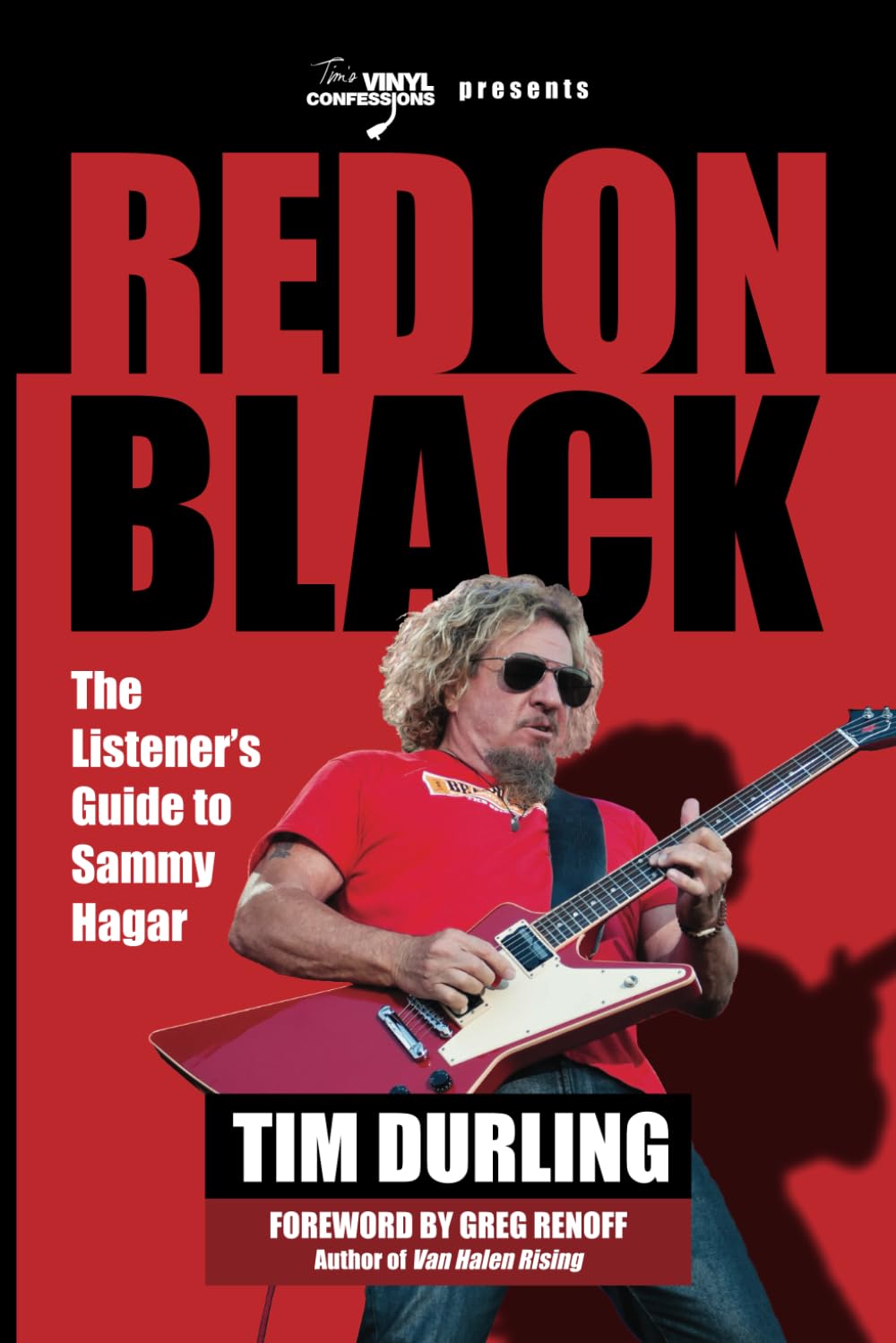
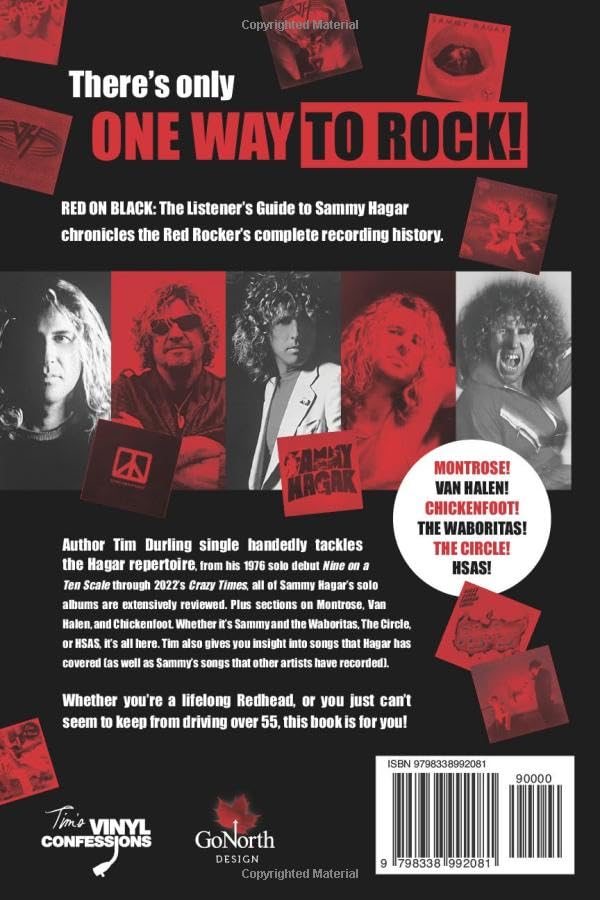
It’s funny, before we got on, I was flipping through your Sammy Hagar book, and I saw that you had a picture of 1987 on 8-track.
Yep, again, that’s a prized possession of mine too, because you get into those last few years… I can’t imagine that the numbers were produced, even for platinum albums. I can’t imagine there were too many of them produced. So that’s another reason why I would have wanted to talk to somebody that worked there and said, “Did you have some titles that were in the catalogs, but you never actually manufactured? or did it have to be a case where “We’ve got 50 people that want Michael Jackson’s Bad, we’ll have to run a few off.” or something like that. I don’t really know.
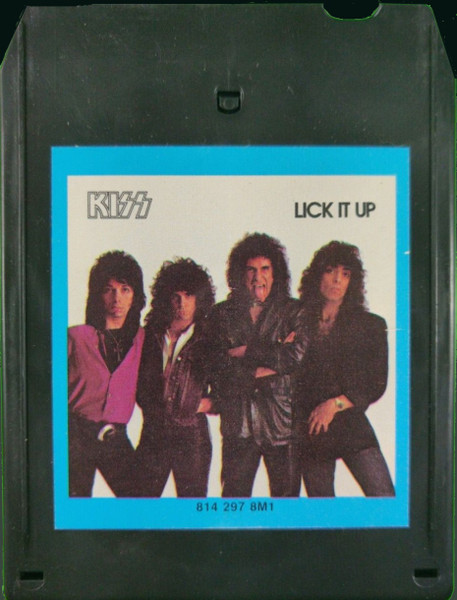
I know that artists that have fan bases that are big into collecting, 8-tracks are just part of that, and that’s why you don’t see a lot of heavier bands, even if they were manufactured on 8-track, because there’s always going to be a bidding war breakout. I know one of the best examples, and it’s not even a band that fits in the purview of this book, because their first three albums came out on 8-track, but they all came out in retail form. There were no, you know, it wasn’t a record club. The only thing, and that’s Iron Maiden, their first three albums came out in the U.S. on Capitol 8-tracks, and those go for hundreds and hundreds of dollars when they do go on sale, because Iron Maiden fans are generally collectors. Kiss collectors, same thing. If you collect Kiss, chances are you’re going to want to collect all the variants of the records and the cassettes and everything, but you’re going to get into the 8-tracks, and that’s when you find out how hard it is to find Creatures of the Night or Lick It Up or Animalize on 8-track, and that’s when they stopped. And that’s another thing. Not everybody stopped in 84. You mentioned Sammy Hagar, I mean, so you’ve got the example of Kiss. Why isn’t Asylum or Crazy Nights on 8-track? I don’t know.
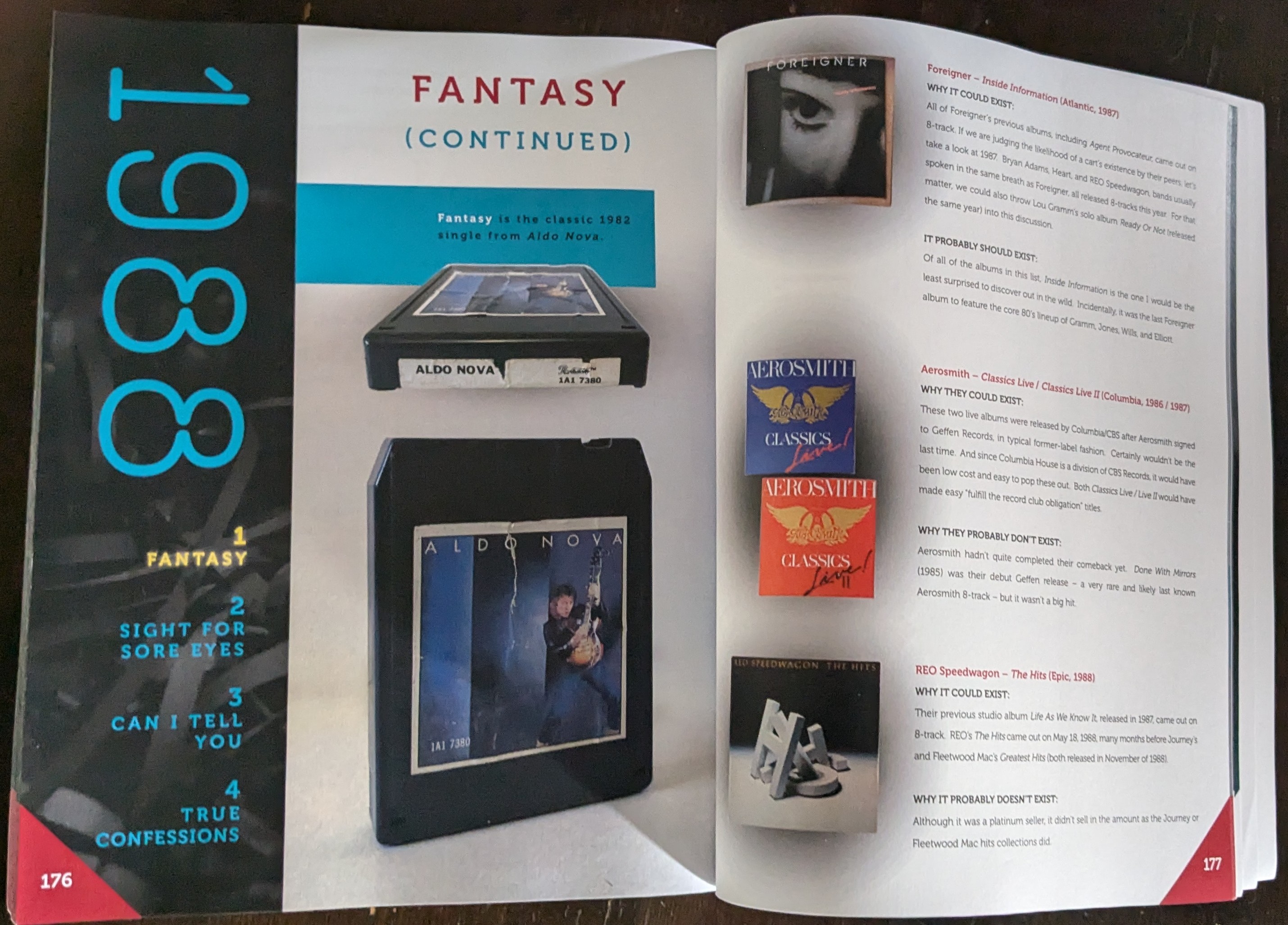
Yeah, it’s kind of random. There are unanswered questions about it, and I can’t prove beyond a reasonable doubt that they weren’t made, but I’ve been looking into this for an awful long time, and either there are so few of them, and people don’t know what they’ve got, or they’re in somebody’s attic somewhere, and they belong to somebody’s parent or grandparent, and they haven’t been unearthed yet, or they just weren’t made. So, I don’t know. That’s why I included a section in my book where I did this ‘fantasy’ of, here’s five titles that could exist on 8-track given the year they were released. Here’s why they could exist. Here’s why they probably don’t, and Asylum is one of them, because I also judge by what else came out on the same label that’s in the same sort of ballpark, and that makes me think that it’s possible.
In researching, I know that 8-tracks had an appeal to truckers in that. Did you ever make connections with anybody that kind of was in that kind of field?
No, no, but that is one of the, I don’t want to say cliches, but, one of the cliches is truck drivers and even just people that drove pickup trucks. You’re typically talking about country and western. And I will say that there is some truth to that in so much as if you were a country music fan in the 80s and you did not want to stop buying 8-tracks when you couldn’t find them in stores anymore, you were well served by the record clubs, because just about every country star you could name, all of their albums came out on 8-tracks. So even relatively newer artists like (say) Dwight Yoakam or Randy Travis or Sawyer Brown, they have 8-tracks. Reba McEntire, for a while, she started a lot earlier. So I think there was something to that. And that’s why it’s even more bizarre to think that there’s an 8-track version of the first Bon Jovi album. There’s an 8-track version of Dokkens’, there’s Ratt Invasion Of Your Privacy, Motley Crue Shout At The Devil. Makes no sense, but they exist. They are 100% real.
And also, I just think people get used to things. That’s why I also included a picture of an 8-track cassette adapter in the book, because I can vividly remember that my grandparents, they had one of those old four-model stereos that had a turntable, and it had an 8-track and a radio. And I had an aunt and uncle that were visiting, and they listened to a cassette, but they had this adapter, and there’s a picture of it in the book. It’s shaped like an 8-track, but there’s a space. You can lay a cassette down in it, plug it into the 8-track player, and it will play the cassette. And that just makes me think of when VHS switched over to DVDs, and then they started coming up with those hybrid combination players. It’s a format shift. There’s been lots of them. Look at VHS tapes now, they’re pretty much worthless. You can go to any flea market, any Salvation Army place, and there’s hundreds of them. Will there ever be a time when they’ll be like, “Hey, you remember those? Those were cool.” I don’t know. But I do know, you know, the fact that you get Blu-rays now manufactured to look like the old VHS tapes shows that there’s a nostalgia for it.
Yeah, I got tons of VHS tapes. I used to tape stuff off the TV in the 80s and 90s.
Oh, yeah, when we first got MuchMusic. that’s how I consumed music a lot. I’d put a tape in and just let it go.
Of your 8-track collection, is it more retail or more record club stuff you’ve got?
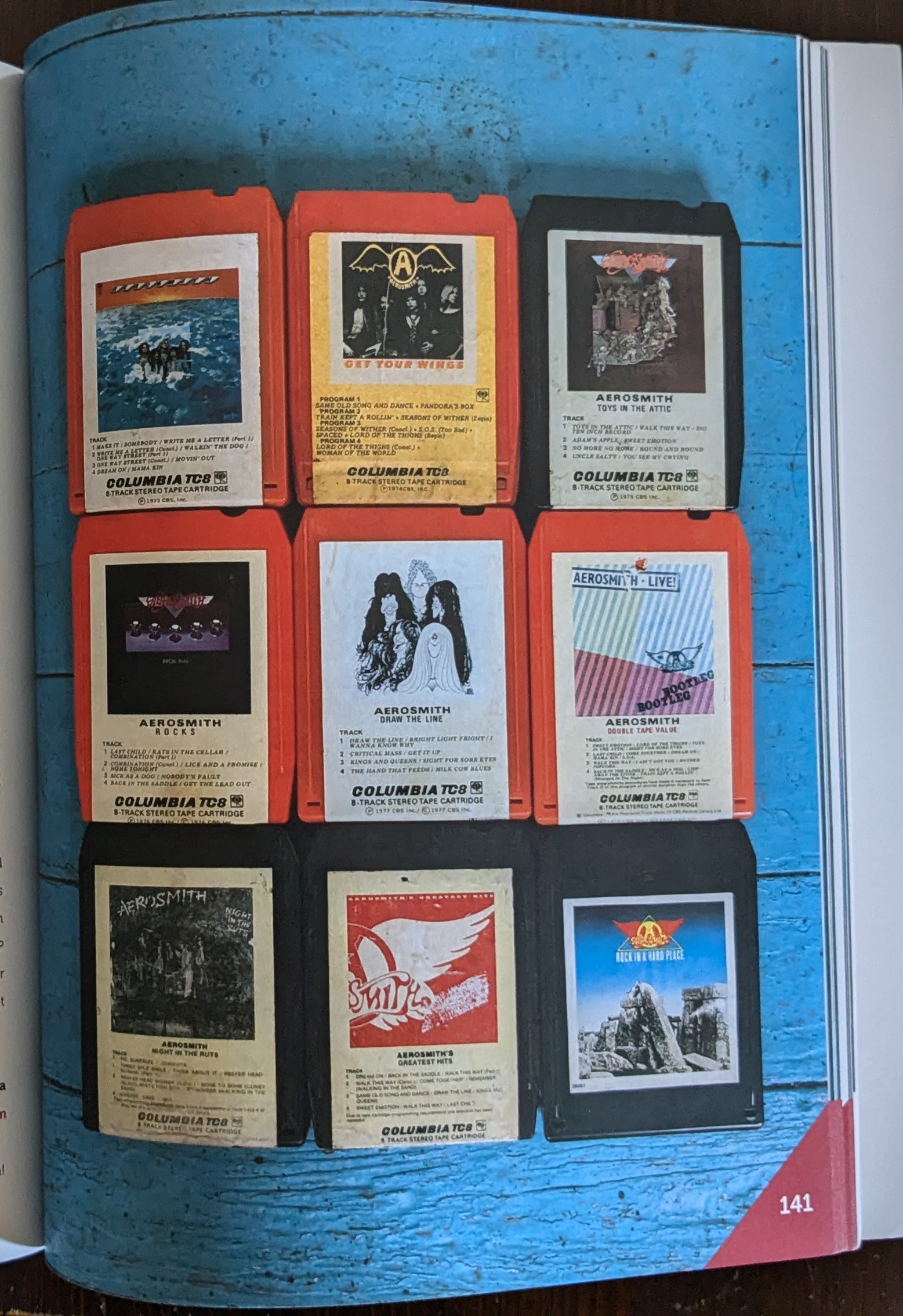
Oh, it’s definitely more retail. There’s just more of them, right, like the bands that started in the early 70s. I’ve got a decent amount of record clubs’, though. It just depends on who it is and how long their career kept going, right? You take a band like Aerosmith, so obviously from their first album, through to Rock And A Hard Place, those were all retail 8-tracks. The one to look for and the one I don’t have is Done With Mirrors. And that’s highly in demand because there don’t seem to be many of them. You get a band like Kiss that obviously kept on going. Their 8-tracks go up to Animalize. So, sometimes there’s only two or three record club ones. And then they stop. So, I definitely have more retail than record club ones.
For me, the interesting reading in the book obviously is the interviews and the guests you had in there that told their stories of that, as you said earlier. Did you come across any collectors in all these groups that you visited that maybe weren’t able to get into your book that had crazy amounts of 8-tracks or,…
I had pretty good luck. Pretty much everybody that I sought after was willing to talk to me. Now, there was one person I talked to who was all ready to talk to me and I was going to do a chapter on them, but then they said they were going to do their own book, and I said “well, ok that’s cool”. They haven’t yet. I’d like to get it when it comes out. But it wasn’t a bad thing.
Did you come across anybody that had an insane amount of 8-tracks compared to what you got?
Yes, I definitely have met people that have hundreds upon hundreds of them. These are people that like a wider span of music than I do, too. So, they’ve got more artists to look for. I haven’t counted them in a while. I’m looking at them, but I’ve probably got, I don’t want to say 300. I’m not sure. But it’s in the hundreds anyway. It’s a lot. These RCO ones, you’re not likely to find them on eBay, you do sometimes or sometimes Discogs. Most of the time, you go into these Facebook groups. And once people know what it is you’re looking for… because a lot of people buy and sell. I don’t sell, I just buy. But a lot of people buy and sell. And they’ll say “I got a couple of such and such. Is that one you were looking for? …”
That’s how I’ve gotten the last bunch that I’ve been able to get, which include titles like Deep Purple Perfect Strangers, Rush Power Windows – That was a major grail for me. That’s the last Rush one. Queen The Works; that’s the last Queen one. Once you’ve come so far with your collection, about the only way you’re going to really complete any of them, you’ve got to spend a little money. So, you have to balance that out with everything else. I’ve got a few collections that I would say are complete as far as these are all the eight tracks this group or artist put out.
Is there anything, do you have any holy grails yourself, things you’re looking for?
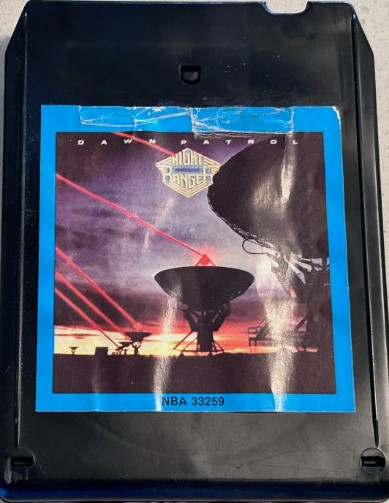
Oh, yeah. Basically it’s completing the collections, starting with my favorite bands. I mentioned Kiss. I don’t have Creatures of the Night or Lick It Up. Now, the funny thing is that Creatures of the Night only seems to exist as a retail, a U.S. retail version, and it’s highly in demand, as is Lick It Up. For some reason, and maybe it’s because it was a more successful album, Animalize is a little bit easier to find. That doesn’t mean it’s easy to find. That means it’s easier than those other two. I have Animalize, but I don’t have Creatures or Lick It Up. So that would definitely be one of my grails. Triumph Never Surrender is one I’d like to get because that would finish my Triumph collection. I have Thunder 7, and again, that seems to be easier to find for some reason. Never Surrender seems to exist only as (I’ve only ever seen) a U.S. RCA Music Service version. But it’s out there. There’s probably a Canadian Attic (Records) one, too. I’ve just never seen one. I know that one of my major grails is the first Coney Hatch, which does exist as a Canadian Anthem, Columbia House 8-track. I was fortunate enough to have Andy Curran on my show, and he didn’t even know they had an 8-track, and I had to show him a picture of it. I said “This is it. And here’s how the songs are broken up”, because they usually had to mix the song order up. We joked. I said “I’ll know if a bidding war breaks out, and it’s me and one of the first, and it was probably you”. The first Bon Jovi album I would love to have. I love that album. And just the idea that there’s a Bon Jovi 8-track; it’s just weird to me. As you know, I’m a big Night Ranger fan. I don’t have Dawn Patrol. I have Midnight Madness and Seven Wishes, but Dawn Patrol seems to be harder to find. Normally, it’s the other way around. Normally the newer ones that are harder to find, but not in that case.
I was going to say, Dawn Patrol wasn’t their biggest seller, though, was it?
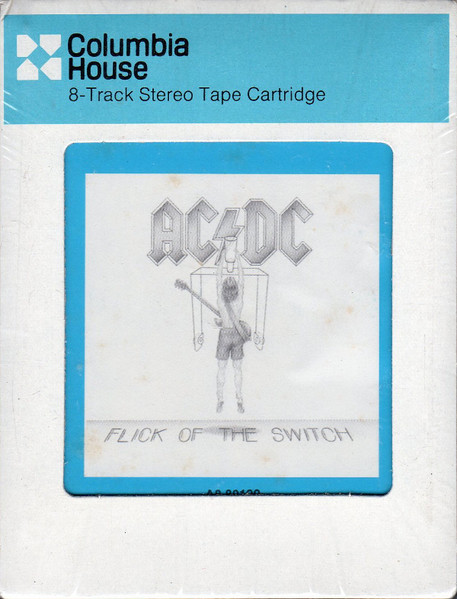
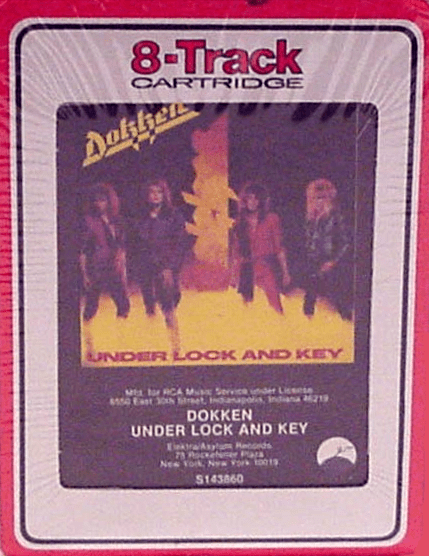
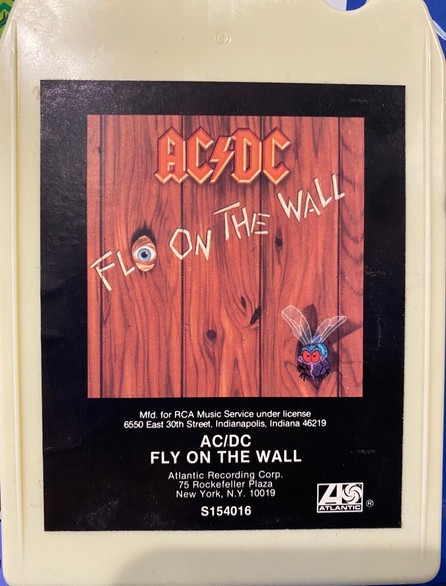
No, and also, when it came out, it was a Columbia House only, as far as I’ve seen it, it was on Boardwalk Records, which went out of business within a year of the album being out. So, I think that has something to do with why that one’s more rare, because it’s easier to find Midnight Madness and Seven Wishes because MCA picked them up. Now, they did reissue Dawn Patrol, but I don’t know if there’s an 8-track version of that. I’d be happy with one of those. There’s one Sammy Hagar that I don’t have, and that’s Rematch, which is the Capitol ‘best of’ that they put out in 1982. And that’s another thing that’s odd, because there doesn’t seem to be an 8-track version of VOA, which doesn’t make any sense, because number one, it was his most successful album, and number two, the album that came after that is on 8-track. And there are a few cases that I’ve come across like that. I mentioned Ratt earlier; the Ratt EP exists on 8-track, as does Invasion of Your Privacy, but Out Of The Seller does not seem to. That doesn’t make any sense. Now, I’m not saying it doesn’t exist, I’m saying I’ve never seen evidence of it, and I would never list something in this book if I didn’t. I would never go by someone saying “I think I saw it once”. I need better proof than that. I need either a picture, or I need someone to say, Tim, I can assure you beyond the shadow of a doubt, here it is, this is what the song order is, then okay. But other than that, as far as other Grails, well, if it’s still there for a while, you could go on Discogs, and if you had 2,000 U.S. dollars, you could get Dokkens’ Under Lock and Key. Now, I like that album, but I don’t like it that much. But is that an outrageous price? I don’t know, because when’s the last time you saw Under Lock and Key? When’s the last time you saw a Dokken 8-track? So that’s what you have to deal with. You have to factor that in. It’s like, how bad do you want it? And yes, sometimes I do think things get overpriced, like anything, but at the same time, I think demand drives the price up. And for some reason, the hard rock and metal bands. Those tapes go up. People are willing to pay big bucks for Ozzy’s Bark at the Moon, because that’s the last Ozzy one, right? And Ozzy’s still popular. Or AC/DC Fly On the Wall, Who Made Who? Those are two that I don’t have. I’ve got Flick Of The Switch, which is kind of rare, but I don’t have Fly On The Wall or Who Made Who. So, it’s how far up they went when they stopped, and how popular… Because you could go on eBay today and buy a Statler Brothers 8-track from 1987 for five bucks. Just the demand’s not there, you know what I mean? So, it’s not necessarily just the year, it’s who it is.
Version 1.0.0Version 1.0.0
What other books are you working on as far as… You’ve got the Y & T book, the Kansas book, the Sammy Hagar book, which is more of just a review and listings book. So, curious what else you’ve got on the go…
So yeah, Unspooled is unique, because it’s the most expensive book I’ve got, it’s the most graphics-intensive book I’ve got, and I have to give a special thanks to my good friend Matt Phillips. We’ve been friends for over 30 years. He has a company called Go North Design, and he laid this book out, and I would put it up to anybody’s work. I think it’s totally professional-looking. My other books weren’t quite as graphics-intensive, although I was absolutely honored, because my second book (my Y & T book), I made the acquaintance of the one and only Hugh Syme – who’s work I’ve been a fan of for years being a Rush fan. But not just Rush, Def Leppard, Bon Jovi, Aerosmith, Whitesnake, Y & T, Kiss – tons of bands he’s done album covers for, so he designed the cover to that, which was an honor. The Unspooled one was kind of an odd thing, but I think that I’m better at doing books on one band. Y & T has always been one of my favorite bands; they’re one of the unsung bands, and I think they should have been much bigger, so it was a no-brainer that that would’ve been my next book. After that, I’m a huge fan of Kansas, and even though they’ve sold millions of albums they seem to be the 2nd tier of what people think of when they think of classic rock bands. I think they should be up there with Queen and Zeppelin, they’re that good. And I think that the new music they’ve put out in the last few years is just as strong as anything. And that has a lot to do with a band I want to write about. If they’re still writing new music, really good and valid, that makes me want to do more work with them. Then the Sammy Hagar one; I’m a huge fan of his – in All of the capacities that he’s been involved in. So that made perfect sense. And that one was different – the Y & T and the Kansas books were very much modelled after Martin Popoff’s Album By Album series, where he gets a panel of guests, asks a bunch of people the same questions about a particular album, gets their answers, and gets the content that way. That’s how I did my Y & T, and that’s how I did my Kansas. I’ve got 2 books in the works, but I’m not ready to talk about them just yet, but they’re also going to be panel books. And I’ve got another one that’s just about done, and it’s more like the Sammy book where it’s basically just me writing it. And I think that that’s the course that I’m going to follow. Again, I have to reference Martin Popoff because he’s been such a great mentor to me, and he always says, “the books that sell best are the books about one band.” If you try to do a book about a movement or something like that, they just don’t sell as well as a book about one band. And I also look for band’s that haven’t had books written about them or haven’t had this type of book written about them; that’s been the driving factor. I plan on doing more. It was just kind of something I stumbled into. Five years ago, I had no books, now I have 4, with 3 in the works. It’s amazing really, and I’m grateful to everybody that promotes them, and has bought them. And the feedback I get – the best thing that I’ve had people come back and say is “I read your Y & T book, I had 1 or 2 of their albums, and now I’ve gone and bought a bunch more of their albums, and I want to check out further.” I’ve heard that with Y & T, I’ve it with Kansas, and I’ve heard it with Sammy, as a solo artist – “You know I have the Van Halen albums, and I had one of his ‘best ofs’, and now I’ve gone back and got a bunch of others”. And that’s why I started my YouTube channel, and that’s why I’m doing these books – to talk about music I love, and I think needs another spotlight on it. I love Kiss, but what am I going to write about that hasn’t already been written. I love Rush, but what have I got to contribute to write a Rush book!? Some bands… I don’t want to say there’s too many books – but there’s plenty! And there’s plenty by authors that have an angle that I just haven’t thought of. I would rather do bands where somebody goes “I like that band; I don’t think I’ve ever seen a book on them before.” And that’s really where I’m going with this. I think I’ve got plenty to keep me busy as far as bands, like ‘who hasn’t been done that could sort of use a tribute?’ Any band that’s been around for 40-50 years, I think should be commemorated in some way. And putting that information down in book form is a lot easier than going online and trying to figure out how many albums somebody has. This way it’s right there; you can pick it up any time, any place, and just look at it.
I like the idea of a Y & T book because there’s a band that’s been going since the early-mid 70s, and most people might know 1 or 2 songs from the 80s…
Yeah! And they probably thought that they stopped in the mid-80s, but they didn’t.
Have you got much feedback from some of these bands?
In some cases, yeah. In the case of Y & T I heard from John Nymann, their guitar player, and he’s been with them since the early 2000s, but his history with the band goes way back in to the 80s as far as being a background singer. And I don’t know if you remember when they had the robot character on stage with them from the In Rock We Trust album!? He was in the suit on stage, so he goes back with them a long way. And their current bass player, Aaron Leigh, I had them both on my show. So, they both have copies of the book.
How about Dave Meniketti?
I haven’t heard. I’d love to get a book in Dave’s hands. He’s the keeper of the flame. In the case of Kansas, it was very gratifying because Kerry Livgren, who was a founding member and wrote a bulk of their songs, a couple of fans made a pilgrimage to his home in Topeka and presented him with the book, and he made a very nice post about it on Facebook. I haven’t talked to him, but he did mention the book, and that was a big help. I talked to Tom Brislin, their current keyboard player, and he’s played with a ton of people; he’s played with Yes, Meat Loaf…he was great. I talked to John Elefante, their former singer, he’s in a couple of chapters from the 2 albums he sang on. I haven’t heard back from Sammy, but I have been in contact with Bill Church, his longtime bass player in Montrose and his solo band.
Canadian author TIM DURLING started collecting 8-tracks well after they went out of style And print. Tim’s latest book ‘Unspooled‘ chronicles his collecting of 8-tracks years after the fact, and with a focus on this record clubs (popular in the decades before the internet) who carried 8-tracks
Unspooled will be of interest not just for the history and information on the 8-track format, but also for the nostalgia and the stories. This is a beautiful looking coffee table kinda book that you can pick up anytime, for the reading and for the cool images of hundreds of 8-track cartridges.
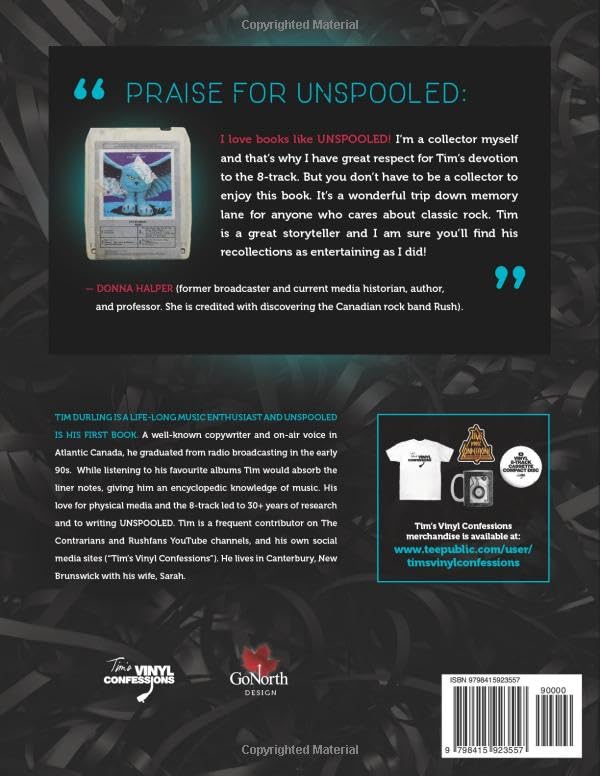
Unspooled isn’t just about 8-tracks, as it lists the year to year record club releases throughout the 80s, but also in here are Tim’s personal stories of the whole adventure of collecting. As a collector (mainly LPs and CDs), many of us can relate. Besides his stories, there’s contributions and interviews from fellow collectors, not just in 8-tracks, from Canadian rock writer Martin Popoff’s Forward, to legendary broadcaster Donna Halper (she who began playing Rush in the US), to various other collector’s and experts (be it in 8-tracks or rock knowledge in general!)
Version 1.0.0
At over 190 pages, full of colored images, lists, tales, antidotes, etc… Unspooled should really be worth checking out for any music collector.
+ Recently spoke with Tim Durling, watch for that interview coming here, soon.
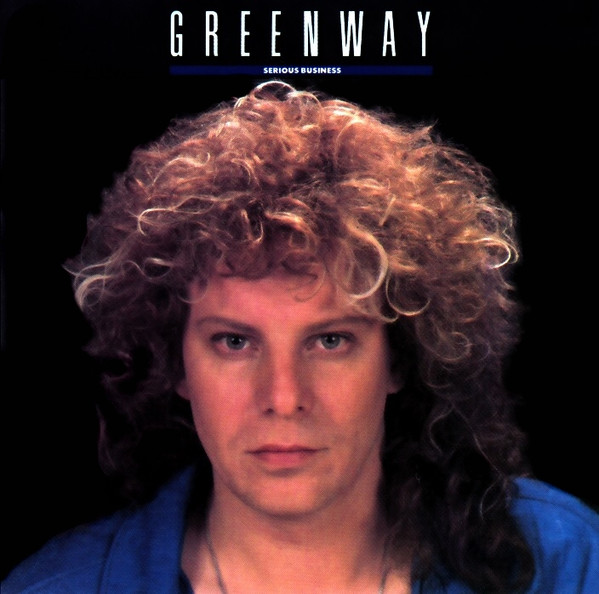
When APRIL WINE split in 1984, following the Animal Grace album, and the One More For The Road tour across Canada, band members went off to do new things. First, there was the contractual obligation album Walking Through Fire in ’85, which was essentially a Myles Goodwyn solo project, which only featured Brian Greenway from the band’s last line-up. Soon after both Goodwyn and Greenway went off on solo ventures.
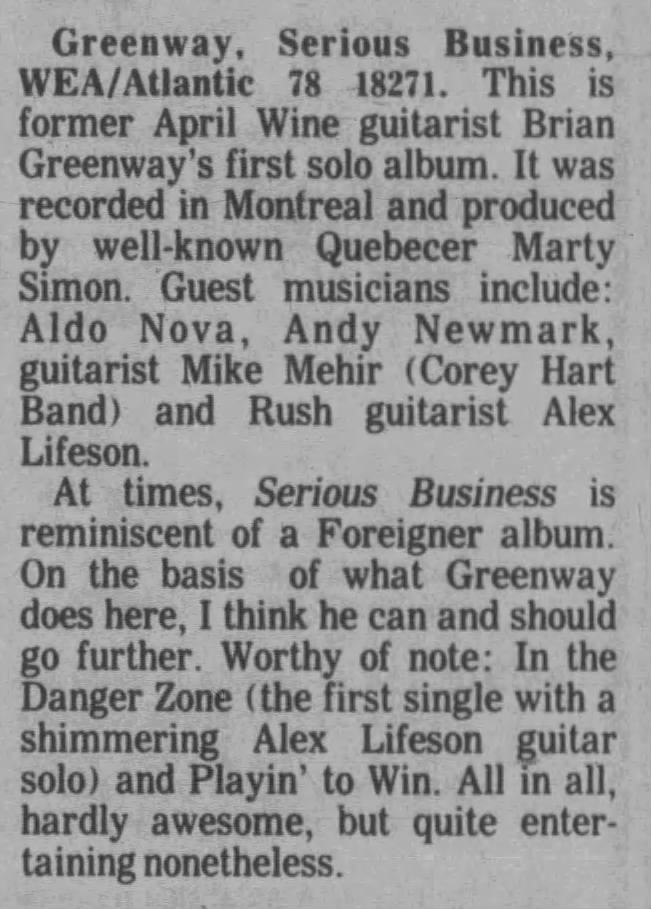
Brian Greenway’s solo album (released as GREENWAY) titled Serious Business came out in early 1988, produced by Marty Simon and Paul Northfield, and featured a number of guest players, including a few main players from Walking Through Fire (Daniel Barbe, Marty Simon). The single “In The Danger Zone” was the standout cut here, featuring Alex Lifeson performing a guitar solo, and was accompanied by a video – which wasn’t released until 6 months later!
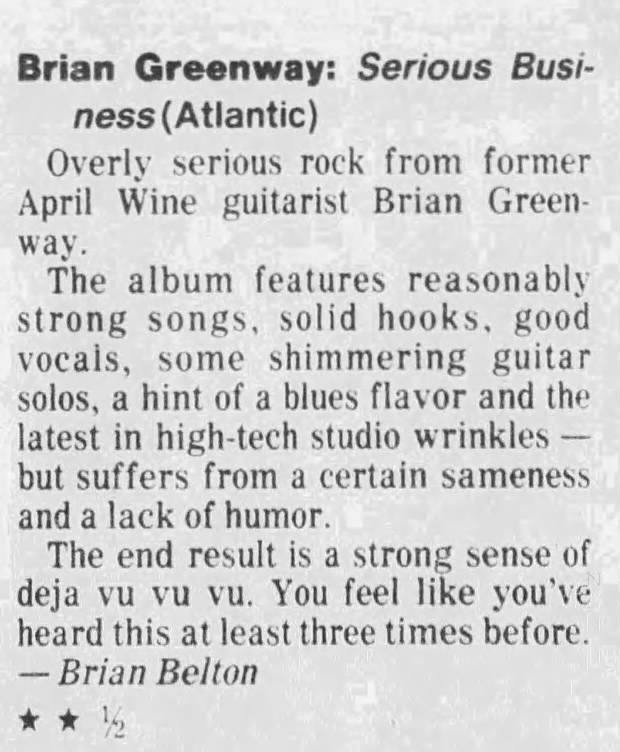
For Serious Business, Greenway wrote (or co-wrote) every track; co-writers included Marty Simon (Mylon LeFevre, The Sharks) and Tracy Howe (Men Without Hats). There’s also a very 80s production/sound to this, with lots of keyboards played by Also Nova (this thing reminds me of Aldo’s Twitch album at times). Other favorite tracks here are “It’s Alright” and the upbeat “Right Track”, both of which would have made fine singles (if this album got more of a push). The title track is another gem here; the hardest rocker here.
Greenway went out and played live throughout Canada, In the summer of 1991 a show in Laval, Quebec was filmed and later was featured on TV in early 92 as Brian Greenway And Friends. His band, consisting of Jerry Mercer, Nanette Workman, Jeff Nystrom, Jimmy Tanaka, and Jeff Smallwood, performed songs from Serious Business, as well as a few he wrote for April Wine.
Serious Business was originally released on LP, cassette, and CD, but a remaster/reissue of it is long overdue! Could make a nice package with the original album and the live performance together (!?)
*Canadian band BEDROKK covered Greenway’s song “I Can’t Hold Back” on their 1996 album Undertow.
GREENWAY – In The Danger Zone (4:08) – Atlantic (7-89118) – Windfall Music-Roxamillion Music-Irrational Music-Sack Cymbal Music/BMI – B. Greenway-T. Howe – Producers: M. Simon-P. Northfield Former April Wine member Brian Greenway delivers a well designed and powerful cut from his Atlantic album Serious Business. Should do extremely well on AOR radio. (CashBox, 02-13-88)
RUSS BALLARD Announces New Double Album‘Songs From The Warehouse / The Hits Rewired’ Out April 25th Via Frontiers Music Srl. Pre-Order HERE
Legendary singer/songwriter RUSS BALLARD has a new double album coming out. If you don’t recognize the name, chances are you know a few of his songs that were recorded by and made hits by others throughout the 70s and 80s (Rainbow, Three Dog Night, Ace Frehley, Kiss, Santana…) . Ballard was originally a member of ARGENT in the early 70s (“Liar”, “God Gave Rock and Roll To You”), and left to pursue a solo career, although to many he made name as a songwriter.
Ballard’s new album Songs From The Warehouse/ The Hits Rewired features 1 disc of new songs and 1 disc of his best known songs that were made famous by others.
The latest single is a new track “Resurrection”. Check it out below, as well as the previous 2 videos, and tracklisting.
Track List:
CD1 1. Resurrection 2. Courageous 3. Journey Man 4. The One Who Breathes Me 5. The Wild 6. Charlatan 7. Soul Music 8. Sleepwalking 9. Last Man Standing 10. Make Believe World 11. The Family Way 12. Fearless 13. The Last Amen
CD2 1. Since You’ve Been Gone 2. Winning 3. God Gave Rock And Roll To You 4. Voices 5. New York Groove 6. You Can Do Magic 7. Liar 8. I Know There’s Something Going On 9. I Surrender 10. No More The Fool 11. So You Win Again 12. Free Me 13. On The Rebound
Well, a quick run down of some new tracks & videos worth checking out! If you got any new classic rock/hard recommendations, drop me a note or put them in the comments! As always, for more info, check out the descriptions in the videos for more info and links.
RUSS BALLARD – New York Groove
Originally of the classic band ARGENT, Russ Ballard left the band for a solo career, and is likely better known as a songwriter who’s songs have become hits for numerous acts like Rainbow, Kiss, Santana, America, and this song – which was a hit for Kiss’ Ace Frehley in 1978. The song was previously covered by British glam band ‘Hello’. And now Ballard has made a new version of the song.
HAREM.SCAREM – Reliving History
Canadian rockers HAREM SCAREM have a new single out. I picked up the band’s first 5 or 6 albums way back, and always enjoyed them. This is good, very likeable compared to the early stuff.
HOUSE OF LORDS – Cry Of The Wicked
Fronted by singer James Christian, HOL is pretty consistent with good songs and album covers! 🙂 This is from the band’s new album Full Tilt Overdrive.
ENVY OF NONE – Under The Stars
the 2nd single from the 2nd (forthcoming) album of EON, which features Alex Lifeson (Rush), and Andy Curran (Coney Hatch). Check it out. Very atmosphere track, nothing like anything you’ve heard before.
STREETLIGHT – Captured In The Night
New single from Swedish band that is influenced by 80s AOR/melodic Hard rock like Journey, Toto, Kansas… Their new (2nd?) album is titled Night Vision, due out next month.
HELLOWEEN – Future World (live)
From German power metal legends HELLOWEEN, who have a new Live At Budokan release out now.
URIAH HEEP kick off their Magician’s Farewell’ Tour in the UK in February. Supporting Heep will be Canada’s APRIL WINE and US band TYKETTO. (*Added updated dates for Europe below).
As a fan of both Uriah Heep and April Wine, I see this as an exciting bill, and Hope that April Wine is on the tour when Heep comes to Canada and the US. Both bands, in very different incarnations each time shared the stage in the early 70s when April Wine opened for Uriah Heep in Ontario, in 1972 and then years later when it was the other way around for a few US shows.
I belong to a few groups online of band, and actually (but not unbelievably) see fans of one or the other who has little to know knowledge of the other band, so I wanted to give a wee bit of background, as well as the current line ups, and 5 recommended (starting point) albums from each….
Both bands formed in 69, but really got going in 1970. UH’s debut album came out in 1970, while AW’s came out in 71. While UH took a few albums before they had a hit single, AW had one (“Fast Train”) off their debut album and would continue to have hit singles off every subsequent album here in Canada, while UH didn’t rack up the hit singles, but became an international concert draw with a number of big selling albums from 72-75. AW pretty much stayed in Canada, with limited releases outside the country, before they had a big radio hit in the US in 78 (“Roller”) and went on to huge international success from then til about 82. While AW’s most successful period ended with the 3 guitar line up breaking up in 84, UH’s comeback lineup split in 85, with a new line up soon coming about. AW returned with a new line up in 92, and have carried on since, releasing 4 studio albums up until 2006, and continuing to tour, now as a 4-piece, with a few line-up changes along the way, most notably with singer/guitarist Marc Parent taking over for founder Myles Goodwyn in 2023 before Goodwyn passed away last year.
April Wine consists of Brian Greenway (since 1978’s First Glance album, when the band took off as a 3 guitar act). Richard Lanthier (bass, since 2011), Roy ‘Nip’ Nichols (drums, since 2012) and Marc Parent (lead vocals, guitar, hand picked by Myles Goodwyn).
When Uriah Heep added Phil Lanzon (keyboards, songwriter) in mid 1986, and Canadian singer Bernie Shaw (end of 86) the band found some long-term stability, and from 1988 ’til last year Heep has released 9 studio albums and numerous live albums. The band lead by founder Mick Box (guitar), Lanzon, Shaw, Russell Gilbrook (drums, since 2007) and Dave Rimmer (bass, since 2013).
For my fellow fans of each band I’ve selected 5 recommended studio albums + 1 live album – should you want to check out either band you’re not familiar with.
APRIL WINE
Stand Back
The band’s 1975 album that was full of hits, and arguably their most popular amongst longtime fans. “Oohwatanite”, “I Wouldn’t Want To Lose Your Love”, “Victim Of Love”, “Come Hear The Band”….There was 5 hit singles off this album, and every song is memorable.
Harder… Faster
It was a tough choice between this and the previous album First Glance, but this one features the hit “Say Hello”, as well as favorite AW rocker “I Like To Rock”, “Before The Dawn” (from by Brian Greenway), and the band’s killer rendition of King Crimson’s “21st Century Schizoid Man”.
Nature Of The Beast
The band’s biggest commercial success, and height of their popularity. From 1981, with “Just Between You And Me”, “All Over Town”, and their heavy remake of (and hit) Lorence Hud’s “Sign Of The Gypsy Queen”, and heavy album cuts like “Future Tense” and “Crash And Burn”. Much of this album featured in the live set for years, and a number from it still do.
Back To The Mansion
The overlooked gem in the AW catalogue. From 2001, BTTM saw the band recording as a 4 piece again, and taking a less heavier direction. But plenty of good songs here like ‘I’ll Give You That”, the ballad “Paradise”, Brian Greenway’s excellent “Holiday”, and an interesting version of Simon & Garfunkel’s “I Am A Rock”.
Greatest Hits Live 2003
Recorded on the BTTM tour, w/ Carl Dixon added for keyboard & guitar. Sure, One For The Road from 1984s Farewell tour sounds heavier and features the classic 5-man line up, but Greatest Hits Live 2003 (what a lame title) covers more hits, and is a bit more representative of what AW sounds like in later years. Features 21 live tunes, plus 2 studio cuts.
URIAH HEEP
Look At Yourself
Heep’s 3rd album and the one that got the ball rolling, defining their heavy prog sound, and loaded with classics like the title track, “July Morning”, “Shadows of Grief” and “Love Machine”. The last to feature founding bass player Paul Newton.
Demons And Wizards
The band’s commercial breakthrough and most successful album. Features 2 of Heep’s Best known tracks, the hit “Easy Livin”, and the single “The Wizard”, along with huge fan favorites “Circle Of Hands” and “Rainbow Demon”. The first to feature the ‘classic’ line-up of Mick Box, David Byron, Ken Hensley, Lee Kerslake and Gary Thain, as well as Roger Dean artwork.
Abominog
Fast forward 10 years, and the band’s brand new line-up, and new sound for the 80s. Abominog featured a more American sound (aka Foreigner) with new singer Peter Goalby, as well as the hit “That’s The Way That It Is”. Killer album, despite a lot of covers, but everything going together so well. Favorites be “Too Scared To Run”, “Sell Your Soul”, “Chasing Shadows”, and a cover of Russ Ballard’s “On The Rebound”. Also included bob Daisley (Rainbow, Ozzy) on bass, and keyboard player John Sinclair (Heavy Metal Kids).
Sea Of Light
After more line-up changes, a few bum record deals, and less than stellar releases Heep returned to their ’70s style in a way. The 3rd to feature Canadian singer Bernie Shaw and keyboard player Phil Lanzon (by now a major writer in Heep). Tho modern sounding, SOL featured more variety, a mix of acoustics, different keyboards, more progressive tracks, and a few big riff driven rockers. This album brought a lot of old Heep fans back with tracks like “Against The Odds”, “Logical Progression”, “Words In The Distance” and “Love In Silence”.
Chaos And Colors
Heep’s latest from 2023. The band has been on a roll since 2007 when drummer Russell Gilbrook joined (bassist Dave Rimmer a few years later). This is the band’s 5th studio album of new material since then, and arguably their best. More progressive, more varied, still heavy, with favorites like “Age Of Change”, “Hurricane”, “Golden Light”, the single “Save Me Tonight”, and epic “You’ll Never Be Alone”!
*Future Echoes Of The Past : Live
So many great UH live albums (like the classic Live: January, 1973)…but I’m going with this from 2000, from the band’s tour in support of 1998s Sonic Origami. A huge mix of classic Heep and gems from the band’s 2 latest at the time. Sounds amazing.