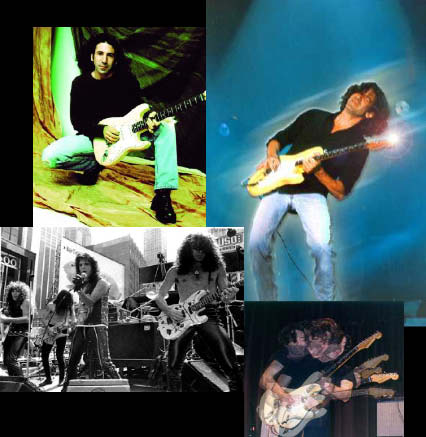
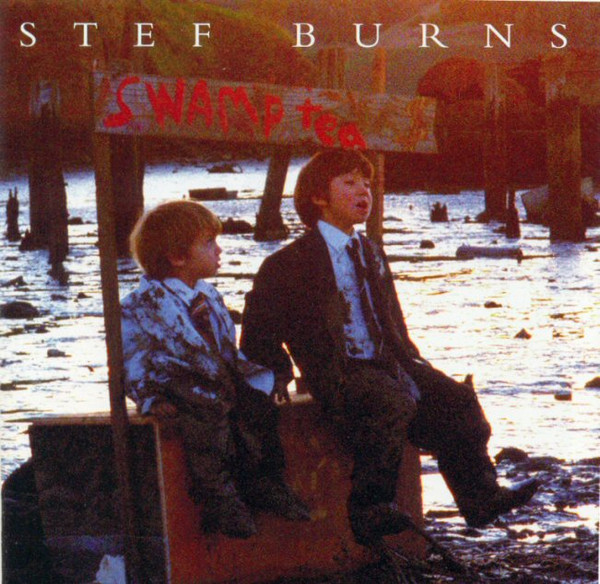
This is an interview from September of 2000 with Amreican guitarist Stef Burns. At the time Stef was promoting his first full length solo album Swamp Tea. That album came out in 1999 (late ’98 in Japan). Like many back then, this was done via email. I’ve added in some links and songs here as well. In retrospect, some of these questions may seem a bit dorky now. At the time I was excited getting to send interview questions to someone who’d been on an Alice album (being an AC fan). Stef has released a few more solo albums since Swamp Tea (not all instrumental).
AN INTERVIEW WITH FORMER Y & T and Alice Cooper guitarist for his solo album ‘Swamp Tea’.
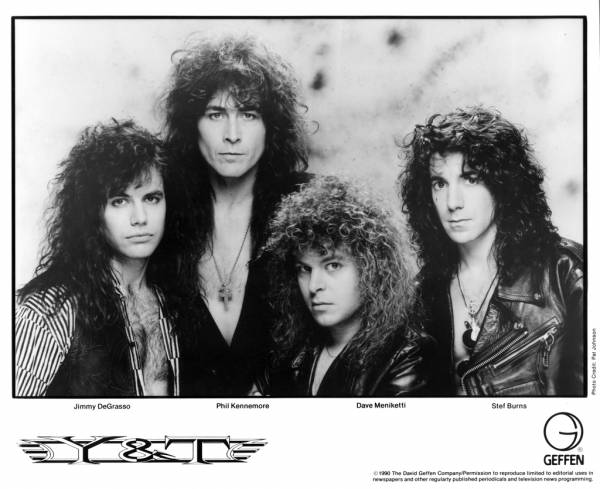
“Guitarist Stef Burns is best known for his time in Alice Cooper’s band in the early ’90s, as well as being in the last incarnation of Y & T. Recently Stef’s been working with Huey Lewis, and has released his first solo CD “Swamp Tea”. Swamp Tea is an instrumental album. Here I did some Questions and Stef answered, and gathered more info on his career, his time with Alice, Y&T, and his solo project. ”
Who were your earliest influences? how did you get into guitar? SB: Jazz, blues, soul records of my parents. My dad played a little guitar and I picked it up around 7 years old. Then I became more influenced by the great guitarists like, Jimi Hendrix, Jeff Beck, B.B. King, etc. Allman Bros, then later by Larry Carlton, Robben Ford, Mike Stern, Scofield, Pat Metheny, sax players, singers, drummers all were very influential.
What were your favorite albums & bands growing up? favorite guitarists in early days? SB: Hendrix – Are You Experienced, Jeff Beck – Blow By Blow, Allman Bros. – Live at Fillmore East, Montrose, Deep Purple – Machine Head, Led Zeppelin – All of them, The Beatles – All.
What was your first professional gig? SB: Touring with the R&B group – “Omega” featuring members from the Elvin Bishop Group.
How did you get involved with Y & T? SB: Being a San Francisco Bay Area musician we kind of hear about each other. They asked me to join and I accepted. Was really a good hard rocking time.
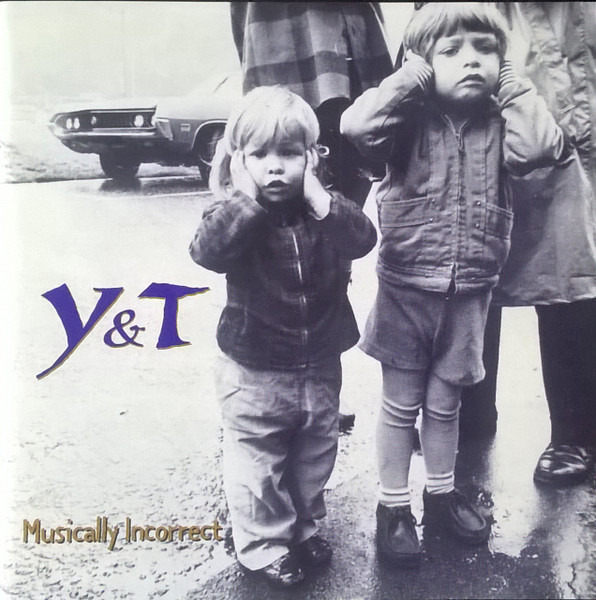
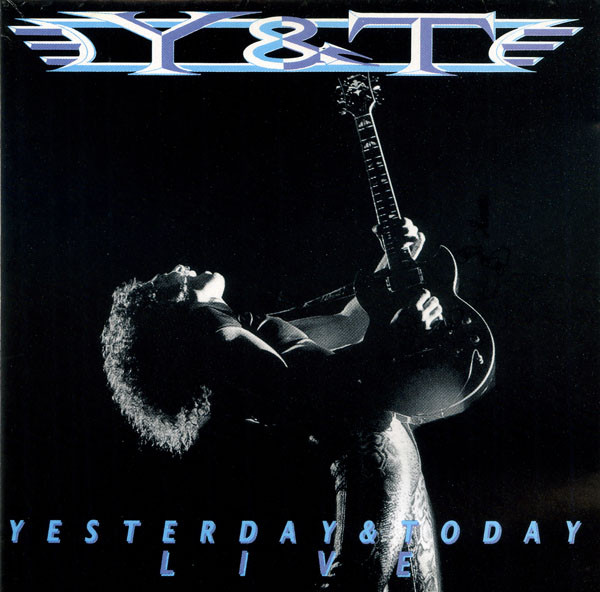
How was the 1998 “Endangered Species” album received? What has the band done over the past decade? SB: That was the last album recorded by the band. I hardly had anything to do with it other than one song as I was busy working in Italy that year (’96). I like that album though because it has a raw trio kind of feel to it. Dave plays his ass off on that one as well as “Musically Incorrect” (’94). I was more involved with “Ten” (’90) and “Yesterday and Today, Live” (’91)
You mean you only played on 1 track on the album?? SB: Yes.
Did you write & record on ‘Ten’? where & when was Live recorded? [what labels are these on?] SB: Yes, I played a lot on “10”, 4 solos. It is on Geffen. “Yesterday and Today, Live” is on Metal Blade.
Seeing as Dave M. and Jimmy D. both played on your album, are there any plans for future Y & T gigs or recordings? What are the other Y & T guys currently up to? SB: No plans as of now, but I think some day we’ll get together and do something. Don’t know exactly what though. Dave works with his band and does other projects in his studio. Jimmy is in Megadeth. Phil has a bunch of great songs I hope he releases some day.
What other recordings and name bands were you involved with prior to working with Alice Cooper? SB: Well, there was Michael Bolton, Sheila E., Pablo Cruise, Berlin, Jesse Colin Young, (we’re going back to ’82 now). There was a band I was in, in ’88 called the VU. The stuff we did then will be released in Europe next year. It’s power pop rock, I guess you would call it, and sounds really good.
A lot of “pop” stuff! Who was in VU? anyone of notoriety ? SB: Ross Valory, Prairie Prince, Kevin Chalfant and Tim Gorman.
How did you get involved with Alice Cooper? what do you recall of the auditions, etc… ? SB: I was recommended to Alice by Joe Satriani, whom I know from the Bay Area, and I sent Alice a tape, got hired to do the “Hey Stoopid” album, then to tour. Then I recorded “The Last Temptation” which I felt more involved in creating sonically.
You were not in the songwriting credits on ‘Hey Stoopid’ or ‘The Last Temptation’; why not? was songwriting a ‘closed shop’ with Alice due to his working with outside ‘pro’ writers? SB: I don’t know. I really didn’t have anything prepared that was in the Alice Cooper style.
Hey Stoopid had a lot of big names on the album, including other guitarists. What do you recall of these sessions? SB: I was only present during the Motley stuff. Oh yeah, and Slash too. He was super cool, little bit drunk, but…
Why were there almost no big name guest stars on The Last Temptation? SB: I guess that was Alice’s choice to make more of a band sound.
When did you tour with Alice ? Any stories or recollections? SB: Toured a lot with Alice from 91 to 95. Again in the end of 98. It was always fun.
How close were you to Alice? How was he to work with? Are you still in contact? SB: Alice is a breeze to work with. Very easy on stage and rehearsal. Great poker games on the bus. Haven’t talked to him in a while though we sent messages to each other through mutual friends.
What are your personal favorites [songs] from the stuff you recorded with Alice Cooper? SB: The Last Temptation.
The song? anything else ? SB: No, the record. Some of my favorite songs are, “Stolen Prayer”, “Cleansed By Fire” and “You’re My Temptation”.
What have you been doing since The Last Temptation? SB: Vasco Rossi, tons of sessions, released “Swamp Tea”, Huey Lewis etc…
What’s your involvement with Huey Lewis? [Recordings, tours, etc…] [What’s Huey been doing for the past 15 years?] SB: Right now it’s just touring. The new album to be released first of 2001 was finished before I joined. Chris Hayes plays his ass off on this CD. Some of his best playing ever, I think. Huey has always been working.
Have you done any recording with Huey? How long you been in his band? [where have you toured? where’s his market these days, cause I ain’t seen anything of him until the other day when i saw him in the promo for the “Duets” movie]. SB: Have not done any recording yet. Will play on one live track that I think will be for Europe. I have been playing with The News since March. The band’s market is spread out. We just played for 12 000 people at Pine Knob in Detroit.
How did the solo project come about? [who runs Lakeside Records? ] SB: I did it myself with the help of my friends and collaborators. Always wanted to. John Seppala and I worked a lot together to finish it. He’s amazing.
‘Swamp Tea’ is less of the Alice Cooper riff-rock stuff, and more of a almost progressive / fusion sound. Is that the style of music you are more into? How did the sound / idea come about to not be a ‘metal’ album, but a more prog style? SB: We just came up with music that we liked. Sometimes very melodic or jazzy. I never wanted to do a metal album.
What can you tell me about a few of your favorites on Swamp Tea? Any stories behind any of the tracks? any favorites? SB: Some of my favorites are Walking the Penguin, Echo Lake, Summer of ’68. These have a bit more of a soulful melody style.
How was the response to Swamp Tea in Europe and Japan? What promo plans are in the works for North America – any gigs, tracks receiving any radio attention, major mag features, etc.. ? SB: I did an Italian tour and it went well. There were features in a few of the Italian guitar mags. I think I’ll go back to Italy first of the year. My Italian band is great. Next I think I’ll get working on my next CD.
What would you compare it to? Familiar with [fond of] Steve Morse’ work? SB: I don’t compare it at all, but some of the influences that I hear are Todd Rundgren, Led Zeppelin, Toto, Deep Purple, Jeff Beck, Jimi Hendrix, Mike Stern. I am familiar with Steve Morse but I am not really influenced. John’s song – “Wayfunner”, has a ‘Dregsish’ line in the verse.
How has the reaction been so far? any plans to do a follow up? SB: Good and yes.
Any ideas for the next CD ? SB: Not sure yet really.
Aside from the Italian mags, any major features, chart placings [ie internet, foreign countries, etc…] SB: Haven’t got my first statement yet, so don’t really know what I sold.
What are you listening to these days? what guitarists out there do you admire these days? SB: I still listen to the old guys. Beck, Hendrix, more Miles Davis, Stan Getz, Pat Martino, Rage Against the Machine.
( KJ: thanks Stef!) SB: You’re welcome. This is the longest interview I have ever typed in my life!
Well, I started out (months ago!) compiling a Top 50 list of favorite Alice Cooper solo songs. Many Alice lists I see on Youtube (and elsewhere) tend to mix the original band and his solo recordings into one list, but for me, I see (and hear) a big difference, so I absolutely have to separate the 2. Much like I wouldn’t compile a favorite list of Black Sabbath albums and include Ozzy or Dio albums! Anyway, a good half of this list was easy to come up with, but the bottom half got a bit tougher to choose. Feel free to leave your picks in the comments.
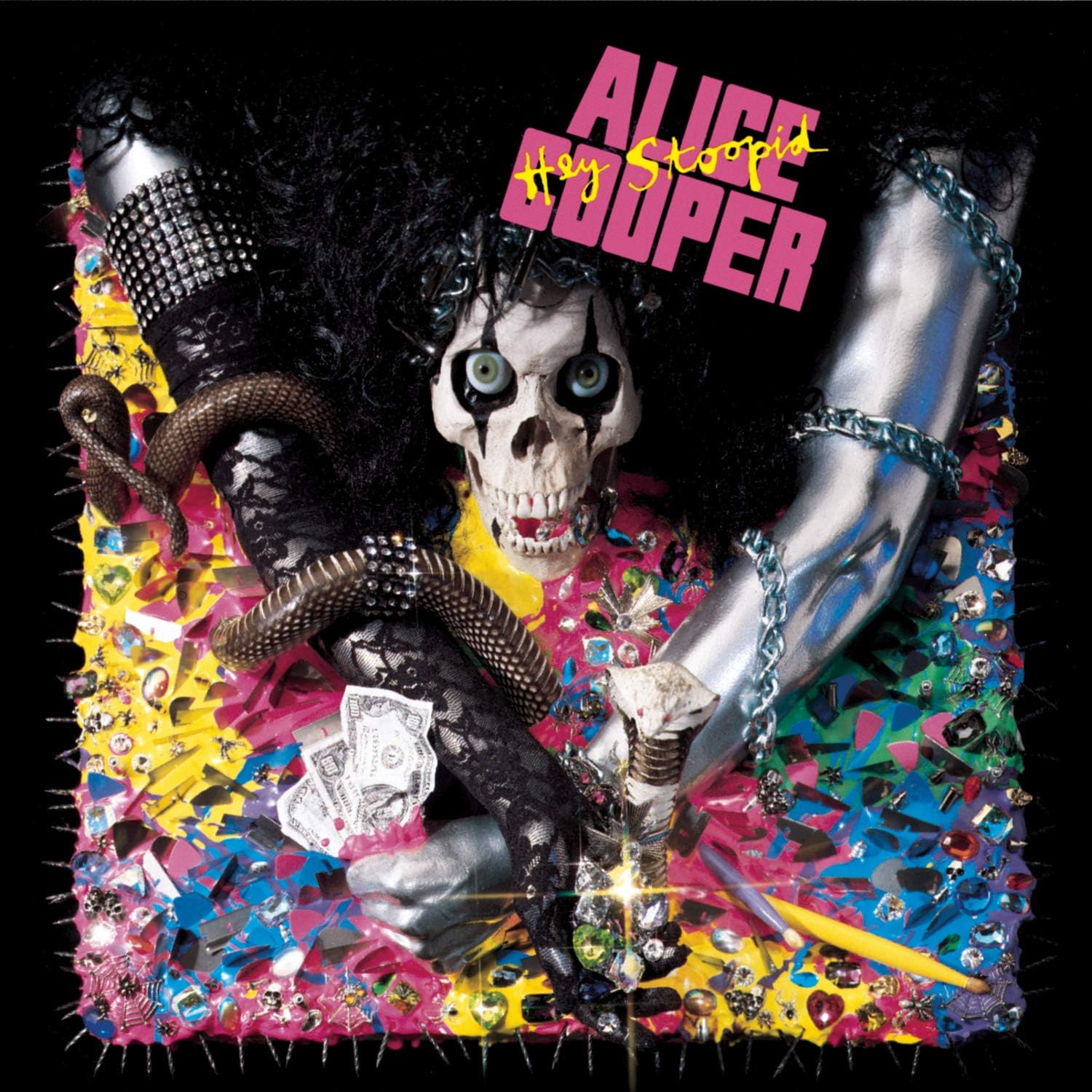
Hey Stoopid (1991)
I like Trash when it came out, but over time it hasn’t aged well with me, being Alice’s ‘Bon Jovi’ album, and too many guests that I’m not a fan of. So, Hey Stoopid is the follow up, still in that 80s style, and with even more guest players and co-writers. BUT, gone is the Bon Jovi feel and just better songs, and a bit more bite. I also like the cover-art here. But aside from maybe 2 songs (I don’t need to hear “Feed My Frankenstein” ever again), I love all of this. Favorites being “Snakebite”, “Dangerous Tonight”, “Little By Little”, “Hurricane Years”, and “Burning Our Bed”.
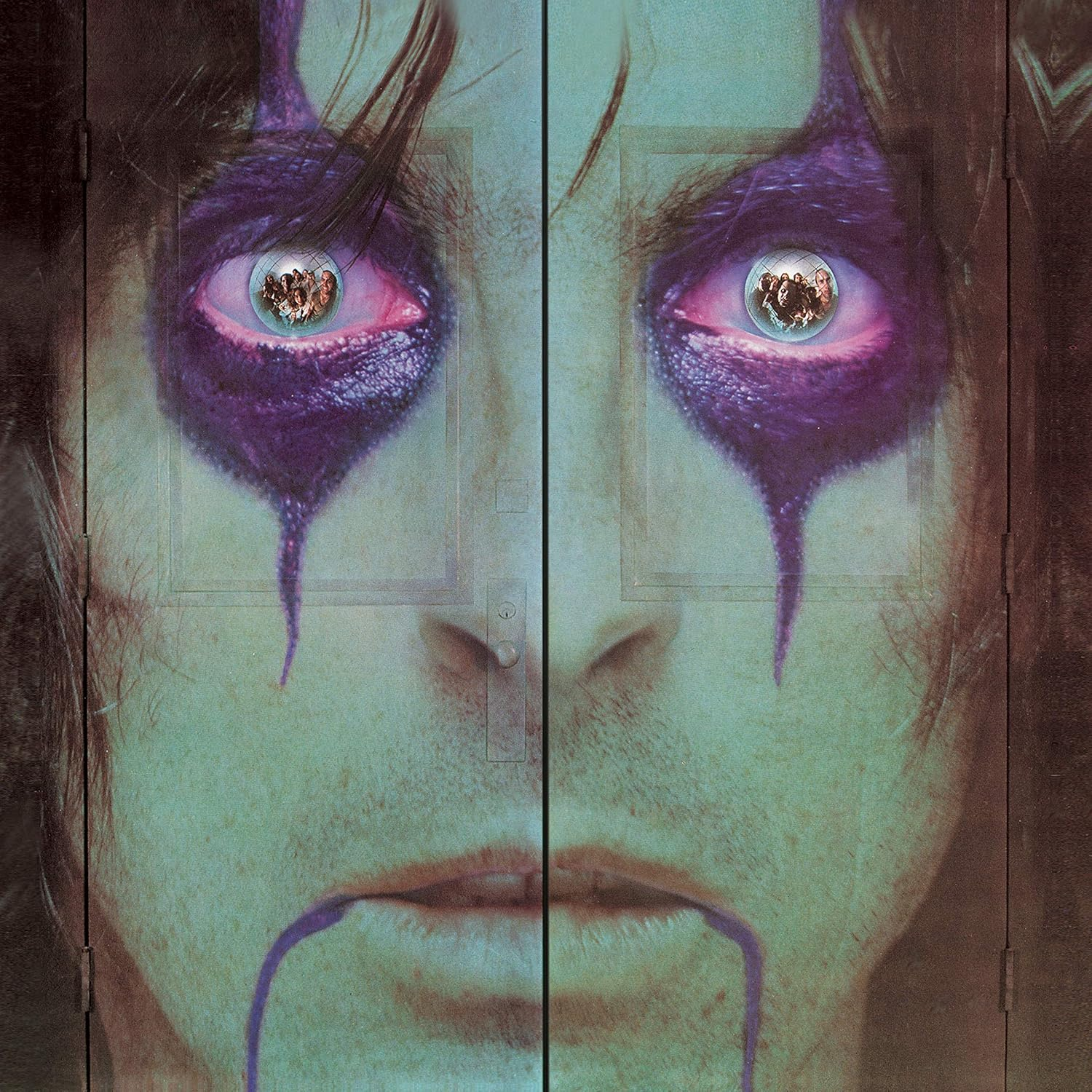
The Eyes Of Alice Cooper (2003)
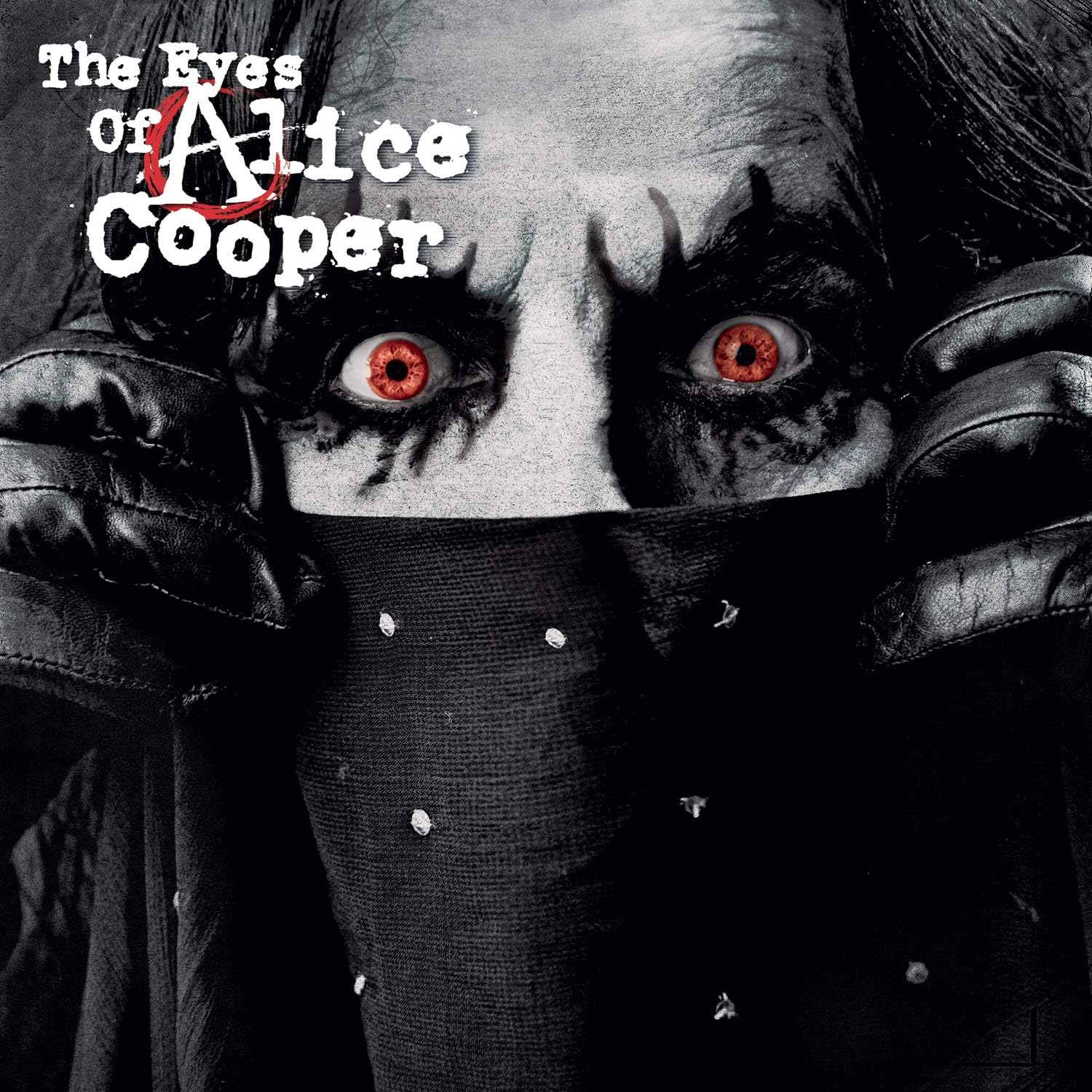
I’ve seen this one ranked near the bottom on many Alice Cooper album rankings on youtube, and really wonder why(?) I think this is a great album, full of Alice rockers and ballads, and humor! Not perfect (I can do without “Novocain”), but “What Do You Want From Me”, “Man Of The Year”, “Detroit City” (w/ Wayne Kramer), “Love Should Never Feel Like This”, as well as the ballads “The Song That Didn’t Rhyme” and softer “Be With You A While”, are good to outstanding by me. Alice uses his touring band here, without an excess of ‘guest’ players, so it sounds like a band album. The original CD release of this album came with 4 different eye (and circle) colors.
Welcome To My Nightmare (1975)
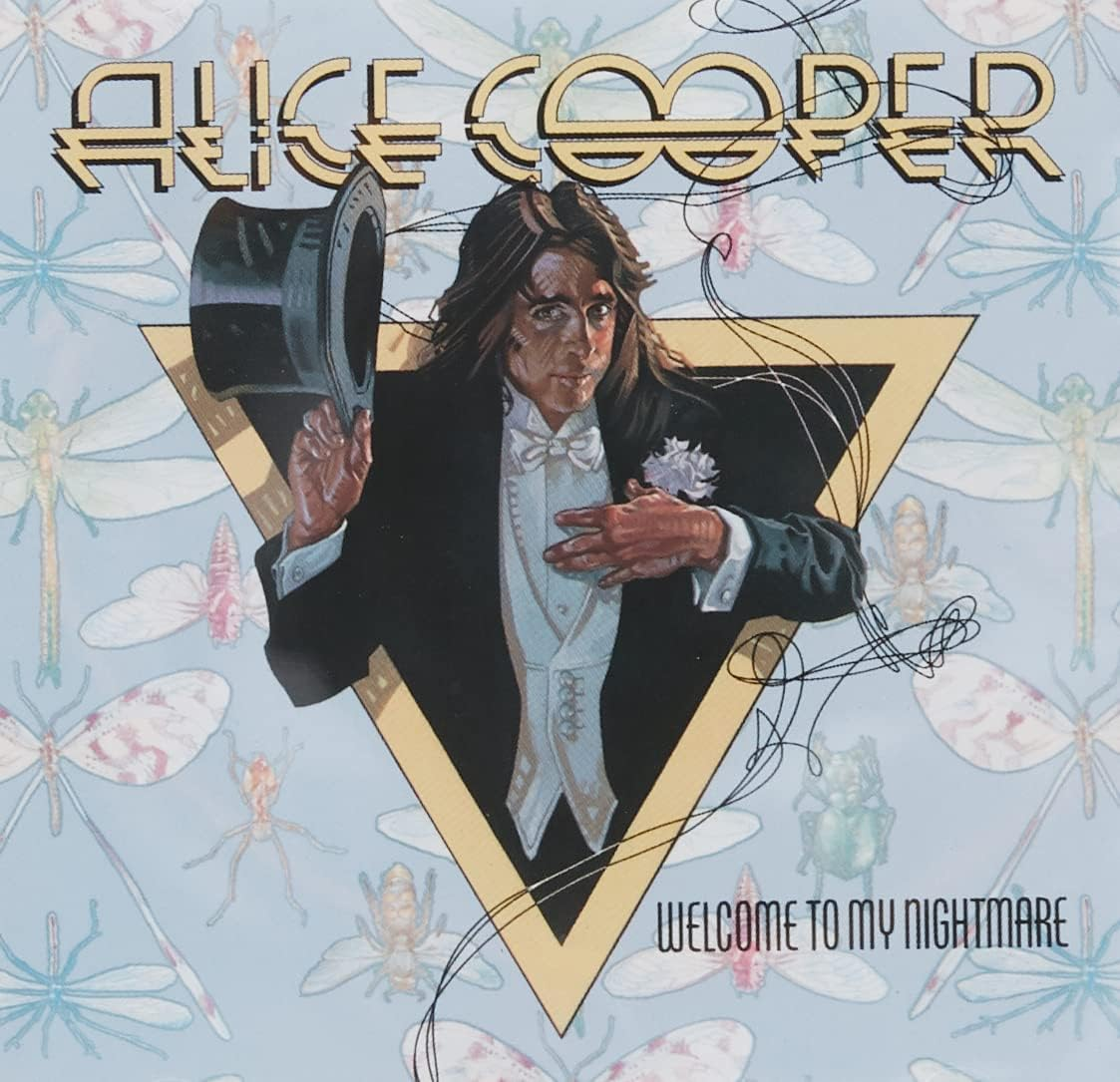
An easy favorite for most; it’s the album that started off Alice’s solo career (effectively marking an end to the original band). His Nightmare band featured guitarists Dick Wagner and Steve Hunter (as well as the rest of Lou Reed’s band), who would work with Alice for some years to come But the concept, theatrics, and songs here are just classic. This included the anthem “Department Of Youth”, the live favorite “Cold Ethyl”, the top 20 hit ballad ” Only Women Bleed”, a guest appearance from Vincent Price on “Black Widow”, the introduction of the (recurring) character “Steven”,… The album would be made into a TV special aired as Alice Cooper: The Nightmare. More recently a live show from this tour was released on Record Store Day, featuring Alice’s new band performing a set that included (almost) the entire album, as well as a few previous AC hits. Alice followed up this album with Alice Cooper Goes To Hell, which can be seen as a sequel…
Brutal Planet (2000)
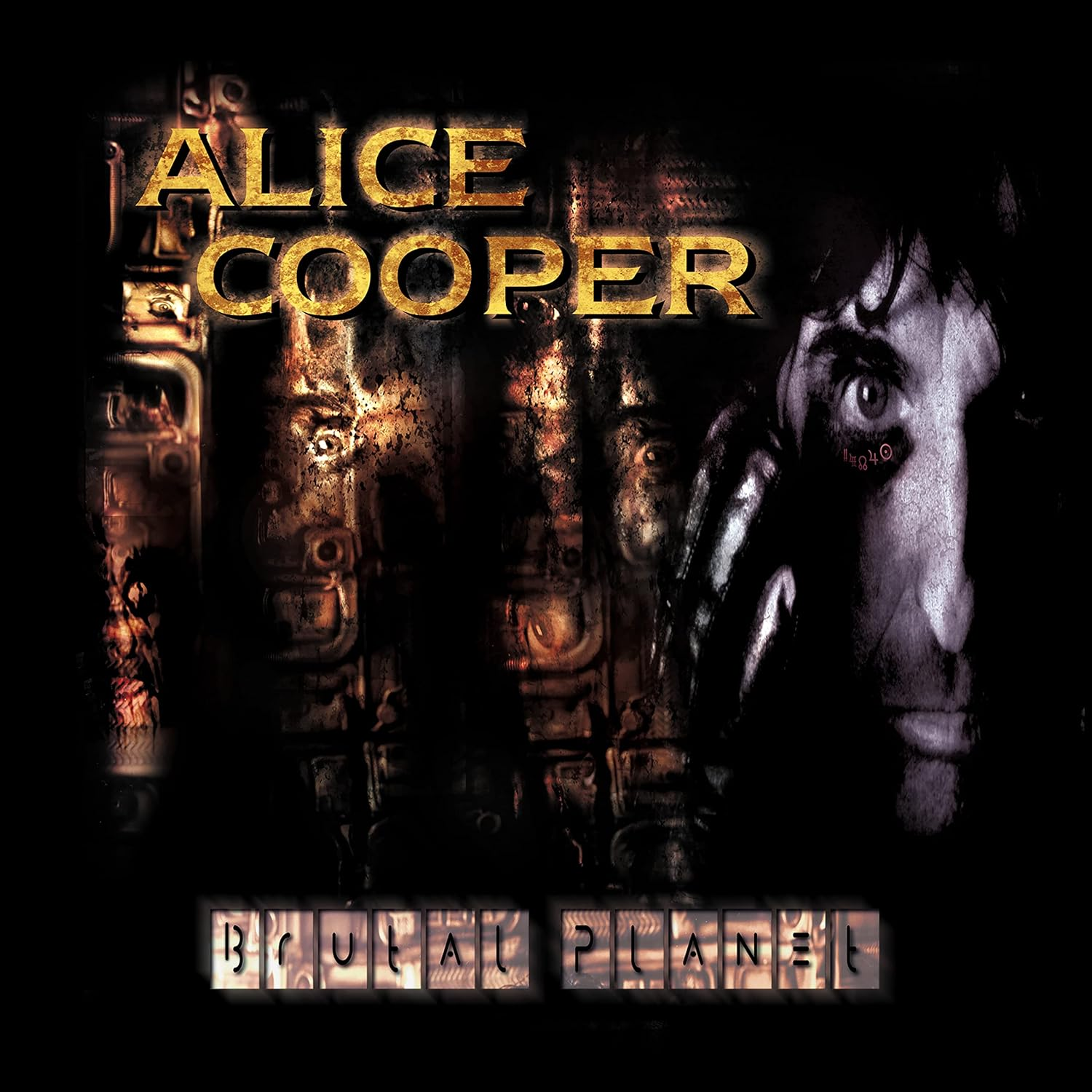
Alice didn’t record a lot during the 90s, like many other older artists, but as he tended to do ever few albums, he switched gears, creating perhaps his most ‘metal’ album this one, released in the summer of 2000. Taking in sounds of industrial or new metal at the time, with a heavier sound, and darker lyrics,, reflecting what was currently happening in music and the world. Produced by Bob Marlette, who’s credits included Rob Zombie, Marylin Manson, Rob Halford, and many others. Loved the title track, as well as favorites “Blow Me A Kiss”, “Pick Up The Bones”, “Cold Machines”, and the ballad “Take It Like A Woman”. The follow up, Dragontown, was pretty much a sequel to Brutal Planet. I liked that one too, just not as strong IMO.
Raise Your Fist And Yell (1987)
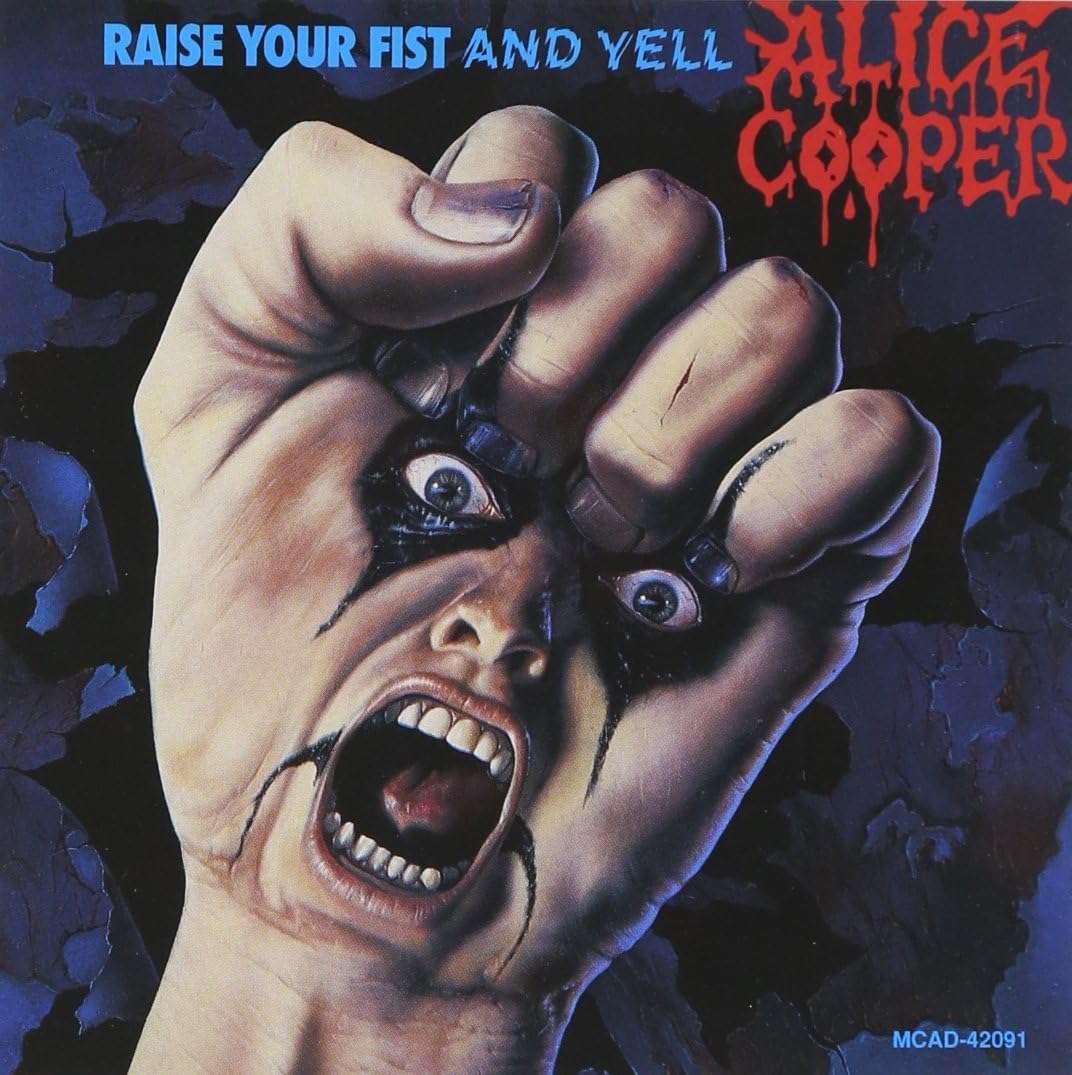
The follow up to Alice’s comeback album Constrictor. Taking on the 80s metal sound, and inspired by current happenings (the PMRC hearings), and slasher films! The second to feature Kane Roberts as guitarist and co-writer throughout. I played this album non-stop! Not a bum track here. I can still pull this out and love it. Featured the hit “Freedom”, plus “Prince Of Darkness” (from the John Carpenter movie), and favorites like “Give The Radio Back”, “Time To Kill”, and the slasher trilogy on side 2 (“Chop, Chop, Chop”, “Gail”, “Roses On White Lace”). Saw this tour twice.
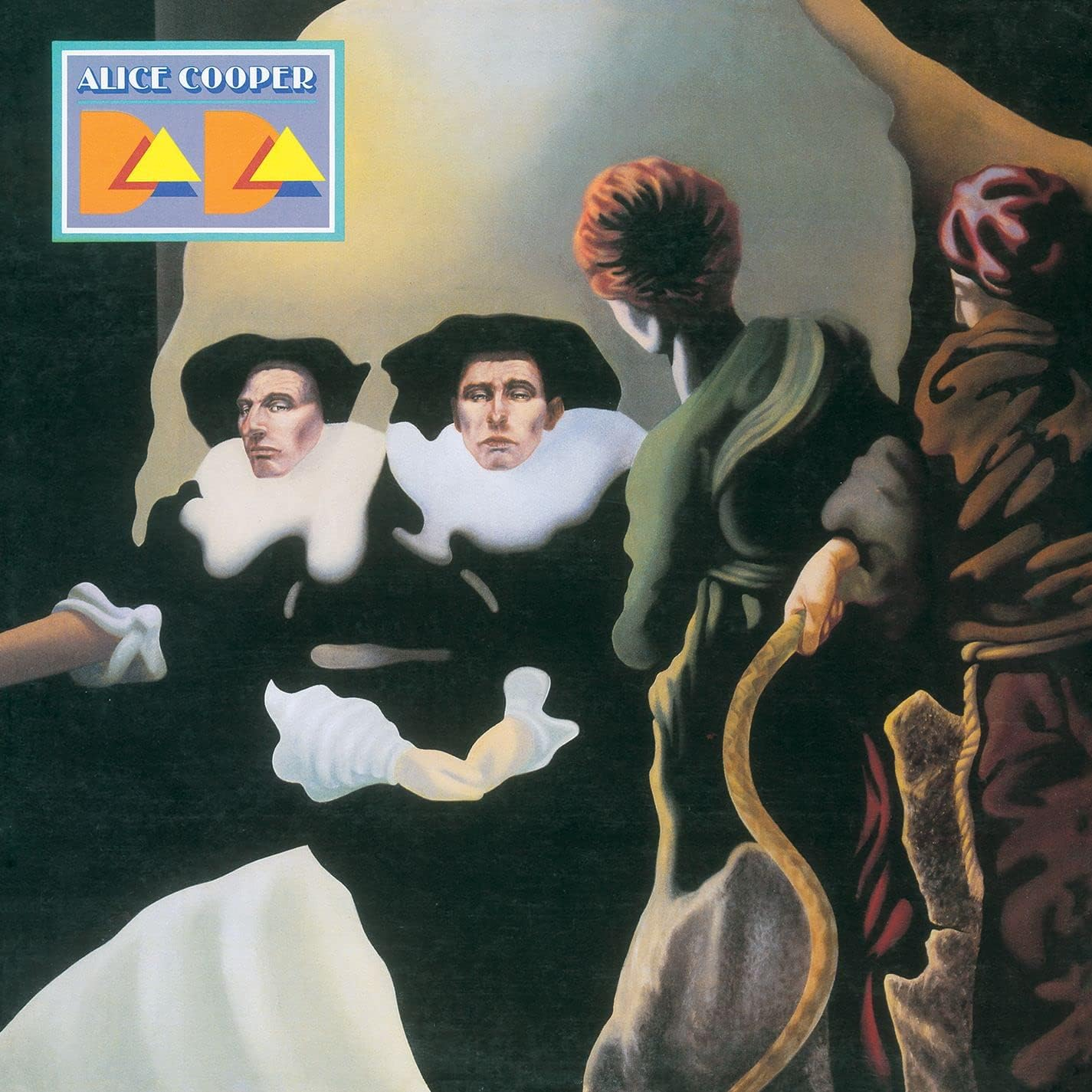
Dada (1983)
The last album in what’s been labelled Alice’s ‘blackout’ years, and his last for Warner Brothers. This, and the 1 before it sold poorly, with little promotion, and no touring. I bought this one, and the 2 before it, off the 99 cent rack at a local convenience store! But hey, these weren’t bad at all! Dada being my favorite of Alice’s early 80s 4 album run, where he changed the look and sound to fit with the times. Dada featured a fresh sound, good songs, and flow, with standouts like “Former Lee Warmer” (formerly Warner), the hilarious “I Love America”, and epic “Pass The Gun Around”, highlighted by one of Dick Wagner’s most memorable solos.
From The Inside (1978)
Following Alice’s stay at an asylum for alcoholism, he co-wrote a lot of this with Bernie Taupin (Elton John), and used members of Elton’s band, as well as the likes of Steve Lukather, David Foster… From The Inside featured the hit ballad (Alice’s 4th in a row), “How You Gonna See Me Now”, as well as memorable rockers like “Serious”, “Wish I Were Born In Beverly Hills”, and the title track, plus a few more ballads and lighter cuts. A pretty clean sounding album, featuring stories inspired by his stay in the asylum, and the effect on those around him (“For Veronica’s Sake” about his dog). A solid album. Check out the non-LP b-side “No Tricks” as well, a duet with soul singer Betty Wright.
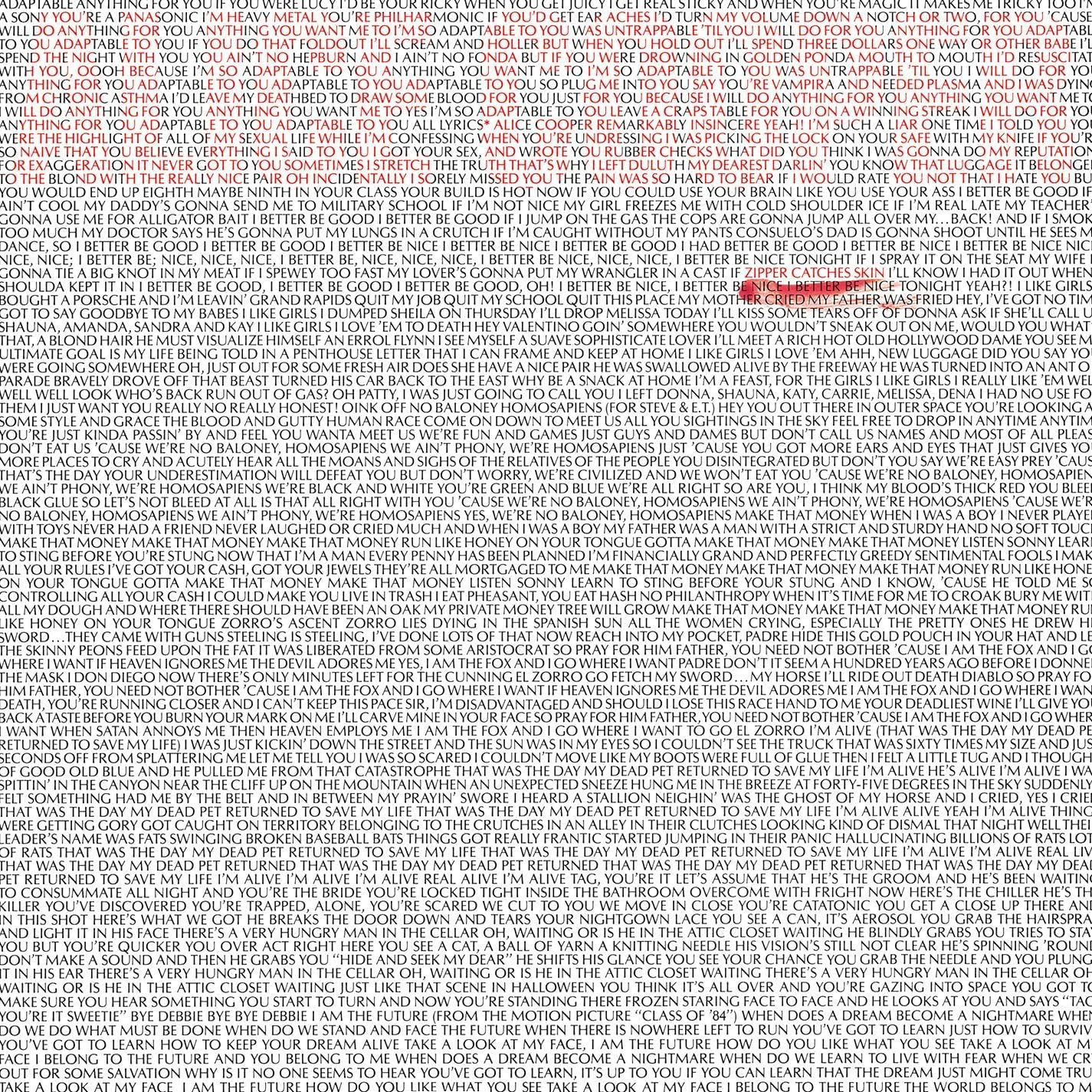
Zipper Catches Skin (1982)
See above! I played the heck out of this one. Lots of fun rockers like “Adaptable (Anything For You)”, “Tag, You’re It”, “Zorro’s Ascent”, as well as “I Am The Future” (from Class Of ’84). “Make That Money (Scrooge’s Song)”, and the hilarious title of “I’m Alive (That Was The Day My Dead Pet Returned To Save My Life)”. Featured guitarists (and co-writers) John Nitzinger, Dick Wagner, Billy Steele, as well as Mike Pinera, and players Erik Scott (bass), and Duane Hitchings (keys), among others. Wagner later claimed there was a lot of crack cocaine use on this one, but I liked it.
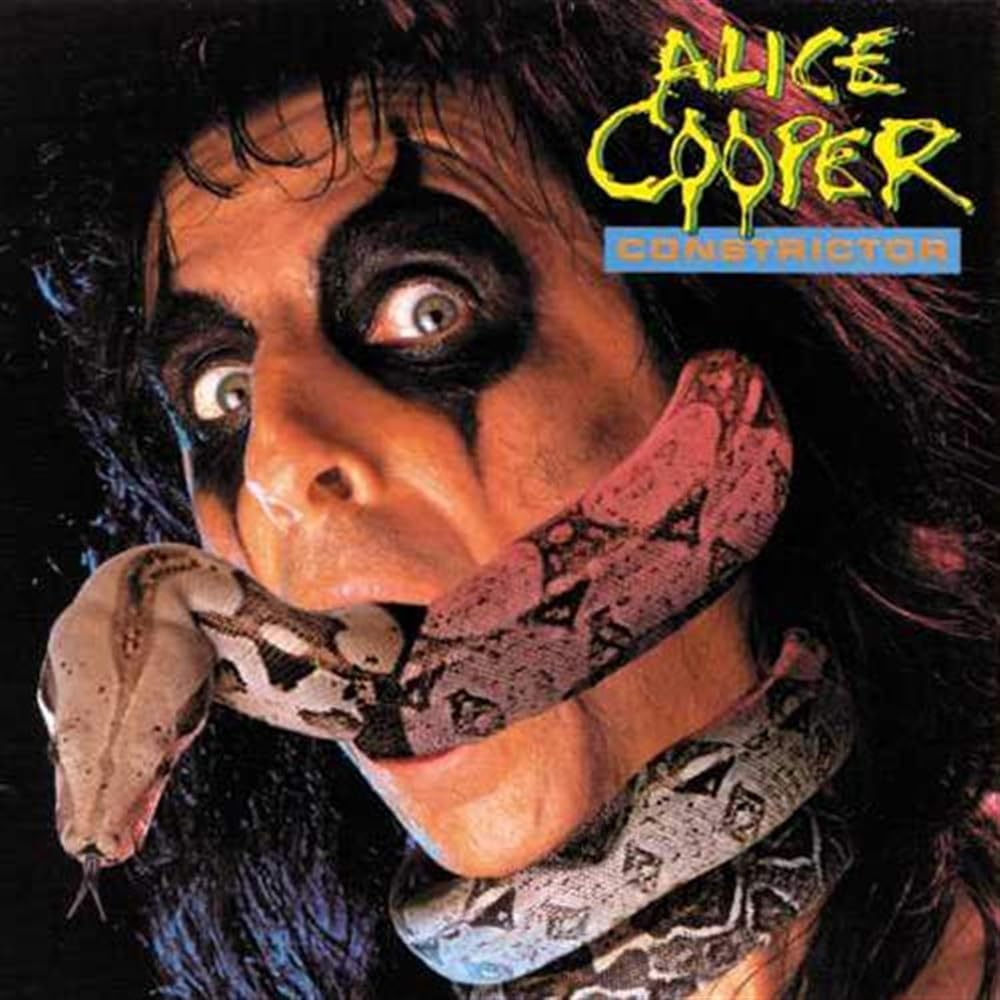
Constrictor (1986)
Alice’s comeback album, after finally kicking his previous habit (cocaine), made sober, and full of energy. The first to feature new guitarist Kane Roberts, as well as a return to a hard rock guitar sound and the classic Alice image (eye make up and leather). Produced by Beau Hill and Michael Wagener, who were big at the time with many 80s metal acts. The drum sound kinda gives this a dated sound now, but at the time, I’d never thought I’d get to see Alice (being a newer fan, and Alice being out of the public eye), but I got to see this tour. Constrictor was the first Alice album in years to chart, and get any radio play. Cuts like “Teenage Frankenstein”, “Give It Up”, and “Life And Death Of The Party” were favorites. It also included “He’s Back (The Man Behind The Mask)”, from Friday The 13th: Part VI (Jason Lives).
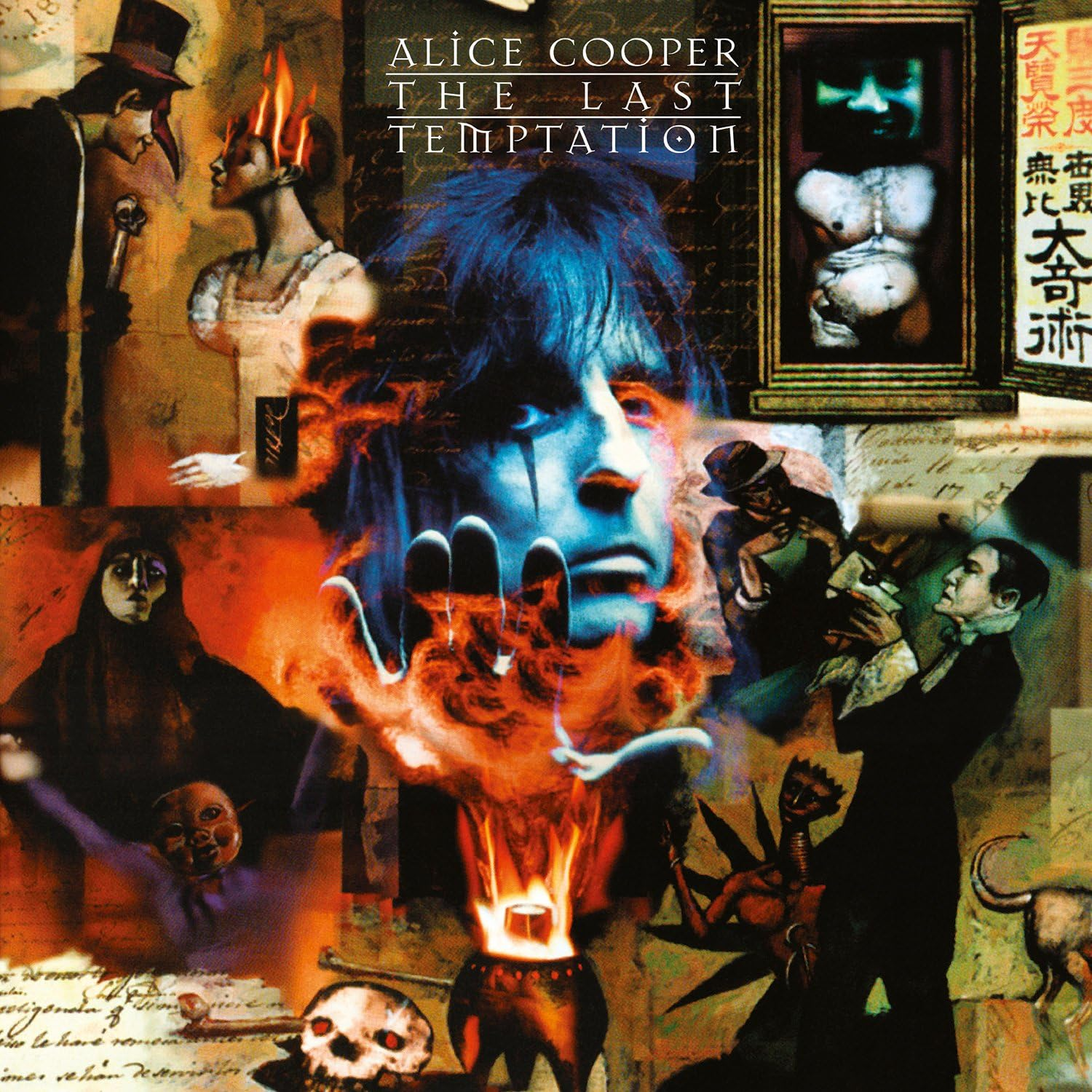
The Last Temptation (1994)
This last spot was the toughest for me to decide on… The Last Temptation was an Alice Cooper concept album, a series of morality plays….Anyway, the full story was explained over a series of comics by Neil Gaiman and Michael Zulli. The Last Temptation opened with “Sideshow”, and followed on with excellent rockier cuts like “Nothing’s Free”, “Bad Place Alone”, the title track, the single “Lost In America”, and lighter songs such as “Stolen Prayer” (co-written with Chris Cornell) and favorite “It’s Me” (co-written with Tommy Shaw and Jack Blades). The album featured guitarist Stef Burns (Y & T), as well as Derek Sherinian (keys), among others, as we as guest Dan Wexler (Icon) who co-wrote a number of songs, and played guitar on one. There was no tour for this album, but eventually a few songs were worked in to the live show. The 90s were a tough time to be an Alice fan!
And then…..Paranormal, Lace and Whiskey, Goes To Hell, Dirty Diamonds, Flush The Fashion, Trash, Along Came A Spider, Special Forces, Welcome 2 My Nightmare, Detroit Stories, Road,
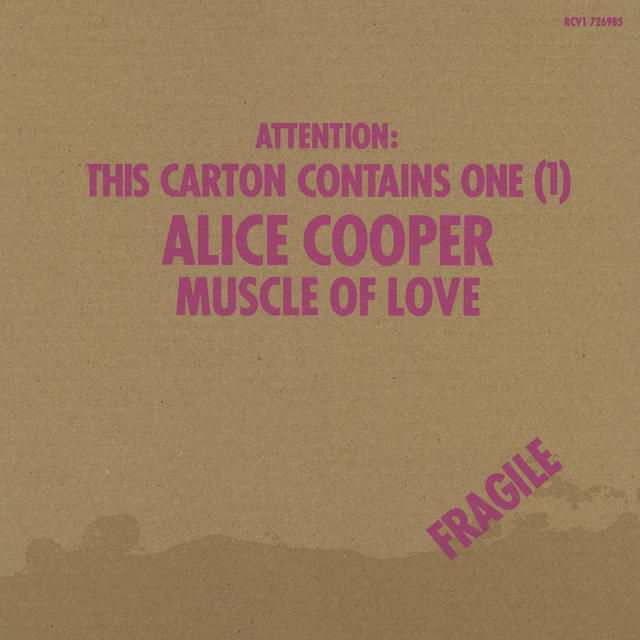
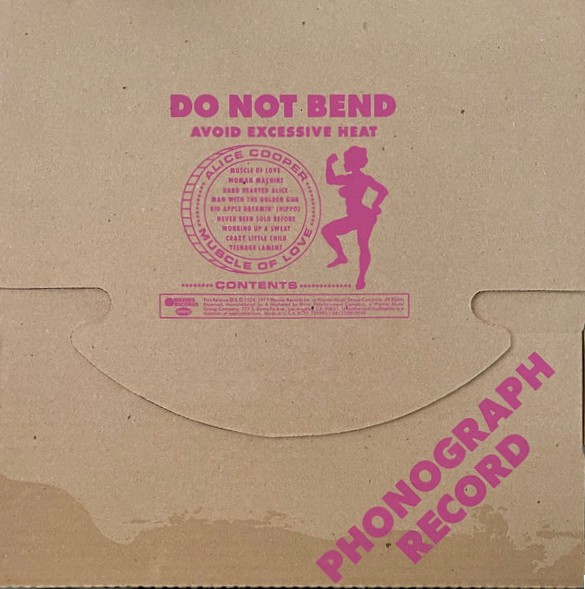
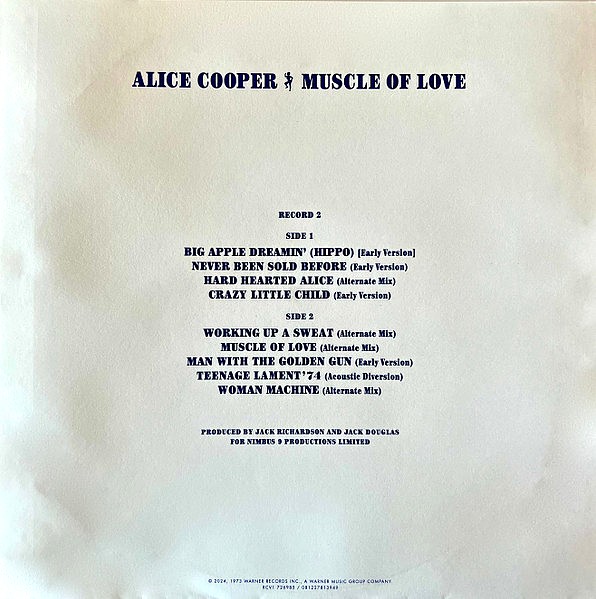
In recently interviewing guitarist MICK MASHBIR on his new album Stungout On Strings, I threw in some last minute requests for Mick’s thoughts on the bonus tracks that make up the second disc of the Muscle Of Love deluxe version. It is well known that Mick played on both Billion Dollar Babies and MOL, as well as the accompanying tours. In my 2013 interview with Mick, he discussed this more in-depth, along with his first solo album, Keepin’ The Vibe Alive. So, below are some words from Mick on the Muscle Of Love alternates and demos from 2024.
Big Apple Dreamin’
My guitar is on the left and Mike’s is on the right. We shift roles between lead and rhythm guitar effortlessly. Its great to hear Bob Dolin’s parts so clearly.
Never Been Sold Before
Mike’s guitar is on the left I’m on the right. Mike plays great subtle variations and accents. Neal and Dennis really lock in during the outro with Dennis playing alot of bass runs.
Hard Hearted Alice
Acoustic guitars add feel to the verses. This track really shows off Bob Dolin’s keyboard skills
Crazy Little Child
How a bunch of hard rockers from the desert were able to capture a New Orleans Dixeland feel amazed me.
Working Up A Sweat
Dick Wagner steps in for the solo and kills it. No “Ricky and the Red Balloon” feel on that track!
Muscle Of Love
Mike is on the right and I’m on the left and center until the ride out when Mike moves to the center to solo through the outro. Classic Neal Smith drums.
Man With The Golden Gun
Bob’s Moog and B3 parts contributed a lot of the soundtrack feel to this track.
Teenage Lament
Rented acoustic guitars were delivered to the studio from S.I.R. and Michael’s acoustic part is featured on this track. Alice’s vocal delivery was subtle but really worked well in this context as a troubled teenager.
Woman Machine
This track had a very mechanical feel..as it should. The guitars provided the groove so Neal could play a lot more drum fills during the spoken word outro.
In 2007 MICK MASHBIR released his first solo album, Keepin’ The Vibe Alive. Mashbir, from Phoenix is a guitarist/songwriter, who in the 1970s played on 2 ALICE COOPER albums, as well as accompanying tours (1973-74), as well as Alice Cooper bandmember solo projects, and later with Flo & Eddie, and The Turtles. Mick has a new album out, digitally only (so far), titled Strungout On Strings, which includes a few tracks from his previous album, a few new ones, and some written and recorded in-between. (I’m kinda hoping for a CD (:-)) in the future). You can check out Strungout On Strings on Youtube (see link at the bottom, and give the songs a like).
Can you give me the basics on your new album? (when songs were written and recorded, title…)? I notice a few titles which were previously released as singles.
STRUNGOUT ON STRINGS is a compliation of songs recorded before and after KEEPIN’ THE VIBE ALIVE was released. It is varied in styles because as a guitar player I have played many styles beyond what I did with the ACG. I released “De La Vina”, “Now” and “Bottom Feeders” after KTVA because I wanted them to be available for all to hear. My love for guitar is not about one style. The title says it all. That’s why I’m still playing. The 12 tracks are; NOW, AMERICAN WEIRDO, BOTTOM FEEDERS, POINT DOOM, BORN TO ROCK, FLOAT, HERE IN THE FLESH, DE LA VINA, 1-900-4AGOD, MEMNOCHS BLUES, COMPASSION and HOLD ON.
Are there any special guests on this one?
“Born To Rock” featured my band the YARBLES. It was recorded at the Record Plant in LA. The drums on that track are the only live drums on the album. I programmed all the drums on the other tracks.
Is Bob Dolin (RIP) on any other tracks (aside from “Hold On”)?
Unfortunately no. The upside is that it forced me to upgrade my chops on the keys.
You included “American Weirdo” and “Hold On” from your previous album. I notice that “Hold On” plays out til the end instead of fading out. Is there anything else you altered on either track? Both make great singles btw. I always thought “American Weirdo” would’ve been a cool AC song way back.
“American Weirdo” was remixed, remastered and re-released because I felt it spoke to what is happening in America today. At heart it is a blues song, relevant in the 80’s and still relevant today.
The images in the accompanying video are symbolic of the political, economic, religious and social conflicts we as Americans are experiencing regardless of our race, chosen religion or political affiliation. The video shows it all.
“Hold On” was remixed, remastered and re-released as a tribute to Bob Dolin. His piano part in the coda was cut short by the fade out version on KTVA. I thought it was important for that to be heard in its entirety. His piano in the coda was one take. His overdubs..the cellos, violins and piano took about 3 hours. Funny thing about Bob, he really wanted to be a lead guitar player. The last time I saw him perform he playing lead guitar in a cover band!
“Hold On” is a song of struggle and hope. It helped a couple of friends of mine make it thru their dark and difficult times.
Can you comment on a few of the tracks, such as “Now” (from 2013), “Here In The Flesh”, as well as instrumentals “Point Doom”, “Float” (who’s playing keyboards on this one?)
POINT DOOM is a nod to my first band The Jaguars. We were playing Surf Instrumentals in the Arizona desert. It was written in the 90’s while I was living on Point Dume’ (Doom) in Malibu, California. The video features old school skateboarding.
NOW is auto-biographical history. I had never played a solo using the whammy-bar on my Strat so that is my first attempt. The video reflects the philosophy and reality that NOW is all we really experience in our lives. The video is a psychedelic take on time.
The lyrics of HERE IN THE FLESH were written by Curt Phillips (RIP). When I first met Curt he was in an Alice Cooper cover band so I think that’s what inspired him to write those lyrics. The lead was cut in one take on my Fostek 4 track cassette deck with my 58′ Sunburst.
FLOAT was a track that I created to jam to. I played piano and B3 organ. That guitar was my first take on the first jam. I thought “this works, this is a keeper.” COMPASSION and MEMNOCHS BLUES were both done the same way with the same results.
DE LA VINA was inspired by an Ayahuasca journey in the jungles of Los Angeles. Again, the video gives a little symbolic insight to the experience.
You’ve only put this out on Youtube so far. Will it be available on other streaming services.
It is available on about 35 other streaming services, some not available in the USA. Check out: Amazon, iTUNES, deezer, iHeart Radio, Pandora and Spotify.
Will there be downloadable or physical copies (maybe in the future)?
That all depends on the reaction to the initial YouTube release.
Who created all the videos?
All the videos were created by me. I wanted SOS to be an audio/video experience and that’s why “SOS” was initially released on YouTube. The videos are very symbolic in their nature letting the viewer interpret them as they wish.
Who created the cover art for this?
I created the art as well. It’s a nod to AI. I would never use AI for music, but since I’m not a practiced visual artist, AI is a handy tool.
There’s been a lot of activity from the original Alice Cooper group these last few years, notably the deluxe reissues of albums you played on and a live album from your time with them. I notice you were included in the extended liner notes to Muscle of Love, but didn’t see much in B$Bs. What did you think about these releases?
I am not familiar with the B$Bs reissue so I can’t really comment. I was not asked to participate so no free copy for me. ..lol
How did your inclusion (interview?) come about for the Muscle of Love release?
That was because Mike Bruce put me in touch with the incredible Jaan Uhelszki (founder/editor of CREEM magazine) who was doing the liner notes. She made sure I received a promo copy. I was impressed with the remastered sound and Alice not singing in character on “Crazy Little Child” isolated vocal…a real crooner.
In the Billion $ Babies release, Michael Bruce mentions your involvement in the early stages of what became “Raped and Freezin”. Do you recall that?
It was the first song we worked on at the first rehearsal…The Latin rave up at the end was our nod to the instrumental “TEQUILA”.
Have you kept in touch with any of the AC guys in recent years?
I saw Mike Bruce about 10 years ago if that counts as recent. He is the only person in the band that made any effort to stay connected.
Have you heard the new AC band album (any thoughts on it)?
I thought the relaxed, not so polished production that killed the feel of most of ACs solo stuff, really made it sound like ACG groups early records. I notice on Wiki there were 5 additional guitar players which dissapointed but didn’t suprise me.
What else are you up to these days? (still play live much?)
I’m writing and recording new material. I no longer gig.
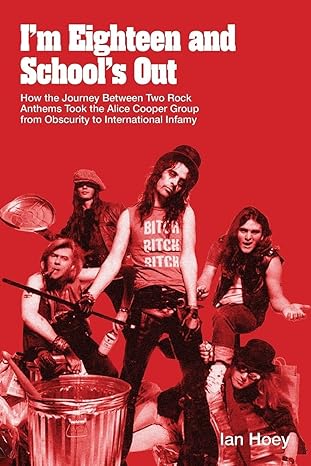
How the Journey Between Two Rock Anthems Took the Alice Cooper Group from Obscurity to International Infamy
Ian Hoey, who is a “sometime radio reviewer, writer, host & stranger in the crowd”, has authored his first book – I’m Eighteen and School’s Out, out now. The book focuses on the ALICE COOPER era from Love It To Death to after School’s Out, the albums that made such a huge impact, particularly with the anthems that title this book.
Ian Hoey: “I really wanted the added context of where they were at the time and the public and press attitudes to them as their success grew. I also aimed to write a book that would be equally entertaining and informing for people who knew next to nothing about the band and people who knew a huge amount already”.
The book pulls from online archives, and many of his own interviews. “Not just with the obvious candidates, but also people who worked for them, with them, or just happened to be around at the times some of the things were going on.”
A lot of research went in to I’m Eighteen and School’s Out through research, with another aim being to give credit to those around the band, who, according to Ian, “are often treated as minor characters in the history, or even ignored completely. Joe Greenberg and Cindy Smith Dunaway being the two main examples.”
Looking forward to reading this and talking with Ian in the near future. You can order I’m Eighteen and School’s Out on Amazon and various online shops (including Indigo).
The Alice Cooper group are one of the most influential rock bands of all time. And yet, when the histories of popular music are written, they are often in the margins or even overlooked completely. This book redresses that and puts the spotlight on their pivotal period of development from the winter of 1970 to the summer of 1972, bookended by the hit singles I’m Eighteen and School’s Out.
Containing numerous new interviews and contributions alongside detailed research, I’m Eighteen and School’s Out places the Alice Cooper story in context with the music scene of the time, paying special attention to the acts who were often considered their rivals, from Screaming Lord Sutch to David Bowie.
This is the extraordinary tale of the people who made the band what it is and how they ultimately triumphed against the odds in a most spectacular way.
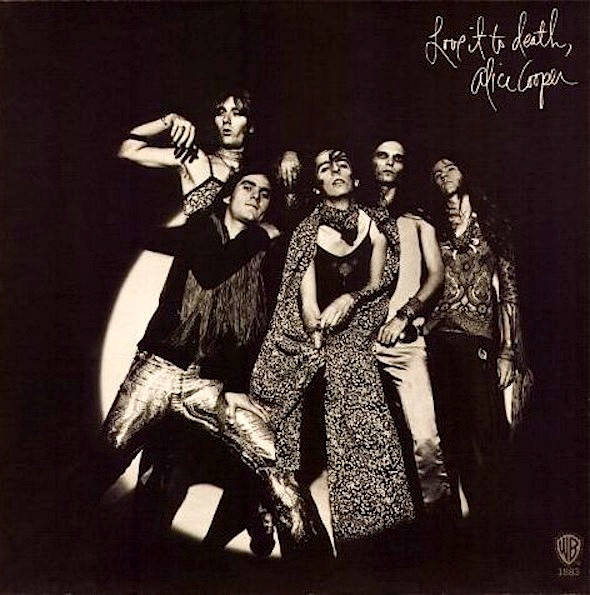
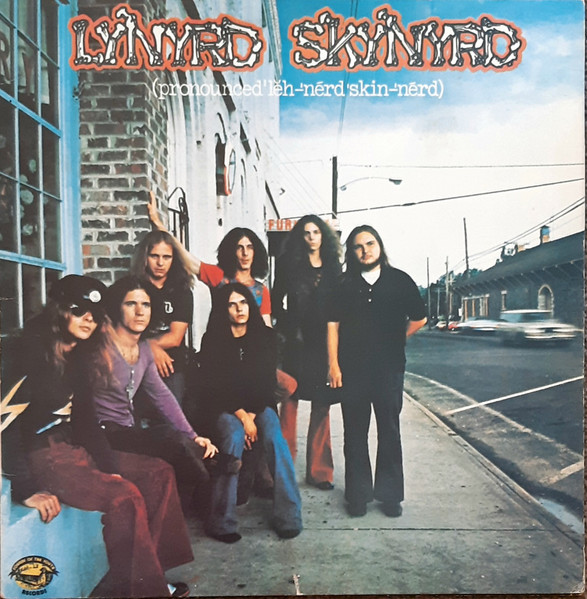
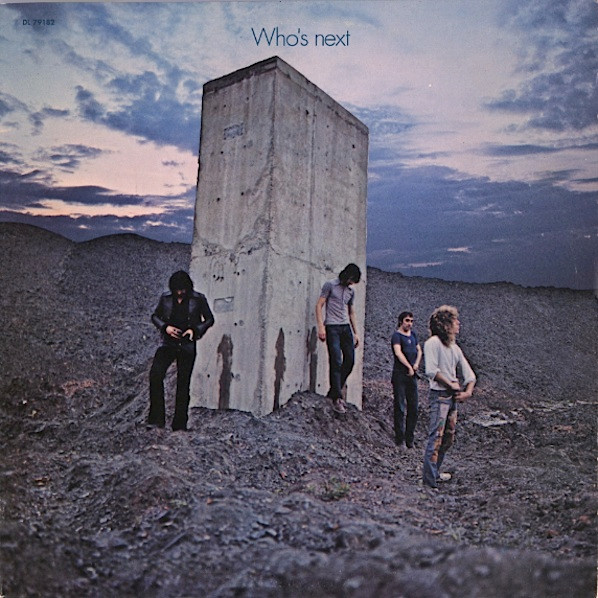
This is the first 10 I’ve selected of classic album covers that feature a photo of the band on the cover. Not all album covers featuring the band on the front cover are interesting or memorable, but I think these 10 are a good start. If you have any suggestions for the next 10 (or further), let me know in the comments. (Actual photos, not drawings or separate photos put together).
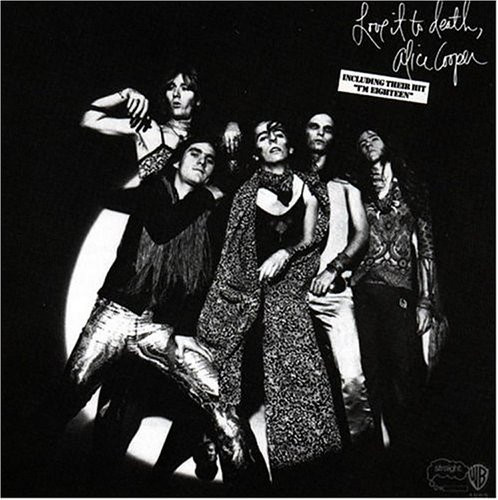
Alice Cooper – Love It To Death (1971)
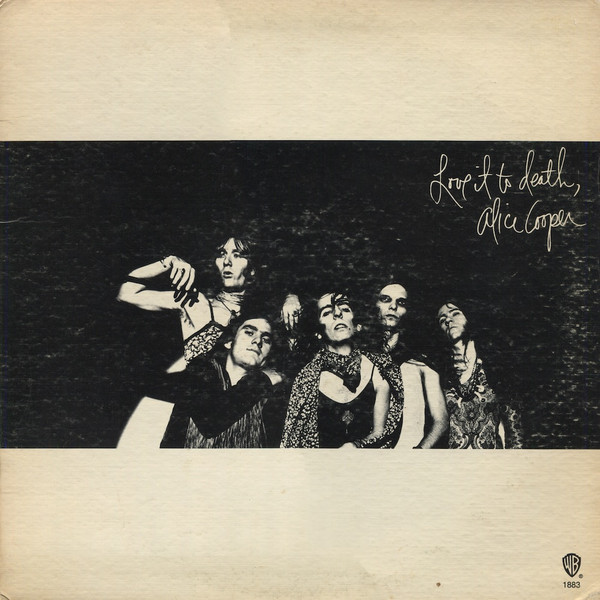
One of 2 early AC album covers that featured the band on the front cover, and really, what inspired me to start this list. Released in March of 1971, and featuring the band’s breakout hit “I’m 18”. This came in a black & white gatefold sleeve, with the band on the front, photographed by Roger Paul Prigent, who also shot cover photos for Nancy Wilson (jazz singer) and Barbara Streisand. A classic shot, with the band around their lead singer, in cape, with a black backdrop lit up with a spotlight. The cover shot originally saw Alice sticking his thumb out of above his cape, which some took as an obscene gesture, thus subsequent reprints air-brushed out the thumb or cropped it out.
The debut album from Southern rock’s greatest band. This album featured classics – “Free Bird”, “Tuesday’s Gone”, “Simple Man”… The cover photo taken on Main Street, in Jonesboro, Georgia, after a day of photography (other shots used for publicity). A casual shot of the band on the sidewalk, against a local business, was taken by the photography team of Emerson-Loew (Sam Emerson, Anthony Loew).
The Who –Who’s Next (1971)
My favorite Who album, and arguably their best, with “Baba O’Riley”, “Won’t Get Fooled Again”, “Bargain”, “Behind Blue Eyes”… This classic cover shot taken of the band, by Ethan Russell, who’s cover photo credits include The Beatles, Spooky Tooth, and Burton Cummings, among others. I’ve added a link to the story, as told by Russell below. https://www.loudersound.com/features/album-artwork-the-who-whos-next
Beatles – Abbey Road (1969)
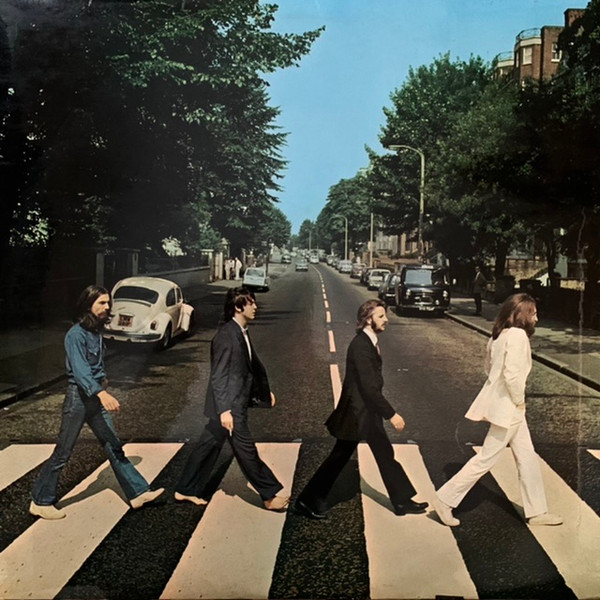
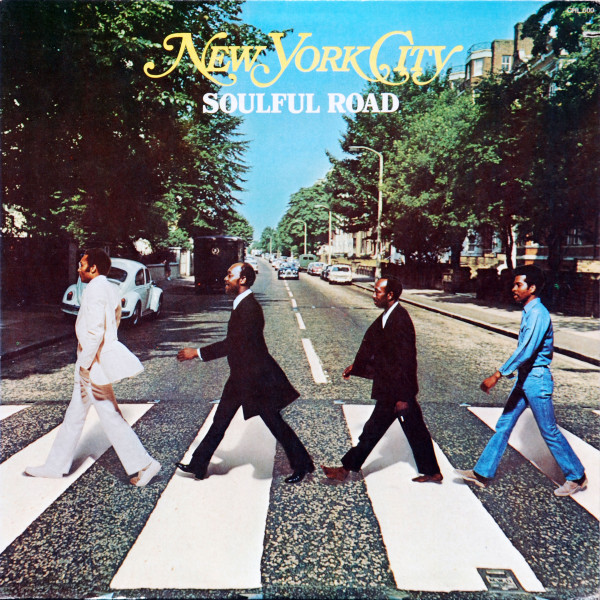
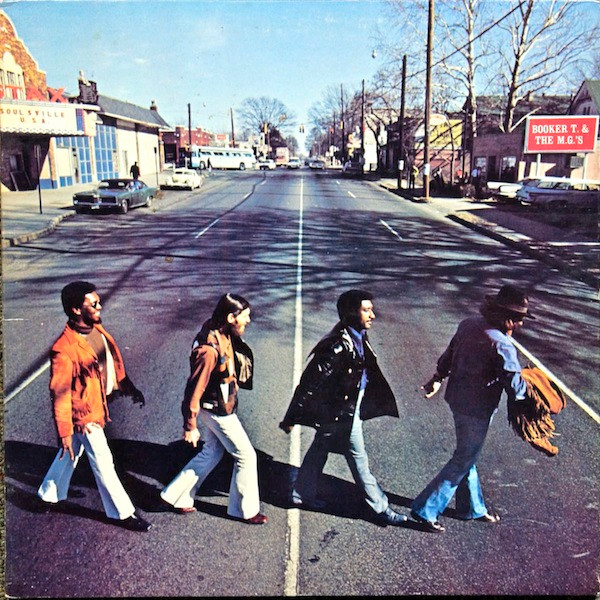
The Beatles iconic cover, a photo of the band on the cross-walk, in front of Abbey Road Studios. Taken by Scottish photographer Iain Macmillan, who only took a half dozen of the band, in a short period of time, as it was a busy roadway. Macmillian also took cover shots for John Lennon, Yoko Ono, Kenny Rogers & The First Edition. The Abbey Road photo was also recreated by the band New York City, Soulful Road, 1974 (also by Macmillian), as well as Booker T & The MGs, McLemore Avenue (the band’s 1970 album that covers the songs on Abbey Road). The crosswalk is a popular place apparently for tourists to be photographed at as well. *I’ve added a link to an in-depth feature on the album cover, as well as a link to the outtakes.
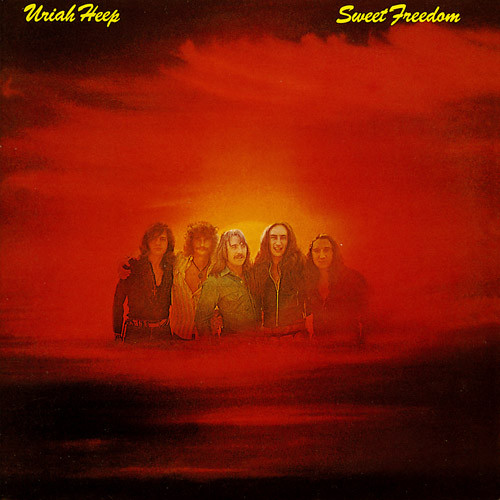
Fin Costello photographed URIAH HEEP a number of times over the years, notably for the Live January 1973 insides, which in turn inspired the KISS Alive packaging. The Sweet Freedom cover, by the legendary Peter Corriston marked a new beginning for the band, having switched to a new record label, as well as getting away from the fantasy themes of their previous 2 albums. Costello took this cover shot at the Chateau in France, (where the album was recorded). Note Lee Kerslake’s left arm hidden behind Ken Hensley, as he had an injury, and Mick was actually holding it up,
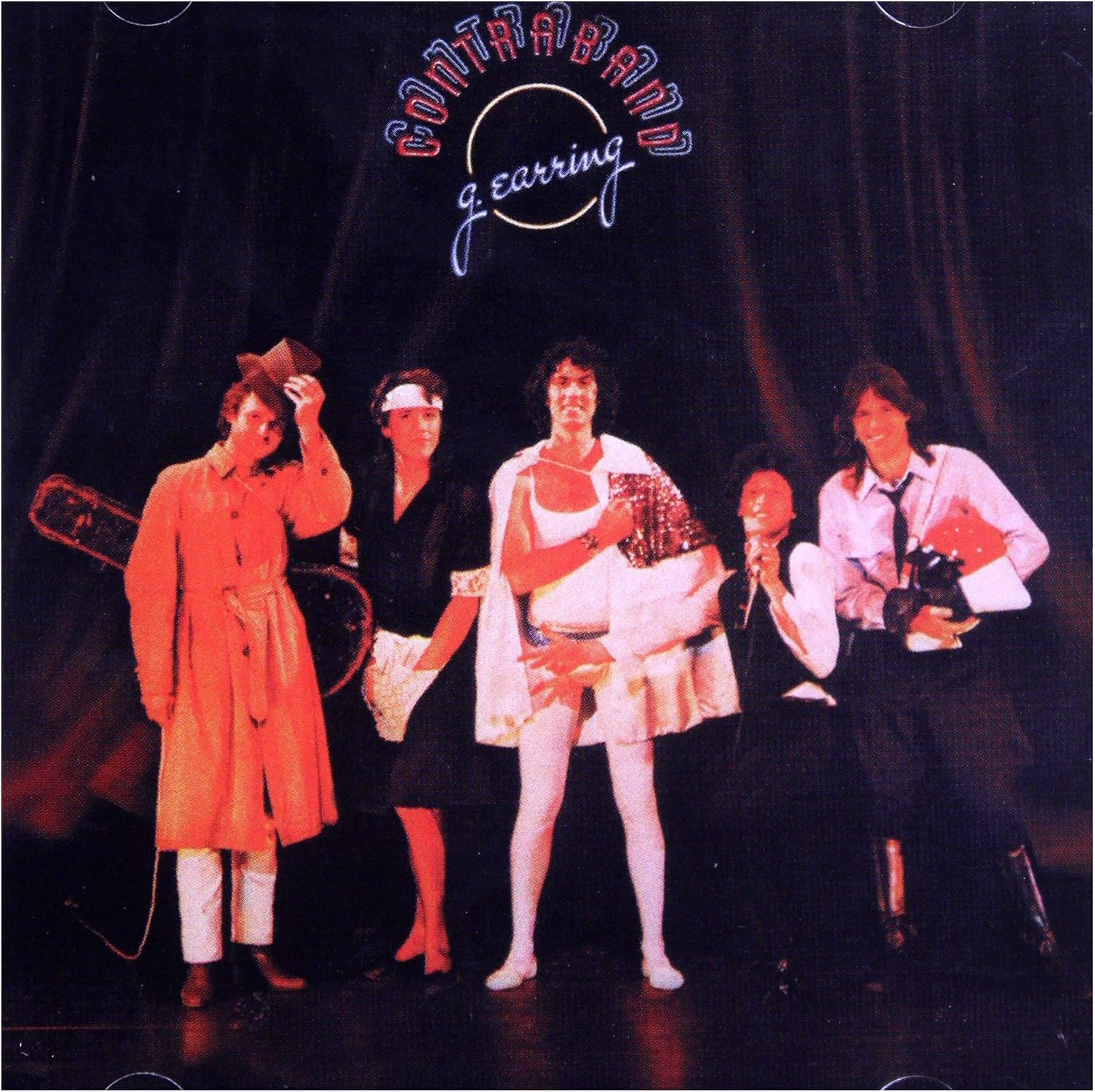
Golden Earring – Contraband (1976)
Contraband was the Dutch rockers 12th studio album, as it preceded the classic double Live album. It was the band’s lowing charting album in their homeland since the 1969, but still making the top 10 there. Included the hit “Bombay”, as well as classics “Fightin’ Windmills” and “Mad Love’s Comin'”. The cover photo of the band’s 5 piece line-up, which included guitarist Eelco Gelling, was taken by the legendary Dutch photographer, Ronnie Hertz (RIP, 2024). Hertz had photographed the band for their 1969 album On The Double, as well as photographing the model for the classic Moontan cover. Not totally sure what’s happening here, with bandmembers all decked out in different costumes, making for an odd ‘band’ photo. Released in Canada and the US as Mad Love with a totally different cover.
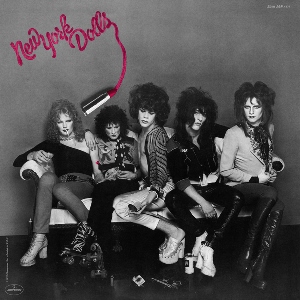
New York Dolls – New York Dolls (1973)
The debut album from the NEW YORK DOLLS. These guys pre-dated the likes of KISS and TWISTED SISTER with the trashy outfits and make-up, as is here on the cover, taken by Toshi Matsuo. Must’ve been a shocker for that era. This album would feature the band’s 2 best known songs – “Looking For A Kiss” and “Personality Crisis”.
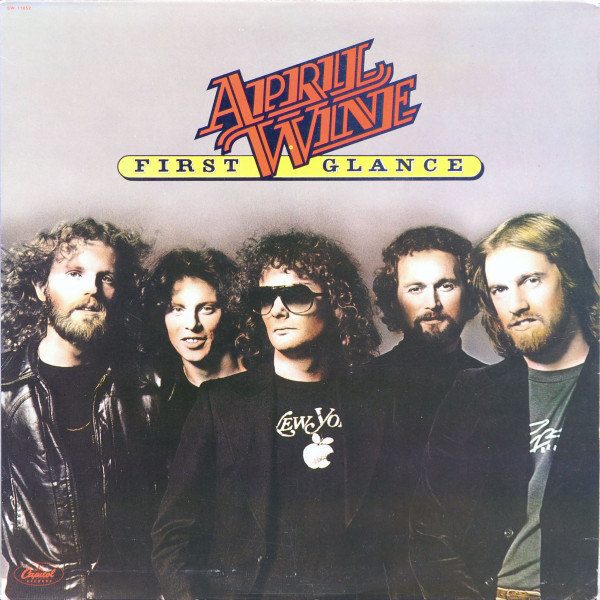
April Wine – First Glance (1978)
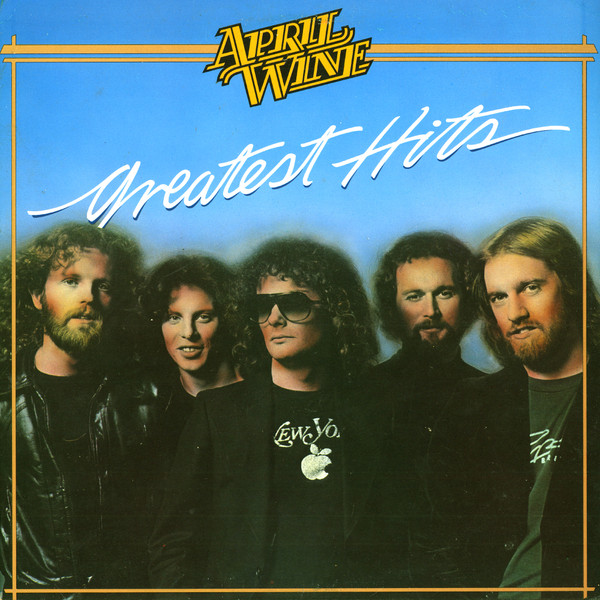
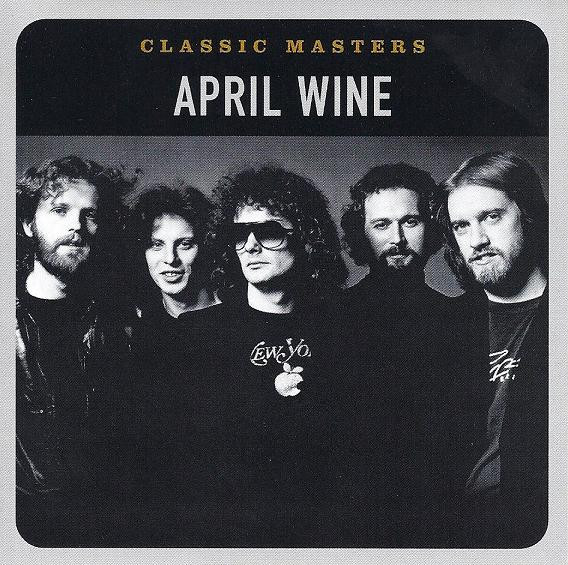
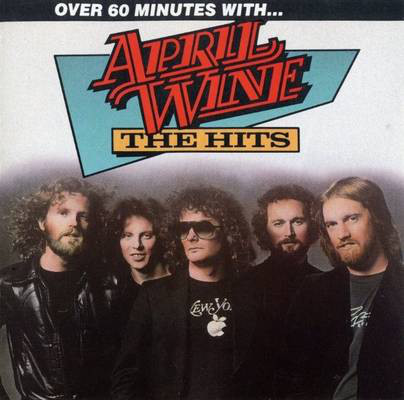
Canada’s APRIL WINE had already had a number of hits here before their US (Capitol) breakthrough album First Glance, which included the hit “Roller”. And while the Canadian (Aquarius) version of the LP featured artwork done by the label’s in-house artist (Bob Lemm), who had done most of the band’s previous covers, the US version featured the classic debut shot of the new 3-guitar line-up, having recently added Brian Greenway. The same cover photo would be used by Aquarius for the band’s Greatest Hits album, as well as later CD compilations.
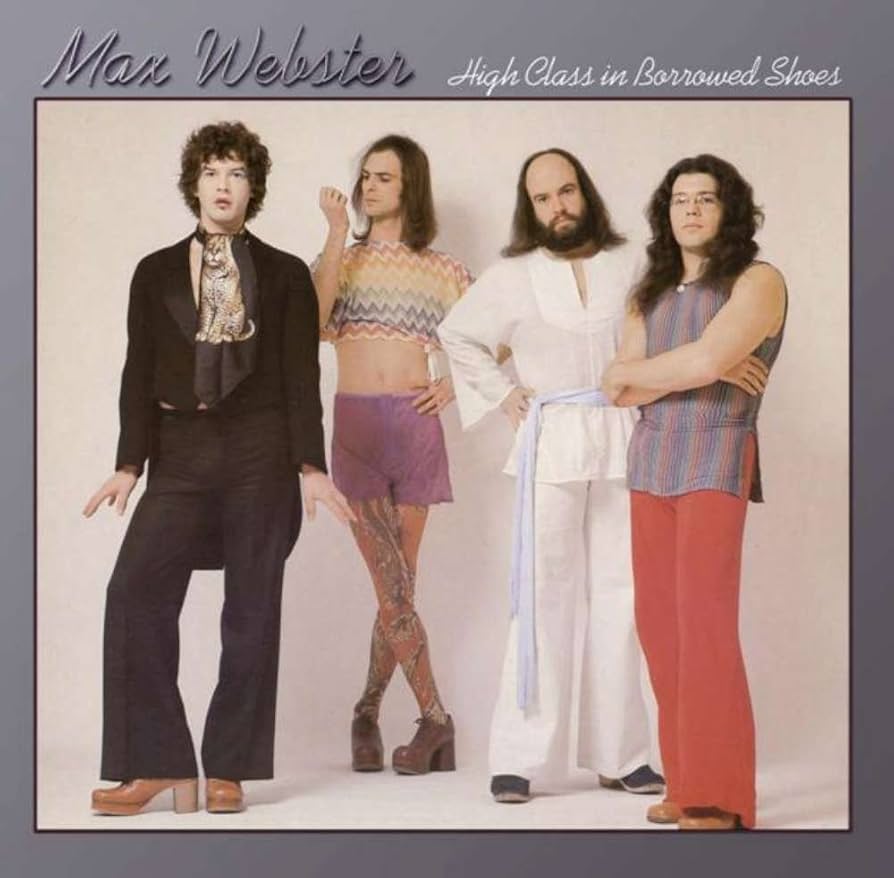
Max Webster – High Class In Borrowed Shoes
One of Canada’s most underrated great bands of the 70s. This is MAX WEBSTER’s 2nd of a 6 album run in that decade. High Class In Borrowed Shoes would feature the hit “Diamonds Diamonds”. The cover was a design by Bob King and Hugh Syme (who also worked on a few Max Webster labelmate Rush covers), with photography by David Street. It’s the cover photo, with each bandmember dressed so oddly and different to one another, that makes a huge impression here.
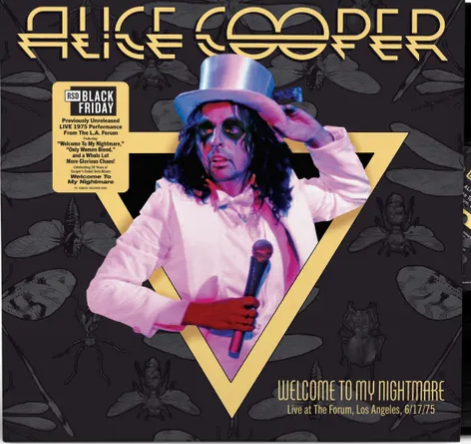
In celebration of the 50th Anniversary of Alice Cooper’s debut solo record Welcome To My Nightmare comes this previously unreleased live show from the Forum, recorded June 17, 1975. The tour was categorized as one of the most over-the-top excursions of the era. From Rhino, 11/28/2025
Tracklist SIDE ONE: 1. Welcome To My Nightmare 2. Years Ago 3. No More Mr. Nice Guy 4. Years Ago 5. Billion Dollar Babies 6. Years Ago 7. I’m Eighteen SIDE TWO: 1. Years Ago 2. Some Folks 3. Cold Ethyl 4. Only Women Bleed SIDE THREE: 1. Devil’s Food 2. The Black Widow 3. Steven SIDE FOUR: 1. Welcome To My Nightmare (Reprise) 2. Escape 3. School’s Out 4. Department Of Youth
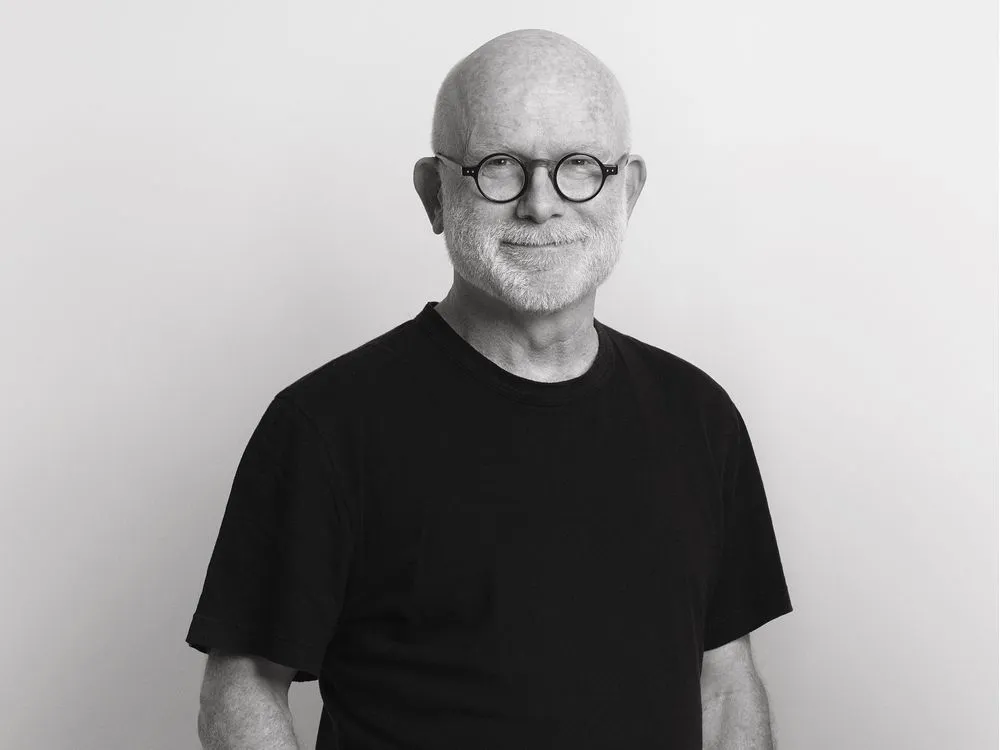
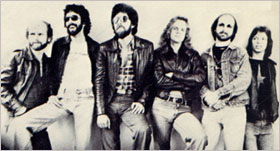
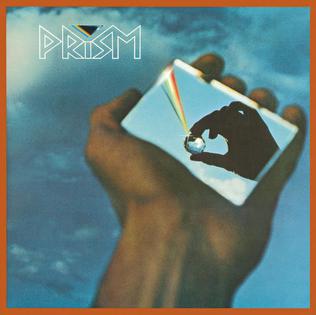
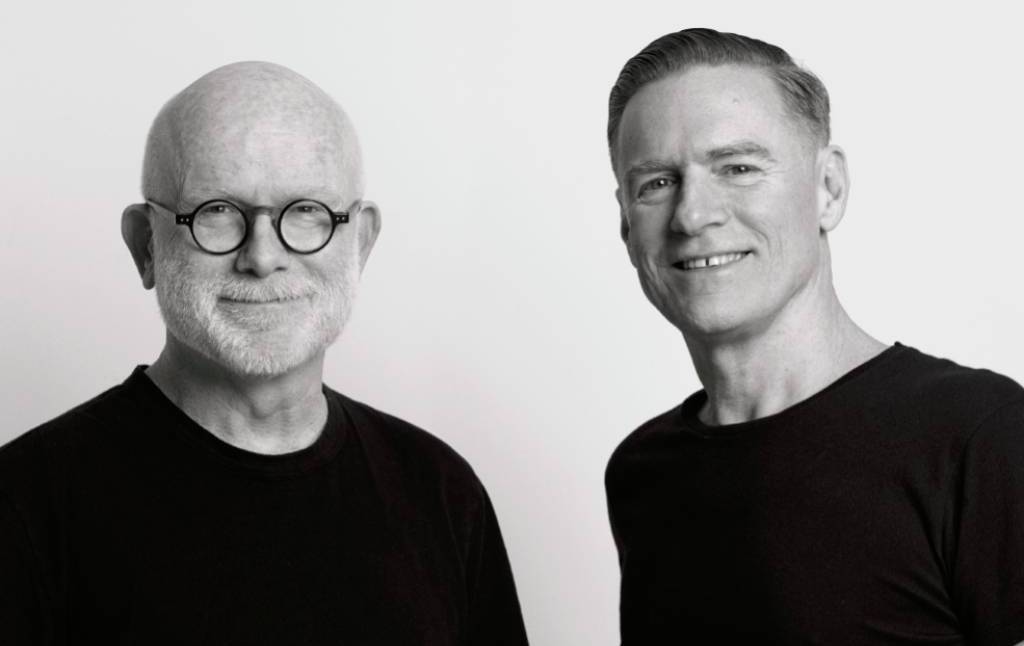
Canadian songwriter JIM VALLANCE came to be a big name in the 80s as Bryan Adams writing partner. Vallance however, had been writing songs in his teen years. In the mid 70s he joined a band that would become PRISM, as their drummer and main writer on the band’s debut album, under the pseudonym Rodney Higgs. After leaving Prism, he wrote songs for BTO, and met a young musician & writer named Bryan Adams. He co-wrote with Adams throughout much of the 80s, as well as writing (or co-writing) hits for numerous bands & artists over the next few decades, including Loverboy, Aerosmith, Ozzy Osbourne, Rick Springfield, Alice Cooper, and Scorpions. His name is on plenty of massive hits, huge selling albums, Juno awards….. This interview kinda scratches the surface of Jim’s history and some of the music he wrote and artists he wrote with. When our conversation was done I had a 1001 more things that came to mind! But Jim Vallance has loads of amazing stories and recollections, and I am thankful he shared some here. Enjoy the read.,
*Check out www.jimvallance.com for more on his history in the music business, stories, and lists of songs and artists Jim is connected to.
You have a long relationship with Prism, and then a bit with BTO, and then Bryan Adams, obviously. But you were in groups, and you were a musician before you became more known as a writer, correct?
Yeah, I started playing in bands when I was 13, and all through school, pretty much every weekend, I was playing a dance or something.
And then when I graduated grade 12 in 1970, I didn’t have any interest in college, but my parents insisted I go. So, I did one year of college, and then after that, I just started playing with bands again. I was living in Vancouver, Canada, and there was a very robust club scene at the time.
There were probably 20 clubs in and around Vancouver, and let’s say 20 bands. And so, each band would do a week at a club and then move to the next club. We just all did the same circuit with the same booking agency.
And around and around you’d go, year in, year out, six nights a week at these clubs. I did that for a bunch of years in the early to mid 70s. And then I was lucky enough to start getting some session work. Mostly playing on McDonald’s commercials and that sort of thing, just music for advertising. I did that for a few years. And that’s around the time I started writing songs and joined this Canadian band called ‘Prism’. That would have been mid to late 70s. We got a record deal, made an album and had a bit of success in Canada, but not much else. We didn’t really make any waves outside of Canada.
Vancouver and Toronto must have been the two biggest spots I can see as far as, because I’m in Niagara Falls, so I think Toronto and Vancouver seem to be the biggest kind of center for bands, Canadian bands when there’s, you know,
A couple of exceptions like April Wine, I think were from Montreal. But yeah, for the most part, it was Vancouver and Toronto.
And you had tons of bands come out of there, other than obviously – Loverboy and all the bands that came before and after them that were connected.
The Payolas, and BTO – even though they were originally from Winnipeg, pretty much launched out of Vancouver because their management was Bruce Allen. So, they were West Coast based.
Now, before you got into like with the Bryan Adams stuff, how did you get into songwriting specifically as opposed to just when you dropped out of bands and that? When did you decide sort of to drop out of the playing-performance part of it and just stick to songwriting?
Well, I had been writing songs since maybe I was 16 or 17.
I didn’t have any place to go with them, but I was writing anyway and just, putting them on a cassette tape and that would go on my shelf somewhere. So, when Prism got a record deal and the record started to get some chart action in Canada, and again, a little bit in the USA, we started doing a bit of touring to promote the record. I remember we opened some shows for Heart, who had just started to have some success with their first album, Dreamboat Annie. And we opened some shows for Foreigner, who were also just coming out of the gate with their hit “Feels Like the First Time”. And so that was my first experience touring. Because we were the opening act, there weren’t many perks; it was five guys in a rental car eating microwaved tacos at gas stations. That was kind of our life, staying in cheap motels, two guys to a room. After that tour, I really decided that that was not my calling; that’s not my idea of a good time. I quit the band as a player, continued writing, but pretty much after that, I was no longer a band member and just concentrated on writing. And that’s also around the time I ran into Bryan and met him for the first time. He and I started writing and after that, that’s all I did.
You guys had a number of songs on that BTO album, which I have here somewhere. I did put together a bunch of albums. The second one that had Jim Clench.
That’s right.
And Bryan would have been very young at that point, correct?
Well, he was 18 when I met him in January 78. And then it was into 1979 when I was working with BTO. So, Bryan would have been 19. He contributed a song that he wrote called “Wasting Time”, I think.
He wrote that on his own and BTO recorded that. I wrote two songs. One was called “Rock and Roll Hell” and the other one was called “Jamaica”. And those were both on the BTO album also.
That’s an interesting album, obviously because Randy Bachman was no longer there. What was your connection to, I guess, you ended up writing for certain bands? Did you have a connection to them? Or was it more so just the producers?
In the case of BTO, Bruce Allen had managed Prism, and he was managing BTO also. So that was kind of my connection to BTO.
That’s how I got put together with that band. It was through the management.
And then you and Bryan just kind of rolled on from there?
And then by this time I’d met Bryan and he and I were writing. I pulled him into that project as well.
From there, you did a lot of Canadian stuff for the longest time, Canadian bands. One thing you did do, you did some Toronto stuff. That was fairly early on, 1982.
Yeah, there you go. 1982. I can’t remember how that came about. I think I got a call from their record company asking me to write with them.
I’m not sure how I came to be in that, with that connection, because I didn’t really have any ties to Toronto, the city or the band. But I did go back and wrote some songs with Brian Allen and Sheron Alton, the two guitar players in the band. I can’t remember how many songs I wrote with them.
I think there was four or five over this album.
Yeah, four or five. And one in particular, I remember it really clearly.
They were really nice. They were a couple, Brian and Sheron. I remember going over to their house one night in Toronto and they made a nice dinner.
And then after dinner, we went downstairs, they had a studio in their basement. As is the case with so many songs I’ve written, when you go in a room with another writer or another couple of writers, kind of the first thing someone says is ‘do you have anything? Do you have any ideas?’ And on this particular day, I had an idea. It was very minimal. There was almost nothing to it. It was really just a title. And I said, ‘Yeah, I have a title.’
“What About Love” And I said, and ‘I have sort of a melody idea, but it’s just one note. Sort of like John Lennon with “All You Need Is Love” was just one note.’ So, they thought that was okay.
We started working on it. And in my experience, it’s one of the fastest songs I’ve ever been involved in writing. I think by the end of that evening, we had the song finished. We each contributed equal amounts of lyric and melody. We just bounced ideas back and forth between the three of us. I remember one particular line that I thought was really good; I think it was Sheron’s idea – “I can sell you what you don’t want to buy.” I thought that was really good. So, by the end of the evening, we had this song called “What About Love”. And a few days later, we went into the studio, and the Toronto band recorded it. For some reason, the drummer, Barry, who was a really, really good drummer, for some reason, he didn’t think he could capture the feel. So, I ended up playing drums on the recording.
Fast forward a few more weeks, and it’s time to choose 12 songs for the album. I think there were 20 songs to choose from by this time. And the band voted. and “What About Love” was not one of the songs they chose. So, it ended up just ended up on the shelf, I mean, literally forgotten.
Because I hadn’t written it in my studio, I didn’t keep a copy of the tape. Brian and Sheron somewhere have a cassette tape with our original writing demo. But to this day, I don’t.
I think it came out as a bonus track somewhere.
It did further down the road, but at that time, 1982, it was a reject. The song disappeared, and I forgot about it because I didn’t take a tape home with me. I completely forgot about that song. Three years later, 1985, my phone rings and it’s Don Grierson, who’s the head of A&R Capitol Records in Los Angeles.
And he says ‘Hey Jim, congratulations, you’ve got the first single on the new Heart album!’ And I said, ‘What song is that?”’ And he said, “What About Love” And I said ‘How did you find that song?’ …You know, how did that song come to your attention? Anyway, long story short, what had happened is Toronto’s label, Solid Gold Records went bankrupt, and their entire publishing catalog, all their songs were acquired by EMI Publishing in Toronto. At EMI there was a fellow named Mike McCarty, and Mike went through every song in the Solid Gold catalog, whether the song had been recorded or not, and he found “What About Love”. And he thought it was really good, so he sent it to Don Grierson in Los Angeles. Don Grierson sent it to Ron Nevison, who was producing the next Heart album. Ron Nevison played it for the Wilson sisters, Ann and Nancy. And I didn’t know, I heard the story 20 years later. I finally heard the story, how when he played it for them, they hated it!
Ann said, ‘We’re not going to record this song’, and apparently Nancy even got up and walked out of the room and said, ‘No way! we’re not doing this song’. So, Ron said, ‘Okay, wait a minute. I’ll make a deal with you. Let’s record the song. If you still hate it, I promise I won’t put it on the record’.
So, I guess they recorded it. They must have ended up liking it. And it ended up being their comeback single, because they had a couple of albums that hadn’t sold very well. The record company was going to drop them if they didn’t have a hit. So, this ended up being the hit that they desperately needed.
Yeah, because when they came back, they were using a lot of outside writers and stuff for most of those albums from then on.
“These Dreams” was written by Bernie Taupin.
A lot of people that don’t know that, right!? Especially the Toronto connection. I didn’t know that till about 10 years ago when I picked up the Toronto CD that was on it.
So do you get much in the way of requests like from artists that specifically come to you and say, you know, ‘we’re looking for something specific’ or people that come to you and say ‘we want to write with you’…How does that whole process work?
It’s the only way it works. I’ve tried again and again over the course of my career, even after I’d a bit of success to write a song and send it to somebody. And it, it never works out. I can’t think of a single example of doing that and having the song recorded. It seems to me the only way to get a song on an album is if the artist or the manager or the record company or the publisher approaches you with a request. So that was really how my songwriting career unfolded and continued through the eighties and nineties and 2000s was just, waiting for the phone to ring and, it was exponential.
Once I had one hit song, then two people call you. And once you have two hit songs, four people call you. And the next thing you know, the phone’s ringing all the time. As a consequence, I was very, very busy for a couple of decades writing with hundreds of different artists.
Well, going through this stuff, like just now, I’m a big fan of Uriah Heep and Alice Cooper, Ozzy, a lot of stuff that I go through and you’re on so many of these albums.
You wrote with John Wetton. How did that work out with John?
I did. And again, I don’t know how I came to John’s attention, but he was just a lovely guy. He came to Vancouver. He came over from the UK and we spent a week writing together for a solo album. He had previously been with Asia and had that huge hit with “Heat of the Moment”. And then he’d also been with King Crimson. And I really enjoyed John. The other thing that was great was, because he had an endorsement with Ibanez Guitars, he was allowed anywhere in the world to walk into a music store and walk out with a free guitar. So I drove him down to Longwood McQuaid and he grabbed a Ibanez bass and he used it for the week that we were writing together. And when he left, he just gave me the bass. Now, I’m right-handed, but I play left-handed. And interestingly, John was left-handed, but he played right-handed. So this bass was of no use to me. But 30 years later I gave it to my son and he still has it and he uses it on his records. The thing with John was he was doing a solo album and we wrote, I can’t remember how many songs ended up on the album, but we wrote four or five songs in the week that I was with him, which were, I mean, when you’re writing and you put down, you record a quick demo, you try and capture some of the instruments, you try and determine what the bass is going to play, what the drums are going to play, but you don’t spend a lot of attention on detail. You just record a pretty quick demo.
And then from there it goes in the studio and a proper recording is done. In this case, for reasons I still don’t understand, John may not have had the budget, but he ended up just using our demos on his record. And I was quite disappointed if I had known they were going to be used, I would have spent more time and more attention getting them right. So that was a bit of a disappointment, to be honest. I think they deserved a better recording in each case.
I think you got four songs on there, but it was kind of, sound-wise, it was a bit of a letdown compared to the Battle Lines album that he had prior to.
Yes, for that very reason. He didn’t take the time or the expense to do it properly.
The one album you did with Ozzy, you had a few songs on. The one song that I really like on there is “I Just Want You”. Did you actually go and work with Ozzy or how were you doing things?
Ozzy came to me. Ozzy lived in Los Angeles and he flew up to Vancouver and we had just a lovely week. He was such a nice man. We had a lot of fun. I mean, I don’t know how we got work done because he loves to make people laugh. I think we spent more time laughing than we did writing. It was really a lot of fun spending time with him. But we did get two songs written.
Ozzy and I were both quite disappointed with the final result. We loved what we wrote, but we didn’t love how it ended up sounding on the record. And Ozzy’s said that a few times. In fact, when the songs got recycled on a Greatest Hits package, I think they first came out on the album Ozzmosis, and then it appeared later on Prince of Darkness, I think it was a box set.
And for the second time around Ozzy used the demos that we had done in my home studio. And again, not quite enough time was put into getting the demos right because they were never intended for release. But Ozzy still preferred the demos to the master recordings.
Well, “I Just Want You” was probably my favorite track of that era, in the 90s. I think he had Rick Wakeman play on it.
That’s true, yeah. That’s a plus, I guess.
You didn’t reconnect with him again after that?
We didn’t write together again, but we kept in touch over the years. Whenever I was in L.A., whenever Ozzy was in Vancouver, we’d get together. So, we remained friends. And again, I can’t say enough about him. He was such a lovely man.
The songs you wrote with Alice Cooper, you wrote a few on Hey Stoopid. Do you remember much of those?
One was called “Die For You”, and the other one…”Dirty Dreams”.
I like “Die For You”. It was a busy album. There’s a lot of different writers and players.
Alice and his wife Sheryl came to Vancouver for a week and had a really nice time. Me and Alice and Sharon and my wife went out for dinner a few times. Alice has the most amazing stories because he knew everybody.
His group of friends included Groucho Marx and John Lennon. I mean, he hung out with the most eclectic group of people and had the most amazing stories. So again, I really enjoyed Alice.
A lovely guy.
One album that I found interesting to find you on is a British band I really like that really never got any traction over here. And that’s Magnum.
Oh yeah.
You wrote “What Kind of Love Is This” with Tony Clarkin!?
Again, I don’t want to sound like a broken record here, but these were all such nice people to spend time with. Tony was just a gentleman. He came over from the UK to Vancouver and we spent a week. I think we wrote more than one song, but only one of them ended up on the album.
I think that was the album the record label tried to break them over here, but it didn’t. They never really caught on.
Which is unfortunate.
You’ve also done some arranging and producing as well.
I think so. You’d have to remind me.
The one thing you, it’s funny because there’s a song called “Love Stealer” and you did some stuff with Ian Lloyd. Oh, yeah.
I have that record. And “Love Stealer” was written by a guy named Phil Wainman, who I actually corresponded with a few months ago about that song, because that was a song that got recorded by a lot of acts. So, yeah, he did some stuff with Ian Lloyd.
That was, again, around 1979, I think. (I’m trying to remember). Quite some time ago. Ian, a great singer; he had one of those gravelly voices, sort of in the Rod Stewart-Bryan Adams’ style. Bruce Fairbairn produced the album, and I think I wrote a couple of songs on it, and played on it, and did some of the arranging on it. One of my memories is we did some of it in New York, at the Power Station, and there was an Ian Lloyd album, and there was another album under the band-name ‘Fast Forward’, and one of the songs (“Slip Away”). But what was a thrill for me was, because I was a huge Cars fan; they’d already had their first album released, and it had done very well, and their second album hadn’t been released yet, but it was ‘any day now’. So, Ric, and Benjamin Orr came to the studio, Ric played guitar, Ben played bass, and I played drums – so I got to be a ‘Car’ for a day, so it was very exciting. And then when the session was over, they played us their new album, which was ‘Candy-O’. So, me and Ian were among the first to have heard that album, a week or 2 before it came out.
Uriah Heep recorded “Lonely Nights”, which was odd as Bryan had a hit with it not too long before.
I don’t know how that song got to them. Bryan might’ve had something to do with it, but I have no recollection of it.
No. (ed: talk briefly about Jorn, Jim makes a note of it).
(Showing Into The Fire LP) I’ve got most of Bryan’s albums up until the end of the 80s, and the one album I never thought got enough attention was this one (Into The Fire). Was that a hard album, having to follow up Reckless?
I have a lot of thoughts on that album. First of all, I’m surprised how many people tell me it’s their favorite Bryan Adams’ album, because it’s not my favorite. We had just come off the huge success of Reckless, a number one album in Canada and the USA, a number one single.. Can’t remember how many copies it sold, 20 million or something. And it had been a long slow climb over a period of 6-8 years. The first didn’t do very well, the 2nd didn’t do any better, then Cuts Like A Knife put Bryan on the map, and then Reckless was a huge hit. At that point we had a choice of doing something bigger and better than Reckless, and weren’t sure we could, Or do something different than Reckless. And around that time Bryan had been doing concerts like ‘Live Aid’, and touring with U2, Peter Gabriel, Bruce Springsteen, and Sting. And all of those artists, their lyrics are more sophisticated than what we had been writing; our songs were all sort of boy-girl relationship lyrics. U2 and Peter Gabriel were writing more, if not political, at least more topical subjects. So, we had a talk about it, and Bryan decided we needed to be a little more topical in our songwriting. We sat down with that idea, and started writing songs like “Native Son”, which was about the injustices inflicted upon native Americans by the early settlers. We wrote a song called “Remembrance Day”, which about the first world war…and that’s kind of how it went. We spent the better part of a year writing and recording that album, and the analogy I like to use is by this time the 2 of us had spent the better part of 10 years together, in a small room with no windows, writing songs. And during the course of that album we just finally started getting on each other’s nerves a bit. So, it was a difficult album to write for a bunch of reasons. Musically and personally, I don’t think we were on the same page, for a number of reasons. And by the end of the album, we pretty much burned each other out and decided to take a break after that. And the break we took was 5 or more years. So, I don’t have fond memories of that album, for all the reasons just mentioned. But again, some people think it’s Bryan’s best album.
Well, with Cuts Like A Knife and Reckless, those albums were so big. Every day on MuchMusic you saw the latest video repeatedly. For me, it was a different album, and maybe that’s why I liked it.
Obviously, you’ve got a lot of stories behind (the songs. Have you ever written or put together any of your memoirs or anything?
No, people ask me all the time. My website is my book, really. I don’t know if you’ve seen my website, but there’s a lot of stories on there.
Yeah, I’m kind of on it right now. I’ve gone through that and Discogs the last few days. You’ve got a great setup because there’s obviously references to the songs and samples and stuff like that.
I’ve tried to. I mean, I love stories.I love reading about the Beatles and the Beach Boys and the stories behind the songs. So, I’d hope to do a little bit of that with my website.
I like finding out stuff behind songs as well as album covers. I’m big into looking for people that have done album covers and talking to them. So, speaking of Bryan, aside from the albums and the songwriting, did you have much else to do with him as far as any other arranging or deciding on what went on in the album or anything?
Well, arranging for sure.
Every song Bryan and I wrote, we recorded a very meticulous demo in my home studio. So, every part, like I would play bass and drums and keyboards and Bryan would play guitar and do the vocals. And we’d spend as much time arranging and recording the demo as we did writing the song.
We considered the parts, piano, guitar, bass and drums to be as important as the song itself. And that’s what Bryan’s band would hear and they would learn their parts from the demo. And then obviously, Mickey Curry, Bryan’s drummer, would pretty much play the parts that I’d written for the drums, but he would just play it way better than me.
And same for the bass and the keyboards and so on. But the actual demo recordings were the template for what would end up on the record. As far as deciding what would go on the record, I mean, for the most part, at least for Bryan’s albums, we hardly wrote any more than 10 or 12 songs anyway.
It’s not like we had 30 to choose from. We pretty much wrote what would end up on the record. And interestingly, “Summer of 69”, which ended up being one of the big songs from the Reckless album, we recorded that in my home studio at least three different ways. Three completely different arrangements to get it right. And we still didn’t think we got it right and we very nearly left it off the album. Same with the song “Heaven”, which ended up being a number one single on the Reckless album.
A record company fellow told Bryan, “Don’t put Heaven on the album. You don’t need a ballad. It should all be rock songs.”
And so I don’t know if Bryan ever considered leaving “Heaven” off the album, but it was at least discussed. And then “Run To You”, another big hit off the Reckless album, we’d originally written for Blue Oyster Cult and they didn’t record it. And as a result, Bryan didn’t initially think of it as a song for him because we’d written it for somebody else. So that song almost didn’t go on the album. And the only reason it went on is Bryan’s producer, Bob Clearmountain, said ‘we need one more song’. So “Run To You” just happened to be kind of kicking around.
I read that story about Blue Oyster Cult not recording it. Did that have anything to do with the similarities to any of their own songs?
Well, we actually went out of our way to craft a guitar riff that sounded a little bit like “Don’t Fear the Reaper”. We thought, if we do that, Blue Oyster Cult will love our song. They’ll consider it just one of theirs. Now, what’s really interesting is, we wrote the song to specifically market it to Blue Oyster Cult and then we heard they didn’t like it. And this would have been 1983, I think. I didn’t know until last year, 2024, I got an email from Joe Bouchard, original bass player for Blue Oyster Cult. He sent me an email and he said, “I just want you to know the story is that we turned your song down.” He said, “In fact, we never even heard your song. Either the record company or our manager or somebody else heard it and didn’t pass it on to us. We never even heard it.” So, I thought that was an interesting sort of, bookends to the story.
Yeah, because that would have been the last album Joe was on, That was Revolution By Night.
OK….Well, Joe said, had he known, he definitely would have recorded it because he loves the song, but he says he never even heard it.
I’ve seen Joe and corresponded with him for years. He’s got a lot of really good solo albums out.
I’ve met him a few times now as a result. He’s an interesting character. They all are.
I was a big Loverboy fan in the 80s. It was the first band I ever went to see in concert. I know you did “Jump” and “Dangerous”.…Did you have a lot of connection with them being on that Vancouver scene?
Not so much. I mean, by the time I do remember meeting Mike Reno during those club years that I was telling you about, he was in another band, another local band. But no, surprisingly, because the Vancouver bands all kind of, work the same circuit, but they weren’t working the same clubs at the same time. So, we very seldom ran into each other. We were always working different clubs. So, I didn’t know any of those guys until after they had some success.
Bob Welch recorded his own version of “Remember”, which I thought was an interesting choice.…I remember watching that video for “Remember” of Bryan’s when it came out. How did that first album actually do? The purple one.
It didn’t do very well at all. I think out of the gate, it might have sold 25,000 copies in Canada. So yeah, it didn’t do well at all.
But for the second album, that was A&M Canada, on the first album. For the second album, Brian moved his contract down to A&M Los Angeles, and they put him in touch with Bob Clearmountain, who was an up and coming producer and engineer at the time. He went on to work with Bruce Springsteen, The Rolling Stones, Roxy Music, Pretenders. So, you know, Bob made a huge difference on the second album. It just sounds light years ahead of the first album.
You used Jim Clench on that album as well, which obviously you must have known Jim from BTO on that. Did you know much of Jim?
I didn’t know him very well. I mean, just again, through the BTO album, I spent a bit of time with him while we were doing that record. And I was certainly aware of his contribution to April Wine for BTO. But no, I wouldn’t say we were friends.
I was good friends with Fred Turner. He and I would spend time together away from the studio.
You did a number of songs with the Scorpions, which I thought was an interesting match.
It was. I enjoyed that.
Again, they came over to Vancouver from Germany and we spent a couple of weeks writing. Me, Klaus (the singer), Rudolf (the guitar player), and Herman (the drummer). The four of us co-wrote however-many songs that were on that album. I can’t remember how many I contributed to.
That was the late 80s there. So, they were kind of going for more of an almost, like a radio friendly sound at that point, right?
I think it was, it ended up being their most successful album (Crazy World) up to that point, I think.
And 38 Special, I know you did some stuff with them, who I never saw as a Southern rock band because they always came off as an AOR band to me.
I know. I mean, they had a Van Zandt brother in the band, so that gave them the Southern rock credibility. But otherwise, they were a pretty straight ahead rock band.
And the other most interesting one I see you wrote with was Rick Springfield.
I love Rick. He was in Vancouver, because he was an actor, as well as a musician. And he was in Vancouver for a month, doing a film. He had quite a bit of downtime, so whenever he was not on the film set, he’d be over at my place, and we’d write some songs.
Do you keep in touch with any of these guys?
Rick and I are always in touch. I saw him. I live in New York, so I saw him the last time he came through here performing. He did a show in New Jersey, and I went to that.
And we’re both huge Beatles fans. So, whenever there’s any Beatles nugget that comes up on the internet, I’ll send Rick a note, or he’ll send me a note.
It’s interesting that people have that perspective, that perspective of him as being the actor, and then having those hits in the early 80s, and then kind of drifting away. But he really, his history went back to the early 70s, right? He had a couple albums back in Australia.
He started off as a musician then in Australia. And when he came to America, it was acting that put him on the map, with his role in the TV show General Hospital. And then back to music after that again.
One song I like of yours as well is the one, it was recorded by Ted Nugent, as well as Paul Dean, and that was “Draw the Line”.
I wrote that with Bryan, and I thought Bryan was going to record it, but he ended up giving it to Paul Dean first for Paul’s solo album, as far as I recall. And I’d forgotten that Ted Nugent did that one.
And you did all sorts of stuff with Aerosmith when they, obviously, that’s an older chapter, there’s a long list of Aerosmith songs.
Yeah, I wrote, they recorded 12 songs of mine. But I think I wrote more than that. There’s probably a few still on the shelf somewhere.
Great. I mean, Steven and Joe were the band members that I spent the most time with. So, we got along great. I mean, Steven is crazy; he’s a crazy genius. He’s got just the most amazing ideas lyrically and musically. And Joe Perry is an amazing riff guitarist. He just comes up with endless guitar riffs and every one of them sounds like a song. So that’s why many Aerosmith songs start with Joe’s riff. Really the heart and soul of Aerosmith sound is Joe’s guitar.
I’m kind of in awe of all the bands you’ve worked with, because it’s just an amazing list. And obviously, you could spend hours talking about them. Do you have any favorite things that have been surprise hits for you or?
Everything’s a surprise. I mean, never once in my whole career did I ever say, ‘today, let’s write a really bad song/.
I mean, something that you gave to somebody and suddenly it came out more than you expected.
Probably in every case. You try and do your best work, you can never tell when you’re writing it, if it’s going to be a hit or a miss.
One of the first big successes was “Cuts Like a Knife”. That was one of Bryan’s first hits. And we put the same effort into writing that song as we did, the album before that didn’t do as well. So, who’s to say why suddenly that song, you know, found a place on radio and became a hit. And then when “Heaven” went to number one, that was a great surprise. We couldn’t have predicted that.
No, anytime a song does well, I’m delighted and surprised because you really can’t, you can’t plan, you can’t predict. So those are just gifts when they, unexpectedly go to the top of the charts.
JIm Vallance, Bryan Adams – 2022
Are you still, do you still write a lot?
No, I’m kind of done, I think. I’m 73. I did it every day for 50 years.
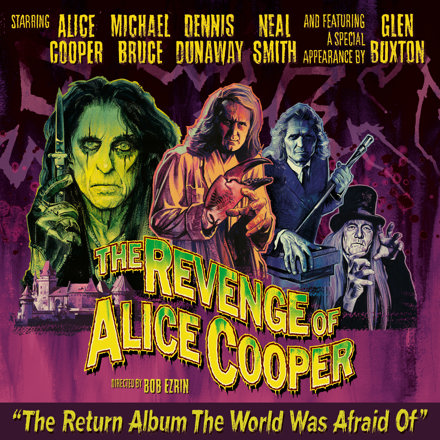
Well, this isn’t exactly ‘new’ news, but I wanted to post it anyway! Very much looking forward to this. There’s a few interviews on Youtube with Dennis Dunaway, well worth checking out. Only AC can come back 50+ years later, and the first single they release is about a snake! Love the cover art, made up as an old movie poster.
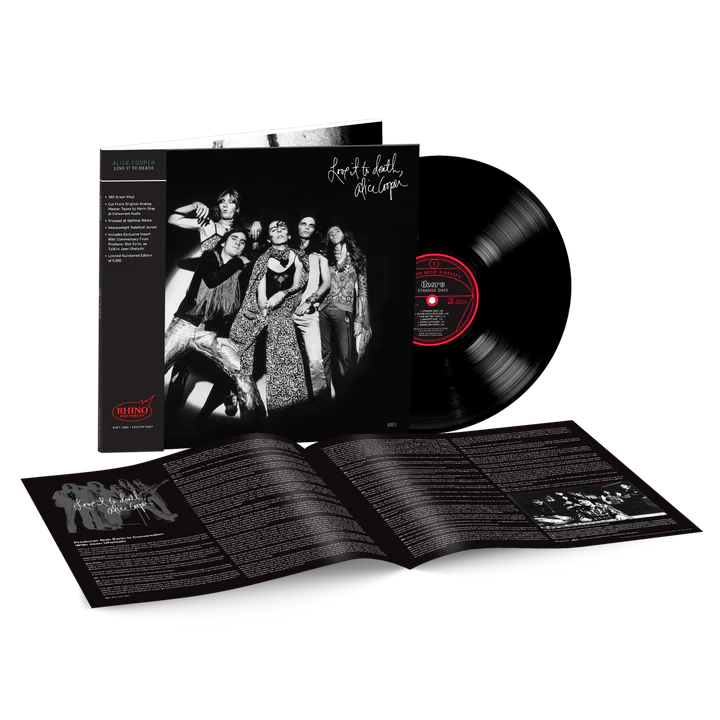
Also, recently released by Rhino (Warner Bros in Canada) is a hi-fidelity issue of Love It To Death. This comes in a glossy gatefold, thick cover, and includes an insert with an interview with Bob Ezrin in it.
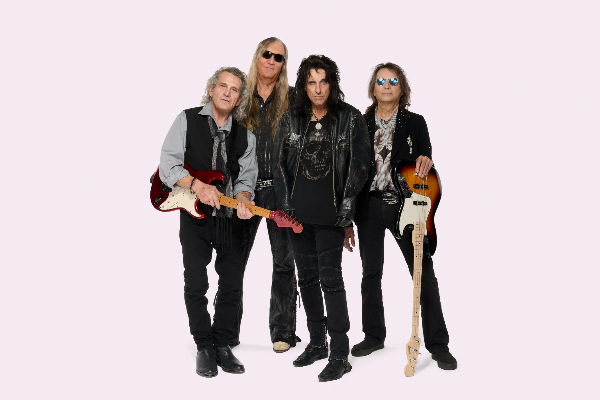
For the first time in over 50 years, the original Alice Cooper group has reunited to release a brand-new studio album, “The Revenge of Alice Cooper,” set to release on July 25th via earMUSIC.
This highly anticipated album is heralded as the successor to their iconic records “Schools Out,” “Billion Dollar Babies,” “Love It to Death,” and “Killer.”
The first single from the album, “Black Mamba,” is out, featuring the legendary Robby Krieger of The Doors. This track serves as a venomous introduction to the new era of Alice Cooper, packed with familiar classic riffs and electrifying energy.
“The Revenge of Alice Cooper” is a high-voltage journey into vintage horror and classic ’70s shock rock, capturing the sound, energy, and mischief that made the original Alice Cooper band legendary. In a truly special moment, the album features a posthumous appearance by Glen Buxton, the band’s original guitarist who passed away in 1997, through an unreleased recording that seamlessly blends the past with the present on “What Happened To You,” featuring his original guitar part.
If that wasn’t cool enough, one of the bonus tracks (box set & limited smart format) also includes a long-lost gem from 1970 – a raw, alternate take of “Return of The Spiders” (not the version heard on Easy Action)—recently unearthed from original multi-tracks missing for 50 years and now enhanced and mixed by Bob Ezrin.
Alice, Neal, Michael, and Dennis have reunited with their producer Bob Ezrin in a old-school recording studio in Connecticut, rekindling the magic from the 70s.This album is a celebration of friendship, nostalgia, and the timeless sound that solidified Alice Cooper as a rock icon. Fans can expect a powerful and nostalgic experience that bridges the gap between the band’s storied past and their vibrant present.From the venomous bite of “Black Mamba” to the rebellious charge of “Wild Ones,” and the soft, haunting melodies of “See You on the Other Side,” every track feels like a rock ‘n’ roll classic. “The Revenge Of Alice Cooper” is going to be released on July 25th, 2025 on earMUSIC in a wide variety of formats and limited vinyl colors. Also available as a limited box set and as a limited art print (smart format), featuring exclusive access to two bonus tracks from the start, plus the full album automatically delivered as a high-definition download on release day.
Ok, so there was no ‘Volume 2‘ to Alice Cooper’s 1974 Greatest Hits album, which marked the end of the original band. But, back in those days record companies pushed out plenty of Hits compilations = parts 1,2,3…. from acts that didn’t necessarily have huge catalogues. Mercury Records in Canada released a Best Of Uriah Heep, and a Best Of Uriah Heep: Part 2 — from the band’s first 5 albums! Alice Cooper released 7 albums in a 7 year run, and produced a number of hit singles, and more live favorites – from the band’s 5 classic albums from 1971-73. I’ve put together my own picks of those songs that were not A side singles and/or big radio hits, and I’ve included tracks from the band’s first 2 records (Pretties For You, 1969, and Easy Action, 1970) as they were excluded from Greatest Hits (as they weren’t on Warner Brothers, or did particularly well). I’ve included times, and kept each side to under 20 minutes, as per the LP standard times back then. As well I’ve included the single times, wherever possible.
Would be interested in seeing your choices in the comments!
Alice Cooper: Greatest Hits, Part 2
Side A
Reflected (2:50)
Shoe Salesman (2:48)
Return Of The Spiders (3:38)
Caught In A Dream (2:55)
The Ballad Of Dwight Fry (6:33)
You Drive Me Nervous (2:24)
Side B
Luney Tune (3:36)
Public Animal #9 (3:53)
I Love The Dead (5:08)
Working Up A Sweat (3:31)
Hard Hearted Alice (4:50)
Reflected
“Reflected” was the A-side of Alice Cooper’s first single. From Pretties For You. It is best remembered as the song that was later re-written as “Elected”. This was credited to Alice Cooper (band) as writers & producers. I almost included “Living” (the b-side), but left it off. Look up the band’s 1969 TV appearance ‘performing’ this song – HERE.
Shoe Salesman
The single from Easy Action, credited to band. I loved this one when I first heard this record. So different and easily likeable. How was this not a hit (even a minor one!) at the time?
Return Of The Spiders
The B-side to “Shoes Salesman”, also credited to the entire band. More upbeat and aggressive, and reflecting on the band under another name. Insistingly the band has re-done this for their upcoming reunion album, The Revenge Of Alice Cooper.
Caught In A Dream
The 2nd single and my favorite from Love It To Death, penned by Michael Bruce. Hard to see how this wasn’t a big hit.
The Ballad Of Dwight Fry
The epic tribute to American horror film actor Dwight Frye, this became a huge live favorite right away. I chose this for that reason, along with “I Love The Dead”, as both are among the top 10 AC songs ever performed live (according to setlistfm.com )
You Drive Me Nervous
The B-side to “Be My Lover” in some territories (“Yeah Yeah Yeah” was B-side in Canada & the US), and a great aggressive rocker that opens side 2 of Killer. Penned by Michael Bruce, Alice, and Bob Ezrin.
Luney Tune
Issued as the B-side to 1972’s “Elected”; a classic Alice teen trouble story & anthem, credited to Dennis Dunaway & Alice.
Public Animal “9
Also from School’s Out. Strange that there was no 2nd single from that album, as this would’ve made a perfect one. The only 7 inch version I see of this anywhere is a 4-track jukebox single from Thailand! This one got played live, and there’s great footage of the band’s performance of this at the Beat Club, in Germany.
I Love The Dead
Though not issued as a single (A or B), this was a big fan favorite and highlight of the live show, and I’m sure just the title alone created enough interest and controversy.
Hard Hearted Alice
There’s this (& “Working Up A Sweat”) from Muscle Of Love, both used as B-sides, and both played live at the time. An excellent ballad, about the band. Both would’ve made better A-sides than “Teenage Lament 74” (IMO).
Working Up A Sweat
The b-side to “Teenage Lament ’74”, opened side 2 of the album, and featured in the live set. Classic upbeat Alice track. I really had a difficult time narrowing it down to just 2 from MOL, due to vinyl time restraints. I also wanted to include “Big Apple Dreamin”, but opted for these 2).

 Outsider Rock