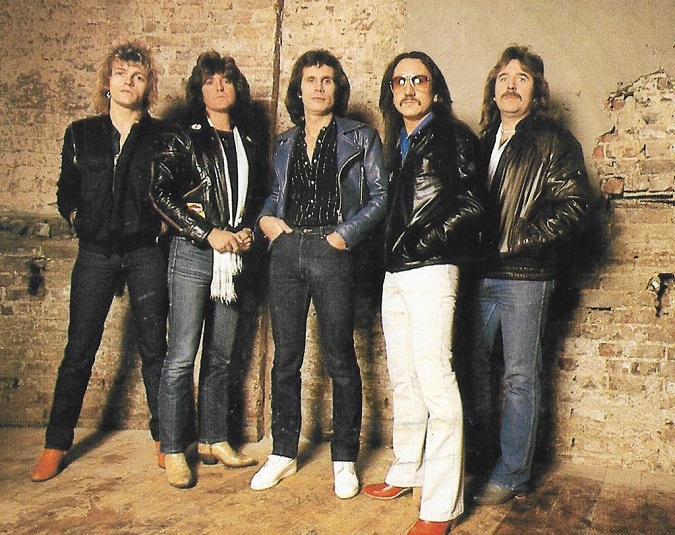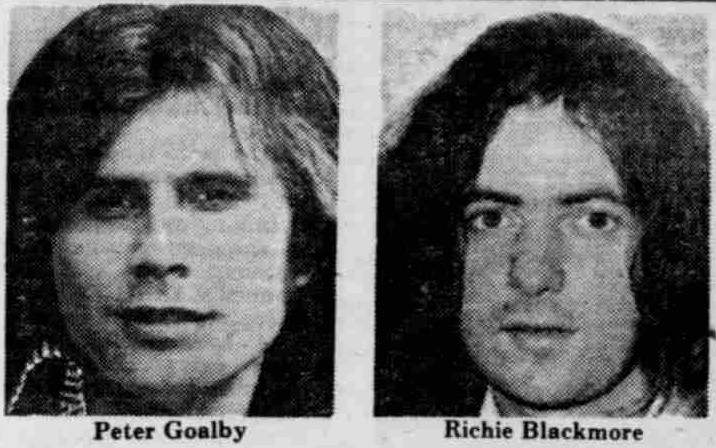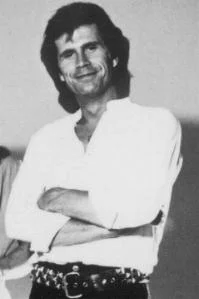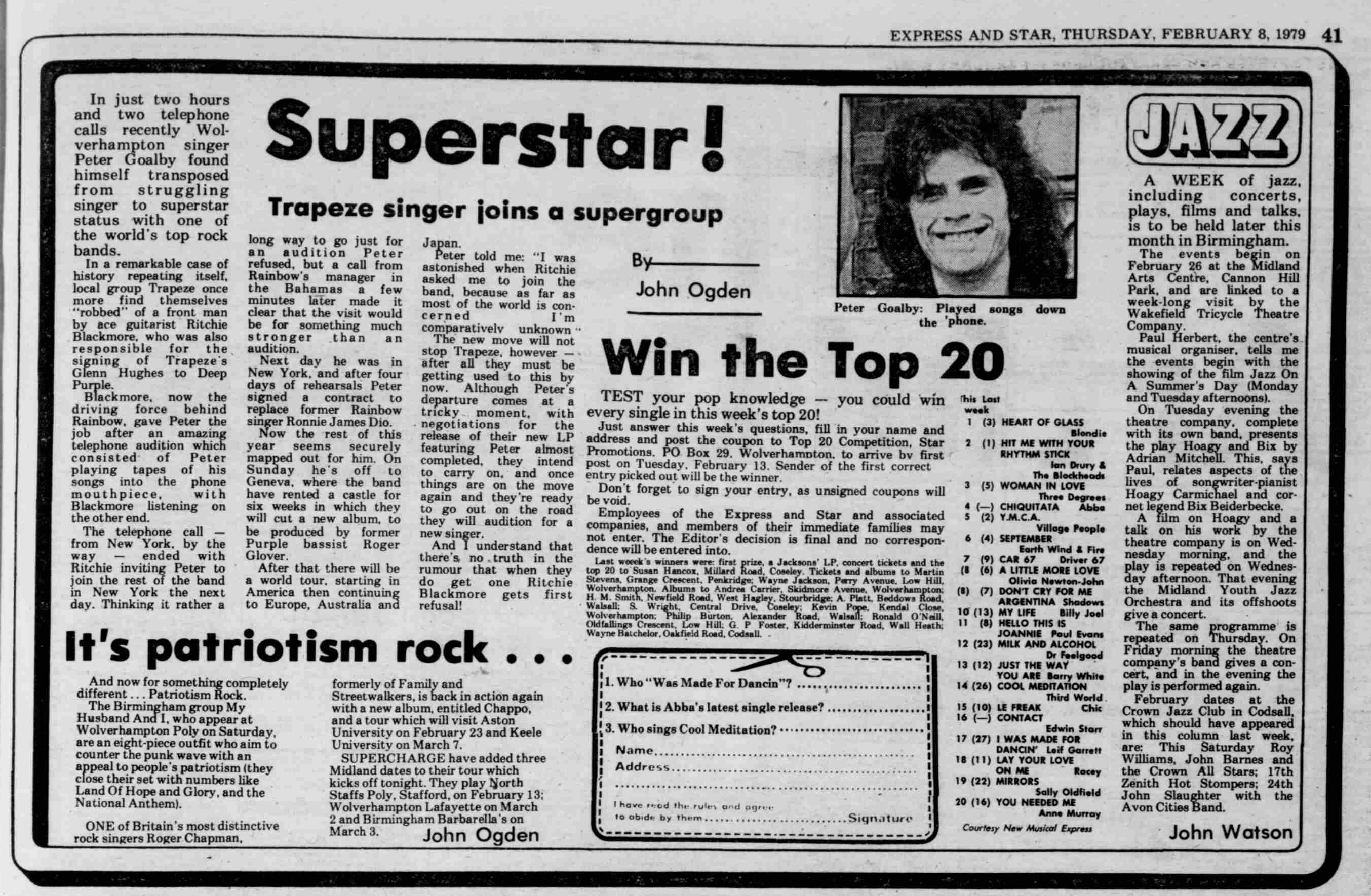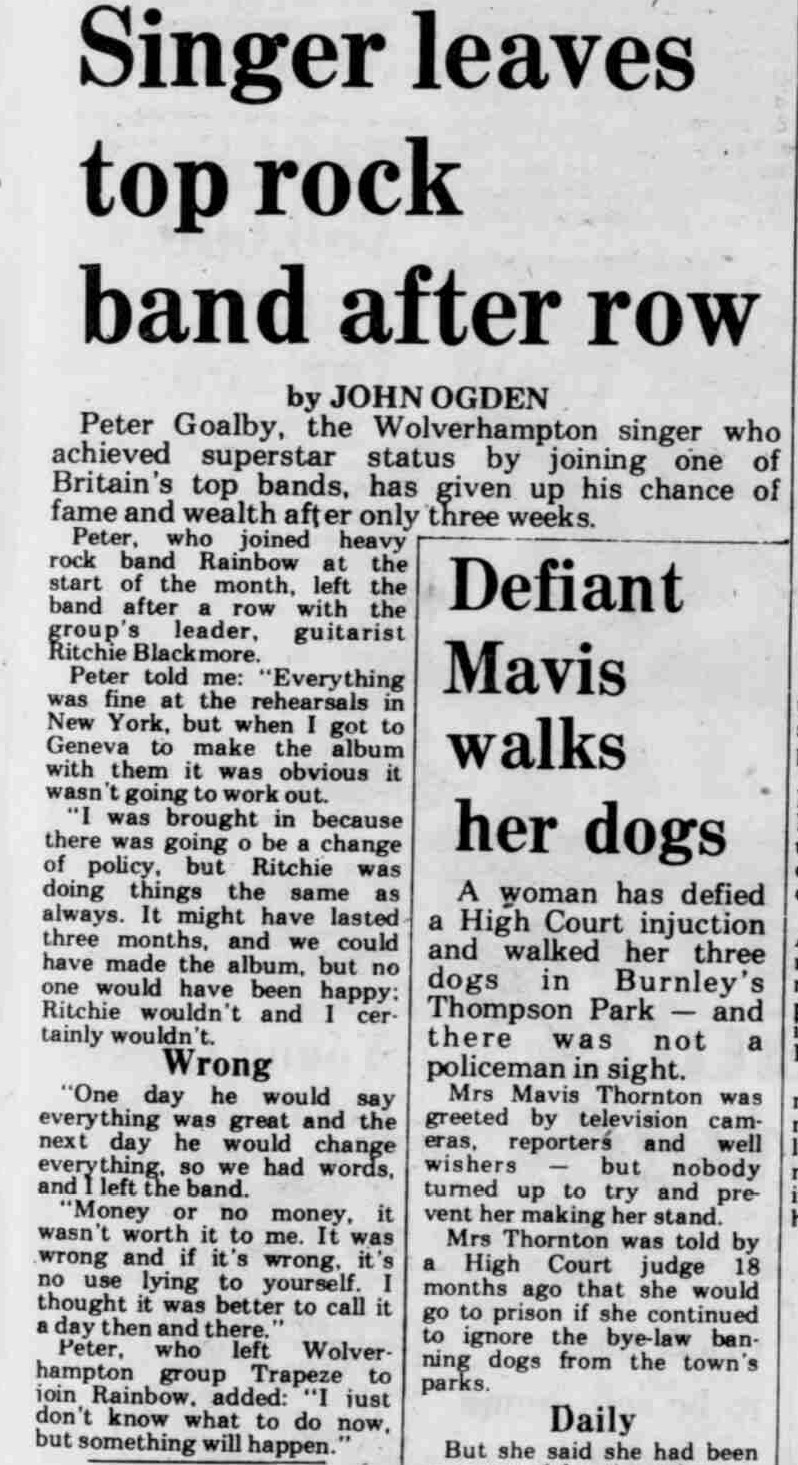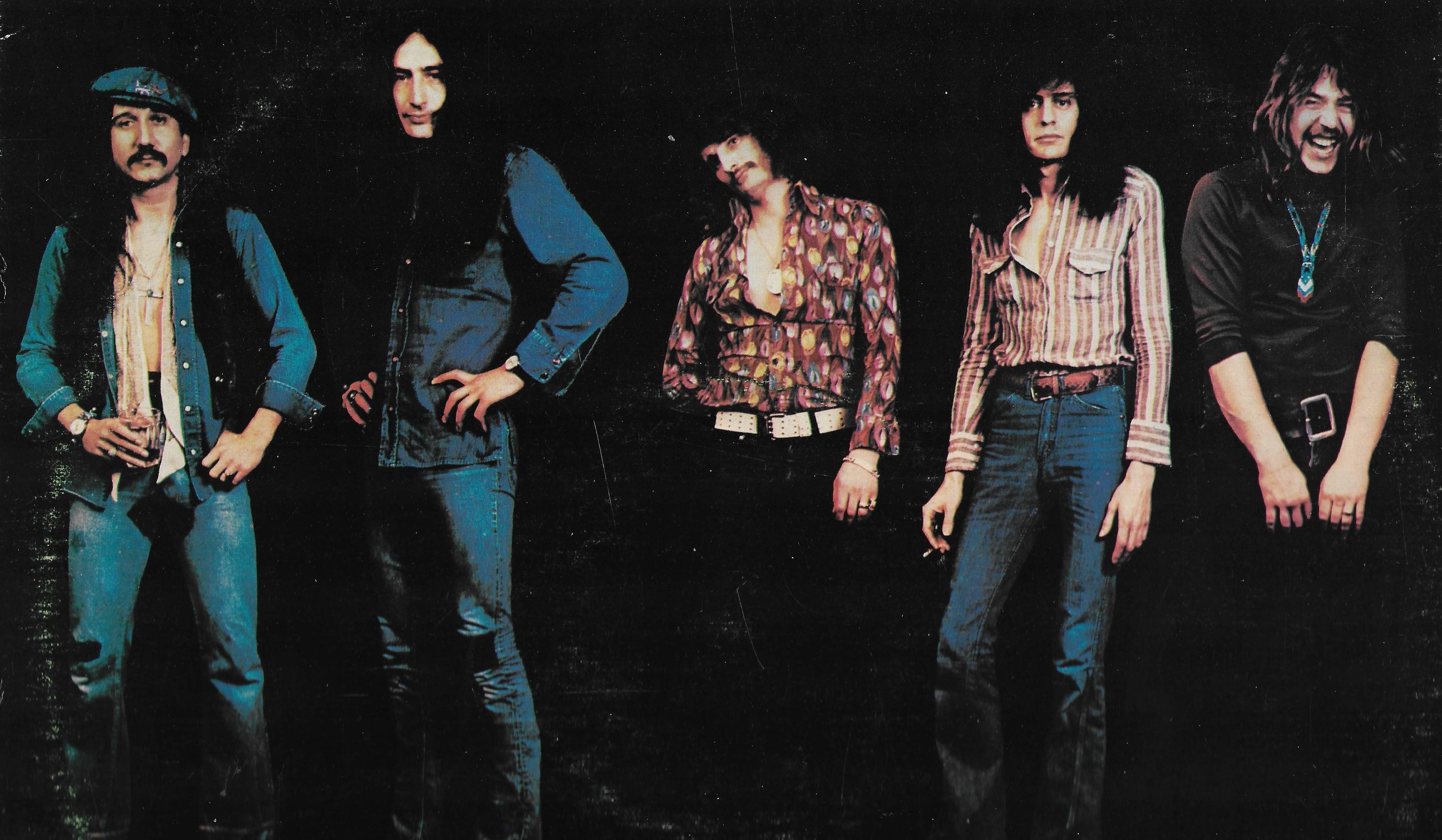
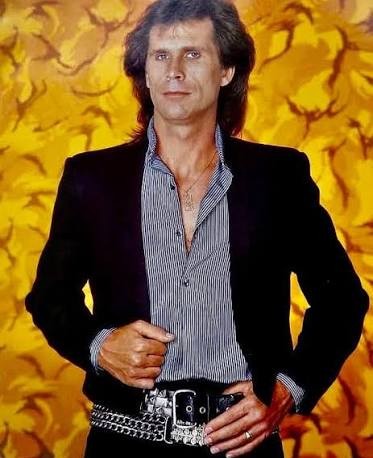
Singer Peter Goalby is mainly known for years during the 80s fronting Uriah Heep, with whom he recorded 3 albums, and prior to that a few years with Trapeze, where he recorded one studio and one live album. But in-between there, very briefly, Peter was chosen to sing for another, bigger band, at the time. His time with Rainbow didn’t last long, and he’s often (if at all) merely mentioned as a footnote as someone who auditioned for the band. Goalby’s story of that time, and his first ever detailed recollection of that period is a very fascinating read. Peter recalled it all to myself and Peter Kerr (Rock Daydream Nation). The 3rd part of this article contains questions (from Peter Kerr & myself), answered by PG.
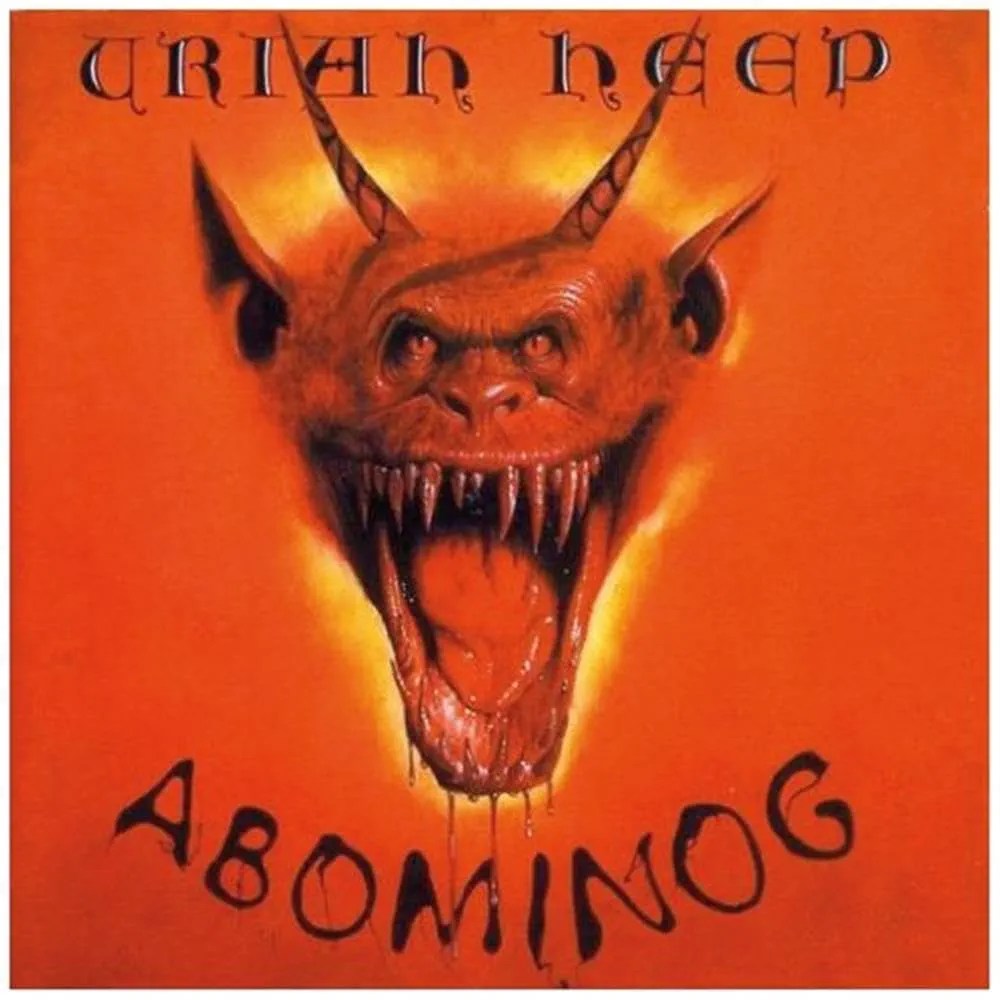
Please note, Peter has wanted to tell this story for a long time. I know he has a very good memory of his career, and fine details. This is his account being told for the first time. It was a long time ago, and it came at very busy period in his career, while he was still with Trapeze. He would soon record a project later in 1980 under the name ‘Destiny’, followed by Trapeze tours and a live album. By late ’81 he was ready to step into the role of lead singer for Uriah Heep. Ironically, the 1982 album Abominog, a fantastic album, was comparable in direction (that American Hard-rock/AOR) to what Rainbow was also recording during the early 80s with Joe Lynn Turner. So, frankly, I don’t see how Peter wouldn’t have been a good fit for that band, but oh well….On to Peter’s story….
My Audition / Initiation
The day before New Years Eve, sitting in my unfurnished flat (apartment) in Wolverhampton phone rings – “Hello is that Pete?” , I said yes, it is. “Pete this is Ritchie Blackmore “, Fuck off I said, who is this? I thought John Thomas from the band Budgie; he was a prankster.” Pete, its Ritchie really (LOL) “He said I “got your number from…” I can’t remember who he said but I thought, ‘Oh Its Ritchie alright’.
“Would you be interested in joining my band, Rainbow? I have heard a lot of great things about you and your work with Trapeze. Mel Galley is gonna hate me even more if I steal you That will be twice.”
We chatted for a few minutes and then he asked, ‘do I have anything I can play to him?’ I said I have a copy of the new Trapeze album Hold On, “I can play you a track down the Phone(?)” I played him “Don’t Break My Heart Again” (phone to the speaker). It’s 6 minutes long, I thought he will have hung up by the end. “Are you still there?”, I said. “Very much so. Would you like to come to New York? “, I said ‘yes when’. “Tomorrow”, he said.
I was told to arrive at Euston Train station. I would be met and taken to the Airport. I was given a ticket and some money and put on a plane
(In New York) I was detained at the Airport upon arriving and taken to a back room where I was questioned and my luggage searched. They thought I was trying to work in the U.S I said I was there for an audition. I was asked who the band was. I said Rainbow. One of the security guys said Ritchie Blackmore(?), “then re pack your case you can go”.
I was met by a member of the Rainbow crew and taken to the Holiday Inn, Connecticut. I was there on my own for 2 days waiting for someone to greet me. I spent New Years Eve on my own, well me and the barman in the hotel.
Next evening I was in the Bar and who should walk in – Cozy Powell (LOL). Then in walks Don Airey (LOL). WE all got on great from the off. I had met Cozy before.
I said, ‘where is Ritchie?’, I was told he lives next door to the hotel. So, I had been left on my own for 2 days with Ritchie living next door celebrating the New Year. I was starting to get the picture and the way they all spoke of Ritchie, he was the Boss for shit sure.
Ritchie walked in the bar with his then very large breasted girlfriend, and we spent the evening talking – me, Ritchie, Don, and Cozy. I can’t remember when Glover arrived.
We arranged to meet for rehearsals next morning.
Down To Earth (with a Bang) LOL
I arrived at the Geneva; the place was incredible with a Moat and a Drawbridge, WoW.
Don arrived soon after me, we got on so well it was all fantastic. There was a guy called Jack Green there he was the new bass player, as Roger Glover was producing Down To Earth he was not playing – only producing. There was a mobile Recording Studio outside belonging to Jethro Tull. All the band gear was set up in the Dining Hall which was the size of a banquet Hall.
Cozy arrived, he was such a compete gentleman, he was such a complete person he really was great.
We were all there for a couple of days before Ritchie arrived with the girlfriend. He spent a few days in his room only coming out to have meals. We had a Cook living in with us. From time-to-time Ritchie would come out and ask me and Jack to write some lyrics for an idea he would have. Then he would say forget that one. “Can you do some words for this?” That would be another Idea he would be playing. I was finding it frustrating as we did not seem to be doing much at all. I used to have a play on Don’s Hammond organ to pass the time. We were all just waiting for Ritchie. After a few days Ritchie had come up with some riffs. One night about 10.30 to 11pm I was going to bed and was told Richie wants to rehearse now. I foolishly said I was about to go to bed. Never mind. We went down into the Dining Hall They all started jamming led by Ritchie showing them the ideas he had. I was expected to just sing something over them. Something I had never done before. I was used to having a structured song to sing knowing the melody etc. I just looked at Don thinking ‘what the fuck does he want’. So, I started warbling some nonsense. So, we did this for some time. Don was looking at me and encouraging me to sing anything by pretending he was singing. I found this all a bit bizarre. Next morning there was a bad atmosphere from the off. I did not see Ritchie at all. Roger said “can we talk in your room”. I said of course.
Roger said Ritchie is not happy. I said neither am I. I don’t know what he wants I am not used to working like this. Roger said you are fired. I said couldn’t Ritchie face me and Fire me himself.
Roger said I will take you to the airport now. So, I went and told the guys I was fired they were shocked. Ritchie did not even come to say goodbye. He did send me a message through Roger, he said You Know that riff you have been playing on the Hammond could you show Don how it goes before you leave? On the way to the Airport Roger said did I know any good bass players as Ritchie was not happy with Jack Green either
I was given no reason other than Ritchie was not happy.
It later transpired he was not happy with my vocal range he said my top note was an A which is not true as the world can hear on the Heep albums I did.
I did not apply for the job in Rainbow I was invited by Ritchie Blackmore after listening to me singing “Don’t Break My Heart Again” by TRAPEZE I made no claims about my vocal range.
I am very happy to finally tell the true version of my very very brief time in such a great band
Peter Goalby 09-09-2025
Did you talk for a while with Ritchie before having a sing?
It was all quite natural mainly down to Cozy being such a great and honest guy (what a lovely man)
What was he like?
Ritchie enjoyed being Ritchie and enjoying being number uno.
Were there any band members at this first meeting? Describe the rehearsal with the band? What songs did you play? Any of your originals or non-Rainbow songs were played?
A tiny rehearsal room. I was stood facing Cozy when he hit his bass drums My jeans blew back at the ankles LOL, He was making me laugh to make me feel at home. In fact, Don was the same very friendly as if they were relieved, they had got me there.
WE did “Long Live Rock and Roll”, I enjoyed that, not too many words LOL
I think Cozy said “we have this song demo with a girl singer”. He said Ritchie does not like it, but the record company want us to do it as a single. I said it’s a great song. I think. We ran through it. I can not remember what else we did. I kept thinking this is me singing with Rainbow LOL.
Did you get a good vibe as to how things were going?
I got great feedback from the guys they were talking like it was a done deal. Like I said I felt they were relieved they had a singer. Ritchie was very reserved I think that’s how he liked people to see him.
What was said at the end of the play through?
All very positive but what was weird is It was as though I was in, but no one said You are our new singer. I was given a plane ticket and told Bruce Payne (manager) would contact me, which he did when I got home. I was put on the payroll. I think it was £2000 per month. Little knowing it was to last only 2 months at that time. Bruce said we were to do a demo of “Since You Been Gone” at Roger Glover’s house, which we did. I remember Ritchie playing the wrong chords when we were recording LOL.
Then the recording date for the album was announced and I went off to Geneva to the chateau.
Did you think you would be offered the role?
Of course. I would have been great in that band
I am curious – Had you told anyone on your side (bandmates, management) that you were off to NY to possibly join Rainbow(?)
I did not have time; I was called and then the next morning I was on a plane. I only told my wife, I don’t think she believed me at first. And Then I told her I got the Job then a couple of months later I told her I was FIRED LOL
What were you up to when Ritchie called? Was there a Trapeze tour being planned or any other recordings?
I was in my apartment (flat) with no furniture I can’t remember what was happening with Trapeze. I had just got the first copy of “Hold On”, the Trapeze album. Thank you, Mel, for writing the song that got me in and out of Rainbow LOL.
Considering Ritchie was concerned about image (i.e. he hated Graham Bonnet’s short hair and choice of clothes). Did any appearance or image stuff come up?
No, he knows a star when he sees one LOL.
Was your audition or time with the band given any press treatment? Ie: photos taken, bios written, or mention in the press?
Only my local town paper; I was on the front cover if I remember correctly.
Did you really get to talk to Ritchie much at all? (Even in the bar) And was it all business?
I did talk to him, yes, I did get on with him socially. But then again, I get on well with everybody.
And we had a singer called Pete Goalby, who did great things with Uriah Heep, but he didn’t quite get what Ritchie was going on about” – Don Airey (Rolling Stone)
“I was the one who helped talk Ritchie into doing it. His manager Bruce Payne NEEDED A HIT SINGLE. We did a demo at Roger’s house with Jethro Tulls’ Mobile.
PETER GOALBY & GRAHAM BONNET
There is one song that ironically both Peter Goalby and Graham Bonnet sang, and that is a cover of Paul Bliss’ “That’s The Way That It Is”, which I’ve put below. The song appeared on Bonnet’s 1981 album Line Up, as well as Uriah Heep’s 1982 album Abominog, and released as a single in both cases. Interestingly, Bonnet also covered Argent’s “Liar” (written by Russ Ballard) on that album, while Goalby had sang the song years earlier as a demo for his band Fable! Abominog would instead feature a different Russ Ballard track, “On The Rebound”.
I could not find any songs that both Goalby and Bonnet’s successor in Rainbow – Joe Lynn Turner both sang, but both Heep (w/ Peter Goalby) and Rainbow (w/ JLT) both took a similar direction in the 80s, which is discussed with Martin Popoff in an episode of History In 5 Songs – https://cms.megaphone.fm/channel/history5songs?selected=PAN4285683323
Goalby’s post-Heep solo recordings are also much more in the 80s AOR style that would’ve definitely suited either Foreigner or Rainbow in that decade (Ironically, Goalby’s name came up when Foreigner was looking for a singer when Lou Gramm left the first time, but not bigger discussions or offers came about). But check out tracks like “Take Another Look”, “Waiting For An Angel“, or “It’s Just My Heart Breaking” and “Show Some Emotion” (from his upcoming 3rd album), they would sit comfortably on an 80s Foreigner or Rainbow album, IMO. As for the one ‘new’ song that Goalby sang with Rainbow, “Since You Been Gone”, no recording from those rehearsals exists, but both Bonnet and it’s writer, Russ Ballard, both have new versions of it in 2025.
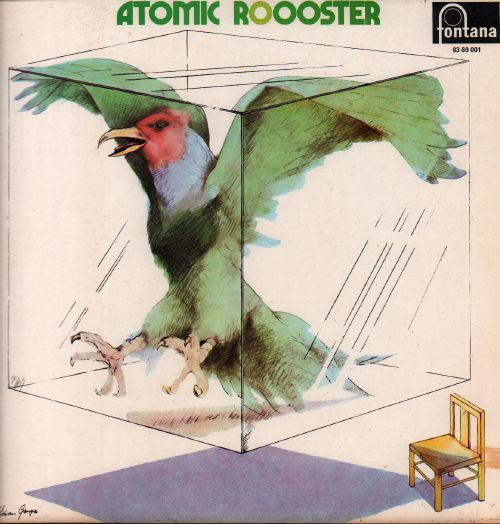
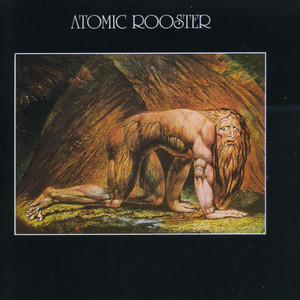
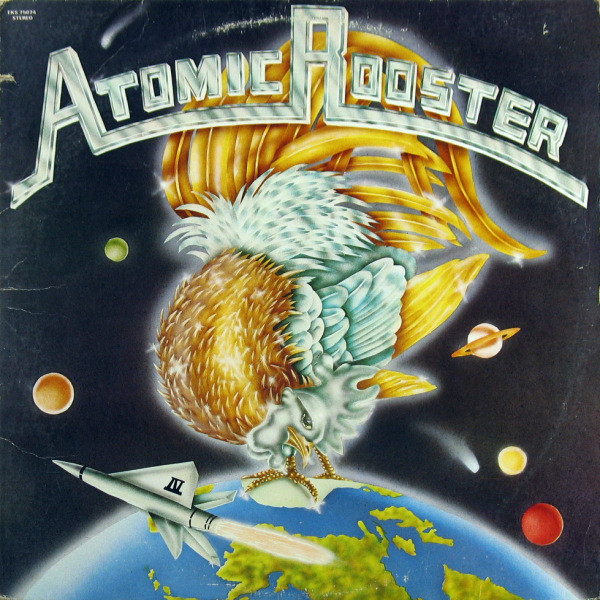
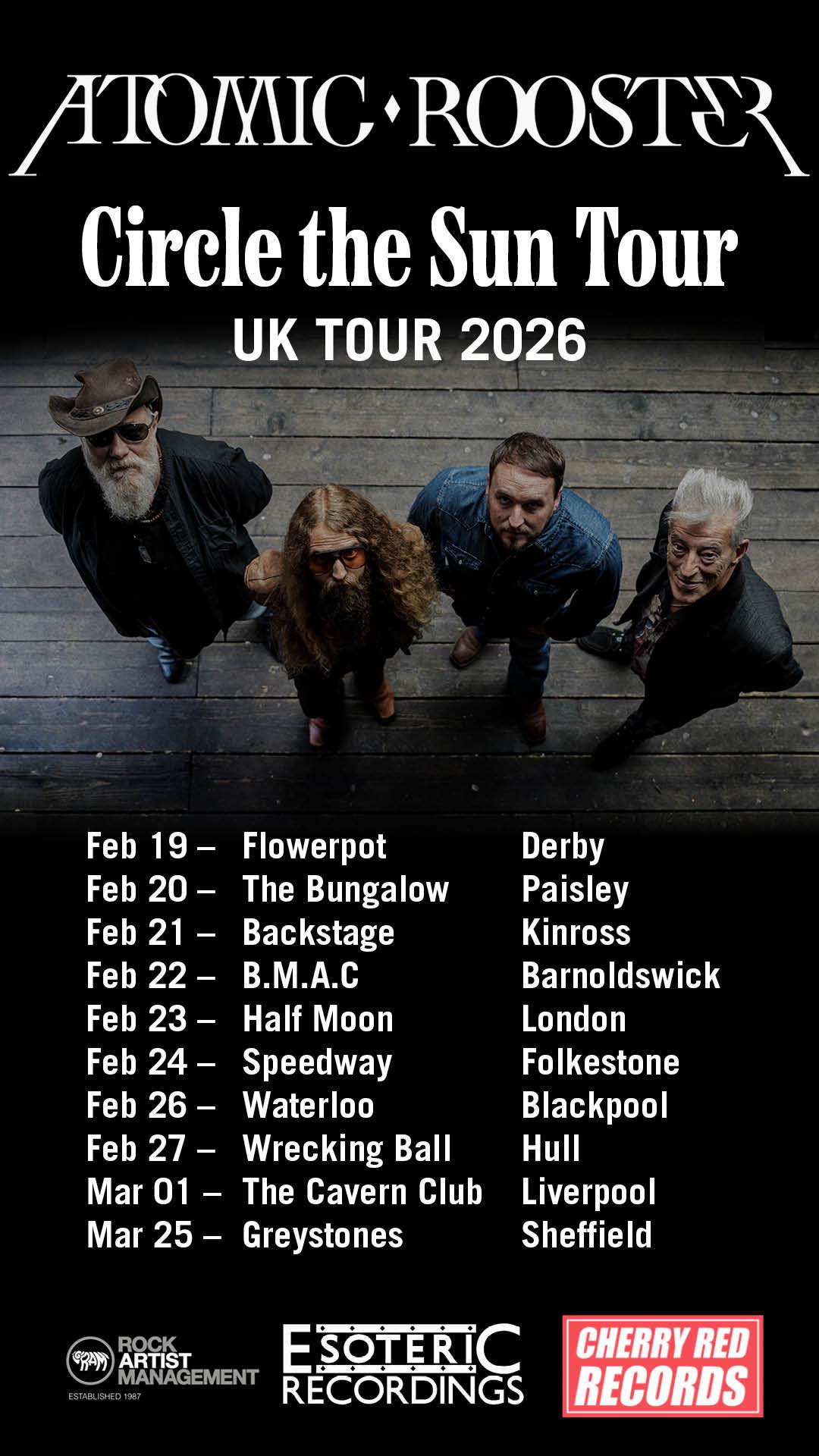
ATOMIC ROOSTER, the legendary British progressive band was founded and lead by Hammond organ player and songwriter Vincent Crane. The band went through several changes during their run from 1970-1974, with guitarist Steve “Boltz” Bolton joining for the album ‘Made In America’, which also featured singer Chris Farlowe and drummer Ric Parnell. Bolton left before the next album while Crane carried on until the band split. Crane would resurrect the band periodically, in 1980 and again in 1983.
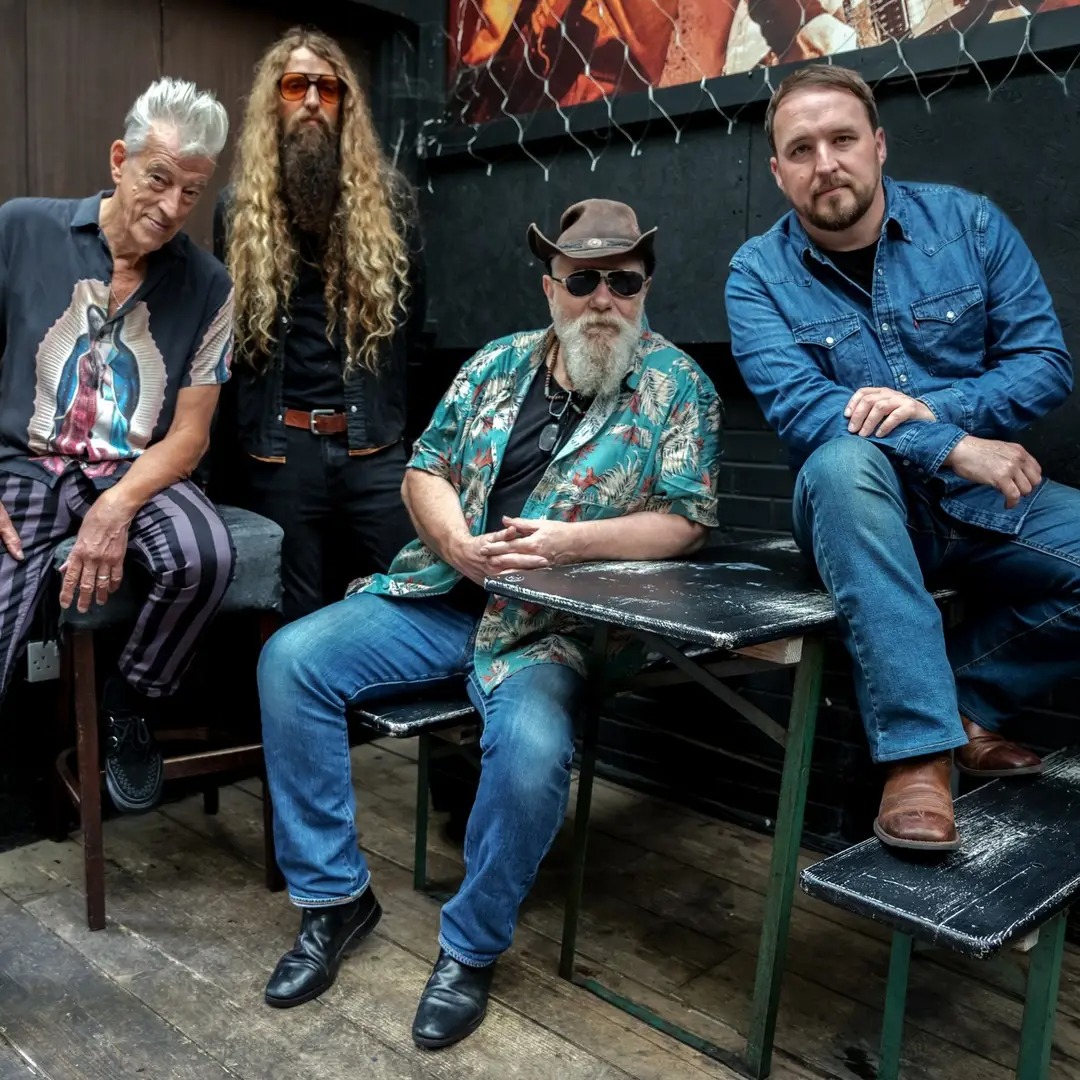
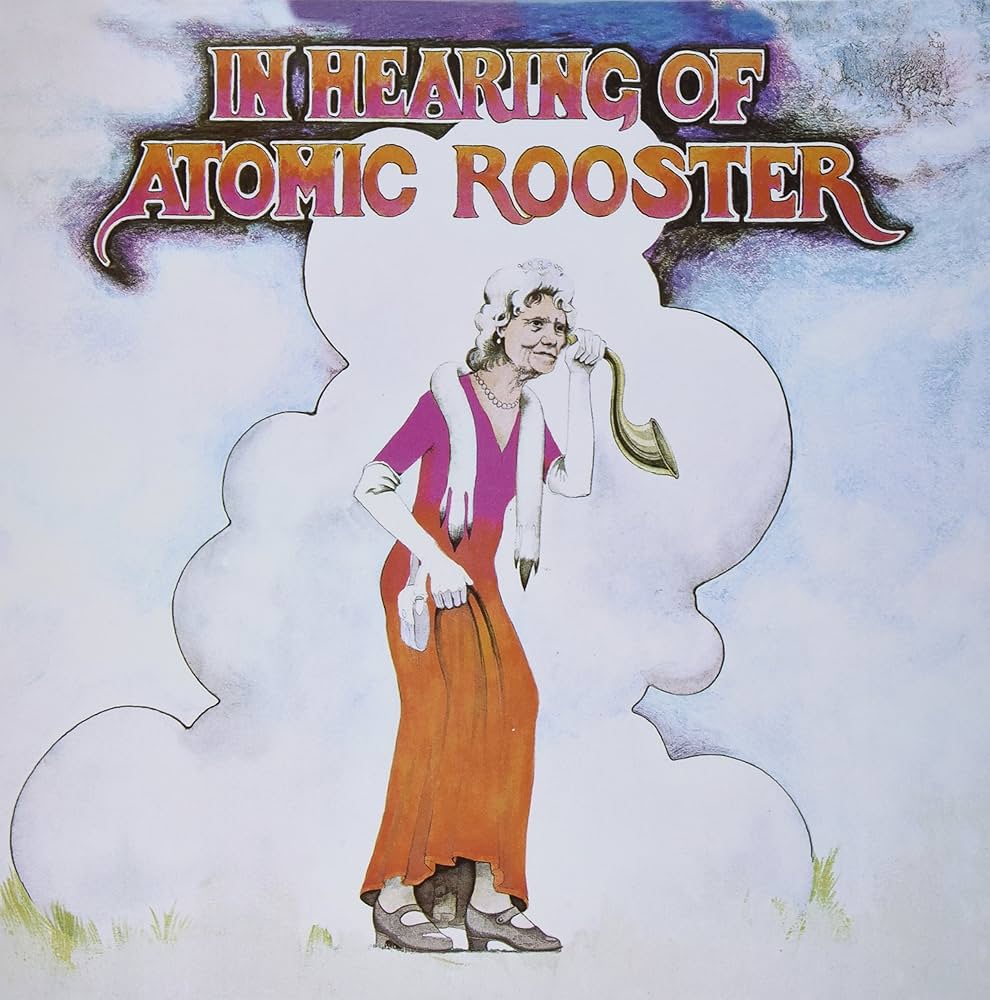
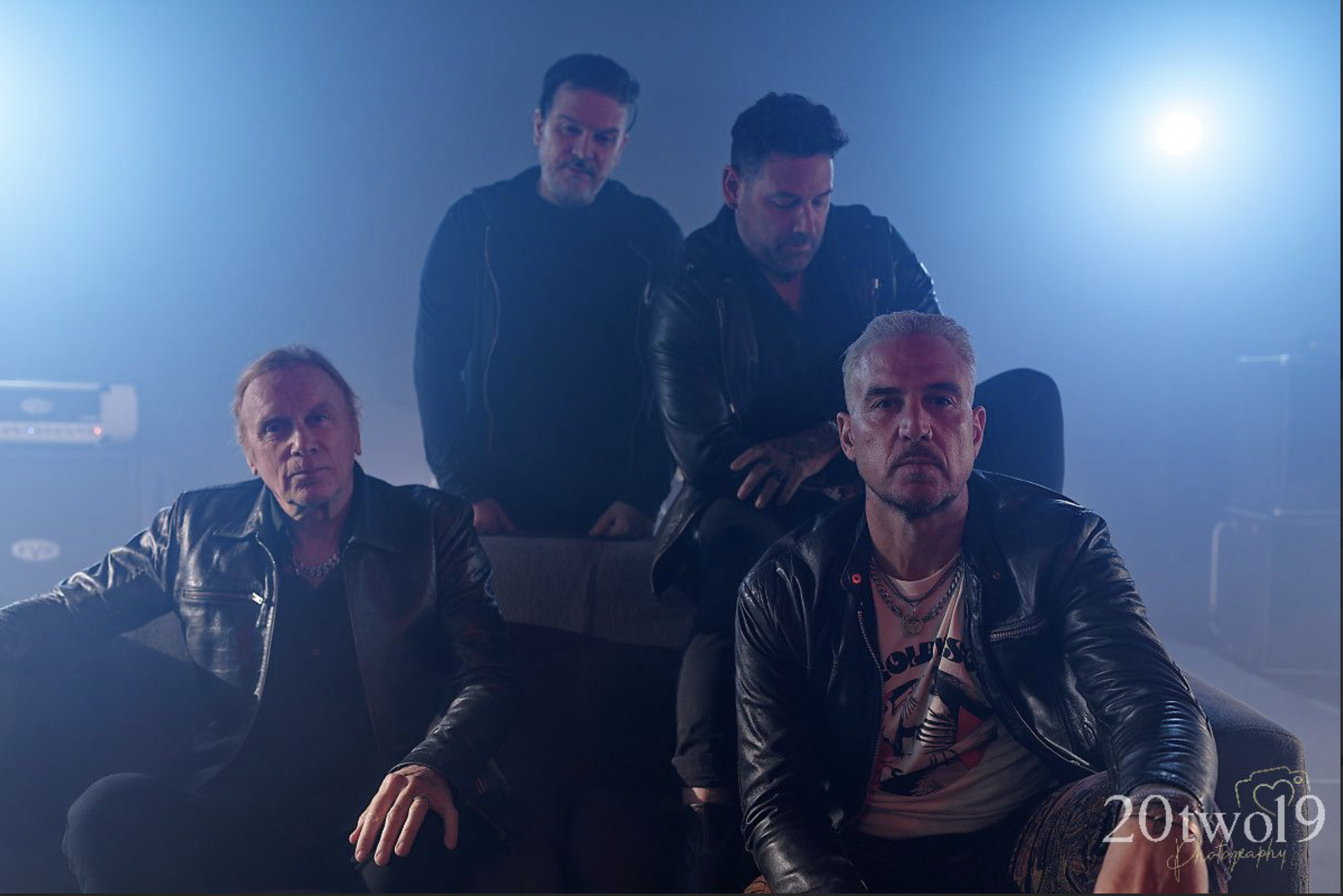
Nearly a decade ago Steve Bolton resurrected ATOMIC ROOSTER, originally with singer Pete French (who sang on the ‘In Hearing Of’ album). In recent years French dropped out of the band, which has carried on as a 4-piece, which (besides Bolton), includes drummer Paul Everett, bass player Shugg Millage, and keyboard player/vocalist Adrian Gaultrey. The band has released a brand new album, Circle The Sun, which is recommended to not only Rooster fans, but also to fans of 70s heavy Hammond driven rock.
Below is my interview with Steve Bolton and Paul Everett discussing the new album, as well as the reformation of the band and happenings over recent years, as well as some cool recollections from Boltz about his early days with Atomic Rooster, as well as touring with THE WHO. This was a long one, so apologies for taking a while to get this edited and up, but hope you enjoy the read, and check out the links below, and check out Circle The Sun (on Cherry Red).
(We started out talking about the band’s merch ..)
Is there a vinyl copy of the album?
Paul: There will be a vinyl. The vinyl will be landing mid-October, but not through Cherry Red. Basically it’s coming direct from the band, but that will be available. There will be a link on the social media within the next couple of weeks.
The band came back together in 2016, and Pete (French) was a part of that for a number of years.
Steve: OK, about 2016, I got a call from a guy that’s an agent in the UK saying he’d been asked if he could get an Atomic Rooster tribute act, because tribute acts are a big deal. And he said, “well, I can probably do better than that”. So, he contacted me and said, how do you fancy a reformed Atomic Rooster? I said, well, yeah, there are a few issues that we need to get the clearance from the late Vincent Crane’s wife, Jeannie, which we did. She gave us full permission to use the name and to press on and keep the music alive and do new material. So, I contacted Rick Parnell, who was living in the States, who was the drummer in Rooster, then he subsequently died. But that’s another story. But it proved a bit difficult because he was in the States and it was all a bit tricky. So as far as the vocals go, there were two people still alive. One was Chris Farlowe and the other was Pete French. So, I contacted Pete French and he was up for it. Then we eventually ended up with this lineup we have now. Paul, how long has this actual lineup been now, with Adrian, Shugg and you?
Paul:- I joined just before Covid. And then with the current lineup as the four piece as it has been since 2023.
So, you kind of answered how the whole Atomic Rooster reunion came about. And you initially had Pete in there for a number of years, and he left.
Well, I just want to say I’ve done many things since my original time in Atomic Rooster. Yeah. When I was just knee high to a grasshopper, I was in Rooster for about 18 months. First third of that was with Pete French, and then the last two thirds was with Chris Farlowe. So, it’s something that had been sort of behind me and people were asking me a lot about Atomic Rooster and I really it was something I did in the past. You know, you move on. I’ve done lots of other things, quite important things, but this kept coming. So, when it was put to me, I thought, why not!?
It’s interesting, Atomic Rooster over here, I don’t know how much you guys toured over here in the early days. But it’s still kind of a lesser known, those albums are kind of hard to find. So, what are the crowds like when you guys play in the UK? Because I know the band had a couple of hits in the early days there and you had a good following.
Paul: It varies. In the UK we do good numbers; In Eastern Europe we do really good numbers. So, the last festival show we played, what three weeks ago(?) in the in the Czechia, there was about 12,000 people. That’s a festival show, so I’m not saying all the people came to see us, but…
Steve: Can I just say here, that this festival, we were kind of told it was it was a heavy metal festival – which we’re not, to be quite honest. And Arthur Brown, God bless him, Arthur’s still going strong. He couldn’t do it for one reason or another, so they asked us. We flew over there, and normally it goes like this – we get somewhere and we go to a hotel and chill out. But on this occasion, (we didn’t. I’m up at three o’clock in the morning. I’m sure Paul and the guys were). And so we got to Czech Republic to Prague early in the morning, early Saturday morning. We drove to this festival, which was in this beautiful town. And it turned out it was a death metal festival. It was like “Oh, OK!” We’re not only not heavy metal, but we’re also definitely not death metal, you know what I mean? So anyway, so it was such a great vibe. It was such a fantastic vibe at this place. There weren’t any bad vibes or anything. And it’s just absolutely rammed in this old fort outside, three different stages, all huge stages; the main stage and then a couple of lesser stages, which we were on. But it was still quite a big stage. So, we just soaked it in. We just stayed there all day; none of us had any sleep, but we just wandered around and met people, and we soaked in the vibe.
So when we had we had a chance to set the gear up, (most of which is what all of it was borrowed, hired, rented gear for the show), but the band before us, I believe, were a Japanese death metal band who’d been going for donkey’s years and they filled the field out, 10,000 people or so with them. And then when they finished, the field emptied! I said to Adrian, as we were setting our gear up on the stage, “My God, look, the field’s empty.” But by the time our first number, we saw the pit, the field got absolutely rammed. And you know what!? They absolutely loved us. It was just fantastic. It was so great. We could not have gone better. And it shows you that we were genre bending.
It’s interesting because I think Atomic Rooster is one of those bands that the name and the image from the early days, people have kind of misconstrued what the band was about. And they kind of lumped them in with heavy bands. And, Made in England, the album you were on is probably the most unusual of the five there. It’s a little more funk and a little bit. Do you get, especially in England, a lot of diehard fans from the old days that come out with their albums and stuff?
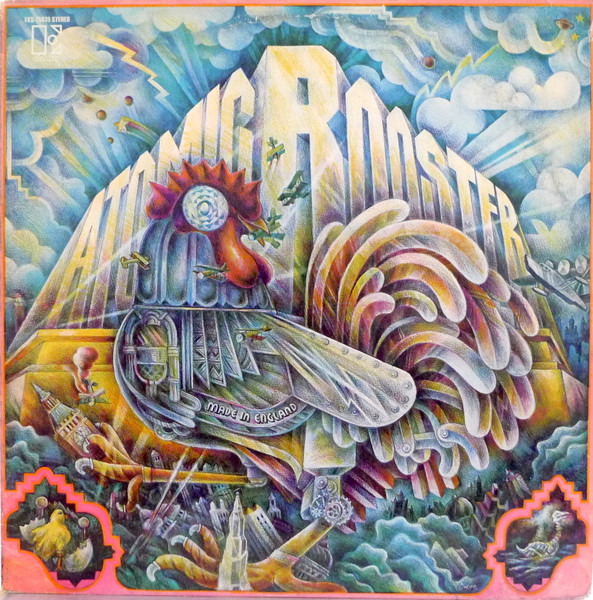
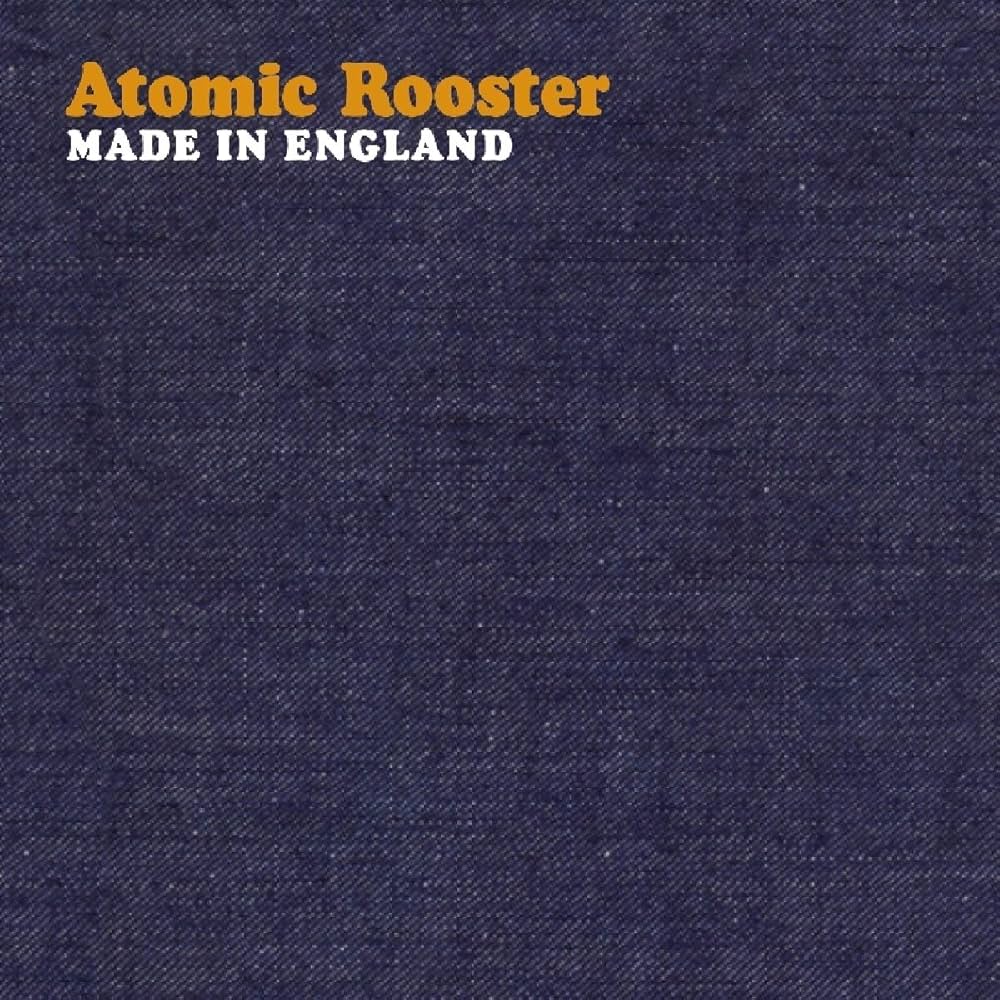
Paul: Yeah, there’s lots of them. Lots, and lots. And they’re very proud, because obviously, if you’re aware of that record Made In England, the original vinyl is now quite a collector’s piece with the denim sleeve. So, people who turn up with one of them are really, really happy with it.
Yeah, I don’t have that one; I’ve got this (hold up Canadian LP)
Steve: There’s a story about that because Vincent Crane, God bless him, he was such a sweet bloke. I remember him saying bright eyed and bushy tailed. “I’m going to call the album Made in England, because of the American market”.
He so desperately wanted to break into the American market. And you know what!? I’m going to we’re going to release in real denim covers, three or four different colored denim joint, purple, gray color. And so we saw it. But by the time it got released in America, they deemed that was going to be too expensive. And just to this, this cover here, the one you’ve got with Big Ben and the House of Parliament. And so it didn’t backfire, but it didn’t go according to plan. Never mind things happen.
So that was the only album you were on. But the next album, you weren’t on anything from that, right?
Steve: No, I just as I said, I was in the band for 18 months.
I want to go back to where we are now. So, the set list, does it really kind of cover the whole five album run of the band during the 70s? Or is there a lot of new stuff as well?
Paul: Yes. With the set currently is probably, with the new record coming out, is probably in a 60/40 split in favor of the new album. But we change the set quite regularly. Sometimes halfway through the gig. So, we do play something from all the older albums. We do now, we never used to. But now we would because, the line that we have and the mentality between the band, like we never used to play songs off Made in England up until recent years. But now we can do that and we can do some of the other stuff off the very first record. But previously, the majority of the set was based around the In Hearing Of album, which, there’s only so many songs on one album. So, it gets a bit tiresome playing the same stuff. But now the set is fresh…We play loads of back catalog and more importantly, the new tunes fit in there like a glove.
Steve: When you have a singer that I mean, this happens a lot, a singer that doesn’t play an instrument, for example, then it’s very difficult for the band to go off. And now we’re in a position where we can look at each other and go off on a tangent. We can paint ourselves into a corner but come out of it. And I feel that there’s such a joyous vibe on stage, in a gothic sense, that people pick up on that, and it’s just a great thing. We’re really excited.
And the new album just we’re really excited about it because of the way it came together. We didn’t kind of plan it directly, “Now we’re going to put this this time aside to record a new album”. It was a case of we got together some weird twist of fate because half the guys live up north and I live down south. But we got together and we had a quick rehearsal and we looked at each other and Adrian says, “well, I know this guy who’s got a studio in Lincolnshire. So, we ended up in that. We did like five tracks and then we went back a couple of months later and did another five tracks. And bingo – we had an album, new original stuff. And we got a new mental head on, we were like embracing this Edgar Allan Poe gothic going on, like a B-movie gothic thing. And that’s and that’s really freed us up… because a lot of the older stuff. I mean, Vincent Crane had problems, mental problems, and it is apparent in a lot of the songs, a lot of this doom, death and doom and death walks behind you. I would say about four or five years ago, it was starting to get on my nerves, thinking, I said to my wife, “I can’t I can’t handle doing this much longer, because it’s like really depressing”, but then when we became a four piece, all of a sudden, it was like a light bulb had gone on, and we all went, “let’s embrace this”. So now we go on, and we totally living the music. And it’s a great thing. That was the whole vibe for the new album.
Can I ask like, you and Adrian, do you are you to handle the vocals on the new album?
Yes. Adrian is the lead vocalist. Adrian is such a talented guy; he plays, he’s an unbelievable vocalist. There are 10 songs, I wrote five of them, of which I sing the five songs.
But the majority of the stuff, including the older stuff, Adrian is the lead vocalist. I mean, I’m not the lead vocalist in Atomic Rooster. I occasionally sing lead vocal.
I haven’t seen the performance or the writing credit. So, I didn’t know that. I was going to ask you about Adrian, where you found him, because it’s almost like on the new album, you guys went back to that classic kind of heavier, progressive Atomic Rooster sound. It’s got that kind of the wild organ sound and the interplay between the guitar and organ.
Steve: people say that; they say it was like they were transported back, to the early 70s. And people are wigging out, I mean, just get getting real gone. And there’s so many of these old prog bands that get back together.and it’s just they stand there, and they just play the stuff as was. And this is, although I’m saying it myself, this new version of Rooster is like a living organic thing that pulsates, and every gig is different. even though we might play the same set, every gig is different. And to me, that’s a beautiful thing.
Yeah, well, it definitely has that sound. Vincent Crane had that distinctive organ sound, like when you listen to those old albums. And I think with Adrian, you’ve kind of got that sound.
Steve: Adrian is a child of the 70s, but he’s just born in the wrong era. This is great for us. He knows exactly all the history of the music that I grew up with, for example, he knows everything, which is fantastic.
Paul: He’s a walking encyclopedia of music, and musical instruments, and just he completely embraces that entire lifestyle. And kind of that era, the 70s is his thing.
Steve: It could not have been anybody else but Adrian.
Paul: Me personally, me and Adrian have been friends since like our late teens, and that’s how I ended up in the band, Adrian was in the band prior to me. So, the band’s never gone searching for members. It’s always been, “I know the guy, I know the right fit”. And that’s, and honestly, when we’re on tour, we’re on the road, it’s the easiest thing in the world. It’s like everyone just gets along, there’s no arguments, it’s just four friends just traveling around playing music by the like.
Steve: Can I just say about recording the album, the guy that recorded it, a guy called Phil Wilson. A good friend of Adrian’s, and he’s in cahoots with this guy, and they own the studio. It was perfect for us. It was a studio in a forest, deep in a forest, and we just drive up there and we go in there and there’s a big, huge playing area where we could set up and play and record it. And that’s what we did, straight to tape. Vocals, obviously, were added on later. And very few, all the guitar solos, all the organ solos, everything was live in the same room, which is great. And Phil, and I’d heard through Adrian, he was a fan of mine. Everything was just right.. And I walked it and I said to Phil, and Phil pointed out to me later, he said, “the first thing you said to me was make it as gothic as possible”. And we didn’t have to say anything to Phil. We didn’t have to say a thing. He just recorded it exactly how he wanted it.
Paul: I do think the album reflects, a bit of a Jerry Lee Lewis type of vibe. There wasn’t many takes and we could have, we could have spent months, you know, pre-production and that, but we wanted to be live, as live and as raw as you can make a studio album. So it does have that feeling to it. Like every musician in the world, you listen back to something, you go, “maybe I wouldn’t have done this and I wouldn’t have done that”. When you listen to the album as a continuous piece, I think it makes sense as a journey.
Steve: And that was the way we played it then. We might not play it like that tomorrow, which is the way we are live, you know. Yeah, we played it like that yesterday, but tomorrow it’s different. If it wasn’t, we’d get bored.
I want to ask Paul, what sort of stuff did you grow up on? Because I think to myself with the four of you guys, where somebody would find, (and you kind of answered it already), but where somebody would find like-minded guys that want to join a band that was defunct 50 years ago, pretty much.
Paul: Being from the city I’m from, music is, well, it’s everywhere. It’s just piled up on, you know, there’s gigs and musicians in every genre you can think of. So obviously being from Liverpool, you’re very quickly exposed to the 60s. The Beatles thing here is kind of, well, it’s massive. And then very quickly, I grew up playing in bands that were around in the 60s. All the Merseybeat bands, I played in quite a few of them.
And then just through them, them being older in the 60s, and then introducing you to bands like bands like Traffic and people like that. And then that just goes on to someone else. And then when you start getting around to like Little Feet and The Band. and people like that, you very quickly realize who else is into that and who isn’t.
And Adrian grew up probably about eight to ten miles away from me, in a seaside town just up. And he was just, the band I was in when we were at school and the band he was in, we’d play the same shows. And it was very, you just chat and it would be very quickly become, you get it, you’re not trying to play… The rock when I was a teenager was things like, I like it, but it’s not stuff we tried to play. It was like, you know, bands like Limp Bizkit and Linkin Park and Sum 41, that kind of thing. So, it’s very quickly you establish who else is into that older vibe.
Without going down the mainstream route of, you know, obviously everyone loves Purple and Zeppelin and people like that. Well, it’s fine that people actually like slightly more underground thing. And then the Rooster thing was a band I was always aware of from the Death Walks Behind You album, because I was big into Sabbath, so it kind of comes hand in hand. But even though Adrian was playing in the band, I didn’t know the band had reformed. That was something I wasn’t aware of until a couple of years down the line. And then I played a gig with Adrian and Shugg (the bass player), playing some of Adrian’s other material. And that’s when the conversation was struck, would I be interested in coming because the previous drummer just, people move along, life changes, things happen. So, they were like, “would you be interested in coming on board?” That’s pretty much how I got to the point of sitting here.
So, have you familiarized yourself with the whole catalog by now?
Paul: Yeah, so a lot of it. And not even that, also, the individual drummers and their individual styles and who did what, because obviously, if anyone is a fan of Rooster, they’ve had more personnel than some football teams. So, it takes a little while to get your head around it, you know. And obviously, Steve knows this more than I do, but the different feels on the different records. Like in the live set, off the Maiden in England album, we play “People You Can’t Trust”; playing that compared to “Sleeping For Years” or “Death Walks Behind You” is two different sets of tools.
Even the Made in England album, Ric Parnell’s “All In Satan’s Name” was kind of…
Paul: That was the very first song I learned from Rooster for the first rehearsal, the first day I ever met Steve was “All In Satan’s Name”. That was the first one.
Steve: I remember that. So, when Ric wrote that song, Rick doesn’t play an instrument apart from the drums. We shared a flat together. He was my sort of my ‘guru’ because I was straight from Manchester, where I’m from originally, green behind the ears. I came down to London. Within a few months, I get a job in Atomic Rooster. I think, how did this happen? And we go to the States once; we go to the States twice, and everything that that sort of touring in America at that time, 1971, you can imagine what it was like. So, I come back and I’m like, I’ve been experienced and the whole thing. So, I ended up then moving in with Ric. And he wrote that “All In Satan’s Name”, and he had all the riffs in his head. He would like sing the riffs, a bit like when Captain Beefheart did to the Magic Band. He would sing the riffs, and I’d have to try and work out what he meant. But by the time the song came together…I love that song. But we don’t actually do it, do we, Paul!?
Paul: No. We rehearsed it for the when I very first joined the band. But the breaks were kind of put on it by certain personnel in the band at that time.
Steve: Yeah, let’s do it! It’s great. It was great live at the BBC Theatre, in central London. And I can actually, you know, you can’t remember shit that happened a million years ago, but you can remember one thing. I can remember pulling up with Ric. Between us we had a small Ford Anglia car with big wheels on. We pulled up in central London; in those days you drive into central London, park your car and we fell out into the studio. There’s an audience, and we got on stage and played. I can remember it as though it’s yesterday. But yeah, it was a great live version.
Ric was a bit of a character. I think I corresponded with him a bit there years ago and he had he had told me how he was offered the gig in Uriah Heep and then he didn’t take it for musical differences or whatever, then he joined Atomic Rooster next.
Paul: I think from my personal perspective, Ric was a phenomenal drummer and his playing style, I believe Rooster was the right choice for him rather than Uriah Heep.
So, the new album, can you guys can talk a bit about some of the songs and what stands out for you, what came out first, what got written first…
Paul: Steve can do his bit and I know some of the information from Adrian’s side, but I can make my best attempt of putting it in some sort of chronological order.
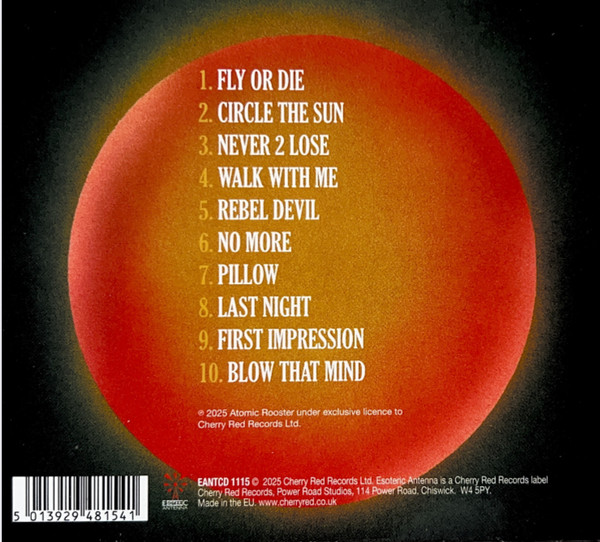
Steve: A track called “Rebel Devil”. I guess I was taking that “Devil’s Answer”, that sort of dark side of Rooster – “Rebel Devil”. But it just came. My wife and I went camping. We rented this cottage for a couple of days and I took a little parlor guitar, and we sat down while Louise was setting up and I just wrote it. And it’s one of those songs that just came out. And then I modified the lyrics. There’s a song called “Never To Lose”, which was a song of mine, which is on a B-side of a 70s Rooster single record. It was a B side, “Stand By Me”. We modified it and it became this new version. And, what else…(?) Oh, “Pillow”…
Paul: How “Pillow” ended up as the recorded version we have…the format we have was basically Shugg couldn’t make the set up day at the studio, and we had an evening free, and we set up a little drum machine, and we just programmed the little beat into it, and that’s how “Pillow” came out, because one of the bandmembers was late.
Steve: And I’s scary.
Paul: Yeah. And obviously you (Steve) had it down and had different versions or ideas in your head, but I don’t think you or me, or anyone expected it to come out as the version that’s on the record.
Steve: The whole thing was…there no effort. You know, when you don’t feel any resistance in forward motion… I was slightly concerned because I know what a great musician Adrian is. So, when Adrian said I’ve got this tune, it’s a bit mental, I’m thinking “oh shit”, because I’ve got to learn this, because he’s a great player and I might be out of my depth (lol). It’s like anything, when you hear a track, until you get to play it you don’t know if it’s in your possibilities.
Is “Fly Or Die” yours or Adrian’s?
Steve: It’s Adrian’s.
Leading off the album, you can definitely ‘get’ that it’s Atomic Rooster.
Paul: That was the one that was put together the morning of, or the day before we went in. Adrian said “I’ve got an idea”….just a few smalls parts. He hardly had a framework for it, but it wasn’t something that had been mapped out previously or he had a complete working version for it. The version you hear on the record was just developed, they must’ve been 4 takes of it; it’s just us playing it in the room, and that’s just what come out.
Steve: And Safe Haven studios is deep in a forest, in Lincolnshire, but my sister in law lives like 25 miles down the road, so I stayed there rather than forking out for a hotel. And everyday when I drove at 8 o’clock in the morning, from her house to the studio, I would be writing lyrics and solidifying ideas for the songs. I’d pull over and have to just scribble shit down. So, by the time I got to the studio I said “right, let’s do it!”. It was great fun.
How did the song “Circle The Sun” develop in to being the title track?
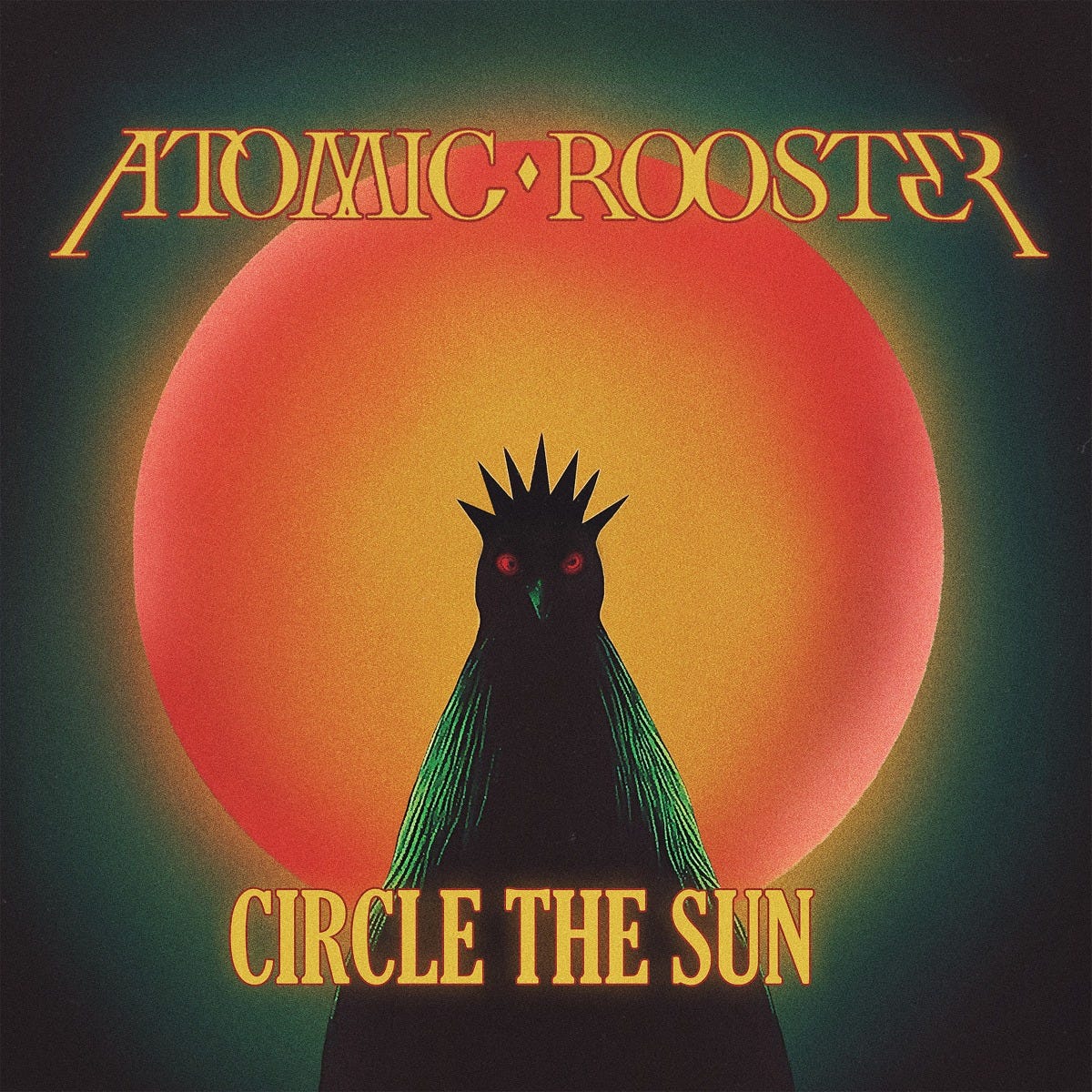
Steve: It was a song I wrote, and it was deliberately, lyrically, kind of an antidote to “Black Snake”, which is the famous Rooster track (“black snake, living in a black hole..”). So, this was like coming out, and into the sun, embracing life and being out.. So, this was like an antidote to “Black Snake”, in my head. It just seemed, I think between us, we thought it was a suitable title. And the artwork was my wife’s son, who lives in Italy. He’s an artist, this is what he does, so I put it to him, “could you possibly come up with some ideas?”. And he came up with that rooster, and at first I looked at it…and then I got it. So, he’s been great.
It (the cover) is very catchy, it’s very bright, it immediately sinks in. So, I’m glad that there’s 10 tracks on here, because you get some new albums and they’ve got 14 or 15 tracks, and I’m usually out after 9 or 10 songs.
Steve: I’m like that with a live band, even if I love the band, I’m like 40 minutes max, and I want to go…
Paul: I got invited last night to go see Bryan Adams in Liverpool…And he’s playing his new album, he’s come away from his label…and he’s playing really good, and obviously he’s got to play the new album, it’s self-published – it’s him putting it out, But after like 6 songs I get it – the album’s great, but unless the album changes drastically through it and keeps you on your toes. You’ve only got so much listening capacity before you go “I get the vibe, that’s it, I’m done”.
I’m like that with albums. I like the old style of 20 minutes on each side, and that’s it.
Steve: Frank Zappa would always have like 11 or 12 minutes on a side, which is nothing when you think about it, but he said he gets maximum level with the less that you have on a vinyl album, each side.
Also, it’s like going to see a band live, and youguys talked about putting a lot of the new songs in the live show, where as with , especially the older bands, put out a new album and you go to the show and they play 1 or 2 songs from it; what was the sense of putting out an album if you’re not going to play it live.
Paul: I think, especially with this record, the set alters quite a lot, but we’ve been careful, and I don’t think it’s intentional, it’s just that we’re aware of the legacy of the band and pushing it forward. The material sits quite well with the old material, so in the set, if you don’t purposely tell the audience ‘this is a new track’…
Steve: Exactly. Someone said they wouldn’t know if you didn’t say it’s from a new album, they would just assume…
Paul: Especially with tracks like “Fly Or Die” or “No More”, they definitely have that early 70s organ driven, gothic, proto-metal thing going on, and it’s kind of .. like we played the track “No More” at the festival in the Czech Republic, and to look up from the drum kit and see people having a circle pit going on to an Atomic Rooster song was kind of surreal
It’s interesting, because if you take a band that’s ‘hits’ band, like Foreigner, that plays the same 12 songs, if they ever changed that, people would be like “what is this?”
So, what of all the 10 tracks are you guys going to eventually get to be playing, all of them?
Paul: Yeah. We play most of them live at the moment with the exceptions…
Steve: We probably won’t play “Pillow”. We sometimes have been using it to go on stage with, to set the mood, the dark, you know, Phantom of the Opera, (the original version, not the Andrew Lloyd Webber version), but you never know.
Paul: “Pillow” would be the one that it’d take a bit more, just from my point of view, it’d involve bringing electronics onto the stage and that kind of thing. And the vibe of the band is like we still want a Hammond and a Leslie and a 1960s Ludwig drum kit. And, electronics on the stage isn’t really the thing. But, you know, we never say never.
So, we will eventually play everything off the new album. The one for me that is kind of difficult to play, but we do play it is “Blow That Mind”., because there is two drummers on that track. It was an idea that came after hours. We’d stopped tracking for the day, we’d all sat around and had a drink and it was like, “Oh, let’s try this”. And the guy who produced the record, Phil, is also a drummer, and we’ve known each other for quite a while. We played it, but we did it with no click, and it was all live with two drummers that never played together before. So it was it was an experiment.
Steve: The Allman Brothers did that.
Paul: Yeah, well, that was the whole idea is that the Allman Brothers, and but then trying to obviously the parts aren’t overly complicated but trying to replicate that feel on your own live… sometimes can become a bit much without overplaying. So that one, for me is the one where every night I think,’ right, this is it. This is this is this is showtime’.
You guys had a single out last year. And I also found I also came across a there was a live in studio recording there from two years ago.
Paul: Basically how it worked was we finished the record. And then we were quite lucky, a few different labels came knocking at the door. What we wanted was a company that will have a feeling for the band already. Like Cherry Red have some of the other catalog, one of the other labels who came our way, have some of the rest of the catalog. And there was two or three others. So, we held off for a while, but obviously we were out touring. We had to have something new to sell, so we put two of them an EP, as a single and then took some live tracks that were recorded at a place in Germany called Kolossal, just to give it a bump to make it a full CD to sell on the merch table. But they were only ever available at shows. Then then 40 copies was what we had left over, then got sold through Facebook market, social media just to put them up for sale. First come first serve.
Steve: I don’t think those tracks that are on that that that single or EP, they’re not mastered, are they?
Paul: No, they are mastered. They are mastered technically, but they’re not done to the quality of what the albums that come out because they weren’t the final mixes. They were mixed and quickly mastered just for merch market rather than mass. And then as of I don’t think Steve knows this yet, we’ll have a new double album available come end of October as well. It’s called “Completely Live”, it was recorded in Scotland last year.
Steve: I haven’t heard this.
Paul: It’s sometimes how things like move for when we’re preparing for a tour. You need more product.
And obviously it helps to reintroduce the band in that.
Paul: It does. It’s a good quality live album. It was a show with a great vibe. So that will be that ‘should be’ out end of October.
And that’s coming out through Cherry Red as well?
Paul: No, it’s not. The only thing that is currently coming out via Cherry Red at this moment is the Circle of the Sun album on CD. IIn a nutshell, it’s the first album in 40 years. They don’t know what it’s going to do. And we like them as a label and Mark from East Terek and John from Cherry Red and Matt, the press guy, are all great guys, so when we spoke to them, we felt that was the right place for the album to sit. With their other roster of artists and things like that, the Rooster name, it doesn’t stick out – it sits in there nicely and it’s kind of at home with friends
So, the live album, when what is that coming out on?
Paul: It will be self-published by the band, so it will be a merch album and then eventually it will end up when the new eShop is set up, it’ll end up on there as well.
OK, so you guys are going to set up an online shop for like shirts?
Paul: Yeah, It’s in the works at the moment. But yeah, I don’t know.
Steve: Not only is Paul a fabulous drummer, he’s the business engine of this band. Paul gets the stuff done.
Has recording this new album kind of spurred you guys on that, you might want to start thinking beyond this album already?
Paul: Yeah, most definitely. I could tell you, this new album, I wasn’t even the band, this album should have happened many years ago. It didn’t for one reason or another. Some of the material, I know from Adrian’s point of view, he had some of the ideas already and then certain people would often put barriers in the way. And then once them barriers have been removed, the freedom was there. So, yeah, we’ve already spoken about another record after this one. But like everything is kind of let’s just get this one out first and then see where we’re up to. But I do believe another one will happen as of when and on what label; hopefully it’ll be on Cherry Red. But, we’ll just get this one out first and see what it brings. And hopefully the other thing for you and your guys, hopefully we will come Stateside at some point in the next year.
Yeah, I was going to ask that. I know a lot of the older bands have been here for years..
Paul: There was a full a full US and Canadian tour booked – Full, all done, sorted for 2022, and then again, certain barriers were put in the way and pulled out very, very last minute. And then, we’d been in contact with the promoter again and we were due, and it was booked again. But we should be we should be in the States right now. But Adrian’s wife’s due to give birth. So that got rescheduled but rescheduled till when yet is another matter.
Are you looking at, obviously like when the older bands come over, you’re looking at a package tour with at least one or two other bands!?
Paul: In the first instance, it wasn’t and how it was working was there was two or three festivals that wanted the band. So, it was already worthwhile running the tour. When it was rescheduled, it was going to just be us, but that is kind of all up to the promoter, however they feel it would do on it’s own or, but hopefully we’ll get to do it. And that is a conversation I’m very much involved in at the moment.
Steve, I was wondering if I can ask you a bit about the 70s era there. In your viewpoint, why the band kind of changed regularly, and you were there for the one album. What do you think was kind of the lack of success or the whole lack of consistency with Atomic Rooster?
Steve: I’m living in Manchester, that’s where I’m from. And I used to go and see bands at the University of Manchester, because they had a stage and they had visiting bands. And I remember distinctly going to The Crazy World of Arthur Brown. It was Vincent Crane, you know, the Crazy World of Arthur Brown – Vincent Crane, Carl Palmer on drums and the bass player. And I’m just spellbound. I’m looking at this, you know, Arthur’s got the flaming headdress on. Vincent, it’s just like a demon on the Hammond organ. I remember he obviously a blow lamp and melted the keys on the Hammond, so they were like dripping like candle wax. And never did it cross my tiny mind that like two years later, I’d be in London playing with Vincent Crane in Atomic Rooster. So that’s what happened. That happened with The Who as well. I used to go and see The Who and then I ended up playing with them. Anyway, so with Rooster, I was aware of Atomic Rooster, and then the singles “Tomorrow Night” and “Devil’s Answer”. And I remember when I joined, it was great. I’m straight from Manchester to London. I joined the band. And there was a bit of controversy about the new sound of Rooster, because I wasn’t playing like John Cann, that sort of like, in my mind, maybe over the top guitar. You love it, I hate it, but whatever. But you know, and I think when I left, I think it sort of went downhill then. Were you asking about what happened to Rooster and how it fizzled out!?
Yeah, kind of like, that the band never kept a consistent lineup, which is probably the main issue, but there was never that major success to keep the band going.
Steve: Vincent, as I said before, had mental problems. It was difficult for him, I think. I had conversations with him, and he wanted the band to be, he was into James Brown a lot. And if you listen to the first Crazy World of Arthur Brown, they do a track called “I Got Money”, which is a frantic track, but it’s a James Brown track. And Vincent wanted it to be more like James Brown. I mean, really, that wasn’t going to happen. So, he would get horns on tracks, I think “Save Me” has got horns on it and stuff.
Paul: One of the versions of “Devil’s Answer” has got horns as well, hasn’t it!?
Steve: But it’s like English session musician horns of the period, so they’re not snappy like James Brown. But that’s what he always wanted. And when I auditioned for the band, I think he saw that I have a certain amount of funk in there, and he could use that. He didn’t want an over-domineering guitar player as John Cann had been. It was tricky at first, because there’s always a bit of flack, you know, from fans about, “Oh, this New Direction – don’t like it”, and everything. It ended up as a good band. It was tricky when Pete French left, but he got poached by Carmine Appice and Cactus. That was his big thing, so he floated off and joined Cactus for a while. And then Chris Farlowe came in the band. And I mean, Chris, Chris is great. But to me, I was a little bit young…we did the Made in England album with Chris. And I was pleased, I think I got two songs on there.
I had that on yesterday. I noticed the production; you got the horns and some stuff like that on that album. It’s definitely not as heavy of a guitar and organ album.
Steve: I would occasionally be having a jam in the Speakeasy or something. I remember once this was like, a year or two after I’d left Rooster, and Vincent coming up “Bolton, what are you up to?” It really distressed me when I read about, you know, he committed suicide. He was a sweet guy.
Had you kept in touch with him in later years?
Steve: No, as I said, only a couple of times subsequently after I left Rooster I ran into him a couple of times. He joined a band Dexy’s Midnight Runners. I think he joined them for one album.
It seems like an odd move.
Paul: It’s definitely an odd move. Dexy is a really good band, great musicians, but Vincent in the mix is a bit of a…seems like odd.
Steve, you went on to Headstone. I was checking that out, and I see that David Kaffinetti, from Rare Bird, he passed away a couple of months ago. He was in that.
Steve: No, Mark Ashton from Rare Bird. He was a drummer in Rare Bird and David Kaffanetti, I think he guested on a couple of tracks.When I was with Rooster, we did a gig and this kid on acoustic guitar, Mark Ashton opened up for us. We hit it off, we got chatting. It was like a love affair (haha).I’ve met another bird. So that’s what happened. We formed the band Headstone.We did two great albums, but no great success. Cult albums now, apparently. And then I moved on to other stuff.Doing lots of sessions, which was my intention.
Now, you toured with Paul Young as well. Do you remember a singer named John Sloman when you were with him?
Steve: Yeah, I know, John. I was speaking to John just relatively recently. He’s a friend of Pino’s from Wales. And realize John’s got a bit of a history as he had a band Lonestar, right!?
Yeah, he put out a book a couple of years ago. It’s quite eye opening.
(a bit of chat about band’s John sang with)
Steve: John’s great…So the Paul Young band, we toured incessantly for two years. Great success. I wrote a song for Paul and that was on the quadruple platinum album, you know, and all that stuff. And that ran it’s course, and I decided to leave. Then Paul asked me back. After about a year, I was trying my own band, but he asked me back. He said, “we’ve got this guitar player, but we want you back”. So, I joined back and then we went on a world tour. He had a couple of backing vocalists, one of whom was John Sloman. John came around the world with us. And also, after that, after Paul Young band, I ended up doing some stuff with Belinda Carlisle, went on the road and John Sloman was the backing vocalist there.
And then you did the Who thing. I saw the Who in 89 in Toronto. And it’s funny seeing a band that has 4 or 5 guys on the albums, but you go see them and there’s like 8+ people on stage! How long did you work with the Who for?
Steve: Well, that was a weird one. I mean, it’s all quite current now because of what’s going on with it, what has really gone on with the Who and the little tantrums on stage and all… But that was another weird thing, I used to see the Who, the original Who, with Mooney. I saw them without Roger Daltrey – just Pete, John, and Keith Moon. We got the word, because I was a Mod, before I saw the error of my ways, I was a mod on the Manchester scene, and we got word that The Who were doing a secret gig over in Burry. So, we all piled in to cars, and went over to this ballroom, in a suburb in north Manchester called Burry. And we looked at the stage, there was a full drum kit, the Who drumkit, 2 Marshall stacks, and I remember talking to John Enthwhislte, and he said “Roger’s not singing with us tonight”. And we were like “why?” And this was at the time of “My Generation”, which was the peak Who period at the time. And I think he said “He’d done too much speed; he couldn’t make the gig.”. And years later when I was playing with The Who I was talking to John, I said “do you remember you and I had a conversation, and you told me …”, and he said “do you know what you saw? Pete has always hated Roger, so he wanted to try out some gigs without letting Roger know to see how it would go.” And all these years later, he’s still there; the lovers are still together (haha).
So, one day I got a phone call, and it’s a shit day because my wife’s leaving me, and we’ve got a young son, and I’m really down in the dumps… and this voice says “Boltz, it’s Pete Thownsend. I want you to join The Who”. It was this bizarre thing, because never in your wildest dreams would you think you’d be playing guitar for The Who! But it was good, because the Ox was still there. But I know what you’re saying because they’ve got backing vocalists, and a f**king horn section, and they didn’t need all that. And Pete, basically he wanted me to egg him on to play electric guitar again because when we first started playing that tour he was playing acoustic guitar, but as the tour progressed, he started to get the Strat out, so we were both really going for it.
Was Rabbitt (Bundrick) on that tour?
Steve: Yeah, Rabbitt was on that tour. Rabbitt was full-on on that tour! We were In production rehearsals in Saratoga Springs, and Rabbitt had been on a bender and he was late! And Pete’s like “Where the f**k’s Rabbitt? I’ll get him..”, and he dragged him out of bed. Yeah, Rabbitt was a nightmare. I remember we were in a room, there might’ve been some stuff going on (it might’ve been girls or something), but Rabbitt was just there, and we just said to Rabbitt “Will you go, Can we make this more clear – just leave.” And I’ll always remember this, when Rabbitt got to the door he turned around and said “Well, as Jerry Lee Lewis said ‘never mind!”, and I said “Did he say that?”, he said “I don’t know”, and went out the door (haha). The funny things you remember. Rabbitt’s great though; a great keyboard player.
How many tours did you do with The Who?
Steve: Just the one. We went around England, played major venues, and we went around the States. It was suppose to go on around the world, but Pete pulled the plug on it. Basically, I think he was doing it to make money for Roger and John, just as a money-maker, because we were making a lot of money on this tour. I was a bit disappointed, because, although I got paid a bunch of money for it, it wasn’t that much money after you got taxed. It was suggested to go around Europe and Australia, and that would’ve bought me a house! But it wasn’t meant to be. But, it was a great experience.
What else do you guys have on the go?
Paul: Well, Steve and I, obviously both play in multiple projects. I played with a Canadian band a couple of times, they’re called Blackie And The Rodeo Kings; I played with them a couple of times over in the UK when their drummer couldn’t tour. And I play in another original project, at the moment with one of my friend’s who is Charlie Chaplan’s grandson. We go out doing his music across Europe, and that’s pretty cool. And then home for me is I’m one of the resident guys at the Cavern Club, so I play there a couple of nights a week when I’m home, not on tour. We’re all working musicians – if you’ve got a gig, and we can get paid, I’m in. And Steve’s always got loads of projects. And Adrian plays for the actor Keifer Sutherland, he plays guitar in his band, and he plays with an American band The Fun Loving Criminals – Adrian plays 70s Leslie-Hammond organ in a mid 90s Hip-hop band; it’s quite an interesting gig. And Steve’s got his own original projects outside of the Rooster, like Deadman’s Corner…
Steve: Solo acoustic gigs…
Paul: And Shugg, the bass player, plays in a multitude of original projects; the majority are kinda like Americana, Westcoast, that sort of thing.
Steve: I’ll tell you Kevin, this new album is like a new dawn for the Rooster. We do gigs and young people are there. Young people are loving the band because they’re feeling this energy we’ve got. We’re not just a bunch of old geezers going through the motions; it’s like a new project, I think.
Paul: Yeah. A lot of bands, like Rooster, that reform, that kind of thing, and are missing some core members, and you have the same old rhetoric “Oh, that’s not them because such and such isn’t there.” And I get that, but we fully believe, that with this line-up of the band at the moment, it’s not resting on it’s laurels, we’re not sat back…
Steve: We do get people who’ve come, I wouldn’t say just to bitch, but they’ve come, and came up and said and they’re not expecting, like “what can it be” , there are certain members not there, all those preconceived thoughts…
I think the new album will a lot of that to rest because, to me, it does sound like Atomic Rooster.
Paul: It does. And as I said, the album should’ve happened a long time ago. There was barriers in the way, and then barriers crept in to the live show, it was a bit stale after a while. Now, you come to the show, you’ll never want your money back. You come to watch Atomic Rooster, and what you get is Atomic Rooster.
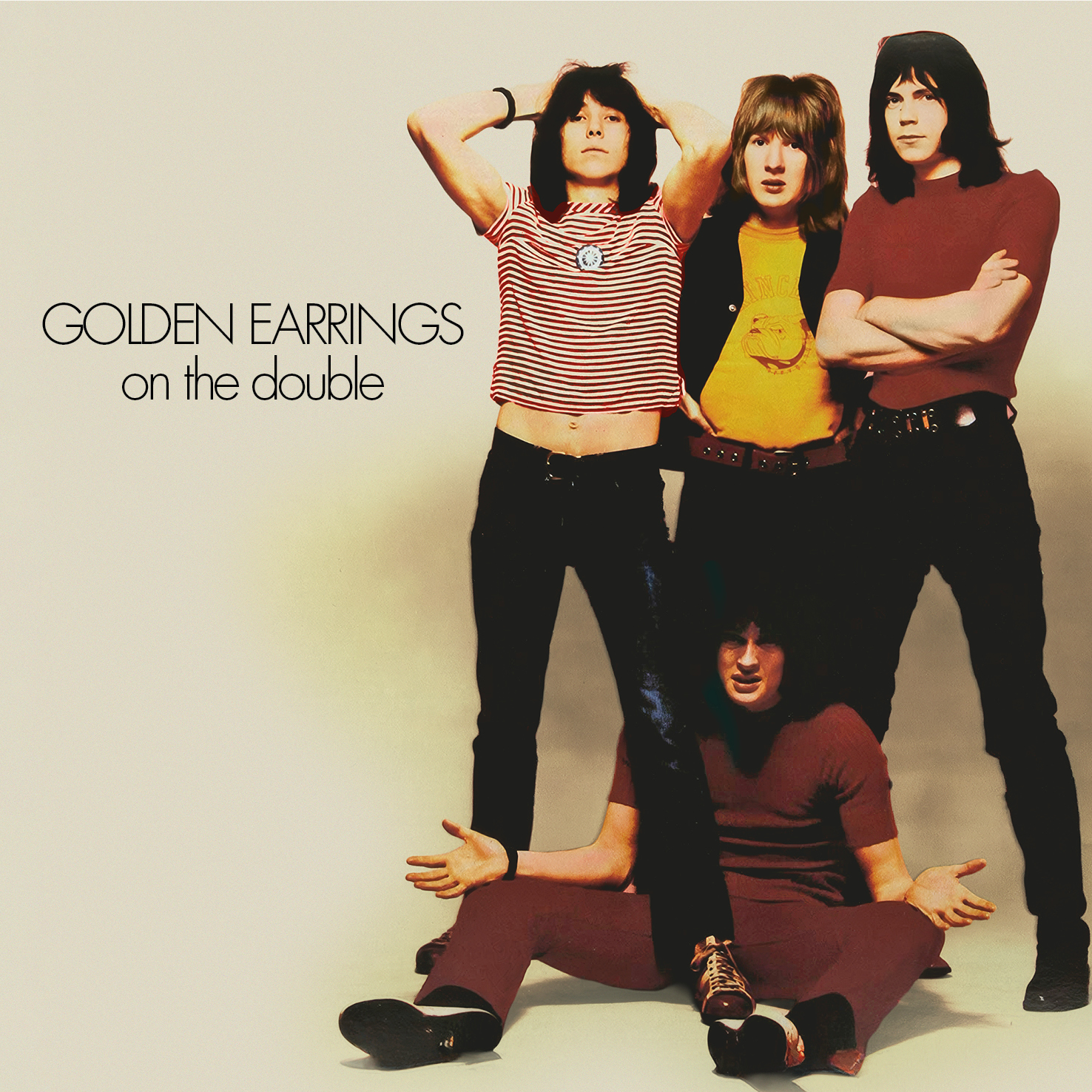
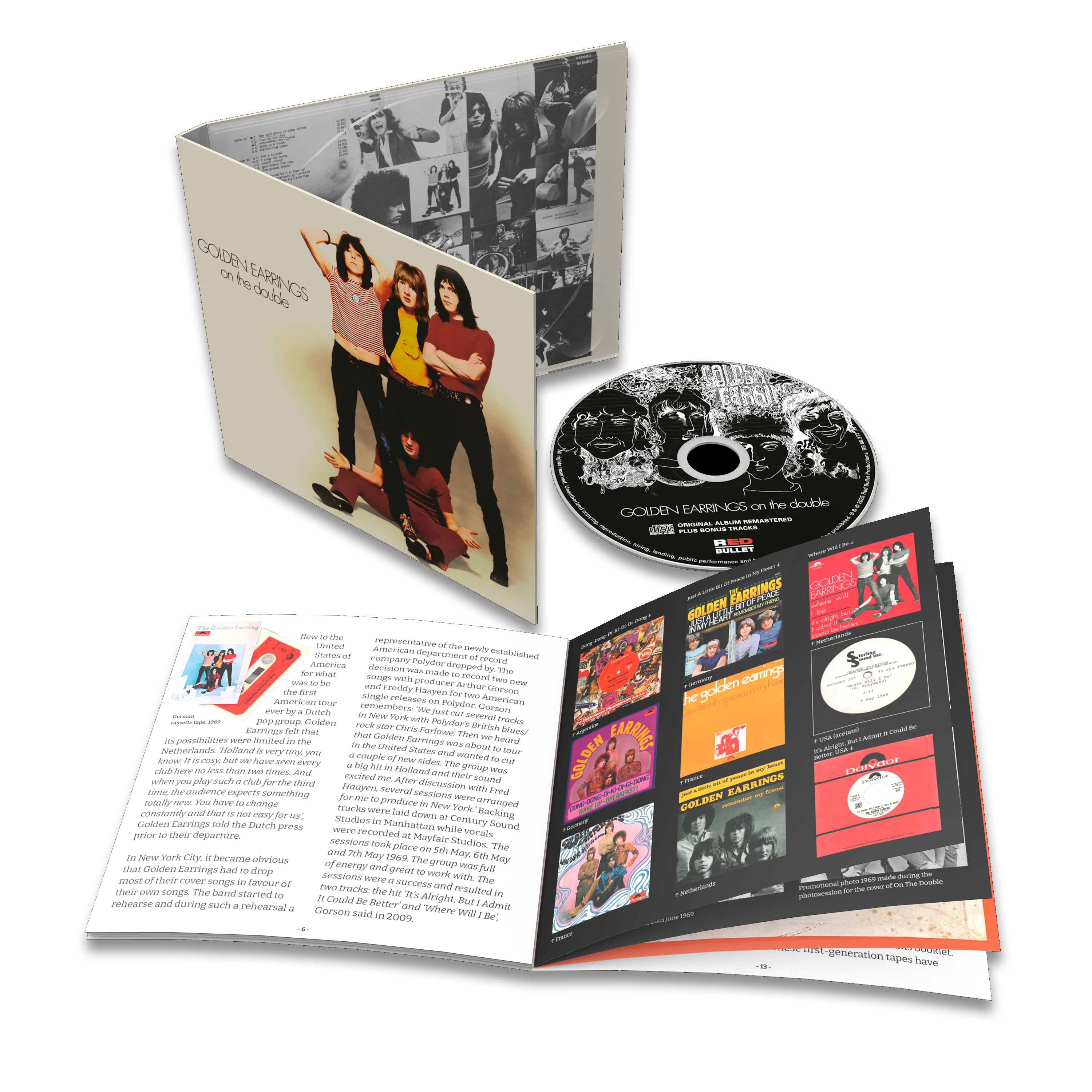
Originally released in 1969, On The Double was GOLDEN EARRINGS’ ambitious double album. This will be reissued November 14 on CD, including bonus tracks and booklet. *Check out the press info and link below.
Expanded edition of the band’s very first double album, released in 1969, including the Golden Earring classic ‘Just A Little Bit Of Peace In My Heart‘
Remastered for the first time from the original first-generation Phonogram Studio and Sterling Sound master tapes
Including four bonus tracks, including previously unreleased stereo mixes of ‘Dong-Dong-Di-Ki-Di-Gi ‘Dong and Wake Up-Breakfast‘!
Including a 20-page booklet with liner notes, memorabilia, and photos
Founded in 1961 by George Kooymans and Rinus Gerritsen, Dutch rock band Golden Earring (or Golden Earrings, until 1969) started off as a beat band, experimented as a psychedelic quartet and finally became a heavy rock group. Their ninth album Moontan (1973) – including their classic track Radar Love – hit the international album charts and is the band’s most successful album in the United States, being the only Golden Earring album to be certified Gold by the RIAA.
On The Double, Golden Earring(s)’ very first double album, was released in April 1969, after the band had been working on it for about a year. The two records contain nineteen songs, each with its own style. From acoustic tracks like Angelina, Judy, and Murdock 9-6182 and the robust psychedelica of Backbiting Baby and Song of a Devil’s Servant to the heavily orchestrated Just a Little Bit of Peace in My Heart, which was already released as a single in November 1968, reaching #2 in the Dutch Top 40. This song is now considered a bona fide Earring classic.
This expanded edition includes four bonus tracks: the single Dong-Dong-Di-Ki-Di-Gi Dong, with its B-side Wake Up-Breakfast, which gave the group its very first number one hit in July 1968. For the first time, the original stereo mixes of both tracks have been released. The single Where Will I Be, with the B-side It’s Alright, But I Admit It Could Be Better, was recorded by the group in New York City in May 1969 and marked the very last recording the band made with drummer Jaap Eggermont.
All tracks have been 24 bit/192 kHz remastered from the original master tapes.
This expanded CD edition of On The Double is the seventh instalment in a special series of remastered & expanded albums by Golden Earring, overseen by Red Bullet catalogue and band archivist Wouter Bessels.
TRACKLISTING:
1. Song Of A Devil’s Servant 2. Angelina 3. Pam Pam Poope Poope Loux 4. Hurry, Hurry, Hurry 5. My Baby Ruby 6. Judy 7. Goodbye Mama 8. Murdock 9-6182 9. Just A Little Bit Of Peace In My Heart 10. The Sad Story Of Sam Stone 11. High In The Sky 12. Remember My Friend 13. Time Is A Book 14. Backbiting Baby 15. I’m A Runnin’ 16. I Sing My Song 17. Mitch Mover 18. God Bless The Day 19. The Grand Piano + BONUS TRACKS 20. Dong-Dong-Di-Ki-Di-Gi Dong (stereo version) 21. Wake Up-Breakfast! (stereo version) 22. Where Will I Be 23. It’s Alright, But I Admit It Could Be Better
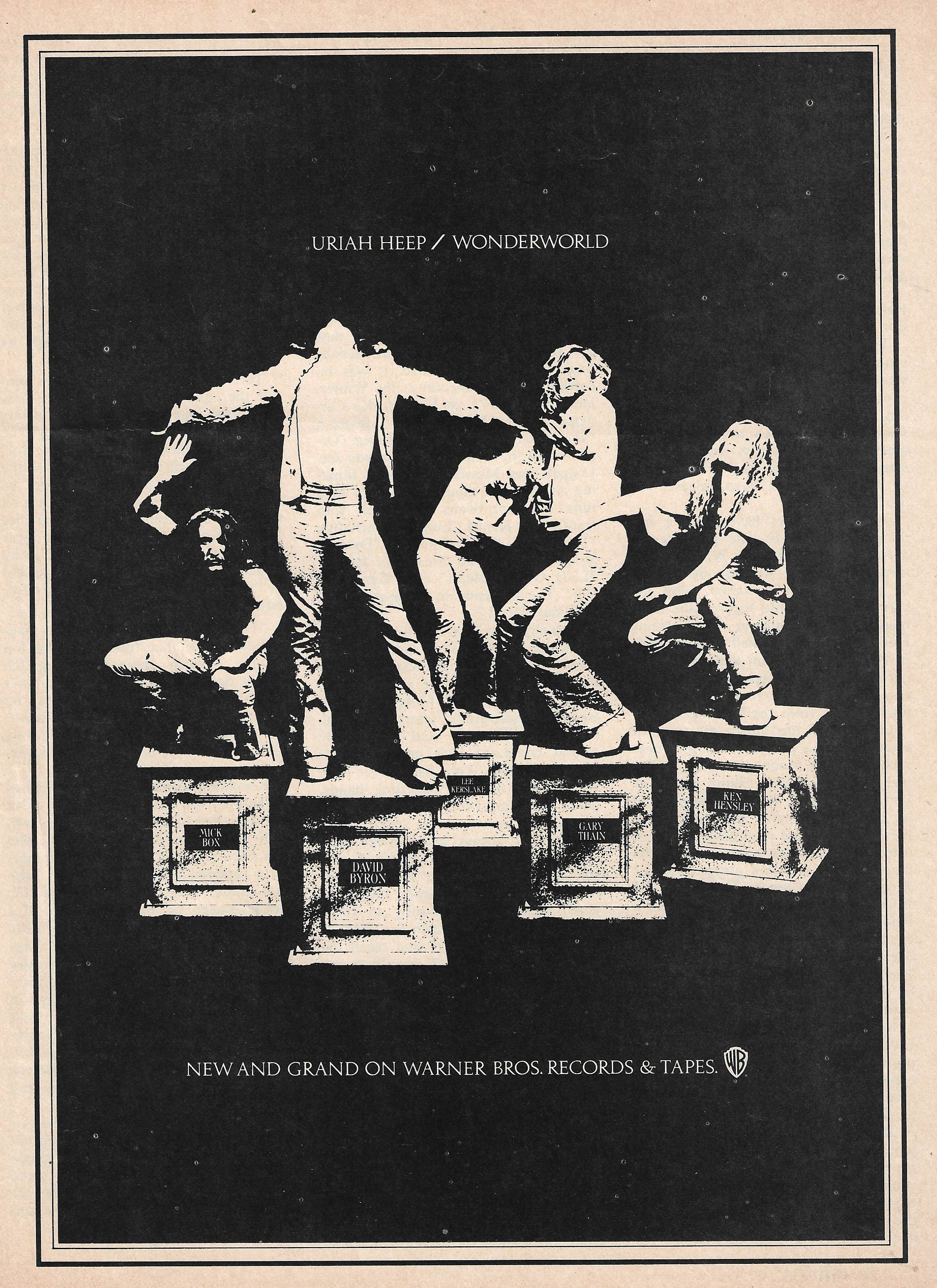
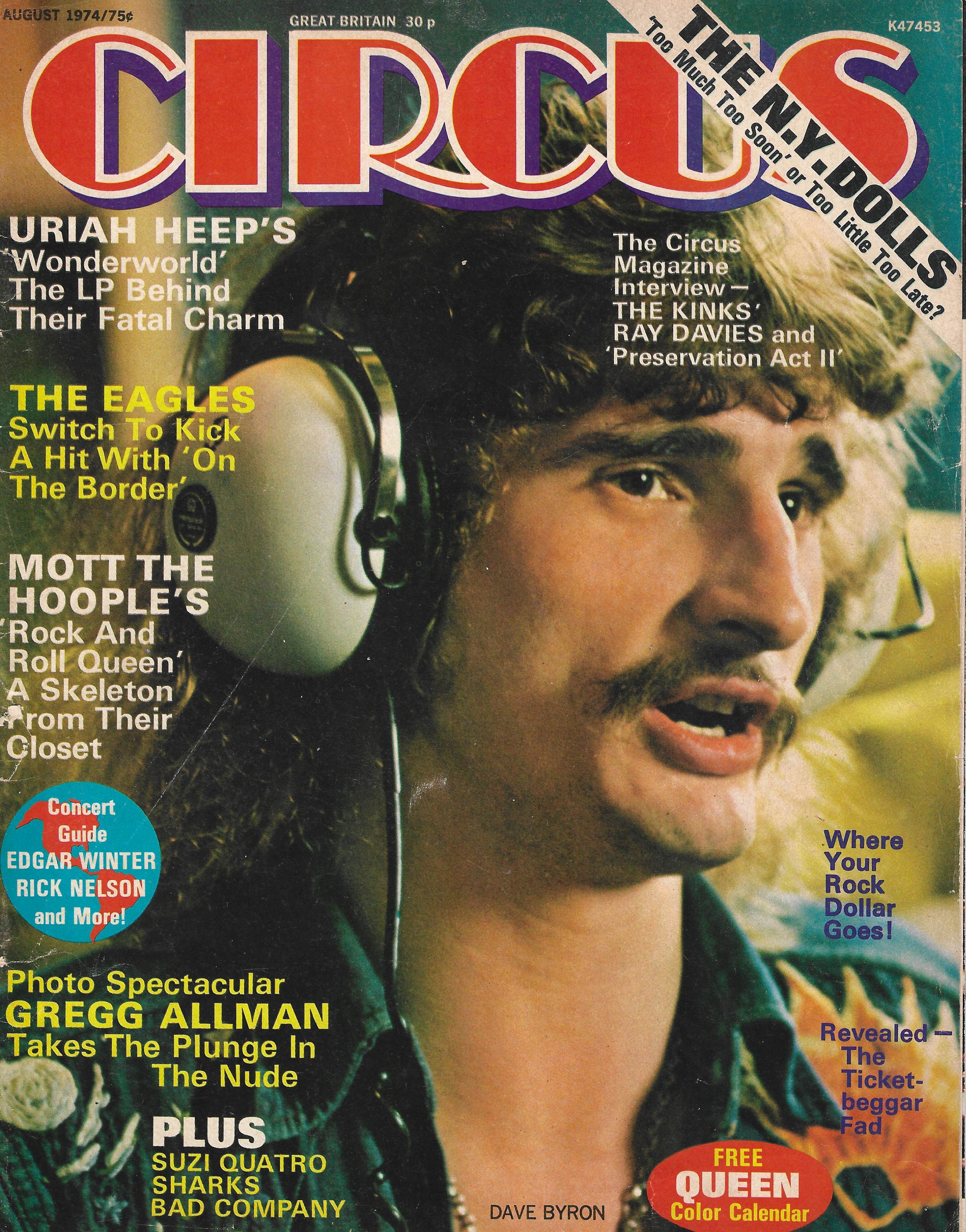
Wonderworld was URIAH HEEP”s seventh studio album, released in 1974.. it was the band’s 4th (and last) one featuring the “classic line up” (Mick Box, David Byron, Ken Hensley, Gary Thain, Lee Kerslake) as Gary Thain would be let go before the next one (and tragically passed away not too long after that). Wonderworld was also the band’s 2nd album for Warner Bros in North America, which likely meant big things were expected following Sweet Freedom. I am probably (and presumably) one of the many who thinks this album is full of classic Heep tracks but due to its sound – find it hard to take regularly..
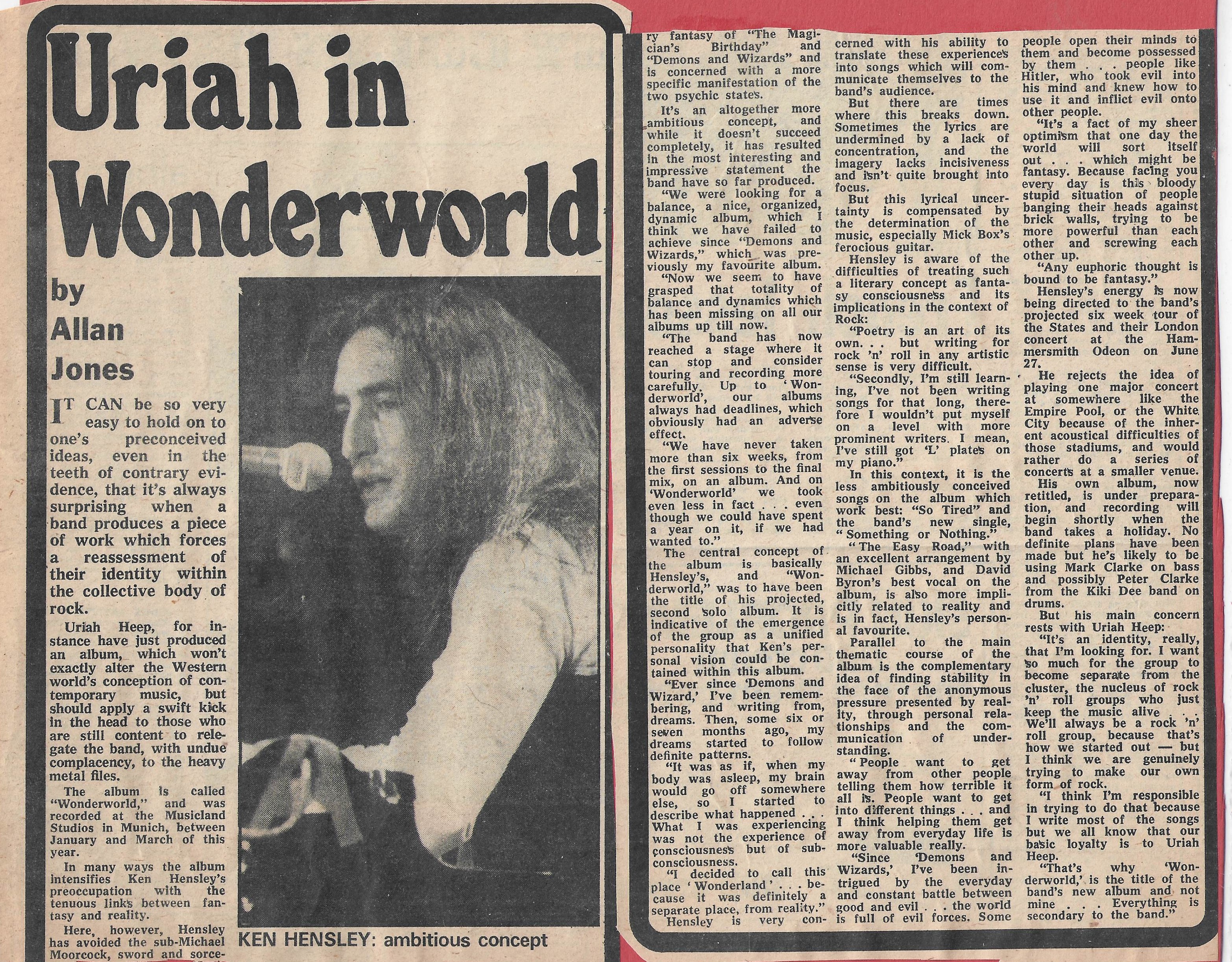
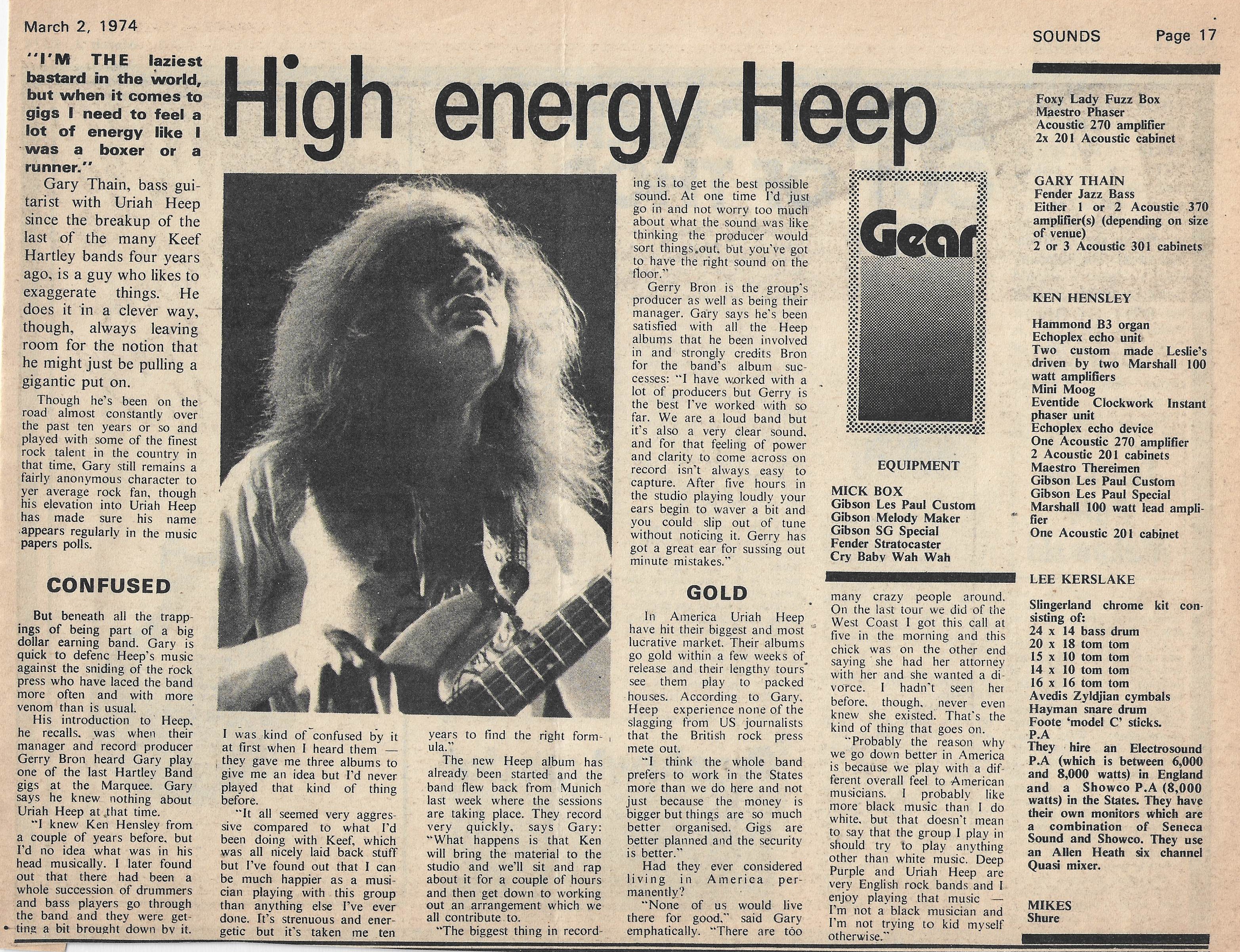
Wonderworld was the 2nd Heep.album to be recorded outside of the UK, this time in Munich, Germany, and again for tax reasons. The band used German engineers Hans Menzel and Reinhold Mack (better known for working on a number of Queen and ELO albums). Some band members would later cite that the recording abroad caused a lot of the friction and less than stellar outcome.
Many songs were based around Hensley’s dreams, as the title “Wonderworld” referred to. The album’s cover art would feature the band posed as statues, a cover designed by Graham Hughes (cousin to The Who’s Roger Daltrey, and who had designed a number of Who album covers). I actually liked this cover, though Hensley, in particular did not. Asked about album covers, he once stated “I particularly dislike Wonderworld and Conquest, but nowhere near as much as I hate Toe Fat 1“. Some years ago when Ken was being acknowledged with a new statue of himself, I responded on social media if he would be re-enacting his Wonderworld pose, to which he responded in capital letters that NO, he would not be. Mick Box, who misread things, did not send in shoes for the shoot, so he is the only member barefoot on the cover.
More so than Sweet Freedom, Wonderworld saw Heep producing shorter tunes, ditching the lengthy epics, but still offering up quite a variation of tunes. The album opened with the title track, featuring a grand intro from Hensley, coming down to a soft piano before David Byron’s vocals come in softly. A near ballad that soars up and down between the verses to chorus and back, and an underrated classic in the band’s catalogue. Side one also contained 2 rockers, the classic “Suicidal Man” and “So Tired”. “Suicidal Man”, a favorite, would return to the live set in 1980, when longtime Heep fan John Sloman joined, and recommended it to be included. “So Tired” perhaps reflected the band’s state at the time, having such a non-stop recording-touring schedule at the time. It reappeared in the band’s live set in the early 2000s. The first side also includes the fan favorite “Shadows And The Wind”, which starts out soft and builds up, with the Heep choir adding a unique arrangement towards the end. “The Easy Road” ends side 1; this piano based ballad featured strings arranged by Mike Gibbs. It’s interesting (to me) that this type of ballad pre-Kiss’ huge hit “Beth”, which came a year later, and that it was never issued as a single! It did feature in the band’s live set at the time, and has been brought back periodically over the last few decades.
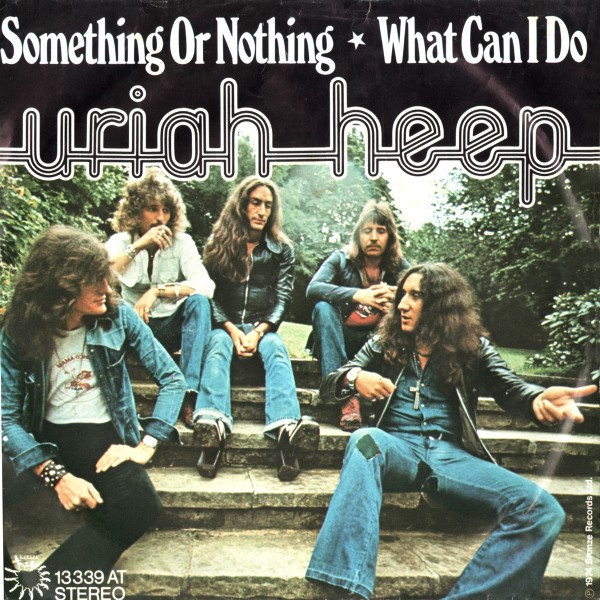
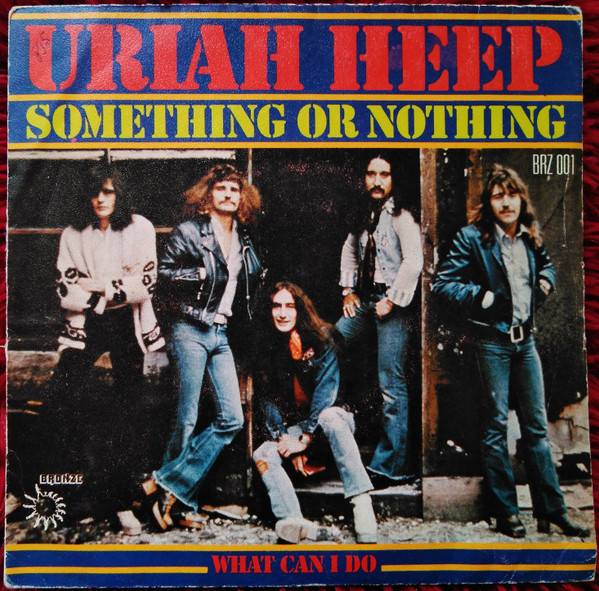
Side 2 opens with upbeat rocker And single, “Something Or Nothing” This is one of my favorite songs here, and a shame it doesn’t get more attention. The band adds some slower blues rock, with the guitar heavy “I Won’t Mind”; this one may have been better geared to the live show, featuring multiple guitar solos, but it kinda falls short in being an epic here. The album’s last 2 tracks are again something different in “We Got We”, and somewhat eerie (musically) closing track “Dreams”. The latter, again, was a chance where the band might’ve expanded this into something greater, like most closing tracks that came before, but instead it just ends with vocal lines mixed in from the track “Dreamer” (from the previous album), before grinding to a halt. All seeming a bit rushed, But not bad.
The single “Something For Nothing” was backed with the non-LP “What Can I Do”, a decent cut, that could’ve easily substituted for a few album cuts. The band’s 25th Anniversary box set Time Of Revelation, also included 2 outtakes from these sessions, the excellent acoustic track “Stones Throw”, as well as “Love, Hate, and Fear”, which sounds somewhat unfinished.
Despite a big promotional campaign and world tour, Wonderworld was seen as a disappointment to many fans, and is still a controversial album for some, due to the drop in sales, the aftermath of the album. It may not sit top 10 with many Heep fans (does it?), but it was the last Uriah Heep album to chart on the Billboard’s top 40 albums (only Return To Fantasy and Abominog would break the top 100). Wonderworld did reach the top 10 in a number of European countries, and #31 in Canada. It also made fans and influenced the likes of A-HA’s Morten Harket, and German guitarist/songwriter Axel Rudi Pell. The band were featured on US TV, filmed live at Shepperton studios (which was later transferred to being a live album release). Live At Shepperton featured a number of tracks from Wonderworld. A shame there was no 2nd single from this album, as the band went on break following the electric shock suffered by Gary Thain in Dallas on the Wonderworld tour, followed by his firing. But 1975 would become another very busy year for the band, between a line up change, new album, and solo projects.
WONDERWORLD – Uriah Heep – Warner Bros. W 2800 Always in demand as a top concert draw, Uriah Heep has proven over the past few years that it is indeed a viable’ recording act as well. With several Gold disks behind them, the fellows in Uriah Heep have reached a plateau of success that gets brighter and brighter with each new piece of work. Certainly this LP with its accent on strong bass and lead guitar riffs (not to mention Davey Byron’s vocals) will attract even more devotees to the Heep fold. Best cuts off this stunner are “The Easy Road,’ “Something Or Nothing,- and the mind boggling title track. (CashBox, 29-06-74)
URIAH HEEP-Warner Bros. WB 7836 SOMETHING OR NOTHING (prod. by Gerry Bron/ Bronze) (WB, ASCAP) From their “Wonderworld” of hard rock, the group’s strongest single effort since switching labels. Gutsy get -down still leaves room for quite a catchy melody riff. (Record World, 1974-08-03)
Uriah Heep/WONDERWORLD/Warner Bros. ( Past Uriah work has included some decent writing. Their power wasn’t excessive because of the substance. Here the power is empty as it drives too many songs with no reason to exist. Flabby.) (Walrus, 07-10-74)
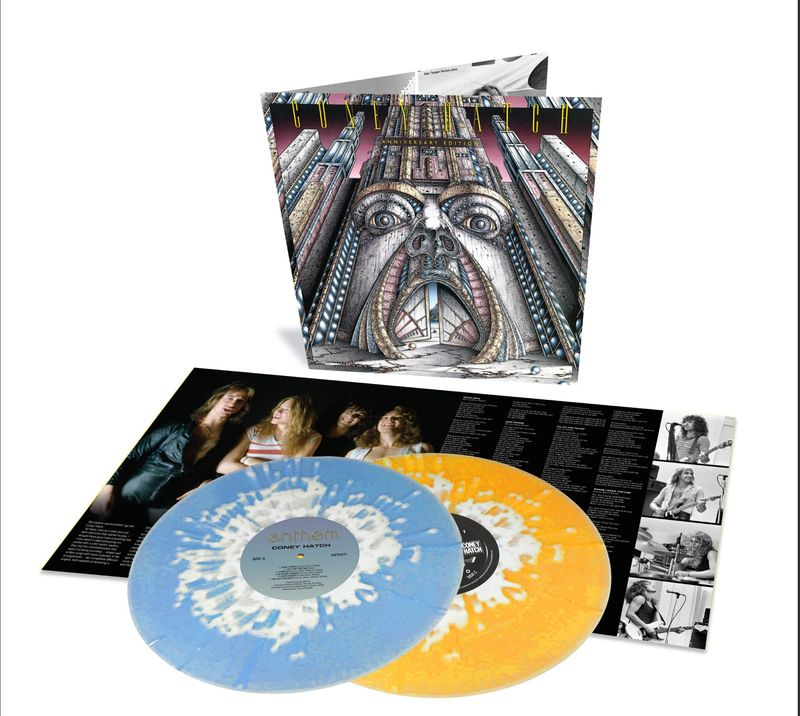
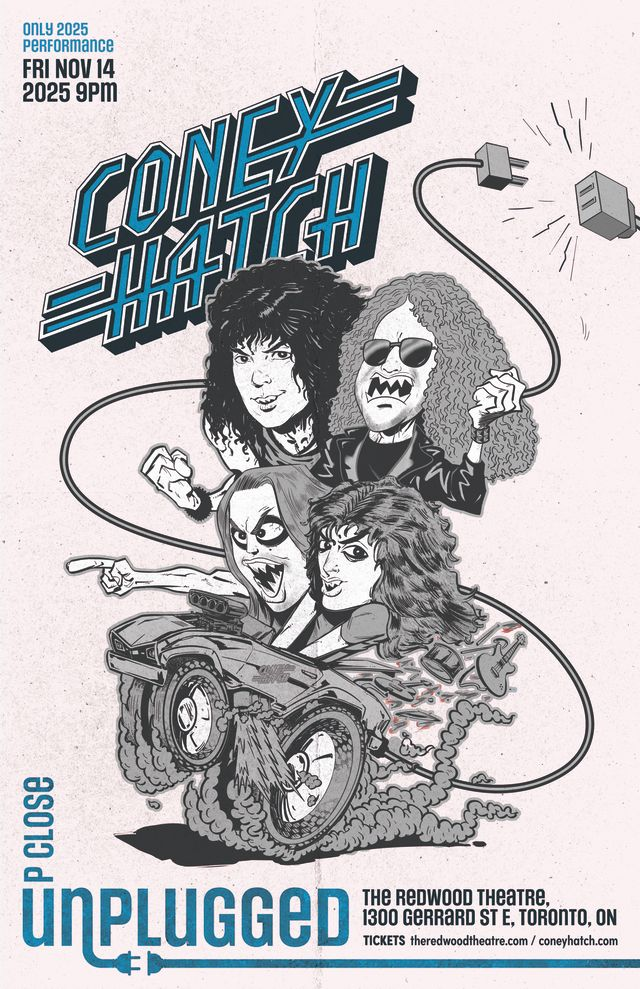
Fans of Canadian hard rock legends Coney Hatch will soon be able to experience their classic self-titled debut album with fully remastered audio by acclaimed engineer Harry Hess. On October 24, 2025, “Coney Hatch” will be reissued via Anthem Records, marking the anniversary of the band’s gold debut album some four decades after its original May 21, 1982 release. To celebrate this iconic release, the band have announced their only appearance of 2025 with a special up close and unplugged performance on Friday, November 14 at The Redwood Theatre in Toronto. To order tickets, visit: https://www.theredwoodtheatre.com/event-details/coneyhatch This beautiful 2LP reissue breathes new life into the classic album. Featuring the group’s classic line-up (singer/guitarist Carl Dixon, singer/bassist Andy Curran, lead guitarist Steve Shelski, and drummer Dave Ketchum, the debut spawned such classic rock gems as “Devil’s Deck,” bringing out every searing riff and soaring vocal with stunning clarity and power. “After over four decades of touring and recording, it’s truly special to see this anniversary release come to life,” Curran says. “The artwork, rare photos, and the discovery of the Cleveland Agora live audio from our very first show in the USA add a perfect finishing touch for the band and our dedicated fans.” And collectors take note: the blue/orange 2-LP edition is a LIMITED EDITION first pressing of ONLY 500 UNITS available! To order the album, visit: https://lnk.to/ConeyHatchAnniversary Adding to the release are never-before-heard “Live in Cleveland” recordings, captured at the band’s first-ever U.S. show at the iconic Agora Ballroom in 1982. This raw, high-energy performance showcases the band at their hard-hitting best and marks a key moment in their rise in the music scene just prior to joining Judas Priest on a 30 date North American “Screaming for Vengeance” tour. Dixon adds, “Our show at the Redwood Theatre will be the first time presenting the mighty Hatch sound in an Unplugged & Acoustic format. Still intense, with the same tightness and power that all these years together have built, but with more nuance and emphasis on the songs and vocals. We have some surprises planned and we can’t wait to show off our skills in a new setting!” Fans can dig deeper into the band’s history with ultra-rare photos unearthed from the personal archives of the band members, offering an intimate glimpse into Coney Hatch’s early years. This release includes rare 1982 vintage audio sound bites from Kim Mitchell, where he reflects on producing the band during their formative days. This is a must-have collector’s item for die-hard fans and music history buffs. Anthem’s first pressing for Canada on opaque blue vinyl and translucent orange vinyl, includes: · The fully remastered debut album “Coney Hatch” · Three bonus Tracks: “Dreamland”, “Where I Draw The Line” and “Sin After Sin (Demo)” previously only available on UK import version of the album. · Never-before-heard “Live at The Agora Cleveland, 1982” recordings · Ultra-rare photos unearthed from the band’s personal archives · Rare 1982 vintage audio sound bites from Kim Mitchell Come Friday, October 24th, get ready to experience this ’80s rock classic like you never have before!
CONEY HATCH ANNIVERSARY TRACKLIST: SIDE A:1. Devil’s Deck (4:26)2. You Ain’t Got Me (3:25)3. Stand Up (3:31)4. No Sleep Tonight (3:21)5. Love Poison (3:44)6. We Got The Night (3:08) SIDE B:7. Hey Operator (3:16)8. I’ll Do The Talkin (3:07)9. Victim Of Rock (3:11)10. Monkey Bars (4:21)11. Dreamland (3:43)12. Where I Draw The Line (3:53) SIDE C:13. Sin After Sin (Demo) (4:00)14. Devil’s Deck (Live at The Agora Cleveland, 1982) (5:09)15. We Got The Night (Live at The Agora Cleveland, 1982) (3:15)16. Stand Up (Live at The Agora Cleveland, 1982) (3:15)17. You Ain’t Got Me (Live at The Agora Cleveland, 1982) (3:30) SIDE D:18. Victim Of Rock (Live at The Agora Cleveland, 1982) (3:15)19. Where I Draw The Line (Live at The Agora Cleveland, 1982) (4:02)20. I’ll Do The Talkin’ (Live at The Agora Cleveland, 1982) (3:04)21. Dreamland (Live at The Agora Cleveland, 1982) (3:50)22. Love Poison (Live at The Agora Cleveland, 1982) (3:39)23. No Sleep Tonight (Live at The Agora Cleveland, 1982) (3:23)
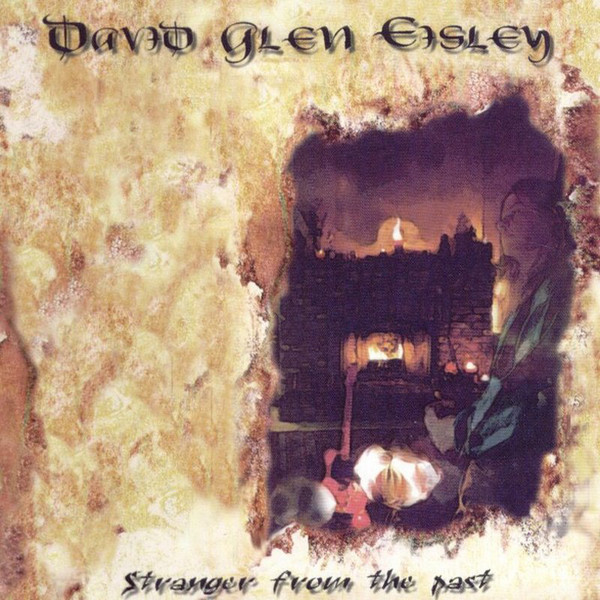
This was the debut solo album from the former GUIFFRIA singer. Guiffria, the air/hard rock band lead by former ANGEL keyboardist Gregg Guiffria released 2 albums in the 80s,, had a hit single with “Call To The Heart”, and opened for Deep Purple, and (later) Foreigner. But after the 2nd album Guiffria decided to rename the band, and change singers. Years ago, when Stranger From The Past came out in 2000, I interviewed David Glen Eisley (need to dig that out and re-post), and I played the heck out of this CD in my car, loved it!
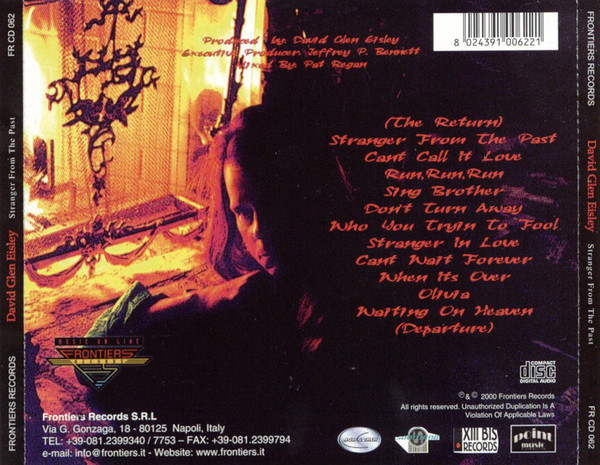
Stranger From The Past featured a number of guests and strong supporting players, notably Craig Goldy on guitar (Dio), Ron Wikso on drums, and bass player Chuck Wright (Quiet Riot), though not all on every track. It began with the intro “The Stranger”, which leads right into the title track. There’s a good mix of good rockers like “Can’t Call It Love”, “Run Run Run”, and “Can’t Wait Forever”, as well as ballads “Don’t Turn Away”, and “Stranger In Love”. A solid album, that I still pull out from time to time.
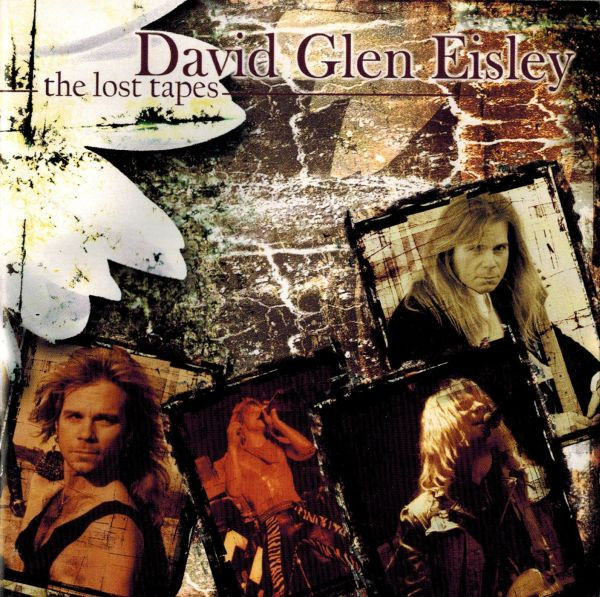
Stranger was followed up a year later with The Lost Tapes, a collection of songs Eisley recorded with various projects prior to 2000. Strangely the tracklisting seems quite similar to the new Guiffria release (?) The Lost Tapes was a decent set of songs too, with standout anthems like “Stand Up” and “Are You Ready”, as well as “Lay Down Your Love” and “Slip Of The Tongue”.
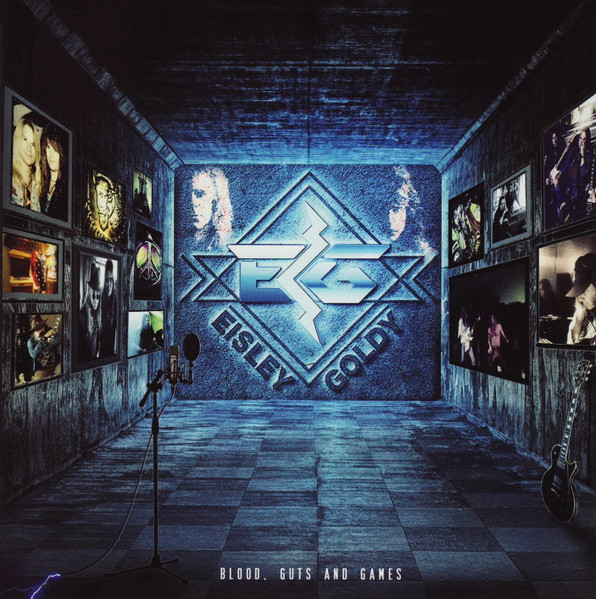
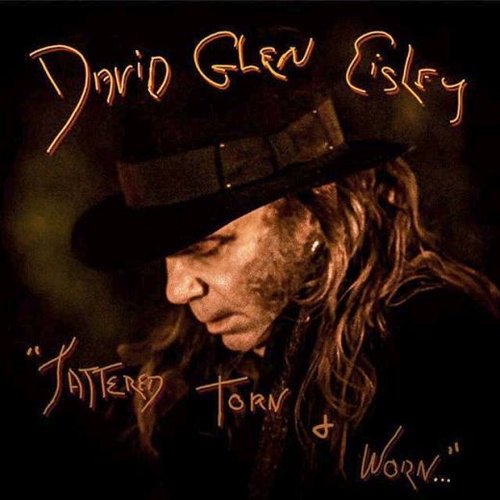
Since then DGE has released a few solo albums, as well as a collaborative album with Craig Goldy, but nothing as memorable as Stranger From The Past (IMO). He did have a huge hit with with “Sweet Victory”, w/ the late Bob Kulick (the SpongeBob song!). The man’s also gone through personal issues to deal with (the passing of his wife late last year). Here’s hoping David finds his way back to creating new music in the future. Until then, look up this album (YouTube, Spotify, Apple).
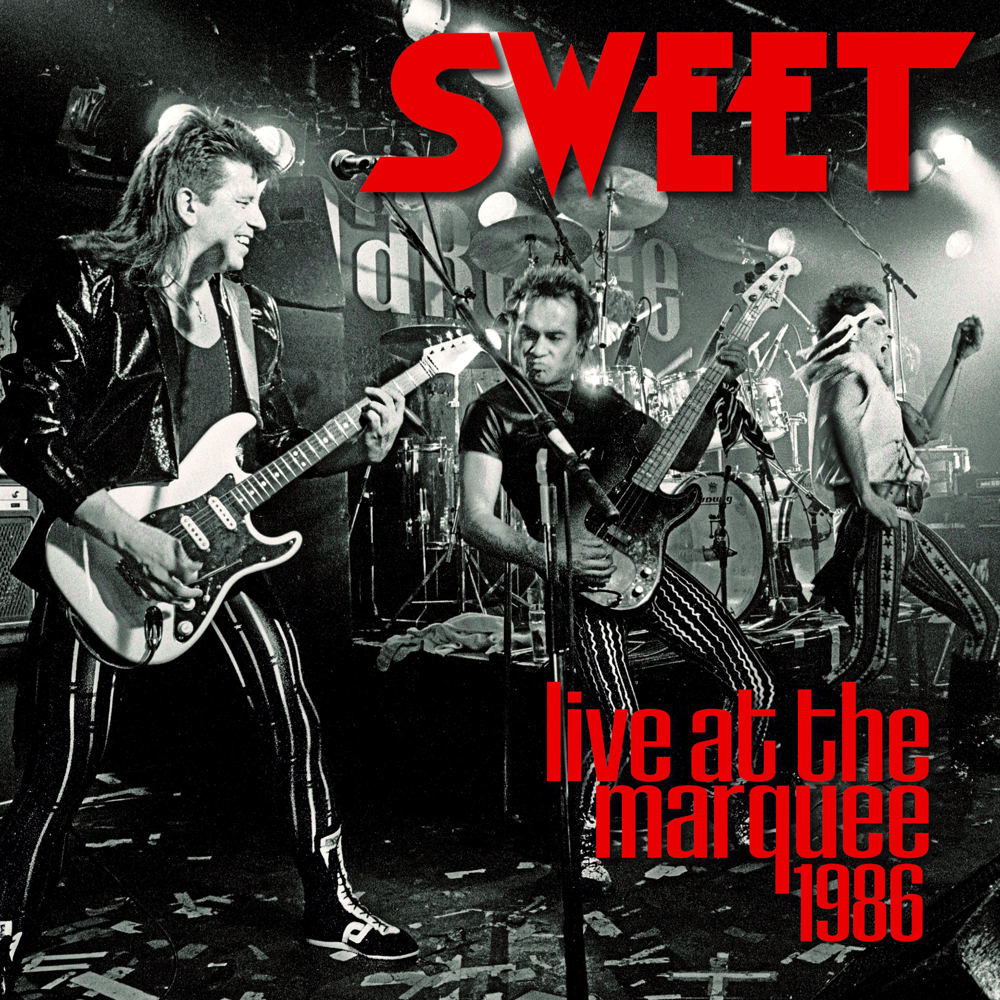
Metalville Records continue their reissues of SWEET albums with Live At The Marquee, which was recorded in February of 1986. This release does not include the 4 studio tracks from the original 1989 release, but includes 2 live songs not on the original either. *Check it out.
Live At The Marquee was recorded at London’s Marquee Club in February 1986, shortly before the legendary venue closed its doors for good. The SWEET lineup at the time consisted of original members Andy Scott (lead guitar) and Mick Tucker (drums) as well as Paul Mario Day (ex-Iron Maiden) as lead singer, bassist Mal McNulty (Slade), and Phil Lanzon (Uriah Heep) on keyboards. At this concert, the band presented a heavier sound without losing the energy and appeal of the classic hits and anthems.
Live At The Marquee is a rare gem in SWEET’s catalog and is now being re-released on CD and vinyl.
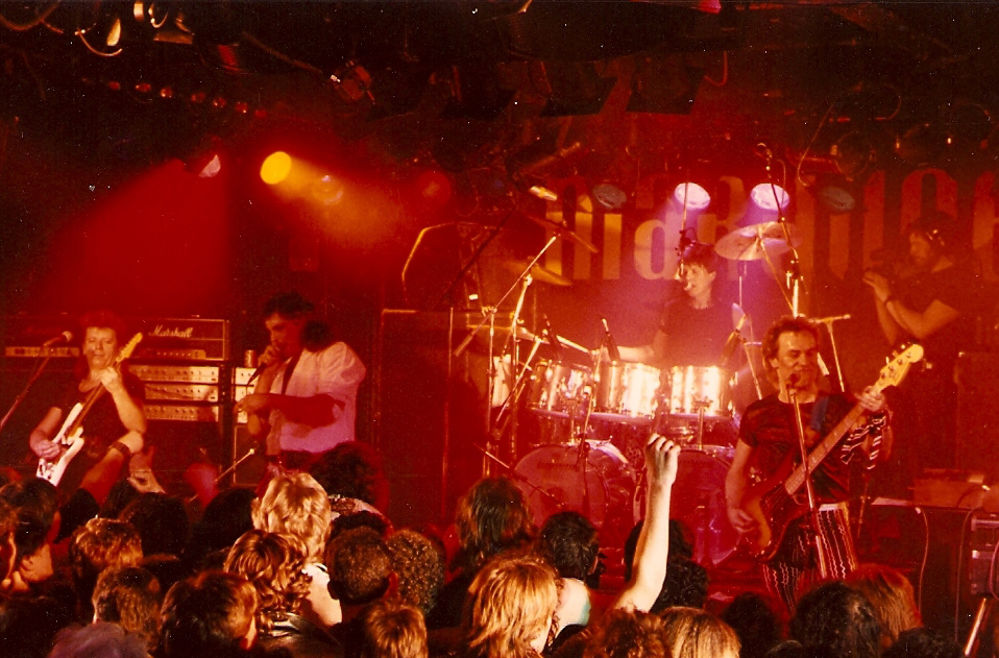
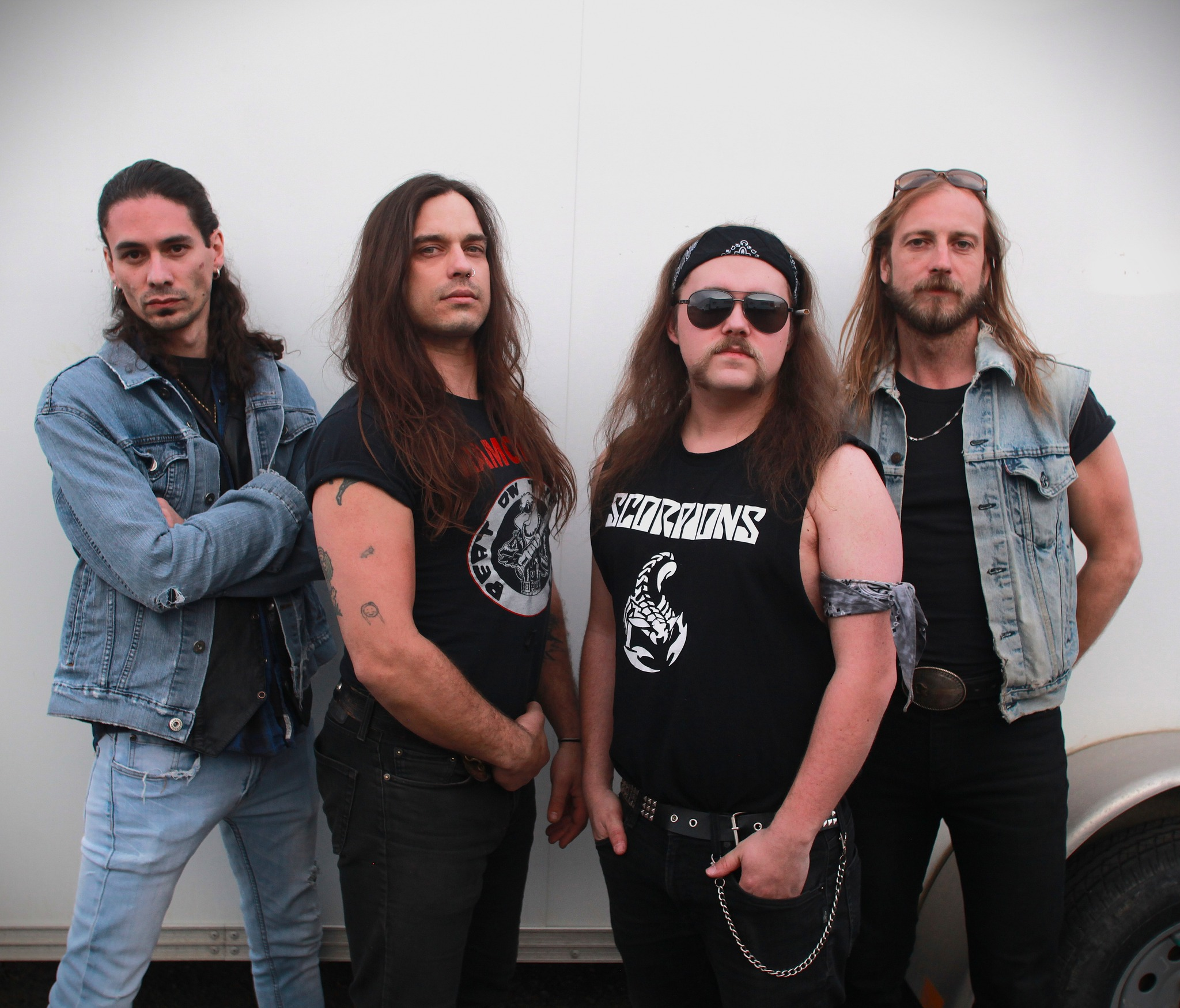
Canadian hard-rock band LOVER have been out playing together for well over a year now, and recently released a 2-song cassette, consisting of a pair of kick-a*s 80s influenced rockers – “Fatal Attraction” and “Bad Love”. Lover is working on more songs, as well as getting more shows booked.
In this exchange , drummer Hunter Raymond discusses the band’s brief history, their recordings, future plans, and more. Check out the tracks, as well as ordering info and links (below).
Can you give me a bit of pre-history to what lead to Lover coming together?
Hunter: I had recently moved back to Calgary from Toronto, and I knew Jacob and Chris from partying and playing shows in the past with my old band MIDNIGHT MALICE. Jacob and Aidan have another band together called FLASHBACK, which is more of a hard rock band. I went to see their show, secretly scouting, and after they played, I was convinced they were the guys I wanted to start a band with. As it turns out, Aidan had a whole stockpile of riffs that were too metal for flashback. Jacob convinced Aidan I was the man for the job by showing him old Midnight Malice footage. Chris, whom I hadn’t seen in years, happened to be at the flashback gig that night, and we talked about jamming and said we would get together soon. Cale from RIOT CITY was also there and mentioned to Aidan and Jacob that they should ask Chris to play in their new metal project. It was all meant to be, really; we all wanted to start a band with each other without even knowing it. From the first chords struck, we all knew this was going to be something special.
You guys have a 2 song ep out, on cassette — Is there more tracks recorded? and why did you choose to release just these specific 2?
At the moment, we only have demos recorded, nothing we would release to the public. We chose those 2 songs because they were the first ones we had solid. All of us were really excited about the sound and wanted to get the ball rolling, become a legit band. The best way to know if you are any good is to share it with the world. Let there be judgment!
Why a cassette release, as opposed to just digital or CD?
Collectors still enjoy tapes, so that’s what we went for. We are only doing a limited run, so grab them while you can!
It would be cool to press it on a 45 record in the future. People still want to hold onto the real thing; streaming is so impersonal. We wanted something for the people to own.
Can you give me a few favorite bands, musicians, and a short list of favorite albums growing up?
The hardest question to answer is, there is so much good music out there! Thin Lizzy for sure, Phil Lynott amazing songwriter, and Brian Downey is an absolute monster of a drummer. Deep Purple, Judas Priest, and Aerosmith, I love those bands. We all really like Sweet and their album Desolation Boulevard. I was really into Motley Crue, Motorhead, UK Subs, and G.B.H. when I was younger; I’ve always been a bit of a punker. My first Motorhead record was Iron Fist. I got it when I was about 13-14. I snuck away from a school trip in Halifax to find a record store. I had only heard of Motorhead up until then, and they didn’t disappoint! Iron Fist will always be in my top 10.
When might we see a full-length album from Lover? Is there any label or outside producer you are working with?
So far, no labels or producers, Aidan and I are the producers mainly. Aidan is also a good recording engineer so he is doing all of that. He recorded, mixed, and mastered the Fatal Attraction EP. My drum tracks are all done for the full length, and the boys are working on their guitars as we speak! We are planning on having it all done for the new year, so early 2026, we will have it ready for all you headbangers!
How many songs do you guys have prepared or working on? And what can people expect song wise?
The full length will be 9 songs, and they all sound different. We like to try and get different feelings for every song, to keep people interested. Some fast ones, some groovers, some melodic and technical songs. They all sound like us, though, and they all rock!
No ballads yet. We also have about 3-4 more songs we are working on for the 2nd album, and we aren’t slowing down anytime soon!
Can you explain a bit about where song ideas come from, and how songs are put together by you guys? (Lyrically and musically)
Musically, Aidan writes almost all of the riffs; he usually has a style of song he wants to write. Then we will go jam his riffs to get a solid structure and record a demo. I write 95% of the lyrics. I take the demo home to write the lyrics. The guys will sometimes give me a theme or song title to work from. The Lyrics are mostly about real-life experiences, some are fantastic stories I make up. I wrote one song about Jacob and his sweet 1963 Plymouth Valiant, which is called “On the Road’ What a sexy car! Girls are obviously a subject but we try to be creative and not write the same song twice. Basically, whatever vibe the riffs have dictates the lyrics.
What is the music scene like in Calgary, especially for bands trying to push original songs? Or is the scene kinda geared towards cover bands (as it is here in the Niagara region) ?
I’m sure there is a cover band scene here, but I don’t see it. That being said, there are plenty of original bands that do really well crowd-wise here; people love to come out and support local shows, which is awesome. There aren’t too many bands like us, though. The scene here is more aggressive, darker metal or punk. We don’t always fit the bill, but people love us all the same; we are their guilty pleasure.
What does your set list comprise of? Mostly (or all) originals? Any particular covers?
We play all originals; one of us always suggests a cover, but they never seem to materialize. I’m sure one day we will find one we all agree upon. The most recent idea is “Set Me Free” by Sweet. Will it actually happen? Only time will tell.
What have been a few of the bigger shows, festivals you’ve been part? Any opening slots for anyone major?
We have only been playing shows for about 1 year, and already had the pleasure of playing the Electric Highway Festival here in Calgary, and Armstrong Metal Fest in the BC interior this summer. Armstrong was headlined by HAVOK, BORN OF OSIRIS, and our good friends RIOT CITY. Electric Highway headliners were BISON, CASTLE, and LA CHINGA. Both of those festivals were an absolute blast and we can’t wait for more opportunities like those!
What do you guys have coming up? Any international interest or show offers further east?
We have our songs playing internationally, but no show offers as of yet. An East coast tour for spring/summer of 2026 is in the works, so hopefully we get out there to see you soon. I know a lot of amazing Bands out East who want to get shows going with us, so expect fully stacked bills and pure rock n roll mania when it happens!! LONG LIVE ROCK N ROLL
Aidan Desmarais – lead vocals, guitar Hunter Raymond – drums, vocals Jacob Chase – bass guitar Christopher LoNigro – guitar
Strap in! The pulse of rock ‘n’ roll just got a major jolt. Modern rock supergroup THE FELL, featuring legendary bassist Billy Sheehan, multi-platinum producer Mike (K.) Krompass, and Australian vocal powerhouse Toby Rand, return with their electrifying new single “Killswitch,” a crushing, high-voltage anthem that melds the golden age of rock with a modern-day edge via streaming as of July 18, 2025.
Watch for the video premier of “Killswitch” on July 30.
“Killswitch” will be available in Dolby Atmos mix via Apple/Amazon/Tidal on August 15.
“Killswitch” is about reclaiming control, cutting off the noise, shutting down manipulation, and powering through chaos with conviction, says the band. It’s a rally cry for anyone who’s ever felt pushed to the edge. The track pulses with massive guitars, blistering bass, and bone-crushing drums, wrapped in a wall of sound that nods to the best of late ’80s and ’90s rock while punching hard with a polished modern edge. This is not nostalgia, this is evolution.
THE FELL’s powerhouse lineup features legendary bassist Billy Sheehan (Mr. Big, David Lee Roth, Sons of Apollo), multi-platinum producer, songwriter, and guitar player Mike (K.) Krompass (Smash Mouth, Nelly Furtado, Everybody Loves an Outlaw, Dead Romantic), and vocal powerhouse Toby Rand (Rockstar: Supernova, Juke Kartel, Ashen Moon), whose dynamic voice soars over a backdrop of “Killswitch”’s grinding riffs and thunderous grooves. Sheehan delivers his signature low-end firepower with acrobatic flair, while Krompass’s massive guitar tones and razor-sharp production elevate the track to arena-sized proportions. Rounding out the lineup is elite session drummer Nick Chiarore (Dead Romantic), whose explosive drumming brings relentless precision and raw intensity. Chiarore’s chops can be heard on recordings with Slash and Steve Vai.
“Killswitch” will be available in Dolby Atmos mix via Apple/Amazon/Tidal on August 15.
Additional singles, “Face Out” is being released on September 12th. Followed by “Trippin’” on October 24th, plus a new version of their past hit “Footprints” (with Toby on vocals) on November 28th.
October 24th “The Killswitch EP” will be released in special packaging containing both CD and laser-etched LP, will feature 4 streaming singles plus a new version of “Dancin’ On A Glass Floor” that will remain exclusive to this release. A limited number of band signed deluxe editions will be available through their webstore. Watch for the announcement of record release shows in late October.
The album is released by Crown X Recordings/ BCMG Recordings.
Holy Water was the 3rd studio album from the reformed BAD COMPANY, fronted by Brian Howe. The band had reformed in the mid ’80s, but with Paul Rodgers not involved, Howe was recommended by Mick Jones (Foreigner), who had his eye on Howe as a potential replacement to Lou Gramm.
Produced by Terry Thomas (ex CHARLIE), Holy Water featured 13 tracks, more than half co-written by Howe & Thomas, with the producer also co-writing a few others. Holy Water would become the most successful Bad Company album of this period, featuring 3 hit singles – “If You Needed Somebody”, “Walk Through Fire”, and the title track. Bad Company, during this era had adjusted to the times, with a more AOR, pop-rock approach, but still guitar driven (more so here), with blues feel at times on Holy Water (courtesy Mick Ralphs’ guitar); kinda like a heavier Foreigner (IMO), and a bit of that Def Leppard 80s glam-rock feel. Lyrically, not very original, nor much different to the types of things many other 80s acts were writing about (see above mentioned bands, Loverboy, etc..) This album included other favorites and potential singles, with songs like “With You In A Heartbeat”, “Stranger Stranger”, “Fearless” (that intro reminds me of that Damn Yankees hit….wonder which came first?), plus “I Don’t Care” and “Boys Fight Dirty”, The last song is the most different here, “100 Miles”, a tasteful acoustic ballad, sung by Simon Kirke.
I really liked this era of the band, never having been a huge Bad Co fan, I thought the albums with Brian Howe especially the latter 3, were good. A shame that Howe (and this era) doesn’t get more credit for keeping the band going, And very successfully. Songs from this period are not included on any Bad Company compilations, and barely mentioned at the band’s official website (and not positively). Recently Friday Music released a limited 35th anniversary turquoise colored vinyl of Holy Water. Friday Music also released a 2-CD Holy Water w/ Dangerous Age (the previous Bad Co album), with a few bonus tracks in 2013. (RIP Mick Ralphs and Brian Howe)
Holy Water PRODUCER: Terry Thomas Atco 91371 – Classic rockers follow up 1988’s certified -gold “Dangerous Age” with an invigorating set of hard -edged stompers, laced with blues and pop sensibilities. Title track /first single is a kicking, radio-ready anthem, as is “Boys Cry Tough,” both of which are highlighted by singer Brian Howe’s powerful pipes. Contrast comes from “If You Need Somebody” and “100 Miles” (sung by drummer Simon Kirke), a pair of well -sung, cliché -free ballads. (Billboard, 06/90)
BAD COMPANY If You Need Somebody (4:21) PRODUCER: Terry Thomas WRITERS: Howe, Thomas PUBLISHERS: Warner Chappell /TJT Songs /Phantom /WB, ASCAP Atco 4 -98914 (c /o Atlantic) (cassette single) – Sensitive rock ballad is given depth and dimension by singer Brian Howe’s heartfelt performance. One of many fine tracks on the band’s current “Holy Water” set. (Billboard, 10/90)
BAD COMPANY Walk Through Fire (4 48) PRODUCER: Terry Thomas WRITERS: Howe. Thomas PUBLISHERS: Chappell /TJT Songs, Phantom /WB. ASCAP REMIXER: Larry Dvoskin Atco 4053 (c /o Atlantic) (cassette single) – Third helping from band’s excellent “Holy Water” album is an acoustic – softened pop /rocker that is fueled with a sing -along chorus and well – produced performances. Equally strong choice for top-40 and album rock radio formats. (Billboard, 1991)