JOHN SLOMAN (Lone Star, Uriah Heep) has just released his 3rd book Rock Heaven , a novel . Rock Heaven is not autobiographical, according to John. “At the beginning of this year, I decided to adapt my original screenplay to a novel which is now currently available on Amazon under the title of my screenplay: ‘Rock Heaven’.”
John adds – “Rock Heaven was a screenplay I wrote in 2007. Had meetings with various producers who loved it. But the money never came. It’s about a rock musician…and a song titled ‘Rock Heaven’. But also much more. I wrote the title track, so at some point in the movie people would hear this song that’s referenced in the dialogue. It then occurred to me to write an entire soundtrack album. By now I was several years into this thing. I demoed the title track as well as all the other tracks for this soundtrack album at home. This time last year, I was in the process of writing what would’ve been my third book, when I decided to set it aside temporarily in favor of adapting Rock Heaven to a novel. My intention is to release Rock Heaven as a digital single, to provide a musical context for the book. If I receive some interest in my soundtrack album, I will consider releasing it at some point. For example, in the absence of a movie being made, I could release an audio version of Rock Heaven, which would include my ten songs.
Who knows, perhaps some film director scrolling on Amazon one night for an original story to bring to the screen might discover my novel, and my tale of woe becomes a movie after all.”
“At one point I adapted the screenplay as a 6-part TV series and sent it to a new production company based in Wales. Unfortunately, I didn’t even receive a response to my email, leaving me wondering if perhaps a Welsh writer basing a story around a Welsh musician wasn’t quite Welsh enough for a Welsh production company to be interested.”
ROCK HEAVEN is available on Amazon, at present (mine arrives tomorrow)
John also has resumed writing on the book he set aside for Rock Heaven, as well completing a new album to be released next spring.
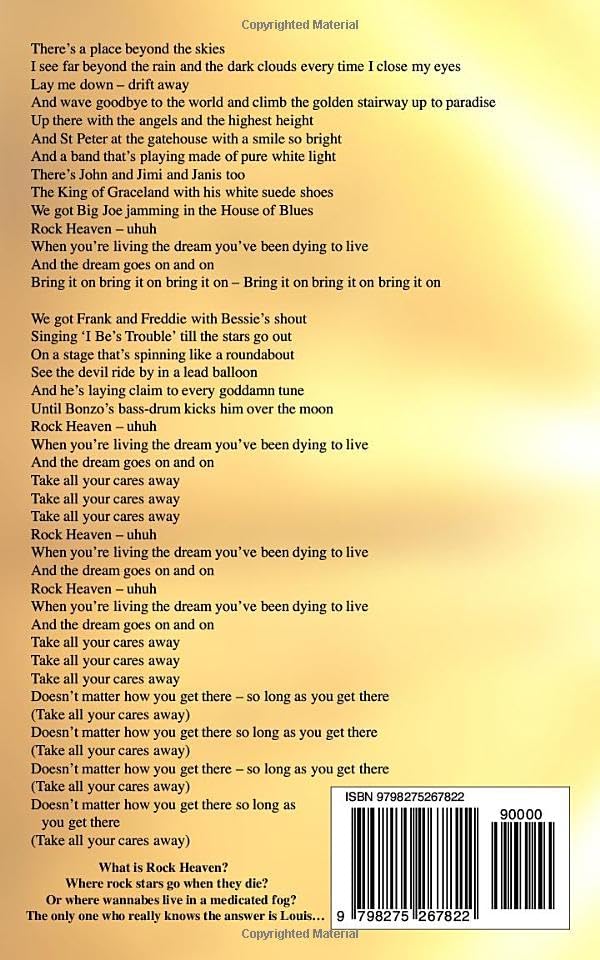
Louis Deveroe is the resident music critic at a London based lifestyle magazine called XYZ Magazine and married to the much younger Gina. He should be happy. But the memory of that stinging rejection letter from Rolling Stone magazine all those years ago haunts him day and night – and he wishes he could find a story worthy of his superior writing ability so he can show those guys at Rolling Stone just how wrong they were. One night over dinner, his school teacher wife challenges her unfulfilled husband to change his life and pursue his dreams. And soon the story of a lifetime presents itself. But how far is Louis prepared to go in pursuit of that story? Would he smuggle a Class A drug into a psychiatric hospital in order to loosen the tongue of a disgraced rock star? Would he risk his life? There are three steps to Rock Heaven. But what is Rock Heaven? Where rock stars go when they die? Or where wannabes live in a medicated fog? The only one who really knows the answer is Louis…
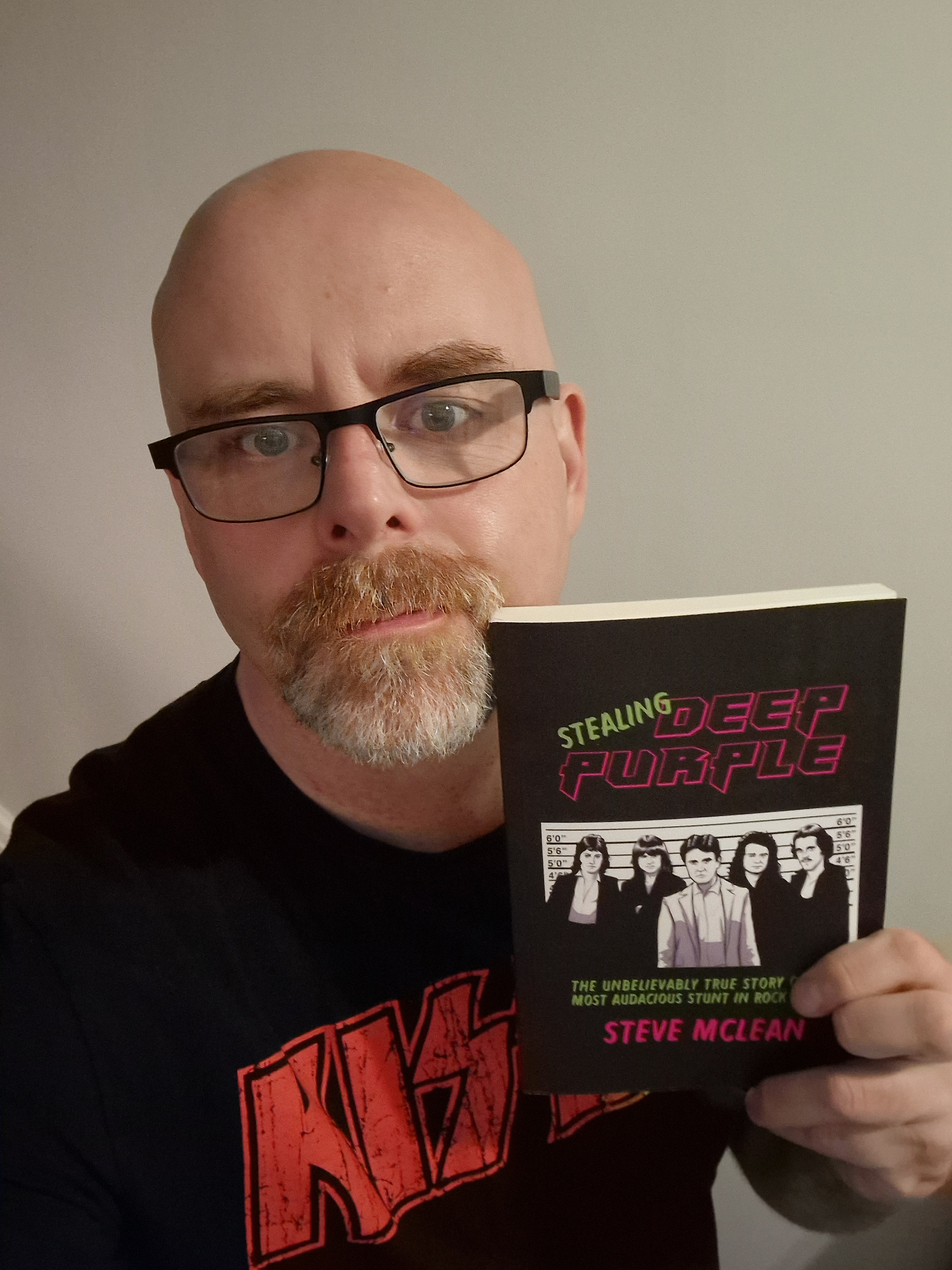
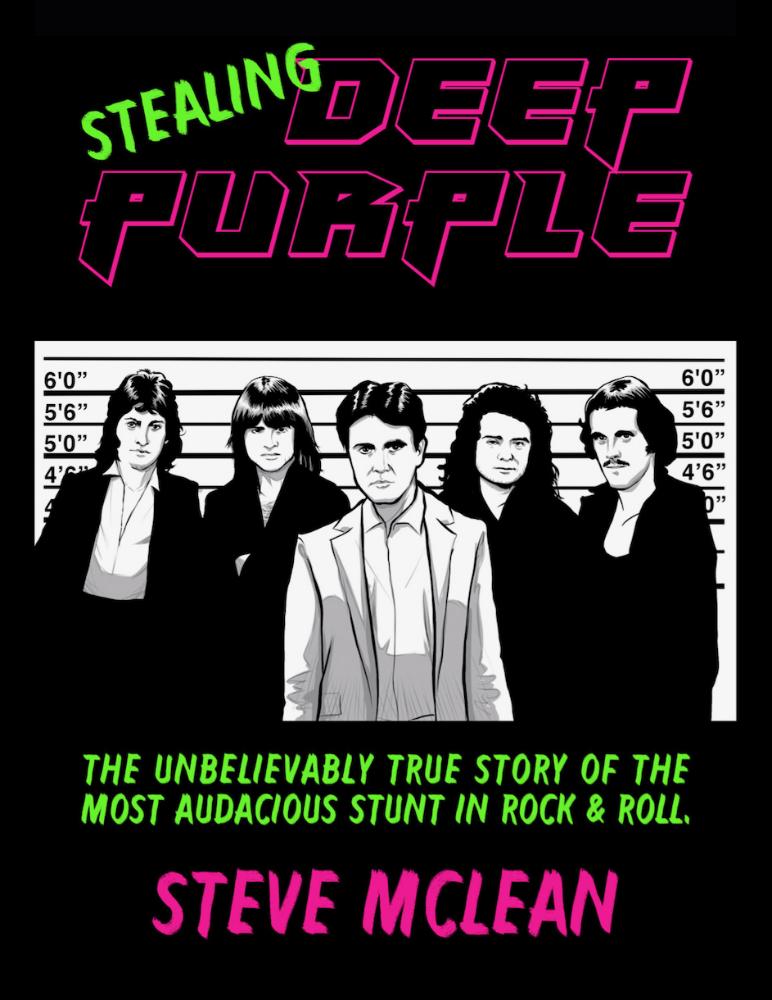
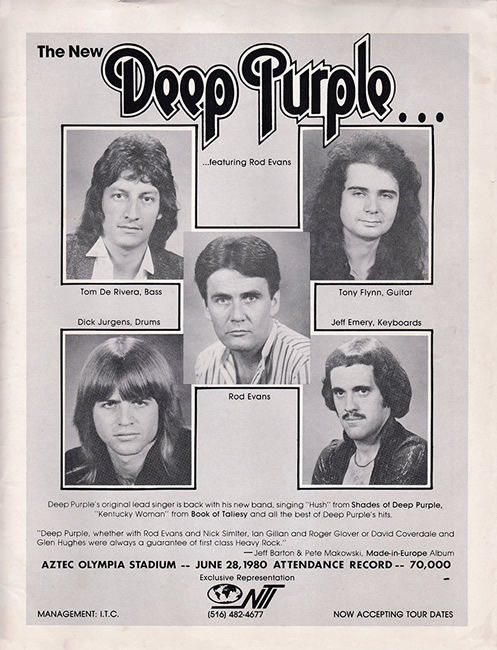
Steve McLean is primarily known as a stand-up comic, originally from Scotland, but now in London. McLean also is a passionate music fan, and particularly of Deep Purple. In 1980, originally DP singer Rod Evans fronted a new band that took the name ‘Deep Purple’ (or ‘The New Deep Purple’), as the group was defunct at the time, and began doing shows throughout North America. They were ultimately stopped, and through the court case it cost Evans in fines and future royalties. From then on Rod Evans disappeared from the spotlight completely, and hasn’t been heard of since. But in Stealing Seep Purple, McLean has researched throroughly and published the story of that strange chapter in Deep Purple’s history, often not mentioned so much.
Below Steve’s answers my questions pertaining to this period and the making of his book. A very interesting story, well worth checking out. *You can find out more on Steve and Stealing Deep Purple at the links at the bottom.
Did you have any connection to this 1980 era of Rod Evans DP? (did you see the band or follow the story at the time?)
Alas, I was four or five years old at the time. The first I heard part of the story was when I was 17 (1993). I was visiting London to see Aerosmith at Wembley Arena. I was in a bar called The Royal George which used to be a rock pub and there was a guy from the U.S. who said he saw Deep Purple in a small club near Boston in the autumn of 1980. The friend I was with, who was a bit older than me and a massive Deep Purple fan, called the guy out for talking bullshit, since Deep Purple were not together at the time. It got quite tense.
I later learned of the Rod Evans group and have been kind of fascinated about the tale since then. Now, the show that the guy in the bar was talking about near Boston (I think in Lowell or Lynn) might have been cancelled, there are conflicting reports. So it is possible that the guy was bullshitting in a different way. He might have seen the adverts for the show before it was cancelled and decided to tell young and naive strangers a tale. And it’s possible that the shows weren’t cancelled and did go ahead and he was there. But it’s also possible that he went to a different show in the same town on a different day. There was no publicised ‘tour schedule’ as such. The plan for the band was to play in small towns and just advertise the shows locally.
What we do know is that there was around 70 shows and there is printed evidence of about half of them. That’s the kind of fuzzy details we’re dealing with when it comes to “The New Deep Purple”. The book attempts to unpick the facts from fiction.
During the late 70s there was a lot of band’s ‘resurrected’ in questionable ways. Curious if you dug in to some of these other bands at all (for research). The one I’m thinking about it Steppenwolf, where there were a number of versions of the band on the road at the same time (a couple of these guys wound up in DP1980). Much of this came from John Kay’s book.
John Kay’s book is excellent. It does however tell us a story that we don’t often consider in our appraisals of the events.
The ‘questionable ways’ that the band was resurrected were initially empowered by Kay granting a license to the band name. Now that license ended up getting abused by multiple Steppenwolf members and also by musicians who had never been anywhere near the original Steppenwolf (namely Tony Flynn and Geoff Emery who both went on to be in the New Deep Purple), but without Kay agreeing to the license for original reconstituted band, well I wonder if the others would ever have happened.
I don’t blame John for what he did, he had bills to pay and licencing deal from the name of a band that he no longer had any interest in must have seemed like free money. It appears Kay took over two years to launch legal action against the multiple bands using the Steppenwolf name and even then it seems, to me at least, he was only really outraged about it when the licensing fees stopped coming in.
I think a person would have to be incredibly naive to believe that John Kay wasn’t aware what was being done to the Steppenwolf name. This sort of behavior was as old as the entertainment industry; From fake circuses pretending to be connected to Barnum, the unofficial versions of Gilbert and Sullivan musicals to the multiple versions of the Zombies or The Animals. It only really seems to be a problem for the venues or the promoters when the ruse is discovered by the general public. Personally I think the industry operated under a blanket of plausible deniability.
I spoke to a few members of reconstituted bands to try to get an understanding of how things worked in such a group. Musicians from the likes of The New Cactus Band and The New MC5 (who did shows with The New Deep Purple). In contrast to the rock and roll luxury lifestyle, they often painted a bleak picture of working bands on gruelling schedules singing for their supper.
What sparked your interest enough in this period to want to write about it?
I just think it’s totally WTF! The Mexico chapter of story alone has its roots in the Mexican revolution, it also involves the civil rights movement, a burgeoning rock scene and a happy ending. Not bad for a episode that also includes a riot, a crowd crush and a Red Cross emergency triage unit! I was interested because it’s the kind of story I’d like to read. I’m a stand up comedian and I write hour long shows. I don’t write shows about things I don’t love or I’m not interested in. I think anyone reading the book will understand that I love Purple’s music and I love the tale, fans can tell if you’re a fraud and the last thing I’d want is for any hardcore Deep Purple fan to think I’ve done a disservice to the band they’ve devoted their lives to.
This period is often overlooked or unmentioned in Deep Purple books and stories. Do you feel it is a valid period that deserves to be told and mentioned In the band’s history? And do you feel this tour might’ve had any connection or influence in the band’s eventual reunion a few years later?
It’s definitely a valid part of their history and I think it should be embraced by the band. There’s line in this book that says something like ‘This is an interesting story because Deep Purple are a great band. Without Deep Purple being as great as they are then this story would be nothing’
I found the most negative opinions of the The New Deep Purple come from people who didn’t attend the shows. I spoke to folks who went to the shows and had a great time (as well as those who thought it sucked!)
I think the resulting court case was the first time the Deep Purple members had all worked together in any capacity for years. Probably the first time Blackmore had anything to do with them that wasn’t through third parties. I would say the court case did a lot to defrost the atmosphere between everyone. It’s weird to say this but I think it was the first step on the road to the reunion and without it, who knows, the reunion may not happened or might have been a few more years away.
I get why fans are reluctant to embrace this part of history. It’s stirs complex emotions and the book highlights the darker side to the musicians we love. As mentioned above, I spoke to a few fans of the band who attended the shows, plenty had a good time (a match in number for those who had a bad time). One person went to a show with her brother and that was her last memory of him before he passed away and another person met a girl at the show, they dated, got married, had kids and now have grandchildren… his whole family is thanks to that show. As I ask in the book, who are we to take that away from them?
There is a lot of stories and photos from this tour online; what gems have you dug up through your research? (people you’ve interviewed, photos or video you came across, etc…)
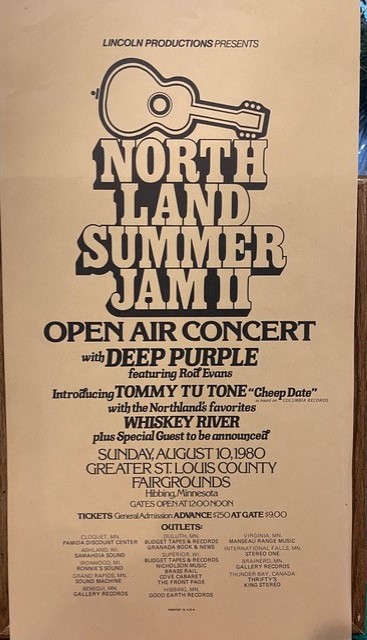
Most of the stuff I acquired were memories and clippings from newspapers. That said I came across a few ticket stubs and such. Norm from the Whisky River Band sent me a lovely colour version of a poster from the Northland Summer Jam II. It was a grandly titled small festival, akin to a county fair and it was the ideal stomping ground for the New Deep Purple. A rural small town that didn’t get much in the way of entertainment that attracted mainly a casual fan who had little idea of what the band was supposed to look like. In such an environment, where there was no pressure from a partisan crowd, The New Deep Purple seemed to put on a good show.
One of my other favourite bits I came across was Jim Dandy’s performance supporting the band in Mexico. It’s on Youtube, The clip was also great for contacting people who had been to the show and had first hand accounts of the gig. History has remembered the trouble in Mexico as being down to the New Deep Purple’s performance but the reality is somewhat different…
Did you search out fans for stories and memorabilia or did you get enough that simply came out with previously unwritten recollections of shows and encounters?
There’s a lot of accounts online already but yes I actively sought out fan accounts, mainly from the larger shows. The problem with this is that memories are fuzzy and it was 45 years ago, so I had to be wary of what to trust. One excellent bit of information I found out from a staff member from the Baby O bar in Seaside Heights, New Jersey. The show didn’t actually go ahead, even though there a previous reports saying it did. It was cancelled not long before the band went on stage. I’ve read online that people had attended the show but that’s not true according to the door staff. Now, once again, that’s not to say that a show at the Baby O didn’t take place on a different date or that there wasn’t a show in Seaside Heights on that day. If you read the book you’ll read about a string of cancelled shows and postponed dates and moved venues. It was hard sorting out false memories for actual fact, but I think I’ve done a decent job in piecing it all together.
The band, at the time had said they were recording an album. This obviously never came out, but did you find any truth to this and what do you think the impact of this might’ve been had it come out back then?
I honestly don’t know what to believe here. I know that the same claims were made by the versions of Steppenwolf (and the Zombies etc),
It seems to me that if I wanted to give legitimacy to a band trying to convince the public they were the read deal, then I would certainly say ‘we’re recording an album’ or ‘we’re in talks with a label’ as it’s the kind of thing a legally-sound band would say in an interview.
That said Mike Curb was reportedly interested in the band and he wasn’t a fool. It’s likely Warners-Curb paid for some demos until they realised the legalities of trying to release a record as The New Deep Purple.
Did you find yourself feeling sympathetic for Rod Evans after all this? I was always under the impression he was simply duped into this whole situation.
The book started out as an investigation but evolved into a document of understanding and perhaps a plea for clemency.
I don’t however think he was ‘duped’ into what he was doing. It’s a popular fan opinion because, fans being fans, don’t like to think that the people that they love would behave in any way we wouldn’t like them to, but to say Rod was duped is a bit of insult to his intellect. He had been involved in the industry for about a decade before his 1974 retirement, I think it was an idea that he was fully onboard with but I also think it got away from him.
Part of the reason that it got away from him was that I think he thought he was legally in the right, to begin with at least. I think he thought he had, if not the blessing from the Deep Purple management, then the begrudging verbal agreement from them. There’s enough evidence in the book to suggest this.
Reading between the lines of the statements that came out from the band and management, it reads to me very much like a lot of non-denial denials. A lot like when Mick Fleetwood commented on the fake Fleetwood Mac.
Personally, I think he had some rights to the band name, but not the brand, if that makes sense. Put it this way, if he’d gone out a Rod Evan’s Deep Purple or Rod Evans From Deep Purple and just played Deep Purple Mark 1, I don’t think he’d have been hauled through the courts in the same way.
If taken in the context that Deep Purple had broken up and they weren’t really bothered about playing together again, then the prospect of licensing revenue, (perhaps unbeknownst to the Lord, Paice & Co) would have once again seemed like free money to Deep Purple’s management, just as it may have done to John Kay.
Although for balance I should probably point out that Purple’s management team moved a lot quicker than Kay to put a stop to things… The Steppenwolf saga may have even changed the Deep Purple management’s minds. By that time the damage to the name of Steppenwolf was highly evident for the whole industry to see.
The whole mystery of Rod Evans, and what became of him after this period has quite a following of its own online. Did you find much on Rod and those that knew him after the court case and all?
I spoke to a couple of people who claimed to know him but I after a few questions it turned out they were probably talking shit. There’s one guy going around various Facebook comments section claiming to know Rod and his movements, but it seems to be a desperate cry for attention. Bobby Caldwell, Captain Beyond’s drummer says he is in touch with him and guards his phone number like ‘Fort Knox’ I sent Bobby a message asking if he’d put me in touch but I got no reply, If you’re out there Rod, I’d love to hear from you. I’m happy to amend anything in future editions of the book if you think I’ve got it wrong, please get in touch. One of my main goals of this book was to ‘open the story out to the floor’ …which it has already done. I’ve had few people get in touch, nobody has contradicted me yet but I’ll be happy if someone says ‘you’ve got this bit wrong…. I know because I was there’
It’s been heavily reported that Rod has lost his Deep Purple royalties, I wonder if that only means officially and that they band are in fact ‘looking after him’ and making sure he gets his share. It would make sense based on their comments that they felt he was in with bad people and that the only way to stop him was to sue him. But then maybe that’s what I want to believe.
How is the book been made available at present? Will it be available via Amazon, etc..?
It’s available through my site Deeppurplebook.com and through Lulu Publishing. I’m trying not to use Amazon… mainly because of the disgustingly low fees they pay authors. Can you believe they uploaded my book to their in-house publishing without my permission? And then paid me pennies for the copies they sold. I was several emails before they’d take my work off of their website. The more authors I speak to the more I hear of how Amazon seem to behave like gangsters.
What other books have you authored? Any details of rock books of interest?
This is my first book! I’m a stand up comedian and in a previous life I was a development producer for documentaries. If you’re reading the book and you think it’s paced like a documentary film, that’ll be why. I’ve previously written reviews and opinion pieces for magazines and websites.
Are you planning on or working on any other rock n roll books?
So, my next project is to turn Stealing Deep Purple into some kind of show. I envisage it being a multi media presentation that’s funny and informative.
I’d quite like to pull at the threat of the numerous fake Iron Butterfly bands that existed in the late 1970s, so that might be my next book.
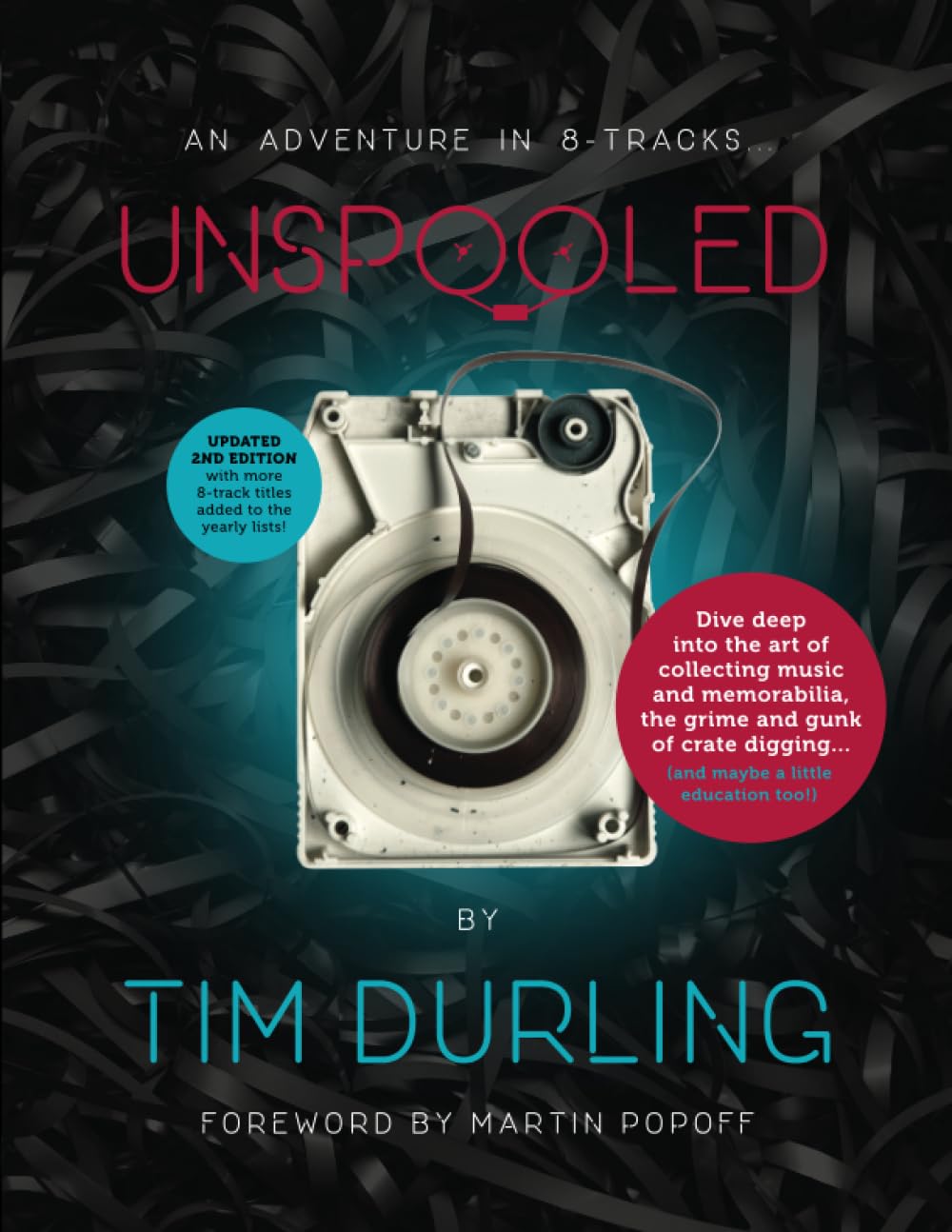
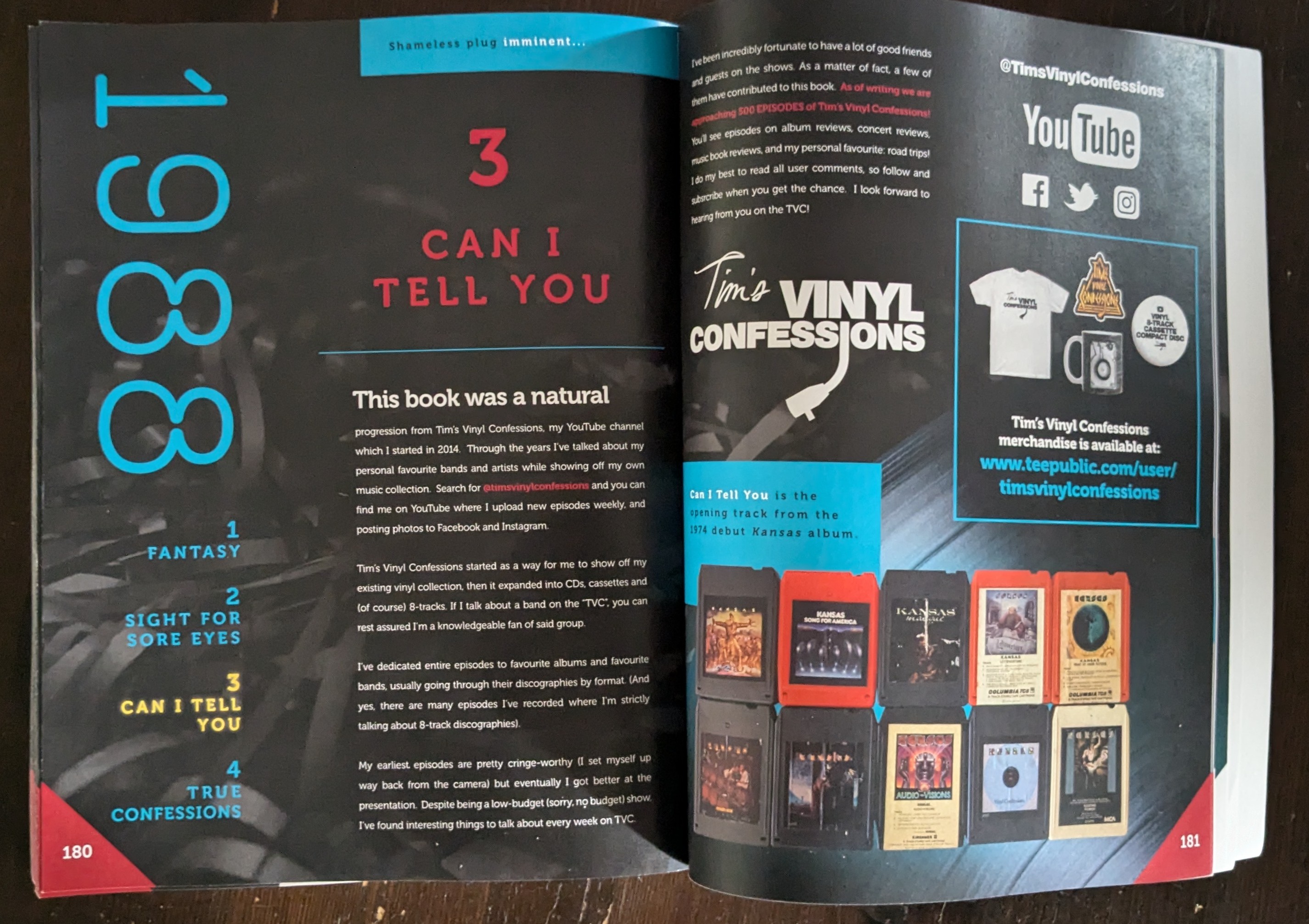
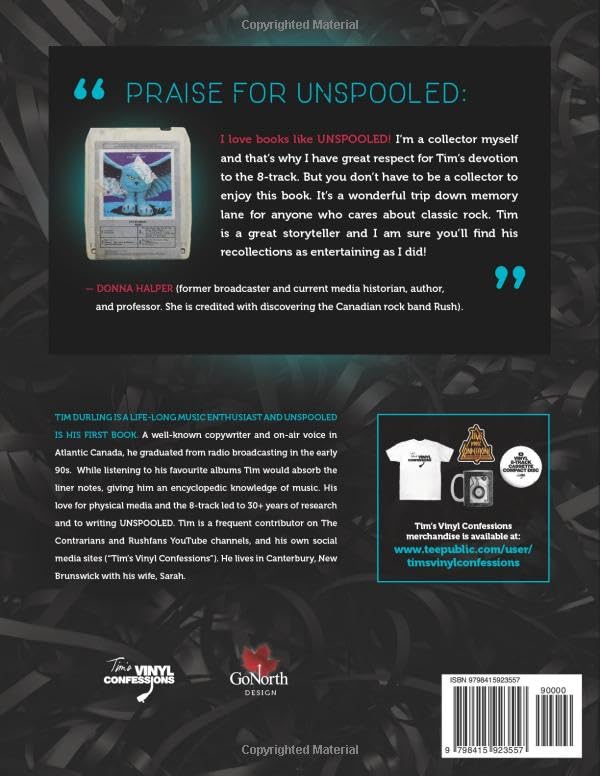
Canadian author TIM DURLING started collecting 8-tracks well after they went out of style And print. Tim’s latest book ‘Unspooled‘ chronicles his collecting of 8-tracks years after the fact, and with a focus on this record clubs (popular in the decades before the internet) who carried 8-tracks
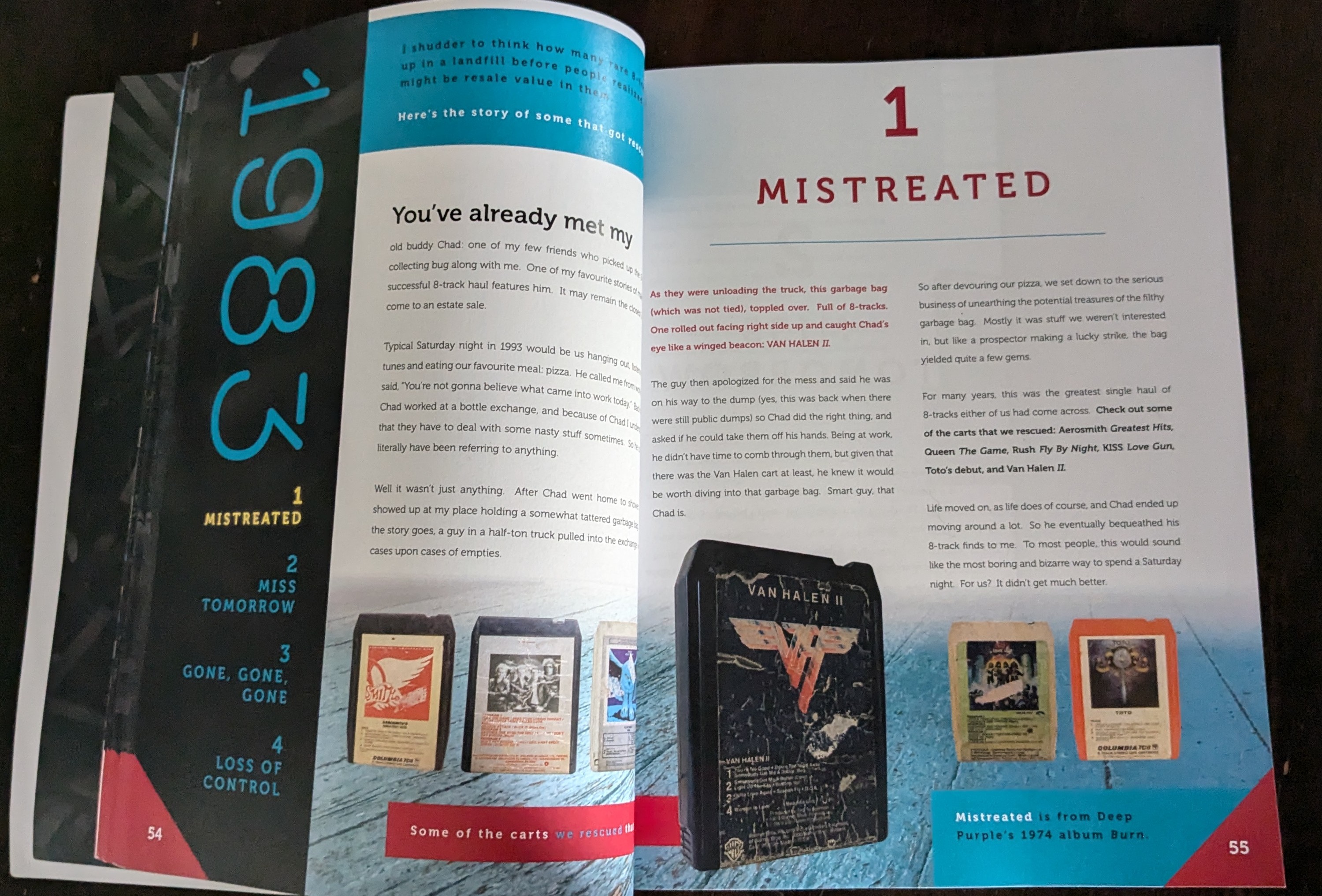
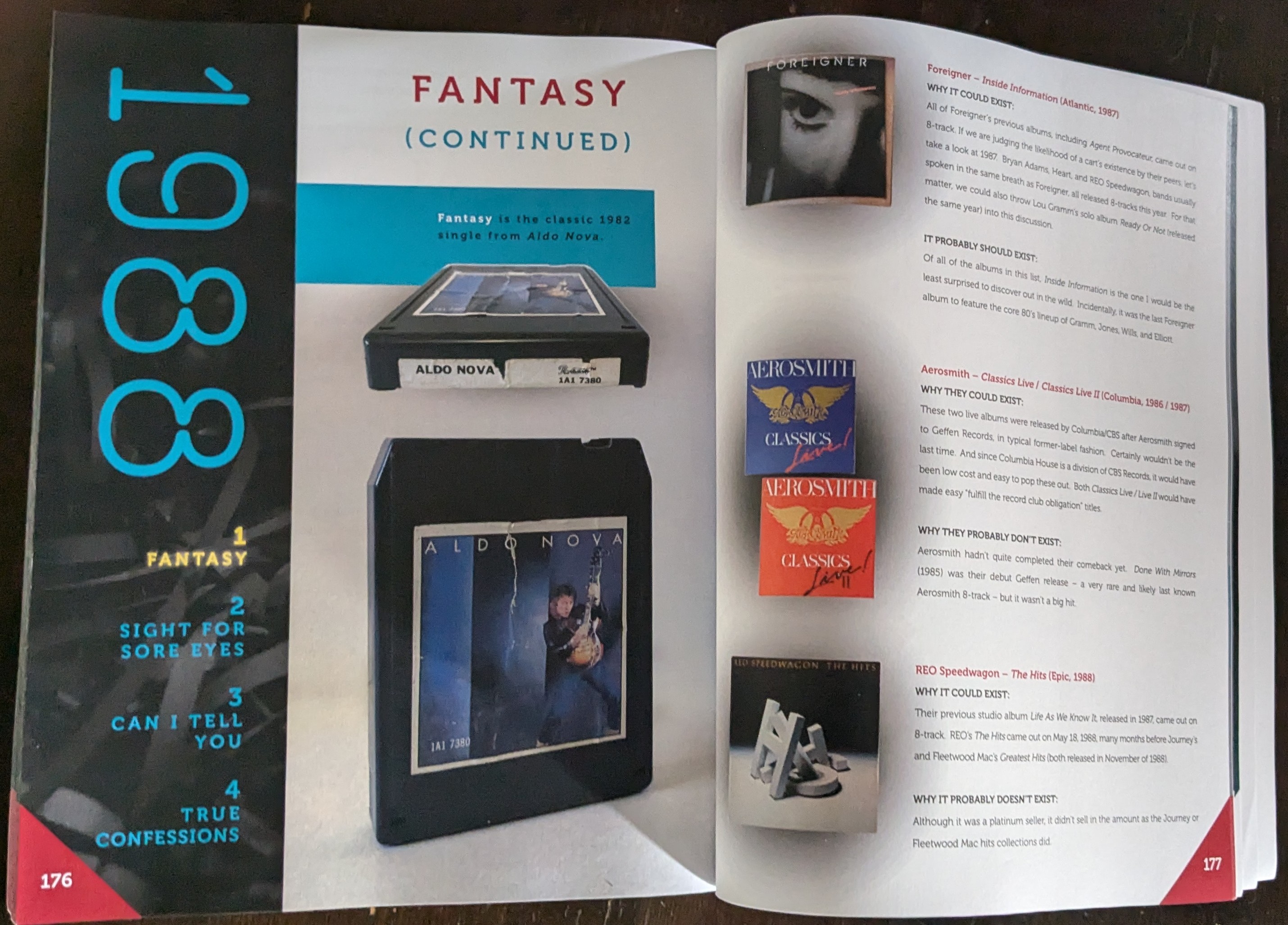
Unspooled will be of interest not just for the history and information on the 8-track format, but also for the nostalgia and the stories. This is a beautiful looking coffee table kinda book that you can pick up anytime, for the reading and for the cool images of hundreds of 8-track cartridges.
Unspooled isn’t just about 8-tracks, as it lists the year to year record club releases throughout the 80s, but also in here are Tim’s personal stories of the whole adventure of collecting. As a collector (mainly LPs and CDs), many of us can relate. Besides his stories, there’s contributions and interviews from fellow collectors, not just in 8-tracks, from Canadian rock writer Martin Popoff’s Forward, to legendary broadcaster Donna Halper (she who began playing Rush in the US), to various other collector’s and experts (be it in 8-tracks or rock knowledge in general!)
Version 1.0.0
At over 190 pages, full of colored images, lists, tales, antidotes, etc… Unspooled should really be worth checking out for any music collector.
+ Recently spoke with Tim Durling, watch for that interview coming here, soon.
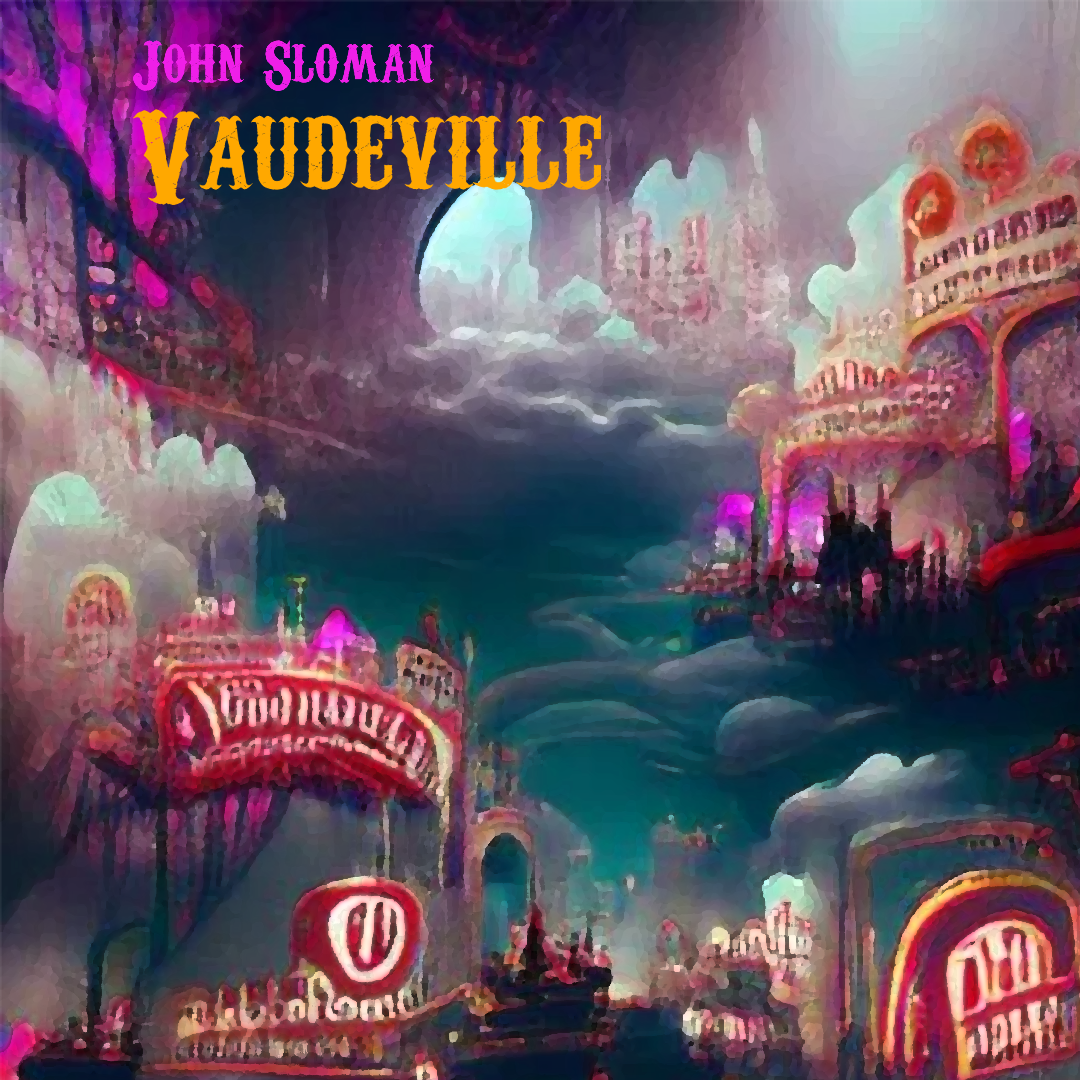
Welsh singer/songwriter/multi-instrumentalist John Sloman has a new single out from his forthcoming album Vaudeville. This is the 2nd single from Vaudeville, check out “Ice Cream Man” (bottom). A video and (album) release date are coming soon, but check out the title track here…
The artwork for Vaudeville, is once again done by designer, photographer and videographer Callum Fernandes Clarke, and using photography by Jeff Moh (RIP). Callum did the cover art for John’s excellent 2022 album Two Rivers, as well as doing covers for Walter Egan, Osibisa, and others.
John is also getting ready to release his 2nd book. According to John it will be a continuation of his first one, and there will be a 3rd book as well! If you did not read “Lost On Planet Artifice” you need to! One of the best rock autobiographies out there! Tons of stories, ups and downs, and honest recollections of a guy who’s had a long and most interesting career, having played with and connected with many legendary acts. John shares an update on his upcoming book below:
“I’m still editing the book which is called ‘Kontradamus’. But I plan to release it sometime in the next few months. It’s a dystopian satire set in the future (with some autobiographical threads running through it). I began working on it while waiting for my album Vaudeville to be released (which was delayed throughout last year and is still yet to be released), and eventually ended up with a follow up to ‘Lost on Planet Artifice’. This new book is a more ambitious venture as it’s my first attempt at a novel format but with some reality sewn into it.”
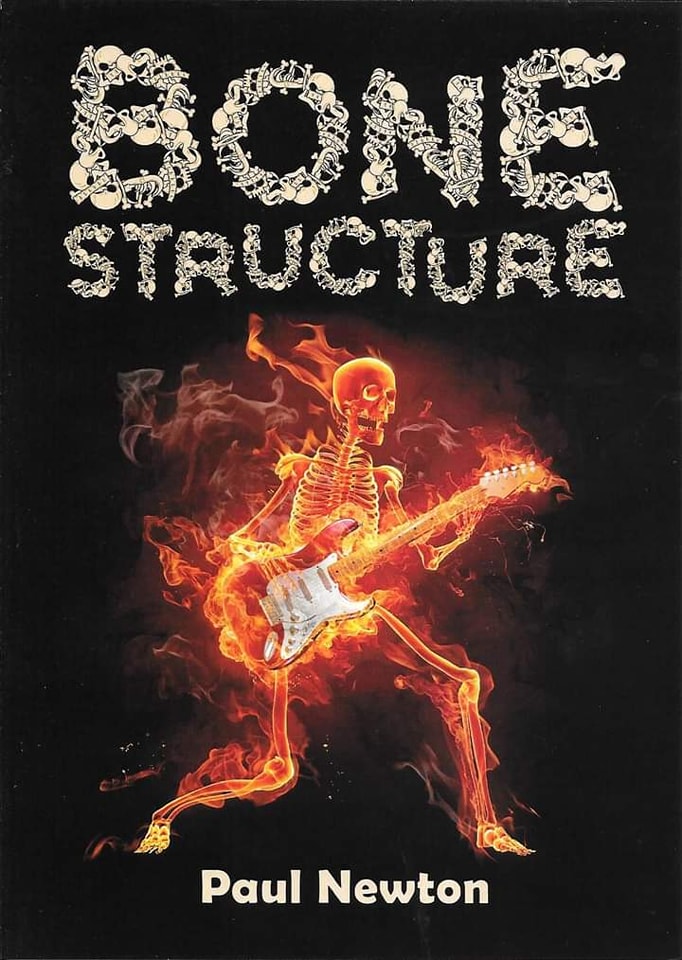
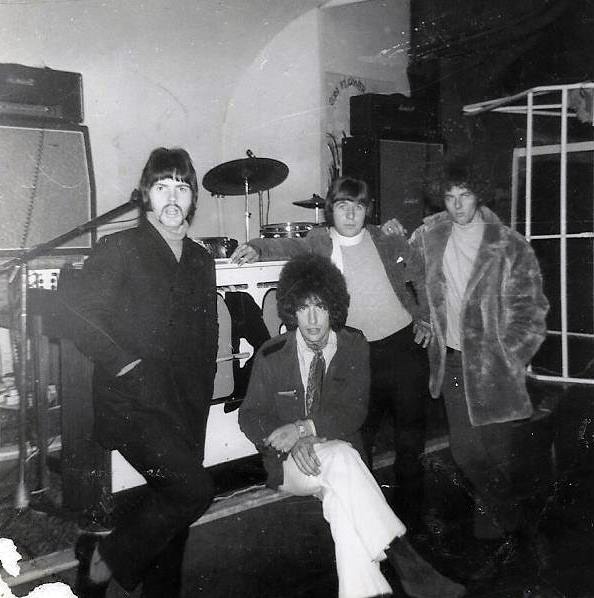
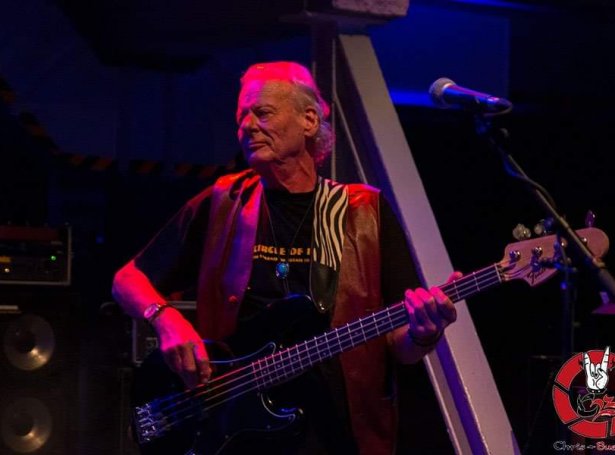
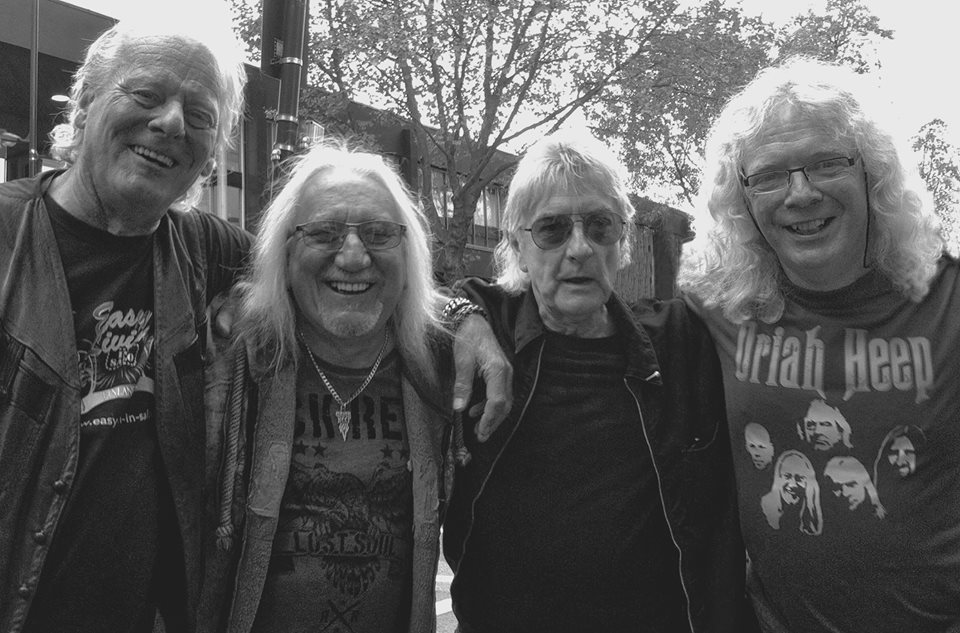
Paul Newton was a founding member of Uriah Heep. He had played in such late ’60s bands as the Don Shinn Group, The Gods, and Spice. It is the last one that became Uriah Heep with the addition of Ken Hensley (The Gods). Paul played on the first 3 Heep albums – all of which remain near the top of favorites among the Heep fanbase. Classics such as “Gypsy”, “July Morning”, “Bird Of Prey”, “Lady In Black” and “Look At Yourself” were all from this period. It’s been over 50 years since Paul left Heep, and his life went in various other directions. But, a few months ago Paul released his book “Bone Structure” – which is also the name of the fictional band in Paul’s story. The book intertwines the tales of the band’s main character Paul ‘Watson’ from his childhood and personal life to his current ‘reunion’ tour with Bone Structure, and early Bone Structure days. Many Heep fans will see similarities between Paul Watson’s Bone Structure days and bandmates with Paul Newton’s time in Uriah Heep. There’s even some crafty Heep inclusions such as Bone Structure sharing a few gigs on their reunion tour with the current Heep, and old recall on what Paul Watson heard of Heep in the old days. But there are a few storylines going through this book which makes it an enjoyable read, aside from the Heep relations. There’s lots of humour in Paul Watson’s early days – with his family and schoolmates. As well as later struggles with Bone Structure and in his personal and non-rock star life. In some ways this sorta reminded me of that movie Strange Fruit (w/ Billy Connolly). Recommended also for anyone who likes a good read on the whole period of growing up in post-WW2 Britain. Bone Structure doesn’t feature any photos (being a fictional writing), but Paul was kind enough to share a few photos here.
Yeah, the book.. as I’ve said in the introduction, it was something I started, it’s been in my mind for years and during the 2nd lockdown I ‘well I’ll have a go and see if I can do it’. And I ended up with a book. Probably a bit strange in parts to people, but there we go – that’s what I did.
You’ve mentioned the format before, and actually the format made it pretty easy to follow – the whole dating it and going back and forth with the 3 timelines. So, how did you develop the whole idea of how you were going to write it?
Well, when I first set about it, like many projects, I started and then I thought ‘this isn’t working for me’, and i woke up in the middle of the night and I thought ‘well maybe if I combined the days and times sequence I can actually make it a story’. So, once I got kinda fixed on that idea it seemed to work for me. And like all these things – I work at on t for a couple of weeks, then I put it to bed and leave it alone, and do other things, then I go back to it, and read it and change things. It was a sort of process that builds up and I went along, and I used to have days where it was just flowing out of me, and then it’d dry up a bit and I’d have to think about it. But, once I got the (sort of) format it started to come fairly easily. and now I know the bloody thing off by heart. And I thought it works for me – going backwards and forward; it enabled me to make it a story, because what I didn’t want to do was just a sort of…I wasn’t with Uriah Heep that long to make a book out of it, so I just wanted to use my life experiences at various times of my life to write a story. And I thought a fictional book format would give me a little more freedom to make it an interesting story.
I think you might be underestimating your time in the band, because obviously you were the link between the ’60s bands and Uriah Heep (what became Uriah Heep), so that’s a very interesting story right in there because lots happened just in that 3 or 4 years, right!?
Sure. But I have contributed to various books based on that time, and I just felt that – that period has really been pretty well documentated and exhausted – what could I really add? It would just be my take on what happened in those days. But, of course there’s only me and Mick left really from those days, but we all remember things differently and have different takes on it, I didn’t want to do that, I didn’t want to write an ‘anthology’. And I read a lot anyways all sorts of stuff, so I wanted to make it into an actually story, and that’s how I ended up doing the way I did.
I get the impression, and you can correct me if I’m wrong) is that ‘Bone Structure’ is loosely based on Uriah Heep had you stayed in the band longer.
I think that was probably in the back of my mind somewhere because like many bands we started off the band, formed it, we found a direction, but then of course musical taste and fashions change over the years. But I think a lot of what I wrote about Bone Structure probably applied to Uriah Heep, I mean for some years they had desperate times – they fired Dave Byron, then Ken eventually left, so they were changing times. And the music – things like the “Salisbury” suite – you couldn’t go out on stage and play that nowadays. The only way you can do that is if of course if you’re out there at the top of your game, but Uriah Heep has had some very unfortunate down times, they just weren’t out there big-time, and that was partly down to bad management and internal problems, but I don’t want to go down that road. It is how I felt the band probably would’ve ended had myself and the rest of the guys stayed in the band. I think bit by bit we would’ve lost motivation and been a bit sort of dejected. Which I think is common for many bands, and I think it’s true t say for most bands and artists, they produce their best and most memorable material in the early days of a band because that’s when they’re exploring things and they’re motivated, they want to go out and be famous and get to people, and as time goes on the songwriting becomes more difficult, it’s very difficult to write a good song. Any musician can write a song – but whether they’re good songs is a different tale. And I think it’s true, with no disrespect to Uriah Heep, I mean Mick’s had the band going for 50 years now, but they’re never managed to write another sort of “July Morning” type. They were just majestic great songs, and I think you could say the same about Fleetwood Mac, Pink Floyd, their best work – the stuff that people still want to hear is from the early stuff. Everybody, bands can keep on recording and touring, whatever, I mean Uriah Heep – on all occasions I go and see, the material that goes down best is the stuff from the early days.
Did you have to do a lot of research for it, like when you’re (Bone Structure) on tour and you mention places you stayed and distances, stuff like that..?
It’s a combination of my experiences either with bands or on holidays or whatever, places I’ve been, which is again why I made it a fictional story because I could use these ideas when it suited the story. But some of the venues and things, I did all the research myself. This was a very kind of home-spun thing. I wrote it , and once I kind of finished the book I really just wanted to have a book on my shelf, amongst my albums with my name on it. And I did send the draft to several publishers. Three well known publishers offered me contracts, and when I say contracts – they wanted a lot of dosh up front, but I wasn’t convinced they ever do anything with the book. And I found a printing company, locally by accident, near to me, I wanted some copying done and they had some stuff on the desk there that they would print books and things, and no limited numbers or whatever. And I had a meeting with them, and I said I wanted to get some printed, and they said ‘well we can publish it for you.’ And that’s what happened. And obviously, with a small independent partnership you don’t get the exposure you would get with Penguin or whatever, but I really couldn’t afford to spend 5 or 6 or 7 thousand on a personal project, so that’s where we are with it.
I’m assuming reaction has been more than you thought though!?
It’s been encouraging, yes. But it was always going to be a low-key publication, and I’ve put stuff out there, and I have seen some good reviews from people who’ve bought it. But it was only going to be something that sold to somebody who maybe had an interest in Uriah Heep or whatever other stuff I’ve done. It was never going to be on the Times Best Seller List. It wasn’t going to be a Lee Child! (haha)
I want to ask about some of the specific things in the book – if they’re drawn from exact things in your life, or if you borrowed from other people’s lives…
As I said in the introduction whether people want to believe it or not the greater percentage of things that happened in the book are things that have occurred in my life – maybe not in that same time format, and the characters, for example Frank the roadie, was the sort of amalgamation of 2 people that I knew, to form that character. But basically everything that I’ve written about has actually happened in my life, but because it’s a fictional story, it’s given me the scope to change things, change when these things happened, and poetic license to slightly exaggerate or change things to make it readable, because I thought ‘if I write things exactly how it happened it may get a bit boring.’ So, it is pretty well 90 per cent based on fact, but the other 10 percent has allowed me a little bit of maneuverability to make it in to (what I thought) was a readable and (maybe)an entertaining story. Like where I get in to golf or whatever, and then I cast my sort of observations on that, and that is purely a personal thing, and people might read these things and think ‘what a load of crap! this guy’s an arsehole.’ Haha..
I enjoyed your views on things like golf, and then the whole bits on vegans and craft beer drinkers I thought was hilarious, but it’s sometimes the same way I look at it
There is people in Europe, Scandinavia who bought the book, and I did say it’s a bit of British humor in there, I didn’t know if they would get it. The golf thing is totally true. A good friend of mine took up golf years ago, and was always pestering me to play, and I did give it a whirl but it didn’t float my boat (haha).
And I loved your take on attracting the weirdos in bars and stuff.
Well again, that is totally true. When I first started courting my current wife (my 2nd wife), we’d go to places, and these nutters would suddenly sit down and talk and talk absolutely garbage. I attract nutters! (haha)
And they’re not knowing who you are!?
Well, I did a stint with Uriah Heep, and some other stuff, but It’s not something I bring up in conversation, unless it happens to arise, and I do get, I wouldn’t say annoyed, but I do get a bit embarrassed sometimes. We could be out somewhere, my friends and my wife talking and they’d say ‘Oh Paul used to play in Uriah Heep.’ And I’d say to my wife ‘don’t say that’, because if I’m going out socially, and not going out to promote myself. This is part of my life. And of course, for many years I wasn’t involved in music, and once people find out you played for a well known band, I forget that it means a lot to them to maybe talk to me because I’m just a guy. I’ve never considered myself as anything particularly special, I was an average bass player back in the day, but it’s not something I would actually bring up in conversation myself. I do get annoyed some nights when I talk to people and all they want to talk about is themselves (haha)
So, your wife, is that true that she didn’t know that you had a musical past?
Pretty well, yeah. Again, I did exaggerate it a little bit. But, when we first met and for a long time, she didn’t really know anything about my background because by then I was working in construction and I was just a normal 9 to 5 guy, or whatever, and it wasn’t really relevant to our relationship. It was something I’d done, and to be honest when I met my wife in the mid ’80s it was a long time since I’d actually been in Uriah Heep, and music or whatever, so it just never occurred to me to say ‘oh by the way I used to play for a well known rock band.’ It just wasn’t relevant to our relationship. But she was quite surprised and a little bit miffed that I hadn’t told her these things. I think because I was an only child, and I was a very shy, quiet kid and I was when I first started playing in bands, So I’ve always kept a lot of life within me, that’s just how I am, it takes people a while to get things out of me, that’s just how I am. we’re all a bit different.
The drummer in the band, that you’d gone to school with – can I assume he’s based on a couple of people!?
Yeah, then again the characters in the band Bone Structure , again, are based on people I’ve know or worked with, and maybe like an amalgamation of 2 people. I didn’t want to base anything in the book 100 percent on real people because 1- you may upset people, or you could get in to litigations. But I didn’t want to make anything too traceable; I changed names an a lot of things because it is a fictional story, and that was one of the reasons I wanted to make it fiction because there are certain things in my life with Uriah Heep and elsewhere that if I told it factually – it could’ve upset people or gotten me in to trouble, And that wasn’t the intention of the book. I wrote the book purely for myself, and then for anybody that does buy it and reads it. I don’t think there’s anything in there that’s too high contrary or whatever.
Now when I’ve talked to the guys who’ve read it, everyone seems to have their own take on which characters are similar to who, such as Junior and Ken (Hensley)…
Yeah, well I suppose, like the guy Bernie – who is our manager was loosely based on Gerry Bron, and I guess Junior was very much based on Ken Hensley because it’s widely known that Ken was a very talented man, also very difficult to work with, and was a plotter and schemer, and he did get in to ‘bed’ with Gerry Bron, and that was one of the problems I had in Uriah Heep – that Gerry Bron and Ken Hensley basically hi-jacked our band – in what had been a happy, enjoyable good thing for myself, Mick and David. And it ceased to be that. Yes business and success changes that, but all the time Ken was in the band anyone else who’s been in the band during his time said that he was a plotter, and disruptive. Ken thrived on discontent, he always wanted to get rid of somebody. And that’s how he was, but the guy had a great talent. I mean, since we started doin the Heepventions and stuff with John Lawton and Lee, Yeah we worked together OK, but they were only a few shows each year. Ken’s not somebody I could really go on the road with because he’d be a nightmare, (bless him).
I think later in life, when you guys did these one-off shows, you all had different goals, you weren’t ‘competing’ to get songs on an album, or whatever.
Well yeah… these things came around, I got a phone call out of the blue from somebody I’d never met before – John Lawton, and he’d been in touch with Ken Hensley, Ken lived in St Louis at the time, and he was coming over – did I fancy doing a show with him? And I said I’ll have to think about that, because there was a lot of bad blood between me and Ken, I guess. And I thought we’re older now, or whatever, so we got together and rehearsed, and we did show up in London, which was the catalyst for many of these Heepvention things we did. And they were just 4 or 5 days, trips to Germany or Scandinavia or wherever, and that was fine. And for me that worked, because part of the problem, just a personal problem for me was when I was in Heep I realized 2 months before I actually got fired from the band – I was looking at the fall schedule that the management sent up, and I didn’t want to be on the road 365 set days of the year. As much as I loved playing and performing I had other things in my life and I realized I just couldn’t sign up to that for what seemed to be constantly. And I know you have to do it in a band – the long long tours, and in those days you had to share a room with one of the guys, and you never got any privacy, you never got any prime time, and I just couldn’t do that, I have to have time for myself. So, the shows that I did with the guys, the Uriah Heep-ventions, they were just in and out things – 2 or 3 gigs over a weekend, at a festival or a Heepvention, or whatever, and then back to normal, and that totally suited my kibd of way I wanted to do things.
Heep Legends, Salo 2009Paul w/ John Lawton, Salo, ’09
How did you like John Lawton personally, and as a singer?
I thought John was a lovely guy. As I’d never met him until he phoned me out of the blue. I got on well with John – what a wonderful singer and nice man, an easy going man. We used to have fun together, along with his wife and my wife – whenever they’d come along to the shows they got on well. So, it was a good social kind of thing. They were like paid holidays for us – we’d go off and do these shows, and have fun – play music, do the meet n’ greets and talk to people – which by that time of our lives, for a lot of people that came to hear the music , and it was just being with us old guys that they enjoyed – they’d all come for a specific purpose because they were interested in Heep. They were good things, but it wasn’t something I’d want to do 12 months of the year. John was just a nice guy, and he had a wonderful voice. For me David Byron was the top voice for Uriah Heep because everything in the band, the songs – were for David. And OK, there was problems with David, from what I gather, with alcohol and whatever, and they fired him. But to lose David, it would be like firing Freddie Mercury – I would’ve thought there was ways around that, to preserve the band. But that’s what they chose to do. So John took his place, and did a very good job, but John was a totally different singer to David. But you can’t replace anybody, we’re all individuals, so you have to expect whoever you choose that takes on the role – they will do it in their own way, I find. I’ve worked with bands, and I always say to the guys ‘listen, I play bass like I play. I listen to the stuff, and I can play in a similar manner, but I can only play my interpretations of the songs, so if you want me to play the exact same notes as your last bass player then the gig’s not for me.’ I can’t do that, and I wouldn’t want to do that. And that was the same with John Lawton, and all of the guys that have been through Heep. There’s some great musicians that have been through the band, but were all individuals, and you can’t expect somebody to copy the last person note for note, (or whatever) because it can’t happen, it won’t happen.
Did you ever feel – on later years, because there was a lot of ‘name’ bass players that came after you, like Gary Thain, John Wetton, Bob Daisley…Did you ever feel that your period or your contributions got overshadowed by those guys?
No, not really. I did my stint in the band. I went, and Mark Clarke took over for 6 weeks, and then they got Gary, and Gary was a great bass player. But all the the bass players – Gary, Trevor, and Dave Rimmer now – they’re all good players and they play as they play. I think probably that my time in the band, that was sort of forming the nucleus of the Uriah Heep sound, and I think in particular Gary Thain, Gary had been in a blues band before, very basic stuff, but Gary was a good player, and I think Gary just took my kind of ideas further. He was a very melodic, unusual player, he had a great mastering of the scales, I’ve listened to the stuff, and thought ‘oh I never thought to play it like that!’ – that’s because we’re all different, you see. But, you always have these discussions among the fan base, like – who was the best singer, who was the best drummer, who was the best bass player, and I just think – well they’re all good guys otherwise they wouldn’t have got the job. It’s purely personal preference who you like most.
How close were the parents in the book to your parents?
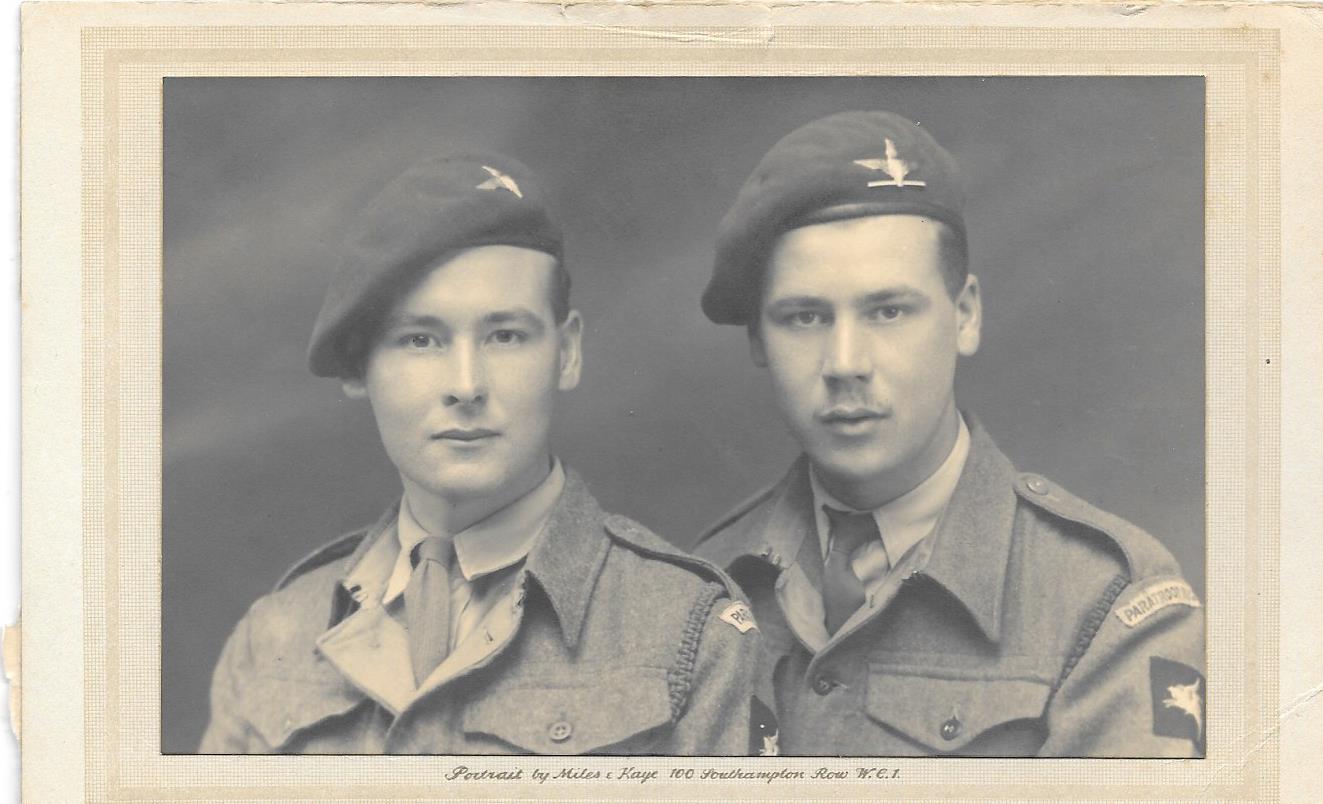
Pretty close. Again I changed the named – Blanche – my mother’s name was Barbara, but my grandmother’s name was Blanche, so I called my mother Blanche, and her maiden name was Watson, so that’s where the Paul Watson name came from. And I pretty much summed up my dad in it, because my dad – he was a paratrooper in the war, and he’d been to prison camp. He was a tough guy, but a very very kind man. But he did, like the thing about ‘religious rants’ – that’s what my dad did, he’d go off when something bad happened. (laughs).
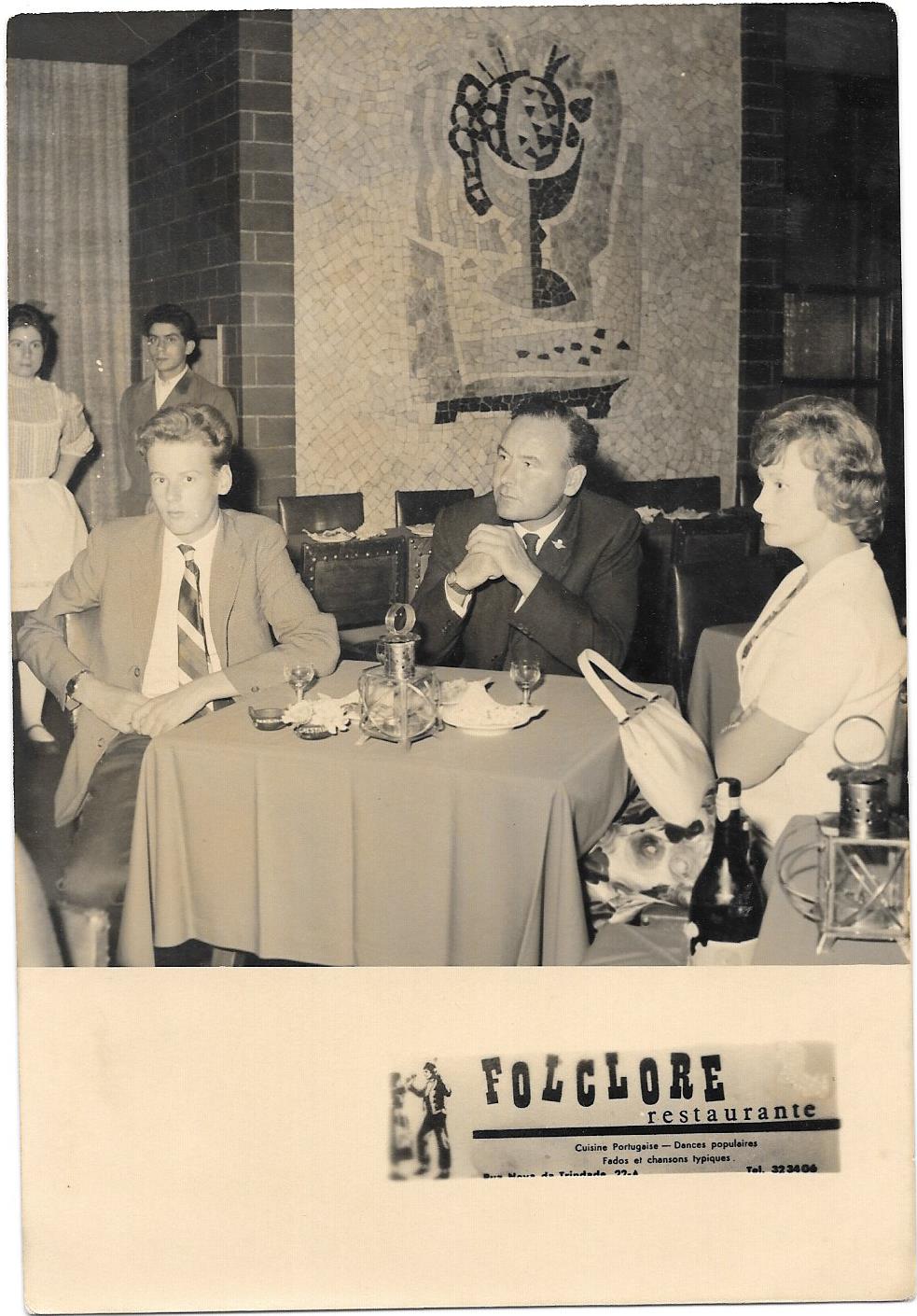
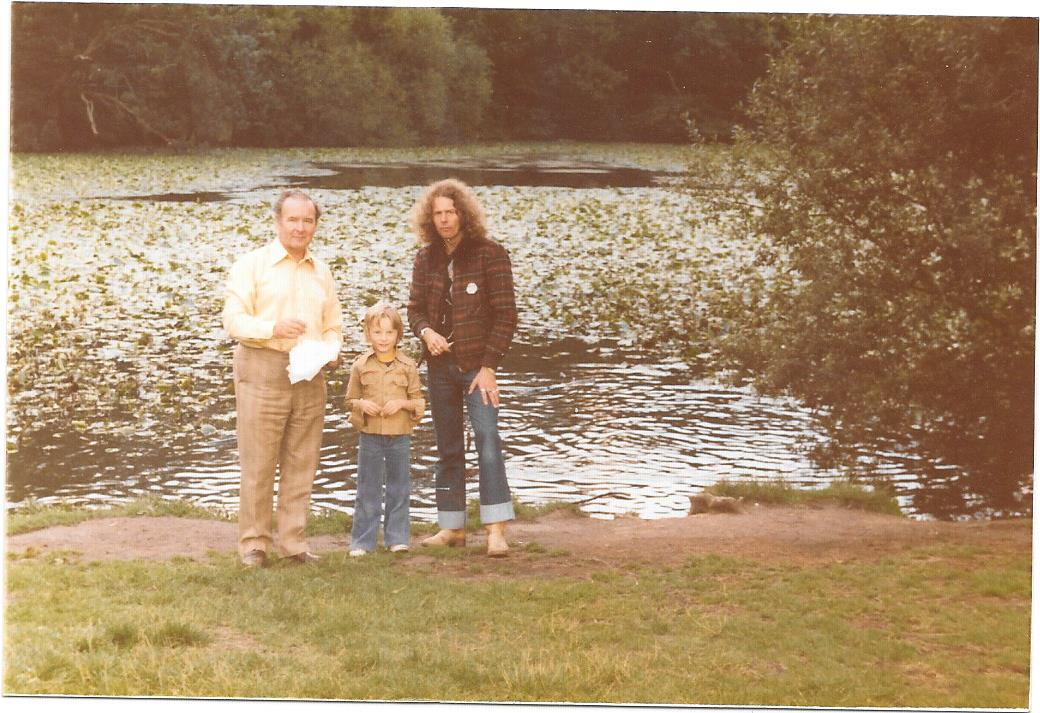
Paul’s father w/ his Uncle JohnPortugal, 1963Paul w/ his father, and son Julian
I laughed about the running out of petrol because my dad was like that where he’d push it until he ran out of gas,
Yeah, my dad was stubborn, and there was never any need for that because all the vehicles he had he would either get reimbursed or he had a fuel card, he didn’t have to pay for it. But we could never understand why he constantly ran out of petrol; he was just stubborn. Because my dad he was like he wants to stop to go to the loo, but he wouldn’t stop until you were desperate. haha. And him locking himself out of the car – that was such a regular occurrence, locking the car with the keys in it, used to drive me and mom mad when I was young.
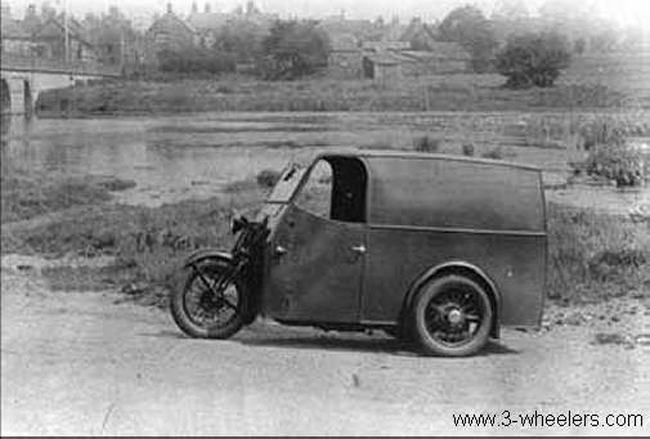
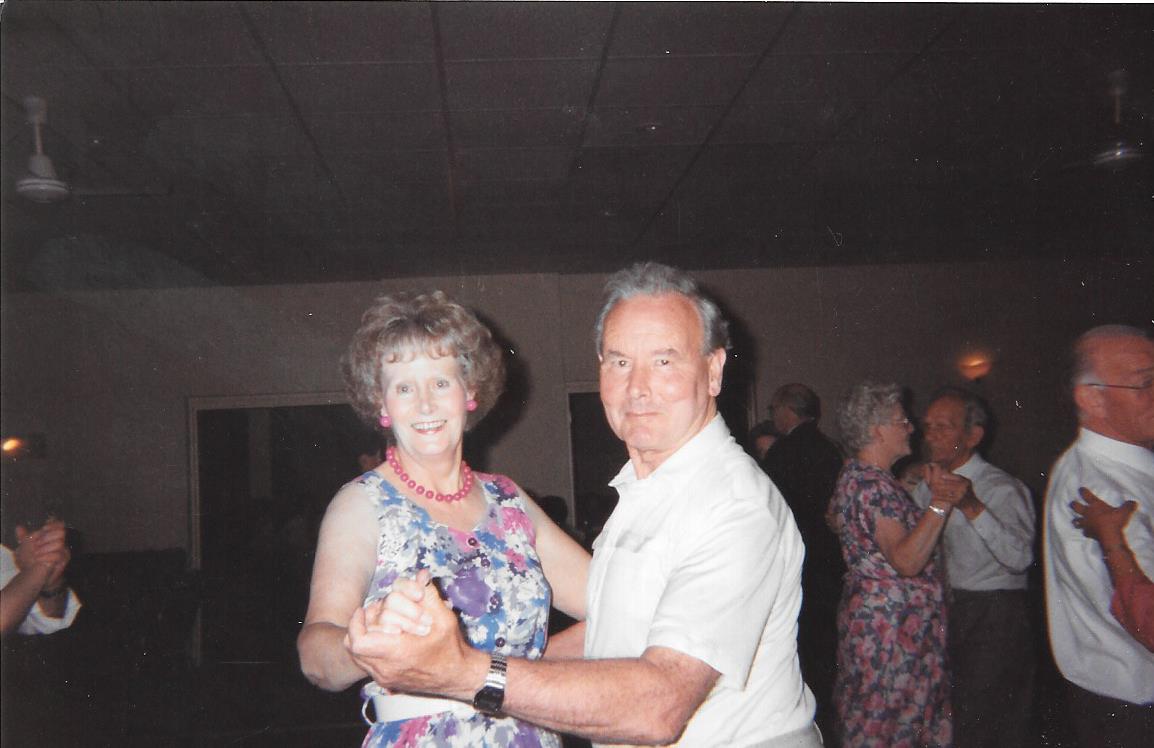
a 3 wheeled vehicle like Paul’s father drovePaul’s parents, 1992
There was some more humorous stories, trip to LA with Three Dog Night and meeting the girl there..
Yeah, that was the first tour in the States I did with Heep . The first gig I ever did in the States, I think it was in Indianapolis or Cincinnati, and that was with Three Dog Night, and we’d been playing small venues in the UK, we got on a plane and flew to Boston, and then took another flight to Cincinnati (or wherever) and we did this massive stage with Three Dog Night. And the stage was bigger than the venues we’d been playing, so it was an eye-opener. And I loved it; it was great. And they were lovely guys, we did a few gigs with them on that tour, and we did a few on our own – in clubs. We gigs with Ten Years After and various people. We did the Whiskey, and all that stuff. All that is based on fact, I just rejigged it to fit the book.
Did you ever run into anybody in later years while out and about, anyone that had a connection to the band. Did you see David at all before he passed?
I got fired from Heep, I moved on to other things, and worked wherever, but they were segments of my life, they were current at the time, and then they weren’t, they were of no interest any more. I’ve got to be honest, I really didn’t do any Uriah Heep stuff until John Lawton came up with this gig which was the catalyst for Heepvention. I had to get ahold of stuff, if it was stuff I hadn’t actually played on, and I had to re-learn all that. And so when we did these shows, I’d get a set-list and find the albums that the songs were on and actually learn them. And I’m not familiar with the bulk of the Heep catalogue. I have the record company send me all the stuff, but I’ve got to be honest much of the stuff Heep did over the years didn’t float my boat. They were just albums of songs; they were sort of albums you’d play and then couldn’t remember any of the songs, or I couldn’t. And I think that’s sad because whilst Ken Hensley was the main songwriter and quit the band, and Ken was drying up when he left. But the last couple of albums are a bit more like the Uriah Heep I remember forming. But no disrespect, but Mick and Phil write most of the material, and I don’t consider it strong material, and that’s not being nasty. It’s true for many bands, you could get albums and it’s like somebody said ‘Oh we need 10 songs for an album’, and so they knock out 10 sub-standard songs. But it’s difficult to write a bloody good song, you know. It’s very very difficult. And I noticed on the newer album that Davey Rimmer and Russell have been writing songs, which is useful, because when you’ve got to rely on one or two people in a band. I mean, In the early days of Heep we all wrote stuff, but it got to the point where Ken wasn’t interested in anything unless it had his name on it. And so there was very little chance of getting your song on an album back then.
You did the album with Chris Rainbow a few years ago, do you have any desire or prospect of recording again?
No, I did that. Chris was a guy I bumped in to, and he said he was writing some songs and would I like to play bass on it. And I’ve had this many times over the years, and on occasion I did because I know that I like good songs. But Chris sent me some material up to my home and I listened to it, and ‘well actually – this isn’t too bad.’ And then we got together and routine’d the stuff, and we used the studio some distance from me, we went down there. And I thoroughly enjoyed doing it because it one of those things where I was very pleased with the finished product. I mean, it was never going to be a big seller, but it was something I enjoyed doing. And I thought he had a good sort of diverse selection of songs on there. And he did want to do another one, a bit later. He called and he said ‘I’ve got some more songs, do you fancy doing another CD?’ and I said ‘well send up the songs.’ But I didn’t get involved, it didn’t happen, and I probably upset him, I said ‘No’. But the songs… it was really going to be a re-hash of what we’d already done. We weren’t moving on. Do you know what I mean? So many bands – they’ll have a successful album or single, and then the next stuff is just a re-hash of what they’ve done. You have to move on, otherwise you’re not being creative, and it’s of no interest to me. I did put bass down on 3 tracks for an American band, guys I know I met at the Belgian Heepvention, and the drummer contacted me, a band called Twisted Tapestry. So I put some tracks down on that, and have put bass tracks down on odd things, but my musical involvement for many years has been very low key. I have worked with bands at times on the local scene, but I haven’t worked professionally in bands since the 80s, and had no wish to, it wasn’t the sort of life. I realized early on, after my Heep days, and what happened, that if you want to be a professional musician – unless you’re very very lucky, you have to expect that you’ll be broke most of your life, and I had other things in life I wanted to do, and that’s why like after Heep, I worked with a band in residency in clubs doing stuff, we earned good money doing that; there was no travelling – it was 4 or 5 nights a week. I was getting good money and I was still playing music, I mean it was all covers and stuff, but it was a good gig, but I got tired of that. And I’d done some session work after that. But when music changed, and you’ve the electronic music coming in with synthesizers or whatever, I realized then, as I was getting older that I wanted to have a more sort of organized life. I didn’t want to be scrambling about to find out where the next meal was coming from.
Do you read much?
I’ve read ever since I was a child – which is why I was interested in writing my own book. I’m always reading most nights as the television is bloody awful! I normally go to bed at night and I get started in to a book, and I take a cup of coffee or tea up to bed, and get started in to a book. My cat curls up next to me. I love reading.
Do you prefer fiction or non-fiction?
I do read the odd biography if it’s somebody who interests me. I tend to read, as I said in the book, people like Michael Connelly, David Baldacci. I like crime-fiction, detective things, I like a good story. I’m always buying books. I haunt the charity shops, I rarely buy a new book, unless it’s something i particularly want because if you want a few weeks – you’ll pick it up at the charity shop. I’m an avid reader, I love reading. I always say to people – ‘If you can read..’ , because so many people don’t read any more, it’s all internet stuff, and I like to read a hard copy of a book… I like to pick up a book it’s like in the old days you’d pick up an album, you could put the record on and read all the sleeve notes. It’s something of value. This is one of the problems with music nowadays, people download stuff, and it’s value-less, you know!? And if you buy a CD, it’s in a lit cardboard sleeve with little information on it, and you haven’t really bought anything that you really value. And I think the vinyl days, and I’ve got a load of old vinyl albums – you have something there that’s meaningful. But I’ve always read ever since I was a kid, but it’s something that less and less people read nowadays, as I said people sit down on their computers or get into video games, it’s never really interested me, but there all changes, it’s part of evolution, it’s not for me to say they’re wrong. I’m an old guy now – I don’t give a shit, I just do what I want to do. Hahaha What I like about books is everybody reads a book, I read a book – I visualize all the characters as I want to But I do get disappointed sometime if I’ve read a really good book and they make a film or a TV series of it, and of course, rarely are the characters as I imagined them, as I want them to be, because I see them differently from you or anybody else. But sometimes I think ‘shit!’, I feel cheated. haha. And that’s just because I’ve read a book and formed visions of the characters in the book, and somebody else might not see them like I see them.
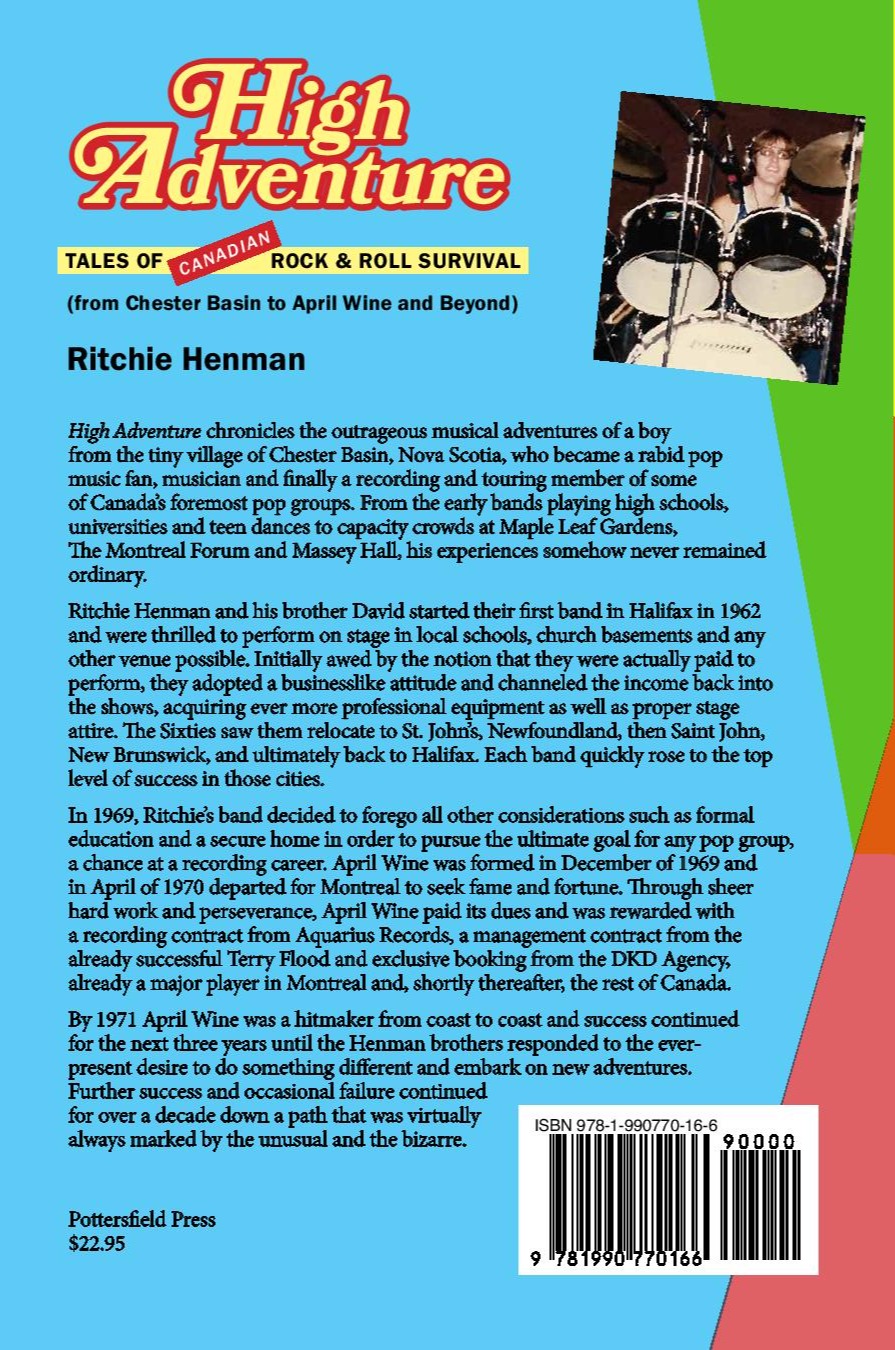
Ritchie Henman was a founding member of legendary Canadian band April Wine. Formed in 1969 by Ritchie (drums), brother David (guitar, vocals), cousin Jim Henman (bass), and Myles Goodwyn (guitar, vocals). The band moved from Nova Scotia to Montreal early on with the hopes of landing gigs and a record deal, on the basis of a misunderstood response from a well known promoter. Ritchie and David Henman wrote and played on the first 3 albums, before leaving the band and moving on to other projects. In that time April Wine made an impact on the Canadian charts with such hits as “Fast Train”, “Could Have Been A Lady”, “Bad Side Of The Moon”, and “Drop Your Guns”. Ritchie also played on the excellent album by Cruiser – Rollin’ With The Times, from 1980.
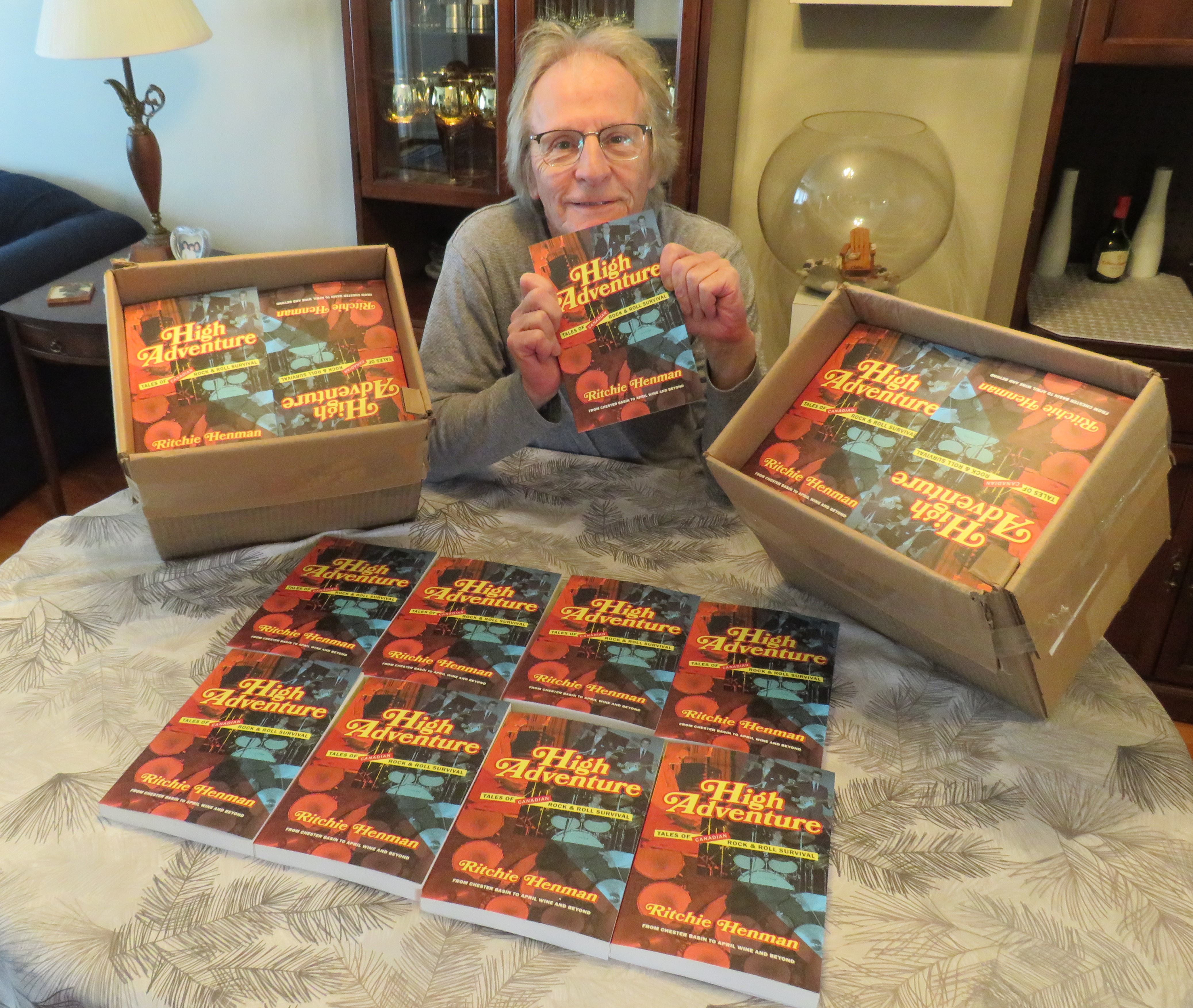
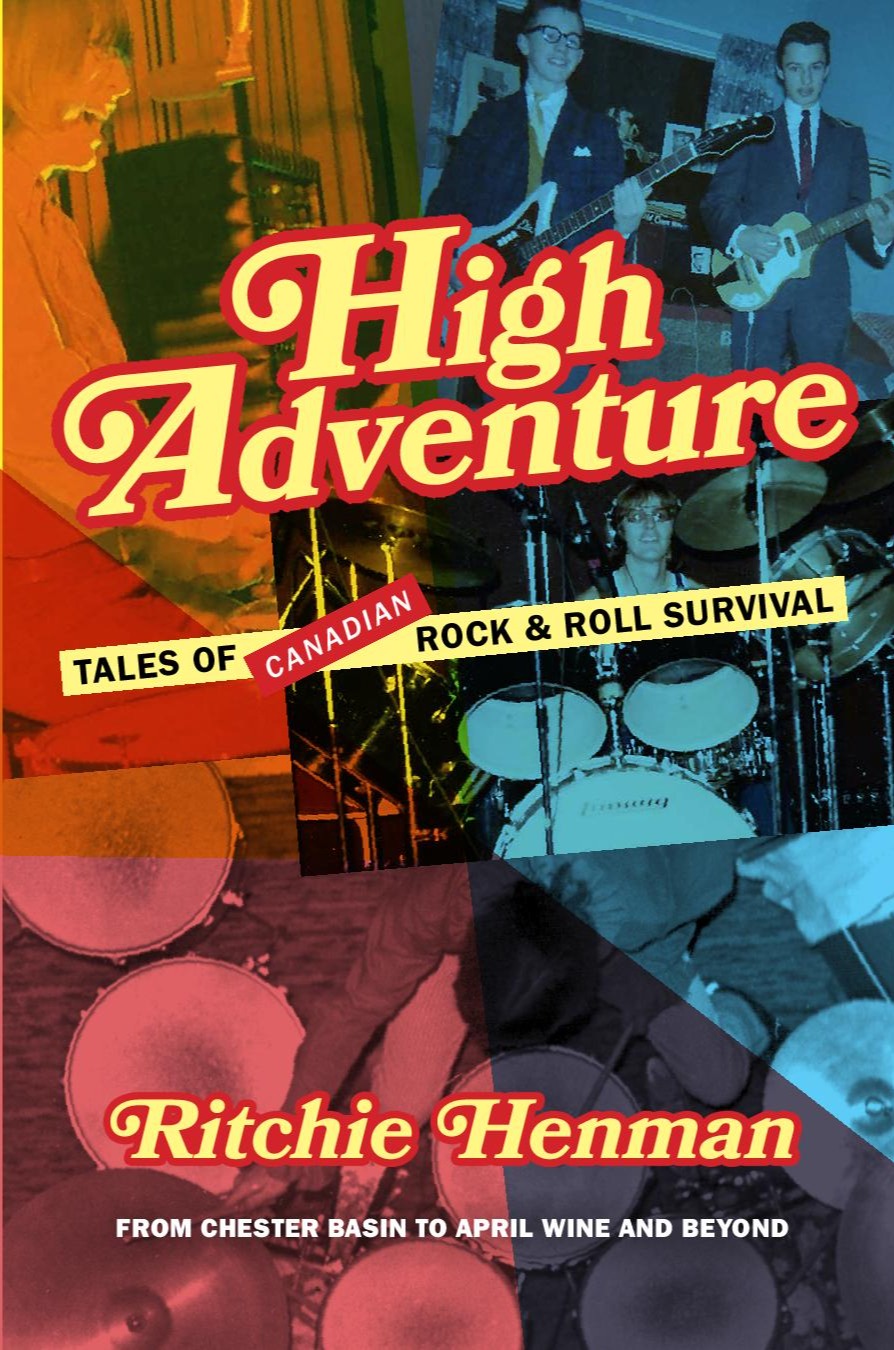
Anyway, after all these years Ritchie Henman has written his own story in the newly released – High Adventure – Tales Of Canadian Rock & Roll Survival, which details his earliest days in Novav Scotia to his days as the original drummer in April Wine as the band was gaining popularity early on. On to the band The Dudes, Cruiser, and others, on to (presumably) his post-rock days.
High Adventure – Tales Of Canadian Rock & Roll Survival is available on Amazon, as well as the publisher’s site. For more info check out the links below.
*There will be a book launch for High Adventure, with Ritchie, at the Dorval Library on May 17. Go to http://www.ritchiehenman.com for more info and to register.
New Book “Inside No 3” A History on the Products and Memorabilia From Apple Records 1968-73 by Nigel Pearce Now Available for Pre-order
Love The Beatles, Love The Music, Love The Book!
Now available for pre-order, “Inside No 3” is a history of the products and memorabilia from Apple Records from it’s public opening on 28th August 1968 until 1973 when Badfinger issued the last ever all new Apple single – Apple 49, “The Apple of My Eye.”
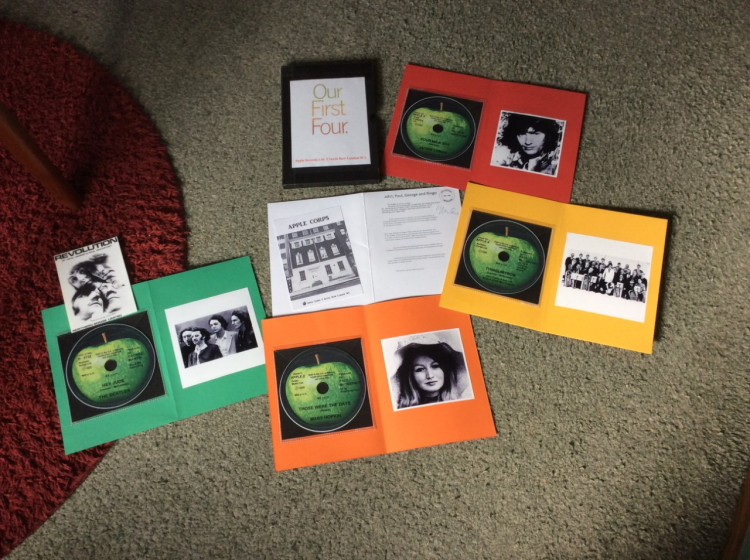
The book features engrossing vivid pages highlighting many products and artifacts that have not been seen for over 50 years, many never seen at all.
You will see photographs of artists, bands, records, memos, and other documents that illustrate the goings on of a truly great record company, that encompassed many ideals and plans but sadly fell to the one thing that was needed overall, and that was the split of the fab four. What was undertaken here was revolutionary in concept, fantastic, in thought, and pure gold in products.
This project will interface in social media, podcasts, youtube and other mediums to bring to you all that you require from INSIDENO3.COM
Artists specials will include everyone who recorded for Apple such as Mary Hopkin, Badfinger, Splinter, James Taylor, Hot Chocolate, Trash, Radna Krsna Temple – London, Modern Jazz Quartet, Ronnie Spector, Chris Hodge, Lon and Derek Van Eaton, and a host of others, including Bob Dylan and Eric Clapton who’s output here in many cases has somehow in times seem to have been forgotten. This will include artists who demoed and recorded at Apple under various Apple projects. All will be revealed in good time, so it will be worth your wait and devotion! You won’t be disappointed at all. You will see photographs of articles and memorabilia that has not been generally seen for around 50 years, and that will be a huge eye opener for everyone. This will include memos, letters, press releases and other important social history artefacts as well.
The Book will come in the following formats all extolling the intimate beauty of the content:
1). The special collectors edition will be limited to only 100 units, worldwide and this is a hardback book that will be signed and numbered with repro memorabilia placed inside it.
2). A4 hardback book, signed limited to 500 units.
3). A4 hardback book, unnumbered.
4). A4 softback book, unlimited.
In whatever edition you purchase you will have a beautifully photographed and set book detailing some of the many Apple items used by The Beatles for marketing at No 3 Savile Row. You will see and feel many items that have either been forgotten or possibly have never been seen by fans before. It will adorn anyone’s Beatles collection and be a joy to own.
This will in time expand to interviews written and recorded and news items and special programmes on facts, links and parts of the lives of the fab four. It should prove to be a very interesting time indeed and we will ensure that “A Splendid Time Is Guaranteed By All”.









 Outsider Rock