As a fan, I very much looking forward to this release – a 2CD compilation of John Lawton recordings. John was a great singer, and a great person. This first review of this album was posted by Richard Wagner – a fan and friend of John’s. With Richard’s permission I am sharing it here, along with a few images. Enjoy, and check out this release at the link below…
I’m a lucky guy who received a copy of the “Celebrating the Life of John Lawton” double-CD at the CD-launch party last Sunday (July 9).
And I must say I love it!
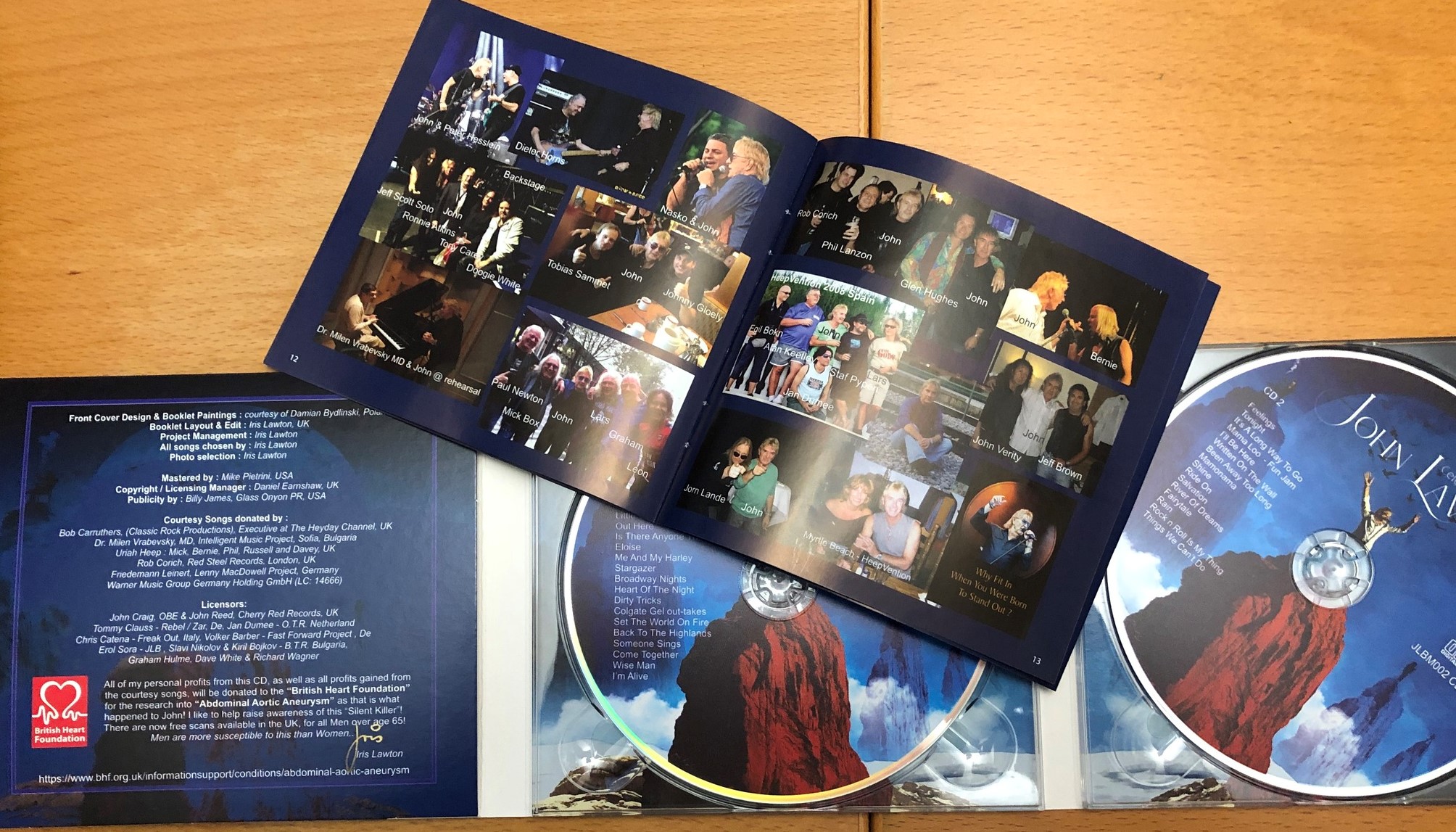
There are 33 songs on the two CDs which Iris Lawton personally selected. And don’t expect the typical Best Of. Far from that. There are songs which I never heard, some of them Iris found on old cassette tapes. All the music was beautifully mastered and sounds really good indeed.
The songs show John’s versatility, feeling and huge talent. His name really should be mentioned with the best of the best.
There are funny moments too, e.g. the Colgate toothpaste jingles sung in German or the impromptu “Mamma Lou” jam at a concert in Hamburg.
The front cover design and booklet paintings by Polish artist Damian Bydlinski are outstanding.
The booklet designed and put together by Iris has 15 pages and holds a lot of information and quite a number of photos. It is fun reading through the booklet like it was a vinyl cover in the old days . Iris tells where the songs originate from and also why she selected them.
I can only guess how hard and difficult it must have been for her to go through all these songs and hear John’s voice.
Thank you, Iris, you really did John proud.
A must have for those who know John and definitely a must have for those who are not so familiar with his voice and work.
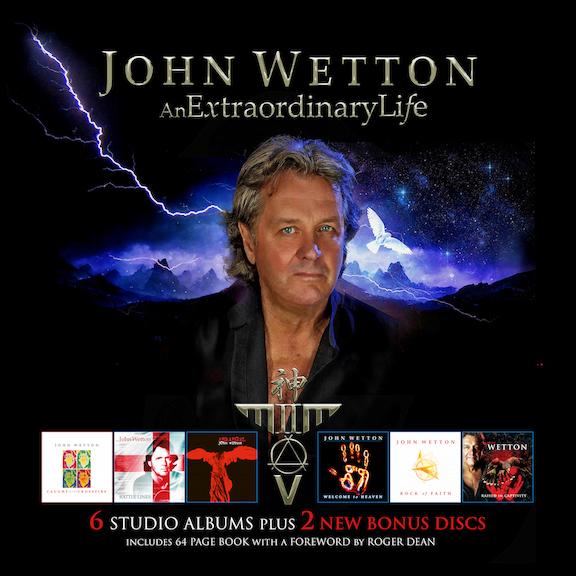
John Wetton’s solo catalogue is being released in box set format in November. This comes after the book An Extraordinary Life, as well as the John Wetton Tribute concert this week (August 3), which can also be live-streamed! Check out all the info below on the box set.
On 24th November the first in a series of box sets commemorating the life and music of one of the UK`s most extraordinary and prolific musicians, John Wetton, will be released.
The An Extraordinary Life box set contains 8 newly remastered CDs, featuring the six solo albums Wetton released between 1980 and 2011. Each album now includes special bonus tracks. Additionally, two further discs are included which feature a gold mine of rare, live and unreleased material from the vaults, compiled by John`s archivist, Rick Nelson.
*Check out trailer for the box set here:
Housed in a sumptuous 12” by 12” box, this set includes a 64-page book with an introduction by legendary artist, Roger Dean and contains comprehensive sleeve notes by Nick Shilton, author of Wetton’s biography, ‘An Extraordinary Life’, published earlier this year. The book also features a raft of photographs taken from the Wetton archive and has been designed by John’s long-time friend, Michael Inns.
This whole project has been lovingly crafted and compiled with the full blessing of John`s son Dylan and his wife Lisa and is endorsed by the Wetton estate.
With a career spanning more than four decades, John Wetton`s rich baritone voice and accomplished bass playing has adorned many recordings. In this ‘An Extraordinary Life’ his extensive solo career is captured for posterity all in one sumptuous box set, making this a fitting tribute to one of the UK most loved and respected artists.
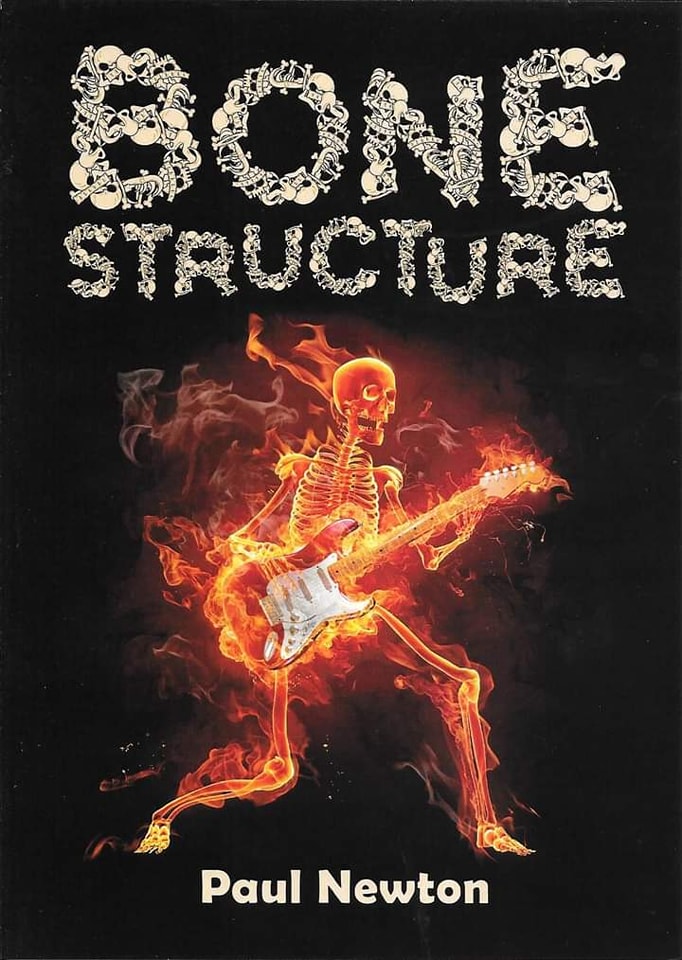
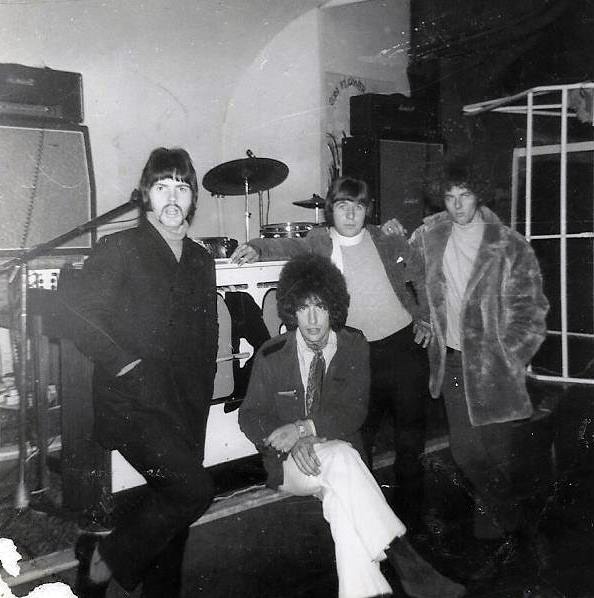
Paul Newton was a founding member of Uriah Heep. He had played in such late ’60s bands as the Don Shinn Group, The Gods, and Spice. It is the last one that became Uriah Heep with the addition of Ken Hensley (The Gods). Paul played on the first 3 Heep albums – all of which remain near the top of favorites among the Heep fanbase. Classics such as “Gypsy”, “July Morning”, “Bird Of Prey”, “Lady In Black” and “Look At Yourself” were all from this period. It’s been over 50 years since Paul left Heep, and his life went in various other directions. But, a few months ago Paul released his book “Bone Structure” – which is also the name of the fictional band in Paul’s story. The book intertwines the tales of the band’s main character Paul ‘Watson’ from his childhood and personal life to his current ‘reunion’ tour with Bone Structure, and early Bone Structure days. Many Heep fans will see similarities between Paul Watson’s Bone Structure days and bandmates with Paul Newton’s time in Uriah Heep. There’s even some crafty Heep inclusions such as Bone Structure sharing a few gigs on their reunion tour with the current Heep, and old recall on what Paul Watson heard of Heep in the old days. But there are a few storylines going through this book which makes it an enjoyable read, aside from the Heep relations. There’s lots of humour in Paul Watson’s early days – with his family and schoolmates. As well as later struggles with Bone Structure and in his personal and non-rock star life. In some ways this sorta reminded me of that movie Strange Fruit (w/ Billy Connolly). Recommended also for anyone who likes a good read on the whole period of growing up in post-WW2 Britain. Bone Structure doesn’t feature any photos (being a fictional writing), but Paul was kind enough to share a few photos here.
Yeah, the book.. as I’ve said in the introduction, it was something I started, it’s been in my mind for years and during the 2nd lockdown I ‘well I’ll have a go and see if I can do it’. And I ended up with a book. Probably a bit strange in parts to people, but there we go – that’s what I did.
You’ve mentioned the format before, and actually the format made it pretty easy to follow – the whole dating it and going back and forth with the 3 timelines. So, how did you develop the whole idea of how you were going to write it?
Well, when I first set about it, like many projects, I started and then I thought ‘this isn’t working for me’, and i woke up in the middle of the night and I thought ‘well maybe if I combined the days and times sequence I can actually make it a story’. So, once I got kinda fixed on that idea it seemed to work for me. And like all these things – I work at on t for a couple of weeks, then I put it to bed and leave it alone, and do other things, then I go back to it, and read it and change things. It was a sort of process that builds up and I went along, and I used to have days where it was just flowing out of me, and then it’d dry up a bit and I’d have to think about it. But, once I got the (sort of) format it started to come fairly easily. and now I know the bloody thing off by heart. And I thought it works for me – going backwards and forward; it enabled me to make it a story, because what I didn’t want to do was just a sort of…I wasn’t with Uriah Heep that long to make a book out of it, so I just wanted to use my life experiences at various times of my life to write a story. And I thought a fictional book format would give me a little more freedom to make it an interesting story.
I think you might be underestimating your time in the band, because obviously you were the link between the ’60s bands and Uriah Heep (what became Uriah Heep), so that’s a very interesting story right in there because lots happened just in that 3 or 4 years, right!?
Sure. But I have contributed to various books based on that time, and I just felt that – that period has really been pretty well documentated and exhausted – what could I really add? It would just be my take on what happened in those days. But, of course there’s only me and Mick left really from those days, but we all remember things differently and have different takes on it, I didn’t want to do that, I didn’t want to write an ‘anthology’. And I read a lot anyways all sorts of stuff, so I wanted to make it into an actually story, and that’s how I ended up doing the way I did.
I get the impression, and you can correct me if I’m wrong) is that ‘Bone Structure’ is loosely based on Uriah Heep had you stayed in the band longer.
I think that was probably in the back of my mind somewhere because like many bands we started off the band, formed it, we found a direction, but then of course musical taste and fashions change over the years. But I think a lot of what I wrote about Bone Structure probably applied to Uriah Heep, I mean for some years they had desperate times – they fired Dave Byron, then Ken eventually left, so they were changing times. And the music – things like the “Salisbury” suite – you couldn’t go out on stage and play that nowadays. The only way you can do that is if of course if you’re out there at the top of your game, but Uriah Heep has had some very unfortunate down times, they just weren’t out there big-time, and that was partly down to bad management and internal problems, but I don’t want to go down that road. It is how I felt the band probably would’ve ended had myself and the rest of the guys stayed in the band. I think bit by bit we would’ve lost motivation and been a bit sort of dejected. Which I think is common for many bands, and I think it’s true t say for most bands and artists, they produce their best and most memorable material in the early days of a band because that’s when they’re exploring things and they’re motivated, they want to go out and be famous and get to people, and as time goes on the songwriting becomes more difficult, it’s very difficult to write a good song. Any musician can write a song – but whether they’re good songs is a different tale. And I think it’s true, with no disrespect to Uriah Heep, I mean Mick’s had the band going for 50 years now, but they’re never managed to write another sort of “July Morning” type. They were just majestic great songs, and I think you could say the same about Fleetwood Mac, Pink Floyd, their best work – the stuff that people still want to hear is from the early stuff. Everybody, bands can keep on recording and touring, whatever, I mean Uriah Heep – on all occasions I go and see, the material that goes down best is the stuff from the early days.
Did you have to do a lot of research for it, like when you’re (Bone Structure) on tour and you mention places you stayed and distances, stuff like that..?
It’s a combination of my experiences either with bands or on holidays or whatever, places I’ve been, which is again why I made it a fictional story because I could use these ideas when it suited the story. But some of the venues and things, I did all the research myself. This was a very kind of home-spun thing. I wrote it , and once I kind of finished the book I really just wanted to have a book on my shelf, amongst my albums with my name on it. And I did send the draft to several publishers. Three well known publishers offered me contracts, and when I say contracts – they wanted a lot of dosh up front, but I wasn’t convinced they ever do anything with the book. And I found a printing company, locally by accident, near to me, I wanted some copying done and they had some stuff on the desk there that they would print books and things, and no limited numbers or whatever. And I had a meeting with them, and I said I wanted to get some printed, and they said ‘well we can publish it for you.’ And that’s what happened. And obviously, with a small independent partnership you don’t get the exposure you would get with Penguin or whatever, but I really couldn’t afford to spend 5 or 6 or 7 thousand on a personal project, so that’s where we are with it.
I’m assuming reaction has been more than you thought though!?
It’s been encouraging, yes. But it was always going to be a low-key publication, and I’ve put stuff out there, and I have seen some good reviews from people who’ve bought it. But it was only going to be something that sold to somebody who maybe had an interest in Uriah Heep or whatever other stuff I’ve done. It was never going to be on the Times Best Seller List. It wasn’t going to be a Lee Child! (haha)
I want to ask about some of the specific things in the book – if they’re drawn from exact things in your life, or if you borrowed from other people’s lives…
As I said in the introduction whether people want to believe it or not the greater percentage of things that happened in the book are things that have occurred in my life – maybe not in that same time format, and the characters, for example Frank the roadie, was the sort of amalgamation of 2 people that I knew, to form that character. But basically everything that I’ve written about has actually happened in my life, but because it’s a fictional story, it’s given me the scope to change things, change when these things happened, and poetic license to slightly exaggerate or change things to make it readable, because I thought ‘if I write things exactly how it happened it may get a bit boring.’ So, it is pretty well 90 per cent based on fact, but the other 10 percent has allowed me a little bit of maneuverability to make it in to (what I thought) was a readable and (maybe)an entertaining story. Like where I get in to golf or whatever, and then I cast my sort of observations on that, and that is purely a personal thing, and people might read these things and think ‘what a load of crap! this guy’s an arsehole.’ Haha..
I enjoyed your views on things like golf, and then the whole bits on vegans and craft beer drinkers I thought was hilarious, but it’s sometimes the same way I look at it
There is people in Europe, Scandinavia who bought the book, and I did say it’s a bit of British humor in there, I didn’t know if they would get it. The golf thing is totally true. A good friend of mine took up golf years ago, and was always pestering me to play, and I did give it a whirl but it didn’t float my boat (haha).
And I loved your take on attracting the weirdos in bars and stuff.
Well again, that is totally true. When I first started courting my current wife (my 2nd wife), we’d go to places, and these nutters would suddenly sit down and talk and talk absolutely garbage. I attract nutters! (haha)
And they’re not knowing who you are!?
Well, I did a stint with Uriah Heep, and some other stuff, but It’s not something I bring up in conversation, unless it happens to arise, and I do get, I wouldn’t say annoyed, but I do get a bit embarrassed sometimes. We could be out somewhere, my friends and my wife talking and they’d say ‘Oh Paul used to play in Uriah Heep.’ And I’d say to my wife ‘don’t say that’, because if I’m going out socially, and not going out to promote myself. This is part of my life. And of course, for many years I wasn’t involved in music, and once people find out you played for a well known band, I forget that it means a lot to them to maybe talk to me because I’m just a guy. I’ve never considered myself as anything particularly special, I was an average bass player back in the day, but it’s not something I would actually bring up in conversation myself. I do get annoyed some nights when I talk to people and all they want to talk about is themselves (haha)
So, your wife, is that true that she didn’t know that you had a musical past?
Pretty well, yeah. Again, I did exaggerate it a little bit. But, when we first met and for a long time, she didn’t really know anything about my background because by then I was working in construction and I was just a normal 9 to 5 guy, or whatever, and it wasn’t really relevant to our relationship. It was something I’d done, and to be honest when I met my wife in the mid ’80s it was a long time since I’d actually been in Uriah Heep, and music or whatever, so it just never occurred to me to say ‘oh by the way I used to play for a well known rock band.’ It just wasn’t relevant to our relationship. But she was quite surprised and a little bit miffed that I hadn’t told her these things. I think because I was an only child, and I was a very shy, quiet kid and I was when I first started playing in bands, So I’ve always kept a lot of life within me, that’s just how I am, it takes people a while to get things out of me, that’s just how I am. we’re all a bit different.
The drummer in the band, that you’d gone to school with – can I assume he’s based on a couple of people!?
Yeah, then again the characters in the band Bone Structure , again, are based on people I’ve know or worked with, and maybe like an amalgamation of 2 people. I didn’t want to base anything in the book 100 percent on real people because 1- you may upset people, or you could get in to litigations. But I didn’t want to make anything too traceable; I changed names an a lot of things because it is a fictional story, and that was one of the reasons I wanted to make it fiction because there are certain things in my life with Uriah Heep and elsewhere that if I told it factually – it could’ve upset people or gotten me in to trouble, And that wasn’t the intention of the book. I wrote the book purely for myself, and then for anybody that does buy it and reads it. I don’t think there’s anything in there that’s too high contrary or whatever.
Now when I’ve talked to the guys who’ve read it, everyone seems to have their own take on which characters are similar to who, such as Junior and Ken (Hensley)…
Yeah, well I suppose, like the guy Bernie – who is our manager was loosely based on Gerry Bron, and I guess Junior was very much based on Ken Hensley because it’s widely known that Ken was a very talented man, also very difficult to work with, and was a plotter and schemer, and he did get in to ‘bed’ with Gerry Bron, and that was one of the problems I had in Uriah Heep – that Gerry Bron and Ken Hensley basically hi-jacked our band – in what had been a happy, enjoyable good thing for myself, Mick and David. And it ceased to be that. Yes business and success changes that, but all the time Ken was in the band anyone else who’s been in the band during his time said that he was a plotter, and disruptive. Ken thrived on discontent, he always wanted to get rid of somebody. And that’s how he was, but the guy had a great talent. I mean, since we started doin the Heepventions and stuff with John Lawton and Lee, Yeah we worked together OK, but they were only a few shows each year. Ken’s not somebody I could really go on the road with because he’d be a nightmare, (bless him).
I think later in life, when you guys did these one-off shows, you all had different goals, you weren’t ‘competing’ to get songs on an album, or whatever.
Well yeah… these things came around, I got a phone call out of the blue from somebody I’d never met before – John Lawton, and he’d been in touch with Ken Hensley, Ken lived in St Louis at the time, and he was coming over – did I fancy doing a show with him? And I said I’ll have to think about that, because there was a lot of bad blood between me and Ken, I guess. And I thought we’re older now, or whatever, so we got together and rehearsed, and we did show up in London, which was the catalyst for many of these Heepvention things we did. And they were just 4 or 5 days, trips to Germany or Scandinavia or wherever, and that was fine. And for me that worked, because part of the problem, just a personal problem for me was when I was in Heep I realized 2 months before I actually got fired from the band – I was looking at the fall schedule that the management sent up, and I didn’t want to be on the road 365 set days of the year. As much as I loved playing and performing I had other things in my life and I realized I just couldn’t sign up to that for what seemed to be constantly. And I know you have to do it in a band – the long long tours, and in those days you had to share a room with one of the guys, and you never got any privacy, you never got any prime time, and I just couldn’t do that, I have to have time for myself. So, the shows that I did with the guys, the Uriah Heep-ventions, they were just in and out things – 2 or 3 gigs over a weekend, at a festival or a Heepvention, or whatever, and then back to normal, and that totally suited my kibd of way I wanted to do things.
Heep Legends, Salo 2009Paul w/ John Lawton, Salo, ’09
How did you like John Lawton personally, and as a singer?
I thought John was a lovely guy. As I’d never met him until he phoned me out of the blue. I got on well with John – what a wonderful singer and nice man, an easy going man. We used to have fun together, along with his wife and my wife – whenever they’d come along to the shows they got on well. So, it was a good social kind of thing. They were like paid holidays for us – we’d go off and do these shows, and have fun – play music, do the meet n’ greets and talk to people – which by that time of our lives, for a lot of people that came to hear the music , and it was just being with us old guys that they enjoyed – they’d all come for a specific purpose because they were interested in Heep. They were good things, but it wasn’t something I’d want to do 12 months of the year. John was just a nice guy, and he had a wonderful voice. For me David Byron was the top voice for Uriah Heep because everything in the band, the songs – were for David. And OK, there was problems with David, from what I gather, with alcohol and whatever, and they fired him. But to lose David, it would be like firing Freddie Mercury – I would’ve thought there was ways around that, to preserve the band. But that’s what they chose to do. So John took his place, and did a very good job, but John was a totally different singer to David. But you can’t replace anybody, we’re all individuals, so you have to expect whoever you choose that takes on the role – they will do it in their own way, I find. I’ve worked with bands, and I always say to the guys ‘listen, I play bass like I play. I listen to the stuff, and I can play in a similar manner, but I can only play my interpretations of the songs, so if you want me to play the exact same notes as your last bass player then the gig’s not for me.’ I can’t do that, and I wouldn’t want to do that. And that was the same with John Lawton, and all of the guys that have been through Heep. There’s some great musicians that have been through the band, but were all individuals, and you can’t expect somebody to copy the last person note for note, (or whatever) because it can’t happen, it won’t happen.
Did you ever feel – on later years, because there was a lot of ‘name’ bass players that came after you, like Gary Thain, John Wetton, Bob Daisley…Did you ever feel that your period or your contributions got overshadowed by those guys?
No, not really. I did my stint in the band. I went, and Mark Clarke took over for 6 weeks, and then they got Gary, and Gary was a great bass player. But all the the bass players – Gary, Trevor, and Dave Rimmer now – they’re all good players and they play as they play. I think probably that my time in the band, that was sort of forming the nucleus of the Uriah Heep sound, and I think in particular Gary Thain, Gary had been in a blues band before, very basic stuff, but Gary was a good player, and I think Gary just took my kind of ideas further. He was a very melodic, unusual player, he had a great mastering of the scales, I’ve listened to the stuff, and thought ‘oh I never thought to play it like that!’ – that’s because we’re all different, you see. But, you always have these discussions among the fan base, like – who was the best singer, who was the best drummer, who was the best bass player, and I just think – well they’re all good guys otherwise they wouldn’t have got the job. It’s purely personal preference who you like most.
How close were the parents in the book to your parents?
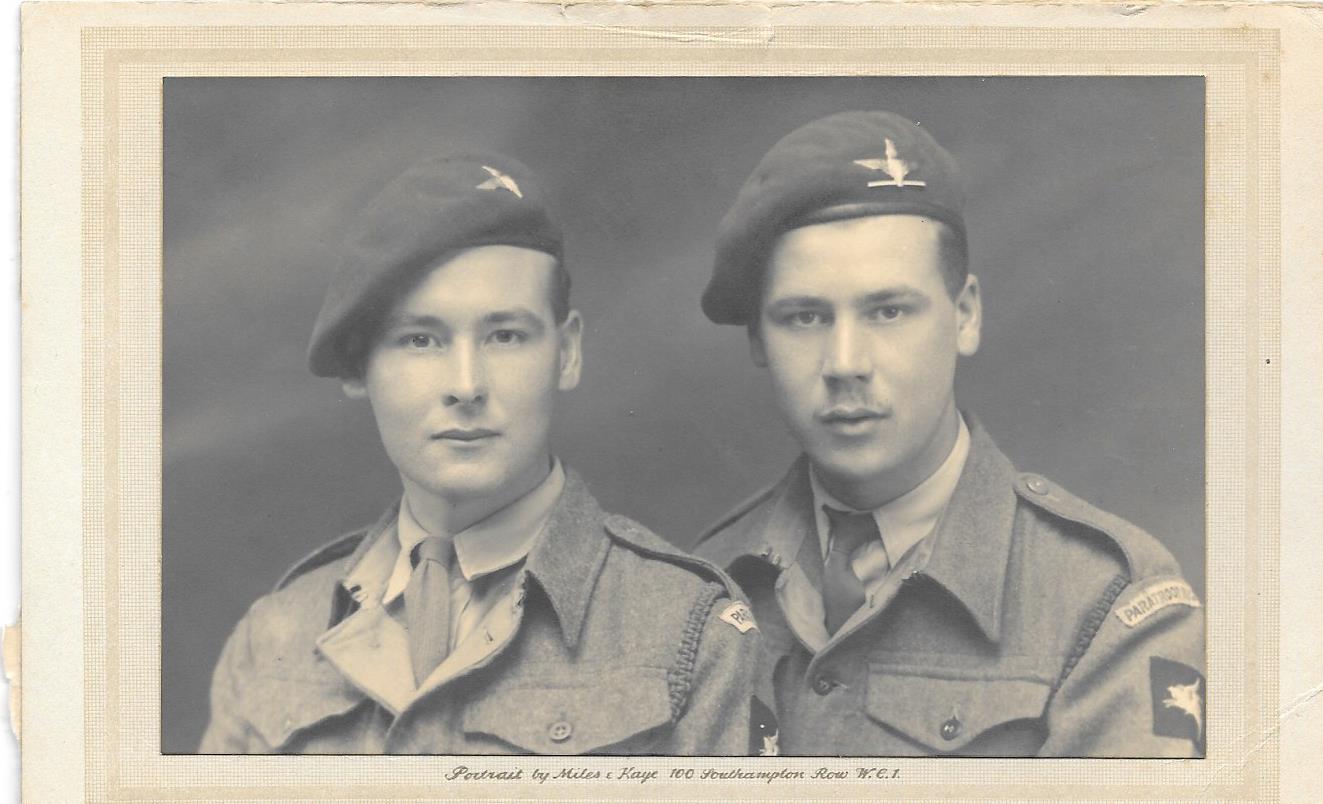
Pretty close. Again I changed the named – Blanche – my mother’s name was Barbara, but my grandmother’s name was Blanche, so I called my mother Blanche, and her maiden name was Watson, so that’s where the Paul Watson name came from. And I pretty much summed up my dad in it, because my dad – he was a paratrooper in the war, and he’d been to prison camp. He was a tough guy, but a very very kind man. But he did, like the thing about ‘religious rants’ – that’s what my dad did, he’d go off when something bad happened. (laughs).
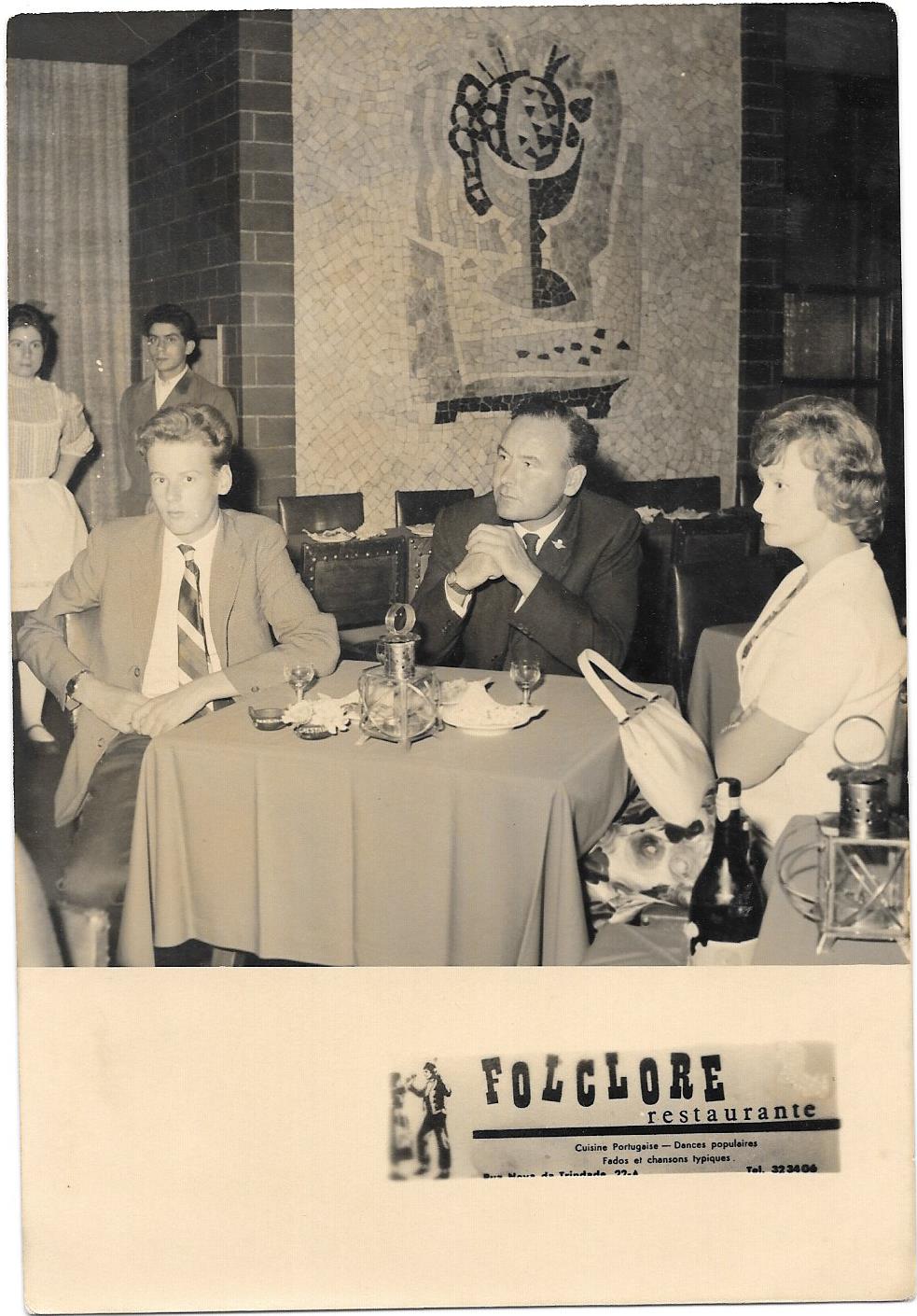
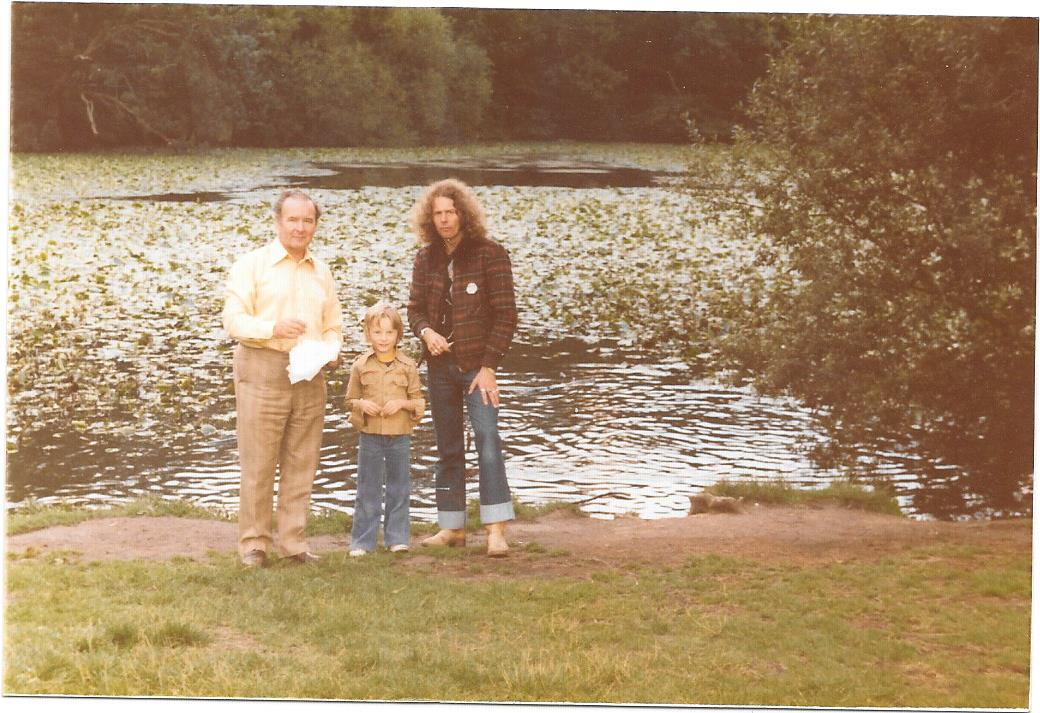
Paul’s father w/ his Uncle JohnPortugal, 1963Paul w/ his father, and son Julian
I laughed about the running out of petrol because my dad was like that where he’d push it until he ran out of gas,
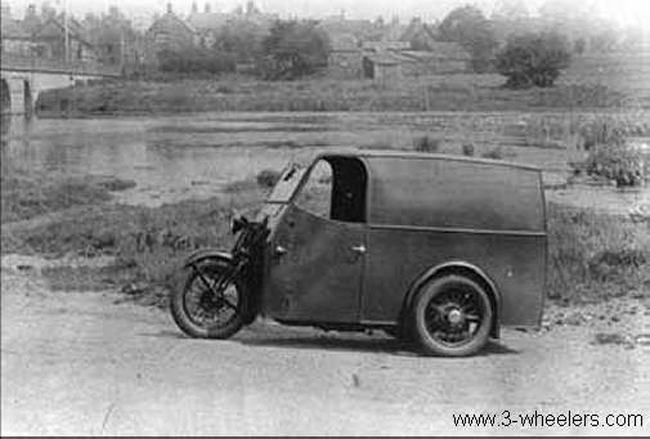
Yeah, my dad was stubborn, and there was never any need for that because all the vehicles he had he would either get reimbursed or he had a fuel card, he didn’t have to pay for it. But we could never understand why he constantly ran out of petrol; he was just stubborn. Because my dad he was like he wants to stop to go to the loo, but he wouldn’t stop until you were desperate. haha. And him locking himself out of the car – that was such a regular occurrence, locking the car with the keys in it, used to drive me and mom mad when I was young.
a 3 wheeled vehicle like Paul’s father drovePaul’s parents, 1992
There was some more humorous stories, trip to LA with Three Dog Night and meeting the girl there..
Yeah, that was the first tour in the States I did with Heep . The first gig I ever did in the States, I think it was in Indianapolis or Cincinnati, and that was with Three Dog Night, and we’d been playing small venues in the UK, we got on a plane and flew to Boston, and then took another flight to Cincinnati (or wherever) and we did this massive stage with Three Dog Night. And the stage was bigger than the venues we’d been playing, so it was an eye-opener. And I loved it; it was great. And they were lovely guys, we did a few gigs with them on that tour, and we did a few on our own – in clubs. We gigs with Ten Years After and various people. We did the Whiskey, and all that stuff. All that is based on fact, I just rejigged it to fit the book.
Did you ever run into anybody in later years while out and about, anyone that had a connection to the band. Did you see David at all before he passed?
I got fired from Heep, I moved on to other things, and worked wherever, but they were segments of my life, they were current at the time, and then they weren’t, they were of no interest any more. I’ve got to be honest, I really didn’t do any Uriah Heep stuff until John Lawton came up with this gig which was the catalyst for Heepvention. I had to get ahold of stuff, if it was stuff I hadn’t actually played on, and I had to re-learn all that. And so when we did these shows, I’d get a set-list and find the albums that the songs were on and actually learn them. And I’m not familiar with the bulk of the Heep catalogue. I have the record company send me all the stuff, but I’ve got to be honest much of the stuff Heep did over the years didn’t float my boat. They were just albums of songs; they were sort of albums you’d play and then couldn’t remember any of the songs, or I couldn’t. And I think that’s sad because whilst Ken Hensley was the main songwriter and quit the band, and Ken was drying up when he left. But the last couple of albums are a bit more like the Uriah Heep I remember forming. But no disrespect, but Mick and Phil write most of the material, and I don’t consider it strong material, and that’s not being nasty. It’s true for many bands, you could get albums and it’s like somebody said ‘Oh we need 10 songs for an album’, and so they knock out 10 sub-standard songs. But it’s difficult to write a bloody good song, you know. It’s very very difficult. And I noticed on the newer album that Davey Rimmer and Russell have been writing songs, which is useful, because when you’ve got to rely on one or two people in a band. I mean, In the early days of Heep we all wrote stuff, but it got to the point where Ken wasn’t interested in anything unless it had his name on it. And so there was very little chance of getting your song on an album back then.
You did the album with Chris Rainbow a few years ago, do you have any desire or prospect of recording again?
No, I did that. Chris was a guy I bumped in to, and he said he was writing some songs and would I like to play bass on it. And I’ve had this many times over the years, and on occasion I did because I know that I like good songs. But Chris sent me some material up to my home and I listened to it, and ‘well actually – this isn’t too bad.’ And then we got together and routine’d the stuff, and we used the studio some distance from me, we went down there. And I thoroughly enjoyed doing it because it one of those things where I was very pleased with the finished product. I mean, it was never going to be a big seller, but it was something I enjoyed doing. And I thought he had a good sort of diverse selection of songs on there. And he did want to do another one, a bit later. He called and he said ‘I’ve got some more songs, do you fancy doing another CD?’ and I said ‘well send up the songs.’ But I didn’t get involved, it didn’t happen, and I probably upset him, I said ‘No’. But the songs… it was really going to be a re-hash of what we’d already done. We weren’t moving on. Do you know what I mean? So many bands – they’ll have a successful album or single, and then the next stuff is just a re-hash of what they’ve done. You have to move on, otherwise you’re not being creative, and it’s of no interest to me. I did put bass down on 3 tracks for an American band, guys I know I met at the Belgian Heepvention, and the drummer contacted me, a band called Twisted Tapestry. So I put some tracks down on that, and have put bass tracks down on odd things, but my musical involvement for many years has been very low key. I have worked with bands at times on the local scene, but I haven’t worked professionally in bands since the 80s, and had no wish to, it wasn’t the sort of life. I realized early on, after my Heep days, and what happened, that if you want to be a professional musician – unless you’re very very lucky, you have to expect that you’ll be broke most of your life, and I had other things in life I wanted to do, and that’s why like after Heep, I worked with a band in residency in clubs doing stuff, we earned good money doing that; there was no travelling – it was 4 or 5 nights a week. I was getting good money and I was still playing music, I mean it was all covers and stuff, but it was a good gig, but I got tired of that. And I’d done some session work after that. But when music changed, and you’ve the electronic music coming in with synthesizers or whatever, I realized then, as I was getting older that I wanted to have a more sort of organized life. I didn’t want to be scrambling about to find out where the next meal was coming from.
Do you read much?
I’ve read ever since I was a child – which is why I was interested in writing my own book. I’m always reading most nights as the television is bloody awful! I normally go to bed at night and I get started in to a book, and I take a cup of coffee or tea up to bed, and get started in to a book. My cat curls up next to me. I love reading.
Do you prefer fiction or non-fiction?
I do read the odd biography if it’s somebody who interests me. I tend to read, as I said in the book, people like Michael Connelly, David Baldacci. I like crime-fiction, detective things, I like a good story. I’m always buying books. I haunt the charity shops, I rarely buy a new book, unless it’s something i particularly want because if you want a few weeks – you’ll pick it up at the charity shop. I’m an avid reader, I love reading. I always say to people – ‘If you can read..’ , because so many people don’t read any more, it’s all internet stuff, and I like to read a hard copy of a book… I like to pick up a book it’s like in the old days you’d pick up an album, you could put the record on and read all the sleeve notes. It’s something of value. This is one of the problems with music nowadays, people download stuff, and it’s value-less, you know!? And if you buy a CD, it’s in a lit cardboard sleeve with little information on it, and you haven’t really bought anything that you really value. And I think the vinyl days, and I’ve got a load of old vinyl albums – you have something there that’s meaningful. But I’ve always read ever since I was a kid, but it’s something that less and less people read nowadays, as I said people sit down on their computers or get into video games, it’s never really interested me, but there all changes, it’s part of evolution, it’s not for me to say they’re wrong. I’m an old guy now – I don’t give a shit, I just do what I want to do. Hahaha What I like about books is everybody reads a book, I read a book – I visualize all the characters as I want to But I do get disappointed sometime if I’ve read a really good book and they make a film or a TV series of it, and of course, rarely are the characters as I imagined them, as I want them to be, because I see them differently from you or anybody else. But sometimes I think ‘shit!’, I feel cheated. haha. And that’s just because I’ve read a book and formed visions of the characters in the book, and somebody else might not see them like I see them.
Fans of British singer John Lawton will have a 2CD compilation celebrating John’s life in great music to be issued July 7. John, who passed away June 29, 2021, had been recording for over 50 years, and was best known as the lead singer for German progressive hard rock band Lucifer’s Friend, as well the singer for Uriah Heep in the latter half of the ’70s. He also recorded & toured with The Les Humphries Singers in the ’70s, and later recorded with such bands and projects as Rebel, Zar, Gunhill (a band he formed in the ’90s), The Lawton-Dunning Project, (his own) John Lawton Band, OTR, and The Intelligent Music Project, plus a few solo albums, and various guest appearances (notably with Uriah Heep years after he left). John’s last album was 2019’s Black Moon with Lucifer’s Friend.
Celebrating The Life Of John Lawton is a collection of 33 tracks, spanning his career from the early ’70s until 2015. And it appears to be a well thought out set, as opposed to something predictable. It is actually more about some of the rare recordings he did, singles, guest appearances, and one-off projects and albums he was a part of, including previously unreleased material . I don’t see any Lucifer’s Friend songs, or too many Uriah Heep titles, but this does touch on most of the bands and projects I mentioned above. So, this will be an essential purchase for fans of John’s career. The man put out so much great music, that this will be an excellent celebration of his work.
*Artist royalties donated to British Heart Foundation charity to research “Abdominal Aortic Aneurysm”.
Track Listing
DISC ONE 1 Corner Street Girl 2 Little Chalk Blue 3 Out Here 4 Is There Anybody There? 5 Eloise 6 Me And My Harley 7 Stargazer 8 Broadway Nights 9 Heart Of The Night 10 Dirty Tricks 11 Colgate Gel 12 Set The World On Fire 13 Back To The Highlands 14 Someone Sings 15 Come Together 16 Wise Man 17 I Am Alive
DISC TWO
1 Feelings 2 Tonight 3 It’s A Long Way To Go 4 Mama Loo Impromptu Jam 5 I’ll Be Here 6 Written On The Wall 7 Been Away Too Long 8 Mamonama 9 Shine 10 Ride On 11 Salvation 12 River of Dreams 13 Fairytale 14 Rain 15 Rock ‘n’ Roll Is My Thing 16 Things We Can’t Do
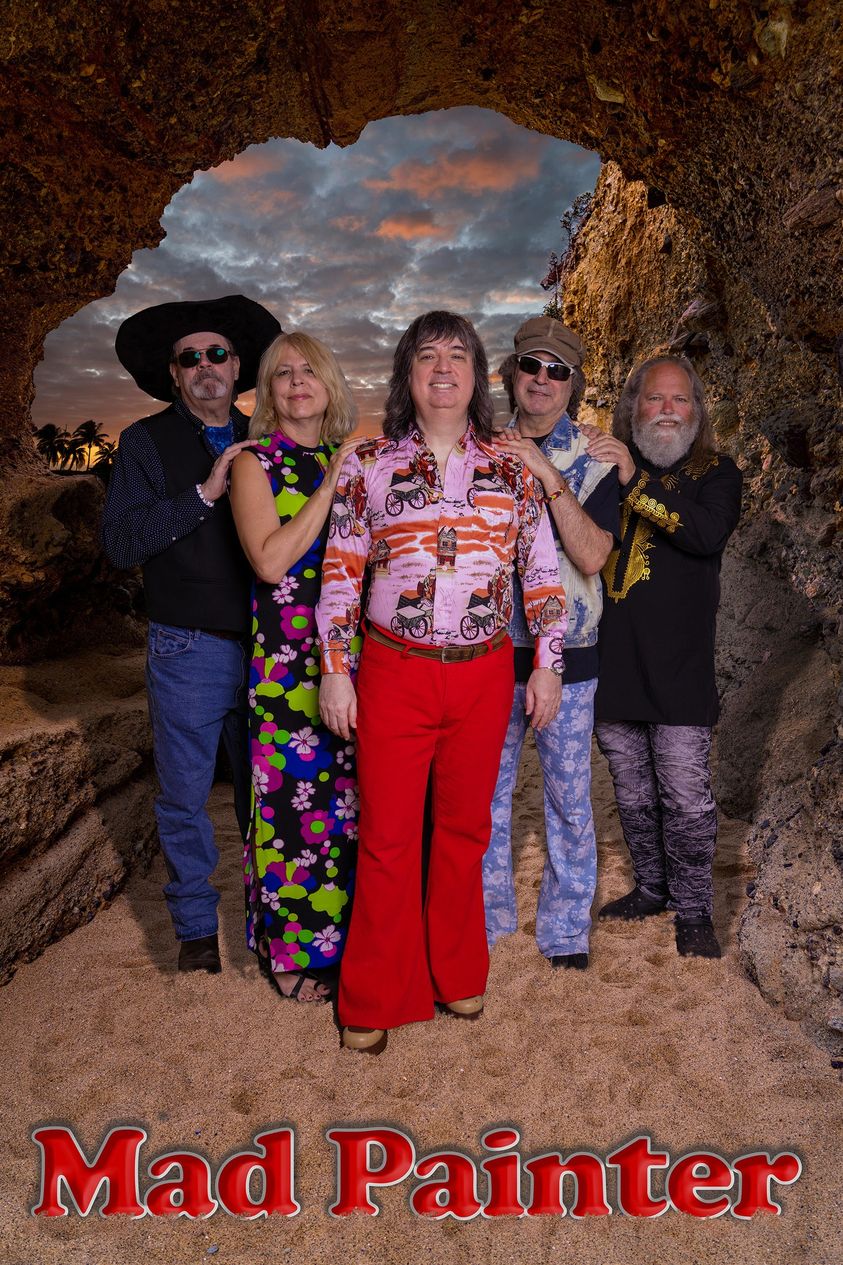
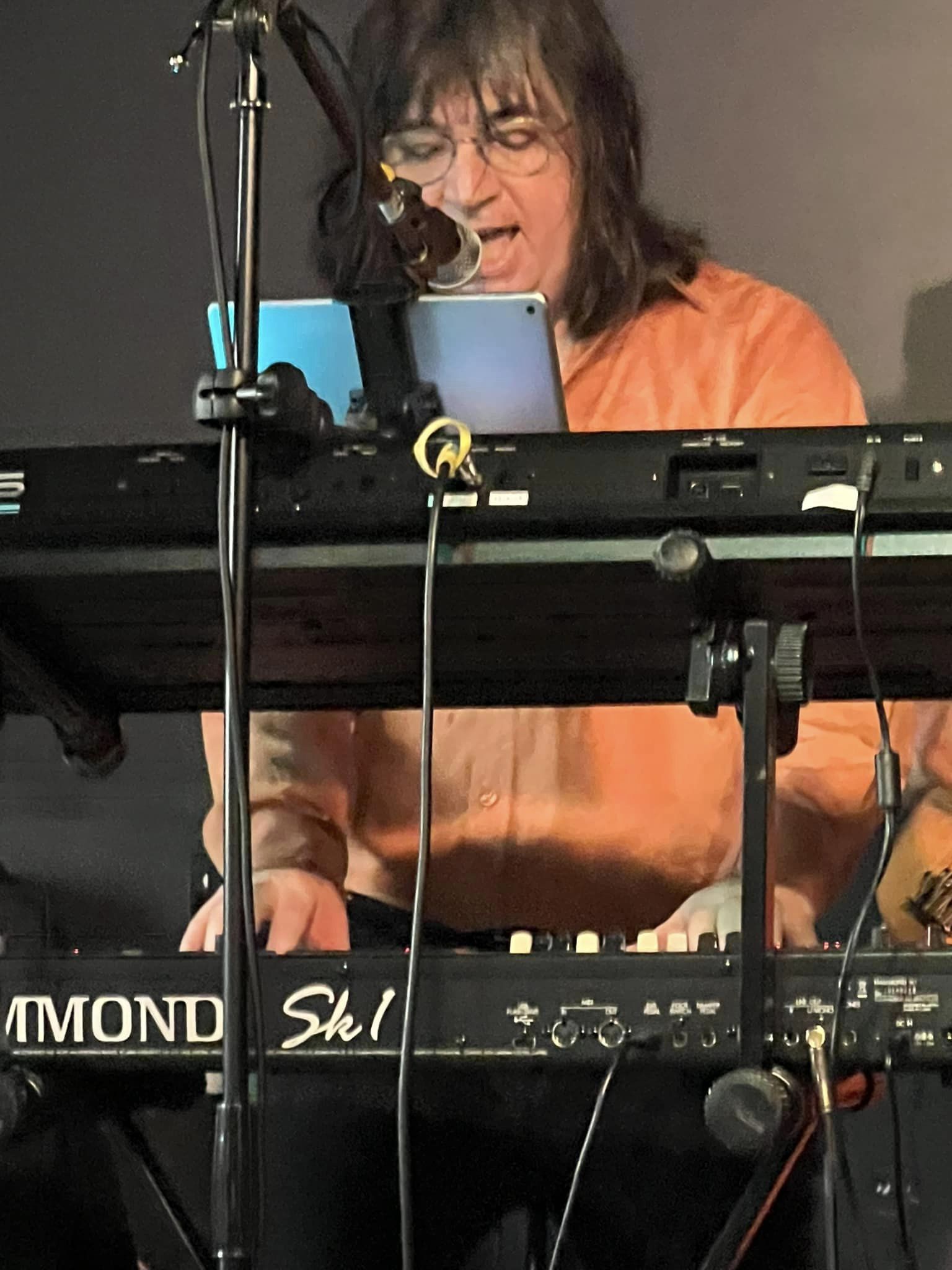
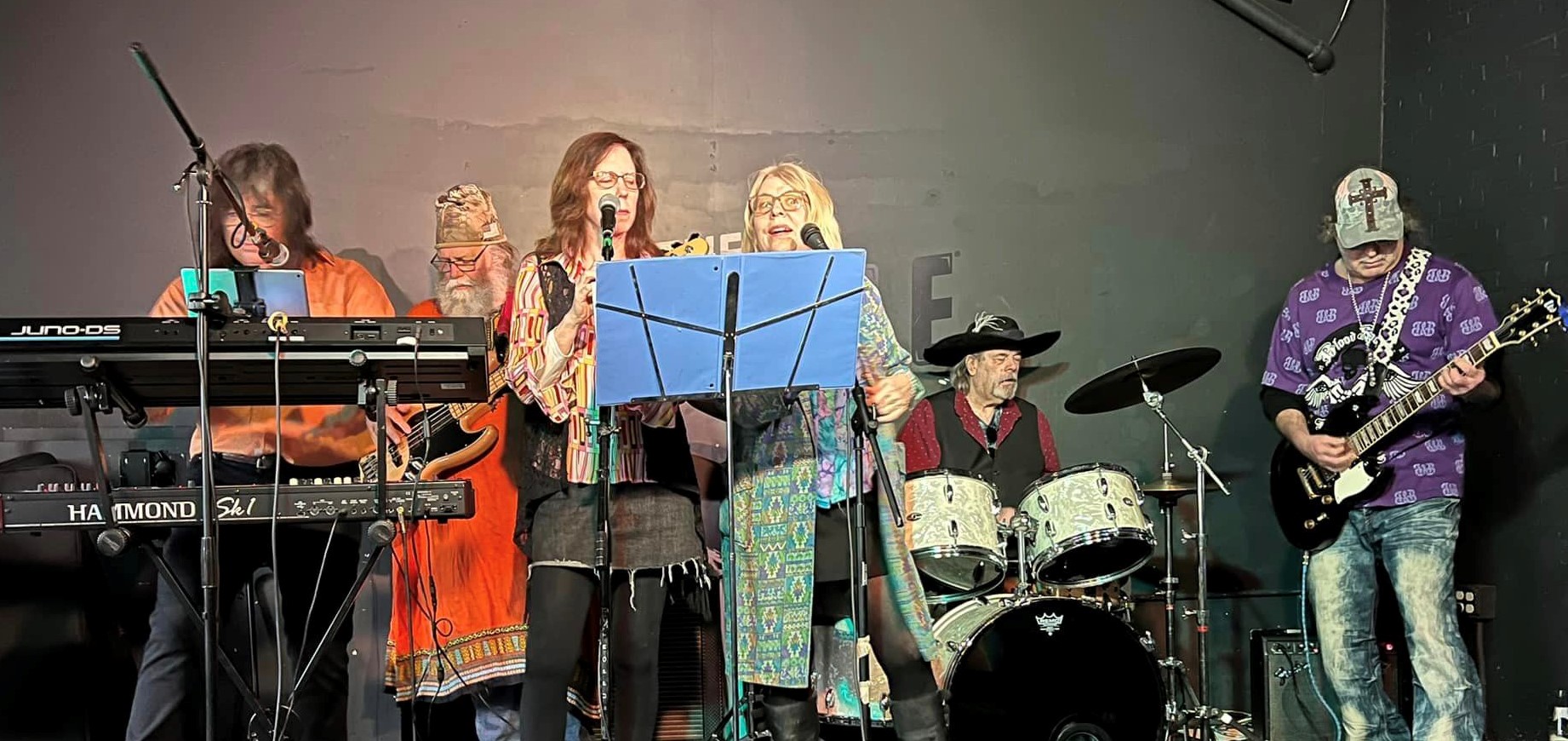
MAD PAINTER have released their 2nd album Splashed. The album (reviewed elsewhere here) features 17 tracks, including the singles/videos “Illusion” and “Rock and Roll Samurai”, as well as a few covers, a diverse mix of classic rock, pop, and ballads. The band’s singer, keyboard player, and songwriter is Alex Gitlin, who I’ve known for many years. Alex is extremely knowledgeable about his ’70s classic rock, glam, and pop acts, And fashions! In this interview, Alex discusses the band’s history, the songs from Splashed, the band’s live show, and future. Enjoy the read. *Check out Splashed, as well as the links below.
Can you tell me a bit about the band (players), just how you connected and mutual influences?
The band’s been around since early 2016, but it was a totally different, and ever changing, line-up. We recorded our first album, which came out only digitally (YouTube, Spotify). For it, I gathered all the songs I’d written most recently and rehearsed with “embryonic” Painter in 2014-15, before Mad Painter Mk I even materialized. There were some ferocious rockers on it like Beware of the Dream, the title track, etc., which are still very much part of our live show. The aforementioned album was done in one weekend, then our producer took the tapes, drove back home and added his own guitar and production and mixing. We had no control over it at all. The result came out charmingly primitive, the sort of low-fi sound that our bassist Kenne Highland affectionately calls Garage Prog.
We went from strength to strength for a couple of years, playing shows as a trio, without a guitar, or hiring a guitar player for one gig. Those weren’t the happiest of times. Sometime before the lockdown of 2020, we got together with Kenne, Alan Hendry on drums and Al Naha on guitar, and jammed, getting a totally different and fresh vibe from it. We all felt enthused and encouraged and decided to continue as a unit. Alan and Al also play in Kenne Highland’s Airforce, an altogether different band, which Painter occasionally shares a bill with. It just felt right, and that’s how the patented Painter sound was born.
Kenne’s a big fan of late ’60s rock and blues, the fuzzier the better. He loves Vanilla Fudge, The Move and Small Faces. Psychedelic stuff. We all have our own influences and musical favorites, but we do converge somewhere in the middle, sort of overlapping on Mountain, Grand Funk, Spooky Tooth, Deep Purple, Uriah Heep, Procol Harum and Iron Butterfly. In a practice, you’ll often hear him say, “let’s do the Vanilla Fudge version”, that just means long, drawn-out, fuzz-drenched and with screaming organ and guitar.
The guys in my band are ’60s and ’70s punk fans, so anything from The Fugs, Blue Cheer and MC5 to Iggy Pop, you get the picture. Personally, I’m not big on punk, but Kenne started out his musical career in 1976 with the Gizmos in the MidWest. And he’s been rolling ever since. You can look him up on Discogs under Johnny & The Jumper Cables, The Gizmos, Afrika Corps, Hopelessly Obscure, etc.
photos by Tom Despress
Where did the songs from the new album come from — ie; time period, circumstances, etc…?
The lyrics to our two singles, “Illusion” and “Rock And Roll Samurai”, were written by my friend Dmitry M. Epstein, circa 2017. I rehearsed them with the first lineup but they didn’t make the cut for the album, as we just weren’t ready at the time it was recorded. We did have a second recording session a year later, but it was aborted. Luckily, it produced good quality demos, which this current lineup took as templates. Same can be said for The Moon and San Michel, completely different in style, but same time frame and trajectory. Whereas the two aforementioned singles are heavy rock in the Uriah Heep vein, San Michel is nostalgic ’70s pop with French flavor and The Moon is simply a Queen-lite pastiche. I’m not much of a singer, I have a limited vocal range, but I was thinking of Freddie, Brian, John and Roger when I wrote that number. It’s silly, whimsical and English, much like “Lazing on a Sunday Afternoon”. Julie Gee has provided the kind of background vocals that would emulate that style. Another couple of numbers, soft ballads, “I’ve Been A Fool” and “I Live For Love”, are once again leftovers from the prior lineup that were not captured on the first album. “Fool” was written after I watched “Jersey Boys”, a biopic about Frankie Valli & The Four Seasons, while “I Live For Love” was me trying to pay homage to my heroes Paul McCartney and Jeff Lynne (ELO). Both heavily orchestrated; since I didn’t have the luxury of an actual string orchestra, I had to do it all on my Juno synthesizer. I hated for so many songs, however disparate stylistically, to be languishing in the vaults and gathering dust. So we’ve revived them. Talk about reviving! Three more numbers had been waiting their turn for nigh on 25 years! Back in 1997, while I was in between bands, I recorded demos of “I Don’t Know”, “Lie To Me” and “A Friend In France”. And it wasn’t until the year 2021 that the right opportunity presented itself and we’ve collectively brought them back to life. It was a dream come true. While the original demo of “I Don’t Know” sounded a bit like Gilbert O’Sullivan, who I’ve always liked, the album version has that mid-70s disco feel a-la “I’m On Fire” by 5000 Volts. I’m really proud of this number, it’s the kind of a song I grew up listening to, and the string arrangement really gives it the most authentic of auras.
Both “Lie To Me” and another ballad, “Let Him Go”, despite being almost 25 years apart, are autobiographical. A lot of my lyrics are, actually. On “Let Him Go”, while recording vocals, I was thinking of Freddie Mercury, I could never match his greatness, EVER, but he inspired this number in a huge way. But also Frank Sinatra, especially “That’s Life”. The jazzy organ solo is very much of that “ilk”, although I’ve listened to Jimmy Smith and other Hammond greats before daring to record it.
The album has 17 tracks, so it’s very much a “kitchen sink” project. It’s quite diverse, and some people find the variety to be a good thing – a little bit of something for every taste. Others think it’s incredibly inconsistent (or schizo, as I would call it!) It’s like that by design. It’s a bit of a milestone, a roundup of everything I’d had to hold back prior to the recording sessions, which started in early 2021. There was this period of forced inactivity between the very last gig we played at the Jungle on March 8, 2020 and when we cautiously got back together again for a jam in Sept. 2020, right after my birthday. After sitting home for six months with absolutely nowhere to go, it felt so good to be jamming again, therapeutic even. And towards the end of that year, we landed in Peabody, at producer Tom Hamilton’s home studio, to lay down tracks for the Airforce. That was my introduction to Tom. He’s an ace and knows exactly what feels and sounds right for Painter. He’s the only producer I’d ever trust my music to. So during a break, I got on a zoom call with a few friends including John Lawton, who’s no longer with us. I remember that evening so well. John didn’t look or sound very cheerful, but then this was in the middle of the pandemic, a lot of people were affected emotionally. And on top of it, Ken Hensley had just recently passed. Little did I know this would be the last time I’d speak to John. His widow Iris says he’d have loved our CD. And when I’d quit music and felt uninspired, back in 2009, he encouraged me to get back into it, saying, “You don’t have to be rich to play.” He was so right. But with that said, when you’re doing it all yourself, promotions, recording, working with a producer, paying for the studio time, then mixing and mastering, it certainly adds up. I mean, when no management or record company would have your back. On the other hand, you live and die by your product, and there’s no one in the “biz” to screw you over.
Why the 2 covers? Stealin (IMO) gets done a lot, but the Randy Pie cover (Highway Driver) was an interesting choice.
Stealin’ was Kenne’s choice. We’ve always jammed on Heep covers, “Circle of Hands”, “Easy Livin'”, etc. And he called it Uriah Cheap. He’s been a Heep fan since 1973, when he first heard them. The first single he got may have been “Stealin'”, and I know for certain the following year’s Don Kirshner’s Rock Concert featuring UH made quite an impression on him. Then there’s Randy Pie… a German funk-disco combo from the mid-70s, starring the late Bernd Wippich. It was a hit in Austria and Germany at the time. We’ve jammed on this number with the prior line-up, but it took shape as a melodic hard rock number when the current lineup started running through it. It is still quite retro in sound, but a radical departure from the funky original. People reviewing our album usually don’t know this is a cover, so they think we’ve written a road trip song! But the proper credits are on the back of the CD.
Do you write All the songs, or are there co-credits and input from other band members?
I usually write the originals and, in some cases, co-write with Dmitry. He’s a poet and I’m a composer. We have Dmitry to thank for “Fool”, “Illusion” and “RnR Samurai”, with more to come in the near future! It’s the same dynamic as Elton John – Bernie Taupin or Gary Brooker – Keith Reid. But I usually listen to my guys when it comes to the arrangements – like why won’t we do a bridge here or a drum break there. Intros and outros, softer and harder bits, and so forth. They usually have good suggestions!
There is such a wide variety of tunes, from organ driven rockers, to ballads, to almost theatrical ‘show’ tunes. What gives?
(As previously stated), I’ve taken the kitchen sink approach. Open the vaults – empty the vaults. What have you got? Give me everything. This is what happens when you hold out for a quarter of a century. In my defense, I’m thinking Queen could have astonishingly heavy bits on albums like “A Night At The Opera”, for instance, sitting next to quaint, clever and whimsical little ditties like Seaside Rendezvous. But from the looks of it, judging by the critical and listener reaction, the listeners by far prefer our heavier side, so yes, the next one will be more consistent in terms of style. Let’s just say, I’ve gotten things like “You Nearly Stole My Heart Away” out of my system, time to move on. Speaking of which… this is one song on which I decided to take the “delicate whisper” approach, sort of borrowed from Colin Blunstone of the Zombies. I don’t normally sing like this, but it worked on this tune.
Can you tell me a bit about the John Sloman song (“Parting Line”), and how you ended up using the lyrics and putting them to a new song? (Was John cool with this? Any feedback?)
John… it’s a story onto itself. I came across his lyrics somewhere on the internet, and one song in particular, from his first solo album, ‘Disappearances Can Be Deceptive’, really touched me. It just sort of clicked in my brain. I heard the chugga-chugga Status Quo shuffle in my head to the tune of:
As the sun comes up to announce the day
The lights are coming down
On an allnight show starring you and me
The audience surrounds
And I thought, this could be something. It was a naughty thing to do, but luckily John was totally cool about it. He only asked to be credited on the CD and for a copy of the CD. He even added, “I wish I’d thought of that myself”. But his “Parting Line” is so different from ours – it’s a moody mid- 80s ballad.
What sort of gigs does Mad Painter play, and what does your set generally consist of?
We play locally here in the Boston area, sometimes venturing out of town for a festival. Our set usually contains upbeat rockers like “Barely Alive” and “The Letter” from the first album. Definitely both our current singles which now appear on Splashed. The guys are “gung ho” on going for the jugular, the 1-2-3 punch, wham bam thank you ma’am. I like to mix it up a bit on stage, so once in a while we do “Soldier Boy” (also from the first album), a somber ballad about the tragedy and horrors of the Vietnam war. Then we also play “Empty Bottles” and “Stand Your Ground”, the songs that haven’t yet appeared on record, although you can find “Empty Bottles” on YouTube if you search for it. “SYG” is the heaviest and the angriest song we’ve ever come up with, sort of Motorhead and Deep Purple in one flasket. Motorpurple.
I’ve always known you as a keyboard player, how do You feel doubling as lead singer? Is this natural for you, or something you had to adjust to?
My first love is the Hammond organ. As a kid, I was classically trained, between the ages of 5 and 8, but then I quit, so I never got proper classical piano education. And didn’t go back to playing keyboards until I was 19. But as early as 1994, I was in my first band Silver Star, playing keys and singing lead on some numbers. Sometimes stepping up to the mic with an acoustic guitar also. We did an EP CD back then called Foot Stomping Music, for which I wrote three numbers but only got to sing lead on one, “Kindness”. It’s still a very special track to me, one I’m really proud of. Being out of that band (I will omit the circumstances for now), thereafter, I entered a city studio and demoed the aforementioned three tracks which wound up on Splashed. This was in 1997. Throughout the ’90s, I played keyboards in a variety of bands, blues, heavy metal, funk, but those weren’t my projects and I didn’t feel like I truly belonged in any of them. I did not do much music-wise between 2000 and 2010 and all through that decade, I felt there was something missing in my life, this huge void inside. Then I tried myself out as a keyboard player in two tribute bands, Deep Purple (Stormbringer) and UFO (Lights Out), before finally getting around to create Mad Painter. So, as you can see, I’ve always wanted to double as a keyboard player and a lead vocalist. My two main heroes are Jon Lord and Ken Hensley, and neither one sang when they played the B3. So this to me was the biggest challenge. It takes a lot of energy to play “the beast”. I had to look to Billy Preston for that kind of inspiration.
Can you tell me a bit about the CD cover art? Is album art, in this day & age, still important (or as important)?
The artwork on Splashed is a thing of beauty. It’s done the “old school” way. It was a real photo session with a real pro photographer, and we used real vinyl records, threw them randomly across the floor and then squeezed acrylic paint of different colors all over them. It was my idea, materialized by Dmitriy Gushchin (the photographer) under my supervision. And it worked wonderfully. Our guitarist Al donated the vinyl records that had been ruined by a flood. They weren’t playable anyway.
In this day and age, album or CD cover art may matter less, but when you set your mind on creating a 1973 or 1975 album instead of 2023, it is of paramount importance. We couldn’t do the vinyl LP format because it’s too expensive. But we have pressed a quantity of CDs housed in a wallet style foldout. Plus the album art is a striking visual online, websites and social media alike. It catches your eye immediately. This is the physical painting component to the Mad Painter experience. Our music is sonic painting. Or, to quote “Return to Fantasy”:
‘In another place There’s a newer face Like an unfinished painting Your creator is waiting’
I know it’s early, but what might be expected on the next Mad Painter album, as far as direction, types of tracks, anything you’ve learned from making ?
Firstly, I must take into account what the entire band wants. My guys thrive on the heavy, rambunctious sounds of vintage hard rock. So when it comes to pop and balladry (some writers have called it “traditional songwriting”), I’m kind of on my own and they tend to refer to those numbers as “Alex’s solo material”. We are a unit, and I don’t want the next one to be “Alex’s solo” even in part. So for as long as this lineup sticks together, we’re going to go for the proverbial jugular. There will be some bluesy rock’n’roll numbers for sure, but the next album should be a lot more consistent in style. With “Illusion” and “Samurai”, we’ve sort of introduced and defined ourselves, our own sound. For better or for worse, this is Mad Painter.
Can you (a few) give us a ‘top 10’ of your favorite albums from your younger years?
Alex Gitlin, vocals and keyboards:
Status Quo “Blue For You”
Uriah Heep “Demons and Wizards”
Nazareth “Razamanaz”
Deep Purple “Machine Head”
Rainbow “Rising”
Black Sabbath “Sabbath Bloody Sabbath”
The Sweet “Give Us A Wink”
Slade “Slayed?”
Smokie ‘Midnight Café’
Queen “A Night At The Opera”
Alan Hendry, drums:
Grand Funk Railroad – Live Album
Yes – Yes
Galactic – Already, Already, Already
Tower of Power – Back to Oakland
Porcupine Tree – Any Album
Blind Faith – Blind Faith
Tool – Lateralis
King Crimson – In The Court of the Crimson King
Genesis- Trick of the Tail
Jethro Tull – Stand Up
Kenne Highland, bass:
Stooges – The Stooges
Stooges – Fun House
Stooges – Raw Power
MC5 – Kick Out the Jams
MC5 – Back in the USA
MC5 – High Time
New York Dolls – Too Much Too Soon
New York Dolls – New York Dolls
Velvet Underground – White Light/White Heat
The Velvet Underground – Velvet Underground & Nico
Uriah Heep have released a new video from Chaos And Colour. The track is “Golden Light”, a favorite, penned by Mick Box & Phil Lanzon.
“Golden Light” is a smorgasbord of soaring melodies, robust rhythm, luscious guitar lines, and brims with spiritual optimism. “We’ve always had positive energy in everything we do,” beams Mick Box, Uriah Heep’s venerable and effervescent founding member. “It’s always good over evil no matter where we look at it. That’s what we’re like as people, which is why it’s always been a big part of Heep to have that positivity.” “‘Golden Light’ is a typical melodic Heep rock song” continues Box, “it explains that in this troubled world, there is a guardian angel shining down a light, to guide us through these difficult times. ‘Appy days!”
Produced by Jay Ruston, and engineered by Pieter Rietkerk, Chaos & Colour is a superb album of quality hard rock from the pioneers of the genre who continue to create top class material. Old fans will be reinvigorated whilst new fans will surely find Chaos & Colour an exceptional discovery. In this, their 53rd pioneering year as a band, Chaos & Colour sees Uriah Heep throwing down more life, light and energy than peers 40 years their juniors.
Chaos & Colour is available to order now on Black and Coloured Vinyl configurations, as a standard CD Digipak, and digital formats. Orders can be place here: https://lnk.to/ChaosandColour
The latest installment of Avi Rosefield’s Very Heepy Very Purple is out. The Israeli guitarist/songwriter is on volume 14 in his series of classic rock albums, heavily influenced by Uriah Heep & Deep Purple, among other great bands. X!V features 10 new tracks, as well as an impressive list of guests from such bands as Savatage, Bonfire, and Jag Panzer.
The lead off track “I Got A Riff” has a very Deep Purple sound and feel to it, like it would’ve made a cool opener to an early Gillan era album; great vocals courtesy of Hadi Kiani (Deaton Lemay Project). The 2nd track, “Fire And Ice” is equally as good, featuring Damond Jiniya (Dead Dark Slide, Savatage), though I can’t help but notice that sounds remarkably like an Iron Maiden song. “The Mass Grave” offers up something unique, a ballad, featuring Stefano Stex Sbrignadello (Great Master) on vocals, and violin from Sanja Smileska Mihajlovski .
But without rambling on about every track, this is a solid album of music, not a bun track here, and it should suit classic hard-rock/heavy prog fans. Other highlights being “Asteroids”, which is heavy on the Hammond organ courtesy of Michael Berry, making this one reminiscent of Rainbow, and like many others here is given a classy Blackmore-sound influenced solo. As well check out the closing track “Black Rocks”, featuring Harry ‘The Tyrant’ Conlin (Titan Force, Jag Panzer), and some Heep-like harmonies. If you like that familiarity of certain bands, from a certain era – you may want to dig in to this and this whole series. *Check out the links below for more info and ordering…
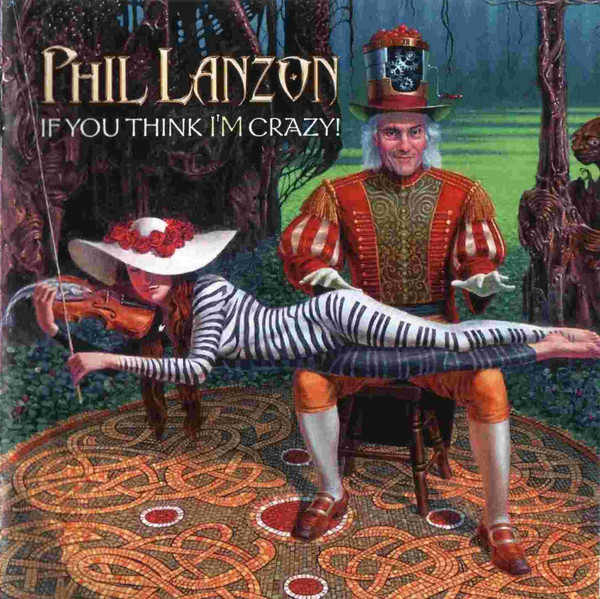
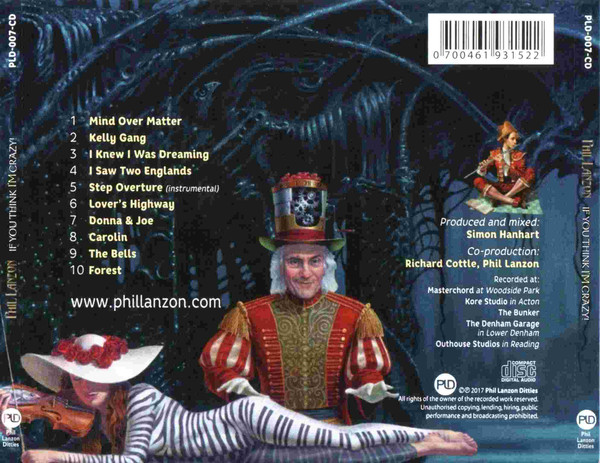
Well, being Phil Lanzon’s birthday I thought to pull this one out, from Uriah Heep’s keyboard player and a major songwriter. It is an album I never tire of! Phil’s first solo album, from 2017, From the eye-catching cover art courtesy of Michael Cheval through all 10 tracks – this album really has it all with catchy swinging pop rock like “Lover’s Highway”, to heavy keyboard prog in “Step Overture”, to acoustic tale-telling ballads like “I Saw Two Englands” and heavy Heep-like prog-rock of “The Bells”. Really an entertaining and amazing package, especially the 2LP vinyl (which I have on this am).
Phil sings some lead vocals, as does John Mitchell (Lonely Robot), Andy Makin (Psycho Motel) and Andy Caine. Aided by Simon Hanhart (co-producer), Laurence Cottle (Black Sabbath), Richard Cottle (co-producer, orchestrations). as well as violin players, cello players choirs, pedal steel guitar (Sarah Joy), etc… *If you’ve not heard this, I highly recommend it! Phil followed If You Think I’m Crazy! up with 2019′ excellent 48 Seconds.
URIAH HEEP”s Chaos & Colour has been out for some time now, and has been received enthusiastically and with great reviews from fans. Phil Lanzon, has been a major part of the Heep songwriting team since he joined the band as keyboard player. On Chaos & Colour Phil, along with founder/guitarist Mick Box, have delivered 6 awesome new Heep tracks. In this exchange Phil answers my questions pertaining to the band’s latest album, as well as what else he is up to. *Check out the links below!
With the pandemic and time away from each other and stage, was there more songwriting going on prior to recording Chaos & Colour? Was there an abundance of songs & ideas to choose from this time around?
Yes there was plenty of that. Mick and I wrote songs remotely during the pandemic. It was unusual but worked really well. There are songs and ideas left over, maybe for the next album, who knows.
You worked again with Jay Ruston. Was that an easy decision?
Yes it was easy. Our working relationship worked really well with Living the Dream so we wanted that to continue with Chaos.
Russell & Simon Pinto contributed 4 songs to Chaos & Colour. Was there some tough decisions in cutting down the number of songs?
Well there is always tough decisions when choosing the final songs. Especially as others band members are contributing; which we all feel has made for a great combination of material.
Chaos & Colour is a great follow up to Living The Dream, but I think a bit of a step up with more varied tracks trhoughout. Was there any deliberate move to try and include more progressive moments or ballads?
I personally always feel that there should be a prog section within a Heep album, specifically to keep variety in the material and also take the listener on a journey. It is a Heep feature that makes an appearance on many Heep albums from the early days to today.
Can you give me a bit of insight into some of the tracks- lyrically or recall on how it all came together…
I’ll keep it short. We always keep a strict eye on our lyrics that they don’t stray into the ‘norm,’ which is a pitfall of many artists, so we use the basic premise of positivity and the knowledge that there is good everywhere. You just gotta find it!
You seem to have a few new keyboard sounds on this album, such as on “Fly Like An Eagle”. I get a bit of Dream Theatre feel in there. Can you touch on any new sounds, approaches or equipment?
Not a great deal of new sounds, I was just messing around with a mini-moog style sound and decided it worked for the track.
“Age of Changes” is a fantastic track (my early favorite). Can you touch on this song?
I wrote this lyric based on my first childhood sweetheart. A story I’m sure will resonate with so many. We go through so many changes in our lives but the first real awakening to that fact hits most of us in the school yard.
You guys recently completed the 50th anniversary tour. How did You enjoy the shows? Any highlights or favorite moments in the set for you?
We all enjoyed the tour, it was a huge success as far as we are concerned and made a whole lot of Heepies very happy. The acoustic show was well received and was a joy to perform.
Phil, in your time awaiting the next Heep tour – might you be working on another solo project, book, or any guest appearances anywhere?
I am at the moment trying to sell my Musical, I mean, musical theatre. It is a full length musical about Ellis Island New York in 1917. The script is with an American producer as I write.
What are you listening to these days? Any current (new) favorites?
Nothing new at the moment. I am immersed in my artwork right now. Check out my Instagram.
Paul Newton was the original bass player in Uriah Heep, a founding member. Paul was the link between the 2 pre-Heep bands The Gods and Spice. He played on the band’s first 3 albums, featuring such classics as “Gypsy”, “Lady In Black”, “July Morning” and “Look At Yourself”. Following Heep his life took a very different path, but in later years he found his way back to the Heep family and fans, having been involved in shows with Ken Hensley & John Lawton, The Heep Legends, and guesting with the band on occasion, as well as Heep tribute bands. He also released an album (with Chris Rainbow) in 2016, titled License To Rock.
Paul comments on the how and why he wrote Bone Structure – “It was a project I started during the pandemic lockdowns, just a self-indulgent exercise..to see if I could actually write a book that I could put on my shelves amongst my recordings but ‘Aspect Design & Publishing’ suggested that I should make it available…so here we are. I thoroughly enjoyed the writing process and ending up with ‘my own’ book’…job done. Anything else will be a little bonus..!!”
Regarding the book’s subject matter, Paul opted to write a fictional book, as opposed to a mere autobiographical recall on his time in bands – “It is a fictional story based on my life through the eyes of an alter-ego. I did not want to produce yet ANOTHER Heep anthology as there are so many out there and I only spent a fairly brief time with the band. As I said, it was purely self-indulgent exercise and will have probably have very limited appeal but that does not bother me really and I have no great expectations…” Despite his ‘no great expectations’, early orders for Bone Structure warranted a 2nd run of the book within a few days!
*for more info and ordering, check out the links below


 . Iris tells where the songs originate from and also why she selected them.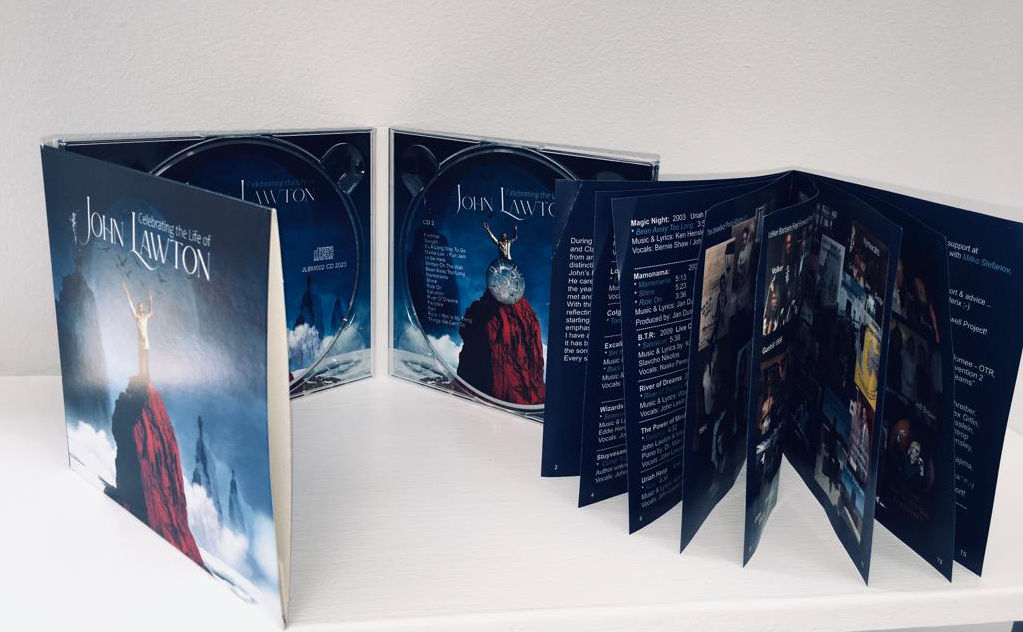












 Outsider Rock